Grow Better Gardens with Smarter Plant Choices
Discover helpful guides on trees, hedges, fruit plants, edible plants, and beautiful landscape greenery.

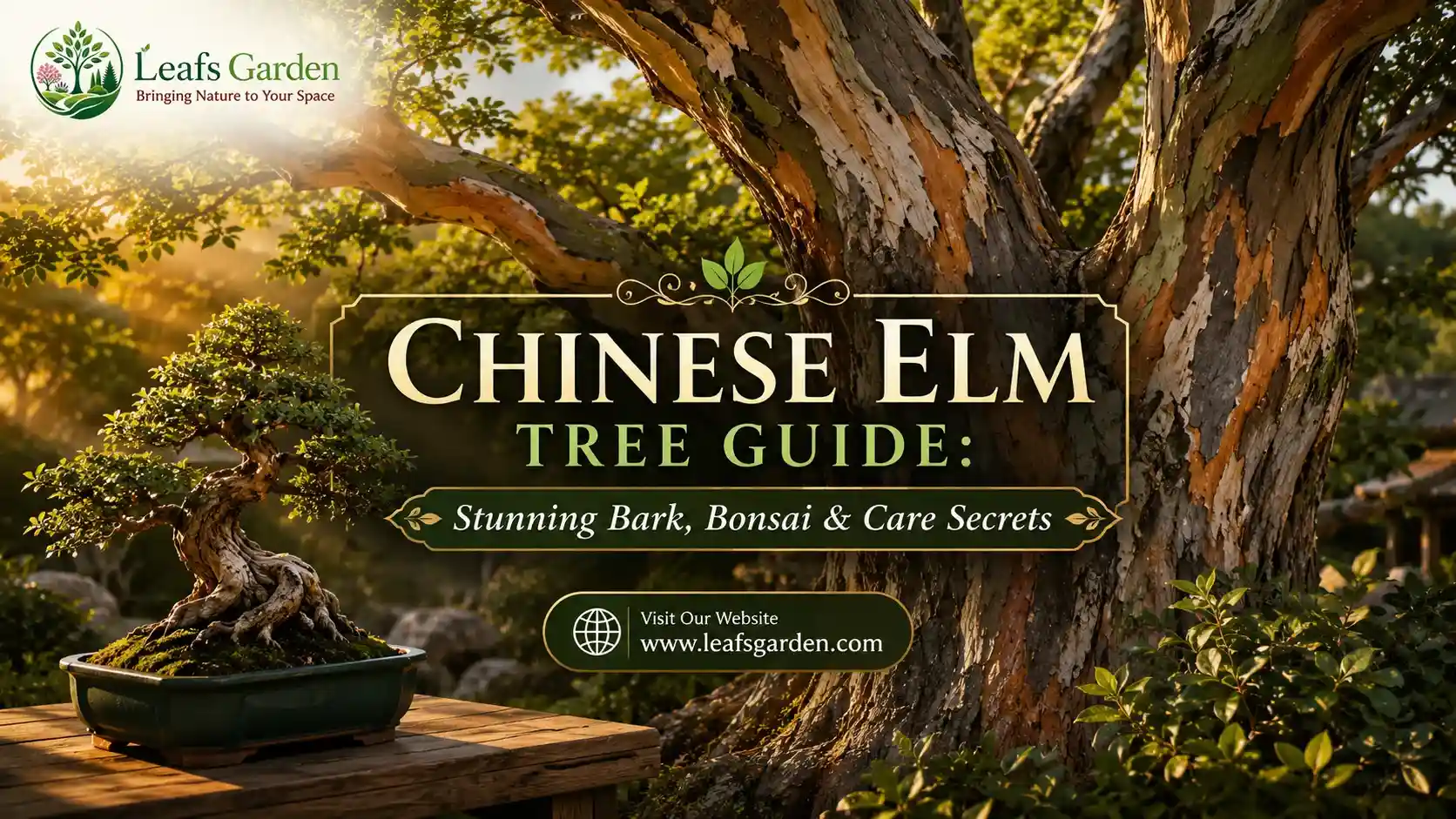
Chinese elm (Ulmus parvifolia), also known as lacebark elm or oriental elm, is a highly adaptable ornamental tree valued for its attractive bark, graceful canopy, and strong environmental tolerance. This versatile elm species is widely planted in residential landscapes, city streets, public parks, and bonsai collections because it combines fast growth with relatively low maintenance requirements.
One of the biggest reasons the Chinese elm tree remains popular is its ability to perform well in different climates and growing conditions. In landscaping, it is appreciated for its rounded form, textured bark, and elegant branching structure. In urban planting, the species is valued for its heat tolerance, pollution resistance, and durability. The popularity of chinese elm bonsai continues to grow because the tree responds exceptionally well to pruning, wiring, and branch training.
In Australia, chinese elm tree australia searches have increased as gardeners look for hardy ornamental trees suitable for warm climates and drought-prone regions. Many growers also search for chinese elm leaves to help with tree identification, while others research chinese elm species and chinese elm tree problems before planting. The tree’s balance of beauty, toughness, adaptability, and long lifespan makes it suitable for both beginner gardeners and experienced bonsai enthusiasts.
This guide covers the complete essentials of Chinese elm care and identification, including growth habits, bark and leaf characteristics, watering needs, pruning methods, common diseases, bonsai cultivation, lifespan, landscaping value, and the major pros and cons of growing Ulmus parvifolia.
Chinese elm is a deciduous or semi-evergreen elm species scientifically known as Ulmus parvifolia. Native to China, Japan, Korea, and other parts of East Asia, this ornamental tree is widely grown for its decorative bark, graceful canopy, strong disease resistance, and exceptional adaptability in landscapes and bonsai cultivation.
Unlike many traditional elm species, Chinese elm combines rapid growth with durability and relatively low maintenance. Its attractive branching pattern, fine-textured foliage, and tolerance to heat, drought, and urban conditions make it one of the most versatile ornamental elm trees used worldwide.
The scientific name of the Chinese elm is Ulmus parvifolia. The species belongs to the elm family (Ulmaceae) and is commonly referred to by several regional and horticultural names.
Common names include:
The name lacebark elm comes from the tree’s distinctive peeling bark, which reveals patches of gray, green, orange, and brown underneath. This textured bark is one of the most recognizable identification features of Ulmus parvifolia.
In bonsai cultivation, the species is often labeled as bonsai elm, Chinese elm bonsai, or bonsai ulmus parvifolia because of its strong response to pruning and branch training.
Chinese elm originated in East Asia and naturally grows across:
In its native habitat, Ulmus parvifolia grows in mixed forests, hillsides, valleys, riverbanks, and open woodland environments. The species adapted to a wide range of climate conditions over time, which explains its strong environmental tolerance today.
Native climate conditions typically include:
Because of this adaptability, Chinese elm trees now grow successfully in North America, Europe, and Australia as ornamental landscape trees and bonsai specimens.
Chinese elm is considered a semi-evergreen tree because its leaf retention depends heavily on climate conditions. In warm regions, the tree may keep most of its foliage throughout the year, while in colder climates it behaves more like a deciduous tree and sheds leaves during winter.
General growth behavior includes:
This climate-dependent behavior makes the species highly adaptable across different hardiness zones. In many Australian regions, Chinese elm trees retain foliage for longer periods because winters remain relatively mild.
Leaf color also changes seasonally depending on environmental conditions. Foliage may turn yellow, orange, or reddish-brown before shedding in cooler climates.
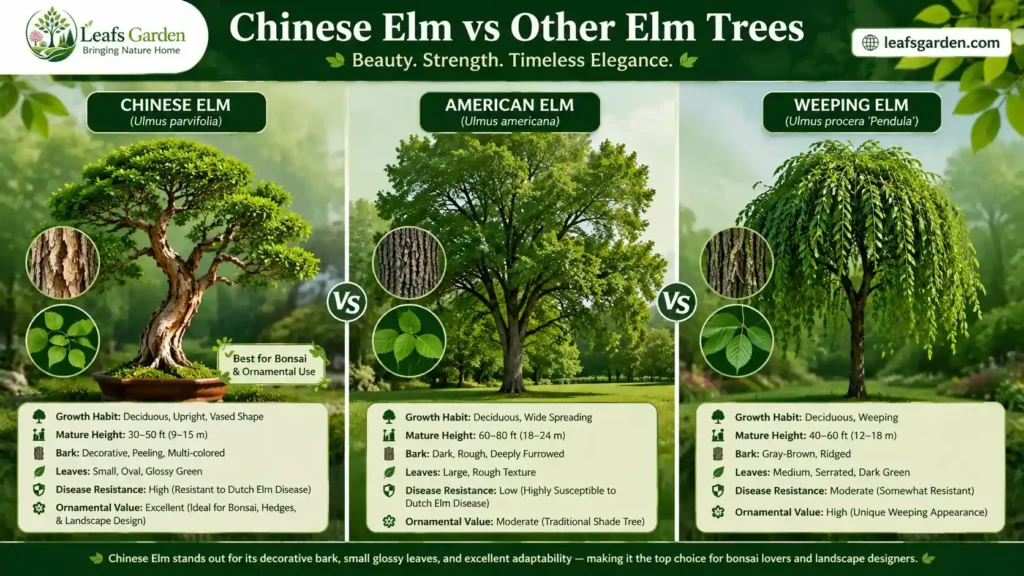
Chinese elm differs from other elm trees because of its ornamental bark, disease resistance, and bonsai suitability. Compared to American elm and weeping elm varieties, Ulmus parvifolia is generally considered more resilient and easier to maintain.
| Feature | Chinese Elm | American Elm | Weeping Elm |
| Bark | Decorative | Rough | Variable |
| Disease Resistance | Strong | Moderate | Moderate |
| Bonsai Suitability | Excellent | Limited | Moderate |
| Growth Habit | Rounded | Vase-shaped | Weeping |
Chinese elm is especially valued in urban landscapes because it tolerates pollution, compact soils, pruning, and heat better than many older elm species. Its smaller leaves and fine branching also make it significantly more suitable for bonsai cultivation than larger elm varieties.
Chinese elm trees are recognized by their mottled bark, small serrated leaves, rounded canopy, and graceful branching structure. Mature trees develop a refined ornamental appearance that makes Ulmus parvifolia popular in landscaping, street planting, and bonsai cultivation.
The combination of textured bark, fine foliage, and elegant growth habit helps distinguish Chinese elm from many other elm species. Both young and mature specimens display attractive visual characteristics throughout the year.
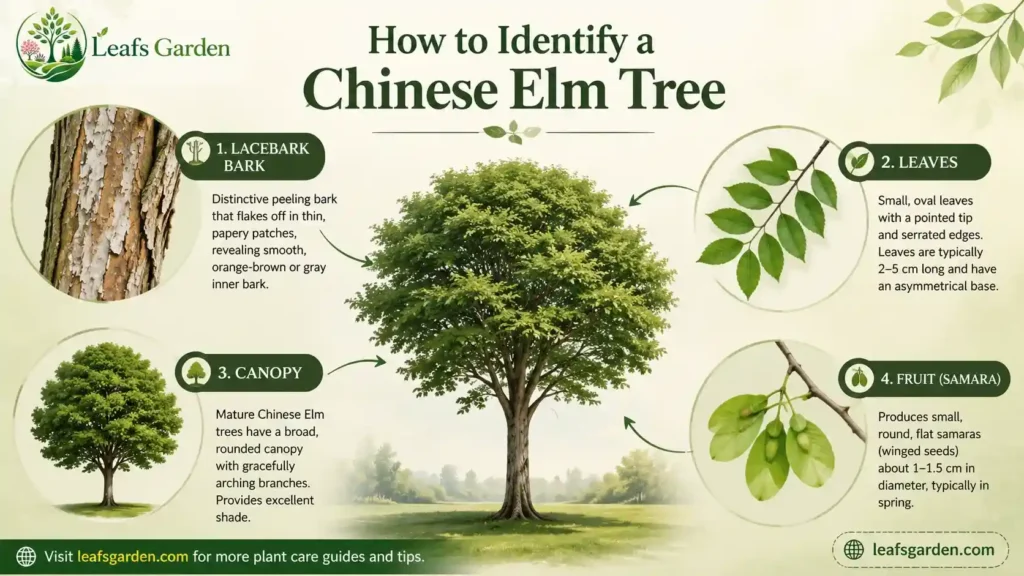
Chinese elm leaves are small, oval-shaped, finely serrated, and slightly glossy. A typical chinese elm leaf measures around 2–5 cm long and develops a dense, fine-textured canopy that gives the tree a soft ornamental appearance.
Key chinese elm leaves identification features include:
The ulmus parvifolia leaf usually feels firmer and smaller than many larger elm species. During autumn, foliage may turn:
Young leaf chinese elm growth often appears lighter green before maturing into darker foliage. In bonsai cultivation, the naturally small leaf size is one reason the species is highly valued.
Chinese elm bark is one of the tree’s most distinctive ornamental features. Mature ulmus parvifolia bark develops a peeling or flaking texture that reveals multiple colors beneath the outer bark layer.
Common chinese elm bark characteristics include:
Bark colors may include:
This peeling bark pattern gives the tree the common name lacebark elm. Older trees usually display the strongest bark coloration and texture, especially during winter when foliage is reduced.
The bark also adds year-round visual interest in landscapes and bonsai displays.
Chinese elm flowers are small, inconspicuous, and typically appear in late summer or early autumn depending on climate conditions. Unlike flowering ornamental trees, chinese elm flowers are not considered highly decorative.
Important characteristics include:
After flowering, the tree produces chinese elm fruit in the form of samaras. Samaras are small winged seed structures common among elm species.
Chinese elm fruit features include:
The seed structure helps the species spread naturally in favorable growing conditions.
Chinese elm size varies depending on climate, pruning, soil conditions, and cultivar selection. In landscape settings, mature trees typically develop a broad rounded canopy with moderate to fast growth.
Average chinese elm height ranges include:
Typical mature spread includes:
Chinese elm trees are considered relatively fast-growing ornamental trees, especially during their early development years. Growth rates increase under:
Pruning and bonsai cultivation can significantly control mature size and canopy structure.
The easiest way to identify a Chinese elm tree is by examining several visual features together rather than relying on a single characteristic.
Recommended image placements for identification sections include:
The most recognizable identification traits usually include:
Combining bark texture, leaf shape, and canopy form provides the most accurate identification of Ulmus parvifolia.
Chinese elm trees grow best in full sun, well-draining soil, and moderate watering conditions. Ulmus parvifolia is highly adaptable and can tolerate heat, drought, urban pollution, and varying soil types, making it one of the most reliable ornamental elm species for landscapes and bonsai cultivation.
Although the tree is considered low maintenance, proper growing conditions improve canopy development, bark quality, foliage density, and long-term health.
Chinese elm trees prefer fertile, well-draining soil that retains moderate moisture without becoming waterlogged. Good drainage is one of the most important requirements because overly wet soil can increase the risk of root stress and fungal disease.
Ideal soil conditions include:
Chinese elm soil pH preferences generally range between:
A pH range of approximately 6.0–7.5 supports healthy root growth and nutrient absorption.
Adding organic matter can improve soil quality, especially in poor or compacted soils. Useful amendments include:
Heavy clay soils should be improved before planting to reduce drainage problems and root compaction.
Chinese elm trees perform best in full sun conditions where they receive at least 6–8 hours of direct sunlight daily. Strong sunlight encourages dense foliage, better bark coloration, faster growth, and improved canopy structure.
Sunlight recommendations include:
In extremely hot regions, partial afternoon shade may reduce heat stress on younger trees. However, excessive shade can lead to:
Best placement locations typically include:
Adequate airflow around the canopy also helps reduce fungal disease risk.
Chinese elm trees require moderate watering during establishment but become increasingly drought tolerant as they mature. Consistent moisture helps young trees develop strong root systems during the first few growing seasons.
Young tree watering guidelines include:
Mulching around the base helps conserve moisture and regulate soil temperature.
Mature Chinese elm trees develop stronger drought tolerance and usually require less frequent irrigation. Established trees can tolerate short dry periods better than many ornamental elm species.
Overwatering should be avoided because saturated soil may lead to:
Container-grown and bonsai Chinese elms generally require more frequent watering because their soil dries faster.
Chinese elm is highly adaptable across different climates and growing environments. The species tolerates both summer heat and winter cold better than many ornamental trees.
Chinese elm hardiness zone performance generally ranges from:
Temperature tolerance includes:
In colder climates, the tree behaves more deciduously and sheds foliage during winter dormancy. In warmer subtropical regions, Chinese elm may remain semi-evergreen for much of the year.
Australian climate suitability is one reason Ulmus parvifolia remains popular across many regions of the country. The species handles:
Extreme prolonged frost may damage young growth, especially on newly planted trees.
Chinese elm australia searches continue to grow because the species performs well in many Australian landscapes. Its adaptability, drought tolerance, and attractive ornamental appearance make it suitable for both residential and urban planting.
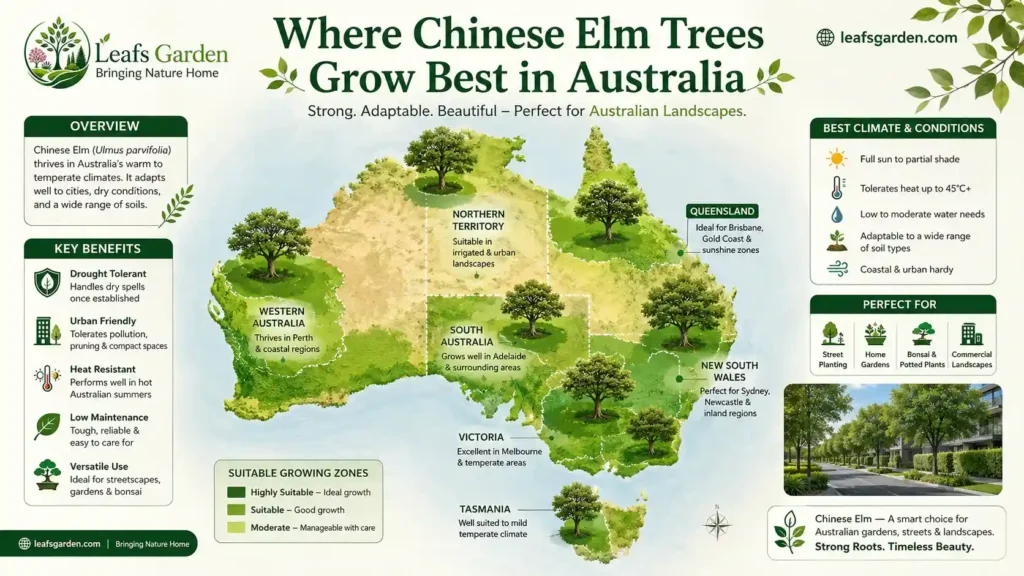
Chinese elm tree australia suitability is strongest in:
Many gardeners choose elm tree australia varieties like Chinese elm because they tolerate:
Elm trees australia plantings are commonly used for:
In some regions, proper pruning and root management are important because mature trees can develop extensive canopy spread over time. Regular maintenance also improves structural shape and long-term landscape performance.
Chinese elm care involves proper pruning, balanced watering, seasonal maintenance, and disease monitoring. Ulmus parvifolia is considered a relatively low-maintenance ornamental tree, but consistent care improves canopy density, bark appearance, root health, and long-term growth performance.
Routine maintenance also helps reduce common stress problems such as weak branching, fungal infections, and excessive leaf drop.
Chinese elm saplings establish best when planted in well-draining soil with adequate sunlight and airflow. Proper planting depth and spacing are important for healthy root development and future canopy growth.
When planting chinese elm seedlings or young trees:
Planting steps include:
Correct planting depth is critical. Planting too deeply can restrict oxygen flow to roots and increase disease risk.
General spacing recommendations:
Young chinese elm sapling growth is usually fast when soil moisture and sunlight remain consistent during establishment.
Chinese elm trees benefit from balanced fertilization during active growing periods. Proper feeding supports healthy foliage, canopy density, bark development, and root growth.
Best fertilizer options include:
A typical seasonal feeding schedule includes:
| Season | Fertilizing Recommendation |
| Early Spring | Main feeding period |
| Late Spring | Light supplemental feeding |
| Summer | Moderate feeding if growth is active |
| Autumn | Minimal feeding |
| Winter | Usually unnecessary |
Overfertilizing should be avoided because excessive nitrogen may cause:
Bonsai Chinese elm trees usually require more controlled and frequent feeding because nutrients deplete faster in containers.
Chinese elm trees respond exceptionally well to pruning and shaping. Regular canopy management improves airflow, structural balance, and overall ornamental appearance.
Important pruning goals include:
Structural pruning is best performed during dormancy or mild growing periods when stress is lower.
Key pruning practices include:
Chinese elm bonsai specimens require more frequent trimming because the species develops fine branching rapidly.
Avoid excessive heavy pruning during extreme heat or severe frost periods because stress recovery may slow temporarily.
Seasonal maintenance helps Chinese elm trees remain healthy throughout changing climate conditions. Adjusting watering, mulching, and cleanup practices according to season improves overall resilience.
During hot weather:
Young trees generally require more summer irrigation than mature established specimens.
During colder seasons:
In colder climates, deciduous leaf drop is normal winter behavior.
Mulching provides several important benefits:
Maintain mulch several centimeters away from the trunk to prevent moisture buildup against bark.
Seasonal leaf cleanup helps:
Regular monitoring also helps identify pest or disease problems early before major damage develops.
| Care Factor | Chinese Elm Rating |
| Easy-Care Rating | High |
| Maintenance Level | Moderate to Low |
| Growth Speed | Moderate to Fast |
| Drought Tolerance | Good Once Established |
| Pruning Response | Excellent |
| Bonsai Suitability | Outstanding |
Chinese elm trees remain popular because they combine ornamental beauty with strong adaptability and manageable long-term care requirements.
Chinese elm trees are generally resilient but may develop fungal diseases, pest infestations, black spot, or root-related issues under poor growing conditions. Although Ulmus parvifolia has stronger disease resistance than many elm species, improper watering, environmental stress, and lack of maintenance can still lead to health problems.
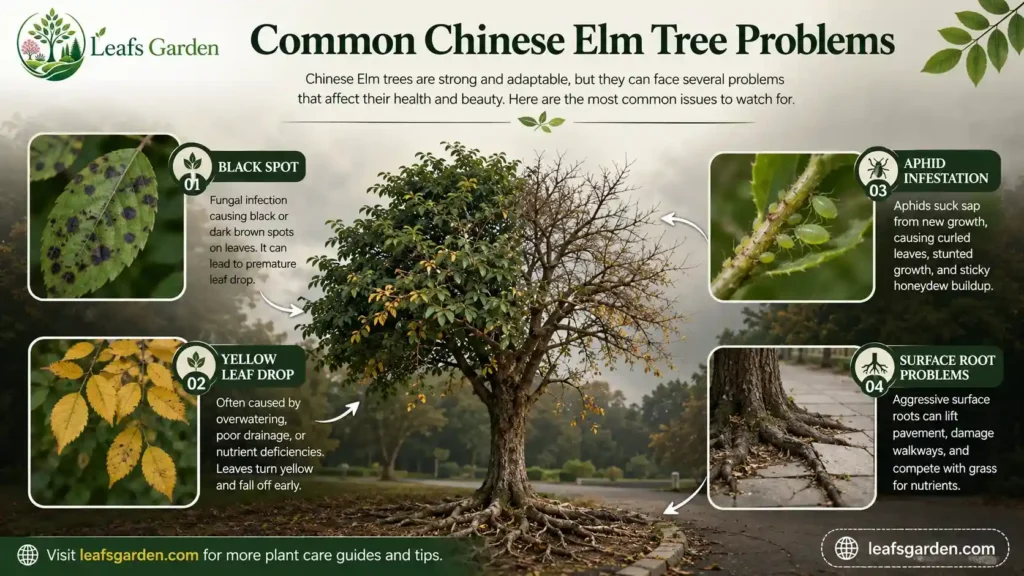
Early identification and proper care are important for preventing long-term damage.
Chinese elm tree problems australia gardeners encounter most often are linked to environmental stress, watering imbalance, and root-related complications. Australian heat, dry conditions, and compact urban soils can place additional pressure on trees during summer.
Common Australian growing issues include:
Heat stress symptoms may include:
Root problems often develop when trees are planted too close to:
Watering mistakes are also common. Excessive watering may cause fungal root stress, while underwatering can weaken canopy development and increase leaf shedding.
Chinese elm disease problems are usually fungal in nature, especially in humid environments or poorly ventilated planting areas. Although Ulmus parvifolia shows good resistance to Dutch elm disease compared to other elms, it can still develop several manageable infections.
Common chinese elm diseases include:
Chinese elm black spot symptoms often include:
Fungal infections are more likely when:
Disease prevention practices include:
Healthy trees with balanced watering and sunlight are usually far more resistant to disease pressure.
Lacebark elm problems are commonly associated with environmental stress, inconsistent watering, or bark-related damage. While the decorative peeling bark is a major ornamental feature, stress conditions may sometimes affect bark appearance.
Potential lacebark elm issues include:
Bark splitting can develop because of:
Root stress may occur in compacted or poorly drained soil where oxygen availability becomes limited. Prolonged stress can weaken overall tree vigor and reduce resistance to pests and fungal pathogens.
Seasonal leaf drop remains normal in many climates, especially when the tree behaves deciduously during colder weather.
Chinese elm trees may occasionally experience insect infestations, particularly during periods of environmental stress or weak growth. Most infestations are manageable when identified early.
Common pest problems include:
Aphids commonly cause:
Scale insects may appear as:
Beetles and chewing insects sometimes create:
Integrated pest management practices help reduce long-term infestations. Useful control methods include:
Healthy Chinese elm trees generally tolerate minor pest activity without severe long-term damage.
Yellow leaves and leaf drop are among the most common Chinese elm stress symptoms. In many cases, environmental conditions or watering imbalance are the primary causes.
Common reasons for yellowing foliage include:
Overwatering symptoms often include:
Nutrient deficiencies may cause:
Seasonal shedding is also normal for semi-evergreen and deciduous Chinese elm trees, especially during autumn and winter transitions.
If leaf loss becomes excessive outside seasonal change periods, root health and watering practices should be inspected first.
Visual identification is extremely helpful when diagnosing Chinese elm tree problems. Disease and pest symptoms often appear differently depending on climate, tree age, and severity of infection.
Recommended infographic or image placements include:
Image-based diagnosis sections help gardeners identify problems earlier and apply proper treatment before major canopy decline occurs.
Chinese elm is one of the best bonsai tree species because of its fine branching, small leaves, and excellent pruning response. Ulmus parvifolia adapts extremely well to shaping, trimming, and container cultivation, making it highly popular among both beginner and advanced bonsai growers.
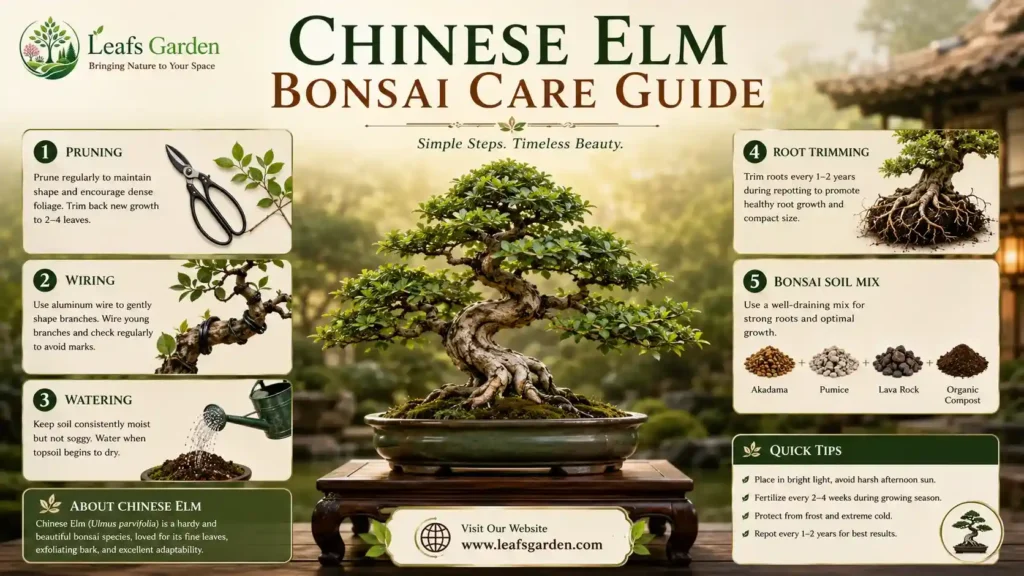
Its tolerance to pruning, environmental adaptability, and naturally elegant branch structure allow Chinese elm bonsai trees to develop refined miniature forms with relatively manageable care requirements.
Chinese elm bonsai trees are widely considered among the easiest and most rewarding bonsai species to grow. The tree naturally develops dense branching and responds quickly to pruning techniques, making it ideal for bonsai styling.
Major reasons growers choose bonsai chinese elm varieties include:
Chinese elm for bonsai cultivation is also popular because the species tolerates beginner mistakes better than many delicate bonsai trees.
Important bonsai qualities of bonsai elm parvifolia include:
Many bonsai collectors specifically search for bonsai ulmus parvifolia because mature specimens can develop highly refined branch structures and textured bark that resemble full-sized mature trees in miniature form.
Chinese elm bonsai can adapt to both indoor and outdoor environments, although care requirements differ depending on placement conditions.
| Feature | Indoor Bonsai | Outdoor Bonsai |
| Humidity | Higher needed | Natural |
| Sunlight | Bright indirect | Full sun |
| Winter Care | Protected | Hardy |
Indoor bonsai care generally requires:
Outdoor bonsai Chinese elms usually develop:
Outdoor cultivation also helps support more natural dormancy cycles in cooler climates.
Indoor trees may require additional humidity trays or airflow management because dry indoor air can increase leaf stress.
Chinese elm bonsai pruning focuses on canopy refinement, branch structure, and ramification development. The species responds quickly to trimming, making it ideal for repeated shaping throughout the growing season.
Core pruning techniques include:
Wiring is commonly used to:
Young shoots remain flexible and wire easily, although regular monitoring is important to prevent wire scarring.
Trimming practices usually involve:
Ramification refers to the fine branch division that creates dense bonsai canopy structure. Chinese elm develops ramification exceptionally well with consistent pruning cycles.
Regular pruning also improves:
Chinese elm bonsai trees require balanced moisture and fast-draining soil conditions. Bonsai containers dry faster than landscape soil, so watering consistency becomes extremely important.
Ideal bonsai soil characteristics include:
Common bonsai mix ingredients include:
Proper moisture balance is critical because both underwatering and overwatering can weaken bonsai health.
Watering guidelines include:
Environmental conditions such as wind, temperature, humidity, and container size strongly influence watering frequency.
Chinese elm bonsai problems are usually linked to watering imbalance, environmental stress, or insufficient sunlight. Early symptom recognition helps prevent long-term decline.
Common bonsai issues include:
Leaf drop commonly occurs because of:
Overwatering symptoms may include:
Weak growth often develops when bonsai trees receive:
Healthy root systems, proper pruning, balanced fertilization, and stable growing conditions usually prevent most serious bonsai problems.
Chinese elm bonsai and juniper bonsai are both highly popular bonsai species, but they differ significantly in care style and beginner suitability.
| Feature | Chinese Elm Bonsai | Juniper Bonsai |
| Beginner Friendly | Excellent | Moderate |
| Indoor Suitability | Better | Poor |
| Pruning Tolerance | High | Moderate |
Juniper bonsai species are admired for their dramatic foliage pads and rugged appearance, but juniper bonsai care can be more demanding for beginners.
Important differences include:
Chinese elm bonsai is often recommended for beginners because it:
Juniper bonsai varieties remain excellent traditional bonsai trees, but they usually require more experience with watering balance, outdoor care, and foliage management techniques.
Chinese elm trees are long-living ornamental trees capable of surviving for several decades with proper care. Ulmus parvifolia is valued not only for its attractive appearance and adaptability, but also for its strong long-term growth performance in landscapes, urban environments, and bonsai cultivation.
The species combines relatively fast early growth with excellent environmental resilience, allowing mature trees to remain healthy and structurally stable for many years.
Chinese elm lifespan varies depending on climate conditions, maintenance quality, disease exposure, and planting environment. Under favorable growing conditions, many trees can live for 50–100 years or longer.
Average chinese elm life expectancy commonly includes:
When gardeners ask how long do chinese elm trees live, the answer largely depends on:
Healthy mature trees often continue developing attractive bark texture and broad canopy structure as they age.
Chinese elm bonsai trees may also survive for decades when:
Long-term resilience is one reason Ulmus parvifolia remains widely planted in parks, gardens, and urban streetscapes.
Chinese elm trees are considered moderate to fast-growing ornamental trees, especially during their early establishment years. Young trees often develop quickly when planted in full sun with balanced moisture and fertile soil.
Fast growth characteristics typically include:
In favorable conditions, young Chinese elm trees may grow:
Long-term mature development includes:
Mature canopy spread commonly reaches:
As the tree ages, growth gradually slows while structural strength and ornamental appearance continue improving. Mature Chinese elms often become highly valued shade and feature trees because of their elegant canopy architecture.
Several environmental and maintenance factors influence the long-term health and lifespan of Chinese elm trees. Proper care significantly improves structural stability, disease resistance, and canopy development over time.
Important longevity factors include:
Healthy soil supports:
Poor drainage and compacted soil can shorten lifespan by increasing root stress and disease risk.
Balanced watering is critical throughout the tree’s life cycle.
Problems caused by watering imbalance include:
Young trees generally require more consistent irrigation during establishment.
Early disease management helps prevent long-term decline.
Important disease prevention practices include:
Healthy trees resist pests and fungal pathogens more effectively than stressed specimens.
Chinese elm adapts well to many climates, but extreme environmental conditions may still affect longevity.
Potential climate stress factors include:
Trees planted in climates matching their preferred growing conditions usually develop stronger structure and longer lifespan overall.
Chinese elm trees offer strong disease resistance, ornamental bark, and bonsai versatility, but they can also create maintenance and root-management challenges. Their adaptability and attractive appearance make them highly popular in landscaping and bonsai cultivation, although proper placement and routine care remain important for long-term success.
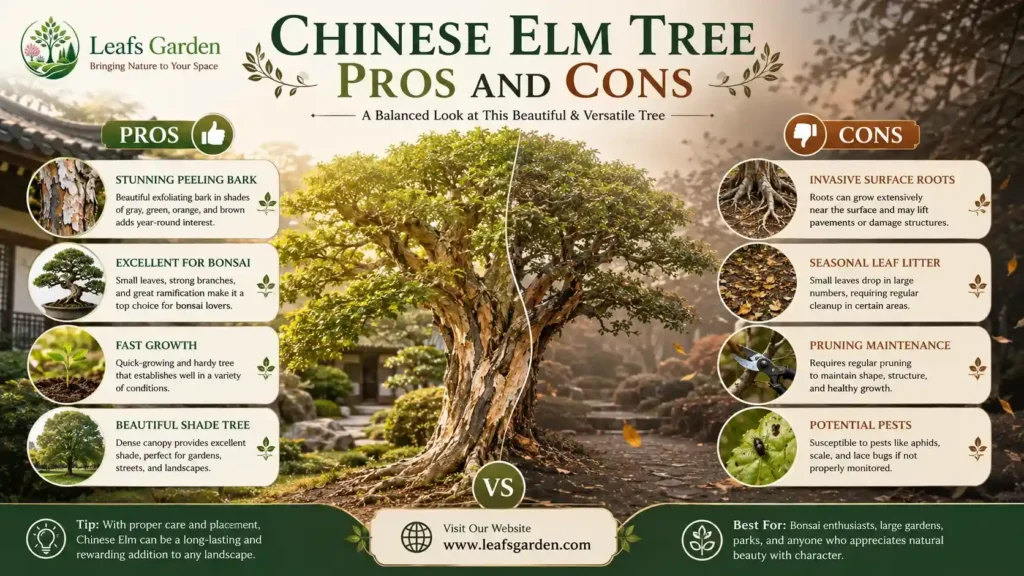
Understanding chinese elm tree pros and cons helps gardeners determine whether Ulmus parvifolia is suitable for their climate, garden size, and maintenance preferences.
| Pros | Cons |
| Beautiful bark | Surface roots |
| Fast growth | Leaf litter |
| Bonsai-friendly | Occasional pests |
| Heat tolerant | Requires pruning |
One of the biggest advantages of Chinese elm trees is their decorative peeling bark. Mature lacebark patterns create year-round visual interest with shades of gray, orange, green, and brown visible beneath the outer bark layers.
Fast growth is another major benefit. Young trees establish quickly and develop attractive rounded canopies faster than many ornamental shade trees. This makes them useful for:
Chinese elm is also widely considered one of the best bonsai tree species because of its:
Heat tolerance and urban adaptability further increase the species’ popularity in warmer climates and Australian landscapes.
Despite these strengths, some maintenance concerns should still be considered.
Surface roots may gradually develop in mature trees, especially when planted in compacted soil or confined urban areas. In some cases, roots can affect:
Seasonal leaf litter can also increase cleanup requirements, particularly in deciduous climates where foliage drops heavily during autumn.
Occasional pests and fungal issues may appear under stress conditions, although Chinese elm generally resists disease better than many traditional elm species.
Regular pruning is often necessary to:
For most gardeners, the advantages of Chinese elm trees outweigh the disadvantages, especially when the tree is planted in an appropriate location with adequate long-term space for canopy and root development.
Several Chinese elm cultivars and related elm species are grown for landscaping, shade, and bonsai use. Different varieties of Ulmus parvifolia offer unique canopy shapes, bark characteristics, growth habits, and environmental adaptability, making them suitable for both ornamental planting and bonsai cultivation.
Related Asian elm species also share many visual similarities with Chinese elm, although growth form and climate tolerance can vary significantly between species.
Chinese elm cultivars are selected for traits such as canopy structure, bark texture, disease resistance, and growth performance. Some varieties are commonly planted as shade trees, while others are preferred for bonsai or urban landscapes.
Ulmus parvifolia Todd is a refined ornamental cultivar valued for its upright growth habit, strong branching structure, and attractive foliage density.
Key characteristics include:
This cultivar is often used in:
Drake elm is one of the most widely planted Chinese elm cultivars in warm climates. It is especially popular in urban environments because of its durability and fast establishment.
Notable features include:
Drake elm trees are commonly used as:
The variety also tolerates pruning well, making it manageable for structured landscape designs.
Lacebark elm is a common ornamental name used for Chinese elm varieties with highly decorative peeling bark.
Important lacebark elm traits include:
Older lacebark elms become especially attractive during winter when bark texture becomes more visible after leaf drop.
Many bonsai growers also favor lacebark elm varieties because mature bark gives miniature trees an aged appearance quickly.
Chinese elm and Japanese elm are related Asian elm species, but they differ in growth form, leaf structure, and bonsai characteristics.
Chinese elm is generally considered more adaptable and ornamental for modern landscaping and bonsai cultivation.
| Feature | Chinese Elm | Japanese Elm |
| Growth Habit | Rounded | Upright spreading |
| Leaf Size | Smaller | Larger |
| Bonsai Suitability | Excellent | Moderate |
| Bark Texture | Decorative peeling | Less ornamental |
| Heat Tolerance | Strong | Moderate |
Japanese elm bonsai trees are still appreciated among bonsai enthusiasts, especially in traditional Asian bonsai collections. However, Chinese elm is usually considered easier for beginners because it tolerates pruning and environmental changes more effectively.
Chinese elm also develops finer ramification and smaller foliage, which improves miniature bonsai proportions.
Several related Asian elm species share similarities with Chinese elm in appearance and growth behavior. These species are sometimes grouped under broader terms such as asian elm or oriental elm.
Common related species include:
Asian elm tree species are often valued for:
The term oriental elm is sometimes used broadly for East Asian elm species, although Chinese elm remains the most widely cultivated ornamental type in many regions.
Compared to other Asian elms, Ulmus parvifolia is usually preferred for:
Its combination of ornamental beauty, manageable growth, and environmental resilience continues to make Chinese elm one of the most important ornamental elm species worldwide.
Chinese elm trees are widely used in streetscapes, gardens, parks, and urban landscapes because of their adaptability and elegant appearance. Ulmus parvifolia combines ornamental beauty with strong environmental tolerance, making it one of the most practical elm species for modern landscaping projects.
Its rounded canopy, decorative bark, moderate maintenance needs, and resilience in difficult growing conditions allow the species to perform well in both residential and public spaces.
For a broader comparison of shade and landscape trees suited to Australian climates, see our complete Evergreen, Shade & Landscape Trees guide.
Chinese elm trees are highly versatile and can serve multiple landscape functions depending on pruning style, available space, and planting design.
Chinese elm is commonly planted as a shade tree because of its broad rounded canopy and dense foliage.
Benefits as a shade tree include:
Mature trees create comfortable shaded spaces in:
For a larger fast-growing shade tree with spectacular autumn colour, the Liquid Amber Tree is a popular companion species in similar temperate and urban landscape settings.
Many municipalities use Chinese elm as a street tree because the species tolerates difficult urban conditions better than many ornamental trees.
Another highly popular urban street tree with similar pollution and heat tolerance is the London Plane Tree, widely planted alongside Chinese elm in city streetscapes worldwide.
Important street tree qualities include:
The tree also develops attractive bark texture that improves streetscape appearance year-round.
Chinese elm works exceptionally well as a feature specimen in ornamental landscapes.
Its visual appeal comes from:
Single mature specimens often become focal points in landscape design because of their refined structure and seasonal interest.
Smaller cultivars and carefully pruned specimens can also perform well in compact landscapes.
For small garden use, growers often choose:
Proper placement is important because mature canopy spread can become significant over time.
Chinese elm trees perform extremely well in urban environments because of their resilience and environmental adaptability. Many cities favor Ulmus parvifolia for public planting due to its ability to tolerate stress conditions that damage less adaptable trees.
Key urban strengths include:
Urban landscapes often expose trees to:
Chinese elm generally handles these conditions more successfully than many traditional ornamental trees.
Its drought resistance becomes especially valuable in regions with:
Routine pruning and proper root management further improve long-term performance in city environments.
Chinese elm can be suitable for small gardens when carefully selected, properly positioned, and regularly maintained. However, mature size and root spread should always be considered before planting.
Important root spread considerations include:
Planting too close to:
may eventually create maintenance challenges as roots mature.
Pruning management is especially important in smaller landscapes. Regular pruning helps:
Compact cultivars and younger managed trees are often better choices for limited spaces.
For gardeners wanting the ornamental appearance of Chinese elm without full landscape size, Chinese elm bonsai cultivation also provides an attractive small-space alternative.
Chinese elm is one of the most versatile ornamental trees for landscaping and bonsai cultivation thanks to its resilience, elegant structure, and adaptable nature. Ulmus parvifolia combines decorative bark, graceful branching, strong environmental tolerance, and manageable maintenance requirements, making it a reliable choice for both beginner gardeners and experienced growers.
Its distinctive identification features, including mottled lacebark bark patterns, small serrated leaves, and rounded canopy form, make the species easy to recognize in landscapes and bonsai collections. Chinese elm also adapts successfully to a wide range of climates, including many Australian growing regions, where heat tolerance and drought resistance are especially valuable.
Proper Chinese elm care focuses on:
Routine care greatly improves long-term tree health, canopy development, and ornamental appearance. Although Chinese elm trees are generally resilient, problems such as fungal disease, root stress, pests, and watering imbalance can still occur if maintenance is neglected.
Chinese elm bonsai cultivation remains one of the species’ strongest advantages. The tree’s fine branching, pruning tolerance, compact foliage, and rapid ramification development make it one of the most beginner-friendly bonsai trees available.
From urban streetscapes and shade gardens to bonsai displays and feature landscaping, Chinese elm trees continue to perform exceptionally well because of their adaptability and long lifespan.
For best long-term results:
With consistent care and appropriate growing conditions, Chinese elm trees can remain attractive, durable, and highly ornamental for decades.
A Chinese elm tree has small serrated leaves, a rounded canopy, graceful branching, and decorative peeling bark. Mature trees develop mottled bark patterns in shades of gray, orange, green, and brown, which is why the species is also called lacebark elm.
Yes, Chinese elm is considered one of the best bonsai tree species for both beginners and experienced growers. It has small leaves, fine branching, excellent pruning tolerance, and strong adaptability to container cultivation. Chinese elm bonsai trees also recover quickly after trimming and wiring.
Chinese elm trees are moderate to fast-growing ornamental trees. Young trees may grow around 30–90 cm per year under favorable conditions with full sun, balanced watering, and healthy soil. Growth speed gradually slows as the tree matures.
Chinese elm roots can become wide-spreading and occasionally develop near the soil surface, especially in compacted urban environments. While they are not considered aggressively invasive compared to some tree species, mature roots may affect pavements, driveways, or nearby structures if planted too close.
Chinese elm is usually classified as semi-evergreen. In warm climates, the tree may retain most of its foliage year-round, while in colder regions it behaves more like a deciduous tree and sheds leaves during winter.
Chinese elm trees can live for several decades and often survive 50–100 years or more with proper care. Lifespan depends on growing conditions, soil quality, watering balance, disease management, and climate suitability.
Chinese elm trees may occasionally develop fungal diseases, black spot, pest infestations, yellow leaves, root stress, or seasonal leaf drop. Most problems are linked to poor drainage, overwatering, environmental stress, or insufficient airflow around the canopy.
Yes, Chinese elm grows successfully in many Australian regions because of its heat tolerance, drought resistance, and adaptability. The species performs particularly well in temperate and warm climates across parts of Victoria, New South Wales, South Australia, and other suitable urban and residential landscapes.