Grow Better Gardens with Smarter Plant Choices
Discover helpful guides on trees, hedges, fruit plants, edible plants, and beautiful landscape greenery.


The cinnamon tree Australia gardeners grow most successfully is Cinnamomum verum, commonly known as the true cinnamon tree or Ceylon cinnamon tree. This tropical evergreen species produces the fragrant inner bark used as culinary cinnamon and grows best in warm, humid climates. In Australia, cinnamon plants perform especially well in tropical and subtropical regions, while container growing makes them possible in cooler areas too.
A cinnamon tree is valued for much more than spice production. The edible bark, glossy aromatic leaves, and dense evergreen structure make the tree of cinnamon both practical and ornamental. Many home gardeners now grow cinnamon trees as edible landscape plants, tropical feature trees, or compact potted specimens for patios and greenhouses.
The biggest difference between a true cinnamon tree and cassia cinnamon is flavor and bark quality. True cinnamon has thin, delicate bark with a sweeter and milder taste, while cassia varieties are thicker, darker, and stronger in flavor. Because of this, Cinnamomum verum is often considered the premium culinary option worldwide.
Interest in cinnamon tree Australia growing conditions has increased because more gardeners want edible tropical plants that combine beauty with functionality. A cinnamon plant Australia growers maintain can provide aromatic foliage, attractive evergreen growth, and even home-harvested bark under suitable conditions.
In northern Australia, outdoor garden planting is often possible year-round. In cooler regions like Melbourne, Perth, or Sydney, a cinnamon plant can still grow successfully in large pots with winter protection or greenhouse support. This container growing potential has made cinnamon plants increasingly popular among collectors of tropical edible species.
Beyond Australia, cinnamon trees are also widely grown in Florida, Hawaii, tropical Asia, Africa, and warm greenhouse environments across Europe and North America. Their adaptability to controlled environments makes the ceylon cinnamon tree suitable for gardeners worldwide who can provide warmth, humidity, and frost protection.
Most cinnamon trees develop smooth bark, layered branching, and glossy leaves that shift from reddish new growth to deep green maturity. The leaves contain aromatic oils, adding fragrance even before bark harvesting begins. This tropical appearance gives the cinnamon tree strong ornamental value in edible gardens.
Today, the cinnamon plant is appreciated as both a culinary crop and an attractive evergreen specimen. Whether grown outdoors in tropical climates or inside containers in cooler regions, the true cinnamon tree continues gaining popularity among home gardeners looking for unique edible plants with global appeal.
A cinnamon tree is a tropical evergreen tree grown for its fragrant inner bark, which is harvested and dried to make culinary cinnamon. The bark curls naturally as it dries, creating the cinnamon sticks commonly used in cooking, baking, teas, and spice blends worldwide.
Most cinnamon trees thrive in warm humid climates and develop glossy aromatic leaves, smooth bark, and dense evergreen growth. Besides spice production, the tree is also valued as an ornamental edible plant in tropical and subtropical gardens.
The true cinnamon tree is scientifically known as Cinnamomum verum. It is considered the highest-quality culinary cinnamon species and is native to Sri Lanka. Some botanical references also list it as Cinnamomum verum zeylanicum.
Other commonly used botanical references include:
The cinnamon tree belongs to the Lauraceae plant family, which also includes avocado, bay laurel, and camphor trees. Members of this family are often known for their aromatic oils and evergreen foliage.
Gardeners interested in growing edible plants from this remarkable family will find inspiration across a wide range of productive fruit trees and edible plants suited to warm Australian climates.
The cinnamon tree is known by several common names depending on region, species, and culinary use.
Common names include:
The term “true cinnamon” is mainly used for Cinnamomum verum because of its softer bark texture and sweeter flavor compared to cassia types.
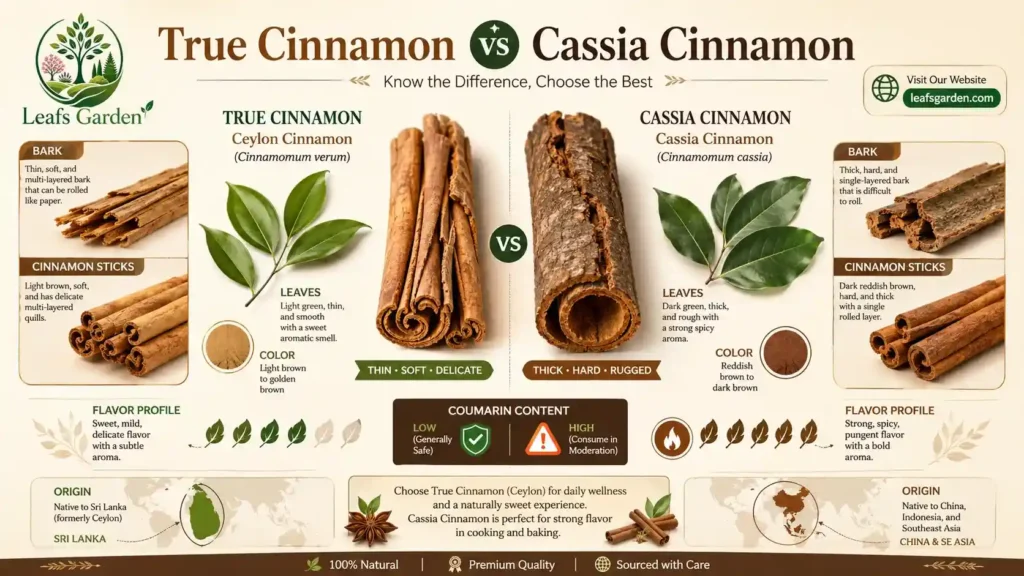
True cinnamon and cassia cinnamon come from different tree species. Although both are sold as cinnamon, they differ in flavor, bark texture, appearance, and growing origin.
True cinnamon is usually milder, sweeter, and lighter in color. Cassia cinnamon is stronger, darker, and more intensely spicy.
| Feature | True Cinnamon | Cassia Cinnamon |
| Species | Cinnamomum verum | Cinnamomum cassia |
| Flavor | Mild & sweet | Strong & spicy |
| Bark Texture | Thin layers | Thick hard bark |
| Color | Light brown | Dark reddish brown |
| Common Regions | Sri Lanka | China & Southeast Asia |
Several cassia-related species are also commercially grown worldwide. These include:
Cinnamomum aromaticum is commonly associated with Chinese cassia cinnamon, while Cinnamomum loureirii is often called Saigon cinnamon or Vietnamese cinnamon. These varieties usually contain stronger oils and more intense flavor compounds than verum cinnamon.
Cinnamon originally comes from Sri Lanka, India, and parts of Southeast Asia where tropical humidity supports bark production. These warm climates allow cinnamon trees to grow continuously and develop the soft inner bark harvested for spice production.
When people ask where does cinnamon come from or where is cinnamon from, the answer usually depends on the cinnamon species. True cinnamon mainly originates from Sri Lanka, while cassia cinnamon is more commonly linked to China, Indonesia, and Vietnam.
The cinnamon origin of commercial spice production stretches across tropical Asia, where cinnamon farming has existed for centuries. Today, cinnamon is cultivated in many tropical regions worldwide, but Sri Lanka still remains strongly associated with premium true cinnamon production.
Common search questions include:
In natural environments, cinnamon trees grow best in humid forests with warm temperatures, regular rainfall, and rich organic soil. These conditions help produce healthy bark growth and strong aromatic oils.
Cinnamon plants can grow successfully in Australia in tropical and frost-free subtropical climates, especially Queensland and northern coastal regions. Warm temperatures, humidity, and protection from frost are the main requirements for healthy growth.
Many Australian gardeners grow a cinnamon tree as both an edible and ornamental tropical plant. In suitable climates, cinnamon trees can be planted directly into the ground. In cooler areas, they are commonly grown in containers, greenhouses, or protected patios.
Cinnamon trees perform best in warm humid parts of Australia where temperatures remain mild throughout the year. Frost-free conditions are especially important because young plants are sensitive to cold damage.
The best regions include:
North Queensland is one of the most suitable areas for outdoor cinnamon growing because of its tropical humidity and warm temperatures. Coastal northern New South Wales can also support healthy growth in protected locations.
Gardeners enjoying North Queensland’s warm tropical conditions may also find great success growing a lychee fruit tree, another humidity-loving tropical species that thrives in similarly warm and frost-free coastal environments.
In USDA equivalent terms, cinnamon trees grow best in zones roughly comparable to USDA Zones 10–12. These regions provide enough warmth for continuous evergreen growth and bark development.
Important climate conditions include:
Gardeners in cooler climates can still grow cinnamon successfully with container management and seasonal protection.
Cinnamon trees can grow in Sydney, Melbourne, and Perth, but they usually require more protection than tropical northern regions. Cooler winters and lower humidity can slow growth or damage plants if left exposed.
In Sydney, protected outdoor growing is possible in warm microclimates with shelter from winter cold. Humidity levels are often adequate during warmer months, especially near coastal areas.
Melbourne gardeners generally achieve better results through container growing or greenhouse growing because winter temperatures can become too cold for outdoor survival.
Perth presents different challenges because its dry climate may reduce humidity around the plant. Extra watering and humidity support are often needed.
Successful growing methods in cooler cities include:
Large pots allow gardeners to move cinnamon plants indoors or into sheltered areas during cold periods. Greenhouses can also maintain the stable warmth and humidity needed for tropical evergreen growth.
Indoor overwintering works best near bright filtered light with moderate humidity and protection from indoor heating dryness.
Cinnamon trees are grown successfully in many warm regions around the world where tropical or subtropical conditions are available.
In the United States, the best outdoor growing areas include:
Florida and Hawaii provide excellent humidity and warmth for year-round growth. Southern California gardeners often need protected microclimates and additional moisture because of lower humidity.
Globally, cinnamon cultivation is widespread across:
Sri Lanka, India, Indonesia, and Vietnam remain major cinnamon-producing regions because of their ideal tropical climate conditions. In Africa, warm humid regions also support commercial cinnamon farming.
In Europe, cinnamon trees are usually grown in conservatories, indoor botanical collections, or heated greenhouses where temperatures remain stable throughout winter.
Cinnamon plants can adapt to both indoor and outdoor growing when their warmth and humidity needs are properly managed. The best method depends on local climate conditions.
| Growing Method | Advantages | Challenges |
| Pots | Portable, easy winter protection, suitable for patios | Requires regular watering and repotting |
| Greenhouse | Stable warmth and humidity, strong growth | Needs ventilation and humidity control |
| Garden Planting | Larger mature growth, less root restriction | Only suitable in frost-free climates |
Humidity needs are important in every growing method. Cinnamon plants naturally prefer moist tropical air and may struggle in dry environments without extra care.
Outdoor garden planting works best in tropical Australia and frost-free coastal regions. Pot growing provides flexibility for cooler climates, while greenhouse growing offers the most controlled environment for year-round healthy growth.
Cinnamon trees are evergreen tropical trees with glossy aromatic leaves, smooth bark, and dense branching growth. They develop a lush tropical appearance that makes them attractive as both edible and ornamental plants.
A healthy cinnamon tree usually forms a rounded canopy with layered branching and vibrant foliage. The bark is smooth when young and gradually becomes more textured as stems mature. Both the bark and leaves release fragrance because of their natural aromatic oils.
Cinnamon trees can become medium-sized tropical trees when grown in ideal outdoor conditions. Their final size depends on climate, pruning, and whether they are planted in the ground or grown in containers.
Typical mature height ranges include:
Many home gardeners maintain smaller trees through regular pruning because cinnamon responds well to trimming. Frequent pruning also encourages new stem growth, which is important for future bark harvesting.
Growth speed is considered moderate under warm humid conditions. Young plants usually establish slowly during the first year before developing stronger branching and root systems.
Factors affecting growth speed include:
In tropical Australia, cinnamon trees can grow actively through much of the year. In cooler climates, growth may slow significantly during winter.
Cinnamon leaves are one of the most distinctive features of the plant. The glossy foliage gives the tree a dense tropical appearance even before bark harvesting begins.
Young cinnamon leaves often emerge with reddish, bronze, or pink tones before gradually turning green as they mature. These leaf color changes make the tree visually attractive throughout different growth stages.
Common foliage characteristics include:
Many people search for cinnamon leaves or cinamon leaves because the foliage itself carries a mild spicy fragrance similar to culinary cinnamon.
When crushed, the leaves release aromatic oils that contribute to the plant’s fragrance. These oils are naturally produced throughout the leaves, bark, and stems.
The bark texture also changes with age. Young stems remain relatively smooth and flexible, while older bark becomes firmer and more textured. The inner bark is the valuable layer harvested to produce cinnamon spice.
True cinnamon bark is known for being:
Cassia species usually develop thicker and harder bark compared to true cinnamon varieties.
Cinnamon trees produce small creamy flowers during their flowering stage. These blooms usually appear in clusters among mature foliage and are more noticeable on older established plants.
The flowers are lightly fragrant and may help attract pollinators to the garden. Bees and small insects are commonly drawn to blooming cinnamon trees in tropical climates.
After flowering, some trees develop berry-like fruits that gradually darken as they mature. These fruits are generally small and not commonly grown for culinary use.
Flower and fruit characteristics include:
Although bark remains the primary harvested product, flowering and fruiting increase the ornamental value of mature cinnamon trees.
Cinnamon bark varies from tan to reddish brown because different cinnamon species contain varying oil compositions, bark thickness, and drying characteristics.
True cinnamon usually develops a lighter tan or golden brown color with delicate layered bark. Cassia cinnamon species often appear darker reddish brown because of their thicker bark and stronger oil concentration.
Drying conditions, harvesting age, and species type also influence the final colour of cinnamon after processing.
Cinnamon grows from a tropical evergreen tree where the inner bark is harvested from young stems after pruning. The valuable cinnamon spice comes from the soft inner bark layer found beneath the outer bark surface.
Unlike many spices that come from seeds or fruits, cinnamon is produced directly from the stem tissue of the tree. Warm temperatures, humidity, and regular pruning help encourage the fresh young growth needed for bark production.
Cinnamon is made by removing and processing the inner bark from young stems of cinnamon trees. After harvesting, the bark naturally curls while drying, forming the cinnamon sticks commonly used in cooking and spice production.
Many people ask how is cinnamon made or cinnamon how is it made because the process is very different from most common spices. The spice does not come from leaves, roots, or fruit. Instead, it comes from carefully prepared bark layers.
The basic production process includes:
How cinnamon is made depends partly on the species being grown. True cinnamon usually produces thinner layered bark, while cassia species form thicker and harder bark pieces.
Once dried, the bark can remain as sticks or be ground into cinnamon powder for culinary use.
Cinnamon harvesting usually begins after the tree develops enough young stems suitable for bark removal. Growers commonly prune the plant regularly because fresh shoots produce the best quality bark.
People searching how is cinnamon harvested or how to harvest cinnamon are usually referring to the bark removal process used on young stems rather than mature trunks.
The harvesting process generally includes:
How cinnamon is harvested greatly affects bark quality. Younger stems tend to produce smoother and more flexible bark layers with better flavor and aroma.
Commercial cinnamon harvesting is often repeated every few years after new stems regrow from the pruned plant base.
Cinnamon grows naturally in tropical humid forests with warm temperatures and consistent rainfall. The trees prefer rich organic soil and environments with high humidity throughout most of the year.
When gardeners ask how does cinnamon grow or how cinnamon grows, the answer involves continuous evergreen growth supported by tropical conditions.
Natural growing characteristics include:
How cinnamon is grown commercially usually involves regular pruning to encourage multiple stems rather than allowing one large trunk to dominate. This creates easier access for future bark harvesting.
People also search:
In cultivated systems, growers manage the tree carefully to balance stem growth, bark quality, and plant health.
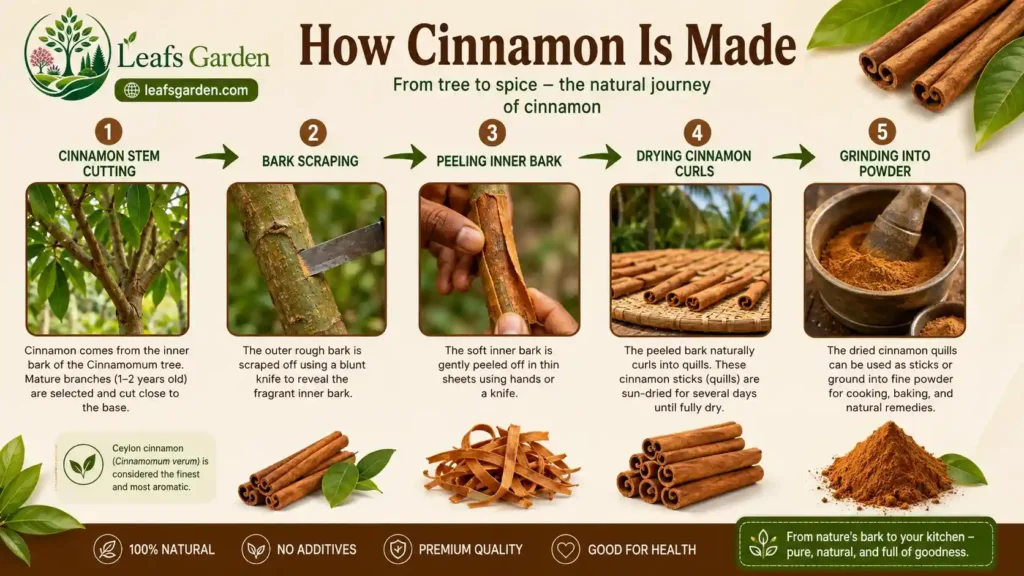
After harvesting, the bark goes through several processing stages before becoming culinary cinnamon.
Young stems are cut from the cinnamon tree after reaching suitable thickness. Flexible stems usually produce the highest-quality bark.
The rough outer bark is gently scraped away to expose the softer inner bark layer underneath.
The inner bark is carefully peeled off in strips. This thin fragrant layer becomes the edible cinnamon product.
As the bark dries, it naturally curls into layered rolls called cinnamon quills or cinnamon sticks. Proper drying helps preserve aroma and flavor.
Dried cinnamon bark can be ground into fine powder for cooking, baking, beverages, and spice blends.
This processing system is used worldwide for both true cinnamon and cassia cinnamon production, although bark texture and final appearance vary between species.
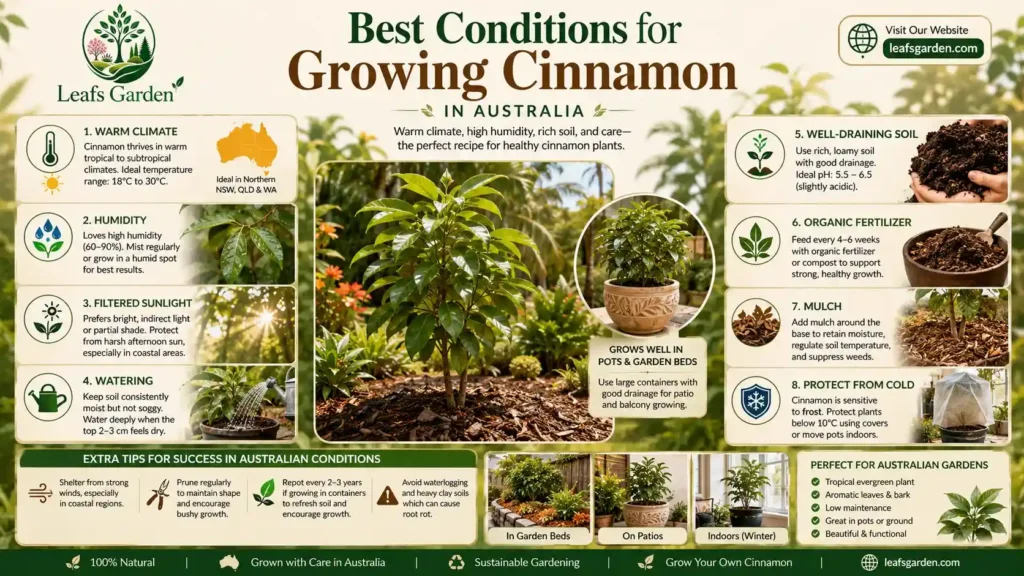
Cinnamon plants need warm temperatures, rich soil, humidity, and regular moisture to grow successfully in Australian gardens. They perform best in tropical and subtropical environments where frost is minimal and humidity remains consistent throughout the year.
In Australia, cinnamon plants are commonly grown in warm coastal regions, protected garden beds, patios, greenhouses, and large containers. Stable warmth and moisture are the most important factors for healthy growth.
Cinnamon plants grow best in well-draining soil that stays lightly moist without becoming waterlogged. Good drainage is essential because overly wet roots can quickly lead to disease problems.
The ideal soil should contain:
Adding compost, aged manure, leaf mold, or coconut coir can improve soil quality while helping maintain steady moisture levels.
Cinnamon trees also prefer acidic to neutral pH conditions. Slightly acidic soil usually supports stronger nutrient absorption and healthier root development.
Heavy clay soils should be improved before planting because poor drainage increases the risk of root rot.
Cinnamon plants prefer bright warm conditions with protection from intense afternoon heat. In Australia’s hotter regions, excessive direct sun can stress young plants during summer.
The best light conditions usually include:
Young cinnamon plants often grow best under partial shade or dappled sunlight while establishing. Mature trees can tolerate more direct light if soil moisture remains consistent.
Indoor and greenhouse-grown plants should receive bright indirect light near windows, glasshouses, or sheltered outdoor areas.
Cinnamon plants need regular watering to maintain healthy evergreen growth. The soil should remain evenly moist but never constantly saturated.
Good watering practices focus on maintaining moisture balance while avoiding standing water around the roots.
Important watering goals include:
During hot Australian summers, container-grown plants may require more frequent watering because pots dry faster than garden soil.
Humidity is also important. Dry air can cause leaf stress, browning edges, and slower growth. Gardeners often improve humidity by:
Overwatering remains one of the most common cinnamon growing problems. Poor drainage combined with excessive moisture can quickly damage roots.
Cinnamon plants are highly frost sensitive and prefer warm tropical conditions throughout the year. Consistent warmth supports active leaf growth, stem production, and bark development.
Ideal growing temperatures generally range between:
Cold weather can slow growth significantly or damage foliage. Frost exposure may kill young plants entirely if protection is not provided.
Because of their tropical conditions preference, many gardeners in cooler Australian regions use:
Humidity is equally important. Cinnamon trees naturally evolved in humid forest environments and often perform poorly in extremely dry climates without added moisture support.
Cinnamon plants benefit from gentle regular feeding during active growth periods. Balanced nutrition helps maintain healthy foliage, root development, and stem production.
Suitable feeding options include:
Organic compost and aged manure improve soil structure while gradually supplying nutrients. Slow-release tropical plant fertilizers can also support steady growth during spring and summer.
Excessive chemical fertilizing should be avoided because it may encourage weak soft growth or damage sensitive roots.
Most gardeners achieve the best results by applying light feedings several times during the growing season rather than using heavy fertilizer doses at once.
Mulching helps cinnamon plants maintain stable soil moisture, healthier root temperatures, and improved humidity around the base of the tree.
Suitable mulch materials include:
A thick mulch layer also helps reduce water evaporation during hot Australian weather.
For successful cinnamon growing in Australia:
Consistent warmth, humidity, and balanced moisture are the key factors for growing healthy cinnamon plants long-term.
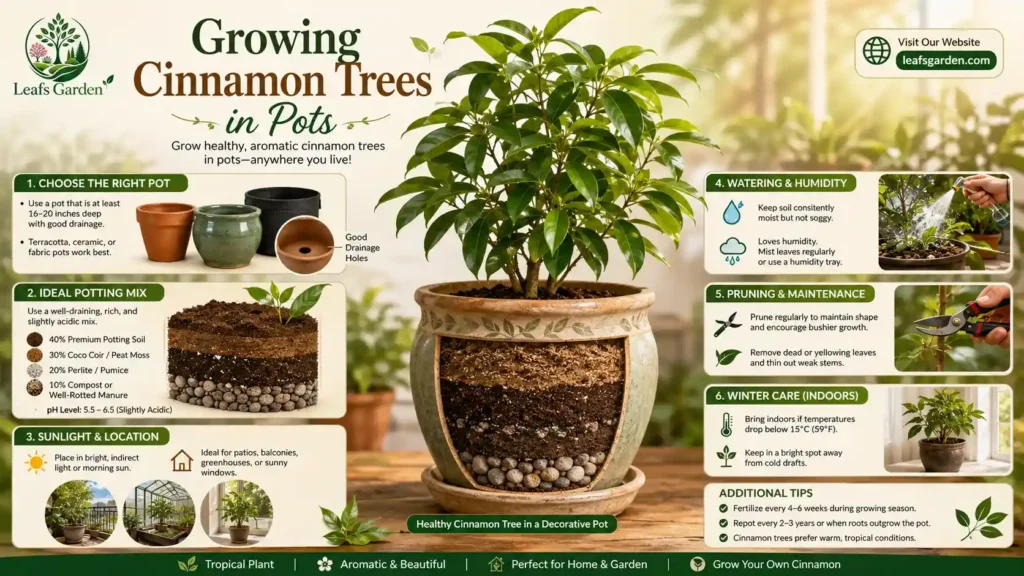
Cinnamon trees grow well in large containers when provided with warmth, humidity, and regular pruning. Pot growing is one of the best methods for gardeners in cooler Australian regions because containers allow the plant to be moved during cold weather.
A container-grown cinnamon plant can remain compact while still developing healthy aromatic leaves and harvestable stems. Many gardeners use pots to grow cinnamon plants on patios, balconies, greenhouses, and sheltered indoor spaces.
Choosing the correct pot size is important for healthy root development and moisture control. Cinnamon plants prefer containers with enough depth and drainage to support steady growth.
Young plants usually begin well in medium-sized nursery pots before gradually moving into larger containers as roots expand.
General pot guidelines include:
Large containers help stabilize soil moisture and reduce heat stress during hot Australian summers. Heavy pots such as terracotta, ceramic, or thick plastic containers also provide better support for taller growth.
Drainage holes are essential because cinnamon roots dislike sitting in waterlogged soil.
Regular pruning helps maintain manageable container size while encouraging fresh stem growth for future bark production.
A high-quality potting mix helps cinnamon plants maintain healthy roots, moisture balance, and steady nutrient uptake.
The ideal mix should provide:
Many growers combine:
This combination creates a loose tropical-style growing medium that holds moisture without becoming overly wet.
For cinnamon plant Australia growers, well-draining mixes are especially important in humid coastal regions where excess moisture can increase fungal problems.
Container soil should remain lightly moist but never compacted or soggy.
Cinnamon plants eventually outgrow smaller containers and benefit from repotting every few years. Repotting refreshes the soil, improves root space, and encourages healthier long-term growth.
Signs a cinnamon plant may need repotting include:
The best time to repot is usually during warm active growing periods in spring or early summer.
Basic repotting steps include:
After repotting, the plant should be kept in warm filtered light while roots re-establish.
Indoor cinnamon plants need stable warmth, bright light, and moderate humidity to remain healthy long-term. Indoor growing works especially well in cooler Australian regions where winter temperatures become unsuitable outdoors.
Helpful indoor care practices include:
Because cinnamon plants are tropical evergreens, indoor heating systems can sometimes dry the foliage excessively. Humidity trays, occasional misting, or grouping tropical plants together may help improve conditions.
Container-grown cinnamon plants also benefit from seasonal outdoor placement during warm weather before returning indoors for winter protection.
For many gardeners, pot growing provides the easiest way to maintain a healthy cinnamon plant in non-tropical climates. With proper care, cinnamon plants can remain attractive evergreen container specimens for many years.
Cinnamon trees are commonly propagated through seeds, cuttings, and air layering. Each method can successfully produce new plants when warmth, humidity, and moisture are properly maintained.
Propagation is usually easiest during warm active growing periods because tropical conditions encourage faster root and shoot development. Healthy parent plants also improve success rates significantly.
Growing cinnamon from seed is one of the most natural propagation methods, although it can require patience and stable humidity.
Fresh seeds generally germinate better than older dried seeds because viability decreases over time. Seeds are usually planted in moist well-draining soil and kept warm during germination.
Basic seed propagation steps include:
Seedlings often emerge within several weeks under tropical conditions. Young plants should remain protected from cold temperatures and drying winds during early development.
Because cinnamon is a tropical evergreen species, steady warmth is essential for strong seedling growth.
Cuttings are commonly used to clone healthy cinnamon plants with predictable characteristics. This method allows growers to reproduce plants identical to the parent tree.
Semi-hardwood cuttings taken from healthy stems often root best under humid conditions.
Successful cutting propagation usually involves:
Many growers use propagation trays, humidity domes, or greenhouse conditions to improve rooting success.
Warm temperatures encourage faster root formation, while excessive direct sunlight should be avoided during the rooting phase.
Air layering is another effective propagation technique for cinnamon trees, especially when growers want larger established plants more quickly.
This method encourages roots to form directly on a living branch before it is separated from the parent tree.
Basic air layering steps include:
Air layering often produces stronger and faster-establishing plants compared to some cutting methods because the branch continues receiving nutrients from the parent plant during root formation.
Warm humid weather generally improves propagation success.
Cinnamon trees develop gradually over several years before bark harvesting becomes practical. Growth speed depends heavily on climate, warmth, humidity, and care quality.
| Growth Stage | Typical Timeline | Growth Characteristics |
| Seedling | 0–12 months | Small developing roots and young foliage |
| Juvenile Growth | 1–3 years | Strong branching, increasing height, fuller canopy |
| Bark Harvesting Maturity | 3–5+ years | Young stems suitable for bark harvesting |
Seedlings grow slowly during early establishment stages. Once roots become stronger, juvenile growth usually accelerates under warm tropical conditions.
Plants grown in tropical Australia or greenhouse environments often develop faster than those exposed to cooler seasonal conditions.
Regular pruning during maturity helps encourage fresh stems for future cinnamon bark production while keeping the tree manageable in home gardens and containers.
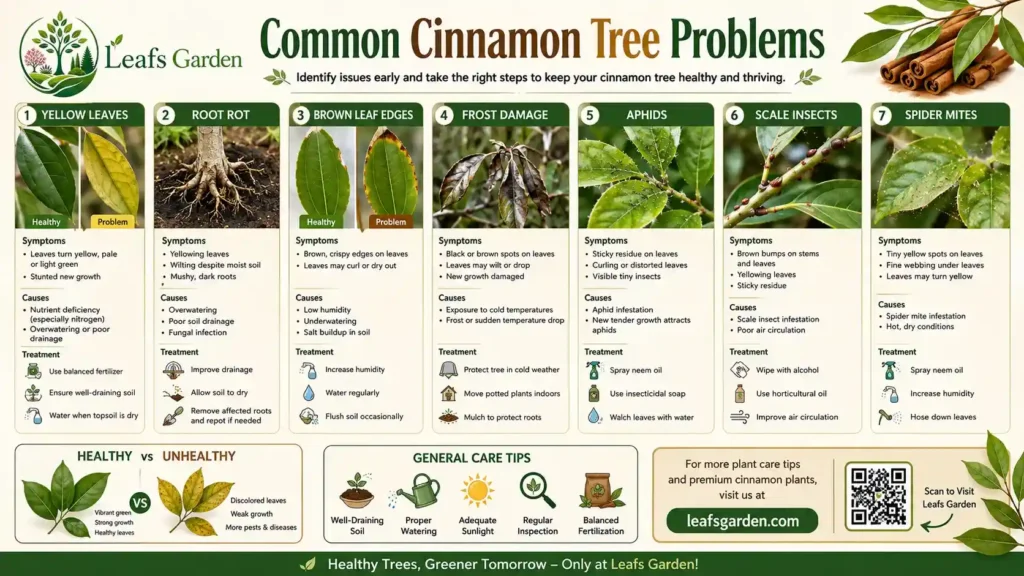
Most cinnamon tree problems are caused by cold weather, poor drainage, low humidity, or pests. Because cinnamon is a tropical evergreen species, it reacts quickly to environmental stress when growing conditions become unsuitable.
Early problem identification helps prevent long-term damage and keeps cinnamon plants healthy, productive, and visually attractive.
Yellow leaves are one of the most common issues seen on cinnamon plants. In most cases, yellowing foliage is linked to watering imbalance, nutrient deficiency, or environmental stress.
Common causes include:
Waterlogged soil often prevents roots from absorbing oxygen properly, causing leaves to turn pale or yellow.
To correct yellow leaves:
Older lower leaves may naturally yellow and fall occasionally, but widespread yellowing usually signals a care problem.
Root rot is one of the most serious cinnamon tree problems and is usually caused by excessively wet soil combined with poor drainage.
Symptoms often include:
Cinnamon roots prefer moist but aerated soil. Constantly saturated conditions encourage fungal infections that damage root systems.
Preventing root rot involves:
If root rot is detected early, affected roots can sometimes be trimmed and the plant repotted into fresh dry potting mix.
Severe root rot may permanently damage the plant if not corrected quickly.
Brown leaf edges usually indicate low humidity, underwatering, heat stress, or dry indoor air.
Because cinnamon trees naturally grow in humid tropical forests, dry environments can quickly affect foliage quality.
Common causes include:
Leaf edges may first appear slightly crisp before turning brown and brittle.
To improve conditions:
Container-grown plants often develop dryness faster because pots lose moisture more rapidly than garden soil.
Several sap-feeding pests may affect cinnamon trees, especially when plants become stressed or humidity levels are low.
Common pests include:
Scale insects appear as small bumps attached to stems or leaves and feed by extracting plant sap.
Aphids cluster on soft new growth and may cause leaf curling or sticky residue buildup.
Spider mites are extremely small pests that often appear during dry conditions. They may create fine webbing and cause speckled leaf discoloration.
Pest management strategies include:
Healthy cinnamon plants are generally more resistant to pest infestations than stressed plants.
Frost damage is a major concern for cinnamon trees in cooler parts of Australia because the species is highly sensitive to freezing temperatures.
Cold damage symptoms may include:
Young cinnamon plants are especially vulnerable during winter cold snaps.
Protection methods include:
In tropical northern Australia, frost damage is rarely a problem. Southern regions often require winter protection for successful long-term growth.
Slow growth usually occurs when cinnamon plants experience insufficient warmth, poor light, root stress, or low nutrient availability.
Common growth-limiting factors include:
Cinnamon trees naturally grow faster in tropical climates with stable warmth and moisture.
To improve growth speed:
Growth may naturally slow during winter, especially in cooler Australian regions or indoor environments. Active growth typically resumes once warmer conditions return.
Cinnamon bark is harvested from mature stems after pruning, then peeled and dried into curls. The usable spice comes from the soft inner bark layer found beneath the outer stem surface.
Home harvesting is usually done on healthy mature stems after several years of growth. Regular pruning encourages fresh new shoots, which are ideal for future cinnamon production.
Cinnamon bark is usually harvested once stems become mature enough to produce a healthy inner bark layer. Young flexible stems generally provide the best bark quality.
Most home-grown cinnamon plants reach suitable harvesting maturity after several years of healthy growth under warm conditions.
Good harvesting indicators include:
Warm humid weather is often the best time for harvesting because bark separates more easily from actively growing stems.
Many growers harvest after pruning because newly cut stems are easier to process and manage.
Container-grown plants may require longer to reach harvestable size compared to trees grown directly in tropical garden soil.
Harvesting cinnamon at home requires careful bark removal to preserve the valuable inner layer.
Choose healthy stems with sufficient thickness and active growth. Young mature stems usually produce smoother bark.
Prune stems close to the base using clean sharp tools. Regular pruning also encourages future regrowth.
Remove the rough outer bark layer gently without damaging the softer inner bark underneath.
Carefully peel away the inner bark in long strips. This is the edible portion used as cinnamon.
As the bark dries, it naturally rolls into cinnamon curls or quills.
Continue drying until the bark becomes firm, aromatic, and fully preserved for storage.
Proper harvesting technique improves bark quality, aroma, and final appearance.
Drying is an important step because it preserves flavor, aroma, and shelf life. Freshly peeled bark contains moisture that must gradually evaporate before long-term storage.
Cinnamon bark is usually dried in:
Direct harsh sunlight is often avoided because excessive heat may reduce aromatic oil quality.
During drying, the bark naturally hardens and curls into layered quills. Thin true cinnamon bark often forms delicate multi-layered rolls.
For long-term storage:
Whole cinnamon bark generally retains aroma longer than ground cinnamon powder.
Properly dried cinnamon can remain flavorful for extended periods when stored correctly.
Cinnamon leaves are also useful and aromatic, although they differ slightly from the bark in flavor and oil composition.
The leaves contain natural aromatic oils and are commonly used in:
In cooking, cinnamon leaves may be used similarly to bay leaves in soups, curries, rice dishes, and slow-cooked recipes.
Some people also prepare herbal teas using fresh or dried cinnamon leaves for their mild spicy fragrance.
Essential oils extracted from cinnamon foliage are valued for fragrance and traditional aromatic applications.
Fresh leaves from healthy cinnamon plants also add ornamental value because of their glossy tropical appearance and pleasant scent when crushed.
Cinnamon trees provide edible bark, aromatic leaves, ornamental beauty, and medicinal value. They are valued not only as spice-producing plants but also as attractive tropical evergreen trees for edible gardens and landscape design.
Both the bark and foliage contain fragrant oils that make cinnamon trees useful in culinary, herbal, and decorative applications. Their glossy leaves and dense branching also add visual appeal to tropical-style gardens.
Cinnamon bark is one of the world’s most widely used culinary spices. The dried inner bark is used in sweet and savory dishes across many cuisines.
Common culinary uses include:
Ground cinnamon is commonly added to cakes, pastries, oatmeal, coffee, tea, and warm beverages. Cinnamon sticks are also used in slow-cooked recipes, mulled drinks, and rice dishes.
True cinnamon is especially valued for its mild sweet flavor and delicate aroma.
Cinnamon leaves may also be used in cooking similarly to bay leaves. They provide a lighter spicy fragrance in soups, stews, and simmered dishes.
Cinnamon has been used in traditional herbal practices for centuries in many parts of Asia and the Middle East.
Traditional uses commonly involve:
The bark and leaves both contain aromatic oils that contribute to cinnamon’s strong fragrance and flavor profile.
Many traditional systems have historically used cinnamon in preparations associated with digestion, circulation, and warming remedies, although medicinal use should always be approached carefully and responsibly.
For evidence-based guidance on herbal plant use and food safety in Australia, CSIRO provides reliable scientific research on plant compounds, food ingredients, and traditional botanical uses.
Cinnamon essential oils are also widely used in aromatic products and natural fragrance blends.
Cinnamon trees are highly attractive evergreen plants with glossy foliage and a dense tropical structure. Their appearance makes them suitable for ornamental edible gardens and subtropical landscapes.
Key ornamental features include:
New growth often emerges in bronze, pink, or reddish tones before maturing into deep green foliage. This color transition adds seasonal visual interest to the plant.
Many gardeners grow cinnamon trees primarily for their tropical appearance even before harvesting bark.
Container-grown cinnamon plants are also popular for patios, courtyards, and greenhouse collections.
Cinnamon trees blend well into tropical and subtropical garden designs because of their soft evergreen canopy and layered foliage.
They are often combined with:
Smaller pruned cinnamon trees work especially well in:
Their upright branching structure helps create an airy tropical feel without becoming overly dense or heavy-looking.
In Australia, cinnamon trees are increasingly used in edible ornamental gardens where beauty and functionality are combined.
Cinnamon trees can support local garden biodiversity by attracting insects and pollinators during flowering periods.
Their small creamy flowers may attract:
Dense evergreen foliage also provides shelter for small wildlife and contributes to more diverse garden ecosystems.
Because cinnamon trees remain leafy year-round in warm climates, they can help maintain continuous habitat structure in tropical-style gardens.
When grown alongside other flowering edible plants, cinnamon trees contribute to healthy pollinator-friendly landscapes while also serving practical culinary and ornamental purposes.
Several cinnamon species exist, but true cinnamon is considered the highest-quality culinary variety. Different species vary in flavor, bark texture, oil concentration, appearance, and growing characteristics.
Although many products are sold simply as “cinnamon,” they may actually come from different members of the Cinnamomum genus. Understanding these differences helps gardeners choose the best species for culinary use, climate suitability, and home growing conditions.
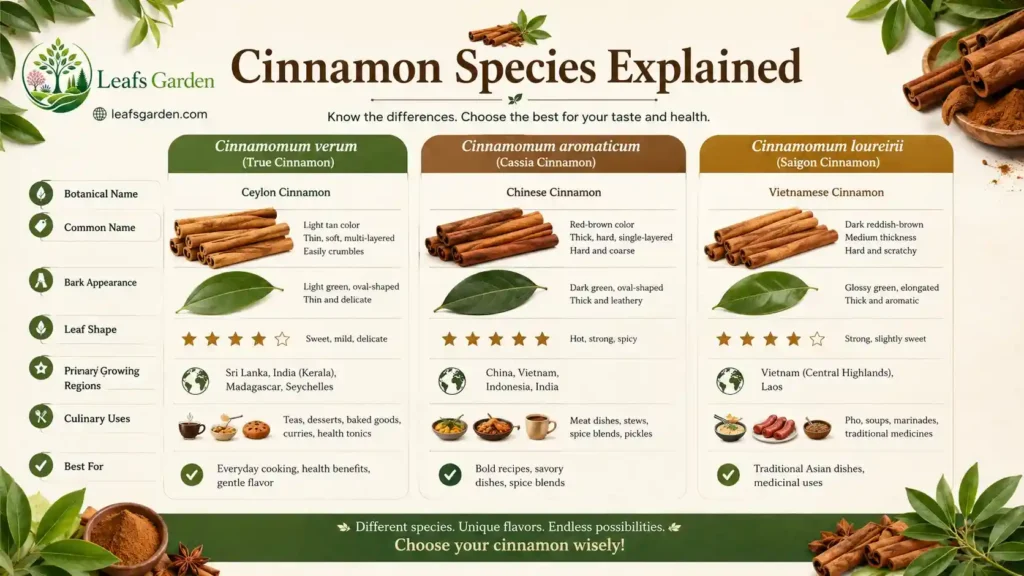
Cinnamomum verum is known as true cinnamon or Ceylon cinnamon and is widely regarded as the premium culinary species. Cassia cinnamon refers to several related species that generally produce stronger, darker, and thicker bark.
True cinnamon characteristics include:
Cassia cinnamon characteristics include:
True cinnamon bark forms thin layered quills that crumble easily, while cassia bark is usually thicker and harder.
From a gardening perspective, Cinnamomum verum is often preferred for edible home gardens because of its culinary quality and manageable growth habit.
Cassia species are commonly grown commercially across China, Indonesia, and Southeast Asia because of their stronger flavor and larger-scale production potential.
Cinnamomum aromaticum is one of the primary cassia cinnamon species and is often associated with Chinese cassia cinnamon production.
This species typically produces:
Compared to true cinnamon, Cinnamomum aromaticum has a more intense spicy flavor that is commonly used in commercial ground cinnamon products.
The bark is usually harder and less delicate than Cinnamomum verum. Because of its stronger flavor profile, smaller quantities are often needed in cooking.
The tree itself grows as a tropical evergreen species with aromatic leaves and bark similar to other cinnamon relatives.
Cinnamomum loureirii is commonly known as Saigon cinnamon or Vietnamese cinnamon. It is another cassia-related species valued for its rich aroma and powerful flavor.
Key characteristics include:
This species is especially known for elevated cinnamaldehyde levels, which contribute to its strong fragrance and flavor intensity.
Saigon cinnamon is widely used in baking, desserts, spice blends, and traditional Asian cooking because of its bold flavor profile.
Like other cinnamon species, Cinnamomum loureirii grows best in warm humid tropical environments.
For most home gardeners, Cinnamomum verum is usually considered the best cinnamon species to grow. Its milder flavor, thinner bark, and ornamental evergreen appearance make it highly suitable for edible gardens and container growing.
Advantages of true cinnamon for home gardens include:
Gardeners in Australia and other subtropical regions often prefer true cinnamon because it adapts well to pots, patios, greenhouses, and protected tropical gardens.
Cassia species can also be grown successfully, especially in warm climates, but their stronger bark texture and more intense flavor are not always preferred for home culinary use.
The best species ultimately depends on:
For edible tropical landscaping and versatile home use, the true cinnamon tree remains the most popular and widely recommended option.
Those building a productive edible tropical garden may also enjoy growing a Hass avocado tree, which shares the same Lauraceae plant family as cinnamon and thrives in similar warm subtropical Australian conditions.
Cinnamon plants are available through tropical nurseries, specialty edible plant sellers, and some Australian garden centers. Availability can vary depending on climate region, seasonal stock levels, and demand for tropical edible plants.
Most cinnamon plants sold in Australia are young potted specimens intended for home gardens, patios, or greenhouse growing. Gardeners in cooler regions often purchase container-ready plants that can be moved indoors during winter.
Some gardeners search for cinnamon tree Bunnings availability when looking for edible tropical plants locally. Availability at major retailers can vary widely between states and seasons.
Certain Bunnings locations may occasionally stock tropical edible plants through local nursery suppliers, but cinnamon trees are not always consistently available nationwide.
It is also important to understand the cinnamon myrtle Bunnings distinction because cinnamon myrtle is a completely different Australian native plant species.
Key differences include:
Because of this distinction, buyers should always confirm the botanical name before purchasing.
Online tropical nurseries are one of the easiest ways to find cinnamon plants in Australia, especially for gardeners outside major tropical regions.
People commonly search:
Specialty edible plant nurseries often provide:
Online sellers may also offer information about climate suitability, mature size, and care requirements before purchase.
When ordering online, buyers should review:
Healthy packaging and protected shipping are especially important for tropical evergreen plants.
Before purchasing a cinnamon tree, it is important to inspect plant quality carefully. Healthy young plants establish faster and adapt better after transplanting.
Healthy leaves should appear glossy, firm, and free from major discoloration or pest damage.
Root health is equally important. Avoid plants with heavily compacted roots, foul smells, or waterlogged soil.
Always confirm the species label to ensure the plant is actually Cinnamomum verum if true cinnamon is desired.
Climate suitability should also match the growing conditions available at home. Tropical outdoor planting works best in warm northern Australia, while cooler regions may require container growing or greenhouse protection.
Buying healthy well-identified plants greatly improves long-term success when growing cinnamon trees in Australian gardens.
Culinary cinnamon is generally safe in small amounts, but concentrated oils and excessive consumption may cause irritation. Most household use of cinnamon in food is considered low risk, although stronger cinnamon products should always be handled carefully.
The bark, powder, and leaves of cinnamon trees contain aromatic compounds that may irritate sensitive individuals or animals if consumed in large quantities or highly concentrated forms.
Cinnamon used in normal culinary amounts is generally considered safe for most people. Problems are more likely to occur when large amounts are consumed or when concentrated extracts and oils are used improperly.
Possible irritation risks may include:
Cassia cinnamon varieties contain higher coumarin levels than true cinnamon, which is one reason many people prefer Cinnamomum verum for regular culinary use.
Children should not consume concentrated cinnamon products or essential oils without proper supervision.
Cinnamon powder can also become irritating if accidentally inhaled, especially by young children.
Cinnamon trees are generally considered lower risk than many toxic ornamental plants, but pets should still be prevented from chewing large amounts of bark, leaves, or concentrated products.
Most household pets may experience irritation if exposed to excessive cinnamon material.
Possible pet-related concerns include:
Dogs and cats are usually more sensitive to concentrated cinnamon oils than to small culinary amounts.
Outdoor cinnamon trees in gardens are not commonly associated with severe poisoning problems, but monitoring pets around newly planted tropical species is still recommended.
If unusual symptoms appear after exposure, veterinary advice should be sought promptly.
Cinnamon essential oils are highly concentrated and require much more caution than normal culinary cinnamon products.
Undiluted oils may cause:
Essential oils should always be stored safely away from children and pets.
Important safety precautions include:
Diffusers using strong cinnamon oils should also be used carefully around sensitive pets, especially birds and animals with respiratory sensitivity.
For most households, normal culinary use of cinnamon bark or powder remains the safest and most practical way to enjoy cinnamon products.
Growing a cinnamon tree in Australia is possible in warm climates and containers, making it an attractive edible tropical plant for home gardeners worldwide. With proper warmth, humidity, moisture, and frost protection, cinnamon plants can thrive in both tropical outdoor gardens and protected container environments.
For Australian growers, the best results usually come from tropical and subtropical regions such as northern Queensland and humid coastal areas. In cooler locations, container growing, greenhouse protection, and indoor overwintering allow cinnamon plants to remain healthy year-round.
A cinnamon tree Australia gardeners grow successfully can provide:
The popularity of the cinnamon plant Australia market continues increasing as more gardeners look for edible tropical plants that combine beauty with practical use.
Worldwide, Cinnamomum verum remains one of the most valued cinnamon species because of its sweet mild flavor and high culinary quality. The true cinnamon tree is now grown not only across tropical Asia, but also in parts of the USA, Africa, greenhouse collections in Europe, and subtropical home gardens globally.
Whether grown as a feature plant, edible spice tree, or greenhouse specimen, cinnamon offers both ornamental and culinary rewards for gardeners willing to provide warm tropical-style conditions.
For home gardeners interested in tropical edible gardening, cinnamon trees are a unique long-term addition that combines fragrance, evergreen foliage, and traditional culinary value in one highly attractive plant.
Yes, cinnamon trees can grow successfully in Australia, especially in tropical and frost-free subtropical regions. Warm humid climates in northern Queensland and coastal areas are ideal for outdoor planting. In cooler regions, cinnamon trees are commonly grown in containers, greenhouses, or protected indoor spaces during winter.
A cinnamon tree usually takes several years to become mature enough for bark harvesting. Young plants establish slowly during the first year, while bark harvesting commonly begins after around 3–5 years under warm growing conditions. Growth speed depends on climate, humidity, sunlight, and overall plant care.
Yes, cinnamon plants grow well in pots and containers when provided with warmth, humidity, and regular pruning. Container growing is especially useful in cooler Australian regions because plants can be moved indoors or into protected areas during cold weather. Large pots with well-draining soil are important for healthy root growth.
True cinnamon comes from Cinnamomum verum and has a mild sweet flavor with thin layered bark. Cassia cinnamon comes from related species such as Cinnamomum cassia and usually has thicker darker bark with a stronger spicy taste. True cinnamon is often considered the premium culinary variety.
Cinnamon is harvested by cutting mature young stems and removing the soft inner bark beneath the outer bark layer. The inner bark is then dried until it curls naturally into cinnamon sticks or quills. Ground cinnamon powder is produced by grinding the dried bark.
Cinnamon originally comes from Sri Lanka, India, and parts of Southeast Asia where warm humid tropical conditions support healthy bark production. Sri Lanka is especially associated with true cinnamon or Ceylon cinnamon production.
Yes, cinnamon leaves are edible and are sometimes used in cooking and herbal teas. The leaves contain aromatic oils and can be used similarly to bay leaves in soups, curries, and slow-cooked dishes. Their flavor is generally milder than cinnamon bark.
Cinnamon trees are highly sensitive to frost and usually do not tolerate freezing temperatures well. Frost can damage leaves, stems, and roots, especially on young plants. In cooler Australian regions, winter protection, greenhouse growing, or indoor overwintering is often necessary for survival.