Grow Better Gardens with Smarter Plant Choices
Discover helpful guides on trees, hedges, fruit plants, edible plants, and beautiful landscape greenery.

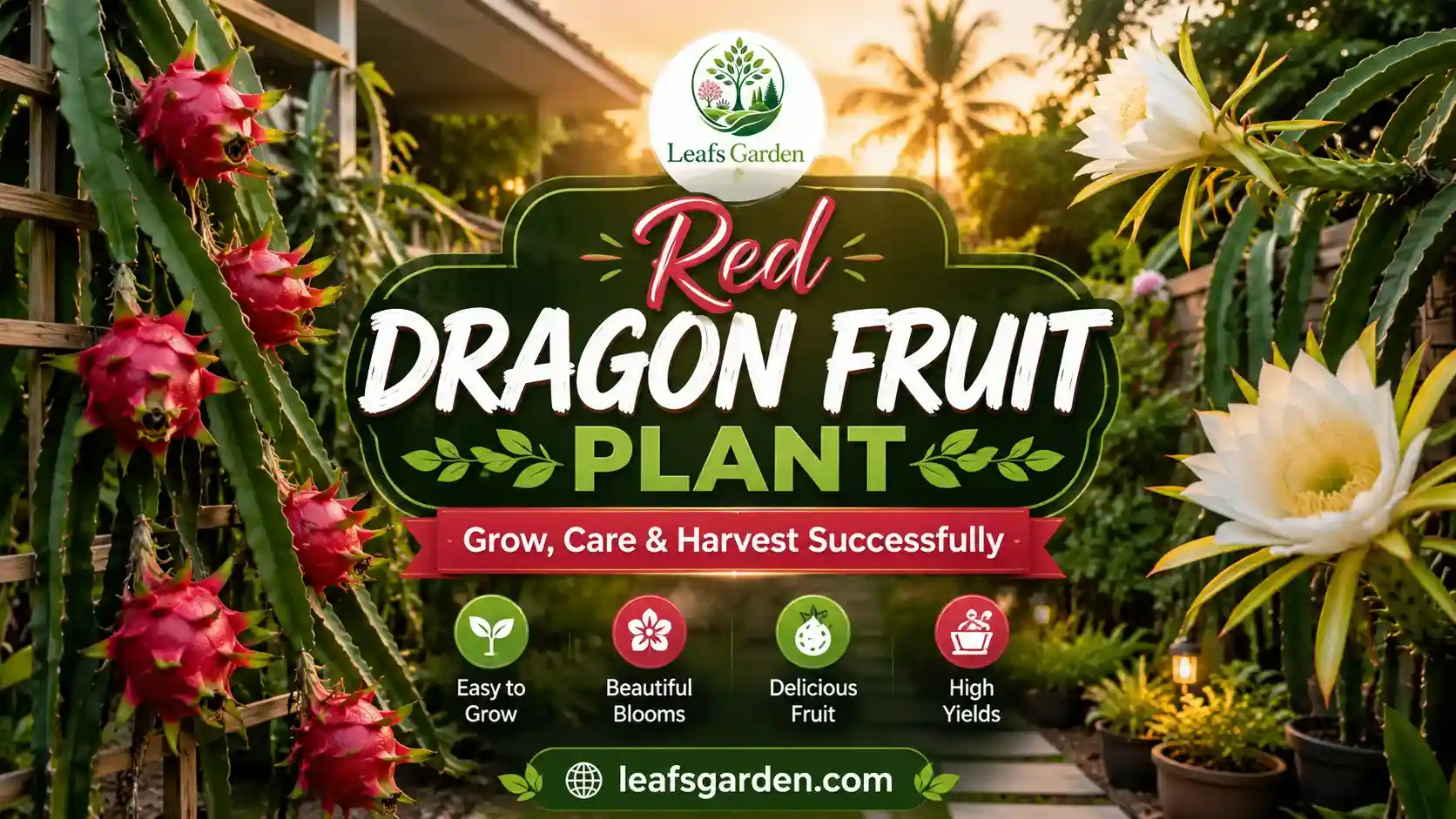
The red dragon fruit plant is a climbing cactus known for its bright pink-red skin, sweet flesh, tropical growth habit, and easy container cultivation in warm climates like Australia, parts of the USA, and other subtropical regions.
Unlike traditional fruit trees, the dragon fruit cactus plant grows as a fast-climbing succulent with thick green stems and aerial roots. This tropical cactus produces vibrant fruits with refreshing flesh and is widely known as a pitaya plant in many regions.
In recent years, red dragonfruit cultivation has become increasingly popular in dragon fruit Australia growing regions because the plant adapts well to warm coastal climates, backyard gardens, and patio containers. Gardeners also prefer the dragonfruit plant because it can grow vertically on trellises, fences, and support posts without needing large orchard spaces.
Another reason for the popularity of red dragonfruit is its low-maintenance nature compared to many fruit trees. With proper sunlight, drainage, and support, the plant can thrive in pots, raised beds, and home garden systems while producing exotic-looking fruit during warm seasons.
The plant is also valued for its ornamental appeal. Its cactus stems, large night-blooming flowers, and colorful fruits make the dragon fruit cactus plant both decorative and productive for modern edible gardens.
Red dragon fruit belongs to the cactus family and is commonly known as pitaya or pitahaya. It is a tropical climbing cactus grown for its brightly colored fruit, large flowers, and fast-growing vine structure.
The most common scientific names associated with red dragon fruit include:
These species belong to the Cactaceae family, which also includes many desert and tropical cactus plants. Unlike compact desert cacti, the dragon fruit cactus develops long triangular stems that climb vertically using aerial roots.
The plant grows as a spreading dragon fruit vine that attaches itself to trellises, wooden posts, walls, and support frames. Mature stems become thick, fleshy, and highly productive in warm climates.
The pitaya fruit itself develops from large night-blooming flowers that appear along the cactus stems during warm growing seasons. Because of its climbing growth habit and tropical appearance, the dragon fruit cactus is commonly used in both edible and ornamental gardens.
Gardeners building productive edible gardens will find the red dragon fruit a striking addition among the many rewarding fruit trees and edible plants suited to warm Australian climates.
Dragon fruit originally comes from the tropical regions of Central and South America. The plant naturally grew in countries such as:
When people ask “where is dragon fruit from” or “dragon fruit where is it from,” the answer traces back to these warm tropical American regions where native cactus species evolved naturally in dry forests and subtropical environments.
Over time, dragon fruit cultivation spread across the world because the plant adapts well to hot climates and produces fruit quickly compared to many tropical crops.
Today, dragon fruit is widely grown in:
Australia has become an important growing region for commercial and backyard production, especially in Queensland and other warm subtropical zones. Southeast Asia also became a major producer because tropical humidity and long sunny seasons support heavy fruiting.
In the USA, dragon fruit grows best in frost-free regions such as Florida, Southern California, and parts of Texas.
Several dragon fruit varieties exist, but the most common are red, white, and yellow dragon fruit types. Each variety differs in sweetness, appearance, and growing behavior.
| Feature | Red Dragon Fruit | White Dragon Fruit | Yellow Dragon Fruit |
| Flesh Color | Deep red or magenta | White | White |
| Skin Color | Bright pink-red | Pink | Yellow |
| Taste | Rich and sweet | Mild and refreshing | Very sweet |
| Sweetness Level | Medium to high | Mild | Highest |
| Growing Difficulty | Moderate | Easy | Slightly slower |
| Yield | High | High | Lower to moderate |
Red dragon fruit is popular for its stronger flavor, vibrant color, and antioxidant-rich flesh. White-fleshed varieties are more common commercially because they grow aggressively and fruit heavily.
Yellow dragon fruit Australia growers often cultivate is known for its sweeter taste and smaller fruit size. However, yellow varieties usually require warmer conditions and slower maturation periods.
Some gardeners also search for blue dragon fruit, but true naturally blue dragon fruit does not commercially exist. The term is mostly used online for novelty hybrids, edited images, or rare experimental varieties rather than stable commercial cultivars.
Dragon fruit does not grow on traditional trees; it grows on a climbing cactus vine supported by trellises or posts.
Many people search phrases like “do dragon fruit grow on trees,” “dragon fruit tree,” or “dragonfruit tree,” but the plant is technically not a true tree. The tree of dragon fruit is actually a tropical climbing cactus with long succulent stems that need external support to grow upright.
Unlike mango, apple, or citrus trees, dragon fruit plants produce flexible green stems instead of woody trunks. These stems climb vertically and spread outward by attaching themselves to supports using aerial roots.
The dragon fruit cactus naturally grows by:
Commercial farms commonly train the plant onto concrete poles or circular trellis systems. In home gardens, growers often use wooden frames, metal supports, fences, or wall-mounted structures.
Because of its climbing habit, the plant can produce large harvests in compact spaces. This makes dragon fruit ideal for backyard gardens, patios, and container cultivation in warm climates.
A mature dragon fruit plant develops into a large cascading cactus with thick green stems, climbing branches, and hanging fruit-bearing growth.
Most mature plants reach:
The stem structure is one of the plant’s most recognizable features. Stems are:
These stems store water similarly to desert cactus species, helping the plant tolerate dry periods.
Aerial roots regularly emerge from the stem segments. These roots allow the plant to grip trellises, wooden posts, walls, and support systems as it climbs upward.
The climbing behavior becomes more aggressive once the plant matures. Long stems grow upward first, then drape downward over support tops where flowering and fruiting mostly occur.
One of the most striking features of the plant is its large flowers. Dragon fruit flowers are giant white blooms that usually open at night and close by morning. The dragonfruit flower can reach up to 25–30 cm across and releases a strong sweet fragrance during blooming.
The pitahaya flower is often called a “night-blooming cactus flower” because of its short flowering window and dramatic appearance. These flowers later develop into colorful dragon fruit after successful pollination.
Red dragon fruit grows best in warm, frost-free climates with long sunny seasons.
The plant performs well in tropical and subtropical environments where temperatures remain consistently warm throughout the year. Because dragon fruit is a climbing cactus, prolonged cold weather and heavy frost can severely damage stems, flowers, and developing fruit.
For growing dragon fruit in Australia, the best regions include:
Queensland is considered one of the strongest australia dragon fruit growing regions because of its high summer temperatures, humidity balance, and extended warm seasons.
Gardeners thriving in Queensland’s warm subtropical climate may also enjoy growing a lychee fruit tree, another highly productive tropical fruit plant that performs exceptionally well in similar warm and humid conditions.
In cooler Australian areas, gardeners commonly grow dragon fruit in containers so plants can be moved into protected spaces during winter.
In the USA, red dragon fruit grows best in:
These regions provide the frost-free conditions and long sunny periods needed for reliable flowering and fruit production.
Most red dragon fruit varieties thrive in:
Cold temperatures below freezing can injure stems quickly, especially in young plants.
Dragon fruit plants require full sun for strong growth, healthy flowering, and high fruit production.
Mature plants usually need:
The ideal temperature range for red dragon fruit is:
| Growing Condition | Ideal Range |
| Day Temperature | 20–32°C |
| Night Temperature | 18–24°C |
| Minimum Safe Temperature | Above 5°C |
| Optimal Humidity | Moderate |
Although the plant is heat tolerant, extreme dry heat combined with intense sun exposure can occasionally scorch young stems. In very hot inland climates, partial afternoon protection may help reduce stress.
Frost protection is essential during winter. Even light frost can damage soft cactus tissue and slow future fruiting. Gardeners in cooler regions often protect plants using:
Humidity balance also matters. Excessive moisture combined with poor airflow can increase fungal disease and stem rot problems. Good drainage and open air circulation help maintain healthy growth.
Dragon fruit can grow indoors when provided with strong sunlight, warmth, and proper support systems.
Many gardeners successfully grow dragon fruit in pots on:
Container cultivation works especially well for younger plants and compact growing spaces. A large pot with drainage holes and vertical support allows the cactus stems to climb naturally.
Indoor growers should place plants near:
However, indoor growing has limitations. Dragon fruit plants can become large and heavy over time, making long-term indoor cultivation more difficult without strong supports and high light levels.
Low sunlight indoors may also cause:
For best results, many growers keep plants outdoors during warm seasons and move container-grown dragon fruit into protected indoor areas only during cold weather.
Growing from cuttings is the fastest and easiest propagation method.
Most gardeners prefer growing dragon fruit from cuttings because plants establish quickly, mature faster, and produce fruit earlier than seed-grown plants. A healthy dragon fruit cutting can often begin flowering within 1–2 years under warm conditions.
The rooting process usually begins within:
New stem growth is often the first sign that roots are developing successfully.
When planting dragon fruit cuttings, avoid excessive watering because fresh cuttings are highly sensitive to rot before roots establish.
For gardeners researching how to grow dragon fruit from cutting, warm temperatures, drainage, and airflow are the most important success factors.
Dragon fruit from seed can be grown successfully, but the process takes longer than propagation from cuttings.
Seed-grown plants are often used for:
Seedlings usually emerge within:
Growing dragon fruit from seed requires patience because fruiting can take:
| Growth Stage | Estimated Time |
| Germination | 1–3 Weeks |
| Seedling Stage | 2–4 Months |
| Mature Climbing Plant | 1–2 Years |
| Fruiting | 3–5 Years |
Gardeners who grow dragon fruit from seed should expect natural variation in fruit size, flavor, and growth habit because seedlings may differ from the parent plant.
Indoor seed trays are commonly used during early growth stages before seedlings are transplanted outdoors or into larger containers.
Many hobby growers also experiment with pitaya from seed to produce unusual fruit colors or hybrid varieties.
Dragon fruit plants grow best in fast-draining soil that prevents waterlogging around the roots.
Because the plant belongs to the cactus family, heavy compacted soil can quickly lead to root rot and fungal problems.
An ideal soil mix should provide:
The best cactus-style soil blend commonly includes:
Organic matter helps improve nutrient availability while maintaining healthy microbial activity in the root zone.
The ideal soil pH range is:
For container cultivation, many growers use a custom blend such as:
| Soil Component | Purpose |
| Cactus Mix | Drainage |
| Compost | Nutrients |
| Perlite | Airflow |
| Coco Coir | Moisture Balance |
| Sand | Root Stability |
Avoid dense clay soils because they trap excessive moisture and reduce oxygen around the roots.
Dragon fruit grows very well in large containers with proper drainage and vertical support.
Many gardeners choose growing dragon fruit in pots because containers allow easier movement, frost protection, and compact cultivation in patios or balconies.
Young plants can begin in medium containers, but mature plants eventually require larger pots for root stability and heavy growth.
Recommended sizes:
| Plant Stage | Pot Size |
| Young Cutting | 15–20 Liters |
| Developing Plant | 30–40 Liters |
| Mature Fruiting Plant | 50+ Liters |
Large heavy pots also help prevent tipping once stems become dense and top-heavy.
Proper drainage holes are essential for successful dragon fruit cultivation in pots.
Containers should:
Terracotta pots, fabric grow bags, and heavy plastic containers are commonly used for planting dragon fruit in containers.
A strong support system is necessary because mature stems become long and heavy.
Common support options include:
The support should be installed at planting time so roots are not disturbed later.
A dragon fruit plant in a pot typically performs best when positioned in:
With proper drainage, sunlight, and support, container-grown dragon fruit plants can remain productive for many years.
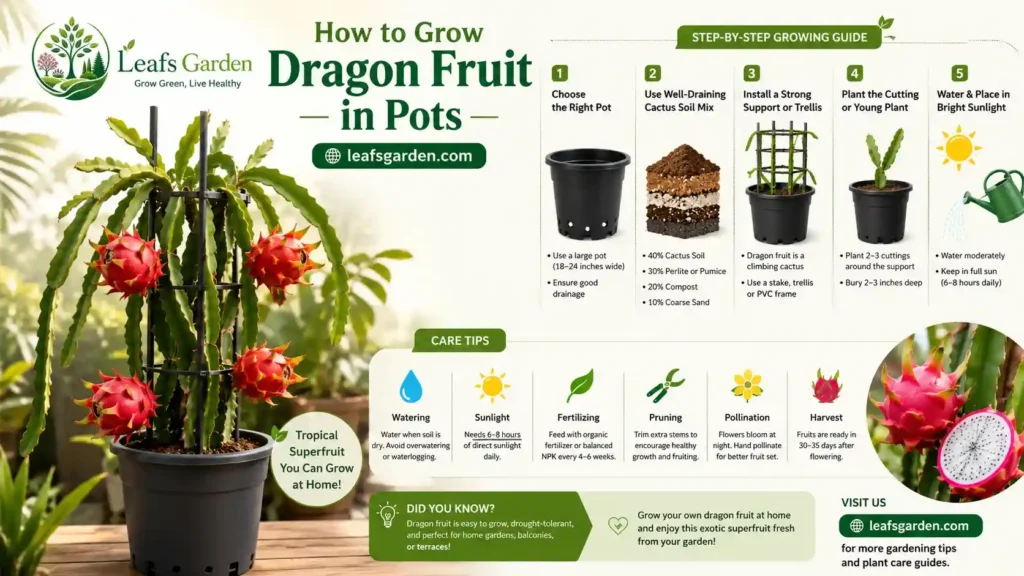
Dragon fruit plants need moderate watering with enough drying time between watering cycles.
Although the plant belongs to the cactus family, it grows faster and produces better fruit with consistent moisture during active growth periods. However, excessive watering is one of the most common causes of plant failure.
In warm growing seasons, most established plants require watering:
Container-grown plants may dry faster than garden-grown plants, especially during Australian summer conditions.
Overwatering can quickly damage dragon fruit roots and stems.
Common symptoms include:
Poor drainage combined with excessive moisture creates ideal conditions for fungal disease and root damage.
Dragon fruit plants have moderate drought tolerance because their thick cactus stems store water internally.
Short dry periods are usually manageable for mature plants. However, prolonged drought can reduce:
Balanced watering produces healthier flowering and more consistent fruit development.
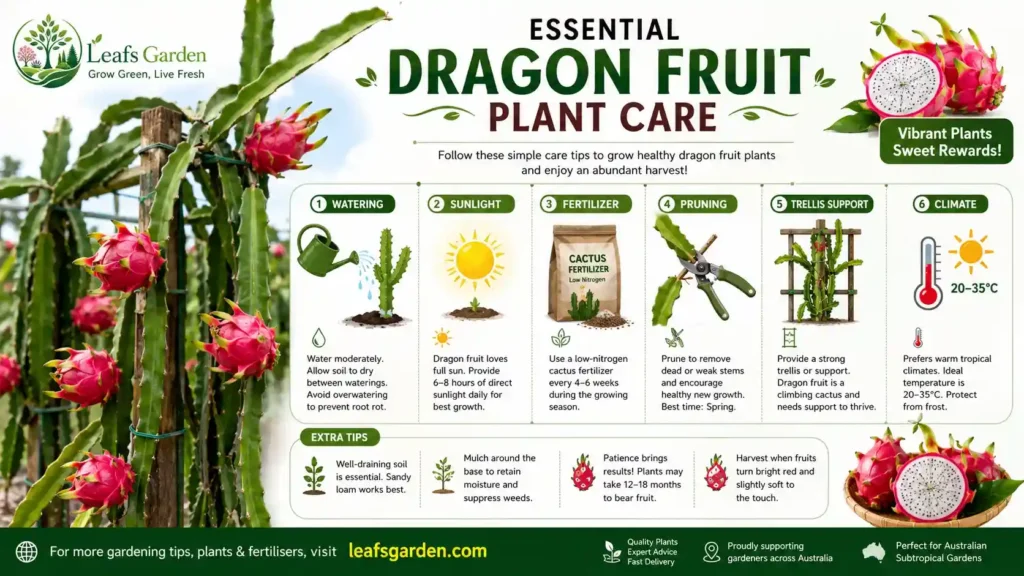
Balanced low-nitrogen fertilizer supports flowering and fruit development.
A proper dragon fruit fertilizer schedule helps maintain healthy stems while encouraging larger flowers and improved fruit production.
Excessive nitrogen should be avoided because it can stimulate weak leafy growth instead of flowering.
The best fertilizer approach includes:
Many growers prefer organic feeding methods for long-term soil health.
Popular options include:
Organic matter improves microbial activity and slowly releases nutrients into the soil.
Potassium is especially important during flowering and fruiting stages because it supports:
Many growers apply flowering fertilizers with increased potassium during active fruit production periods.
| Plant Stage | Fertilizer Focus |
| Young Growth | Balanced Feeding |
| Active Climbing | Moderate Nitrogen |
| Flowering | Higher Potassium |
| Fruiting | Potassium & Minerals |
Container-grown plants may require more regular feeding because nutrients wash out faster during watering.
Dragon fruit plants require strong vertical support because mature cactus stems become long, heavy, and highly branched.
Understanding how to support dragon fruit plants properly improves airflow, simplifies harvesting, and increases fruit production.
Without support, stems often trail across the ground where they become more vulnerable to:
The most popular support systems include:
Commercial growers commonly use concrete posts because they remain stable for many years under heavy plant weight.
Home gardeners frequently build simple dragon fruit frames using affordable materials such as:
A basic dragonfruit frame usually includes:
Once stems reach the top, they drape downward and begin producing flowers and fruit more heavily.
Many gardeners search for dragon fruit trellis Bunnings systems or similar ready-made garden supports for container and backyard cultivation.
An ideal trellis should provide:
Proper support structures can remain productive for many years as the plant matures.
Regular pruning helps dragon fruit plants stay healthy, productive, and easier to manage.
Because the plant grows aggressively in warm climates, overcrowded stems can reduce airflow and limit fruiting performance.
Pruning should focus on removing:
Clean pruning tools help reduce disease spread between cuts.
Strategic pruning encourages the plant to direct energy toward flowering and fruit production instead of excessive vegetative growth.
Growers commonly prune to:
Mature hanging stems are often the most productive fruiting sections.
Good airflow is essential for reducing fungal disease and moisture-related problems.
An open plant structure helps:
Routine maintenance throughout the growing season keeps dragon fruit plants healthier and more productive long term.
Dragon fruit usually flowers during warm months after the plant matures.
Most healthy plants begin flowering once they receive enough sunlight, warmth, and mature stem growth. In subtropical and tropical climates, flowering commonly starts from late spring through summer.
For gardeners asking “when do dragon fruit flower,” mature plants typically bloom:
The dragon fruit flowering stages usually begin with small swelling buds that slowly enlarge along mature hanging stems.
| Flowering Stage | Description |
| Bud Formation | Small green flower buds appear |
| Bud Expansion | Buds enlarge rapidly |
| Blooming Stage | Flowers open at night |
| Pollination | Flowers receive pollen |
| Fruit Formation | Small fruit develops behind flower |
One of the plant’s most unique features is its night-blooming flower cycle. Large white flowers often open only for a single night and may begin closing by early morning.
These flowers are:
Pollination is essential for successful fruit production.
Pollination may occur through:
Some dragon fruit varieties are self-fertile, while others produce better fruit when cross-pollinated with another variety.
Hand pollination is commonly used in home gardens to improve:
Warm nights and healthy mature stems generally increase flowering success.
Dragon fruit growth speed depends on climate, propagation method, sunlight, and plant care.
For gardeners searching “how long does dragon fruit take to grow” or “how long does it take for dragon fruit to grow,” cuttings usually establish much faster than seed-grown plants.
| Growth Stage | Estimated Time |
| Seed Germination | 1–3 Weeks |
| Seedling Development | 2–4 Months |
| Rooting From Cutting | 2–6 Weeks |
| Climbing Establishment | 6–12 Months |
| First Flowering | 1–2 Years |
| Reliable Fruiting | 1–3 Years |
Plants grown from cuttings usually produce fruit earlier because they already contain mature plant tissue.
Seed-grown plants often require:
Growth speed also improves under:
In ideal Australian subtropical climates, dragon fruit can grow aggressively during summer with rapid stem expansion and multiple flowering cycles.
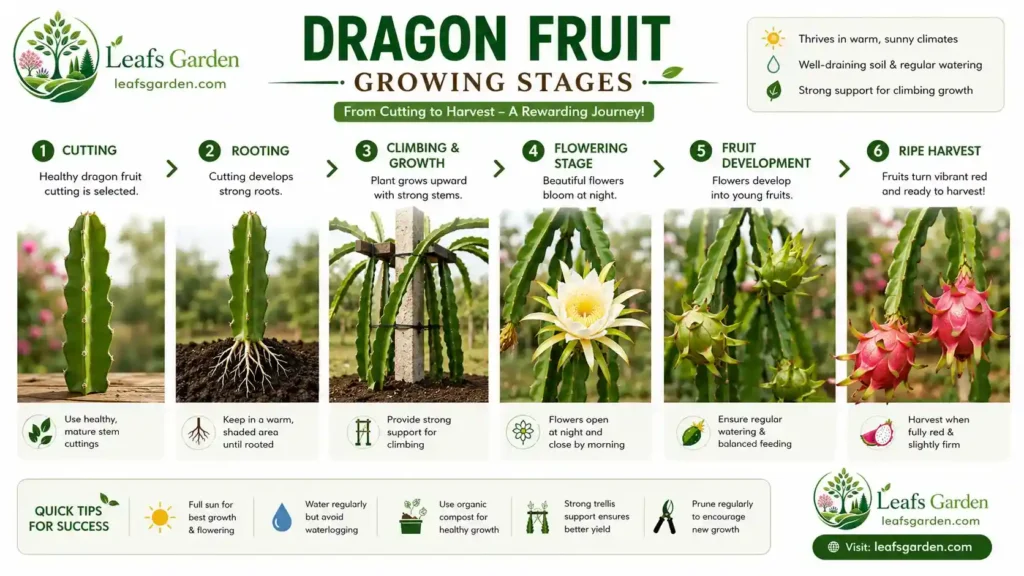
Dragon fruit season in Australia usually occurs during the warmer months when temperatures and sunlight levels are highest.
The exact season of dragon fruit depends on regional climate, plant maturity, and variety type.
| Region | Typical Harvest Season |
| Queensland | December–April |
| Northern NSW | January–April |
| WA Warm Regions | Summer to Early Autumn |
| Tropical Northern Areas | Extended Warm Season |
For people asking “when are dragon fruit in season,” peak harvest periods commonly occur from late summer into early autumn.
Commercial farms may produce several harvest flushes during warm growing conditions, especially when flowering cycles repeat through summer.
Fruit is usually ready for harvesting when:
Warm nights and consistent sunlight strongly influence flowering frequency and fruit production throughout the dragon fruit season Australia growers experience.
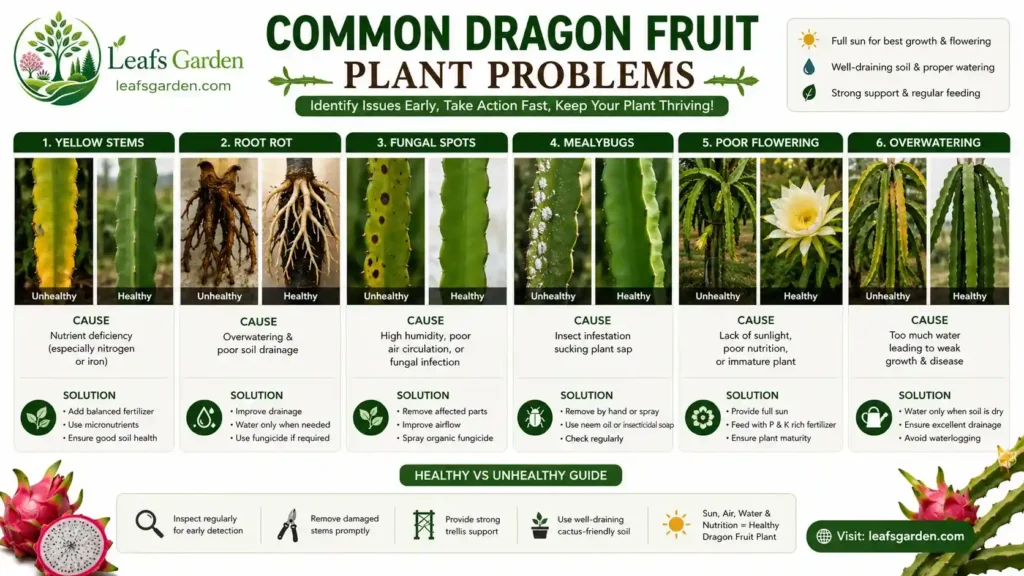
A dragon fruit plant usually turns yellow because of overwatering, root stress, or nutrient imbalance.
Yellowing stems are one of the earliest warning signs that growing conditions are affecting plant health. Identifying the cause quickly helps prevent long-term damage and reduced fruit production.
Overwatering is the most common reason dragon fruit stems become yellow or soft.
Because dragon fruit is a cactus plant, constantly wet soil can suffocate roots and damage stem tissue.
Common signs include:
Container-grown plants are especially vulnerable if drainage holes become blocked.
Root rot develops when roots remain in soggy soil for long periods.
This fungal-related problem can spread quickly through the root system and eventually damage the entire plant.
Typical symptoms include:
Fast-draining soil and controlled watering are the best prevention methods.
Nutrient problems can also cause yellow discoloration, especially when plants lack:
Deficiencies may appear as:
Balanced fertilization and organic compost help restore healthy green growth.
Dragon fruit plants are generally hardy, but pests and fungal diseases can still affect growth and fruit production under poor conditions.
Most problems develop when airflow is limited, humidity remains excessive, or plants become overcrowded.
Mealybugs are small white sap-sucking insects that gather around stem joints and hidden crevices.
They can cause:
Early infestations are often controlled using:
Fungal diseases commonly appear during wet humid weather or excessive watering.
Symptoms may include:
Good airflow and proper drainage significantly reduce fungal problems.
Stem rot is one of the most damaging dragon fruit diseases.
It usually develops because of:
Affected sections should be removed quickly before rot spreads through healthy stems.
Birds commonly damage ripening fruit by pecking soft mature skin.
Snails and slugs may also feed on:
Protective netting and garden barriers are often used during fruiting season.
A dragon fruit plant may fail to produce fruit because of insufficient sunlight, pollination problems, immature growth, or improper fertilization.
Healthy vegetative growth alone does not guarantee flowering or fruit set.
Dragon fruit plants require strong direct sunlight for flower production.
Insufficient light can cause:
Most mature plants need at least:
Shaded growing locations often reduce flowering dramatically.
Flowers may bloom successfully but still fail to produce fruit if pollination is weak.
This problem is more common when:
Hand pollination during nighttime flowering can improve fruit set significantly.
Young dragon fruit plants may simply not be mature enough for flowering.
Typical fruiting timelines include:
| Propagation Method | Fruiting Time |
| Cuttings | 1–2 Years |
| Seed-Grown Plants | 3–5 Years |
Immature stems usually focus on climbing growth before flowering begins.
Too much nitrogen fertilizer can prevent flowering by encouraging excessive stem growth.
Plants receiving imbalanced feeding may develop:
Balanced fertilizers with potassium support are usually better for flowering and fruit production.
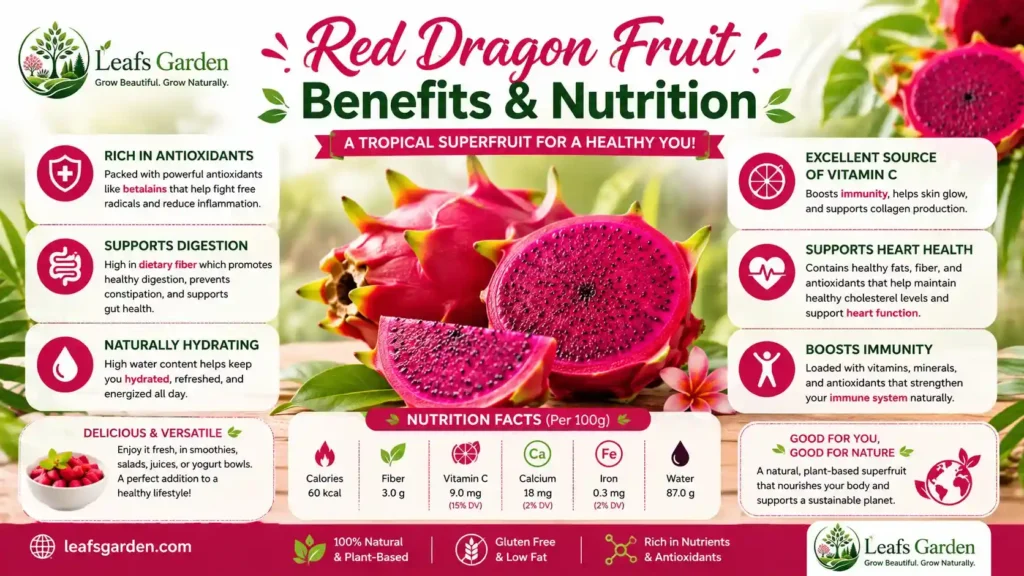
Red dragon fruit is rich in antioxidants, fiber, vitamin C, and hydration-supporting nutrients.
For people asking “is dragon fruit good for you,” the fruit is widely valued for its refreshing nutritional profile and naturally low-calorie composition. Its vibrant red flesh contains plant compounds that support overall wellness while providing hydration and dietary fiber.
The health benefits of a dragon fruit are often linked to its:
Red-fleshed varieties are especially known for containing betalain pigments, which contribute to the fruit’s deep color and antioxidant activity.
Because of its light sweetness and high water content, red dragon fruit is commonly included in:
The fruit also contains naturally occurring seeds that provide small amounts of healthy fats and additional fiber.
Red dragon fruit provides several important nutrients while remaining relatively low in calories.
Many dragon fruit nutrition benefits come from its balance of hydration, vitamins, minerals, and antioxidant compounds.
According to Eat for Health, tropical fruits rich in vitamin C and dietary fiber contribute positively to immune function and digestive health as part of a balanced Australian diet.
| Nutrient | Main Benefit |
| Fiber | Digestive support |
| Vitamin C | Immune support |
| Magnesium | Muscle and nerve function |
| Antioxidants | Cellular protection |
Dragon fruit vitamins commonly include:
The fruit also contains antioxidants such as:
These compounds help protect plant tissue naturally and are associated with the fruit’s colorful appearance.
Because red dragon fruit contains both water and fiber, it is often considered a light, refreshing fruit option for warm climates and summer diets.
The benefits of red dragon fruit include digestive support, hydration, immune support, and skin-related nutritional benefits.
Its combination of fiber, water, vitamins, and antioxidants makes it a popular fruit in health-conscious diets.
Red dragon fruit contains dietary fiber that supports healthy digestion and gut function.
Fiber may help:
The edible seeds also contribute additional fiber content.
The fruit has high water content, making it useful during warm weather and tropical climates.
Hydration-related benefits include:
This is one reason red dragon fruit is popular in smoothies and cold fruit preparations.
Vitamin C and antioxidant compounds contribute to immune-supporting nutrition.
Red dragon fruit benefits associated with immune health are linked to:
The antioxidant pigments found in red-fleshed dragon fruit are commonly associated with skin-supportive nutrition.
The benefit of red dragon fruit for skin-related wellness is mainly connected to:
Because of its vivid color, refreshing taste, and nutrient profile, red dragon fruit continues to grow in popularity as both a tropical garden fruit and functional food ingredient.
Dragon fruit plants are widely used in home gardens for their tropical appearance, climbing growth habit, and dramatic flowers.
The plant adds strong visual impact to outdoor spaces because of its:
In tropical garden aesthetics, dragon fruit plants are often used to create bold architectural features in modern edible landscapes.
Their climbing growth makes them highly suitable for:
Many gardeners train the plant along fences and support systems where hanging stems create a cascading tropical effect.
Because the plant grows upward rather than outward, it also works well in smaller gardens where space efficiency is important.
The large flowers further increase ornamental value. Blooming plants can become major visual highlights during warm summer nights.
Dragon fruit is commonly integrated into:
Its combination of decorative growth and edible fruit makes it popular for both functional and aesthetic gardening.
Many gardeners grow dragon fruit primarily for fresh home harvesting and backyard food production.
The plant is productive in warm climates and can provide repeated harvests once mature.
Home-grown dragon fruit is commonly used for:
Fresh fruit is valued for its mildly sweet flavor, colorful flesh, and refreshing texture.
Backyard edible gardening has increased the popularity of dragon fruit because the plant can produce substantial harvests in relatively compact growing areas.
Those building a productive tropical backyard garden may also consider adding a Kensington Pride mango, one of Australia’s most popular backyard fruit trees that pairs beautifully with dragon fruit in warm subtropical garden designs.
Container-grown plants also allow home gardeners to cultivate fruit on:
Once established, mature plants can continue producing fruit seasonally for many years with proper sunlight, pruning, and support systems.
Many gardeners also prefer dragon fruit because harvesting is simple. Ripe fruits are easy to identify by their bright skin color and slightly softened texture.
The combination of ornamental growth, edible fruit, and vertical cultivation makes dragon fruit one of the most versatile tropical plants for modern home gardens.
Dragon fruit plants are available at selected Australian nurseries and seasonal garden retailers.
Gardeners looking to buy dragon fruit plants can often find young cuttings, potted plants, or established climbing varieties through:
Many people also search for dragon fruit plant Bunnings availability because some garden centers periodically stock dragon fruit varieties during warmer planting seasons.
Availability may vary depending on:
In warmer Australian growing regions such as Queensland and Northern NSW, tropical fruit nurseries often provide a wider selection of dragon fruit cultivars.
Common plant forms sold include:
| Plant Type | Typical Use |
| Fresh Cuttings | Fast propagation |
| Young Seedlings | Early training |
| Established Potted Plants | Faster fruiting |
| Grafted Plants | Specialty growing |
When buying dragon fruit plants, growers usually prefer healthy rooted plants with strong stem structure and visible active growth.
Healthy dragon fruit seedlings establish faster and produce stronger long-term growth.
Before purchasing a plant, inspect the overall condition carefully to avoid weak or diseased stock.
Healthy roots are essential for successful establishment.
Look for:
Avoid plants with heavily compacted or rotting roots.
Strong dragon fruit stems should appear:
Healthy stems store water efficiently and support faster climbing growth after transplanting.
Avoid plants showing signs of disease or stress such as:
Carefully inspecting seedlings before purchase helps reduce future problems with fungal disease, weak growth, and poor fruit production.
For best results, choose plants suited to local climate conditions and warm Australian growing environments.
| Requirement | Best Condition |
| Sunlight | Full Sun |
| Soil | Fast Draining |
| Water | Moderate |
| Climate | Warm/Subtropical |
| Support | Trellis/Post |
| Fruiting Time | 1–3 Years |
Red dragon fruit plants are beginner-friendly tropical cactus plants that thrive in warm climates, containers, and trellis systems with proper sunlight and drainage.
Their climbing growth habit, striking flowers, and colorful fruit make them both decorative and productive for modern home gardens. With warm temperatures, fast-draining soil, and reliable support structures, dragon fruit plants can produce consistent harvests for many years.
Container growing is especially useful for gardeners with limited space or cooler winter conditions. Large pots and vertical trellises allow healthy growth on patios, balconies, and backyard garden areas while making seasonal protection easier.
Propagation from cuttings remains the fastest and most reliable way to establish strong fruiting plants. Healthy cuttings root quickly and often begin flowering much sooner than seed-grown plants.
Home harvesting is another major advantage of growing dragon fruit. Mature plants can provide fresh tropical fruit for smoothies, desserts, fruit bowls, and everyday eating directly from the garden.
For Australia-first growing conditions, regions such as Queensland, Northern NSW, and other frost-free warm zones offer ideal environments for productive cultivation. At the same time, dragon fruit also adapts successfully to subtropical parts of the USA and many warm regions worldwide, making it a globally popular tropical fruit plant for home gardeners.
Red dragon fruit plants grow best in warm sunny locations with fast-draining soil and strong vertical support. Most home gardeners grow the plant from cuttings because they root faster and produce fruit earlier than seed-grown plants. Large containers, trellises, and moderate watering help maintain healthy growth.
Yes, dragon fruit grows very well in pots in Australia, especially in warm regions such as Queensland and Northern NSW. Container growing is useful for patios, balconies, and smaller gardens because the plant can be trained vertically on trellises or support posts.
Dragon fruit plants perform best in full sun and usually require at least 6–8 hours of direct sunlight daily. Strong sunlight supports healthier stems, improved flowering, and better fruit production.
Dragon fruit grown from cuttings may begin producing fruit within 1–2 years under ideal conditions. Seed-grown plants usually take longer and may require 3–5 years before reliable fruiting begins.
A balanced low-nitrogen fertilizer with good potassium levels is usually best for dragon fruit plants. Compost, organic matter, and flowering-support fertilizers can help improve flowering and fruit development.
Yes, dragon fruit can be grown from seeds, although the process is slower than growing from cuttings. Seeds are commonly germinated in warm indoor trays with light cactus soil and consistent moisture.
Lack of sunlight, immature growth, poor pollination, and excessive nitrogen fertilizer are common reasons dragon fruit plants fail to flower. Mature plants growing in warm sunny conditions usually flower more reliably.
Dragon fruit season in Australia generally occurs from summer into early autumn. Peak harvest periods commonly happen between December and April depending on the growing region and climate conditions.