Grow Better Gardens with Smarter Plant Choices
Discover helpful guides on trees, hedges, fruit plants, edible plants, and beautiful landscape greenery.


Fruit trees and edible plants are cultivated species that produce food directly from your garden, including fresh fruits, herbs, vegetables, and nutrient-rich plant parts. From backyard orchards to container gardening, fruit trees & edible plants provide a reliable, natural food source that supports healthier living and greater self-sufficiency.
Growing your own food is no longer just a hobby—it’s a practical solution for modern lifestyles. It improves nutrition by giving you access to fresh, chemical-free produce, reduces grocery costs over time, and supports environmental sustainability by lowering food miles and waste. Whether you’re planting a lemon tree, nurturing a mango sapling, or growing herbs in pots, the benefits extend far beyond the harvest.
This guide is designed with global relevance in mind, covering conditions across regions like Australia, the USA, the UK, and both tropical and temperate climates. It serves beginners starting their first garden as well as experienced growers looking to optimize their results. By the end, you’ll have a complete, practical understanding of how to successfully grow and maintain fruit-bearing trees and edible plants in any environment.
Fruit trees are woody perennial plants that produce edible fruits as their primary yield. These trees typically grow over multiple years, developing a strong trunk and canopy structure before reaching full fruiting maturity. Common examples include mango, lemon, avocado, and fig trees, all of which fall under the broader category of fruit trees & edible plants.
Edible plants refer to any plant species that produce parts safe for human consumption. This includes fruits, leaves, stems, roots, seeds, and flowers. The category is wide-ranging, covering herbs like basil, vegetables like spinach, and fruit-bearing plants such as strawberries and guava.
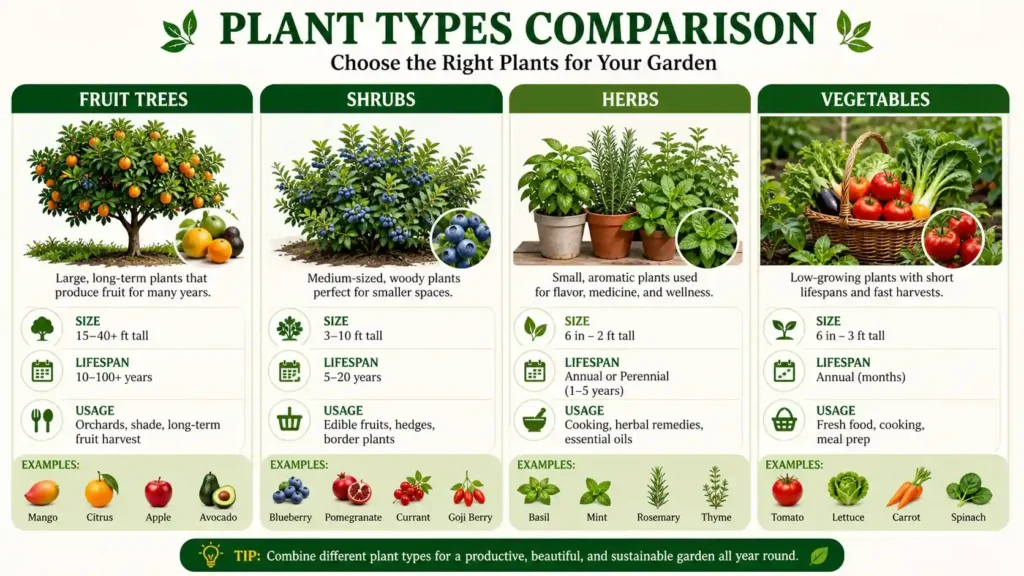
Understanding plant categories helps with proper selection, planting, and care:
All fruit trees & edible plants follow a structured biological cycle:
This foundational understanding ensures better decision-making when selecting, growing, and maintaining different types of edible plants and fruit-bearing trees.
Tropical and subtropical regions provide warm temperatures, high humidity, and long growing seasons—ideal conditions for many high-yield fruit trees & edible plants. These climates are common in parts of Australia, Southeast Asia, and southern regions of the USA, where consistent warmth supports rapid growth and reliable fruiting.
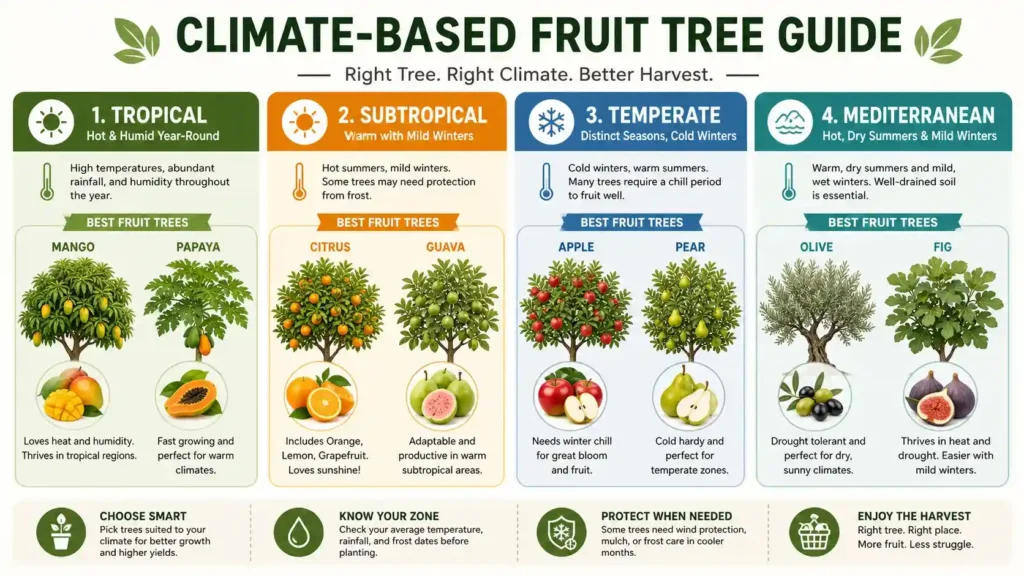
Mango trees thrive in hot climates with well-drained soil and full sunlight.
For detailed growing, care, and harvest information, see our Kensington Pride mango guide.
For detailed growing, care, and harvest information, see our R2E2 mango tree guide.
Key growing conditions:
Lychee trees prefer humid, subtropical climates with mild winters.
For complete growing, care, and variety details, see our lychee fruit tree guide.
For those seeking premium large-fruiting tropical varieties, our Erdon Lee lychee guide covers the famous dragon egg lychee known for its giant sweet fruit and subtropical growing requirements.
Key requirements:
Dragon fruit (pitaya) is a climbing cactus suited for hot and dry-to-humid environments.
For complete growing, care, and harvest details, see our red dragon fruit plant guide.
Optimal conditions:
Calamansi is a compact citrus tree ideal for tropical and subtropical gardens.
For a detailed breakdown of its benefits, uses, and growing methods, see our calamansi fruit guide.
Growing needs:
| Plant Type | Climate Need | Space Requirement | Special Notes |
| Mango (KP, R2E2) | Hot, frost-free | Large | Needs full sun, long seasons |
| Lychee (Erdon Lee) | Humid, mild winter | Medium–Large | Sensitive to cold |
| Dragon Fruit | Warm, dry–humid | Small–Medium | Climbing cactus, container-friendly |
| Calamansi | Warm, tropical | Small | Ideal for pots and small spaces |
This climate-focused selection helps ensure that the right fruit trees & edible plants are matched to suitable environmental conditions, improving growth success and long-term yield.
Citrus trees are among the most reliable and productive fruit trees & edible plants for warm climates. They thrive in regions with long sunny days, mild winters, and well-drained soil. These trees are widely grown in Australia, the USA, and Mediterranean-like environments due to their consistent yield and relatively manageable care requirements.
Lemon trees are highly adaptable and one of the most popular citrus options for home growers.
For complete growing, variety comparison, and care details, see our established lemon tree guide.
To explore its uses, benefits, and growing methods in detail, see our bush lemon guide.
Key requirements:
Tahitian lime trees are known for their seedless fruit and vigorous growth.
For complete size, growing, and care details, see our Tahitian lime tree guide.
Important considerations:
Clementine trees are a type of mandarin known for their sweet, easy-to-peel fruit.
For detailed care, growth, and benefits, see our clementine tree guide.
Growing conditions:
Nagami kumquat is a cold-tolerant citrus option compared to other warm-climate trees.
For complete plant care, growing tips, and benefits, see our Nagami kumquat guide.
Care essentials:
Honey Murcott is a premium mandarin variety valued for its rich sweetness.
For complete growing, care, and variety comparison details, see our Honey Murcott mandarin guide.
Key needs:
| Tree Type | Size | Climate Suitability | Special Feature |
| Lemon (Established) | Medium | Warm, mild winter | Fast fruiting once mature |
| Bush Lemon | Medium | Hardy conditions | More resilient, strong flavor |
| Tahitian Lime | Medium–Large | Warm, frost-free | Seedless fruit, needs space |
| Clementine | Small–Medium | Warm–temperate | Sweet, easy-to-peel fruit |
| Nagami Kumquat | Small | Warm–cool tolerant | Edible skin, compact growth |
| Honey Murcott Mandarin | Medium | Warm climates | Very sweet, high yield |
Selecting the right citrus variety based on climate, space, and maintenance level ensures consistent performance and long-term productivity in warm regions.
Temperate and cool climates—such as parts of the UK, northern USA, and southern Australia—are ideal for a wide range of hardy fruit trees & edible plants. These regions typically experience seasonal changes, including cold winters, which are essential for certain fruit trees to break dormancy and produce high-quality yields.
Fuyu persimmon is a non-astringent variety well-suited for temperate climates.
For complete growing and care details, see our fuyu persimmon tree guide.
Growing requirements:
Also known as “20th Century pear,” this variety is popular for its juicy and refreshing taste.
For complete growing, care, and harvest details, see our Nijisseiki pear guide.
Key conditions:
Brown Turkey fig is one of the most adaptable fig varieties for cooler regions.
For complete growing, care, and seasonal maintenance details, see our Brown Turkey fig guide.
Care essentials:
Mulberry trees are fast-growing and highly productive in temperate climates.
For complete growing, pruning, and care details, see our mulberry tree guide.
Optimal conditions:
| Tree Type | Climate Need | Size | Special Feature |
| Fuyu Persimmon | Temperate | Medium | Sweet, non-astringent fruit |
| Nijisseiki Pear | Cool–temperate | Medium | Juicy, requires pollination |
| Brown Turkey Fig | Cool–mild | Small–Medium | Cold-tolerant, container-friendly |
| Mulberry Tree | Temperate | Medium–Large | Fast-growing, high yield |
Choosing fruit trees adapted to cooler environments ensures proper dormancy, consistent flowering, and reliable fruit production year after year.
Mediterranean and specialty trees thrive in regions with hot, dry summers and mild, wet winters. These conditions are common in parts of southern Australia, California (USA), and southern Europe. Many of these fruit trees & edible plants are valued not only for food production but also for their long lifespan, drought tolerance, and ornamental appeal.
Olive trees are classic Mediterranean crops known for their resilience and high-value yield.
For complete growing, care, and oil production details, see our Arbequina olive tree guide.
For complete growing, care, and harvest details, see our Picual olive tree guide.
For complete growing, landscaping, and care details, see our Swan Hill olive tree guide.
Key growing conditions:
Bay trees are evergreen and highly valued for their aromatic leaves used in cooking.
For complete growing, harvesting, and care details, see our mature bay tree guide.
Care requirements:
Cinnamon trees can be grown in warm, humid parts of Australia, especially in subtropical regions.
For complete growing, harvesting, and care details, see our cinnamon tree Australia guide.
Optimal conditions:
This palm is both ornamental and productive in suitable climates.
For complete growing, fruit, and care details, see our Canary Island date palm guide.
Growing needs:
| Tree Type | Climate Suitability | Size | Special Feature |
| Arbequina Olive | Mediterranean | Small–Medium | Early fruiting, compact growth |
| Picual Olive | Mediterranean | Medium–Large | High oil yield |
| Swan Hill Olive | Warm, dry | Medium | Low-fruiting, ornamental use |
| Mature Bay Tree | Warm–temperate | Small–Medium | Culinary leaves, container-friendly |
| Cinnamon Tree | Subtropical (Australia) | Medium | Grown for bark (spice) |
| Canary Island Date Palm | Hot, dry | Large | Ornamental with edible fruit potential |
Selecting Mediterranean and specialty fruit trees & edible plants allows growers in dry, warm regions to cultivate resilient species that offer both functional and aesthetic value.
Grouping fruit trees & edible plants into categories helps simplify selection based on taste, climate, and growing conditions. Each category includes widely grown varieties known for performance, flavor, and adaptability.
Mango trees are tropical favorites known for high yield and rich flavor profiles.
Citrus trees are versatile, productive, and suitable for a wide range of warm climates.
Avocado trees are highly valued for their nutrient-dense fruit and long-term productivity.
For complete growing, care, and harvest details, see our Hass avocado tree guide.
For complete growing tips, pot care, and fruit details, see our Dwarf Wurtz avocado guide.
Exotic fruit trees add diversity and uniqueness to any edible garden.
For a complete guide on its uses, taste, and growing tips, see our buddha’s hand fruit guide.
For complete growing, care, and benefits, see our starfruit tree guide.
For complete growing details, benefits, and uses, see our kiwiberry guide.
For complete growing, care, and fruit details, see our full grown strawberry guava tree guide.
| Category | Key Varieties | Climate Suitability | Special Advantage |
| Mango Trees | Kensington Pride, R2E2 | Tropical–Subtropical | High yield, rich flavor |
| Citrus Trees | Lemon, lime, mandarin, kumquat | Warm–Temperate | Easy to grow, versatile use |
| Avocado Trees | Hass, Dwarf Wurtz | Warm climates | Nutrient-dense fruit |
| Exotic Fruits | Buddha’s hand, starfruit, kiwiberry | Mixed (varies by plant) | Unique appearance and taste |
Selecting from these categories ensures a balanced mix of productivity, adaptability, and diversity when growing fruit trees & edible plants.
Selecting the right fruit trees & edible plants is essential for long-term success. The right choice depends on environmental conditions, available space, and your maintenance capacity. A well-matched plant will grow healthier, produce better yields, and require fewer corrections over time.
Climate is the most critical factor when choosing any fruit tree or edible plant.
Quick tip: Always select varieties proven to perform well in your local region.
Available space directly influences the type and number of plants you can grow.
For example, the calamansi tree is a compact citrus option ideal for containers—learn more in our calamansi tree guide.
For gardeners wanting a safer and easier-to-manage lemon option, our thornless lemon tree guide covers the best low-thorn varieties suited to Australian backyards and container gardens.
Understanding tree size helps avoid overcrowding and maintenance issues.
Different fruit trees & edible plants have varying care needs.
Consider:
Yield depends on plant type, maturity, and care practices.
| Factor | What to Consider | Best Choice Example |
| Climate | Temperature, humidity, frost | Mango (warm), pear (cool) |
| Space | Pot, garden, orchard | Dwarf citrus for containers |
| Tree Size | Dwarf vs full-grown | Dwarf avocado for small areas |
| Maintenance | Time and effort available | Mulberry for low care |
| Yield Expectations | Short-term vs long-term production | Citrus (fast), mango (long-term) |
Choosing wisely ensures your fruit trees & edible plants thrive with fewer challenges and deliver consistent, high-quality harvests.
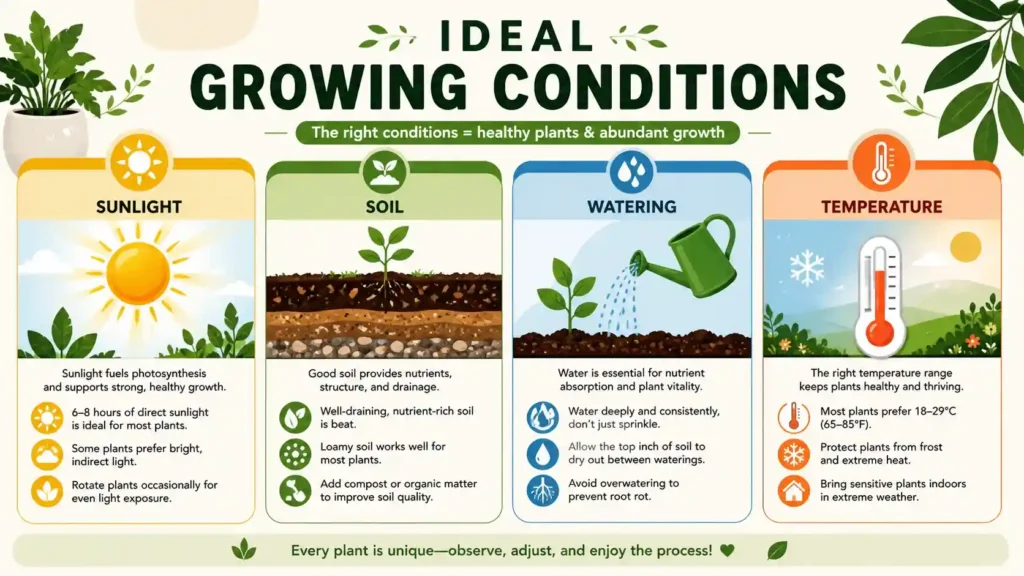
Creating the right environment is essential for the success of fruit trees & edible plants. Growth, fruit quality, and yield depend heavily on how well sunlight, soil, water, and temperature conditions are managed.
Most fruit trees and edible plants require strong, direct sunlight for healthy growth and fruit production.
Best practice: Position plants in open areas with maximum sun exposure and minimal shade.
Soil quality directly affects root health and nutrient absorption.
Key tip: Avoid heavy clay soils unless improved with compost and drainage amendments.
Consistent and balanced watering is critical for plant health.
General guideline:
Temperature determines which fruit trees & edible plants can grow successfully.
Hardiness zones help:
| Factor | Requirement | Impact on Growth |
| Sunlight | 6–8+ hours daily | Boosts flowering and fruiting |
| Soil Type | Well-drained, loamy preferred | Supports root health |
| Watering | Balanced, consistent | Prevents stress and disease |
| Temperature Zones | Climate-specific | Ensures survival and yield |
Optimizing these conditions ensures that fruit trees & edible plants grow efficiently, remain healthy, and produce high-quality harvests over time.
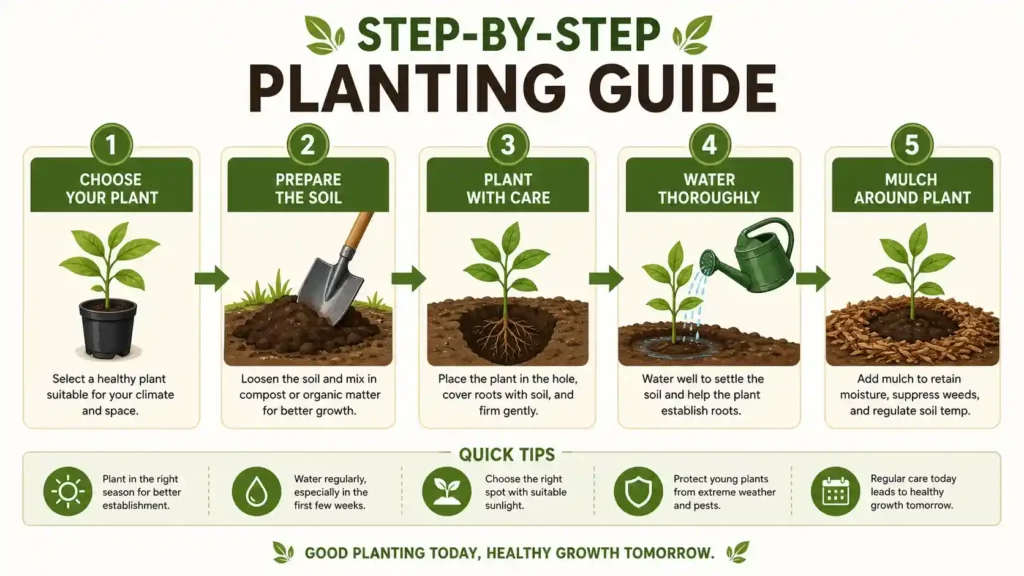
Planting fruit trees & edible plants correctly from the start ensures strong root development, faster establishment, and better long-term yield. Follow these essential steps for optimal results.
Selecting a high-quality plant is critical.
Proper soil preparation improves growth and nutrient uptake.
Correct planting depth prevents root stress and growth issues.
Initial watering helps roots settle and establish quickly.
Mulching protects and supports young plants.
| Step | Key Action | Benefit |
| Choose Plant | Healthy, pest-free sapling | Strong start |
| Prepare Soil | Loose, nutrient-rich, well-drained | Better root growth |
| Correct Depth | Same level as nursery container | Prevents stress |
| Watering | Deep, immediate watering | Faster establishment |
| Mulching | Organic layer around base | Moisture retention & protection |
Following this structured approach ensures that your fruit trees & edible plants establish quickly and grow into productive, healthy plants.
Proper care ensures that fruit trees & edible plants remain healthy, productive, and long-lasting. Consistent maintenance directly impacts fruit quality, plant strength, and resistance to pests and diseases.
Balanced nutrition is essential for growth and fruit production.
General schedule:
Pruning improves structure, airflow, and fruit yield.
Best timing:
Protecting plants from pests and diseases is critical for consistent yield.
Adapting care routines based on seasons improves plant performance.
| Care Aspect | Key Action | Benefit |
| Fertilizing | Seasonal, balanced nutrients | Strong growth & fruiting |
| Pruning | Remove dead & shape structure | Better airflow & yield |
| Pest Control | Regular inspection, natural methods | Reduced damage & disease |
| Seasonal Care | Adjust care by season | Year-round plant health |
Consistent care and maintenance practices ensure that fruit trees & edible plants remain productive, resilient, and capable of delivering high-quality harvests over time.
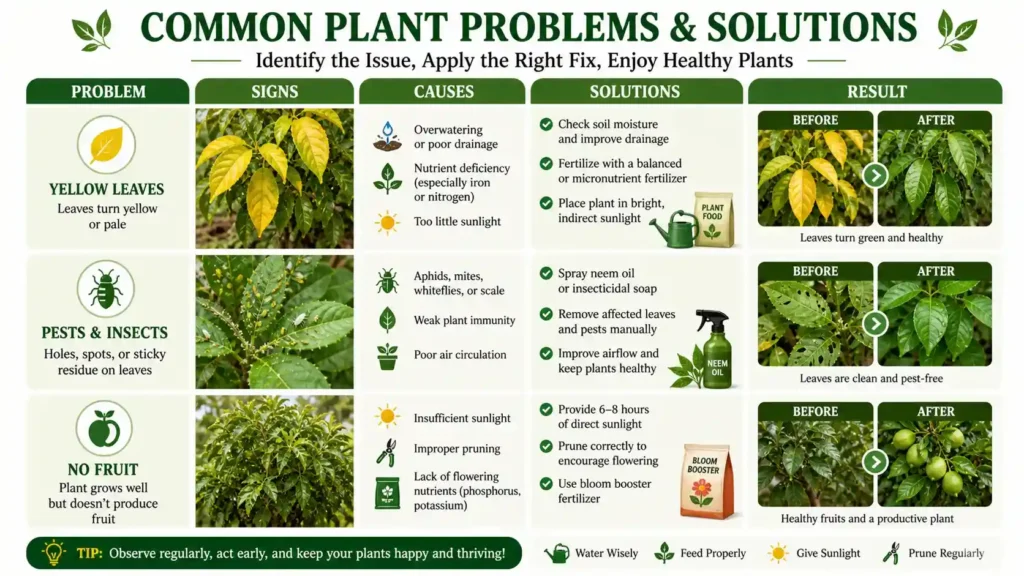
Even well-maintained fruit trees & edible plants can face growth and production issues. Identifying the root cause early and applying the right solution ensures healthy recovery and consistent yields.
Lack of fruiting is one of the most common concerns and is usually caused by environmental or care-related factors.
Possible reasons:
Solutions:
Yellowing leaves indicate stress or nutrient imbalance.
Common causes:
Solutions:
Natural pest control is effective and safe for edible plants.
Common natural methods:
Preventive practices:
| Problem | Main Cause | Effective Solution |
| No fruit production | Poor light, immaturity | Increase sunlight, proper care |
| Yellow leaves | Water or nutrient imbalance | Adjust watering, improve nutrition |
| Pest infestation | Lack of control measures | Use natural treatments |
Addressing these common issues early helps maintain healthy, productive fruit trees & edible plants and prevents long-term damage.
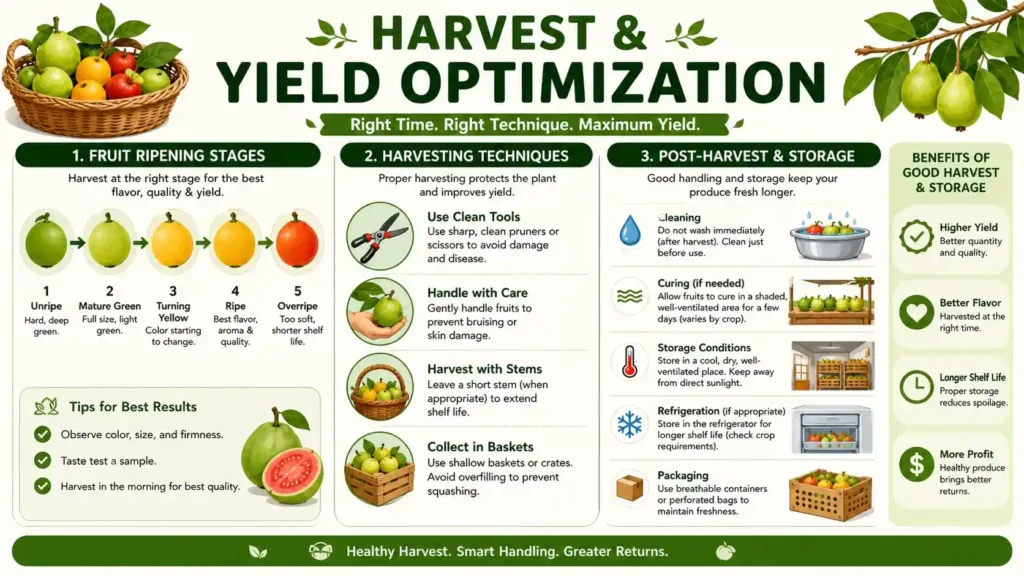
Proper harvesting and yield optimization techniques are essential for maximizing the performance of fruit trees & edible plants. Timing, handling, and post-harvest care directly influence fruit quality, shelf life, and overall productivity.
Harvest timing varies by plant type but follows clear indicators.
Key tip: Harvest at peak ripeness for best flavor, but some fruits (like citrus) can remain on the tree longer without quality loss.
Correct harvesting methods prevent damage and improve storage life.
Best practice: Keep harvested fruits in shaded areas immediately after picking.
Improving yield requires consistent care and optimized growing conditions.
Additional strategies:
Proper storage extends the usability of harvested produce.
Preservation methods:
| Aspect | Key Action | Benefit |
| Harvest Timing | Pick at peak ripeness | Better flavor & quality |
| Harvest Method | Gentle handling, proper tools | Reduced damage |
| Yield Improvement | Sunlight, pruning, fertilizing | Higher production |
| Storage | Cool, dry, proper containers | Extended shelf life |
Applying these techniques ensures that fruit trees & edible plants deliver consistent, high-quality harvests while maintaining long-term productivity.
Avoiding common mistakes is essential for successfully growing fruit trees & edible plants. Many early failures are not due to plant difficulty but incorrect practices that can be easily corrected.
Overwatering is one of the most frequent and damaging mistakes.
Correction:
Planting species unsuited to your climate results in poor growth and low yield.
Correction:
Ignoring soil quality limits plant development from the start.
Correction:
Lack of regular care affects long-term productivity.
Correction:
| Mistake | Impact | Solution |
| Overwatering | Root rot, weak growth | Improve drainage, controlled watering |
| Wrong Climate Selection | Poor survival, no fruiting | Choose climate-suitable plants |
| Poor Soil Preparation | Limited root development | Use well-prepared, fertile soil |
| Ignoring Care Needs | Low yield, plant stress | Maintain regular care routine |
Avoiding these mistakes ensures that fruit trees & edible plants grow stronger, produce consistently, and require fewer corrective measures over time.
Growing fruit trees & edible plants is a practical and rewarding step toward healthier living and long-term sustainability. Whether you start with a simple citrus plant in a container or develop a diverse backyard garden, the benefits are immediate and lasting—fresh produce, reduced costs, and greater control over what you consume.
With the right plant selection, proper growing conditions, and consistent care, anyone can successfully cultivate their own food, regardless of location or experience level. The key is to start with climate-suitable plants, follow proven planting and maintenance practices, and stay consistent.
Next steps:
For deeper learning, explore related guides such as:
Taking the first step today ensures long-term benefits from your fruit trees & edible plants for years to come.
The easiest fruit trees & edible plants to grow include lemon, fig, mulberry, and kumquat. These varieties are adaptable, require minimal care, and produce consistent yields in suitable climates.
Fast-growing edible plants include leafy greens (spinach, lettuce), herbs (basil, mint), and some fruits like strawberries. Among trees, figs and certain citrus varieties establish and produce relatively quickly.
Yes, many fruit trees grow successfully in pots, especially dwarf varieties. Citrus, calamansi, kumquat, and dwarf avocado are ideal for container gardening with proper drainage and sunlight.
Most fruit trees produce fruit within 2–5 years, depending on the variety and growing conditions. Grafted trees often fruit earlier than seed-grown plants.
Fruit trees are perennial plants that produce edible fruits, while edible plants include any plant species with consumable parts such as leaves, roots, stems, or fruits.
Mango, citrus (lemon, lime, mandarin), avocado, and olive trees perform exceptionally well in warm climates like Australia due to their heat tolerance and long growing seasons.
Fuyu persimmon, pear, apple, fig, and mulberry trees are well-suited for cooler regions as they can tolerate seasonal changes and require winter chill for proper growth.
Beginner-friendly options include herbs (mint, basil), leafy greens, strawberries, and citrus plants. These are easy to maintain and offer quick results.
Well-drained, loamy soil rich in organic matter is ideal. It supports root development, retains moisture, and provides essential nutrients.
Watering depends on climate and soil type. Young plants need frequent watering, while mature trees require deep watering less often. Soil should remain moist but not waterlogged.
Common reasons include insufficient sunlight, immature age, improper pruning, lack of pollination, or nutrient imbalance. Correcting these factors improves fruiting.
Mulberry, olive, fig, and kumquat are considered low-maintenance. They are hardy, adaptable, and require minimal intervention once established.
Fast-growing fruit trees include fig, mulberry, and some citrus varieties. These establish quickly and can begin producing fruit within a few years.
Some fruit trees can grow indoors if provided with sufficient light. Dwarf citrus and small tropical plants perform best near sunny windows or under grow lights.
Popular exotic options include dragon fruit, starfruit, Buddha’s hand, kiwiberry, and strawberry guava. These add diversity and unique flavors to home gardens.
Select plants based on temperature range, humidity, and frost tolerance. Always choose varieties proven to perform well in your local region.
Dwarf trees are compact, easier to manage, and suitable for small spaces. Full-sized trees require more space but produce higher yields over time.
The best time is typically early spring or autumn, depending on climate. These seasons allow roots to establish before extreme temperatures.
Most fruit trees require 6–8 hours of direct sunlight daily for optimal growth and fruit production.
Improve yield by ensuring proper sunlight, balanced fertilization, regular pruning, and consistent watering. Supporting pollination also increases production.
Common issues include overwatering, pest infestations, nutrient deficiencies, poor soil conditions, and climate mismatch. Early detection and proper care prevent long-term damage.
Organic fertilizers improve soil health over time and provide slow-release nutrients, making them highly beneficial for sustainable fruit tree growth.
Yes, annual pruning helps maintain shape, improve airflow, and encourage better fruit production, especially for mature trees.
Yes, by using dwarf varieties, container gardening, or spacing techniques like espalier, multiple fruit trees can be grown in limited areas without overcrowding.