Grow Better Gardens with Smarter Plant Choices
Discover helpful guides on trees, hedges, fruit plants, edible plants, and beautiful landscape greenery.
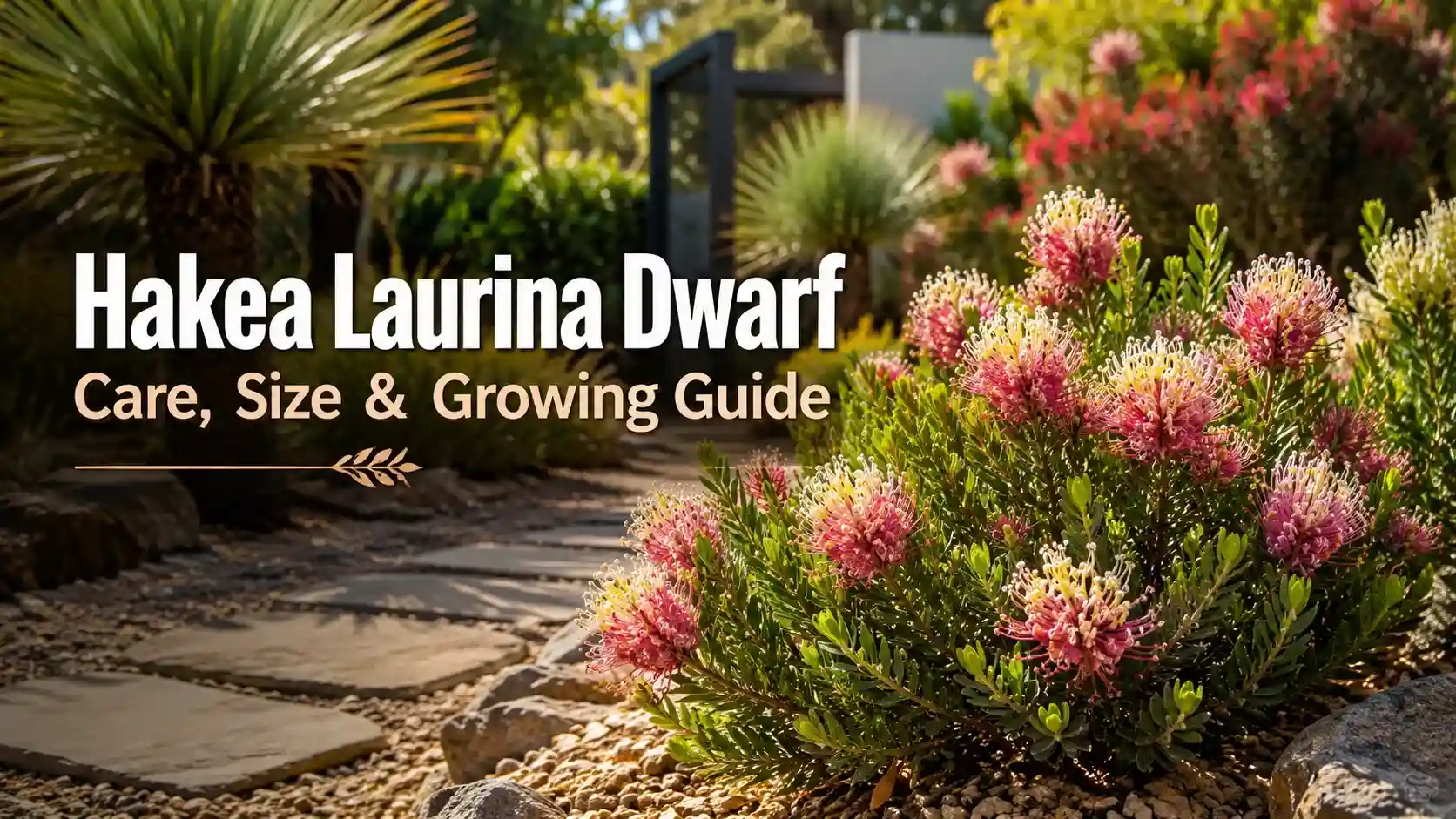
Hakea laurina dwarf is a compact Australian native plant valued for its striking ornamental flowers, dense foliage, and excellent drought tolerance. Popular in modern landscaping, this smaller-growing form of pincushion hakea is widely used in native gardens, privacy screens, and low-maintenance outdoor spaces. Its unique pincushion-shaped blooms attract birds, bees, and other pollinators while adding year-round visual interest to gardens. The plant is especially appreciated for its compact growth habit, making it suitable for smaller residential landscapes where full-sized native trees may not fit comfortably. Commonly known as hakea laurina pincushion hakea, pin cushion hakea, hakea pincushion, and pink cushion hakea, this ornamental native combines beauty, resilience, and practical garden performance in a single plant.
Hakea laurina dwarf is a compact form of the well-known Australian native shrub and small tree, Hakea laurina, which belongs to the Proteaceae family. This species is closely related to other ornamental Australian natives that are widely grown for their decorative flowers and drought tolerance.
| Classification | Details |
| Botanical Name | Hakea laurina |
| Family | Proteaceae |
| Common Type | Australian native shrub/tree |
| Plant Category | Ornamental native plant |
| Origin | Southwestern Australia |
Native to parts of Western Australia, the plant naturally grows in sandy and well-drained soils where dry conditions are common. The dwarf form was developed for smaller landscapes and modern gardens that require compact native plants with manageable growth habits.
Compared to the standard hakea laurina, the dwarf variety maintains a smaller and denser structure while still producing the same distinctive ornamental flowers. It delivers the visual appeal of the larger species without requiring excessive garden space.
The plant is commonly called the pincushion hakea because of its rounded flower clusters. The blooms feature long protruding styles that resemble colorful pins sticking out of a pincushion, creating one of the most recognizable flower forms among Australian native plants.
Hakea laurina dwarf is known by several common names across Australia and among native plant growers. These names are often linked to the plant’s flower shape, ornamental appearance, or growth habit.
Common names include:
Many gardeners also use these names interchangeably with other related terms such as pincushion hakea or pink cushion hakea because of the plant’s decorative pink and cream flower heads.
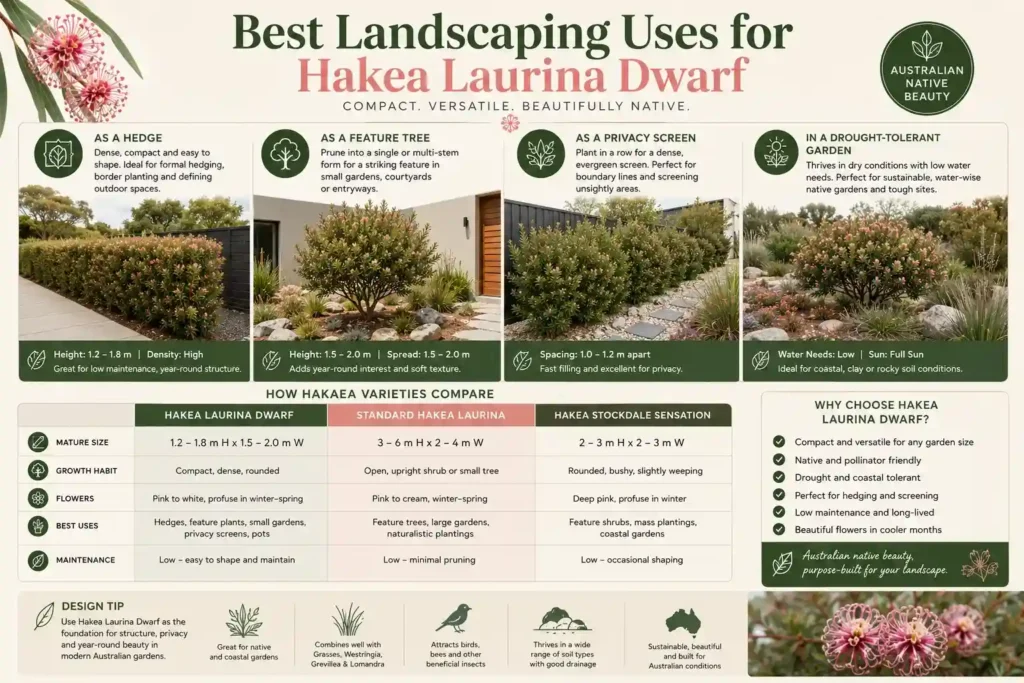
The primary difference between standard and dwarf varieties lies in plant size, canopy spread, and maintenance requirements. Standard hakea laurina can develop into a much larger shrub or small tree, while dwarf hakea selections are bred for compact growth and easier landscape management.
| Feature | Standard Hakea Laurina | Dwarf Hakea Laurina |
| Mature Size | Larger shrub or small tree | Compact shrub/tree |
| Maintenance | Requires more pruning | Lower maintenance |
| Garden Suitability | Large gardens and open spaces | Small gardens and urban landscapes |
| Growth Habit | Upright or spreading | Dense and compact |
| Screening Use | Large privacy screens | Compact hedging and borders |
Some cultivars also display different growth forms. For example, weeping hakea laurina develops softer cascading branches, while compact cultivars focus on dense foliage and smaller dimensions suitable for residential gardens.
Popular related varieties include:
These varieties are commonly chosen for native gardens, drought-tolerant landscapes, wildlife-friendly planting schemes, and decorative screening applications where space efficiency is important.
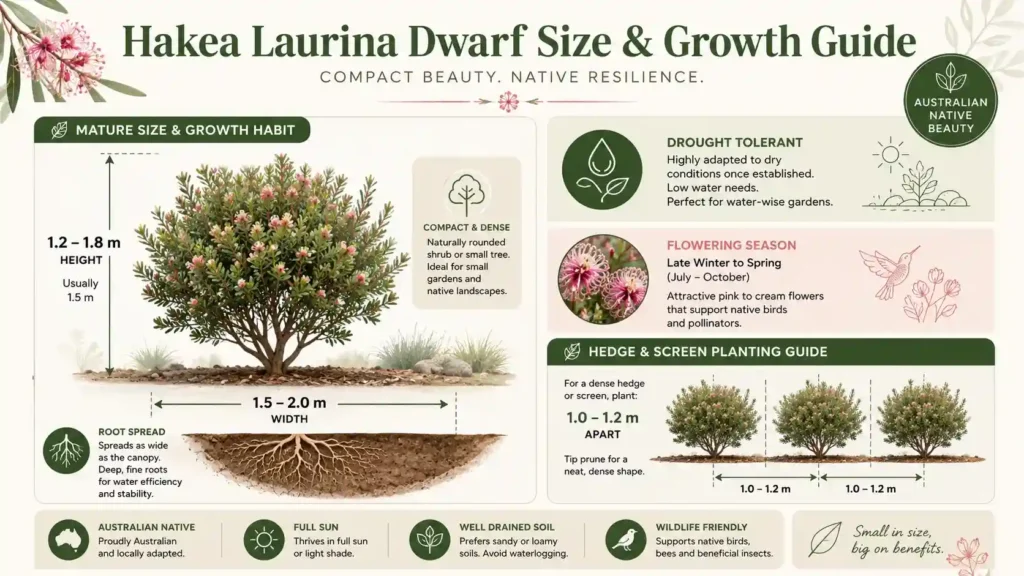
Hakea laurina dwarf is valued for its manageable size and compact structure, making it highly suitable for residential landscapes and smaller native gardens. Unlike the larger standard hakea laurina, the dwarf form remains more controlled while still producing dense foliage and ornamental flowers.
The typical hakea laurina size for standard varieties can reach small tree proportions, often growing several meters tall and wide. In comparison, compact dwarf selections maintain a much smaller footprint and require less pruning over time.
Most dwarf varieties develop with:
The plant generally has a moderate growth rate when grown in well-drained soil and full sun conditions. Once established, it steadily develops into a dense ornamental shrub or small tree with reliable flowering performance.
The growth habit of dwarf hakea varieties can vary slightly depending on the cultivar. Some forms grow with a naturally upright structure, while others may display softer or slightly weeping branching patterns similar to weeping hakea laurina selections.
Common structural characteristics include:
The thick foliage coverage makes the plant highly practical for multiple landscaping applications.
As a hedge
As a screening plant
As a feature tree
The plant’s compact structure allows it to function effectively in modern landscaping without overwhelming surrounding plants or structures.
Hakea laurina dwarf typically develops a non-invasive root system when planted in suitable soil conditions. The roots prefer well-drained soils and generally spread moderately beneath the canopy area rather than aggressively searching for water sources.
For healthy long-term development, adequate spacing is important.
Recommended planting considerations include:
When used as a hakea hedge or screening row, spacing depends on the desired density.
General hedge spacing recommendations:
Proper spacing improves airflow, encourages healthy foliage growth, and reduces disease risk over time.
| Feature | Dwarf Hakea Laurina |
| Mature Height | Compact small shrub or tree |
| Width | Moderate compact spread |
| Growth Rate | Moderate |
| Flowering Season | Cooler months to spring |
| Drought Tolerance | High once established |
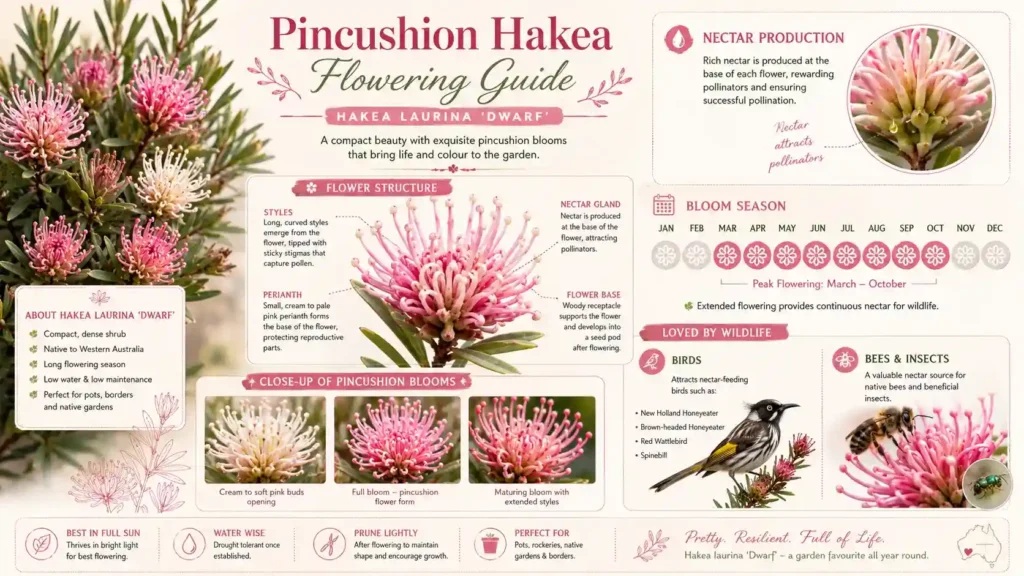
One of the most distinctive features of hakea laurina dwarf is its unusual and highly ornamental flowering display. The hakea flower is widely recognized for its rounded pincushion-shaped blooms that create strong visual impact in Australian native gardens.
Unlike traditional flower clusters, hakea flowers develop into globe-like flower heads made up of hundreds of small individual blossoms. Long protruding styles extend outward from the center, giving the blooms their famous pincushion appearance.
Common flower characteristics include:
The color variations can differ slightly depending on cultivar and growing conditions, but the most common shades include:
The nectar-rich flowers are especially valuable in wildlife-friendly landscapes. Mature plants often produce large quantities of nectar that attract birds and beneficial insects throughout the flowering season.
Hakea laurina dwarf generally flowers during the cooler months through spring, although blooming periods may vary slightly depending on regional climate conditions.
| Season | Flowering Activity |
| Late Autumn | Bud formation begins |
| Winter | Peak flowering starts |
| Spring | Continued blooming |
| Summer | Flowering reduces |
The blooms are highly attractive to a wide range of pollinators and nectar-feeding wildlife.
Birds
Bees
Other Pollinators
Because flowering often occurs during cooler periods when fewer nectar plants are available, pincushion hakea becomes an important food source for wildlife in Australian gardens.
The name pincushion tree comes directly from the flower structure. Each bloom resembles a decorative sewing pincushion with colorful pins projecting outward in all directions.
This unusual floral design separates hakea pincushion varieties from many other Australian native plants. While numerous native species produce attractive flowers, the rounded globe-shaped bloom structure of hakea laurina is especially distinctive.
Compared with other ornamental Australian natives:
| Plant Type | Flower Appearance |
| Hakea Laurina | Rounded pincushion blooms |
| Bottlebrush | Cylindrical brush-like flowers |
| Grevillea | Spider or toothbrush-shaped flowers |
| Banksia | Cone-shaped flower spikes |
The combination of bold flower structure, rich nectar production, and long flowering periods has made the plant one of the most recognizable ornamental natives used in Australian landscaping.
| Feature | Details |
| Flower Color | Pink, cream, red, blush tones |
| Bloom Season | Winter to spring |
| Wildlife Attraction | Birds, bees, pollinators |
| Ornamental Value | Highly decorative native flowering plant |
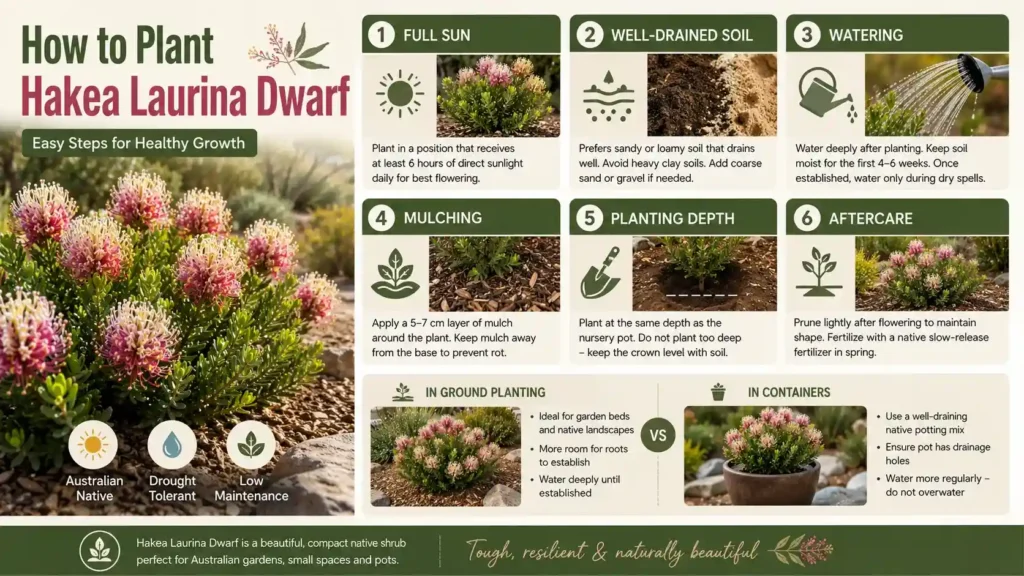
Proper planting is essential for establishing healthy hakea laurina dwarf growth and long-term flowering performance. Like many Australian native plants, it prefers well-drained conditions and careful early establishment.
Choose a planting location that receives full sun for most of the day. Good airflow and proper drainage are important for preventing fungal issues and encouraging dense growth.
Ideal planting locations include:
Avoid planting in:
Prepare the soil before planting to improve drainage and root establishment.
Recommended preparation steps:
Australian native plants generally perform best in low-phosphorus soil environments.
Dig a planting hole approximately twice the width of the nursery pot but no deeper than the root ball itself.
Important planting guidelines:
Correct planting depth helps reduce transplant stress and improves oxygen access to developing roots.
Apply mulch around the base after planting to retain soil moisture and regulate soil temperature.
Best mulching practices:
Mulching also helps suppress weeds and reduces rapid moisture evaporation during warmer months.
The best planting period for hakea laurina dwarf is generally during cooler seasons when temperatures are milder and natural rainfall may assist root establishment.
| Season | Suitability |
| Autumn | Excellent |
| Winter | Very Good |
| Early Spring | Good |
| Peak Summer | Less Ideal |
Autumn planting is often preferred because roots can establish before intense summer heat arrives.
Planting times may vary depending on regional Australian climates.
Proper seasonal timing improves survival rates and encourages stronger early growth.
Hakea laurina dwarf can grow successfully in both garden beds and large containers when drainage conditions are suitable.
Container growing works best with:
Compact varieties such as dwarf hakea and hakea laurina mini pini are especially suitable for container planting because of their manageable growth habit.
Excellent drainage is essential for both container and ground planting.
Key drainage recommendations:
Poor drainage remains one of the most common causes of root decline in Australian native plants.
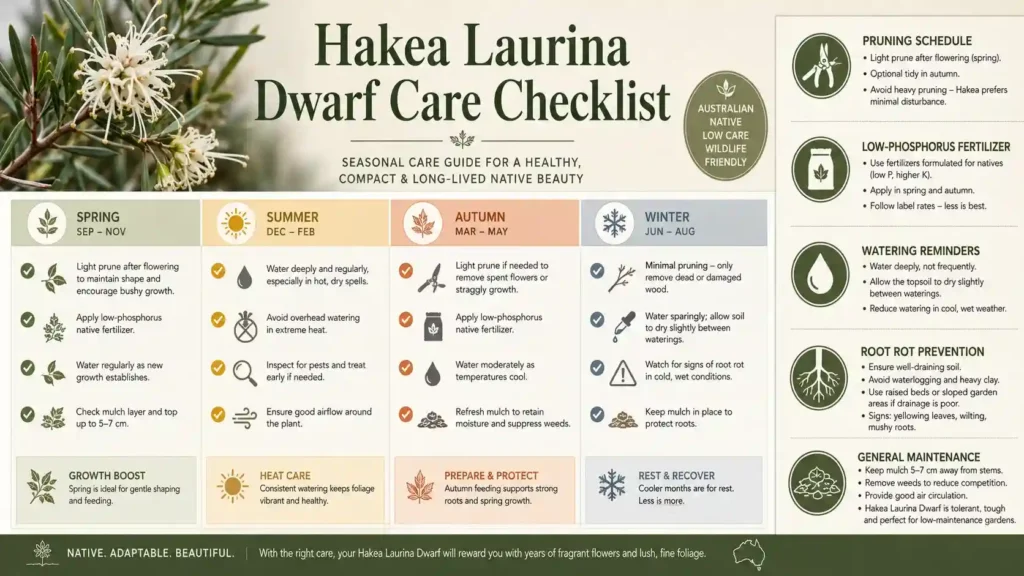
Hakea laurina dwarf generally requires minimal feeding once established, especially when grown in suitable native Australian soils. Excess fertilizer can damage the sensitive root system, so careful nutrient management is important.
The plant responds best to low-phosphorus fertilizers specifically formulated for Australian native plants. High phosphorus levels may harm root development and reduce long-term plant health.
Important precautions include:
Organic mulch and natural soil improvement are often sufficient for healthy growth in established plants.
Regular pruning helps maintain the compact structure and ornamental appearance of dwarf hakea varieties. Light shaping also encourages denser foliage growth and improves hedge performance.
Best pruning practices include:
Frequent aggressive pruning is usually unnecessary because the plant naturally develops a compact growth habit.
When used as a hakea hedge or screening plant, occasional shaping helps maintain even coverage and dense foliage.
Recommended hedge maintenance:
Dense pruning improves:
Proper pruning timing also supports healthier flowering in future seasons.
Hakea laurina dwarf is generally considered a hardy Australian native plant, but certain problems can occur if growing conditions are unsuitable.
Potential problems may include:
Most issues are linked to drainage problems, excessive moisture, or environmental stress rather than serious pest infestations.
Root rot is one of the most significant risks for hakea plants growing in poorly drained soil.
Prevention methods include:
Healthy drainage remains the most important factor for long-term plant survival.
Leaf discoloration may result from several environmental conditions.
Common causes include:
Correcting watering and drainage problems often improves foliage condition over time.
Hakea laurina dwarf is considered a relatively low-maintenance ornamental native plant once fully established. With proper planting and occasional seasonal care, it can remain attractive for many years.
Under suitable growing conditions, healthy plants may live for decades while continuing to produce ornamental flowers and dense foliage.
Factors influencing lifespan include:
| Season | Recommended Care |
| Autumn | Mulch renewal and light feeding |
| Winter | Monitor flowering and drainage |
| Spring | Light pruning after flowering |
| Summer | Deep occasional watering during dry periods |
Additional long-term care tips:
Consistent maintenance helps preserve compact growth, reliable flowering, and strong overall plant health throughout the years.
Hakea laurina dwarf is widely used as a compact screening plant because of its dense evergreen foliage and manageable growth habit. Its naturally bushy structure allows it to create effective privacy barriers without requiring the excessive space needed for larger trees.
A hakea laurina hedge works especially well in:
Key advantages include:
The plant can be lightly shaped to maintain a neat hedge appearance while still preserving its natural form and flowering potential.
For screening purposes, dwarf hakea varieties are often preferred over larger native trees because they provide privacy without becoming oversized or difficult to manage.
Hakea laurina dwarf is also highly valued as an ornamental feature tree in Australian native landscapes. Its distinctive pincushion flowers create a strong visual focal point during the flowering season, while the dense foliage adds texture throughout the year.
Many gardeners plant Hakea Pincushion alongside dwarf varieties to provide taller flowering specimens, adding vertical interest and complementing the compact hedge form.
Popular uses include:
The plant pairs well with other Australian natives such as:
Its compact size makes it suitable for modern landscape designs where space efficiency and low maintenance are priorities.
Because of its nectar-rich flowers, the plant supports wildlife-friendly garden environments by attracting pollinators and native birds.
Wildlife benefits include:
The combination of ornamental appeal and ecological value makes dwarf hakea a practical choice for sustainable landscaping projects.
Hakea laurina dwarf adapts well to coastal and dry-climate gardens due to its strong tolerance for harsh environmental conditions.
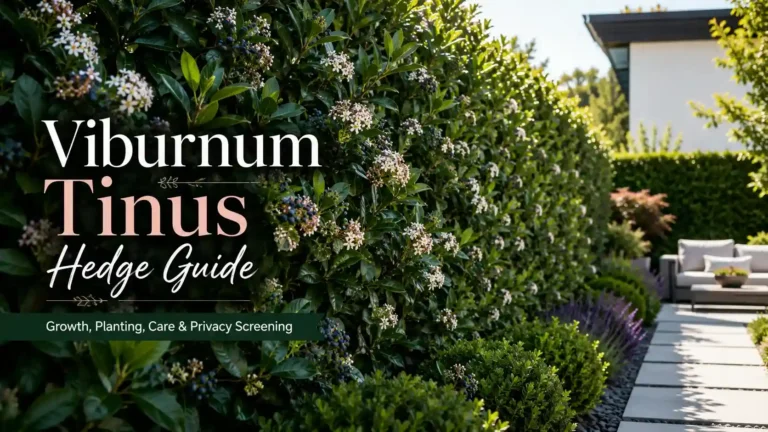
Gardeners often consult detailed guides on hedging and screening plants to learn which species perform best for privacy, decorative borders, and low-maintenance native gardens.
In suitable well-drained coastal locations, the plant can tolerate:
This makes it useful for Australian coastal landscaping where many ornamental plants struggle to perform reliably.
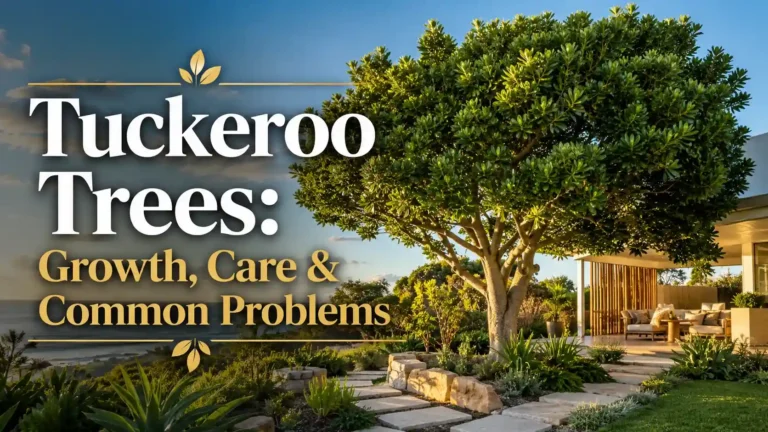
Other Australian native trees, such as Tuckeroo Trees, also perform well in coastal and drought-prone gardens and can be paired with dwarf hakea for attractive, low-maintenance screens.
The plant is highly suitable for xeriscaping and water-wise garden designs because of its low water requirements after establishment.
Benefits for drought-tolerant landscapes include:
Its ability to maintain ornamental value with minimal watering makes it especially useful for sustainable landscaping in warmer Australian climates.
| Plant Type | Best Use | Size | Maintenance |
| Dwarf Hakea Laurina | Compact hedges, feature planting, screening | Compact | Low to moderate |
| Standard Hakea Laurina | Larger native gardens and open landscapes | Large shrub or small tree | Moderate |
| Hakea Stockdale Sensation | Ornamental flowering displays and feature use | Medium compact | Low to moderate |
Hakea stockdale sensation is a popular ornamental cultivar valued for its dense growth habit, vibrant flowering display, and compact landscape performance. It is commonly selected for Australian native gardens where strong visual impact and manageable growth are important.
Key features of hakea stockdale sensation include:
This variety is frequently used in residential gardens because it offers a controlled structure while still delivering the dramatic flowering characteristics associated with pincushion hakea plants.
Compared with standard hakea laurina forms, hakea stockdale sensation may display differences in:
The flowers still maintain the recognizable pincushion appearance, although flowering intensity and growth habit can vary depending on environmental conditions and cultivar selection.
Popular landscaping applications include:
Its dense structure and ornamental flowers make it especially suitable for modern Australian landscaping projects where space efficiency is important.
Hakea laurina mini pini is one of the best-known compact dwarf selections of hakea laurina. It was specifically developed for smaller gardens, courtyards, and urban landscaping where traditional hakea trees may become too large.
The plant maintains a significantly smaller mature size compared with standard hakea laurina varieties.
Benefits of its compact dimensions include:
This compact growth habit allows gardeners to enjoy ornamental pincushion flowers without needing extensive landscape space.
Typical dwarf characteristics include:
Hakea laurina mini pini is commonly used for:
Its manageable form makes it particularly popular in contemporary residential garden design.
Australia is home to many ornamental hakea species valued for their unique flowers, foliage, and drought tolerance. Several related species are commonly grown alongside hakea laurina in native gardens.
Hakea victoriae is one of the most visually distinctive hakea species because of its decorative foliage rather than its flowers.
Notable characteristics include:
It is often used as a feature plant in Australian native landscapes due to its dramatic appearance.
Popular ornamental hakea species may include:
These plants vary in:
Many species share similar advantages such as:
Compared with other Australian native plants, hakea species are especially valued for their unusual flower forms and hardy growing nature.
| Native Plant Group | Main Feature |
| Hakea | Pincushion and architectural flowers |
| Grevillea | Spider-like nectar-rich flowers |
| Banksia | Cone-shaped flower spikes |
| Bottlebrush | Brush-style flowering structure |
Hakea plants are often chosen for landscapes requiring strong ornamental character, low water use, and native wildlife support.
Hakea laurina dwarf is widely available through Australian native plant nurseries, specialty garden centers, and selected commercial plant suppliers. Because of its popularity in drought-tolerant landscaping and native garden design, many nurseries stock compact hakea varieties throughout the year.
Gardeners searching for pincushion hakea for sale will often find the best plant quality and variety selection at dedicated native plant nurseries. These suppliers typically offer healthier plants that are already adapted to Australian growing conditions.
The plant is commonly available across many Australian regions, including:
Availability may vary depending on seasonal nursery stock and local climate demand.
When purchasing from native nurseries, gardeners may find:
Native plant specialists also typically provide:
Choosing reputable native nurseries often improves the chances of purchasing healthy, well-established plants suited to local conditions.
Many gardeners also search for hakea laurina dwarf bunnings availability because Bunnings stores commonly stock Australian native plants seasonally.
Searches related to:
are increasingly common among homeowners planning low-maintenance landscapes.
Plant availability at Bunnings may depend on:
Some stores may stock:
However, plant size, maturity, and cultivar selection can vary between suppliers and locations.
Gardeners interested in hakea laurina buy options may compare:
before selecting the best plant for their landscape requirements.
Selecting a healthy plant is important for successful establishment and long-term garden performance.
Inspect the root system carefully before purchase.
Look for:
Avoid plants showing:
Choose a pot size appropriate for the planting project and establishment goals.
Smaller plants may:
Larger advanced plants may:
Healthy foliage is a strong indicator of overall plant quality.
Inspect for:
Avoid plants with:
Purchasing healthy nursery stock greatly improves establishment success and long-term flowering performance in the landscape.
Hakea laurina dwarf is highly valued in Australian landscaping because it combines ornamental beauty with strong environmental resilience. Its compact structure and low-maintenance nature make it suitable for both residential gardens and larger native landscape projects.
One of the biggest advantages of this Australian native plant is its excellent drought tolerance once established.
Key drought-resistant qualities include:
This makes the plant highly practical for xeriscaping and sustainable garden designs where reduced irrigation is important.
The nectar-rich pincushion flowers attract a wide range of wildlife, especially native birds and pollinators.
Wildlife benefits include:
Its wildlife-friendly characteristics make it a popular addition to ecological and native-style landscapes.
Compared with many ornamental flowering shrubs and trees, dwarf hakea varieties require relatively little ongoing care.
Maintenance advantages include:
Once established, the plant generally performs well with only occasional watering and light seasonal maintenance.
The controlled growth habit is another major benefit for modern landscaping.
Compact size advantages:
Compact cultivars such as hakea laurina mini pini are especially useful in residential landscapes where space is limited.
Although hakea laurina dwarf is considered hardy and reliable, there are some limitations gardeners should consider before planting.
Poor drainage is one of the most common causes of plant decline.
Potential problems from excessive moisture include:
Heavy clay soils and waterlogged areas are generally unsuitable unless drainage is improved significantly.
While the plant tolerates mild cool conditions, severe frost can damage young growth and flowers in colder climates.
Frost-related issues may include:
In cooler regions, planting in protected sunny positions can help reduce frost stress.
Like many Australian native plants, hakea laurina dwarf may establish slowly during its early growing period.
During establishment:
Patience during the first growing seasons is often necessary before the plant reaches its full ornamental potential and drought tolerance capacity.
Hakea laurina dwarf is a highly valuable Australian native plant that combines ornamental beauty, drought tolerance, and practical landscape performance in a compact form. Its distinctive pincushion flowers, dense evergreen foliage, and wildlife-friendly characteristics make it an excellent choice for modern native gardens and low-maintenance outdoor spaces.
The plant performs especially well as:
Its adaptability to Australian climates, combined with relatively low maintenance requirements, makes it suitable for both experienced gardeners and beginners interested in native landscaping.
For long-term flowering success and healthy growth, proper planting and maintenance remain essential. Well-drained soil, full sun exposure, careful watering during establishment, and light seasonal pruning all contribute to stronger growth and reliable flowering performance over time.
With the right growing conditions and ongoing care, hakea laurina dwarf can provide years of ornamental value while supporting birds, bees, and pollinators in Australian gardens.
Hakea laurina dwarf typically grows as a compact shrub or small tree with a manageable height and moderate spread compared to standard hakea laurina varieties. Exact size can vary depending on the cultivar, soil conditions, pruning, and climate. Compact selections such as hakea laurina mini pini are specifically developed for smaller gardens and urban landscapes.
Yes, pincushion hakea is considered highly drought tolerant once established. The plant adapts well to dry Australian climates and requires relatively low watering after the root system matures. It is commonly used in water-wise landscaping and xeriscaping projects because of its strong heat resistance and low long-term water demand.
Hakea laurina generally flowers from winter into spring, although blooming periods may vary slightly depending on local climate conditions. The plant produces distinctive pincushion-shaped flowers during cooler months when many other ornamental plants are less active.
Yes, dwarf hakea laurina is widely used as a hedge and compact privacy screen because of its dense evergreen foliage and manageable growth habit. Light pruning helps maintain a neat hedge structure while preserving flowering performance.
Yes, the nectar-rich flowers strongly attract birds, bees, and other pollinators. Honeyeaters and native bees are especially attracted to the plant during flowering season, making it a valuable addition to wildlife-friendly Australian gardens.
Yes, compact varieties can grow successfully in large containers if provided with excellent drainage and full sun exposure. Free-draining native potting mix and careful watering management are important for healthy container growth.
Standard hakea laurina typically grows larger and may develop into a small ornamental tree, while hakea stockdale sensation is usually more compact and shrub-like. Differences may also appear in flowering density, branching habit, and landscape use suitability.
Yes, full sun is recommended for best flowering and healthy dense growth. While the plant can tolerate light partial shade, insufficient sunlight may reduce flowering performance and weaken the overall structure.
Yes, hakea laurina dwarf performs well in many coastal gardens because it can tolerate sandy soils, dry conditions, and mild salt-laden air exposure when planted in well-drained locations.
Yellowing leaves are commonly linked to poor drainage, overwatering, transplant stress, or nutrient imbalance. Improving drainage and reducing excessive moisture around the roots often helps restore healthy foliage growth.
Newly planted hakea laurina requires regular watering during establishment. Once mature, the plant usually needs only occasional deep watering during extended dry periods. Overwatering should be avoided because it increases the risk of root rot.
The plant can tolerate mild frost, but severe frost may damage young growth and flowers in colder climates. In frost-prone regions, planting in protected sunny locations can improve survival and flowering performance.
Light pruning after flowering is recommended to maintain compact growth and improve shape. Heavy pruning into old wood is generally not advised because recovery may be slow in mature plants.
The plant performs best in sandy or well-drained soil with low phosphorus levels. Heavy clay and waterlogged soils are usually unsuitable unless drainage is significantly improved.