Grow Better Gardens with Smarter Plant Choices
Discover helpful guides on trees, hedges, fruit plants, edible plants, and beautiful landscape greenery.
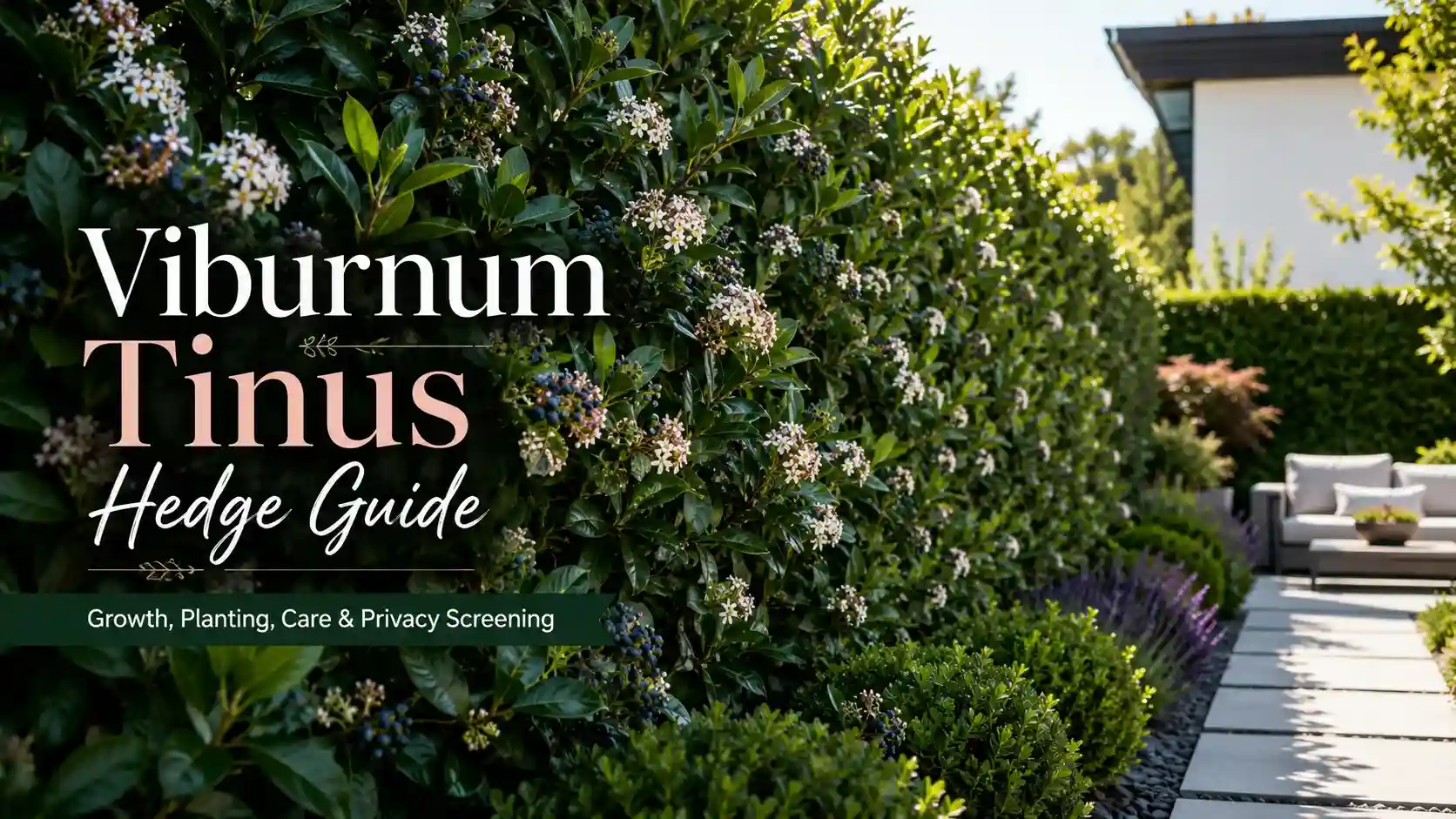
A Viburnum tinus hedge is a popular evergreen privacy hedge known for its dense foliage, attractive flowers, and reliable year-round coverage. Often called viburnum laurustinus, laurustinus viburnum, or simply the tinus plant, this versatile shrub is widely used in residential and commercial landscaping. Gardeners value it for its fast growth, compact habit, low-maintenance nature, and ability to create an effective natural screen. During the flowering season, viburnum hedges produce clusters of pale blooms followed by decorative berries that also attract birds and pollinators. Viburnum tinus works exceptionally well in gardens, borders, screening areas, and structured landscape designs where evergreen structure and privacy are important.
Viburnum tinus is an evergreen shrub commonly grown as a dense privacy hedge in residential gardens and landscape projects. Its scientific name is Viburnum tinus, and it belongs to the Adoxaceae family. The plant is valued for its compact growth habit, glossy green leaves, seasonal flowers, and long-lasting ornamental berries.
As an evergreen shrub, viburnum tinus maintains foliage throughout the year, making it highly effective for screening, boundary planting, and wind protection. Mature plants develop a naturally bushy structure that responds well to pruning and shaping, which is why the species is widely used as a formal or informal viburnum hedge.
Although the term “viburnum hedge” can refer to several species, there are important differences between popular varieties:
| Viburnum Type | Main Characteristics | Common Use |
| Viburnum tinus | Compact evergreen shrub with flowers and berries | Privacy hedges and ornamental screening |
| Sweet viburnum | Faster-growing with larger leaves | Tall privacy screens |
| Viburnum odoratissimum | Dense tropical-style growth | Warm-climate hedging |
| General viburnum hedge | Broad term for viburnum species used as hedges | Landscaping and borders |
Sweet viburnum and viburnum odoratissimum are often confused with viburnum tinus, but viburnum tinus is generally more compact, more cold-tolerant, and better suited for decorative evergreen hedging in mixed climates.
Viburnum tinus is also widely known as laurustinus, viburnum laurustinus, or laurustinus hedge. These names are commonly used in nurseries, landscaping guides, and regional gardening markets.
Several popular cultivars are available for different garden sizes and climate conditions. Some varieties are bred for compact growth, while others are selected for heavier flowering or improved cold tolerance. In discussions about viburnum varieties and viburnum types, gardeners often compare leaf size, growth rate, flowering performance, and hedge density.
Popular cultivars include:
In Australia, many homeowners search for viburnum varieties Australia growers recommend for coastal gardens, urban landscapes, and dry climate conditions. Viburnum tinus performs especially well in temperate and Mediterranean-style regions due to its adaptability and resilience.
Viburnum tinus is one of the most reliable evergreen hedging shrubs because of its dense growth and year-round foliage coverage.
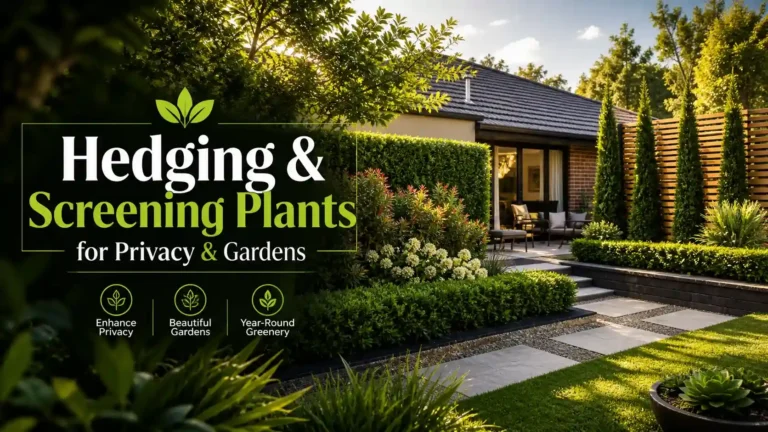
Gardeners often consult detailed guides on hedging and screening plants to identify species that provide dense coverage, privacy, and low-maintenance greenery throughout the year.
The plant naturally forms a thick screen that helps improve privacy while reducing noise and wind exposure.
Key reasons viburnum tinus is widely used for hedging include:
The flowering clusters attract bees and pollinators during cooler seasons, while the dark berries provide food for birds. This combination of practical screening and ecological value makes viburnum tinus a versatile choice for modern landscaping and sustainable garden design.
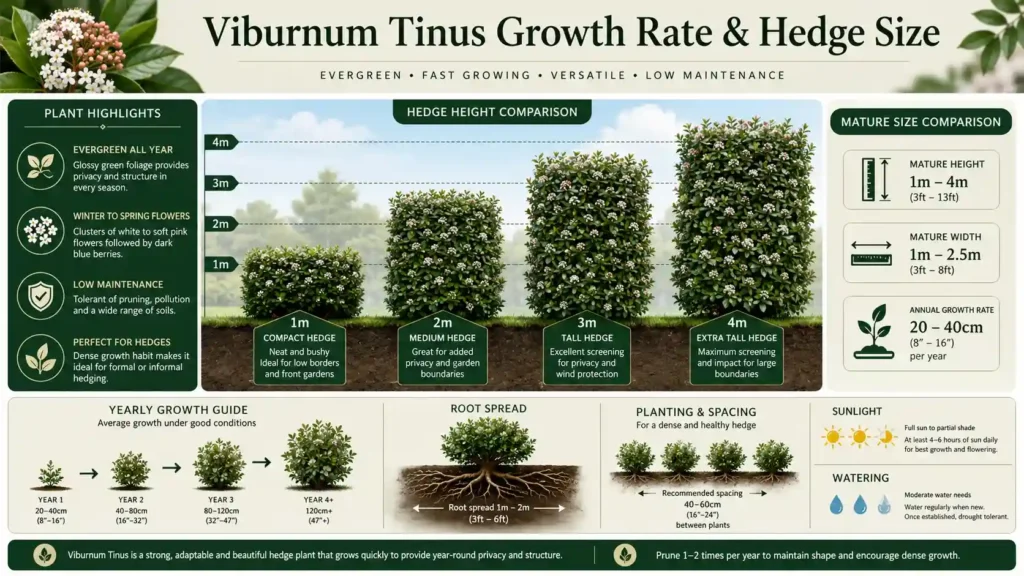
Viburnum tinus is considered a medium to large evergreen shrub with a naturally dense and rounded growth habit. The average viburnum tinus height typically ranges between 2–4 meters (6–12 feet) at maturity, depending on the cultivar, pruning style, and growing conditions.
The plant also develops a broad spread, making viburnum tinus height and width important considerations when planning hedge spacing and long-term landscape design. Most mature shrubs reach approximately 1.5–3 meters (5–10 feet) in width.
| Growth Feature | Typical Size |
| Mature Height | 2–4 m |
| Mature Width | 1.5–3 m |
| Compact Hedge Forms | 1–2 m |
| Tall Viburnum Tinus Hedge | Up to 4 m |
Compact varieties are commonly used for decorative borders, low screening, and structured formal hedges. Taller hedge forms are preferred for privacy planting, wind protection, and screening neighboring properties.
A tall viburnum tinus hedge can create an effective natural wall while maintaining a softer appearance than many rigid evergreen hedges. Regular pruning helps control overall viburnum hedge height and encourages denser branching throughout the plant.
The viburnum tinus growth rate is considered moderate to moderately fast under suitable conditions. On average, established plants grow approximately 30–60 cm (1–2 feet) per year.
For gardeners wondering how quickly does viburnum tinus grow, growth speed depends heavily on climate, soil quality, sunlight exposure, irrigation, and maintenance practices.
Young plants generally establish slowly during the first growing season while roots develop. After establishment, growth becomes more vigorous and consistent.
| Growing Condition | Growth Performance |
| Full Sun | Faster, denser growth |
| Partial Shade | Moderate growth |
| Rich Soil | Improved foliage and vigor |
| Poor Soil | Reduced density |
| Regular Watering | Strong establishment |
| Dry Conditions | Slower development |
With proper care, viburnum tinus quickly develops into a thick evergreen screen suitable for long-term privacy hedging.
The versatility of Viburnum tinus makes it one of the most widely used evergreen shrubs in landscape design. Its dense foliage, manageable growth habit, and year-round structure allow it to fit both traditional and modern gardens.
Common landscaping uses include:
Because the foliage remains thick throughout the year, viburnum tinus performs exceptionally well as a living privacy screen. The shrub also tolerates shaping, which makes it suitable for both neat architectural hedges and softer natural garden designs.
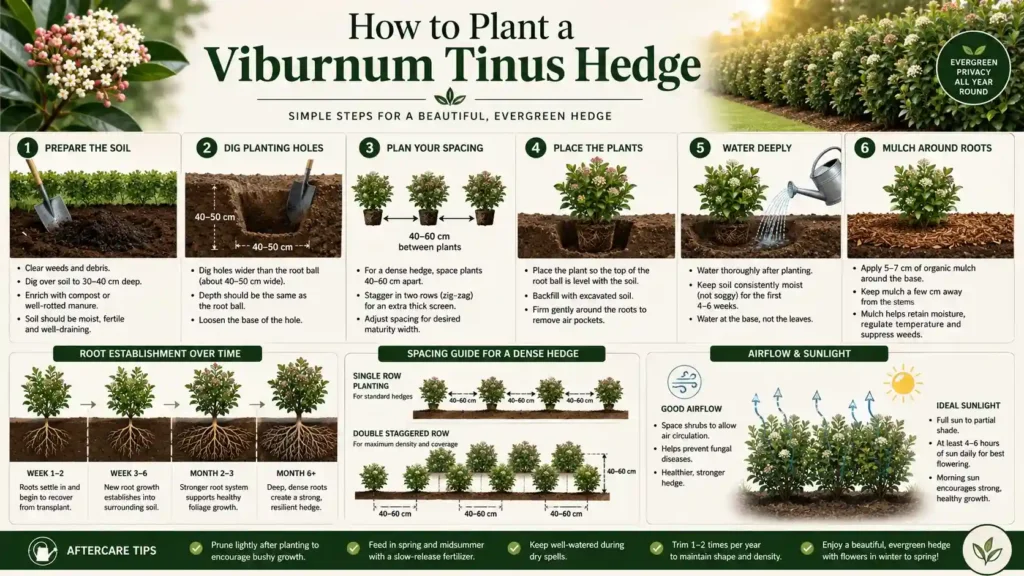
Viburnum tinus is best planted during mild weather conditions when soil temperatures support steady root development. Autumn and spring are generally considered the ideal planting seasons because cooler temperatures reduce plant stress and improve moisture retention in the soil.
| Season | Planting Performance |
| Autumn | Excellent root establishment before summer |
| Spring | Strong active growth period |
| Summer | Possible with extra watering |
| Winter | Suitable in mild climates only |
The ideal temperature range for planting viburnum tinus is typically between 10°C and 24°C (50°F–75°F). These moderate conditions encourage healthy root growth without excessive heat stress or frost damage.
Root establishment usually takes several months after planting. Autumn-planted hedges often establish faster because roots continue developing while top growth remains slower during cooler weather.
Successful hedging viburnum depends heavily on proper soil preparation and site selection. Viburnum tinus adapts to many soil types but performs best in fertile, well-draining soil with moderate moisture retention.
The shrub tolerates both full sun and partial shade. Full sun generally produces denser growth, stronger flowering, and thicker hedge coverage. Partial shade is also suitable, especially in hotter climates where afternoon protection reduces moisture stress.
| Light Condition | Growth Result |
| Full Sun | Dense foliage and better flowering |
| Partial Shade | Healthy growth with slightly reduced density |
| Deep Shade | Sparse growth and fewer flowers |
Viburnum tinus also demonstrates strong climate tolerance. It performs well in coastal gardens, temperate regions, urban landscapes, and areas exposed to moderate wind conditions.
Correct viburnum tinus hedge spacing is essential for creating a dense, healthy hedge without overcrowding the plants. Proper spacing improves root development, encourages airflow, and reduces disease risks caused by excess humidity between branches.
For most dense privacy hedges, plants are spaced approximately 80 cm to 1.5 meters apart, depending on the desired hedge thickness and the mature size of the selected variety.
| Hedge Style | Recommended Spacing |
| Dense Formal Hedge | 80 cm – 1 m |
| Informal Hedge | 1–1.5 m |
| Tall Screening Hedge | 1.2–1.5 m |
When planting viburnum hedge rows, spacing should balance density with air circulation. Overcrowded hedges may develop fungal problems and uneven growth over time.
Proper planning is especially important when using hedging plants viburnum for long boundary lines or privacy screens. Wider spacing may initially look sparse but allows healthier mature development.
Planting viburnum hedge rows correctly helps establish stronger roots and healthier long-term growth.
Mulching helps retain moisture, regulate soil temperature, and suppress weeds during early growth stages.
The root system of Viburnum tinus is generally non-invasive and suitable for residential landscapes. Roots spread moderately through the upper soil layers without the aggressive behavior associated with some large hedge species.
Most viburnum tinus hedges require approximately one full growing season to establish properly. During this period, consistent watering is critical, especially during warm or dry weather.
Once established, viburnum tinus becomes significantly more drought tolerant and easier to maintain as a mature evergreen hedge.
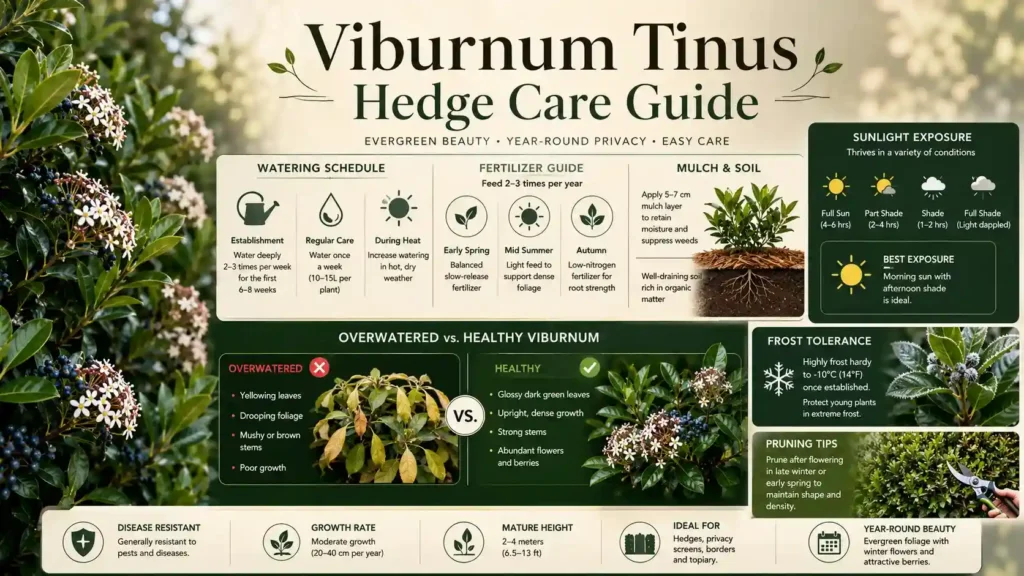
Viburnum tinus requires consistent watering during its establishment period, but mature hedges are relatively drought tolerant once roots are fully developed. Proper watering practices help maintain dense foliage, healthy flowering, and strong hedge structure.
Young plants need more frequent irrigation because their root systems are still shallow and developing. Mature hedges can tolerate short dry periods more effectively.
| Plant Stage | Watering Needs |
| Newly Planted | Deep watering 1–2 times weekly |
| Establishing Hedge | Regular moisture during active growth |
| Mature Hedge | Occasional deep watering during drought |
| Extreme Heat | Additional watering may be required |
Deep watering is generally more beneficial than frequent shallow irrigation because it encourages stronger root development deeper in the soil.
Once established, viburnum tinus demonstrates moderate drought tolerance. The evergreen foliage remains relatively resilient during short dry spells, especially when mulched properly.
However, prolonged drought conditions may cause:
Overwatering is one of the most common causes of poor hedge performance. Constantly saturated soil can lead to root stress and fungal diseases.
Common signs of excessive watering include:
Well-drained soil is essential to prevent moisture buildup around the root zone.
Regular feeding helps maintain healthy foliage color, vigorous growth, and strong flowering performance. Viburnum tinus benefits from balanced nutrition, particularly during active growing seasons.
Suitable fertilizer options include:
| Season | Fertilizing Recommendation |
| Early Spring | Main feeding period |
| Late Spring | Light supplemental feeding if needed |
| Summer | Minimal feeding during extreme heat |
| Autumn | Mild organic feeding in some climates |
| Winter | Usually unnecessary |
Spring feeding encourages vigorous new growth and supports flowering development.
| Fertilizer Type | Benefits |
| Organic Fertilizers | Improve soil structure and microbial activity |
| Slow-Release Fertilizers | Provide steady nutrient supply over time |
Organic fertilizers improve long-term soil health, while slow-release products offer convenient and consistent feeding for hedge maintenance.
Mulching is an important part of viburnum hedge care because it helps regulate soil moisture and protects the root system from environmental stress.
Organic mulches such as bark chips, compost, or leaf mulch work especially well around viburnum hedges.
In addition to mulching, regular soil maintenance improves long-term hedge performance.
Healthy soil supports stronger root systems, denser foliage, and improved flowering.
Viburnum tinus adapts well to various light conditions, making it suitable for many garden environments.
Full sun generally produces:
Plants grown in full sun often develop thicker privacy screening and more vigorous overall growth.
Viburnum tinus also performs reliably in partial shade. In warmer climates, partial afternoon shade may help reduce moisture stress and leaf scorch during extreme summer temperatures.
Although growth may become slightly less compact in shaded conditions, the shrub usually maintains healthy evergreen coverage.
| Condition | Performance |
| Mild Frost | Well tolerated |
| Moderate Cold | Generally resilient |
| Heat | Performs well with adequate watering |
| Coastal Exposure | Good tolerance |
Viburnum tinus tolerates light to moderate frost once established. Severe prolonged freezing temperatures may damage young growth, but mature plants usually recover well during spring.
The shrub also adapts effectively to warm climates and Mediterranean-style conditions. Adequate watering and mulching help protect roots and foliage during extended heat periods.
Regular pruning helps Viburnum tinus maintain a dense structure, healthy foliage, and an attractive hedge shape. Proper timing is important because incorrect pruning can reduce flowering and weaken overall growth.
The best pruning seasons for viburnum tinus are usually late spring and early summer after the main flowering period has finished. Light trimming can also be carried out during the growing season to maintain neat hedge lines.
| Season | Pruning Purpose |
| Late Spring | Main shaping and maintenance pruning |
| Early Summer | Light trimming and density control |
| Autumn | Minor corrective pruning only |
| Winter | Avoid heavy pruning in cold regions |
Viburnum tinus produces flowers on existing growth, so heavy pruning before flowering can reduce seasonal blooms and berry production.
For gardeners who want both privacy screening and ornamental flowers, pruning immediately after flowering is generally the best approach.
Benefits of post-flowering pruning include:
Light maintenance trimming throughout the year is usually safe, but severe pruning should be limited to active growing periods.
A properly maintained viburnum hedge develops thick evergreen coverage that works well for privacy screening and decorative landscaping.
Formal hedges require regular trimming to maintain straight edges and a uniform appearance. Using hedge trimmers several times during the growing season helps create clean architectural lines.
For formal hedge shaping:
A slightly tapered shape prevents lower branches from becoming shaded and sparse.
Dense foliage development depends on regular light pruning rather than infrequent severe cutting.
Frequent light pruning encourages the shrub to produce multiple side shoots, resulting in a fuller hedge.
Leggy growth occurs when lower sections become thin or woody due to inadequate light or poor pruning practices.
To prevent legginess:
Well-shaped hedges retain foliage from the base upward, creating more effective year-round screening.
Improper pruning practices can reduce hedge density, increase disease risk, and negatively affect flowering performance.
Excessive cutting removes too much foliage at once and may stress the plant.
Problems caused by over-pruning include:
Gradual shaping is safer and more effective than aggressive cutting.
Pruning at the wrong time of year can interfere with flowering cycles and expose new growth to environmental stress.
| Incorrect Timing | Possible Result |
| Heavy winter pruning | Frost damage to new growth |
| Pre-flowering pruning | Reduced blooms |
| Extreme summer pruning | Heat stress and leaf burn |
Overly dense or neglected hedges may develop poor airflow within the interior branches. Reduced air circulation increases humidity and creates favorable conditions for fungal diseases.
Signs of poor airflow include:
Selective thinning and proper spacing help maintain healthy ventilation throughout the hedge structure.
Viburnum tinus is highly valued for its long flowering season and ornamental winter display. Viburnum flowering typically begins in late winter and continues into early spring, depending on climate conditions and cultivar type.
The shrub produces clusters of small star-shaped flowers that emerge from pink buds and gradually open into white or pale blush blooms. These decorative flower clusters contrast beautifully against the dark evergreen foliage, making viburnum flowers especially attractive during colder months when many garden plants are dormant.
| Feature | Description |
| Flower Color | White to pale pink |
| Blooming Season | Late winter to early spring |
| Flower Shape | Small star-shaped clusters |
| Fragrance | Mild and subtle |
The viburnum flower display provides important seasonal interest in landscapes where year-round visual appeal is desired. Because flowering occurs during cooler seasons, flower viburnum hedges often become standout features in winter gardens.
Winter flowering offers several advantages:
The contrast between soft flowers and glossy foliage gives viburnum tinus a refined ornamental appearance suitable for formal and informal gardens alike.
The flowering clusters attract beneficial pollinators, especially bees and other insects searching for nectar during cooler parts of the year.
Common pollinator benefits include:
This pollinator-friendly nature makes viburnum tinus valuable in wildlife gardens and sustainable landscape designs.
After flowering, Viburnum tinus develops decorative berries that add additional seasonal interest.
The berries initially appear green before gradually changing color as they mature.
| Berry Stage | Color |
| Early Development | Green |
| Ripening Stage | Red-purple |
| Mature Berries | Metallic blue-black |
The berries often remain on the shrub for extended periods, creating visual contrast against the evergreen foliage.
Birds are naturally attracted to viburnum berries, particularly during cooler seasons when food sources may become limited.
Wildlife benefits include:
The dense branching structure also provides nesting and protective cover for small birds and beneficial wildlife.
Beyond ornamental value, viburnum tinus contributes positively to garden ecosystems.
Key ecological advantages include:
These features make viburnum tinus useful in environmentally conscious landscape planning.
One of the main reasons Viburnum tinus remains popular as a hedge plant is its reliable evergreen foliage.
The leaves are typically dark green, oval-shaped, and leathery with a glossy surface texture. This dense foliage creates a thick screen throughout the year.
| Feature | Description |
| Leaf Color | Deep glossy green |
| Texture | Smooth and leathery |
| Growth Habit | Dense and compact |
| Seasonal Retention | Evergreen year-round |
Because the foliage remains intact through all seasons, viburnum tinus provides continuous privacy screening without the bare appearance associated with deciduous hedges.
This year-round coverage helps:
The combination of evergreen foliage, winter flowers, and decorative berries gives viburnum tinus strong ornamental value across multiple seasons.
Its polished appearance works especially well in:
The foliage also responds well to pruning, allowing gardeners to maintain clean hedge lines while preserving dense green coverage.
Viburnum tinus is generally considered a hardy and low-maintenance hedge plant, but certain diseases and pests can affect growth, foliage quality, and hedge density when environmental conditions become unfavorable.
Many diseased viburnum problems are linked to excessive moisture, poor airflow, overcrowding, or plant stress caused by drought and nutrient imbalance.
| Disease Problem | Common Symptoms |
| Fungal Diseases | Leaf discoloration and stem damage |
| Leaf Spot | Brown or black spotting on leaves |
| Root Rot | Wilting and yellowing foliage |
| Powdery Mildew | White powder-like coating on leaves |
Fungal diseases are among the most common viburnum hedge issues, especially in humid climates or poorly ventilated hedge rows.
Contributing factors include:
In discussions about viburnum tinus diseases Australia gardeners often mention fungal stress caused by coastal humidity, excessive irrigation, or prolonged wet weather.
Leaf spot commonly appears as dark circular spots or blotches on foliage. Severe infections may cause premature leaf drop and reduced hedge appearance.
To reduce leaf spot problems:
Healthy spacing and proper watering practices significantly reduce fungal disease risks.
Small sap-feeding pests such as aphids and scale insects may occasionally affect new growth.
Mild infestations can often be managed naturally through beneficial insects and improved plant health. Severe infestations may require horticultural oil or insecticidal soap treatments.
Yellowing foliage and sparse hedge growth are common signs that environmental or nutritional conditions are affecting plant health.
A viburnum thin fence appearance often develops gradually when growth conditions are unsuitable or maintenance becomes inconsistent.
Poor soil nutrition may cause:
Nitrogen deficiency is one of the most common causes of faded foliage and slow growth.
| Symptom | Possible Cause |
| Yellow Older Leaves | Nitrogen deficiency |
| Weak Growth | Poor soil fertility |
| Pale Foliage | Nutrient imbalance |
| Reduced Flowering | Low phosphorus or stress |
Balanced fertilization and improved soil organic matter usually help restore healthy growth.
Poor drainage is another major contributor to unhealthy hedges. Constantly wet soil can suffocate roots and increase fungal disease risk.
Signs of drainage-related stress include:
Improving soil structure and drainage often leads to noticeable recovery.
Insufficient sunlight may reduce hedge density and create uneven growth patterns.
Common sunlight-related problems include:
Many viburnum dense fence problems occur when mature hedges become shaded internally or are planted too close together.
Most struggling viburnum hedges can recover with proper maintenance and environmental correction.
Selective pruning helps remove damaged growth and improve airflow throughout the hedge.
Corrective pruning should focus on:
Heavy pruning should be avoided during periods of extreme heat or frost stress.
Improving soil quality is often necessary when growth becomes weak or foliage loses color.
Helpful soil improvements include:
Healthy soil supports stronger root recovery and denser foliage development.
Watering practices should be adjusted according to weather conditions, soil drainage, and plant maturity.
| Condition | Recommended Action |
| Dry Soil | Deep watering |
| Waterlogged Soil | Reduce irrigation |
| Young Plants | Regular consistent moisture |
| Mature Hedges | Occasional deep watering |
Consistent but balanced moisture is important for restoring healthy root function and encouraging vigorous new growth.
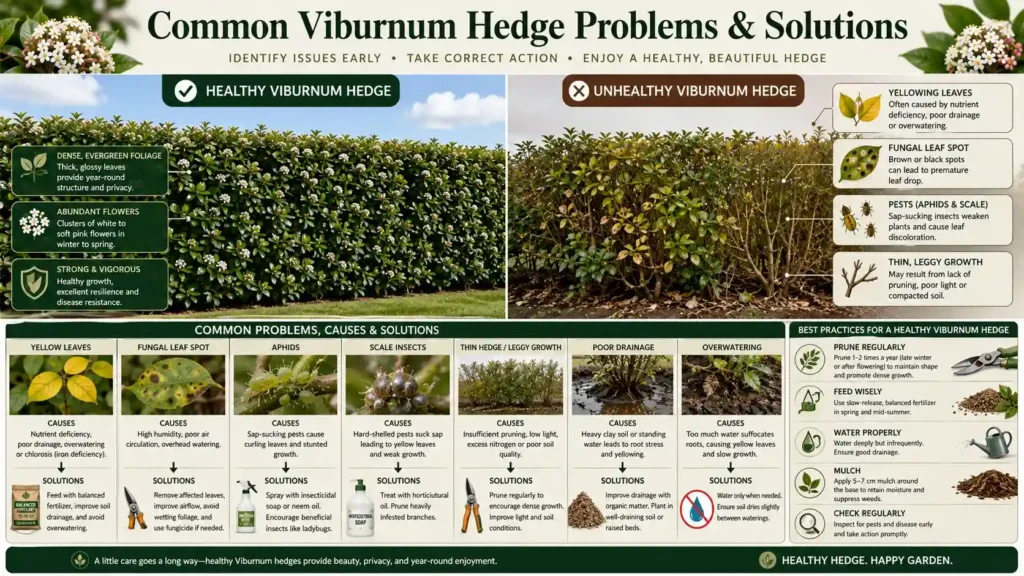
Viburnum tinus and Sweet viburnum are both popular evergreen hedging plants, but they differ significantly in growth habit, climate preference, and overall hedge appearance.
Sweet viburnum hedge varieties are typically faster growing and develop a taller, more vigorous structure. Viburnum tinus, by comparison, offers denser compact growth with stronger ornamental value through flowers and berries.
| Feature | Viburnum Tinus | Sweet Viburnum |
| Growth Speed | Moderate | Fast |
| Growth Habit | Compact and dense | Upright and vigorous |
| Hedge Appearance | Formal and structured | Larger screening hedge |
Sweet viburnum is often selected when rapid screening is needed, while viburnum tinus is preferred for decorative evergreen hedging with controlled growth.
Viburnum tinus performs especially well in temperate climates and areas with cooler winters. It also tolerates coastal exposure and moderate frost conditions.
Sweet viburnum generally prefers warmer climates and subtropical conditions.
| Climate Condition | Viburnum Tinus | Sweet Viburnum |
| Temperate Climates | Excellent | Good |
| Coastal Conditions | Very Good | Good |
| Frost Tolerance | Higher | Moderate |
| Heat Tolerance | Good | Excellent |
Viburnum tinus naturally forms a tighter and denser hedge structure, making it highly effective for ornamental privacy screens.
Sweet viburnum hedge growth is often faster but may require more frequent pruning to maintain compact density.
Many homeowners also compare viburnum odoratissimum hedge varieties because of their tall screening ability and tropical appearance.
Viburnum odoratissimum is another widely used hedging species commonly grown for fast privacy screening.
Although closely related, there are clear differences between viburnum odoratissimum and viburnum tinus.
| Feature | Viburnum Tinus | Viburnum Odoratissimum |
| Typical Height | 2–4 m | 4–6 m or more |
| Width | Moderate | Broad and vigorous |
| Hedge Style | Compact privacy hedge | Tall screening hedge |
Viburnum odoratissimum grows substantially taller and faster, making it more suitable for large-scale privacy barriers and tall evergreen screens.
Viburnum tinus generally requires less aggressive pruning due to its naturally compact structure.
Viburnum odoratissimum often needs:
Viburnum tinus is typically easier to maintain in smaller residential landscapes.
Both species provide excellent screening, but their visual effects differ.
| Screening Feature | Viburnum Tinus | Viburnum Odoratissimum |
| Density | Dense and compact | Large and broad |
| Appearance | Decorative evergreen | Functional tall screen |
| Flowering Display | More ornamental | Less visually prominent |
Viburnum tinus combines privacy with seasonal ornamental interest, while viburnum odoratissimum focuses more on rapid coverage and height.
Different viburnum varieties suit different hedge styles, climate conditions, and landscape purposes.
Compact cultivars are ideal for smaller gardens, low hedges, and formal landscaping.
Popular compact options include:
These varieties maintain dense foliage while requiring less pruning.
For rapid privacy screening, faster-growing viburnum types are commonly preferred.
Examples include:
These varieties establish screening coverage more quickly but may require increased maintenance.
Some viburnum cultivars are specifically selected for ornamental flowering performance.
Flower-focused selections often feature:
In Australia, climate adaptability is an important consideration when selecting viburnum hedge varieties.
| Australian Climate | Recommended Viburnum |
| Temperate Regions | Viburnum tinus |
| Coastal Areas | Viburnum tinus |
| Warm Subtropical Areas | Sweet viburnum |
| Large Privacy Screens | Viburnum odoratissimum |
Viburnum tinus remains one of the most versatile options for Australian gardens because of its tolerance to coastal conditions, urban environments, and varying seasonal temperatures.
| Feature | Viburnum Tinus | Sweet Viburnum | Viburnum Odoratissimum |
| Growth Rate | Moderate | Fast | Very Fast |
| Mature Height | 2–4 m | 3–5 m | 4–6 m+ |
| Climate Suitability | Temperate and coastal | Warm and subtropical | Warm climates |
| Maintenance | Low to moderate | Moderate | Moderate to high |
| Flowering | Strong ornamental display | Mild flowering | Less ornamental |
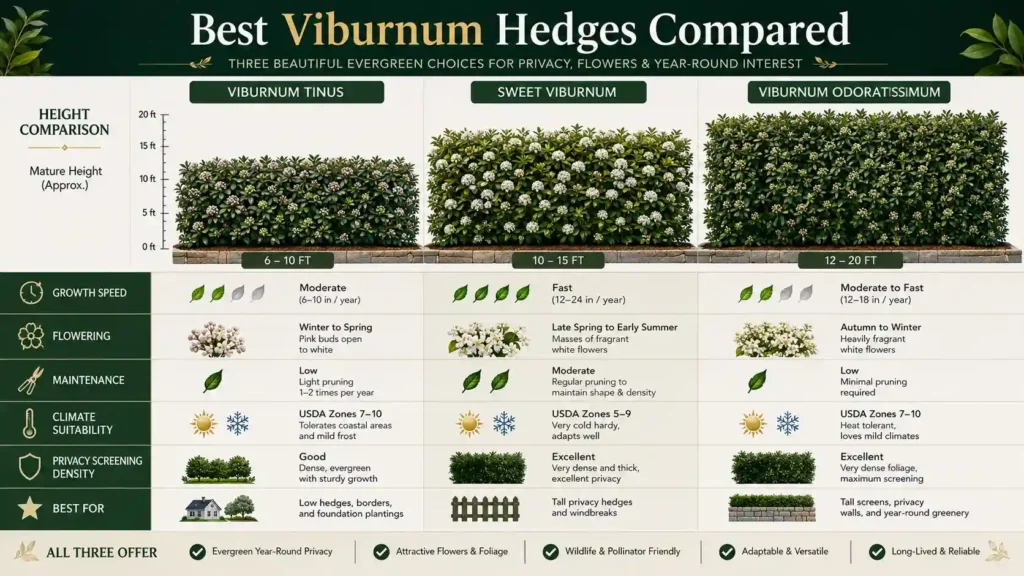
Viburnum tinus is widely used in Australian landscaping because of its adaptability, evergreen structure, and reliable hedge performance across many climate zones. Homeowners and landscapers often choose viburnum hedge Australia varieties for privacy screening, decorative boundaries, and low-maintenance garden structure.
One of the main reasons viburnum tinus Australia plantings are so successful is the shrub’s ability to tolerate changing environmental conditions while maintaining dense year-round foliage.
Viburnum tinus performs particularly well in:
The shrub adapts effectively to seasonal rainfall variation and moderate summer heat when properly established.
| Climate Condition | Performance |
| Temperate Regions | Excellent |
| Coastal Areas | Very Good |
| Mild Frost Zones | Good |
| Urban Landscapes | Excellent |
| Dry Summers | Moderate to Good |
Many Australian coastal gardens experience wind exposure, salt spray, and sandy soils. Viburnum tinus demonstrates moderate coastal tolerance, making it suitable for seaside landscaping and exposed suburban gardens.
Benefits in coastal locations include:
Although severe salt exposure can affect foliage quality, established plants generally recover well with proper watering and soil care.
Viburnum tinus is also highly valued in urban landscaping because it responds well to pruning and adapts to confined planting areas.
Common urban uses include:
Its tidy evergreen appearance makes it suitable for both modern and traditional Australian garden designs.
Several viburnum varieties Australia nurseries supply are specifically selected for hedge performance, flowering quality, and climate adaptability.
| Variety | Main Features |
| Viburnum tinus ‘Eve Price’ | Dense growth and strong flowering |
| Viburnum tinus ‘Lucidum’ | Glossy foliage and upright habit |
| Dwarf Viburnum Types | Compact hedging for smaller gardens |
| Sweet Viburnum | Fast-growing tall screening |
Different regions across Australia favor different viburnum types based on temperature, rainfall, and garden style.
| Region | Recommended Viburnum |
| Southern Australia | Viburnum tinus |
| Coastal Areas | Viburnum tinus |
| Warm Subtropical Areas | Sweet viburnum |
| Urban Gardens | Compact viburnum cultivars |
Viburnum tinus Perth landscapes commonly use this species because of its suitability for Mediterranean-style conditions. Viburnum perth garden designs often incorporate evergreen hedges for year-round privacy and wind protection.
In Perth climates, viburnum tinus performs best when:
Its moderate drought tolerance and dense foliage make it effective for suburban screening in Western Australian conditions.
Selecting healthy viburnum tinus hedge plants is important for successful hedge establishment and long-term growth performance.
Quality viburnum hedge plants establish faster, develop denser foliage, and require less corrective maintenance after planting.
When purchasing viburnum tinus plants, look for:
Avoid plants showing yellow leaves, weak stems, or root-bound containers.
| Healthy Plant Signs | Warning Signs |
| Dense foliage | Sparse growth |
| Healthy root system | Circling roots |
| Even branching | Weak stems |
| Deep green leaves | Yellowing foliage |
Pot size influences establishment speed and planting cost.
| Pot Size | Best Use |
| Small Pots | Budget planting and mass hedging |
| Medium Pots | Balanced growth and affordability |
| Large Advanced Plants | Faster instant screening |
Smaller viburnum plant sizes are often more economical for long hedge rows, while advanced specimens provide quicker privacy coverage.
For best results, choose viburnum tinus hedge plants suited to local climate conditions and purchase from reputable nurseries with healthy stock management practices.
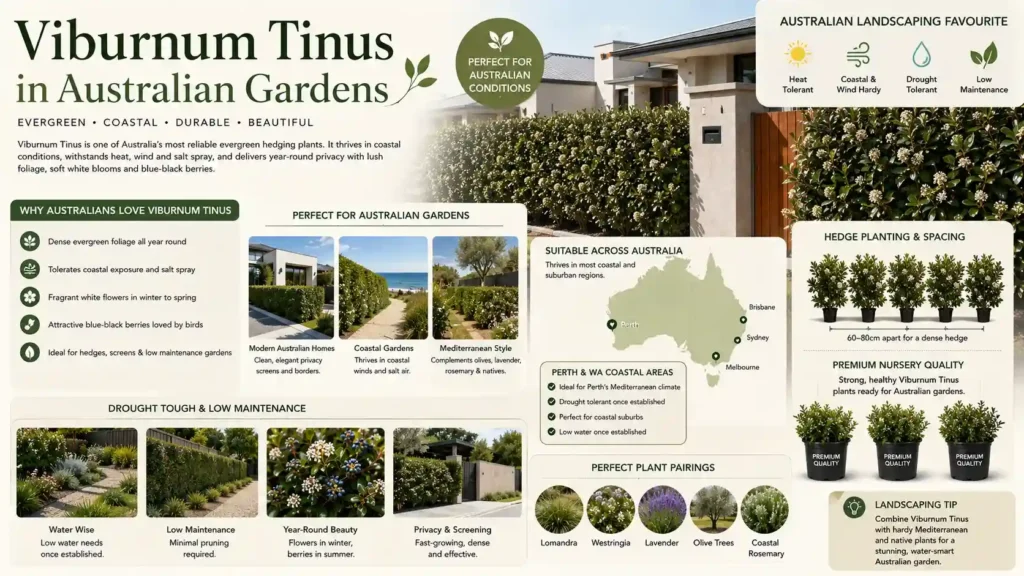
Viburnum tinus combines well with a wide range of evergreen shrubs, flowering plants, and Mediterranean-style garden species. Its dense green foliage provides an excellent backdrop for contrasting textures, colors, and seasonal blooms.
Selecting suitable companion plants helps create layered landscapes with year-round structure and visual balance.
Evergreen shrubs pair especially well with viburnum hedges because they maintain consistent garden coverage throughout the year.
Good evergreen companion plants include:
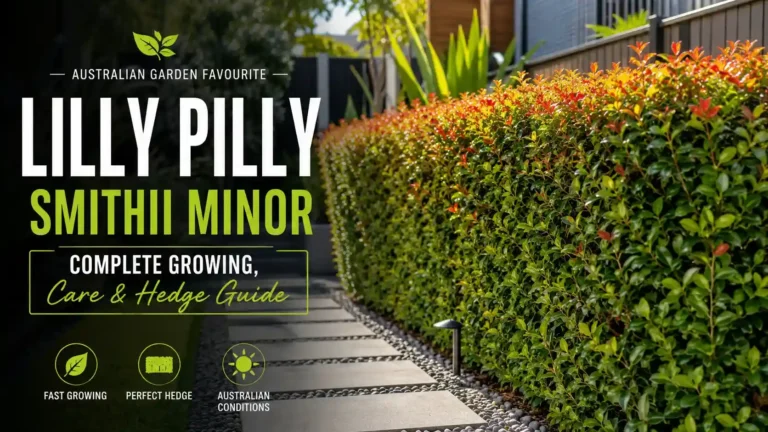
Other native hedges, such as Lilly Pilly varieties, also provide dense evergreen screening and can be combined with viburnum tinus to enhance layered privacy and visual interest.
| Benefit | Result |
| Year-round foliage | Continuous structure |
| Layered screening | Improved privacy |
| Texture contrast | More visual depth |
| Wind protection | Better garden shelter |
Compact evergreen shrubs work particularly well in formal landscapes where clean structure and symmetry are important.
Flowering border plants soften the appearance of dense evergreen hedges and add seasonal color variation.
Popular flowering companions include:
These plants create contrast against the glossy dark foliage of viburnum tinus while supporting pollinators and enhancing ornamental appeal.
Viburnum tinus fits naturally into Mediterranean-style landscapes because of its drought tolerance, evergreen structure, and adaptability to warm climates.
Suitable Mediterranean combinations include:
| Feature | Landscape Effect |
| Silver foliage contrast | Soft visual texture |
| Drought-tolerant planting | Lower maintenance |
| Evergreen layering | Year-round structure |
| Aromatic plants | Sensory garden appeal |
These combinations create balanced landscapes with strong texture contrast and long-lasting visual interest.
Viburnum tinus works effectively in both formal and naturalistic garden designs because of its dense habit and flexible pruning response.
In formal gardens, viburnum tinus can be clipped into neat structured hedges that define pathways, boundaries, and outdoor spaces.
Common formal applications include:
Its compact evergreen foliage creates a polished and refined appearance suitable for architectural landscaping.
Dense viburnum hedges are widely used as living privacy borders around homes and outdoor entertainment spaces.
Benefits of privacy border planting include:
Layering companion shrubs and flowering plants in front of the hedge softens the overall appearance while increasing biodiversity.
Mixed shrub screens combine viburnum tinus with other evergreen and flowering species to create more natural-looking landscape barriers.
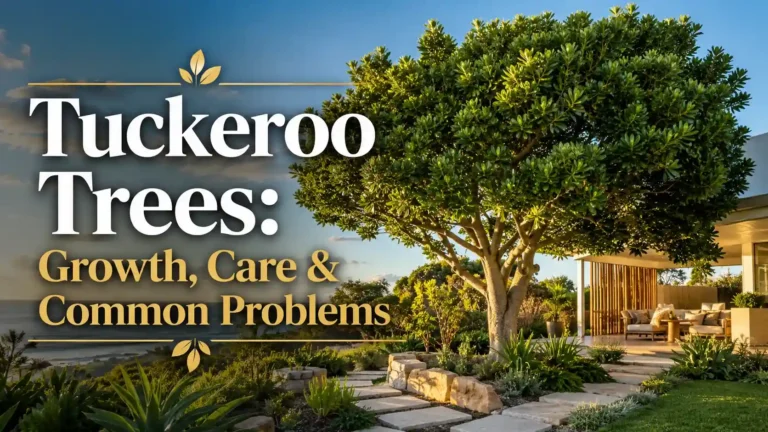
Larger Australian natives, such as Tuckeroo Trees, can also be included in these mixed screens to provide additional height, layered screening, and stronger privacy in spacious gardens.
|
Advantage |
Benefit |
|
Greater biodiversity |
Improved ecological value |
| Layered foliage textures |
More visual interest |
|
Extended flowering seasons |
Better ornamental appeal |
| Reduced uniformity |
Natural landscape effect |
Mixed shrub designs are especially useful in larger gardens where softer informal planting styles are preferred over highly structured hedges.
Viburnum tinus remains one of the most reliable evergreen hedge choices for both residential and commercial landscapes. Its combination of dense foliage, attractive flowers, ornamental berries, and adaptable growth habit makes it highly effective for year-round privacy screening and decorative garden structure.
The shrub continues to be popular because it offers several important benefits:
Whether used as a compact boundary hedge, tall screening plant, windbreak, or ornamental garden feature, viburnum tinus provides long-term visual appeal with manageable maintenance requirements.
Homeowners often use viburnum tinus for privacy borders, fence screening, and structured garden hedging, while landscapers value its versatility in urban projects, coastal gardens, and Mediterranean-style designs.
Successful long-term hedge performance depends on proper planting, spacing, watering, pruning, and soil care. With consistent maintenance and suitable growing conditions, a viburnum tinus hedge can remain dense, healthy, and visually attractive for many years.
Viburnum tinus has a moderate growth rate and typically grows around 30–60 cm (1–2 feet) per year under suitable conditions. Growth speed depends on sunlight exposure, soil quality, watering, and climate. Plants grown in fertile, well-drained soil with regular moisture generally establish faster and produce denser foliage.
The ideal spacing for a viburnum tinus hedge is usually between 80 cm and 1.5 meters apart, depending on the desired hedge density and mature plant size. Closer spacing creates a thicker privacy hedge more quickly, while wider spacing improves airflow and long-term plant health.
Yes, Viburnum tinus remains evergreen throughout the year. Its dense glossy foliage provides continuous privacy screening and ornamental value in all seasons, making it a popular choice for permanent hedging.
A mature viburnum tinus hedge commonly reaches 2–4 meters in height, although regular pruning can maintain lower compact forms. Some taller hedge varieties may grow even larger under ideal conditions.
Viburnum tinus grows well in partial shade and can tolerate light shaded conditions. However, full sun generally produces denser growth, improved flowering, and stronger hedge coverage. Deep shade may lead to thinner foliage and reduced flowering performance.
Common viburnum hedge problems include: Yellowing leaves Fungal diseases Leaf spot Aphids and scale insects Poor drainage issues Sparse or leggy growth Overcrowded hedge structure Most problems can be prevented through proper spacing, balanced watering, pruning, and healthy soil management.
Yes, Viburnum tinus is highly suitable for many Australian climates. It performs especially well in temperate regions, coastal landscapes, and Mediterranean-style gardens. Its adaptability, evergreen foliage, and moderate drought tolerance make it a reliable hedging plant across much of Australia.
The best time to prune viburnum tinus is usually after flowering in late spring or early summer. Light trimming during the growing season helps maintain shape and density, while heavy pruning should be avoided during extreme heat or frost periods.
Yes, viburnum tinus produces decorative berries after flowering. The berries typically change from green to dark blue-black as they mature and help attract birds and wildlife to the garden.
Once established, viburnum tinus has moderate drought tolerance. Mature hedges can handle short dry periods, although deep watering during extended heat helps maintain healthy foliage and dense growth.
Yes, viburnum tinus is widely used as a dense evergreen privacy screen. Its thick foliage, compact growth habit, and year-round leaf coverage make it highly effective for screening fences, walls, and neighboring properties.
Viburnum tinus grows best in fertile, well-drained soil with slightly acidic to neutral pH levels. Good drainage is important because waterlogged soil may lead to root stress and fungal diseases.
The winter and early spring flowers of Viburnum tinus attract bees and other pollinators when fewer flowering plants are available, making it beneficial for biodiversity and wildlife-friendly gardens.
Yes, viburnum tinus has good coastal tolerance and performs well in gardens exposed to moderate wind and salt air. This makes it a strong choice for seaside landscaping and coastal privacy hedging.