Grow Better Gardens with Smarter Plant Choices
Discover helpful guides on trees, hedges, fruit plants, edible plants, and beautiful landscape greenery.
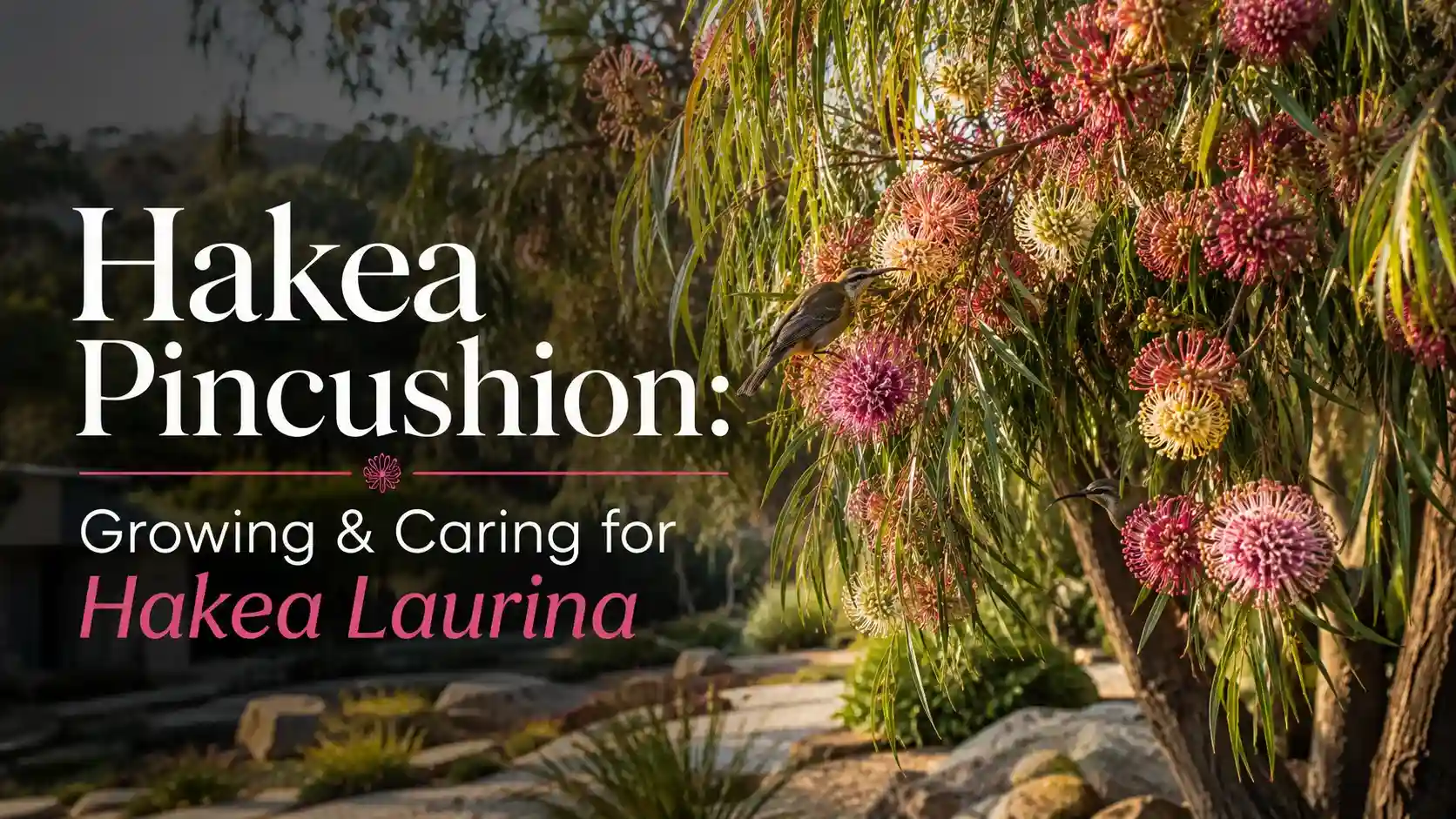
The hakea pincushion is one of the most recognizable Australian native flowering plants, admired for its unusual blooms, graceful foliage, and low-maintenance nature. Commonly known as Hakea laurina pincushion hakea, this evergreen species is widely grown in native gardens, coastal landscapes, and drought-tolerant outdoor spaces. Its striking pink and cream hakea flower clusters create a bold ornamental display while also attracting birds and pollinators. Often referred to as the pink cushion hakea, this plant is valued for its elegant weeping branches and versatility as both a feature tree and privacy hedge. Among popular hakea plants, the pincushion hakea stands out for combining beauty, resilience, and year-round landscape appeal.
The botanical name of the hakea pincushion is Hakea laurina, a flowering evergreen species belonging to the Proteaceae family. It is one of the most widely cultivated Australian native hakea plants because of its ornamental flowers and adaptable growth habit.
This plant is known by several popular common names, including:
These names come primarily from the plant’s distinctive rounded flower heads, which resemble decorative pincushions filled with colorful pins. The species is commonly used in ornamental landscaping, native gardens, and wildlife-friendly planting schemes throughout Australia and other warm-climate regions.
Hakea laurina is native to the southwestern regions of Western Australia, where it naturally grows in sandy soils, open woodland areas, and dry shrublands. The species has adapted to harsh environmental conditions, making it highly reliable in water-wise gardens.
Because of its natural resilience, hakea laurina performs especially well in:
Gardeners looking for hardy Australian native trees often choose hakea laurina Perth varieties because they thrive in the warm, sunny conditions commonly found across Western Australia. The plant also tolerates coastal exposure and light salt spray, making it suitable for seaside landscapes.
The name “pincushion hakea” comes from the plant’s unusual flower structure. Each flower head forms a round ball-like cluster made up of hundreds of curved stamens that project outward like pins in a pincushion. The blooms typically combine creamy white centers with deep pink or red outer filaments, creating a highly ornamental appearance.
These nectar-rich blooms are not only visually attractive but also highly valuable for wildlife. Flowering hakea plants regularly attract:
The abundant nectar production makes the hakea flower an important food source during blooming periods, especially in native wildlife gardens. Its combination of decorative flowers and bird-attracting qualities is one of the main reasons the pincushion hakea remains a favorite Australian landscape plant.
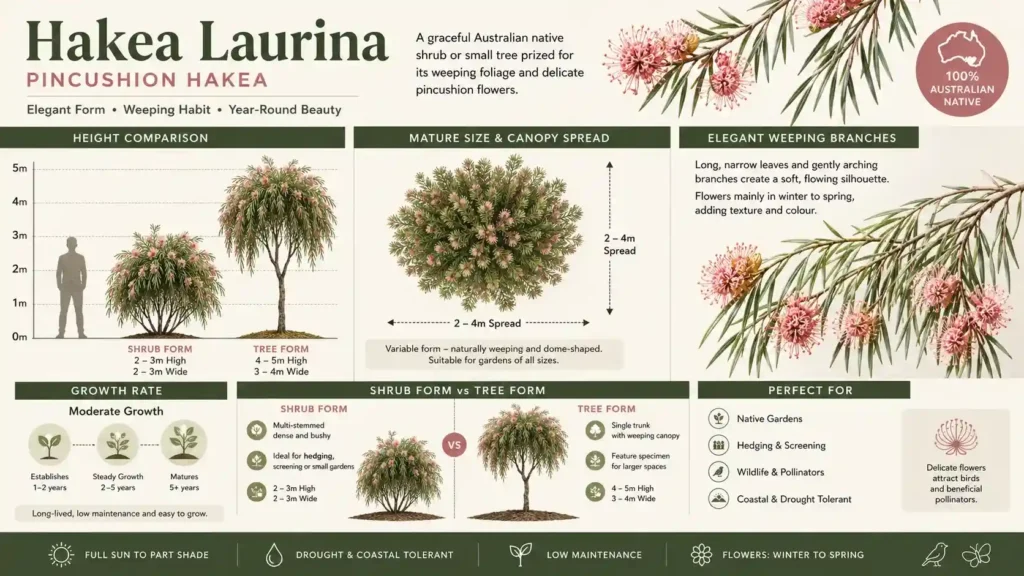
Hakea laurina is a medium-sized evergreen species that can grow either as a dense shrub or a small ornamental tree depending on pruning style and growing conditions. Its graceful structure and manageable size make it suitable for both residential gardens and larger landscape projects.
The typical hakea laurina size varies according to climate, soil quality, and maintenance practices. In ideal conditions, the plant develops a rounded canopy with spreading branches and a naturally elegant form.
| Feature | Average Size |
| Height | 4–6 meters |
| Width | 3–5 meters |
| Growth Rate | Moderate |
| Lifespan | 20–40 years |
When left unpruned, pincushion hakea often develops into a small tree with a visible trunk and arching crown. Regular shaping can maintain a bushier shrub form, which is commonly preferred for native hedges and privacy screening.
Its moderate growth rate allows gardeners to establish structure and coverage without the aggressive spread seen in some fast-growing landscape plants.
One of the most attractive features of Hakea laurina is its naturally graceful weeping habit. The branches gently arch downward, creating a soft cascading appearance that adds movement and texture to garden spaces.
Weeping hakea laurina is especially valued in ornamental landscaping because of its:
The pendulous branching habit gives the plant a refined appearance even outside the flowering season. As the tree matures, the canopy becomes broader and more layered, making it highly effective as a feature specimen in native gardens and drought-tolerant landscapes.
Its ornamental structure also pairs well with gravel gardens, Mediterranean-style planting, and coastal designs where soft foliage textures are desirable.
The foliage of Hakea laurina is long, narrow, and slightly leathery, closely resembling willow leaves. Because of this distinctive appearance, the species is frequently associated with names such as:
The leaves are typically blue-green to dark green and remain on the plant throughout the year, giving it strong evergreen value in landscapes.
Key foliage and bark characteristics include:
The combination of flowing foliage, decorative flowers, and evergreen growth makes pincushion hakea one of the most visually distinctive Australian native trees for residential and commercial landscaping.
The flowers of Hakea laurina are the plant’s most distinctive ornamental feature. Each hakea flower forms a perfectly rounded pincushion-like cluster made up of hundreds of long curved stamens that radiate outward from a central core.
The blooms are typically known for their striking color contrast:
This unusual flower texture gives the appearance of decorative pins protruding from a cushion, which is why the plant is commonly called the pincushion hakea or pink cushion hakea.
Flower heads usually measure between 5–10 cm across and appear in clusters along mature branches. Their bold shape and vibrant coloring make them highly visible in both native gardens and ornamental landscapes.
Key flower characteristics include:
The flowers are also commonly used in cut flower arrangements because of their durability and unusual appearance.
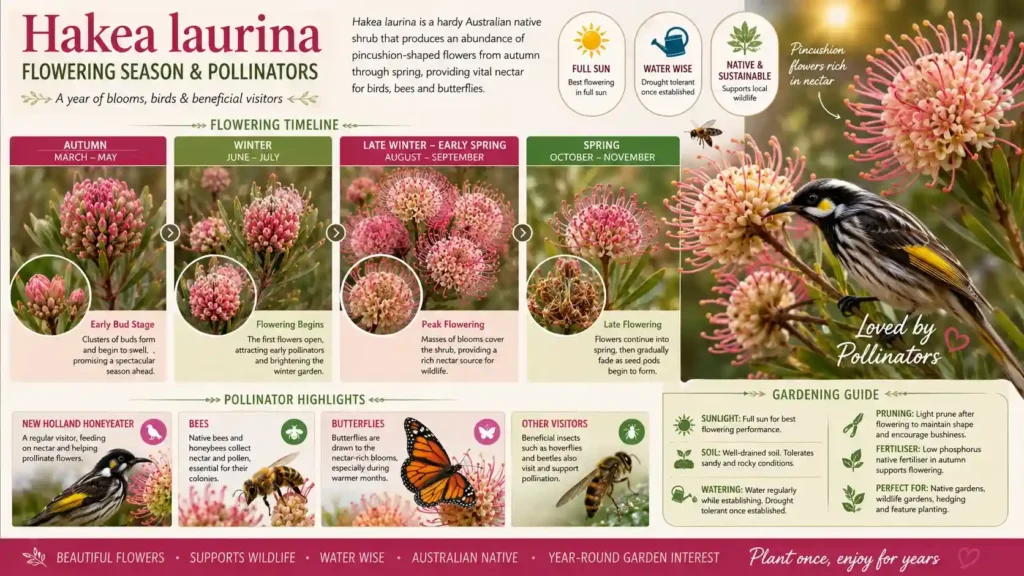
The flowering season of Hakea laurina generally begins from late autumn through winter and can continue into early spring depending on local climate conditions.
In many Australian regions, hakea flower blooms commonly appear between:
The flowering timeline may vary slightly according to rainfall, sunlight exposure, and temperature patterns. Mature plants often produce heavier flowering displays once fully established.
Seasonal flowering progression typically follows this pattern:
| Season | Flowering Activity |
| Autumn | Bud formation begins |
| Winter | Peak flowering display |
| Early Spring | Late blooms continue |
| Summer | Foliage growth dominates |
One reason pincushion hakea remains popular in landscaping is its ability to provide vibrant garden color during cooler months when many other ornamental plants are not flowering.
The nectar-rich flowers of Hakea laurina play an important ecological role in supporting native wildlife and pollinators.
The blooms regularly attract:
Birds are especially drawn to the abundant nectar hidden within the flower clusters. In wildlife-friendly gardens, flowering hakea plants can become valuable feeding stations during winter months when natural nectar sources are limited.
Additional wildlife benefits include:
Because of these ecological advantages, pincushion hakea is frequently planted in Australian native gardens, conservation landscapes, and pollinator-friendly outdoor spaces.
| Growing Factor | Best Conditions for Flowering |
| Sunlight | Full sun |
| Water Needs | Moderate while establishing, low once mature |
| Soil Type | Well-draining sandy or loamy soil |
| Climate | Warm Mediterranean or temperate climates |
| Flowering Season | Winter to early spring |
| Bloom Performance | Best with strong sunlight and minimal waterlogging |
Hakea laurina grows best in warm temperate and Mediterranean-style climates where winters are mild and summers are dry. Its natural adaptation to Western Australian conditions makes it highly suitable for drought-prone landscapes and low-maintenance native gardens.
This species performs particularly well in:
Hakea laurina is commonly grown in USDA zones 9–11, where prolonged freezing temperatures are uncommon. Mature plants develop moderate frost resistance once established, but young plants may require protection during severe cold events.
Climate tolerance overview:
| Climate Factor | Suitability |
| Heat Tolerance | Excellent |
| Drought Tolerance | High |
| Coastal Conditions | Good |
| Mild Frost Tolerance | Moderate |
| Humid Tropical Areas | Less suitable |
Because of its strong drought tolerance, pincushion hakea is widely used in sustainable landscaping projects that require reduced irrigation.
Healthy root development depends heavily on proper soil drainage. Hakea laurina prefers light, free-draining soils that prevent excess moisture from accumulating around the roots.
The best soil types include:
Well-draining soil is essential because poorly drained ground can lead to root rot and fungal problems, especially during wet seasons.
For improved growth:
Native hakea plants generally perform better in slightly lean soils rather than heavily enriched garden beds.
Full sun is one of the most important growing requirements for strong flowering and healthy foliage development. Hakea laurina should ideally receive at least 6–8 hours of direct sunlight daily.
Benefits of full sun exposure include:
Plants grown in shaded conditions may develop:
For the best ornamental display, plant pincushion hakea in open positions with unrestricted sunlight exposure.
Water requirements change as the plant matures. Young hakea plants need regular watering during their establishment phase, while mature specimens become highly drought tolerant.
During the first 12–18 months after planting:
Once established, Hakea laurina typically requires minimal supplemental watering except during prolonged drought periods.
Mature plants benefit from:
Overwatering is one of the most common causes of pincushion hakea problems, particularly in poorly drained soils.
Like many Australian native plants, hakea laurina prefers low-phosphorus fertilizers. Excess phosphorus can damage sensitive roots and reduce plant health over time.
Recommended fertilizer practices include:
Best fertilizer tips:
In many established native gardens, mature hakea plants grow successfully with very little additional fertilization, making them ideal for low-maintenance landscapes.
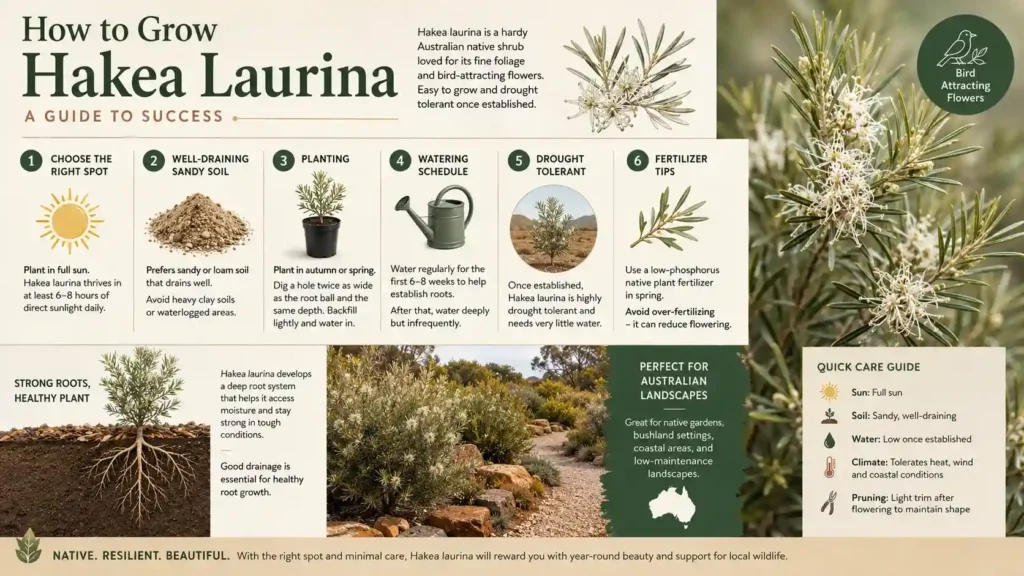
Proper planting is essential for establishing a healthy Hakea laurina. Good drainage, full sun exposure, and careful root preparation help ensure strong long-term growth and reliable flowering.
Select a location that receives full sun for most of the day. The planting area should also have excellent drainage because hakea plants do not tolerate constantly wet soil.
Ideal planting locations include:
Avoid:
Before planting:
If the soil is heavy, raised planting mounds or sandy soil amendments can improve root health.
The planting hole should be:
Avoid planting too deeply because buried stems may increase the risk of rot problems.
Carefully remove the hakea tree from its nursery container and gently loosen compacted roots if needed.
Place the plant so the top of the root ball sits level with the surrounding soil surface.
Fill the hole with the original soil and lightly firm it around the roots to remove air pockets.
After planting:
Spacing depends on whether the plant is grown as a feature tree or hedge.
| Planting Purpose | Recommended Spacing |
| Feature Tree | 3–5 meters apart |
| Informal Hedge | 1.5–2.5 meters apart |
| Windbreak Planting | 2–3 meters apart |
Adequate spacing improves airflow and reduces fungal disease risks.
The best time to plant Hakea laurina is during cooler seasons when soil moisture is naturally higher and temperatures are less extreme.
Recommended planting seasons include:
Autumn planting is often preferred because it allows roots to establish before hot summer weather arrives.
Avoid planting during:
Seasonal planting at the right time helps reduce transplant stress and encourages faster root establishment.
Mulching plays an important role in maintaining healthy hakea plants, especially during the establishment phase.
Benefits of mulch include:
Best mulching practices:
Avoid piling mulch directly against the stem because trapped moisture can encourage fungal problems and crown rot.
Proper mulching combined with well-draining soil helps young pincushion hakea plants establish strong, healthy root systems for long-term growth and flowering performance.
Hakea laurina is widely used as an ornamental hedge because of its dense evergreen growth, graceful foliage, and attractive flowering display. When planted in rows and lightly pruned, it forms an effective hakea hedge that provides year-round structure and privacy.
The naturally branching habit of pincushion hakea makes it suitable for:
A mature hakea hedge offers several practical landscaping benefits:
Many gardeners refer to comprehensive guides on hedging and screening plants to choose species that provide effective coverage, privacy, and year-round ornamental appeal.
| Hedge Benefit | Advantage |
| Privacy Screening | Dense evergreen coverage |
| Wind Protection | Reduces strong wind exposure |
| Wildlife Habitat | Shelter for birds and pollinators |
| Ornamental Value | Decorative flowers and foliage |
| Low Water Needs | Suitable for drought-prone gardens |
For hedge planting, spacing is usually closer than feature tree planting to encourage fuller coverage. Light pruning after flowering can help maintain a compact and bushier appearance.
Because of its tolerance to dry conditions and coastal exposure, hakea laurina is also commonly planted as a natural windbreak in exposed landscapes.
Hakea laurina is highly versatile in landscape design and works well in both formal and naturalistic garden settings. Its combination of colorful blooms, weeping foliage, and drought tolerance makes it a valuable feature in low-maintenance outdoor spaces.
Other weeping native trees, such as the Weeping Peppermint Tree, complement hakea plantings in landscapes that emphasize vertical structure, privacy screening, and ornamental foliage flow.
Popular landscaping applications include:
Pincushion hakea blends naturally with other Australian native plants and complements:
Its winter flowering season also adds color when many native plants are less active.
Because of its nectar-rich flowers, hakea plants are commonly used in wildlife-friendly landscapes that support:
The dense evergreen structure additionally provides shelter and nesting opportunities for small birds.
Hakea laurina performs exceptionally well in xeriscaping and low-water garden designs due to its:
It is frequently used in Mediterranean-style and coastal landscapes where irrigation needs must remain minimal.
When grown as a small ornamental tree, pincushion hakea becomes an eye-catching landscape feature because of its:
Feature planting works especially well near:
Although Hakea laurina naturally develops into a medium-sized shrub or tree, some compact and dwarf varieties are suitable for smaller gardens and container growing.
Container-grown hakea plants are best suited to:
For successful container growing:
Dwarf selections and carefully pruned young plants can remain manageable in smaller spaces while still producing the characteristic pincushion flowers.
“Dwarf hakea varieties like Hakea Laurina Dwarf are particularly useful for courtyards, patio gardens, and compact landscapes where full-sized trees may be unsuitable.
Compact garden benefits include:
With proper sunlight and drainage, hakea laurina can adapt well to both expansive native landscapes and smaller ornamental garden settings.
Although Hakea laurina is generally considered a hardy and low-maintenance Australian native plant, certain growing conditions can lead to health and performance issues. Most hakea laurina problems are linked to poor drainage, excessive watering, incorrect pruning, or unsuitable soil conditions.
Understanding common pincushion hakea problems helps maintain healthy growth, stronger flowering, and long-term plant vigor.
Root rot is one of the most serious problems affecting hakea plants, especially in poorly drained soils or overwatered gardens.
Common causes include:
Symptoms may include:
Preventing root rot requires excellent soil drainage and careful watering practices.
Scale insects occasionally appear on stems and foliage, particularly in stressed or overcrowded plants. These sap-feeding pests attach themselves to branches and can weaken growth over time.
Signs of infestation include:
Mild infestations can often be controlled through pruning affected branches and improving airflow.
Fungal diseases are more likely to occur in humid or waterlogged conditions where air circulation is limited.
Potential fungal problems include:
Good spacing, proper sunlight exposure, and well-draining soil are the most effective preventive measures.
Yellowing foliage is one of the most commonly reported hakea laurina problems. In many cases, the issue relates directly to soil moisture imbalance or nutrient stress.
Poor drainage is a major cause of yellow leaves in pincushion hakea plants. Waterlogged roots struggle to absorb oxygen properly, which weakens the plant and causes discoloration.
Drainage-related symptoms may include:
Improving soil drainage often restores plant health over time.
Excess fertilizer, especially high-phosphorus products, can damage sensitive native plant roots.
Nutrient-related problems may include:
To avoid these issues:
Healthy hakea plants generally require minimal fertilization once established.
Reduced flowering is another common concern in poorly positioned or incorrectly maintained plants.
Several environmental factors can reduce flower production in Hakea laurina.
Common causes include:
Plants growing in partial shade often produce significantly fewer blooms than those planted in full sun.
Flower production depends heavily on sunlight exposure and proper maintenance timing.
For best flowering performance:
Over-pruning can remove developing flower buds and reduce seasonal blooming displays.
| Problem | Cause | Solution |
| Yellow Leaves | Poor drainage or overwatering | Improve drainage and reduce watering |
| Root Rot | Waterlogged soil | Plant in free-draining soil |
| Poor Flowering | Insufficient sunlight | Move or plant in full sun |
| Weak Growth | Nutrient imbalance | Use low-phosphorus fertilizer |
| Scale Insects | Plant stress and poor airflow | Prune affected growth and improve ventilation |
| Fungal Problems | Excess moisture and humidity | Reduce watering and improve spacing |
Most pincushion hakea problems can be prevented by providing proper drainage, full sunlight, moderate watering, and suitable native plant care practices.
Proper pruning helps maintain the health, shape, and flowering performance of Hakea laurina. Timing is important because incorrect pruning can reduce flower production for the following season.
The best pruning season is usually:
Light pruning after blooms fade encourages fresh branching while preserving future flower buds.
Recommended pruning practices include:
Heavy pruning late in the growing season may reduce the next flowering cycle because flower buds often develop on newer growth.
Hakea laurina can be shaped either as a small ornamental tree or a dense screening shrub depending on pruning style.
For fuller growth and improved hedge density:
This approach creates a denser canopy and improves overall structure.
When grown as a hakea hedge, regular shaping helps maintain an attractive and manageable form.
Best hedge maintenance practices include:
Well-maintained pincushion hakea hedges provide:
Because of its naturally graceful branching habit, informal hedge shapes often look more attractive than heavily formal clipped styles.
Once established, Hakea laurina requires relatively low maintenance compared to many ornamental flowering trees.
Mature hakea plants are highly drought tolerant and generally require only occasional deep watering during extended dry periods.
Long-term watering guidelines:
Overwatering remains one of the most common causes of decline in mature plants.
Regular mulching helps stabilize soil moisture and protect shallow root systems.
Mulching recommendations:
Suitable mulch materials include:
Proper mulching also suppresses weeds and improves long-term soil condition.
Hakea laurina generally requires minimal fertilization, especially once mature and well established.
Best fertilizing practices include:
In healthy native gardens, many mature hakea plants thrive with little additional feeding beyond occasional mulch applications and basic seasonal care.
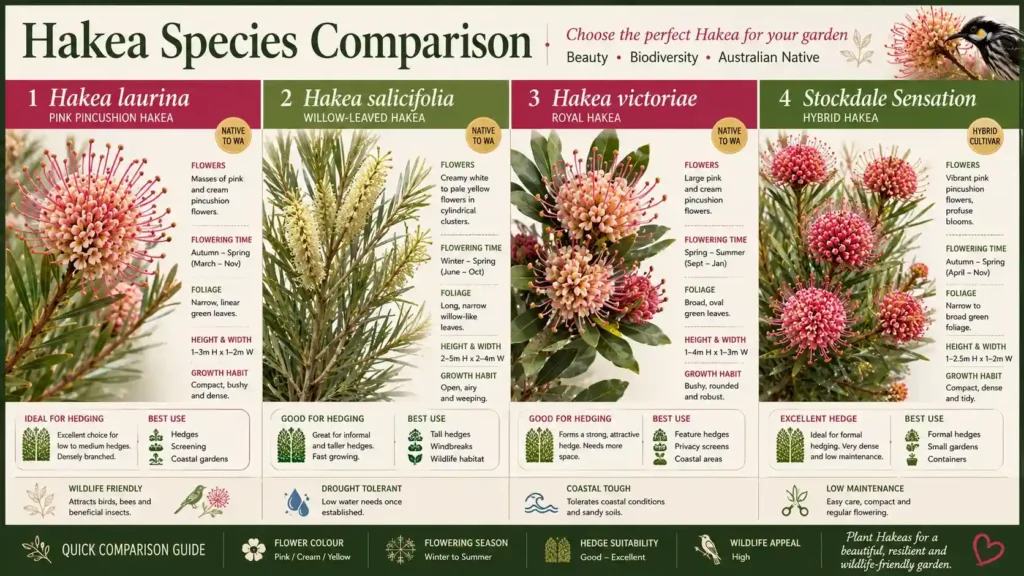
Hakea salicifolia, commonly known as willow-leaved hakea, is one of the most popular related species to the pincushion hakea. It is valued for its dense evergreen foliage, graceful branching habit, and suitability for screening and hedging applications.
Compared with Hakea laurina, hakea salicifolia has a more foliage-focused ornamental appeal rather than dramatic floral displays.
| Feature | Hakea Laurina | Hakea Salicifolia |
| Main Feature | Pincushion flowers | Dense willow-like foliage |
| Growth Habit | Weeping ornamental tree | Dense upright shrub/tree |
| Flower Type | Pink and cream blooms | Smaller white flowers |
| Best Use | Feature planting | Screening and hedging |
| Maintenance | Moderate shaping | Excellent hedge response |
Hakea salicifolia typically develops a denser and more upright structure than pincushion hakea. This makes it especially useful as a:
The hakea salicifolia tree can reach medium heights with regular pruning control, while still maintaining a lush evergreen appearance year-round.
Its narrow foliage and adaptability to trimming make it highly practical for functional landscape use.
Hakea victoriae is another highly ornamental Australian native species known for its striking foliage rather than its flowers.
The plant is especially admired for:
Unlike pincushion hakea, hakea victoriae is more commonly used as a dramatic foliage specimen in native landscape designs.
Common uses for hakea victoriae include:
Its bold foliage texture contrasts strongly with softer native shrubs and grasses, making it a standout visual focal point.
Hakea ‘Stockdale Sensation’ is a cultivated ornamental hakea variety valued for its exceptionally vibrant flowering display.
Key characteristics include:
The flowering performance of Hakea Stockdale Sensation is often considered more intense and colorful than many standard hakea species, making it popular in decorative native gardens.
This variety is commonly planted for:
Its compact flowering habit also works well in smaller residential landscapes where strong seasonal color is desired.
Australia is home to a large diversity of hakeas, with many species valued for ornamental flowers, drought tolerance, and wildlife benefits. These hardy native plants are widely used in sustainable landscaping and native garden design.
Popular types of hakeas include:
Many hakea plants are prized for:
Depending on the species, hakea trees may be used for:
The wide variety of forms, foliage textures, and flower styles available across different hakeas makes the genus highly valuable for Australian native gardening and low-maintenance landscape design.
Hakea laurina is commonly available through Australian native plant nurseries and specialty garden centers that focus on drought-tolerant and indigenous species. Availability may vary depending on season, regional climate suitability, and local nursery stock levels.
Many native plant suppliers stock hakea plants because they are widely valued for:
In Australia, pincushion hakea is especially popular in regions with Mediterranean and temperate climates where Australian native species perform reliably.
Native plant nurseries often provide:
Gardeners interested in native landscaping commonly source hakea trees through specialist suppliers that focus on Australian flora and water-wise gardening plants.
Some larger garden retailers and hardware garden centers may occasionally stock Hakea laurina as part of their seasonal native plant range. Availability often depends on local demand, nursery partnerships, and regional growing conditions.
Search terms commonly associated with retail availability include:
Stock availability can vary significantly between locations and seasons, particularly for Australian native flowering plants. Some stores may carry younger plants during peak native planting periods, while more specialized varieties are usually found through dedicated native nurseries.
Dwarf forms and compact native selections are sometimes preferred for:
When selecting hakea plants from local garden suppliers, healthy specimens typically show:
Because pincushion hakea is primarily grown for ornamental and landscaping purposes, it is most commonly featured within Australian native plant collections rather than general flowering shrub categories.
Hakea laurina is widely considered an excellent garden tree for Australian native landscapes and low-maintenance outdoor spaces. Its ornamental flowers, evergreen foliage, and adaptability make it highly attractive for both residential and larger landscape projects.
One of the biggest advantages of pincushion hakea is its ability to combine visual appeal with practical garden performance.
Once established, hakea laurina shows strong drought tolerance and performs well in water-wise landscapes with minimal irrigation.
Benefits for dry-climate gardens include:
This makes it especially valuable in regions where water conservation is important.
The nectar-rich hakea flower attracts a wide variety of beneficial wildlife and pollinators.
Common visitors include:
Its dense evergreen canopy also provides shelter and habitat for smaller birds, making it an excellent addition to wildlife-friendly gardens.
Compared with many ornamental flowering trees, Hakea laurina generally requires minimal maintenance once established.
Low-maintenance advantages include:
With proper drainage and sunlight, mature plants can remain healthy for decades with relatively little intervention.
One of the most attractive ornamental features of pincushion hakea is its extended flowering display during cooler months.
Flowering benefits include:
This extended blooming period helps maintain landscape interest when many other garden plants are not actively flowering.
Although hakea laurina offers many advantages, there are some limitations gardeners should consider before planting.
Poor drainage is one of the most common causes of decline in hakea plants.
Waterlogged conditions may lead to:
Well-draining soil is essential for long-term success.
Mature plants can grow into medium-sized shrubs or small trees, which may not suit very restricted planting areas.
Potential spacing considerations include:
Regular shaping may be needed in compact landscapes.
Young plants can be vulnerable to heavy frost, particularly in colder inland climates.
Cold-related concerns may include:
Mature plants usually develop better cold tolerance over time, but extreme freezing conditions can still cause stress.
| Pros | Cons |
| Drought tolerant | Sensitive to poor drainage |
| Attractive winter flowers | Requires space to mature |
| Wildlife friendly | Young plants affected by heavy frost |
| Evergreen foliage | Poor flowering in shade |
| Low maintenance | Overwatering can cause root problems |
| Suitable for native gardens | Not ideal for waterlogged soils |
For gardeners seeking a resilient, ornamental, and wildlife-supporting native tree, Hakea laurina remains one of the most rewarding Australian landscape plants when grown under suitable conditions.
The hakea pincushion is one of the most distinctive and rewarding Australian native plants for ornamental gardens and drought-tolerant landscapes. Known scientifically as Hakea laurina, this evergreen species stands out for its striking pincushion-shaped flowers, graceful weeping foliage, and strong adaptability to warm, dry climates.
Its combination of ornamental beauty and practical landscape value makes it highly suitable for:
The vibrant winter flowering display, bird-attracting nectar, and evergreen structure give pincushion hakea year-round garden appeal while supporting pollinators and native wildlife.
Although the plant is generally low maintenance, proper care remains important for long-term health and flowering success. Well-draining soil, full sun exposure, moderate watering, and careful pruning help maintain healthy growth and reliable blooms year after year.
For gardeners seeking a resilient ornamental native tree with unique flowers and strong landscape performance, hakea laurina continues to be one of the standout choices among Australian hakea plants and native flowering trees.
Hakea laurina typically grows between 4–6 meters tall and 3–5 meters wide under suitable conditions. It can develop either as a dense shrub or a small ornamental tree depending on pruning style, climate, and growing environment.
Yes, pincushion hakea is highly drought tolerant once established. Mature plants require very little supplemental watering and perform well in dry landscapes, Mediterranean gardens, and low-rainfall regions. Young plants still need regular watering during their first establishment period.
Hakea pincushion usually flowers from late autumn through winter and into early spring. In many Australian climates, the peak flowering season occurs between May and September, producing its distinctive pink and cream pincushion-shaped blooms.
Yes, Hakea laurina is commonly used as a native hedge and privacy screen. Its dense evergreen growth and weeping foliage make it suitable for informal hedging, windbreak planting, and wildlife-friendly screening.
Yellow leaves are usually caused by poor drainage, overwatering, root stress, or nutrient imbalance. Waterlogged soil is one of the most common hakea laurina problems because the roots require excellent drainage to remain healthy.
Yes, hakea pincushion can work well in smaller gardens when regularly pruned or grown as a compact specimen. Some dwarf and smaller-growing forms are also suitable for courtyards, containers, and compact native landscapes.
The main difference is their ornamental focus and growth habit. Hakea laurina is grown mainly for its large pincushion flowers and weeping structure, while Hakea salicifolia is valued more for its dense willow-like foliage and suitability as a hedge or screening plant.
Yes, the nectar-rich flowers strongly attract honeyeaters and other nectar-feeding birds. The evergreen branches also provide shelter and nesting habitat for small native birds in wildlife gardens.
Many hakea plants, including pincushion hakea, perform well in coastal gardens because they tolerate wind, dry conditions, and light salt exposure. Well-draining soil remains essential in seaside environments.
Yes, full sun is important for healthy growth and strong flowering performance. Plants grown in shaded areas may produce fewer flowers and develop weaker branching structures.
Young plants should be watered regularly during establishment, usually once or twice weekly depending on climate. Mature plants need only occasional deep watering during extended dry periods.
Yes, hakea flowers are highly beneficial for pollinators. They attract bees, butterflies, and beneficial insects while also supporting biodiversity in native and wildlife-friendly gardens.
Yes, smaller or dwarf forms can grow successfully in large containers with excellent drainage. Container-grown plants require full sun, native potting mix, and careful watering management.
Yes, Hakea laurina is an evergreen plant that maintains its foliage year-round, making it valuable for screening, structure, and consistent landscape coverage.