Grow Better Gardens with Smarter Plant Choices
Discover helpful guides on trees, hedges, fruit plants, edible plants, and beautiful landscape greenery.


Red cottonwood is a fast-growing coastal hibiscus tree prized for its striking burgundy foliage, tropical appearance, and excellent adaptability to warm Australian climates. Scientifically known as Hibiscus tiliaceus rubra, this ornamental tree belongs to the hibiscus family and is widely used in tropical landscaping, coastal gardens, and privacy screening projects.
Commonly called cottonwood hibiscus, coastal hibiscus, beach hibiscus, sea hibiscus tree, and native hibiscus cottonwood, this plant is especially popular across coastal Australia because of its salt tolerance, rapid growth, and dense hedge-forming habit. Its large heart-shaped leaves and lush canopy create an instant tropical effect in both residential and commercial landscapes.
Many gardeners ask, “Is red cottonwood a hibiscus tree?” The answer is yes — it is a cultivated ornamental form of coastal hibiscus known for its dramatic red foliage. Another common question is, “How big does a cottonwood hibiscus get?” In warm conditions, it can quickly grow into a small to medium-sized tree with broad dense coverage ideal for tropical screening.
Homeowners also frequently search, “Are cottonwood hibiscus roots invasive?” While the root system can spread aggressively in moist soil, proper planting distance and maintenance usually keep root concerns manageable.
Because of its low maintenance appeal, fast hedge development, and bold ornamental value, red cottonwood has become one of the most widely planted tropical screening trees in warm coastal landscapes throughout Australia.
Red cottonwood is a tropical ornamental form of coastal hibiscus known for its burgundy-red leaves and fast-growing hedge-like structure. It is widely planted in warm coastal regions for privacy screening, tropical landscaping, and dense ornamental foliage.
The scientific name of red cottonwood is Hibiscus tiliaceus rubra. It belongs to the Malvaceae plant family, which also includes many ornamental hibiscus species known for their tropical flowers and broad foliage.
The naming around this plant can sometimes confuse gardeners because several closely related terms are used interchangeably.
In Australian landscaping, the red foliage form is especially valued because it combines tropical appearance with strong coastal resilience.
Red cottonwood is known by several common names depending on region, nursery labeling, and landscaping use.
Common names include:
Although the names vary, they usually refer to the same fast-growing tropical hibiscus plant with dense screening ability and colorful foliage.
Red cottonwood originates from tropical coastal regions across Tropical Asia, the Pacific islands, and Northern Australia. In nature, related coastal hibiscus species commonly grow near beaches, estuaries, and humid shoreline environments.
One reason the plant performs so well in Australia is its natural adaptation to harsh coastal conditions.
Key habitat traits include:
These characteristics make the plant highly reliable for beachfront gardens and exposed tropical landscapes.
Red cottonwood has become extremely popular in Australia because it grows quickly, creates dense privacy coverage, and delivers a strong tropical landscape effect with relatively low maintenance.
In warm coastal climates, it is commonly used for:
The plant is especially popular in Perth and other warm coastal regions where gardeners need fast-growing screening trees that can tolerate heat, coastal winds, and sandy soils.
Its dramatic burgundy foliage also gives landscapes year-round color contrast that works well in modern tropical garden designs.
| Feature | Details |
| Botanical Name | Hibiscus tiliaceus rubra |
| Plant Type | Tropical hibiscus tree |
| Mature Size | Small to medium tree |
| Best Climate | Warm coastal regions |
| Main Use | Hedge, privacy screen, ornamental |
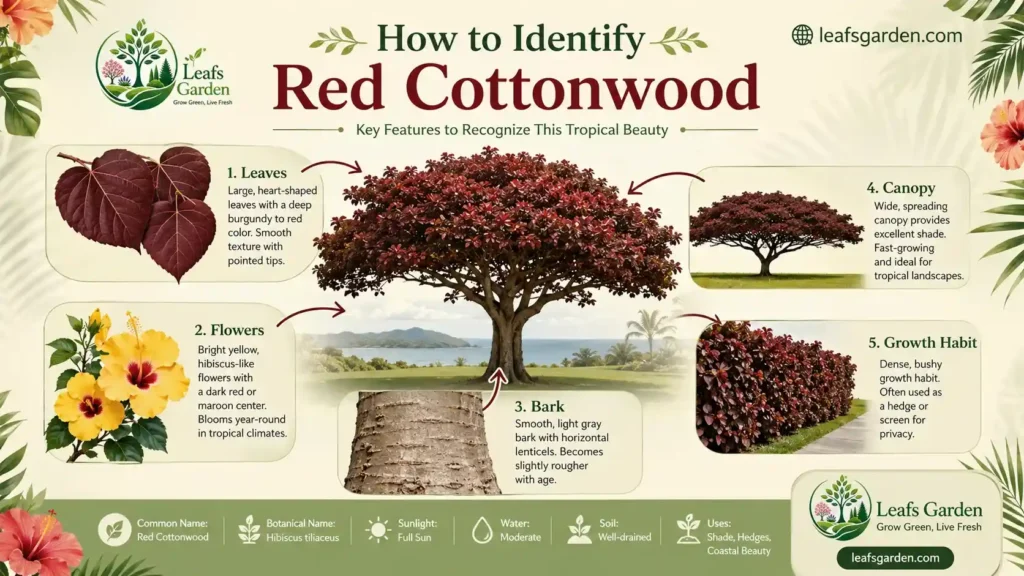
The red cottonwood tree is recognized by its heart-shaped burgundy leaves, spreading canopy, and hibiscus-style yellow flowers. Its tropical foliage color and fast-growing structure make it easy to identify in coastal Australian landscapes.
One of the most distinctive features of red cottonwood is its deep burgundy foliage. The leaves are large, soft-textured, and heart-shaped, giving the plant a lush tropical appearance throughout the year.
Young foliage often appears darker red or purple before gradually maturing into rich burgundy tones. In full sun, the foliage color usually becomes more intense and vibrant.
Key foliage characteristics include:
Because the canopy becomes thick and compact, red cottonwood is commonly used for dense tropical screening and privacy hedges.
Red cottonwood produces classic hibiscus-like blooms that add extra ornamental value during the warmer months.
The flowers are typically:
The blooms usually open during the day and may gradually change color as they age. Seasonal flowering is strongest in warm tropical and subtropical climates where temperatures remain consistently mild.
Although the flowers are attractive, most gardeners primarily grow the plant for its dramatic foliage and hedge-forming ability.
A full grown hibiscus tree of this type can become a large dense shrub or small-to-medium tree depending on climate, pruning, and growing conditions.
In warm regions, the red cottonwood tree Australia landscapes commonly feature can reach:
The plant naturally develops a broad spreading canopy with a fast growth rate. Many specimens grow in a multi-trunk form, especially when used as ornamental screening plants.
As a hibiscus tree plant, red cottonwood is known for:
Without regular pruning, mature plants can become wide and heavily branched, making spacing important in smaller gardens.
Red cottonwood has relatively smooth bark when young, which gradually becomes slightly textured as the plant matures. The branches are flexible and capable of handling coastal winds better than many rigid ornamental trees.
Structural features include:
The plant also develops an expanding root system over time. In moist soil conditions, some surface roots may eventually become visible near the base of mature plants. This is one reason proper spacing from paving, pools, and structures is recommended when planting larger specimens.
Red cottonwood is considered a very fast-growing hibiscus tree that quickly forms dense tropical coverage. In warm climates with regular moisture and sunlight, it can establish into a large screening plant within just a few growing seasons.
Red cottonwood is widely valued for its rapid hedge development and vigorous tropical growth habit. Under ideal conditions, young plants can grow surprisingly fast, especially during warm and humid weather.
Typical growth characteristics include:
In tropical and subtropical regions, warm climate acceleration can significantly increase yearly growth speed. Plants grown in frost-free coastal Australia often establish much faster than those in cooler inland areas.
When regularly watered and pruned, red cottonwood can quickly become a thick privacy screen within a relatively short period.
Red cottonwood grows fastest when environmental conditions closely match its natural tropical coastal habitat.
The best conditions for vigorous growth include:
Full sun helps maintain stronger foliage color while also encouraging faster branch development. Although the plant can tolerate partial shade, heavy shade often slows growth and reduces canopy density.
Warm temperatures are especially important because this tropical hibiscus performs best in frost-free environments. Growth may slow dramatically during cold weather.
Moist but well-draining soil supports healthy root expansion without increasing the risk of root rot. Excessively dry or waterlogged soil can reduce overall growth performance.
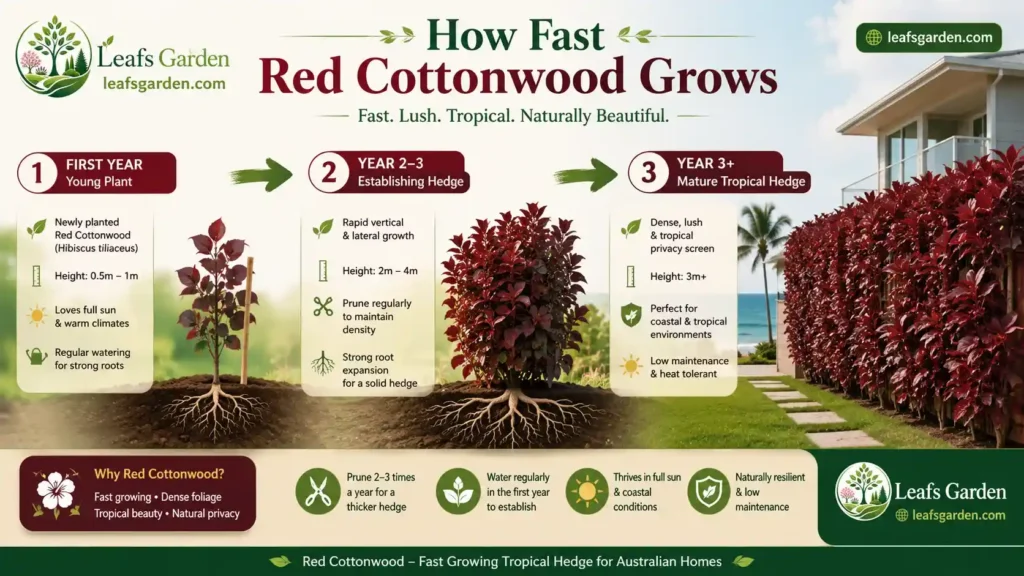
During the first year, red cottonwood focuses heavily on root establishment and rapid stem growth.
Typical first-year growth includes:
Young plants may already reach impressive heights in warm climates with regular watering.
After establishment, the plant begins forming a dense tropical screen through aggressive side branching and canopy thickening.
This stage commonly includes:
Regular trimming during this period helps create a fuller and more compact cottonwood hibiscus hedge.
As the tree matures, the canopy becomes broader, heavier, and more structurally developed.
Mature growth characteristics include:
At this stage, red cottonwood functions as both an ornamental tropical feature and an effective long-term privacy barrier in coastal landscapes.
Red cottonwood thrives in warm, frost-free climates with full sun and moist but well-draining soil. It performs best in tropical and subtropical environments where heat, humidity, and coastal airflow support rapid healthy growth.
Red cottonwood grows best in full sun, where it develops stronger branching, faster growth, and deeper burgundy foliage color.
In full sun conditions, the plant typically produces:
Partial shade is still tolerated, especially in extremely hot climates, but reduced sunlight may cause the foliage to appear duller or greener over time.
Comparison of light conditions:
| Light Condition | Plant Response |
| Full Sun | Strong color and dense growth |
| Partial Shade | Softer growth and lighter foliage |
| Heavy Shade | Sparse branching and weaker color |
For the best ornamental effect, most landscapers recommend planting red cottonwood in a bright open location.
Red cottonwood adapts well to various soil types, but it performs best in moist, well-draining soil with moderate organic matter.
Ideal soil conditions include:
Because the plant naturally evolved in coastal environments, it tolerates sandy and slightly salty soils better than many ornamental trees.
However, drainage remains extremely important. Waterlogged soil can increase the risk of root stress and fungal problems. Heavy clay soil should be improved with compost or drainage materials before planting.
Young red cottonwood plants require consistent watering during establishment to support rapid root development and healthy foliage production.
For young plants:
Once mature, the plant develops moderate drought tolerance, especially in coastal climates with occasional humidity and rainfall.
Mature plants usually:
Even though established plants are relatively hardy, prolonged drought may reduce foliage density and slow growth.
Red cottonwood strongly prefers warm tropical conditions with moderate-to-high humidity.
Ideal growing conditions include:
The plant is highly frost sensitive and may suffer leaf damage, branch dieback, or severe stress during cold weather exposure.
In cooler regions:
For this reason, red cottonwood is generally considered unsuitable for climates with regular freezing temperatures.
Red cottonwood performs best in USDA Zones 10–12 where winters remain mild and frost is rare.
In Australia, the plant grows especially well in:
Its salt tolerance and wind resistance make it particularly valuable for beachfront properties and exposed coastal gardens.
Gardeners in tropical and subtropical Australia often use red cottonwood for:
In colder inland climates, protection from frost and cold winds becomes much more important for long-term plant health.
Growing red cottonwood successfully requires warmth, space, sunlight, and regular pruning during establishment. When planted in the right environment, this fast-growing tropical hibiscus quickly develops into a dense ornamental screen or small shade tree.
Select a warm planting location with full sun and enough space for future canopy and root expansion.
Ideal locations include:
Avoid planting too close to buildings, pools, or underground pipes because mature plants can develop spreading root systems.
Good drainage is essential for healthy root growth. Although red cottonwood enjoys moisture, constantly waterlogged soil can increase the risk of root rot.
To improve drainage:
Well-draining soil helps roots establish faster and supports stronger long-term growth.
Dig a planting hole approximately twice as wide as the root ball and slightly deeper than the nursery container.
This allows:
Place the plant at the same soil level it was growing in the nursery pot.
After planting, water deeply to settle the soil and remove trapped air pockets around the roots.
During establishment:
Consistent moisture during the first growing season encourages rapid growth and canopy development.
Apply mulch around the base of the plant to retain moisture and regulate soil temperature.
Benefits of mulching include:
Keep mulch slightly away from the trunk to prevent excess moisture buildup near the stem.
Red cottonwood performs best in open sunny locations where it has enough room to spread naturally.
Recommended planting locations include:
Because the plant tolerates salt spray and coastal winds, it is especially useful in exposed beachfront gardens where many ornamental trees struggle.
For dense screening, multiple plants are often spaced evenly to create a thick tropical hedge over time.
| Pot Growing | Ground Growing |
| Compact growth | Faster growth |
| More watering | Deep root development |
| Easier control | Better hedge formation |
Pot growing works best for smaller ornamental specimens or temporary decorative use. However, plants in containers usually require more frequent watering and regular pruning to manage size.
Ground planting is generally preferred for long-term landscape performance because it allows stronger root development, faster canopy expansion, and better tropical hedge formation.
Red cottonwood is relatively low maintenance once established but benefits from pruning, watering, and seasonal feeding. Proper care helps maintain dense foliage, strong growth, and healthy tropical color throughout the year.
Red cottonwood responds best to moderate feeding rather than excessive fertilization. A balanced fertilizer supports healthy foliage growth and canopy density without encouraging weak branches.
Recommended feeding options include:
Organic compost is especially beneficial because it improves soil structure while slowly releasing nutrients over time.
Avoid overfeeding because excessive nitrogen can cause:
In warm climates, feeding during spring and summer usually produces the best results.
Mulching is highly beneficial for red cottonwood, especially in hot coastal regions where soil moisture can disappear quickly.
Benefits of mulching include:
Organic mulch materials such as bark chips, sugar cane mulch, or composted leaves work well around the base of the plant.
For best results:
Proper mulching helps maintain steady root moisture during hot Australian summers.
During summer, red cottonwood enters its strongest growth phase and may require more frequent watering in dry weather.
Summer care priorities include:
Warm humid conditions usually encourage rapid foliage production.
Although coastal climates remain mild in many Australian regions, young plants may still require protection from cold winds or unexpected frost.
Winter protection methods include:
Growth often slows naturally during cooler months.
Red cottonwood handles coastal wind better than many tropical ornamentals because of its flexible branch structure.
However, extreme exposure can still cause:
Strategic pruning and proper spacing help improve wind resistance over time.
Red cottonwood performs significantly better outdoors because it naturally prefers warm open-air tropical conditions with strong sunlight and humidity.
Outdoor growth provides:
Indoor cultivation is usually difficult long-term because most indoor environments cannot provide:
As a result, indoor plants often become leggy, weak, or slow-growing over time. Red cottonwood is generally considered far more suitable for outdoor tropical and coastal landscaping than indoor container growing.
Regular pruning keeps cottonwood hibiscus dense, compact, and ideal for tropical privacy hedges. Consistent shaping encourages thicker branching, healthier foliage coverage, and a more controlled landscape appearance.
The best time to prune red cottonwood is during the active growing season when warm temperatures support fast recovery and vigorous new growth.
Ideal pruning periods usually include:
Pruning during active growth helps the plant:
Cold periods should generally be avoided because pruning before winter or frost can stress the plant and slow recovery.
Avoid heavy pruning during:
In warm coastal Australia, light maintenance pruning can often continue through much of the year.
A cottonwood hibiscus hedge becomes denser when young plants are regularly shaped early in development. Frequent trimming encourages side shoots rather than excessive upward growth.
To create a thick tropical screen:
A properly maintained cottonwood hedge can quickly form a lush privacy barrier with broad tropical foliage and strong visual coverage.
For best results:
This helps prevent sparse lower growth and improves long-term hedge density.
| Tree Form | Hedge Form |
| Taller canopy | Dense screening |
| Ornamental feature | Privacy barrier |
| Less trimming | Frequent shaping |
Tree form growth allows red cottonwood to develop into a broader ornamental tropical specimen with a spreading canopy and more natural structure.
Hedge form growth focuses on:
The best form depends on the landscape goal and available space.
Incorrect pruning can reduce foliage density, weaken branch structure, and create uneven growth patterns.
Common pruning mistakes include:
Removing too much foliage at once can stress the plant and slow recovery.
Heavy over-pruning may cause:
Light regular shaping is usually more effective than severe cutting.
Plants positioned too closely together may compete for light and airflow as they mature.
Poor spacing can lead to:
Proper spacing allows healthier canopy development over time.
Allowing long unsupported branches to develop without shaping may create unstable growth.
Weak branch structure is more common when:
Routine shaping encourages stronger branching and a more balanced tropical hedge structure.
Red cottonwood roots can spread aggressively in moist soil, but they are usually manageable with proper spacing and pruning. Like many fast-growing tropical trees, the plant develops a broad root network that supports rapid canopy growth and dense foliage production.
The cottonwood hibiscus root system is typically shallow-to-moderately deep with wide lateral root spread. In warm climates with regular moisture, roots often extend outward beyond the canopy line in search of water and nutrients.
Root characteristics commonly include:
In loose coastal ground, roots generally spread more easily and may occasionally become visible near the soil surface as the plant matures.
Although the root system is vigorous, it is usually less destructive than extremely invasive tree species when planted responsibly.
Many gardeners ask, “are cottonwood hibiscus roots invasive?” The answer depends largely on planting location, soil moisture, and long-term maintenance.
In moist soil conditions, roots can spread aggressively toward:
However, serious structural problems are far less likely when plants are positioned with adequate spacing from buildings and underground infrastructure.
Potential root concerns may include:
Routine pruning and proper site planning greatly reduce the likelihood of major root-related issues.
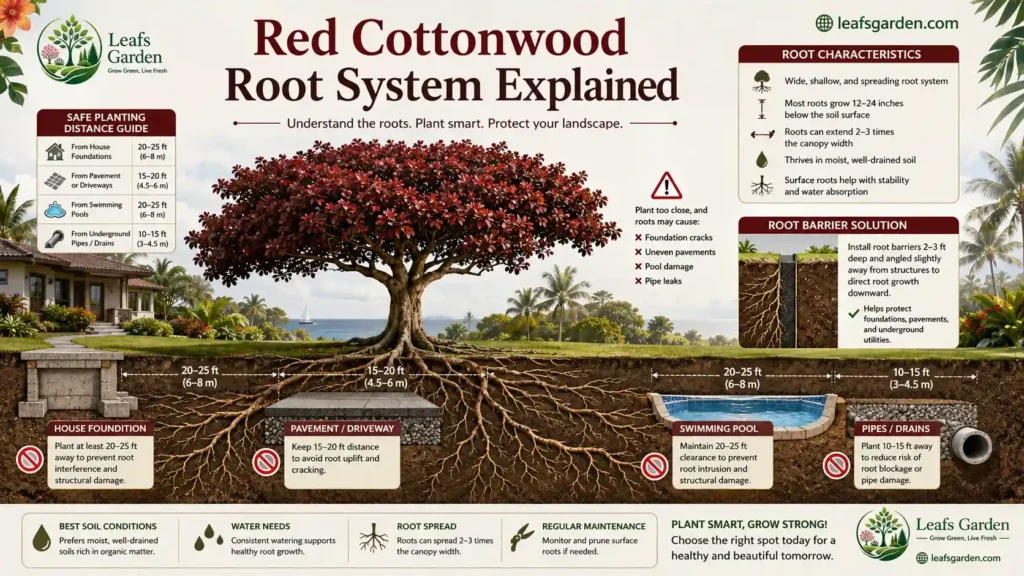
Because mature red cottonwood plants can develop large canopies and spreading roots, careful placement is important.
Recommended planting considerations include distance from:
Avoid planting directly beside hard surfaces or underground plumbing where roots may eventually seek moisture.
In smaller gardens, maintaining extra clearance helps reduce future maintenance problems and allows healthier root development.
Red cottonwood roots are generally manageable when proper landscaping practices are followed from the beginning.
Useful root control methods include:
Good drainage also helps discourage aggressive shallow root spread in constantly wet soil.
For hedge planting, spacing plants appropriately prevents overcrowded root competition while still allowing dense tropical screening.
| Structure | Recommended Distance |
| House foundations | 4–6 meters |
| Pipes | 3–5 meters |
| Pools | 4–6 meters |
Most red cottonwood problems are caused by poor drainage, pests, or cold weather stress. Although this tropical hibiscus is relatively hardy in warm climates, improper growing conditions can still lead to foliage damage, weak growth, and root-related issues.
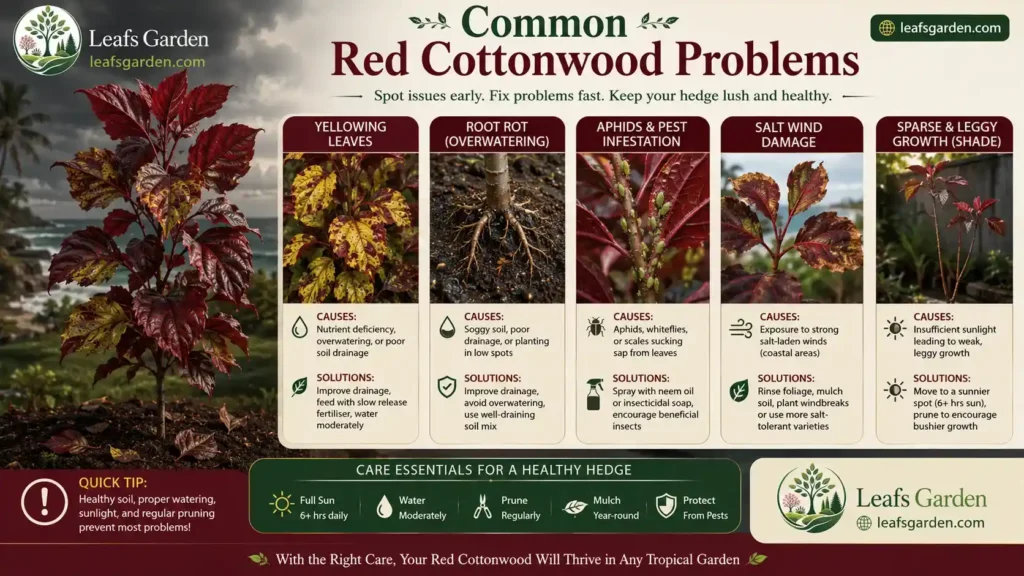
Yellow leaves are one of the most common signs that red cottonwood is experiencing environmental stress.
The main causes usually include:
Overwatering may cause leaves to turn pale yellow and soft, while underwatering often leads to dry yellowing edges and leaf drop.
Nutrient imbalance can also affect foliage color, especially when the soil lacks nitrogen or trace minerals.
Solutions include:
Healthy plants typically recover quickly once moisture levels stabilize.
Root rot is one of the most serious problems affecting red cottonwood in poorly drained environments.
The condition is commonly caused by:
Early symptoms may include:
If root rot becomes severe, roots may begin decaying beneath the soil surface, reducing the plant’s ability to absorb water and nutrients.
To reduce root rot risk:
Prevention is far easier than treatment once root damage becomes advanced.
Several common garden pests may occasionally affect red cottonwood, especially during warm humid weather.
Typical pest problems include:
Aphids feed on young stems and foliage, often causing curled leaves and sticky residue.
Control methods include:
Scale insects attach to branches and stems while feeding on plant sap.
Signs include:
Pruning heavily infested branches often helps reduce populations.
Caterpillars may chew holes through leaves and reduce foliage quality.
Light infestations are usually manageable through:
Healthy mature plants generally tolerate occasional pest activity well.
Although red cottonwood tolerates coastal conditions better than many ornamental plants, severe exposure can still create stress.
Common coastal exposure issues include:
Young plants are especially vulnerable before roots fully establish.
To reduce damage:
Established plants usually become much more resilient over time.
Leggy growth occurs when the plant becomes stretched, thin, or uneven instead of forming a dense tropical canopy.
The most common causes are:
Plants growing in heavy shade often develop longer weak stems with fewer leaves.
To improve canopy density:
Consistent shaping is one of the most effective ways to maintain a compact and healthy red cottonwood hedge.
Red cottonwood is widely used for tropical privacy hedges, coastal screening, and ornamental landscape design. Its fast growth, dense foliage, and dramatic burgundy leaves make it one of the most versatile tropical screening plants for warm Australian gardens.
For a broader guide to landscape tree selection across Australian climate zones, see our complete Evergreen, Shade & Landscape Trees guide.
One of the most popular uses for red cottonwood is creating a dense tropical privacy barrier. A well-maintained cottonwood hibiscus hedge quickly develops thick foliage coverage that helps block views, soften fences, and create a lush garden backdrop.
Benefits of hedge planting include:
The dense screening value of red cottonwood makes it ideal for:
Regular pruning helps maintain a compact hedge shape while encouraging fuller side branching.
For cooler Australian climates where red cottonwood is unsuitable, Leighton Green Cypress is one of the most popular fast-growing evergreen alternatives for dense privacy screening.
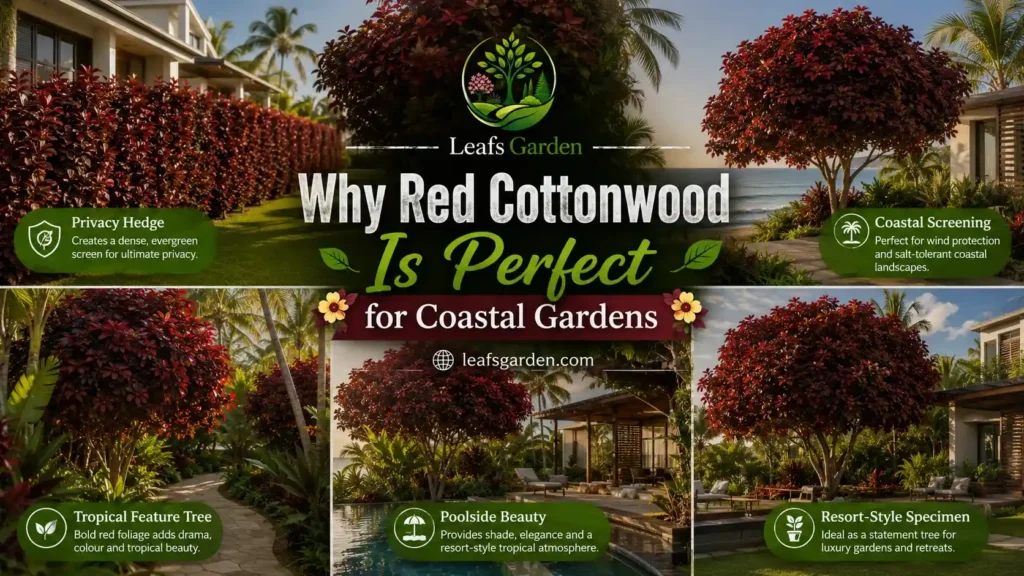
Red cottonwood performs exceptionally well in coastal gardens because of its natural adaptation to warm seaside conditions.
Important coastal advantages include:
These qualities allow the plant to thrive in exposed coastal environments where many ornamental species struggle.
Another highly resilient native coastal tree worth combining in seaside landscapes is Coast Banksia, which provides evergreen structure and wildlife value alongside red cottonwood screening.
In beachfront landscapes, red cottonwood is commonly used for:
Its flexible branch structure also helps reduce storm damage in windy coastal regions.
When grown as a standalone specimen, red cottonwood becomes a striking tropical feature tree with dramatic ornamental value.
Its deep burgundy foliage creates strong visual contrast against green tropical plants and lighter landscape materials.
Popular feature tree benefits include:
Large mature specimens can become eye-catching focal points in tropical gardens, resort landscapes, and modern coastal designs.
The spreading canopy also helps cool outdoor spaces by providing filtered shade during hot weather.
Red cottonwood is frequently incorporated into native-inspired tropical landscapes across warm Australian regions.
In areas such as Perth, gardeners often combine the plant with drought-tolerant subtropical species to create layered tropical screening and coastal texture.
Landscape themes commonly include:
Its combination of tropical appearance and coastal durability makes red cottonwood highly adaptable for both residential and commercial Australian landscape projects.
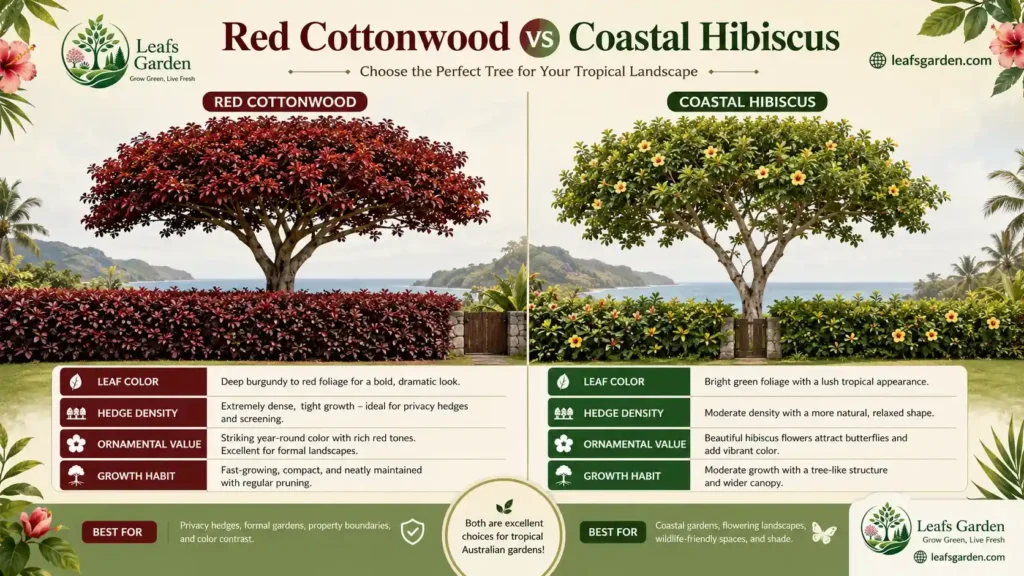
Red cottonwood and coastal hibiscus belong to the same species group, but red cottonwood has darker ornamental foliage. Both plants are tropical coastal hibiscus varieties valued for fast growth and dense screening, yet they differ in appearance and landscaping use.
The biggest visual difference between the two plants is foliage color.
Red cottonwood is known for:
Coastal hibiscus, by comparison, typically produces:
Because of its dramatic leaf color, red cottonwood is often selected for modern tropical landscaping where bold foliage is a major design feature.
Both plants grow quickly in warm climates and naturally form dense branching structures.
Red cottonwood generally develops:
Coastal hibiscus usually grows with:
Both varieties tolerate coastal conditions well, including wind and salt exposure, but red cottonwood is often preferred when privacy screening is the main goal.
Red cottonwood works best for:
Coastal hibiscus is commonly better suited for:
The choice usually depends on whether the landscape design prioritizes dramatic foliage color or a more traditional coastal appearance.
| Feature | Red Cottonwood | Coastal Hibiscus |
| Leaf Color | Burgundy-red | Green |
| Hedge Use | Excellent | Good |
| Ornamental Value | Higher | Moderate |
Red cottonwood is commonly available in Australian tropical plant nurseries and specialty hibiscus growers. Because of its popularity in coastal landscaping and tropical hedge design, the plant is widely sold throughout warm regions of Australia.
Red cottonwood is most commonly found in:
The plant is especially popular in Perth and coastal Australia where warm conditions support strong year-round growth.
In tropical and subtropical regions, nurseries often stock red cottonwood for:
Availability may increase during the warmer planting seasons when demand for tropical screening plants is highest.
Before purchasing a red cottonwood plant, it is important to inspect overall plant health and structural quality.
Look for plants with:
Avoid plants showing:
Checking plant quality early helps improve long-term establishment success after planting.
Many gardeners search for cottonwood hibiscus Bunnings availability because larger garden retailers sometimes stock tropical screening plants seasonally.
Availability can vary depending on:
In warmer coastal areas, some Bunnings garden centers may occasionally carry red cottonwood or related coastal hibiscus varieties.
However, specialty tropical nurseries often provide:
For large screening projects, professional landscape nurseries are usually the most reliable source.
Selecting healthy nursery stock is one of the most important steps for successful long-term growth.
Healthy red cottonwood plants typically have:
Container roots should appear healthy and firm rather than circling heavily around the pot.
Younger plants often establish faster after transplanting because roots adapt more easily to new soil conditions. For hedge planting, choosing evenly sized specimens also helps create a more uniform tropical screen over time.
Red cottonwood is generally considered a safe ornamental plant, but large root systems require thoughtful placement. When planted correctly and maintained properly, it is widely used in residential gardens, coastal landscapes, and tropical screening projects without major safety concerns.
Red cottonwood is not widely known as a highly toxic ornamental plant for common household pets. In most landscapes, dogs and cats coexist with the plant without serious issues.
However, basic precautions are still recommended because excessive chewing on leaves or bark may occasionally cause mild digestive irritation in sensitive animals.
Good pet safety practices include:
For households with highly sensitive animals, consulting a veterinarian is always the safest approach before introducing any ornamental plant.
Red cottonwood is generally considered suitable for family gardens when maintained properly.
The plant does not typically have:
Its broad canopy and soft tropical foliage often make it a popular choice for shaded outdoor spaces and backyard privacy planting.
Basic garden safety still matters, especially around:
Children should also avoid climbing young plants because flexible branches can break under excessive weight.
The main long-term safety consideration with red cottonwood involves its expanding root system and mature canopy size.
As the plant grows, roots may spread outward in search of moisture, particularly in consistently damp soil conditions.
To reduce structural risks:
Proper placement is especially important in smaller suburban gardens where mature root spread can become more noticeable over time.
When given adequate space and maintained correctly, red cottonwood is generally considered a safe and highly effective tropical landscaping plant for warm Australian gardens.
Red cottonwood is one of the best fast-growing tropical hibiscus trees for coastal gardens, privacy hedges, and warm Australian landscapes. Its rich burgundy foliage, rapid growth rate, and dense tropical structure make it an outstanding choice for both ornamental planting and practical landscape screening.
The plant offers several major benefits, including:
Whether used as a cottonwood hibiscus hedge, tropical feature tree, or coastal screening plant, red cottonwood performs exceptionally well in warm frost-free environments. Its ability to create dense greenery in a relatively short time has made it especially popular in Perth and other coastal Australian regions.
Although the plant is generally easy to grow, proper placement remains important because mature roots and canopy spread require adequate space. Consistent pruning, good drainage, and thoughtful positioning help maintain a healthy long-lasting landscape feature.
For gardeners wanting a bold tropical look with reliable screening performance, red cottonwood remains one of the most effective and visually striking hibiscus trees available for warm-climate landscaping.
A mature red cottonwood tree can typically reach around 4 to 10 meters tall with a broad spreading canopy. Growth size depends on climate, pruning, soil quality, and available space. Plants used as hedges are usually maintained smaller through regular trimming.
Cottonwood hibiscus roots can spread aggressively in moist soil conditions, especially around water sources. However, they are generally manageable when planted with proper spacing away from foundations, pipes, pools, and paved areas.
Red cottonwood and coastal hibiscus belong to the same species group. The main difference is foliage color. Red cottonwood features burgundy-red leaves, while standard coastal hibiscus usually has green foliage.
Yes, red cottonwood grows very well in Perth because the region’s warm climate and coastal conditions suit the plant’s tropical growth requirements. It is commonly used there for privacy hedges, tropical landscaping, and coastal screening.
Cottonwood hibiscus is considered a fast-growing tropical tree. In warm frost-free climates with full sun and regular watering, it can quickly establish dense foliage and strong hedge coverage within a few growing seasons.
Yes, red cottonwood is highly popular as a hedge plant because of its rapid growth, dense branching, and large tropical foliage. Regular pruning helps create a thick privacy screen suitable for coastal and subtropical landscapes.
In warm tropical climates, red cottonwood may flower across much of the year, especially during warmer seasons. Flower production is usually strongest during periods of active growth with good sunlight and moisture.
No, Hibiscus tiliaceus rubra is not highly frost tolerant. Cold temperatures and frost can damage foliage and slow growth. The plant performs best in frost-free tropical and subtropical climates with mild winters.