Grow Better Gardens with Smarter Plant Choices
Discover helpful guides on trees, hedges, fruit plants, edible plants, and beautiful landscape greenery.


A full grown strawberry guava tree is a compact tropical fruit tree valued for its sweet fragrant fruit, glossy evergreen foliage, and low-maintenance growing habit. Known scientifically as psidium cattleianum, this attractive fruit tree is popular in warm Australian gardens because it combines ornamental beauty with reliable fruit production.
In Australia, the strawberry guava tree grows especially well in subtropical and coastal climates such as Queensland and northern NSW. The tree also adapts successfully to warm regions of the USA and many tropical or subtropical areas worldwide. Whether grown as a backyard fruit tree, patio plant, or edible hedge, strawberry guava remains a favorite for gardeners wanting a tropical appearance without needing a very large tree.
The strawberry guava, also called cherry guava, cattley guava, or guava strawberry tree, produces small aromatic fruits with a sweet flavor and strawberry-like scent. Gardeners appreciate this fruit tree for several reasons:
Unlike larger tropical guava varieties, a full grown strawberry guava tree stays relatively manageable. Its bushy growth habit makes it suitable for smaller gardens, urban landscapes, balconies, and decorative edible gardens.
In this guide, you will learn:
Whether you are growing a strawberry guava tree for fruit production, ornamental value, or container gardening, this guide covers everything needed to grow healthy and productive trees successfully.
A full grown strawberry guava tree is a compact evergreen fruit tree grown for its sweet aromatic fruit, dense foliage, and ornamental tropical appearance. It belongs to the Psidium genus and is widely cultivated in warm subtropical and tropical climates.
It belongs to the Psidium genus and is widely cultivated in warm subtropical and tropical climates — and is one of the most rewarding trees to discover when exploring fruit trees and edible plants.
The strawberry guava tree is a small evergreen fruit tree from the Psidium genus. It is scientifically known as psidium cattleianum and belongs to the Myrtaceae plant family.
Common names include:
This fruit tree is native to Brazil and other parts of South America. Today, it is grown in Australia, the USA, New Zealand, Hawaii, and many warm coastal regions worldwide.
A mature strawberry guava tree is easy to identify because of its:
The fruit is usually red or yellow depending on the variety. Red-fruited types are commonly called strawberry guava, while yellow-fruited forms are often known as yellow cherry guava.
Strawberry guava differs from common tropical guava in several important ways. Traditional tropical guava trees usually produce much larger fruit and grow into bigger trees. In comparison, psidium cattleianum stays more compact, develops denser foliage, and produces smaller aromatic fruit with a sweeter berry-like flavor.
Many gardeners also prefer strawberry guava because it is:
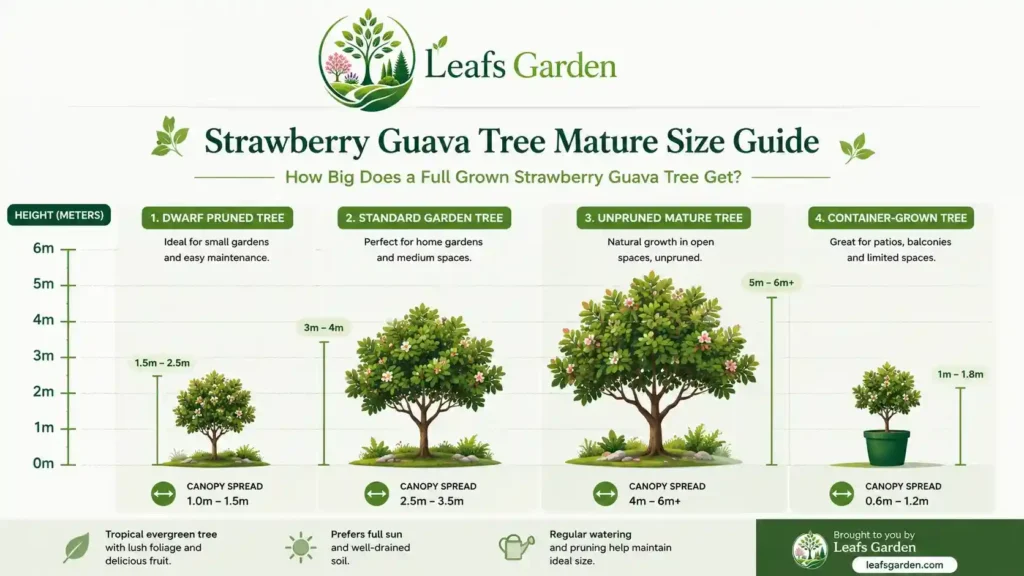
A mature strawberry guava tree typically reaches 2–6 meters tall depending on climate, soil quality, and pruning practices. In warm frost-free regions, unpruned trees can become larger and more spreading over time.
Typical mature sizes include:
| Growth Type | Mature Height | Canopy Spread |
| Dwarf or heavily pruned | 2–3 m | 2–3 m |
| Standard garden tree | 3–5 m | 3–4 m |
| Natural unpruned tree | Up to 6 m | 4–5 m |
| Container-grown tree | 1.5–3 m | 1.5–2.5 m |
The strawberry guava tree naturally develops a:
This dense growth pattern makes it useful as both a fruit-producing tree and an ornamental privacy screen.
Container-grown trees stay smaller because root growth is restricted. Many gardeners grow strawberry guava successfully in large pots on patios, balconies, and courtyards.
Regular pruning also helps maintain manageable height and improves airflow, fruit production, and harvesting access.
Strawberry guava trees have a moderate to fast growth rate in warm climates with regular watering and fertile soil. Young trees establish quickly and can produce dense foliage within only a few growing seasons.
In favorable subtropical conditions, a healthy tree guava may grow:
A fruit guava tree can remain productive for many years when properly maintained. Mature trees commonly continue fruiting for 20 years or longer.
Fruiting age depends on whether the plant is grown from seed or grafted stock.
| Plant Type | Typical Fruiting Time |
| Guava seedling | 3–5 years |
| Grafted plant | 1–3 years |
Seed-grown plants are common and affordable, but fruit quality and growth habit may vary slightly between seedlings. Grafted plants usually fruit earlier and provide more predictable characteristics.
Warm temperatures, full sun, and consistent moisture help strawberry guava trees grow faster and develop heavy fruit crops more reliably.
Strawberry guava fruit has a sweet tropical flavor with a fragrant berry-like aroma and mild guava notes. The fruit is juicy, refreshing, and naturally sweet when fully ripe.
The strawberry guava taste is often described as a mix of tropical guava, strawberries, passionfruit, and subtle floral flavors. The fruit has a pleasant sweetness balanced by light acidity, making it popular for fresh eating and homemade desserts.
Most ripe fruits develop:
The texture of strawberry guava is smooth and juicy with small edible seeds throughout the flesh. The seeds are firmer than common tropical guava seeds but are usually swallowed whole or lightly chewed.
The fruit aroma becomes stronger as the fruit ripens. Fully ripe cherry guavas often release a sweet fruity scent even before harvesting.
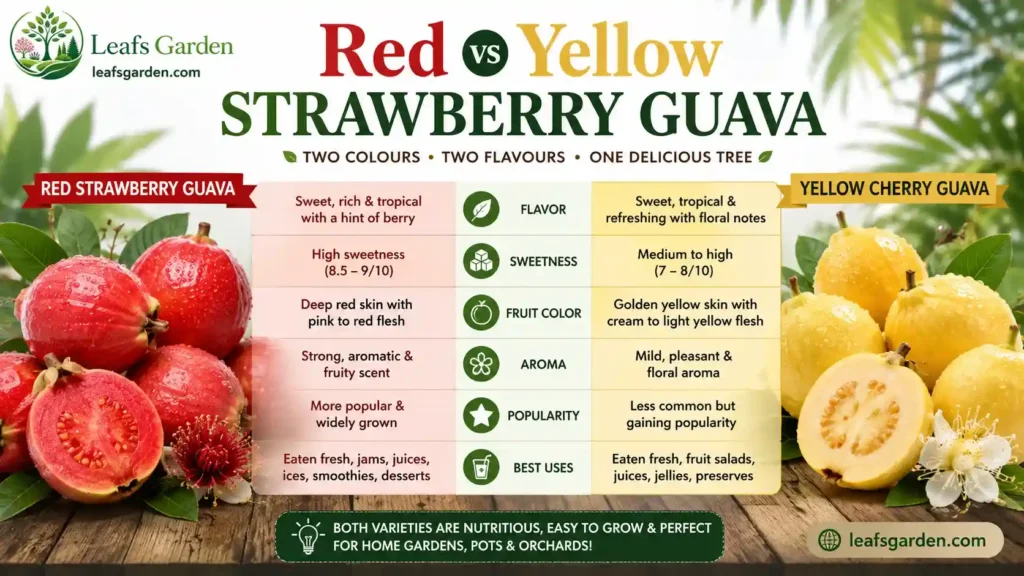
Red and yellow varieties have slightly different flavor characteristics.
Red strawberry guava varieties are usually sweeter and more aromatic. The flesh often has a deeper fruity flavor with noticeable berry notes.
Common characteristics include:
Many gardeners consider red guava fruit the most flavorful type for fresh eating.
Yellow cherry guava varieties are lighter in flavor and slightly more acidic. The fruit tends to have a milder sweetness with refreshing citrus-like notes.
Typical features include:
Yellow cherry guava trees are also valued for ornamental appeal and reliable fruit production in warm climates.
| Feature | Red Strawberry Guava | Yellow Cherry Guava |
| Flavor | Sweet, rich, berry-like | Mildly sweet with slight tartness |
| Fruit color | Deep red to burgundy | Yellow to golden yellow |
| Sweetness | Higher sweetness | Moderate sweetness |
| Popularity in Australia | Very popular in home gardens | Popular in tropical collectors’ gardens |
| Tree size | Compact to medium | Similar compact growth |
Both varieties are productive, attractive, and suitable for subtropical gardens. Choice usually depends on personal flavor preference and fruit appearance.
Strawberry guava contains antioxidants, vitamin C, dietary fiber, and several beneficial plant compounds that support overall health. The fruit is considered nutrient-dense while remaining relatively low in calories.
Many strawberry guava benefits come from its naturally high antioxidant content, which helps protect cells from oxidative stress.
Key nutritional benefits include:
According to USDA FoodData Central, guava ranks among the richest natural fruit sources of vitamin C, supporting immune health and general wellness.
Guava fruit calories are relatively low compared to many processed snacks, making strawberry guava a healthy fresh-fruit option for regular consumption.
The fruit also contains small amounts of:
| Nutrient Benefit | Value |
| Vitamins | High in vitamin C and beneficial antioxidants |
| Minerals | Contains potassium, magnesium, and calcium |
| Fiber | Supports digestion and gut health |
| Hydration | Juicy flesh helps maintain hydration |
Fresh strawberry guava fruit is commonly eaten raw, blended into smoothies, made into jam, or used in desserts because of its refreshing flavor and nutritional value.
Strawberry guava trees grow best in warm subtropical and tropical climates with good sunlight, well-draining soil, and regular moisture. Healthy growing conditions help the tree develop dense foliage, strong flowering, and reliable fruit production.
Strawberry guava trees thrive in warm humid climates and perform especially well in frost-free coastal environments. They are highly suited to many parts of Australia and other mild subtropical regions worldwide.
In guavas Australia growing conditions, the tree performs best in:
Strawberry guava Australia growers often cultivate these trees successfully because the climate supports fast growth and consistent fruiting.
The tree also adapts well to:
Guava Australia gardeners value strawberry guava because it tolerates humidity, warm summers, and moderate coastal conditions better than some larger tropical fruit trees.
Those drawn to tropical fruiting trees in Australian climates may also enjoy growing a lychee fruit tree, which thrives in similar warm subtropical conditions.
Although adaptable, strawberry guava trees are still sensitive to heavy frost. Young plants are especially vulnerable during cold winters.
Cold damage may cause:
Mature trees tolerate short periods of light cold better than young plants, but prolonged freezing conditions can seriously damage the tree.
For best results, plant strawberry guava in:
Strawberry guava trees perform best in mild to warm climates with minimal frost exposure.
| Region | Suitability |
| Tropical Australia | Excellent |
| Subtropical Australia | Very Good |
| Mild Coastal USA | Good |
| Cold regions | Limited |
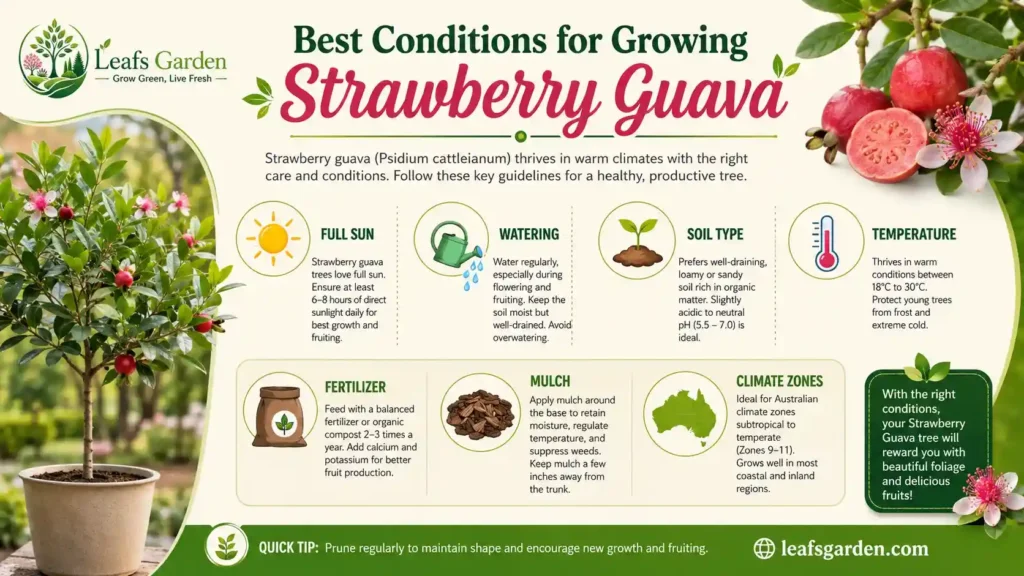
Most strawberry guava trees grow successfully in USDA Zones 9–11. In cooler climates, container growing is often the best option because plants can be moved to protected areas during winter.
Full sun is ideal for strong growth, flowering, and heavy fruit production. Strawberry guava trees produce the sweetest fruit and densest foliage when they receive abundant direct sunlight.
Best growing conditions include:
Partial shade is tolerated, especially in extremely hot inland climates. However, reduced sunlight may lead to:
Strawberry guava trees also show good heat tolerance once established. Mature plants handle warm summer temperatures better when roots are protected with mulch and consistent moisture.
Well-draining fertile soil helps strawberry guava trees grow faster and fruit heavily. Healthy soil conditions also improve root development and nutrient absorption.
Ideal soil characteristics include:
The preferred soil pH range is slightly acidic to neutral, typically around pH 5.5–7.0.
Strawberry guava can adapt to different soil types, including:
Heavy clay soils may create drainage problems and increase root rot risk. Improving poor soil with compost and organic matter helps create healthier growing conditions.
Mulching around the base of the tree provides several benefits:
Organic mulches such as sugarcane mulch, bark chips, or composted leaves work especially well around strawberry guava trees.
Young strawberry guava plants require regular watering while establishing roots. Consistent moisture encourages healthy early growth and canopy development.
For young plants:
Mature trees become more drought tolerant once fully established. However, regular watering still improves flowering, fruit size, and overall productivity.
Established trees generally benefit from:
Although strawberry guava tolerates short dry conditions, prolonged drought may cause:
Overwatering is one of the most common growing problems. Poor drainage and excessive watering may lead to:
Allowing the upper soil layer to dry slightly between watering helps maintain healthy roots.
Regular feeding supports stronger growth, greener foliage, and heavier fruit production. Strawberry guava trees respond especially well to balanced organic fertilizers and nutrient-rich compost.
A healthy fruit tree feeding schedule often includes:
Recommended fertilizer options include:
Potassium is especially important for flowering and fruit development. Fertilizers higher in potassium may improve:
Compost applied around the root zone also improves soil biology and long-term fertility while supporting moisture retention.
Proper planting helps strawberry guava trees establish faster, develop stronger roots, and produce healthier fruit. Warm temperatures, good drainage, and consistent sunlight are the most important factors for successful growth.
Plant strawberry guava trees in warm sunny locations with good airflow. A properly planted tree grows faster, develops a healthier canopy, and becomes more productive over time.
Successful guava planting starts with choosing the right position in the garden.
Choose a location that receives:
Avoid low-lying wet areas because excess moisture may increase root disease problems.
For best fruit production, place the guava plant in a warm north-facing or coastal position where temperatures remain relatively mild.
Healthy soil improves root establishment and long-term growth.
Before planting:
Well-draining fertile soil encourages faster root growth and stronger flowering.
Correct spacing improves airflow and reduces overcrowding.
Recommended spacing for guava plants:
| Planting Style | Recommended Spacing |
| Backyard orchard | 3–5 m apart |
| Hedge planting | 2–3 m apart |
| Small compact gardens | 2–4 m apart |
Spacing may vary depending on pruning style and mature tree size.
Apply mulch around the base of the tree after planting.
Benefits of mulching include:
Keep mulch slightly away from the trunk to reduce excess moisture buildup around the stem.
Water deeply immediately after planting to settle soil around the roots.
During the first few months:
Young guava plants establish best when watering remains consistent during warm growing weather.
Strawberry guava trees grow very well in containers because of their naturally compact growth habit. Many gardeners successfully grow these trees as patio fruit trees or balcony plants.
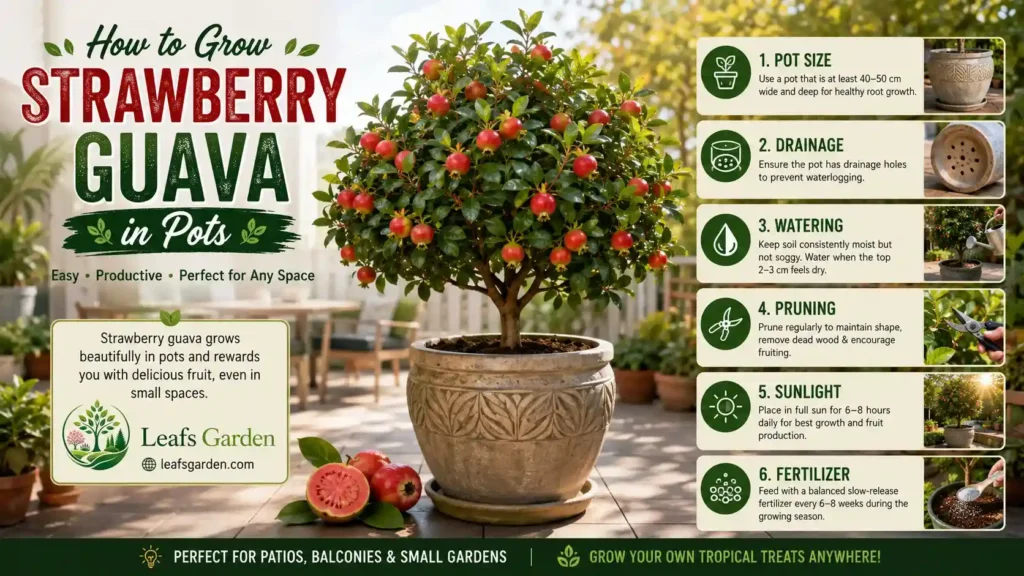
Container growing works especially well in:
Choose a large container with enough root space for healthy growth.
Recommended pot sizes:
| Tree Age | Suggested Pot Size |
| Young plant | 30–40 cm |
| Developing tree | 45–60 cm |
| Mature container tree | 60 cm or larger |
Larger pots improve moisture stability and root health.
A quality potting mix should provide:
Good container mixes often include:
Proper drainage is essential for container-grown strawberry guava.
To reduce root problems:
Compact strawberry guava trees are highly suitable for decorative edible gardening.
Container-grown trees offer:
Gardeners who enjoy compact patio fruit trees may also find the kiwiberry a rewarding container option with a similarly manageable growth habit.
Many gardeners use potted strawberry guava as both an ornamental and productive patio fruit tree.
Spring and early summer are the best times to plant strawberry guava trees in Australia. Warm soil temperatures during these seasons help roots establish quickly before cooler weather arrives.
Ideal planting periods include:
Planting during active warm growth encourages:
Avoid planting during frost periods or cold winter conditions, especially in southern regions.
In many subtropical regions, the guava season Australia growing cycle begins with spring flowering followed by fruit development during warmer months.
Young trees planted in spring generally establish more successfully before their first winter season.
Regular care helps strawberry guava trees stay healthy, productive, and visually attractive throughout the year. Proper pruning, mulching, watering, and seasonal maintenance all contribute to stronger growth and better fruit production.
Regular pruning keeps strawberry guava trees compact, productive, and healthy. It also improves canopy structure and helps maintain easier harvesting access.
A full grown strawberry guava tree naturally develops dense branching, so occasional pruning is important for balanced growth.
Key pruning benefits include:
Light shaping helps maintain an attractive rounded structure.
Most gardeners prune to:
Bushy trees can quickly become dense without regular maintenance.
Dense foliage may trap excess moisture inside the canopy. Selective pruning improves airflow and reduces humidity buildup around branches and leaves.
Better airflow may help reduce:
Removing inward-growing branches often improves overall tree health.
Fruit production is strongest on healthy active growth. Removing weak or damaged branches encourages the development of productive new shoots.
For better fruiting:
Healthy pruning practices often improve both fruit quality and overall harvest consistency.
Strawberry guava trees respond well to height reduction pruning.
Maintaining manageable height helps with:
Most home gardeners keep mature trees compact for easier long-term care.
Mulching helps strawberry guava trees maintain healthier roots, better soil moisture, and more stable growing conditions throughout the year.
Organic mulch placed around the base of the tree provides several important benefits.
Mulch slows soil evaporation and helps roots remain consistently moist during warm weather.
This is especially useful during:
Stable moisture levels support healthier fruit production and reduce plant stress.
Mulch also helps suppress weeds that compete for water and nutrients.
Reduced weed growth improves:
A weed-free root zone is especially important for young trees.
During hot weather, strawberry guava trees benefit from:
Extreme heat combined with dry soil may reduce flowering and fruit set.
Signs of summer stress may include:
Although mature trees tolerate mild cool conditions, younger plants may require winter protection in colder regions.
Helpful winter protection methods include:
Container-grown trees can often be moved to sheltered areas during severe cold.
Strawberry guava trees are generally self-pollinating, meaning a single tree can produce fruit without requiring another pollinator nearby.
This makes them highly suitable for:
Although self-fertile, bee activity greatly improves fruit production and pollination success.
Flowers attract:
Higher pollinator activity often leads to:
Flowering usually occurs during warm active growing periods.
In suitable climates, strawberry guava trees develop:
Flowering time varies depending on climate, rainfall, and local temperatures.
After pollination, fruit gradually develops over several weeks before ripening fully on the tree.
Healthy guava on tree development depends on:
Fruit production is generally heavier on mature well-maintained trees with strong healthy growth.
Many established strawberry guava trees produce reliable yearly crops when growing conditions remain stable.
Strawberry guava trees are generally hardy and low maintenance, but improper watering, poor drainage, pests, and environmental stress can still affect plant health. Early identification of problems helps prevent long-term damage and improves fruit production.
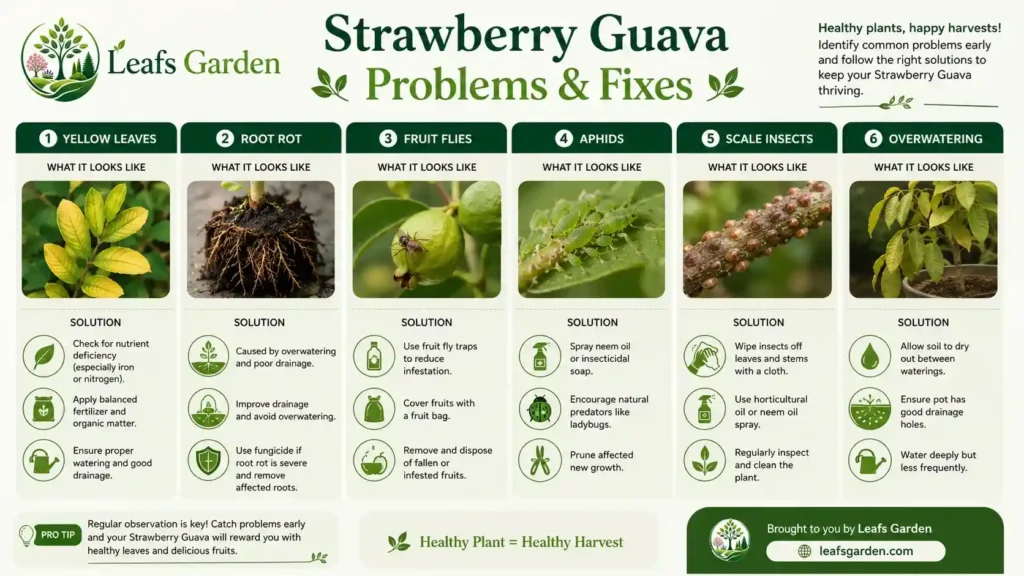
Yellow leaves on a strawberry guava tree usually indicate watering issues, nutrient imbalance, or environmental stress. Identifying the cause early helps restore healthy growth more quickly.
Overwatering is one of the most common causes of yellow foliage.
Excess moisture around roots may lead to:
Waterlogged soil often causes leaves to appear pale or droopy.
Poor nutrition may also trigger leaf discoloration.
Deficiencies commonly linked to yellowing include:
Nutrient problems may appear as:
Regular feeding and organic compost help maintain healthier foliage color.
Compacted or poorly draining soil traps excess moisture around roots. This increases stress on the plant and weakens root development.
Poor drainage may result in:
Improving soil structure and drainage often reduces recurring problems.
Strawberry guava trees prefer warm conditions and may react poorly to cold weather.
Cold stress symptoms may include:
Young plants are especially sensitive to sudden temperature drops and frost exposure.
Healthy strawberry guava trees are relatively hardy but may still face pest and disease issues, especially in humid or overcrowded growing conditions.
Early monitoring helps reduce serious infestations and protects fruit quality.
Fruit flies are one of the most common fruit-related pests affecting guava trees.
Signs of infestation include:
Protective fruit bags and proper garden hygiene help reduce fruit fly problems.
Scale insects attach themselves to stems and leaves while feeding on plant sap.
Common symptoms include:
Light infestations may be controlled with horticultural oils or manual removal.
Aphids are small sap-feeding insects that cluster on soft new growth.
They may cause:
Natural predators such as ladybirds often help control aphid populations naturally.
Excess moisture and poor airflow may increase fungal disease risk.
Common fungal issues include:
Preventive care is often the best solution.
Helpful prevention methods include:
Root rot is one of the most serious problems affecting strawberry guava trees. It usually develops when soil remains constantly wet for long periods.
Signs of root rot may include:
Affected trees often appear unhealthy even when watered regularly.
Preventing root rot is much easier than treating severe damage.
Important prevention steps include:
Mulching should also remain slightly away from the trunk to reduce excess moisture buildup.
Mild root rot problems may improve if addressed early.
Recovery steps may include:
Severely damaged trees may recover slowly depending on root health and environmental conditions.
| Problem | Cause | Solution |
| Yellow leaves | Overwatering or nutrient deficiency | Adjust watering and apply balanced fertilizer |
| Leaf drop | Cold stress or drought | Protect from cold and maintain consistent moisture |
| Poor fruit production | Low sunlight or poor nutrition | Increase sunlight and improve feeding |
| Root rot | Waterlogged soil | Improve drainage and reduce watering |
| Fruit damage | Fruit flies | Protect fruit and maintain garden hygiene |
| Sticky leaves | Scale insects or aphids | Use horticultural oils or natural pest control |
Strawberry guava trees are valued for both practical and ornamental purposes. The tree produces edible fruit while also providing year-round greenery, tropical visual appeal, and environmental benefits in home gardens.
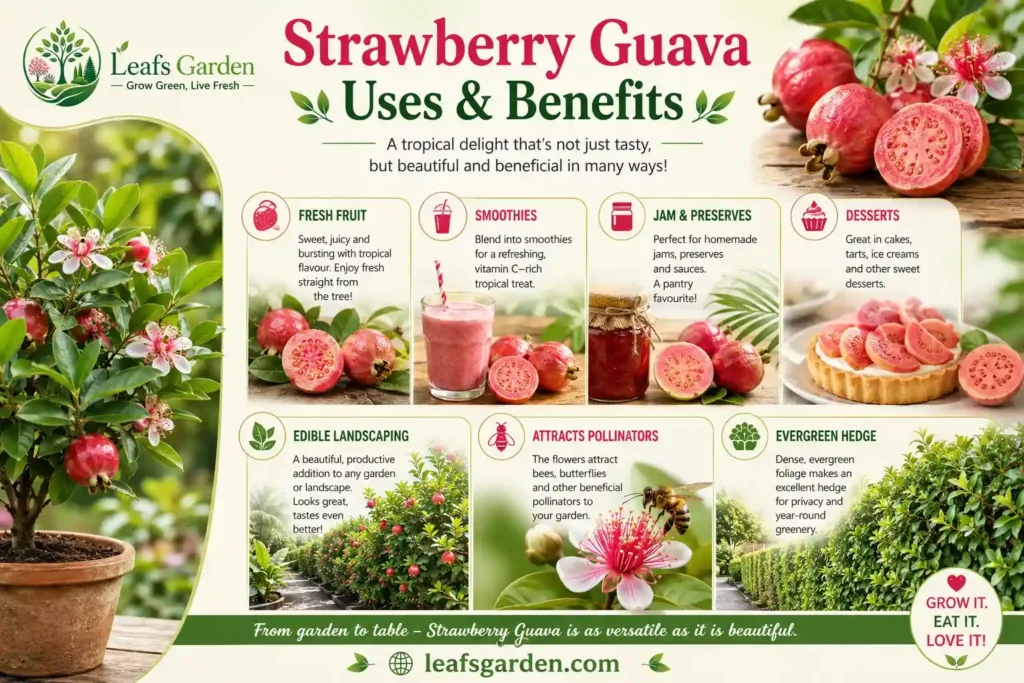
A strawberry guava tree adds a lush tropical garden appearance with its glossy evergreen foliage, dense branching structure, and colorful fruit. Its compact growth habit makes it highly suitable for decorative edible landscapes.
Many gardeners use strawberry guava trees for:
The dense rounded canopy creates a soft tropical look that works well in both modern and natural garden designs.
Because of its bushy evergreen growth, strawberry guava can also be pruned into a productive hedge.
Benefits of hedge planting include:
Regular pruning helps maintain a neat and dense hedge structure.
Mature strawberry guava trees develop thick foliage that can help create natural privacy barriers.
A well-maintained planting row may provide:
This makes the tree useful for suburban gardens and smaller outdoor living spaces.
Strawberry guava is highly popular in edible landscaping because it combines ornamental beauty with fruit production.
Gardeners appreciate the tree for its:
The tree fits especially well into sustainable garden designs where both aesthetics and food production are important.
Strawberry guava fruit can be eaten fresh or used in drinks, desserts, and preserves. Its sweet tropical flavor and fragrant aroma make it versatile in many homemade recipes.
Fresh ripe fruit is commonly enjoyed straight from the tree because of its juicy texture and refreshing taste.
Popular culinary uses include:
The naturally sweet flavor makes strawberry guava ideal for homemade preserves.
The fruit works well in:
Its aromatic flavor creates rich tropical preserves with strong natural fragrance.
Fresh fruit can be blended into refreshing beverages.
Strawberry guava juice is valued for:
Smoothies often combine strawberry guava with:
The fruit is commonly added to desserts because of its bright flavor and soft juicy flesh.
Popular dessert uses include:
The colorful fruit also adds decorative appeal to tropical dessert presentations.
Leaves and fruit are sometimes used to prepare guava tea in traditional home recipes.
Guava tea is commonly appreciated for:
Strawberry guava trees provide several environmental benefits while supporting healthier garden ecosystems.
Flowering trees attract beneficial pollinators including:
Pollinator activity supports better fruit production and improves biodiversity within the garden.
The dense evergreen foliage provides year-round visual coverage and environmental value.
Evergreen canopies help with:
Unlike deciduous fruit trees, strawberry guava maintains its foliage through most seasons in warm climates.
Fruit-bearing trees also help support local wildlife.
Strawberry guava may attract:
The tree contributes to more diverse and active garden ecosystems while still remaining manageable in size for home landscapes.
Strawberry guava and common tropical guava are closely related fruit trees, but they differ in fruit size, flavor, growth habit, and climate adaptability. Strawberry guava is generally smaller and more ornamental, while common guava varieties are larger fruit-producing tropical trees.
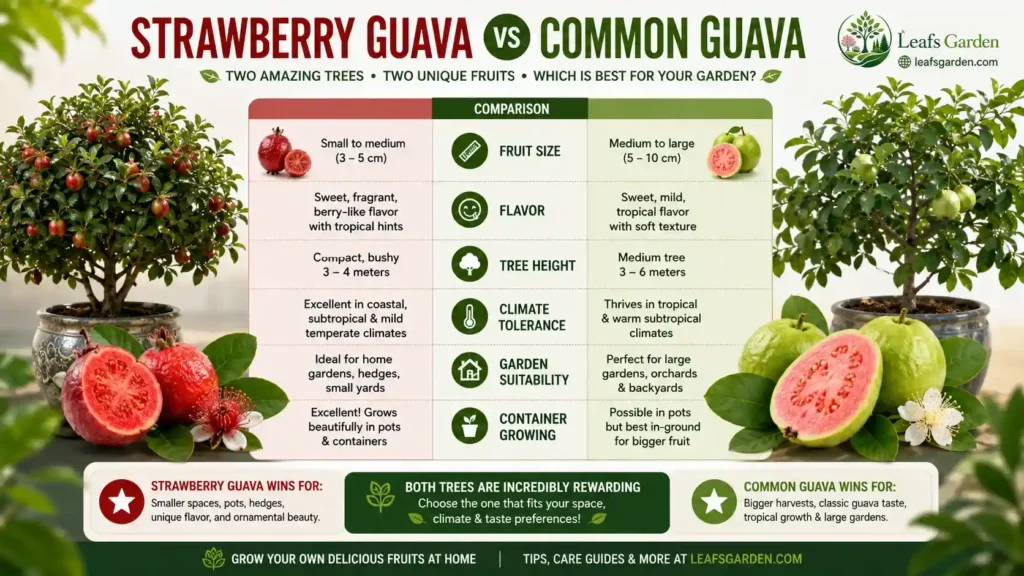
Strawberry guava is scientifically known as psidium cattleianum, while most common tropical guava varieties belong to Psidium guajava. Although both belong to the same plant genus, their appearance and growing characteristics differ significantly.
Strawberry guava is often preferred for:
Common tropical guava varieties are more commonly grown for large fruit harvests and commercial fruit production.
The following comparison highlights the major differences between the two trees.
| Feature | Strawberry Guava | Common Guava |
| Scientific name | Psidium cattleianum | Psidium guajava |
| Fruit size | Small to medium | Medium to large |
| Taste | Sweet with strawberry-like flavor | Classic tropical guava flavor |
| Tree size | Compact and bushy | Larger and more spreading |
| Climate tolerance | Better tolerance of mild subtropical climates | Prefers warm tropical climates |
Strawberry guava fruit has a sweeter berry-like flavor with aromatic notes similar to strawberries and tropical fruit. Common guava varieties usually have a stronger traditional guava taste with softer flesh and larger fruit size.
Some tropical guava types include:
The flavor of indian guava fruit is often richer and more musky compared to strawberry guava.
Strawberry guava trees remain smaller and denser, making them suitable for:
Common guava indian varieties usually grow into larger trees with broader canopies and heavier fruit loads.
Because of their compact shape, strawberry guava trees are often easier to:
Strawberry guava adapts well to subtropical coastal climates and mild warm regions. It tolerates cooler conditions slightly better than many common tropical guava varieties.
Common guava trees generally require:
In Australia, strawberry guava is commonly grown in subtropical regions, while larger tropical guava varieties perform best in warmer frost-free climates.
Both trees provide edible fruit and ornamental value, but strawberry guava is often considered the better option for smaller home gardens and decorative edible landscapes.
Buying healthy strawberry guava plants is important for strong growth, better fruit production, and long-term tree health. Choosing quality plants from reliable sellers helps reduce disease problems and improves establishment success.
Strawberry guava plants are available from specialty nurseries, tropical fruit sellers, and some garden centers across Australia. Availability may vary depending on season, region, and local demand.
Many gardeners search for:
Local nurseries are often one of the best places to buy healthy strawberry guava plants because the trees are already adapted to regional growing conditions.
Benefits of local nursery plants include:
Independent fruit tree nurseries may also stock both red and yellow cherry guava varieties.
Online plant stores have become increasingly popular for ordering rare and subtropical fruit trees.
Many online sellers provide:
When purchasing online, always check:
Specialty tropical plant growers often carry a wider selection of guava varieties than standard garden centers.
These growers may offer:
Collectors and edible garden enthusiasts often purchase from tropical fruit specialists for better variety selection.
Some gardeners also search for:
Availability at major garden retailers may depend on season and local climate demand. Stock levels often vary between regions and warmer subtropical areas usually have greater availability of tropical fruit plants.
Healthy plants establish faster and usually become more productive over time. Before purchasing a strawberry guava tree, inspect the plant carefully for signs of vigor and disease-free growth.
Choose plants with:
Avoid plants with heavily damaged or discolored foliage.
Healthy roots are essential for long-term establishment.
Good root systems should be:
Plants with severely tangled roots may establish more slowly after transplanting.
Inspect stems and leaves carefully for pests or disease symptoms.
Avoid plants showing:
Clean healthy plants are less likely to develop problems after planting.
Both grafted and seed-grown strawberry guava plants are commonly sold in Australia.
| Plant Type | Main Advantages |
| Grafted plants | Earlier fruiting and more predictable growth |
| Seed-grown plants | Usually cheaper and widely available |
Grafted plants often produce fruit sooner and may have more consistent fruit quality. Seed-grown plants can still grow very successfully but may vary slightly in vigor, fruit flavor, and mature size.
Strawberry guava is considered invasive in some tropical and subtropical regions because it can spread aggressively through seeds and dense natural growth. While the tree is attractive and productive in home gardens, uncontrolled spread may affect native ecosystems in certain climates.
Strawberry guava spreads mainly through fruit seeds dispersed by birds, animals, and fallen fruit. In warm humid environments, seedlings may establish quickly and form dense thickets that compete with native vegetation.
The risk of invasiveness is generally higher in:
Hawaii is one of the most well-known examples of strawberry guava becoming an environmental problem.
In some Hawaiian regions, the tree has spread aggressively into native forests where it may:
Because of these concerns, environmental management programs in Hawaii often monitor or control wild strawberry guava spread.
Strawberry guava produces abundant fruit containing many small seeds. Wildlife feeding on the fruit can unintentionally spread seeds into nearby bushland or natural ecosystems.
Environmental spread is more likely when:
Dense seedling growth may eventually crowd out local native species in sensitive environments.
Responsible growing practices help reduce environmental risks while still allowing gardeners to enjoy the benefits of strawberry guava trees.
Helpful management practices include:
Container growing can also help reduce uncontrolled seed spread in some regions.
Local regulations regarding strawberry guava may vary across Australia depending on environmental risk assessments and regional climate conditions.
In some areas, authorities may monitor or restrict planting because of invasive potential, particularly in warm high-rainfall environments.
Before planting, gardeners should:
In many Australian home gardens, strawberry guava is still grown successfully as a managed ornamental fruit tree. Responsible cultivation remains important to balance productive gardening with environmental protection.
A full grown strawberry guava tree is an attractive and productive fruit tree ideal for warm Australian gardens and subtropical landscapes worldwide. Its compact size, evergreen foliage, and sweet aromatic fruit make it one of the most versatile tropical fruit trees for home gardeners.
Many gardeners choose strawberry guava because it offers:
Whether grown in the ground or in large pots, strawberry guava trees adapt well to patios, courtyards, edible landscapes, and smaller suburban gardens. Their dense foliage and colorful fruit also add strong visual appeal throughout the year.
With proper sunlight, well-draining soil, and regular care, strawberry guava trees can remain healthy and productive for many years. Warm coastal and subtropical climates generally provide the best growing conditions for strong flowering and reliable fruit production.
Before planting, it is important to:
When properly maintained, a strawberry guava tree can provide both ornamental beauty and delicious tropical fruit while becoming a long-lasting feature in the garden.
A strawberry guava tree typically takes around 3–5 years to reach a productive mature size, depending on climate, soil quality, and growing conditions. Grafted plants usually fruit earlier than seed-grown trees. In warm subtropical regions, healthy trees grow faster and establish more quickly.
Yes, strawberry guava trees grow very well in pots because of their compact growth habit. Large containers with good drainage allow the tree to produce healthy foliage and fruit while remaining manageable in size. Container growing is especially useful for patios, balconies, courtyards, and colder regions where winter protection may be needed.
Strawberry guava has a sweet tropical flavor with a strawberry-like aroma and mild guava notes. The fruit is juicy, fragrant, and slightly tangy when fully ripe. Red varieties are usually sweeter and richer in flavor, while yellow cherry guava types often have a lighter citrus-like taste.
Strawberry guava may be considered invasive in some warm high-rainfall regions because seeds can spread into natural environments. In Australia, local regulations and environmental concerns may vary depending on the region. Responsible growing, regular harvesting, and controlling unwanted seedlings help reduce environmental spread.
A full grown strawberry guava tree usually reaches around 2–6 meters tall depending on climate, pruning, and growing conditions. Container-grown plants and regularly pruned trees generally remain smaller and more compact.
Guava season in Australia usually occurs during the warmer months following flowering in spring and summer. Fruiting periods vary slightly depending on regional climate, rainfall, and temperature conditions. In subtropical regions, ripe fruit is often harvested from late summer into autumn.
Yes, strawberry guava grows best in full sun. At least 6–8 hours of direct sunlight daily helps improve flowering, fruit production, and canopy growth. The tree can tolerate partial shade, but heavy shade may reduce fruit yield and overall vigor.
Yes, strawberry guava fruits are considered healthy because they contain vitamin C, antioxidants, dietary fiber, and beneficial plant compounds. The fruit supports immune health, digestion, hydration, and general wellness while remaining relatively low in calories.