Grow Better Gardens with Smarter Plant Choices
Discover helpful guides on trees, hedges, fruit plants, edible plants, and beautiful landscape greenery.

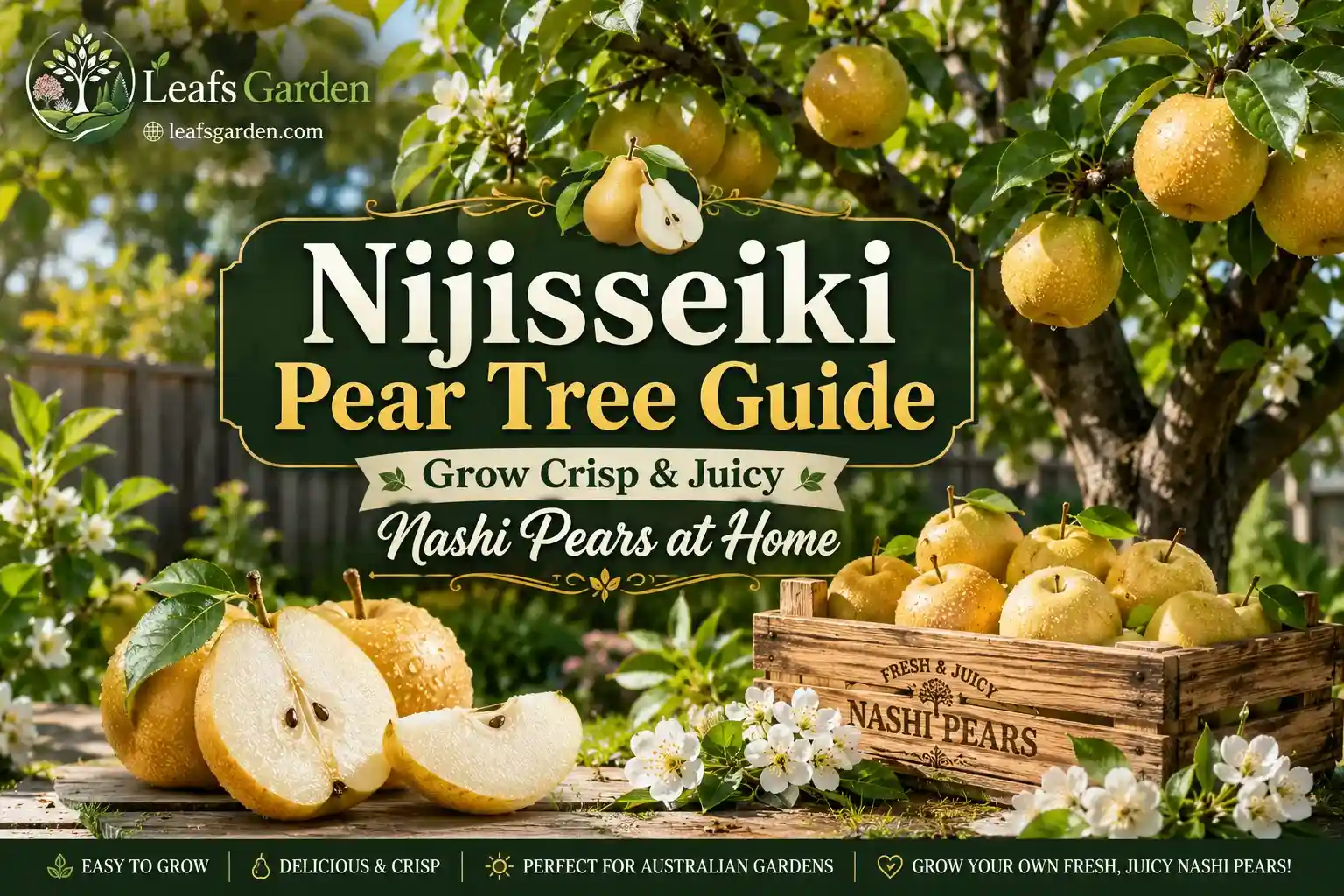
The Nijisseiki pear is a popular Japanese nashi pear variety known for its crisp apple-like texture, juicy sweetness, and easy-growing nature in Australia, the USA, and other temperate regions.
The Nijisseiki pear belongs to the species Pyrus pyrifolia nashi, a well-known type of Asian pear valued for its refreshing flavor and crunchy texture. Unlike traditional European pears, this fruit stays crisp when ripe, making it popular for fresh eating, fruit platters, salads, and home orchards.
This variety is commonly connected with names such as:
The fruit earned the nickname “apple pear” because of its round apple-like shape and crisp bite. Many gardeners also call it an asian apple pear because it combines the sweetness of a pear with the crunchy texture of an apple.
Originally developed in Japan, the Nijisseiki pear later became one of the most widely planted Asian pear cultivars worldwide. Today, it is especially popular in Australian home orchards due to its adaptability to temperate climates and reliable fruit production.
In Australia, the tree grows well in cooler temperate regions with adequate winter chill. Home gardeners appreciate its attractive spring flowers, manageable size, and refreshing fruit quality. Its popularity is also increasing across the USA, New Zealand, and other mild-climate regions.
| Feature | Details |
| Botanical Name | Pyrus pyrifolia |
| Common Names | Nashi pear, Asian pear, Japanese pear |
| Variety | Nijisseiki |
| Fruit Texture | Crisp and juicy |
| Taste | Sweet, refreshing, apple-like |
| USDA Zones | Suitable temperate climates |
| Best Growing Regions | Australia, USA, Japan, New Zealand |
Nijisseiki pear is a famous variety of Asian pear known for round golden fruit, crunchy texture, and refreshing flavor.
This Japanese pear variety is widely grown for its crisp flesh, high juice content, and smooth yellow-green skin. Unlike traditional pears that become soft when ripe, Nijisseiki pears remain firm and refreshing, making them highly popular for fresh eating.
The fruit belongs to the Asian pear group and is commonly grown in temperate climates across Australia, the USA, Japan, and New Zealand. Many gardeners value the tree for its productive growth habit, attractive blossoms, and reliable fruit quality.
Gardeners exploring productive home orchard options will find Nijisseiki pear a rewarding addition to the wider world of fruit trees and edible plants.
Nijisseiki pears belong to the Nashi pear family, scientifically classified under Pyrus pyrifolia, a major Asian pear species.
The terms below are commonly used when describing Asian pears:
These names refer to closely related Asian pear species and cultivars grown throughout East Asia and other temperate regions.
Asian pears differ significantly from European pears in texture, appearance, and ripening behavior.
Because of their crisp bite and refreshing flavor, Asian pears are often preferred for fresh fruit platters, salads, and chilled desserts.
Nijisseiki pears are called apple pears because they combine the round shape and crunch of an apple with the sweetness of a pear.
The fruit looks very different from traditional European pears. Instead of the typical bell shape, Nijisseiki pears are round and smooth-skinned.
Key characteristics include:
Many people compare the eating experience to biting into a juicy apple with a delicate pear aroma. This combination is one of the biggest reasons the fruit became popular worldwide.
The Nijisseiki pear originated in Japan and later became one of the world’s most commercially cultivated Asian pear varieties.
The variety was first discovered in Japan during the late 1800s. Its name “Nijisseiki” translates roughly to “20th Century,” reflecting the excitement around the cultivar during its early development.
Because of its smooth skin, excellent flavor, and strong market appeal, the tree quickly spread into commercial orchards.
Over time, cultivation expanded to:
Today, the Nijisseiki pear remains one of the best-known Japanese pear varieties for both commercial production and home gardening.
Nashi pears taste sweet, juicy, mildly floral, and refreshing with a crisp apple-like crunch.
Unlike soft European pears, Nashi pears stay firm and crunchy even when fully ripe. Their texture is one of the first things people notice. The fruit is highly refreshing because of its very high water content and balanced natural sweetness.
Many people describe the flavor as a combination of pear sweetness and fresh apple crispness. This unique texture makes Nashi pears popular for fresh eating, desserts, and chilled fruit dishes.
Nashi pear fruit has a light sweet flavor, crunchy texture, delicate aroma, and extremely juicy flesh.
The sweetness level is usually mild to moderate rather than overly sugary. This gives the fruit a clean and refreshing taste that works well in warm climates and summer meals.
Key flavor characteristics include:
The flesh remains firm while still being tender enough to bite easily. Because of the high juice content, the fruit feels cooling and hydrating when eaten fresh.
Nashi pears differ from regular European pears mainly in texture, shape, storage life, and overall eating experience.
European pears soften significantly as they ripen, while Nashi pears stay crisp and crunchy. The shape is also noticeably different, with Asian pears looking more like apples.
| Feature | Nashi Pear | European Pear |
| Texture | Crisp | Soft |
| Shape | Round | Bell-shaped |
| Storage | Long-lasting | Shorter shelf life |
| Taste | Light & juicy | Rich & buttery |
Nashi pears are often preferred for fresh snacking because they store well and maintain their crunch for longer periods under refrigeration.
Nashi fruit is commonly eaten fresh and also used in salads, desserts, drinks, and Asian-inspired dishes.
Its crisp texture helps the fruit hold shape well after slicing, making it versatile in both sweet and savory recipes.
Popular ways to enjoy Nashi pears include:
The refreshing flavor pairs well with citrus, berries, honey, cinnamon, nuts, and soft cheeses.
Nashi pears can be used in jams, chutneys, desserts, smoothies, and many fresh fruit recipes.
Popular nashi recipes often focus on preserving the fruit’s natural crunch and juicy texture.
Common recipe ideas include:
Nashi pear jam produces a lighter and fresher flavor than many traditional pear preserves. Chutneys made with ginger, cinnamon, or vinegar also pair well with roasted meats and cheese boards.
Because the fruit holds moisture well, it works especially well in refreshing summer recipes and cold dessert presentations.
The Nijisseiki pear tree is a medium-sized deciduous fruit tree with glossy leaves, spring blossoms, and golden-yellow fruit.
This Japanese pear tree is valued for both ornamental beauty and productive fruiting. During spring, the tree produces clusters of white flowers, followed by round crisp pears that ripen from late summer into autumn.
The tree develops a balanced branching structure with dense seasonal foliage, making it suitable for home orchards and backyard gardens in temperate climates.
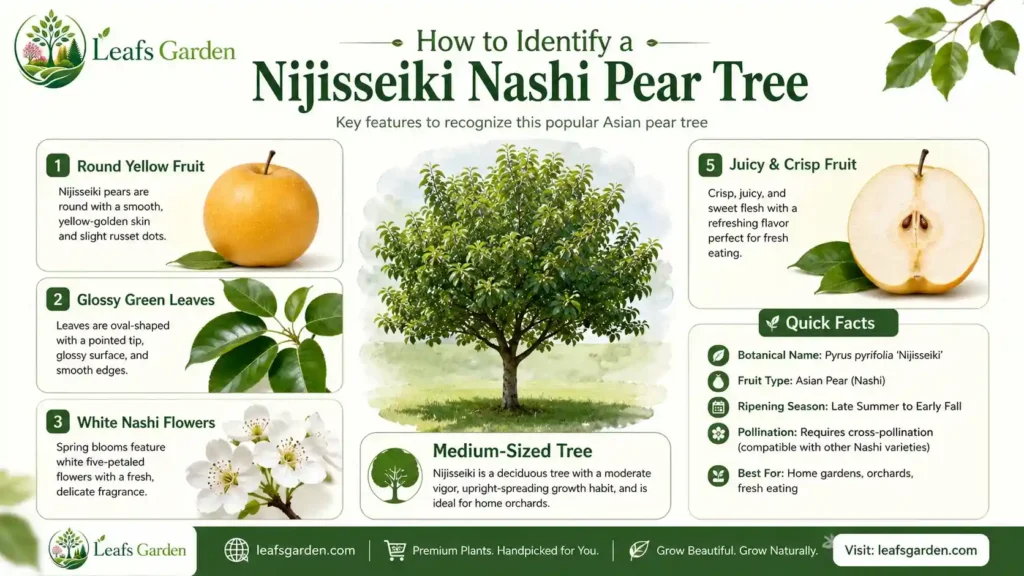
Nijisseiki pear trees grow at a moderate rate and develop a rounded spreading canopy with long productive lifespan.
Under suitable growing conditions, mature trees generally reach:
The growth habit is upright when young but gradually becomes wider and more rounded with maturity.
Key growth features include:
Well-maintained trees can continue producing fruit for 20–40 years or more in healthy orchard conditions.
Nijisseiki pear trees produce glossy green leaves, white nashi flowers in spring, and smooth golden-yellow fruits.
The leaves are oval-shaped with pointed tips and finely serrated edges. During the active growing season, foliage remains deep green and dense.
Nashi flower clusters appear during spring before or alongside new leaf growth.
Flower characteristics include:
These spring blossoms are highly attractive to pollinators such as bees.
The fruit is one of the easiest ways to identify the tree.
Nijisseiki pears typically have:
The skin usually becomes brighter golden-yellow as the fruit ripens.
Nijisseiki pear trees develop wide-spreading roots and usually produce better fruit when cross-pollinated with compatible Asian pear varieties.
The root system spreads outward through the upper soil layers while also developing moderate depth for stability and moisture absorption.
Root characteristics include:
Although some trees may produce small crops alone, cross-pollination greatly improves fruit set and yield consistency.
Compatible pollinator varieties include:
Good pollination helps increase:
Several Asian pear varieties are grown worldwide, each offering different flavor, texture, and skin characteristics.
These varieties are commonly planted together in orchards to improve pollination and extend harvest periods.
Nijisseiki pear trees grow best in full sun, well-drained soil, and temperate climates with regular watering.
These Asian pear trees are relatively easy to grow when planted in the right conditions. Good sunlight, proper drainage, and seasonal care help the tree produce healthy foliage, strong flowering, and crisp juicy fruit.
Nijisseiki pears are especially suitable for home orchards and backyard gardens in temperate parts of Australia, the USA, and similar climates worldwide.
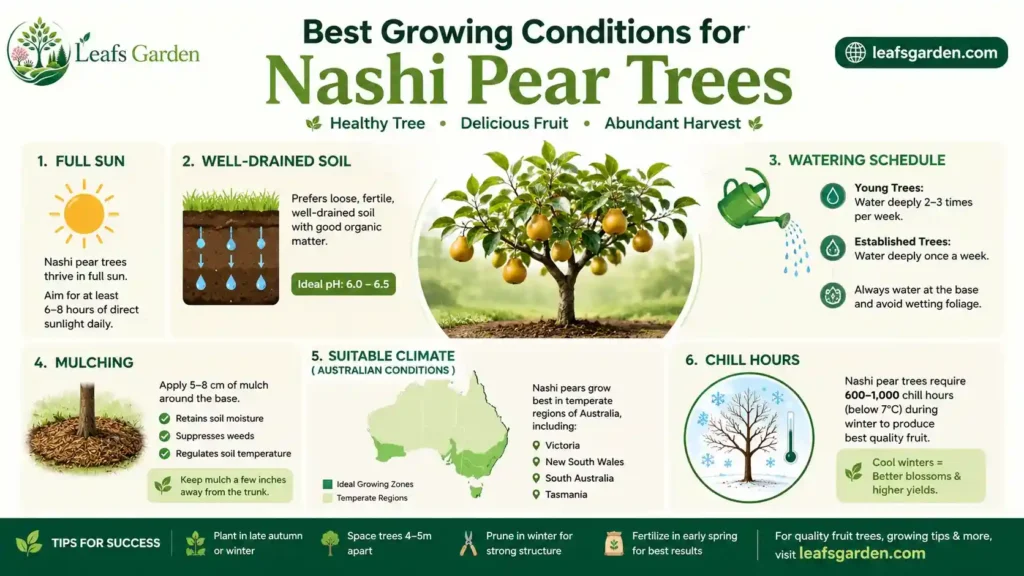
Nashi pear trees grow best in cool to mild temperate Australian climates with adequate winter chill and protection from extreme heat.
In Australia, the tree performs well in regions with cool winters and warm summers.
Suitable Australian growing regions include:
Nijisseiki pear trees require seasonal temperature changes for proper flowering and fruit production.
Ideal conditions include:
Established trees tolerate light to moderate frost during winter dormancy. However, heavy late frosts during flowering season may damage blossoms and reduce fruit production.
Most Nashi pears require winter chill hours to break dormancy properly.
Typical requirements include:
Adequate chill improves flowering, pollination, and fruit set.
Nijisseiki pear trees prefer fertile, well-drained soil rich in organic matter with slightly acidic to neutral pH.
Poor drainage is one of the biggest problems for Asian pear trees. Waterlogged soil can increase the risk of root rot and weak growth.
Ideal soil conditions include:
Recommended soil pH range:
Adding compost or aged organic matter helps improve both drainage and soil fertility.
Nashi pear trees need full sun exposure and consistent deep watering for healthy fruit production.
For best growth and fruit quality, trees should receive:
Young trees require regular watering while establishing roots.
General watering guidelines:
Consistent moisture is especially important during flowering and fruit development.
Mulching helps retain soil moisture and regulate root temperature.
Best mulching practices include:
Planting a Nashi pear tree correctly helps establish strong roots and improves long-term fruit production.
Select a location with full sun exposure and good airflow.
Mix compost or organic matter into heavy soil before planting.
Dig a hole approximately twice as wide as the root ball but not deeper than the root system.
Place the tree carefully so the graft union remains above soil level.
Refill the hole gently while removing large air pockets.
Water thoroughly immediately after planting to settle the soil.
Apply mulch around the base to conserve moisture and suppress weeds.
Nashi pear trees can grow successfully in large containers when provided with good drainage, quality potting mix, and regular care.
Container growing is ideal for:
Recommended container size:
Use high-quality free-draining potting mix containing:
Potted trees require:
Dwarf or semi-dwarf rootstocks are often best for container-grown Nashi pear trees.
Gardeners who enjoy compact container fruit trees may also find the kiwiberry an excellent patio option with a similarly manageable growing habit in temperate climates.
Proper pruning, fertilizing, and seasonal maintenance help nashi pear trees produce healthier fruit and stronger growth.
Regular care improves fruit quality, supports strong flowering, and helps prevent many common pear tree problems. Nijisseiki pear trees are relatively low-maintenance once established, but consistent watering, pruning, and disease monitoring are important for long-term productivity.
Healthy trees usually produce better yields, larger fruit, and stronger seasonal growth.
Nashi pear trees grow best with balanced seasonal feeding, compost enrichment, and moderate organic fertilization.
Excess fertilizer can lead to excessive leafy growth with reduced fruit production, so balanced feeding is important.
Good organic fertilizer options include:
These improve soil structure while slowly releasing nutrients.
Compost helps:
Apply compost around the root zone during spring and autumn.
Typical feeding schedule:
Balanced nutrition helps improve fruit size, sweetness, and tree vigor.
Regular pruning improves air circulation, tree structure, sunlight penetration, and fruit production.
Nijisseiki pear trees benefit from annual pruning to maintain shape and reduce overcrowded growth.
The best pruning period is during winter dormancy.
Winter pruning helps:
An open canopy allows better airflow and sunlight penetration, helping reduce fungal disease risks.
Remove:
Heavy fruit clusters may need thinning during early summer.
Fruit thinning helps:
Seasonal care keeps Nashi pear trees healthy throughout flowering, fruiting, harvest, and dormancy periods.
| Season | Care Task |
| Spring | Flower monitoring |
| Summer | Watering & mulching |
| Autumn | Harvesting |
| Winter | Dormant pruning |
Most Nijisseiki pear tree problems are caused by poor drainage, nutrient imbalance, heat stress, or inconsistent care.
Possible causes:
Common reasons:
Usually caused by:
Prevent root rot by planting in well-drained soil.
Extreme summer heat may damage exposed fruit and foliage.
Protection methods:
Nashi pear trees may occasionally face insect pests and fungal diseases, especially in humid growing conditions.
Common fungal issues include:
Prevention tips:
Healthy soil, proper spacing, and seasonal maintenance greatly reduce long-term pest and disease pressure.
Nashi pears are low-calorie fruits rich in fiber, hydration, antioxidants, and vitamin C.
Nashi pears are widely appreciated not only for their crisp texture and refreshing flavor but also for their nutritional value. Their high water content and moderate fiber levels make them a healthy fruit choice for everyday diets.
Because they are naturally light, juicy, and refreshing, many people include Asian pears in balanced meal plans, healthy snacks, and family diets.
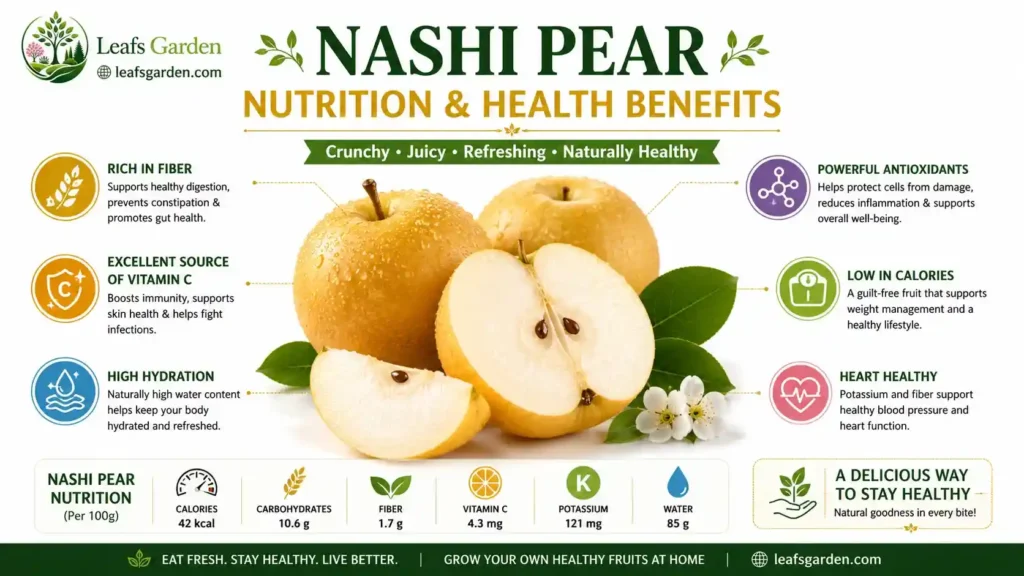
Nashi pear nutrition includes fiber, vitamin C, antioxidants, and high natural water content with relatively low calories.
Both nashi pear nutrition and asian pear nutrition profiles are considered beneficial for hydration and digestive support.
Key nutrients found in Japanese pears include:
Nashi pears contain moderate dietary fiber that may help:
Most fiber is concentrated near the skin, so eating the fruit unpeeled can increase fiber intake.
Japanese pear nutrition includes vitamin C and small amounts of several other micronutrients.
Vitamin C helps support:
Nashi pears contain plant compounds that contribute antioxidant benefits. These antioxidants help protect cells from oxidative stress while supporting overall wellness.
Nashi pears are considered low-calorie fruits suitable for light snacks and balanced diets.
Their high water content helps create a filling effect without excessive calorie intake.
| Serving Size | Calories |
| 1 medium pear | Low calorie estimate |
Common related nutrition searches include:
Although exact calorie values vary depending on fruit size, most medium Nashi pears remain relatively light compared with many processed snacks and desserts.
Nashi pears may support digestion, hydration, immune health, and balanced nutrition due to their fiber and water content.
The fiber content may help support:
Nashi pears contain very high water content, making them especially refreshing in warm weather.
Hydration benefits include:
Because the fruit is naturally low in calories and high in water, it fits well into many balanced eating plans.
Its crisp texture can also help increase satiety.
Vitamin C and antioxidants may help support:
Vitamin C contributes to normal immune system function and general wellness support.
Nashi pears are refreshing fruits with high water content and healthy nutrients suitable for balanced diets.
Nashi pears are usually harvested from late summer to early autumn depending on climate and region.
The exact harvest period varies based on local temperatures, growing conditions, and the specific Asian pear variety. Nijisseiki pears generally ripen earlier than some later-season Asian pear cultivars.
Proper harvest timing is important because Nashi pears are best picked when fully mature but still crisp and firm.
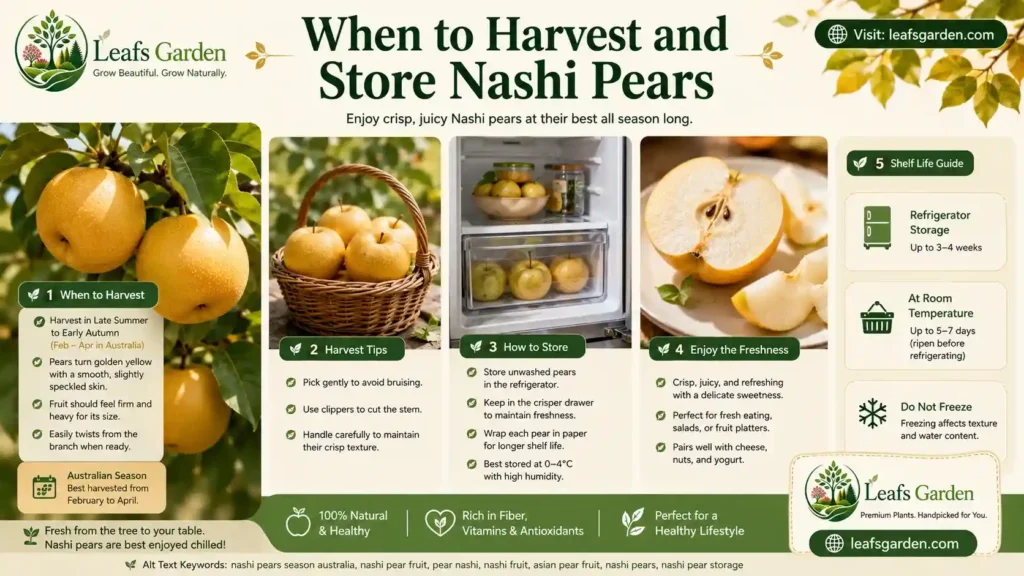
In Australia, Nashi pear season commonly begins in late summer and continues into early autumn.
Harvest timing differs slightly between cooler and warmer growing regions.
Typical Australian harvest periods include:
Australian growing regions such as Victoria, Tasmania, southern New South Wales, and the Adelaide Hills often produce high-quality Nashi pears because of their temperate climate conditions.
Regional weather patterns, winter chill levels, and seasonal rainfall can all influence harvest timing.
Nashi pears are ready for harvest when the fruit develops mature color, firm texture, and mild sweet aroma.
Unlike European pears, Asian pears are usually harvested while still crisp rather than softened.
Nijisseiki pears typically change from green to golden-yellow as they mature.
Signs of ripening include:
Ripe Nashi pears remain firm but should feel slightly less hard than immature fruit.
Good harvest fruit usually has:
Mature fruit may develop a mild sweet pear fragrance near the stem area.
Overripe fruit can become softer and lose some crispness.
Nashi pears store best under refrigeration where they can remain crisp and fresh for several weeks.
Because of their naturally firm texture, Asian pears generally have longer shelf life than many European pear varieties.
For best storage results:
Cold storage helps maintain:
Properly refrigerated Nashi pears may last:
Freshly harvested fruit usually maintains texture better than fully ripened soft pears.
Recommended storage methods include:
Avoid overcrowding fruit to reduce bruising and moisture accumulation.
Nijisseiki pear trees are available through specialty nurseries, fruit tree suppliers, and seasonal garden centers in Australia.
Many Australian gardeners purchase Nashi pear trees during winter bare-root season when fruit trees are widely stocked by nurseries and garden retailers. Both grafted container trees and dormant bare-root trees are commonly available depending on the season.
Choosing healthy planting stock is important for strong long-term growth and reliable fruit production.
Nashi pear trees are commonly sold as bare-rooted or grafted fruit trees through online and local Australian nurseries.
Bare-root trees are usually available during winter dormancy.
Benefits include:
Many gardeners prefer bare-rooted fruit trees because they adapt quickly after planting.
Most commercial Nijisseiki pear trees are grafted onto rootstocks selected for:
Grafted trees are commonly sold in pots or containers outside bare-root season.
Australian online fruit tree nurseries often provide:
Online suppliers may also stock harder-to-find Nashi cultivars during peak planting periods.
Nashi pear trees may be available seasonally at Bunnings and other Australian garden centers, especially during winter fruit tree sales.
Availability varies depending on local demand and seasonal stock.
Common related searches include:
Bunnings stores often stock fruit trees during:
Stock may differ between states and local store locations.
Nashi pears are typically displayed alongside:
Asian pears may appear under labels such as:
If Nijisseiki trees are unavailable, garden centers may offer related Asian pear varieties such as:
These varieties can also work as pollination partners for Nijisseiki pear trees.
Healthy Nashi pear trees should have strong roots, healthy trunks, and no visible signs of disease or damage.
Carefully inspecting the tree before purchase can improve planting success.
Look for:
A good-quality tree should have:
Avoid trees showing:
Healthy young trees establish faster and usually produce stronger long-term orchard performance.
Nijisseiki pears are known for smoother skin, balanced sweetness, and crisp texture compared to many other Asian pear varieties.
Asian pear varieties differ in sweetness, texture, skin color, ripening season, and growing requirements. Nijisseiki remains one of the most popular choices for home orchards because of its refreshing flavor, reliable productivity, and attractive fruit quality.
Compared with heavily russeted Asian pears, Nijisseiki fruit usually has smoother yellow skin and a lighter cleaner taste.
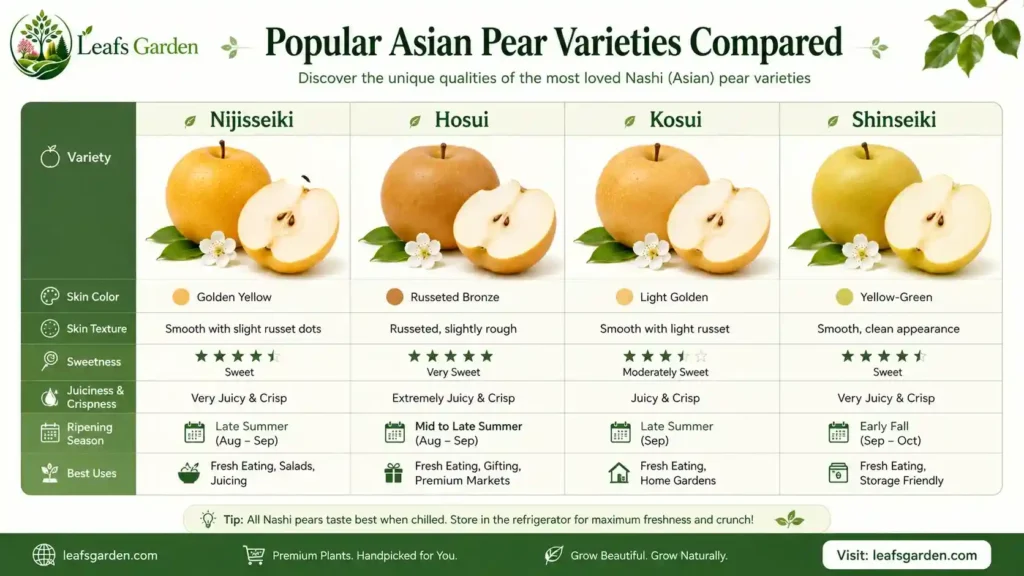
| Variety | Texture | Sweetness | Skin Color |
| Nijisseiki | Crisp | Balanced | Yellow |
| Hosui | Juicy | Rich | Bronze |
| Kosui | Sweet | Mild | Brown |
| Shinseiki | Firm | Light | Yellow-green |
The best Nashi pear variety for home gardens depends on local climate, preferred flavor, and maintenance expectations.
For Australian and temperate climates:
Flavor preferences vary between growers and households.
Some varieties require slightly different care levels.
Nijisseiki is often preferred for home gardens because it offers:
Planting two compatible Asian pear varieties together can also improve pollination and increase overall fruit yield.
Those building a productive temperate home orchard may also consider adding a Fuyu persimmon tree, which thrives in similar Australian temperate conditions and extends the seasonal harvest period.
Nashi pear fruit is generally safe to eat, but seeds should not be consumed in large amounts.
The juicy flesh of Nashi pears is commonly enjoyed fresh by families and is considered safe as part of a balanced diet. The fruit is mild, refreshing, and easy to digest for most people when eaten normally.
However, like many pear and apple species, the seeds naturally contain compounds that should not be consumed excessively.
Small amounts of Nashi pear flesh are generally considered safe for dogs and cats, but fallen fruit and seeds should be monitored carefully.
Plain ripe Nashi pear flesh may be tolerated by many dogs in small amounts.
Important precautions include:
Cats are less likely to eat fruit regularly, but small accidental amounts of ripe pear flesh are usually not considered highly problematic.
Always avoid:
Rotting fruit left beneath trees may attract:
Overripe fallen fruit can also upset pet digestion. Regular orchard cleanup helps improve garden hygiene and safety.
Nashi pear seeds contain naturally occurring cyanogenic compounds and should not be eaten in large quantities.
Like many pear and apple seeds, Nashi pear seeds contain compounds that can release small amounts of cyanide-related substances when crushed and digested.
The concentration is generally low, but consuming large quantities of seeds is not recommended.
Precautionary advice includes:
For normal fruit consumption:
Using common-sense handling and routine garden cleanup helps keep Nashi pear trees safe and enjoyable for families and home gardens.
Nijisseiki pear trees are productive, attractive, and rewarding fruit trees ideal for Australian gardens and temperate home orchards worldwide.
The Nijisseiki pear remains one of the most popular Asian pear varieties because of its crisp texture, refreshing sweetness, and reliable fruit production. Its apple-like crunch and juicy flesh make it highly desirable for fresh eating, salads, desserts, and healthy snacks.
For home gardeners, the tree offers several practical advantages:
Nashi pears also provide nutritional benefits through their high water content, fiber, vitamin C, and refreshing low-calorie profile. Their balance of flavor, texture, and storage quality makes them an excellent addition to backyard orchards and edible gardens.
In Australia and other temperate regions worldwide, growing a Nijisseiki pear tree can provide years of fresh seasonal fruit while adding ornamental value to the garden. For gardeners seeking a productive and refreshing fruit tree, Nashi pear trees remain an outstanding home orchard choice.
A nashi pear is a type of Asian pear known for its round shape, crisp texture, and juicy sweet flavor. Unlike traditional European pears, Nashi pears stay firm when ripe and are often called apple pears because of their crunchy texture and apple-like appearance.
Nijisseiki pears taste sweet, refreshing, mildly floral, and very juicy with a crisp apple-like crunch. The flavor is lighter and cleaner than many soft European pears, making them popular for fresh eating.
Yes, Nashi pear trees grow well in many temperate regions of Australia. Areas with cool winters and warm summers, such as Victoria, Tasmania, southern New South Wales, and the Adelaide Hills, are especially suitable for growing Nijisseiki pear trees.
Most grafted Nashi pear trees begin producing fruit within approximately 2–4 years after planting. Fruiting time depends on tree age, pollination, climate conditions, and overall care.
Yes, Nashi pears are considered healthy fruits because they contain fiber, vitamin C, antioxidants, and very high water content. They are also relatively low in calories and suitable for balanced diets.
There is very little difference because Nashi pears are a type of Asian pear. “Nashi” is the Japanese word for pear, while “Asian pear” is the broader common term used internationally for these crisp pear varieties.
Nashi pears are usually harvested from late summer to early autumn in Australia. Depending on climate and region, the main harvest season commonly falls between February and April.
Yes, Nashi pear trees can grow successfully in large containers when provided with full sun, quality potting mix, regular watering, and seasonal feeding. Dwarf or semi-dwarf rootstocks are often best for pot growing.
Many Nashi pear trees produce better fruit when cross-pollinated with compatible Asian pear varieties such as Hosui, Kosui, or Shinseiki. Pollination usually improves fruit size, yield, and consistency.
Nashi pear trees are available from specialty fruit tree nurseries, online plant suppliers, seasonal bare-root fruit tree sellers, and some Australian garden centers including selected Bunnings stores during fruit tree season.