Grow Better Gardens with Smarter Plant Choices
Discover helpful guides on trees, hedges, fruit plants, edible plants, and beautiful landscape greenery.

Brown Turkey fig is one of the most popular edible fig tree varieties in Australia because it produces sweet fruit, adapts well to different climates, and grows successfully in gardens, pots, and backyards.
The Ficus carica Brown Turkey fig is a reliable deciduous fruit tree known for its productive growth, attractive foliage, and flavorful figs. Many gardeners choose the brown turkey fig tree because it is easier to grow than many other fruit trees and performs well in both small and large spaces.
In Australia, the brown turkey fig fruit is widely appreciated for its sweet flavor, soft texture, and dependable harvests during warm seasons. This edible fig variety is commonly grown in backyard orchards, Mediterranean-style gardens, and container setups. Unlike ornamental fig trees that are mainly planted for shade or foliage, Brown Turkey figs are grown primarily for fruit production.
One reason this fig tree Australia gardeners prefer is its strong climate adaptability. Brown Turkey figs grow successfully across many parts of Australia, the USA, and Mediterranean climates where warm summers and moderate winters support healthy fruiting. The tree also tolerates periods of heat and light drought better than many other fruit trees.
Brown Turkey fig trees are considered beginner-friendly because they require relatively simple care once established. They adapt well to pots, respond well to pruning, and can produce fruit within a few growing seasons. Mature trees can become medium-to-large shade trees, while container-grown plants remain easier to manage in compact spaces.
This guide covers everything about Brown Turkey fig trees, including tree size, fruiting behavior, growing conditions, climate tolerance, seasonal care, maintenance, and fruit quality for home gardeners.
The Brown Turkey fig tree is a deciduous fruit tree from the species Ficus carica that produces medium-to-large sweet brown-purple figs.
This popular edible fig variety is widely grown for its reliable fruit production, adaptability, and easy maintenance. The Brown Turkey fig performs well in home gardens, backyard orchards, and large containers, especially in warm temperate and Mediterranean-style climates.
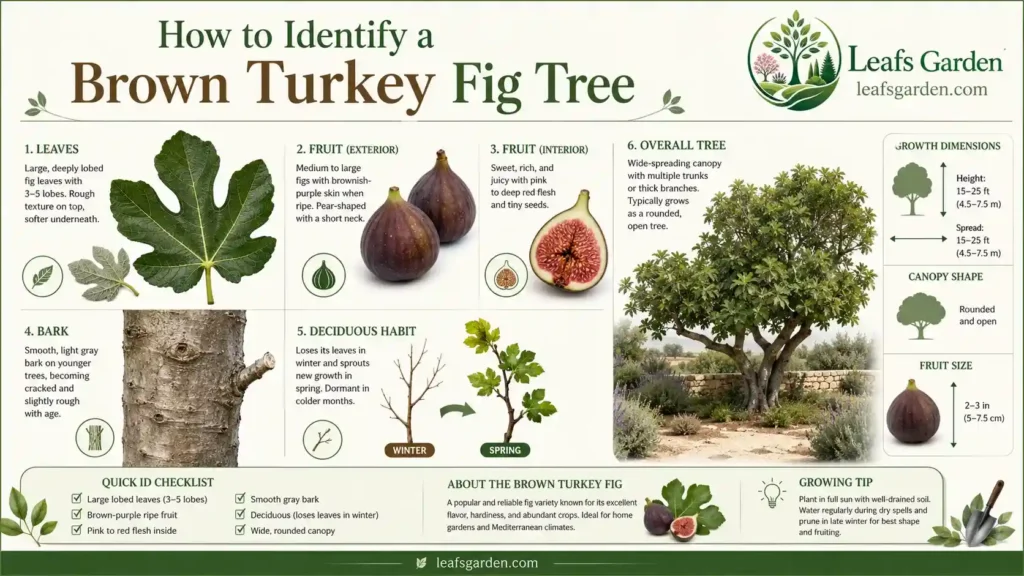
The scientific name of the Brown Turkey fig is Ficus carica. It belongs to the mulberry family, known botanically as the Moraceae family. This species includes many edible fig trees cultivated around the world for fresh fruit production.
Common names for this variety include:
The Ficus carica Brown Turkey fig is one of the most widely planted edible fig varieties because it combines productive fruiting with strong climate adaptability.
Gardeners looking to build a productive edible garden will find the Brown Turkey fig a rewarding addition among the many versatile fruit trees and edible plants suited to Australian climates.
Yes, Brown Turkey fig trees are deciduous. This means they naturally lose their leaves during colder seasons and enter winter dormancy.
In Australia, leaf drop usually begins during late autumn as temperatures cool. The tree remains dormant through winter before producing fresh leaves and new growth in spring. In warmer Australian regions, some trees may hold foliage longer, while cooler regions trigger earlier dormancy.
In the USA, seasonal behavior depends heavily on climate zones. Trees grown in colder states experience a stronger winter dormancy period, while warmer southern regions may see shorter dormant phases.
Seasonal leaf drop is normal for fig trees and helps conserve energy during cold weather.
Brown Turkey fig fruit is known for its attractive appearance and balanced sweetness. The fruit typically develops a brown to purple-brown outer skin as it ripens.
Inside, the flesh ranges from soft amber-pink to strawberry-red depending on ripeness and growing conditions. The texture becomes smooth, jam-like, and juicy when fully mature.
Common fruit characteristics include:
Compared with some darker fig varieties, Brown Turkey figs usually have a milder sweetness and less intense berry flavor, making them popular for fresh eating.
Brown Turkey fig trees can grow into medium or large deciduous fruit trees depending on pruning, climate, and growing conditions.
A full grown fig tree planted in the ground commonly reaches:
Container-grown trees remain smaller and easier to manage. A fig tree full grown indoors or in large pots is usually maintained through pruning to keep compact growth.
The root system spreads moderately and benefits from space, although figs adapt surprisingly well to container growing when properly maintained.
Brown Turkey figs are considered moderately fast growers in warm climates. The tree naturally develops a broad rounded canopy with spreading branches and large lobed leaves that create dense summer shade.
| Feature | Brown Turkey Fig |
| Botanical Name | Ficus carica |
| Tree Type | Deciduous fruit tree |
| Fruit Color | Brown-purple |
| Climate | Warm temperate |
| Best Regions | Australia, USA, Mediterranean |
Brown Turkey fig trees are popular in Australia because they tolerate heat well, produce reliable fruit, and grow successfully in many Australian regions.
This variety adapts well to different Australian climates and is considered one of the easiest edible fruit trees for home gardeners. Brown Turkey figs also produce dependable harvests with relatively low maintenance compared with many other fruit trees.
Brown Turkey fig trees perform best in warm temperate and Mediterranean-style climates, but they can adapt to several growing conditions across Australia.
Coastal regions with warm summers and moderate winters support strong fig growth. Good airflow and stable temperatures help improve fruit quality and reduce stress on the tree.
Subtropical areas such as parts of Queensland and northern New South Wales allow long growing seasons and vigorous tree development. Extra attention to drainage and humidity management may be needed in wetter conditions.
Temperate regions are highly suitable for Brown Turkey figs because seasonal cooling supports winter dormancy while warm summers encourage fruit ripening.
Brown Turkey figs tolerate dry inland climates surprisingly well once established. Their moderate drought tolerance makes them suitable for many low-rainfall areas with proper watering during extreme heat.
Brown Turkey fig trees usually fruit during the warmer months, although timing varies slightly by region and climate.
In many Australian areas:
Warmer climates often produce earlier fruit ripening and longer harvest periods. Cooler southern regions may experience slightly later fruit maturity.
In subtropical and warm temperate areas, mature trees can sometimes produce more than one crop annually under favorable conditions.
Brown Turkey figs grow successfully in many parts of Australia due to their adaptability and climate tolerance.
NSW offers excellent growing conditions in many coastal and inland regions. Warm summers support strong fruit production.
Brown Turkey figs perform well in many Victorian gardens, especially in sunny protected locations with well-draining soil.
Queensland supports vigorous growth in many areas, particularly where drainage and airflow reduce excess humidity stress.
Mediterranean-style conditions in South Australia are highly favorable for fig cultivation and fruit sweetness.
Many Western Australian regions provide warm dry conditions that suit Brown Turkey fig trees very well.
Tasmania can support fig trees in protected warm microclimates, although cooler temperatures and shorter summers may reduce fruit production consistency.
Brown Turkey figs are widely planted because they combine productive fruiting with manageable care requirements.
These fig trees handle Australian summer temperatures better than many fruit species once established.
Mature trees tolerate short dry periods relatively well, especially when mulched properly.
Brown Turkey figs require moderate pruning, seasonal feeding, and basic watering routines without intensive care demands.
The tree adapts well to home gardens, edible landscaping, courtyards, and even large containers.
Brown Turkey fig trees grow best in full sun, well-draining soil, and warm conditions with moderate watering.
This fig variety is considered relatively easy to grow because it adapts well to gardens, backyard orchards, and containers. Proper sunlight, drainage, watering, and seasonal care all help improve fruit quality and long-term tree health.
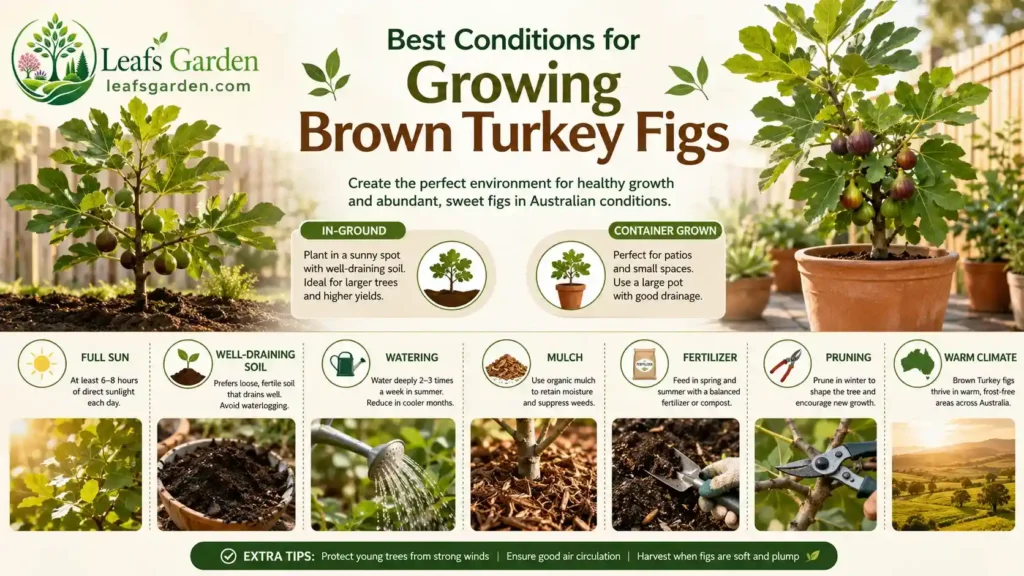
Brown Turkey fig trees need full sun for healthy growth and reliable fruit production.
Most trees perform best with:
Insufficient sunlight commonly reduces fruit production, slows growth, and weakens fruit sweetness. Trees grown in heavy shade may develop large foliage but produce fewer figs.
In cooler Australian regions, planting figs in the warmest sunny position improves ripening and overall productivity.
Brown Turkey figs grow best in loose, well-draining soil that prevents excessive moisture around the roots.
Ideal soil conditions include:
The preferred soil pH generally ranges from 6.0 to 7.0.
Sandy soils usually improve drainage and help reduce root rot risks. Heavy clay soils can restrict root development and hold too much water unless improved with compost and organic material.
Adding compost, aged manure, or mulch helps improve soil texture, moisture balance, and nutrient availability.
Watering needs change as the fig tree matures and seasonal temperatures increase.
Newly planted Brown Turkey figs require regular deep watering while roots establish. Consistent moisture supports healthy early growth.
Established trees become more drought tolerant and usually require less frequent watering. Deep watering is generally better than shallow daily watering.
During hot Australian summers, trees may need additional watering during extended dry periods, especially while fruit develops.
Brown Turkey figs tolerate moderate drought better than many fruit trees, but severe dryness can reduce fruit size and quality.
Overwatering should be avoided because constantly wet soil increases root rot risk and may cause fruit splitting.
Brown Turkey fig trees benefit from moderate feeding during active growing seasons.
Recommended feeding options include:
Excessive nitrogen should be avoided because it can encourage excessive leaf growth with reduced fruiting.
Organic feeding programs often improve soil health while supporting steady fruit development and stronger root systems.
Brown Turkey figs adapt very well to container growing when provided with proper drainage and sunlight.
Container-grown trees require more regular watering and feeding than in-ground trees because pots dry faster.
Large containers support healthier root development and improved fruit production. Mature fig trees often perform best in pots at least:
Drainage holes are essential because standing water quickly damages fig roots. Free-draining potting mix helps prevent root diseases.
For productive potted fig trees:
Container figs are especially useful for patios, courtyards, balconies, and smaller backyard gardens.
Brown Turkey figs usually begin fruiting within a few years and can produce one or two crops annually depending on climate.
Fruiting performance depends on sunlight, temperature, watering balance, tree maturity, and seasonal conditions. In warm Australian regions, Brown Turkey fig trees often produce reliable summer harvests with sweet, soft fruit.
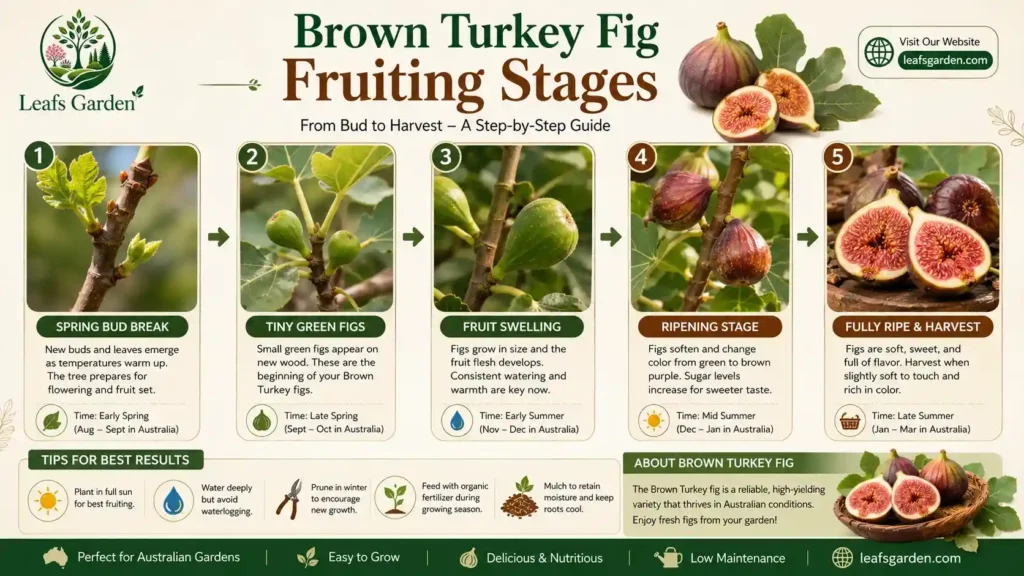
Most Brown Turkey fig trees begin producing fruit relatively early compared with many other fruit trees.
Young trees commonly start fruiting within:
Fruit production gradually increases as the canopy and root system mature.
Grafted fig trees sometimes fruit slightly earlier because they develop from mature parent material. Propagated cuttings are also productive but may take additional time to establish.
Pot-grown Brown Turkey figs can still produce good harvests when grown in large containers with full sun and proper feeding. Restricted roots may slightly limit total crop size compared with large in-ground trees.
Brown Turkey figs develop through several visible fruiting stages during the growing season.
Small fig embryos begin forming near leaf nodes during active spring and early summer growth.
As temperatures increase, the figs gradually enlarge and develop their characteristic rounded shape.
Ripening fruit changes from firm green growth into softer brown-purple figs with sweeter flesh and deeper color.
Ripe Brown Turkey figs commonly show:
Fully ripe figs are noticeably sweeter and softer than immature fruit.
Several growing problems can reduce fruit production or delay ripening.
Insufficient sunlight is one of the most common causes of poor fruiting. Fig trees require strong direct sunlight for productive crops.
Excess moisture encourages root stress and weak growth, which can reduce flowering and fruit quality.
Heavy incorrect pruning may remove developing fruiting wood and reduce seasonal harvests.
Cool conditions and frost exposure may damage young growth and reduce fruit set in colder climates.
Too much nitrogen fertilizer often causes excessive leafy growth with fewer figs.
Harvest timing strongly affects flavor, sweetness, and fruit texture.
Brown Turkey figs are usually ready to harvest when:
A ripe fig should feel soft but not collapsed. Very firm figs are usually underripe.
Gently twist or lift ripe fruit from the branch without tearing surrounding stems or leaves.
Fresh figs are highly perishable and are best eaten soon after harvesting. Refrigeration helps extend freshness for a few days.
Extra figs can also be:
| Condition | Fruiting Impact |
| Full Sun | Higher yield |
| Shade | Reduced fruit |
| Warm Climate | Earlier harvest |
| Overwatering | Fruit splitting |
Seasonal care helps Brown Turkey fig trees stay productive, healthy, and long-lived.
Brown Turkey figs respond well to simple seasonal maintenance throughout the year. Proper watering, feeding, pruning, and climate protection improve fruit quality, support healthy growth, and reduce stress during extreme weather conditions.
Spring is the main growth period for Brown Turkey fig trees. New leaves, branches, and early fruit development begin as temperatures rise.
Healthy spring growth requires strong sunlight and stable moisture. This is the ideal time to inspect the tree for winter damage and encourage balanced branch development.
Apply balanced fertilizer or organic compost during spring to support vigorous leaf and fruit growth. Moderate feeding improves tree energy without causing excessive soft growth.
Fresh mulch helps conserve moisture, regulate soil temperature, and improve root health during warming weather. Keep mulch slightly away from the trunk to reduce rot risk.
Summer is the most active fruiting season for Brown Turkey figs in many Australian regions.
Deep watering during hot periods helps maintain fruit quality and prevents stress. Container-grown trees often require more frequent watering than in-ground plants.
Ripening figs may attract birds and insects during summer. Protective netting or regular harvesting can help reduce fruit damage.
Although Brown Turkey figs tolerate heat well, extreme temperatures may still stress young trees. Mulching and consistent moisture help reduce heat-related problems.
Autumn is an important transition period as fruit harvests finish and growth slows.
Remove fallen fruit, damaged figs, and dead plant material to reduce pests and fungal issues around the tree.
Minor pruning can improve airflow and remove weak or damaged branches after harvesting. Heavy pruning is usually avoided until dormancy.
Adding compost or organic matter during autumn helps improve soil structure and prepares the tree for the next growing season.
Gardeners who enjoy growing deciduous fruit trees through seasonal cycles may also appreciate the Nijisseiki pear, another rewarding temperate fruit tree that follows a similar dormancy and harvest pattern in Australian backyard orchards.
Brown Turkey fig trees enter dormancy during winter and naturally lose their leaves.
Dormant trees require less watering and minimal feeding. Winter is a good time to monitor overall branch structure before spring growth resumes.
Young trees and exposed branches may need frost protection in colder Australian regions. Covering trees during severe frost events helps reduce cold damage.
Potted fig trees can be moved into sheltered sunny areas during extreme winter weather. Container protection is especially useful in cooler climates with frost exposure.
Most Brown Turkey fig problems are caused by watering issues, pests, fungal diseases, or environmental stress.
Brown Turkey figs are generally reliable and low-maintenance fruit trees, but incorrect watering, poor drainage, and climate stress can still affect growth and fruit quality. Early identification of symptoms helps prevent long-term damage and improves productivity.
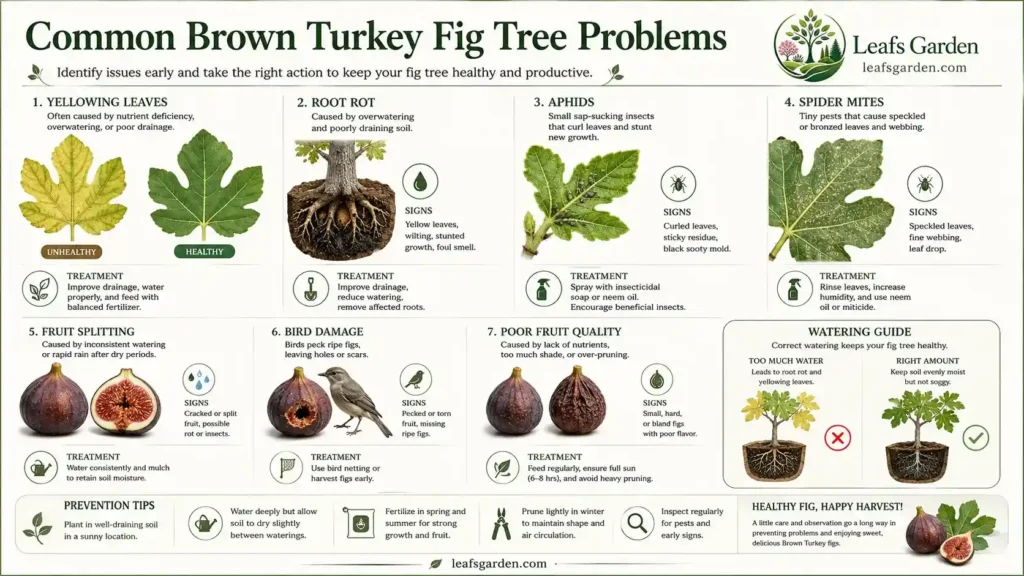
Yellow leaves are one of the most common fig tree problems and can develop for several reasons.
Excess moisture around the roots often causes yellowing foliage. Constantly wet soil limits oxygen flow and weakens root function.
Common signs include:
Lack of nutrients such as nitrogen, magnesium, or iron may also cause pale or yellow foliage. Poor soil quality and depleted container soil can contribute to deficiencies.
Because Brown Turkey figs are deciduous, yellowing leaves during autumn are usually part of the normal dormancy cycle before winter leaf drop.
Root rot is one of the most serious issues affecting fig trees and is usually linked to poor drainage.
Heavy clay soil, waterlogged containers, or excessive watering create conditions where fungal root diseases develop more easily.
Common root rot symptoms include:
Preventing root rot is easier than treating severe damage.
Helpful prevention methods include:
Several pests may affect Brown Turkey fig trees, especially during warm growing seasons.
Scale insects attach to stems and leaves while feeding on plant sap. Heavy infestations may weaken tree growth and encourage sooty mold.
Aphids commonly gather on soft new growth and may distort leaves while attracting ants.
Spider mites become more active during hot dry conditions and may cause speckled or dusty-looking leaves.
Birds frequently target ripening figs because of their sweetness. Protective netting often helps reduce crop losses during harvest season.
Fruit quality problems usually develop from moisture imbalance and environmental stress.
Sudden changes between dry soil and heavy watering commonly cause figs to split as fruit absorbs moisture too quickly.
Extended rain near harvest time may reduce sweetness and increase fruit cracking.
Figs left too long on the tree become overly soft, split easily, and attract insects more quickly.
| Problem | Cause | Solution |
| Yellow Leaves | Overwatering | Improve drainage |
| Root Rot | Wet soil | Reduce watering |
| Small Fruit | Lack of sun | Increase sunlight |
A full grown Brown Turkey fig tree can become a large productive fruit tree with proper pruning and maintenance.
Brown Turkey figs are vigorous growers that develop broad canopies, productive branches, and long lifespans when cared for correctly. Tree size depends on climate, pruning style, root space, and whether the plant is grown in the ground or in containers.
Brown Turkey fig trees can grow into medium-to-large deciduous fruit trees under favorable conditions.
Typical mature tree dimensions include:
In warm climates with unrestricted root space, some trees may grow even larger over time.
Fig trees planted directly in the ground generally grow faster and develop larger canopies than container-grown plants.
Potted Brown Turkey figs remain more compact because restricted roots naturally limit overall size. Regular pruning also helps maintain manageable growth for patios, courtyards, and smaller gardens.
Brown Turkey figs develop spreading root systems that benefit from adequate growing space.
Fig roots are usually shallow to moderately deep and can spread outward beyond the canopy area while searching for moisture and nutrients.
Because mature trees expand over time, it is best to plant fig trees away from:
Providing enough space improves airflow, root health, and long-term maintenance access.
Container-grown trees require periodic root management to prevent overcrowding. Large pots with excellent drainage help support healthier long-term growth.
Repotting or root pruning every few years may improve vigor in mature potted fig trees.
Pruning helps control tree size, improve airflow, and encourage stronger fruit production.
The ideal pruning period is usually during winter dormancy when the tree has lost its leaves and active growth slows.
Regular pruning helps maintain:
Removing crowded or damaged branches improves sunlight penetration throughout the canopy.
Light annual pruning can improve fruit quality by supporting healthy new growth while preventing excessive overcrowding.
Heavy pruning should be avoided because excessive branch removal may temporarily reduce fruit production.
Brown Turkey fig trees are considered long-lived fruit trees under suitable growing conditions.
Healthy trees can live for several decades, especially in warm climates with proper maintenance and drainage.
Most mature trees remain productive for many years once established. Fruit yields often improve as the canopy develops and stabilizes.
Long-term tree health depends on:
Consistent maintenance helps older fig trees remain vigorous, productive, and structurally healthy over time.
Brown Turkey figs are known for reliability and adaptability, while other fig varieties may offer different flavors, fruit sizes, or climate preferences.
Different fig varieties perform differently depending on climate, fruit preference, and growing conditions. Brown Turkey remains one of the most widely planted options in Australia because it balances fruit quality, ease of care, and dependable harvests.
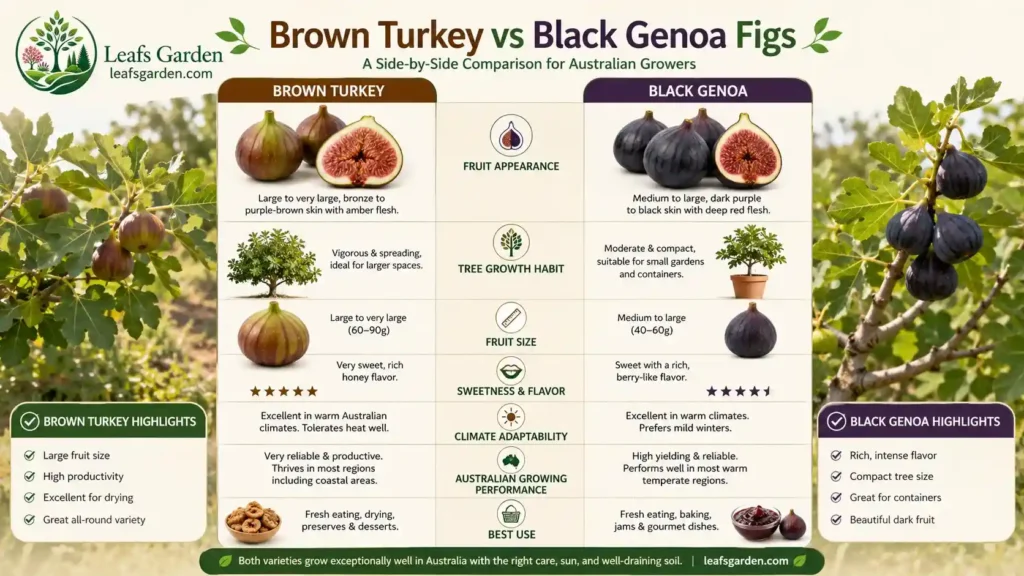
Black Genoa and Brown Turkey are two of the most popular edible fig trees grown in Australia.
Brown Turkey figs usually have a mild sweet flavor with light honey notes. Black Genoa figs are often considered richer and sweeter with a stronger berry-like taste.
Brown Turkey figs develop brown-purple skin with pink to amber flesh. Black Genoa produces darker purple-black fruit with deeper red flesh inside.
Both varieties are productive growers, although Black Genoa may grow more vigorously in some warm climates.
Brown Turkey figs are often preferred for their adaptability across many Australian regions. Black Genoa also performs very well, especially in warm Mediterranean-style climates with long summers.
Several edible fig varieties grow successfully in Australian gardens and backyard orchards.
Reliable, adaptable, beginner-friendly, and productive across many climates.
Popular for rich flavor, dark fruit, and vigorous growth.
Known for green-yellow skin and very sweet light-colored flesh.
A productive variety valued for larger fruit and good climate tolerance.
Produces green-yellow figs with honey-like sweetness and performs best in warm climates.
| Variety | Flavor | Climate Suitability | Fruit Size |
| Brown Turkey | Sweet mild | Excellent | Medium |
| Black Genoa | Rich sweet | Very good | Large |
| Kadota | Honey sweet | Warm climates | Medium |
Australia supports many types of edible fig trees due to its range of warm temperate and Mediterranean-style climates.
Gardeners building a diverse backyard orchard in warm temperate regions may also consider adding a Fuyu persimmon tree, another popular deciduous fruit tree that thrives in similar Australian Mediterranean-style growing conditions.
Common edible varieties grown in Australia include:
Brown Turkey figs are especially popular for backyard growing because they tolerate containers, pruning, and varying climates well.
Commercial growers often select varieties based on fruit sweetness, transport quality, harvest timing, and climate performance. Brown Turkey and Black Genoa are both widely recognized for reliable production in suitable Australian regions.
Brown Turkey figs are valued for fresh eating, home gardening, landscaping, and nutritional benefits.
This fig variety is widely appreciated because it combines attractive growth, edible fruit production, and relatively easy maintenance. Brown Turkey figs fit well into backyard orchards, edible gardens, and Mediterranean-style landscapes while also providing versatile culinary uses.
Brown Turkey fig fruit contains several beneficial nutrients and natural plant compounds.
Figs are a good source of dietary fiber, which supports digestion and helps promote digestive regularity.
The fruit contains natural antioxidants that help protect plant tissues and contribute to the nutritional value of fresh figs.
Brown Turkey figs provide small amounts of important minerals such as:
These minerals support normal body functions and overall nutrition.
According to Eat for Health, fruit rich in dietary fiber, potassium, and natural antioxidants contributes positively to digestive health and balanced nutrition as part of a healthy Australian diet.
Ripe figs naturally contain sweet sugars that give the fruit its soft honey-like flavor without requiring added sweeteners.
Brown Turkey figs are versatile fruits commonly used in both fresh and cooked recipes.
Fresh ripe figs are often eaten directly from the tree because of their soft texture and natural sweetness.
Brown Turkey figs can be dried for longer storage and concentrated flavor. Drying also makes the fruit convenient for snacks and baking.
Figs are commonly added to:
Their sweetness pairs well with nuts, cheese, and honey-based desserts.
Overripe or excess figs are often turned into:
These options help extend the harvest season and reduce fruit waste.
Brown Turkey fig trees are valued not only for fruit but also for their ornamental garden appeal.
Mature fig trees develop broad leafy canopies that provide cooling summer shade in gardens and outdoor living areas.
The large lobed leaves and spreading structure complement Mediterranean, cottage, and edible landscape designs.
Brown Turkey figs combine decorative foliage with productive fruiting, making them highly suitable for edible landscaping in home gardens and backyard orchards.
Brown Turkey fig trees are ideal for gardeners wanting an easy edible fruit tree that performs well in warm climates.
This variety is popular because it combines reliable fruiting, manageable care requirements, and strong adaptability. Brown Turkey figs suit many garden styles, from compact courtyards to larger backyard orchards.
Yes, Brown Turkey fig trees are considered one of the best edible fruit trees for beginners.
They are beginner-friendly because they:
Many new gardeners choose Brown Turkey figs because the tree is easier to manage than many other fruit species.
Brown Turkey figs perform well in both containers and in-ground orchard settings.
Container growing works well for:
Backyard orchard planting allows the tree to develop a larger canopy and potentially produce heavier fruit crops over time.
Large containers with good drainage help maintain healthy root systems and manageable tree size.
Brown Turkey figs grow best in:
The variety performs especially well across many parts of Australia and also grows successfully in suitable regions of the USA.
Warm summers improve fruit sweetness and ripening, while moderate winter dormancy supports healthy seasonal growth cycles.
Very cold frost-prone regions may reduce fruit consistency unless trees are grown in protected positions.
Brown Turkey figs grow more successfully outdoors where they receive full sunlight, airflow, and natural seasonal conditions.
Outdoor growing provides:
Indoor growing is possible only in very bright conditions or protected sunrooms, but fruit production is usually more limited than outdoor cultivation.
Container-grown trees can be moved between sheltered indoor and outdoor spaces when climate protection is needed during extreme weather.
Brown Turkey figs remain one of the best fig tree varieties for Australian gardeners because they combine reliable fruiting, easy care, and climate adaptability.
The Brown Turkey fig tree is a productive and versatile fig fruit tree that grows successfully across many parts of Australia. Its sweet fruit, manageable maintenance needs, and strong tolerance to warm conditions make it a popular choice for both beginner and experienced gardeners.
One of the main reasons this fig tree Australia growers prefer remains so popular is its adaptability. Brown Turkey figs can grow in backyard orchards, large containers, courtyards, and edible landscape designs while still producing dependable seasonal harvests.
With proper sunlight, well-draining soil, moderate watering, and seasonal pruning, these trees can remain healthy and productive for many years. Their suitability for home gardens, pots, and edible landscaping also makes them practical for both small and large growing spaces.
For gardeners looking for an attractive edible tree with reliable fruit production and relatively simple care requirements, the Brown Turkey fig continues to be one of the most dependable options available.
Brown Turkey fig trees usually fruit during late summer and early autumn in most Australian regions. Warmer climates may produce earlier harvests, while cooler southern areas often experience slightly later ripening.
A full grown Brown Turkey fig tree commonly reaches around 3–6 meters tall with a broad spreading canopy. Trees grown in pots usually remain smaller due to restricted root space and regular pruning.
Yes, Brown Turkey figs are known for their mild sweet flavor and soft juicy texture. The fruit often develops honey-like sweetness with light berry notes when fully ripe.
Yes, Brown Turkey figs grow very well in large containers. Good drainage, full sun, regular watering, and periodic pruning help maintain healthy potted fig trees with productive fruiting.
Yes, Brown Turkey fig trees are deciduous fruit trees. They naturally lose their leaves during autumn and enter winter dormancy before producing new spring growth.
Brown Turkey figs usually have milder sweetness and brown-purple skin, while Black Genoa figs are darker with richer berry-like flavor. Brown Turkey is often considered more adaptable across different Australian climates.
Many Brown Turkey fig trees begin fruiting within 1–3 years depending on plant age, growing conditions, and whether the tree was propagated from cuttings or nursery stock.
Brown Turkey figs grow best in warm temperate and Mediterranean-style climates with sunny summers and mild winters. They perform especially well across many parts of Australia and suitable regions of the USA.