Grow Better Gardens with Smarter Plant Choices
Discover helpful guides on trees, hedges, fruit plants, edible plants, and beautiful landscape greenery.

Honey Murcott mandarin is a sweet late-season citrus variety known for its rich honey-like flavor, deep orange color, juicy flesh, and excellent home garden performance in Australia, the USA, and warm subtropical regions worldwide.
Also called Honey Murcott tangerine, Murcott mandarin, or Murcott orange, this popular citrus fruit belongs to the mandarin family and is widely appreciated for its intense sweetness and heavy fruit production. The fruit is known for its soft juicy segments, bright orange skin, and balanced citrus aroma that makes it popular for fresh eating.
Honey Murcott mandarins grow especially well in Australia, California, Florida, and Mediterranean climates where warm temperatures and long sunny seasons support better fruit sweetness and color development. Many home gardeners choose this Murcott fruit because the trees stay relatively compact, produce large harvests, and continue fruiting later than many other mandarin varieties.
Another reason for the variety’s popularity is its excellent backyard growing potential. A Honey Murcott mandarin tree can perform well in gardens, courtyards, and large containers with proper sunlight and drainage. Gardeners also frequently search questions like “are Murcott mandarins seedless” or “Murcott mandarin seedless” because seed count can vary depending on pollination and nearby citrus trees.
Honey Murcott mandarin is a hybrid mandarin citrus variety prized for its intensely sweet flavor, juicy segments, and deep orange skin.
This late-season citrus fruit is widely grown in Australia, the USA, and other warm subtropical regions because of its exceptional sweetness, attractive fruit color, and reliable productivity. Honey Murcott is commonly sold as both a premium fresh-eating mandarin and a productive backyard citrus tree.
Honey Murcott belongs to the Citrus reticulata hybrid group within the mandarin family. It is considered a hybrid citrus variety developed through selective citrus breeding for sweetness, fruit quality, and strong production.
The tree is closely related to mandarins, tangerines, and sweet oranges. Because citrus naming varies between countries and markets, people often use several related names interchangeably, including:
Although these names are similar, there are slight differences in usage. “Murcott mandarin orange” is commonly used in commercial citrus markets, while “Murcott tangerine” is more popular in some American regions where mandarins are often grouped under tangerines. “Honey mandarin” mainly refers to the fruit’s unusually sweet flavor profile.
Botanically, Honey Murcott remains part of the mandarin citrus category rather than a true sweet orange.
Murcott mandarins were originally developed through citrus breeding programs in Florida during the early expansion of commercial American citrus production. Growers selected the variety for its sweetness, attractive color, and heavy fruiting habit.
Over time, the variety spread into other major citrus-growing regions including:
The name “Honey Murcott” became popular because of the fruit’s rich honey-like sweetness and juicy texture. Compared to many standard mandarins, the fruit develops a deeper sweetness level with lower acidity, especially when fully ripened on the tree.
Today, Honey Murcott mandarins are widely grown for both home gardens and commercial orchards because the trees adapt well to warm sunny climates and produce high-quality late-season fruit.
Gardeners exploring productive citrus options will find Honey Murcott a standout addition among the many rewarding fruit trees and edible plants suited to warm Australian climates.
Honey Murcott fruit tastes extremely sweet with a rich citrus aroma, low acidity, and very juicy flesh.
The flavor is often described as deep, smooth, and honey-like compared to standard mandarins. The fruit develops high natural sugar levels while still maintaining fresh citrus brightness, which makes it popular for fresh eating.
Key flavor characteristics include:
Compared with Imperial mandarins, Honey Murcott fruit usually tastes sweeter and more intense, while Imperial mandarins are often slightly lighter and easier to peel. Against Afourer mandarins, Honey Murcott generally offers richer sweetness and softer texture, while Afourer varieties are known for firmer flesh and more commercial seedless production.
Compared to regular oranges, Honey Murcott mandarins are usually sweeter, less acidic, easier to segment, and more aromatic.
A Honey Murcott mandarin tree is a medium-sized evergreen citrus tree with glossy green leaves, fragrant white flowers, and heavy clusters of orange fruit.
The tree is known for its dense canopy, productive branching, and attractive ornamental appearance. During fruiting season, branches often become heavily covered with bright orange Murcott fruit, making the tree both decorative and highly productive for home gardens.
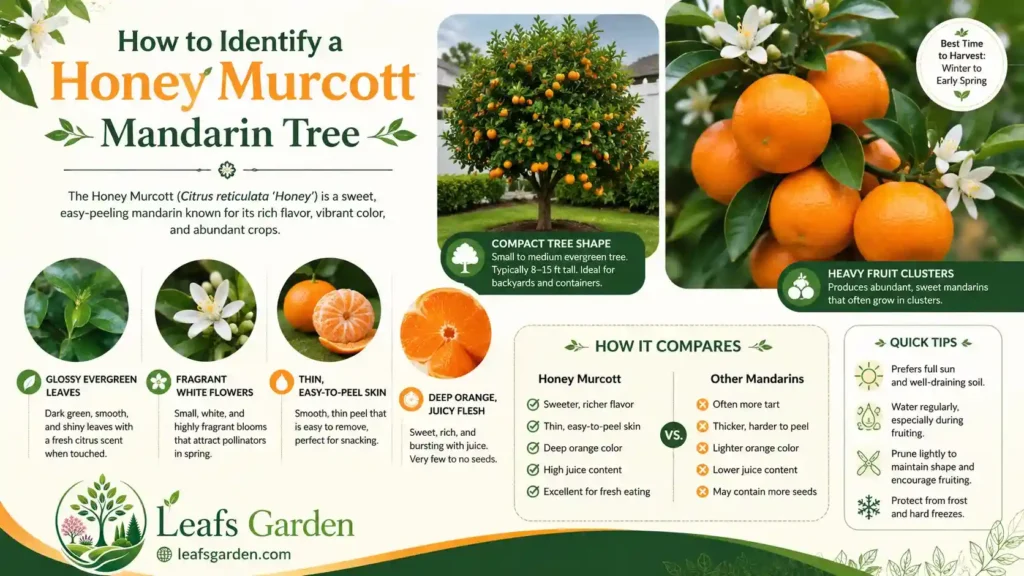
Honey Murcott mandarin trees typically grow into compact to medium-sized citrus trees with a rounded evergreen canopy.
Under good growing conditions, mature trees usually reach:
The variety is especially popular for backyard growing because it stays more manageable than many larger citrus trees. Its naturally compact structure works well in:
Container-grown Honey Murcott trees can remain even smaller with regular pruning and root management. This makes the variety suitable for balconies and protected sunny outdoor areas in warmer climates.
The growth rate is considered moderate. Young grafted trees establish steadily and can begin developing strong fruiting branches within a few seasons when provided with full sun, regular watering, and citrus fertilizer.
Honey Murcott mandarin trees produce dense glossy evergreen foliage that stays attractive throughout the year.
The leaves are:
During flowering season, the tree develops clusters of small white citrus blossoms with a strong sweet fragrance. These flowers attract bees and pollinators while also signaling future fruit production.
Honey Murcott fruit is easy to recognize because of its rich orange coloring and juicy appearance.
Common fruit characteristics include:
The peel is usually thinner and slightly tighter than many traditional tangerines, but it still separates reasonably well when fully ripe. Inside, the flesh develops a rich orange color with high juice content and strong sweetness.
| Feature | Murcott Mandarin | Tangerine |
| Sweetness | Higher | Moderate |
| Peel | Slightly tighter | Loose |
| Juice Content | Very juicy | Medium |
| Seeds | Variable | Variable |
Some Murcott mandarins are nearly seedless, but seed count depends heavily on pollination and growing conditions.
Many people search for “are Murcott mandarins seedless” because fruit from different trees can vary significantly. Some Honey Murcott mandarins contain very few seeds, while others may develop multiple seeds depending on nearby citrus varieties, insect activity, and environmental conditions.
Honey Murcott mandarins develop seeds mainly because of cross-pollination.
When bees transfer pollen between compatible citrus flowers, seed formation increases inside the fruit. Trees growing near other citrus varieties are more likely to produce seeded fruit compared to isolated trees.
Several factors influence seed count:
In home gardens, a Honey Murcott mandarin tree planted close to oranges, lemons, mandarins, or tangerines may produce fruit with more seeds. In contrast, isolated backyard trees sometimes produce nearly seedless fruit.
Climate can also affect pollination success. Warm spring weather with high bee activity often increases seed development, while cooler or windy flowering periods may reduce pollination rates.
Commercial citrus growers often use special seedless Murcott selections to improve fruit quality and market value.
One of the best-known examples is the W Murcott mandarin, which was developed as a premium low-seed or nearly seedless selection. In many markets, W Murcott is sold as a sweeter, more commercially refined version of traditional Murcott mandarins.
Growers also commonly compare Honey Murcott with Afourer mandarin seedless varieties because both are popular late-season mandarins with strong sweetness and good shelf life.
Common seedless or low-seed citrus selections include:
Commercial orchards sometimes use pollination management techniques to reduce seed formation and produce more consistent seedless fruit for supermarkets.
Afourer mandarins are commonly grown as premium seedless mandarins, although seed count can still vary under certain pollination conditions.
Compared with Honey Murcott mandarins, Afourer mandarins are usually marketed more aggressively for their low-seed or seedless characteristics. The fruit also tends to have firmer flesh and slightly easier peeling qualities.
Main differences between Afourer and Murcott include:
Large commercial citrus farms frequently prefer Afourer mandarins for export markets because consumers strongly favor seedless fruit. Orchard isolation and pollination control are often used to maintain low seed counts.
Imperial mandarins can be seedless or contain a small number of seeds depending on growing conditions and nearby citrus pollination.
In Australia, many growers market Imperial mandarin seedless fruit, especially when trees are planted away from compatible citrus pollinators. However, complete seedlessness is not always guaranteed.
Compared with Honey Murcott mandarins:
Both varieties remain popular for Australian backyard gardens because they combine manageable tree size with strong fruit production and excellent fresh-eating quality.
Honey Murcott mandarins grow best in warm sunny climates with well-draining soil and consistent moisture.
These citrus trees thrive in subtropical and warm temperate regions where they receive long hours of sunlight, mild winters, and balanced watering. Proper growing conditions directly improve fruit sweetness, juice content, tree health, and overall productivity.
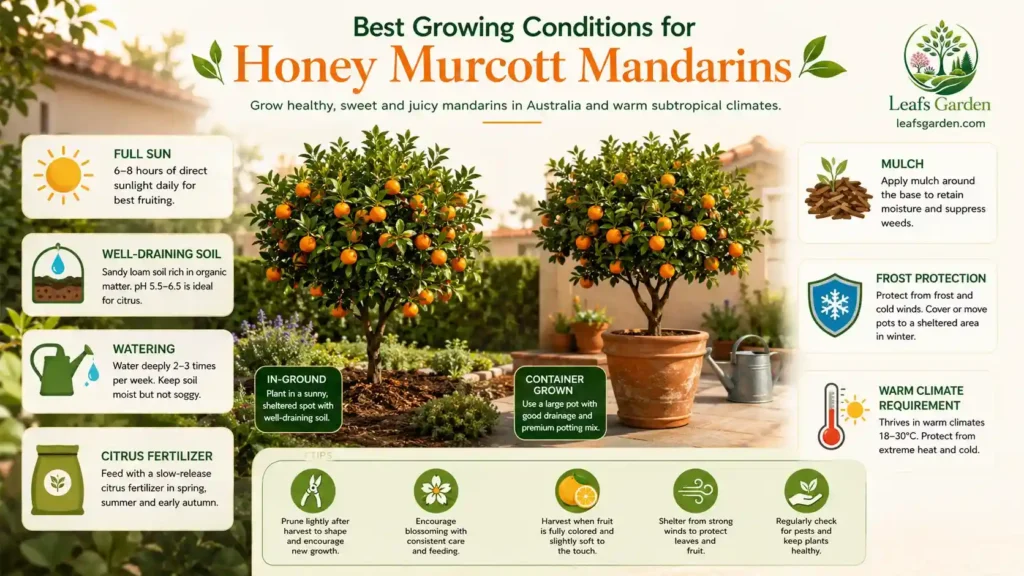
Honey Murcott mandarin trees perform best in warm climates with moderate humidity and minimal frost exposure.
In Australia, the variety grows especially well in:
In the USA, Honey Murcott trees are commonly grown in:
Worldwide, the tree adapts well to Mediterranean and subtropical climates where winters remain relatively mild and summers are warm to hot.
Recommended USDA growing zones include:
The variety has moderate humidity tolerance and generally handles humid subtropical weather better than some sensitive citrus types. However, excessive moisture combined with poor airflow can increase fungal disease risk.
Honey Murcott trees are also frost sensitive, especially when young. Light frost may damage flowers, young shoots, and fruit. Prolonged freezing temperatures can weaken or kill small trees.
For colder regions, gardeners often use:
Honey Murcott mandarins need full sun for strong growth, healthy flowering, and sweet fruit production.
Trees should ideally receive:
Sunlight has a major effect on fruit sweetness. Trees growing in low-light conditions often produce:
Full sun also helps reduce excess moisture around foliage, which supports healthier citrus growth and fewer fungal problems.
Honey Murcott trees grow best in rich well-draining citrus soil that holds moisture without becoming waterlogged.
Ideal soil conditions include:
Recommended soil pH:
Heavy clay soil can increase root rot risk because citrus roots dislike standing water. Sandy soils may drain too quickly unless organic matter is added.
Good soil improvement materials include:
Mulch helps maintain even soil moisture and protects shallow citrus roots from heat stress. Keep mulch slightly away from the trunk to prevent rot and fungal issues.
Honey Murcott mandarins need consistent watering, especially during establishment and fruit development.
Young trees require more regular watering because their root systems are still developing. Deep watering encourages stronger root growth and improves drought tolerance later.
Young tree watering guidelines:
Mature trees become more drought tolerant but still benefit from steady moisture during flowering and fruit swelling.
Mature tree irrigation needs:
Overwatering is one of the most common citrus problems. Excess moisture can cause:
Well-draining soil remains essential for healthy citrus roots.
Honey Murcott mandarins require balanced citrus fertilizer to support sweet fruit, healthy foliage, and strong flowering.
Citrus trees are heavy nutrient feeders and respond well to regular seasonal fertilizing.
Important nutrients include:
A typical citrus fertilizer schedule includes:
| Season | Fertilizer Focus |
| Spring | Nitrogen and growth support |
| Early Summer | Balanced citrus feeding |
| Late Summer | Potassium for fruit quality |
| Autumn | Light feeding before cool weather |
Avoid excessive nitrogen late in the season because it may encourage leafy growth instead of fruit development.
Slow-release citrus fertilizers are commonly used in Australian and American home gardens because they provide steady nutrition over time.
| Growing Factor | Recommended Conditions |
| Sun | Full sun, 6–8+ hours daily |
| Soil | Well-draining citrus soil, pH 6.0–7.0 |
| Water | Consistent deep watering, avoid waterlogging |
| Fertilizer | Seasonal citrus fertilizer with potassium and micronutrients |
| Climate | Warm subtropical and Mediterranean climates |
Honey Murcott mandarins can be grown in gardens or containers using grafted citrus trees, full sun exposure, and regular citrus care.
This citrus variety is considered beginner-friendly because it adapts well to backyard gardens, patios, and large pots when provided with warmth, sunlight, and proper drainage. Most home gardeners achieve faster and more reliable fruit production by planting grafted nursery trees rather than seed-grown plants.
Honey Murcott mandarin trees grow best in open sunny locations with healthy well-draining soil.
Follow these planting steps for strong early establishment:
After planting, water deeply to help roots settle into the surrounding soil.
Honey Murcott mandarins grow very well in large containers, making them suitable for patios, courtyards, balconies, and compact gardens.
Recommended container features include:
Use a premium well-draining citrus potting mix rather than regular garden soil. Citrus roots need airflow and loose structure to remain healthy in containers.
Good container growing practices include:
Container-grown trees may require more frequent watering because pots dry faster than garden soil, especially during Australian summers or hot USA climates.
Gardeners who enjoy compact container citrus may also find the clementine tree a rewarding patio option, offering similarly sweet seedless fruit with an easy-peel skin in a manageable evergreen package.
Balcony and patio growing works best in warm sunny locations protected from strong frost and cold winds.
The best planting time for Honey Murcott mandarins is during mild weather when roots can establish before extreme heat or cold arrives.
In Australia, ideal planting periods are:
In the USA, the best planting time is usually:
Avoid planting during heavy frost periods or extreme summer heat because young citrus trees can experience stress during establishment.
Mild temperatures allow roots to grow steadily while reducing transplant shock.
A grafted Honey Murcott mandarin tree can begin producing fruit relatively quickly compared to seed-grown citrus.
Typical fruiting timelines include:
| Tree Type | Estimated Fruiting Time |
| Grafted tree | 2–4 years |
| Seed-grown tree | 7–10+ years |
Most nursery trees are grafted onto selected rootstocks to improve:
Young trees usually progress through several fruiting maturity stages:
During the first few years, removing excessive young fruit can help the tree direct more energy into branch and root development. Mature Honey Murcott trees eventually become highly productive and can produce heavy late-season citrus crops annually under good conditions.
Honey Murcott mandarins are generally late-season citrus fruits harvested from winter into spring depending on climate.
This late harvesting period is one of the biggest reasons Honey Murcott mandarins are popular with both commercial growers and home gardeners. The fruit often remains on the tree longer than many early-season mandarins, allowing higher sugar development and richer flavor.
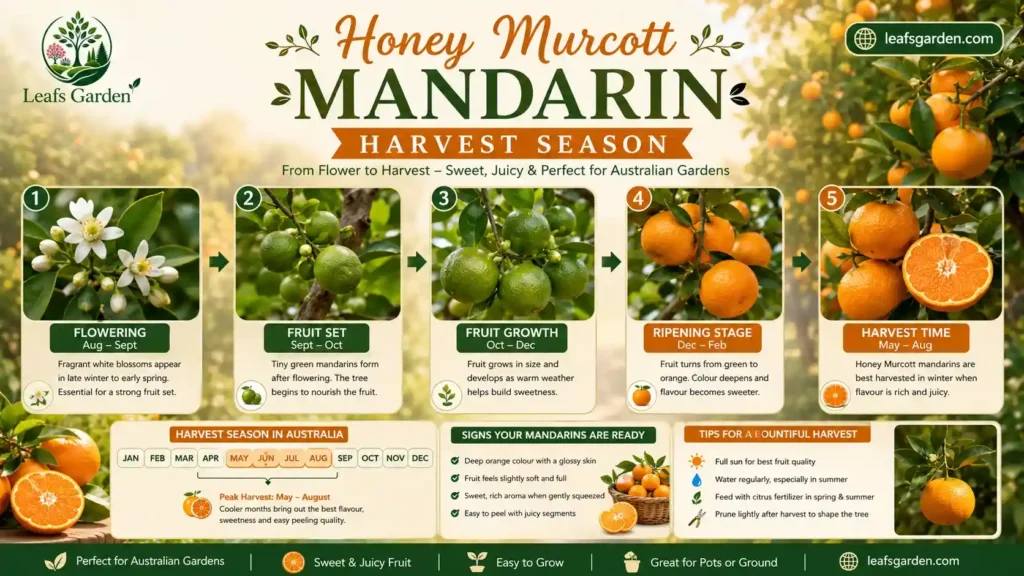
In Australia, Honey Murcott mandarins are mainly harvested from winter through early spring.
The exact timing varies depending on regional climate conditions and growing temperatures.
Typical Australian harvest periods include:
| Region Type | Main Harvest Timing |
| Warm subtropical regions | July to September |
| Cooler temperate regions | August to October |
Warmer regions of Queensland and northern New South Wales often see earlier ripening because consistent heat supports faster sugar development and fruit coloring.
In cooler southern areas, fruit may mature slightly later but can still develop excellent sweetness if trees receive strong sunlight and proper watering.
Because Honey Murcott is considered a late-season citrus variety, many gardeners use it to extend fresh mandarin harvesting after early varieties like Imperial mandarins have finished.
In the USA, Honey Murcott mandarins are commonly harvested during late winter and spring.
California harvest timing usually runs from:
Florida growing regions often harvest slightly earlier depending on winter temperatures and seasonal weather patterns.
The fruit performs especially well in:
American commercial citrus markets value Honey Murcott mandarins because they help fill the late-season mandarin supply window when fewer premium mandarins are available.
Late-season mandarins like Honey Murcott offer several advantages for growers, retailers, and home gardeners.
One major benefit is the ability to extend the citrus harvest season well beyond early mandarin varieties. This allows families and growers to continue harvesting fresh fruit later into the year.
Other important benefits include:
Fruit that remains on the tree longer often develops richer flavor and deeper orange coloration. This is one reason Honey Murcott mandarins are frequently considered among the sweetest late-season mandarins in Australia and many subtropical citrus-growing regions worldwide.
Honey Murcott mandarins are usually sweeter and juicier than Imperial mandarins, while Imperials are easier to peel and often have fewer seeds.
Both varieties are extremely popular in Australian home gardens because they produce flavorful fruit and adapt well to warm citrus-growing climates. However, they differ in sweetness, peeling characteristics, seed count, and growth habits.
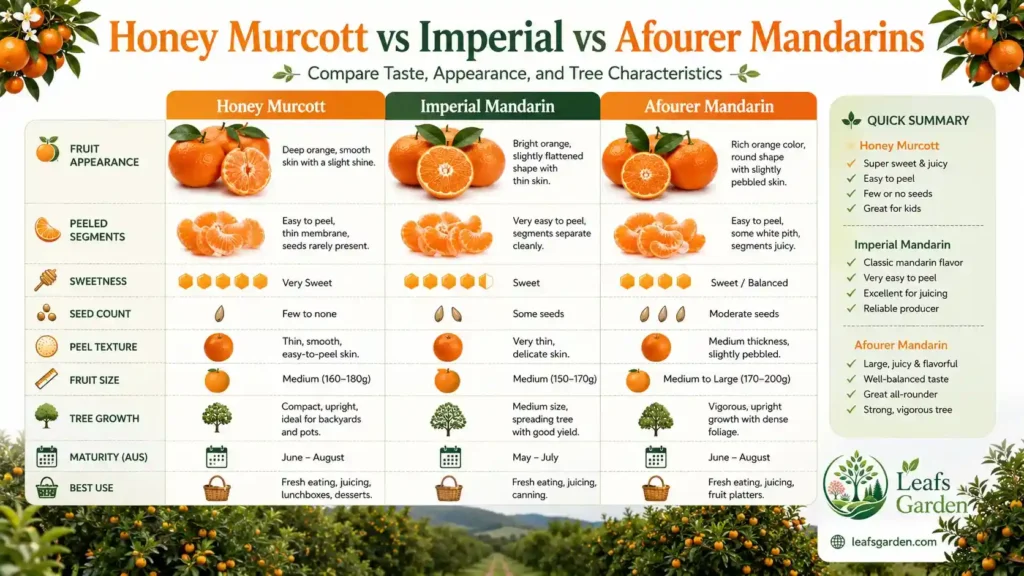
Honey Murcott mandarins are widely known for their intense sweetness and rich honey-like flavor.
Compared with Imperial mandarins, Honey Murcott fruit usually develops:
Imperial mandarins generally have a lighter, fresher citrus taste with slightly more balanced acidity.
Main flavor differences include:
| Flavor Trait | Honey Murcott | Imperial Mandarin |
| Sweetness | Very high | Moderate to high |
| Acidity | Lower | Slightly higher |
| Aroma | Rich and intense | Fresh and mild |
| Juice Content | Very juicy | Juicy |
Gardeners who prefer very sweet mandarins often favor Honey Murcott, while people looking for easier everyday snacking fruit may prefer Imperial mandarins because of their softer peel and balanced flavor.
Seed count is one of the biggest differences between the two varieties.
Many people ask “are Murcott mandarins seedless” because Honey Murcott fruit can vary significantly depending on pollination conditions. Some fruit may contain very few seeds, while others develop multiple seeds if cross-pollination occurs near compatible citrus trees.
Imperial mandarin seedless fruit is more commonly achieved in isolated plantings, especially in Australian commercial orchards where pollination is controlled.
General seed comparison:
Nearby citrus trees and bee activity can increase seed production in both mandarins.
Both Honey Murcott and Imperial mandarin trees are suitable for Australian backyards, but their growth habits differ slightly.
Honey Murcott mandarin trees usually develop:
Imperial mandarin trees are often slightly more open in growth habit and may remain easier to manage in smaller garden spaces.
Typical growth characteristics include:
| Feature | Honey Murcott | Imperial Mandarin Tree |
| Growth Habit | Dense and rounded | Slightly open canopy |
| Productivity | Very heavy cropping | Reliable cropping |
| Tree Size | Medium compact | Compact to medium |
| Container Growing | Good | Very good |
Both imperial mandarin trees and Honey Murcott trees perform well in containers when pruned properly and grown in full sun.
The better mandarin variety depends on what the gardener values most.
Honey Murcott is often preferred for maximum sweetness and late-season fruit production, while Imperial mandarins are favored for easier peeling and lower seed count.
| Variety | Sweetness | Seeds | Peeling | Climate |
| Honey Murcott | Very sweet | Variable | Moderate | Warm subtropical |
| Imperial Mandarin | Sweet | Often fewer | Easy | Warm temperate to subtropical |
For Australian gardens:
Many citrus gardeners grow both varieties together to extend harvesting seasons and enjoy different fruit qualities throughout the year.
Afourer mandarins are commonly grown as premium seedless mandarins, while Honey Murcott mandarins are known for richer sweetness and intense flavor.
Both varieties are popular late-season mandarins used in commercial citrus production and home gardens. They share strong productivity and attractive orange fruit, but they differ in sweetness, texture, seed count, and commercial appeal.
Honey Murcott mandarins are generally sweeter and richer in flavor compared with Afourer mandarins.
Murcott fruit develops high sugar levels with a deep honey-like citrus taste that many growers consider more intense and aromatic. Afourer mandarins usually offer a cleaner balanced sweetness with firmer flesh.
Main flavor differences include:
| Flavor Trait | Honey Murcott | Afourer Mandarin |
| Sugar Levels | Very high | High |
| Texture | Soft and juicy | Firmer |
| Juice Content | Very juicy | Juicy |
| Aroma | Rich citrus fragrance | Fresh balanced aroma |
Honey Murcott fruit is often preferred for fresh eating because of its rich sweetness, while Afourer mandarins are commonly favored for commercial packaging and export due to their texture and lower seed count.
Many gardeners ask “are Afourer mandarins seedless” because the variety is widely marketed as a premium seedless mandarin.
Under controlled commercial growing conditions, Afourer mandarins usually contain very few seeds or remain nearly seedless. However, pollination can still affect seed formation.
So, “do Afourer mandarins have seeds?”
The answer is sometimes yes, especially when trees grow near compatible citrus pollinators and experience heavy bee activity.
Compared with Honey Murcott:
Commercial orchards often isolate Afourer plantings to maintain seedless fruit quality for supermarkets and export markets.
Both Honey Murcott and Afourer mandarin trees are highly productive citrus varieties.
Honey Murcott trees are known for producing heavy fruit clusters with extremely juicy flesh, while Afourer trees are valued for consistent commercial-grade fruit quality.
Productivity comparison:
| Feature | Honey Murcott | Afourer Mandarin |
| Yield | Very heavy | Heavy and consistent |
| Fruit Size | Medium to large | Medium |
| Sweetness | Extremely sweet | Sweet |
| Commercial Popularity | High | Very high |
Afourer mandarins are especially popular in commercial citrus farming because they combine:
Honey Murcott remains highly valued for premium flavor and backyard citrus growing.
Afourer mandarins are generally firmer and more commercially seedless than Imperial mandarins, while Imperial mandarins are easier to peel and popular for fresh home consumption.
Quick comparison:
| Variety | Sweetness | Seeds | Peel Ease | Commercial Use |
| Afourer Mandarin | High | Usually low | Moderate | Very high |
| Imperial Mandarin | Sweet | Often low | Easy | High in Australia |
Honey Murcott mandarin trees can develop yellow leaves, fruit splitting, root rot, pests, and poor fruit quality if growing conditions become unbalanced.
Most citrus problems are linked to watering issues, poor drainage, nutrient deficiencies, or environmental stress. Early identification and proper citrus care usually prevent long-term tree damage and help maintain healthy fruit production.
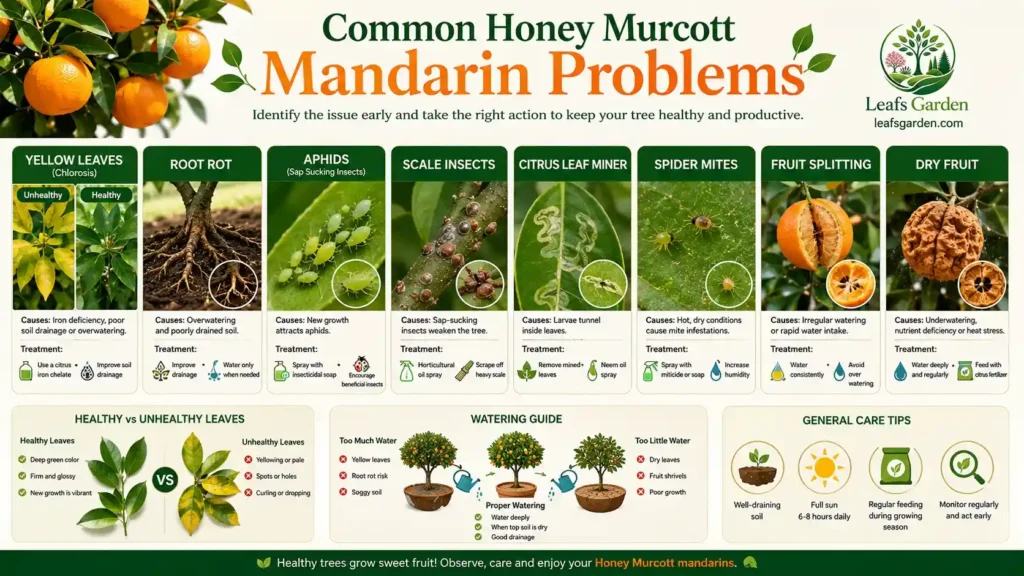
Yellow leaves are one of the most common problems on Honey Murcott mandarin trees.
The issue is usually caused by root stress, poor nutrition, or incorrect watering practices.
Common causes include:
Nitrogen deficiency often causes pale yellow older leaves, while iron deficiency may produce yellowing between leaf veins on younger foliage.
Poor drainage and overwatering are especially dangerous because citrus roots require oxygen-rich soil. Constantly wet roots can weaken the tree and increase disease risk.
To improve yellowing foliage:
Healthy Honey Murcott trees should maintain deep green glossy leaves year-round.
Root rot is a serious citrus disease usually caused by excessive moisture around the roots.
The problem develops when soil stays waterlogged for long periods, especially in heavy clay or poorly draining garden beds.
Common signs of root rot include:
Prevention is far easier than treatment.
Important root rot prevention methods include:
Good soil drainage is one of the most important factors for long-term citrus health. Honey Murcott mandarins generally perform best when roots dry slightly between watering cycles.
Several common citrus pests can affect Honey Murcott mandarin trees, especially during warm growing seasons.
Common pests include:
Aphids feed on soft new growth and can cause curling leaves and sticky honeydew buildup. Scale insects attach to stems and leaves while slowly weakening the tree.
Citrus leaf miner larvae tunnel through young leaves, creating twisting silver trails and distorted foliage. Spider mites are more common during hot dry weather and may cause speckled leaves and webbing.
Basic citrus pest management includes:
Healthy well-maintained trees usually tolerate minor pest activity better than stressed citrus plants.
Fruit splitting and dry fruit are commonly linked to inconsistent moisture and environmental stress.
Honey Murcott mandarins require steady watering during fruit development. Sudden shifts between very dry and very wet soil can cause fruit skins to crack.
Main causes include:
Dry fruit can also develop if trees become severely stressed during hot weather or if nutrient levels become unbalanced.
To reduce fruit problems:
Stable growing conditions help improve juice content, sweetness, and overall fruit quality.
| Problem | Common Cause | Solution |
| Yellow leaves | Nutrient deficiency or overwatering | Improve feeding and drainage |
| Root rot | Waterlogged soil | Improve drainage and reduce watering |
| Aphids | Soft new growth infestation | Wash off or treat early |
| Scale insects | Citrus sap feeding pests | Use horticultural oil if needed |
| Citrus leaf miner | Leaf tunneling larvae | Protect young growth |
| Spider mites | Hot dry conditions | Increase humidity and inspect foliage |
| Fruit splitting | Irregular watering | Maintain consistent moisture |
| Dry fruit | Heat stress or nutrient imbalance | Improve watering and fertilizing |
Proper pruning improves airflow, fruit quality, tree shape, and long-term citrus health.
Honey Murcott mandarin trees naturally develop dense evergreen growth, so regular maintenance helps prevent overcrowding and supports healthier fruit production. Good pruning practices also improve sunlight penetration, reduce pest problems, and make harvesting easier.
The best time to prune Honey Murcott mandarin trees is after harvesting has finished.
Post-harvest pruning allows the tree to recover before the next flowering and fruiting cycle begins. Light shaping during spring is also common for maintaining tree size and structure.
Best pruning periods include:
Avoid heavy pruning during:
Removing too much growth at once can reduce fruit production and expose branches to sunburn stress.
Light annual pruning is usually enough for backyard citrus trees.
Young Honey Murcott trees benefit from early structural shaping because it encourages balanced canopy development and stronger fruit-bearing branches.
The goal is to create an open canopy structure that allows:
Important shaping steps include:
Crossing branches can rub against each other and create wounds that increase disease risk. Opening the center of the canopy also helps fruit color more evenly and improves overall citrus health.
Young trees should not be over-pruned because leaves are still important for root and branch development.
Mulching is an important part of Honey Murcott mandarin maintenance because citrus roots are shallow and sensitive to temperature changes.
Benefits of mulching include:
Apply mulch around the root zone while keeping it slightly away from the trunk to prevent rot and fungal issues.
During summer, citrus trees benefit from:
Winter frost management is especially important for young trees and container-grown mandarins.
Common frost protection methods include:
Healthy well-maintained Honey Murcott trees usually recover well from minor seasonal stress and continue producing reliable late-season citrus crops.
Honey Murcott mandarins can grow indoors in large containers if they receive enough sunlight and warmth.
Indoor citrus growing is most successful in bright warm environments where the tree can receive strong direct light and steady airflow. While indoor trees may stay smaller than outdoor garden specimens, they can still produce fragrant flowers and sweet fruit with proper care.
Indoor Honey Murcott mandarin trees need strong light, good airflow, and moderate humidity to remain healthy.
Light is the most important factor for indoor citrus success. Trees should ideally receive:
Low light conditions often cause:
Airflow is also important because stagnant indoor conditions can encourage fungal issues and pests like spider mites. Open windows, gentle fans, or protected outdoor placement during warm weather can help improve circulation.
Honey Murcott trees prefer moderate humidity levels. Extremely dry indoor air from heaters or air conditioners may stress the foliage and flowers.
Helpful indoor humidity practices include:
Large containers with strong drainage are essential for indoor citrus growing.
Recommended container features include:
A mature indoor Honey Murcott tree often performs best in pots around:
Good drainage is critical because citrus roots are highly sensitive to waterlogging. Excess moisture trapped in containers can quickly lead to root rot and yellow leaves.
Use a premium well-draining citrus potting mix containing:
Avoid compact garden soil indoors because it may hold too much moisture and reduce root oxygen.
Honey Murcott mandarin trees can flower indoors, but pollination may need assistance because natural pollinators are limited inside homes.
Indoor flowering usually occurs when trees receive:
When flowers open indoors, hand pollination can improve fruit set.
Simple hand pollination methods include:
Because citrus flowers are naturally self-fertile to some degree, even minimal pollen movement can help encourage fruit development indoors.
Maintaining warmth, sunlight, and stable moisture levels gives indoor Honey Murcott trees the best chance of successful flowering and fruit production.
Honey Murcott mandarin trees are commonly available from citrus nurseries, garden centers, and selected retailers in Australia.
Many Australian gardeners purchase grafted citrus trees from specialist nurseries because they often provide healthier rootstocks, better variety selection, and stronger long-term performance. Honey Murcott mandarins are especially popular for backyard citrus growing due to their sweetness, compact growth, and late fruiting season.
Many people search for mandarin tree Bunnings options because large garden retailers often stock seasonal citrus trees during spring and early growing periods.
Depending on availability and region, gardeners may sometimes find:
Stock levels can vary between stores and seasons, especially during peak citrus planting periods in Australia.
Some stores may carry:
Because Honey Murcott mandarins are seasonal nursery items, checking local availability during spring is usually the best approach.
Choosing a healthy citrus tree is important for long-term growth, fruit quality, and disease resistance.
When buying a Honey Murcott mandarin tree, look for:
Avoid trees showing:
Grafted citrus trees are strongly recommended because they fruit earlier and often perform better than seed-grown plants.
Good rootstocks improve:
Healthy foliage should appear glossy and evenly colored without signs of curling, heavy insect damage, or stress.
Many Australian gardeners also search for low-seed or seedless mandarin varieties for easier fresh eating.
Popular retail searches often include:
Seedless or near-seedless mandarins are especially popular for family gardens because they are easier for children and fresh snacking.
However, even low-seed citrus varieties can sometimes produce seeds if cross-pollination occurs near other flowering citrus trees. Proper nursery labeling and variety selection help gardeners choose the best option for their preferred fruit characteristics.
Honey Murcott mandarins are valued for their exceptional sweetness, high productivity, ornamental beauty, and easy backyard growing potential.
This citrus variety is popular with both home gardeners and commercial growers because it combines rich fruit flavor with attractive evergreen growth and reliable late-season harvests. Honey Murcott trees also adapt well to gardens, patios, and container growing in warm climates.
Honey Murcott mandarins provide several important nutritional benefits while remaining naturally sweet and refreshing.
The fruit is especially valued for its high Vitamin C content, which supports:
According to Eat for Health, citrus fruits rich in Vitamin C and natural antioxidants contribute positively to immune function and healthy skin as part of a balanced Australian diet.
Honey Murcott fruit also contains antioxidants that help protect plant pigments and support overall cellular health. The deep orange flesh naturally contains beneficial citrus compounds commonly found in mandarins and oranges.
Additional nutritional advantages include:
Because the fruit is very juicy, Honey Murcott mandarins can also help support hydration during warm weather.
Honey Murcott mandarin trees offer strong ornamental and practical value for home gardens.
The trees maintain attractive evergreen foliage throughout the year, creating long-lasting garden color even outside fruiting season. Their glossy leaves and compact canopy structure make them suitable for both decorative and edible landscaping.
Major home garden benefits include:
During flowering season, the trees produce strongly scented white citrus flowers that attract pollinators and add fragrance to patios and gardens.
Those looking to add more ornamental citrus variety to their garden may also enjoy growing Kumquat Nagami, a compact and decorative citrus tree that pairs beautifully with Honey Murcott in warm backyard edible landscapes.
Another major advantage is the long fruiting season. Honey Murcott mandarins are late-season citrus trees, allowing gardeners to continue harvesting sweet fruit after many earlier mandarin varieties have finished producing.
Honey Murcott is often considered one of the sweetest mandarin varieties in Australia because of its high natural sugar levels and low acidity.
The fruit develops a rich honey-like flavor when grown in warm sunny climates with proper citrus care. Long ripening periods also help concentrate sugars and improve juice quality.
Reasons the variety is frequently associated with the “sweetest mandarin Australia” category include:
Some gardeners and citrus sellers also compare the flavor to premium “royal honey mandarin” style fruit because of its rich smooth sweetness and aromatic juice.
When fully tree-ripened, Honey Murcott mandarins can develop exceptionally sweet flavor that rivals many commercial dessert citrus varieties.
Honey Murcott mandarin is one of the sweetest and most rewarding citrus varieties for Australian gardens, offering juicy late-season fruit, attractive evergreen growth, and reliable productivity.
This beginner-friendly citrus tree grows well in warm sunny climates and can thrive in both backyard gardens and large containers with proper care. Its compact growth habit, fragrant flowers, and heavy fruit production make it suitable for patios, courtyards, suburban landscapes, and home orchards.
Compared with varieties like Imperial mandarin and Afourer mandarin, Honey Murcott is especially valued for its rich honey-like sweetness, deep orange flesh, and strong juice content. While seed count can vary depending on pollination, the variety remains highly popular for fresh eating and home citrus growing.
Another major advantage is its late-season harvest period, which allows gardeners to enjoy fresh mandarins long after many early citrus varieties have finished producing. With full sun, good drainage, regular watering, and seasonal citrus feeding, Honey Murcott trees can become highly productive and long-living additions to Australian gardens and other subtropical growing regions worldwide.
For gardeners looking for a sweet, reliable, and visually attractive citrus tree, Honey Murcott mandarin remains one of the best late-season mandarin choices to grow at home.
Honey Murcott mandarins can be nearly seedless, but seed count depends heavily on pollination conditions. Trees growing near other citrus varieties may produce more seeds because of cross-pollination and bee activity. Some commercial Honey Murcott selections are specifically grown for lower seed content.
Honey Murcott mandarins are generally sweeter, juicier, and more intensely flavored than Imperial mandarins. Imperial mandarins are usually easier to peel and often contain fewer seeds. Honey Murcott fruit also tends to ripen later in the citrus season.
In Australia, Honey Murcott mandarins are usually harvested from winter into spring. Most regions harvest fruit between July and October depending on climate, sunlight, and local growing conditions.
Yes, Honey Murcott mandarins grow well in large containers when provided with full sun, good drainage, and regular citrus care. Container growing is popular for patios, balconies, and small Australian gardens because the trees stay relatively compact with pruning.
Honey Murcott mandarins are considered extremely sweet compared with many other mandarin varieties. The fruit develops high sugar levels, low acidity, rich citrus aroma, and juicy flesh, especially when fully ripened on the tree.
Afourer mandarins are often preferred for their lower seed count and strong commercial quality, while Honey Murcott mandarins are usually favored for richer sweetness and stronger flavor. The better variety depends on whether seedlessness or sweetness is the main priority.
A mature Honey Murcott mandarin tree typically grows around 2.5–4 meters tall depending on rootstock, pruning, and growing conditions. Container-grown trees usually remain smaller and more compact.
Murcott mandarins prefer warm subtropical and Mediterranean climates and are sensitive to heavy frost. They can grow in cooler regions if planted in protected sunny locations or grown in containers that can be sheltered during freezing weather.