Grow Better Gardens with Smarter Plant Choices
Discover helpful guides on trees, hedges, fruit plants, edible plants, and beautiful landscape greenery.

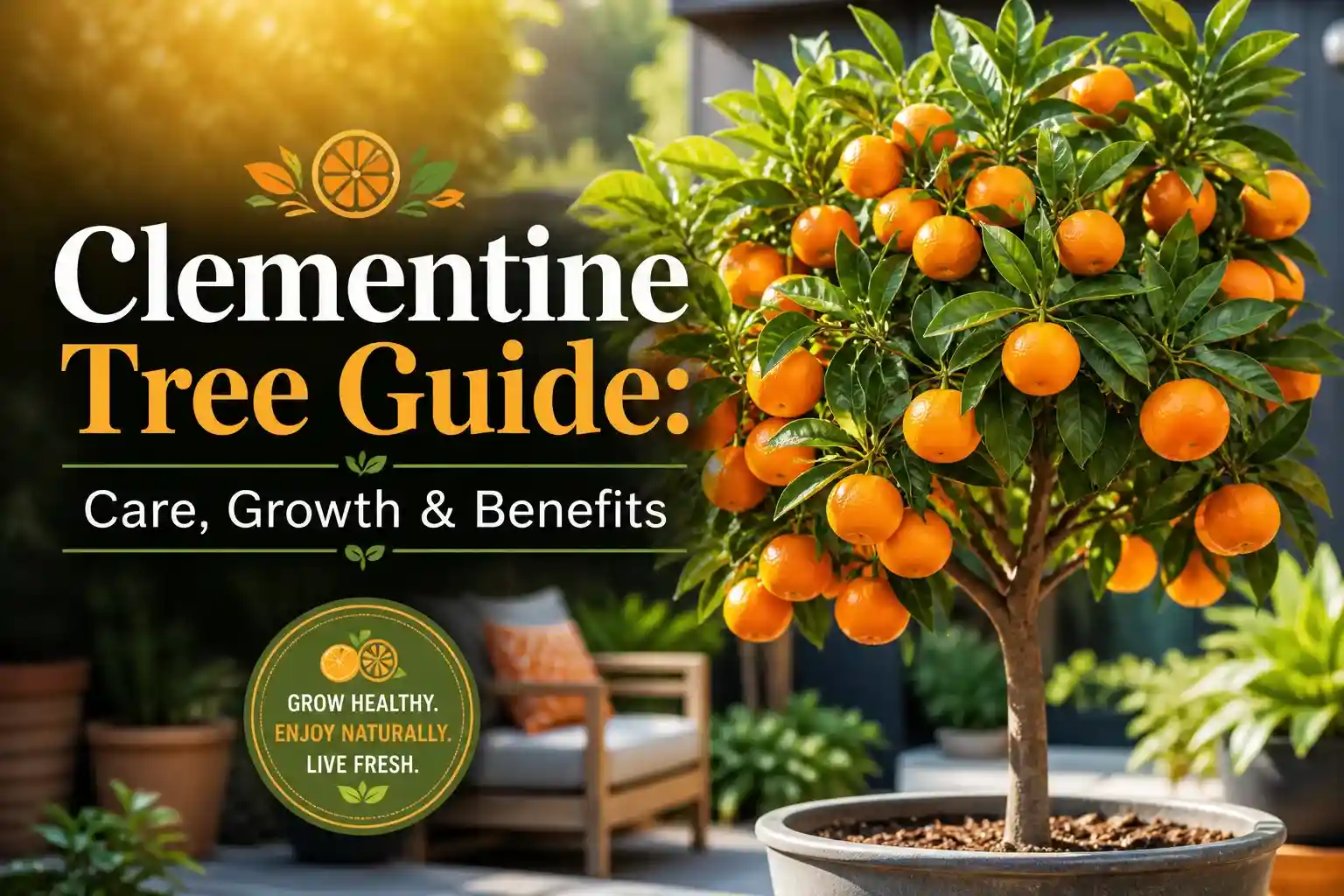
A clementine tree is a small citrus tree known for producing sweet, easy-to-peel, and mostly seedless fruit. If you’re wondering what is a clementine, it is a type of mandarin citrus that has gained global popularity due to its convenient size, juicy flavor, and low maintenance growth. The clementine citrus fruit is widely consumed fresh and is valued for its smooth skin, bright orange color, and naturally sweet taste.
Understanding what is a clementine fruit helps highlight its role as a beginner-friendly fruit crop. The clementine citrus tree is compact, productive, and suitable for both home gardens and container growing, making it a preferred choice among citrus growers.
The clementine fruit, often referred to as fruit clementine, is a small citrus fruit known for its smooth peel, bright orange color, and naturally sweet flavor. Among clementines fruit, it stands out for being easy to peel and typically seedless, making it highly convenient for fresh consumption.
In terms of taste and texture, clementine the fruit offers:
Its seedless nature and balanced sweetness make it one of the most popular citrus fruits globally, especially for quick snacking and dietary use.
A common question is: is a clementine a mandarin? The answer is yes—a clementine is a specific type of mandarin orange.
The relationship between clementine mandarin and mandarin clementine can be understood as:
Clarifying common queries:
This classification places clementines within the broader citrus family, specifically under mandarins due to their similar structure and growth traits.
The differences between clementine vs mandarin and mandarin orange vs clementine are subtle but important.
For another small citrus fruit comparison, you can also explore our Nagami kumquat guide.
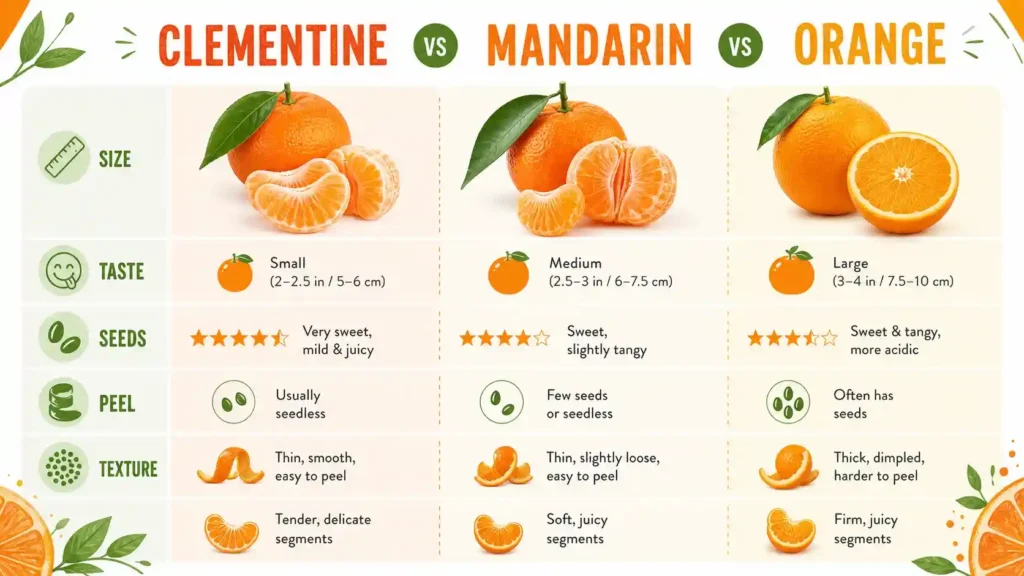
The comparison below highlights key distinctions between clementine and orange, as well as how clementine tangerine mandarin types relate.
| Feature | Clementine | Mandarin |
Orange |
|
Size |
Small | Small to medium | Medium to large |
| Taste | Very sweet, low acidity | Sweet, slightly tangy |
Balanced sweet and tart |
|
Seeds |
Usually seedless | May contain seeds | Often contains seeds |
| Peel | Thin, smooth, easy to peel | Thin to slightly loose |
Thicker, harder to peel |
|
Texture |
Soft and juicy | Juicy | Firm and juicy |
| Category | Type of mandarin | Citrus category (broad) |
Separate citrus species |
In summary:
This comparison helps clearly define how these citrus fruits differ in structure, taste, and classification.
The clementine plant is a compact, evergreen citrus tree, making it highly suitable for small gardens and limited spaces. A mature clementine fruit tree typically grows:
Its naturally rounded canopy and manageable size make it ideal for:
The tree structure is dense, with well-branched limbs that support consistent fruit production without requiring excessive space.
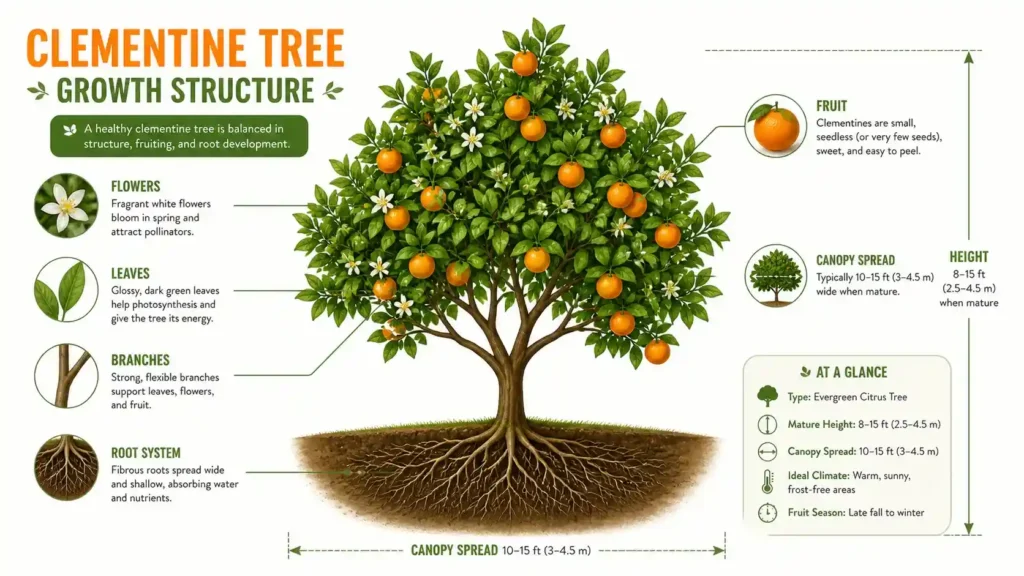
The clementine citrus tree features glossy, dark green leaves that remain year-round, contributing to its ornamental value. The foliage is dense and healthy, supporting efficient photosynthesis and fruit development.
Clementine flower characteristics:
Fruit development in clementine citrus follows a clear cycle:
The fruit is:
The root system of a clementine tree is relatively shallow but well-spread, allowing it to efficiently absorb nutrients from the topsoil layer.
Key root characteristics:
This root structure makes the tree highly suitable for:
With proper drainage and pot size, clementine trees adapt well to containers, maintaining healthy growth and fruit production even in limited space.
Clementine trees are available in both standard and hybrid types, each offering slight differences in taste, ripening time, and adaptability. Standard varieties are traditionally grown for their consistent sweetness and seedless nature, while hybrids are developed to improve traits such as extended harvest seasons or enhanced flavor.
Some commonly recognized varieties include:
These varieties are selected based on climate suitability, fruit quality, and harvest timing, allowing growers to choose according to their regional conditions and preferences.
Clementines are part of the broader mandarin group, which includes multiple citrus types with similar characteristics but varying flavor profiles and growth habits. The relationship between clementines and mandarins is based on shared botanical classification, with clementines representing a refined, often seedless subgroup.
Key points of relationship:
In different regions, especially when discussing mandarin types Australia, classification may vary slightly due to local growing conditions and naming conventions. However, clementines are generally recognized within the mandarin category, sharing similar cultivation requirements and fruit characteristics.
This classification helps growers and consumers understand how clementines fit within the wider citrus spectrum.
Clementine trees thrive in warm, subtropical to tropical climates, where temperatures remain mild and frost is minimal. Consistent warmth supports flowering, fruit development, and sugar accumulation in the fruit.
Ideal climate conditions:
Soil requirements:
Proper soil drainage is critical, as excess moisture can damage roots and reduce fruit production.
Planting a clementine plant or even a mandarin plant follows a simple, structured process to ensure healthy establishment.
Step-by-step planting guide:
Proper spacing should be maintained to allow canopy expansion and airflow.
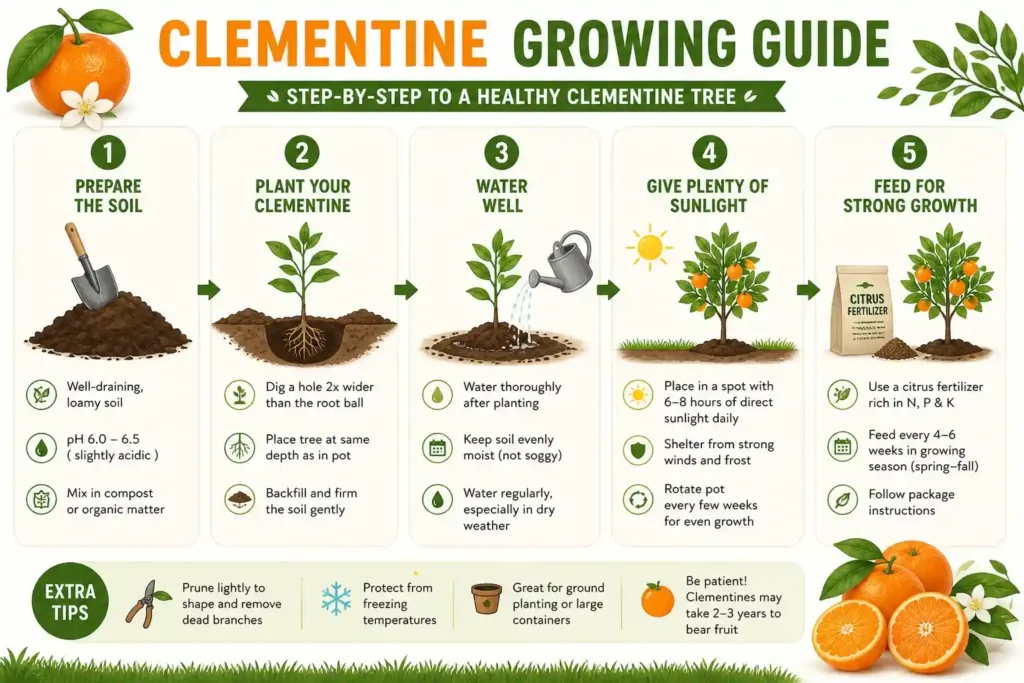
Consistent care ensures strong growth and fruit quality in clementine trees.
Watering schedule:
Fertilizer needs:
Sun exposure:
These conditions are similar to many fruit trees & edible plants that need full sunlight and well-drained soil for healthy growth.
Clementine trees adapt well to container cultivation, especially in the form of dwarf fruit trees. This makes them suitable for patios, balconies, and small spaces.
Key considerations for growing in pots:
Dwarf varieties maintain a compact size while still producing high-quality fruit, making container growing a practical and efficient option.
Proper pruning helps maintain the shape, health, and productivity of a clementine tree. It also improves airflow and sunlight penetration, which are essential for fruit development.
When to prune:
How to prune:
Light and regular pruning is preferred over heavy cutting to avoid stressing the tree.
Clementine trees, like other citrus plants, can be affected by common pests and diseases if not properly managed.
Common citrus pests:
Preventive measures:
Keeping the tree healthy through proper care reduces the risk of serious infestations.
Seasonal adjustments are important to ensure consistent growth and fruit production throughout the year.
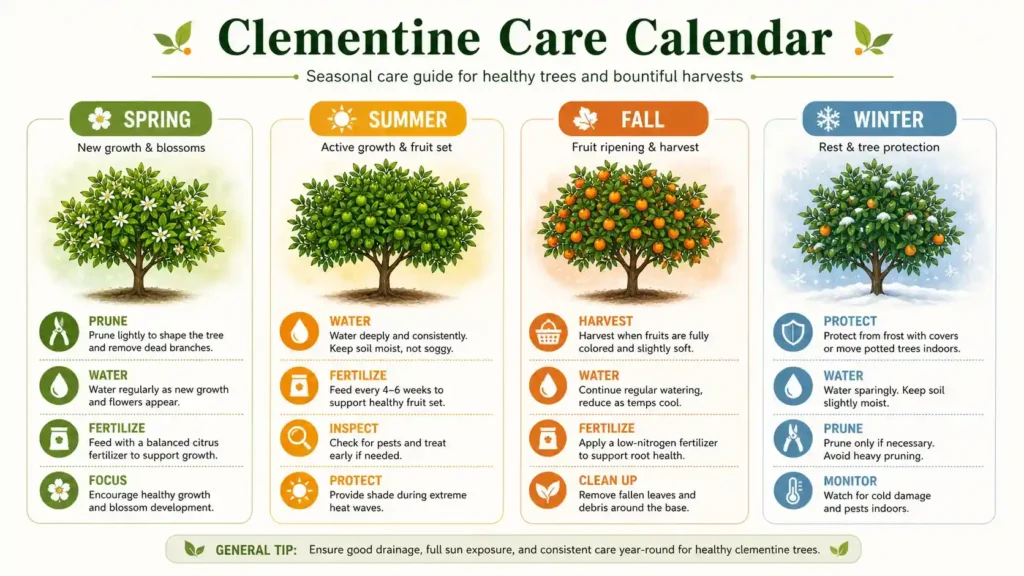
Winter protection:
Fruit harvesting timeline:
Consistent seasonal care ensures long-term health and reliable fruit yield.
In Australia, the term clementine is not always commonly used in everyday language. Instead, clementines are generally referred to under the broader category of mandarins.
Clear answers to common queries:
This naming difference is mainly due to regional classification and marketing practices rather than any botanical difference.
Growing clementine Australia varieties is highly feasible due to the country’s favorable climate conditions. Clementines, like other mandarins, thrive in warm and temperate regions with adequate sunlight.
Climate suitability:
Regions overview for clementines in Australia:
With proper care, clementines in Australia can produce high-quality fruit, similar to other mandarin varieties, making them a reliable option for both home gardeners and commercial growers.
Clementine fruit is valued for its high nutrient density while remaining low in calories. It is especially rich in essential vitamins and hydration-supporting compounds, making it suitable for regular consumption.
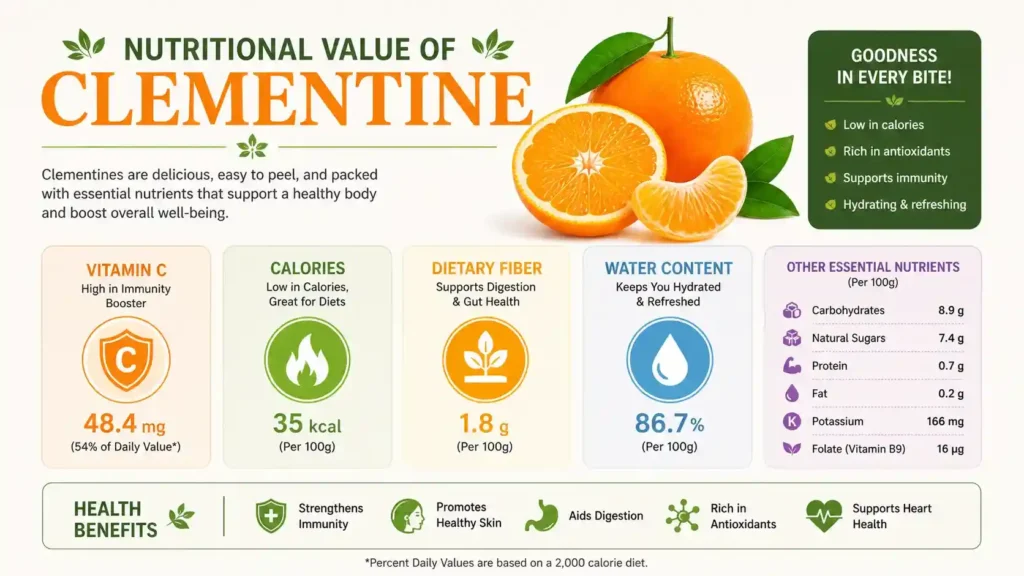
|
Nutrient |
Amount |
|
Calories |
~47 kcal |
|
Vitamin C |
~48 mg |
| Carbohydrates |
~12 g |
| Fiber |
~2 g |
| Water content |
~85% |
This nutrient profile makes clementines a balanced fruit for daily dietary inclusion.
Regular consumption of clementine fruit offers multiple health benefits due to its vitamin content, antioxidants, and natural compounds.
Immunity support:
Skin health:
Digestive benefits:
Overall, clementine fruit provides a combination of essential nutrients and health-supporting properties, making it a practical addition to a balanced diet.
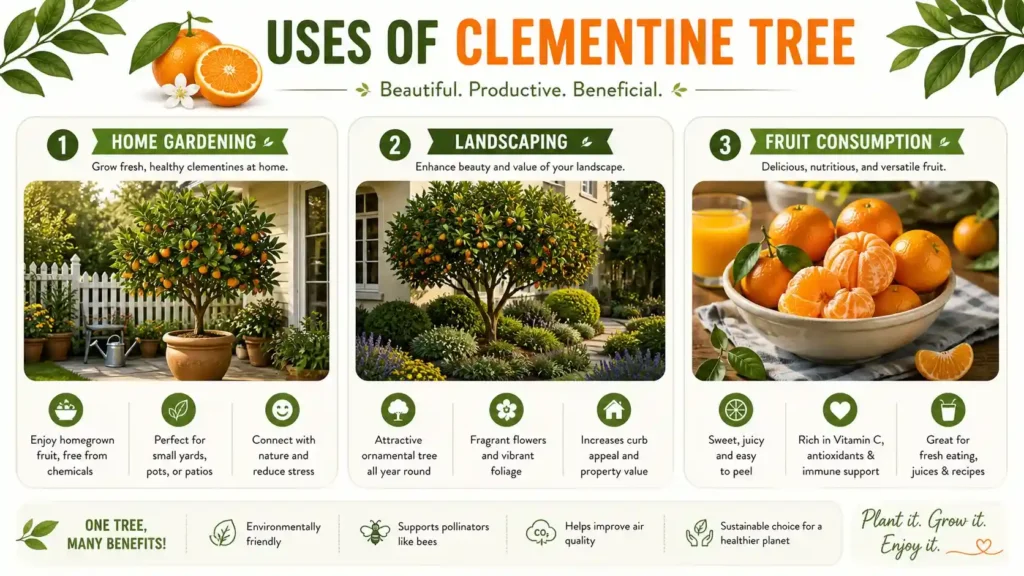
The clementine tree is a versatile citrus plant valued for both practical and aesthetic purposes. Its compact size, attractive appearance, and fruit-bearing ability make it suitable for multiple uses.
Home gardening:
Landscaping use:
Edible fruit production:
For another practical citrus tree with multiple uses, see our bush lemon guide.
These uses make the clementine tree a practical choice for both functional gardening and visual landscape enhancement.
The clementine tree stands out as a practical and rewarding citrus plant due to its compact size, easy maintenance, and consistent production of sweet, seedless fruit. As part of the mandarin family, it combines desirable fruit quality with adaptability, making it suitable for a wide range of growing conditions.
For home growers, it is an ideal choice because it requires minimal space, can be grown in containers, and delivers reliable yields with proper care. Its ornamental value, along with edible benefits, adds to its overall appeal in both gardens and patios.
Growing a clementine tree is a simple way to incorporate fresh citrus into your space while enhancing the environment with a productive and visually attractive plant.
A clementine tree is a small citrus tree that produces sweet, easy-to-peel, and mostly seedless fruit. It belongs to the mandarin family and is known for its compact size, making it suitable for home gardens and container growing.
No, a clementine is not exactly the same as a mandarin, but it is a type of mandarin. All clementines fall under the mandarin category, but mandarins include several other varieties as well.
A clementine tree typically takes about 2 to 3 years to start producing fruit when grown under proper conditions. Full maturity and optimal fruit production usually occur within 4 to 6 years.
Yes, clementine trees can grow successfully in pots, especially dwarf varieties. With proper sunlight, watering, and drainage, they can produce healthy growth and fruit even in containers.
In Australia, clementines are generally referred to as mandarins. They are often sold and categorized under the broader mandarin citrus group.
Clementines are smaller, sweeter, and usually seedless with a thin, easy-to-peel skin. Oranges are larger, slightly more acidic, may contain seeds, and have a thicker peel that is harder to remove.