Grow Better Gardens with Smarter Plant Choices
Discover helpful guides on trees, hedges, fruit plants, edible plants, and beautiful landscape greenery.

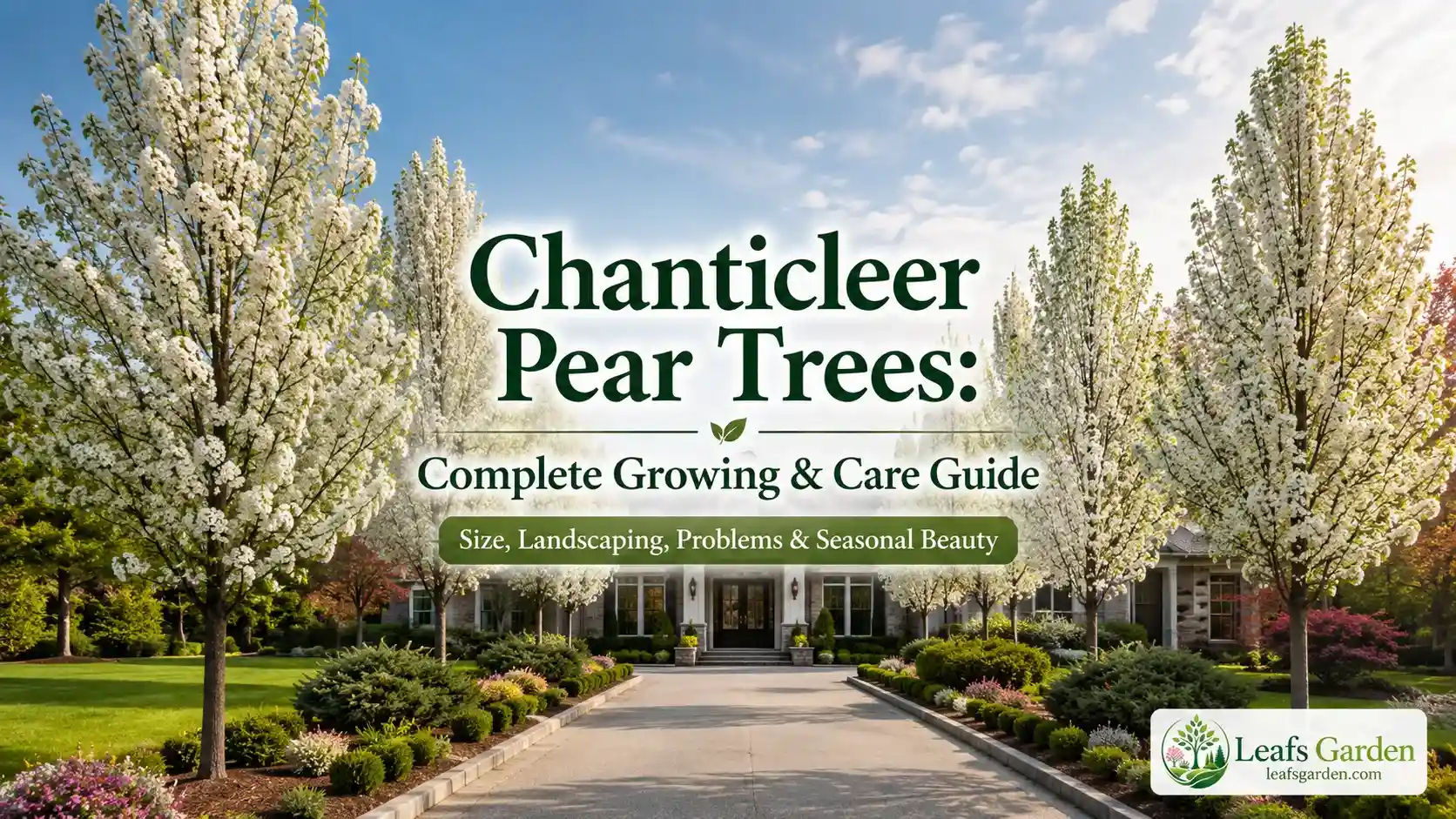
Chanticleer pear trees are one of the most widely planted ornamental flowering trees because they combine elegant upright growth, bright white spring blossoms, colorful fall foliage, and strong adaptability to urban environments. Scientifically known as Pyrus calleryana ‘Chanticleer’, this ornamental pear variety is commonly used in residential landscapes, commercial properties, streetscapes, and formal driveway designs.
Homeowners and landscapers prefer Chanticleer pear trees for their narrow pyramidal shape, clean vertical structure, and reliable seasonal interest. In spring, the tree produces dense clusters of white flowers that create a striking flowering display. During summer, glossy green foliage adds texture and structure to the landscape. In fall, the leaves transform into vibrant shades of red, orange, purple, and burgundy.
Unlike many fruit-bearing pear varieties, Chanticleer ornamental pears produce only small ornamental fruit, making them popular as low-mess landscape trees. Their narrow canopy also makes them ideal for driveway planting, privacy borders, hedge rows, and compact urban spaces where wider trees may become problematic.
Chanticleer pears are frequently compared with other flowering pear varieties such as the Bradford pear, Cleveland Select pear, and Capital pear. These comparisons usually focus on branch strength, growth habit, mature size, invasiveness concerns, and landscaping performance. Among ornamental flowering pears, Chanticleer is often considered one of the most balanced choices because of its upright form, improved structural durability, and adaptable growth characteristics.
Chanticleer pear trees are upright ornamental flowering pear trees known for their narrow pyramidal shape, white blossoms, glossy foliage, and strong landscape performance. They are widely planted in residential and commercial landscapes because they provide seasonal beauty without requiring excessive maintenance.
These ornamental pear trees are especially valued for their vertical growth habit, making them suitable for driveways, narrow gardens, street plantings, and formal landscape designs. Their dense spring flowering display and colorful autumn foliage also make them one of the most recognizable flowering pear varieties in modern landscaping.
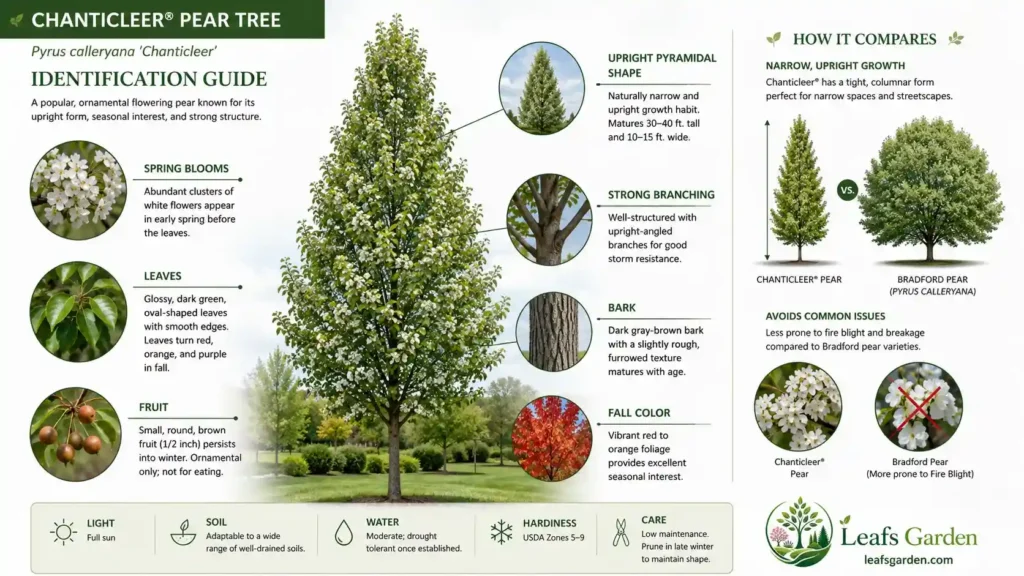
The scientific name of Chanticleer pear trees is Pyrus calleryana ‘Chanticleer’. This tree belongs to the Callery pear group within the Rosaceae family, which also includes apples, roses, quinces, and edible pear species.
The terms chanticleer pyrus calleryana, pyrus chanticleer pear, and pyrus calleryana chanticleer all refer to the same ornamental pear cultivar. These naming variations are commonly used in nursery catalogs, botanical references, and landscaping guides.
Classification overview:
Unlike edible pear trees grown for fruit production, Chanticleer pears are primarily cultivated for ornamental value, seasonal color, and structural landscaping use.
Chanticleer pear trees are known by several common names across different regions and nursery markets. Most names describe their ornamental flowering characteristics or their relationship to Callery pear varieties.
Common names include:
Some homeowners also compare Chanticleer pears with the Capital ornamental pear because both varieties feature narrow upright growth suitable for compact spaces. However, Capital pear trees usually have a more columnar shape, while Chanticleer pears develop a broader pyramidal canopy over time.
Chanticleer pear trees originated from the Callery pear species, Pyrus calleryana, which is native to parts of China and East Asia. The species was originally introduced into North America for ornamental landscaping and disease resistance research.
Over time, selected cultivars like Chanticleer became popular because of their stronger branch structure and improved landscape performance compared to older ornamental pear varieties.
Urban planners and commercial landscapers widely adopted Chanticleer pears for:
Their tolerance to pollution, compacted soil, heat, and changing urban conditions helped make them one of the most commonly planted ornamental flowering trees in modern city landscapes.
| Feature | Chanticleer Pear |
| Botanical Name | Pyrus calleryana ‘Chanticleer’ |
| Tree Type | Ornamental flowering pear |
| Mature Shape | Upright pyramidal |
| Flowers | White spring blossoms |
| Fruit | Small ornamental fruit |
| Fall Color | Red, orange, purple |
Chanticleer pear trees grow tall and narrow, making them ideal for driveways, hedges, privacy screens, and compact landscapes. Their upright structure, fast growth rate, glossy foliage, and seasonal color changes make them one of the most attractive ornamental flowering pear trees for modern landscaping.
These trees provide year-round visual interest through spring blossoms, dense summer foliage, vibrant fall colors, and a clean architectural shape during winter.
Chanticleer pear trees are known for their tall upright form and relatively narrow spread compared to many other flowering pear varieties. Their controlled canopy shape allows them to fit well in urban landscapes and smaller residential properties.
Typical mature size includes:
The narrow growth habit is one of the main reasons landscapers use Chanticleer pears for formal driveway planting and property borders. Unlike wider ornamental pears, the canopy usually stays compact enough for tighter planting areas.
Compared to broad shade trees, flowering pear tree height develops quickly while maintaining a more controlled silhouette. This creates strong vertical landscape structure without excessive horizontal spread.
Chanticleer pear trees are considered fast-growing ornamental trees. Under proper growing conditions, they commonly grow between 1.5 and 3 feet per year during their active development stage.
Their fast growth rate makes them useful for:
Chanticleer pears also tolerate difficult urban conditions better than many ornamental species. They handle:
With proper pruning and maintenance, lifespan expectations typically range from 30 to 50 years. Structural pruning during early growth stages can significantly improve long-term branch stability and tree health.
The foliage of Chanticleer pear trees adds ornamental value throughout the growing season. Leaves emerge bright green in spring before developing into darker glossy foliage during summer.
Key foliage characteristics include:
Pear tree foliage texture appears dense and polished, giving the tree a refined appearance in formal landscapes. The compact foliage also helps create visual screening and shade without producing an overly heavy canopy.
Chanticleer pear fall color is one of the tree’s strongest ornamental features.
This seasonal transformation is one of the key selection criteria covered in this complete ornamental flowering trees for modern landscapes guide, where colour, structure, and year-round appeal all play an important role.
In autumn, foliage changes into vivid tones including:
Cooler climates often produce the most intense seasonal color displays.
Chanticleer pear trees produce dense clusters of white spring blossoms before the foliage fully emerges. The flowering display creates a bright ornamental effect that makes the tree highly noticeable in residential and commercial landscapes.
Flowering characteristics include:
Callery pear blossoms cover the canopy heavily during peak bloom season, creating the appearance of a fully white flowering tree. This dramatic blooming effect is one of the primary reasons ornamental pear trees remain popular in landscape design.
Pyrus calleryana flowers also attract bees and early-season pollinators. However, some people notice a strong odor from the blossoms during peak flowering periods.
The blooming pear tree visual appeal works especially well in:
Chanticleer pear fruit is small, hard, and ornamental rather than commercially edible. The tree is often described as a “fruitless pear,” although it can still produce tiny decorative fruit under certain pollination conditions.
Fruit characteristics include:
The fruitless pear explanation mainly refers to the tree’s limited ornamental fruit production rather than complete sterility. Compared to traditional pear trees, Chanticleer pears produce very little usable fruit.
Many homeowners ask, “Are Callery pears edible?” Technically, the small fruits are not toxic, but they are extremely hard, gritty, and poor in flavor. They are considered ornamental rather than suitable for eating.
| Variety | Shape | Height | Width | Best Use |
| Chanticleer Pear | Upright narrow | Tall | Narrow | Driveways |
| Bradford Pear | Wide spreading | Medium | Wide | Shade |
| Cleveland Select | Dense upright | Tall | Medium | Privacy |
| Capital Pear | Columnar | Tall | Very narrow | Tight spaces |
Chanticleer pear trees are considered one of the best ornamental pear varieties because they combine strong branching, narrow growth, and reliable seasonal color. Compared to other flowering pear tree varieties, Chanticleer offers a more balanced combination of structure, appearance, and urban adaptability.
Many homeowners compare ornamental pear trees based on canopy shape, flowering quality, branch strength, maintenance needs, and landscape performance. Among modern flowering pear varieties, Chanticleer remains one of the most widely recommended options for residential and commercial planting.
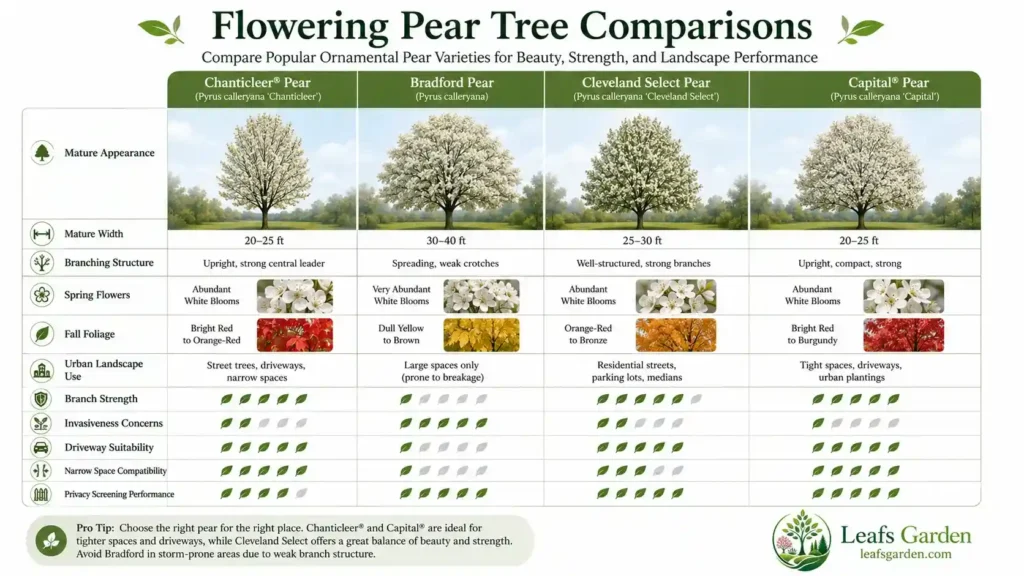
The comparison between Chanticleer and Bradford pear trees is one of the most common discussions in ornamental landscaping. Both trees belong to the Callery pear group and produce dense white spring blossoms, but their structural performance differs significantly.
Bradford pear flower picture comparisons often show both trees covered in bright white blooms during spring. While the flowering effect appears visually similar, the canopy structure and long-term durability are very different.
Major structural differences include:
Branch strength comparison is one of the biggest reasons landscapers now prefer Chanticleer pears.
Among other deciduous ornamental options, silver birch trees are similarly valued for their elegant seasonal structure and strong autumn colour in cooler residential landscapes.
Bradford pears are well known for weak branch unions that frequently crack under wind, ice, or heavy growth pressure.
Invasive concerns also affect Bradford pear popularity. Many regions now discourage Bradford pear planting because cross-pollination between Callery pear cultivars contributes to invasive spread. Chanticleer pears are generally considered less problematic but still belong to the same species group.
The Pyrus Cleveland Select pear is another popular ornamental flowering pear tree commonly compared with Chanticleer pears. Both varieties feature upright growth and strong seasonal color, making them suitable for modern landscape designs.
Key differences include:
Density comparison becomes important when selecting trees for privacy screening or formal planting rows. Cleveland Select pears provide thicker visual coverage, while Chanticleer pears create a more refined architectural appearance.
Landscaping suitability depends on the intended use:
Chanticleer pear works best for:
Cleveland Select pear works best for:
Both varieties are considered stronger and more durable than Bradford pears.
Capital pear trees are known for their extremely narrow columnar shape. When comparing Chanticleer and Capital pear varieties, the main difference is canopy width and planting flexibility.
Capital pear tree shape characteristics include:
Chanticleer pears still maintain upright growth but develop a broader pyramidal canopy over time. This creates a softer ornamental appearance while preserving vertical landscape structure.
Ornamental Capital pear advantages include:
However, Chanticleer pears often provide a more balanced ornamental effect because their canopy develops additional fullness and seasonal texture.
Narrow urban planting uses for both trees include:
Several ornamental pear varieties are commonly used in landscaping, each offering different growth habits, canopy shapes, and maintenance characteristics.
Popular varieties of flowering pear trees include:
Different types of ornamental pear trees are selected based on:
Among flowering pear tree varieties, Chanticleer is often considered one of the most versatile because it combines:
Chanticleer pear trees grow best in full sun, well-drained soil, and areas with good airflow and seasonal climate variation. These ornamental flowering pear trees are highly adaptable, but proper planting conditions improve flowering, foliage color, branch development, and long-term tree health.
When planted correctly, Chanticleer pears establish quickly and become durable landscape trees with strong urban tolerance and reliable seasonal beauty.
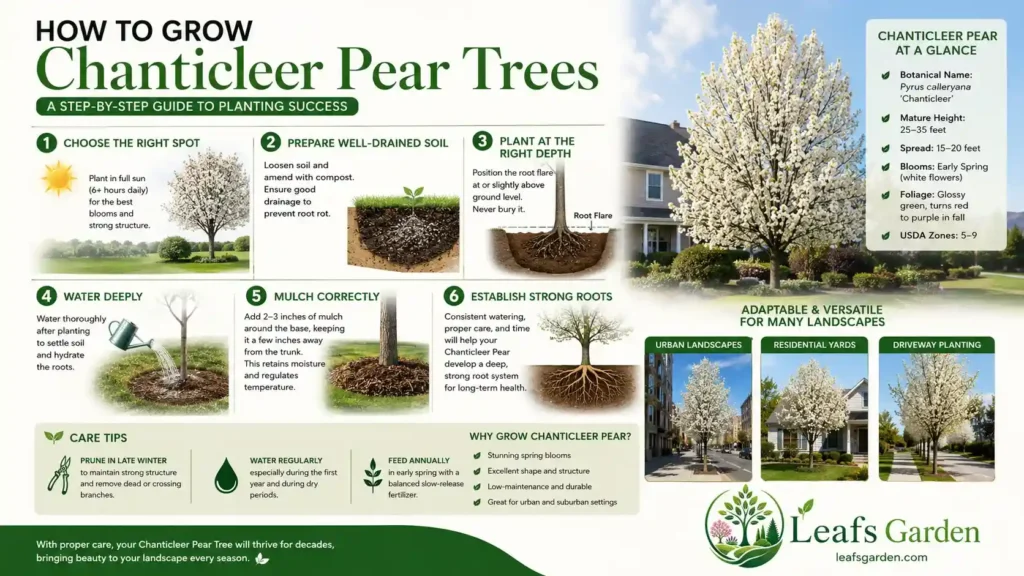
Chanticleer pear trees perform best in USDA Zones 5–8, where they receive cold winters and warm growing seasons. They tolerate a wide range of climates, making them suitable for many residential and commercial landscapes.
Climate adaptability includes:
Flowering pear tree Ontario plantings are common because Chanticleer pears handle cold winters and produce reliable spring blooms in cooler climates.
Flowering pear tree Utah landscapes also benefit from the tree’s drought adaptability and tolerance for temperature variation. In warmer regions, regular watering during establishment helps maintain healthy growth.
Callery pear Australia adaptation has also increased in some temperate regions because ornamental pears tolerate urban environments and seasonal changes relatively well. However, local regulations should always be checked due to invasive concerns associated with some Callery pear varieties.
Chanticleer pear trees require full sun for the best flowering performance and canopy development. They should receive at least 6–8 hours of direct sunlight daily.
Proper sunlight exposure improves:
Low-light planting locations may reduce bloom production and create weaker branch development. Full sun conditions also help reduce excess moisture buildup within the canopy, improving airflow and disease prevention.
Well-drained soil is one of the most important requirements for healthy Chanticleer pear tree growth. Although these trees tolerate difficult urban conditions, consistently waterlogged soil can increase root problems and reduce vigor.
Ideal soil conditions include:
Drainage needs are especially important during the establishment period. Heavy compacted soil should be improved before planting when possible.
Chanticleer pears also show moderate clay tolerance, which helps them adapt to urban and suburban landscapes where soil quality is often inconsistent.
Urban soil adaptability is one reason ornamental pear trees are widely used in:
Young Chanticleer pear trees require regular deep watering during the first few growing seasons. Consistent moisture helps roots establish properly and encourages stable growth.
Young tree watering guidelines include:
After establishment, mature tree drought tolerance improves significantly. Mature Chanticleer pears can handle moderate dry periods better than many ornamental flowering trees.
However, extended drought stress may reduce:
Mulching around the root zone helps retain moisture and stabilize soil temperature.
Chanticleer pear trees benefit from moderate fertilization, especially during early growth years. Excess fertilizer can create overly aggressive branch growth, so balanced feeding is preferred.
A typical spring feeding schedule includes:
Organic matter benefits include improved:
Compost and organic mulch are often sufficient for mature ornamental pear trees growing in healthy soil conditions.
Proper planting improves root establishment, canopy balance, and long-term structural strength.
Chanticleer ornamental pear trees are widely used in modern landscaping because of their vertical shape, seasonal beauty, and low-maintenance structure. Their upright pyramidal canopy, spring blossoms, glossy foliage, and colorful fall display allow them to work in both formal and contemporary landscape designs.
These ornamental flowering pear trees are especially valuable in urban environments where space efficiency, visual structure, and seasonal interest are important.
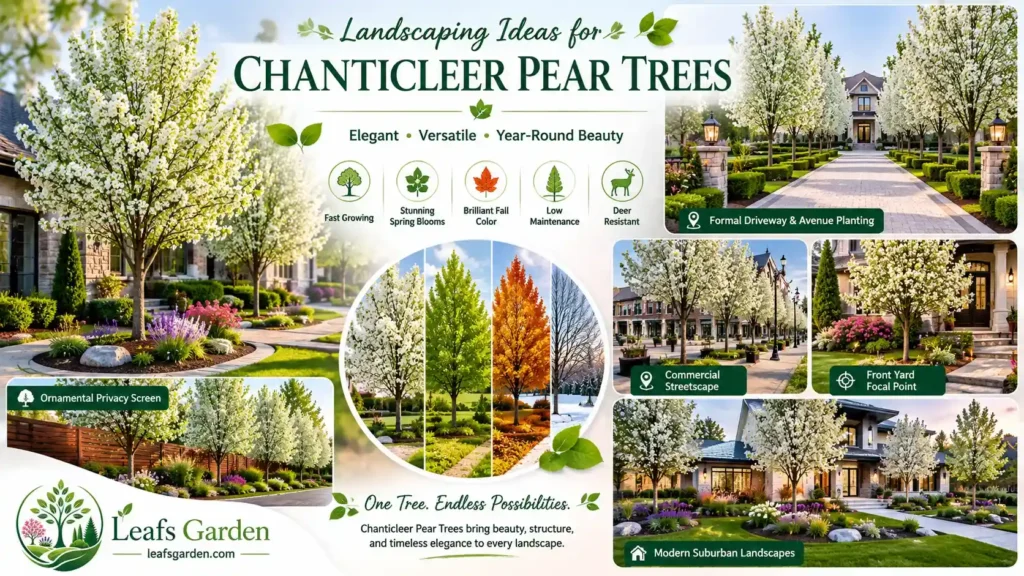
Chanticleer pear trees are one of the most popular choices for formal driveway planting because their narrow upright growth creates a clean and symmetrical appearance without overwhelming the space.
Formal driveway planting benefits include:
Symmetrical spacing is important for achieving balanced driveway designs. Trees are commonly planted in evenly spaced rows along both sides of long driveways to create a uniform avenue effect.
Driveway ornamental pear tree layouts work especially well for:
During spring bloom season, rows of white flowering pear trees create a dramatic visual corridor that adds strong curb appeal.
Chanticleer pears can also function as upright ornamental hedge trees because of their dense branching and vertical growth habit. Although not traditional hedge plants, they create effective seasonal screening when planted in rows.
Popular ornamental pear hedge layouts include:
Privacy screening benefits improve as trees mature and canopy density increases. Their narrow growth allows screening without consuming excessive horizontal landscape space.
Compared to broader ornamental trees, Chanticleer pears maintain cleaner hedge alignment and more structured vertical form.
Spacing considerations for hedge planting include:
Chanticleer ornamental pears are widely used as decorative landscape trees because they provide multi-season visual interest while remaining relatively easy to maintain.
Front yard focal point uses include:
Commercial landscapes frequently use Chanticleer pears because the trees tolerate pollution, pavement heat, compacted soil, and restricted planting zones better than many ornamental species.
Common commercial applications include:
Street tree planting is another major landscaping use. The narrow canopy shape reduces interference with sidewalks, roads, and overhead visibility while still providing ornamental value and seasonal color.
Companion plants help soften the base of Chanticleer pear trees while adding texture, color contrast, and layered landscape interest.
Recommended shrubs include:
Flowering perennials commonly paired with ornamental pear trees include:
Groundcovers help reduce weeds and improve landscape appearance around the tree base. Popular choices include:
When selecting companion plants, landscapers often focus on contrasting foliage texture, bloom timing, and seasonal color coordination with Chanticleer pear fall foliage.
For gardens that also include evergreen flowering specimens, dwarf flowering gum varieties pair well in mixed ornamental planting schemes by adding vibrant year-round colour alongside deciduous trees.
Many homeowners search for flowering pear tree images before selecting landscape designs. Pictures of flowering pear trees commonly showcase:
Images of flowering pear trees are especially popular during peak bloom season when dense white blossoms fully cover the canopy and create dramatic landscape contrast.
Regular pruning, watering during establishment, and monitoring for disease help Chanticleer pear trees stay healthy and structurally strong. Although Chanticleer ornamental pear trees are considered relatively low maintenance, consistent seasonal care improves flowering performance, canopy balance, fall color, and long-term branch stability.
Proper care also reduces the risk of disease problems, storm damage, and weak structural growth commonly associated with some ornamental pear varieties.
Pruning is important for maintaining the upright canopy structure and improving branch strength as Chanticleer pear trees mature. Early structural pruning helps develop a strong central leader and balanced canopy form.
Upright canopy management focuses on:
Removing crossing branches is especially important because rubbing limbs can create wounds that increase disease risk. Weak inward-growing branches should also be removed to maintain an open canopy structure.
Best pruning practices include:
Light annual pruning usually provides better long-term results than severe cutting after years of neglected growth.
Seasonal maintenance helps Chanticleer pear trees remain healthy throughout changing weather conditions and active growth cycles.
Spring is the tree’s most active ornamental season. During bloom development:
Healthy spring care improves blossom density and canopy vigor.
Summer heat increases moisture stress, especially for newly planted ornamental pears.
Summer care recommendations include:
Established Chanticleer pears tolerate moderate drought, but prolonged dryness may reduce foliage quality and fall color intensity.
Fall cleanup reduces disease pressure and improves landscape appearance before winter dormancy.
Important fall maintenance includes:
Removing infected plant debris helps reduce overwintering disease problems.
Winter preparation is especially important for younger trees during harsh cold conditions.
Winter protection steps include:
Young ornamental pear trees may benefit from temporary trunk guards in areas with animal damage or frost cracking risks.
Mulching helps protect Chanticleer pear tree roots by improving moisture retention and stabilizing soil temperature throughout the year.
Benefits of proper mulching include:
Moisture retention becomes especially important during summer heat and drought periods. Organic mulch also slowly improves soil quality as it decomposes.
Temperature regulation helps protect shallow feeder roots from extreme heat and winter freezing stress.
Proper mulching guidelines include:
Correct root protection practices help maintain long-term tree health and improve overall ornamental performance.
Although Chanticleer pears are more durable than Bradford pears, they can still experience odor issues, disease, weak branching, and pest problems. Regular monitoring and proper maintenance help reduce long-term damage and improve overall tree health.
Most problems become manageable when identified early through seasonal inspection and preventative care.
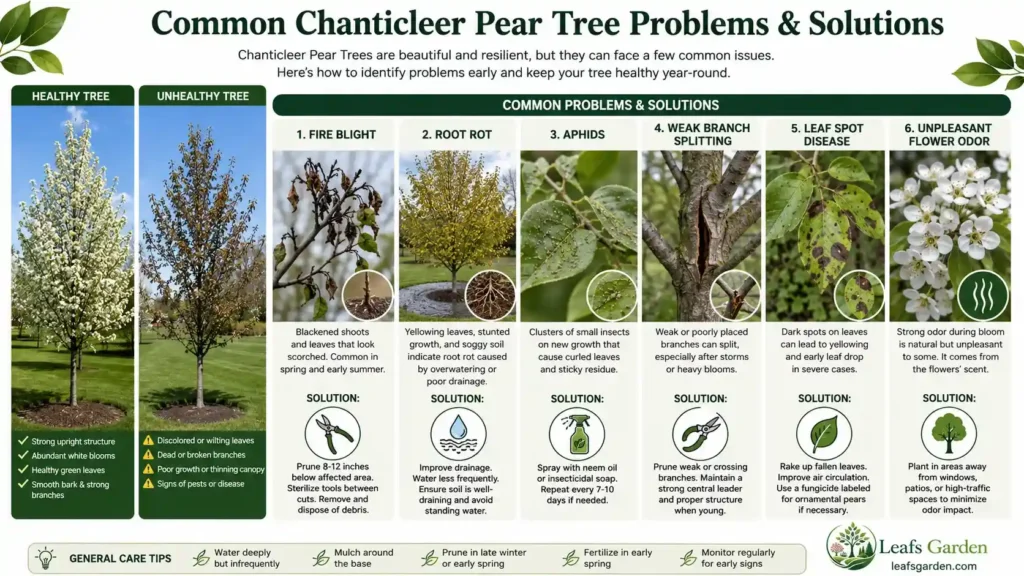
One of the most discussed issues with Chanticleer pear trees is the unpleasant flower smell produced during spring blooming season. The odor is strongest when the tree is fully covered in blossoms.
Why flowers smell unpleasant:
Many people describe the smell as sour, fishy, or unpleasant. Despite this, the odor plays an important biological role in attracting pollinators.
Pollinator attraction explanation:
The flowering period is relatively short, so the odor typically fades after peak bloom season ends.
Chanticleer pear trees can develop fungal and bacterial diseases, especially in poorly ventilated or excessively wet growing conditions. Proper pruning, drainage, and sanitation significantly reduce disease pressure.
Fire blight is one of the most serious diseases affecting ornamental pear trees. This bacterial disease commonly appears during warm wet spring conditions.
Symptoms include:
Infected branches should be pruned several inches below visible damage using sanitized pruning tools.
Leaf spot diseases create dark lesions on ornamental pear leaves during humid conditions.
Common symptoms include:
Good airflow and removing fallen leaves help reduce recurring fungal problems.
Root rot develops when soil remains excessively wet for extended periods. Poor drainage is the most common cause.
Root rot symptoms include:
Improving soil drainage and avoiding overwatering are essential for prevention.
Several common landscape pests may feed on Chanticleer pear trees, especially during active growing seasons.
Aphids are small sap-feeding insects that cluster on soft new growth.
Aphid damage may include:
Heavy infestations can often be controlled with neem oil or insecticidal soap treatments.
Scale insects attach themselves to bark and stems while feeding on plant sap.
Symptoms include:
Dormant oil sprays are commonly used to manage scale populations.
Borers tunnel into trunks and branches, weakening structural stability over time.
Signs of borer activity include:
Healthy trees are less vulnerable to severe borer infestations.
Although Chanticleer pears are structurally stronger than Bradford pears, they can still develop weak branching if not pruned properly during early growth stages.
Structural pruning importance includes:
Compared to Bradford pear trees, Chanticleer pears usually have better branch attachment and reduced breakage risk. However, overcrowded growth and neglected pruning may still create structural weaknesses over time.
Storm damage risks increase when:
Routine canopy management helps maintain stronger long-term tree structure.
| Problem | Symptoms | Solution |
| Fire Blight | Black shoots | Prune infected areas |
| Root Rot | Wilting leaves | Improve drainage |
| Aphids | Sticky foliage | Neem oil treatment |
| Weak Branches | Splitting limbs | Structural pruning |
Some Callery pear varieties are considered invasive in certain regions because birds spread the seeds, though Chanticleer is generally less aggressive than Bradford pear. While Chanticleer ornamental pears are widely planted for landscaping, they still belong to the Pyrus calleryana species group, which has raised ecological concerns in several areas.
The level of invasiveness often depends on regional climate, nearby pear cultivars, seed production, and local environmental conditions.
Pyrus calleryana spread has become a major concern in parts of North America because cross-pollination between ornamental pear cultivars can produce fertile seeds. Birds then carry and spread those seeds into unmanaged natural areas.
Invasive Callery pear growth may lead to:
Although Chanticleer pears are generally considered less invasive than Bradford pears, they can still contribute to seed production when planted near compatible ornamental pear varieties.
Regional restrictions now exist in some states and municipalities where Callery pear planting is discouraged or regulated. Certain areas have even banned the sale of Bradford pear and related cultivars due to ecological concerns.
Before planting Chanticleer pear trees, homeowners should check:
Proper tree selection and responsible landscape planning help reduce potential environmental impact.
Chanticleer pear trees attract a variety of pollinators during spring bloom season. Their dense white flowers provide early nectar and pollen sources for beneficial insects.
Pollinator attraction commonly includes:
The heavy flowering display increases pollinator activity during spring, especially in urban environments where flowering tree diversity may be limited.
Bird interactions mainly occur later in the season when small ornamental fruit develops. Birds may consume the fruit and unintentionally spread seeds into nearby natural areas.
Wildlife interactions include:
Although ornamental pears provide some wildlife benefits, unmanaged spread remains the primary ecological concern associated with Callery pear species.
Many homeowners ask whether Callery pears are edible. Technically, the small fruit produced by Chanticleer and other ornamental pears is not poisonous, but it is generally considered poor quality for eating.
Fruit safety characteristics include:
Taste and texture are very different from commercial edible pear varieties. The fruit is usually gritty, dry, and highly astringent, making it unsuitable for normal fresh consumption.
The difference between ornamental vs edible pears is primarily based on breeding purpose:
Ornamental pears are grown for:
Edible pear trees are grown for:
Because Chanticleer pear trees are ornamental, fruit quality is not considered an important feature in their cultivation.
Healthy Chanticleer pear trees should have strong central leaders, healthy foliage, and well-developed root systems when purchased from nurseries. Choosing a high-quality ornamental pear tree improves transplant success, structural stability, disease resistance, and long-term landscape performance.
Before purchasing, homeowners should evaluate tree structure, root health, nursery reputation, and climate suitability.
Selecting a healthy Chanticleer pear tree is important for reducing future maintenance problems and improving establishment after planting.
A healthy trunk structure should include:
Trees with multiple competing trunks or weak branching may develop structural problems later.
Root ball quality is equally important. Healthy root systems should appear:
Container-grown ornamental pears should not appear severely root-bound. Excessively compacted roots can slow establishment and reduce long-term vigor.
Disease-free foliage indicators include:
Avoid purchasing trees showing signs of fire blight, root stress, or pest damage.
Medium-sized Chanticleer pear trees usually establish more successfully than oversized mature specimens. Younger trees adapt faster to transplanting and often develop stronger long-term root systems.
Common container sizes include:
Smaller nursery trees may establish faster, while larger trees provide more immediate landscape impact.
Bare-root vs potted tree considerations:
Advantages:
Disadvantages:
Advantages:
Disadvantages:
For most residential landscapes, container-grown Chanticleer pears are the most common nursery option.
Demand for ornamental flowering pear trees remains high in many residential and commercial landscaping markets. Searches for “ornamental pear tree for sale” and “Chanticleer pear tree for sale” are especially common during spring and fall planting seasons.
Nursery availability by climate often depends on:
Chanticleer pears are commonly available through:
In colder climates, spring inventory is usually highest after winter dormancy. In warmer regions, fall planting seasons may provide better tree selection and improved transplant establishment conditions.
Before purchasing, buyers should confirm:
Choosing healthy nursery stock from reputable suppliers significantly improves long-term ornamental pear tree performance.
Chanticleer pear trees remain one of the best ornamental flowering trees for modern landscapes because they combine elegant structure, spring blooms, vibrant fall color, and adaptable growth habits. Their upright pyramidal shape, glossy foliage, and reliable seasonal performance make them highly valuable for both residential and commercial landscape design.
These ornamental pear trees work especially well for:
Compared to many other flowering pear varieties, Chanticleer pears offer stronger branch structure, cleaner vertical growth, and better long-term landscape balance. Their ability to tolerate pollution, compacted soil, and changing climate conditions also makes them suitable for modern urban environments.
Proper care remains important for maintaining healthy growth and reducing common issues such as weak branching, disease pressure, and invasive spread concerns. Regular pruning, correct watering, good drainage, and responsible planting practices help improve structural stability and long-term ornamental value.
For homeowners and landscapers looking for a narrow ornamental flowering tree with strong seasonal beauty, Chanticleer pears continue to be one of the most dependable choices available.
To build a more complete landscape plan, explore ornamental tree comparisons and learn additional pruning and landscape planning guides for flowering trees and urban planting designs.
Chanticleer pear trees are considered fast-growing ornamental trees. Under good growing conditions, they commonly grow between 1.5 and 3 feet per year. Growth rate depends on sunlight exposure, soil quality, watering consistency, and climate conditions. Young trees typically establish quickly and develop strong vertical growth during their early years.
Yes, Chanticleer pear trees can produce small ornamental fruit, although they are often described as “fruitless pears” because fruit production is limited compared to edible pear trees. The fruit is: Small and hard Brownish-green in color Ornamental rather than edible Attractive to birds Most homeowners grow Chanticleer pears for flowers, fall color, and landscape structure rather than fruit production.
Chanticleer pear trees are considered less invasive than Bradford pears, but they still belong to the Pyrus calleryana species group. In some regions, Callery pear varieties can spread through bird-dispersed seeds after cross-pollination. Invasiveness concerns vary by location, climate, and local regulations. Some states and municipalities now discourage or restrict Callery pear planting.
The flowers of Chanticleer pear trees produce a strong odor during spring bloom season. Many people describe the smell as sour or unpleasant. The odor helps attract pollinators such as bees and insects during flowering. Although the smell can be noticeable during peak bloom, it usually lasts only for a short seasonal period.
The main difference between Chanticleer and Bradford pear trees is branch structure and canopy shape. Chanticleer pear characteristics: Upright pyramidal growth Stronger branch structure Narrower canopy Better urban compatibility Bradford pear characteristics: Wide spreading canopy Weak branch unions Higher storm damage risk Greater invasive concerns Because of improved structural durability, Chanticleer pears are generally considered the better landscaping choice.
Yes, Chanticleer pear trees are commonly planted near driveways because of their narrow upright growth habit. Their controlled canopy spread makes them suitable for formal driveway rows and compact landscape designs. They are especially popular for: Residential driveways Commercial entrances Avenue planting Property borders Proper spacing is still important to allow root development and canopy expansion.
Yes, Chanticleer pear trees are deciduous trees, meaning they lose their leaves during winter dormancy. Before leaf drop, the foliage usually develops vibrant fall colors including: Red Orange Purple Burgundy New leaves and spring blossoms emerge again during the following growing season.