Grow Better Gardens with Smarter Plant Choices
Discover helpful guides on trees, hedges, fruit plants, edible plants, and beautiful landscape greenery.

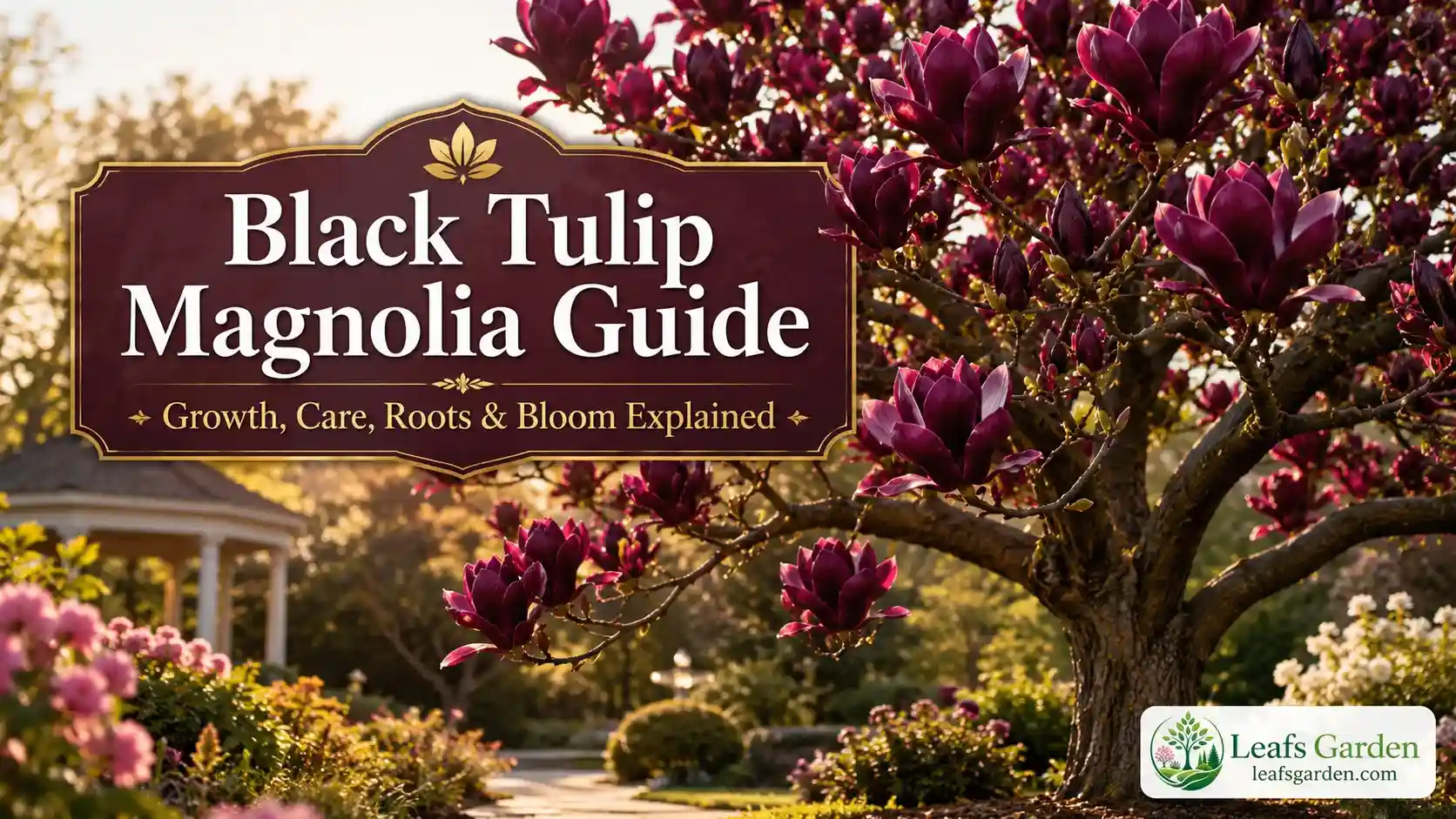
Black Tulip Magnolia is a striking ornamental flowering tree admired for its deep burgundy-purple blooms, elegant tulip-shaped flowers, and compact landscape form. This dramatic magnolia cultivar belongs to the botanical classification Magnolia × soulangeana ‘Black Tulip’, a hybrid saucer magnolia developed for richer flower color and improved ornamental value. Among deciduous magnolia varieties, it stands out for producing some of the darkest purple magnolia flowers seen in spring gardens.
Gardeners love the Black Tulip Magnolia because it combines large velvety blooms with a manageable tree size that works well in modern landscapes, front yards, and smaller gardens. Its cup-shaped flowers appear in early to mid-spring before the foliage fully emerges, creating a bold seasonal display similar to other tulip magnolia and saucer magnolia cultivars. The tree has a moderate growth rate, develops a broad ornamental canopy over time, and performs best in fertile well-drained soil with good sunlight exposure.
This ornamental flowering tree is also valued for its relatively non-aggressive root system and its ability to grow in large containers during its younger stages. Whether planted as a specimen tree or used as a spring focal point, Black Tulip Magnolia adds dramatic color, structure, and seasonal beauty to residential landscapes.
Black Tulip Magnolia is a hybrid saucer magnolia cultivar known for its massive deep burgundy-purple flowers and elegant tulip-shaped blooms. It is one of the most dramatic deciduous magnolia varieties used in ornamental landscaping because of its rich flower color, compact growth habit, and impressive spring flowering display.
Unlike larger traditional magnolia trees, Black Tulip Magnolia develops into a manageable ornamental tree that fits well in modern residential gardens, front yards, and smaller landscape spaces. Its flowers appear before full leaf emergence, giving the tree a bold architectural appearance during the blooming season.
The botanical name of Black Tulip Magnolia is Magnolia × soulangeana ‘Black Tulip’. It belongs to the Magnoliaceae family, a well-known plant family that includes many ornamental flowering magnolia species and hybrids.
Black Tulip Magnolia is classified as:
Although the terms saucer magnolia, tulip magnolia, and Japanese magnolia are often used interchangeably, there are slight differences between them.
| Magnolia Type | Description |
| Saucer Magnolia | Hybrid magnolia group known for large cup-shaped blooms |
| Tulip Magnolia | Common name used for tulip-shaped flowering magnolias |
| Japanese Magnolia | General term often referring to Asian-origin deciduous magnolias |
Black Tulip Magnolia combines the best ornamental traits of saucer magnolia hybrids while producing darker purple magnolia flowers than many older cultivars.
Black Tulip Magnolia is popular because it delivers dramatic spring color without requiring the enormous space needed for some traditional magnolia trees. Its large cup-shaped blooms create a luxurious ornamental display that instantly becomes the focal point of the landscape.
Key reasons gardeners choose this tree include:
The tree is especially valued in modern landscapes where homeowners want bold flowering impact from a manageable deciduous ornamental tree.
Different magnolia varieties vary in flower color, growth habit, mature size, and evergreen behavior. Black Tulip Magnolia is often compared with Magnolia Genie, magnolia little gem, and magnolia grandiflora because they are all popular ornamental landscape magnolias.
| Variety | Flower Color | Growth Habit | Evergreen/Deciduous | Mature Size |
| Black Tulip Magnolia | Deep burgundy-purple | Compact | Deciduous | Medium |
| Magnolia Genie | Dark purple | Upright | Deciduous | Small |
| Little Gem Magnolia | White | Evergreen | Evergreen | Compact |
| Saucer Magnolia | Pink-purple | Wide spreading | Deciduous | Large |
In magnolia black tulip vs genie comparisons, Black Tulip Magnolia usually produces larger blooms with a broader growth habit, while the magnolia genie tree stays narrower and more upright.
Magnolia little gem and magnolia grandiflora differ significantly because they are evergreen magnolias with glossy foliage and white flowers rather than the deep purple blooms seen on deciduous saucer magnolia hybrids.
Black Tulip Magnolia produces huge dark purple tulip-shaped flowers on bare branches before leaves emerge in spring. Its dramatic blooms, compact ornamental shape, and elegant branching structure make it one of the most visually striking deciduous magnolia varieties used in residential landscapes.
As the seasons change, the tree transitions from bold spring flowering to a dense green summer canopy, followed by leaf drop in autumn and sculptural winter branching.
The most recognizable feature of Black Tulip Magnolia is its deep purple magnolia flower color. The blooms display rich burgundy to wine-purple tones that appear almost black in certain lighting conditions, which is how the cultivar earned the name “Black Tulip.”
The flowers are:
Most blooms can reach:
The velvet-textured petals give the flowers a luxurious ornamental appearance that stands out strongly against bare spring branches. Compared to lighter saucer magnolia cultivars, Black Tulip Magnolia delivers a more dramatic and modern landscape effect.
The fragrance is usually mild to lightly sweet rather than heavily scented. The main attraction is the intense flower color and oversized bloom structure rather than strong perfume.
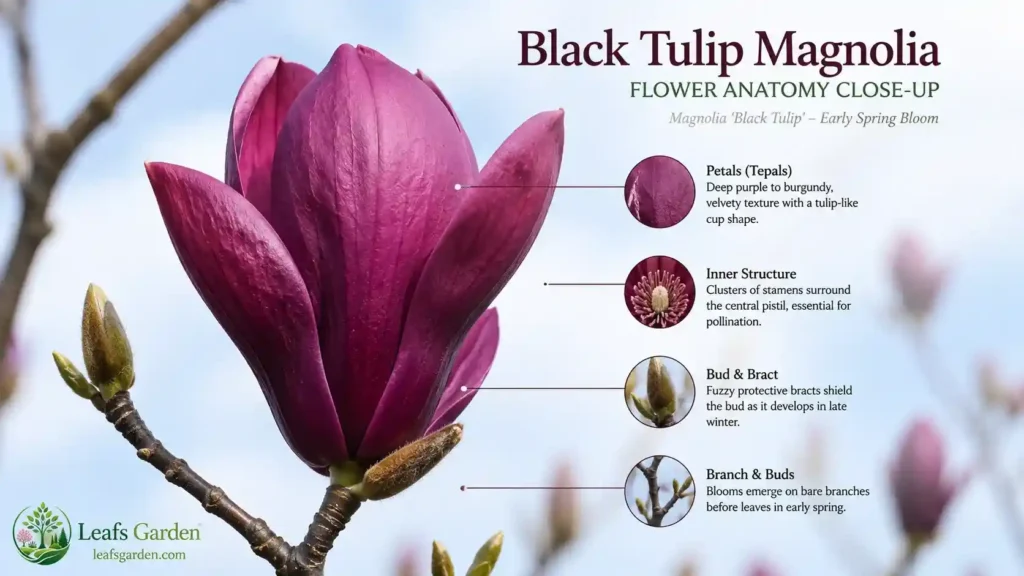
Black tulip magnolia leaves emerge after the flowering period and create a soft green canopy throughout the growing season. Like many hybrid deciduous magnolias, the foliage drops during autumn before the tree enters winter dormancy.
Key foliage characteristics include:
During spring, the bare branching structure allows the flowers to become the main visual feature. In summer, the canopy becomes fuller and creates a dense ornamental appearance.
The bark is:
The branch structure is naturally layered and spreading, giving the tree an elegant sculptural shape even during winter. Mature trees develop a balanced ornamental framework that works well as a specimen planting.
A full grown Black Tulip Magnolia typically develops into a medium-sized ornamental tree with a compact yet broad appearance. It is smaller than many traditional saucer magnolia varieties, making it more suitable for modern landscapes and smaller residential gardens.
Typical mature dimensions include:
| Growth Feature | Average Size |
| Mature Height | 15–20 feet |
| Mature Width | 10–15 feet |
| Growth Habit | Compact rounded form |
| Tree Type | Medium ornamental tree |
Its manageable dimensions make it ideal for:
The compact ornamental profile is one of the biggest reasons gardeners prefer this magnolia over larger spreading magnolia cultivars.
During summer, Black Tulip Magnolia transforms from a flowering spring specimen into a dense green ornamental shade tree. After blooming finishes, the canopy fills with healthy green foliage that softens the tree’s structure and creates a lush seasonal appearance.
A full grown Black Tulip Magnolia in summer typically shows:
The dramatic purple blooms are absent during summer, but the tree still maintains strong landscape value because of its balanced shape and rich foliage texture.
Seasonal visual changes are one of the reasons this ornamental flowering tree remains attractive throughout the year:
Black Tulip Magnolia blooms in early to mid-spring, usually before the leaves fully emerge. The tree is famous for producing massive tulip-shaped purple flowers on bare branches, creating one of the most dramatic spring flowering displays among deciduous magnolia varieties.
Bloom timing can vary slightly depending on climate, winter temperatures, and local growing conditions, but flowering generally begins as temperatures start warming after winter dormancy.
Black Tulip Magnolia typically flowers during the early part of the magnolia blooming season. In most regions, blooms appear from late winter to mid-spring before full foliage development.
For gardeners asking “when are magnolias in bloom” or “when do magnolias bloom,” the answer depends on the magnolia type and regional climate. Black Tulip Magnolia is considered an early spring flowering saucer magnolia hybrid.
Typical blooming timeline:
A magnolia tree in bloom usually becomes the focal point of the landscape because the flowers appear heavily clustered across bare branches before leaf growth begins.
Black Tulip Magnolia flowers generally last around 2–4 weeks under favorable weather conditions. Bloom duration depends heavily on temperature, rainfall, wind exposure, and late frost events.
Bloom longevity factors include:
Like many early flowering deciduous magnolias, Black Tulip Magnolia is somewhat frost sensitive. Late spring frosts can damage flower buds or darken open blooms, especially during sudden temperature drops.
In protected planting locations, flowering displays usually remain fuller and more attractive for a longer period.
Black Tulip Magnolia blooms once each year during spring. It follows a reliable annual bloom cycle after reaching flowering maturity.
Young trees may take several years to establish before producing heavy flowering displays. Once mature, the tree generally blooms consistently every spring under proper growing conditions.
Flower production depends on:
Reblooming is uncommon for this cultivar. Unlike some modern magnolia hybrids that produce scattered secondary flowers later in the season, Black Tulip Magnolia mainly delivers one major spring bloom flush each year.
| Blooming Feature | Details |
| Main Bloom Season | Early to mid-spring |
| Flower Timing | Before full leaf emergence |
| Peak Bloom Weeks | Usually 2–4 weeks |
| Bloom Frequency | Once annually |
| Frost Sensitivity | Moderate |
| Climate Influence | Strong effect on bloom timing and flower longevity |
Black Tulip Magnolia performs best in climates with mild spring transitions, where flower buds are less likely to experience damaging late frosts.
Black Tulip Magnolia has a moderate growth rate and can live for several decades when grown in suitable conditions. Its balanced growth habit, manageable mature size, and long ornamental lifespan make it a valuable landscape tree for both residential and decorative garden planting.
This hybrid saucer magnolia develops steadily over time, producing stronger flowering displays as the tree matures.
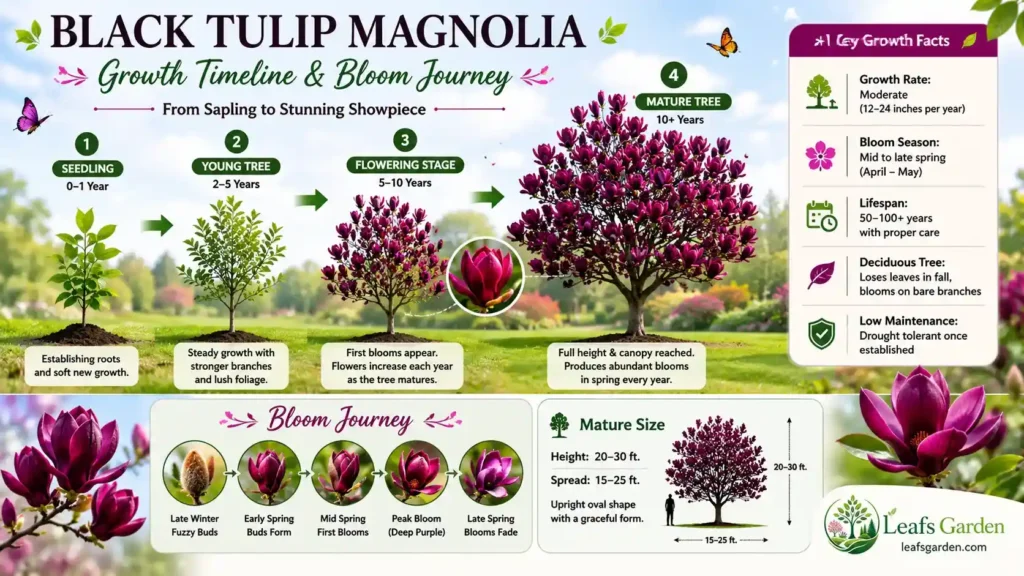
Black Tulip Magnolia typically grows at a moderate pace compared to other ornamental flowering trees. Under healthy growing conditions, the tree commonly adds around 1–2 feet of growth per year during its active development stage.
Growth speed depends on several environmental factors, including:
Trees planted in fertile well-drained soil with consistent moisture usually establish faster and produce stronger canopy development. Full sun to partial shade also improves flowering performance and branch growth.
Poor drainage, compacted soil, or heavy shade can slow overall growth and reduce bloom production over time.
Black Tulip Magnolia develops gradually through several growth stages before reaching full maturity. Young trees focus first on root establishment and branch formation before producing heavy flowering displays.
Typical growth timeline:
Seed-grown magnolia seedlings usually require much longer to mature compared to grafted nursery plants. Most commercially sold Black Tulip Magnolia trees are grafted hybrids, allowing earlier flowering and more consistent growth performance.
The tree becomes increasingly attractive with age as the canopy broadens and flower production intensifies.
A healthy Black Tulip Magnolia can live for many decades with proper care and stable growing conditions. Mature trees often remain productive ornamental specimens for 40–80 years or longer depending on climate, soil health, and maintenance.
Long-term landscape performance is strongest when the tree receives:
As the tree ages, it develops:
Because it is a deciduous ornamental magnolia, the seasonal appearance continues evolving throughout the year, adding long-term visual interest to gardens and front yard landscapes.
Black Tulip Magnolia reaches a moderate mature size compared to larger spreading magnolia cultivars. Gardeners often choose it because it provides dramatic flowering impact without becoming excessively large.
For those asking “how tall can a magnolia tree grow,” the answer varies by species and cultivar. Black Tulip Magnolia remains more compact than many traditional magnolia trees.
Typical magnolia tree dimensions for Black Tulip Magnolia include:
| Tree Feature | Average Size |
| Mature Height | 15–20 feet |
| Mature Width | 10–15 feet |
| Growth Habit | Compact rounded canopy |
| Tree Size Category | Medium ornamental tree |
Its moderate magnolia tree size makes it suitable for:
The tree maintains a balanced ornamental profile while still producing exceptionally large tulip-shaped blooms.
Black Tulip Magnolia grows best in fertile, well-drained soil with full sun to partial shade. This ornamental flowering tree performs most successfully when planted in a stable environment with consistent moisture, good airflow, and protection from harsh environmental stress.
Proper planting conditions improve flowering quality, canopy growth, and long-term tree health.
Black Tulip Magnolia grows best in USDA hardiness zones 5–9, where winters provide enough seasonal dormancy while spring temperatures support reliable flowering.
For gardeners researching the ideal magnolia zone or southern magnolia zone conditions, Black Tulip Magnolia prefers:
Climate tolerance can vary depending on soil moisture, sunlight exposure, and local weather patterns. In colder regions, flower buds may occasionally suffer frost damage during sudden spring freezes.
The tree performs especially well in:
Black Tulip Magnolia grows best in nutrient-rich, well-drained soil with slightly acidic conditions. Healthy soil directly affects root development, flowering strength, and overall tree vigor.
Ideal soil characteristics include:
Heavy clay soil that remains saturated for long periods can increase the risk of root stress and poor growth. Improving the soil with compost, leaf mold, or organic mulch helps maintain moisture balance while improving aeration.
Healthy organic matter levels also support:
Black Tulip Magnolia flowers best when planted in full sun to partial shade. Gardeners often ask “how much sun does a magnolia tree need” or “do magnolia trees need full sun,” and the answer depends partly on climate conditions.
Ideal sunlight exposure:
Trees grown in excessive shade may develop:
Full morning sun is especially beneficial because it helps dry moisture from buds and foliage while encouraging healthy spring bloom production.
Black Tulip Magnolia prefers consistent moisture, especially during establishment and active growth periods. While magnolias appreciate regular watering, they do not tolerate constantly saturated soil.
For gardeners asking “do magnolia trees need a lot of water,” the best approach is moderate deep watering rather than frequent shallow irrigation.
Watering guidelines:
The tree has moderate drought tolerance once established, but prolonged dry conditions may reduce flowering quality and stress the foliage.
Overwatering risks include:
Applying mulch around the root zone helps conserve soil moisture while protecting shallow surface roots.
The best time to plant magnolia trees is usually during fall or early spring when temperatures are moderate and soil moisture is more stable.
For gardeners searching “when to plant magnolia” or “best time to plant magnolia tree,” cooler planting seasons allow roots to establish before extreme summer heat arrives.
Seasonal planting advantages:
Avoid planting during:
Young trees establish faster when planted during calm weather with steady moisture availability.
Planting Black Tulip Magnolia correctly helps create a stronger root system and healthier long-term growth.
Choose a location with:
Avoid areas with constantly wet soil or heavy root competition from large nearby trees.
Prepare the planting area by:
Healthy soil preparation improves root expansion and moisture balance.
Place the root ball slightly above surrounding soil level to reduce drainage problems.
Important planting tips:
Keeping the root flare visible helps prevent trunk and root diseases.
Apply organic mulch around the base of the tree to:
Keep mulch a few inches away from the trunk to avoid moisture buildup against the bark.
After planting:
Young Black Tulip Magnolias typically require more regular watering during their first growing seasons compared to mature established trees.
Young Black Tulip Magnolias can grow successfully in large containers when provided with proper drainage, consistent moisture, and routine maintenance. While this ornamental flowering tree eventually performs best in the ground, container growing is possible during the early and intermediate growth stages.
Gardeners commonly ask:
The answer is yes, especially when the tree is planted in a large container with suitable soil conditions and regular root management.
A Black Tulip Magnolia needs a spacious container because magnolias naturally develop wide spreading root systems. Choosing the correct pot size helps support healthier root growth and better moisture stability.
Recommended container features:
For a magnolia in pot setup, start with:
The ideal soil mix should be:
A quality magnolia pot plant mix often includes:
Good container drainage is essential because magnolias are sensitive to waterlogged roots.
Container-grown Black Tulip Magnolias require more attention than in-ground trees because soil dries faster and root space remains limited.
Use a balanced slow-release fertilizer during spring to support:
Avoid excessive fertilization because overly rapid growth can weaken the tree structure and reduce bloom quality.
Container-grown magnolias typically need more frequent watering than landscape-planted trees.
Important watering guidelines:
Containers dry out faster due to:
However, overwatering still remains a major risk if drainage is poor.
Magnolia roots gradually fill the container over time. Regular root monitoring helps prevent severe root binding and declining growth.
Signs the tree may need repotting:
Checking root health every few years helps maintain long-term container success.
Although young Black Tulip Magnolias adapt reasonably well to containers, long-term pot growing has limitations because the tree naturally prefers unrestricted root expansion.
Common container growing challenges include:
Growth restriction becomes more noticeable as the tree matures and canopy size increases.
Repotting is usually required every few years to:
Winter protection is also important for container-grown magnolias because roots inside pots are more exposed to freezing temperatures than roots planted in the ground.
During winter:
With proper care, Black Tulip Magnolia can remain a beautiful ornamental container specimen for many years before eventual landscape planting becomes preferable.
Black Tulip Magnolia has a shallow but spreading root system that is usually not considered aggressively invasive. Like many deciduous magnolia varieties, the tree develops broad surface roots that expand outward rather than forming extremely deep taproots.
Understanding the magnolia root system is important for proper planting distance, foundation safety, watering management, and long-term landscape planning.
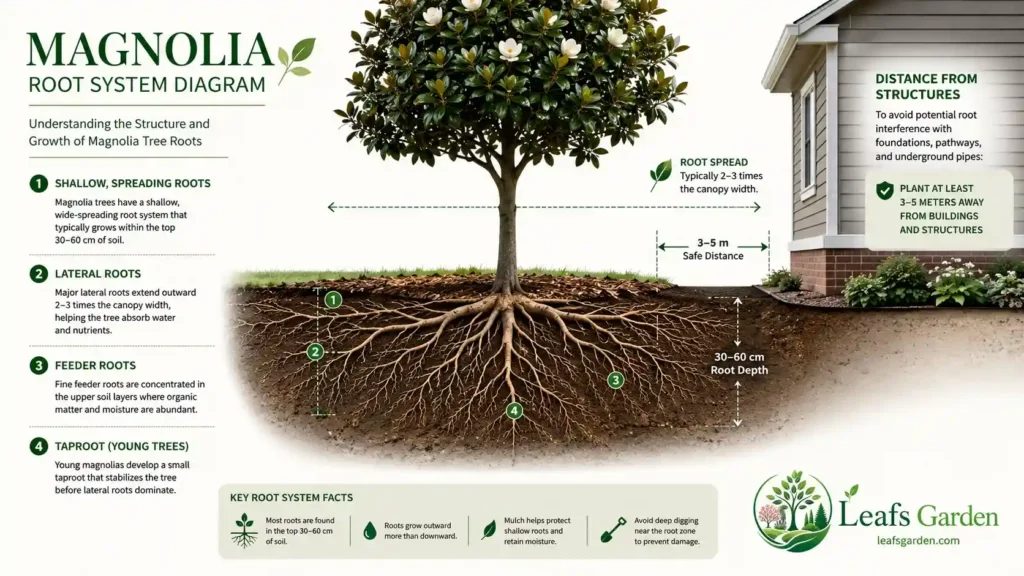
The magnolia tree root system is typically wide-spreading, fibrous, and relatively shallow compared to many large shade trees. The roots of a magnolia tree often stay close to the soil surface where oxygen, moisture, and nutrients are more available.
Key root characteristics include:
Black Tulip Magnolia roots generally expand beyond the canopy width as the tree matures. Because of this spreading pattern, the root zone benefits from mulch protection and minimal soil disturbance.
Unlike highly aggressive trees known for destructive roots, magnolia roots are usually softer and less forceful.
No, magnolia tree roots are generally not considered highly invasive. For gardeners asking:
The direct answer is that Black Tulip Magnolia roots are usually low to moderately invasive under normal landscape conditions.
However, root behavior still depends on:
Magnolia roots naturally search for water and oxygen near the surface. In poor drainage conditions or compacted soil, roots may become more visible at ground level.
Although they are not typically destructive like some fast-growing shade trees, planting too close to structures can still create potential issues over many years.
Magnolia trees usually develop shallow to moderately deep roots rather than extremely deep root systems. Most active feeder roots remain near the upper soil layers where nutrients and moisture are easiest to access.
Shallow vs deep root behavior:
The root spread behavior of Black Tulip Magnolia is generally wider than it is deep. This helps the tree efficiently absorb surface moisture but also means the roots can extend significantly outward from the trunk.
Because of this shallow structure:
Black Tulip Magnolia roots rarely damage foundations when the tree is planted at a safe distance from buildings. The roots are not usually aggressive enough to crack strong foundations directly.
Foundation concerns become more likely when:
Safe planting distances generally include:
Pipe and driveway issues are uncommon compared to highly invasive tree species, but shallow roots can sometimes lift nearby paving over long periods if planting space is too restricted.
Proper site planning significantly reduces future root-related concerns.
| Root Feature | Description |
| Root Depth | Shallow |
| Spread | Wide |
| Invasiveness | Low to Moderate |
| Foundation Risk | Usually low |
Infographic suggestion:
Create a simple root system diagram showing:
Most Black Tulip Magnolia problems are caused by environmental stress, improper watering, frost exposure, or poor soil drainage. Although this ornamental flowering tree is generally reliable, unhealthy growing conditions can affect flowering performance, foliage quality, and root health.
Early problem identification helps prevent long-term damage and improves overall tree vigor.
Several common Black Tulip Magnolia problems appear during seasonal stress or poor maintenance conditions.
Bud blast occurs when flower buds fail to open and suddenly die before blooming. This problem is commonly triggered by:
Damaged buds often turn brown or black before falling from the tree.
Because Black Tulip Magnolia blooms early in spring, late frosts can injure developing flowers and buds.
Signs of frost damage include:
Planting in protected areas with reduced cold wind exposure can help minimize frost injury.
Weak blooming is usually linked to:
Trees growing in full sun with healthy soil conditions generally produce stronger flowering displays.
Yellow leaves may indicate:
Persistent yellowing often signals root-related problems that require soil and watering adjustments.
Overwatering is one of the most common causes of magnolia decline. Black Tulip Magnolia prefers moist but well-drained soil and does not tolerate constantly saturated roots.
Common overwatered magnolia tree symptoms include:
Severe overwatering can lead to root rot, especially in compacted or poorly draining soils. Root rot reduces oxygen availability around the root system and weakens the overall tree structure.
Improving drainage and reducing watering frequency usually helps prevent worsening root damage.
Magnolia leaves problems are often connected to environmental stress, watering imbalance, or seasonal changes.
Brown foliage may develop because of:
Leaf edges commonly dry first before the entire leaf turns brown.
Leaf curling can result from:
Consistent moisture levels help reduce curling during hot weather.
Premature leaf drop may occur due to:
Temporary leaf loss after planting is relatively common while the tree establishes new roots.
Yes, Black Tulip Magnolia loses its leaves because it is a deciduous magnolia variety. Seasonal leaf drop is a normal part of the annual growth cycle.
Gardeners often compare:
Black Tulip Magnolia belongs to the deciduous group, unlike evergreen magnolia grandiflora cultivars such as Little Gem Magnolia.
Normal seasonal leaf drop usually occurs:
Bare winter branching is completely normal for this ornamental flowering tree.
Black Tulip Magnolia may occasionally experience pest or fungal problems, especially under humid or stressed growing conditions.
Scale insects attach to stems and leaves while feeding on plant sap.
Common symptoms:
Light infestations can often be controlled with horticultural oil treatments.
Fungal leaf spots may appear during periods of excessive moisture or poor airflow.
Contributing conditions include:
Removing fallen infected leaves helps reduce recurring fungal issues.
Powdery mildew sometimes develops in humid environments with limited airflow.
Symptoms include:
Proper spacing, airflow improvement, and controlled watering help minimize mildew development.
Black Tulip Magnolia and Tulip Tree are completely different ornamental trees even though their flowers share a tulip-like appearance. Many gardeners confuse these trees because of their similar common names, but they differ greatly in size, flower color, growth habit, and landscape use.
For people comparing tulip tree or magnolia varieties, Black Tulip Magnolia is a compact flowering ornamental tree, while the Tulip Tree is a massive fast-growing shade tree.
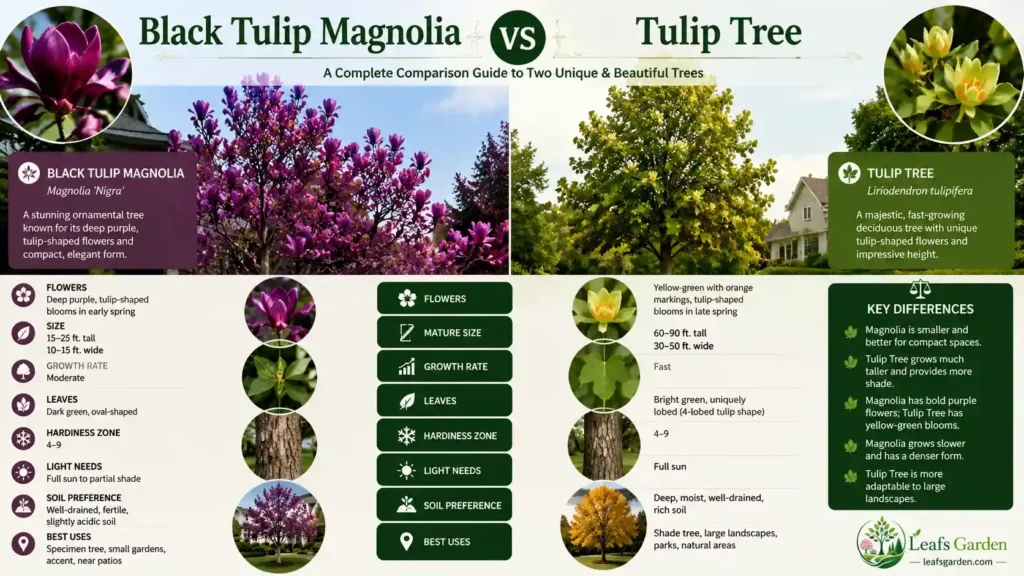
The magnolia tree vs tulip tree comparison becomes clearer when looking at their botanical characteristics and mature growth habits.
Although both belong to the Magnoliaceae family, they are separate species with different ornamental purposes.
| Feature | Black Tulip Magnolia | Tulip Tree |
| Botanical Family | Magnoliaceae | Magnoliaceae |
| Flower Color | Purple | Yellow-green |
| Bloom Shape | Tulip-like | Tulip-like |
| Mature Height | Medium | Very tall |
| Growth Rate | Moderate | Fast |
Black Tulip Magnolia is a hybrid saucer magnolia cultivar grown mainly for its dramatic dark purple flowers and compact ornamental structure. It works best as:
The Tulip Tree, also called Liriodendron tulipifera, grows much larger and is commonly used as:
Gardeners often ask “is a tulip tree a magnolia.” The answer is partially yes and partially no. Tulip Trees belong to the same Magnoliaceae family, but they are not true magnolia species like saucer magnolia hybrids.
The saucer magnolia vs tulip tree difference is especially noticeable in:
Black Tulip Magnolia stays relatively compact with rich burgundy-purple blooms, while Tulip Trees become towering deciduous trees with greenish-yellow flowers high in the canopy.
Another major difference is flowering visibility. Black Tulip Magnolia flowers appear prominently on bare spring branches, whereas Tulip Tree blooms are often harder to see because they develop high above the ground among mature foliage.
For smaller residential landscapes, Black Tulip Magnolia is usually the preferred ornamental choice because of its manageable size and dramatic spring flowering display.
Black Tulip Magnolia works beautifully as a specimen tree, front yard focal point, or ornamental flowering feature in residential landscapes. Its dramatic purple blooms, compact ornamental structure, and seasonal beauty make it one of the most effective spring-flowering trees for decorative garden design.
Because it remains smaller than many traditional magnolias, it fits well into both spacious landscapes and compact urban gardens.
Black Tulip Magnolia performs best when planted where its spring flowers can become the visual centerpiece of the landscape. The tree naturally attracts attention during bloom season because of its large tulip-shaped burgundy-purple flowers.
Popular placement ideas include:
As a focal point planting, the tree works especially well:
Its compact canopy and elegant branching structure help create year-round ornamental value even after flowering season ends.
For gardeners planning a broader seasonal display, this complete ornamental flowering trees for beautiful landscapes guide covers a wide range of flowering tree options suited to different garden sizes, flower colours, and climate conditions.
For lawn specimen use, planting the tree with open surrounding space allows the canopy and spring blooms to become more visually dramatic.
Black Tulip Magnolia pairs beautifully with other ornamental shrubs and flowering landscape plants that enjoy similar soil and moisture conditions.
Strong companion plants include:
Rhododendrons complement magnolias with:
They help create layered ornamental planting designs beneath the magnolia canopy.
Camellias extend seasonal interest because many varieties bloom before or after magnolia flowering season.
Among the most popular evergreen flowering companions, camellia sasanqua white is especially valued for its elegant white blooms, dense hedging structure, and ability to complement the rich purple tones of Black Tulip Magnolia in layered garden designs.
Benefits include:
Dogwoods pair well in larger landscapes because they provide:
Their lighter blooms often highlight the dark purple tones of Black Tulip Magnolia flowers.
Evergreen shrubs create a stable year-round backdrop behind deciduous magnolia varieties.
Popular choices include:
These plants help maintain landscape structure during winter dormancy when the magnolia loses its leaves.
Black Tulip Magnolia is highly valued in compact landscape design because it provides dramatic flowering impact without becoming excessively large.
Its moderate mature size makes it suitable for:
In urban landscapes, the tree adds:
Because the root system is relatively shallow and moderately non-invasive, Black Tulip Magnolia adapts better to smaller planting spaces than many large shade trees.
The combination of manageable growth, rich flower color, and elegant structure makes it one of the most effective ornamental flowering trees for modern residential landscape design.
Black Tulip Magnolia is commonly propagated through grafting, cuttings, or seed. Commercial nurseries usually prefer grafting because it produces more reliable flower color and growth characteristics, while home gardeners often experiment with cuttings or magnolia seedlings.
Propagation can be slow and requires patience because magnolias are not among the easiest ornamental trees to reproduce successfully.
Growing Black Tulip Magnolia from cuttings is possible, although rooting success rates can vary depending on timing, humidity, and plant health.
Softwood or semi-hardwood cuttings taken during active growth periods usually perform best.
Important cutting propagation steps include:
Applying rooting hormone significantly improves the chances of root development. Magnolia cuttings naturally root slowly, so hormone treatment helps stimulate faster root initiation.
Rooting hormone is commonly applied to:
The best timing for magnolia propagation from cuttings is usually:
During this stage, stems are mature enough to resist rotting while still actively growing.
High humidity is extremely important during the rooting process.
Successful propagation conditions include:
Many gardeners use:
Without consistent humidity, magnolia cuttings often dry out before roots develop.
Growing magnolia trees from seed takes much longer than propagation by grafting or cuttings, but it remains possible for patient gardeners.
Magnolia seeds are collected from mature seed pods after flowering and seasonal seed development.
The process usually involves:
A magnolia seedling may require several years before becoming large enough to resemble a small ornamental tree.
Typical magnolia seed germination timeline:
Young magnolia seedlings develop gradually and need stable moisture, filtered sunlight, and protection from extreme temperatures.
Black Tulip Magnolia propagation can be difficult because hybrid magnolia cultivars are slower to reproduce compared to many common landscape shrubs.
Common propagation challenges include:
Hybrid inconsistency is another major issue when growing from seed. Because Black Tulip Magnolia is a hybrid saucer magnolia cultivar, seedlings may not produce flowers identical to the parent plant.
Seed-grown trees can vary in:
For this reason, commercial growers typically rely on grafting to maintain true cultivar characteristics.
Patience is essential during all propagation methods because magnolias establish slowly during early development stages before accelerating into stronger ornamental growth.
Black Tulip Magnolia is a deciduous magnolia that loses its leaves during winter. Unlike evergreen magnolia varieties that maintain foliage year-round, this ornamental flowering tree enters seasonal dormancy after autumn leaf drop and re-emerges with flowers and new foliage in spring.
Its deciduous nature is one of the defining characteristics of this hybrid saucer magnolia cultivar.

Gardeners often ask:
The answer depends on the magnolia species or cultivar. Some magnolias remain evergreen throughout the year, while others are fully deciduous.
Black Tulip Magnolia belongs to the deciduous magnolia varieties group, meaning it naturally sheds foliage before winter.
Evergreen magnolias:
Popular evergreen examples include:
Gardeners seeking a compact evergreen alternative with fragrant white flowers may also consider Super Gem Magnolia, which offers year-round foliage coverage and a similarly refined ornamental structure suited to modern residential landscapes.
Deciduous magnolias:
Common deciduous magnolia varieties include:
One major ornamental advantage of deciduous magnolias is that their flowers become more visually dramatic because blooms appear on bare branches before leaves develop.
During winter, Black Tulip Magnolia enters seasonal dormancy and displays an elegant branching structure without foliage.
After leaf drop, the tree reveals:
The bare structure itself adds landscape interest even outside the flowering season.
Flower buds begin developing before spring bloom season. Mature buds remain visible on the branches throughout late winter and become larger as temperatures warm.
Healthy winter buds are usually:
These visible buds signal the upcoming spring flowering display.
Seasonal dormancy helps Black Tulip Magnolia conserve energy during cold weather conditions.
During dormancy:
This dormant period is completely normal for deciduous ornamental magnolias and supports healthy flowering development for the following spring season.
Black Tulip Magnolia trees are commonly available through specialty nurseries and online ornamental plant sellers. Because this is a hybrid saucer magnolia cultivar, availability can vary by season and region, especially in colder climates where planting is limited to spring and early autumn.
Choosing a healthy plant at the time of purchase is important for long-term growth, flowering performance, and root establishment.
When selecting a Black Tulip Magnolia, it is important to inspect the plant carefully to ensure strong future growth and reliable flowering.
Key qualities to look for include:
Grafted plants are especially important because they ensure the tree will produce the characteristic deep burgundy-purple blooms associated with Black Tulip Magnolia rather than unpredictable seed variations.
A healthy nursery plant should also show:
When purchasing Black Tulip Magnolia, you will typically encounter two main types of nursery stock: container-grown trees and bare root trees. Each has advantages depending on planting timing and climate conditions.
| Feature | Container-Grown Trees | Bare Root Trees |
| Planting Time | Flexible (spring to early autumn) | Best in dormant season |
| Root Protection | Fully established root ball | Exposed roots during planting |
| Establishment Speed | Faster initial growth | Slower initial establishment |
| Handling Ease | Easier to transplant | Requires careful planting |
| Cost | Usually higher | Generally more affordable |
Container-grown trees are often preferred because they experience less transplant shock and can be planted with greater flexibility.
Bare root trees, however, are a cost-effective option and perform well when planted during dormancy in the correct season.
Black Tulip Magnolia trees can be found through several reliable sources depending on location and seasonal availability.
Common purchasing options include:
Local plant nurseries often provide:
These are often the most reliable source for healthy, climate-suited trees.
Online plant retailers offer:
However, buyers should ensure:
Black Tulip Magnolia availability depends heavily on planting seasons:
Early ordering is often recommended because popular ornamental cultivars may sell out quickly during peak planting seasons.
| Care Factor | Recommendation |
| Sunlight | Full sun to partial shade |
| Soil | Well-drained acidic soil |
| Water | Moderate moisture |
| Growth Rate | Moderate |
| Mature Height | Medium ornamental tree |
| Bloom Time | Early spring |
| Root Type | Shallow spreading |
| Evergreen? | No |
Black Tulip Magnolia performs best when grown in well-drained, slightly acidic soil with consistent moisture and good sunlight exposure. It is a deciduous ornamental flowering tree with a moderate growth rate, developing into a medium-sized landscape specimen that produces dramatic purple tulip-shaped blooms in early spring.
Black Tulip Magnolia is one of the most dramatic flowering magnolia trees for ornamental landscapes, valued for its rich burgundy-purple blooms, elegant branching structure, and manageable growth habit. As a standout deciduous magnolia variety, it brings strong seasonal impact to gardens without requiring excessive maintenance, making it a reliable choice for both beginner and experienced gardeners.
In summary, this ornamental flowering tree offers:
With proper placement in full sun to partial shade and well-drained soil, Black Tulip Magnolia develops into a long-lasting ornamental feature that enhances garden structure throughout the year. Its seasonal transformation—from bold spring flowering to lush summer canopy and sculptural winter form—adds continuous visual interest.
Over time, this magnolia becomes a mature landscape asset, offering long-term ornamental benefits through consistent flowering, balanced growth, and timeless garden appeal.
Black Tulip Magnolia has a moderate growth rate, typically growing around 1–2 feet per year under ideal conditions with good soil, sunlight, and consistent moisture.
No, Black Tulip Magnolia roots are generally not considered invasive. They are shallow and spreading, but usually non-aggressive when planted at a safe distance from structures.
Black Tulip Magnolia blooms in early to mid-spring before the leaves fully emerge, producing large deep purple tulip-shaped flowers for about 2–4 weeks.
Yes, young Black Tulip Magnolia trees can grow in large pots with proper drainage, regular watering, and occasional repotting, but long-term growth is better in the ground.
Black Tulip Magnolia is deciduous, meaning it loses its leaves in autumn and enters winter dormancy before blooming again in spring.
A full grown Black Tulip Magnolia typically reaches 15–20 feet in height and about 10–15 feet in width, making it a medium-sized ornamental tree.
Yellow leaves are usually caused by overwatering, poor drainage, nutrient deficiencies, or root stress, especially in compact or waterlogged soil conditions.
A tulip tree is a different species (Liriodendron tulipifera) that grows much taller and faster with yellow-green flowers, while Black Tulip Magnolia is a medium-sized ornamental magnolia with deep purple blooms and a compact growth habit.