Grow Better Gardens with Smarter Plant Choices
Discover helpful guides on trees, hedges, fruit plants, edible plants, and beautiful landscape greenery.
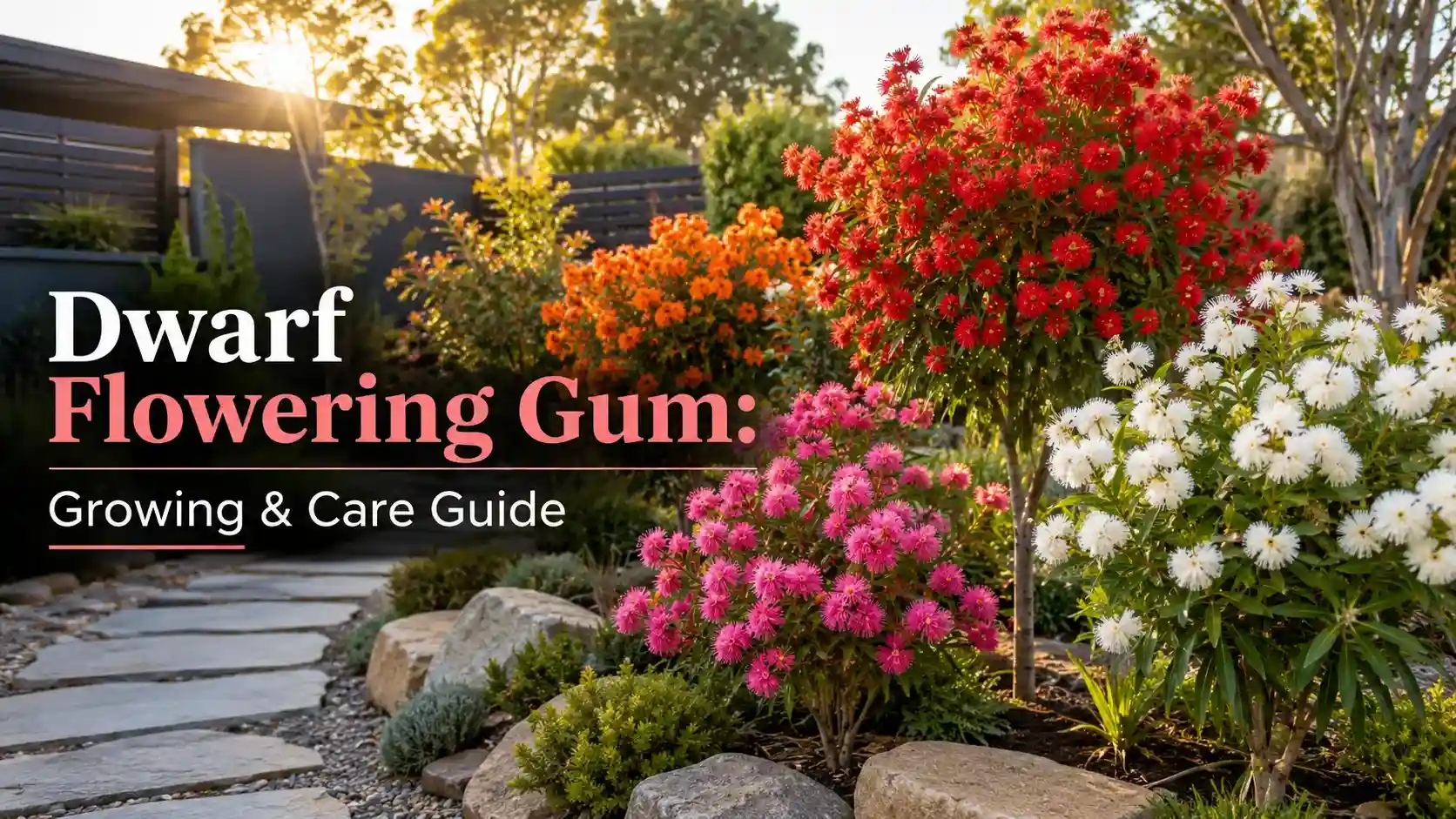
A dwarf flowering gum is a compact ornamental eucalyptus-type tree known for its vibrant blossoms, manageable size, and strong adaptability to residential landscapes. These smaller flowering gum varieties are especially popular in modern landscaping because they provide the beauty of traditional eucalyptus trees without the excessive height and aggressive growth habits of full-sized species. Homeowners and landscape designers commonly use dwarf flowering gums in small gardens, courtyards, patios, and urban spaces where compact growth and colorful seasonal interest are important.
Unlike standard flowering gum trees that can grow into large canopy trees, dwarf varieties remain significantly smaller and easier to maintain. They also tend to develop less extensive root systems, making them more suitable for planting near homes, pathways, pools, and outdoor living areas. Their compact structure allows gardeners to enjoy striking eucalyptus blooms without sacrificing space.
One of the biggest attractions of dwarf flowering gum trees is their spectacular flower display. Depending on the cultivar, blooms may appear in brilliant shades of red, orange, pink, or white. Popular ornamental species connected to these trees include Corymbia ficifolia, Eucalyptus ficifolia, and Corymbia calophylla, all valued for their decorative flowers and evergreen foliage.
Gardeners love miniature flowering gum trees because they combine fast growth, drought tolerance, wildlife attraction, and exceptional ornamental value in one compact landscape tree.
A dwarf flowering gum is a compact ornamental tree closely related to eucalyptus species and belongs primarily to the Corymbia genus. Many flowering gum trees were once classified under the Eucalyptus group, which is why names like Eucalyptus ficifolia are still widely used in gardening and nursery industries. Modern botanical classification now places many ornamental flowering gums into the Corymbia category, especially Corymbia ficifolia.
Scientifically, dwarf flowering gums belong to the Myrtaceae family, a large plant family that includes eucalyptus, bottlebrush, tea trees, and other Australian native species. The transition from eucalyptus to corymbia classification occurred after botanical studies identified structural and genetic differences between the groups.
Corymbia ficifolia became especially famous for ornamental landscaping because of its dense flowering habit, manageable canopy, colorful blossoms, and adaptability to warm climates. Plant breeders later developed dwarf cultivars with improved flower density and reduced mature height, making them ideal for residential gardens and compact landscapes.
Quick botanical overview:
| Classification | Details |
| Family | Myrtaceae |
| Genus | Corymbia |
| Former Genus | Eucalyptus |
| Popular Species | Corymbia ficifolia |
| Native Region | Western Australia |
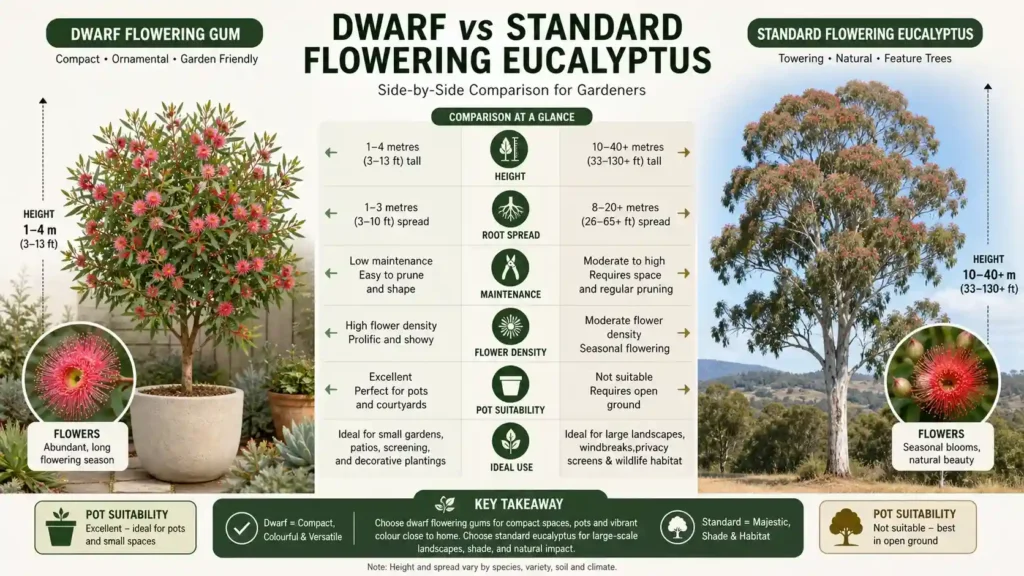
The main difference between standard and dwarf flowering gum trees is their mature size and landscape suitability. Traditional flowering eucalyptus trees can grow into large canopy trees, while dwarf varieties are specifically bred to remain compact and easier to manage.
Standard flowering gums may reach heights exceeding 30 feet, whereas dwarf cultivars often stay within a smaller range suitable for urban gardens and decorative planting. Their controlled growth habit allows gardeners to enjoy colorful blooms without dealing with oversized branches or excessive shade coverage.
Many gardeners also explore other compact eucalyptus varieties that offer manageable growth habits for smaller outdoor spaces.
Key differences include:
| Feature | Standard Flowering Gum | Dwarf Flowering Gum |
| Mature Height | Tall | Compact |
| Root Spread | Extensive | Moderate |
| Maintenance | Higher | Easier |
| Garden Suitability | Large landscapes | Small gardens |
| Pot Growing | Limited | Suitable |
Dwarf flowering gums also tend to develop a more compact canopy and less aggressive root spread. This makes them better suited for planting near driveways, patios, pathways, and residential structures. Their smaller growth habit is one of the biggest reasons they are widely used in modern urban landscaping projects.
Dwarf flowering gums are known by several common names depending on the region, cultivar, and flower color. Many gardeners and nurseries use these names interchangeably.
Common names include:
These names usually refer to ornamental corymbia or eucalyptus trees grown mainly for their colorful flowers, evergreen foliage, and decorative landscape value.
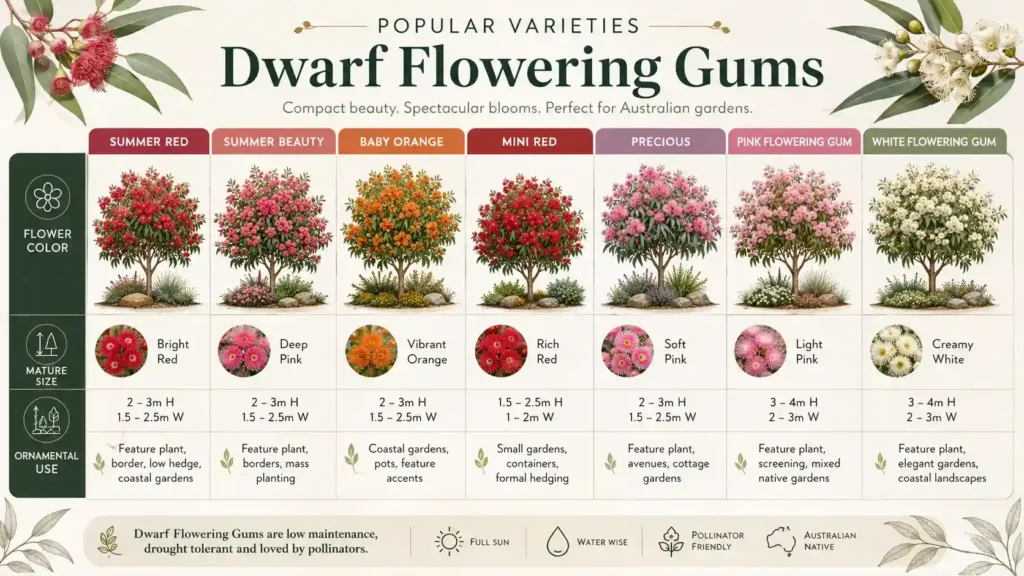
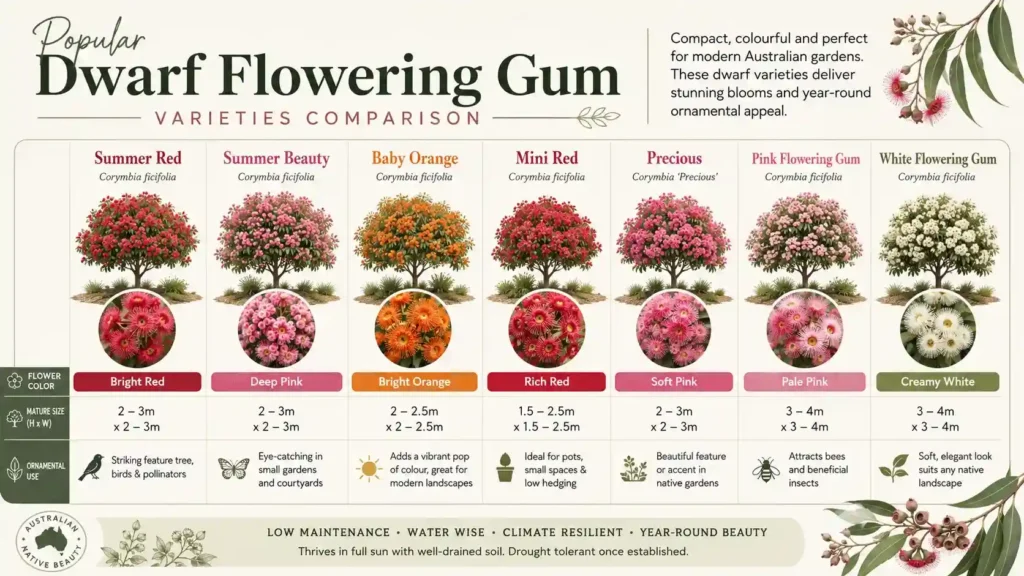
The summer red flowering gum is one of the most popular compact flowering eucalyptus cultivars used in residential landscaping. It is highly valued for its intense red blooms, dense canopy, and manageable mature size. This variety produces masses of bright red flowers during the warmer months, creating a strong visual display in gardens and streetscapes.
Some ornamental gum cultivars are especially prized for their deep red seasonal blooms and strong visual contrast in native-style landscapes.
The flowering season typically begins in summer and can continue into early autumn under favorable growing conditions. Its evergreen foliage combined with vivid flower clusters makes it an attractive feature tree for modern landscapes.
Key features of flowering gum summer red include:
Many nurseries market this cultivar under names such as summer red eucalyptus or eucalyptus summer red because of its ornamental value and connection to traditional flowering eucalyptus species.
The summer beauty flowering gum is another highly decorative dwarf cultivar known for reliable flowering and attractive foliage. Corymbia ficifolia summer beauty develops a compact canopy with abundant blossoms that add strong seasonal color to gardens.
This variety performs best in warm, sunny climates with well-drained soil. It is commonly used as a feature tree in courtyards, front yards, coastal landscapes, and low-maintenance Australian native gardens.
Main characteristics of summer beauty flowering gum include:
Because of its controlled growth and decorative appearance, corymbia ficifolia summer beauty is often selected for smaller outdoor spaces where full-sized eucalyptus trees would be impractical.
The baby orange flowering gum stands out for its vibrant orange flower clusters and compact ornamental appearance. This dwarf cultivar adds warm seasonal color to landscapes and is especially effective in Mediterranean-style gardens and drought-tolerant planting schemes.
Corymbia ficifolia baby orange typically develops a rounded canopy with dense foliage and heavy flowering during the warmer months. The bright blooms contrast beautifully against the tree’s green leaves, making it a strong focal point in small gardens.
Important features include:
Gardeners looking for colorful native trees often choose this orange flowering gum because it delivers strong visual impact without excessive growth. It is also commonly referred to as an orange flowering eucalyptus due to its close botanical relationship with eucalyptus species.
Several compact cultivars have been specifically developed for improved flower density and ornamental performance. Among the most recognized are corymbia ficifolia mini red and corymbia ficifolia precious.
Corymbia ficifolia mini red is admired for its rich red blooms and highly compact growth habit. It is ideal for small residential gardens, narrow planting spaces, and decorative landscape borders.
Corymbia ficifolia precious is valued for its dense flowering display and refined ornamental structure. This cultivar produces heavy seasonal blooms while maintaining a balanced canopy suitable for modern landscaping.
Benefits of these cultivars include:
These smaller cultivars are especially useful for homeowners seeking colorful flowering gums without the challenges associated with large eucalyptus trees.
Pink flowering forms are highly sought after for their softer ornamental appearance and decorative landscape value. A pink flowering gum can create a striking contrast against green lawns, stone pathways, and modern garden designs.
Popular pink flowering gum trees are commonly used in cottage gardens, native landscapes, and pollinator-friendly outdoor spaces. Some cultivars produce soft pastel pink flowers, while others develop deeper rose-colored blooms.
White flowering varieties also remain popular because of their elegant appearance and bright seasonal display. A white flowering gum or white flowering gum tree often works well in minimalist landscapes and coastal gardens where lighter flower tones complement the surroundings.
One important species associated with pink flowering forms is leucoxylon rosea, which is known for its attractive blossoms and ornamental foliage. This flowering eucalyptus relative is widely appreciated for both visual appeal and wildlife attraction.
Dwarf flowering gum trees are relatively easy to identify because of their dense evergreen foliage, colorful flowers, and compact canopy structure. Most dwarf cultivars develop glossy green leaves that remain attractive throughout the year, making them valuable ornamental landscape trees.
The foliage is usually lance-shaped or slightly oval with a leathery texture. Young leaves may appear softer and lighter in color before maturing into deeper green shades. Many varieties also produce aromatic leaves typical of eucalyptus relatives.
Bark texture can vary depending on the cultivar and species background. Some dwarf flowering gums develop rough bark near the trunk base with smoother upper branches, while others display a more consistently textured bark surface. Mature bark colors commonly range from gray-brown to reddish brown.
Typical canopy characteristics include:
Compared to full-sized eucalyptus trees, dwarf flowering gums maintain a tighter and more controlled growth pattern, which improves their suitability for urban and residential gardens.
The flowers are the most recognizable feature of a dwarf flowering gum tree. These blossoms grow in dense clusters and appear in striking shades of red, orange, pink, or white depending on the cultivar.
Red eucalyptus flowers are especially popular because of their intense color and dramatic visual impact. The blooms contain numerous long stamens that create a soft, brush-like appearance often associated with ornamental flowering eucalyptus trees.
Common identifying features of gum tree flowers include:
The term gum flower is commonly used to describe the ornamental blooms produced by flowering gum trees. Many gardeners also refer to unopened buds and flowering structures as a flowering gumnut or gum blossom, especially when discussing Australian native species.
Flower color can help distinguish cultivars:
| Flower Color | Common Cultivar Types |
| Red | Summer Red, Mini Red |
| Orange | Baby Orange |
| Pink | Rosea forms |
| White | White flowering gum varieties |
Flowering gum nuts, commonly called gumnuts, are the woody seed capsules produced after flowering finishes. These seed pods are a distinctive feature of many eucalyptus and corymbia species.
The seed capsules are usually small, rounded, and woody with visible openings at the top where seeds are eventually released. Depending on the species, gumnuts may appear cup-shaped, barrel-shaped, or slightly urn-shaped.
Characteristics of flowering gum nuts include:
These seed pods also provide ecological benefits by attracting wildlife. Birds, bees, and beneficial insects are commonly drawn to flowering gums because of their nectar-rich blossoms and protective canopy structure.
Several eucalyptus species can appear visually similar to dwarf flowering gum trees, especially when young. Correct identification usually depends on flower structure, bark texture, leaf shape, and growth habit.
This species generally develops a taller growth habit with rough bark and less compact flowering patterns compared to ornamental dwarf flowering gums.
Known for its scribbled bark appearance, eucalyptus haemastoma can be distinguished by its unique trunk markings and broader natural growth structure.
This species often has smoother bark and lighter foliage. It typically lacks the dense ornamental flower display associated with Corymbia ficifolia cultivars.
Eucalyptus crenulata is identifiable through its distinct leaf edges and wetland growth preference, which differs from the drought-tolerant nature of many flowering gums.
Yellow box tree identification usually focuses on bark texture, leaf arrangement, and cream-colored flowers. Unlike dwarf flowering gums, yellow box trees generally produce less dramatic ornamental blooms and develop a more traditional eucalyptus canopy shape.
Quick comparison table:
| Species | Main Identification Feature |
| Eucalyptus gummifera | Taller growth habit |
| Eucalyptus haemastoma | Scribbled bark |
| Eucalyptus mannifera | Smooth bark and pale foliage |
| Eucalyptus crenulata | Distinct leaf margins |
| Yellow box tree | Cream flowers and fibrous bark |
Dwarf flowering gum trees are specifically cultivated to remain smaller and more manageable than traditional eucalyptus trees. While full-size flowering eucalyptus species can grow into very tall canopy trees, dwarf varieties are designed for compact residential landscapes and urban gardens.
Most small flowering gum cultivars reach a moderate mature height, making them suitable for areas with limited space. Their compact growth habit allows gardeners to enjoy colorful flowering displays without dealing with excessive vertical growth or oversized root systems.
Typical mature size ranges include:
| Tree Type | Average Mature Height |
| Dwarf Flowering Gum | Small to medium |
| Standard Flowering Eucalyptus | Tall |
| Compact Patio Cultivars | Very compact |
| Full-Size Native Eucalyptus | Very tall |
The exact height depends on factors such as cultivar selection, climate, soil quality, sunlight exposure, and long-term maintenance. Some compact varieties maintain a rounded ornamental shape, while others develop a broader canopy as they mature.
Compared to a full-size eucalyptus tree, dwarf flowering gums are significantly easier to manage in suburban and modern landscape settings.
One of the major advantages of dwarf flowering gum trees is their more controlled root system. Many homeowners worry about eucalyptus roots damaging foundations, pipes, pavements, or pools, but compact flowering gum cultivars are generally less aggressive than large native eucalyptus trees.
Dwarf gums are not usually considered highly invasive when planted correctly and maintained under suitable conditions. Their roots naturally seek moisture and stability, but their reduced mature size helps limit excessive underground spread.
Safe planting recommendations include:
Typical safe planting distances depend on the cultivar’s expected mature size and local soil conditions. In most residential landscapes, dwarf flowering gums perform well when planted with proper spacing and drainage.
Because of their moderate root spread, these trees are commonly used near:
Their manageable root systems are one reason dwarf flowering gums are preferred over larger eucalyptus species for residential planting.
Dwarf flowering gum trees are generally considered fast-growing ornamental trees, especially during their early establishment years. Under ideal growing conditions, young trees can develop quickly while producing dense evergreen foliage and strong branching structure.
The growth process usually follows several seasonal development stages.
During the first year, the tree focuses on root development and structural growth. Regular watering and full sun exposure are especially important at this stage.
Between the second and fourth years, dwarf flowering gums often experience rapid canopy expansion and stronger branch formation. Many cultivars begin producing flowers during this period.
Once established, the tree develops a fuller canopy and more reliable seasonal blooming cycles. Flower production generally improves as the tree matures.
Typical growth characteristics include:
| Growth Feature | Description |
| Growth Speed | Fast-growing |
| Early Development | Root establishment |
| Flowering Timeline | Often within a few years |
| Mature Structure | Dense compact canopy |
| Long-Term Growth | Moderate and manageable |
Seasonal climate conditions, watering practices, soil drainage, and sunlight exposure all influence the overall growth rate and flowering performance of dwarf flowering gum trees.
Dwarf flowering gum trees perform best in full sun conditions where they receive direct sunlight for most of the day. Strong sunlight exposure is essential for healthy canopy growth, dense foliage development, and maximum flower production.
Insufficient sunlight can reduce flowering intensity and lead to weaker branch structure. Trees planted in shaded areas often produce fewer blooms and may develop uneven growth patterns.
Benefits of full sun exposure include:
For optimal performance, most dwarf flowering gum varieties should receive at least six to eight hours of direct sunlight daily.
Well-drained soil is one of the most important requirements for healthy dwarf flowering gum growth. These trees generally dislike waterlogged conditions because excessive moisture can increase the risk of root stress and fungal diseases.
The preferred soil pH is usually slightly acidic to neutral, although many cultivars can tolerate a wider pH range when drainage is adequate. Good soil aeration supports healthier root development and stronger overall growth.
Important soil considerations include:
| Soil Factor | Preferred Condition |
| Drainage | Excellent |
| Soil Texture | Light to moderate |
| pH Range | Slightly acidic to neutral |
| Water Retention | Moderate |
| Aeration | Good airflow around roots |
Sandy soils are often highly suitable because they drain quickly and reduce the likelihood of root rot. However, sandy ground may require additional organic matter to improve moisture retention during dry periods.
Clay soil can support dwarf flowering gum trees if drainage is improved properly. Heavy clay that remains consistently wet may cause root problems and slower growth. In dense clay conditions, raised planting areas or soil amendments are commonly recommended.
Young dwarf flowering gum trees require consistent watering during their establishment period. Newly planted trees should receive deep watering regularly to encourage strong root development and improve drought resistance over time.
A typical young tree watering schedule may include:
Once established, dwarf flowering gums become relatively drought tolerant. Mature trees can usually survive extended dry conditions better than many ornamental landscape species.
Signs of improper watering may include:
Although mature trees tolerate drought well, occasional deep watering during prolonged dry periods can help maintain flowering performance and overall plant health.
Most dwarf flowering gum varieties are highly suited to Australian climates, particularly regions with warm temperatures, low humidity, and abundant sunlight. Many cultivars perform exceptionally well in Mediterranean and coastal conditions.
Temperature tolerance varies depending on the species and cultivar, but most flowering gums prefer warm environments with mild winters. Some varieties can tolerate light frost once established, while severe freezing conditions may damage young growth and flower buds.
Climate performance overview:
| Climate Condition | Performance |
| Warm Temperatures | Excellent |
| Dry Conditions | Highly tolerant |
| Coastal Areas | Very suitable |
| Mild Frost | Moderate tolerance |
| Severe Frost | Can cause damage |
Coastal regions are often ideal because flowering gums generally tolerate salty air and dry winds better than many ornamental trees. Inland areas can also support healthy growth if extreme frost conditions are limited and drainage remains good.
Selecting climate-appropriate cultivars is important for achieving strong flowering, healthy foliage, and long-term landscape performance.
Selecting the correct planting location is essential for healthy growth, strong flowering, and long-term stability. Dwarf flowering gum trees grow best in open areas with excellent sunlight exposure and good airflow.
Full sun helps improve flowering performance, canopy density, and overall plant health. Poor airflow and overcrowded planting conditions may increase moisture buildup around foliage, which can contribute to fungal problems.
Important location considerations include:
Recommended spacing varies depending on the cultivar size, but compact flowering gum varieties generally require less space than full-sized eucalyptus trees.
Typical spacing guidelines:
| Planting Situation | Recommended Spacing |
| Small residential gardens | Moderate spacing |
| Feature tree planting | Open surrounding area |
| Near pathways or patios | Leave canopy clearance |
| Multiple gum plantings | Allow airflow between trees |
Proper spacing improves root development and reduces competition for sunlight and nutrients.
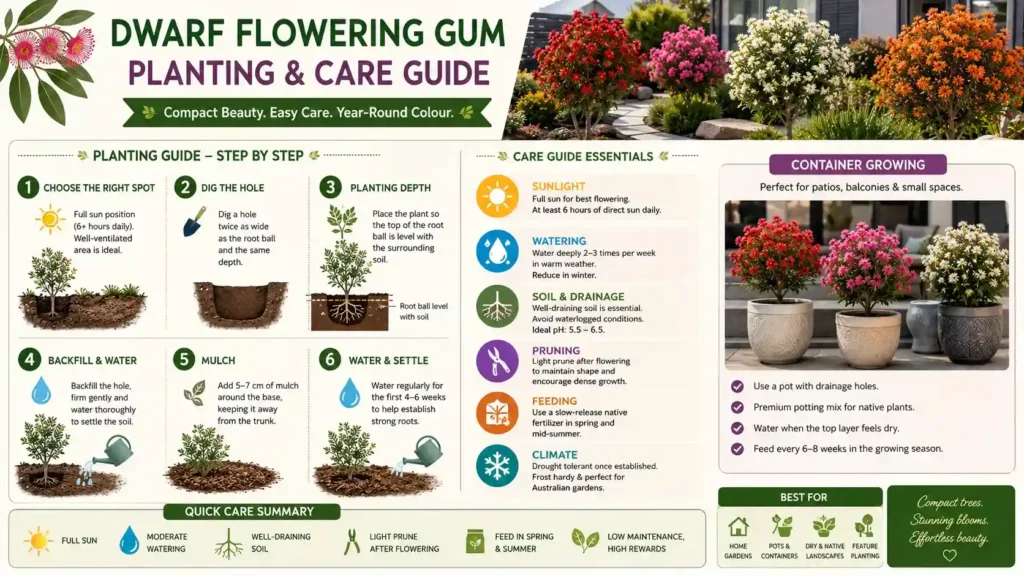
Planting a dwarf flowering gum correctly helps establish a healthy root system and encourages faster adaptation to the landscape.
Begin by loosening the soil in the planting area. Remove weeds, compacted material, and debris. If the soil is heavy clay, improve drainage using organic matter or coarse soil amendments.
Dig a hole slightly wider than the root ball while keeping the depth similar to the nursery container. Avoid planting too deeply because excessive soil coverage around the trunk can increase the risk of root problems.
Place the tree carefully into the hole and ensure the top of the root ball remains level with the surrounding ground surface.
Refill the hole gently using the original soil or improved planting mix. Firm the soil lightly around the roots to eliminate large air pockets without excessive compaction.
Deep watering immediately after planting helps settle the soil and supports early root establishment.
Add a layer of mulch around the base of the tree to conserve moisture and regulate soil temperature. Keep mulch slightly away from direct contact with the trunk to prevent excess moisture buildup.
Benefits of mulching include:
Many dwarf flowering gum cultivars grow successfully in pots and containers, making them excellent choices for balconies, patios, courtyards, and compact urban gardens.
Choosing the correct container size is important because healthy root growth directly affects flowering and canopy development. Containers should provide enough depth and width for long-term root expansion.
General container recommendations:
| Container Feature | Recommendation |
| Size | Large and deep |
| Drainage | Essential drainage holes |
| Material | Durable and weather-resistant |
| Placement | Full sun location |
A high-quality potting mix with excellent drainage is strongly recommended. Blends designed for native plants or flowering trees often work well because they reduce excess moisture retention while supporting root aeration.
For container-grown flowering gums:
Because of their compact growth habit, dwarf flowering gums are highly suitable for decorative patio containers and modern balcony landscaping.
Proper fertilization helps dwarf flowering gum trees maintain healthy foliage, strong root development, and abundant flowering. Although these trees are relatively low-maintenance once established, balanced nutrients can improve overall growth and bloom performance.
The best fertilizers for flowering eucalyptus trees are usually slow-release products designed for native plants or flowering ornamental trees. Excessive phosphorus or overly rich fertilizers should generally be avoided because some Australian native species prefer moderate nutrient levels.
Important nutrient requirements include:
| Nutrient | Function |
| Nitrogen | Supports foliage growth |
| Potassium | Encourages flowering and resilience |
| Phosphorus | Root development |
| Trace minerals | Overall plant health |
Fertilizing recommendations:
Young trees may benefit from light seasonal feeding, while mature trees often require less frequent fertilization if growing in healthy soil.
Pruning helps maintain the compact ornamental structure that makes dwarf flowering gum trees desirable for residential landscaping. Regular shaping also improves airflow, canopy balance, and branch strength.
The best time to prune is usually after the flowering season finishes. Light pruning during this period encourages healthy new growth while preserving future flower production.
Basic pruning guidelines include:
To maintain a compact form:
Excessive pruning may temporarily reduce flowering because blooms often develop on newer seasonal growth.
Dwarf flowering gum trees are generally hardy, but several common issues can affect growth, flowering quality, and foliage appearance.
Leaf drop can occur because of environmental stress, overwatering, underwatering, sudden temperature changes, or poor drainage. Minor seasonal leaf shedding is often normal, but excessive leaf loss may indicate root stress or nutrient imbalance.
Solutions include:
Reduced flowering is commonly linked to insufficient sunlight, improper pruning, nutrient imbalance, or immature tree age.
Ways to improve flowering:
Some dwarf flowering gums may occasionally experience pests such as psyllids, scale insects, or leaf-chewing insects. Fungal problems are more likely in poorly ventilated or overly wet conditions.
Common prevention methods include:
Healthy trees grown in suitable conditions are usually more resistant to major pest and disease problems.
Proper seasonal care helps maintain strong flowering performance and healthy long-term growth.
| Season | Maintenance Tasks |
| Spring | Fertilize lightly, inspect new growth, refresh mulch |
| Summer | Deep watering during heat, monitor flowering, check pests |
| Autumn | Light pruning after blooms, remove fallen debris |
| Winter | Reduce watering frequency, monitor frost exposure |
Spring is the main active growth season. This is the ideal time for light fertilization, mulching, and checking for new foliage development.
During summer, flowering activity increases in many cultivars. Deep watering may be necessary during prolonged dry periods, especially for younger trees and container-grown plants.
Autumn maintenance usually includes light shaping, cleanup, and preparation for cooler weather. Removing dead branches and fallen debris helps improve airflow around the tree.
Most established dwarf flowering gums require minimal winter maintenance in mild climates. Watering should generally be reduced, especially during cooler wet conditions. In colder regions, young trees may benefit from light frost protection.
Dwarf flowering gum trees are highly valued in small garden landscaping because they provide vibrant seasonal color without overwhelming limited outdoor spaces. Their compact growth habit makes them ideal for urban homes, courtyards, narrow garden beds, and modern residential landscapes.
Unlike large eucalyptus species that require significant space, small gum trees fit comfortably into compact environments while still delivering strong ornamental impact.
Many compact native trees used in modern landscapes are also featured in broader ornamental flowering tree collections designed for residential gardens.
Reasons small gum trees suit urban homes include:
Their manageable canopy structure also allows more flexibility in garden design, especially in suburban properties where space efficiency is important.
Common urban landscaping uses:
| Landscape Area | Suitability |
| Front yards | Excellent |
| Courtyards | Highly suitable |
| Patio gardens | Very suitable |
| Narrow side gardens | Good option |
| Small backyard landscapes | Ideal |
Dwarf flowering gums are widely used as feature trees because of their colorful blossoms and attractive evergreen canopy. Their striking flowers naturally draw visual attention, making them effective focal points in landscape design.
A single flowering gum tree can become the centerpiece of:
Flower color coordination is an important part of feature tree design. Different cultivars can complement surrounding plants, paving materials, and architectural styles.
Popular color combinations include:
| Flower Color | Landscape Pairing Ideas |
| Red | Neutral stone and green foliage |
| Orange | Warm-toned gardens and dry landscapes |
| Pink | Cottage-style and soft ornamental gardens |
| White | Minimalist and coastal landscaping |
Their vibrant flowering periods create strong seasonal contrast while maintaining year-round foliage interest.
Dwarf flowering gum trees are excellent additions to wildlife-friendly gardens because their nectar-rich flowers attract birds, bees, butterflies, and other beneficial pollinators.
Many flowering gum varieties become highly active during blooming seasons when native birds feed on the abundant nectar produced by the blossoms.
Wildlife benefits include:
Bird species are especially drawn to brightly colored flowering gums because of their high nectar production. This makes these trees valuable for gardeners aiming to create environmentally supportive landscapes.
Pollinator-friendly gardens often combine flowering gums with:
Dwarf flowering gum trees perform exceptionally well in coastal and dry climate gardens due to their strong drought tolerance and adaptability to harsh environmental conditions.
Many cultivars can tolerate:
These qualities make flowering gums ideal for water-wise landscaping and drought-tolerant garden designs.
Advantages in dry climate landscapes include:
| Feature | Benefit |
| Drought tolerance | Reduced irrigation needs |
| Evergreen foliage | Year-round visual appeal |
| Strong root stability | Better adaptation to dry soils |
| Heat resistance | Reliable summer performance |
In coastal gardens, dwarf flowering gums combine well with ornamental grasses, native shrubs, succulents, and Mediterranean-style planting schemes. Their colorful flowers add strong visual contrast while maintaining low long-term maintenance requirements.
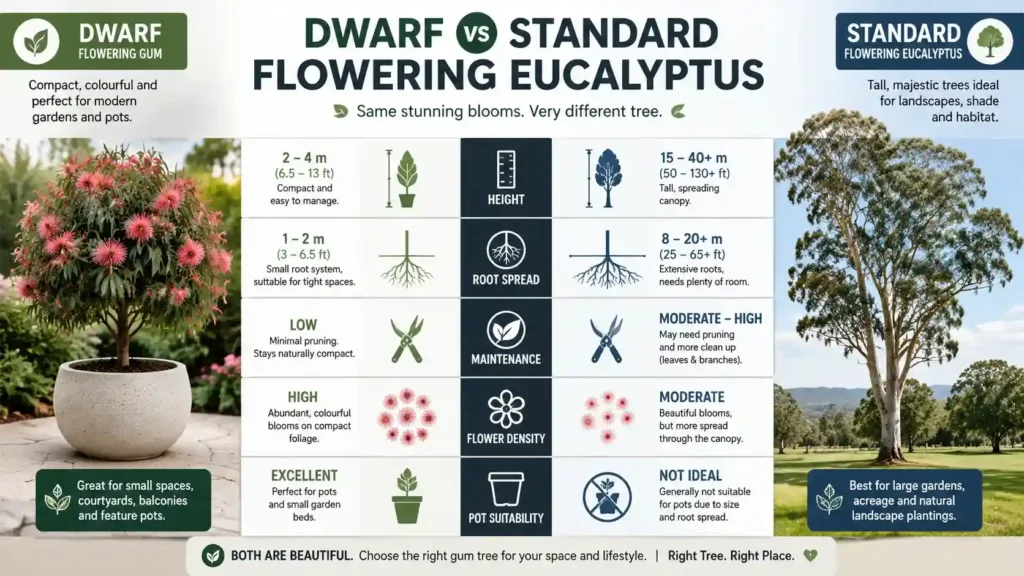
| Feature | Dwarf Flowering Gum | Standard Flowering Eucalyptus |
| Height | Compact | Tall |
| Root spread | Moderate | Extensive |
| Maintenance | Easier | Higher |
| Pot suitability | Excellent | Poor |
| Flower density | High | Moderate |
Dwarf flowering gum trees offer many advantages over traditional flowering eucalyptus species, especially in residential and urban landscapes. While standard eucalyptus trees are known for their impressive size and natural canopy spread, they often require significantly more space and maintenance.
Compact dwarf corymbia cultivars are specifically developed for modern landscaping needs where controlled growth and ornamental performance are priorities. Their smaller mature height makes them easier to manage while still providing colorful seasonal blooms and evergreen foliage.
One of the biggest differences is root behavior. Standard flowering eucalyptus trees can develop extensive root systems that may interfere with nearby structures, pipes, or paved surfaces. In comparison, dwarf flowering gums generally produce more moderate root spread, making them safer for smaller residential properties.
Maintenance requirements also differ considerably. Large eucalyptus species often require more pruning, space management, and long-term structural monitoring. Dwarf flowering gums are easier to shape and maintain because of their naturally compact growth habit.
Container growing is another major advantage. Most standard flowering eucalyptus trees are unsuitable for long-term pot cultivation due to rapid growth and root expansion. Dwarf flowering gums, however, adapt much better to large containers, patio pots, and balcony gardens.
Flower production is often more concentrated in dwarf ornamental cultivars. Many compact flowering gum varieties are bred specifically for dense blooming and improved visual impact, resulting in heavier flower coverage compared to some taller eucalyptus species.
Dwarf corymbia varieties are widely considered the best choice for small gardens because they combine ornamental beauty with practical landscape performance. Their controlled size allows homeowners to enjoy vibrant flowering eucalyptus-style trees without overcrowding outdoor spaces.
Reasons dwarf flowering gums are preferred for compact landscapes include:
These qualities make dwarf flowering gums especially valuable for:
For gardeners seeking colorful flowering trees with manageable growth, dwarf corymbia cultivars provide a more practical and landscape-friendly alternative to full-sized flowering eucalyptus trees.
Dwarf flowering gum trees are generally considered manageable landscape trees, but pet owners should still be aware of basic toxicity considerations associated with eucalyptus-related species. Like many members of the eucalyptus and corymbia groups, flowering gums contain aromatic oils within their leaves and foliage.
Ingesting large amounts of leaves or plant material may cause digestive discomfort in some pets, especially dogs and cats. Symptoms can vary depending on the amount consumed and the sensitivity of the animal.
Possible concerns may include:
Direct toxicity problems are uncommon in normal garden conditions because most pets do not regularly consume large quantities of eucalyptus foliage. However, it is still recommended to discourage chewing on leaves, bark, or seed pods.
Safety recommendations for pet owners:
| Precaution | Purpose |
| Remove fallen branches | Reduce accidental chewing |
| Monitor young pets | Prevent leaf ingestion |
| Keep mulch away from pet areas | Limit exposure to oils |
| Consult a veterinarian if symptoms appear | Ensure proper treatment |
Maintaining a clean garden area and supervising curious pets can help minimize potential risks.
Compared to large eucalyptus species, dwarf flowering gum trees usually have more moderate root systems, making them safer for residential landscapes. However, planting location still plays an important role in preventing future root-related problems.
Although dwarf gums are less aggressive than full-sized eucalyptus trees, roots may still seek moisture sources over time. Poor placement near underground infrastructure can increase the risk of interference with pipes, paving, or retaining structures.
Areas that require careful consideration include:
Pipe and pavement safety improve significantly when trees are planted with proper spacing and good soil conditions.
General prevention strategies include:
Proper cultivar selection also helps reduce long-term root management concerns in smaller residential gardens.
Like many eucalyptus-related species, flowering gum trees contain natural oils within their foliage and branches. These oils contribute to the characteristic fragrance of eucalyptus plants but may also increase flammability under extremely dry conditions.
Bushfire risk varies depending on:
In fire-prone regions, regular maintenance is important for reducing fuel buildup around the tree.
Bushfire safety recommendations include:
Despite their oil content, well-maintained dwarf flowering gums are commonly used in Australian landscaping when integrated responsibly into broader fire-conscious garden design.
| Feature | Details |
| Botanical Name | Corymbia ficifolia |
| Common Name | Dwarf Flowering Gum |
| Mature Height | Small to medium |
| Flower Colors | Red, pink, orange, white |
| Sun Requirement | Full sun |
| Water Needs | Moderate |
| Growth Rate | Fast |
Dwarf flowering gums are among the most versatile and visually striking ornamental trees for modern residential landscapes. Their compact size, colorful blooms, evergreen foliage, and relatively low maintenance requirements make them ideal for small gardens, patios, courtyards, and urban outdoor spaces. Unlike large eucalyptus species, dwarf varieties provide strong ornamental value without excessive height or aggressive growth habits.
Popular cultivars such as Summer Red, Summer Beauty, Baby Orange, Mini Red, and other compact corymbia selections offer a wide range of flower colors including red, orange, pink, and white. These varieties allow homeowners to match flowering gums with different garden styles, landscape themes, and climate conditions.
For the best long-term results, dwarf flowering gums should be planted in full sun with well-drained soil and adequate airflow. Proper watering during establishment, light seasonal pruning, and balanced fertilization can help maintain healthy growth and strong flowering performance.
Choosing climate-appropriate cultivars is especially important for maximizing flower production, drought tolerance, and overall plant health. With the right selection and care, dwarf flowering gums can become long-lasting feature trees that provide year-round beauty and seasonal color in a wide variety of landscapes.
Most dwarf flowering gum trees grow to a small or medium mature height compared to standard eucalyptus species. The final size depends on the cultivar, climate, soil conditions, and maintenance practices. Compact varieties are specifically bred for residential gardens and urban landscapes where controlled growth is important.
Dwarf flowering gum roots are generally less aggressive than those of large eucalyptus trees. Their root systems are usually moderate and more manageable, making them suitable for smaller landscapes when planted with proper spacing. However, trees should still be positioned away from underground pipes, foundations, and narrow paved areas.
Most flowering gum trees bloom during the warmer months, especially from late spring through summer. Flowering periods vary depending on the cultivar, climate, and growing conditions. Healthy trees grown in full sun typically produce heavier and more reliable blooms.
Yes, many dwarf flowering gum varieties grow successfully in large pots and containers. Their compact growth habit makes them ideal for patios, balconies, courtyards, and urban gardens. Proper drainage, quality potting mix, and regular watering are important for container-grown trees.
A slow-release fertilizer designed for native plants or flowering ornamental trees is usually the best choice. Balanced nutrients help support healthy foliage, root growth, and flower production without overstimulating excessive leafy growth.
Several popular cultivars produce bright red blooms, including Summer Red and Mini Red flowering gums. These varieties are highly valued for their dense red flower clusters and strong ornamental appearance in landscape design.
Yes, Corymbia ficifolia and Eucalyptus ficifolia refer to the same species. The tree was originally classified under the eucalyptus genus but was later reclassified into the Corymbia group after botanical studies identified structural and genetic differences.
Yes, flowering gum trees are highly attractive to birds, bees, butterflies, and other pollinators. Their nectar-rich flowers support wildlife activity and make them excellent additions to pollinator-friendly gardens.
Once established, most dwarf flowering gum varieties become highly drought tolerant. They perform especially well in dry climates and water-wise landscapes with full sun exposure and well-drained soil.
Many cultivars adapt very well to coastal environments because they tolerate salty air, heat, and dry winds better than many ornamental trees. This makes them suitable for seaside gardens and coastal landscaping projects.
Poor flowering is commonly caused by insufficient sunlight, over-fertilization, improper pruning, or immature tree age. Planting the tree in full sun and following proper care practices can improve bloom production.
Young trees require regular deep watering during their establishment period. Watering frequency depends on weather conditions and soil drainage, but the soil should remain lightly moist without becoming waterlogged.
Yes, dwarf flowering gums are specifically developed for compact residential landscapes. Their smaller size, manageable roots, and colorful flowers make them ideal for small gardens, patios, courtyards, and urban outdoor spaces.