Grow Better Gardens with Smarter Plant Choices
Discover helpful guides on trees, hedges, fruit plants, edible plants, and beautiful landscape greenery.


The weeping mulberry is a compact ornamental tree admired for its graceful cascading branches, umbrella-shaped canopy, and sweet edible berries. Many gardeners grow a weeping mulberry because it combines decorative beauty with practical landscape benefits. Its dramatic drooping form creates an attractive focal point in small gardens, courtyards, and front yards while also providing seasonal shade and fresh mulberry fruit.
Most weeping mulberry varieties belong to the Morus alba species, especially Morus alba pendula, which is widely known for its elegant weeping habit. Popular forms include the Chaparral weeping mulberry, fruitless weeping mulberry, and white mulberry cultivars grown for both ornamental and edible landscaping purposes. Because of its manageable size and adaptable growth habit, this ornamental mulberry tree works well in urban gardens, decorative patios, and compact backyard spaces.
| Feature | Details |
| Scientific Name | Morus alba, Morus alba pendula |
| Common Name | Weeping mulberry |
| Mature Size | 6–15 feet tall and wide |
| Growth Rate | Fast-growing |
| Fruiting Type | Fruiting or fruitless varieties |
| USDA Zones | 4–9 |
| Lifespan | 30–50+ years |
A weeping mulberry tree is a decorative form of mulberry with pendulous branches that create a dense drooping canopy and may produce edible berries depending on the variety. It is widely grown as an ornamental mulberry tree because of its umbrella-like shape, compact size, and dramatic cascading growth habit.
Unlike upright mulberry trees, weeping forms develop long hanging branches that naturally arch downward. These elegant weeping trees are commonly used as focal points in small gardens, patios, courtyards, and decorative landscapes.
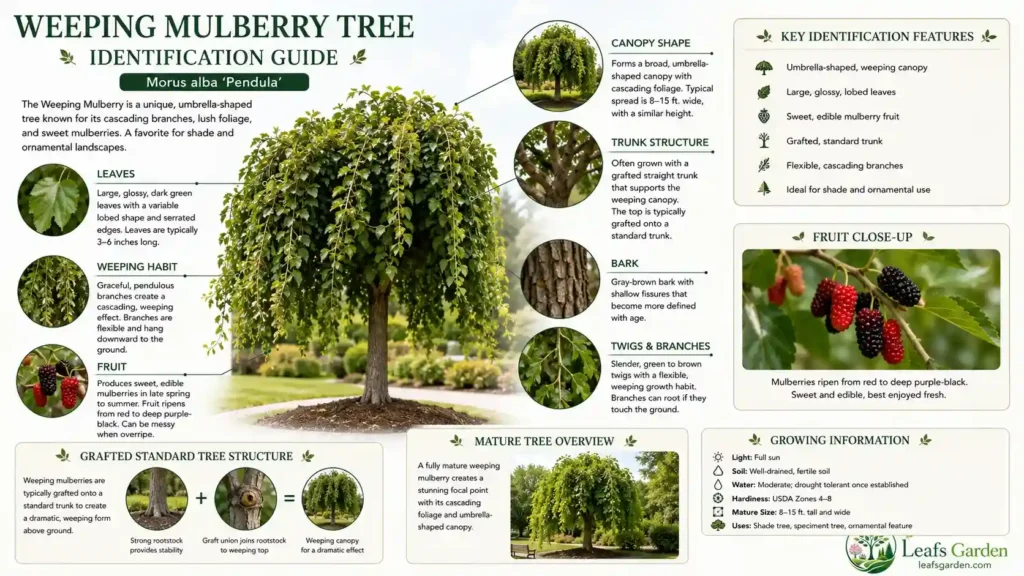
Most weeping mulberry trees belong to the species Morus alba, commonly known as white mulberry. The best-known ornamental form is Morus alba pendula, a grafted cultivar valued for its drooping structure and compact growth.
Mulberries belong to the Moraceae family, which also includes figs and breadfruit. Within this group, white mulberry and black mulberry are the two most recognized landscape species.
| Feature | White Mulberry (Morus alba) | Black Mulberry (Morus nigra) |
| Growth Rate | Fast-growing | Slower-growing |
| Leaf Texture | Smooth and glossy | Rough and thicker |
| Fruit Flavor | Mildly sweet | Rich and intensely sweet |
| Tree Size | Larger and adaptable | Smaller and denser |
| Common Use | Ornamental and fruiting | Primarily fruit production |
Many ornamental weeping tree varieties are developed from Morus alba because of its adaptability, vigorous growth, and tolerance to pruning.
A weeping mulberry tree has a rounded umbrella-shaped canopy formed by long cascading branches that hang toward the ground. Its graceful structure gives the tree a soft flowing appearance often associated with decorative drooping tree forms.
The branches may become twisted and sculptural with age, adding winter interest even after leaf drop. Mature trees develop a dense canopy that creates filtered shade beneath the hanging limbs.
Leaves are broad, bright green, and slightly glossy with a soft textured surface. Some leaves may appear lobed while others remain heart-shaped on the same tree. During spring, small mulberry blossoms emerge before developing into elongated berries on fruiting cultivars.
Depending on the variety, mulberry fruit may ripen into white, red, purple, or nearly black berries.
Standard mulberry trees grow upright with spreading crowns, while weeping mulberries are trained into compact pendulous forms designed mainly for ornamental landscaping.
| Feature | Weeping Mulberry Tree | Standard Mulberry Tree |
| Tree Size | Compact | Large and spreading |
| Shape | Drooping umbrella canopy | Upright rounded crown |
| Fruiting Ability | Fruiting or fruitless | Usually heavy fruiting |
| Landscape Use | Ornamental focal point | Shade and fruit production |
| Maintenance Needs | Requires shaping and pruning | Less structural pruning |
Weeping mulberries come in both fruiting and fruitless forms, with several ornamental cultivars suited for different climates, landscape styles, and garden sizes. Some varieties are grown mainly for sweet edible berries, while others are selected for their clean ornamental appearance and dramatic cascading canopy.
Different weeping mulberry types also vary in growth rate, mature size, and maintenance needs, making them suitable for patios, courtyards, urban gardens, and decorative landscapes.
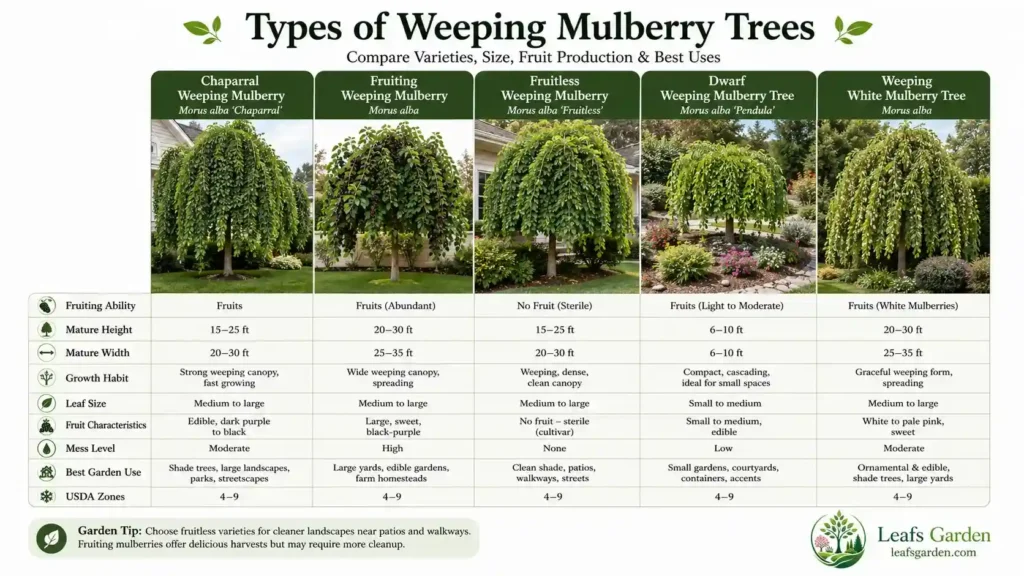
A fruiting weeping mulberry produces sweet edible berries during the growing season while also functioning as a decorative landscape tree. These varieties are popular among gardeners who want both ornamental beauty and fresh homegrown fruit.
Berry color can vary depending on the cultivar. Fruits may ripen into white, red, purple, or deep black shades. The berries are soft, juicy, and attractive to birds and pollinators.
Fruiting varieties also help support local wildlife by attracting:
Because of their hanging canopy and edible harvest, fruiting weeping mulberries are often planted in backyard orchards and edible landscapes.
A fruitless weeping mulberry tree is grown mainly for its graceful ornamental structure rather than berry production. These cultivars create less mess beneath the canopy because they do not drop staining fruit onto patios, walkways, or lawns.
Many homeowners choose a fruitless weeping mulberry tree for:
Fruitless varieties still develop the same elegant drooping tree structure and dense umbrella canopy associated with ornamental weeping trees.
The chaparral weeping mulberry is one of the most popular ornamental mulberry cultivars. It is a male cultivar known for its non-fruiting characteristics and strongly pendulous branches.
This variety is widely planted because it combines:
The chaparral weeping mulberry is especially valued in decorative landscapes where homeowners want the appearance of a mulberry tree without fallen berries.
A dwarf weeping mulberry tree has a smaller and more compact growth habit compared to larger standard mulberry forms. Its reduced size makes it ideal for patios, containers, courtyards, and small garden landscaping.
These compact weeping tree varieties are commonly used in:
With regular pruning, a dwarf weeping mulberry tree can maintain a neat umbrella shape while remaining manageable for limited spaces.
The weeping white mulberry tree is usually derived from Morus alba and is known for its vigorous growth and adaptability. It tolerates a wide range of soil conditions and climates, making it one of the easiest ornamental mulberry trees to grow.
Common characteristics include:
Because of its resilience and attractive shape, the weeping white mulberry tree remains a popular choice for ornamental and shade-focused landscaping.
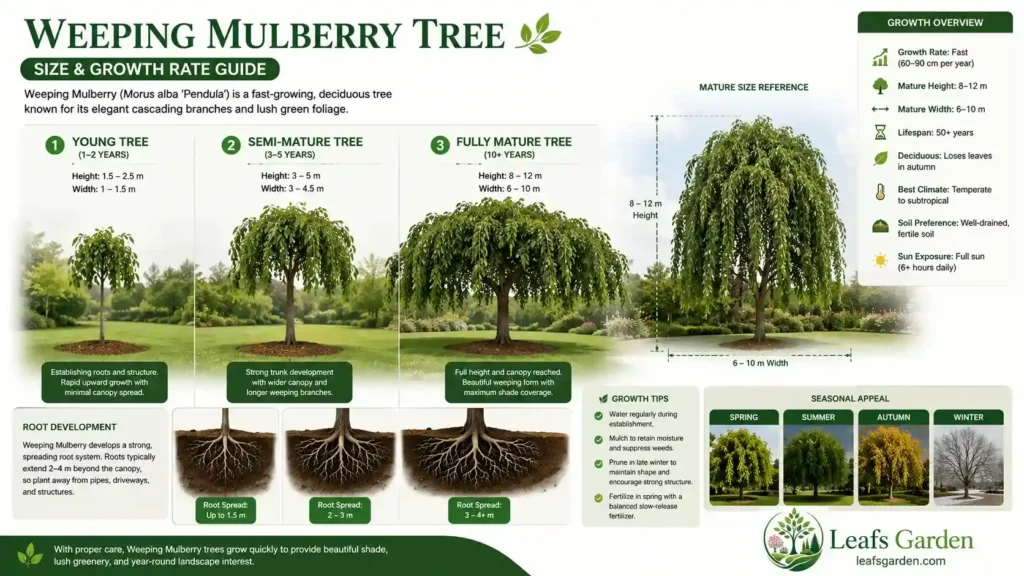
Most weeping mulberry trees grow between 6–15 feet tall depending on the rootstock, pruning method, growing conditions, and cultivar type. Some compact ornamental forms stay relatively small, while vigorous varieties can develop a much wider canopy spread over time.
Regular pruning strongly affects final mulberry height and overall shape. Trees grown in open landscapes usually become larger and broader than container-grown specimens.
Different cultivars vary in mature size, canopy spread, and fruiting ability.
| Variety | Height | Width | Fruiting |
| Chaparral Weeping Mulberry | 6–10 feet | 8–12 feet | No |
| Fruiting Weeping Mulberry | 8–15 feet | 10–15 feet | Yes |
| Dwarf Weeping Mulberry Tree | 4–8 feet | 4–8 feet | Sometimes |
| Weeping White Mulberry Tree | 10–15 feet | 10–15 feet | Yes |
| Fruitless Weeping Mulberry Tree | 6–12 feet | 8–12 feet | No |
A full grown weeping mulberry tree typically develops a broad umbrella-shaped canopy that becomes wider with age and pruning maturity.
Weeping mulberry trees are considered fast-growing ornamental trees. Under favorable conditions, young trees can produce significant branch extension each growing season.
Growth is usually strongest during:
Climate plays a major role in mulberry tree size and growth speed. Trees growing in warm regions with long summers often mature faster and develop denser canopies.
Cooler climates may slow seasonal growth, while drought stress can reduce branch development and leaf production.
A healthy mulberry tree mature enough for stable canopy formation may reach near-full size within several years when planted in full sun and fertile soil.
A full grown mulberry tree develops a thick central trunk supporting long cascading branches that sweep downward toward the ground. Mature specimens form a dense rounded canopy that creates filtered shade beneath the tree.
As a full grown weeping mulberry tree ages, the branching structure becomes more dramatic and sculptural. Older trees often display twisting limbs and heavy pendulous growth that enhance their ornamental appearance.
Key mature features include:
The root system gradually spreads outward as the tree matures. Although roots are generally manageable, proper spacing from foundations, paving, and underground pipes helps prevent future crowding issues.
Weeping mulberries grow best in full sun, well-draining soil, and moderate watering conditions. These adaptable ornamental trees tolerate a wide range of climates, but healthy growth, dense foliage, and strong fruit production depend on proper sunlight, soil drainage, and seasonal care.
Good mulberry growing conditions help improve canopy shape, branch development, and overall tree longevity.
Weeping mulberry trees perform well across USDA Zones 4–9, depending on the cultivar. Many varieties tolerate both summer heat and moderate winter cold once established.
These trees adapt particularly well to:
Cold tolerance varies slightly between cultivars, but established trees usually survive winter dormancy with minimal protection.
Heat tolerance is one of the strongest characteristics of Morus alba varieties. In warmer climates, trees grow vigorously and develop dense canopies during the active growing season.
In Australia, weeping mulberries are commonly grown in regions such as:
Their drought adaptability makes them useful for low-water landscapes once roots become established.
Full sun is essential for healthy canopy growth, dense foliage, and reliable fruit production. Most weeping mulberry trees need at least 6–8 hours of direct sunlight daily.
Strong sunlight supports:
Partial shade is tolerated, but excessive shade may reduce vigor and create thinner branch growth.
Low sunlight can also affect fruiting performance by reducing berry production and slowing seasonal development.
For the best mulberry tree growing conditions, plant the tree in an open sunny location with good airflow around the canopy.
Well-draining soil is one of the most important requirements for healthy mulberry plant care. Weeping mulberries dislike constantly wet soil because poor drainage increases the risk of root rot and fungal problems.
These trees adapt to many soil types including:
Ideal soil pH ranges from slightly acidic to neutral, although many mulberry varieties tolerate mildly alkaline conditions.
Mulching around the base helps:
Keep mulch slightly away from the trunk to prevent excess moisture buildup near the bark.
Young weeping mulberry trees require regular watering during establishment. Deep watering encourages stronger root expansion and improves drought resistance later in life.
Newly planted trees usually benefit from:
Once mature, weeping mulberries become relatively drought tolerant and generally need less frequent irrigation.
However, prolonged dryness may reduce:
Overwatering is a common mulberry tree care mistake. Waterlogged soil can lead to yellow leaves, root stress, and fungal disease.
Proper drainage and moderate watering are key parts of long-term care for mulberry tree health.
Weeping mulberries usually respond well to balanced feeding during active growth periods. Organic fertilizers are commonly preferred because they improve soil quality gradually without encouraging excessive weak growth.
Suitable feeding options include:
Excess nitrogen should be avoided because overly rapid growth may weaken branch structure and reduce fruit quality.
A simple seasonal feeding schedule often includes:
| Season | Feeding Recommendation |
| Early Spring | Balanced fertilizer or compost |
| Late Spring | Light supplemental feeding if needed |
| Summer | Minimal feeding during extreme heat |
| Fall | Avoid heavy nitrogen applications |
| Winter | No active feeding during dormancy |
Consistent feeding, proper watering, and sunlight all work together to support healthy mulberry tree care and long-term ornamental growth.
Plant weeping mulberry trees in sunny locations with enough space for root spread and canopy growth. Proper planting helps the tree establish faster, develop a balanced umbrella-shaped canopy, and maintain long-term health.
Good planting practices also improve drainage, reduce transplant stress, and support healthy root expansion during the first growing seasons.
Spring and fall are generally the best seasons for planting mulberry tree varieties. Mild temperatures during these periods help roots establish before extreme summer heat or winter cold arrives.
Spring planting allows the tree to develop roots during the active growing season. This option works especially well in colder climates where winter frost may damage newly planted roots.
Benefits of spring planting include:
Fall planting is often preferred in warmer regions because cooler temperatures reduce water stress while roots continue developing underground.
Fall planting works well in:
| Climate Type | Best Planting Time |
| Cold climates | Mid to late spring |
| Temperate climates | Spring or early fall |
| Hot dry climates | Early fall |
| Mild coastal climates | Fall through early spring |
Choosing the correct planting season is an important part of any mulberry tree planting guide because it directly affects early root development and survival rates.
Proper planting improves drainage, canopy growth, and long-term tree stability.
Select a full sun location with enough room for mature canopy spread and root growth. Avoid planting too close to buildings, fences, or underground utilities.
Dig a hole approximately twice as wide as the root ball but no deeper than the root system itself. Wide planting holes help roots spread more easily into surrounding soil.
Mix compost or organic matter into poor soil if needed. Well-draining soil is essential for healthy root establishment.
After planting mulberry tree roots, water thoroughly to settle the soil and eliminate air pockets around the roots.
Apply mulch around the base to retain moisture and regulate soil temperature. Keep mulch several inches away from the trunk to prevent moisture-related bark problems.
This simple process helps answer how to plant a mulberry tree successfully while supporting strong early growth.

Weeping mulberries can grow in containers or directly in the ground depending on available space and desired landscape style.
| Growing Method | Advantages | Limitations |
| Pots | Suitable for patios and small spaces | Requires more watering and pruning |
| Raised Beds | Better drainage and root control | Limited long-term root space |
| Backyard Planting | Maximum canopy development and lifespan | Needs larger planting area |
Container-grown trees are especially popular for dwarf cultivars and decorative patio landscapes.
Ground planting usually produces healthier long-term growth, wider canopy spread, and stronger trunk development.
The mulberry root system is broad and spreading rather than deeply invasive. Most roots grow outward near the soil surface where moisture and nutrients are easier to access.
A mature mulberry tree roots system may gradually expand beyond the canopy edge over time. Proper spacing helps prevent crowding near:
General root management recommendations include:
Understanding the mulberry root system helps reduce future maintenance issues and supports healthier long-term tree growth.
Proper pruning, watering, and seasonal maintenance keep weeping mulberry trees healthy, vigorous, and visually attractive throughout the year. Consistent care improves canopy shape, supports healthy foliage, and helps prevent common mulberry tree problems caused by stress or poor growing conditions.
Good mulberry tree maintenance also encourages stronger branch structure and better long-term ornamental value.
Weeping mulberry trees benefit from different care practices throughout each season. Adjusting watering, pruning, and cleanup routines according to seasonal growth stages helps maintain tree health and appearance.
Spring is the active growth period for growing mulberry trees. New foliage, branch extension, and flowering usually begin as temperatures warm.
Important spring care tasks include:
This is also a good time to inspect for pests and weak branches before dense canopy growth develops.
During summer, established trees usually tolerate moderate heat and short dry periods. However, prolonged drought may reduce canopy density and fruit production.
Summer care focuses on:
Container-grown trees may require more frequent watering because pots dry out faster than ground soil.
Fall maintenance helps prepare the tree for dormancy while reducing disease and pest risks around the root zone.
Common fall cleanup tasks include:
Fruit-bearing varieties may require additional cleanup beneath the canopy because ripe berries can stain surfaces.
Weeping mulberry trees enter dormancy during winter after leaf drop. Growth slows significantly while the tree conserves energy for the next growing season.
Winter is often the best period for:
Dormant trees are easier to prune because the branch framework becomes fully visible.
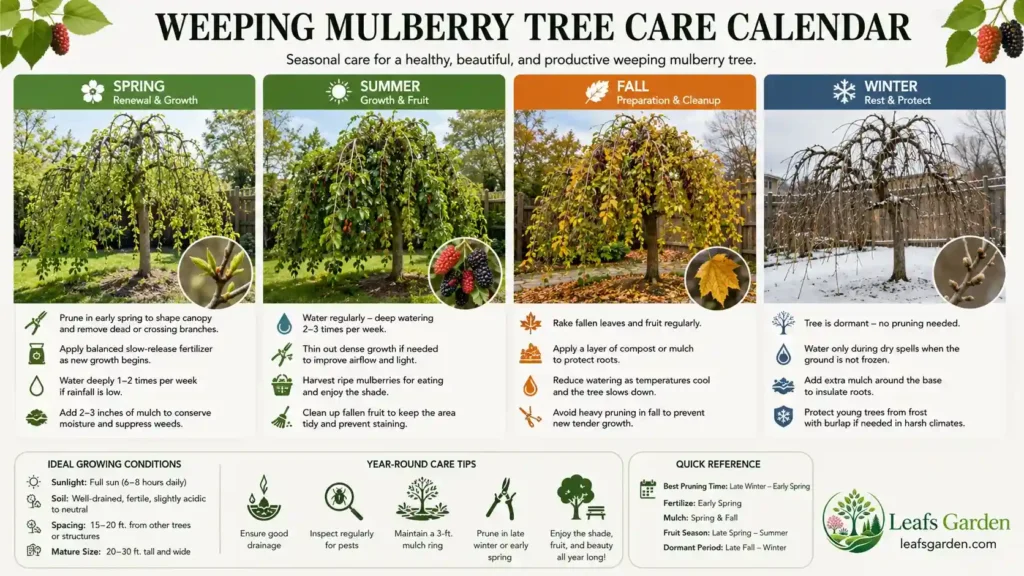
Consistent maintenance improves tree appearance and reduces long-term problems.
Important mulberry tree maintenance practices include:
These simple routines are essential parts of how to care for a mulberry tree properly throughout its lifespan.
Weeping mulberry in winter typically remains dormant until temperatures begin warming in spring. During this period, watering needs decrease and active growth temporarily stops.
In colder climates, young trees may benefit from basic frost protection during severe freezes.
Winter protection methods may include:
Dormancy is a natural and healthy stage of the growth cycle. Leaf drop during winter is completely normal for deciduous mulberry trees.
Winter pruning is commonly performed during late dormancy before spring buds begin swelling. This timing helps reduce sap bleeding and allows easier shaping of the canopy structure.
Weeping mulberry trees should be pruned annually to maintain shape, airflow, and healthy branch structure. Regular pruning helps preserve the tree’s umbrella-like canopy while preventing overcrowded growth, weak branches, and excessive height expansion.
Proper weeping mulberry pruning also improves sunlight penetration and reduces the risk of fungal problems inside dense foliage.
The best time to prune weeping mulberry trees is during the dormant season, usually in late winter or very early spring before new growth begins.
Dormant season pruning offers several advantages:
Pruning too late in spring may cause sap bleeding because mulberry trees produce strong sap flow once active growth starts.
To avoid excessive sap bleeding:
Correct timing is an important part of learning how to prune a weeping mulberry tree properly.
A structured pruning routine helps maintain healthy branch spacing and the classic drooping canopy shape.
Begin by cutting away dead, damaged, diseased, or broken branches. This improves airflow and reduces stress on healthy growth.
Remove crossing or overcrowded branches inside the canopy. Thinning helps sunlight reach interior foliage and improves air circulation.
Trim hanging branches evenly to maintain the rounded umbrella appearance. Focus on preserving the natural cascading structure.
Reduce excessive upward growth if the canopy becomes too tall or unbalanced. Light structural shaping helps maintain manageable size.
Cut away suckers growing from the base, trunk, or below the graft union. These shoots can weaken the ornamental canopy if left unmanaged.
This process supports healthy trimming weeping mulberry maintenance while preserving long-term structure.
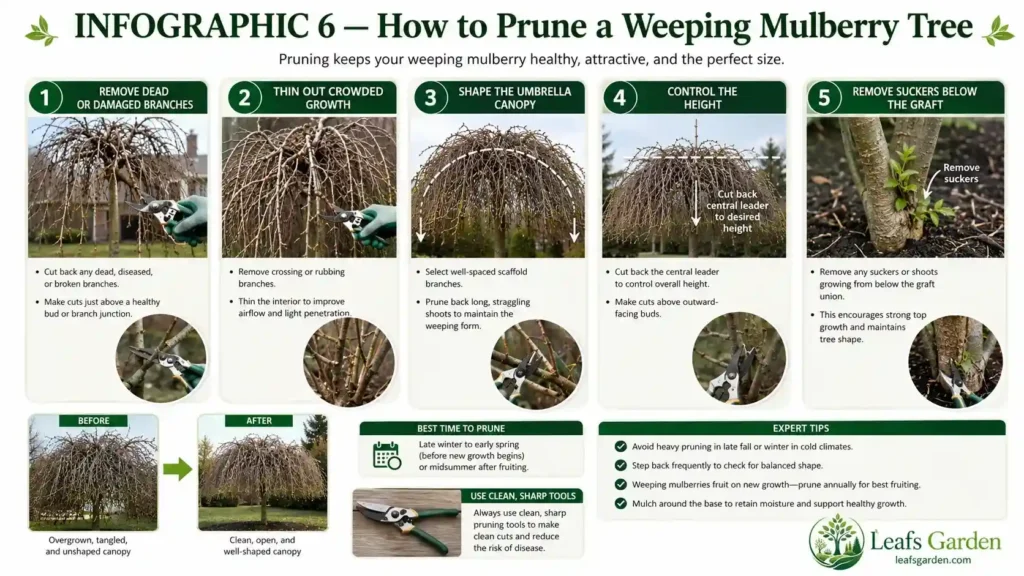
Improper pruning can damage branch structure and reduce the ornamental value of the tree.
Common weeping mulberry pruning mistakes include:
Removing too much foliage at one time may weaken the tree and reduce healthy regrowth.
Cutting major branches abruptly across the canopy destroys the natural weeping form and often leads to weak regrowth.
Improper cuts too close to the trunk or leaving large stubs can increase disease risk and slow healing.
Careful pruning helps avoid stress while maintaining balanced growth and canopy symmetry.
The umbrella canopy is one of the defining features of a weeping mulberry tree. Maintaining this structure requires gradual shaping and selective branch management over time.
Long-term shaping focuses on:
Young branches can sometimes be guided gently to improve structure and maintain symmetrical drooping form.
When learning how to trim weeping mulberry tree canopies correctly, the goal is to enhance the natural pendulous shape rather than forcing rigid geometric pruning patterns.
Consistent seasonal maintenance helps prune weeping mulberry trees without damaging their graceful ornamental appearance.
Fruiting weeping mulberry trees produce sweet berries after pollination, while male or fruitless cultivars do not bear fruit. Berry production depends on the variety, tree maturity, growing conditions, and successful mulberry pollination during the flowering season.
Many ornamental weeping mulberries are grown mainly for their decorative canopy, but fruiting cultivars also provide edible harvests that attract birds and pollinators.
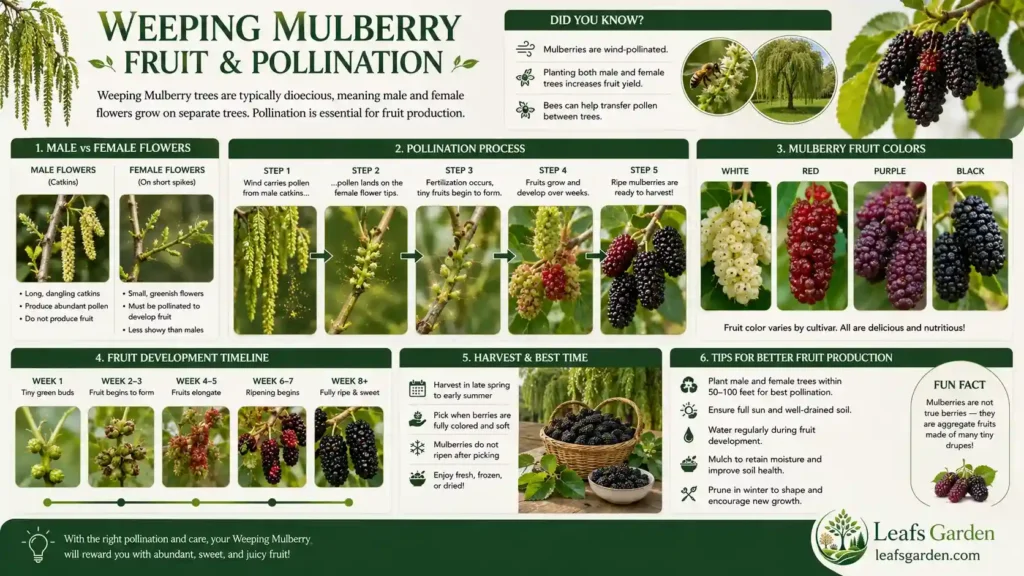
Some mulberry trees are self pollinating, while others require separate male and female trees for reliable fruit production. Pollination behavior varies depending on the cultivar and species.
Male mulberry trees produce pollen but do not develop fruit. Female trees produce berries after successful pollination.
Certain cultivars may contain both male and female flowers, allowing self-fertile fruit production under suitable conditions.
Fruitless ornamental varieties are usually male selections developed specifically to avoid berry production.
Mulberry pollination mainly occurs through wind movement and natural pollen transfer during spring flowering.
Successful pollination depends on:
Poor pollination may reduce berry production even on mature fruiting trees.
Most weeping mulberry trees fruit during late spring through summer depending on climate and variety. Fruiting usually begins after the flowering cycle is completed.
Young trees may require several years before producing reliable harvests. Mature trees generally develop more consistent seasonal yields.
The typical fruiting cycle follows this pattern:
| Growth Stage | Timing |
| Flower emergence | Early to mid spring |
| Pollination period | Mid spring |
| Fruit development | Late spring |
| Berry ripening | Early to mid summer |
Warm sunny conditions often improve fruit quality and ripening speed.
For gardeners wondering when do mulberry trees fruit, timing varies slightly by climate zone and local seasonal temperatures.
Weeping mulberry fruit is soft, juicy, and sweet with mild tart undertones depending on ripeness and cultivar. The flavor is often compared to a blend of blackberry, raspberry, and grape.
Mulberry edible fruit can vary in color from:
Darker berries usually develop richer sweetness as they fully ripen.
Harvest timing is important because ripe berries soften quickly and may fall from the tree if left too long. Most berries are ready for harvest once they become fully colored and easily detach from the stem.
Fresh mulberry tree berries are commonly eaten raw or used in:
Healthy mulberry trees can remain productive for decades under proper care. Mature trees often continue producing seasonal crops for 20–50 years or longer depending on cultivar health and growing conditions.
Productive lifespan is influenced by:
Seasonal yields usually increase as the tree matures and develops a larger canopy structure.
Well-maintained fruiting weeping mulberries can provide reliable annual harvests while also functioning as attractive ornamental landscape trees.
Most weeping mulberry problems are caused by pests, fungal disease, poor drainage, or improper pruning. Environmental stress, inconsistent watering, and overcrowded growth can also weaken the tree and reduce canopy health.
Early identification of symptoms helps prevent long-term damage and improves overall mulberry tree maintenance.
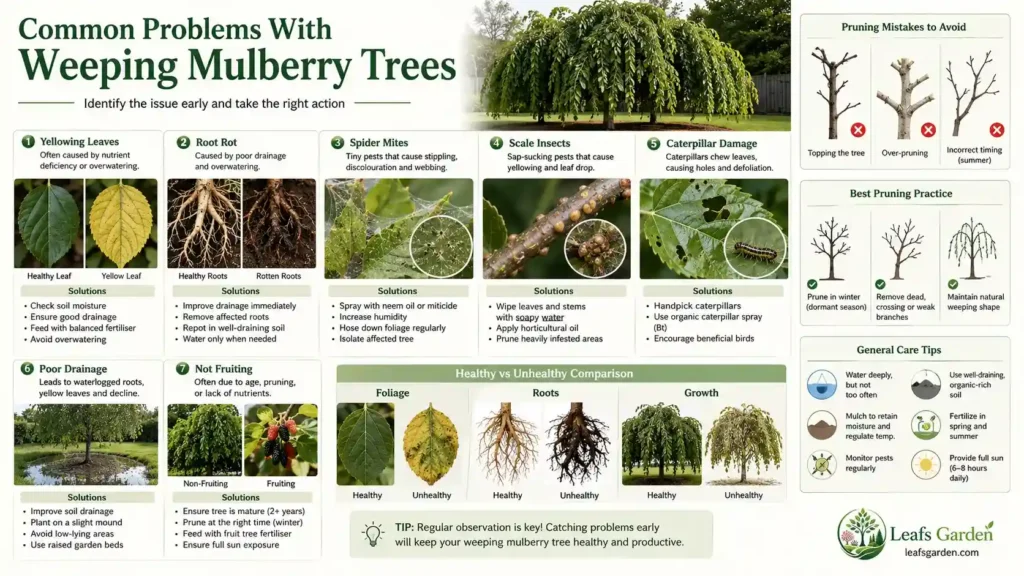
Yellow leaves and premature leaf drop are among the most common problems with mulberry trees. These symptoms are usually linked to watering stress, nutrient imbalance, or environmental conditions.
Excess moisture around the roots can restrict oxygen flow and stress the tree. Overwatered mulberries often develop:
Poor drainage may eventually lead to root disease if moisture remains trapped for extended periods.
Low nutrient availability can affect leaf color and canopy vigor. Nitrogen deficiency is one of the most common causes of pale foliage and weak seasonal growth.
Deficiency symptoms may include:
Balanced fertilizing and healthy soil structure help restore normal foliage development.
Environmental stress can also trigger leaf drop.
Common stress factors include:
Temporary seasonal leaf drop may occur during weather fluctuations or dormancy transitions.
Root rot is commonly caused by consistently wet soil and poor drainage conditions. Mulberry roots require oxygen circulation to remain healthy.
Signs of root rot may include:
Severe root damage can eventually weaken the entire tree structure.
Good drainage is the most effective prevention strategy.
Helpful prevention methods include:
Healthy drainage conditions are essential for long-term mulberry root health.
Several insects may occasionally affect weeping mulberry trees, especially during warm growing seasons.
Scale insects attach themselves to branches and stems while feeding on plant sap. Heavy infestations may weaken foliage and reduce growth vigor.
Spider mites are tiny pests that thrive in hot dry conditions. They may cause:
Caterpillars sometimes feed on mulberry foliage during active growth periods. Minor feeding usually causes little damage, but larger infestations may reduce canopy density.
Regular inspection helps detect pest activity before serious damage develops.
A mulberry tree no fruit problem is usually related to pollination issues, tree maturity, or excessive pruning.
Some cultivars require compatible pollination for berry production. Male or non fruiting mulberry tree varieties naturally do not produce fruit.
Poor weather during flowering may also reduce successful pollination.
Young trees often require several years before producing reliable harvests. Newly planted trees may focus on root and canopy development before fruiting begins.
Excessive pruning may remove flowering wood and reduce berry production for the following season.
Heavy trimming can also stress the tree and interrupt normal mulberry tree blooming cycles.
Balanced pruning, proper sunlight, and healthy growing conditions all help support consistent fruit development in mature weeping mulberry trees.
Weeping mulberry trees are widely used as ornamental focal points in small gardens, patios, and backyard landscapes. Their graceful cascading canopy, compact structure, and dramatic silhouette make them valuable for decorative outdoor design.
Because they combine shade, texture, and seasonal interest, these ornamental mulberry trees work well in both formal and relaxed garden settings.

The umbrella-shaped canopy and pendulous branches allow weeping mulberries to function as striking landscape features in many types of outdoor spaces.
A weeping mulberry tree front yard planting creates strong visual impact because of its sculptural drooping canopy and unique branch structure.
These trees are commonly used as:
Their compact size also helps maintain balance in smaller residential landscapes.
For gardeners exploring a wider range of ornamental options beyond mulberries, this complete ornamental flowering trees for beautiful landscapes guide covers tree selection, canopy styles, and seasonal interest across many popular varieties.
The dense canopy provides filtered shade during warmer months while maintaining an elegant ornamental appearance.
As a shade tree, a weeping mulberry can help:
Fruiting and fruitless varieties are both commonly used in backyard shade landscapes.
The dramatic cascading shape works especially well in enclosed spaces and decorative courtyards.
A single ornamental mulberry tree can soften hardscape areas by adding:
Its pendulous canopy naturally draws attention and creates a calming garden centerpiece.
Weeping mulberries are highly suitable for compact landscapes because many cultivars remain relatively small and manageable with pruning.
These trees are commonly planted in:
Compared to larger shade trees, many weeping forms fit comfortably into limited planting areas without overwhelming the landscape.
In Australia, they are often included among popular small weeping trees Australia gardeners use for decorative residential planting.
Other compact natives also suit this style of planting well — dwarf flowering gum varieties are a strong evergreen alternative that delivers vibrant seasonal colour in similarly sized Australian garden spaces.
Container-grown dwarf forms also perform well in patio pots and raised garden settings when regularly maintained.
Companion plants help soften the base of the tree while improving overall landscape design around the canopy.
Popular companion plant choices include:
Lavender provides drought-tolerant color contrast and complements the soft structure of weeping shrubs and ornamental trees.
Low-growing groundcovers help suppress weeds and improve moisture retention beneath the canopy.
Common options include:
Flowering shrubs create layered texture and seasonal color around mulberry tree backyard plantings.
Suitable companion shrubs may include:
Combining ornamental mulberry trees with complementary foliage and flowering plants helps create balanced, visually appealing landscape compositions.
In gardens where evergreen white-flowering companions are preferred alongside deciduous ornamentals, camellia sasanqua white is a particularly effective pairing that provides year-round structure and elegant seasonal blooms.
Weeping mulberry trees grow well in many Australian climates due to their heat tolerance, adaptable growth habit, and ability to handle seasonal dry conditions. Their compact canopy and ornamental appearance make them popular choices for suburban gardens, patios, and decorative backyard landscapes across multiple Australian regions.
Both fruiting and fruitless varieties are commonly grown as ornamental shade trees in residential gardens.
Weeping mulberry Australia gardeners grow successfully in both temperate and warm dry climates. Many Morus alba cultivars adapt well to Australian weather patterns when planted in full sun and well-draining soil.
Mulberry trees Perth gardeners grow often perform well because of the region’s warm summers and relatively dry climate. Established trees tolerate summer heat effectively when watered deeply during extended dry periods.
Good airflow and proper mulching also help reduce heat stress during extreme temperatures.
Weeping mulberry Adelaide landscapes commonly include ornamental and fruiting mulberry varieties because of their adaptability to Mediterranean-style conditions.
Adelaide’s seasonal climate supports:
Weeping mulberries are valued for their ability to handle moderate drought once fully established. Deep root systems and vigorous seasonal growth help many varieties tolerate dry conditions better than some ornamental trees.
However, prolonged drought may still reduce:
Mulching and occasional deep watering improve long-term performance in hot Australian regions.
Weeping mulberry trees are available through many Australian plant suppliers and specialty nurseries.
Common purchasing sources include:
Availability often varies depending on season, region, and cultivar demand.
When purchasing a mulberry tree Australia growers commonly recommend checking for:
Local nurseries may also offer advice about the best varieties for specific Australian growing conditions.
Weeping mulberry tree Bunnings availability may vary by location and season. Some stores occasionally stock ornamental or dwarf mulberry cultivars, especially during active planting seasons.
Availability considerations may include:
Dwarf varieties are especially popular for:
Before purchasing, gardeners should compare mature size, fruiting behavior, and climate tolerance to select the most suitable weeping mulberry variety for their location.
Weeping mulberry trees combine ornamental beauty, edible fruit potential, and manageable size, making them ideal for home landscapes and decorative gardens. Their cascading umbrella-shaped canopy adds strong visual appeal while also providing seasonal shade and, in fruiting varieties, sweet mulberry harvests.
With proper planting, watering, and pruning, these trees can remain healthy and attractive for decades. Full sun, well-draining soil, and consistent seasonal maintenance are the most important factors for successful growth. Regular shaping also helps preserve the elegant weeping structure that makes these ornamental trees so distinctive.
Both fruiting and fruitless varieties work well in:
Fruiting cultivars offer fresh edible berries and wildlife value, while fruitless forms provide cleaner low-maintenance landscaping solutions.
Whether you are interested in ornamental landscaping or edible garden design, weeping mulberries remain one of the most versatile and visually striking weeping trees for residential landscapes.
Learn more about mulberry tree care, explore ornamental weeping trees, and compare fruiting vs fruitless mulberry varieties to find the best option for your garden space.
Weeping mulberry trees are considered fast-growing ornamental trees. Under good growing conditions, many varieties can produce significant branch growth each season, especially during spring and early summer. Growth speed depends on sunlight, watering, soil quality, and cultivar type.
Yes, fruiting weeping mulberry varieties produce edible berries that are sweet, soft, and juicy when fully ripe. Berry color may range from white and red to deep purple or black depending on the cultivar. However, fruitless and male ornamental varieties do not produce edible fruit.
Mulberry trees grow best in full sun. Most varieties need at least 6–8 hours of direct sunlight daily for healthy canopy growth and reliable fruit production. Partial shade is tolerated, but excessive shade may reduce growth vigor and berry development.
Healthy mulberry trees can live for several decades. Many ornamental and fruiting weeping mulberry trees remain productive and visually attractive for 30–50 years or longer when properly maintained.
The mulberry root system is broad and spreading, but it is not usually considered aggressively invasive when planted with proper spacing. Roots may expand outward over time, so trees should be planted away from foundations, underground pipes, and paved surfaces.
Fruiting mulberry trees produce edible berries after pollination, while fruitless mulberry trees are grown mainly for ornamental shade and landscaping. Fruitless varieties create less mess because they do not drop berries onto patios, lawns, or walkways.
Yes, dwarf and compact weeping mulberry varieties can grow successfully in large containers. Container-grown trees are popular for patios, courtyards, and small urban gardens. Regular watering, pruning, and occasional root management help maintain healthy potted growth.