Grow Better Gardens with Smarter Plant Choices
Discover helpful guides on trees, hedges, fruit plants, edible plants, and beautiful landscape greenery.


Calamansi fruit is a small citrus fruit widely used in Southeast Asian cuisine, especially in the Philippines. If you’re wondering what is calamansi, it is a hybrid citrus fruit known for its strong aroma and tangy flavor. Yes, is calamansi a fruit — it is a true citrus fruit belonging to the Rutaceae family. Often referred to as filipino lime or philippine lime, the term calamansi in English typically translates to calamondin or Philippine lime, though the original name “calamansi” is commonly used globally.
Scientifically, calamansi is classified under multiple botanical names, including citrus microcarpa calamondin, citrus mitis calamondin, and citrus madurensis. These names reflect its hybrid nature and close relation to other citrus species. Native to the Philippines and surrounding regions, calamansi has become popular worldwide due to its versatility in cooking, beverages, and natural remedies.
Calamansi fruit is small, round, and visually similar to miniature citrus fruits. Its compact size and bright color make it easy to distinguish from larger citrus varieties.
When compared to fruit from a calamondin orange tree, the appearance is nearly identical because calamansi and calamondin are often considered the same or closely related citrus. However, in general usage:
| Feature | Calamansi Fruit |
Calamondin Orange Tree Fruit |
|
Size |
Small (2–4 cm) | Small (similar size) |
|
Color when ripe |
Orange | Orange |
| Peel thickness | Thin |
Slightly thicker (varies) |
| Usage | Mostly for juice |
Juice + ornamental use |
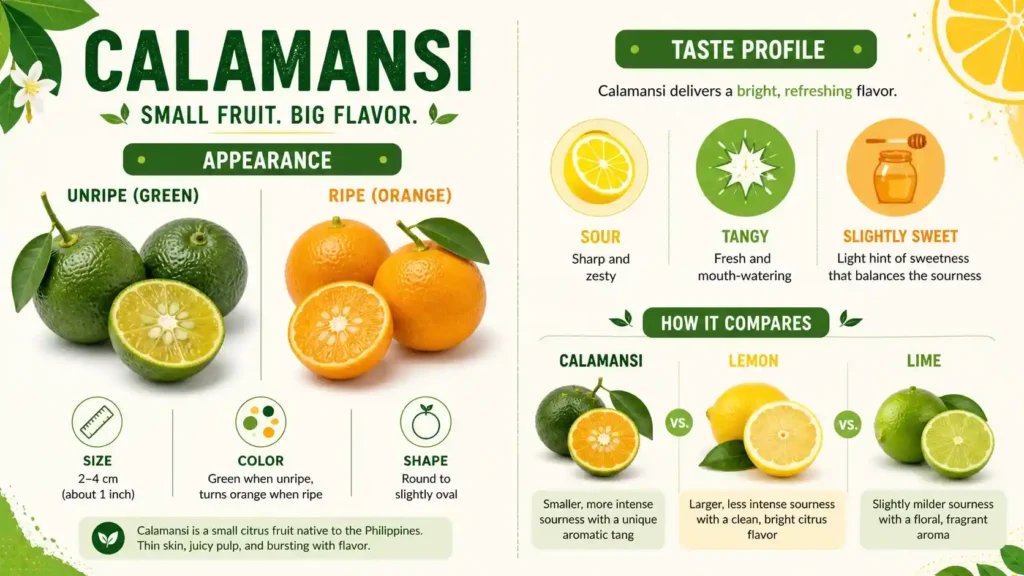
The calamansi taste is distinct and highly valued in culinary applications. It offers a balanced citrus flavor that combines sharp acidity with a subtle hint of sweetness.
Compared to other citrus fruits, calamansi has a sharper and more concentrated flavor profile.
|
Feature |
Calamansi | Calamansi Lime | Lemons |
|
Sourness |
High | Moderate to high | High |
|
Sweetness |
Slight | Very low |
Low |
| Flavor intensity | Strong and tangy | Milder citrus |
Clean, sharp citrus |
| Juice profile | Aromatic and concentrated | Light and refreshing |
Bold and acidic |
In summary, calamansi delivers a more complex citrus flavor than standard lemons or lime substitutes, making it especially popular for drinks, marinades, and sauces where a strong citrus punch is needed.
The comparison of calamansi vs kumquat often creates confusion because both are small citrus fruits, but they differ significantly in taste, usage, and how they are consumed.
You can explore its characteristics in detail in our Nagami kumquat guide.
Understanding kumquat vs calamansi helps in choosing the right fruit for culinary purposes.
|
Feature |
Calamansi | Kumquat |
|
Taste |
Sour, tangy, slightly sweet | Sweet peel with mildly sour pulp |
| Peel Edibility | Peel is edible but rarely eaten |
Peel is commonly eaten and sweet |
| Culinary Uses | Juice, marinades, drinks, sauces |
Eaten whole, desserts, preserves |
The comparison between calamansi vs calamondin (also searched as calamondin vs calamansi or calamansi calamondin) is more about naming than actual difference.
|
Feature |
Calamansi | Calamondin |
|
Identity |
Common name (Philippines) | Botanical/common name (global) |
| Scientific Classification | Citrus microcarpa / Citrus mitis |
Citrus microcarpa |
| Usage | Culinary (juice, drinks) |
Culinary + ornamental plant |
Clarification:
Calamansi and calamondin are generally considered the same fruit. The difference lies mainly in regional naming:
There is no major botanical difference; both refer to the same citrus hybrid.
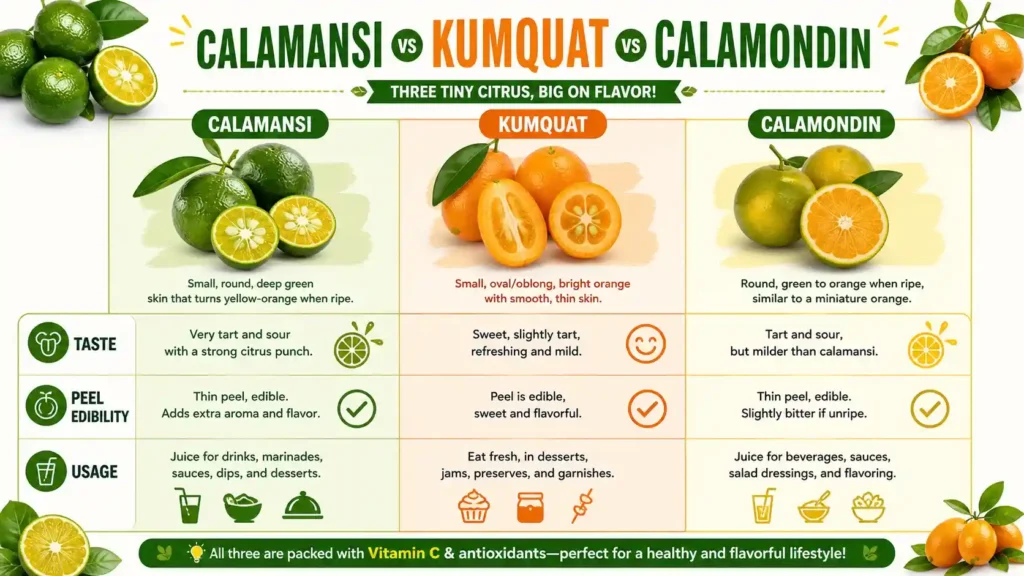
The relationship between kumquat, calamansi, and calamondin (often searched as kumquat calamansi, kumquat calamondin, or calamansi kumquat) is based on citrus hybridization.
|
Fruit |
Botanical Nature | Key Trait |
| Kumquat | Pure citrus species |
Sweet edible peel |
| Calamansi/Calamondin | Hybrid (kumquat × mandarin) |
Sour juice, aromatic flavor |
Key Insight:
Calamansi inherits characteristics from kumquat but is more acidic and primarily used for its juice rather than whole-fruit consumption.
The calamansi tree (also known as the calamondin tree) is a compact, evergreen citrus tree valued for both fruit production and ornamental appeal.
For complete care, growth, and maintenance details, see our calamansi tree guide.
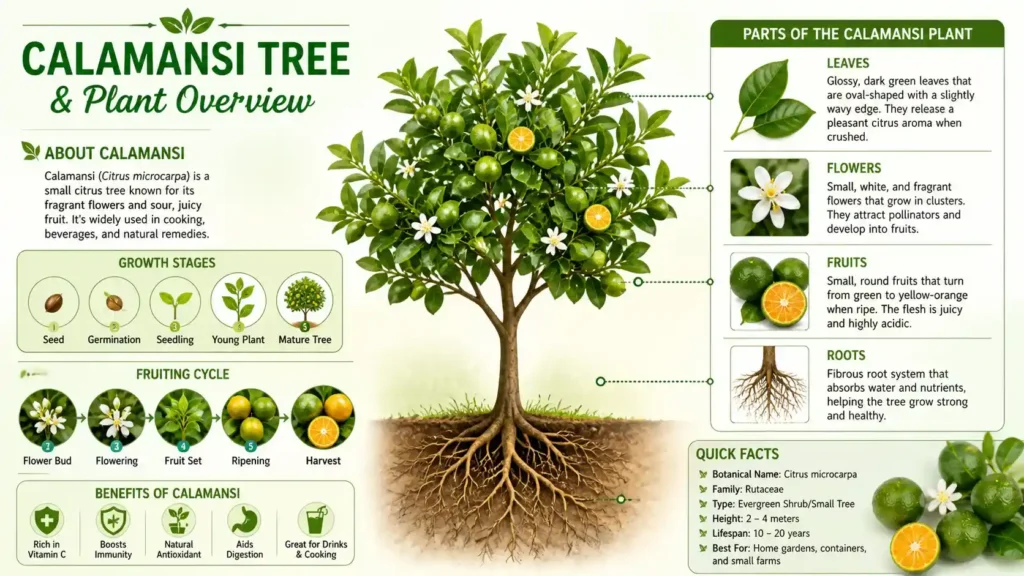
The calamansi plant (or calamondin plant) is highly adaptable and can grow in both indoor and outdoor environments depending on climate conditions.
Indoor Growth:
Outdoor Growth:
For a complete guide on growing different types of fruit trees & edible plants, see our fruit trees & edible plants growing guide.
|
Feature |
Indoor Calamansi Plant |
Outdoor Calamansi Plant |
|
Growth Size |
Smaller, compact | Larger, more natural growth |
|
Light Requirement |
Bright indirect/direct light | Full sunlight |
| Fruit Yield | Moderate |
Higher yield |
| Climate Control | Controlled environment |
Weather-dependent |
The calamansi plant has distinct botanical characteristics that support its growth, fruiting, and resilience.
These botanical features make the calamansi plant both productive and suitable for home gardening as well as commercial cultivation.
Calamansi fruit is a nutrient-dense citrus known for its high vitamin content and low calorie profile. It is especially valued for its natural antioxidants and refreshing citrus compounds.
|
Nutrient |
Value |
|
Vitamin C |
High |
| Antioxidants |
Present |
| Calories |
Low |
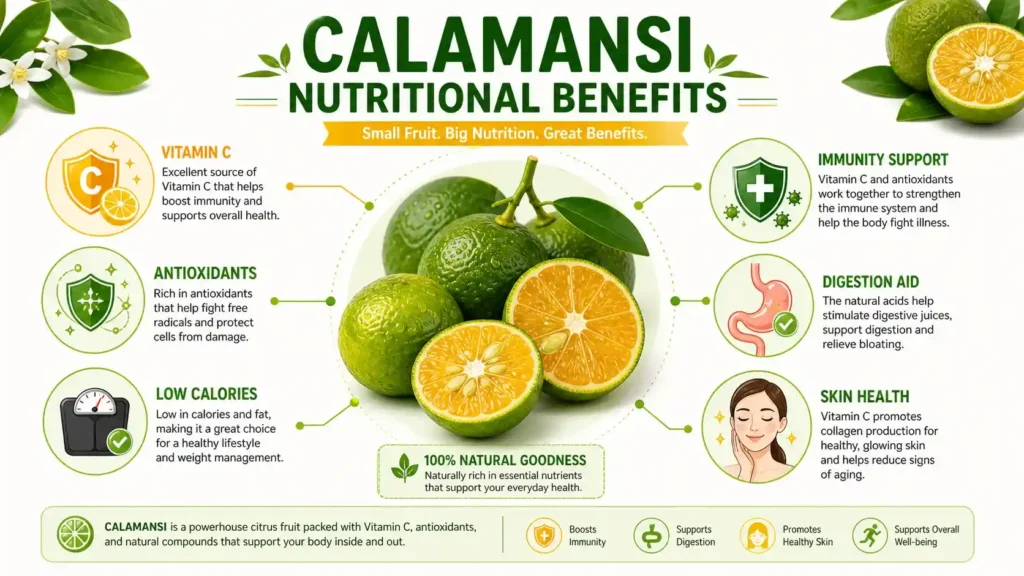
The calamansi benefits are closely linked to its rich nutritional profile and natural citrus compounds.
While calamansi offers multiple health benefits, excessive consumption may lead to certain issues due to its acidic nature.
Moderate consumption is recommended to enjoy the benefits while avoiding potential side effects.
Calamansi juice is one of the most popular ways to consume this citrus fruit. If you’re asking what is calamansi juice, it is a refreshing drink made by extracting fresh calamansi juice and mixing it with water and sweetener to balance its natural acidity.
Lemonsito juice is a regional variation often associated with calamansi-based drinks. It uses similar preparation methods but may include slight variations in sweetness or dilution.

Calamansi is widely used in cooking due to its sharp and aromatic citrus profile. It enhances flavor without overpowering dishes.
When comparing lime and calamansi, calamansi can serve as an effective substitute for both lime and lemon in many recipes.
|
Feature |
Calamansi | Lime |
Lemon |
|
Flavor Profile |
Sour, tangy, slightly sweet | Sharp and mildly bitter | Clean, strong acidity |
|
Aroma |
Highly aromatic | Mild citrus aroma | Fresh citrus scent |
| Juice Intensity | Concentrated | Moderate |
Strong but less aromatic |
| Best Use | Drinks, marinades, sauces | Savory dishes |
Baking, beverages |
This versatility makes calamansi a valuable citrus ingredient in both traditional and modern cooking.
Calamansi is native to Southeast Asia, with the Philippines being its primary center of cultivation and cultural use. It is widely grown across the country due to its adaptability to tropical climates and its importance in daily cuisine.
In addition to the Philippines, calamansi is also found in neighboring regions such as Malaysia, Indonesia, and parts of southern China.
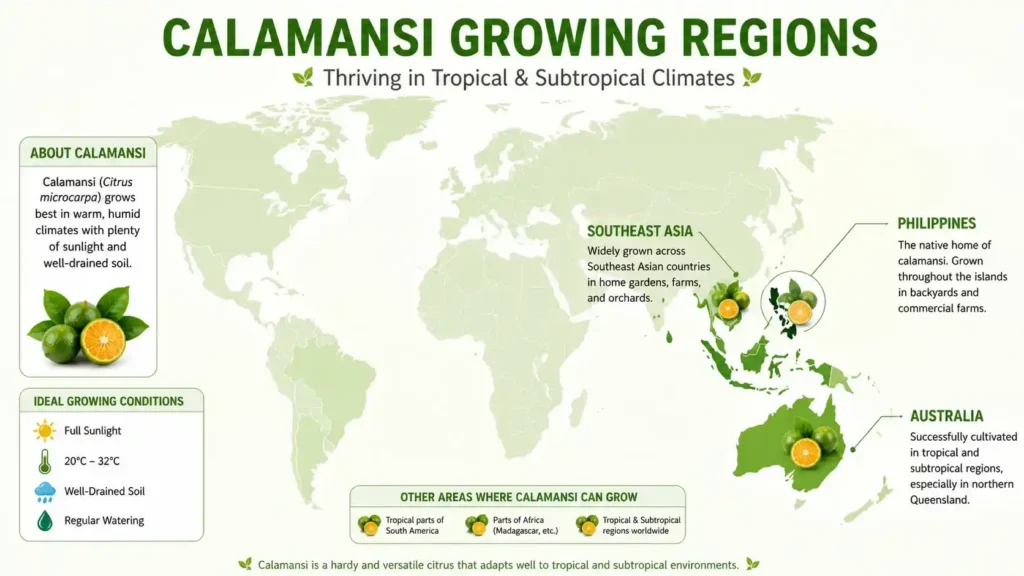
Calamansi has expanded beyond its native regions and is now grown in various parts of the world with suitable climates.
Calamansi is typically available fresh in local markets within tropical regions, while in other countries it may be found in specialty stores or grown as a potted citrus plant.
Calamansi fruit stands out as a highly functional citrus known for its strong flavor, nutritional value, and wide range of uses. From its role in beverages like fresh juice to its application in marinades and sauces, it offers both culinary flexibility and practical benefits. Its compact size, high vitamin C content, and adaptability make it suitable for both consumption and home cultivation.
What makes calamansi a truly versatile citrus fruit is its ability to serve multiple purposes—flavor enhancer, natural health booster, and even an ornamental plant. Whether used as a lime substitute or grown as a small indoor or outdoor tree, it delivers consistent value.
For those looking to explore new citrus flavors or expand their home garden, trying or growing calamansi is a practical and rewarding choice.
Calamansi fruit is commonly called calamondin or Philippine lime in English. In many regions, the original term “calamansi” is also widely used and recognized.
No, calamansi and kumquat are not the same. Calamansi is a citrus hybrid (often linked to kumquat and mandarin), while kumquat is a separate citrus fruit known for its sweet edible peel and milder sour pulp.
Yes, calamansi can be eaten raw, but it is rarely consumed this way due to its strong sourness. It is more commonly used for its juice in drinks, marinades, and sauces.
Calamansi has a sour, tangy, and slightly sweet flavor. Its taste is more concentrated and aromatic compared to lemons or limes.
To make calamansi juice: Cut fresh calamansi fruits in half Squeeze out the juice and remove seeds Mix with water Add sugar or honey to balance the sourness Serve chilled
Yes, calamansi can grow in Australia, especially in warm and subtropical regions. It can also be grown in pots and kept indoors or protected during colder months.
Calamansi can be consumed daily in moderate amounts. Its vitamin C content supports immunity, but excessive intake should be avoided due to its acidity.
A grafted calamansi tree can start producing fruit within 1–2 years, while seed-grown plants may take longer, typically 3–5 years.
Yes, calamansi is an effective substitute for both lemon and lime. It provides a similar acidity with a slightly sweeter and more aromatic flavor profile.
Calamansi is relatively low-maintenance but requires: Good sunlight Well-drained soil Regular watering without overwatering With proper care, it can thrive both indoors and outdoors.