Grow Better Gardens with Smarter Plant Choices
Discover helpful guides on trees, hedges, fruit plants, edible plants, and beautiful landscape greenery.

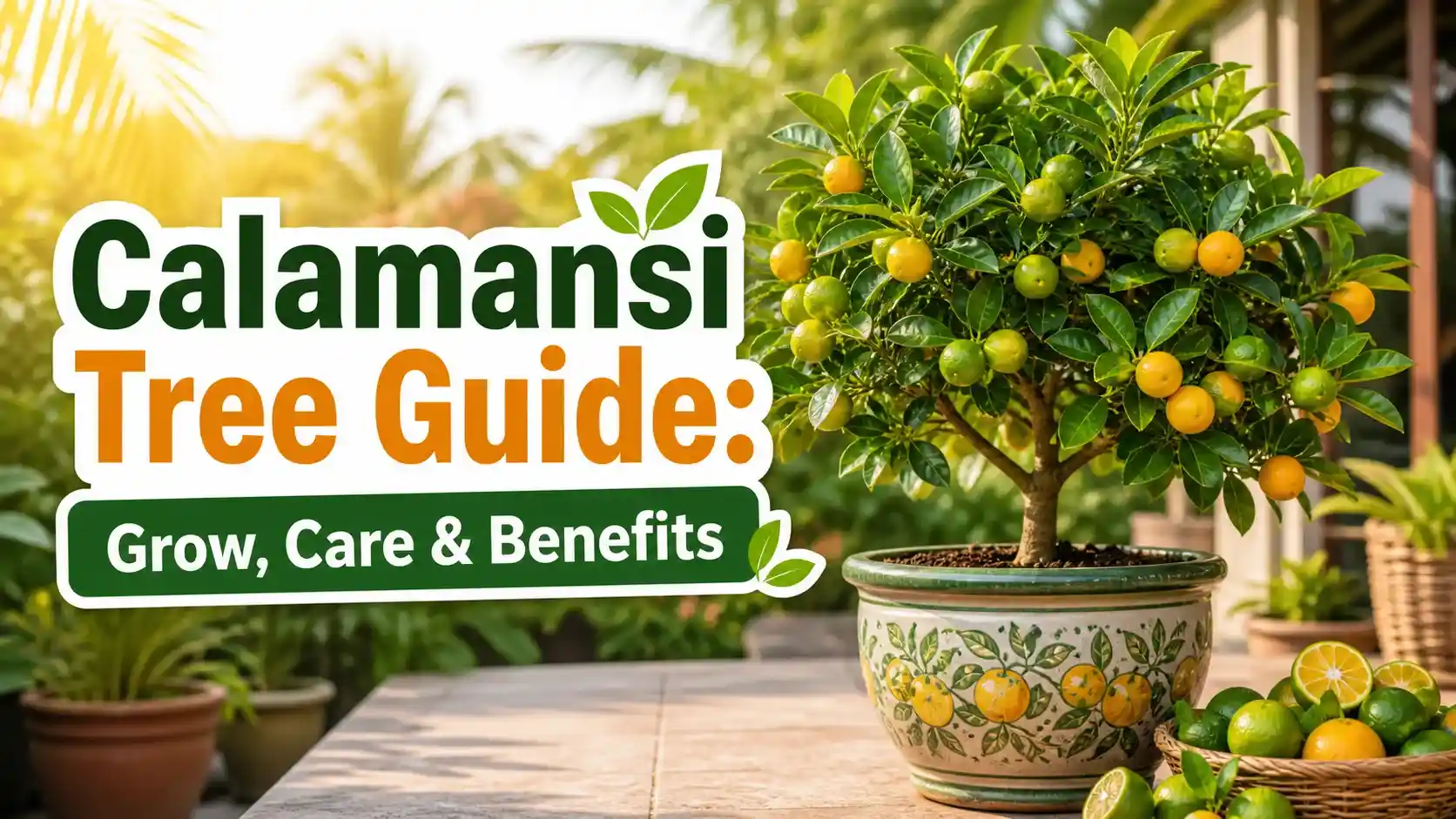
When asking what is calamansi, it refers to a small citrus fruit tree widely grown in tropical regions. For those wondering what are calamansi, they are small, round citrus fruits produced by the calamansi tree, known for their tangy, slightly sweet flavor. The tree itself is compact, evergreen, and highly productive, making it suitable for both home gardens and container growing. It is especially popular in Southeast Asia, where it is valued for both culinary and ornamental purposes.
The term calamansi in english is commonly translated as Philippine lime or calamondin orange. In many contexts, calamansi english usage varies depending on the region, but it generally refers to the same citrus fruit known for its unique balance of acidity and mild sweetness. Despite the name differences, the fruit remains botanically consistent across regions.
The calamansi tree is also known by several other names, including calamondin and calamansi calamondin, which are often used interchangeably. Scientifically, it is classified as Citrus madurensis or citrus mitis plant, placing it within the citrus family. This classification highlights its close relationship to other citrus fruits like oranges and limes, while still maintaining its distinct characteristics.
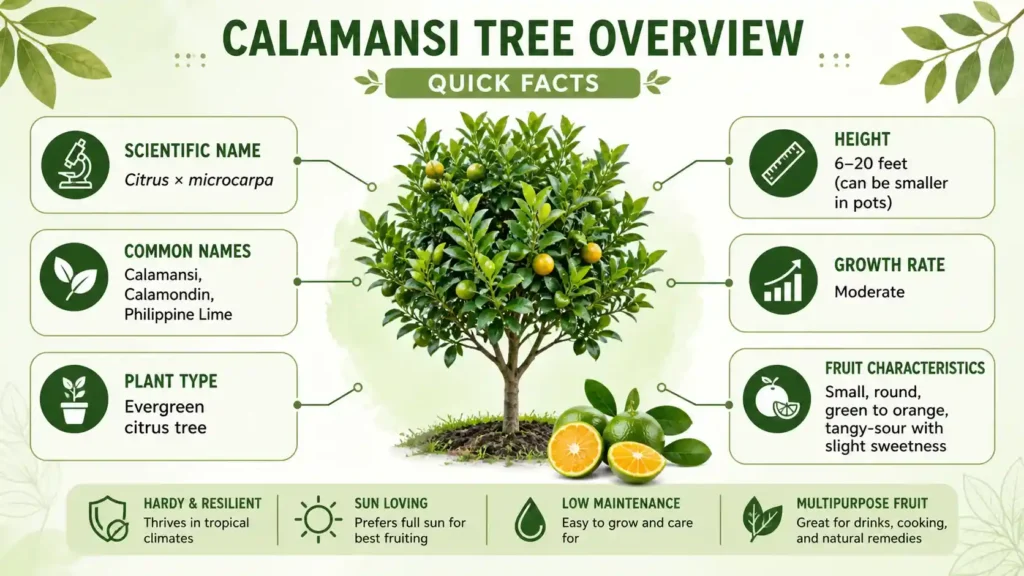
The calamansi tree is a small, bushy citrus tree that typically grows between 6 to 15 feet tall, depending on growing conditions. It produces small, green-to-orange fruits with a thin peel and juicy interior. Known for its high yield and adaptability, the tree is especially popular among home gardeners and urban growers. Its compact size, fragrant flowers, and edible fruit make it both a practical and decorative plant choice.
|
Feature |
Details |
|
Scientific Name |
Citrus madurensis / Citrus mitis |
|
Common Names |
Calamansi, Calamondin, Philippine lime |
| Plant Type |
Citrus tree |
| Mature Height & Spread | 6–15 feet tall, 4–10 feet spread (can be smaller in containers) |
| Growth Rate |
Moderate growth rate |
|
Fruit Characteristics |
Small, round fruit; green turning orange when ripe; thin peel; juicy, tangy-sour flavor |
The calamansi tree is a compact, evergreen citrus plant known for its neat and bushy structure. It typically grows between 6 to 15 feet tall in the ground, but remains smaller when cultivated in containers. The tree has a rounded shape with dense branching, making it visually appealing for home gardens.
Its foliage consists of small, glossy, dark green leaves that release a mild citrus fragrance when crushed. One of the key advantages of this plant is its naturally dwarf nature, which makes it highly suitable for container gardening. Because of its manageable size, it can be easily grown on patios, balconies, or indoors with proper care.
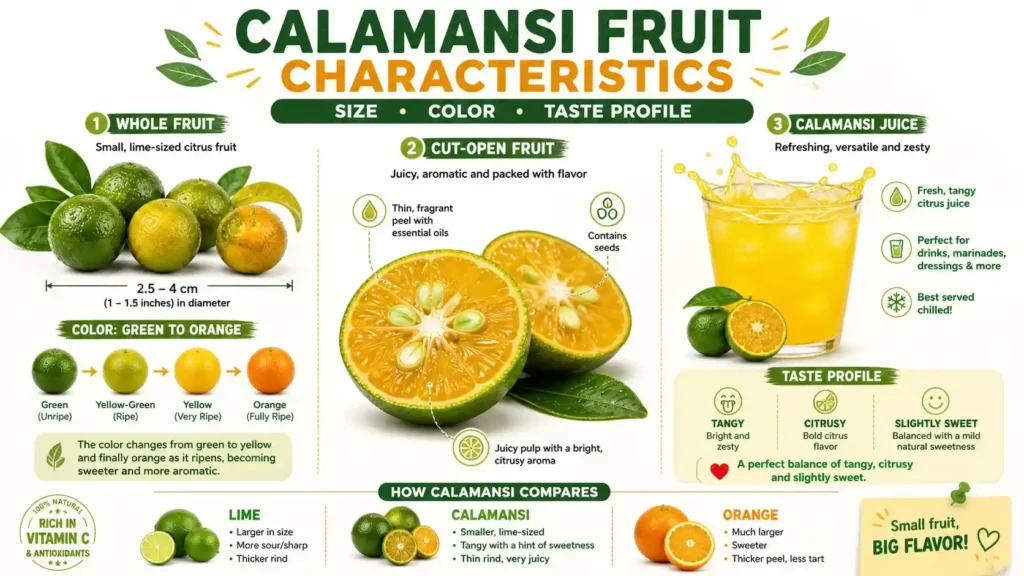
The calamansi fruit is small and round, usually about 1 to 1.5 inches in diameter. It starts off green and gradually turns orange as it ripens. The peel is thin and smooth, making it easy to extract juice.
In terms of calamansi taste, the fruit offers a unique flavor profile that blends sharp acidity with a mild sweetness.
You can explore its taste, uses, and benefits in detail in our calamansi fruit guide.
It is often described as a cross between a lime and an orange. Compared to a typical calamansi lime, the flavor is more aromatic and slightly less harsh than regular limes, while still maintaining a refreshing citrus tang. The juice is highly valued in culinary uses due to this balanced taste.
A common question is do calamansi trees have thorns. The answer is yes, but only occasionally. Some calamansi trees develop small, short thorns along their branches, while others may have very few or none at all. These thorns are generally not large or aggressive, but care should still be taken when handling or pruning the plant.
When comparing calamansi vs kumquat, the differences are clear in taste, size, and usage.
For a deeper understanding of this citrus, see our Nagami kumquat guide.
Overall, calamansi is preferred for its juice, while kumquats are valued for whole-fruit consumption.
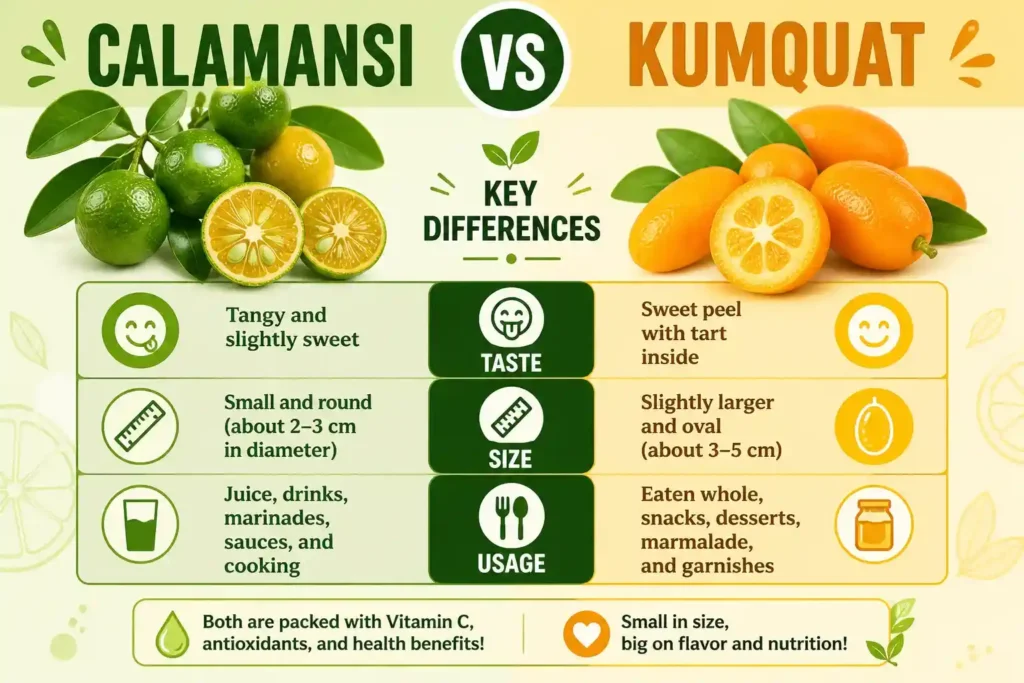
The comparison of calamansi vs calamondin often creates confusion, but in reality, they refer to the same fruit. The terms are used interchangeably in most regions.
Both names refer to the same citrus hybrid classified as Citrus madurensis or Citrus mitis, with identical characteristics, taste, and uses.
Botanically, calamansi is neither a true lime nor a true orange. It is a hybrid citrus fruit that combines traits from both.
Often called the philippine lime or calamansi lime, it has the acidity of a lime but also carries subtle sweet and aromatic notes similar to an orange. This hybrid nature is what gives calamansi its distinct flavor and versatility.
In classification terms, it belongs to the citrus family but stands as a unique variety rather than fitting strictly into the lime or orange category.
To successfully grow calamansi, it is important to understand the basic environmental and care requirements of this citrus plant. Whether you are starting a calamansi plant in the ground or planning to plant calamansi in containers, proper setup ensures healthy growth and fruit production.
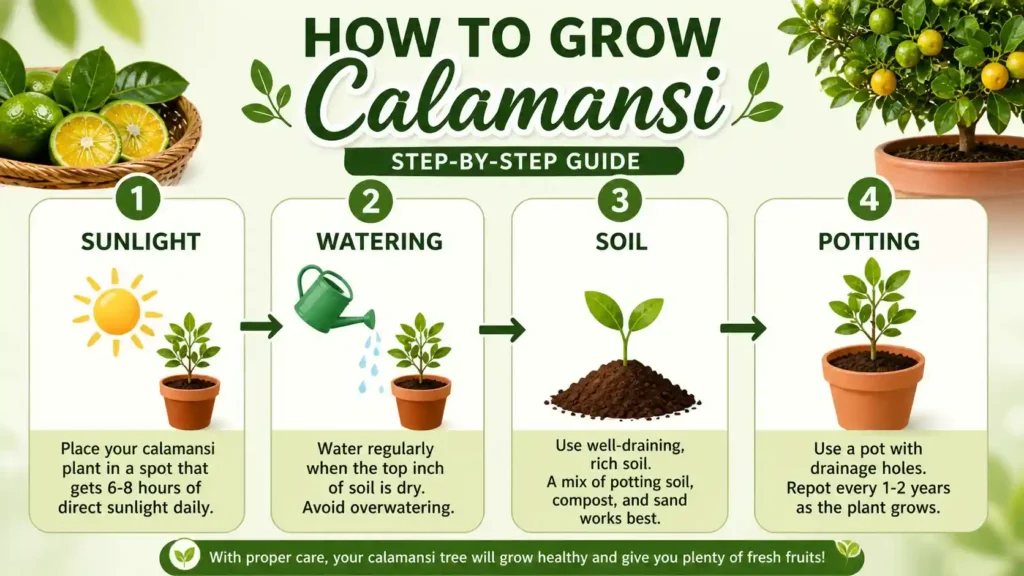
Calamansi thrives best in tropical and subtropical climates where temperatures remain warm throughout the year. Ideal conditions include:
In cooler regions, growing calamansi requires extra care. For example, calamansi in australia can be grown successfully in warmer zones, but in colder areas, it is recommended to use pots so the plant can be moved indoors during winter. Protection from frost is essential, as low temperatures can damage leaves and reduce fruiting.
A well-draining soil mix is critical for healthy root development. Calamansi does not tolerate waterlogged conditions, so the soil should allow excess water to drain easily.
For container growing:
Container cultivation is ideal for maintaining control over soil conditions and mobility, especially in non-tropical climates.
Calamansi requires adequate sunlight to grow and produce fruit effectively.
This is similar to the general requirements for most fruit trees & edible plants, which need consistent sunlight and proper care to produce well.
Watering should be consistent but controlled:
Maintaining the right balance of light and water is essential to keep the plant healthy and support continuous fruit production.
Growing calamansi from seed is possible, but it requires patience because seed-grown citrus plants take longer to mature than grafted trees. Healthy calamansi seeds can produce strong seedlings when they are planted fresh and given warm, moist conditions. However, fruiting may take several years, so this method is best for gardeners who want a slow but rewarding growing process.
To start a calamansi seedling, use fresh seeds from ripe calamansi fruit. Fresh seeds have a higher germination rate than dried or old seeds.
Step-by-step process:
Once seedlings appear, remove any cover and provide bright indirect light. When the seedlings develop several true leaves, they can be moved into individual pots.
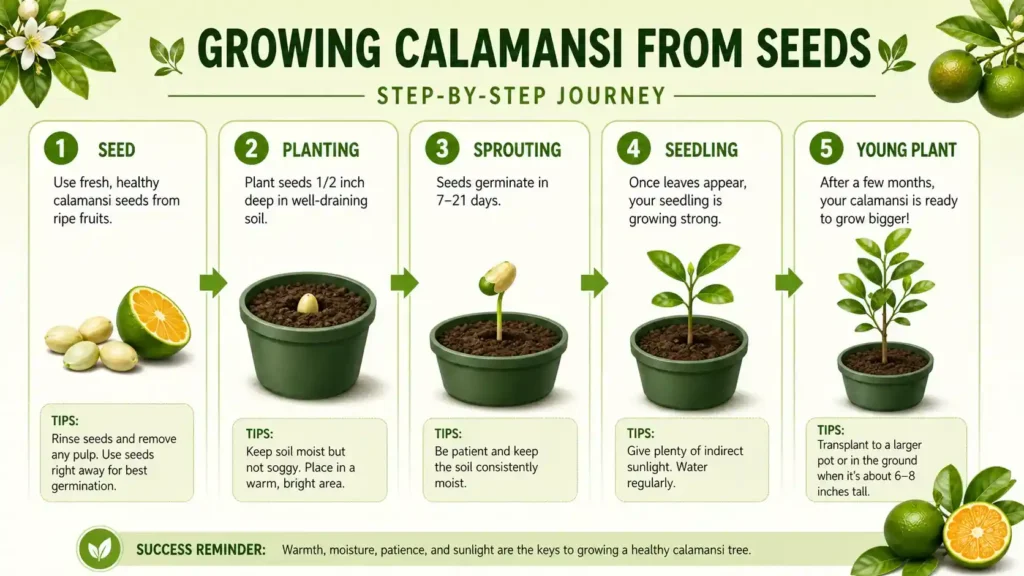
The growth timeline for calamansi from seed is slower than buying a mature or grafted plant.
|
Stage |
Approximate Timeline |
|
Seed germination |
2–6 weeks |
|
Young seedling stage |
2–4 months |
| Small plant development |
6–12 months |
| Mature tree growth |
2–3 years |
| Possible fruiting |
3–5 years or longer |
A seed-grown calamansi tree may take 3 to 5 years to produce fruit, depending on climate, sunlight, soil quality, and care. In less ideal conditions, fruiting can take even longer.
The most common challenge with calamansi seeds is slow growth. Young seedlings need consistent warmth, proper moisture, and enough light to develop strong roots and healthy foliage.
Common problems include:
To improve success, use fresh seeds, avoid overwatering, and keep seedlings in a warm, bright environment. Seed-grown calamansi is not the fastest method, but it can produce a healthy citrus tree with proper long-term care.
Proper care is essential to keep a calamansi tree healthy, productive, and visually well-shaped. Consistent feeding, pruning, and pest management help maintain strong growth and regular fruiting.
Calamansi trees require balanced nutrients to support foliage growth, flowering, and fruit production.
A well-fed tree produces more flowers and improves fruit quality, while nutrient deficiencies may lead to yellowing leaves or poor growth.
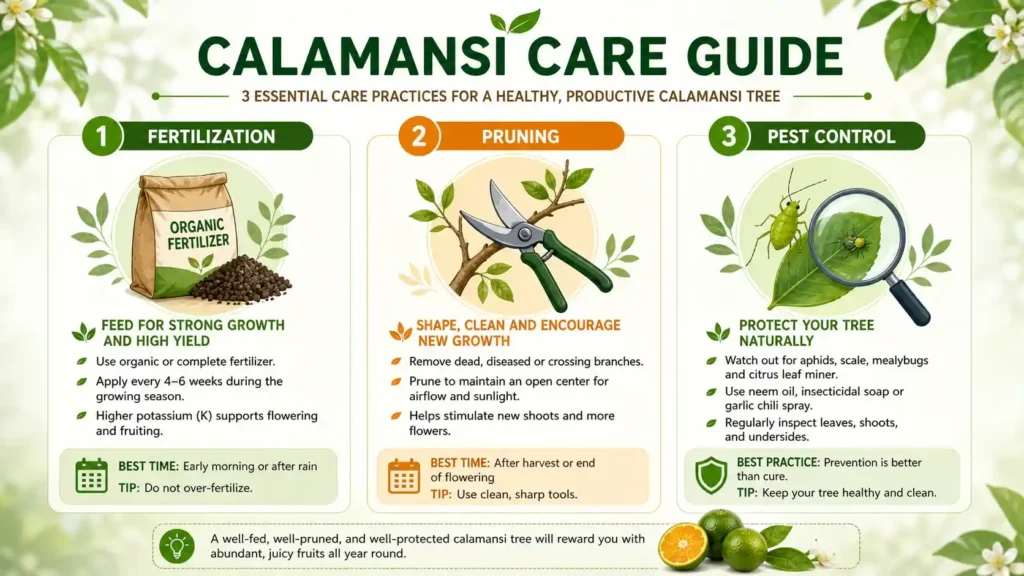
Regular pruning helps maintain the shape of the tree and improves airflow, which reduces disease risk.
Good maintenance also includes cleaning fallen leaves and debris around the base, which helps prevent pest buildup.
Like other citrus plants, calamansi trees can be affected by common pests and diseases.
Common pests include:
Control methods:
Common issues:
Early detection and proper care practices help prevent serious damage and keep the tree productive.
The calamansi benefits extend beyond its citrus flavor, making it a valuable plant for culinary, health, and landscaping purposes. Its versatility is one of the main reasons it is widely grown in home gardens and tropical regions.
Calamansi is highly valued in cooking due to its strong citrus aroma and balanced tangy taste.
Its juice is often preferred over regular lime because of its more complex flavor profile.
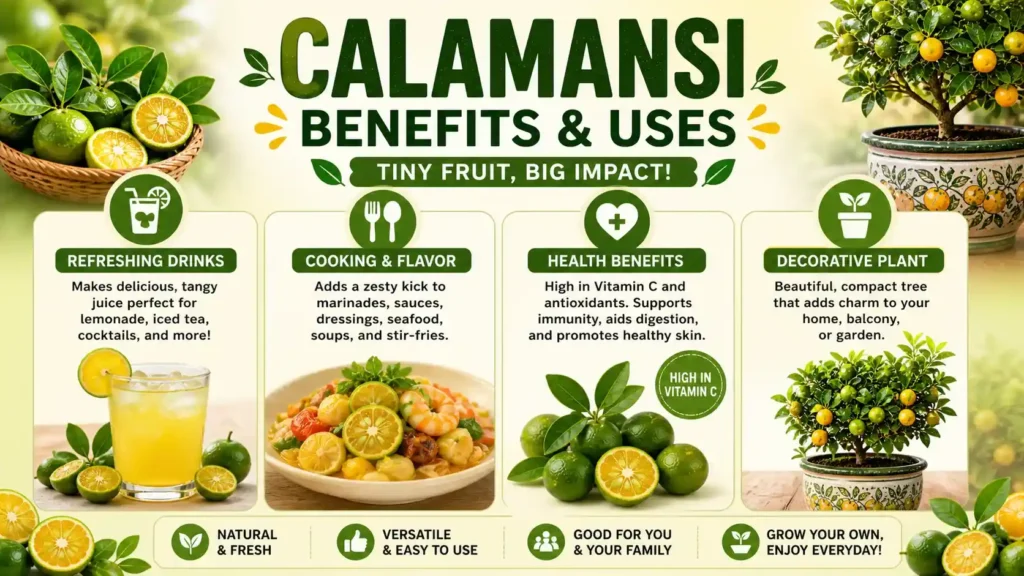
Calamansi is rich in essential nutrients, especially vitamin C, which supports overall health.
Regular consumption in moderate amounts can contribute to better overall wellness.
The calamansi tree is both decorative and functional, making it ideal for landscaping.
Its compact size and evergreen nature make it a popular choice for both indoor and outdoor environments.
Calamansi trees are generally easy to maintain, but certain issues can affect their growth and fruit production. Identifying problems early helps prevent long-term damage.
Yellow leaves are one of the most common issues and usually indicate stress or imbalance.
Possible causes:
Solutions:
A healthy tree may still fail to produce fruit if conditions are not ideal.
Possible causes:
Solutions:
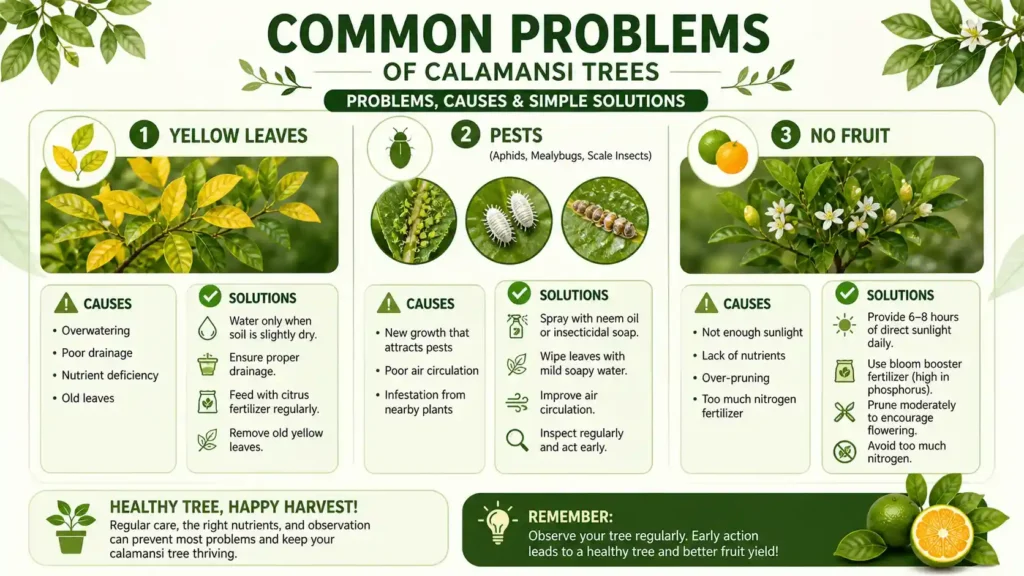
Calamansi trees can attract common citrus pests that damage leaves and reduce plant health.
Common pests:
Solutions:
Changes in environmental conditions can negatively impact growth.
Common stress factors:
Solutions:
Managing these common problems properly ensures the calamansi tree remains healthy, productive, and long-lasting.
Calamansi grows best in warm, stable environments where it receives consistent sunlight and moderate humidity. Understanding the right location helps improve growth, flowering, and fruit production.
Calamansi thrives in tropical and subtropical regions where temperatures remain warm throughout the year.
Ideal conditions include temperatures between 20°C to 30°C, good sunlight exposure, and protection from extreme cold. The tree does not tolerate frost, so regions with harsh winters are less suitable unless protective measures are used.
Growing calamansi in australia is possible, particularly in warmer climates.
With proper care and positioning, calamansi can adapt well to Australian conditions, especially when temperature fluctuations are managed.
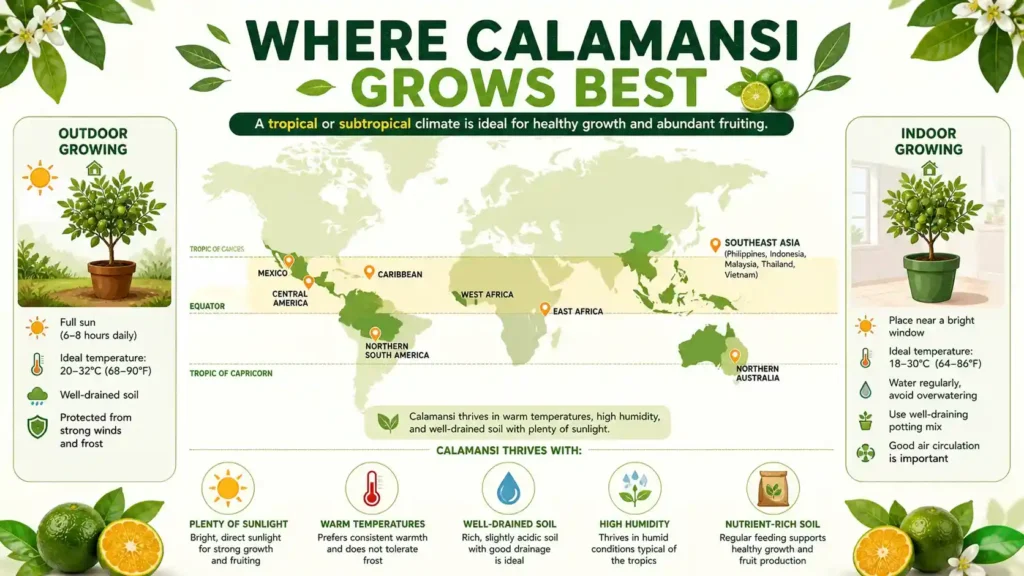
Outdoor Growing:
Indoor Growing:
Calamansi can grow both indoors and outdoors, but outdoor conditions generally support better fruiting. Indoor growing works well when environmental conditions are carefully maintained.
The calamansi tree is a highly versatile citrus plant valued for its compact size, flavorful fruit, and ease of care. Its ability to adapt to both ground and container growing makes it suitable for a wide range of environments, from tropical gardens to small urban spaces. With consistent care, it provides both ornamental beauty and a steady supply of fresh citrus.
One of the main reasons it stands out as a great choice for home gardens is its productivity and low maintenance requirements. Whether grown for its tangy fruit, decorative appeal, or practical uses in the kitchen, the calamansi tree offers long-term value with minimal space requirements.
For gardeners looking to grow a reliable and multifunctional citrus plant, calamansi is a strong option. With the right conditions and basic care, it can thrive and become a rewarding addition to any home garden.
A calamansi tree is a small citrus plant that produces round, tangy fruits known as calamansi. It is commonly grown in tropical regions and is valued for its edible fruit, compact size, and ornamental appearance.
A grafted calamansi tree can start producing fruit within 1–2 years, while a tree grown from seed may take 3–5 years or longer, depending on growing conditions and care.
Yes, calamansi grows very well in pots due to its dwarf nature. Container growing is ideal for small spaces and allows easy movement in colder climates.
Yes, calamansi trees require at least 6–8 hours of direct sunlight daily for healthy growth and proper fruiting.
Calamansi has a tangy, citrusy flavor with a mix of sour and slightly sweet notes, often compared to a blend of lime and orange.
No, calamansi and kumquat are different citrus fruits. Calamansi is mainly used for its juice, while kumquat is typically eaten whole with its peel.
Yes, calamansi can be grown from seeds, but it takes longer to produce fruit compared to grafted plants.
Water the tree when the top layer of soil feels dry. Avoid overwatering, as excess moisture can lead to root rot.
Yellowing leaves can be caused by nutrient deficiencies, overwatering, or poor drainage. Proper fertilization and watering adjustments usually resolve the issue.
Yes, calamansi can be grown indoors if placed in a bright location with sufficient sunlight. It may require extra care to maintain proper light and humidity levels.