Grow Better Gardens with Smarter Plant Choices
Discover helpful guides on trees, hedges, fruit plants, edible plants, and beautiful landscape greenery.

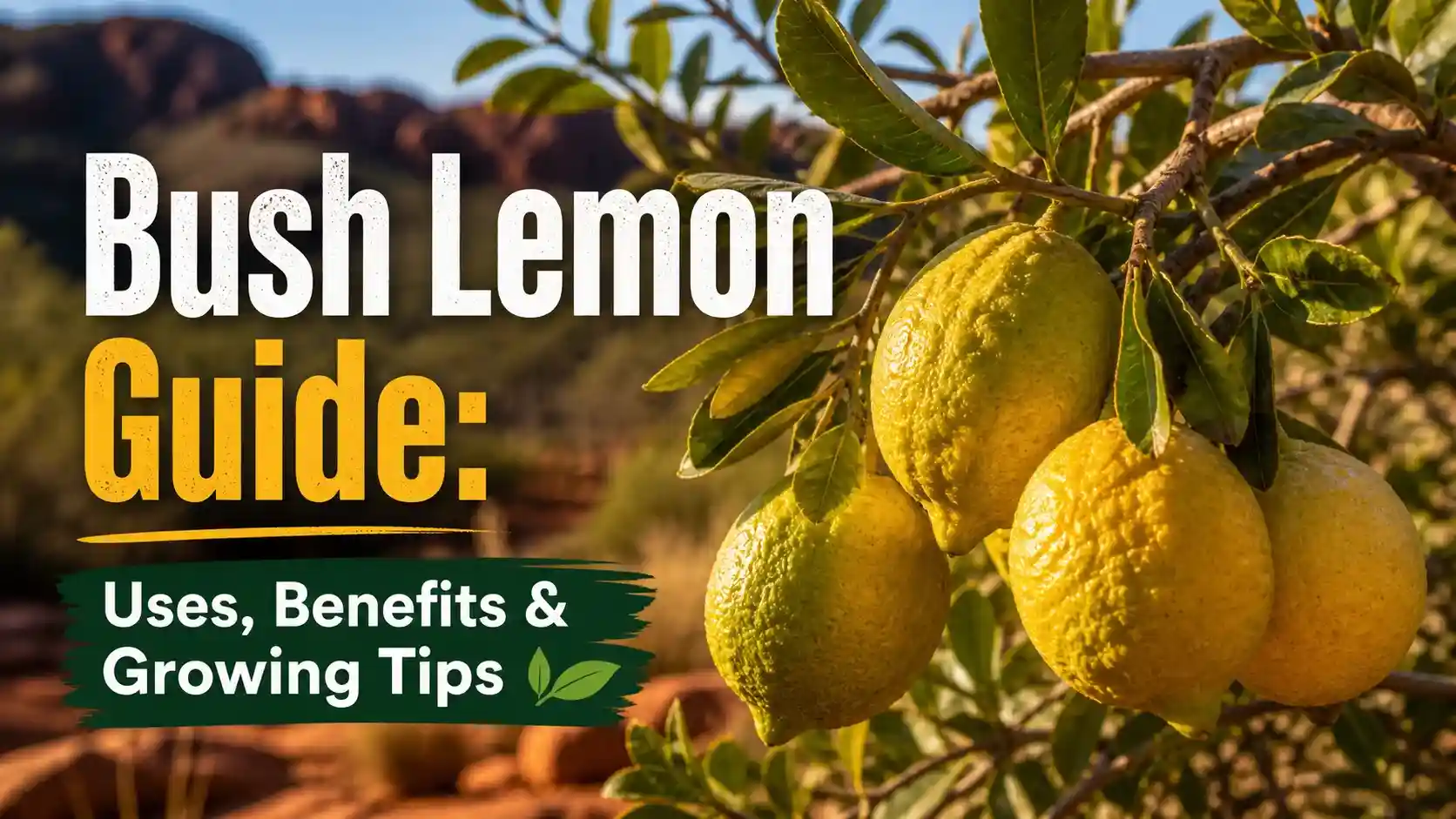
Bush lemon refers to a wild-growing citrus-type fruit commonly found in natural landscapes, especially in Australia. Unlike cultivated varieties, bush lemons are not commercially bred but occur naturally in the wild. A lemon is a fruit known for its sharp acidity and refreshing citrus profile, and the bush lemon fits within this broader category of lemon fruit, though it differs significantly in appearance and taste from standard lemons.
The origin of bush lemons is strongly linked to bush lemons Australia, where they grow as part of native vegetation. Often referred to as the Australian bush lemon, these fruits are adapted to harsh climates and can thrive in dry, rugged environments. They are not part of traditional commercial citrus farming but have long been used in indigenous and local practices.
A key distinction exists between wild bush lemons and cultivated lemons. Wild bush lemons tend to have:
In contrast, cultivated lemons are selectively bred for:
Bush lemons are also commonly confused with other native fruits such as wild orange, bush oranges, and native orange. While they may share visual similarities, these are different species and not true lemons.
A bush lemon tree is a wild-growing plant that produces naturally occurring lemon-like fruit in native environments. While commonly referred to as a lemon tree, it is important to understand its classification. The lemon plant scientific name for cultivated lemons is Citrus limon, which is also the standard lemon tree scientific name used in horticulture.
However, many bush lemons in Australia are associated with native species such as Capparis mitchellii. This plant is not a true citrus species but is often grouped with bush citrus due to its fruit’s resemblance to lemons.
In terms of botanical relation:
This distinction explains why bush lemons differ significantly in taste, texture, and growth behavior compared to cultivated lemons.
When comparing a bush lemon tree with a cultivated lemon tree lemon, several clear differences emerge. These differences are noticeable in taste, appearance, and overall growth pattern.
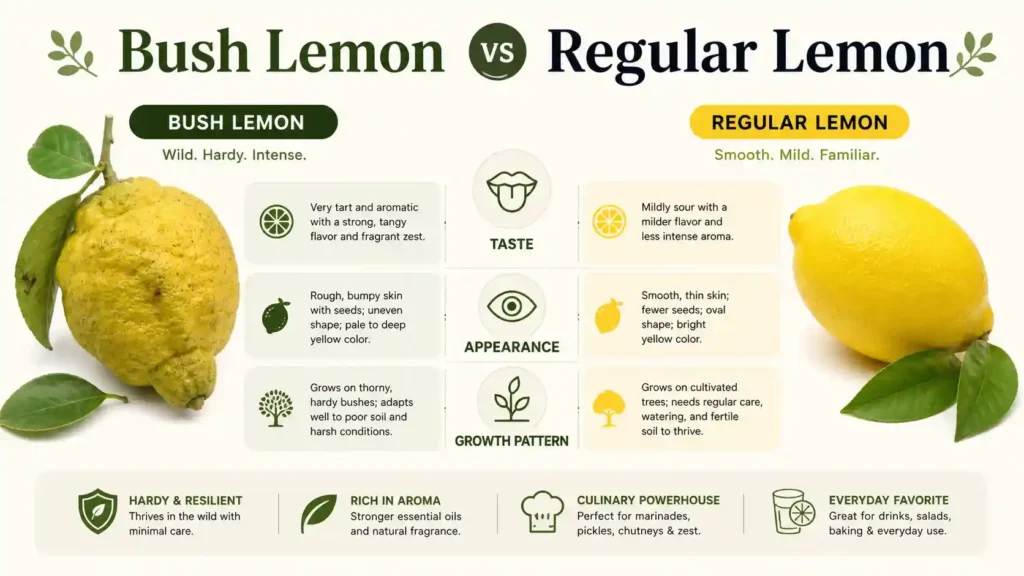
Taste:
For a sweeter and easier-to-grow citrus option, you can explore our clementine tree guide.
Appearance:
Growth Pattern:
| Feature | Bush Lemon | Regular Lemon |
| Taste | Strong, sharp, sometimes bitter | Balanced sour, less intense |
| Appearance | Rough skin, irregular shape | Smooth skin, uniform shape |
| Growth Pattern | Wild, hardy, drought-resistant | Cultivated, controlled growth |
| Botanical Type | May not be true citrus | True citrus (Citrus limon) |
Across bush lemons Australia, there is no single standardized variety as seen in commercial citrus farming. Instead, the Australian bush lemon exists in multiple regional forms shaped by climate, soil, and natural adaptation. These variations are often grouped informally under broader lemon varieties Australia, even though many are not true cultivated lemons.
Key regional differences include:
Because bush lemons grow in the wild, their characteristics are not uniform. Each region produces fruit with distinct flavor intensity, texture, and appearance, making them unique compared to standardized commercial lemons.
Bush lemons are often compared with Lemon Aspen, commonly referred to as aspen lemon, lemon aspen, or lemon aspen fruit. Despite both being native Australian fruits, they differ significantly in flavor and culinary use.
Flavor Differences:
Usage Differences:
Lemon aspen is generally more refined in taste, while bush lemon offers a more intense and rustic citrus experience.
There is frequent confusion between bush lemons and certain ornamental plants labeled as grevillea bush lemons, bush lemon grevillea, or lemon grevillea. These terms are misleading and do not refer to actual lemon-producing plants.
Grevillea species are:
Key clarification:
Understanding this distinction is important to avoid misidentification, especially when foraging or studying native Australian plants.
The bush lemon tree typically grows as a hardy, irregularly shaped plant adapted to natural environments. It may appear as a small tree or a dense lemon bush, depending on local conditions. In some regions, multiple lemon bushes grow close together, forming thick, shrubby clusters.
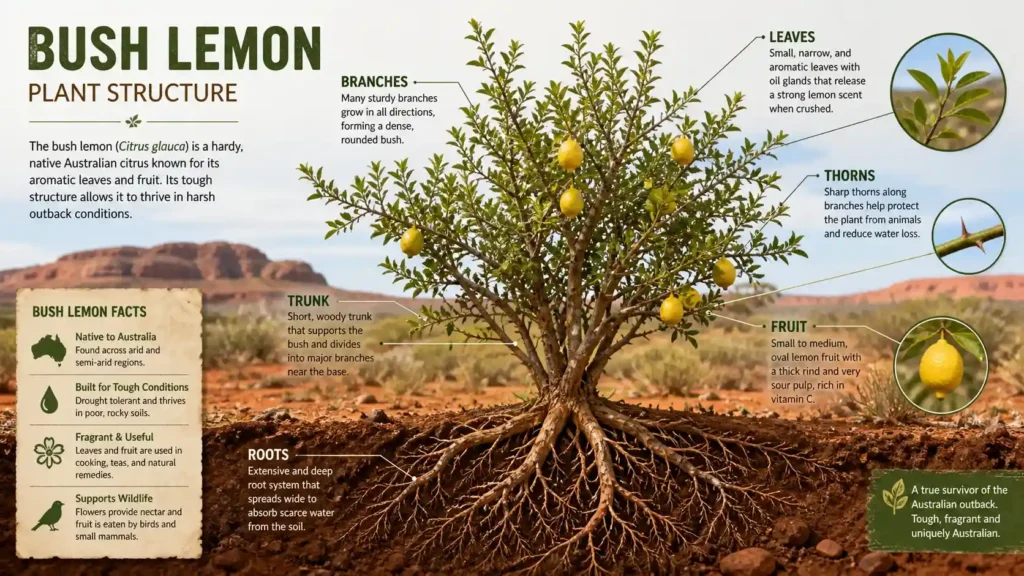
Key growth characteristics:
The structure is often:
This natural growth habit allows the plant to thrive without human intervention.
The lemon fruit produced by bush lemon plants is distinct from commercial lemons in both look and flavor.
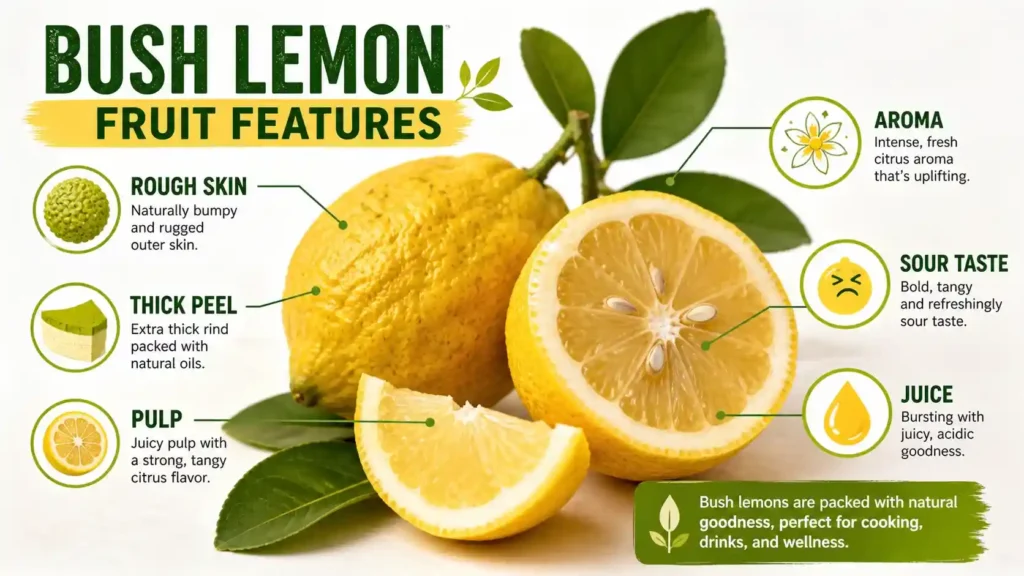
Physical features:
Aroma and taste:
These characteristics make bush lemon fruit particularly suitable for processing rather than direct consumption.
The bush lemon plant develops a resilient root system designed for survival in challenging environments.
Root structure:
Adaptability features:
This adaptability explains why bush lemons are commonly found growing in the wild without cultivation, especially in dry and remote regions.
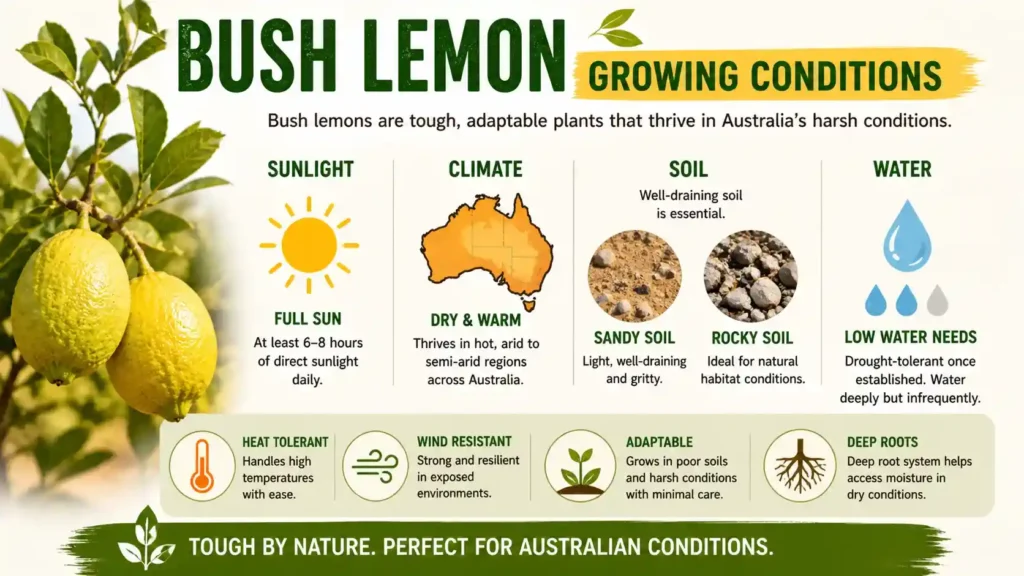
Growing a bush lemon tree successfully depends on replicating its natural environment, particularly conditions found in Australia.
Ideal climate:
These conditions are similar to many fruit trees & edible plants that require full sun and well-drained soil for healthy growth.
Soil requirements:
Bush lemons are highly adaptable, but avoiding waterlogged soil is critical for healthy root development.
Bush lemon trees can be grown through both natural and controlled methods.
Seeds:
Grafting:
Natural growth in wild:
Bush lemon trees require minimal care compared to cultivated citrus, but basic maintenance improves growth and fruit quality.
Watering:
Pruning:
Pest resistance:
Overall, bush lemon trees are low-maintenance and well-suited for natural or semi-managed environments.
Bush lemons are widely valued in both traditional and modern cooking due to their intense citrus flavor.
For another small citrus fruit with unique culinary uses, see our Nagami kumquat guide.
A variety of bush lemon recipes and bush lemons recipes use the fruit for its strong acidity and aromatic profile.
Traditional uses:
Modern culinary uses:
Because of their sharp taste, bush lemons are often combined with other ingredients to balance flavor rather than used alone.
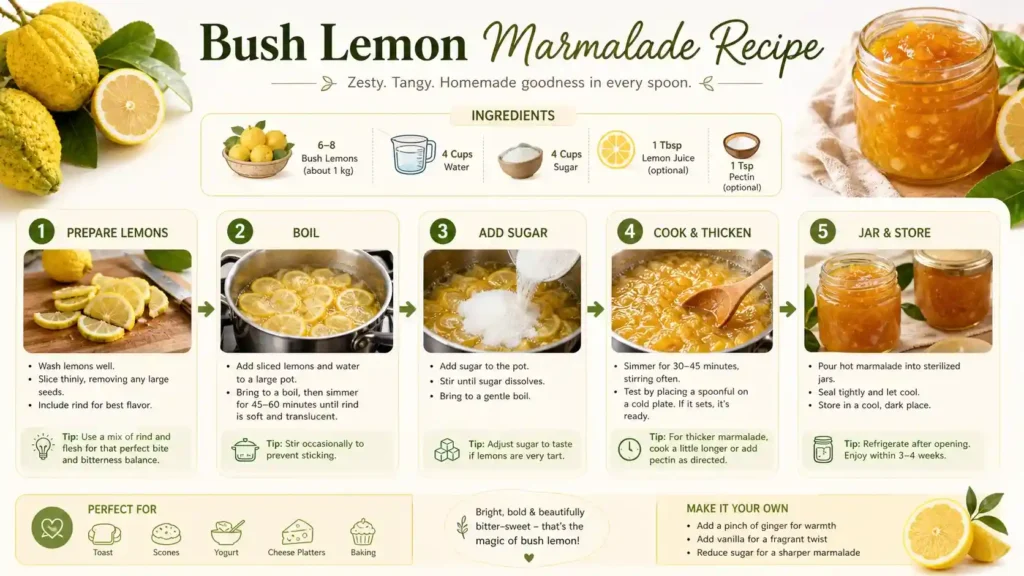
Bush lemons are especially suitable for making marmalades and preserves due to their thick skin and high pectin content. Many variations of lemon marmalade recipe, lemon marmalade recipes, and lemon jam recipe australia incorporate bush lemons for a richer, more intense result.
Ingredients:
Preparation steps:
Common variations include:
These preserves are popular for their bold taste and long shelf life.
Beyond culinary applications, bush lemons have several additional uses.
Medicinal and traditional uses:
Natural flavoring:
These uses highlight the versatility of bush lemons beyond standard cooking applications.
Bush lemons are valued for their concentrated nutrient content, particularly due to their wild growth conditions. Like other citrus fruits, they provide essential compounds that support overall health.
Key nutritional components:
Compared to cultivated lemons, bush lemons may contain more concentrated nutrients due to their slower, natural growth and adaptation to harsh environments.
Regular consumption of bush lemon, in moderate amounts, can offer several health-related advantages.
Immunity support:
Digestion support:
These benefits make bush lemons a functional addition to diets, especially when used in natural or minimally processed forms.
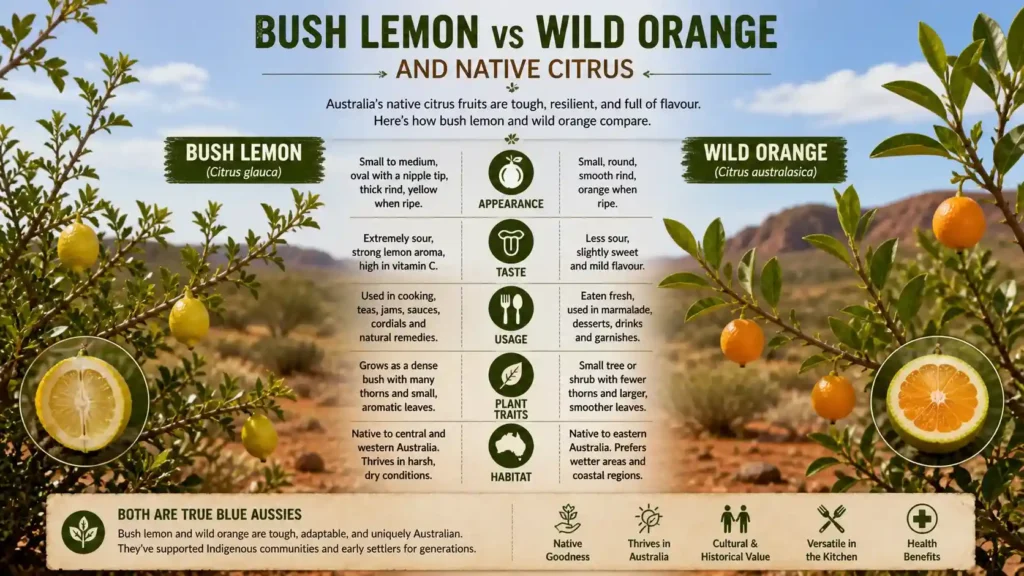
Bush lemons are often confused with other native fruits such as wild orange, wild oranges, wild orange trees, bush orange, and bush oranges. While these fruits may share similar environments and appearances, they differ significantly in botanical classification, taste, and usage.
Bush Lemon:
Wild Orange / Bush Orange:
Native Citrus:
Although they grow in similar regions and may look alike at a glance, bush lemons are generally more acidic and less refined in taste, while wild oranges and native citrus fruits tend to be milder and more versatile for direct consumption.
| Feature | Bush Lemon | Wild Orange / Bush Orange | Native Citrus |
| Taste | Very sour, sharp, sometimes bitter | Mild, tangy, slightly sweet | Balanced citrus flavor |
| Appearance | Rough skin, irregular shape | Smoother skin, more rounded | Varies by species |
| Botanical Type | Not always true citrus | Different native species | True citrus species |
| Usage | Preserves, marmalade, flavoring | Fresh eating, local recipes | Culinary and commercial use |
| Growth Habitat | Wild, harsh environments | Native bushland and forests | Native and cultivated regions |
Bush lemon plants are often confused with other species due to similar names, appearance, or fragrance. One of the most common misidentifications involves the mock orange tree.
The Mock Orange is an ornamental plant known for its fragrant white flowers. Despite the citrus-like scent, it is not related to lemon-producing plants.
Key differences:
When it comes to planting mock orange, it is typically cultivated for landscaping purposes rather than food production. It thrives in garden settings with regular care, unlike bush lemons that grow naturally in the wild.
Bush lemons are also sometimes mistaken for plants associated with orange Australian native flowers or orange native Australian flowers. These plants are usually ornamental species valued for their vibrant blooms rather than fruit.
Important clarification:
Understanding these differences helps prevent incorrect identification, especially when distinguishing between edible bush lemon plants and purely ornamental species.
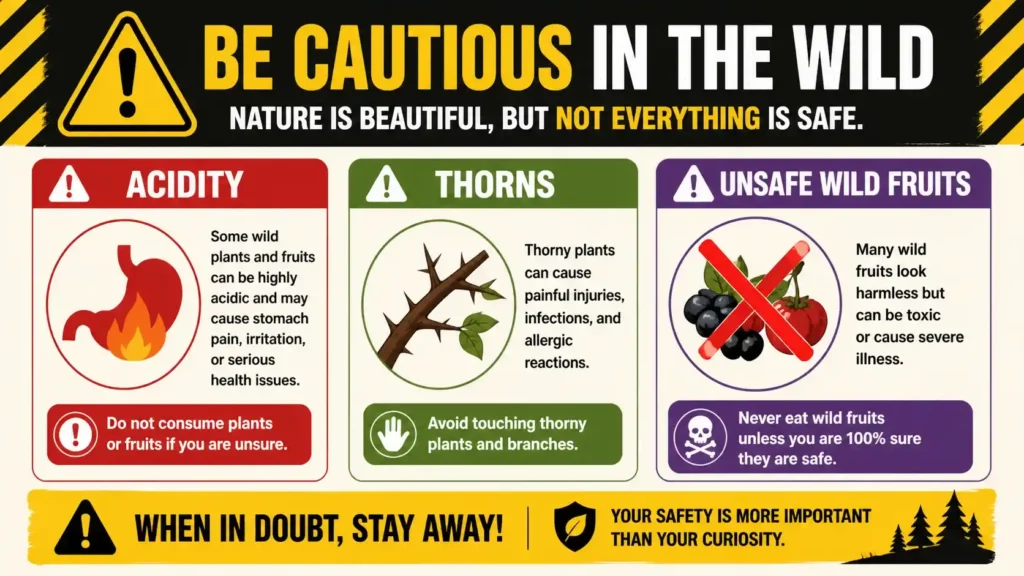
While bush lemons offer several uses and benefits, certain precautions should be considered when handling or consuming them.
Strong acidity:
Thorny plant hazards:
Not all wild fruits edible:
These limitations highlight the importance of careful handling and informed use of bush lemon plants and their fruit.
Bush lemon is a unique and valuable fruit that holds importance beyond its appearance. As a naturally occurring citrus-type fruit, it plays a meaningful role in native ecosystems, supporting biodiversity and adapting to harsh environmental conditions where many cultivated plants cannot survive.
In addition to its ecological value, bush lemon is widely appreciated in food and recipes, especially in traditional preparations and preserves. Its strong flavor makes it ideal for marmalades, flavoring, and various culinary applications.
Promoting the responsible use of bush lemons is essential. Sustainable harvesting and awareness of native plant systems help preserve these species for future use while maintaining ecological balance.
A bush lemon is a wild-growing citrus-type fruit found mainly in Australia. Unlike cultivated lemons, it grows naturally in the wild and has a rough texture, irregular shape, and a strong, highly acidic flavor.
No, bush lemon is not the same as a regular lemon. Regular lemons are cultivated varieties (Citrus limon) with consistent size and taste, while bush lemons are wild, less uniform, and often more intense in flavor.
There is no single scientific name for all bush lemons. Cultivated lemons are known as Citrus limon, while some Australian bush lemon types are associated with native species like Capparis mitchellii, which is not a true citrus plant.
Bush lemons can be eaten raw, but their strong acidity and intense sour taste make them less suitable for direct consumption. They are more commonly used in cooking, preserves, or mixed with other ingredients.
Bush lemon marmalade is made by slicing the fruit (including peel), boiling it in water until soft, then adding sugar and cooking until thickened. The mixture is cooled and stored in sterilized jars for long-term use.
Bush lemons grow naturally in Australia, especially in dry, tropical, and subtropical regions. They are commonly found in the wild, thriving in harsh soils and low-water environments.
Yes, bush lemons are edible when properly identified. However, not all wild fruits that look similar are safe, so correct identification is important before consumption.
Bush lemons have a very sharp, sour taste with a slightly bitter edge. Their flavor is stronger and less balanced compared to cultivated lemons.
Yes, bush lemon trees can be grown at home in warm climates with well-draining soil. They require minimal care and are more drought-tolerant than regular lemon trees.
Bush lemons are mainly used in marmalades, preserves, sauces, and natural flavoring. Their strong citrus profile makes them ideal for processed culinary uses rather than fresh eating.