Grow Better Gardens with Smarter Plant Choices
Discover helpful guides on trees, hedges, fruit plants, edible plants, and beautiful landscape greenery.

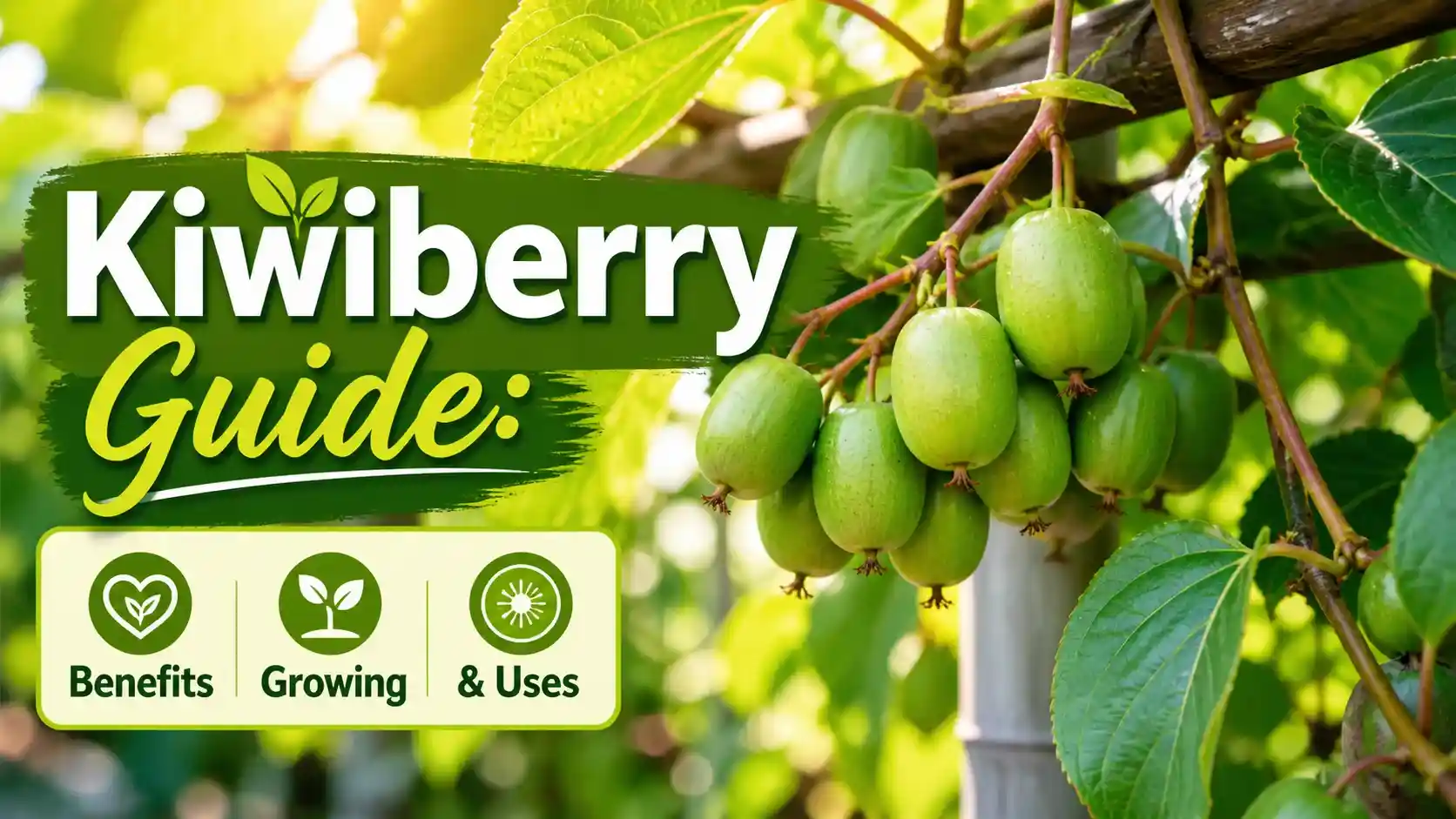
A kiwiberry, also known as mini kiwifruit or kiwi grapes, is a small, smooth-skinned fruit that belongs to the same family as the traditional kiwi. If you’re wondering what is a kiwiberry, it is essentially a bite-sized version of kiwi that can be eaten whole without peeling, making it highly convenient and increasingly popular.
The botanical name of kiwiberry is Actinidia arguta, commonly referred to as hardy kiwi or Siberian kiwi due to its ability to tolerate colder climates compared to regular kiwi varieties.
Kiwiberry is known by several other names, including:
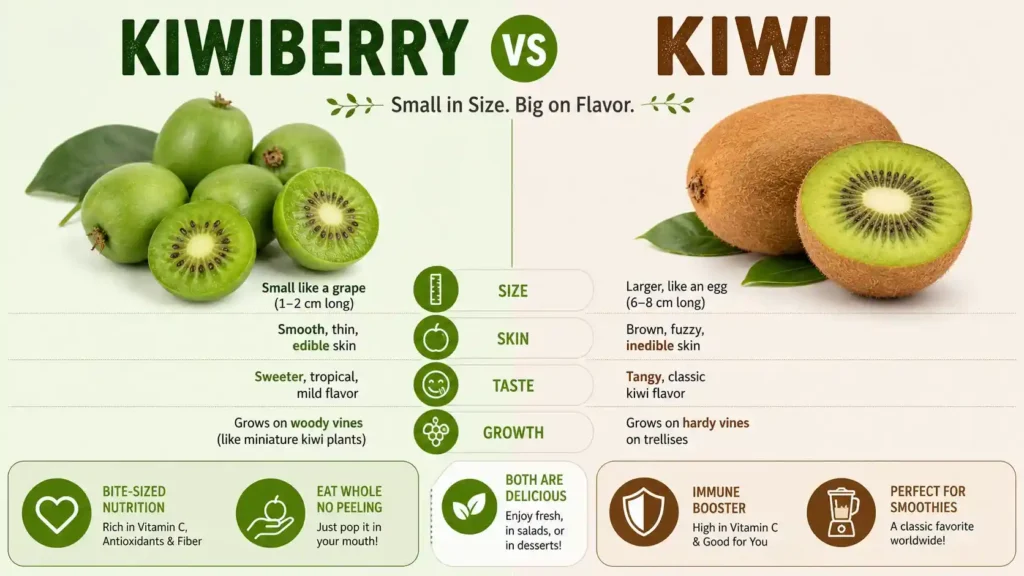
When compared to regular kiwi, kiwiberries are:
Beyond convenience and flavor, kiwiberry fruit is gaining attention for its impressive nutritional value. It is rich in vitamins, antioxidants, and fiber, contributing to its growing popularity among health-conscious consumers and home gardeners alike.
The kiwiberry plant is often confused with a kiwi berry tree, but it is important to clarify that it is not a tree. Kiwiberry grows as a vigorous climbing vine, similar to grapevines, and requires structural support to grow properly.
The kiwi fruit vine or kiwiberry vine follows a twining growth pattern. It climbs by wrapping its stems around supports such as trellises, pergolas, or wires. Without proper support, the vine spreads along the ground, which can reduce fruit quality and increase disease risk.
Do kiwis grow on a tree?
No, kiwis—including kiwiberries—do not grow on trees. They grow on woody, perennial vines that can extend several meters in length. This vine-based growth habit is essential to understand for proper planting and maintenance.
Kiwiberry plants produce small, nutrient-rich fruits with distinct physical traits:
In terms of growth, the plant has a spreading and fast-growing nature. It can cover large areas if not pruned regularly, making it suitable for vertical gardening systems. The vine develops dense foliage, which also makes it useful for shade and decorative purposes.
Several kiwiberry varieties are cultivated for different climates and growing needs:
These varieties make kiwiberry cultivation accessible for both beginners and experienced growers, depending on climate and space availability.
Kiwiberry fruit is highly valued for its dense nutritional profile and health-supporting compounds. It is naturally rich in Vitamin C, dietary fiber, and antioxidants, making it a powerful addition to a balanced diet. Despite its small size, kiwiberry delivers nutrients comparable to, and in some cases exceeding, those found in standard kiwi fruit.
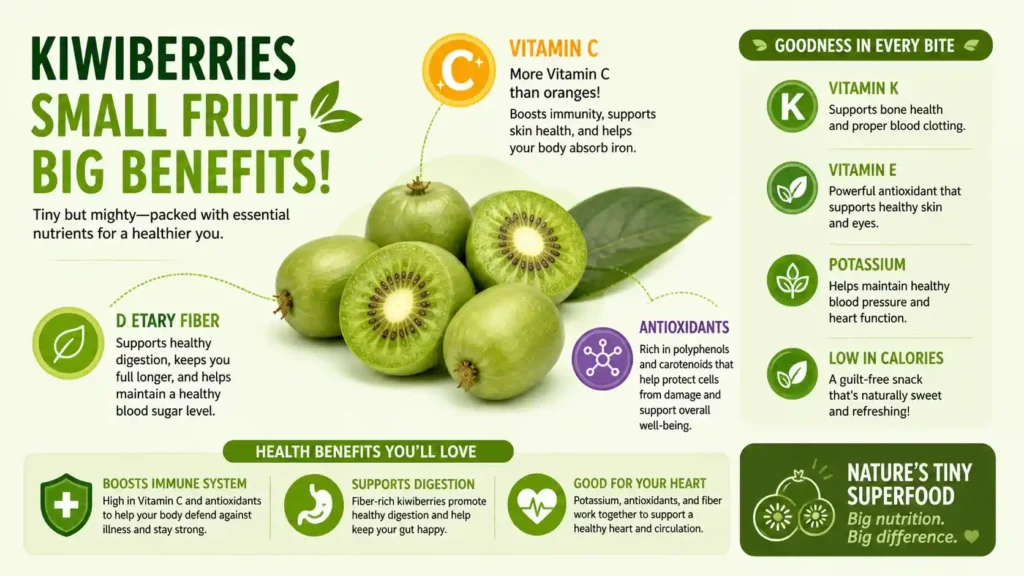
Immune Support
The high Vitamin C content in kiwiberry helps strengthen the immune system. Regular consumption can support the body’s defense against infections and improve overall resilience.
Digestive Health
Kiwiberry contains natural enzymes and fiber that assist in digestion. It helps regulate bowel movements and supports a healthy gut microbiome.
|
Feature |
Kiwiberry |
Standard Kiwi Fruit |
|
Vitamin C Content |
Very high | High |
|
Fiber |
High | High |
|
Skin |
Smooth and edible |
Fuzzy, usually peeled |
| Antioxidants | Rich and concentrated |
Rich |
| Convenience | Eat whole |
Requires peeling |
Kiwiberry offers similar nutritional benefits to regular kiwi but with added convenience and slightly higher nutrient density per bite due to its compact size.
The kiwiberry follows a structured and seasonal growth pattern similar to other fruiting vines. Understanding the kiwi fruit growth stages helps in managing the plant effectively.
Kiwi fruit growth stages include:
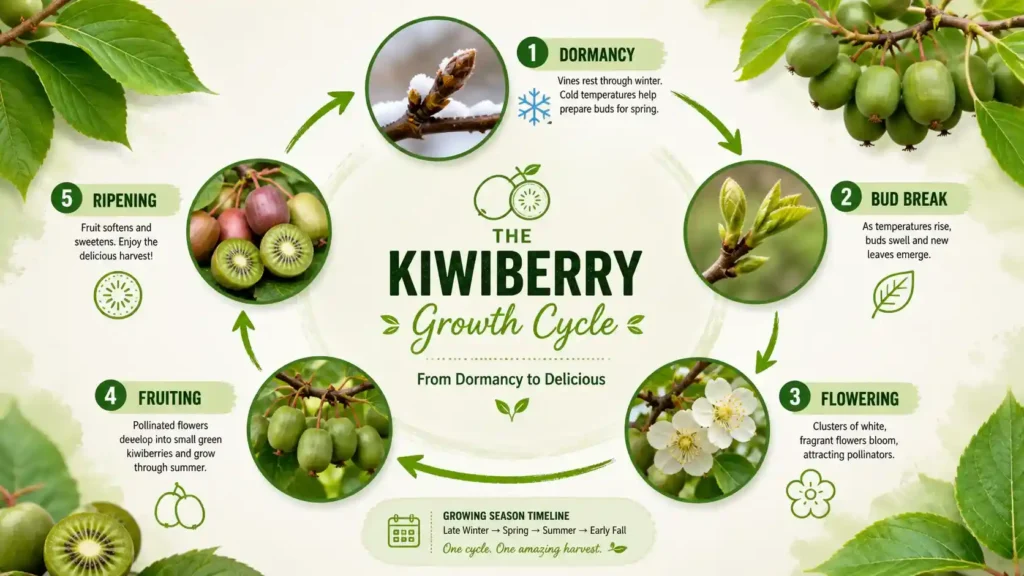
Throughout these stages, proper life stage support in the vines is essential:
Kiwiberries thrive in specific environmental conditions that support their vine-based growth.
Climate requirements:
Where to grow kiwi (ideal regions):
Growing kiwiberry in Australia (kiwiberry Australia / growing kiwi berries in Australia):
Understanding how do kiwi plants grow is key to proper cultivation. Kiwiberry plants grow as climbing vines, not standalone plants.
Kiwi growth vs kiwifruit vine growth:
This vine-based growth habit makes kiwiberry suitable for vertical gardening and structured cultivation systems.
Proper setup is essential for a healthy kiwi berry plant or kiwi berries plant. Focus on soil quality, sunlight, and spacing to ensure strong vine development.
These requirements are similar to many fruit trees & edible plants that need full sunlight and proper care for healthy growth.
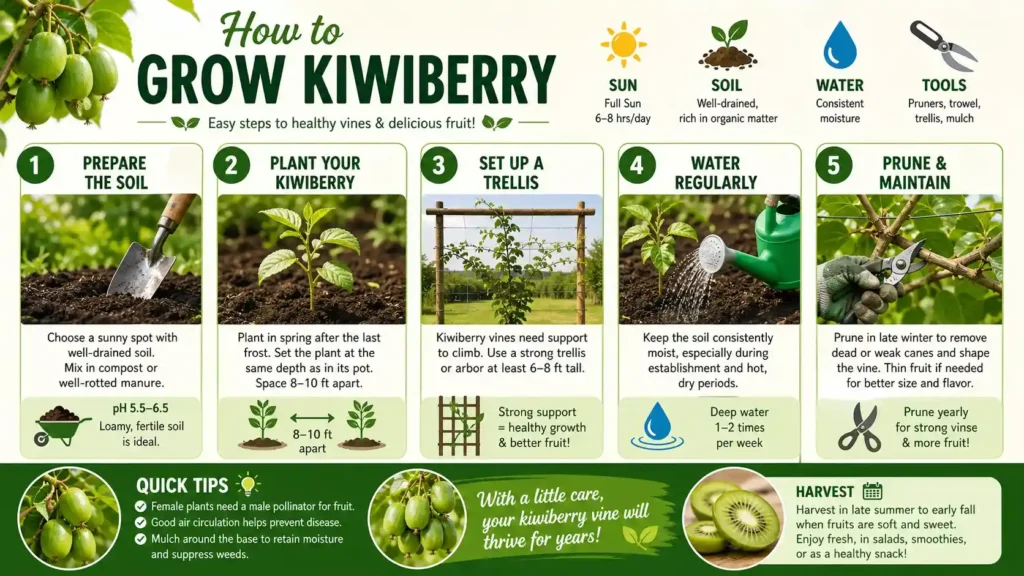
Kiwiberry can be propagated through seeds or seedlings, though each method has different outcomes.
A strong support system is critical for vine growth and fruit development.
Consistent care ensures productive and healthy plants.
Like any fruit plant, kiwiberry vines can face certain challenges.
Proper monitoring and timely care help prevent most of these issues and ensure successful kiwiberry cultivation.
|
Feature |
Kiwiberry | Regular Kiwi |
| Size | Small (grape-sized) |
Larger |
|
Skin |
Smooth, edible | Fuzzy, peeled |
|
Growth |
Vine |
Vine |
| Taste | Sweeter |
Slightly tangy |
Understanding how to eat kiwi berries is simple due to their convenience and edible skin. Unlike traditional kiwi, kiwiberries do not require peeling.
For another easy-to-eat fruit option, you can explore our fuyu persimmon tree guide.

Kiwiberries are versatile and can be used in multiple ways:
Kiwiberry is a seasonal fruit with a relatively short harvest window. Understanding the kiwi berry season Australia helps in planning both consumption and cultivation.
Kiwiberry Australia cultivation is growing steadily, especially in regions with suitable climates.
With proper environmental conditions, kiwiberry cultivation in Australia is becoming increasingly viable for both home gardeners and small-scale commercial growers.
Kiwiberry is a versatile fruit with multiple practical uses beyond simple consumption. Its nutritional value, ease of use, and vine growth habit make it suitable for both culinary and functional applications.
For another versatile fruit used in recipes, see our starfruit tree guide.
Kiwiberry stands out as a unique, nutrient-rich fruit that combines convenience with high nutritional value. Its small size, edible skin, and rich content of vitamins and antioxidants make it a practical choice for daily consumption.
With the right conditions and care, kiwiberry is easy to grow, especially when proper support, sunlight, and maintenance practices are followed. Its vine-based growth system also makes it adaptable to structured gardening setups.
Additionally, kiwiberry is highly suitable for both home gardening and commercial cultivation. Whether grown in a backyard or on a larger scale, it offers both functional and economic value, making it an increasingly popular fruit choice.
A kiwiberry is a small, smooth-skinned fruit from the species Actinidia arguta. It is often called mini kiwifruit or kiwi grapes and can be eaten whole without peeling. It offers a sweet flavor and high nutritional value similar to regular kiwi.
Kiwiberries grow on woody climbing vines, not trees. These vines require support such as trellises or pergolas to grow properly and produce fruit efficiently.
Kiwi berries are very easy to eat: Wash them thoroughly Eat them whole, like grapes No peeling or cutting is required
Yes, kiwiberry can grow in Australia, especially in cooler regions like Victoria and Tasmania. With proper care, irrigation, and protection from extreme heat, it can also be grown successfully in other suitable areas.
Kiwiberry plants typically take 2 to 4 years to start producing fruit after planting. Full production capacity is usually reached after several growing seasons with proper care and maintenance.
Most kiwiberry varieties require both male and female plants for pollination. However, self-fertile varieties like Issai can produce fruit without a separate pollinator, though yields may improve with cross-pollination.
Yes, kiwiberry can be grown in large containers if provided with: Strong support (trellis or frame) Adequate sunlight Regular watering and fertilization Container growing is suitable for small gardens or limited spaces.
Kiwiberry plants grow best in: Well-drained, fertile soil Slightly acidic to neutral pH (5.5–7.0) Soil enriched with organic matter
Kiwiberry vines are generally cold-hardy, especially compared to regular kiwi. However, young shoots and flowers can still be damaged by late spring frost, so protection may be necessary during sensitive stages.