Grow Better Gardens with Smarter Plant Choices
Discover helpful guides on trees, hedges, fruit plants, edible plants, and beautiful landscape greenery.

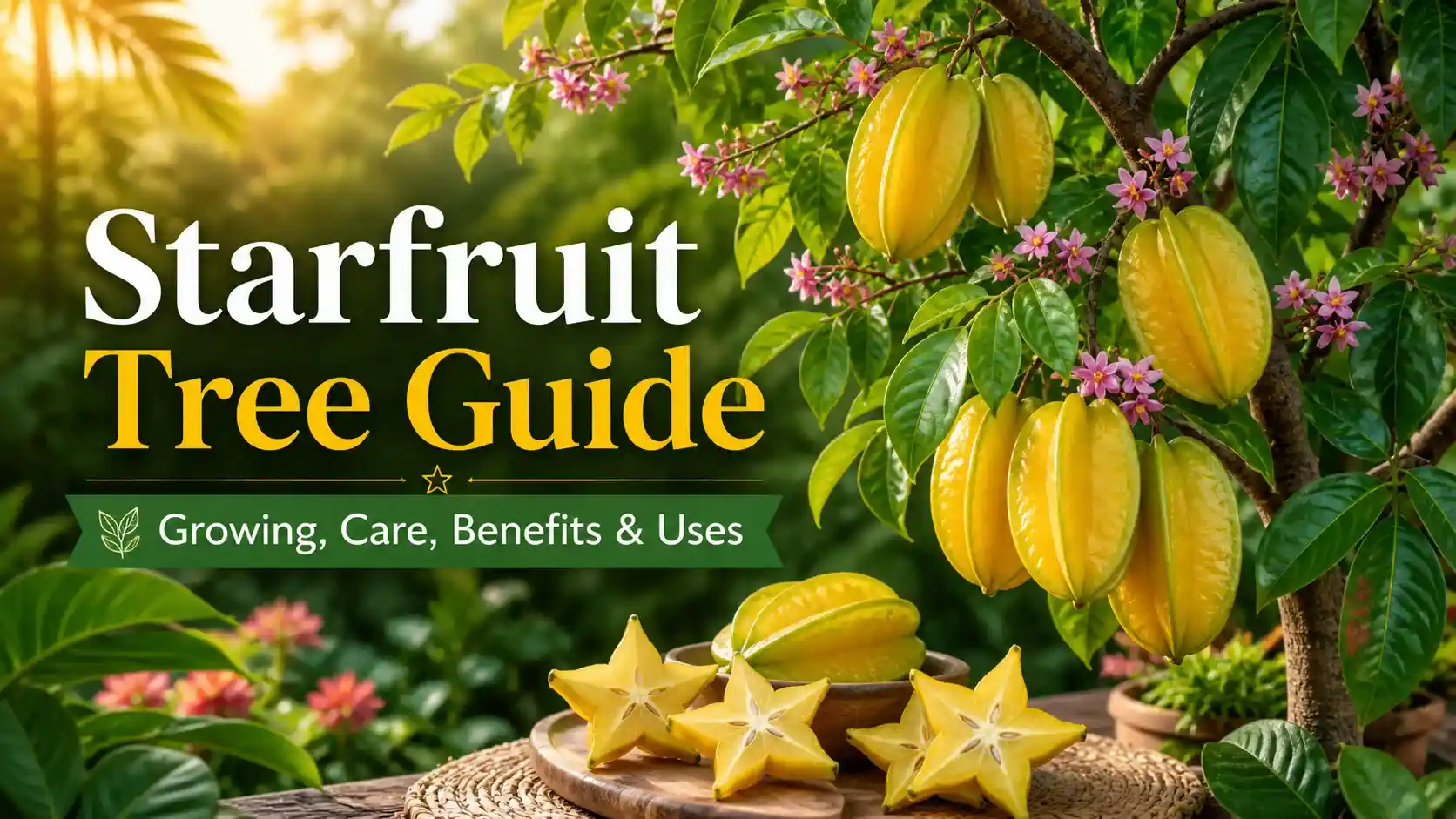
The starfruit tree, also known as the carambola tree, is a tropical fruit tree valued for its attractive appearance, refreshing fruit, and unique star-shaped slices. Scientifically called Averrhoa carambola, this evergreen tree belongs to warm tropical and subtropical regions where it grows well in sunny, humid conditions. The fruit is commonly known by different names, including carambola, star fruit, and kamrak fruit in some regions.
The name star fruit carambola comes from the fruit’s special shape. When the ripe fruit is cut crosswise, each slice forms a clear five-pointed star, making it one of the most visually distinctive tropical fruits. This natural star shape is the main reason it is widely called “star fruit.”
As a tropical fruit tree, the carambola tree has become popular in home gardens, orchards, and backyard landscapes because it offers both ornamental and edible value. Its glossy leaves, small flowers, and bright yellow fruit make it attractive, while the fruit itself is used fresh, in juices, salads, and different tropical recipes. For gardeners in warm climates, the starfruit tree is a practical and beautiful choice for growing a productive fruit tree at home.
For another popular tropical fruit option, see our lychee fruit tree guide.
The starfruit tree is a medium-sized tropical evergreen fruit tree known for its dense foliage, attractive flowers, and distinctive star-shaped fruit. As a productive carambola tree, it performs best in warm climates with consistent sunlight, moderate moisture, and well-drained soil. A healthy starfruit plant can add both edible value and ornamental beauty to gardens, orchards, and backyard landscapes.
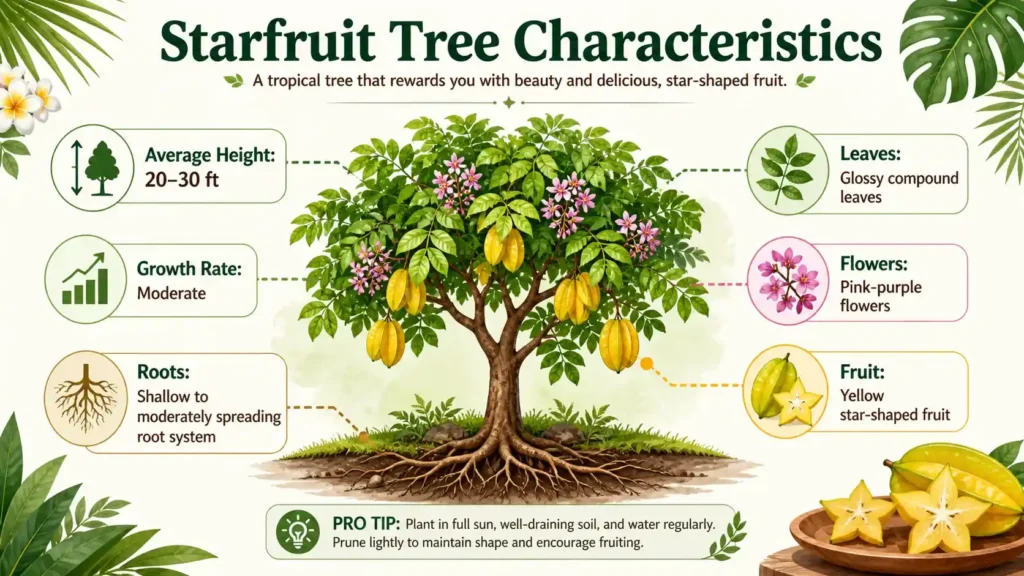
A mature starfruit tree usually grows about 20 to 30 feet tall, although some trees may stay smaller depending on pruning, climate, soil quality, and variety. Its canopy can spread around 20 to 25 feet wide, creating a rounded, leafy shape that provides light shade and strong visual appeal.
In tropical climates, the carambola tree generally has a moderate growth rate. With warm temperatures, regular watering, and balanced nutrients, young trees establish quickly and begin forming a fuller canopy within a few growing seasons. Growth may slow in cooler areas or during dry periods, especially if the tree is exposed to stress from poor soil drainage, strong winds, or inconsistent irrigation.
For home gardens, regular pruning helps manage the tree’s height and width. This is especially useful when growing the starfruit plant in smaller spaces or near walkways, fences, and other garden features.
The leaves of a starfruit tree are soft, green, and compound, usually arranged in pairs along a central stem. Each leaf has several small leaflets that may fold slightly during the evening, under stress, or in very hot conditions. This gives the tree a delicate, tropical look while helping it conserve moisture.
The flowers of the carambola tree are small but attractive. They usually appear in shades of pink, lavender, purple, or reddish-purple, depending on the variety and growing conditions. Flowering can happen more than once a year in warm tropical climates, especially when the tree receives steady moisture and adequate nutrition.
The fruit is the most recognizable feature of the starfruit plant. Starfruit has a waxy skin, a yellow to golden color when ripe, and prominent ridges running along its length. When sliced crosswise, the fruit forms a clear star shape. This unique shape makes starfruit popular for fresh eating, fruit platters, juices, salads, and decorative food presentation.
The root system of a starfruit tree is generally shallow to moderately deep, with many feeder roots growing near the upper soil layer. These surface-level roots help the tree absorb water and nutrients efficiently, but they also make the tree more sensitive to drought, soil compaction, and root disturbance.
The carambola tree does not usually develop an extremely aggressive root system, but its roots can spread outward beyond the canopy as the tree matures. Because of this spreading behavior, planting location is important. The tree should be given enough open soil space so the roots can expand naturally without heavy competition from nearby plants.
When planting a starfruit plant near structures, consider these points:
For most home gardens, planting the starfruit tree at a safe distance from buildings and hard surfaces helps reduce future root problems while allowing the tree to grow into a healthy, productive tropical fruit tree.
Starfruit trees are generally grouped by fruit flavor, size, sweetness, acidity, and intended use. Most cultivated carambola star fruit varieties fall into two main categories: sweet types and sour types. Both produce attractive yellow star fruits, but their taste, texture, and best uses can be different.
Sweet starfruit varieties are usually preferred for fresh eating because they have a mild, pleasant flavor with lower acidity.
If you enjoy unique fruit flavors, you can also explore our kiwiberry guide for another interesting option.
Their taste is often described as a mix of apple, grape, pear, and citrus, depending on ripeness and variety. Fully ripe sweet star fruits usually turn golden yellow and have a juicy, crisp texture.
Sour varieties have a sharper, more acidic flavor. These types are less commonly eaten fresh unless balanced with salt, sugar, or spices. However, sour carambola star fruit is useful in cooking, pickling, sauces, chutneys, juices, and traditional recipes where a tangy flavor is needed.
| Type | Taste Profile |
Best Uses |
|
Sweet starfruit |
Mild, juicy, slightly floral, low acidity | Fresh eating, salads, fruit platters, smoothies |
| Sour starfruit | Tart, acidic, sharp, citrus-like |
Pickles, chutneys, juices, cooked dishes, sauces |
Sweet types are better for home gardeners who want fruit for direct eating, while sour types are more suitable for culinary use. In many tropical regions, both types are grown because they serve different purposes in the kitchen and garden.
Several carambola cultivars are grown worldwide for improved sweetness, fruit size, productivity, and tree performance. Cultivar choice can affect flavor, fruit shape, yield, and disease resistance, so selecting the right type is important for home gardens and orchards.
Common cultivated varieties include:
For most home growers, sweet cultivars are usually the best option because they produce star fruits that are enjoyable fresh. Sour cultivars may still be useful for gardeners who prefer tangy fruit for cooking, preserves, or traditional food preparations.
Growing a starfruit tree is easiest in warm, frost-free regions where the plant can receive steady sunlight, regular moisture, and well-drained soil. For gardeners searching for star fruit how to grow, the key is to recreate tropical or subtropical conditions as closely as possible. Healthy growth depends on the right climate, soil, watering routine, and careful planting from the beginning.
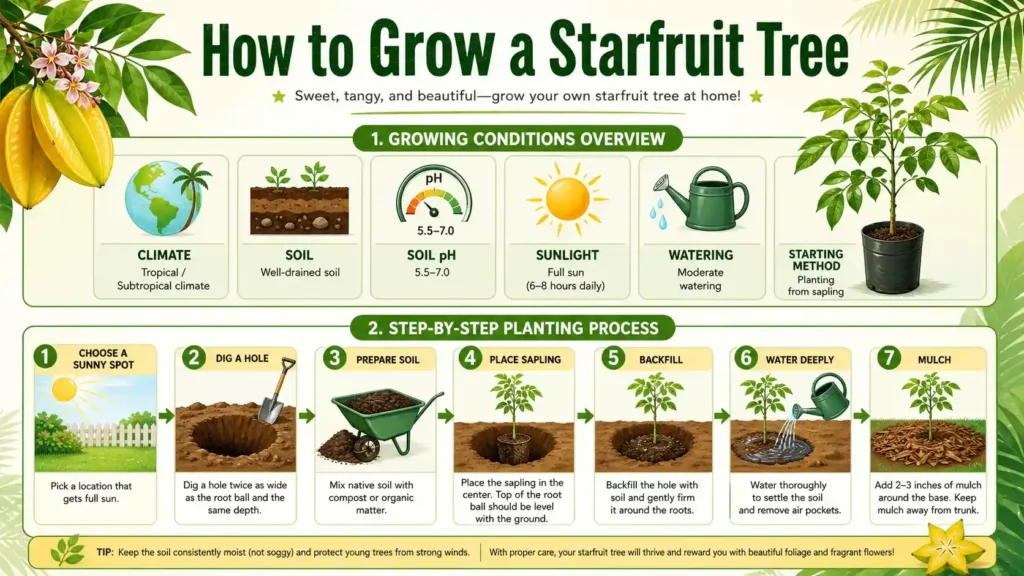
Starfruit grows best in tropical and subtropical climates with warm temperatures throughout most of the year. The tree prefers areas where temperatures stay consistently mild to warm and where frost is rare or absent.
Ideal conditions include:
Young starfruit trees are especially sensitive to cold. Even brief exposure to frost can damage leaves, flowers, and young branches. Mature trees may tolerate short cool periods better, but freezing temperatures can seriously reduce growth and fruit production.
For successful growing starfruit, choose a protected location with good warmth, especially if the climate is subtropical rather than fully tropical. A south-facing or sheltered garden spot can help the tree receive more heat and protection.
The starfruit tree grows best in well-drained, fertile soil. Drainage is very important because waterlogged soil can damage roots and lead to poor growth. Although the tree needs regular moisture, its roots should never remain sitting in standing water.
A good soil mix should be:
The ideal soil pH for growing carambola is usually around 5.5 to 7.0. Slightly acidic soil helps the tree absorb nutrients more effectively. If the soil is too alkaline, the plant may show nutrient deficiencies, especially yellowing leaves caused by poor iron availability.
Before planting, improve poor soil with compost, aged organic matter, or well-rotted manure. Heavy clay soil should be amended carefully to improve drainage, while sandy soil may need more organic matter to hold moisture and nutrients.
Starfruit trees need full sun for strong growth, flowering, and fruit production. A location that receives at least 6 to 8 hours of direct sunlight daily is best. Trees grown in too much shade may become weak, produce fewer flowers, and develop lower fruit yields.
These requirements are similar to many fruit trees & edible plants, which also depend on full sunlight and proper care for healthy growth.
Watering should be consistent, especially during the establishment stage. Young trees need regular irrigation until their root system becomes stronger. Mature trees can handle short dry periods, but they produce better fruit when soil moisture remains steady.
General irrigation guidance:
|
Growth Stage |
Watering Need | Notes |
| Newly planted sapling | Frequent light watering |
Keep soil evenly moist, not soaked |
|
Young tree |
Regular watering | Water deeply when topsoil begins to dry |
| Mature tree | Moderate watering |
Increase watering during flowering and fruiting |
|
Dry season |
More frequent irrigation | Mulch helps reduce moisture loss |
| Rainy season | Reduce watering |
Avoid soggy soil and root stress |
For best results, water deeply rather than giving shallow daily watering. Deep watering encourages stronger root development and helps the tree tolerate short dry spells better.
Planting star fruit from a healthy sapling is the most reliable method for home growers. Saplings establish faster than seeds and usually produce fruit sooner, especially when grown from grafted or nursery-raised plants.
Follow these steps for proper planting:
When growing carambola, early care matters. A well-planted sapling with full sun, steady moisture, and healthy soil can establish faster and develop into a stronger, more productive starfruit tree.
Proper care keeps starfruit trees healthy, productive, and easier to manage in home gardens. A well-maintained starfruit plant needs balanced nutrition, seasonal pruning, pest monitoring, and steady moisture. With the right routine, the tree can produce better flowers, stronger branches, and high-quality fruit.
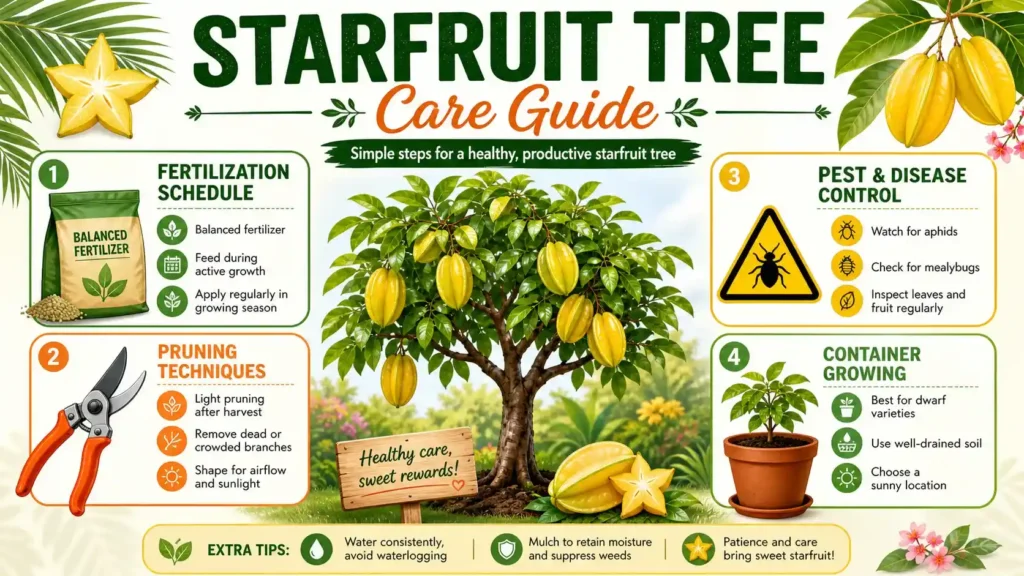
The star fruit plant is a moderate feeder and benefits from regular fertilization during active growth. Young trees need nutrients to build roots, branches, and foliage, while mature trees need balanced feeding to support flowering and fruit production.
Use a balanced fertilizer that contains:
A simple fertilization schedule:
| Tree Stage | Fertilizer Frequency | Best Approach |
|
Newly planted tree |
After establishment | Avoid heavy feeding immediately after planting |
|
Young starfruit plant |
Every 6–8 weeks in growing season |
Use light, balanced applications |
|
Mature starfruit trees |
3–4 times per year |
Feed before flowering, during fruit development, and after harvest |
| Container-grown tree | Every 4–6 weeks in active growth |
Use diluted fertilizer to avoid root burn |
Organic compost, well-rotted manure, and mulch can also improve soil fertility. Avoid over-fertilizing with nitrogen because it may encourage excessive leafy growth while reducing flowering and fruit production.
Pruning helps control the size, shape, airflow, and productivity of starfruit trees. Without pruning, the canopy can become too dense, which may reduce light penetration and increase pest or disease pressure.
The best pruning goals are:
For young trees, light pruning helps build a strong framework. Select a few well-spaced main branches and remove crossing or poorly positioned shoots. For mature trees, prune after harvesting to maintain shape and remove unproductive wood.
Avoid heavy pruning during flowering or fruit development because it can reduce yield. Also, do not remove too much canopy at once, especially in hot climates, because exposed branches may suffer from sunburn.
A healthy starfruit plant is usually easier to protect from pests and diseases. Most problems happen when the tree is stressed by poor drainage, weak nutrition, overcrowded growth, or irregular watering.
Common issues may include:
| Problem | Signs | Solution |
|
Fruit flies |
Damaged fruit, soft spots, larvae inside fruit | Harvest ripe fruit quickly, use traps, remove fallen fruit |
|
Scale insects |
Small bumps on stems or leaves, sticky residue | Prune affected growth, use horticultural oil if needed |
|
Aphids |
Curling young leaves, sticky honeydew |
Spray with water, encourage beneficial insects |
| Mealybugs | White cotton-like clusters on leaves or stems |
Remove manually, apply neem or horticultural oil |
|
Fungal leaf spots |
Brown or dark spots on leaves |
Improve airflow, avoid overhead watering, remove infected leaves |
| Root rot | Yellowing leaves, wilting, poor growth |
Improve drainage and avoid overwatering |
Good prevention is better than correction. Keep the area under the tree clean, remove fallen fruit, prune crowded branches, and avoid keeping the soil constantly soggy. If pest pressure is high, use safe garden treatments such as neem oil, insecticidal soap, or horticultural oil according to label directions.
A star fruit plant can be grown in a large container, especially when using dwarf or compact varieties. Container growing is useful for patios, small gardens, and areas where the tree needs winter protection.
For growing in pots, choose:
Container-grown starfruit trees usually stay smaller than trees planted in the ground. However, they need more frequent watering and feeding because potting soil dries out faster and nutrients wash away more quickly.
Repot the plant when roots become crowded or growth slows. If the container is already large, refresh the top layer of soil with compost and prune lightly to maintain shape. In cooler climates, pots can be moved indoors or into a greenhouse during cold weather, but the plant still needs bright light and warm conditions to stay healthy.
Fruit production is one of the main reasons gardeners grow a starfruit tree. A healthy tree can produce attractive, juicy, and flavorful starfruit fruit when it receives enough sunlight, moisture, nutrients, and warmth. The quality of carambola fruit depends strongly on the tree’s age, variety, climate, and overall care routine.
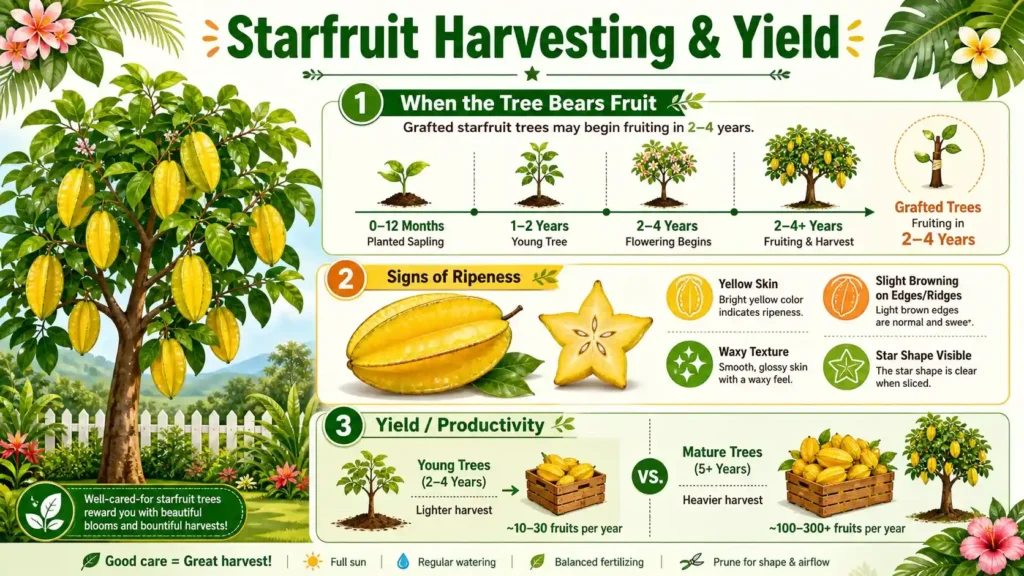
A starfruit tree usually begins bearing fruit within 2 to 4 years after planting, especially if grown from a grafted or nursery-raised sapling. Trees grown from seed may take longer and may not always produce fruit with the same quality as the parent tree.
The fruiting timeline can vary:
| Tree Type | Expected Fruiting Time | Notes |
| Grafted sapling | 2–3 years | Usually fruits earlier and more reliably |
| Nursery-grown young tree | 3–4 years | Depends on tree size and care |
| Seed-grown tree | 4–6 years or more | Fruit quality may vary |
| Container-grown tree | 3–5 years | Needs strong sunlight and regular feeding |
In warm tropical climates, a mature tree may flower and fruit more than once per year. In subtropical areas, fruiting may be more seasonal and can slow down during cooler months. Strong flowering usually depends on good sunlight, balanced fertilization, and stable watering.
Harvesting starfruit at the right stage gives the best taste, texture, and shelf life. The fruit should be allowed to mature on the tree until it develops good color and size. Immature fruit is usually greener and more acidic, while ripe fruit becomes sweeter, juicier, and more aromatic.
Signs of ripe carambola fruit include:
For fresh eating, harvest when the fruit is mostly yellow with only a little green remaining. For storage or transport, it can be picked slightly earlier when it has started turning yellow but is still firm.
Use pruning shears or gently twist the fruit from the stem to avoid damaging the branch. Handle starfruit fruit carefully because the ridges can bruise if pressed or dropped. After harvesting, store the fruit in a cool place and use it while the texture remains crisp and juicy.
A mature starfruit tree can be highly productive under the right growing conditions. Yield depends on variety, tree age, pruning, pollination, nutrition, and climate. Trees grown in full sun with regular care usually produce better crops than neglected or shaded trees.
General productivity expectations:
|
Tree Stage |
Fruit Production Level |
Expected Result |
|
Young tree |
Light production | Small first harvests as tree establishes |
|
Developing tree |
Moderate production |
More flowering and improved fruit size |
|
Mature tree |
Heavy production |
Regular harvests in suitable climates |
| Stressed tree | Low production |
Poor flowering, fruit drop, or small fruit |
In ideal tropical conditions, mature trees may produce fruit multiple times a year. However, heavy production can stress the tree if it lacks nutrients or water. After fruiting, balanced feeding and light pruning help the tree recover and prepare for the next growth cycle.
To improve annual fruit production:
With consistent care, a healthy starfruit tree can provide dependable harvests and high-quality carambola fruit for fresh eating, juices, salads, and home use.
Starfruit is valued not only for its attractive shape and refreshing taste but also for its light nutritional profile. Many star fruit benefits come from its vitamin C content, fiber, antioxidants, and high water level. However, while the fruit can be healthy for many people, it also requires caution for individuals with kidney problems.
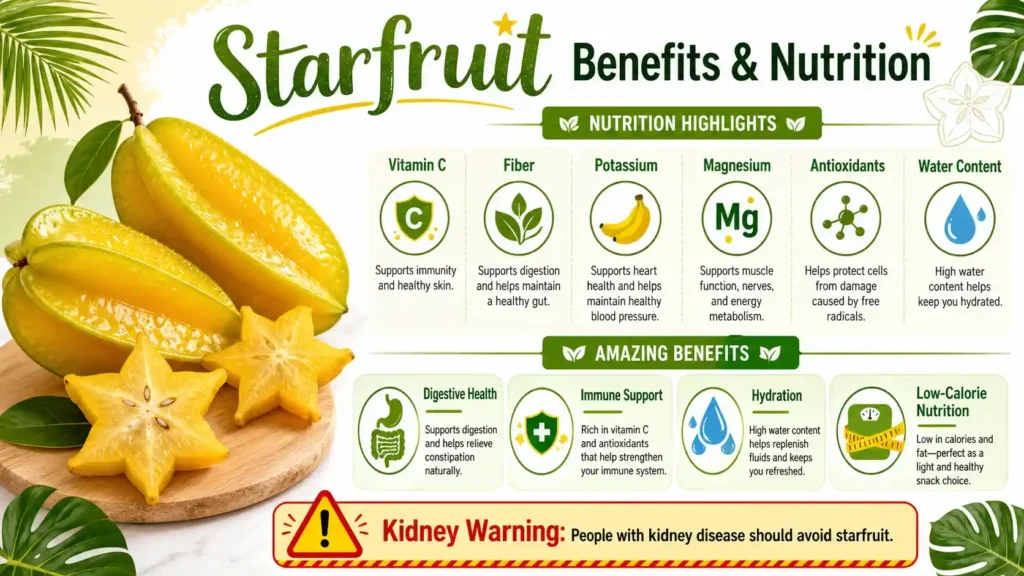
The nutrition in star fruit is generally low in calories and rich in water, making it a refreshing tropical fruit for light meals, snacks, juices, and fruit salads. It provides important micronutrients that support normal body functions.
Common nutrients found in starfruit include:
|
Nutrient |
Role in the Body |
|
Vitamin C |
Supports immune function and antioxidant protection |
|
Fiber |
Helps digestion and supports bowel regularity |
|
Potassium |
Supports fluid balance and normal muscle function |
|
Magnesium |
Helps energy production and muscle function |
| Folate |
Supports cell function and normal growth processes |
| Antioxidants |
Help protect cells from oxidative stress |
| Water |
Supports hydration and freshness |
Starfruit is also naturally low in fat and contains plant compounds such as flavonoids and polyphenols. These compounds contribute to the fruit’s antioxidant value and are part of the reason many people connect carambola benefits with general wellness.
The main starfruit benefits are linked to digestion, hydration, immune support, and antioxidant activity. When eaten as part of a balanced diet, starfruit can be a useful tropical fruit with several nutritional advantages.
For digestive health, starfruit provides dietary fiber, which supports smoother digestion and helps maintain regular bowel movement. The fruit’s high water content also makes it light and refreshing, especially in warm climates.
For immune support, vitamin C is one of the most important nutrients in starfruit. Vitamin C helps the body maintain normal immune defense and supports skin health. It also acts as an antioxidant, helping reduce oxidative stress caused by unstable molecules known as free radicals.
Key health benefits may include:
These star fruit benefits make the fruit a good choice for many healthy diets, especially when eaten fresh and in moderate amounts. However, it should not be treated as a medical cure. It is best understood as a nutritious fruit that supports overall dietary quality.
Starfruit is not safe for everyone. For healthy individuals, moderate consumption is usually fine, but for people with kidney disease, starfruit can be dangerous. This is the most important precaution linked to carambola fruit.
Starfruit contains natural compounds that may be difficult for unhealthy kidneys to filter properly. People with kidney disease, kidney failure, or reduced kidney function should avoid starfruit unless a qualified healthcare provider clearly says it is safe for them.
Possible concerns include:
For kidney patients, starfruit may cause serious reactions, including confusion, weakness, vomiting, seizures, or other dangerous symptoms. Because of this, anyone with kidney-related health issues should avoid starfruit completely unless medically approved.
For people without kidney problems, starfruit should still be eaten in reasonable portions. Excessive intake of any acidic fruit may cause stomach discomfort in sensitive individuals. The safest approach is to enjoy starfruit as part of a varied diet and avoid overconsumption.
In simple terms, starfruit can be nutritious and refreshing for many people, but it is not suitable for everyone. The benefits are valuable, but the kidney-related warnings must be taken seriously.
The starfruit tree is useful in both edible gardens and decorative landscapes. It offers shade, greenery, flowers, and fruit, making it a practical choice for tropical and subtropical backyards. Its glossy foliage, soft branching habit, and bright yellow fruit give the tree strong ornamental value while also providing fresh harvests for home use.
In garden and backyard spaces, the starfruit tree works well as a small to medium fruiting tree. Its rounded canopy can create light shade, while its evergreen leaves keep the landscape looking full throughout the year in warm climates. The small pink to purple flowers also add seasonal beauty before fruit develops.
The tree is especially suitable for:
Because the tree produces attractive ridged fruit, it can also become a visual feature in the garden. When the fruits turn yellow, they stand out against the green foliage and add a fresh tropical look. For smaller yards, pruning helps control size and shape, making the tree easier to manage near paths, seating areas, or garden borders.
For best landscaping results, plant it where it has enough space, full sun, and well-drained soil. Avoid placing it too close to walls, foundations, or paved areas because the tree needs open soil for healthy root spread and balanced growth.
Starfruit is widely used for fresh eating and simple tropical recipes. The starfruit taste can range from sweet and mild to tangy and citrus-like, depending on the variety and ripeness. Sweet types are best for eating fresh, while sour types are often used in drinks, sauces, chutneys, and cooked dishes.
Fresh starfruit can be used in:
When sliced crosswise, each piece forms a natural fruit star, which makes it popular for decoration in food presentation. The slices can be added to plates, glasses, cakes, and salads without needing special cutting techniques.
Starfruit juice is also refreshing, especially when blended with citrus, mint, pineapple, cucumber, or other tropical fruits. In some regions, sour starfruit is used in pickles, relishes, chutneys, and savory recipes because its acidity adds brightness to food.
For best flavor, use ripe yellow fruit for fresh eating. Slightly green fruit has a sharper taste and works better in recipes where tanginess is needed.
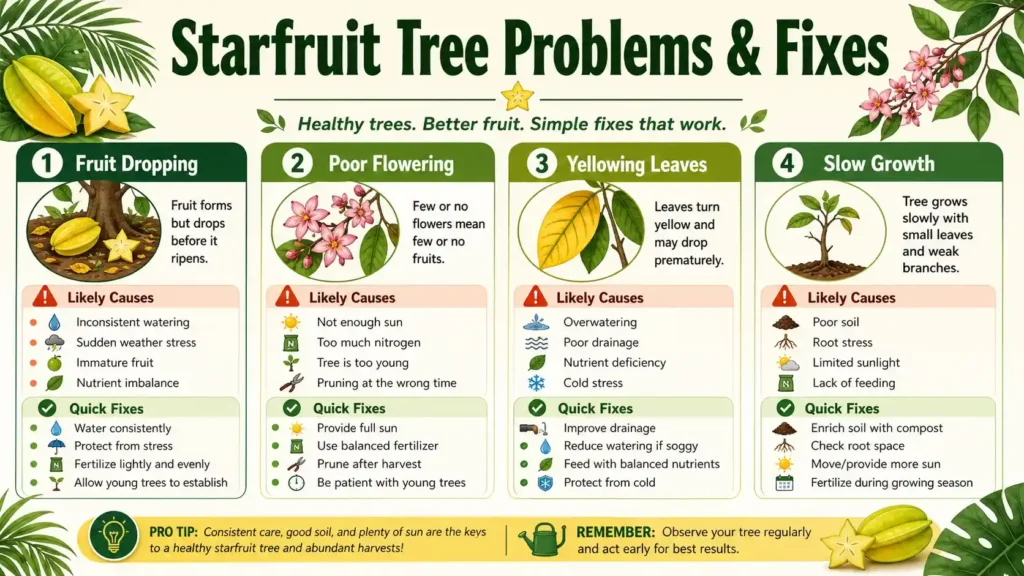
Even when growing starfruit in a suitable climate, the tree can face issues such as fruit drop, weak flowering, yellowing leaves, or slow growth. Most problems are linked to watering imbalance, poor nutrition, unsuitable soil, low sunlight, pest pressure, or stress from weather changes. A healthy carambola tree usually recovers well when the cause is identified early and corrected properly.
|
Problem |
Common Cause |
Practical Solution |
|
Fruit dropping |
Water stress, nutrient imbalance, pests, sudden weather changes | Keep watering consistent, feed correctly, remove damaged fruit, check for insects |
| Poor flowering | Too much shade, excess nitrogen, young tree age, weak pruning | Provide full sun, reduce high-nitrogen fertilizer, prune after harvest |
| Yellowing leaves | Poor drainage, iron deficiency, alkaline soil, overwatering | Improve drainage, test soil pH, apply micronutrients if needed |
| Slow growth | Cold stress, compacted soil, lack of nutrients, root restriction |
Improve soil, fertilize lightly, protect from cold, repot container trees |
Fruit dropping is common when the tree experiences stress during flowering or fruit development. Irregular watering is one of the main causes. If the soil becomes too dry and then suddenly too wet, young fruit may fall before maturity. Poor pollination, pest damage, and lack of potassium can also reduce fruit retention. To improve fruit set, keep soil evenly moist, mulch around the root zone, and provide balanced fertilizer during the growing season.
Poor flowering usually happens when the tree does not receive enough sunlight or is fed with too much nitrogen. Nitrogen supports leafy growth, but excessive amounts can reduce flower formation. A carambola tree needs full sun, proper pruning, and balanced nutrition to flower well. If the tree is still young, it may simply need more time to mature before producing consistent blooms.
Yellowing leaves can point to several problems. Overwatering and poor drainage may suffocate the roots, while alkaline soil can limit nutrient uptake. Iron deficiency often appears as yellowing between leaf veins, especially on newer leaves. Improving drainage, maintaining slightly acidic soil, and using a fertilizer with micronutrients can help restore healthier green foliage.
Slow growth is often related to weak growing conditions. Cool temperatures, compacted soil, root damage, or lack of nutrients can all limit development. For container-grown trees, slow growth may mean the roots are crowded and the plant needs a larger pot or fresh potting mix. For in-ground trees, adding compost, maintaining mulch, and protecting the tree from cold winds can support stronger growth.
For best results, monitor the tree regularly instead of waiting until symptoms become severe. Early correction helps the starfruit tree stay productive, healthy, and better prepared for flowering and fruiting.
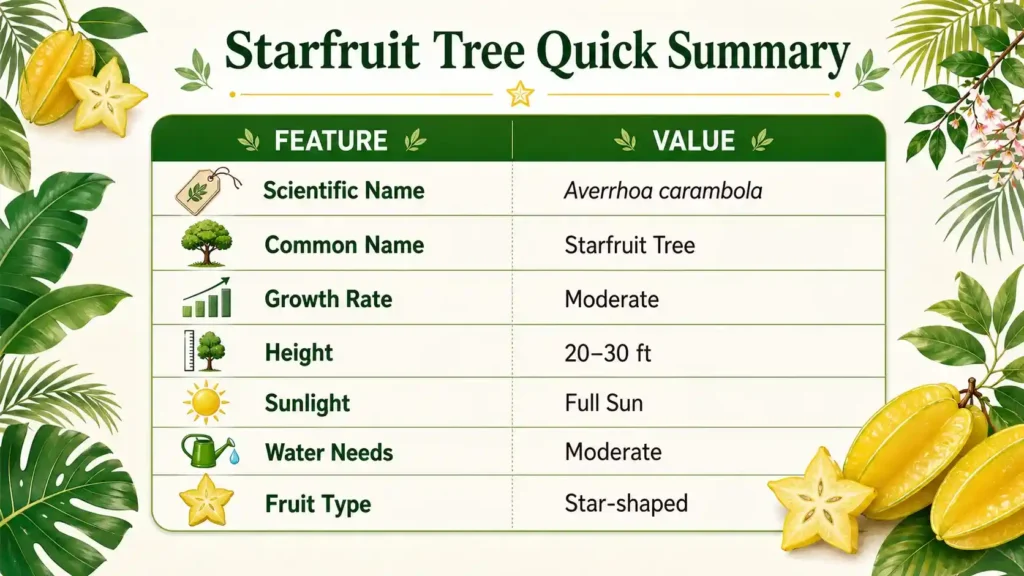
| Feature | Details |
|
Scientific Name |
Averrhoa carambola |
|
Common Name |
Starfruit Tree |
|
Other Common Names |
Carambola, star fruit, kamrak fruit |
|
Growth Rate |
Moderate |
| Average Height |
20–30 ft |
| Canopy Spread |
Around 20–25 ft |
| Sunlight |
Full Sun |
|
Water Needs |
Moderate |
|
Soil Type |
Fertile, well-drained soil |
|
Ideal Soil pH |
5.5–7.0 |
| Climate |
Tropical to subtropical |
| Fruit Type |
Star-shaped |
| Fruit Color When Ripe |
Yellow to golden yellow |
| Best Use |
Fresh eating, juices, salads, ornamental planting |
The starfruit tree is a valuable addition to warm-climate gardens because it combines beauty, productivity, and practical fruit use in one tropical tree. Its evergreen leaves, attractive flowers, and golden star-shaped fruit make it suitable for both edible landscapes and ornamental backyard planting.
For tropical and subtropical growers, this tree can perform very well when planted in full sun, well-drained soil, and a protected location with regular moisture. With proper care, pruning, feeding, and pest monitoring, it can become a reliable fruiting tree for home harvests.
Growing a starfruit tree at home is a rewarding choice for gardeners who want something unique, useful, and visually appealing. With the right climate and consistent care, it can provide fresh fruit, natural shade, and a beautiful tropical look for many years.
The starfruit tree is scientifically called Averrhoa carambola. It is also commonly known as the carambola tree, star fruit tree, and kamrak fruit tree in some regions.
A grafted starfruit tree usually starts producing fruit within 2 to 4 years after planting. Seed-grown trees may take longer, often around 4 to 6 years or more, depending on climate, care, and growing conditions.
Yes, starfruit trees can grow in pots, especially dwarf or grafted varieties. Use a large container with drainage holes, well-draining potting mix, full sunlight, and regular watering. Container-grown trees also need balanced fertilizer because nutrients wash out faster from pots.
Carambola grows best in tropical and subtropical climates with warm temperatures, high humidity, and little to no frost. The tree performs best in full sun and should be protected from freezing temperatures and strong cold winds.
No, starfruit is not safe for everyone. People with kidney disease, kidney failure, reduced kidney function, or those on dialysis should avoid starfruit because it contains compounds that unhealthy kidneys may not filter properly. Healthy individuals can usually eat it in moderate amounts.
Care for a starfruit tree by planting it in full sun, using well-drained fertile soil, watering consistently, applying balanced fertilizer, and pruning after harvest. Regular pest checks, mulching, and avoiding waterlogged soil also help keep the tree healthy and productive.
Yes, a starfruit tree needs full sun for strong growth, flowering, and fruit production. Ideally, it should receive 6 to 8 hours of direct sunlight daily. Trees grown in shade may produce fewer flowers and lower fruit yields.
Fruit drop can happen because of irregular watering, nutrient imbalance, pest damage, poor pollination, or sudden weather stress. Keeping the soil evenly moist, feeding the tree properly, and removing damaged fruit can help reduce fruit drop.
A mature starfruit tree commonly grows around 20 to 30 feet tall with a canopy spread of about 20 to 25 feet. Regular pruning can keep the tree smaller and easier to manage in home gardens.
Starfruit taste depends on the variety and ripeness. Sweet varieties are usually mild, juicy, and slightly floral, with flavors similar to apple, grape, pear, and citrus. Sour varieties taste sharper and are often used in juices, pickles, chutneys, and cooked recipes.