Grow Better Gardens with Smarter Plant Choices
Discover helpful guides on trees, hedges, fruit plants, edible plants, and beautiful landscape greenery.


Kumquat Nagami, also known as nagami kumquat, nagami cumquat, or simply cumquat or kumquat, is one of the most widely grown citrus varieties valued for its unique edible peel and compact growth. If you’re wondering what is a kumquat, it is a small citrus fruit that is eaten whole—skin and pulp together—offering a distinctive balance of sweet and tangy flavors. The cumquat meaning often refers to this unusual citrus trait, where the peel is sweet while the inside is tart, making kumquat the fruit quite different from other citrus types.
Nagami is considered the most popular oval kumquat variety due to its consistent fruit production, adaptability to different climates, and ease of cultivation. Its elongated shape, vibrant orange color when ripe, and balanced flavor profile make it a preferred choice for both home gardeners and commercial growers.
The kumquat plant itself is a small, evergreen citrus tree with glossy green leaves and fragrant white flowers. It produces small, oval fruits that typically grow in clusters. These fruits transition from green to bright orange as they mature, and they are known for their thin, edible skin. Overall, Nagami kumquat stands out for its ornamental appeal, manageable size, and highly versatile fruit.
The nagami kumquat plant belongs to the citrus family and is scientifically classified under the genus Fortunella, commonly referred to as Fortunella margarita. It is closely related to other citrus species but stands out due to its small fruit size and edible peel.
The growth habit of the nagami kumquat tree is compact, slow to moderate, and highly manageable, making it suitable for both home gardens and container planting. This evergreen tree typically develops a dense canopy with a naturally rounded shape.
In terms of structure, the kumquat tree features slender branches, glossy dark green leaves, and occasional small thorns. The tree kumquat remains relatively small compared to other citrus trees, which enhances its appeal as an ornamental as well as a fruit-bearing plant. Its neat form and vibrant foliage make it ideal for decorative landscaping.
The fruit of the Nagami variety is a classic oval kumquat, known for its elongated shape and smooth, thin skin. One of its most distinctive features is its flavor profile—combining a sweet outer peel with a tangy, slightly sour pulp inside. This contrast creates a balanced and refreshing citrus experience.
In terms of kumquat size, Nagami fruits are generally small, averaging about 3–5 cm (1–2 inches) in length. Despite their small size, they are packed with flavor and are typically consumed whole.
The fruit goes through several color stages during development. It starts as a green kumquat fruit, often referred to as cumquat green, indicating that it is unripe. As it matures, the fruit gradually turns from green to a bright orange, signaling full ripeness and optimal taste.
There are several well-known types of kumquats, each with distinct characteristics in taste, shape, and usage. Among all kumquat varieties, the following are the most widely cultivated:
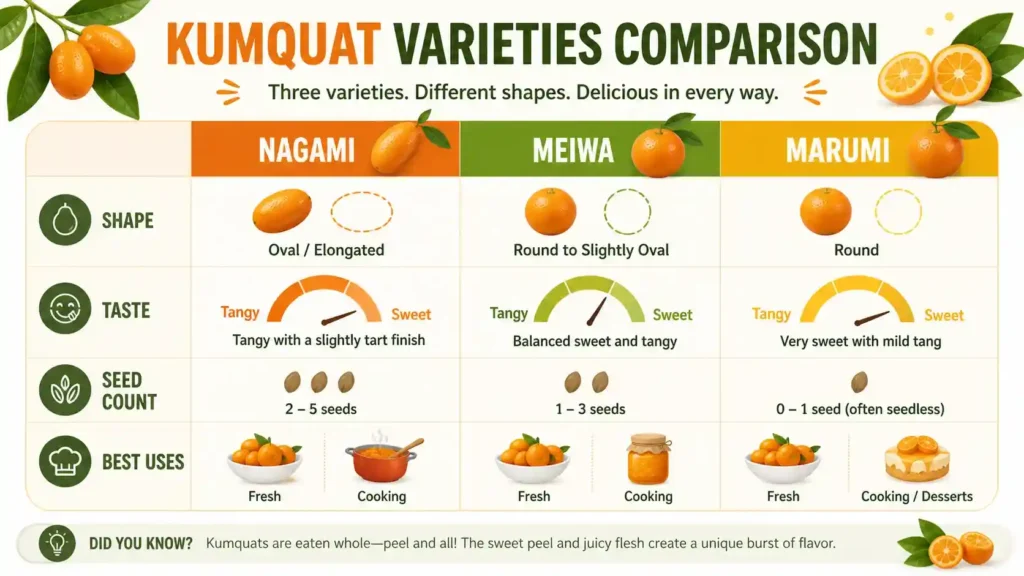
When comparing nagami kumquat with other kumquat varieties, the differences are mainly in shape, taste, and usability.
📊 Kumquat Varieties Comparison Table
|
Variety |
Shape | Taste | Seed Count |
Best Use |
|
Nagami Kumquat |
Oval | Sweet peel + tangy pulp | Moderate | Fresh eating, cooking, jams |
|
Marumi Kumquat |
Round | Mild, slightly sweet | Low |
Fresh eating, ornamental |
| Meiwa Kumquat | Round | Sweet peel + sweet pulp | Very low |
Direct consumption |
The nagami kumquat tree is known for its compact size and controlled growth, making it suitable for small gardens and container planting. Under optimal conditions, the tree typically reaches a mature height of 8 to 12 feet (2.5 to 3.5 meters). In containers, its height often remains smaller, usually between 4 to 8 feet, depending on pruning and pot size.
The growth speed of a kumquat tree is generally slow to moderate. It steadily develops a dense canopy over time rather than rapid vertical growth. This controlled growth habit makes it easier to maintain and manage, especially for home gardeners. With proper care, the tree becomes productive within a few years while maintaining its compact ornamental form.
The Nagami kumquat tree produces small, glossy, dark green leaves that remain evergreen throughout the year. These leaves contribute to the plant’s decorative appeal while supporting consistent fruit production.
Flowering typically occurs in late spring to early summer. The tree produces small, white, fragrant flowers that attract pollinators and signal the beginning of the fruiting cycle.
The fruit development timeline follows a gradual process:
Seasonal timing can vary depending on climate. For example, in regions like kumquat season Australia, fruiting generally occurs during the cooler months, often from late autumn through winter. This seasonal variation highlights the plant’s adaptability to different growing environments while maintaining a consistent fruiting cycle.
The kumquat plant thrives best in warm, subtropical to mild temperate climates. It can tolerate light frost but performs optimally in regions with moderate winters and warm summers.
Best regions for kumquat plant:
Sunlight requirements:
These conditions are similar to many fruit trees & edible plants that require full sunlight and well-drained soil for optimal growth.
Proper soil conditions are essential for the healthy development of a kumquat tree.
Soil type:
Drainage:
Follow this step-by-step process to successfully plant a kumquat plant or kumquats plant:

Nagami kumquat adapts well to both container and ground planting, depending on available space and climate.
Growing kumquat plants in containers:
Growing kumquat plants in the ground:
Both methods can successfully support healthy kumquat plants, but container growing offers flexibility, while ground planting supports long-term growth and productivity.
Proper watering and nutrition are essential for maintaining a healthy and productive kumquat tree.
Water schedule:
Nutrient needs:

Regular pruning helps maintain the structure and productivity of the kumquat tree.
Like other citrus plants, kumquat trees can face certain pests and diseases. Early identification and proper care help prevent serious damage.
Common pests:
Solutions:
Common diseases:
Solutions:
Consistent care practices ensure the kumquat tree remains healthy, productive, and visually appealing.
Nagami kumquat is a nutrient-dense citrus that delivers both flavor and health value. The fruit is typically consumed whole, which means you get the benefits of both the peel and pulp.
Key nutritional highlights:
The combination of nutrients and antioxidants makes kumquat a functional fruit that supports overall wellness.

The versatility of the fruit kumquat makes it highly valuable in both fresh and prepared dishes.
Eating whole fruit:
For another easy-to-eat citrus fruit, see our clementine tree guide.
Making kumquat juice:
Use in desserts and salads:
The Nagami kumquat’s edible skin and balanced taste make it a versatile ingredient across a wide range of culinary applications.
Nagami kumquat is often compared with other small citrus fruits due to its size and flavor profile. However, it has distinct characteristics that set it apart.
Calamondin cumquat:
Calamansi vs kumquat:
For a detailed look at this citrus fruit, you can explore our calamansi fruit guide.
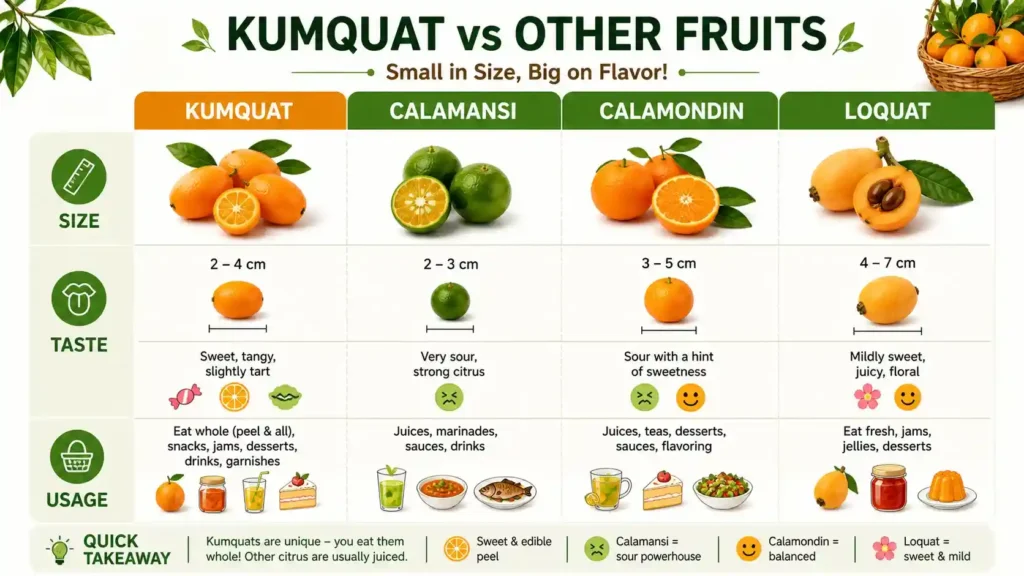
Difference from loquat (kumquat loquat):
📊 Comparison of Nagami Kumquat with Similar Fruits
|
Fruit |
Size & Shape | Taste Profile | Edibility | Common Use |
| Nagami Kumquat | Small, oval | Sweet peel + tangy pulp | Eaten whole |
Fresh eating, desserts |
| Calamondin Cumquat | Small, round | Sour to mildly tangy | Mostly juiced |
Drinks, marinades |
|
Calamansi |
Small, round | Very sour | Juice only | Beverages, cooking |
| Loquat | Larger, oval/round | Sweet, mild | Flesh only (not peel) |
Fresh fruit, desserts |
The Nagami kumquat stands out as the best choice among kumquat varieties due to its perfect balance of flavor, productivity, and ease of growth. Its oval-shaped fruit with a sweet edible peel and tangy pulp makes it highly versatile for both fresh consumption and culinary use. In addition, the compact size and adaptability of the tree make it suitable for a wide range of growing conditions, from garden landscapes to containers.
For growers and home gardeners, the Nagami kumquat offers a reliable and rewarding experience. It requires manageable care, produces consistent yields, and adds both visual and functional value to any space.
If you’re looking to grow a unique and productive citrus plant, now is the time to learn, grow, and maintain your own kumquat tree and enjoy its benefits year-round.
The main difference lies in taste and fruit characteristics. Nagami kumquat has a sweet peel with a noticeably tangy pulp, while Meiwa kumquat is sweeter overall, including both peel and pulp. Meiwa fruits are round and contain fewer seeds, whereas Nagami fruits are oval and may have more seeds. Nagami is more commonly grown due to its higher yield and versatility.
A mature nagami kumquat tree typically grows between 8 to 12 feet tall when planted in the ground. In containers, it usually remains smaller, around 4 to 8 feet, depending on pruning and pot size.
Yes, the skin of the Nagami kumquat is completely edible. In fact, it is naturally sweet and is meant to be eaten along with the tangy inner pulp, creating a balanced flavor.
A kumquat tree generally starts producing fruit within 2 to 4 years after planting, depending on growing conditions and care. Grafted plants may fruit earlier than those grown from seeds.
Nagami kumquat grows best in subtropical to mild temperate climates. It prefers warm temperatures, full sunlight, and protection from severe frost, although it can tolerate light cold conditions.
Yes, kumquat plants can grow indoors if they receive enough sunlight. Place them near a bright window with at least 6–8 hours of light daily, and ensure proper airflow and occasional outdoor exposure for best results.
Watering depends on the climate and soil, but generally, kumquat plants need deep watering once or twice a week. The soil should be kept moist but not waterlogged to prevent root issues.
Kumquat trees do not require heavy pruning. Light pruning once a year is sufficient to remove dead or crowded branches and maintain the tree’s shape and health.