Grow Better Gardens with Smarter Plant Choices
Discover helpful guides on trees, hedges, fruit plants, edible plants, and beautiful landscape greenery.


A lychee fruit tree is a tropical evergreen tree known for producing small, sweet, and aromatic fruits called lychees. If you’re wondering what is lychee or what is lychee fruit, it refers to a juicy, translucent-fleshed fruit that grows on the litchi fruit tree and is widely appreciated for its refreshing flavor. Often asked, what are lychees—they are nutrient-rich fruits enclosed in a rough, reddish peel with a single seed inside.
The litchi fruit tree, also commonly called the lychee tree, belongs to the Sapindaceae family. It is admired for its dense canopy, glossy green leaves, and seasonal fruit production. This tree thrives in warm climates and has become a staple in tropical and subtropical regions around the world.
Originating from southern China, lychee has gained global popularity due to its unique taste, appealing texture, and nutritional value. Today, it is cultivated in many countries and is recognized as a premium fruit in international markets.
The lychee fruit tree is valued worldwide for several reasons:
Its combination of flavor, health benefits, and visual appeal makes the lychee fruit tree a highly desirable addition to both orchards and home gardens.
The lychee origin traces back to southern China, where the fruit has been cultivated for over 2,000 years. If you’re asking where does lychee fruit come from, it primarily comes from regions such as Guangdong and Fujian provinces, known for their warm, humid climate. The origin of litchi fruit is closely tied to these subtropical zones, where natural conditions supported its early growth and domestication.
Over time, lychee cultivation expanded beyond China to neighboring countries including India, Thailand, and Vietnam. Today, it is also grown in parts of Africa, Australia, and the Americas, making it a globally recognized tropical fruit.
Lychee trees thrive in warm environments, which answers the common question: where do lychees grow best? These trees prefer tropical and subtropical climates with the following conditions:
Because of these requirements, lychee grown successfully in regions such as South Asia, Southeast Asia, parts of Africa, northern Australia, and subtropical areas of the United States (like Florida and Hawaii).
For another tropical fruit tree suited to similar climates, see our Kensington Pride mango guide.
These climates closely match the tree’s natural habitat, allowing consistent fruit production and healthy growth.
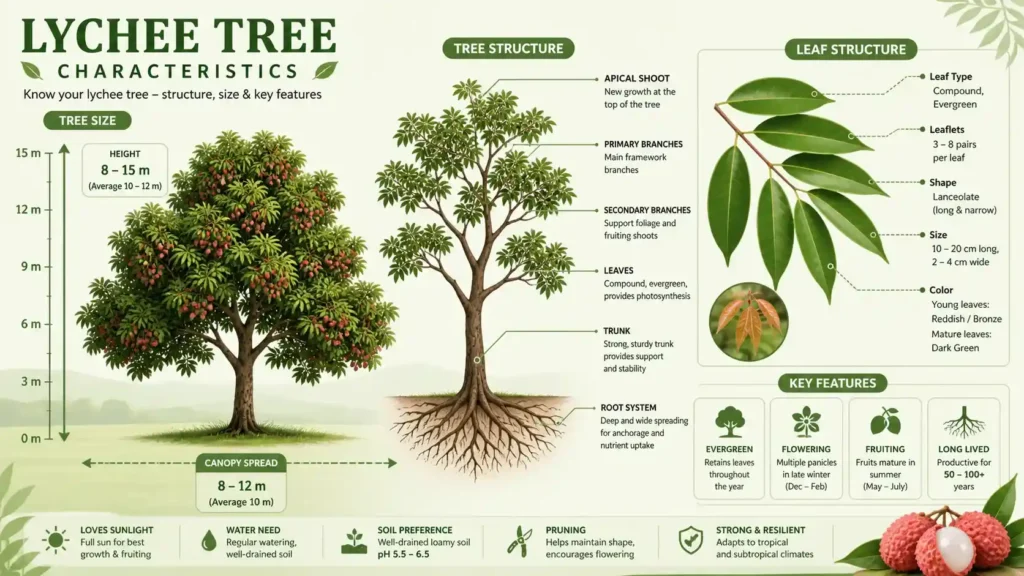
The lychee tree size varies depending on growing conditions, climate, and care practices. On average, a mature tree can reach a significant height and spread, making it suitable for orchards and spacious gardens. If you’re wondering how tall does a lychee tree grow, it typically grows between 30 to 50 feet (9–15 meters) under optimal conditions.
In terms of lychee tree height, cultivated trees are often pruned to maintain a manageable size, especially in home gardens. For those asking how big do lychee trees get, the canopy can spread widely, sometimes reaching up to 20–30 feet, forming a dense, rounded crown.
The lychee tree has a well-defined structure characterized by:
The overall lychee growth pattern is relatively slow in the early years but becomes more vigorous as the tree matures. Proper pruning helps maintain structure, encourages airflow, and supports fruit production.
The reproductive cycle of the lychee tree begins with the lychee flower, which appears in clusters known as panicles. These small, yellowish-green flowers typically bloom during late winter to early spring, depending on the climate.
Key stages of development include:
If you’re curious how does lychee grow, the fruit forms gradually after successful pollination. The lychee fruit grow process involves the development of a thin, rough outer peel that turns from green to red as it ripens, enclosing a juicy, translucent pulp and a single seed.
There are several lychee species and cultivated forms grown for fruit production, each adapted to specific climates and growing conditions. While Litchi chinensis is the primary cultivated species, it includes numerous litchi types developed over time for better yield, taste, and resistance.
Common classifications of lychee fruit types are based on:
These differences allow growers to select the most suitable type based on regional climate and market demand.
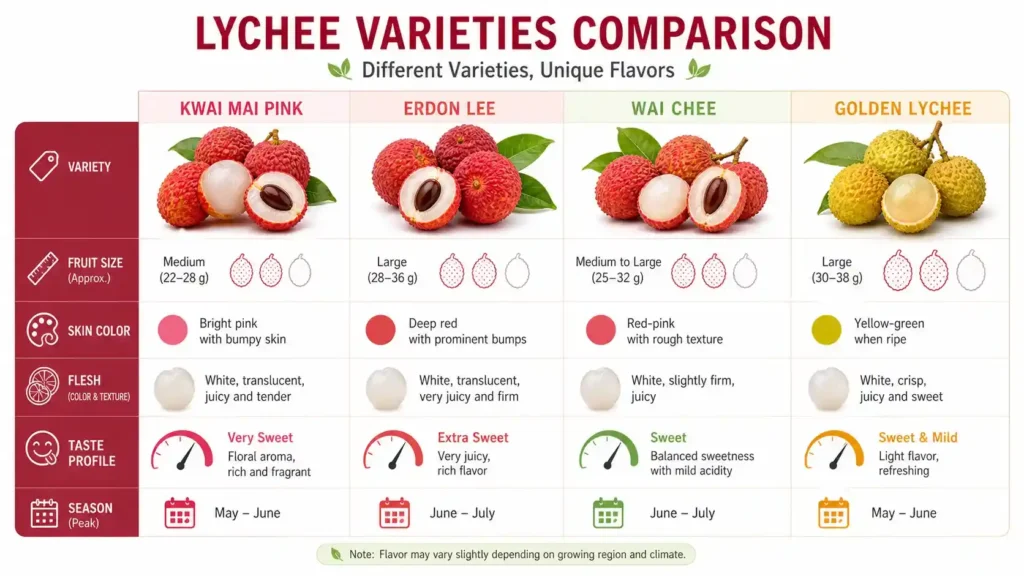
Several lychee varieties are widely recognized for their fruit quality and adaptability:
These varieties represent some of the most popular options for both home growers and commercial orchards, offering a range of flavors, sizes, and harvesting times.
The lychee fruit taste is widely described as sweet, refreshing, and slightly floral.
If you enjoy sweet tropical fruits, you can also explore our starfruit tree guide.
The lychee taste combines elements of grape, pear, and citrus, creating a unique balance that is both delicate and juicy. Many people appreciate the subtle aroma that enhances the overall lychee flavor, making it stand out among tropical fruits.
When discussing the taste of lychee, key characteristics include:
This distinctive flavor profile is one of the main reasons lychee is enjoyed fresh and also used in beverages, desserts, and fruit-based dishes.
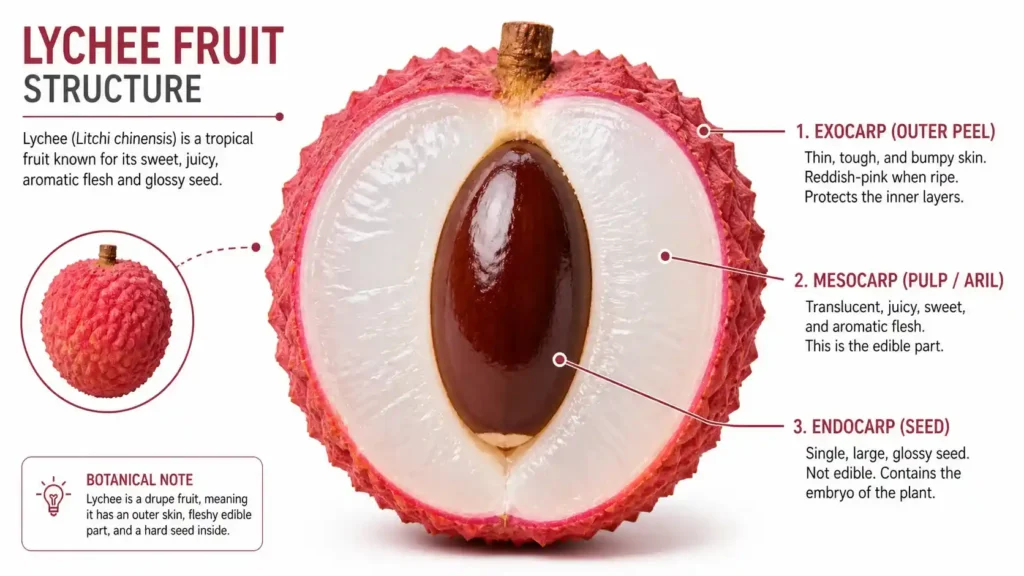
The lychee fruit has a distinct structure made up of three main parts:
This simple yet appealing structure makes lychee easy to consume while enhancing its popularity as a fresh tropical fruit.
To successfully plant lychee, it is important to follow a structured planting process that supports long-term growth and fruit production. Proper planting lychee tree techniques ensure strong root development and healthy canopy formation.
Basic planting process:
This method helps establish the tree and promotes steady early growth.
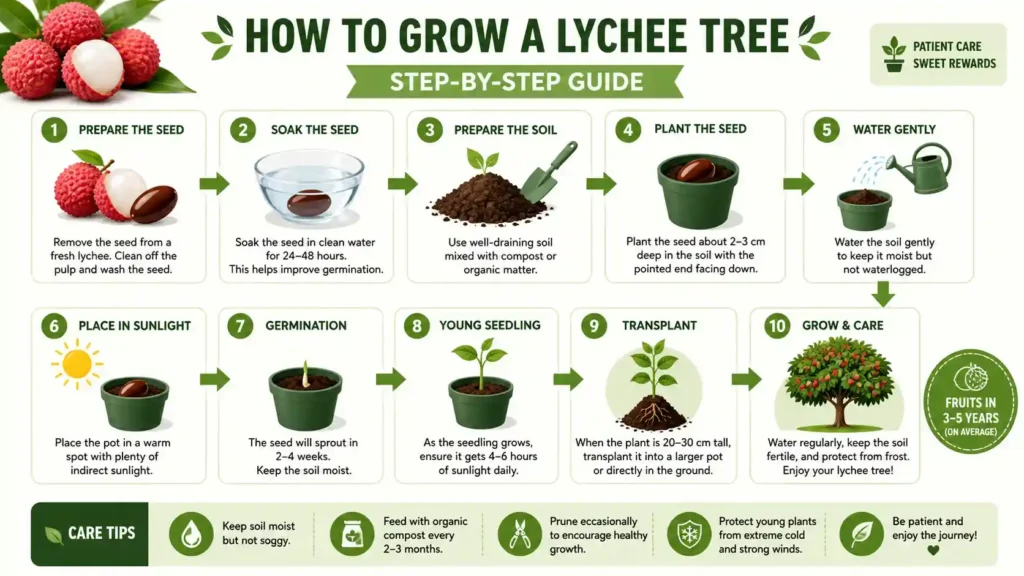
Learning how to grow lychee from seed is possible, though it requires patience and proper care. While seed-grown trees may take longer to fruit, the process is simple and effective.
Step-by-step guide:
This process explains how to grow a lychee tree from seed effectively. When growing lychee seeds, germination usually occurs within 1–3 weeks. Once sprouted, you can gradually transplant the seedling outdoors. To plant lychee seed successfully, maintaining warmth and moisture is essential during early stages.
Proper lychee plant care depends on maintaining the right environmental conditions. For successful growing lychee, focus on the following:
These conditions are similar to many fruit trees & edible plants that require full sunlight and proper care for healthy growth.
Balanced care ensures optimal flowering and fruit development over time.
Understanding how long does a lychee tree take to grow is important for planning. Lychee trees are relatively slow-growing compared to other fruit trees.
The growth timeline depends on climate, care, and propagation method, but with proper management, the tree becomes a long-term and productive addition to any garden.
The lychee fruit season typically occurs during late spring to early summer, depending on the region and climate conditions. If you’re wondering when is lychee in season, it generally falls between May and July in many tropical and subtropical areas.
The lychee season follows a natural cycle:
This seasonal pattern ensures that the fruit develops under warm temperatures, which enhances sweetness and overall quality.
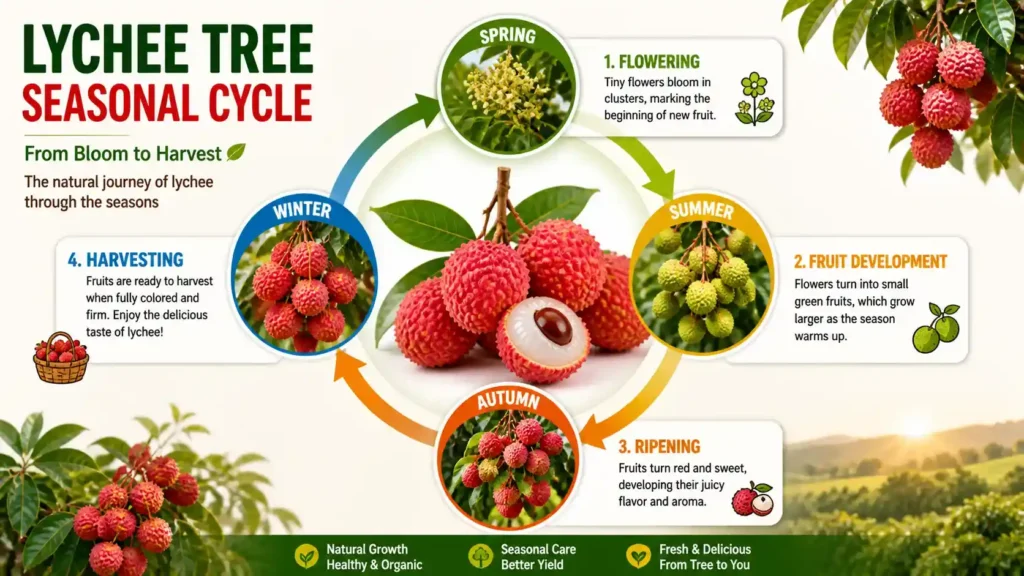
The timing of the lychee harvest can vary significantly across different regions. For example, the lychee season Australia differs from Asian countries due to its opposite seasons.
These variations are influenced by climate, temperature cycles, and regional growing conditions.
Proper lychee picking is essential to maintain fruit quality and shelf life. Harvesting is usually done when the fruit reaches full color and optimal sweetness.
Key harvesting practices:
Timely harvesting ensures the fruit retains its flavor, texture, and nutritional value while also supporting the tree’s future production cycles.
Lychee fruit is rich in essential nutrients that support overall health. It is especially known for its high vitamin and antioxidant content, making it a valuable addition to a balanced diet.
Key nutritional components:
This nutrient profile makes lychee a refreshing and health-supportive tropical fruit.
The lychee fruit benefits are widely recognized due to its nutrient-rich composition. The benefits of lychee extend across multiple aspects of health, making it a popular choice for both taste and wellness. Below are the most important lychees benefits and health benefits of lychees, including key litchi fruit benefits:
These benefits highlight why lychee fruit is valued not only for its flavor but also for its contribution to overall well-being.

Lychee trees are generally hardy but can face several lychee growth problems if conditions are not optimal. Identifying issues early and applying proper care ensures consistent growth and fruit production.
Common growth-related challenges include:
Addressing these lychee growth problems requires balanced watering, proper fertilization, and maintaining suitable environmental conditions.
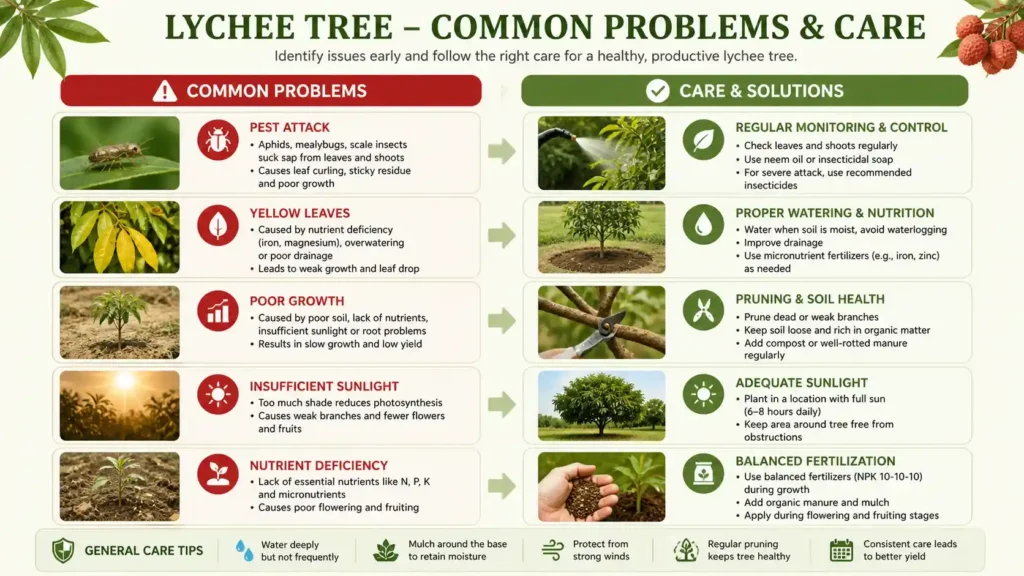
Lychee trees can be affected by a few common pests and diseases that impact both foliage and fruit quality.
Common pests:
Common diseases:
Regular inspection and early treatment using organic or appropriate pest control methods help prevent major damage.
To keep a lychee tree healthy and productive, consistent care is essential:
Following these care practices supports long-term tree health, reduces risks, and improves fruit yield.
Lychee trees are not only valued for fruit production but also for their versatility in landscaping and garden design. Their dense foliage, attractive structure, and seasonal fruiting make them a multifunctional addition to outdoor spaces.
Lychee trees are widely used in garden layouts due to their adaptability and visual appeal.
Their structured growth and evergreen nature make them a practical choice for both residential and agricultural settings.
The lychee tree offers significant aesthetic and functional benefits:
These features make it a valuable ornamental tree while also improving comfort in garden areas.
In addition to landscaping value, lychee trees are highly productive fruit-bearing trees.
This combination of productivity and visual appeal makes the lychee tree a practical and rewarding choice for growers and homeowners alike.
|
Feature |
Details |
|
Scientific Name |
Litchi chinensis |
|
Tree Height |
Medium to large |
|
Climate |
Tropical/Subtropical |
| Fruit Season |
Summer |
| Growth Time |
Several years |
The lychee fruit tree stands out as a highly valued tropical plant due to its combination of nutritional fruit, ornamental beauty, and long-term productivity. From its unique flavor profile to its adaptability in tropical and subtropical climates, it remains an important fruit tree for both home gardeners and commercial growers.
Its global appeal is driven by sweet taste, health benefits, and aesthetic value, making it more than just a fruit-producing tree. With proper care and the right growing conditions, the lychee tree can provide consistent yields and enhance any landscape.
Whether you are interested in cultivating your own tree or simply learning more about tropical fruits, the lychee fruit tree offers both practical and educational value. Exploring its growth, care, and benefits can be a rewarding step toward understanding and enjoying this exceptional fruit.
A lychee fruit tree is a tropical evergreen tree that produces sweet, juicy fruits known as lychees. It belongs to the Sapindaceae family and is widely grown in warm climates for both fruit production and ornamental value.
The time depends on how the tree is propagated: Seed-grown trees: 8–10 years to produce fruit Grafted trees: 3–5 years for initial fruiting Proper care and ideal climate conditions can influence the growth speed.
Lychee trees can grow quite large: Height: Typically 30–50 feet (9–15 meters) Canopy spread: Around 20–30 feet However, pruning can control the size for easier maintenance in home gardens.
Yes, you can grow a lychee tree from seed. Fresh seeds planted in moist, well-drained soil can germinate within a few weeks. However, seed-grown trees take longer to fruit and may not produce the same quality as parent trees.
Lychee fruit is usually in season during late spring to early summer, typically from May to July in many regions. Seasonal timing can vary depending on local climate conditions.
Lychee trees grow best in: Tropical and subtropical climates Warm temperatures (20–35°C) High humidity with well-drained soil Regions like South Asia, Southeast Asia, and parts of Australia provide ideal conditions.
Lychee trees require consistent watering, especially during growth and fruiting stages. However, overwatering should be avoided, as waterlogged soil can lead to root problems.
Common reasons include: Lack of sufficient sunlight Improper climate conditions Nutrient deficiencies Tree maturity (young trees may not fruit yet) Ensuring proper care and environment usually improves fruiting.
Yes, lychee trees can be grown in large containers, especially dwarf varieties. Container growing requires: Good drainage Regular pruning Consistent watering and fertilization This method is suitable for limited spaces or controlled environments.
Lychee trees prefer: Slightly acidic soil (pH 5.5–6.5) Well-drained, loamy soil Soil enriched with organic matter Good soil conditions support healthy root development and better fruit yield.