Grow Better Gardens with Smarter Plant Choices
Discover helpful guides on trees, hedges, fruit plants, edible plants, and beautiful landscape greenery.

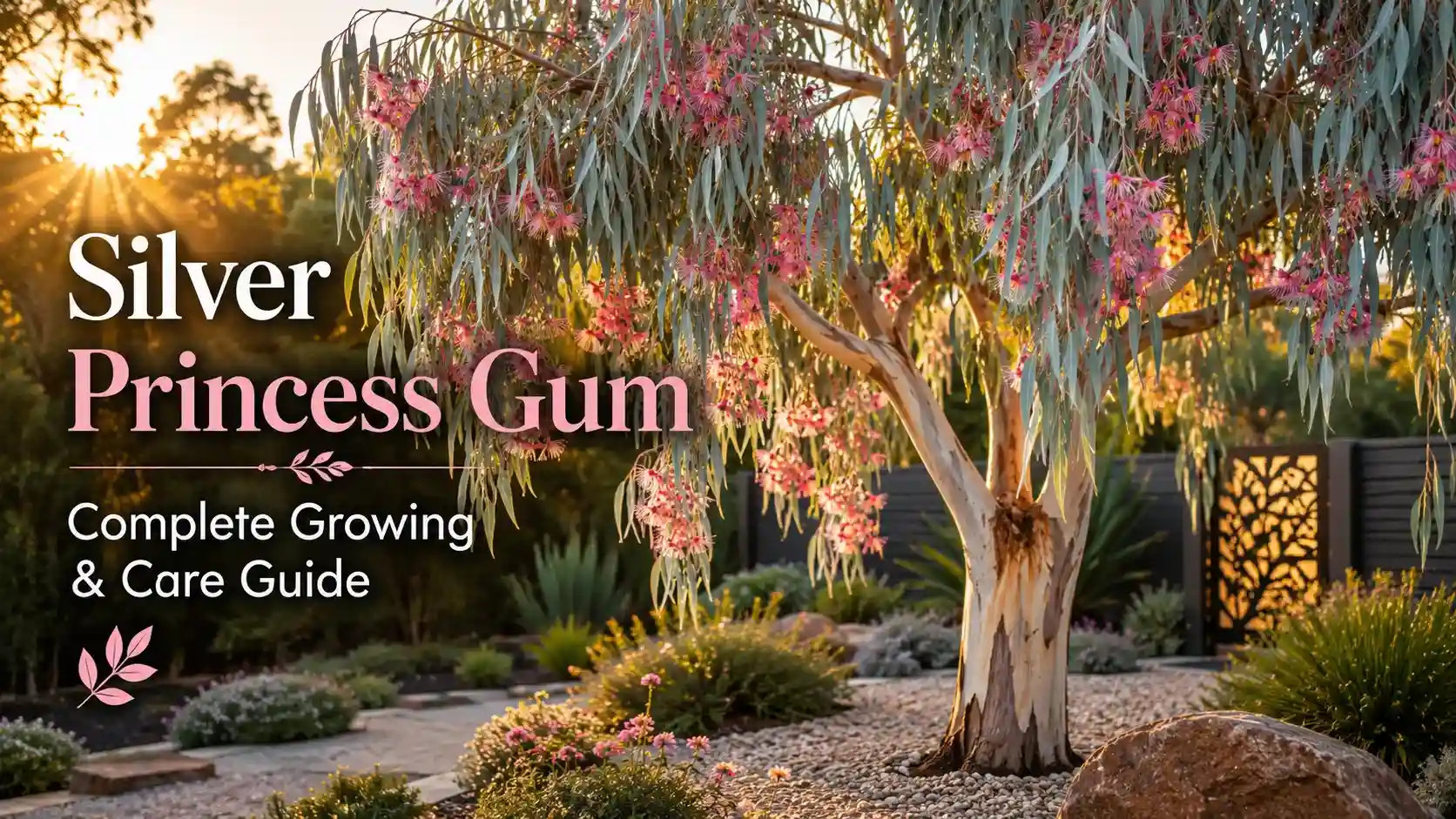
The silver princess gum is a striking ornamental eucalyptus species admired for its elegant structure, colorful blooms, and distinctive silver-toned foliage. Botanically known as Eucalyptus caesia, this unique Australian native has become increasingly popular in ornamental landscaping because of its dramatic appearance and excellent drought tolerance. Gardeners and landscape designers value the silver princess eucalyptus for its graceful weeping branches, powdery silvery leaves, and vibrant pink eucalyptus flowers that create strong visual contrast in gardens.
The princess gum tree is especially prized as a feature plant in warm-climate landscapes where low-maintenance yet visually impressive trees are desired. Its unusual branch form and decorative bark further enhance its ornamental appeal. Whether grown as a compact eucalyptus silver princess tree in smaller gardens or as a focal point in larger landscapes, this pink flowering eucalyptus delivers year-round beauty with a combination of silver foliage, cascading growth, and colorful blooms.
The silver princess gum is scientifically classified as Eucalyptus caesia, a distinctive flowering eucalyptus species belonging to the Myrtaceae family. This ornamental Australian native is naturally found in rocky regions of Western Australia, where it thrives in dry climates and nutrient-poor soils.
The tree is widely recognized by several common names, including:
Among ornamental eucalyptus varieties, the silver princess gum stands out because of its drooping branch structure, powdery silver foliage, and highly decorative flowers. Its natural adaptation to arid Australian conditions also makes it a reliable choice for drought-tolerant landscaping.
Eucalyptus caesia differs significantly from many other eucalyptus species commonly grown in gardens and landscapes. While some eucalyptus trees are planted mainly for screening, timber, or fast growth, the silver princess gum is primarily valued for ornamental appeal.
Here is a comparison with several related eucalyptus species:
| Species | Main Characteristics | Primary Landscape Use |
| Silver Princess Gum (Eucalyptus caesia) | Weeping branches, pink flowers, silver foliage | Ornamental feature tree |
| Silver Dollar Eucalyptus Tree | Rounded blue-green leaves, upright growth | Privacy screens, floral use |
| Eucalyptus crucis | Dense silver foliage, compact form | Decorative foliage gardens |
| Eucalyptus forrestiana | Yellow bell-shaped flowers | Flowering accent tree |
| Eucalyptus vernicosa | Small alpine shrub eucalyptus | Cold-climate ornamental planting |
The silver dollar eucalyptus tree is often grown for its rounded juvenile leaves and upright habit, while the silver princess gum is preferred for its cascading form and dramatic floral display. Compared to eucalyptus crucis and eucalyptus vernicosa, Eucalyptus caesia offers a stronger ornamental presence due to its combination of colorful blooms and graceful structure.
Eucalyptus caesia ssp magna is a larger and more vigorous subspecies of the standard silver princess gum. The term eucalyptus caesia subsp magna refers to plants that typically develop thicker trunks, stronger branching, and increased mature size compared to the regular form.
Key differences between eucalyptus caesia subsp magna and regular silver princess gum include:
The standard silver princess gum usually maintains a more compact ornamental form, making it suitable for smaller residential gardens.
Another related name occasionally associated with this species is eucalyptus caesia gungurru, which may appear in specialty native plant collections or regional botanical references.
The silver princess gum develops a graceful, moderately sized structure that makes it highly suitable for ornamental landscaping. Mature trees typically reach between 15 and 30 feet in height, with a spread of around 10 to 20 feet depending on climate, soil conditions, and variety.
One of the most recognizable characteristics of this species is its elegant weeping structure. The branches naturally arch downward, creating a cascading appearance that adds movement and softness to landscapes. This drooping habit gives the tree a sculptural quality that stands out in both modern and native-style gardens.
The growth rate is considered moderate under ideal conditions. Young trees establish steadily and become increasingly drought tolerant as they mature.
Compact varieties such as the dwarf silver princess gum are also available for smaller spaces. These forms are often grown as:
Dwarf varieties retain the same ornamental beauty while remaining easier to manage in residential landscapes.
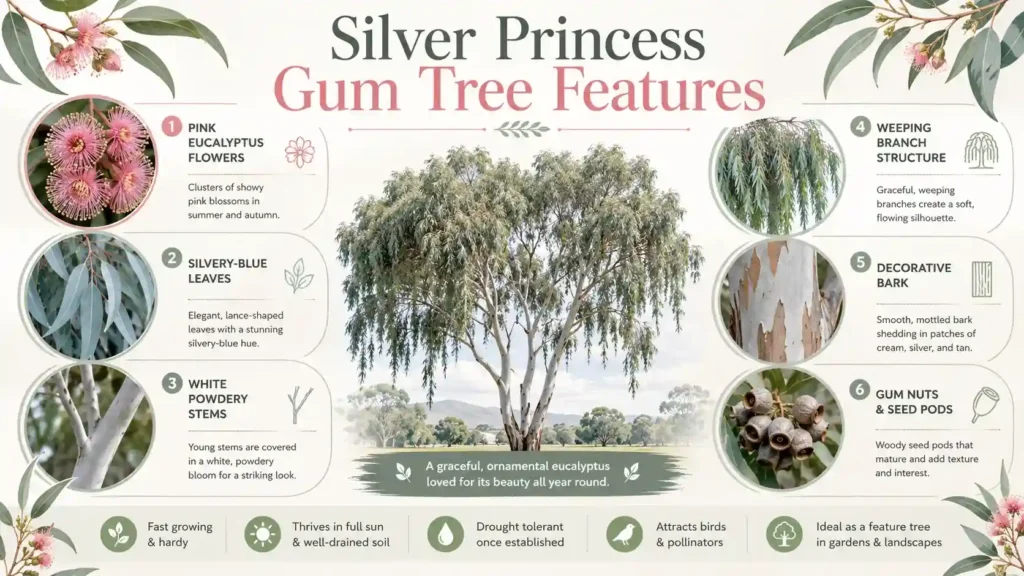
The foliage of the silver princess gum is one of its most decorative features. The tree produces narrow silvery-blue leaves coated with a fine white powdery layer that gives the entire canopy a soft metallic appearance.
Key foliage and bark characteristics include:
This unique combination places the tree among the most visually appealing silvery trees used in ornamental gardening. The reflective foliage creates strong contrast against darker green plants and enhances landscape brightness in dry-climate gardens.
The bark also contributes significant ornamental value. As the tree matures, sections of bark peel away naturally to reveal textured layers beneath, adding visual interest throughout the year.
The flowering display of the silver princess gum is one of the main reasons it is prized as an ornamental eucalyptus species. Blooming usually occurs from late winter through spring, although flowering periods may vary depending on climate.
The pink eucalyptus flowers appear in hanging clusters along the branches and feature vibrant stamens that range from deep pink to reddish tones. Before opening, the flower buds are covered by decorative caps that eventually split to reveal the colorful blooms.
Gardeners who enjoy colourful flowering eucalyptus varieties often also grow the red flowering gum for its vibrant blooms and evergreen ornamental appeal.
The flowers are commonly described as:
These nectar-rich flowers attract a wide range of pollinators, including:
The combination of silver foliage and vivid flowers creates a dramatic visual effect in ornamental landscapes.
After flowering, the tree develops woody seed capsules commonly known as silver princess gum nuts. These seed pods remain attached to the branches and contribute additional decorative appeal even after the blooming season ends.
The gum nuts typically feature:
In landscape design, these seed pods enhance the tree’s year-round ornamental value by adding texture and seasonal character to the canopy.
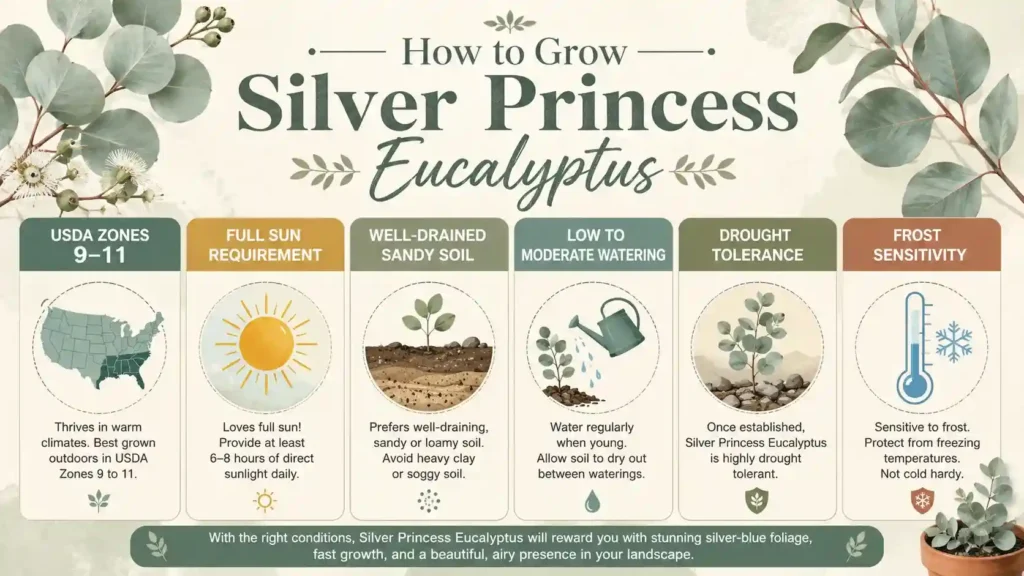
The silver princess eucalyptus performs best in warm, dry climates similar to its native environment in Western Australia. It is highly suited to regions with low humidity, abundant sunlight, and well-drained soils.
Recommended growing conditions include:
This species has moderate frost tolerance once established, but young plants can be damaged by prolonged freezing temperatures. In colder climates, protection during winter may be necessary.
One of the tree’s strongest qualities is its exceptional drought resistance. Mature trees can survive extended dry periods with minimal supplemental watering, making them ideal for water-wise landscaping and xeriscaping projects.
Full sun is essential for healthy growth and strong flowering performance. The tree requires at least 6 to 8 hours of direct sunlight daily to maintain compact growth, vibrant foliage, and abundant blooms.
Best planting locations include:
Insufficient sunlight may result in:
For the best ornamental display, avoid heavily shaded planting sites.
Proper drainage is one of the most important requirements for growing silver princess eucalyptus successfully. The tree naturally adapts to rocky and sandy soils where excess moisture drains quickly.
Preferred soil conditions include:
Heavy clay soils that retain moisture should be avoided because they increase the risk of root rot. Poor drainage is one of the most common causes of decline in ornamental eucalyptus species.
To improve drainage in difficult soils:
Young silver princess eucalyptus trees require consistent watering during their establishment phase. Deep watering encourages strong root development and improves drought tolerance over time.
Recommended watering schedule for young trees:
| Tree Age | Watering Frequency |
| Newly planted | 1–2 times weekly |
| First growing season | Weekly deep watering |
| Established trees | Occasional watering during drought |
Once mature, the tree becomes highly drought tolerant and generally requires minimal supplemental irrigation except during prolonged dry periods.
Overwatering should always be avoided because excessive soil moisture can lead to root problems and reduced flowering.
Silver princess eucalyptus is considered a low-maintenance ornamental tree with relatively low fertilizer needs. In most garden soils, mature trees grow well without regular feeding.
Fertilizer may be beneficial when:
Use a balanced, slow-release fertilizer sparingly during the active growing season. Excess fertilizer, especially high-nitrogen products, may encourage excessive leafy growth while reducing flower production.
For most established trees, maintaining proper sunlight, drainage, and watering practices is more important than frequent fertilization.
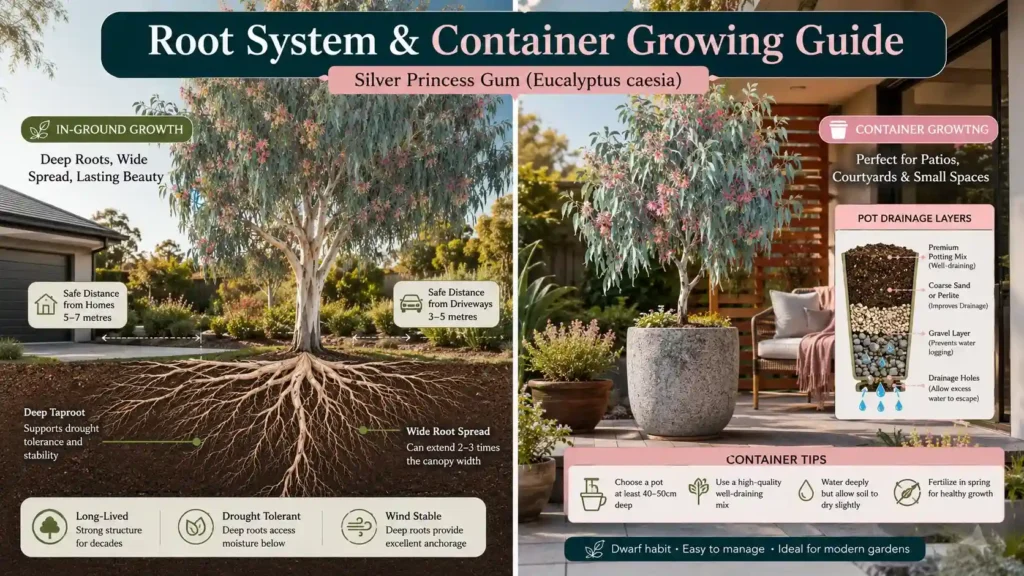
The silver princess gum develops a strong and efficient root system designed to support growth in dry and rocky environments. Like many eucalyptus species, it forms a deep rooting habit that helps the tree access moisture from lower soil levels during drought conditions.
Key root characteristics include:
This rooting pattern allows the tree to remain stable even in windy locations. Compared to larger eucalyptus species, the root spread of silver princess eucalyptus is generally more controlled, especially in well-drained soils.
As the tree matures, the roots establish a balanced network that supports the graceful weeping canopy while improving drought resistance.
The root system of the silver princess gum is considered less aggressive than many large landscape eucalyptus trees. However, proper planting distance is still important to prevent future structural conflicts.
Recommended safe planting distances include:
| Structure | Recommended Distance |
| Homes and foundations | 15–20 feet |
| Driveways | 10–15 feet |
| Swimming pools | 15 feet or more |
| Underground pipes | 10–15 feet |
Although the roots are not typically classified as highly invasive, problems may occur if the tree is planted too close to structures or in poorly drained soil conditions.
For best long-term performance:
Proper placement significantly reduces the risk of root-related issues in residential landscapes.
A silver eucalyptus plant can be grown successfully in containers, especially during its early years or when using compact cultivars. Dwarf selections are particularly suitable for patio gardens, courtyards, and smaller outdoor spaces.
Container growing works best with:
A potted silver eucalyptus tree generally remains smaller than in-ground specimens, making it easier to maintain in limited spaces.
Important container care tips include:
With proper care, dwarf forms in pots can maintain healthy foliage, attractive weeping growth, and ornamental flowering for many years.
Proper pruning helps maintain the graceful structure and overall health of a weeping gum tree. The best time to prune silver princess gum is during late winter or early spring before active new growth begins.
Seasonal pruning offers several benefits:
When pruning, focus on:
Heavy pruning should generally be avoided because it can disrupt the tree’s ornamental appearance and reduce flowering potential. Maintaining a balanced framework is important for preserving the elegant shape that makes silver princess eucalyptus so attractive.
Although silver princess gum naturally develops a manageable ornamental form, occasional shaping may help keep the tree compact in smaller landscapes.
Useful size-control practices include:
Special attention may be needed for:
For smaller gardens, gentle shaping helps maintain visual balance without destroying the tree’s natural weeping habit. Over-pruning or topping should be avoided because it can lead to irregular growth and reduced ornamental quality.
Container-grown trees may require more frequent trimming to manage root-to-canopy balance and maintain healthy structure.
Like many eucalyptus species, silver princess gum naturally sheds flowers, bark, and small debris throughout the year. Routine cleanup helps keep landscaped areas tidy and visually appealing.
Common maintenance tasks include:
The decorative bark and colorful fallen blooms can also be used as natural mulch in garden beds where appropriate.
Additional landscape maintenance tips:
Regular maintenance helps preserve the ornamental beauty of the tree while reducing pest and fungal risks in the surrounding landscape.
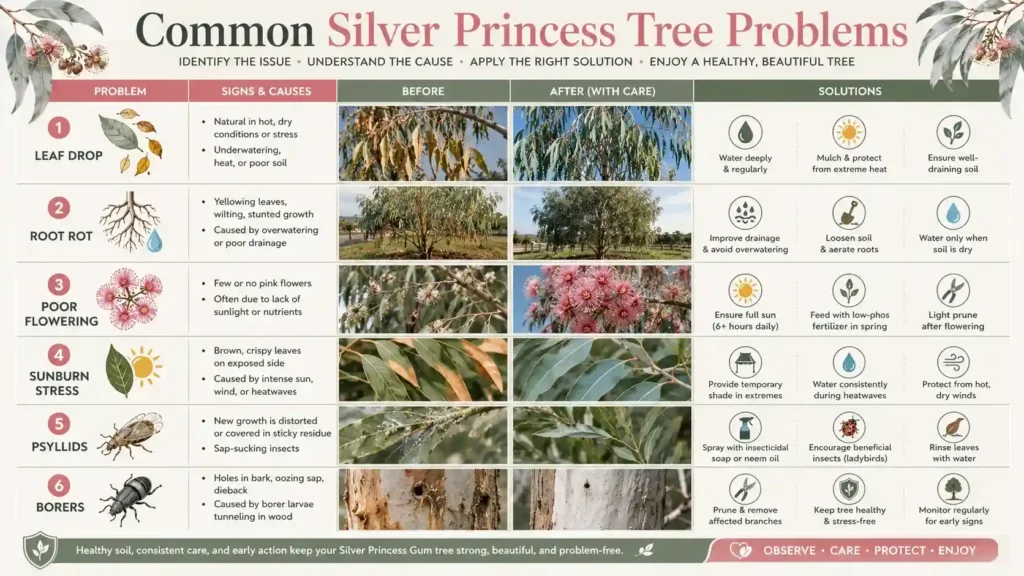
Although the silver princess gum is considered relatively low maintenance, several environmental and care-related issues can affect its health and appearance.
Common silver princess tree problems include:
| Problem | Possible Cause |
| Leaf drop | Water stress, transplant shock, poor drainage |
| Poor flowering | Insufficient sunlight or excess fertilizer |
| Root rot | Waterlogged soil and overwatering |
| Sunburn stress | Sudden heat exposure or extreme dry conditions |
Leaf drop is often temporary after planting or during environmental stress. However, persistent foliage loss may indicate root problems or inconsistent watering.
Poor flowering commonly occurs when the tree receives inadequate sunlight or excessive nitrogen fertilizer. Since silver princess eucalyptus blooms best in full sun, shaded planting locations may significantly reduce flower production.
Root rot is one of the most serious issues affecting this species. Heavy soils and excessive moisture can damage roots quickly, especially during cooler weather.
Sunburn stress may appear during intense heatwaves or when young plants are suddenly exposed to harsh afternoon sun without gradual acclimation.
Silver princess gum can occasionally experience pest or disease problems, although healthy trees in suitable climates are usually quite resilient.
Common pests include:
Psyllids are small sap-feeding insects that may cause distorted leaves or sticky residue on foliage. Severe infestations can weaken young trees.
Borers occasionally attack stressed or damaged eucalyptus trees by tunneling into branches or trunks. Maintaining overall plant health helps reduce susceptibility.
Potential fungal issues include:
Most fungal problems develop when moisture levels remain excessively high around roots or foliage. Good airflow and proper drainage are essential for prevention.
Helpful prevention practices include:
Several factors can prevent silver princess gum from producing flowers consistently.
The most common causes include:
The tree requires full sun for strong blooming performance. Too much shade often leads to reduced flower production and weak growth.
Young trees may need several growing seasons before flowering heavily. Newly planted specimens often prioritize root establishment first.
Excess moisture can encourage leafy growth while reducing bloom development. Poor drainage may also stress roots and weaken flowering potential.
Additional factors that may reduce blooming include:
Providing warm conditions, excellent drainage, and consistent sunlight usually improves flowering over time.
The silver princess gum is widely valued in ornamental landscaping because of its dramatic structure, colorful blooms, and drought tolerance. Among ornamental & flowering trees, silver princess eucalyptus is especially valued for its cascading form, silver foliage, and drought-tolerant landscape performance. Its graceful appearance allows it to function as a strong visual focal point in a variety of garden styles.
Popular landscape applications include:
As a feature tree, the silver princess eucalyptus creates year-round interest through its silvery foliage, twisting branches, and seasonal flowering display. The tree’s cascading growth habit softens hard landscape lines and adds movement to open spaces.
Its natural drought resistance also makes it highly effective for xeriscaping projects where low water use is important. In native gardens, it pairs well with other Australian species and contributes strong ornamental texture.
In compact Australian landscapes, silver princess eucalyptus is often combined with a small eucalyptus tree to create layered evergreen texture and low-maintenance native planting designs.
The silver princess gum combines well with plants that share similar growing conditions, especially drought-tolerant species adapted to full sun and well-drained soils.
Suitable companion plants include:
Ornamental grasses provide soft texture beneath the tree’s weeping canopy while enhancing movement in the landscape. Australian native plants complement the eucalyptus naturally and help create cohesive garden designs.
Weeping grevillea is a particularly attractive companion because its cascading habit and colorful flowers visually harmonize with the silver princess gum’s elegant form.
For balanced landscape composition, companion plants should tolerate:
The silver princess gum is considered one of the most ornamental eucalyptus species available for decorative gardens. Its combination of unusual foliage, colorful flowers, and sculptural branching creates exceptional visual impact throughout the year.
Gardeners value the tree for its:
The contrast between the silvery-blue leaves and vivid pink blooms makes the tree especially eye-catching during flowering season. Even when not in bloom, the cascading branch structure and powdery foliage maintain strong ornamental appeal.
Because of its manageable size and artistic appearance, silver princess eucalyptus is frequently used in:
Its ability to combine beauty, structure, and low-maintenance adaptability makes it a highly prized ornamental tree for warm-climate gardens.
Although both trees belong to the eucalyptus family, the silver princess gum and silver dollar eucalyptus differ significantly in appearance, growth habit, and ornamental use.
| Feature | Silver Princess Gum | Silver Dollar Eucalyptus |
| Flower Color | Pink/Red | Rarely ornamental |
| Leaf Shape | Narrow silver leaves | Round leaf eucalyptus tree style |
| Growth Habit | Weeping | Upright |
| Ornamental Value | Very high | Moderate |
The silver princess gum is primarily grown as an ornamental specimen because of its cascading branches, colorful blooms, and decorative silver foliage. Its graceful weeping form creates strong visual impact in landscape settings and decorative gardens.
In contrast, the silver dollar gum eucalyptus tree is more commonly valued for its rounded juvenile foliage and upright growth habit. The leaves are widely used in floral arrangements and foliage displays rather than for dramatic flowering effects.
A full grown silver dollar eucalyptus tree typically develops into a taller and more vertical structure compared to the softer, arching shape of silver princess eucalyptus. The silver dollar variety is often planted for:
The round leaf eucalyptus tree appearance of silver dollar eucalyptus gives it a cleaner and more formal look, while silver princess gum offers a more artistic and ornamental presence.
For decorative landscaping, gardeners often prefer silver princess gum when the goal is to create:
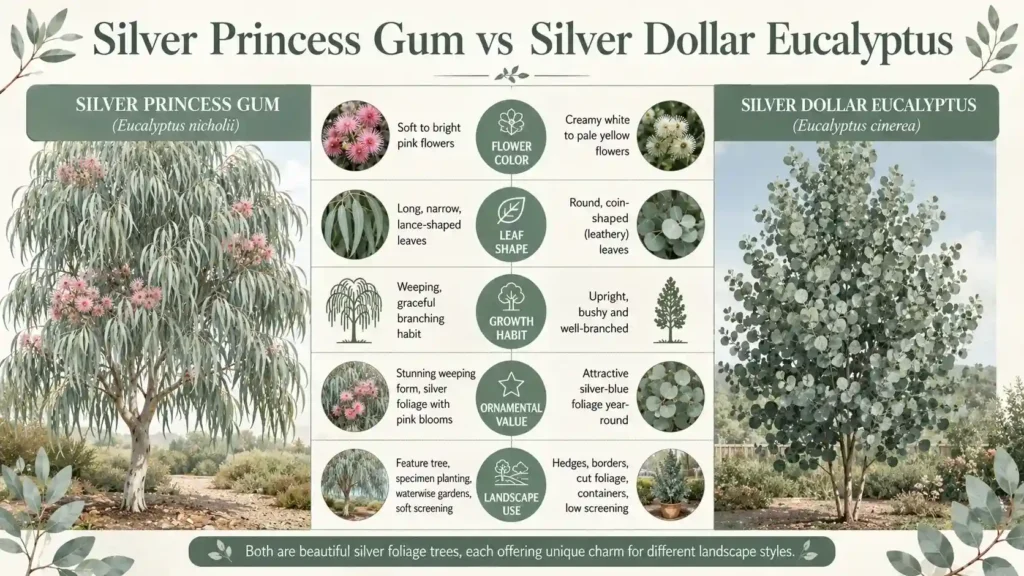
Silver dollar eucalyptus remains popular for practical landscape uses, but silver princess gum generally provides greater ornamental value because of its flowers, silver foliage, and elegant weeping growth habit.
Silver princess gum is commonly available through specialty plant suppliers and ornamental tree growers, particularly in regions with warm climates suitable for eucalyptus cultivation.
Common places to find the tree include:
Native plant nurseries often provide healthier and better-adapted specimens because they specialize in Australian species and climate-appropriate growing conditions.
Availability may increase during spring and early planting seasons when ornamental eucalyptus varieties are in higher demand.
Some gardeners search for:
Availability at Bunnings and similar garden retailers can vary depending on:
Certain stores may carry silver dollar eucalyptus more frequently than silver princess gum because of broader commercial availability. In some areas, specialty nurseries may offer a larger selection of ornamental eucalyptus species compared to standard retail garden centers.
Checking local stock availability before visiting is often helpful, especially for less common varieties such as silver princess eucalyptus.
Selecting a healthy silver princess gum is important for long-term growth success and landscape performance.
Before purchasing, inspect the plant carefully for:
Avoid plants showing signs of:
A healthy young tree should have balanced growth, good canopy structure, and roots that are moist but not waterlogged.
For container-grown plants, gently checking the root condition can help identify overcrowded roots or poor drainage issues before planting.
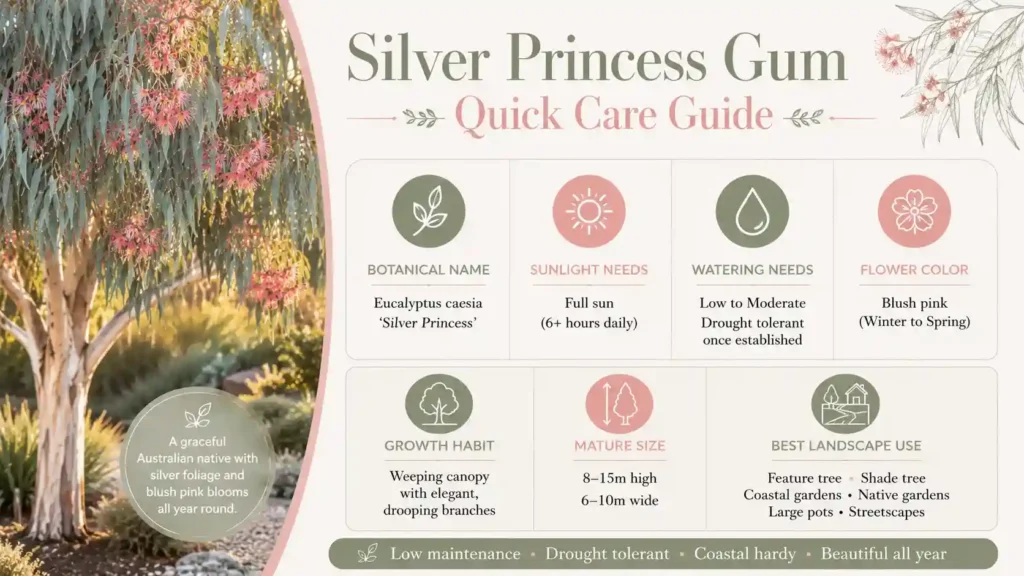
| Feature | Details |
| Botanical Name | Eucalyptus caesia |
| Common Name | Silver Princess Gum |
| Mature Height | Varies by variety |
| Sunlight | Full sun |
| Water Needs | Low to moderate |
| Flower Color | Pink to red |
| Growth Habit | Weeping |
| Best Use | Ornamental landscaping |
The name “Silver Princess” comes from the tree’s elegant ornamental appearance and distinctive silvery foliage. The powdery white coating that covers the leaves, stems, and branches gives the tree a shimmering silver effect, especially in bright sunlight.
The “princess” portion of the name is believed to reference the tree’s graceful weeping structure and decorative pink flowers, which create a refined and dramatic appearance compared to many other eucalyptus species.
Its combination of:
has helped establish the silver princess eucalyptus as one of the most visually striking ornamental gum trees.
Silver princess gum is widely considered one of the most ornamental eucalyptus species because of its naturally cascading branch structure. Unlike many upright gum trees, this species develops arching and drooping branches that create a soft, flowing canopy.
Its ornamental appeal is enhanced by:
The weeping growth habit gives the tree a sculptural quality that makes it highly desirable for decorative gardens, botanical collections, and feature landscaping.
Even outside the flowering season, the silver foliage and graceful structure maintain strong visual interest throughout the year.
The flowers of silver princess eucalyptus provide valuable food sources for pollinators and nectar-feeding wildlife. The brightly colored blooms are rich in nectar and attract a variety of beneficial species during the flowering season.
Common visitors include:
Because of its pollinator-friendly flowers, the tree can help support biodiversity in gardens and native landscapes. The dense branching structure may also provide shelter for small birds and beneficial insects.
Its ability to combine ornamental beauty with ecological value makes silver princess gum a useful addition to wildlife-friendly gardens.
The silver princess gum tree is highly valued for its exceptional ornamental beauty, graceful structure, and adaptability to dry climates. As one of the most decorative eucalyptus species, it combines striking silver foliage, vibrant pink blooms, and elegant weeping branches that create strong visual impact in residential and landscape gardens.
Its versatility makes it ideal for a wide range of landscaping uses, including:
Gardeners especially appreciate silver princess eucalyptus for its:
With proper sunlight, well-drained soil, and moderate care during establishment, silver princess eucalyptus can thrive for many years as a dramatic ornamental focal point. Its combination of resilience and visual appeal continues to make it one of the most admired flowering eucalyptus trees for warm-climate landscapes.
A mature silver princess gum tree typically grows between 15 and 30 feet tall with a spread of around 10 to 20 feet. Size can vary depending on climate, soil conditions, and whether the tree is a dwarf variety.
Eucalyptus caesia has a moderate growth rate. Young trees establish steadily and grow faster in warm climates with full sun and well-drained soil.
Yes, silver princess eucalyptus can grow successfully in containers, especially dwarf forms. Large pots with excellent drainage and regular pruning help maintain healthy growth.
The root system is generally less invasive than many larger eucalyptus species. However, proper planting distance from homes, driveways, pools, and underground pipes is still recommended.
Common reasons include insufficient sunlight, overwatering, excessive fertilizer, or immature plant age. Full sun and proper drainage are essential for strong flowering.
Yes, once established, silver princess gum becomes highly drought tolerant and performs very well in dry climates and water-wise landscapes.
Silver princess gum features weeping branches, narrow silver foliage, and bright pink flowers, while silver dollar eucalyptus has round leaves, upright growth, and less ornamental flowering.
The tree can tolerate light frost for short periods, but prolonged freezing temperatures may damage foliage and branches, especially on young plants.
Young trees usually need weekly deep watering during establishment. Mature trees require only occasional watering during extended dry periods.
Yes, the bright pink flowers attract bees, butterflies, and nectar-feeding birds, making the tree beneficial for pollinator-friendly gardens.
Yes, compact and dwarf silver princess gum varieties are suitable for smaller landscapes, courtyards, and container gardening.
The tree grows best in well-drained sandy or rocky soil with slightly acidic to neutral pH. Poor drainage and heavy clay soils should be avoided.
Flowering usually occurs from late winter through spring, although bloom timing may vary depending on climate and growing conditions.
Heavy pruning is not recommended because it can damage the natural weeping structure and reduce flowering. Light shaping and maintenance pruning work best.
Yes, its drought tolerance, low water requirements, and ornamental appearance make it an excellent choice for xeriscaping and dry-climate landscaping.