Grow Better Gardens with Smarter Plant Choices
Discover helpful guides on trees, hedges, fruit plants, edible plants, and beautiful landscape greenery.
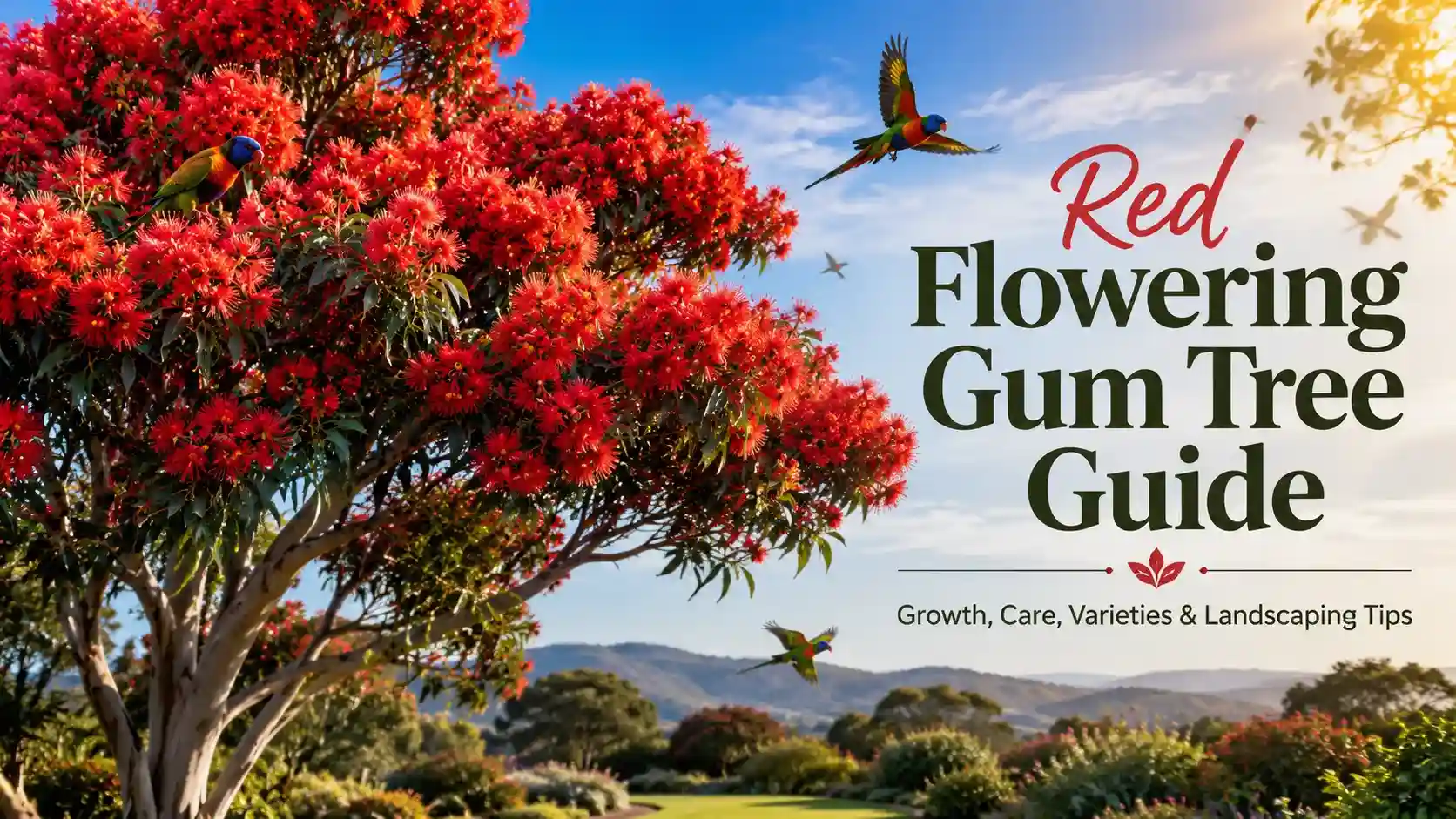
The red flowering gum is one of the most visually striking ornamental trees native to Australia. Known for its vibrant blooms and evergreen foliage, this tree belongs to the species Corymbia ficifolia and is widely admired for adding bold seasonal color to residential gardens, streetscapes, and coastal landscapes. Often referred to as a red flowering eucalyptus tree or a gum tree with red flowers, it has become a favorite choice for homeowners and landscape designers seeking a drought-tolerant flowering tree with strong visual appeal.
Among flowering eucalyptus trees, the Australian red flower tree stands out for its dense canopy, spectacular blossom clusters, and adaptability to warm climates. Depending on the cultivar, flower colors can range from deep crimson and scarlet red to orange, pink, and coral shades. Growth habits also vary significantly, with both compact dwarf selections and large shade-tree forms available for different garden sizes.
Most varieties bloom heavily during summer, producing nectar-rich flowers that attract birds, bees, and pollinators. With its ornamental bark, flowering gumnuts, and dramatic floral display, Corymbia ficifolia remains one of the most popular feature trees in Australian landscaping and modern drought-tolerant garden design.
The red flowering gum is scientifically known as Corymbia ficifolia, a highly ornamental Australian native tree valued for its vibrant floral display and evergreen foliage. Although it is now classified under the genus Corymbia, the tree was previously grouped within the eucalyptus family, which is why many gardeners still refer to it by older botanical names.
Several related naming variations are commonly used interchangeably, including:
These names all refer to the same ornamental flowering species, though Corymbia ficifolia is the currently accepted scientific classification. The reclassification occurred after botanical studies separated certain bloodwood and flowering gum species from the broader eucalyptus genus.
The tree belongs to the Myrtaceae family, which includes many well-known Australian natives such as eucalyptus, bottlebrush, and paperbark trees. Its popularity comes largely from its exceptional ornamental value, colorful blooms, and adaptability to warm-climate landscapes.
Corymbia ficifolia is native to the southwestern coastal regions of Western Australia. In its natural habitat, the tree grows in areas with mild winters, dry summers, and well-drained sandy soils. Coastal conditions with good airflow and abundant sunlight support healthy flowering and strong canopy development.
The species naturally thrives in:
Because of its tolerance to heat and seasonal dryness, the red flowering gum performs especially well in warm coastal regions across Australia and other similar climates worldwide. However, it can struggle in areas with severe frost, prolonged cold weather, or poorly drained heavy soils.
Its natural adaptation to dry conditions also makes it a preferred choice for water-wise landscaping and drought-tolerant garden designs.
Flowering gum trees are widely recognized for their ornamental appearance and strong landscape performance. The red flowering gum develops into a medium-sized evergreen tree with a rounded canopy and dense branching structure that provides year-round visual interest.
Key characteristics include:
One of the most striking features of the tree is its brilliant display of gum tree flowers during the blooming season. The blossoms appear in dense clusters and can cover much of the canopy, creating an intense visual effect in the landscape. Flower colors vary by cultivar and may include scarlet red, crimson, orange, coral, or pink shades.
After flowering, woody seed capsules known as flowering gumnuts develop on the branches. These decorative gumnuts add additional ornamental value and are often used in floral arrangements and native garden displays.
The combination of evergreen foliage, colorful blooms, textured bark, and ornamental seed capsules makes the red flowering gum one of the most attractive flowering trees for residential and public landscapes.
Corymbia ficifolia is the most widely recognized and popular ornamental flowering gum variety grown in Australian landscapes and warm-climate gardens. It is valued for its spectacular floral display, dense canopy, and strong ornamental impact during the summer blooming season.
This classic red flowering gum variety typically produces:
The flower size and bloom intensity are among the main reasons this tree remains highly desirable for residential and public landscaping. Mature trees can become heavily covered with bright flowers, creating a dramatic visual effect that attracts birds, bees, and pollinators throughout the flowering season.
Standard Corymbia ficifolia varieties are often used as:
The Summer Red flowering gum is one of the most popular compact cultivars developed for modern residential gardens. Known botanically as Corymbia ‘Summer Red,’ this cultivar was specifically bred for improved flowering performance, manageable growth, and enhanced heat tolerance.
Key features of Corymbia Summer Red include:
Because of its controlled growth, the tree works exceptionally well in urban gardens, courtyards, and smaller landscape spaces where full-sized flowering gums may become too large.
Common related names include:
This cultivar is especially popular in drought-tolerant landscape designs because it combines ornamental beauty with low water requirements once established.
Dwarf flowering gum cultivars are ideal for gardeners who want the beauty of flowering eucalyptus trees without the size of a full-grown canopy tree. These compact selections have become increasingly popular for suburban gardens, patios, and container planting.
Many compact flowering gum cultivars are specifically developed for smaller gardens where manageable growth and reliable blooming are important.
Popular benefits of dwarf red flowering gum varieties include:
Many dwarf cultivars mature at significantly lower heights than traditional forms, making them suitable for:
Common terms associated with these compact selections include:
Several dwarf cultivars still produce vibrant red flower clusters while maintaining a rounded, manageable growth structure that fits modern landscape designs.
In addition to red flowering selections, many ornamental cultivars produce attractive pink blossoms and hybrid flower colors. These trees are highly valued for their softer floral appearance and decorative landscape versatility.
Popular pink-flowering varieties include:
The term Corymbia ficifolia pink is commonly used for ornamental selections with pastel pink or rosy blooms.
Some pink-flowering varieties are especially valued for creating softer color contrast in ornamental native garden designs.
A pink flowering gum tree creates a softer visual contrast compared to the intense scarlet tones of traditional red cultivars.
Modern hybrid breeding programs have also produced improved flowering gum trees with:
These hybrid ornamental trees are commonly planted as feature specimens in decorative gardens and contemporary landscape projects. Many pink flowering gum trees also attract nectar-feeding birds and pollinators similarly to their red counterparts.
| Variety | Height | Flower Color | Growth Rate | Best Use |
| Corymbia ficifolia | 8–15 m | Scarlet red | Moderate | Large gardens and feature planting |
| Summer Red | 4–7 m | Deep red | Moderate to fast | Small residential landscapes |
| Dwarf Red Flowering Gum | 3–5 m | Bright red | Moderate | Courtyards and container growing |
| Corymbia ficifolia Pink | 5–10 m | Pink to coral | Moderate | Ornamental landscape accents |
| Hybrid Flowering Gum Cultivars | 4–12 m | Red, pink, orange | Moderate | Decorative and urban landscaping |
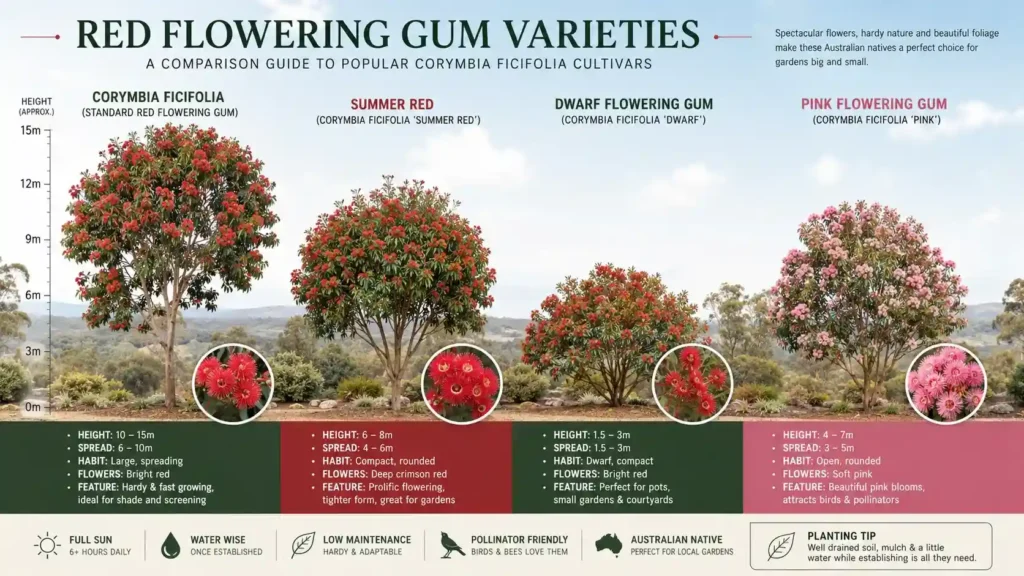
The mature size of a red flowering gum tree varies significantly depending on the cultivar, growing conditions, and climate. Standard Corymbia ficifolia trees typically develop into medium-sized ornamental trees with broad canopies and strong branching structures.
Average mature size ranges include:
Standard flowering gum trees are best suited for:
In contrast, dwarf and compact selections are designed for:
Dwarf flowering gums maintain the ornamental flowering characteristics of larger trees while requiring less space and maintenance. Their smaller canopy size also reduces shade competition and makes pruning easier.
Red flowering gum trees are generally considered moderate-growing ornamental trees. Under favorable conditions with full sunlight and well-drained soil, young trees establish relatively quickly during their first few years.
Typical growth development includes:
| Tree Age | Growth Stage | Characteristics |
| 1–2 Years | Establishment stage | Root development and early branching |
| 3–5 Years | Juvenile growth | Faster canopy expansion and trunk thickening |
| 4–6 Years | Early flowering stage | Initial bloom production begins |
| 7–10 Years | Mature ornamental stage | Heavy flowering and full canopy formation |
Young trees often focus heavily on root establishment before rapid canopy growth begins. Once established, many cultivars show consistent seasonal growth and increasingly stronger flowering displays each year.
Flowering intensity generally improves with:
Some grafted ornamental cultivars may begin flowering earlier than seed-grown trees.
The red flowering gum develops a broad root system designed to support canopy stability and drought tolerance. While the roots spread outward for moisture and nutrient access, they are generally considered less aggressive than many larger eucalyptus species.
Important root characteristics include:
A common concern among homeowners is whether flowering gum roots are invasive. In most cases, Corymbia ficifolia roots are not considered highly invasive when planted correctly. However, like many trees, roots may seek moisture sources if planted too close to structures or underground utilities.
Recommended planting distances include:
Dwarf cultivars usually have smaller and less aggressive root systems, making them more suitable for compact residential spaces.
Well-drained soil is especially important because poorly drained conditions can weaken roots and increase disease risks.
A healthy red flowering gum tree can remain productive and ornamental for several decades. Under suitable growing conditions, many specimens develop into long-lived landscape trees with reliable annual flowering displays.
Average lifespan expectations include:
One reason the species remains highly valued in landscaping is its environmental durability. Mature trees tolerate:
However, environmental stress can reduce longevity if trees are exposed to:
With proper site selection, regular maintenance, and suitable climate conditions, the red flowering gum remains one of the most durable and visually impressive ornamental flowering trees for warm-climate landscapes.
The flowers of the red flowering gum are the tree’s most striking ornamental feature. These blossoms appear in dense clusters across the canopy and create an intense display of color during the flowering season. Most varieties produce brilliant scarlet-red blooms, although some cultivars may develop coral, orange, crimson, or pink tones.
Key flower characteristics include:
Unlike traditional petals, the visual appeal of gum flowers comes mainly from their long, colorful stamens that create a soft brush-like appearance. The flowers are highly decorative and can cover large sections of the canopy when the tree reaches maturity.
The nectar-rich flowers are also extremely attractive to wildlife and pollinators. During peak blooming periods, flowering gum trees commonly attract:
Because of this strong pollinator attraction, red flowering gums are often planted in wildlife-friendly landscapes and native Australian gardens.
After flowering, decorative seed capsules known as flowering gumnuts develop on the branches, adding further ornamental interest to the tree.
The red flowering gum typically blooms during the warmer months, with peak flowering usually occurring in summer. In suitable climates, mature trees can produce exceptionally heavy floral displays that last for several weeks.
Typical flowering patterns include:
| Climate Condition | Blooming Period |
| Warm coastal climates | Late spring to summer |
| Mild temperate regions | Mid to late summer |
| Hot dry regions | Extended summer flowering |
| Cooler climates | Reduced or delayed flowering |
Bloom duration depends heavily on environmental conditions and cultivar type. Healthy mature trees growing in ideal conditions may continue flowering for several months, especially when temperatures remain consistently warm.
Climate plays a major role in flowering intensity and timing. Trees growing in warm coastal regions generally produce:
In cooler or frost-prone areas, flowering may become less reliable, and bloom production can decrease significantly after harsh winters.
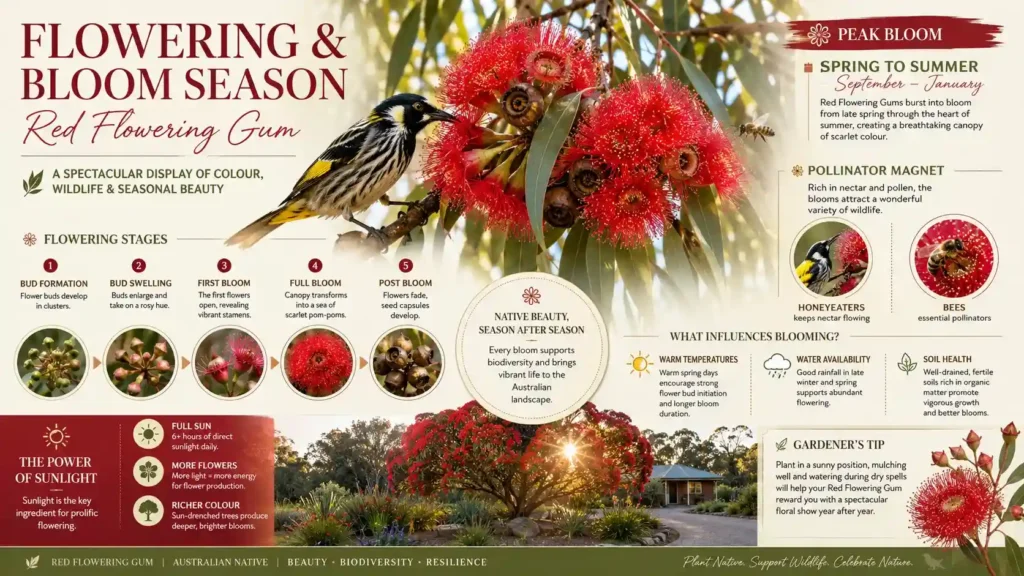
Not all red flowering gum trees bloom with the same intensity. Flower production is strongly influenced by growing conditions, tree maturity, and maintenance practices.
Several important factors affect flowering performance:
Full sun is one of the most critical requirements for heavy blooming. Trees planted in shaded areas often develop fewer flower clusters and reduced canopy density.
For best flowering results:
Insufficient sunlight commonly leads to weak flowering and slower growth.
Proper watering during establishment helps support healthy root development and future bloom production. Young trees require more consistent moisture, while mature trees become increasingly drought tolerant.
Overwatering can reduce flowering performance by encouraging excessive foliage growth instead of bloom development. Well-balanced watering supports:
Healthy soil conditions directly affect nutrient availability and flowering strength. The tree performs best in well-drained soil with moderate fertility and balanced nutrient levels.
Poor soil conditions may cause:
Excess nitrogen fertilizer can also limit flowering by promoting leaf growth instead of flower development.
Correct pruning practices can improve airflow, canopy structure, and flowering potential. Light maintenance pruning helps remove dead branches and encourages healthier growth.
However, excessive or poorly timed pruning may reduce seasonal blooming because flower buds often form on mature branch growth.
For best results:
Proper maintenance combined with strong sunlight, healthy soil, and balanced watering produces the most reliable and visually impressive flowering displays.
The red flowering gum grows best in warm temperate and Mediterranean-style climates where summers are sunny and winters remain relatively mild. Native to Western Australia, Corymbia ficifolia performs exceptionally well in coastal regions with good airflow, moderate humidity, and plenty of sunlight.
Recommended USDA growing zones typically include:
One of the tree’s biggest advantages is its strong heat tolerance. Mature trees handle hot summer temperatures well and continue flowering reliably in dry conditions once established.
Key climate preferences include:
Although the species tolerates heat very effectively, it remains sensitive to severe frost, especially during the early growth stages. Young trees are more vulnerable to cold damage and may experience:
In colder climates, selecting grafted hybrids or dwarf cultivars with improved cold tolerance can help improve survival and flowering consistency.
Proper soil conditions are essential for healthy root development, strong canopy growth, and reliable flowering. The red flowering gum performs best in well-drained soils that prevent excess moisture from collecting around the roots.
Ideal soil characteristics include:
The preferred soil pH range is generally:
| Soil Type | Suitability |
| Slightly acidic soil | Excellent |
| Neutral soil | Very good |
| Highly alkaline soil | Moderate |
| Waterlogged soil | Poor |
Sandy soils are usually ideal because they drain quickly and allow healthy root expansion. In coastal regions, sandy ground closely matches the tree’s natural habitat conditions.
Clay soils can create problems if drainage is poor. Heavy clay may lead to:
If planting in clay-heavy areas, improving drainage with organic matter or raised planting beds can significantly improve tree health.
Full sun is one of the most important requirements for successful growth and heavy flowering. Red flowering gums depend on strong sunlight exposure to develop dense canopies and vibrant flower clusters.
For optimal performance, trees should receive:
Insufficient sunlight commonly causes:
Planting locations should avoid competition from large shade trees or structures that block afternoon sunlight. Trees grown in consistently sunny conditions typically produce the most impressive floral displays and healthiest foliage.
Watering needs vary depending on the age and establishment stage of the tree. Young red flowering gums require more regular moisture while developing strong root systems, but mature trees become relatively drought tolerant.
Newly planted trees benefit from:
The first 1–2 years are especially important for root development and long-term tree stability.
Once established, mature trees tolerate dry conditions well and usually require minimal supplemental watering except during prolonged drought.
Benefits of mature drought tolerance include:
However, excessive watering can negatively affect growth and flowering by creating overly wet soil conditions that stress the roots.
The red flowering gum generally does not require heavy fertilization, especially when planted in moderately fertile soil. Overfeeding can sometimes reduce flowering by encouraging excessive foliage growth.
The best fertilizers are typically:
Useful nutrients for healthy growth include:
| Nutrient | Benefit |
| Nitrogen | Leaf and canopy growth |
| Potassium | Flower production and drought resistance |
| Iron | Healthy green foliage |
| Magnesium | Improved leaf color and vigor |
Nutrient deficiencies may appear as:
Applying fertilizer in early spring usually supports healthy seasonal growth and improved flowering performance. Excessive fertilizer application, particularly high-nitrogen products, should be avoided because it may reduce bloom production and encourage overly soft growth.
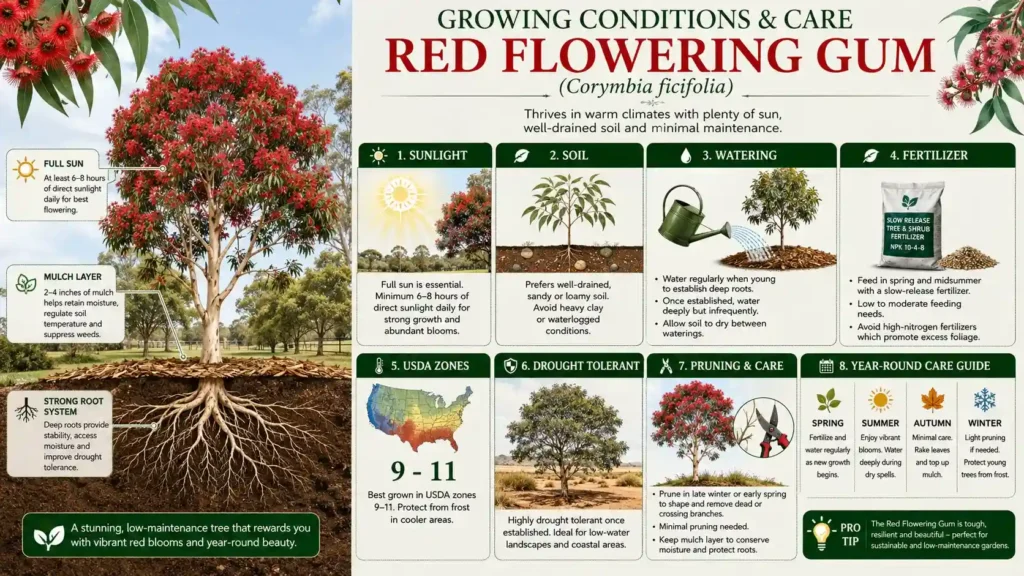
The best time to plant a red flowering gum tree is during mild weather conditions when the soil remains warm and root development can occur without environmental stress. In most regions, planting during autumn or spring provides the strongest establishment results.
Recommended planting seasons include:
| Season | Suitability | Benefits |
| Autumn | Excellent | Warm soil and reduced heat stress |
| Spring | Excellent | Active root and canopy growth |
| Early summer | Moderate | Requires additional watering |
| Winter | Limited | Risk of frost damage in cold regions |
Autumn planting is often preferred in warm climates because roots can establish before intense summer heat arrives. In cooler regions, spring planting helps young trees avoid frost exposure during their first growing season.
Avoid planting during:
Choosing the right planting season improves survival rates, root establishment, and future flowering performance.
Proper planting techniques are essential for healthy root development and long-term tree stability. Red flowering gums perform best when planted in sunny locations with excellent soil drainage.
Dig a planting hole that is:
Avoid digging excessively deep holes because overly deep planting can trap moisture around the trunk base.
If the soil is heavy clay or poorly drained:
Well-drained sandy or loamy soil usually requires minimal modification.
Place the tree so the root crown sits slightly above surrounding soil level. This helps prevent water accumulation around the trunk.
Ensure the tree remains upright and stable before backfilling the hole.
Fill the hole gently using the removed soil and lightly firm it to remove major air pockets.
After planting:
Correct spacing is important for canopy development and airflow.
General spacing recommendations include:
| Tree Type | Recommended Spacing |
| Standard flowering gum | 6–10 meters |
| Compact cultivars | 4–6 meters |
| Dwarf varieties | 2–4 meters |
Adequate spacing reduces competition and helps prevent overcrowding as the tree matures.
Mulching helps conserve moisture, regulate soil temperature, and reduce weed competition.
Best mulching practices include:
Proper mulching also improves soil health over time as organic materials gradually break down.
Many modern dwarf flowering gum cultivars are highly suitable for pots, courtyards, and compact residential gardens. These smaller selections provide the ornamental beauty of flowering eucalyptus trees without requiring large landscape spaces.
Suitable dwarf varieties commonly include:
Container growing works best when proper pot size and drainage are carefully managed.
Important container requirements include:
| Requirement | Recommendation |
| Pot size | Large deep container |
| Drainage | Multiple drainage holes |
| Soil type | Fast-draining native plant mix |
| Sunlight | Full sun exposure |
| Watering | Regular but controlled |
Potted flowering gums usually require:
Small garden plantings benefit from selecting compact cultivars with manageable canopy size and reduced root spread. Dwarf flowering gums are especially effective for:
With sufficient sunlight and proper drainage, compact flowering gum varieties can thrive successfully even in limited planting spaces.
Proper pruning and routine maintenance help keep a red flowering gum healthy, attractive, and structurally balanced. Although Corymbia ficifolia generally develops a naturally appealing canopy, occasional pruning improves airflow, removes damaged growth, and supports stronger flowering performance.
The main goals of pruning include:
Light maintenance pruning is usually sufficient for most ornamental flowering gum trees. Excessive pruning should be avoided because aggressive branch removal may reduce flowering during the next blooming season.
Best pruning practices include:
| Maintenance Task | Purpose |
| Remove dead wood | Prevent disease spread |
| Thin crowded branches | Improve airflow |
| Remove weak growth | Improve structure |
| Light canopy shaping | Maintain appearance |
The ideal time for pruning is typically after flowering has finished. This allows the tree to recover before the next active growth cycle begins.
When pruning:
Young trees may benefit from early structural training to encourage balanced branching and a stable trunk framework.
Red flowering gum trees are generally resilient, but they can occasionally experience pest infestations and fungal problems, particularly when growing conditions are poor or drainage is inadequate.
Fungal diseases are most likely to occur in overly wet or poorly ventilated environments. Common issues include:
Root rot is one of the most serious problems and is usually caused by waterlogged soil conditions. Symptoms may include:
Good drainage is the most effective prevention method for fungal root diseases.
Several insects may occasionally affect flowering gum trees, including:
| Pest | Common Damage |
| Psyllids | Leaf distortion |
| Scale insects | Sticky residue and weakened growth |
| Borers | Branch weakening |
| Caterpillars | Leaf chewing |
Healthy established trees often tolerate minor pest activity without serious long-term damage. However, repeated infestations may weaken flowering and overall vigor.
Preventative care is the best approach for maintaining healthy flowering gum trees.
Important prevention practices include:
Avoiding mechanical root damage and maintaining overall tree health also helps improve resistance to pests and disease stress.
Although mature red flowering gum trees tolerate mild winter conditions, young trees and frost-sensitive cultivars may require additional protection during colder weather.
The species performs best in warm climates and can suffer damage during severe frost events. Cold injury may affect:
In colder regions, winter protection methods may include:
Mulch helps insulate the soil and stabilize root temperatures during sudden cold periods.
Young flowering gum trees are more vulnerable to winter stress because their root systems and canopy structures are still developing.
Important winter care practices for young trees include:
| Care Method | Benefit |
| Deep watering before frost | Reduces moisture stress |
| Protective staking | Prevents wind damage |
| Frost covering | Shields tender foliage |
| Light winter monitoring | Detects early damage |
Avoid heavy pruning before winter because fresh new growth is more sensitive to frost injury.
Once established, mature trees become considerably more resilient and typically require far less seasonal protection in suitable climates.
Red flowering gum trees are among the most versatile ornamental trees used in warm-climate landscaping. Their vibrant flowers, evergreen canopy, and drought tolerance make them suitable for both residential and public garden designs.
One of the most common uses is as a shade tree. Mature flowering gums develop broad canopies that provide filtered shade while maintaining strong ornamental value throughout the year. Their dense foliage also helps cool outdoor spaces during hot summer months.
Popular shade tree applications include:
The tree is also highly valued as a feature tree because of its dramatic floral display.
Flowering eucalyptus varieties are often incorporated into broader ornamental tree plantings designed to create year-round structure and seasonal color in residential landscapes
During peak blooming season, the bright flower clusters create a bold focal point in the landscape.
As a feature specimen, red flowering gums work well in:
| Landscape Setting | Visual Benefit |
| Front yard planting | Strong curb appeal |
| Open lawn areas | Seasonal focal point |
| Coastal landscapes | Color contrast |
| Native gardens | Wildlife attraction |
Wildlife gardens are another ideal application for flowering gum trees. The nectar-rich blossoms attract many pollinators and native birds, helping support local biodiversity.
Common wildlife visitors include:
Because of these ecological benefits, flowering gums are often included in bird-friendly and pollinator-supportive landscape designs.
Choosing suitable companion plants helps create balanced landscape designs while supporting the tree’s growing requirements. Since red flowering gums prefer full sun and well-drained soil, drought-tolerant species generally perform best nearby.
Recommended drought-tolerant pairings include:
These plants complement flowering gums by sharing similar water and sunlight requirements while adding additional texture and seasonal color.
Native Australian plants are especially effective companions because they naturally adapt to comparable soil and climate conditions.
Popular native pairings include:
| Companion Plant | Landscape Benefit |
| Grevillea | Pollinator attraction |
| Bottlebrush | Flower contrast |
| Kangaroo paw | Architectural texture |
| Coastal rosemary | Low-maintenance ground cover |
| Lomandra | Drought-resistant border planting |
Using native Australian species also helps create cohesive, environmentally adapted garden designs with lower maintenance needs.
Avoid planting moisture-loving species directly beneath flowering gums because excessive irrigation can negatively affect root health and flowering performance.
Dwarf flowering gum cultivars are highly suitable for compact landscapes where full-sized trees may become too large. Their manageable canopy size and ornamental flowering make them excellent choices for urban and small-space gardening.
Common small-space applications include:
Compact cultivars provide many of the same ornamental benefits as larger flowering gums while requiring significantly less space for canopy and root development.
In urban gardens, dwarf varieties help introduce native flowering trees into areas with limited planting room. Their smaller size also simplifies pruning, watering, and seasonal maintenance.
Container landscaping is another popular use for miniature flowering gum trees. Large decorative pots can showcase compact cultivars on:
Successful container growing requires:
| Container Requirement | Importance |
| Large pot size | Root development |
| Excellent drainage | Prevents root rot |
| Full sun exposure | Encourages flowering |
| Regular watering | Supports healthy growth |
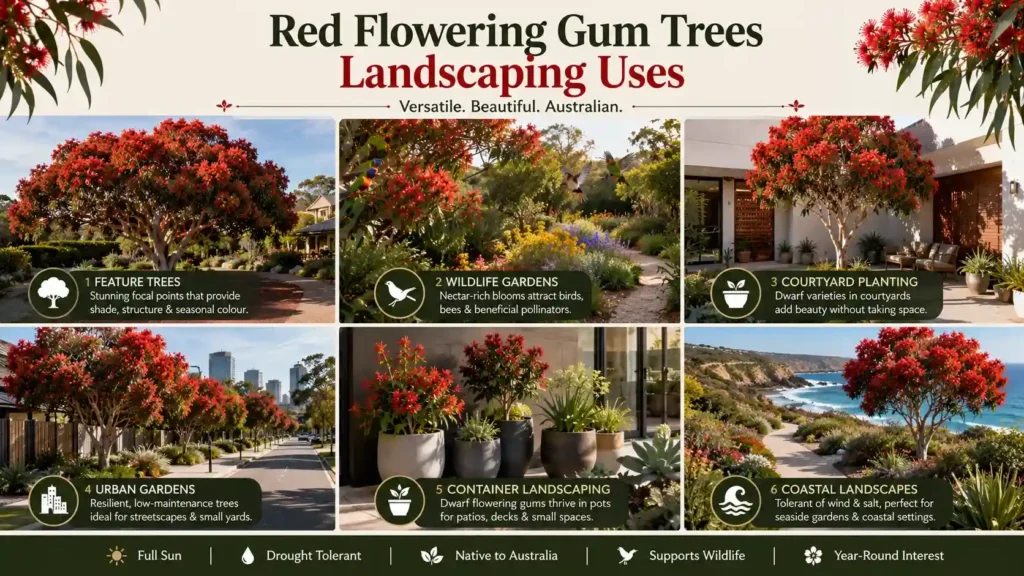
Dwarf flowering gums bring vibrant color, evergreen structure, and native Australian character into small residential landscapes without overwhelming limited garden spaces.
The red flowering gum is widely considered one of the most attractive ornamental trees for warm-climate landscapes. Its combination of vibrant flowers, evergreen foliage, and drought tolerance makes it highly desirable for residential gardens and public landscapes.
One of the tree’s greatest advantages is its outstanding floral display. Mature trees can become heavily covered with vivid flower clusters during summer, creating dramatic seasonal color in the landscape.
Bloom-related benefits include:
The tree’s striking appearance makes it a highly effective feature specimen in both modern and native-style landscapes.
Red flowering gums are excellent for supporting wildlife and pollinator activity. Their nectar-rich blossoms attract a wide variety of beneficial species throughout the flowering season.
Common pollinator visitors include:
| Pollinator Type | Attraction Benefit |
| Bees | Nectar source |
| Butterflies | Flower feeding |
| Honeyeaters | Bird attraction |
| Lorikeets | Seasonal feeding |
Because of this ecological value, flowering gums are often included in wildlife gardens and environmentally friendly landscaping projects.
Once established, the red flowering gum becomes relatively drought tolerant and adapts well to dry summer conditions. This makes it especially suitable for:
Its ability to tolerate seasonal dryness helps reduce irrigation needs compared to many other ornamental flowering trees.
Although red flowering gum trees offer many advantages, they also have some limitations that homeowners should consider before planting.
Heavy flowering can produce noticeable seasonal litter beneath the canopy. Fallen blossoms, leaves, bark, and flowering gumnuts may require occasional cleanup in residential settings.
Areas commonly affected include:
While many gardeners consider the floral display worth the maintenance, regular cleanup may be necessary during peak blooming periods.
The species performs best in warm climates and may struggle in regions with severe winter cold. Young trees are especially vulnerable to frost damage.
Potential frost-related problems include:
Cold-sensitive regions may require:
Like many eucalyptus-related species, older flowering gum trees can occasionally shed branches during periods of environmental stress.
Possible contributing factors include:
Routine pruning and proper maintenance help reduce the risk of structural weakness and branch failure.
For many homeowners, the red flowering gum is an excellent ornamental landscape tree, particularly in warm climates with full sun exposure and well-drained soil.
The tree is especially suitable for homeowners who want:
Best conditions for successful home garden use include:
| Garden Type | Suitability |
| Large residential yards | Excellent |
| Coastal gardens | Excellent |
| Small urban spaces | Suitable with dwarf cultivars |
| Frost-prone regions | Moderate to poor |
Standard flowering gum trees are ideal for medium to large landscapes where the canopy has room to develop naturally. Dwarf and compact cultivars work much better for smaller suburban gardens and courtyard spaces.
Homeowners in warm temperate or Mediterranean-style climates generally achieve the best flowering performance, healthiest growth, and longest tree lifespan.
The red flowering gum and the Silver Princess gum are two of the most ornamental flowering eucalyptus trees used in Australian-inspired landscaping. While both species produce visually impressive blooms, they differ significantly in flower appearance, growth habit, and climate adaptability.
The red flowering gum (Corymbia ficifolia) is known for its dense clusters of bright scarlet, crimson, coral, or pink blossoms. The flowers create a bold canopy display during summer and are highly attractive to pollinators.
In contrast, the Silver Princess gum (Eucalyptus caesia ‘Silver Princess’) produces large pink to red flowers with dramatic yellow stamens and decorative weeping branches. Its blooms are more individually prominent rather than forming dense canopy clusters.
Flower appearance differences include:
| Characteristic | Red Flowering Gum | Silver Princess Gum |
| Bloom Style | Dense flower clusters | Individual hanging flowers |
| Flower Color | Red, pink, coral, orange | Pink-red with yellow stamens |
| Visual Impact | Broad canopy color display | Delicate ornamental appearance |
| Pollinator Attraction | Very high | High |
Growth structure is another major difference between the two trees.
The red flowering gum typically develops:
The Silver Princess gum has a more distinctive ornamental structure with:
Because of its dense canopy, the red flowering gum is commonly used as a shade tree and large landscape specimen. The Silver Princess gum is more frequently planted as a decorative accent or artistic feature tree.
The red flowering gum generally adapts better to a wider range of warm temperate and coastal climates. It tolerates heat and drought effectively once established and performs well in Mediterranean-style environments.
Silver Princess gum also tolerates dry conditions but can be slightly more sensitive to environmental stress in some regions.
Climate adaptability comparison:
| Feature | Red Flowering Gum | Silver Princess Gum |
| Scientific Name | Corymbia ficifolia | Eucalyptus caesia ‘Silver Princess’ |
| Mature Height | 8–15 m | 4–8 m |
| Flower Type | Dense flower clusters | Hanging ornamental flowers |
| Main Flower Colors | Red, pink, coral, orange | Pink-red with yellow centers |
| Canopy Shape | Broad and rounded | Weeping and sculptural |
| Shade Production | High | Moderate |
| Drought Tolerance | Excellent | Very good |
| Best Use | Shade and feature tree | Accent ornamental tree |
| Wildlife Attraction | Very high | High |
| Small Garden Suitability | Dwarf cultivars recommended | Naturally more compact |
The best choice depends largely on landscape goals, available space, and desired visual style.
The red flowering gum is generally better for:
Its vibrant canopy flowering and evergreen structure make it one of the strongest ornamental flowering trees for large residential gardens and public landscapes.
The Silver Princess gum is often preferred for:
For residential gardens, compact red flowering gum cultivars provide a balance between manageable size and dramatic flowering performance. However, gardeners seeking a more sculptural and unusual ornamental appearance may prefer the Silver Princess gum.
Both trees offer strong ornamental value, but the red flowering gum is typically considered the more versatile landscaping option due to its heavier flowering, larger canopy, and wider adaptability to residential landscape applications.
A red flowering gum may fail to bloom properly for several reasons related to sunlight, tree maturity, nutrition, or environmental stress. Young trees often require several years before producing heavy flower displays, especially when grown from seed.
The most common causes of poor flowering include:
| Problem | Effect on Blooming |
| Insufficient sunlight | Reduced flower production |
| Excess nitrogen fertilizer | More foliage, fewer flowers |
| Immature tree age | Delayed blooming |
| Heavy pruning | Removal of flower buds |
| Frost damage | Flower bud loss |
Full sun is essential for strong flowering performance. Trees planted in shaded areas frequently develop healthy foliage but produce very few blossoms.
To improve flowering:
Mature, well-established trees usually produce more reliable and abundant blooms each season.
Yellowing leaves and weak growth are often signs of environmental stress, nutrient imbalance, or poor soil conditions. Identifying the underlying cause early helps prevent long-term damage.
Common causes include:
Typical symptoms may include:
| Symptom | Possible Cause |
| Yellow leaves | Waterlogging or nutrient deficiency |
| Pale foliage | Iron deficiency |
| Slow growth | Poor soil or lack of sunlight |
| Leaf drop | Root stress or drought |
Iron and magnesium deficiencies sometimes occur in highly alkaline soils, causing foliage discoloration and reduced vigor.
Improving tree health may involve:
Healthy flowering gums generally maintain dense green foliage throughout the year when growing conditions are suitable.
Root rot is one of the most serious issues affecting red flowering gum trees. This condition usually develops when roots remain in overly wet soil for extended periods.
Poor drainage commonly results from:
Root rot symptoms may include:
Preventing root problems is far easier than treating severe root damage.
Best prevention methods include:
Container-grown flowering gums should always be planted in pots with multiple drainage holes and fast-draining soil mixes.
Although mature flowering gum trees tolerate coastal conditions and moderate wind exposure, strong storms and structural weakness can occasionally lead to branch breakage.
Factors contributing to wind damage include:
| Cause | Risk |
| Heavy canopy growth | Increased branch stress |
| Weak branch structure | Limb failure |
| Drought stress | Brittle wood |
| Poor pruning practices | Structural imbalance |
Large mature branches may become vulnerable during:
To reduce branch breakage risks:
Young trees may benefit from temporary staking during establishment to improve stability in windy locations.
Proper planting, balanced maintenance, and healthy root development significantly improve long-term tree strength and resistance to environmental stress.
A red flowering gum may fail to bloom properly for several reasons related to sunlight, tree maturity, nutrition, or environmental stress. Young trees often require several years before producing heavy flower displays, especially when grown from seed.
The most common causes of poor flowering include:
| Problem | Effect on Blooming |
| Insufficient sunlight | Reduced flower production |
| Excess nitrogen fertilizer | More foliage, fewer flowers |
| Immature tree age | Delayed blooming |
| Heavy pruning | Removal of flower buds |
| Frost damage | Flower bud loss |
Full sun is essential for strong flowering performance. Trees planted in shaded areas frequently develop healthy foliage but produce very few blossoms.
To improve flowering:
Mature, well-established trees usually produce more reliable and abundant blooms each season.
Yellowing leaves and weak growth are often signs of environmental stress, nutrient imbalance, or poor soil conditions. Identifying the underlying cause early helps prevent long-term damage.
Common causes include:
Typical symptoms may include:
| Symptom | Possible Cause |
| Yellow leaves | Waterlogging or nutrient deficiency |
| Pale foliage | Iron deficiency |
| Slow growth | Poor soil or lack of sunlight |
| Leaf drop | Root stress or drought |
Iron and magnesium deficiencies sometimes occur in highly alkaline soils, causing foliage discoloration and reduced vigor.
Improving tree health may involve:
Healthy flowering gums generally maintain dense green foliage throughout the year when growing conditions are suitable.
Root rot is one of the most serious issues affecting red flowering gum trees. This condition usually develops when roots remain in overly wet soil for extended periods.
Poor drainage commonly results from:
Root rot symptoms may include:
Preventing root problems is far easier than treating severe root damage.
Best prevention methods include:
Container-grown flowering gums should always be planted in pots with multiple drainage holes and fast-draining soil mixes.
Although mature flowering gum trees tolerate coastal conditions and moderate wind exposure, strong storms and structural weakness can occasionally lead to branch breakage.
Factors contributing to wind damage include:
| Cause | Risk |
| Heavy canopy growth | Increased branch stress |
| Weak branch structure | Limb failure |
| Drought stress | Brittle wood |
| Poor pruning practices | Structural imbalance |
Large mature branches may become vulnerable during:
To reduce branch breakage risks:
Young trees may benefit from temporary staking during establishment to improve stability in windy locations.
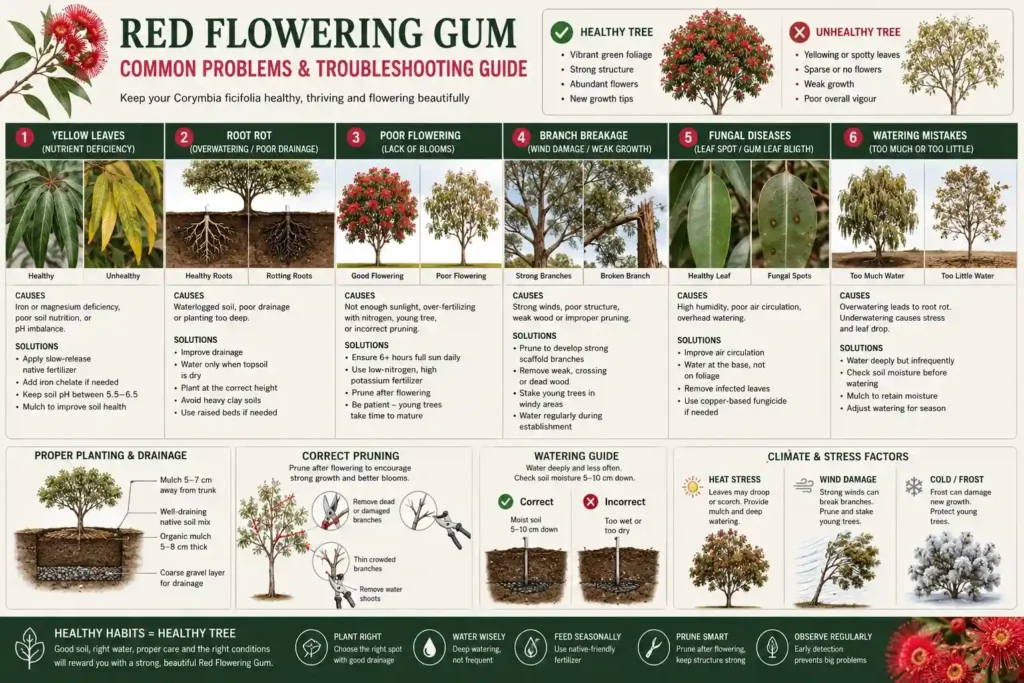
Proper planting, balanced maintenance, and healthy root development significantly improve long-term tree strength and resistance to environmental stress.
The red flowering gum eucalyptus is widely regarded as one of the best ornamental flowering trees for warm-climate landscapes. With its brilliant summer blooms, evergreen canopy, and strong visual impact, Corymbia ficifolia continues to be a favorite choice for residential gardens, parks, coastal landscapes, and wildlife-friendly planting designs. Its vibrant flowers, decorative flowering gumnuts, and pollinator attraction make it stand out among flowering eucalyptus trees.
Successful growth depends on providing the right conditions from the beginning. The tree performs best in full sun, well-drained soil, and warm climates with minimal severe frost exposure. Proper watering during establishment, occasional pruning, balanced fertilization, and good drainage all help support healthy canopy development and reliable flowering.
Red flowering gum trees are highly versatile in landscaping and can be used as:
Whether planted in large open gardens or compact urban courtyards, the tree delivers exceptional seasonal color and long-term ornamental value. With proper planting, maintenance, and climate suitability, a healthy red flowering gum can provide decades of striking blooms and evergreen beauty in the landscape.
A standard red flowering gum tree typically grows between 8–15 meters tall with a broad canopy spread of 5–10 meters. However, dwarf and compact cultivars may only reach 3–5 meters in height, making them more suitable for smaller residential gardens and urban landscapes.
Yes, Corymbia ficifolia is considered drought tolerant once established. Mature trees can handle extended dry periods and warm summer conditions with relatively low supplemental watering. However, young trees still require regular watering during their establishment stage.
Red flowering gum roots are generally not considered highly invasive compared to some larger eucalyptus species. Even so, the tree should still be planted a safe distance away from buildings, pipes, retaining walls, and paved surfaces to avoid potential root-related issues over time.
Most red flowering gum trees bloom during late spring and summer. Peak flowering usually occurs in warm weather conditions with strong sunlight exposure. Bloom timing may vary slightly depending on climate, cultivar, and growing conditions.
Yes, dwarf and compact flowering gum cultivars grow well in large containers when provided with full sun, fast-draining soil, and proper watering. Container-grown trees require more maintenance than in-ground plantings but are excellent for patios, courtyards, and urban gardens.
The best fertilizer for flowering gum trees is a low-phosphorus native plant fertilizer or a balanced slow-release fertilizer. Excessive nitrogen should be avoided because it may encourage leaf growth while reducing flowering performance.
Yes, many modern dwarf cultivars are highly suitable for small gardens. Compact varieties such as Summer Red and other miniature flowering gum trees provide vibrant blooms and manageable growth habits for courtyards, suburban landscapes, and container planting.
Yellow leaves are commonly caused by overwatering, poor drainage, nutrient deficiencies, or compacted soil. In some cases, iron deficiency may also cause pale or yellow foliage, especially in alkaline soils. Improving drainage and maintaining balanced soil conditions usually helps restore healthy growth.
A healthy red flowering gum tree can live for several decades under suitable growing conditions. Many well-maintained trees remain productive and ornamental for 30–50 years or longer in warm climates with proper care.
Yes, the nectar-rich flowers strongly attract pollinators and wildlife. Bees, butterflies, lorikeets, and honeyeaters commonly visit flowering gum trees during the blooming season, making them excellent choices for wildlife-friendly gardens.
Mature trees tolerate light frost better than young trees, but severe or prolonged freezing temperatures can damage foliage, branches, and flower buds. Frost protection is especially important during the first few years after planting.
Well-drained sandy or loamy soil is ideal for healthy growth. The tree performs poorly in waterlogged clay soils because excessive moisture can lead to root rot and reduced flowering.
Red flowering gums are evergreen trees, meaning they retain foliage year-round. However, some natural leaf shedding may occur seasonally as older leaves are replaced with new growth.
The tree has a moderate growth rate under favorable conditions. Young trees establish steadily and may begin flowering within 4–6 years, depending on cultivar type, climate, and growing conditions.