Grow Better Gardens with Smarter Plant Choices
Discover helpful guides on trees, hedges, fruit plants, edible plants, and beautiful landscape greenery.
Super Gem Magnolia is a compact evergreen magnolia prized for its glossy foliage, fragrant white blooms, and space-friendly growth habit. This dwarf magnolia tree belongs to the Magnolia grandiflora family, the same species group as the classic Southern Magnolia, but it grows in a more manageable form for modern residential landscapes.
This evergreen magnolia has become highly popular in small gardens, contemporary landscapes, and urban outdoor spaces because it combines year-round greenery with elegant flowering performance. Many gardeners choose it as an alternative to larger magnolia tree varieties that require more space and maintenance.
Super Gem Magnolia is often compared with Magnolia Little Gem because both offer compact growth and dense evergreen foliage. However, Super Gem Magnolia is especially valued for its tidy structure, strong hedge performance, and suitability for container growing.
In evergreen magnolias Australia gardens, this variety performs well in warm temperate and subtropical climates. Its adaptability makes it suitable for privacy hedges, feature planting, courtyard landscapes, and decorative pots.
Key features of Super Gem Magnolia include:
Because of its controlled size and evergreen appearance, Super Gem Magnolia works well in both formal and low-maintenance landscapes. It provides the classic beauty of a Magnolia grandiflora while fitting more easily into modern garden designs.
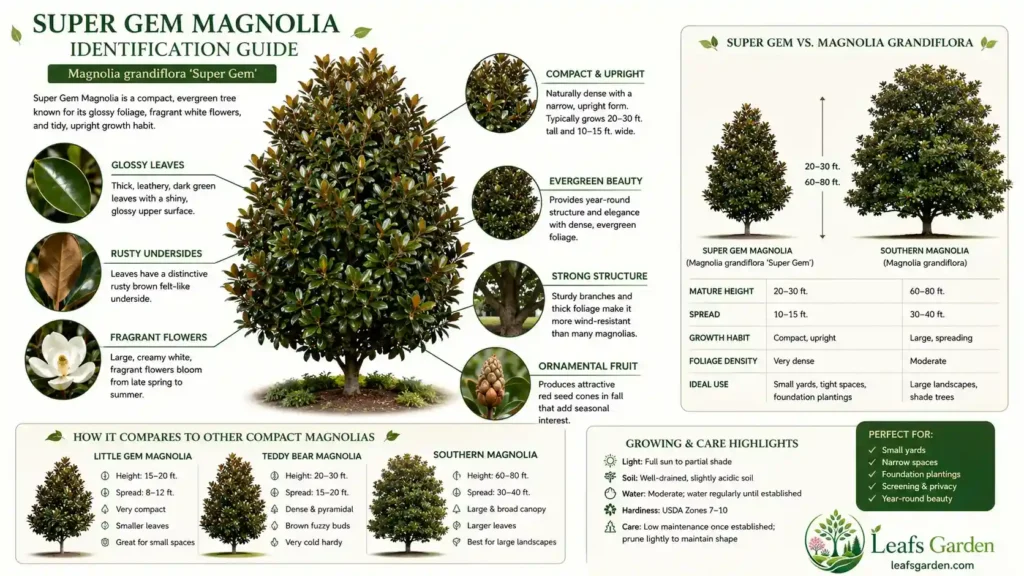
Super Gem Magnolia is a compact evergreen magnolia with glossy green leaves, dense branching, and large creamy white fragrant flowers. It belongs to the Magnolia grandiflora group, a well-known evergreen magnolia species valued for ornamental landscaping and year-round foliage.
This evergreen magnolia tree is a dwarf selection of Southern Magnolia. It offers the same classic magnolia appearance but in a smaller and more landscape-friendly size. Because of its controlled growth, it is widely used in modern gardens, narrow planting areas, and privacy hedges.
In Magnolia grandiflora Australia landscapes, Super Gem Magnolia is popular for its adaptability to warm climates and evergreen structure. It performs especially well in residential gardens where larger Southern Magnolias would become too oversized.
Key identification features include:
Super Gem Magnolia is often compared with several other magnolia varieties.
| Variety | Main Feature | Mature Size | Growth Habit |
| Super Gem Magnolia | Compact evergreen structure | Small to medium | Dense and upright |
| Little Gem Magnolia | Popular dwarf flowering magnolia | Medium | Narrow upright |
| Teddy Bear Magnolia | Very dense foliage | Compact | Tight and bushy |
| Southern Magnolia | Traditional large tree form | Large | Broad and spreading |
Little Gem Magnolia grows slightly taller and faster, while Teddy Bear Magnolia is known for thicker foliage density. Traditional Southern Magnolia trees become significantly larger and require more landscape space than compact evergreen forms like Super Gem Magnolia.
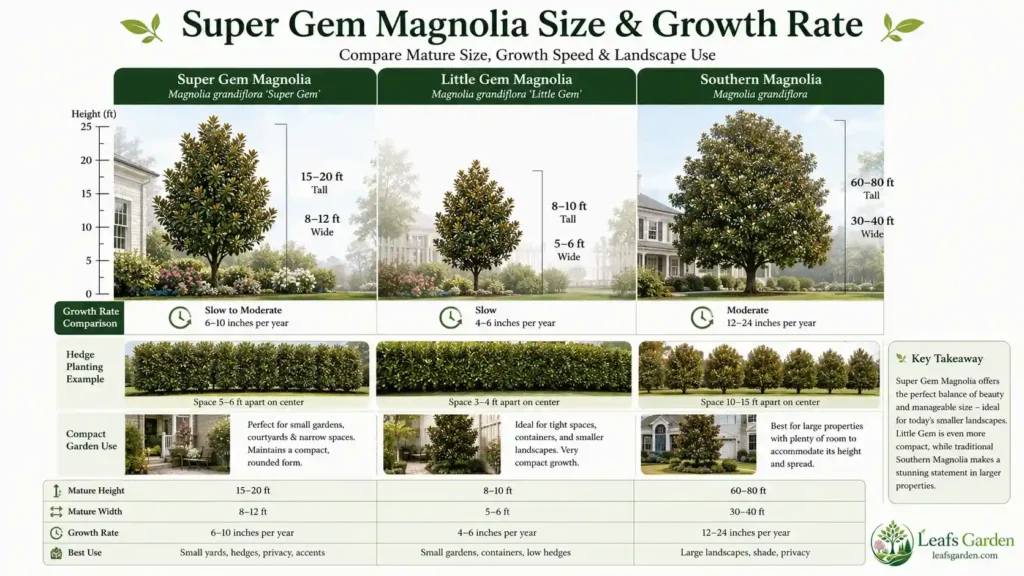
Super Gem Magnolia grows much smaller than traditional Southern Magnolias, making it suitable for compact gardens, screening, and smaller residential landscapes.
Most trees reach an average height of around 4–6 metres with a width of approximately 2–3 metres at maturity. These magnolia tree dimensions allow the plant to work well as both a feature tree and an evergreen hedge.
The growth rate of magnolia tree varieties depends on climate, watering, and soil quality. Under ideal conditions, Super Gem Magnolia develops at a moderate pace with steady evergreen canopy growth each year.
Typical mature growth details include:
The Little Gem Magnolia growth rate is often considered moderate to fast in warm climates. A full grown Little Gem Magnolia tree may become slightly taller than Super Gem Magnolia over time, especially in rich soil and full sun conditions.
Because of its compact structure, Super Gem Magnolia is easier to maintain than larger magnolia trees. It also requires less aggressive pruning and fits better into modern suburban gardens.
Super Gem Magnolia produces large fragrant white flowers combined with dense evergreen foliage, creating year-round ornamental value.
The magnolia flower is cup-shaped, creamy white, and strongly scented. Individual blooms can become quite large and stand out clearly against the glossy dark green leaves. During peak flowering season, the tree develops repeated flushes of blooms across the canopy.
Magnolias bloom mainly from late spring through summer, although flowering periods may vary depending on climate. In warmer regions, some trees continue producing scattered flowers into early autumn.
Many gardeners ask when do magnolias flower or when are magnolias in bloom. Evergreen Magnolia grandiflora varieties generally flower during warm growing seasons with strongest blooming occurring in sunny positions.
Key appearance features include:
The evergreen foliage texture gives the tree a lush and polished appearance even outside the flowering season. This combination of flowers and foliage makes Super Gem Magnolia highly attractive as a hedge, specimen tree, or container-grown ornamental plant.
Super Gem Magnolia grows best in warm temperate to subtropical climates with moderate humidity and consistent seasonal warmth. As an evergreen magnolia, it performs especially well in regions with mild winters and warm summers.
This variety is commonly grown in USDA Zones 7–10 where temperatures remain relatively stable throughout the year. It tolerates short periods of heat and humidity better than many deciduous flowering trees.
Magnolias in Australia are widely planted because many regions provide suitable growing conditions for evergreen varieties. Although Magnolia grandiflora is not considered a native magnolia Australia species, it adapts extremely well to Australian landscapes and urban gardens.
Evergreen magnolias Australia gardeners often choose include compact forms like Super Gem, Little Gem, and Teddy Bear Magnolia because they handle modern garden conditions more effectively than larger traditional Southern Magnolias.
Climate suitability features include:
In extremely hot climates, young trees benefit from mulch and regular watering during summer heat. Mature trees become more resilient once established.
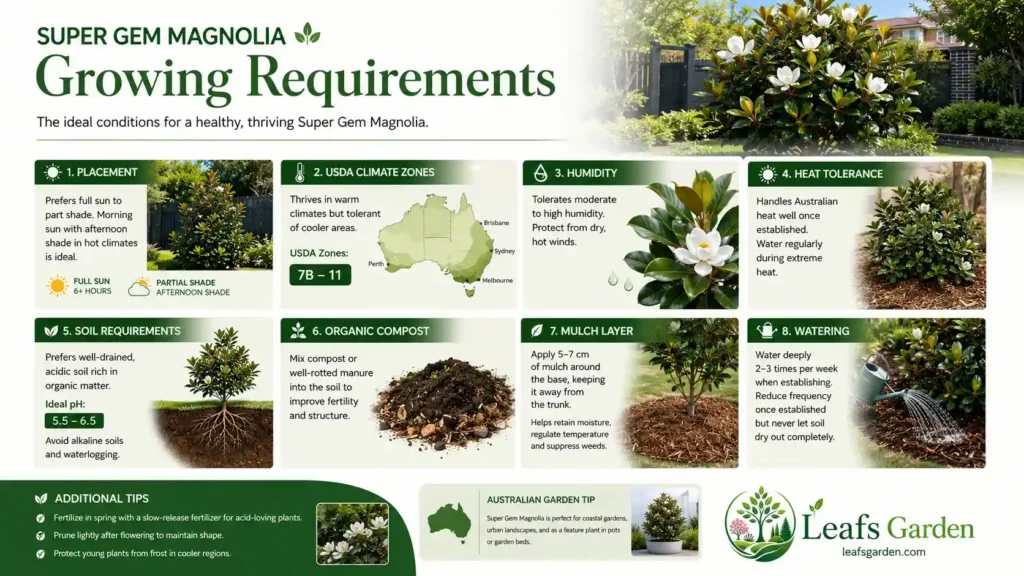
Full sun to partial shade produces the healthiest foliage growth and strongest flowering performance in Super Gem Magnolia.
Many gardeners ask how much sun does a magnolia tree need. For compact evergreen magnolias, at least 6 hours of direct sunlight daily is ideal for dense branching and reliable blooming.
Trees grown in deeper shade may survive, but flowering can become reduced and growth may appear thinner or uneven.
Best placement tips include:
Good airflow recommendations are important because dense evergreen foliage can hold moisture. Proper spacing around the tree helps reduce fungal problems and improves overall plant health.
In hotter climates, light afternoon shade can help reduce leaf stress during extreme summer temperatures while still supporting healthy flowering.
Well-draining slightly acidic soil is essential for healthy magnolia root development and long-term growth.
Many gardeners ask do magnolias like acid soil. The answer is yes. Super Gem Magnolia performs best in soil with mild acidity and high organic content. Heavy alkaline or poorly drained soils can reduce nutrient uptake and weaken the tree over time.
Organic matter improves both drainage and moisture retention around the shallow root system. Adding compost for magnolias during planting helps create healthier soil structure and supports root establishment.
Important soil requirements include:
Magnolia compost blends often contain aged organic material, bark fines, composted leaves, and natural soil conditioners. These materials improve root health while helping maintain steady moisture levels.
Drainage importance is especially high for evergreen magnolias because shallow roots can suffer quickly in saturated soil. Raised beds or improved soil preparation may help in heavier clay conditions.
Young Super Gem Magnolia trees require regular watering until the root system becomes fully established.
During the first growing seasons, consistent moisture supports healthy root spread and evergreen foliage development. Magnolia tree watering should remain deep and even rather than shallow and frequent.
Many gardeners ask how often to water magnolia tree varieties. Newly planted trees generally need watering one to two times weekly depending on temperature, rainfall, and soil drainage.
How much water do magnolia trees need depends on climate and soil type, but the goal is to keep the soil evenly moist without creating standing water around the roots.
Basic watering guidelines include:
Once established, Super Gem Magnolia develops moderate drought tolerance. Mature trees handle short dry periods better than newly planted specimens, although prolonged drought can reduce flowering and cause leaf stress.
The best time to plant magnolia trees is during mild weather conditions when temperatures are not extremely hot or cold. This reduces transplant stress and helps roots establish more quickly.
For most climates, the ideal planting periods are early spring or autumn. These seasons provide cooler soil temperatures, steady moisture, and reduced heat stress for young trees.
Many gardeners ask when to plant magnolia for the strongest establishment. Planting during moderate weather allows the root system to settle before extreme summer heat or winter cold arrives.
The best time to plant magnolias may vary slightly depending on regional climate:
In evergreen magnolia varieties like Super Gem Magnolia, proper seasonal planting improves long-term growth, flowering, and drought resilience.
Proper magnolia planting improves root establishment, canopy development, and long-term tree health. Correct planting depth and soil preparation are especially important because magnolias develop shallow spreading roots.
Select a location with full sun to partial shade and good airflow around the canopy. Allow enough space for the mature width of the tree, hedge line, or container placement.
Important location considerations include:
Healthy soil preparation helps magnolia roots establish more successfully. Mix organic matter and magnolia compost into the planting area before installation.
Good soil preparation should include:
This step improves moisture balance and root aeration.
When learning how to plant magnolia, correct planting depth is critical. Dig a hole approximately twice as wide as the root ball but no deeper than the original container height.
Proper planting practices include:
Understanding how to plant a magnolia tree correctly helps prevent future root stress and drainage problems.
Apply mulch around the base of the tree to retain moisture and protect shallow roots. Keep mulch several centimetres away from direct trunk contact.
Mulching benefits include:
Organic mulch materials like bark chips or leaf mulch work especially well for evergreen magnolias.
Water deeply immediately after planting to settle the soil and remove air pockets around the roots.
Early watering helps:
Young magnolias require consistent watering during the first growing seasons while the root system expands.
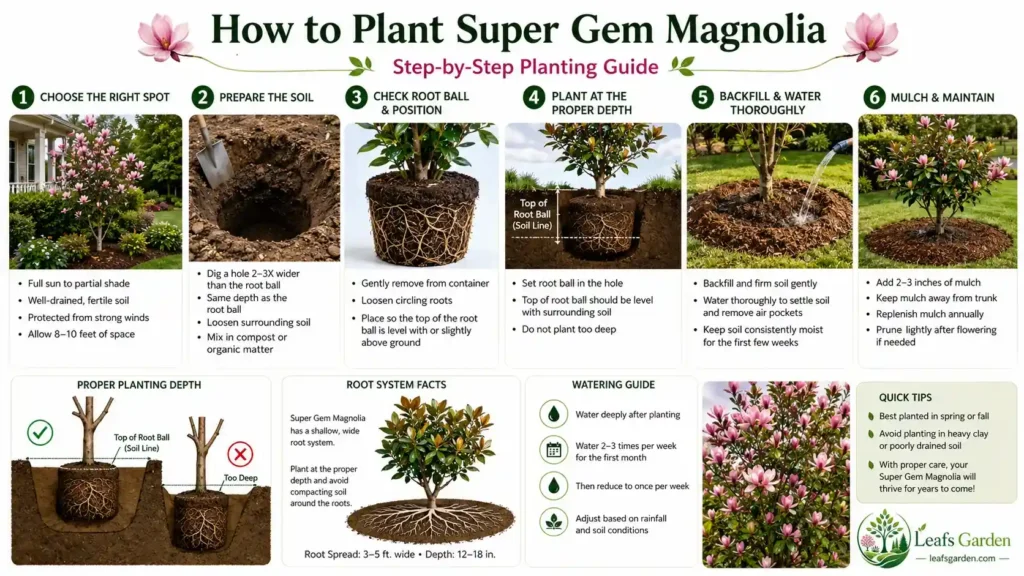
The root system of a magnolia tree is shallow, wide-spreading, and sensitive to heavy soil disturbance. Unlike deep-rooted trees, magnolias develop surface-oriented roots that extend outward gradually over time.
The magnolia root system typically spreads wider than the visible canopy. Because of this, proper spacing is important for healthy long-term growth.
Important root characteristics include:
Spacing recommendations depend on the intended landscape use.
Typical spacing guidelines include:
Because magnolia roots remain relatively shallow, digging or aggressive cultivation near the base of established trees should be minimized. Consistent mulch coverage helps protect roots and maintain stable soil moisture.
Yes, compact evergreen magnolias can successfully grow in large containers when provided with proper soil, drainage, and regular care. Super Gem Magnolia is especially suitable for pot culture because of its manageable growth habit and dense evergreen structure.
Many gardeners ask can magnolias grow in pots or can you grow a magnolia tree in a pot. Compact Magnolia grandiflora varieties like Super Gem and Little Gem adapt very well to container growing compared to large traditional Southern Magnolias.
A magnolia in pot setup works well for:
A magnolia tree in pot conditions generally stays slightly smaller than garden-grown trees, which makes maintenance easier in compact spaces.
Magnolias in pots are commonly used in modern landscaping because they provide:
Will a magnolia tree grow in a pot successfully long term? Yes, but the container must be large enough to support the shallow spreading root system and prevent root restriction.
For best results:
Large containers with rich free-draining soil help reduce root stress and improve long-term plant health.
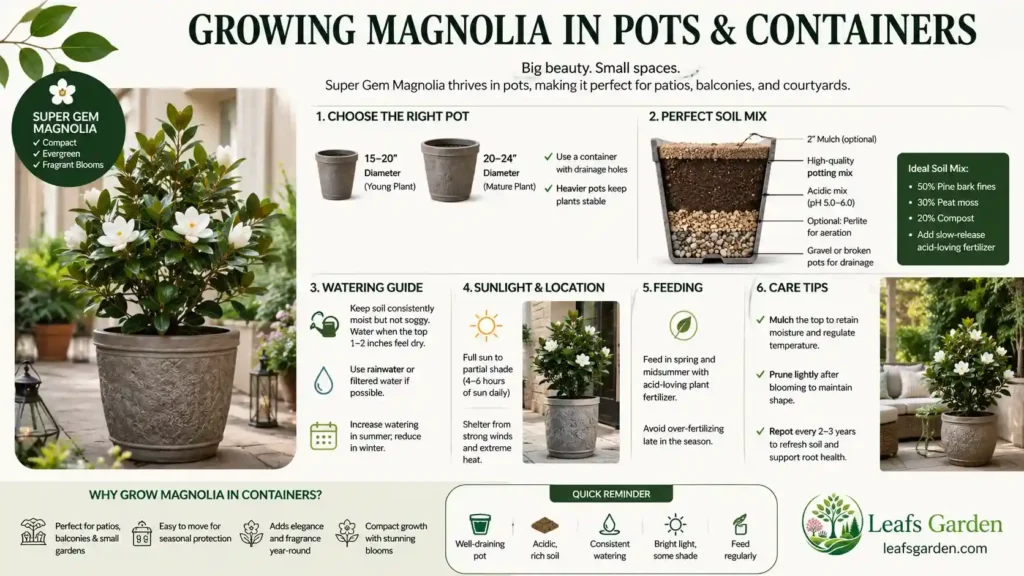
When growing magnolia in containers, the pot should provide enough width and depth for the expanding root system. A small container can dry out quickly and restrict healthy root development.
A suitable magnolia container should include:
For a young magnolia plant in pot conditions, begin with a large container and gradually upgrade as the tree matures.
Recommended potting mix components include:
The ideal soil mix should remain:
A healthy potted magnolia performs best when roots never remain waterlogged for long periods. Drainage is one of the most important factors in successful container growing.
Potted magnolias require more regular maintenance than trees planted directly in the ground because container soil dries faster and nutrients deplete more quickly.
A magnolia pot plant should receive consistent moisture during warm weather, especially during flowering and active growth periods.
Important container magnolia care tips include:
Magnolia little gem in pots may require pruning to maintain balanced shape and airflow, especially in smaller patio settings.
Additional container care recommendations include:
Because container-grown magnolias have limited root space, regular monitoring helps maintain healthy foliage, reliable flowering, and steady evergreen growth throughout the year.
Balanced slow-release fertilizer supports healthy flowering, dense evergreen foliage, and steady root development in Super Gem Magnolia.
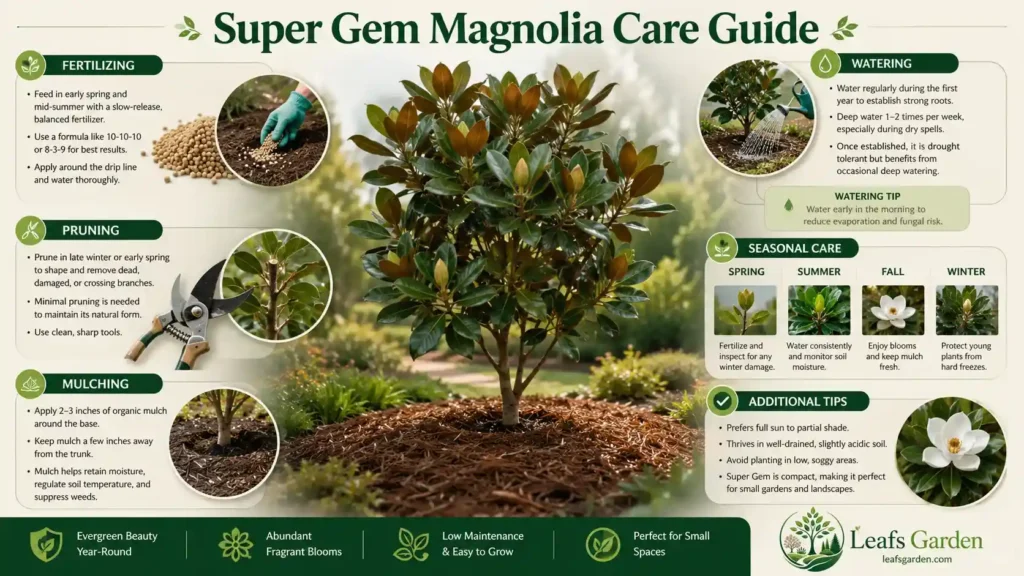
Using the right magnolia fertilizer improves leaf color, flowering performance, and overall tree vigor. Evergreen magnolias benefit from fertilizers designed for acid-loving plants because they prefer slightly acidic soil conditions.
Many gardeners ask about the best fertilizer for magnolia trees. A balanced slow-release product with moderate nitrogen, phosphorus, and potassium is usually the safest option for long-term feeding.
Important fertilizer recommendations include:
A quality fertilizer for magnolia tree growth should support:
Magnolia fertiliser applications are usually needed once or twice annually depending on soil fertility and plant maturity.
Southern magnolia fertilizer products commonly contain added micronutrients like iron and magnesium, which help prevent yellowing leaves in alkaline soils.
Signs a magnolia may benefit from feeding include:
Overfertilizing should be avoided because excessive feeding can reduce flowering and create overly soft growth.
Minimal pruning keeps magnolia trees naturally dense, balanced, and healthy. Super Gem Magnolia usually maintains a tidy upright form without requiring aggressive shaping.
Pruning magnolia trees mainly involves removing damaged, crowded, or poorly positioned branches. Light maintenance pruning also improves airflow and canopy structure.
Many gardeners ask how to prune a magnolia tree correctly. The best approach is gentle selective pruning rather than heavy cutting.
Basic pruning guidelines include:
When trimming magnolia bush forms or hedge plantings, light shaping helps maintain neat evergreen coverage without stressing the tree.
Trim magnolia growth carefully because large cuts may heal slowly on mature branches. Excessive cutting back magnolia trees can reduce future flowering and weaken overall structure.
Important pruning tips include:
Compact evergreen magnolias generally require far less maintenance pruning than fast-growing hedge plants.
Mulching protects shallow roots, improves soil moisture retention, and supports healthier long-term growth.
Because magnolia roots grow close to the soil surface, mulch helps regulate temperature and reduce moisture stress during hot weather.
Good mulch materials include:
Apply mulch around the root zone while keeping direct contact away from the trunk base.
Benefits of mulching include:
Magnolia tree maintenance also includes seasonal monitoring for watering, feeding, drainage, and foliage health.
Basic seasonal care recommendations include:
| Season | Maintenance Focus |
| Spring | Fertilizing and fresh mulch |
| Summer | Deep watering and heat protection |
| Autumn | Light cleanup and soil improvement |
| Winter | Minimal pruning and root protection |
A consistent feeding schedule supports stronger evergreen growth and flowering performance. Most established magnolias only require seasonal fertilizing once or twice yearly.
Important long-term care tips include:
With proper seasonal care, Super Gem Magnolia remains a reliable low-maintenance evergreen tree suitable for hedges, feature planting, and container gardens.
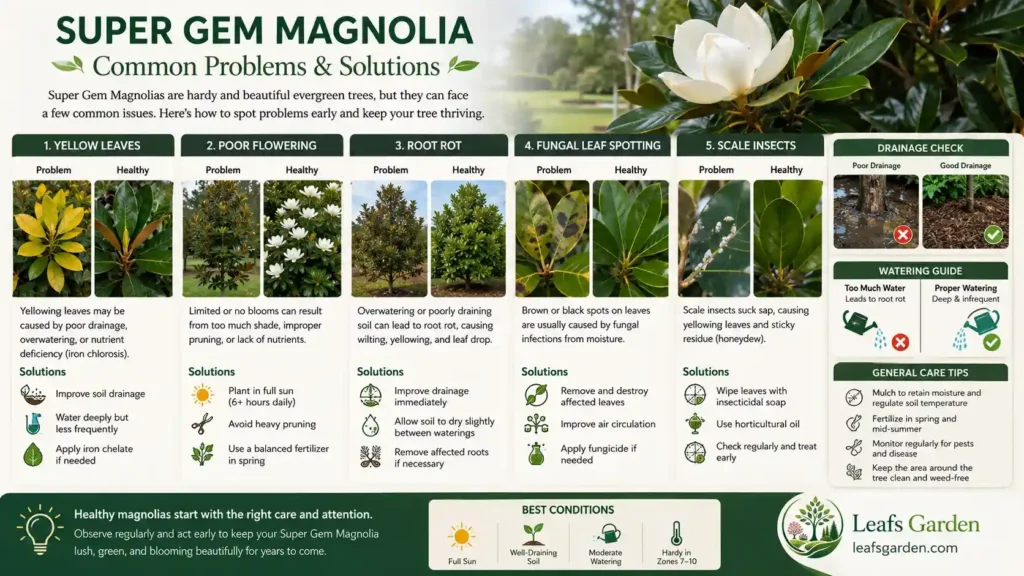
Magnolia leaves turning yellow are usually caused by watering problems, nutrient deficiencies, poor drainage, or unsuitable soil conditions.
Yellow foliage is one of the most common evergreen magnolia issues, especially in newly planted trees or container-grown specimens. Identifying the cause early helps prevent long-term root stress and foliage decline.
Common causes of magnolia yellow leaves include:
A yellow leaves magnolia tree problem often appears first on older foliage before spreading through the canopy.
| Problem | Common Cause | Solution |
| Pale yellow foliage | Nutrient deficiency | Apply balanced magnolia fertilizer |
| Soft yellow leaves | Overwatering | Improve drainage and reduce watering |
| Dry yellow leaf edges | Heat or drought stress | Water deeply and mulch roots |
| Patchy yellowing | Poor soil pH | Improve soil acidity with organic matter |
Maintaining evenly moist well-draining soil is one of the best ways to prevent magnolia leaves turning yellow.
Reduced flowering is commonly linked to insufficient sunlight, excessive fertilizer, immature growth, or environmental stress.
A healthy magnolia bloom tree requires strong light exposure and balanced nutrition for reliable seasonal flowering. If blooming decreases significantly, growing conditions should be reviewed carefully.
Common flowering troubleshooting causes include:
Magnolia tree flowering is usually strongest in full sun conditions with moderate feeding and stable moisture levels.
Many evergreen magnolias increase flowering performance gradually as the canopy matures.
Poorly drained soil can damage shallow magnolia roots very quickly. Root rot is one of the most serious problems affecting compact evergreen magnolias.
The magnolia root system requires oxygen-rich soil with reliable drainage. Constantly wet conditions may suffocate roots and encourage fungal infection.
Common watering mistakes include:
Signs of root stress may include:
Proper drainage solutions improve root health and reduce fungal risk.
Helpful corrective measures include:
Container drainage is especially important for magnolias in pots because restricted soil space dries and saturates more quickly than garden soil.
Healthy drainage conditions help maintain stronger foliage, flowering, and long-term evergreen growth.
Magnolias are generally low-maintenance trees, but occasional fungal or insect problems can still occur under stressful growing conditions.
Most pest and disease issues become more common when airflow is poor, watering is excessive, or foliage remains wet for extended periods.
Common problems include:
Leaf spotting often appears as dark brown or black marks on magnolia leaves. This issue is usually linked to excess moisture or poor airflow around dense foliage.
Scale insects attach to stems and leaves while feeding on plant sap. Heavy infestations may weaken growth and encourage sticky residue buildup.
Preventative care is the best way to reduce pest and disease problems.
Important prevention methods include:
Healthy evergreen magnolias with balanced watering, sunlight, and soil conditions usually resist most serious pest and fungal problems naturally.
Super Gem Magnolia and Little Gem Magnolia are both compact evergreen magnolias commonly used in modern landscapes, hedging, and feature planting. However, their foliage density, growth habit, and mature size can differ slightly.
Super Gem Magnolia is generally valued for its dense upright structure and compact appearance, while Little Gem Magnolia is known for slightly faster vertical growth and wider landscape availability.
| Feature | Super Gem Magnolia | Little Gem Magnolia |
| Mature Size | Compact medium form | Slightly taller growth |
| Flower Size | Large creamy white blooms | Large fragrant white flowers |
| Foliage Density | Very dense evergreen canopy | Dense but slightly more open |
| Hedge Suitability | Excellent screening tree | Excellent hedge option |
| Maintenance | Low-maintenance | Moderate light pruning |
| Growth Habit | Upright compact structure | Narrow upright form |
Both varieties work well as evergreen privacy hedges and ornamental feature trees. They also perform successfully in containers when properly maintained.
Little Gem Magnolia is one of the most commonly planted compact Magnolia grandiflora selections, while Super Gem Magnolia is often preferred for tighter hedge lines and smaller modern gardens.
Teddy Bear Magnolia has denser foliage and a tighter growth habit, while Little Gem Magnolia generally grows slightly taller and faster.
Many gardeners compare teddy bear magnolia vs little gem magnolia when selecting compact evergreen screening trees. Both belong to the Magnolia grandiflora group and produce similar fragrant white flowers, but their canopy appearance differs noticeably.
The evergreen magnolia Teddy Bear variety is especially recognized for:
In comparison, Magnolia Little Gem vs Teddy Bear differences include:
| Feature | Teddy Bear Magnolia | Little Gem Magnolia |
| Foliage Density | Extremely dense | Moderately dense |
| Growth Speed | Moderate | Slightly faster |
| Mature Height | Compact | Slightly taller |
| Hedge Appearance | Formal and tight | Softer natural form |
| Maintenance | Minimal shaping | Light pruning occasionally |
Teddy Bear Magnolia is often chosen for highly structured landscapes, while Little Gem Magnolia suits both formal and relaxed garden styles.
Evergreen magnolias retain their foliage year-round, while deciduous magnolia varieties lose leaves during colder seasons.
Many gardeners ask are magnolias deciduous because the Magnolia genus includes both evergreen and deciduous tree types. The difference mainly depends on species and climate adaptation.
Evergreen magnolia varieties include:
These trees maintain glossy foliage throughout the year and are commonly used for screening and evergreen structure in landscapes.
A deciduous magnolia tree behaves differently by shedding leaves during autumn or winter before flowering again in spring.
Common deciduous magnolia characteristics include:
Popular deciduous magnolia types include:
Evergreen magnolias are typically preferred for privacy hedges and year-round foliage, while deciduous magnolias are often selected for dramatic spring flowering displays.
Super Gem Magnolia is an excellent evergreen hedge tree because of its compact upright growth, dense foliage, and year-round screening ability.
A little gem magnolia hedge or Super Gem hedge creates a polished evergreen boundary that also produces fragrant seasonal flowers. The glossy leaves and dense branching provide privacy while maintaining an ornamental appearance.
A hedge magnolia planting works especially well for:
Proper hedge spacing is important for healthy airflow and dense canopy development.
| Hedge Style | Recommended Spacing |
| Dense privacy hedge | 1.5–2 metres apart |
| Medium informal hedge | 2–2.5 metres apart |
| Feature spacing | 3 metres or more |
Magnolia little gem hedge spacing depends on the desired fullness and long-term maintenance goals. Closer planting creates faster screening, while wider spacing improves airflow and reduces future pruning needs.
Important hedge planting tips include:
Because of their evergreen foliage and manageable size, compact magnolias are widely used in modern residential hedge designs.
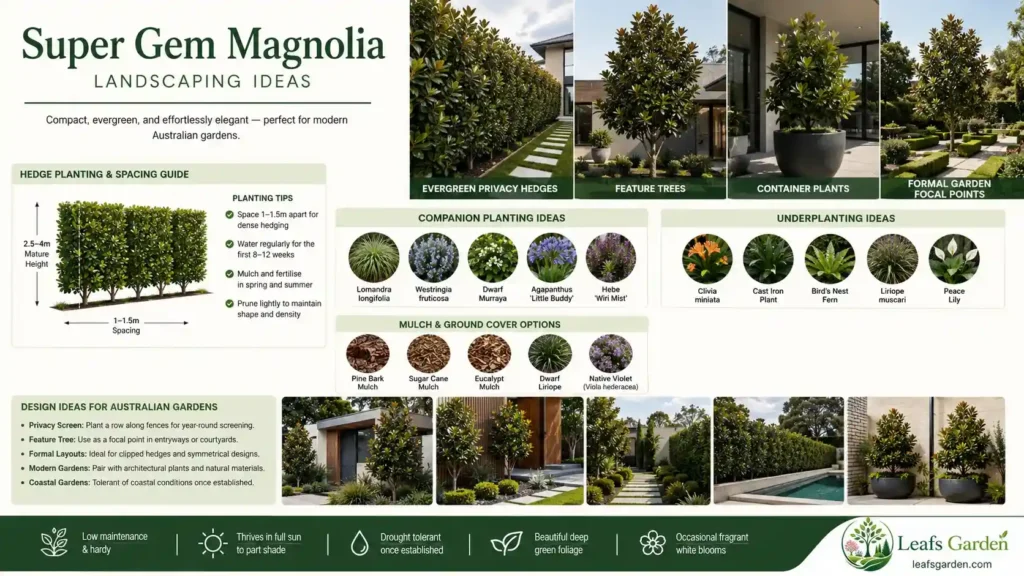
For gardeners exploring additional compact evergreen options alongside magnolia hedges, dwarf flowering gum varieties offer vibrant seasonal colour and similarly manageable growth habits suited to modern Australian landscapes.
Super Gem Magnolia works beautifully as a feature tree because of its glossy evergreen foliage, fragrant white blooms, and symmetrical structure.
A garden magnolia instantly creates visual focus in courtyards, front gardens, patios, and formal landscapes.
This quality places Super Gem Magnolia among the most versatile choices in this complete ornamental flowering trees for beautiful landscapes guide, covering tree selection, seasonal interest, and modern garden design.
Even when not flowering, the evergreen canopy provides strong year-round structure.
This flower magnolia tree is especially effective in:
An evergreen magnolia shrub form can also be maintained through light pruning in smaller spaces where a compact ornamental shape is preferred.
Key visual features include:
Feature tree placement works best when the magnolia has enough surrounding space to display its natural shape and flowering habit.
Shade-tolerant and acid-loving plants pair especially well with evergreen magnolias because they prefer similar soil and moisture conditions.
Underplanting Magnolia Little Gem or Super Gem Magnolia helps soften the landscape while protecting shallow roots from heat and moisture loss.
Suitable companion plants include:
These plants complement magnolia foliage while thriving in lightly shaded root zones.
In gardens where white-flowering evergreen companions are preferred, camellia sasanqua white is another excellent option that pairs naturally with magnolias through shared soil preferences and elegant seasonal blooms.
Good mulch plants and groundcovers help:
Popular evergreen combinations with magnolias include:
| Companion Type | Landscape Benefit |
| Camellias | Evergreen flowering contrast |
| Ferns | Soft texture under canopy |
| Liriope | Border definition |
| Gardenias | Fragrant layered planting |
| Azaleas | Acid-loving compatibility |
When underplanting magnolia little gem varieties, avoid aggressive root competition or deep digging around the base of the tree because magnolia roots remain shallow and sensitive to disturbance.
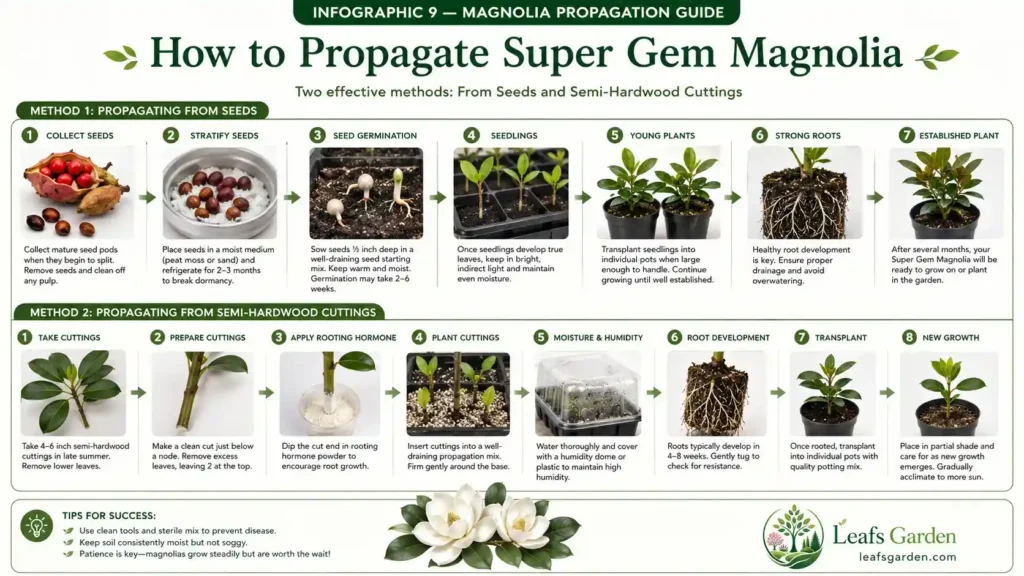
Growing a magnolia tree from seed is possible, but it requires patience, proper preparation, and consistent germination conditions. Seed propagation is slower than cuttings, but it allows gardeners to grow new magnolia plants naturally from mature seed pods.
Magnolia seeds are usually collected from ripe seed cones during autumn when the bright red seeds become visible.
For successful planting magnolia seeds, the seeds should first be cleaned and prepared properly before sowing.
Harvest ripe magnolia seeds from healthy mature trees once seed pods begin opening naturally.
Clean away the red outer coating because it can slow germination and encourage fungal growth.
Most magnolia seeds require a cold period before germination.
Place seeds in moist material such as:
Store them in the refrigerator for several weeks before planting.
After stratification, sow seeds in moist well-draining seed-raising mix.
Important planting conditions include:
Magnolia seedlings may take several weeks or months to emerge depending on temperature and seed quality.
Young seedlings benefit from:
Propagating magnolia trees from seed is slower than vegetative propagation methods, but healthy seedlings can eventually develop into strong evergreen trees.
Semi-hardwood cuttings provide a faster and more reliable way to reproduce Super Gem Magnolia compared to seed propagation.
Many gardeners researching how to propagate magnolia prefer cuttings because the new plants remain genetically identical to the parent tree.
The best time to take cuttings is usually during late spring or summer when stems are partially mature but still flexible.
Choose a healthy semi-hardwood stem from recent growth with no signs of disease or stress.
Cut approximately 10–15 cm of stem below a leaf node.
Remove lower leaves while leaving several leaves at the top.
Dip the cut end into rooting hormone to encourage faster root development.
Place cuttings into moist free-draining propagation mix.
Suitable materials include:
Keep cuttings warm and humid while roots develop.
Helpful propagation conditions include:
Roots may begin forming after several weeks depending on environmental conditions.
Once new growth appears, the young magnolia seedling or rooted cutting can gradually transition into larger containers before final planting into the garden.
Super Gem Magnolia provides year-round evergreen structure with dense glossy foliage that remains attractive in every season.
Unlike deciduous flowering trees, this evergreen magnolia keeps its leaves throughout the year, helping gardens maintain color, privacy, and visual balance even during cooler months.
Its compact upright canopy creates:
The dark green leaves with bronze-toned undersides add contrast and depth to both formal and relaxed landscape designs.
Super Gem Magnolia produces large creamy white flowers with a strong sweet fragrance during the flowering season.
The blooms stand out clearly against the glossy evergreen foliage and create a classic magnolia appearance in gardens and outdoor living spaces.
Flowering benefits include:
The fragrant flower display makes this magnolia highly desirable near patios, walkways, courtyards, and entrance areas where the scent can be appreciated more easily.
Super Gem Magnolia is considered a relatively low-maintenance landscape tree once established.
Its naturally compact growth habit reduces the need for constant pruning or aggressive shaping compared to many fast-growing hedge plants.
Low-maintenance advantages include:
The tree also shows reasonable resistance to many common garden pests and environmental stresses when planted in suitable conditions.
Regular care usually involves:
One of the biggest advantages of Super Gem Magnolia is its suitability for smaller landscapes and container growing.
Because it grows more compactly than traditional Southern Magnolia trees, it fits well into:
Container growing allows gardeners to enjoy evergreen magnolia beauty even in limited outdoor spaces.
Its manageable mature size also makes maintenance easier while still providing impressive foliage and flowering performance.
Super Gem Magnolia supports garden biodiversity by attracting pollinators and providing shelter within its dense evergreen canopy.
The fragrant flowers help attract beneficial insects during blooming periods, while the evergreen foliage offers year-round protection for small wildlife and birds.
Wildlife-related benefits include:
A mature magnolia can help create a healthier and more balanced garden ecosystem while also improving ornamental landscape value.
| Feature | Details |
| Botanical Name | Magnolia grandiflora |
| Plant Type | Evergreen flowering tree |
| Mature Height | Compact / dwarf form |
| Sunlight | Full sun to partial shade |
| Water Needs | Moderate |
| Soil Type | Well-draining acidic soil |
| Flower Color | Creamy white |
| Best Uses | Hedge, specimen, container |
| Feature | Details |
| Botanical Name | Magnolia grandiflora |
| Plant Type | Evergreen flowering tree |
| Mature Height | Compact / dwarf form |
| Sunlight | Full sun to partial shade |
| Water Needs | Moderate |
| Soil Type | Well-draining acidic soil |
| Flower Color | Creamy white |
| Best Uses | Hedge, specimen, container |
Super Gem Magnolia typically reaches around 4–6 metres in height with a width of approximately 2–3 metres at maturity. Its compact size makes it suitable for smaller gardens, hedges, and container growing.
Yes, Super Gem Magnolia can grow successfully in large containers. A magnolia in pot setup works best when the container has good drainage, rich organic soil, and regular watering. Compact evergreen magnolias adapt well to patio and courtyard planting.
Little Gem Magnolia has a moderate growth rate under ideal conditions. In warm climates with good soil and regular watering, it can grow steadily each year while maintaining a compact upright form.
Most evergreen magnolia trees flower from late spring through summer. In warmer climates, some magnolias bloom repeatedly and may continue producing flowers into early autumn.
The best fertilizer for magnolia trees is a balanced slow-release fertilizer formulated for acid-loving plants. Magnolia fertilizer should support healthy foliage growth, root development, and seasonal flowering without excessive nitrogen.
Magnolia leaves turning yellow are commonly caused by overwatering, poor drainage, nutrient deficiencies, or unsuitable soil pH. Improving drainage and using proper magnolia fertiliser often helps restore healthy foliage color.
Yes, Super Gem Magnolia is an evergreen magnolia tree. It keeps its glossy green foliage year-round, making it ideal for privacy hedges and permanent landscape structure.
Young magnolia trees should be watered regularly until fully established. Most newly planted trees benefit from deep watering one or two times weekly depending on weather, soil drainage, and temperature conditions.