Grow Better Gardens with Smarter Plant Choices
Discover helpful guides on trees, hedges, fruit plants, edible plants, and beautiful landscape greenery.

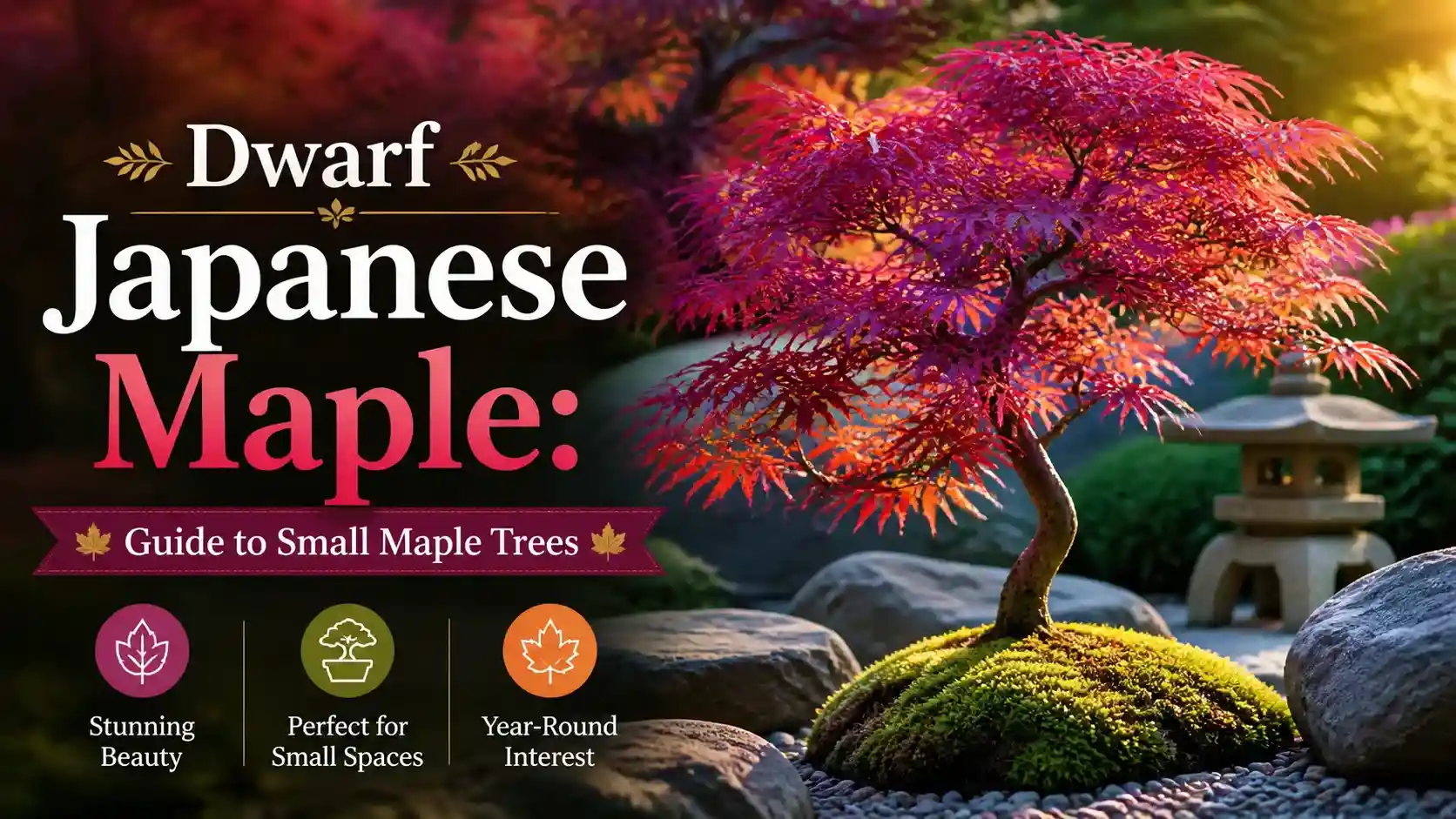
The dwarf Japanese maple tree is a charming and versatile addition to any garden or landscaped space. Known for its compact size and exquisite foliage, it has become a favorite among gardeners seeking elegance without overwhelming their outdoor area. These small maple trees offer a striking visual appeal with their delicate leaves and vibrant seasonal colors, making them perfect for adding texture and interest to gardens of all sizes.
Whether planted as a focal point, a border accent, or in a container, the miniature Japanese maple brings a sense of tranquility and refined beauty. Its manageable size allows it to thrive in smaller gardens while still providing the distinctive aesthetic of a traditional Japanese maple in garden settings. Ideal for both seasoned gardeners and beginners, the dwarf Japanese maple tree combines ornamental charm with practical versatility.
A dwarf Japanese maple tree is a compact variety of the Acer palmatum species, specifically cultivated for its smaller size and delicate form. Unlike standard Japanese maples, these miniature Japanese maple trees remain manageable in height and spread, making them ideal for small gardens, patios, or container planting. The Japanese miniature maple is prized for its intricate leaves, graceful branching, and vibrant seasonal colors, all of which contribute to its ornamental appeal without dominating the surrounding landscape.
The Japanese maple tree, or Japanese Acer palmatum, has a long history of cultivation in Japan, dating back centuries. Originally appreciated for their aesthetic qualities in temple gardens and traditional landscapes, these trees were selectively bred for unique leaf shapes, colors, and growth habits. Over time, the Japanese acer palmatum became a symbol of refinement and elegance in gardens, spreading globally as gardeners embraced its beauty for ornamental planting.
Several dwarf Japanese maple varieties have gained popularity for their distinctive appearances and growth habits:
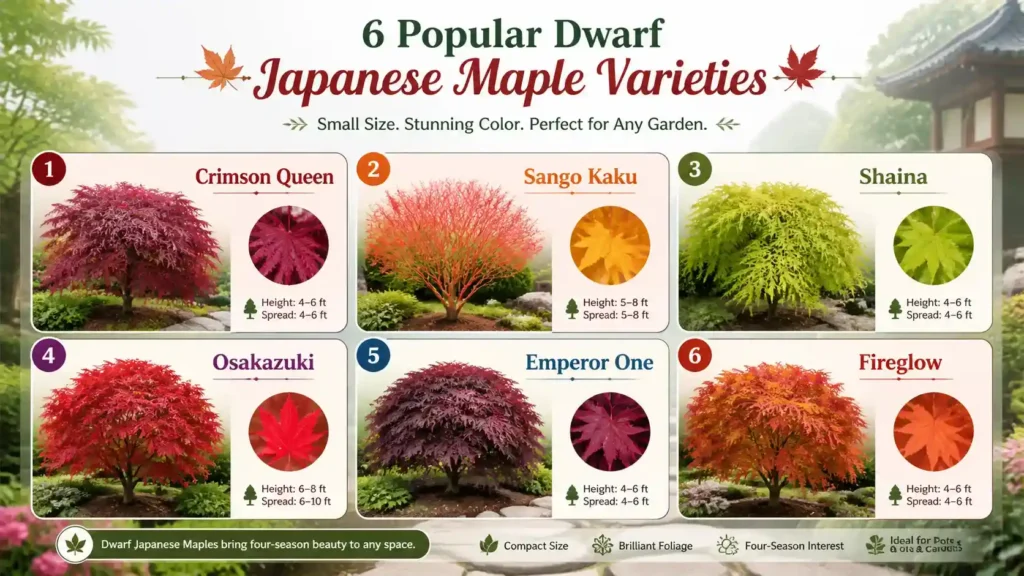
These maple Japanese Crimson Queen, Japanese maple Sango Kaku, Japanese maple Shaina, Japanese maple Osakazuki, Japanese fireglow maple, and Japanese maple Emperor One varieties provide gardeners with versatile options to enhance both small and large landscapes.
Dwarf Japanese maple trees are renowned for their compact size and slow, manageable growth. Typically, the size of Japanese maple varieties ranges from 3 to 10 feet in height, with a similar spread, making them ideal for smaller gardens or container planting. The Japanese acer height is generally modest compared to standard maples, allowing gardeners to enjoy a striking focal point without excessive maintenance. Over the years, these tiny Japanese maple trees gradually develop their full shape, often taking 5 to 10 years to reach maturity, which makes them perfect for spaces where a full-sized tree would be overwhelming.
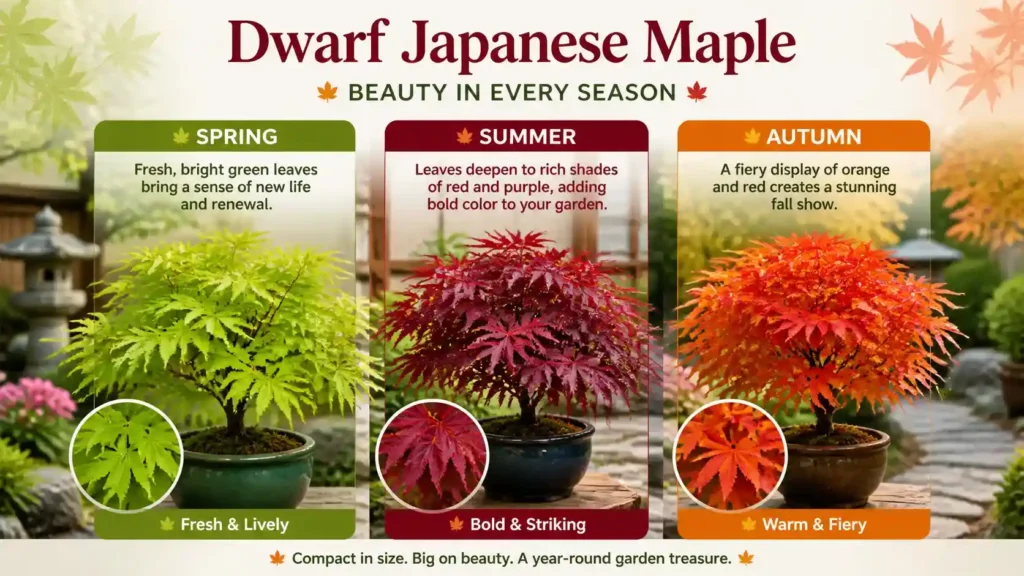
One of the most captivating features of dwarf Japanese maples is their vibrant foliage. Depending on the variety, leaves can showcase a range of colors, from lush greens to deep purples. Varieties like the Japanese maple red display fiery tones throughout the growing season, while others, such as the Japanese red leaf maple, offer a brilliant transformation during autumn. Even purple Japanese maple varieties provide striking visual contrast, ensuring year-round interest in the garden. These seasonal changes make the miniature Japanese maple a dynamic and visually appealing choice for landscape design.
These seasonal variations are often better understood when compared with broader plant types like Deciduous vs Evergreen trees, which help explain why some trees change color while others stay green year-round.
The root system of Japanese maple trees is relatively shallow and delicate, which requires careful attention in small gardens and container settings. A healthy Japanese maple root system ensures proper nutrient uptake and stability, but overwatering or poorly drained soil can lead to root issues. Gardeners should provide well-draining soil and avoid compacting the planting area to maintain the health of these tiny Japanese maples. Proper care of the root system not only supports growth but also contributes to the overall longevity and beauty of the tree.
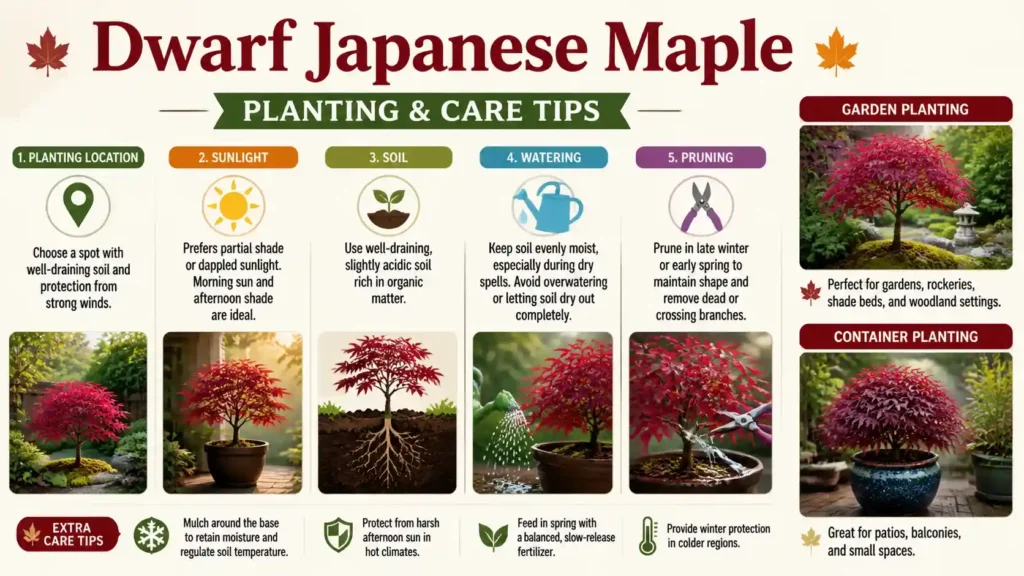
Dwarf Japanese maple trees thrive in locations that balance sunlight and protection. While some varieties tolerate Japanese maple full sun, many perform best in partial shade, especially in hotter climates where intense sunlight can scorch the delicate leaves. For gardeners considering indoor cultivation, Japanese maple indoor placement near bright, indirect light can support healthy growth. These trees also adapt well to containers, making Japanese maples in pots an excellent option for patios, balconies, or small gardens. Selecting the right location ensures optimal growth and preserves the vibrant foliage colors that make these miniature Japanese maples so appealing.
Caring for a dwarf Japanese maple begins with well-draining, slightly acidic soil. A mix rich in organic matter promotes healthy root development and moisture retention. Regular watering is essential, particularly during dry periods, but overwatering can harm the roots. Fertiliser designed specifically for Japanese maples supports balanced growth and vibrant leaf color. Following proper Acer palmatum care guidelines, such as adjusting watering schedules seasonally and applying Japanese maple fertiliser in spring and early summer, helps maintain healthy trees. Consistent attention to soil, watering, and feeding ensures the long-term vitality of these ornamental trees.
Pruning is key to shaping and maintaining the elegance of dwarf Japanese maples. Techniques include removing dead or crossing branches, thinning dense growth, and shaping the canopy to highlight natural form. Regular maintenance encourages healthy Japanese maple growth and prevents overcrowding, which can reduce airflow and increase disease risk. Planting Japanese maple with proper spacing and using careful pruning enhances both aesthetics and tree longevity. Consistent Japanese maple cultivation practices ensure that the miniature Japanese maple remains a striking and well-maintained feature in any garden or container setting.
Dwarf Japanese maples are perfect for small tree landscaping, adding elegance and structure without overwhelming limited spaces. Their compact size makes them ideal as specimen trees for small gardens, drawing attention with their vibrant foliage and graceful branching. When planning placement, consider areas where the tree can serve as a focal point or accent, such as near walkways, patios, or garden corners. Pairing these ornamental Japanese trees with low-growing perennials, ferns, or flowering shrubs enhances contrast and texture, creating a visually appealing miniature garden environment. These miniature trees outdoor provide year-round interest and a sense of tranquility to even the coziest spaces.
For a deeper understanding of how plant selection, care conditions, and comparisons influence long-term garden success, you can explore this guide on The Ultimate Guide to Plant Growth, Care & Comparisons for Gardens and Indoor Spaces.
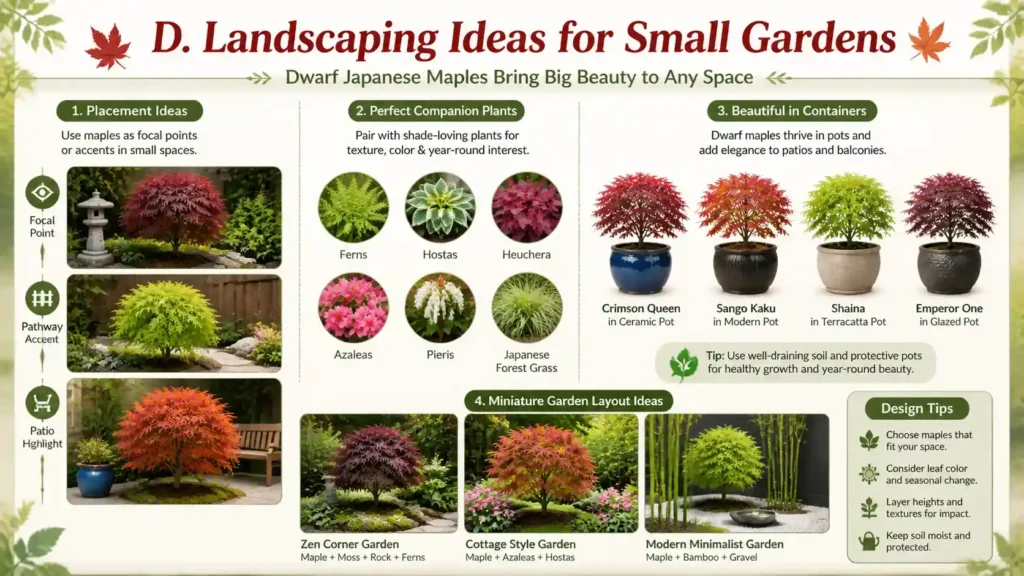
Dwarf Japanese maples excel in container gardening, making them a favorite for patios, decks, and small courtyards. When grown as a Japanese maple in pot, select a container with proper drainage and enough space for root growth. Regular watering and fertilization tailored to container plants help maintain vitality. These trees also adapt well to bonsai techniques, allowing gardeners to cultivate a potted maple tree with intricate shapes and controlled growth. Indoor cultivation as a Japanese maple indoor plant is possible with bright, indirect light, providing versatility for gardeners who want to enjoy the beauty of these trees year-round.
Dwarf Japanese maples are generally hardy, but they can be susceptible to certain pests and diseases if not properly cared for. Common issues include aphids, which feed on sap and can distort new growth, and scale insects, which attach to branches and leaves, weakening the tree over time. Leaf scorch, caused by excessive sun exposure or inconsistent watering, can also affect foliage appearance. Following proper Japanese maple care routines, including regular inspection, pruning of affected areas, and use of safe pest control measures, helps ensure the health of your tree. Preventive measures are key in Japanese maple disease prevention, keeping the tree vibrant and thriving.
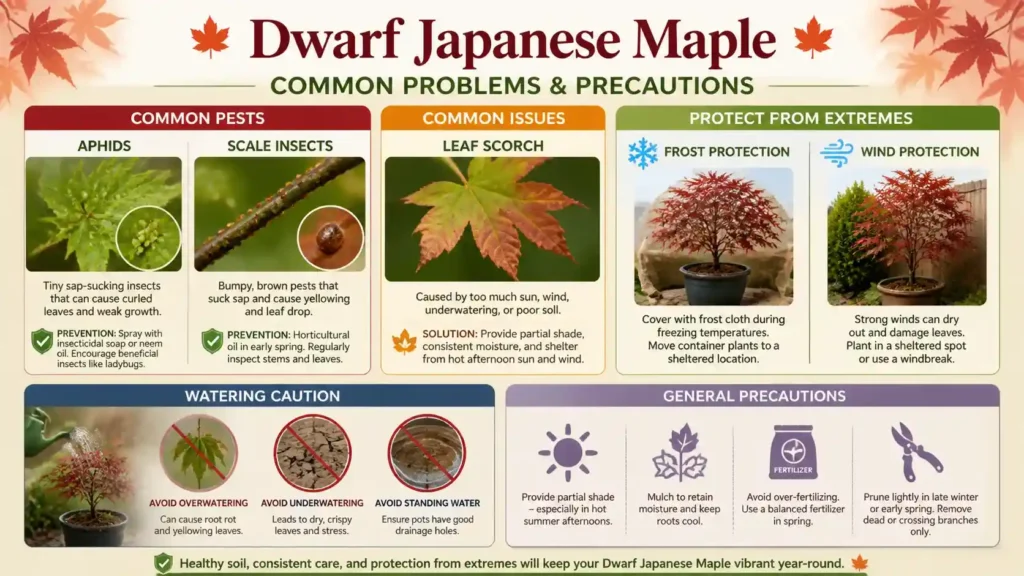
Environmental factors can significantly impact the well-being of a dwarf Japanese maple. Frost can damage young shoots, so protective measures like covering or relocating potted trees during cold snaps are essential. Strong winds may break delicate branches or dry out leaves, necessitating sheltered planting or windbreaks. Overwatering or poorly drained soil can lead to root rot, making careful attention to watering practices critical. Adhering to recommended Japanese maple care and thoughtful Japanese maple planting strategies helps safeguard these miniature trees, ensuring they flourish in both garden and container settings.
This becomes especially important in regions where non-deciduous trees in Australia dominate landscapes, as planting strategies may differ based on evergreen and native tree behavior.
Here’s a comparison of the top dwarf Japanese maple varieties, highlighting their height, leaf color, growth rate, and sun requirements:
|
Variety |
Height | Leaf Color | Growth Rate |
Sun Requirements |
|
Crimson Queen |
4–6 ft | Deep red | Slow | Partial shade to full sun |
| Sango Kaku | 6–8 ft | Bright green turning golden in autumn | Moderate |
Full sun to partial shade |
|
Shaina |
3–5 ft | Vivid red | Slow | Partial shade |
| Osakazuki | 6–8 ft | Green turning brilliant red in autumn | Moderate |
Full sun to partial shade |
|
Emperor One |
4–6 ft | Crimson | Slow | Partial shade |
| Fireglow | 5–7 ft | Fiery red | Moderate |
Full sun to partial shade |
These Japanese maple varieties provide a range of options for gardeners seeking ornamental appeal. From the cascading elegance of the Acer palmatum red pygmy Japanese maple (Crimson Queen) to the striking foliage of the Japanese weeping maple tree, each selection offers unique beauty. For compact landscapes or container planting, the sensation maple tree and Japanese maple Shaina are especially well-suited, combining manageable size with vibrant seasonal colors.
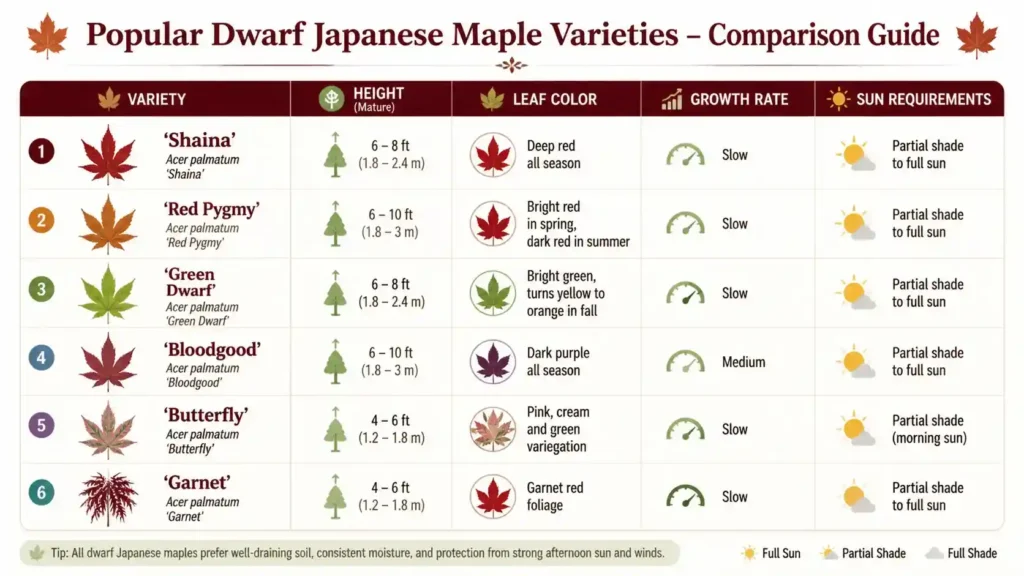
For small gardens, compact varieties like Shaina, Crimson Queen, and Emperor One are ideal. They offer manageable height, vibrant foliage, and a graceful form without dominating limited spaces.
Caring for a miniature Japanese maple involves providing partial shade or filtered sunlight, well-draining slightly acidic soil, regular watering without overwatering, and occasional fertilization. Pruning dead or crossing branches helps maintain shape and health.
Yes, many dwarf Japanese maples adapt well to container gardening. Use a pot with good drainage, place it near bright indirect light, and monitor watering carefully. Some varieties can even thrive as Japanese maple indoor plants with proper care.
Common pests include aphids, scale insects, and mites. Leaf scorch can also occur due to environmental stress. Regular inspection and maintaining proper Japanese maple care reduces the risk of infestations.
Typically, dwarf Japanese maples take 5–10 years to reach maturity, depending on the variety, growing conditions, and care provided.
Some varieties tolerate full sun, but most prefer partial shade, especially in hotter climates, to prevent leaf scorch. Selecting the right variety for your climate is essential.
Yes, they thrive in well-draining, slightly acidic soil enriched with organic matter. Avoid heavy clay or waterlogged soil, which can harm the delicate root system.
Absolutely. Their compact size, intricate branching, and colorful foliage make them excellent candidates for bonsai cultivation. Regular pruning and container care are key to success.
Yes, but ensure enough spacing for airflow and growth. Combining different varieties can create a layered, colorful landscape, but avoid overcrowding to prevent disease and stunted growth.
Spring and early fall are ideal planting times. The weather is moderate, allowing roots to establish before extreme heat or cold, ensuring healthy growth and strong establishment.