Grow Better Gardens with Smarter Plant Choices
Discover helpful guides on trees, hedges, fruit plants, edible plants, and beautiful landscape greenery.

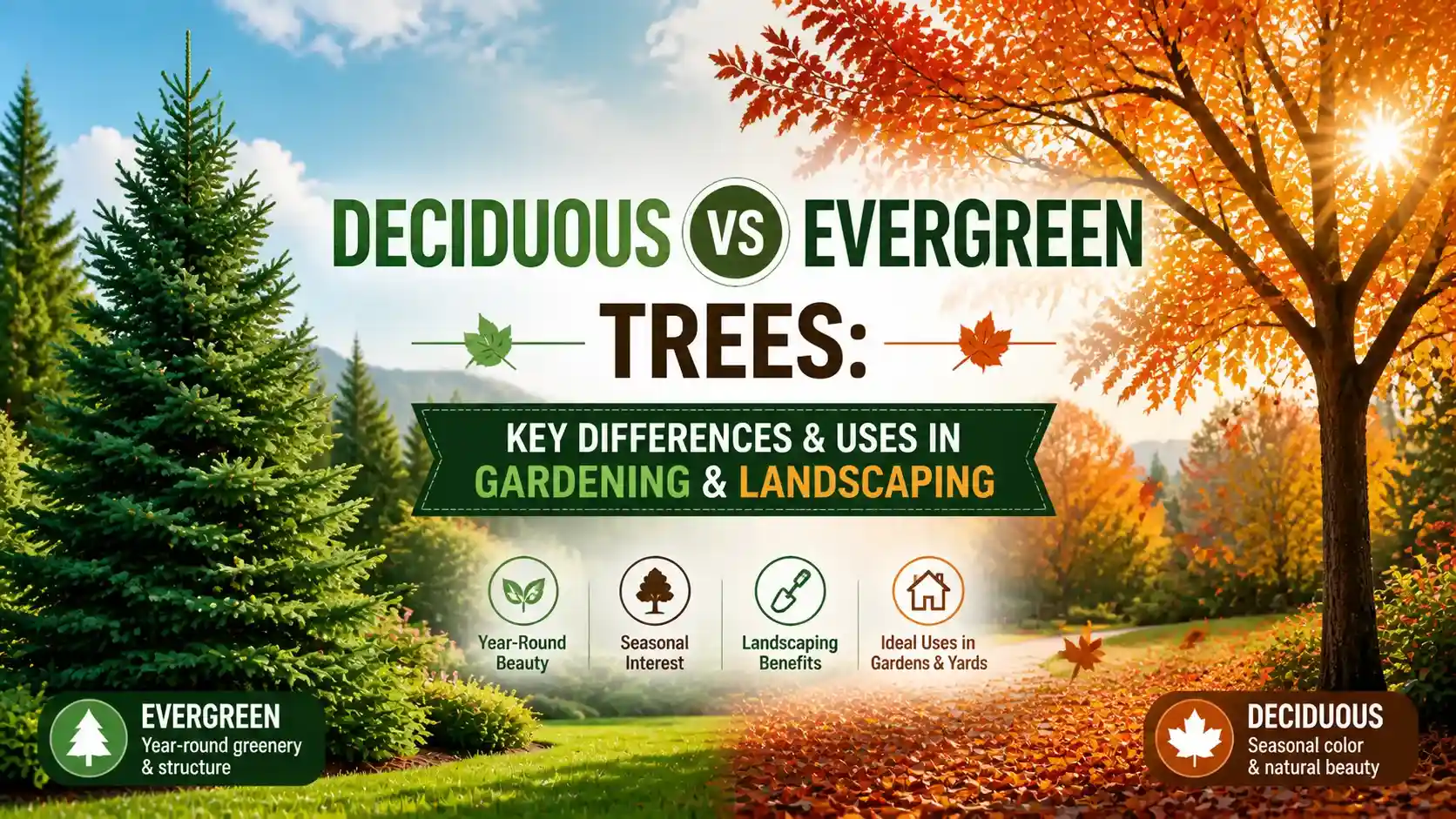
Understanding the differences between deciduous vs evergreen trees is essential for gardeners, landscapers, and anyone interested in ecological systems. These two major types of trees play unique roles in landscapes, providing seasonal changes, shade, and biodiversity. Knowing which type to plant can influence garden aesthetics, urban planning, and ecological health.
Deciduous trees are those that shed their leaves annually, typically in autumn, allowing them to conserve energy during colder months. This can include trees with broadleaf or star-shaped foliage. On the other hand, evergreen trees retain their foliage year-round, providing continuous greenery and shelter regardless of the season. Grasping the definition of deciduous tree and understanding evergreen trees helps make informed choices for planting, maintenance, and environmental impact.
By exploring the deciduous meaning and deciduous trees definition, readers can gain clarity on how each tree type behaves and how to utilize them effectively in both domestic and ecological settings.
A deciduous tree is a type of tree that sheds its leaves annually, usually in autumn, to conserve energy during colder or dry seasons. Understanding what is a deciduous tree helps gardeners, landscapers, and environmental enthusiasts recognize how these trees adapt to seasonal changes. The deciduous meaning refers to this natural cycle of leaf shedding, which allows trees to survive unfavorable weather conditions and prepare for new growth in spring. To define deciduous trees more precisely, they are typically broadleaf trees that undergo this yearly process, creating a dynamic and changing landscape. The definition of a deciduous tree highlights both its seasonal transformation and ecological role in providing nutrients back to the soil.
Deciduous trees are known for several distinctive characteristics:
This combination of seasonal adaptability and visually appealing foliage makes deciduous trees a popular choice for both residential and ecological planting projects.
Deciduous trees are found worldwide and in Australia, offering diverse options for different climates and uses:
These examples demonstrate the versatility of deciduous trees for landscaping, ecological enhancement, and practical gardening purposes.
Evergreen trees are trees that retain their foliage throughout the year, unlike deciduous trees that shed their leaves seasonally. To define evergreen trees, they maintain continuous greenery, providing consistent shade, habitat, and aesthetic appeal in gardens and natural landscapes. There are various types of trees evergreen, ranging from conifers like pines and firs to broadleaf species such as holly. Understanding evergreen tree species is essential for gardeners, landscapers, and ecologists, as these trees offer year-round benefits, contribute to soil stability, and support wildlife across all seasons.
Evergreen trees exhibit several distinctive traits that differentiate them from deciduous trees:
Overall, the combination of persistent leaves and adaptability makes tree types evergreen highly valued for both ecological and aesthetic purposes.
In Australia, evergreen trees play a crucial role in landscaping, urban greenery, and ecological projects:
The presence of evergreen trees in Australian landscapes ensures consistent foliage, ecological balance, and practical benefits for gardeners and urban planners alike.
One of the most noticeable differences between deciduous vs evergreen plants is their leaf behavior and growth patterns. Deciduous trees vs evergreen trees shed their leaves seasonally, usually in autumn, creating a cycle of bare branches followed by fresh spring growth. In contrast, evergreen vs deciduous trees maintain foliage year-round, providing continuous greenery and shelter. This difference affects garden aesthetics, seasonal landscaping, and ecological benefits, as deciduous trees contribute to nutrient cycling through leaf litter, while evergreens offer consistent shade and wind protection.
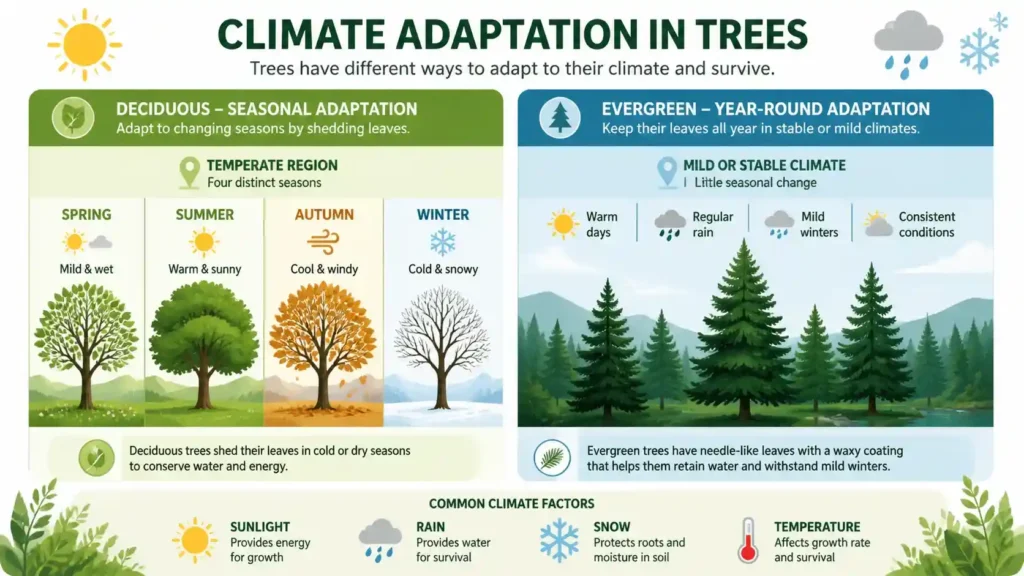
Both deciduous and evergreen trees have evolved to thrive under specific climate conditions:
This adaptation ensures that each tree type can survive and flourish while contributing to local biodiversity and environmental stability.
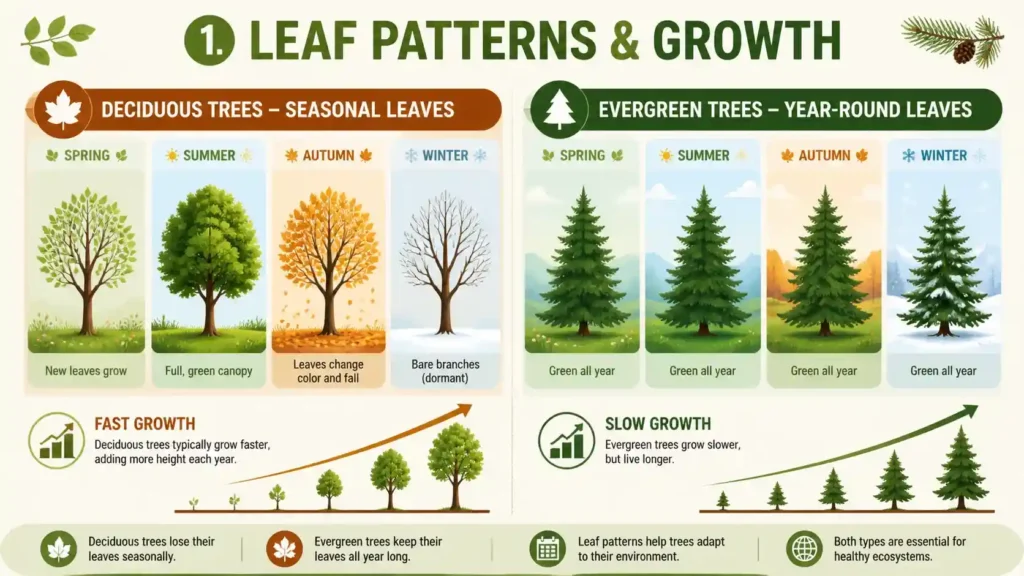
Choosing between deciduous and evergreen trees depends on the desired function in gardens, parks, and urban areas:
These seasonal characteristics are often showcased in ornamental species like Dwarf Japanese Maple: Guide to Small Maple Trees, which is widely used in compact and decorative garden designs.
In many modern landscapes, evergreen structure is often combined with ornamental grasses such as Pennstripe Pennisetum: Care & Growing Guide to create layered texture and soft movement in garden designs.
Understanding these practical applications helps gardeners and landscapers select the right species for their specific needs.
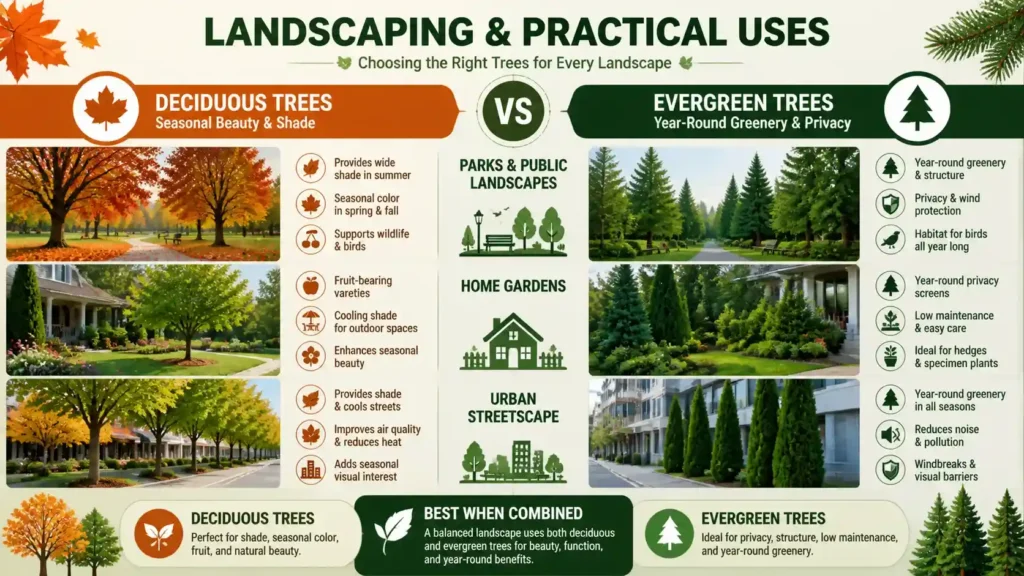
Growth rate is another key distinction:
Considering growth rates helps in planning landscapes that balance immediate impact with long-term sustainability.
A deciduous coniferous tree is a unique type of tree that combines characteristics of both deciduous and coniferous species. Unlike most conifers that retain their needles year-round, these trees shed their needles seasonally. Understanding conifer vs deciduous distinctions helps clarify how these trees differ from typical evergreens and deciduous broadleaf trees. The comparison of coniferous vs deciduous traits highlights that deciduous conifers, such as larches and dawn redwoods, offer seasonal foliage changes while maintaining the structural form and needle-like leaves typical of conifers. These trees are valuable for landscapes requiring both seasonal variation and coniferous aesthetics.
For clarity in botanical terminology, it is useful to understand the opposites and antonyms of key tree types:
Recognizing these opposites ensures precise communication when discussing tree types and their ecological and practical roles in gardens and natural environments.
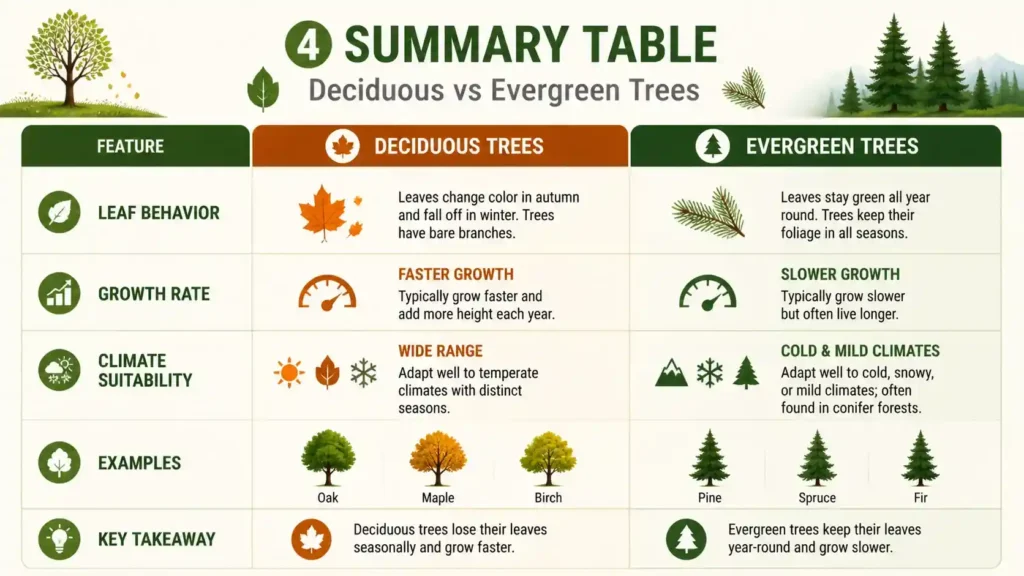
The following table summarizes the difference between deciduous and evergreen trees, highlighting key characteristics, growth patterns, and examples for quick reference:
| Feature | Deciduous Trees |
Evergreen Trees |
|
Leaf Behavior |
Shed leaves annually, usually in autumn | Retain leaves year-round, providing continuous greenery |
| Growth Rate | Many species are fast-growing; some quick-growing varieties ideal for landscaping |
Often slower-growing, offering long-term stability and foliage |
|
Climate Suitability |
Thrive in regions with distinct seasons; temperate climates ideal | Adapted to stable climates or mild winters; suitable for year-round photosynthesis |
| Examples | Oak, Maple, Birch, Apple, Cherry; deciduous Australian trees like Queensland brush box |
Pine, Fir, Eucalyptus, Callistemon; Australian evergreens commonly planted in Perth |
This table provides a clear comparison of evergreen and deciduous trees, making it easier to understand their ecological roles, landscaping potential, and practical uses. It highlights the difference between evergreen and deciduous species, enabling informed decisions for gardening, urban planning, and environmental management.
Understanding deciduous vs evergreen trees is essential for making informed decisions in gardening, landscaping, and ecological planning.
For a deeper understanding of how plant selection, care conditions, and comparisons influence long-term garden success, you can explore this detailed guide on The Ultimate Guide to Plant Growth, Care & Comparisons for Gardens and Indoor Spaces.
Deciduous trees offer seasonal beauty, rapid growth, and nutrient cycling through annual leaf shedding, while evergreen trees provide year-round foliage, long-term stability, and consistent ecological benefits.
By recognizing the unique characteristics, growth patterns, and climate adaptations of each type, gardeners and landscapers can select the most suitable species for their projects. Applying this knowledge ensures visually appealing, sustainable, and functional landscapes, whether designing home gardens, urban parks, or ecological restoration areas.
Mastering the differences between these tree types allows for practical and strategic planting decisions that enhance both aesthetics and environmental health.
The primary difference is leaf behavior: deciduous trees shed their leaves annually, usually in autumn, while evergreen trees retain foliage year-round. This difference impacts seasonal aesthetics, growth patterns, and ecological benefits.
No tree is naturally both, but some species, like deciduous coniferous trees, exhibit traits of both types—shedding needles seasonally while maintaining a conifer-like structure
Popular fast-growing deciduous trees in Australia include species like the Queensland brush box, golden rain tree, and certain fruit trees such as apple and cherry varieties. These trees establish quickly in gardens, parks, and urban landscapes.
Evergreen trees are ideal for year-round landscaping because they maintain continuous foliage, provide privacy screens, and offer consistent greenery regardless of the season.
A deciduous coniferous tree sheds its needles seasonally, unlike most evergreens that keep needles year-round. Examples include larches and dawn redwoods, which combine conifer form with deciduous leaf behavior.
Deciduous trees contribute to soil fertility through leaf litter, provide seasonal habitats for wildlife, and play a role in local nutrient cycling and biodiversity.
Evergreen trees retain foliage to continue photosynthesis throughout the year, making them suitable for stable climates, mild winters, and areas where year-round greenery is beneficial.
Yes, small deciduous trees in Australia are perfect for limited spaces, providing seasonal beauty, shade, and fruit-bearing options without overwhelming a garden.
Understanding their growth, leaf patterns, and climate adaptations helps urban planners select trees for shading streets, reducing urban heat, providing privacy, and creating sustainable green spaces.
Even without leaves, deciduous trees allow sunlight to pass through, warming spaces naturally, while their bare branches reduce wind resistance and protect roots from frost damage.