Grow Better Gardens with Smarter Plant Choices
Discover helpful guides on trees, hedges, fruit plants, edible plants, and beautiful landscape greenery.

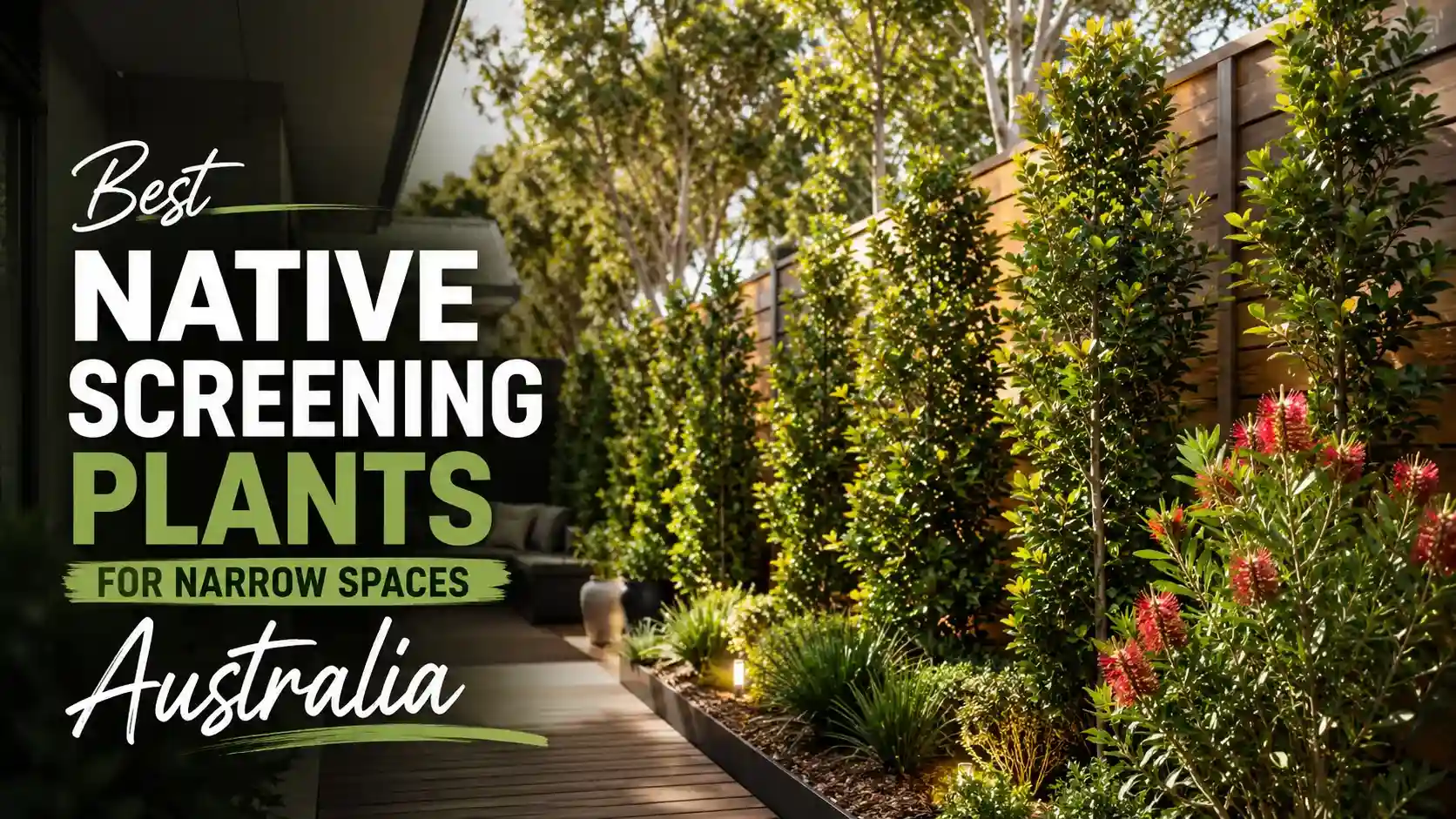
Finding the right screening plants for narrow spaces is essential for homeowners who want privacy without sacrificing valuable outdoor space. In Australian gardens, compact landscapes, side yards, and narrow fence lines often require plants that grow vertically rather than spreading too wide. This is where native screening plants become a practical and attractive solution. Many Australian species offer dense evergreen foliage, fast growth, and excellent adaptability to local conditions, making them ideal for modern residential landscaping.
Many homeowners now prefer Australian native screening plants because they are well suited to the country’s climate and generally require less maintenance than exotic alternatives. These plants are commonly used as natural privacy barriers, windbreaks, and decorative green walls in small gardens and urban outdoor areas. In addition to improving privacy, native varieties also support local wildlife by attracting birds, bees, and pollinators.
Another major advantage of choosing native plants for screening is the availability of varieties with non-invasive root systems. This is especially important in narrow spaces near fences, pathways, paving, pools, and home foundations where aggressive roots may cause long-term structural issues. Selecting the right native species helps create a dense, attractive privacy screen while keeping the garden safe, manageable, and easy to maintain.
Gardeners often refer to comprehensive guides on hedging and screening plants to understand which species offer optimal vertical growth, dense coverage, and low-maintenance performance for small or narrow garden spaces.
Choosing native plants for compact outdoor areas offers long-term practical and environmental benefits. Many Australian homeowners prefer native varieties because they provide effective privacy while remaining easier to manage in tight spaces. Well-selected narrow screening plants can create a dense green barrier without overwhelming small gardens, pathways, or fence lines.
One of the biggest advantages of Australian native screening plants is their low-maintenance nature. Most native species are naturally adapted to local soil and climate conditions, reducing the need for excessive watering, fertilising, and pruning. Once established, many native hedges require only occasional trimming to maintain their shape and density.
Australia’s climate can be harsh and dry in many regions, making drought resistance an important factor when selecting privacy plants. Native screening species are generally more water-efficient than exotic alternatives and can continue to perform well during hot summers and water restrictions. This makes them ideal for sustainable landscaping and low-water gardens.
Native hedging plants also help support local biodiversity. Many flowering screening plants attract birds, butterflies, bees, and other beneficial pollinators. Species such as bottlebrush and lilly pilly provide both shelter and food sources for native wildlife, helping create a healthier backyard ecosystem.
Unlike many imported hedge plants, Australian natives are naturally adapted to local weather extremes, including heat, coastal winds, and periods of low rainfall. Their resilience makes them a reliable choice for long-term privacy planting in suburban and urban environments.
Compact outdoor areas require plants that maximise vertical growth without taking up excessive horizontal space. This is why narrow screening plants are highly effective in modern Australian landscaping.
Slim-growing species fit comfortably into tight planting zones where wider shrubs would become overcrowded. They work particularly well in side access areas, courtyard gardens, and small backyard boundaries.
Many homeowners use fence line screening plants for narrow spaces to improve privacy without reducing usable outdoor space. Tall but controlled-growing plants can soften hard fencing while creating a more natural outdoor setting.
Urban properties often have limited land available for landscaping. Compact native hedges and skinny hedge plants allow homeowners to create greenery and privacy even in smaller residential blocks, townhouse gardens, and contemporary outdoor designs.
Not all hedge plants are suitable for narrow areas. Choosing the right characteristics ensures better long-term growth and easier maintenance.
The best screening plants for compact spaces grow upright rather than spreading aggressively. Vertical growth creates effective privacy while preserving space around pathways, patios, and garden beds.
Evergreen species maintain year-round coverage, ensuring continuous privacy and visual appeal throughout all seasons.
Many homeowners prefer fast growing narrow screening plants because they establish privacy quickly. Faster-growing natives can help fill empty fence lines and reduce exposure from neighbouring properties within a shorter time.
Root behaviour is especially important in small gardens. Plants with non-invasive roots are safer near paving, retaining walls, pools, drainage systems, and property foundations. Choosing suitable native species helps avoid future structural and maintenance problems.
Choosing the right native species is essential for creating attractive and functional privacy screens in compact gardens. The best Australian native hedge plants combine dense foliage, manageable growth habits, and strong adaptability to local conditions. These plants are ideal for modern landscapes where privacy, low maintenance, and space efficiency are equally important.
Lilly Pilly is one of the most popular native hedge plants Australia homeowners use for privacy screening.
Homeowners often select Lilly Pilly varieties for their dense evergreen foliage and reliable growth, making them one of the most effective narrow-space screening plants.
Known for its dense evergreen foliage and rapid growth, this plant creates an effective natural barrier in both residential and urban gardens.
Lilly Pilly varieties can establish quickly, making them ideal for homeowners who want fast privacy coverage. Many species respond well to regular pruning and can be shaped into formal or informal hedges.
The thick foliage creates a lush green wall that works exceptionally well for blocking neighbours, softening fences, and reducing street visibility.
Some Lilly Pilly varieties can grow several metres tall while maintaining a relatively narrow profile, making them suitable for compact spaces and narrow garden beds.
Most modern Lilly Pilly cultivars have relatively manageable root systems when planted correctly and maintained regularly. Proper spacing and occasional pruning help maintain airflow and healthy growth.
Callistemon, commonly known as Bottlebrush, is a versatile native screening plant valued for its colourful flowers and wildlife-friendly qualities. It combines ornamental appeal with practical privacy screening.
Bottlebrush plants produce vibrant red, pink, or cream flowers that add visual interest while functioning as natural privacy screens.
These plants are highly attractive to birds, bees, and beneficial pollinators, making them an excellent addition to environmentally friendly gardens.
Slim-growing Callistemon varieties are ideal for narrow side yards and compact fence lines. Upright cultivars provide privacy without excessive width, making them suitable native plant hedges for smaller outdoor areas.
Acmena Smithii is another highly regarded choice among Australian native hedging plants. It is widely used for formal hedging because of its dense evergreen growth and neat appearance.
The glossy foliage forms a thick screening barrier that remains attractive year-round, providing reliable privacy in residential gardens.
Its upright growth habit makes Acmena Smithii one of the best options for narrow hedges in compact landscapes and urban properties.
Gardeners often combine Acmena Smithii hedges with other native screening plants to create structured, low-maintenance, and evergreen privacy barriers in tight garden spaces.
This species responds extremely well to trimming and shaping, allowing homeowners to maintain clean lines and structured garden designs.
While traditional Viburnum varieties are popular, many gardeners now prefer native alternatives that offer similar screening performance with better suitability to Australian conditions.
Several native shrubs provide dense foliage and reliable privacy without requiring heavy maintenance or excessive watering.
These alternatives are well suited to courtyards, side access areas, and smaller suburban gardens where wider-growing hedges may become difficult to manage.
Waterhousea Floribunda is a highly attractive screening tree often used in tropical-style Australian gardens. Its soft foliage and upright growth make it an excellent privacy plant for narrow spaces.
This species grows tall while maintaining a relatively slim structure, making it suitable for tight boundaries and vertical screening applications.
Its lush appearance creates a soft tropical feel, especially when combined with layered native planting designs and modern outdoor landscaping.
Westringia Fruticosa is a hardy and highly adaptable native shrub commonly used in low-maintenance hedging and border planting.
This plant tolerates heat, wind, coastal conditions, and dry climates exceptionally well, making it suitable for many Australian regions.
Westringia naturally maintains a tidy shape and compact form, making it one of the most reliable native hedges Australia gardeners use for narrow garden beds, pathways, and low screening applications.
Homeowners looking for quick privacy solutions often prefer fast growing Australian native screening plants because they establish rapidly while remaining well adapted to local conditions. Fast-growing natives can create dense green coverage within a few growing seasons, making them ideal for blocking neighbouring properties, reducing street exposure, and softening hard fencing.
Several native species are valued for their rapid growth rates and effective screening performance. The best options combine dense foliage, manageable width, and year-round greenery.
Fast-growing screening plants vary significantly depending on climate, soil quality, watering, and maintenance. Some species grow more than one metre per year under ideal conditions, while others develop more gradually but require less pruning.
Popular fast-growing Australian native screening plants include:
These plants establish quickly and provide reliable privacy in suburban gardens, side boundaries, and compact outdoor spaces.
In smaller gardens, upright trees are often more practical than wide-spreading shrubs. Many homeowners now prefer trees that grow vertically while occupying minimal horizontal space.
Tall narrow trees work well along driveways, boundary fences, and compact garden beds where wider plants would overcrowd the area.
Slim-growing species create effective visual barriers while preserving airflow and sunlight. Their narrow form also helps maintain usable outdoor living space.
Some of the best tall skinny trees Australia gardeners use for privacy include:
These upright plants are highly effective for modern landscaping and small residential blocks.
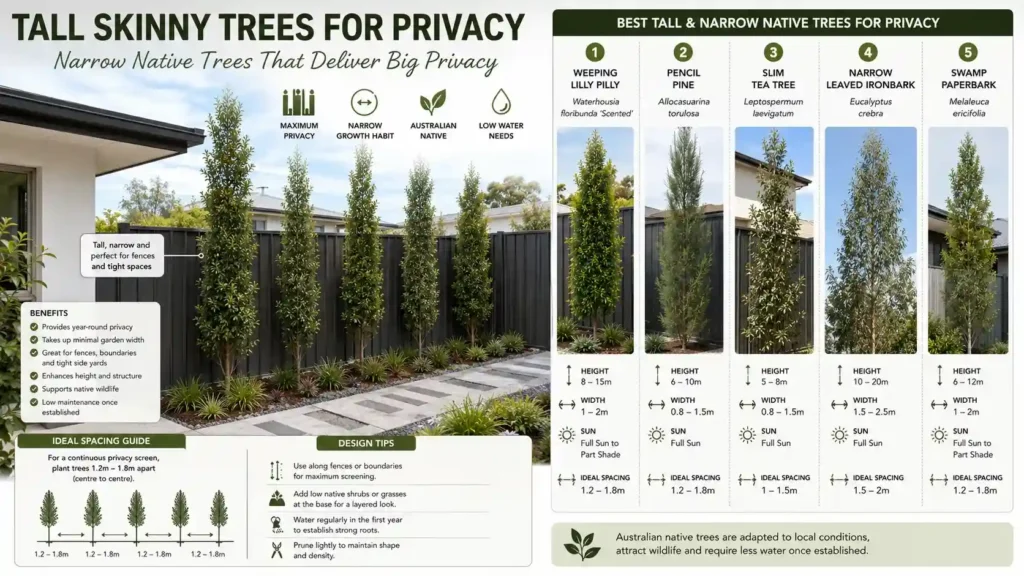
Large screening trees can provide excellent long-term privacy while improving shade and garden structure. Many native screening trees are also highly resilient to Australian climate conditions.
Planting screening trees near fences helps create a layered privacy barrier that looks softer and more natural than solid fencing alone. Upright native species are especially useful where space is limited.
The best Australian native trees for screening combine fast growth, dense foliage, and manageable root systems. Homeowners commonly choose these trees to reduce overlooking from neighbouring properties while enhancing overall garden aesthetics.
|
Plant |
Growth Rate | Height | Width | Sun Needs | Best Use |
| Lilly Pilly (Syzygium) | Fast | 4–8m | 1–3m | Full sun to part shade |
Dense privacy hedging |
|
Waterhousea Floribunda |
Fast | 8–15m | 2–4m | Full sun | Tall tropical screening |
| Callistemon ‘Slim’ | Moderate to fast | 3–5m | 1–2m | Full sun |
Flowering fence screening |
|
Acmena Smithii |
Fast | 4–10m | 1–3m | Full sun to shade | Formal narrow hedges |
| Westringia Fruticosa | Moderate | 1–2m | 1–1.5m | Full sun |
Compact border screening |
These Australian native screening trees and hedging plants provide practical solutions for both small and large gardens while maintaining strong adaptability to Australian conditions.
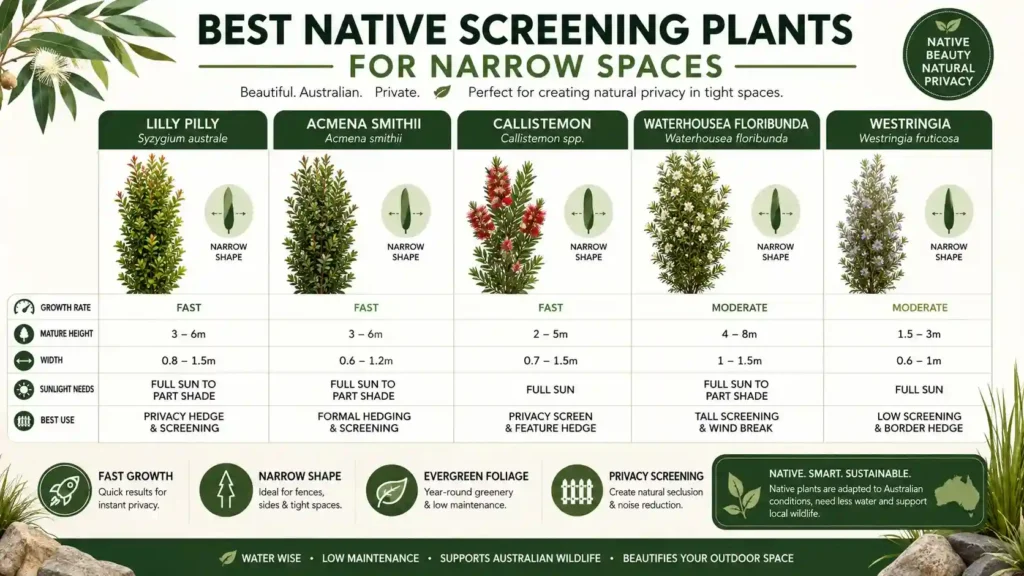
Selecting the right tall plants for narrow spaces Australia homeowners can rely on is important for achieving privacy without overcrowding compact gardens. Tall but slim-growing plants help maximise vertical space while maintaining airflow, sunlight access, and usable outdoor areas. Many native species also provide year-round greenery and low-maintenance performance.
Compact gardens benefit most from plants that grow upright rather than spreading excessively. The right species can provide excellent privacy while still fitting comfortably into narrow beds and tight boundaries.
Flowering screening plants combine visual appeal with practical privacy benefits. Native Bottlebrush varieties, flowering Lilly Pillies, and upright Grevilleas provide colourful seasonal displays while functioning as natural screens.
Evergreen tall shrubs are popular because they maintain consistent coverage throughout the year. Dense foliage helps reduce visibility from neighbouring properties and creates a more private outdoor environment in all seasons.
The best tall plants for screening usually grow between three and eight metres depending on the species and pruning style. Upright natives such as Acmena Smithii and Waterhousea Floribunda are commonly used where strong vertical privacy is needed in smaller landscapes.
Container planting is a practical solution for renters, courtyards, patios, balconies, and paved outdoor spaces where in-ground planting may not be possible.
Some of the most reliable potted screening plants include:
These species adapt well to containers while still providing useful height and screening density.
Large containers with quality drainage are essential for healthy root development. Deep pots help support taller plants and reduce moisture stress during warmer months. A premium native potting mix with added organic matter generally provides the best growing conditions for tall plants for screening in pots.
Good drainage prevents root rot and helps maintain long-term plant health. Container-grown screening plants may require more regular watering than in-ground plants, especially during hot Australian summers. Applying mulch can help retain moisture and regulate soil temperature.
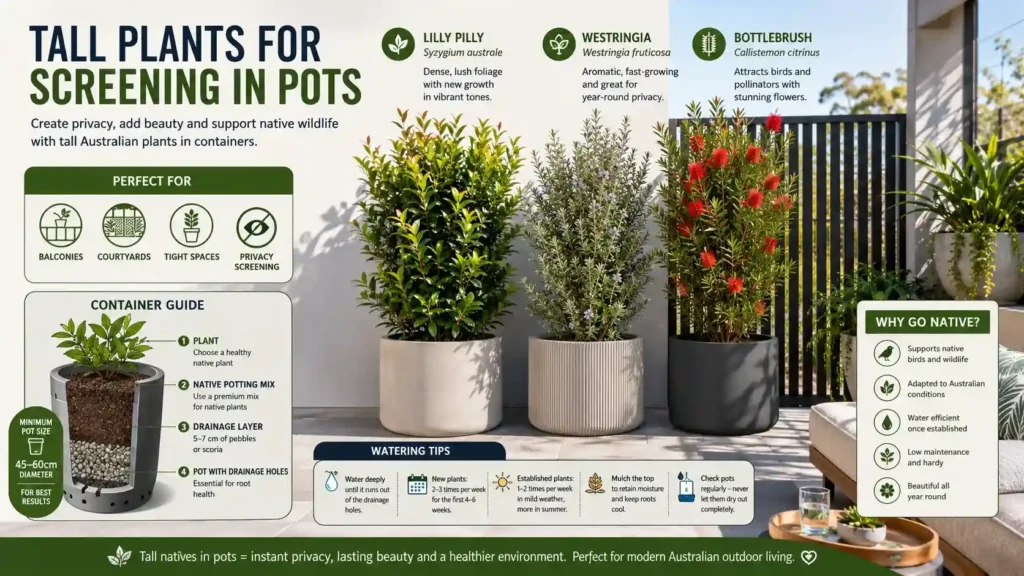
Slim-growing shrubs are highly effective in modern landscape designs where clean lines and efficient use of space are priorities.
Many tall narrow shrubs Australia gardeners prefer have naturally upright growth habits that suit contemporary homes and compact outdoor layouts. These plants create structured privacy screens while maintaining a neat appearance.
Popular choices include:
Side access areas often require tall hedge plants Australia homeowners can maintain without constant trimming. Slim hedges work especially well in narrow pathways, along fences, and beside driveways where wider plants would restrict movement.
Using a properly maintained tall hedge can improve privacy, soften hard landscaping features, and create a more balanced garden design even in limited outdoor spaces.
Well-designed planting layouts can transform compact outdoor areas into attractive and highly functional privacy spaces. Using the right plants for narrow garden beds Australia homeowners can create dense green screening without making the space feel overcrowded. Careful spacing, layered planting, and smart plant selection are essential for maintaining healthy growth and balanced landscaping in smaller gardens.
Designing successful narrow garden beds requires attention to plant size, root spread, sunlight access, and long-term maintenance needs. A structured layout helps maximise both privacy and visual appeal.
Proper spacing prevents overcrowding and improves airflow between plants. Even compact screening plants need enough room for healthy root development and mature foliage growth. As a general guide:
Correct spacing also reduces future pruning requirements and lowers the risk of fungal diseases caused by restricted airflow.
Layered planting creates a fuller and more natural garden appearance. Combining upright screening plants with lower-growing species adds depth and softens the overall landscape design.
A simple layered layout may include:
This approach works especially well in modern Australian native garden beds where texture and plant diversity are important.
Vertical landscaping is highly effective in narrow spaces because it maximises height without using excessive ground area. Upright hedges, slim trees, and structured planting rows help create privacy while maintaining open walkways and usable garden space.
Many homeowners use these concepts in:
These practical narrow garden bed ideas Australia gardeners use can make even small outdoor spaces feel greener and more private.
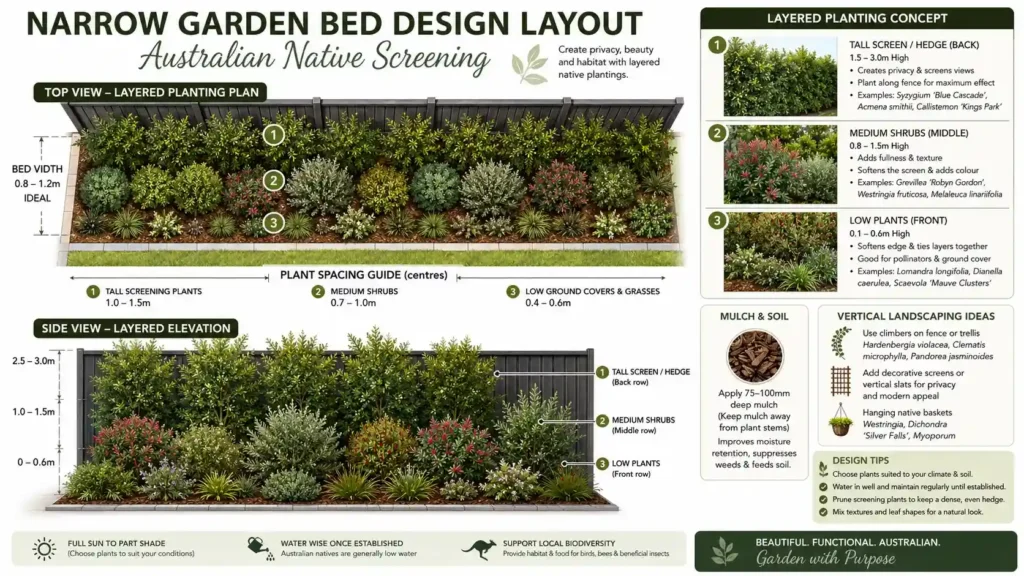
Fence boundaries often require plants that provide strong coverage without spreading too aggressively into pathways or neighbouring properties.
The best plants for narrow fence line landscaping are species that maintain dense foliage while requiring minimal trimming and watering. Native hedges such as Lilly Pilly, Acmena Smithii, and Westringia are commonly used because they adapt well to compact planting zones.
Ideal plants for narrow fence lines usually have:
These characteristics help maintain privacy while reducing maintenance demands in smaller outdoor areas.
Using native species in compact garden beds creates a cohesive landscape that is both attractive and environmentally suited to Australian conditions.
Pairing taller hedges with compact native groundcovers creates balanced planting designs. Popular combinations include:
These combinations improve visual layering while helping suppress weeds and retain soil moisture.
Effective screening designs balance vertical height with foliage density. Overly dense planting may restrict airflow, while sparse planting reduces privacy effectiveness. Selecting species with compatible mature sizes helps maintain healthier and more visually appealing garden beds.
These practical narrow garden bed ideas help create functional and visually balanced landscapes while maximising privacy in compact Australian gardens.
Many homeowners prefer screening plants that provide year-round privacy without requiring constant watering, pruning, or fertilising. The best low maintenance screening plants Australia gardeners use are typically native species that tolerate local climate conditions while maintaining dense evergreen growth. These plants are especially valuable in busy households, rental properties, and water-wise landscapes.
Australia’s dry climate makes drought tolerance one of the most important factors when selecting privacy plants. Native hedges adapted to heat and low rainfall can continue performing well with minimal irrigation once established.
Water-efficient screening plants help reduce garden maintenance and long-term water usage. Many native species naturally conserve moisture through smaller leaves, dense growth habits, and deep root systems.
Some of the best drought-tolerant screening plants include:
These species are commonly considered among the best native screening plants for sustainable Australian landscaping.
Heat-resistant native hedges are highly suitable for regions with intense sun exposure and long dry summers. Their resilience makes them ideal for coastal gardens, suburban landscapes, and exposed fence boundaries where delicate exotic plants may struggle.
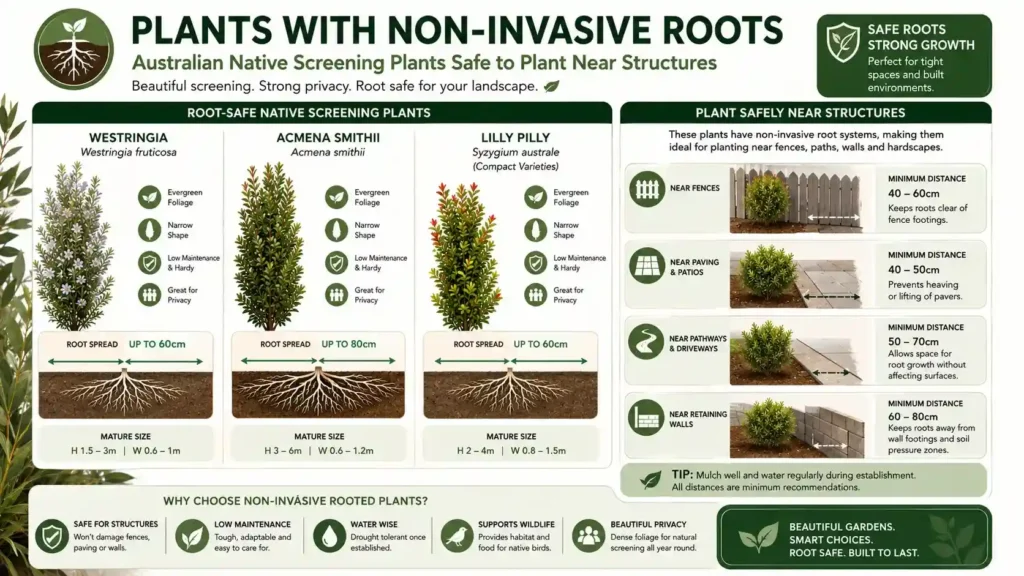
Choosing plants with manageable root systems is essential in narrow garden beds and urban landscapes. Aggressive roots can damage paving, fences, retaining walls, drainage systems, and nearby structures over time.
The best screening plants with non invasive roots are generally upright-growing species with controlled root spread. These plants are safer for planting near property boundaries and compact outdoor areas.
Reliable options include:
These species provide dense screening while remaining more manageable around paved surfaces and structures.
Proper planting techniques can further reduce root-related problems:
Careful planning helps maintain long-term garden health while protecting nearby structures.
Many Australian gardens receive strong sunlight throughout the day, making heat tolerance and sun resistance essential qualities for privacy plants.
The best full sun screening plants maintain healthy foliage even during extreme summer temperatures. Tall native species suited to sunny conditions include:
These plants provide reliable privacy while tolerating high heat and extended sun exposure.
Heat-tolerant natives are often considered the best Australian native screening plants because they combine durability, low maintenance, and strong screening performance. Their adaptability allows them to thrive in both inland and coastal climates with less ongoing care than many exotic alternatives.
For homeowners seeking practical and attractive privacy solutions, these species remain some of the best screening plants Australia landscapes can offer for modern low-maintenance garden design.
Selecting the right screening plants involves more than simply choosing fast-growing species. Many privacy planting problems develop because homeowners overlook factors such as mature size, sunlight exposure, and root behaviour. Avoiding these common mistakes helps create healthier, longer-lasting screening landscapes in compact Australian gardens.
One of the most common mistakes is selecting plants without considering their mature width. Some species may appear compact when young but eventually spread far beyond the available space.
Wide-growing hedges can create several problems:
For smaller gardens, upright and narrow-growing species are usually a better long-term choice. Slim native hedges maintain privacy while preserving usable outdoor space.
Root systems are often overlooked during the planting stage. Large or aggressive roots can eventually damage paving, retaining walls, drainage pipes, and nearby structures.
Before planting screening species, it is important to consider:
Choosing plants with non-invasive roots is especially important in narrow garden beds and urban landscapes where space is limited.
Sunlight conditions directly affect plant health, growth density, and long-term performance. A species that thrives in full sun may struggle in shaded side yards, while shade-tolerant plants may perform poorly in exposed hot locations.
Common sunlight planning mistakes include:
Understanding the light conditions of the planting area helps ensure healthier growth and stronger screening coverage.
Planting too many shrubs or trees into small areas can quickly create maintenance and health problems. Overcrowded plants compete for water, nutrients, and airflow, often leading to weak growth and disease issues.
Proper spacing allows screening plants to:
In compact landscapes, careful spacing is essential for maintaining attractive and functional privacy screens over the long term.
Proper care helps native screening plants maintain healthy growth, dense foliage, and long-term privacy performance. Although many Australian native species are naturally low maintenance, regular watering, pruning, and soil management still play an important role in keeping hedges and screening trees healthy.
Most native screening plants require consistent watering during their establishment period. Newly planted hedges generally need deeper watering several times per week until their root systems become established.
Once mature, many Australian native screening plants become relatively drought tolerant, although watering may still be necessary during prolonged dry periods and extreme summer heat.
Helpful watering practices include:
Container-grown screening plants usually require more frequent watering than in-ground plants because potting mix dries out faster.
Native plants typically require less fertiliser than exotic hedge species. Excessive feeding can sometimes damage sensitive Australian natives, particularly phosphorus-sensitive varieties.
For healthy growth:
Balanced feeding supports stronger foliage density and healthier root development without encouraging excessive weak growth.
Regular pruning is essential for maintaining compact and attractive screening plants. Trimming encourages branching, improves foliage density, and helps preserve narrow growth habits.
Key pruning tips include:
Many native hedges respond very well to consistent maintenance and can be shaped into both formal and natural screening styles.
Healthy native plants are generally resilient, but occasional pest and disease problems may still occur. Common issues include psyllids on Lilly Pilly, scale insects, fungal diseases, and root rot caused by poor drainage.
Preventative care measures include:
Strong plant health and proper growing conditions significantly reduce the likelihood of serious pest or disease outbreaks.
|
Care Factor |
Recommendation |
|
Watering |
Moderate |
| Sunlight |
Full sun to part shade |
|
Pruning |
1–2 times yearly |
| Mulching |
Recommended |
Choosing the right native screening plants can significantly improve privacy, greenery, and overall garden design in compact outdoor spaces. Many of the best options for narrow areas include Lilly Pilly, Acmena Smithii, Callistemon, Waterhousea Floribunda, and Westringia Fruticosa. These species provide dense foliage, attractive appearance, and strong adaptability to Australian climate conditions while remaining suitable for smaller gardens and tight boundaries.
When selecting screening plants, it is important to consider both mature height and width. Plants that grow too wide can quickly overcrowd narrow spaces, while species with invasive roots may create long-term maintenance and structural problems. Choosing upright varieties with manageable growth habits helps maintain privacy without reducing usable outdoor space.
Australian native hedges remain one of the most practical solutions for modern landscaping because they combine low maintenance requirements with drought tolerance and year-round screening performance. Many native species also support local wildlife and require less water and upkeep compared to exotic alternatives.
For small Australian gardens, careful planning is essential. Selecting the right plants, maintaining proper spacing, and using layered planting designs can help create attractive and functional privacy screens that remain healthy and manageable for years to come.
Some of the best native screening plants for narrow spaces include Lilly Pilly, Acmena Smithii, Callistemon, Waterhousea Floribunda, and Westringia Fruticosa. These plants are popular because they provide dense privacy coverage while maintaining relatively slim growth habits suitable for compact gardens and narrow fence lines.
Fast-growing native plants commonly used for privacy screening include Lilly Pilly varieties, Waterhousea Floribunda, Acmena Smithii, and upright Bottlebrush cultivars. These plants establish quickly and create dense foliage that helps block neighbouring properties and improve outdoor privacy.
Many native plants grow successfully in large containers. Popular potted screening plants include compact Lilly Pilly cultivars, Westringia Fruticosa, Acmena Smithii, and slim-growing Callistemon varieties. Choosing deep containers with quality drainage helps maintain healthy root development and long-term growth.
Westringia Fruticosa, Acmena Smithii, compact Lilly Pilly varieties, and upright Bottlebrush species are generally considered safer options for smaller gardens because they have more manageable root systems compared to larger invasive tree species. Proper spacing and soil preparation further reduce root-related problems.
Some of the best tall skinny trees for compact Australian gardens include Waterhousea Floribunda, narrow Lilly Pilly cultivars, slim Bottlebrush varieties, and selected columnar native eucalyptus species. These trees provide vertical privacy without taking up excessive horizontal space.
The planting distance depends on the mature size of the species. Small hedging plants are often spaced around 50–80 cm apart, while larger screening trees may require 1.5–3 metres of spacing. Leaving enough room between plants and fences improves airflow, root development, and long-term maintenance access.
Westringia Fruticosa, Lilly Pilly, Acmena Smithii, and Callistemon are widely regarded as low-maintenance native screening plants. These species adapt well to Australian conditions, require moderate watering once established, and generally respond well to occasional pruning.
Native species such as Callistemon, Westringia, Lilly Pilly, and Waterhousea Floribunda perform very well in full sun conditions. These plants tolerate heat effectively and maintain dense foliage even during hot Australian summers.
Yes, many Australian native screening plants are highly beneficial for local wildlife. Flowering species such as Bottlebrush and Grevillea attract birds, bees, butterflies, and pollinators while also functioning as effective privacy screens.
Most native hedges benefit from pruning one or two times per year. Regular trimming helps maintain compact growth, improves foliage density, and keeps screening plants looking neat and healthy without becoming overgrown.