Grow Better Gardens with Smarter Plant Choices
Discover helpful guides on trees, hedges, fruit plants, edible plants, and beautiful landscape greenery.
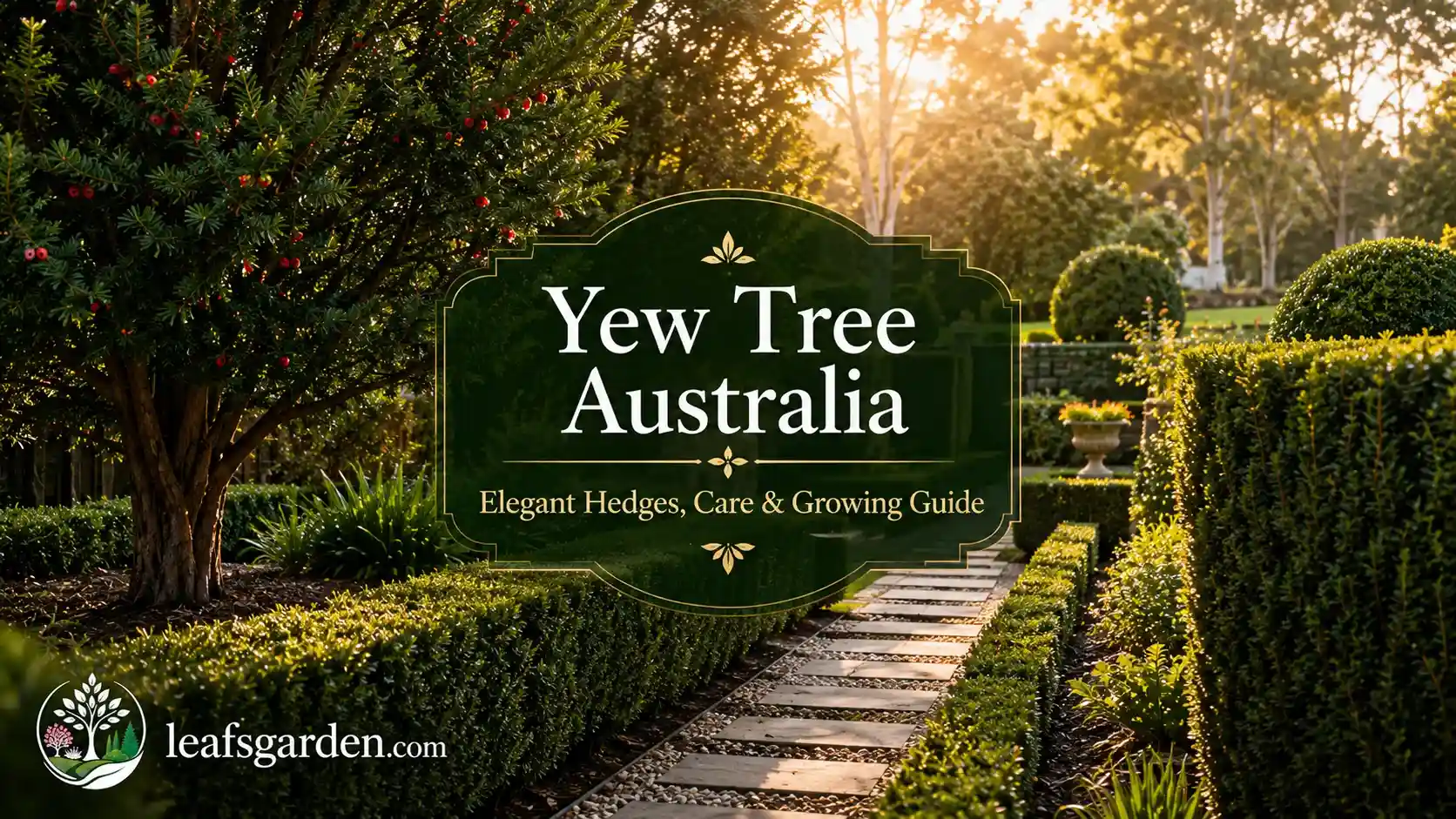
The yew tree is a slow-growing evergreen conifer valued for dense hedging, dark green foliage, exceptional lifespan, and timeless ornamental appeal in structured Australian gardens. In many cool-climate regions, the yew tree australia gardeners grow is especially admired for formal hedging, privacy screening, and elegant landscape design.
A yew tree belongs to the Taxus genus, with Taxus baccata — commonly called the english yew or common yew — being the best-known species worldwide. This evergreen conifer is recognized for its soft needle-like foliage, dense branching habit, and ability to tolerate careful pruning for decades.
The popularity of Taxus baccata comes from its versatility and longevity. It has been used for centuries in formal European gardens, estate hedges, topiary work, and ornamental landscapes because it maintains a rich green appearance throughout the year. Many gardeners also choose yew hedge australia planting styles because the plant responds extremely well to shaping and structured hedge maintenance.
Although yew trees in australia are not suitable for every climate zone, they can grow successfully in cooler temperate regions with mild summers and well-draining soil. Areas such as Tasmania, Victoria, southern New South Wales, and cooler highland districts generally provide the best growing conditions for healthy yew development.
In Australian landscapes, english yew plants are commonly used for:
Because of their slow growth and dense evergreen structure, yew trees remain one of the most refined hedge and ornamental conifer choices for cool-climate Australian gardens.
Yew trees are evergreen coniferous plants from the Taxus genus known for dense foliage, exceptional longevity, and widespread use in formal hedging and ornamental landscaping. The most recognized species is Taxus baccata, commonly called the english yew, which is valued for its elegant evergreen appearance and ability to tolerate regular pruning.
The botanical name of the traditional english yew is Taxus baccata. It is one of the oldest cultivated evergreen conifers used in formal gardens and structured landscapes around the world.
Common names include:
Yew trees belong to the Taxaceae plant family. Unlike many fast-growing conifers, yews are slow-growing evergreen plants with dense branching and soft needle-like foliage that stays green throughout the year.
Key evergreen conifer characteristics include:
Because of their controlled growth habit and refined appearance, Taxus baccata plants are widely used for hedging, topiary, screening, and classic landscape design.
Yew trees are native to several temperate regions across:
In their natural habitat, english yew trees often grow in woodland environments with cool temperatures, moderate rainfall, and well-draining soils. They are commonly associated with shaded forests, historic estates, and traditional European landscapes.
The species adapts well to some Australian climates because cooler temperate regions can provide similar growing conditions. Areas with mild summers, winter chill, and reliable soil moisture are generally more suitable for healthy yew development.
This is why yew trees in australia perform best in:
Excessive tropical humidity and harsh inland heat can place stress on the plant, especially during prolonged dry periods.
The english yew is valued for its elegant evergreen structure and long-term landscape performance. Its appearance remains attractive throughout all seasons, making it a premium ornamental conifer for formal gardens.
Key identifying features include:
| Feature | Details |
| Botanical Name | Taxus baccata |
| Common Name | English Yew |
| Plant Type | Evergreen Conifer |
| Best Use | Hedging & ornamental landscaping |
| Growth Rate | Slow |
Yes, yew trees can grow in Australia, especially in cooler temperate regions with well-draining soil, moderate moisture, and mild summer temperatures. While the english yew (Taxus baccata) is traditionally associated with European climates, many Australian gardeners successfully grow yew trees in suitable southern and elevated regions.
Yew tree australia growing success largely depends on climate selection. These evergreen conifers prefer cool to mild conditions and generally perform better in areas without prolonged extreme heat or tropical humidity.
Yew trees in australia grow best in cooler temperate environments where summer temperatures remain moderate and soil moisture stays relatively consistent.
The most suitable regions include:
In these climates, yew hedge australia plantings often maintain stronger foliage density, healthier root systems, and improved long-term growth.
Although yews are adaptable evergreen conifers, they can struggle in harsh Australian conditions that create excessive heat or moisture stress.
Common problem environments include:
Poor drainage combined with heat stress is especially damaging for Taxus baccata. Waterlogged soil may increase the risk of root rot and long-term plant decline.
Yew trees are considered cold-tolerant evergreen conifers with strong adaptability to cool temperate environments.
Key climate tolerances include:
In Australian gardens, partial afternoon protection can help reduce summer heat stress, particularly in warmer regions.
Outdoor planting is the most reliable option for yew trees in australia because these plants naturally develop as landscape conifers with extensive root systems and dense branching structure.
Outdoor landscape suitability includes:
Container growing is also possible, especially for:
However, potted yews require:
For long-term health, outdoor planting in suitable temperate Australian climates usually delivers the best results for english yew growth and hedge performance.
Several yew varieties are grown in Australia, but Taxus baccata remains the most widely planted ornamental and hedging species. Different yew types are selected based on garden size, hedge design, growth habit, and landscaping goals.
In cool-climate Australian gardens, yews are commonly used for:
The english yew is the classic yew species traditionally used in European and formal Australian landscapes. It is highly valued for its dense evergreen growth, refined appearance, and excellent pruning tolerance.
Key characteristics include:
Because of its compact branching structure, Taxus baccata is considered one of the best plants for formal hedging. Many yew hedge australia designs use english yew to create clean lines, privacy screens, and traditional garden symmetry.
Common landscape uses include:
Its slow growth rate also helps reduce excessive trimming compared to faster hedge species.
Dwarf yew varieties are ideal for compact Australian gardens where space is limited but evergreen structure is still desired. These smaller forms maintain the elegant appearance of traditional yews while requiring less pruning and maintenance.
Benefits of dwarf yew plants include:
Dwarf yews are commonly used for:
Because of their slower growth and manageable size, they fit well into low-maintenance landscaping designs.
Different yew forms serve different landscaping purposes. Some varieties naturally grow upright for screening, while others spread outward for ground coverage and layered garden structure.
| Type | Best Use |
| Upright Yew | Privacy screens |
| Spreading Yew | Ground coverage |
| Dwarf Yew | Small gardens |
Upright yew varieties are best suited for:
Spreading yew varieties work well for:
Dwarf forms remain the preferred option for:
Choosing the correct yew variety helps improve long-term maintenance, garden balance, and overall landscape performance in Australian conditions.
Yew trees are recognized by their soft needle-like leaves, dense evergreen structure, and bright red berry-like growths that develop on female plants. The elegant appearance of the english yew makes it one of the most visually distinctive evergreen conifers used in ornamental landscaping and formal hedging.
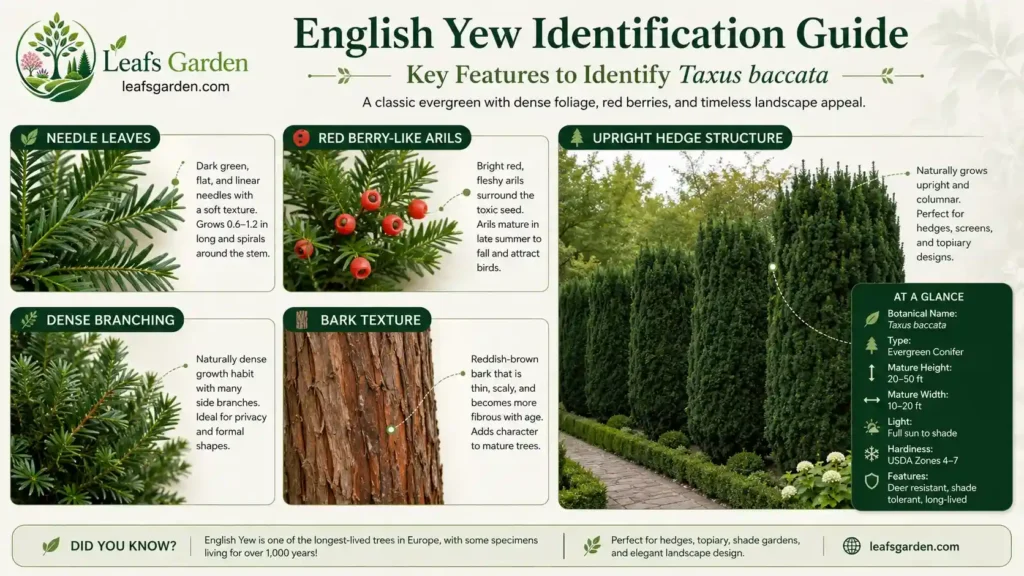
Yew tree leaves have a soft, flat needle texture that differs from many sharper conifer species. The foliage feels flexible and smooth rather than stiff or prickly.
Key foliage characteristics include:
The leaves are typically arranged in rows along the stems, creating a layered and compact growth habit. This dense evergreen structure is one reason why english yew plants are commonly selected for formal hedge shaping.
Female yew trees produce small red berry-like structures commonly referred to as yew berries. These are technically called arils rather than true berries.
The bright red outer flesh surrounds a single seed and creates strong ornamental contrast against the dark green foliage.
Important facts about english yew berries include:
Understanding the difference between the fleshy covering and the seed is important for safety awareness.
Key distinction:
Because of the attractive appearance of yew berry growth, many gardeners value female english yew plants for ornamental interest. However, caution is necessary in homes with children or pets because the seeds remain dangerous if consumed.
Common search-related terms associated with these plants include:
Yew trees are generally slow-growing conifers, but mature plants can eventually become quite large when left unpruned over long periods.
Typical mature size expectations include:
In Australian gardens, most yew hedge australia plantings are maintained through regular pruning, which keeps the plants compact and structured rather than allowing full tree-sized growth.
Their naturally dense shape, evergreen foliage, and exceptional longevity make yews one of the most enduring ornamental conifers used in formal landscaping worldwide.
Yew trees grow best in moist, well-draining soil with partial sun exposure and consistent watering during their establishment period. In suitable cool-climate regions, Taxus baccata can develop into a long-lasting evergreen hedge or ornamental feature with relatively moderate maintenance.
Successful yew tree australia cultivation depends heavily on:
Healthy root development is one of the most important factors for growing english yew successfully in Australian gardens.
Key soil requirements include:
Heavy clay soils should be improved before planting. Adding compost and improving drainage can significantly reduce stress on young yew plants.
For best results:
Yew trees are more shade-tolerant than many evergreen conifers, making them highly adaptable for structured landscaping.
Light preferences include:
Australian heat considerations are especially important in warmer states. Excessive direct afternoon sun may stress foliage, particularly during dry conditions.
In hotter regions:
Because yews naturally tolerate lower light conditions, they are often suitable for shaded formal gardens and woodland-style landscapes.
Consistent moisture is essential during the establishment phase of young yew plants.
Young plant watering needs:
Mature english yew plants develop moderate drought tolerance compared to many other cool-climate conifers. However, prolonged dry heat can still cause stress.
Important watering guidelines:
Proper watering balance is especially important for yew hedge australia plantings because dense hedges compete for moisture across the root zone.
Yew trees are not heavy feeders, but balanced nutrition helps support healthy evergreen growth and foliage density.
Recommended fertilizer practices include:
A simple seasonal feeding schedule often works best:
Overfeeding can encourage soft growth that becomes more vulnerable to heat stress and environmental damage.
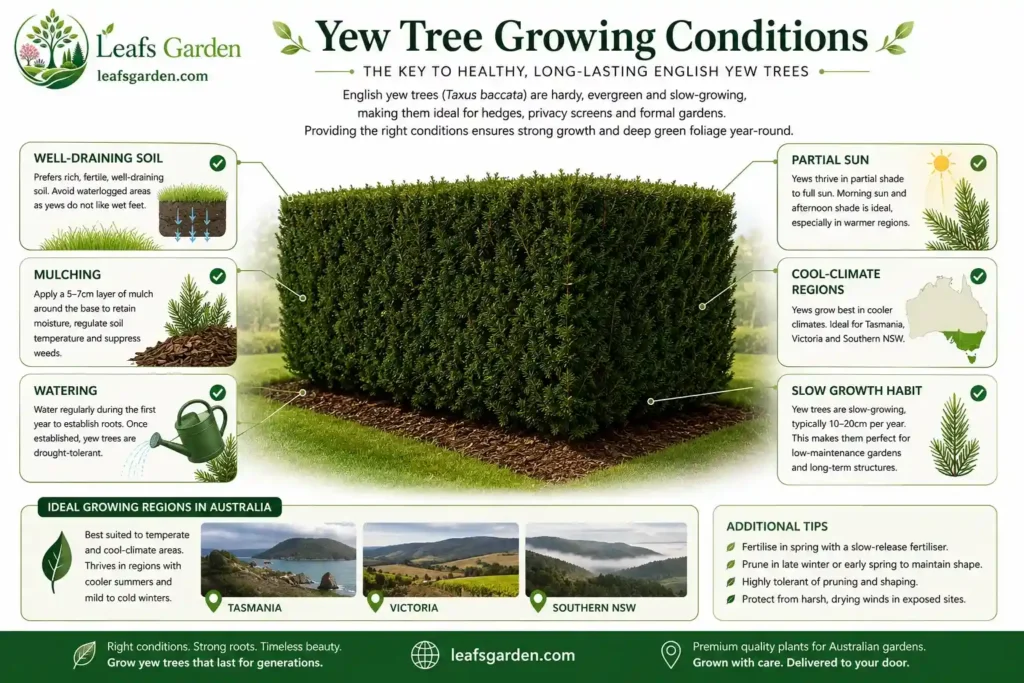
Mulching is highly beneficial for yew trees in australia because it helps stabilize soil conditions and reduce moisture stress.
Benefits of mulching include:
Best mulching practices:
For yew hedge australia landscapes, mulching also helps suppress weeds and improve overall hedge establishment during the first few growing seasons.
Yew is one of the best evergreen hedge plants for structured landscapes because it responds exceptionally well to pruning, shaping, and long-term maintenance. Its dense evergreen growth, elegant texture, and slow-growing habit make it highly desirable for formal hedging in cool-climate Australian gardens.
Many gardeners choose yew hedge australia planting styles because the plant maintains a refined appearance throughout the year while tolerating repeated trimming and shaping.
For a complete guide to evergreen hedging trees and landscape tree selection across Australian cool temperate climates, see our Evergreen, Shade & Landscape Trees guide.
English yew remains one of the most respected formal hedge plants worldwide because of its controlled growth habit and dense evergreen structure.
Main reasons for its popularity include:
Unlike many fast-growing hedge plants, yew develops a refined structure that works especially well in:
Its slower growth also reduces the frequency of aggressive trimming.
Proper planting helps establish healthy root systems and long-term hedge density.
Proper establishment is especially important during the first growing season for healthy yew hedge australia performance.
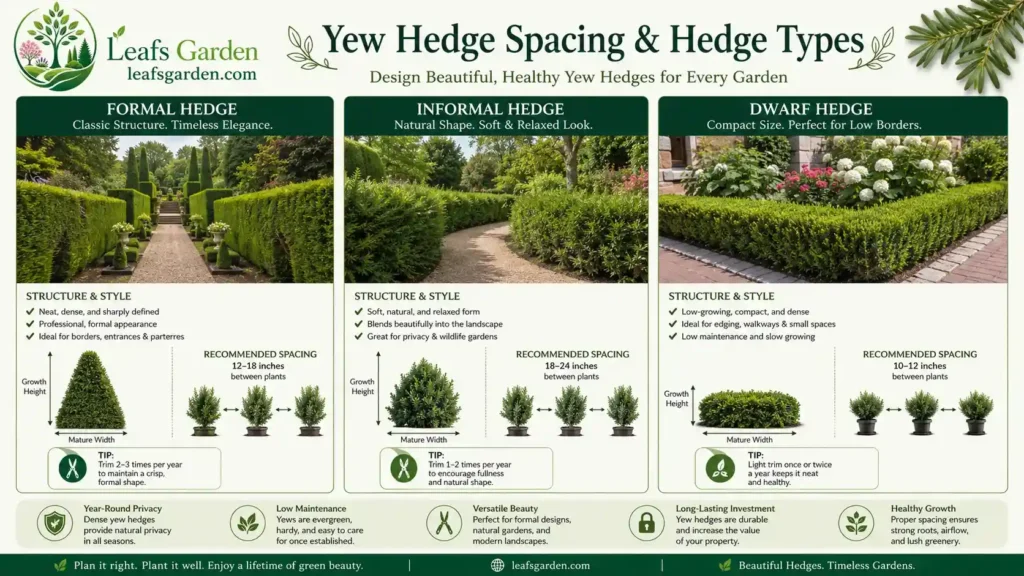
Correct spacing depends on the desired hedge style and long-term appearance.
| Hedge Style | Spacing |
| Formal hedge | Closer spacing |
| Informal hedge | Wider spacing |
Closer spacing creates:
Wider spacing allows:
Spacing decisions should also consider:
Different hedge plants provide different advantages depending on climate, maintenance expectations, and landscape style.
| Plant | Growth Speed | Maintenance | Appearance |
| Yew | Slow | Moderate | Elegant |
| Lilly Pilly | Fast | Moderate | Dense |
| Boxwood | Slow | High | Formal |
Yew advantages include:
Lilly pilly benefits include:
For gardeners needing faster privacy coverage in Australian temperate climates, Leighton Green Cypress is one of the most widely planted fast-growing evergreen alternatives to yew hedging.
Boxwood advantages include:
Not all landscapes require tall evergreen hedges. Low-growing hedge plants are commonly used for decorative edging and compact garden structure.
Popular compact hedge options include:
Little hedge landscaping uses include:
Compact evergreen options are especially useful in:
Dwarf yew varieties remain particularly attractive because they combine evergreen structure with slower manageable growth and elegant foliage texture.
For gardeners wanting a faster-growing narrow upright evergreen alternative in similar Australian temperate climates, Spartan Juniper is another popular low-maintenance conifer used for privacy screening and formal landscape design.
Yew trees require regular pruning, moderate watering, and good airflow to maintain healthy evergreen growth. Although english yew plants are considered relatively low-maintenance once established, proper seasonal care helps preserve dense foliage, strong structure, and long-term hedge quality.
Consistent maintenance is especially important for formal yew hedge australia landscapes where shape and foliage density are major design features.
Yew trees respond exceptionally well to pruning and shaping. Their dense evergreen branching allows gardeners to maintain clean formal hedges and ornamental forms for many years.
The ideal pruning periods are:
Avoid heavy pruning during:
Seasonal timing helps reduce stress and encourages healthy regrowth.
Different shaping approaches depend on landscape style and plant maturity.
Common methods include:
A slightly tapered hedge shape is often recommended because it allows better light penetration to lower branches.
For healthy hedge maintenance:
Regular light pruning generally produces better density than infrequent aggressive trimming.
Seasonal maintenance helps maintain strong evergreen colour and stable root health throughout the year.
| Season | Maintenance Task |
| Spring | Fertilize & shape |
| Summer | Monitor watering |
| Autumn | Mulch roots |
| Winter | Structural pruning |
Spring is the main growth period for shaping and light feeding.
Summer care focuses on:
Autumn preparation helps improve:
Winter is often the best time for:
Most yew tree problems are linked to environmental stress, poor drainage, or unsuitable growing conditions.
Root rot is one of the most serious problems affecting Taxus baccata plants.
Common causes include:
Early symptoms may include:
Improving drainage is the most important prevention method.
Needle browning can develop from:
Minor seasonal browning may recover naturally, but severe discoloration usually indicates environmental stress.
Yews perform poorly in constantly wet soils. Long-term drainage problems often lead to:
Raised beds and soil improvement can help reduce drainage-related issues in Australian gardens.
Yew trees are generally resilient, but some pests and diseases may occasionally affect stressed plants.
Scale insects feed on plant sap and may weaken foliage over time.
Signs include:
Healthy vigorous plants are usually more resistant to infestation.
Fungal issues are more common in:
Potential problems include:
Good preventive care is the most effective long-term strategy.
Important prevention practices include:
Healthy yew trees in australia are generally durable when planted in suitable climates with balanced moisture and consistent maintenance.
Yes, most parts of the yew tree are poisonous, especially the seeds, foliage, and bark. The english yew (Taxus baccata) contains toxic compounds called taxines, which can be dangerous to humans, pets, and livestock if consumed.
Although yew trees are highly valued for ornamental landscaping and hedging, safety awareness is extremely important in Australian homes and gardens.
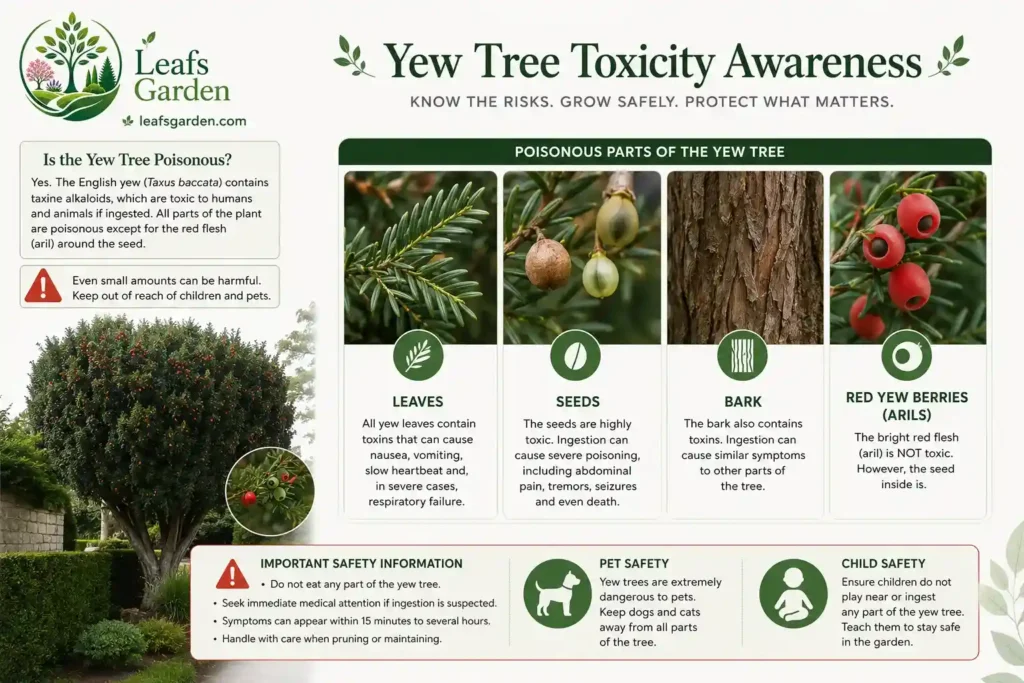
Nearly all parts of the yew plant contain toxic compounds.
The most poisonous areas include:
Toxicity remains present in:
Because of this, pruning waste should always be disposed of carefully.
Yew poisoning can become a serious medical emergency. Symptoms may appear quickly after ingestion.
Early digestive symptoms may include:
The toxic compounds in english yew can affect heart function.
Possible cardiac symptoms include:
Immediate medical attention is required if poisoning is suspected.
Emergency warning signs include:
Because yew toxicity can become life-threatening, urgent veterinary or medical care is essential after suspected ingestion.
Yew berries are commonly misunderstood because the bright red outer covering appears harmless.
The red fleshy part surrounding the seed is called an aril. While the soft outer flesh is considered less toxic, the inner seed is highly poisonous.
Important safety distinction:
This means chewing or swallowing the seed creates the greatest danger.
Pets are particularly vulnerable to yew poisoning.
Animals at risk include:
Even small amounts of foliage or seeds may cause severe poisoning in sensitive animals.
Children may be attracted to the bright red appearance of yew berries.
For households with young children:
Safety awareness is especially important for family gardens using yew hedge australia landscaping.
Yew trees can still be safely grown in Australian gardens when proper precautions are followed.
Choose planting locations carefully:
Pet owners should:
This is especially important for dogs and grazing animals.
When pruning or maintaining english yew plants:
With responsible placement and proper safety awareness, yew trees in australia can still be used successfully as elegant ornamental and hedging plants.
English yew wood has historically been valued for its strength, flexibility, durability, and fine grain structure. For centuries, Taxus baccata was considered one of the most important specialty woods in Europe because it combined resilience with natural elasticity.
The unique physical properties of english yew made it highly desirable for practical tools, craftsmanship, and ornamental woodworking.
Yew wood has been used in traditional woodworking and historical craftsmanship for hundreds of years.
One of the most famous historical uses of english yew wood was the production of longbows.
Yew became highly prized for archery because:
Historic European longbows were commonly crafted from carefully selected yew timber because of these performance characteristics.
Yew wood was also used in high-quality furniture making.
Its popularity came from:
Traditional furniture makers often valued yew for decorative cabinetry, tables, and detailed handcrafted pieces.
The dense texture of yew wood made it suitable for:
Its smooth grain allowed detailed shaping while maintaining long-term structural integrity.
English yew became historically important because very few woods combined flexibility, longevity, and density so effectively.
Yew wood bends more effectively than many hardwood species without snapping under pressure.
This flexibility made it especially valuable for:
Yew trees are famous for their extraordinary lifespan, and the timber itself is also known for durability.
Benefits of yew longevity include:
Some ancient yew trees have survived for hundreds or even thousands of years in suitable climates.
The dense grain structure of english yew wood contributes to:
This dense texture also gives finished yew wood a refined appearance valued in traditional decorative woodworking.
Although yew trees in australia are mainly grown today for ornamental landscaping and hedging, the historical importance of Taxus baccata wood remains one of the reasons the species continues to hold strong cultural and horticultural value worldwide.
Yew trees are considered slow-growing evergreen conifers. Most english yew plants develop gradually over many years, which helps maintain dense structure and controlled hedge form.
Growth speed depends on:
In suitable cool-climate regions, Taxus baccata generally produces steady compact growth rather than rapid expansion. This slower growth is one reason yew hedge australia landscapes are valued for long-term structure and lower trimming frequency.
Yes, yew trees can survive Australian summers in cooler temperate regions where extreme heat is less intense. However, prolonged high temperatures and dry inland heat can stress english yew plants.
Yews perform best with:
In hotter regions, heat protection becomes more important. Mulching and regular watering during dry periods can help reduce summer stress.
Yew trees are not considered fully safe around pets because most parts of the plant are poisonous. The foliage, bark, and especially the seeds contain toxic compounds that may cause serious poisoning if consumed.
Animals at risk include:
Pet owners using yew trees in australia should:
Proper garden placement and supervision help reduce risk.
Taxus baccata is generally considered the best yew variety for formal hedging because of its dense evergreen growth and exceptional pruning tolerance.
English yew is especially valued for:
Dwarf yew forms may also work well for:
The best choice depends on:
Yes, some yew trees can grow successfully in pots, particularly dwarf and compact varieties. Container growing works best when drainage and root health are carefully managed.
Potted yews require:
Container-grown english yew plants are commonly used for:
Larger yew varieties may eventually outgrow smaller containers over time.
Yew trees are among the longest-living evergreen trees in the world. Under suitable conditions, some english yew specimens can survive for hundreds or even thousands of years.
Their exceptional lifespan comes from:
Even in ornamental landscapes, well-maintained yew hedge australia plantings can remain healthy and attractive for decades with proper care and pruning.
Yew trees can grow successfully in Australia when planted in suitable cool-temperate climates with well-draining soil and moderate summer conditions. Regions such as Tasmania, Victoria, southern NSW, and cooler highland areas generally provide the best environment for healthy english yew development.
One of the biggest advantages of Taxus baccata is its exceptional hedging performance. Dense evergreen foliage, strong pruning tolerance, and elegant structure make yew hedge australia plantings ideal for formal gardens, privacy screening, and long-term landscape design.
Successful yew cultivation depends on:
Although yews are relatively low-maintenance once established, regular care helps maintain healthy evergreen growth and dense hedge structure.
Gardeners should also remain aware that most parts of the yew tree are poisonous, especially the seeds and foliage. Responsible placement, careful pruning disposal, and pet safety awareness are important for households using yew trees in australia.
For Australian gardeners seeking a refined evergreen hedge with long lifespan and classic ornamental appeal, english yew remains one of the most elegant choices for cooler climate landscapes. Choosing the correct planting location and planning long-term maintenance properly will help ensure strong growth, healthier foliage, and lasting garden performance.
Yew trees are reasonably easy to grow in Australia when planted in cool-temperate regions with well-draining soil and moderate summer temperatures. English yew plants require regular watering during establishment, seasonal pruning, and protection from prolonged extreme heat.
The best Australian regions for growing yew trees include: Tasmania Victoria Southern New South Wales Cooler parts of South Australia Highland districts with mild summers These climates provide the cooler conditions that Taxus baccata prefers for healthy evergreen growth.
Yes, english yew is poisonous to dogs, cats, and many other animals. The foliage, bark, and especially the seeds contain toxic compounds called taxines. Pet owners should prevent animals from chewing leaves or accessing fallen hedge clippings and berries.
Taxus baccata grows best in moist, well-draining soil enriched with organic matter. Good drainage is extremely important because waterlogged conditions may lead to root rot and long-term plant decline.
Most yew hedges benefit from light pruning once or twice each year to maintain dense growth and formal shape. Slow growth means yew hedge australia plantings usually require less trimming than faster-growing hedge species.
Yew trees can tolerate full sun in cooler Australian climates, but intense afternoon heat in warmer regions may stress the foliage. Partial shade or filtered afternoon protection is often beneficial during hot summers.
Yew hedging plants offer several landscaping benefits, including: Dense evergreen privacy screening Elegant formal appearance Strong pruning tolerance Long lifespan Year-round foliage colour Structured garden design potential These qualities make english yew one of the most refined evergreen hedge plants for cool-climate Australian gardens.