Grow Better Gardens with Smarter Plant Choices
Discover helpful guides on trees, hedges, fruit plants, edible plants, and beautiful landscape greenery.
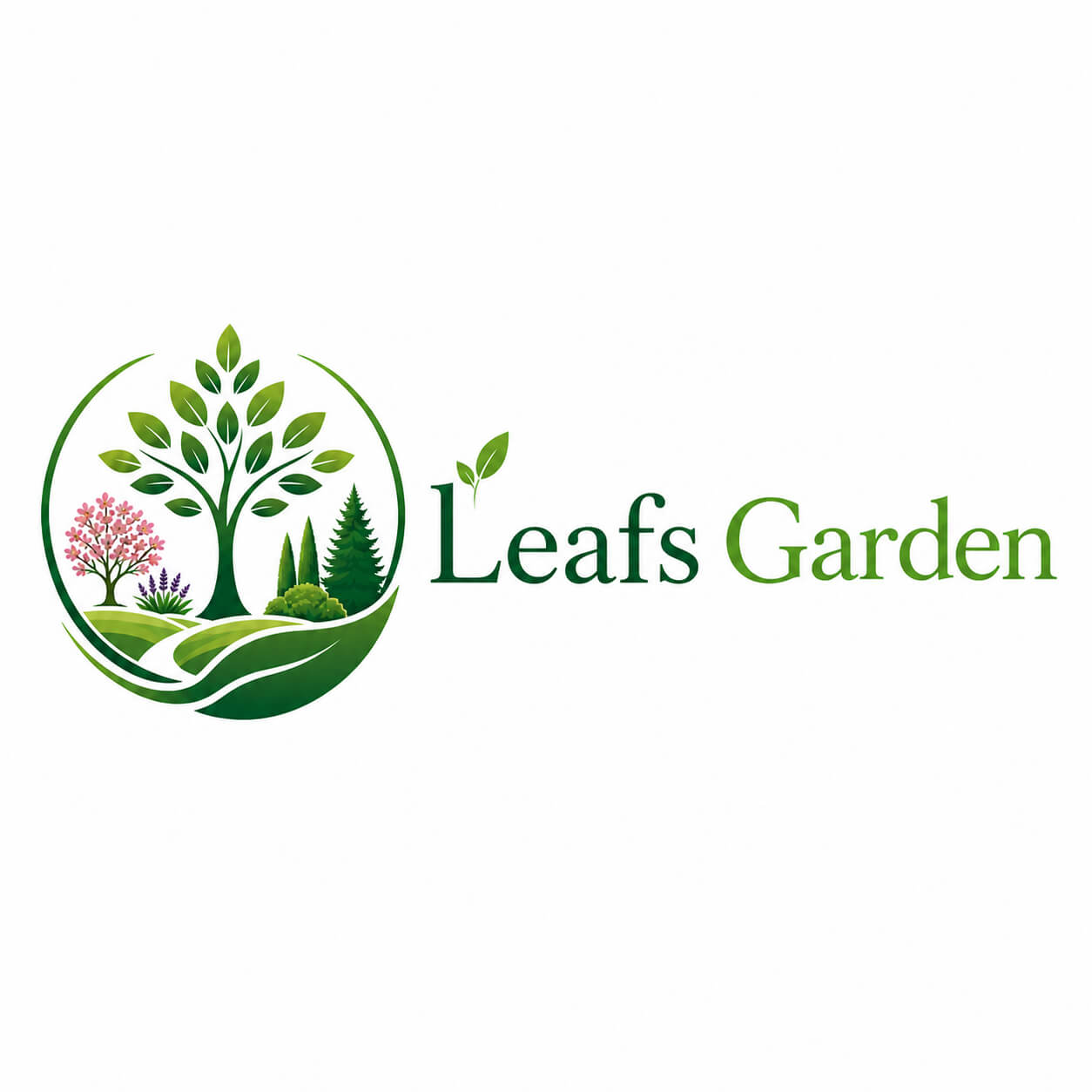
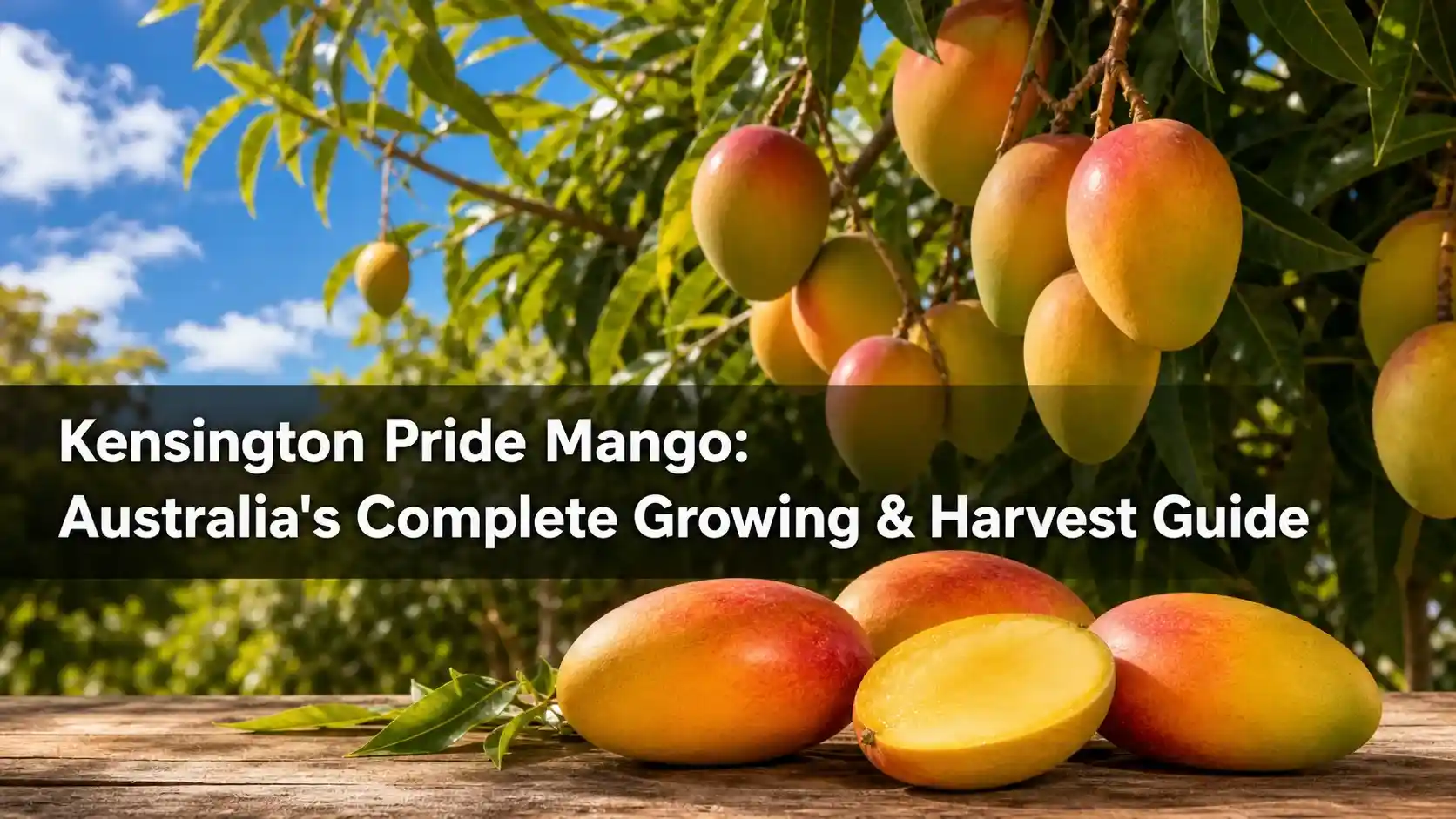
The kensington pride mango is Australia’s most recognised and widely grown mango variety, celebrated for its distinctly sweet flavour, low-fibre flesh, and reliable seasonal availability. Commonly known as the Bowen mango, after its origins in Bowen, Queensland, this variety has become a staple of Australian summers and local fruit markets alike. The KP mango, as it is popularly called, belongs to the species Mangifera indica ‘Kensington Pride’ and thrives in tropical and subtropical climates. Whether you’re exploring kensington pride, researching mango kensington pride, or planning to grow your own bowen mangoes, this complete guide covers everything you need to know.
| Data Point |
Detail |
|
Common Names |
Kensington Pride, Bowen Mango, KP Mango |
|
Scientific Name |
Mangifera indica ‘Kensington Pride’ |
| Origin |
Bowen, Queensland, Australia |
|
Tree Size (Mature) |
8–10 m (standard); 3–4 m (grafted/dwarf) |
|
Fruit Season |
November, February (QLD) |
|
Fruit Weight |
250–450 g average |
| Skin Colour (Ripe) |
Yellow-green with red blush |
| Flesh |
Pale yellow, low fibre, sweet-aromatic |
| Harvest Method |
Hand-picked when mature; ripen off-tree |
The Kensington Pride mango is Australia’s most iconic mango variety, deeply rooted in the country’s tropical fruit growing history. Recognised for its exceptional flavour, reliable yield, and widespread availability, it remains the dominant variety across Australian mango orchards and fresh produce markets every season.
The Kensington Pride mango originated in Bowen, a coastal town in North Queensland, Australia. It was first identified and cultivated in the region during the late 19th century, quickly gaining recognition for its outstanding fruit quality. Bowen’s warm tropical climate, rich soil conditions, and low rainfall variability made it the ideal environment for developing what would become Australia’s most commercially significant australian mango tree. The bowen special mango name became synonymous with premium quality in early Australian fruit markets, and large-scale commercial production from the Bowen region helped establish Queensland as the country’s mango capital.
The variety earned the name mango bowen directly from its place of origin. As production expanded from Bowen into other Queensland regions and eventually the Northern Territory, the name carried forward as a quality trademark. Today, kp mango is the shorthand used across retail and trade, while kensington mango is commonly used among home gardeners and horticulture enthusiasts. All three names refer to the same variety, Mangifera indica ‘Kensington Pride’.
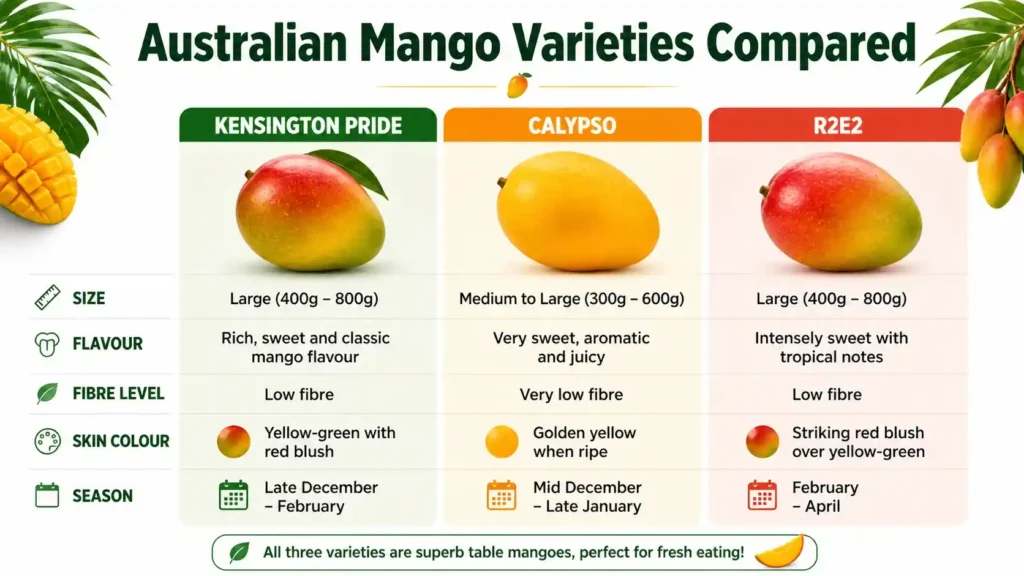
Australia grows several commercially important mango varieties, but Kensington Pride consistently leads in volume and consumer preference. The calypso mango is a seedless, rounder variety known for very low fibre content, while the r2e2 mango is a large, firm variety popular for export. Understanding mango varieties australia produces helps growers and consumers make informed choices based on season, taste, and intended use.
|
Feature |
Kensington Pride (KP) | Calypso |
R2E2 |
|
Size |
Medium (250–450 g) | Medium (300–400 g) | Large (600–900 g) |
|
Flavour |
Sweet, aromatic, rich | Mild, sweet, clean | Mild, less aromatic |
|
Season (QLD) |
November, February | November, March | November, January |
| Fibre Level | Low | Very low (near zero) |
Low to medium |
| Skin Colour | Yellow-green, red blush | Yellow with red blush |
Green to yellow |
| Best Use | Fresh eating, markets | Fresh eating, gifting |
Export, slicing |
The fruit itself is what makes the Kensington Pride mango so widely loved across Australia. From its distinctive appearance to its rich flavour and solid nutritional profile, understanding the fruit in detail helps both consumers and growers appreciate exactly what makes this variety stand out.
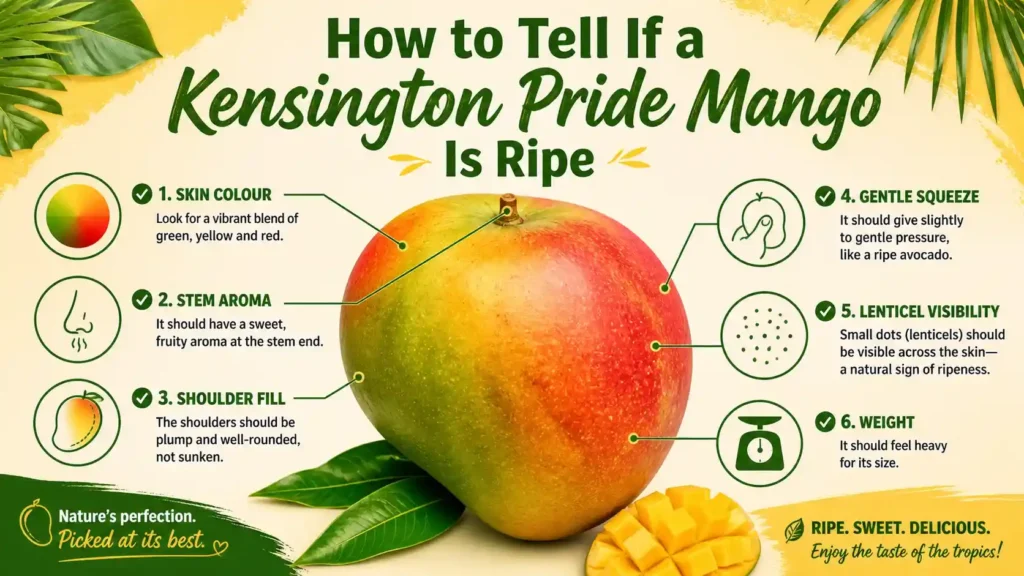
Kensington pride mangoes are medium-sized fruits, typically weighing between 250 and 450 grams at full maturity. The skin transitions from green to a yellow-green base with a characteristic red or orange-red blush on the sun-exposed side as the fruit ripens. The skin texture is smooth with a slightly waxy surface and occasional small lenticels. KP mangoes have an oval to oblong shape with a slight beak at the tip, which is a useful visual identifier compared to other Australian varieties.
The flesh of a ripe Kensington Pride mango is pale to deep yellow, firm yet tender, and notably low in fibre. The flavour is intensely sweet with a rich, aromatic quality that is difficult to replicate in any other commercially grown Australian variety.
If you enjoy sweet tropical fruits, you can also explore our starfruit tree guide.
The aroma alone is a strong identifier of a fully ripe KP mango. The flesh clings moderately to the seed but separates cleanly when the fruit is properly ripe, making it easy to prepare for both fresh eating and culinary use.
Mango fruit is well established as a nutrient-dense food, and the Kensington Pride is no exception. As a mango is a fruit rich in essential vitamins and antioxidants, the KP variety delivers meaningful nutritional value per serving.
|
Nutrient |
Per 100 g (Approximate) |
|
Calories |
60–65 kcal |
|
Vitamin C |
36 mg (40% RDI) |
|
Vitamin A |
54 mcg RAE |
| Dietary Fibre |
1.6 g |
| Natural Sugars |
13–14 g |
| Potassium |
168 mg |
| Folate |
43 mcg |
Regular consumption of mango fruit supports immune function, skin health, and digestive regularity. The natural antioxidants, including beta-carotene and polyphenols, contribute to cellular protection and anti-inflammatory benefits.
Knowing how do you pick a good mango comes down to observing multiple sensory cues together rather than relying on colour alone. A mango ripe enough to eat will show clear physical and aromatic signals. Learning how to choose a good mango at the market or straight from the tree saves you from picking fruit too early or too late.
How to Check Ripeness, Checklist
Understanding the physical structure and growth behaviour of the Kensington Pride mango tree is essential for anyone planning to grow one, whether in a home garden or a commercial orchard. This variety produces a large, vigorous tree with distinct seasonal patterns that directly influence fruit production and long-term management.
A mature kensington pride mango tree grown from seed can reach 8 to 10 metres in height with a wide, dense canopy spread of 6 to 8 metres. Grafted trees are significantly more manageable, typically reaching 3 to 4 metres, which makes them suitable for home gardens and smaller blocks. Mango tree size varies depending on rootstock, pruning practice, and growing conditions. The bowen mango tree naturally develops a broad, dome-shaped canopy that provides excellent shade and becomes a prominent feature in any landscape over time.
Mango tree leaves are long, lance-shaped, and leathery, measuring 25 to 40 cm in length. New growth flushes appear in a bronze or reddish colour before maturing to a deep, glossy green. Mango tree flowers emerge in large panicles, each containing hundreds of small, cream to pale pink individual blooms. Mango tree blossom typically appears between June and August in Queensland, triggered by cooler, dry conditions. The journey from mango tree flower to fruit takes approximately 3 to 5 months, with fruit reaching harvest maturity between November and February depending on location and seasonal conditions.
The mango tree root system is deep and extensive, consisting of a strong taproot that anchors the tree firmly and lateral roots that spread broadly through the upper soil layers. The mango tree roots can extend well beyond the canopy drip line, which means adequate spacing and soil depth are critical at planting. The stem of mango tree is thick, woody, and develops rough, grey-brown bark as the tree matures, providing structural strength to support heavy fruit-bearing branches during peak season.
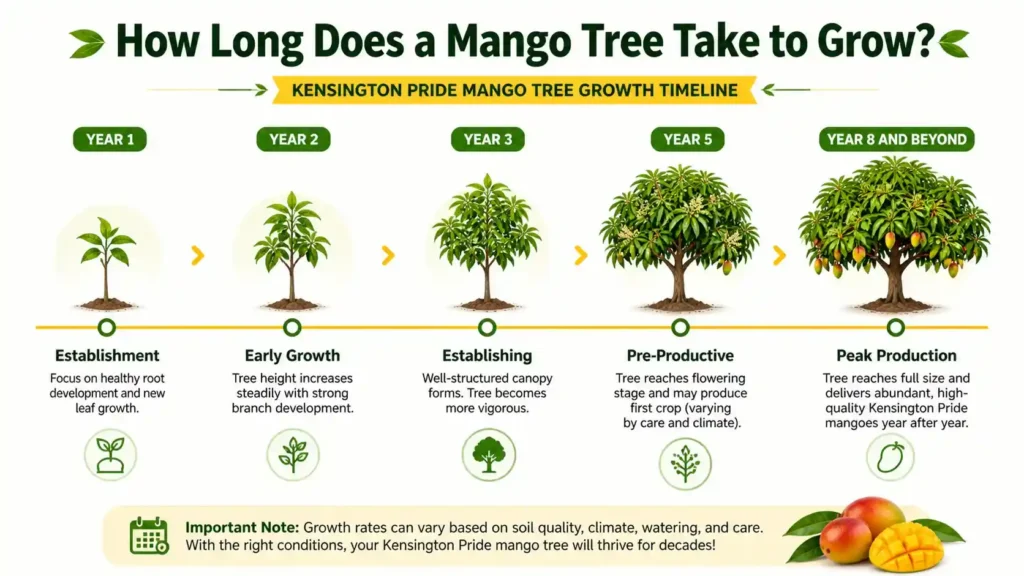
How long does a mango tree take to grow to fruit-bearing stage depends significantly on whether the tree is seed-grown or grafted. Grafted trees produce fruit within 3 to 4 years, while seed-grown trees can take 6 to 8 years or longer. The mango growth cycle follows a consistent annual pattern of vegetative flushing, flowering, fruit set, and harvest. Understanding the mango tree growth cycle allows growers to time fertilising, pruning, and irrigation correctly at each stage.
|
Stage |
Year |
Key Development |
|
Establishment |
Year 1 | Root development, first vegetative flush, no flowering |
|
Early Growth |
Year 2 | Canopy formation, second and third flush, possible minor flowering in grafted trees |
|
First Fruit |
Year 3 |
Grafted trees produce first meaningful fruit set, seed trees still in vegetative phase |
|
Productive Stage |
Year 5 | Consistent annual fruiting, canopy fully established, yield increases steadily |
| Full Maturity | Year 8 and beyond |
Maximum canopy size, peak yield potential, annual management required |
Growing a Kensington Pride mango tree is a rewarding long-term investment for any Australian home gardener or orchard grower. Whether you are starting from seed or planting a grafted tree, understanding the correct method, soil requirements, and site conditions from the beginning makes a significant difference in tree health and fruit production over time.
When it comes to how to grow a mango tree from a seed versus planting a grafted mango tree, both methods have clear advantages and trade-offs worth understanding before you start.
A plant mango tree from seed approach is low cost and straightforward, but it comes with a major drawback — seed-grown trees take 6 to 8 years or more to produce fruit, and the resulting tree may not produce fruit identical to the parent variety. Grafted trees, on the other hand, are propagated using proven Kensington Pride rootstock and scion wood, which guarantees varietal consistency and significantly reduces the time to first fruit, typically 3 to 4 years. For home gardeners and serious growers alike, a grafted tree is almost always the recommended choice for reliable, quality results.
For those who prefer to start from seed, germinating mango seeds correctly is the first critical step. Mango seed sprouting is straightforward when conditions are right.
Germination Process:
Successful mango cultivation in Australia depends heavily on choosing the right site. Mango trees australia wide grow best in tropical and subtropical climates, particularly across Queensland, the Northern Territory, and northern Western Australia.
For another tropical fruit tree suited to similar conditions, see our lychee fruit tree guide.
Understanding where do mango trees grow best helps avoid common planting mistakes.
Ideal Growing Conditions:
These conditions are similar to many fruit trees & edible plants that require full sunlight and well-drained soil for healthy growth.
A mango tree in pot is entirely achievable with a dwarf or grafted Kensington Pride variety. Mango tree container growing has become increasingly popular among urban gardeners and those with limited outdoor space. A dwarf mango variety grafted onto a dwarfing rootstock is the most practical option for pot culture, and mango in pot growing works well on large patios, courtyards, and balconies with adequate sun exposure.
Correct spacing and planting depth are critical factors in long-term tree performance. Planting mango seedlings too close together leads to canopy competition, reduced airflow, and higher disease pressure over time.
Soil Mix Tip: A reliable blend for how to plant a mango seedling or planting a mango tree from seed in Australian conditions is 60% quality loam, 20% aged compost, and 20% coarse river sand. This combination provides structure, nutrition, and the drainage critical to healthy root development.
Inline Note, Mango Season in Australia When is mango season in Australia? The national mango season runs from approximately October through to March, with regional variation across growing zones. When is mango season in Queensland? In Queensland, the peak season for Kensington Pride mangoes runs from November through to February, with early season fruit available from Bowen and the Burdekin region from as early as late October. Northern Territory mangoes typically arrive first, from September onwards, signalling the unofficial start of the Australian mango season each year.
Consistent, well-timed care is what separates a productive Kensington Pride mango tree from one that underperforms year after year. This section covers every core aspect of mango tree care across the full annual cycle, from watering and feeding through to pest management and pruning practice.
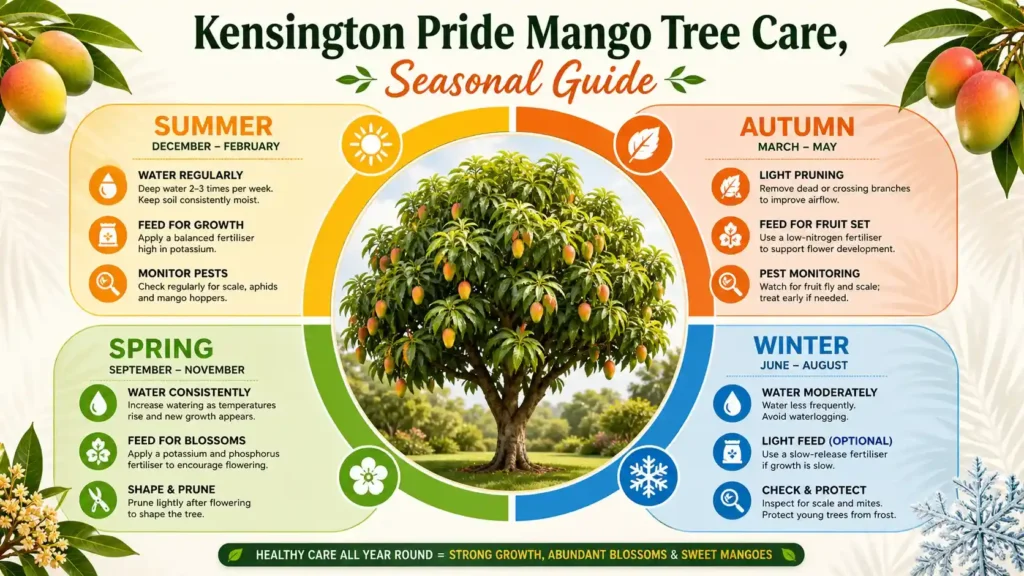
Established Kensington Pride mango trees are reasonably drought tolerant once their root system is well developed, but consistent mango care during the critical growth stages makes a measurable difference in fruit yield and tree health.
Avoid overhead watering where possible, as wet foliage encourages fungal disease. Drip irrigation or deep basin watering at the root zone is the most effective method.
Feeding a Kensington Pride mango tree correctly through the season drives healthy growth, strong flowering, and quality fruit production. Choosing the right fertiliser for mango trees at the right time is more important than simply applying large quantities.
Mulching is one of the most underutilised yet highly effective practices in mango tree management. Research into mango tree what mulch is good to help growth consistently points to organic mulches as the superior choice for moisture retention, temperature regulation, and soil biology improvement.
Apply mulch to a depth of 5 to 8 cm in a wide circle around the tree, extending to the drip line where practical. Always keep mulch at least 10 to 15 cm clear of the trunk to prevent collar rot and pest harbourage at the base.
When to prune a mango tree is just as important as how it is done. Pruning at the wrong time can remove developing flower buds or expose cuts during high-humidity periods that increase disease risk.
|
Season |
Task | Notes |
|
Winter (June to August) |
Reduce watering, monitor flowering |
Dry conditions encourage flower development |
|
Late Winter (August to September) |
Apply potassium-rich fertiliser |
Supports flower and fruit set |
|
Spring (September to November) |
Monitor pests, apply fungicide if needed | Anthracnose and leafhopper risk highest |
|
Summer (November to February) |
Regular watering, fruit monitoring |
Harvest period for KP mangoes in QLD |
| Post-Harvest (March to April) | Prune, apply nitrogen fertiliser |
Recovery and vegetative flush phase |
| Autumn (April to May) | Mulch refresh, soil assessment |
Prepare tree for dry season ahead |
Harvesting at the right time is one of the most important decisions a Kensington Pride grower makes each season. Picking too early results in poor flavour development and hard flesh, while leaving fruit on the tree too long increases the risk of fruit fly damage, splitting, and post-harvest decay.
Knowing when do i pick my mangoes comes down to reading a combination of visual, physical, and seasonal indicators rather than relying on a single sign. Understanding when can you pick mangoes correctly protects both fruit quality and tree health for the following season.
The timeline from mango tree flower to fruit in Kensington Pride is approximately 3 to 5 months depending on seasonal temperatures, pollination success, and tree health. How long do mango trees take to fruit from flowering varies slightly year to year based on climate conditions during the critical fruit development window. Mango fruiting in Queensland typically begins from November onwards, with mango fruit growing from flower set in June through August reaching harvest readiness between November and February. A consistent warm season with adequate irrigation during fruit development generally produces the best size and flavour outcomes.
Yes. Do mangoes ripen after picked is one of the most common questions from home growers, and the answer is straightforward. Kensington Pride mangoes are climacteric fruit, meaning they continue to ripen after removal from the tree. How to ripen mangoes off the tree is simple:
Once fully ripe, mangoes can be refrigerated for 2 to 3 days to extend shelf life without significant quality loss.
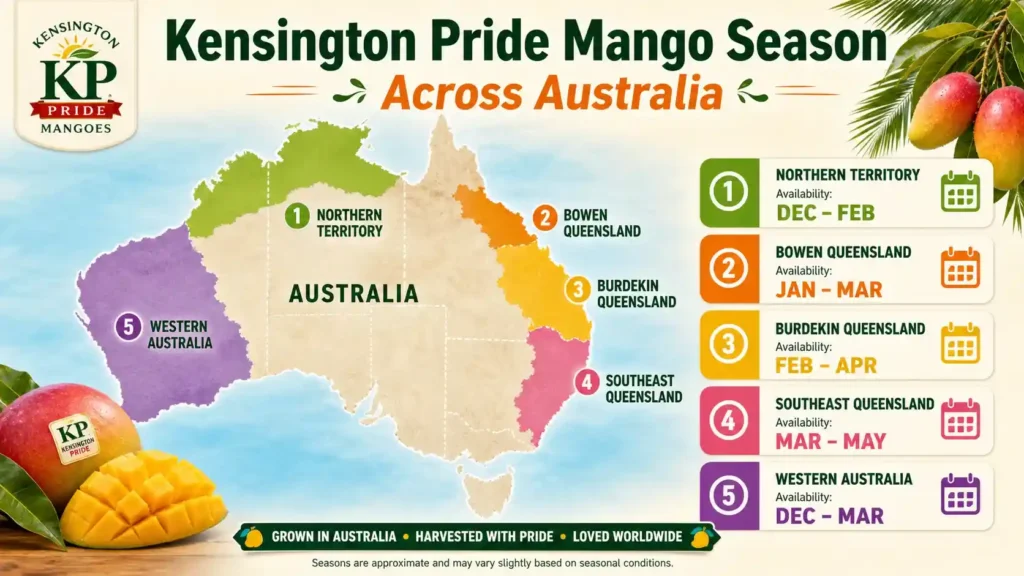
When do mangoes come in season depends on the growing region, but nationally the Australian mango season spans from September through to March. When mangoes are in season at their peak quality and volume varies by state and variety. For Kensington Pride specifically, mango season australia follows this general pattern:
|
Region |
KP Season Availability |
|
Northern Territory |
September to November |
|
Bowen, Queensland |
October to December |
|
Burdekin, Queensland |
November to January |
| Southeast Queensland |
December to February |
| Western Australia |
November to February |
Peak availability of Kensington Pride mangoes at retail and fresh produce markets across Australia falls squarely between November and January, making it the heart of the Australian summer fruit season.
This is one of the most frequently asked questions among Australian mango consumers and home growers alike. The short answer is yes, they are the same variety. The confusion arises entirely from regional naming conventions and the long commercial history of this fruit across different parts of Australia.
The terms bowen mango vs kensington pride represent two names for a single variety, Mangifera indica ‘Kensington Pride’. The bowen special mango name came directly from the town of Bowen in North Queensland, where the variety was first commercially cultivated and distributed. As production expanded into other regions and the variety entered mainstream retail markets nationally, the name Kensington Pride became the standardised horticultural and commercial identifier.
The bambaroo mango is another regional name occasionally used in parts of North Queensland, adding to the naming complexity. However, bambaroo refers to the same Kensington Pride genetics and fruit profile. None of these names indicate a different variety, a different flavour profile, or a different tree, they are all the same fruit grown across different regions and referred to by locally established names.
|
Question |
Answer |
|
Is Bowen Mango the same as Kensington Pride? |
Yes, completely identical variety |
|
Scientific name |
Mangifera indica ‘Kensington Pride’ |
|
Other names used |
Bowen Special Mango, KP Mango, Bambaroo Mango |
| Origin of the Bowen name |
Bowen, North Queensland, Australia |
| Origin of Kensington Pride name |
Standardised horticultural classification |
| Any difference in fruit or flavour? |
No, same genetics, same fruit profile |
The Kensington Pride mango tree is not just a fruit producer. Its size, canopy density, and tropical aesthetic make it a genuinely valuable landscaping tree for Australian home gardens and larger rural properties alike.
Among the mango tree varieties in australia, the Kensington Pride is one of the most versatile for garden use. The broad canopy provides substantial shade, making it a functional alternative to ornamental shade trees in tropical and subtropical gardens. Understanding the different types of mango trees available helps gardeners choose the right rootstock and size for their space before committing to mango planting.
Propagating mango trees from cuttings is not commonly practised for home growers as mango stems do not root reliably through standard cutting methods. Grafting remains the preferred commercial propagation technique for maintaining varietal consistency. To propagate mango seed is straightforward and low cost but produces trees with unpredictable fruit quality and significantly longer juvenile periods before fruiting begins. For guaranteed Kensington Pride characteristics, purchasing a nursery-grafted tree is always the most reliable and practical approach.
Yes, completely. Bowen mango and Kensington Pride are two names for the same variety, Mangifera indica 'Kensington Pride'. The Bowen name comes from the North Queensland town where it was first commercially grown, while Kensington Pride is the standardised horticultural classification used nationally.
A grafted Kensington Pride tree typically produces its first fruit within 3 to 4 years of planting. Seed-grown trees take significantly longer, often 6 to 8 years or more, with no guarantee of true-to-type fruit quality.
Yes. A grafted dwarf Kensington Pride variety grows well in a large container with a minimum diameter of 60 to 75 cm. Use a premium, well-draining potting mix, ensure full sun exposure, and feed regularly with a mango-specific fertiliser for best results.
A potassium-rich balanced fertiliser applied before flowering, followed by a nitrogen-rich feed post-harvest, delivers the best results. Look for formulations specifically blended for mango and citrus trees, with added trace elements including zinc, boron, and magnesium.
The KP mango season runs from October through to February nationally, with peak availability between November and January. Queensland's Bowen region produces some of the earliest fruit from late October, while southeastern Queensland and other states follow through December and February.
Check for a yellow-green skin with a developed red blush, a rounded shoulder near the stem, gentle yielding to light pressure, and a strong sweet aroma near the stem end. Do not rely on colour alone as the primary ripeness indicator.
Kensington Pride is larger, more aromatic, and has a richer, more complex flavour profile. Calypso mangoes are rounder, virtually fibre-free, and have a milder, cleaner sweetness. Calypso also has a slightly longer season in some regions. Both are excellent varieties but suit different taste preferences.
Mango trees prefer tropical and subtropical climates and struggle in frost-prone or consistently cool regions. In Sydney, growth is possible in sheltered, north-facing positions, but fruit production is unreliable. Melbourne's cooler winters make successful fruiting very difficult without greenhouse conditions.
A standard seed-grown tree can reach 8 to 10 metres at full maturity. Grafted trees are more manageable at 3 to 4 metres, making them far more practical for home gardens where pruning and harvesting need to remain accessible.
Newly planted trees need watering 2 to 3 times per week. Established trees require deep watering every 1 to 2 weeks during dry periods. Reduce watering significantly during the flowering period from June to August to support flower development rather than vegetative growth.
A mature Kensington Pride mango typically weighs between 250 and 450 grams. Fruit size varies depending on tree age, irrigation, fertilisation, and seasonal conditions, with well-managed mature trees consistently producing fruit toward the higher end of this range.