Grow Better Gardens with Smarter Plant Choices
Discover helpful guides on trees, hedges, fruit plants, edible plants, and beautiful landscape greenery.

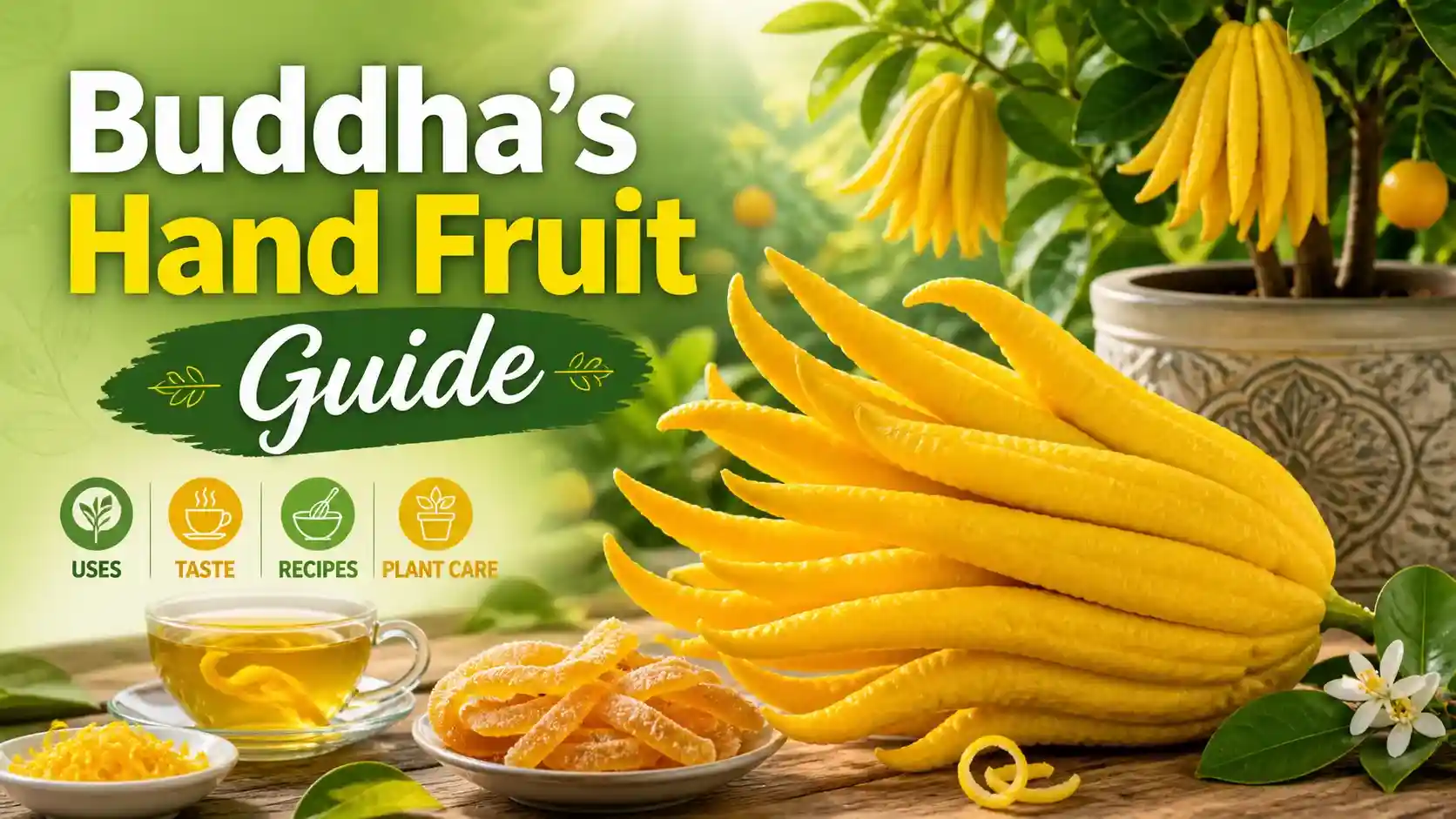
Buddha’s hand fruit is a unique finger-shaped citrus fruit known for its bright yellow color, long finger-like sections, and powerful lemon-floral fragrance. It is also called buddha hand fruit, hand of buddha fruit, fingered citron fruit, and buddha’s hand citron. Unlike lemons or oranges, this citrus is not mainly valued for juice because it usually has very little or no pulp inside. Instead, people use its fragrant peel, zest, and soft white pith in recipes, tea, candied peel, and natural fragrance blends. Buddha’s hand fruit can also be grown as a small ornamental citrus tree or shrub with attractive fruit and scented flowers.
|
Feature |
Details |
|
Common name |
Buddha’s hand fruit |
|
Scientific name |
Citrus medica var. sarcodactylis |
| Other names |
Fingered citron, hand of Buddha citrus, Buddha hand citrus |
| Fruit type |
Citron / citrus fruit |
|
Shape |
Yellow fruit with long finger-like sections |
|
Main edible part |
Peel, zest, and pith |
|
Juice content |
Usually very little or none |
| Main uses |
Zest, candied peel, fragrance, tea, recipes, decoration |
| Plant type |
Small citrus tree or shrub |
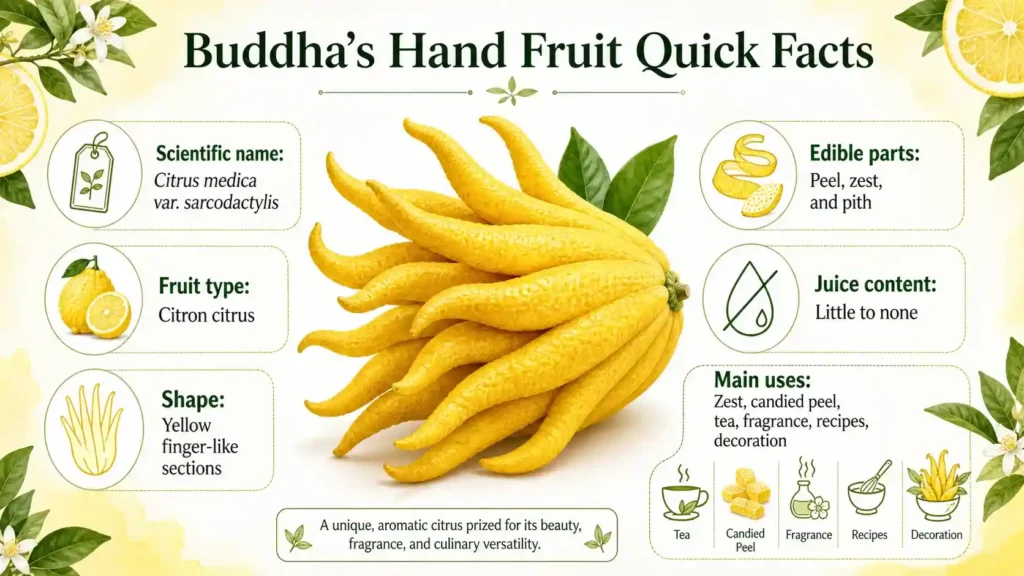
Buddha’s hand fruit gets its name from its unusual shape, which looks like a hand with long, curved fingers. Instead of forming a round or oval citrus like a lemon, this citron grows into separate finger-like sections that spread outward or curl inward. Because of this shape, people often describe it as buddha fingers fruit, buddha fingers, buddha’s hands, or finger citron fruit.
The most recognizable feature of Buddha’s hand is its hand-like appearance. The fruit has several long yellow segments that look similar to fingers extending from a palm. Some fruits have open fingers, while others look more closed, almost like a praying hand. This natural shape makes Buddha’s hand fruit one of the most visually unusual citrus fruits.
Buddha’s hand fruit also has cultural meaning in many Asian and Chinese settings. Its finger-like form is often linked with good fortune, blessings, happiness, and long life. The strong citrus fragrance also adds to its symbolic value because pleasant scent is often associated with freshness, purity, and positive energy. In some homes and festive displays, Buddha’s hand is used as a decorative fruit for its bright color, special shape, and natural fragrance.
Buddha’s hand fruit looks very different from common citrus fruits because it does not usually form a smooth round shape. It is a bright yellow citrus fruit with long finger-like extensions, thick textured skin, and a strong aromatic peel. Its unusual structure is the main reason many people describe it as a lemon with fingers.
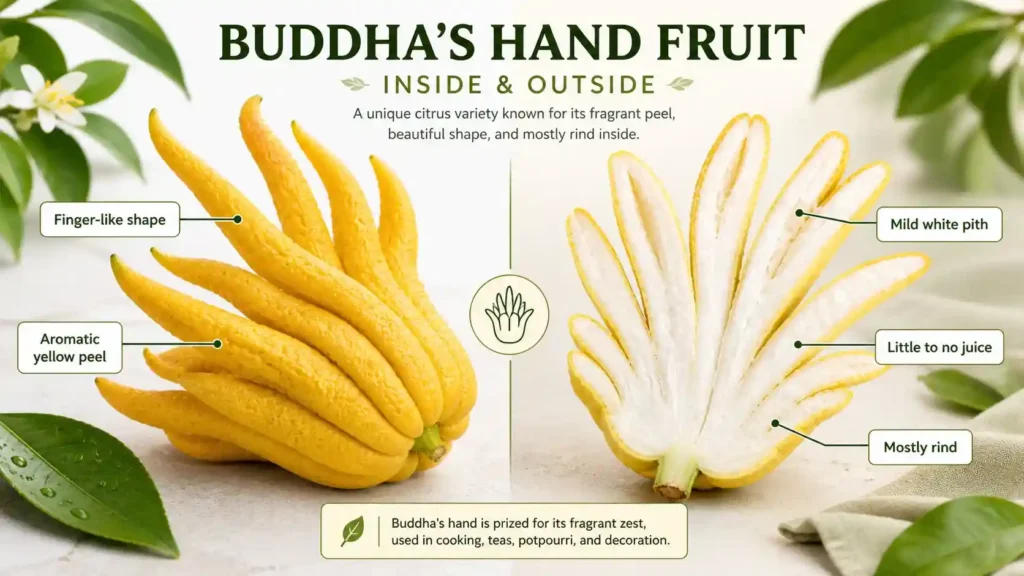
The outside of Buddha’s hand fruit is usually vivid yellow when fully ripe. Its peel is thick, bumpy, and highly fragrant, with a natural citrus scent similar to lemon but often more floral and intense. The fruit may have several long sections that stretch outward like fingers, giving it a dramatic hand-like appearance.
Because of this shape, Buddha’s hand citron is easy to recognize. Some fruits look like an open hand with spread fingers, while others look more closed or curled. This fingered form makes it popular not only as an edible citrus but also as a decorative fruit for kitchens, tables, and festive displays.
Inside, Buddha’s hand fruit is mostly rind and white pith rather than juicy flesh. Unlike lemons, oranges, or grapefruits, it usually has little to no pulp and very little to no juice. This is why it is not commonly squeezed like regular citrus.
The white pith is often milder and less bitter than the pith of many other citrus fruits. Because of that, both the yellow peel and the pith can be used in thin slices, candied peel, tea, desserts, and cooked recipes.
Buddha’s hand fruit has a mild citrus taste and a strong, fresh fragrance. Its flavor is not sharp or juicy like lemon because the fruit is mostly peel and pith. The aroma is one of its most valuable qualities, making it useful in food, drinks, natural fragrance blends, and decorative displays.
The flavor of Buddha’s hand fruit is gentle, citrusy, and slightly floral. It has a lemon-like aroma but is usually less sour than lemon because it contains little to no juice. Instead of using it for squeezing, most people use the peel, zest, and pith to add bright citrus notes to recipes.
Buddha’s hand zest works well in:
Its taste is best when used in small amounts because the peel is highly aromatic. A little zest can add a clean citrus flavor without making a dish too acidic.
Buddha’s hand fruit is especially known for its strong natural citrus scent. The peel releases a fresh lemon-floral fragrance that can make a room smell clean and bright. Because of this, the fruit is often placed in bowls, kitchens, dining areas, or festive displays as a natural room fragrance.
It can also be used in:
The fragrance is one of the main reasons Buddha’s hand citron is valued even when it has little or no juice inside.
Yes, Buddha’s hand fruit is edible, but it is used differently from most citrus fruits. It usually does not have much pulp or juice, so the most useful parts are the peel, zest, white pith, and thin slices. Its strong citrus fragrance and mild flavor make it especially good for recipes that need aroma rather than sour juice.
The edible parts of Buddha’s hand fruit include:
The yellow peel is rich in citrus aroma and can be grated as zest into desserts, sauces, tea, dressings, and baked goods. The white pith is also edible and is often milder than the bitter pith found in many other citrus fruits. Thin slices can be used fresh, cooked, infused, or candied.
Candied Buddha’s hand peel is one of the most common ways to eat this fruit. The peel and pith are sliced, cooked in syrup, dried, and then used in cakes, cookies, breads, and desserts.
Some parts of Buddha’s hand fruit are usually not used because the fruit is naturally dry inside. These include:
Unlike lemon or orange, Buddha’s hand fruit is not commonly squeezed for juice. Its main value comes from its fragrant rind, edible pith, and decorative finger-like shape.
Buddha’s hand fruit is eaten mainly for its aromatic peel, zest, and mild white pith. Since it usually has little or no juice, it is not used like lemon or orange. If you are wondering buddha’s hand how to eat, the best methods are zesting, thin slicing, candying the peel, or infusing it into drinks.
The easiest way to eat Buddha’s hand fruit is to grate the yellow peel and use it as citrus zest. The zest has a bright lemon-floral aroma and adds fresh citrus flavor without strong sourness. For anyone searching how to eat buddha’s hand, zesting is the most practical everyday use.
You can grate Buddha’s hand zest into:
When using zest, wash the fruit well first and grate only the outer yellow peel. A small amount is usually enough because the fragrance is strong.
Another simple method for buddha’s hand fruit how to eat is slicing it thinly. Thin slices can include both the yellow peel and white pith because the pith is often milder than regular citrus pith. These slices work well in fresh, cooked, and infused recipes.
Use thin slices in:
Thin slices are best when used in small amounts, especially in fresh dishes, because the fruit is highly aromatic.
Candied Buddha’s hand citron is one of the most popular ways to use this fruit. Since the fruit is mostly peel and pith, it works very well for candying. The peel is sliced, simmered until tender, cooked in sugar syrup, and then dried.
Candied Buddha’s hand peel can be used in:
This method turns the firm citrus peel into a sweet, chewy ingredient with a strong citrus fragrance. It is a good option when you want to preserve the fruit and use it over time.
Buddha’s hand peel is excellent for drinks because it adds fragrance without much acidity. Thin strips of peel can be added to hot or cold beverages to create a fresh citrus aroma.
Use Buddha’s hand peel in:
For tea or infused water, add a few thin strips of peel and let them steep. The result is a light, fragrant citrus drink with a floral lemon-like scent.

Buddha’s hand fruit uses are mainly based on its fragrant peel, edible pith, strong citrus aroma, and ornamental shape. Since the fruit usually has little or no juice, it is more useful for zesting, candying, infusing, decorating, and adding natural fragrance than for squeezing.
In cooking, Buddha’s hand fruit is valued for its bright citrus scent and mild lemon-like flavor. The peel and zest can add freshness to both sweet and savory recipes without making them overly sour.
Common culinary uses include:
The zest can be grated into cakes, cookies, muffins, sauces, rice dishes, and dressings. Thin slices can be simmered into marmalade or syrup, while candied citron peel works well in baked goods and desserts. Buddha’s hand peel can also be mixed with sugar or salt to create a fragrant citrus seasoning.
If you enjoy experimenting with unique fruits in recipes, you can also explore our kiwiberry guide.
Buddha’s hand fruit is naturally aromatic, so it is often used as a fresh citrus fragrance around the home. Its peel releases a clean lemon-floral scent that can make indoor spaces smell bright and refreshing.
Fragrance uses include:
The fruit can be placed whole in a bowl, sliced into fragrance blends, or added to simmer pots with herbs and spices. Because the scent comes from the peel, Buddha’s hand citron can be useful even when it is not being eaten.
Buddha’s hand fruit also has strong decorative value because of its unusual finger-like shape and bright yellow color. It stands out more than common citrus fruits and can be used as a natural ornament in homes, kitchens, and festive displays.
Decorative uses include:
Its unique shape makes it especially attractive in bowls, dining table arrangements, and seasonal displays. In some Asian and Chinese cultural settings, Buddha’s hand is also appreciated as a meaningful fruit connected with good fortune, blessings, and fragrance.
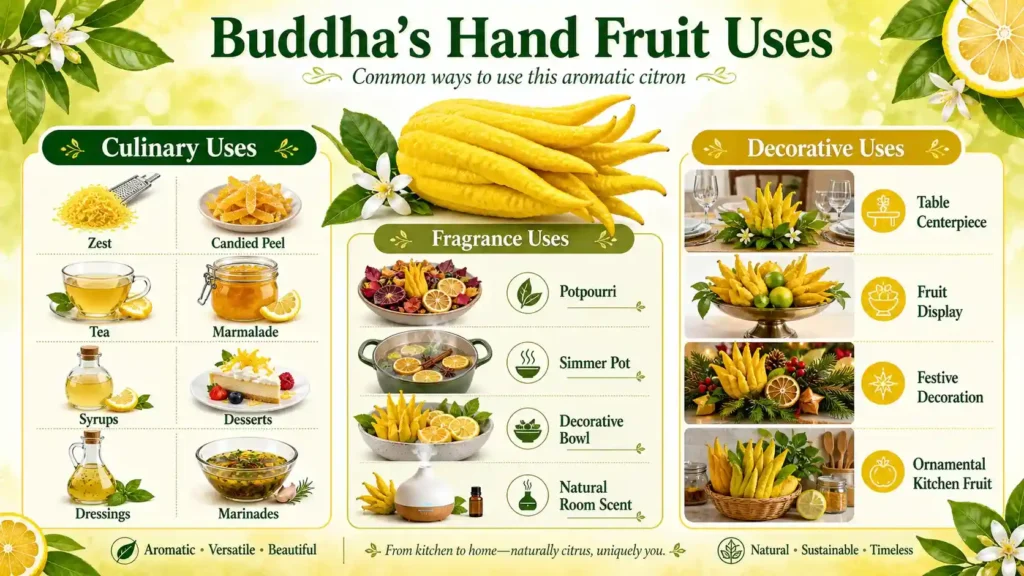
Buddha’s hand recipes usually focus on the fruit’s fragrant peel, zest, and mild pith. Since it has little to no juice, it works best in recipes where citrus aroma matters more than acidity. You can use it in baked goods, desserts, teas, syrups, dressings, and candied citrus preparations.
Buddha’s hand zest is one of the easiest ways to use this fruit in everyday cooking. The yellow peel adds a clean lemon-floral flavor without the sharp sourness of lemon juice. Use a fine grater and add a small amount at first because the aroma can be strong.
Good Buddha’s hand zest ideas include:
For baked goods, the zest blends well with vanilla, almond, honey, ginger, and warm spices. In salad dressings, it adds brightness without making the dressing too acidic. For citrus sugar, mix fine Buddha’s hand zest with granulated sugar and let it sit until the sugar absorbs the fragrance.
Candied Buddha’s hand citron is a classic way to preserve the peel and pith. Because the fruit is mostly rind, it works very well for candying and can be stored for later use in desserts.
Basic method:
Candied Buddha’s hand citron can be chopped into cakes, cookies, sweet breads, muffins, and fruit desserts. It can also be used as a topping for puddings, pastries, and homemade citrus treats.
Buddha’s hand tea is simple, fragrant, and naturally citrusy. Add thin peel strips to hot water and let them steep until the water takes on a light lemon-floral aroma. Since the fruit is not very juicy, the peel provides most of the flavor.
You can pair Buddha’s hand peel with:
For a warmer drink, combine the peel with ginger and honey. For a fresher infusion, pair it with mint or mild herbs. The result is a gentle citrus drink that smells bright and tastes mild rather than strongly sour.
Buddha’s hand fruit, lemon, and regular citron are all citrus fruits, but they are used in different ways.
You can also compare it with other small citrus types in our Nagami kumquat guide.
The biggest differences are their shape, juice content, and main culinary purpose. Buddha’s hand is mostly valued for zest, peel, fragrance, and decoration, while lemon is mainly used for juice and acidity. Regular citron is also peel-focused, especially for preserves and candying.
| Feature | Buddha’s Hand Fruit | Lemon | Regular Citron |
|
Shape |
Finger-like segments | Oval citrus fruit | Large thick-rind citrus |
|
Juice content |
Little to no juice | High juice content | Low to moderate juice |
|
Main edible value |
Peel, zest, and pith | Juice, zest, and pulp |
Peel and rind |
| Flavor role | Mild citrus aroma | Sharp sour citrus flavor | Fragrant, rind-heavy citrus |
| Common uses | Zest, peel, fragrance, decoration | Juice, zest, cooking |
Peel, preserves, candying |
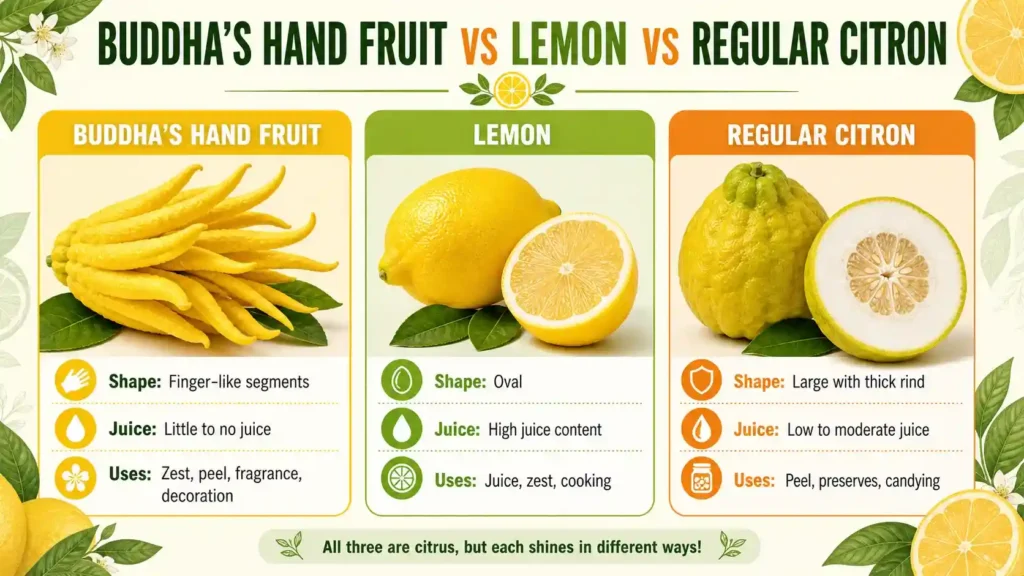
Buddha’s hand fruit has long finger-like segments that make it look like a hand. This is the main feature that separates it from most citrus fruits. Lemon has a smooth oval shape, while regular citron is usually larger, thicker, and more rind-heavy.
Buddha’s hand fruit usually has little to no juice because it is mostly peel and pith inside. Lemon has high juice content, which is why it is commonly squeezed for drinks, dressings, marinades, and cooking. Regular citron may have low to moderate juice, but it is still mainly valued for its thick rind.
Buddha’s hand is best for zest, peel, fragrance, and decoration. It adds citrus aroma without strong sourness and works well in tea, desserts, candied peel, and decorative bowls. Lemon is more useful when a recipe needs juice, acidity, and fresh sour flavor. Regular citron is commonly used for peel-based recipes, preserves, marmalade, and candying.
Buddha’s hand tree is a small citrus tree or shrub that produces the unusual fingered citron fruit known as Buddha’s hand. It is valued for its glossy leaves, fragrant flowers, aromatic peel, and decorative yellow fruit. The plant can grow outdoors in suitable warm climates or in large containers where it can be protected from cold weather.
A Buddha’s hand tree is a citrus plant that produces finger-shaped citron fruit instead of round or oval citrus. It is also called hand of buddha tree, fingered citron tree, or buddha fingers tree. The fruit usually has long yellow sections that look like fingers and is mainly used for zest, peel, fragrance, and decoration rather than juice.
This tree is grown both as an edible citrus plant and as an ornamental feature. Its fruit has a strong citrus scent, and its unusual shape makes the tree attractive in gardens, patios, and container plant displays.
Buddha’s hand plant usually grows as a compact citrus tree or large shrub. It has glossy green leaves, fragrant citrus flowers, and bright yellow fruit when mature. The growth habit is often manageable, which makes it suitable for home gardens and large pots.
Key plant features include:
In warm, frost-free regions, Buddha’s hand tree can be grown outdoors in the ground. In cooler areas, it is often grown in containers so it can be moved indoors or into a protected location during cold weather.
Buddha’s hand citrus grows best in warm, sunny conditions with well-draining soil and steady care. Like many citrus plants, it does not tolerate cold, soggy roots, or poor light. In mild climates, it can grow outdoors in the garden. In cooler regions, it is often easier to grow Buddha’s hand citrus in a large pot so the plant can be moved indoors before frost.
Buddha’s hand citrus prefers a warm, sunny, frost-free climate. It is suitable for mild-winter areas where temperatures do not drop too low. Cold weather can damage leaves, flowers, young fruit, and tender branches.
In cooler regions, Buddha’s hand can be grown in pots. Container growing makes it easier to protect the plant during winter by moving it to a bright indoor area, greenhouse, sunroom, or sheltered patio.
Full sun is best for healthy growth, flowering, and fruit production. Buddha’s hand citrus should receive at least 6 hours of direct sunlight daily. More sunlight usually supports stronger growth and better fruit development.
These growing conditions are similar to many fruit trees & edible plants that require full sun and proper care for healthy development.
If grown indoors, place the plant near the brightest available window. A sunny south-facing or west-facing window is often helpful. Without enough light, the plant may grow weak, drop leaves, or produce fewer flowers and fruits.
Buddha’s hand citrus needs well-draining citrus soil. The soil should hold some moisture but still allow extra water to drain away quickly. Slightly acidic to neutral soil is usually suitable for healthy root growth.
Avoid heavy, compacted, or waterlogged soil because citrus roots need oxygen. Poor drainage can lead to root stress, yellow leaves, and root rot. For containers, use a quality citrus potting mix and make sure the pot has drainage holes.
Keep the soil lightly moist, but never soggy. Buddha’s hand citrus does not like sitting in wet soil for long periods. Water when the top layer of soil begins to feel dry, then allow extra water to drain fully.
Container plants need more careful watering because pots dry out faster than garden soil but can also become waterlogged if drainage is poor. Check the soil regularly and adjust watering based on temperature, light, pot size, and season.
Use a citrus fertilizer during active growth to support leaves, flowers, and fruit development. Buddha’s hand citrus benefits from balanced nutrition, especially in spring and summer when the plant is growing strongly.
Avoid overfertilizing because too much fertilizer can stress the roots or cause leaf burn. Watch for yellow leaves, weak growth, or poor flowering, as these may suggest nutrient stress, watering problems, or unsuitable soil conditions.
Buddha’s hand root system is similar to many citrus plants. It is usually shallow to moderately spreading, which means the roots grow mostly near the upper soil layers instead of going very deep. Because of this, the tree needs oxygen-rich, well-drained soil and careful watering to stay healthy.
Buddha’s hand citrus has a shallow to moderately spreading root system. These roots help the plant absorb water and nutrients from the upper soil area, but they can become stressed if the soil is compacted, poorly drained, or constantly wet.
The root system needs:
Compacted soil can reduce oxygen around the roots, while soggy soil can increase the risk of root rot. This is especially important for container-grown Buddha’s hand trees because pots can hold excess moisture if the soil mix or drainage is poor.
Healthy roots are important for strong leaf growth, flowering, and fruit development. The best way to care for Buddha’s hand roots is to avoid planting and watering mistakes.
Root care tips include:
When planting, keep the root crown near the soil surface and avoid burying the trunk. If using mulch, apply only a light layer over the root zone and leave space around the trunk to prevent moisture buildup. For potted plants, repot when roots circle the container, drainage slows down, or growth becomes weak.
Buddha’s hand tree care focuses on balanced pruning, steady watering, pest control, container protection, and enough sunlight for flowering and fruiting. This citrus plant can be productive and ornamental when it grows in warm conditions with well-draining soil and proper seasonal care.
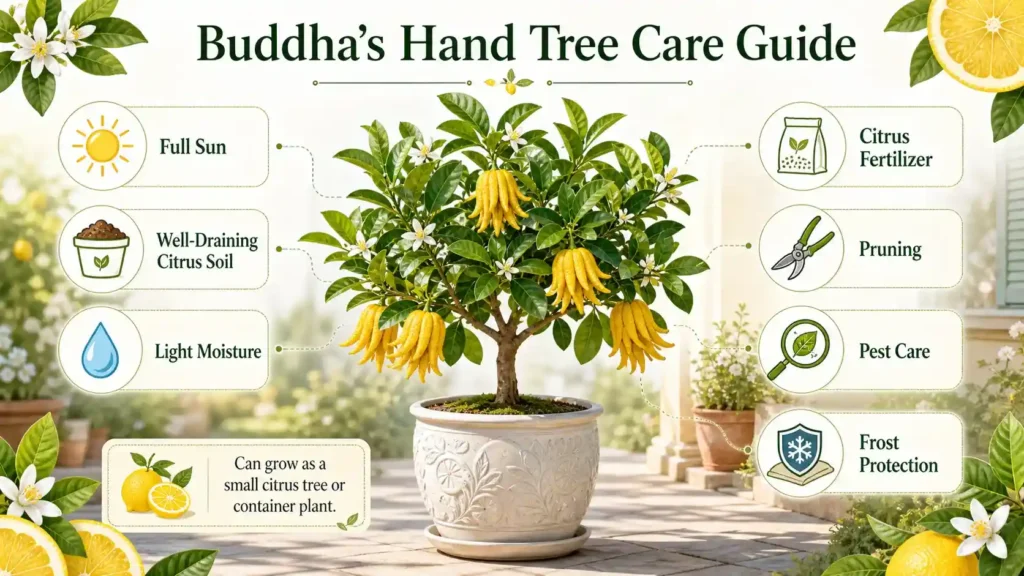
Pruning helps keep a Buddha’s hand tree healthy, open, and manageable. The goal is not heavy cutting, but light shaping and removing unhealthy growth.
Pruning tips include:
Avoid removing too much healthy growth at once because citrus trees need leaves to produce energy. Light pruning is usually enough for container plants and small garden trees.
Buddha’s hand citrus can attract common citrus pests, especially when the plant is stressed, crowded, or grown indoors with poor airflow. Regular leaf checks help catch problems early.
Common pests and issues include:
Aphids and spider mites often appear on tender new growth, while scale insects may attach to stems and leaves. Citrus leaf miner can create winding trails in young leaves. Root rot is usually linked to overwatering, poor drainage, or soggy soil. Keeping the plant healthy, well-spaced, and properly watered can reduce many problems.
Buddha’s hand tree can grow well in a large container if the pot supports drainage and root health. Container growing is especially useful in cooler regions because the plant can be moved before freezing weather arrives.
Container care tips include:
When grown inside during cold months, place the plant near strong natural light. Water more carefully indoors because lower light and cooler temperatures can slow growth and increase the risk of wet soil.
Young Buddha’s hand trees may take a few years to fruit. Fruiting depends on sunlight, plant maturity, climate, nutrition, and overall care. A healthy tree with enough light is more likely to produce fragrant flowers that may develop into fingered fruits.
The flowers are usually aromatic and can add ornamental value even before fruit appears. Once fruit begins forming, consistent watering, warmth, and good light help support better development.
Buddha’s hand fruit benefits come from its fragrant peel, edible pith, unique shape, and strong ornamental value. It is not a juicy citrus, so its main benefits are culinary, aromatic, and decorative rather than juice-based.
Buddha’s hand fruit adds citrus aroma without strong sourness. This makes it useful in recipes where you want a bright lemon-like scent but do not want extra acidity or liquid.
Culinary benefits include:
The zest can be used in cakes, cookies, muffins, salad dressings, marinades, syrups, and citrus sugar. Because the flavor is mild and aromatic, it blends well with sweet and savory dishes.
Buddha’s hand fruit is naturally aromatic and can freshen indoor spaces with a clean citrus scent. Its peel releases a strong lemon-floral fragrance, making it useful even when the fruit is not being cooked or eaten.
Fragrance benefits include:
You can place the whole fruit in a bowl, slice the peel for potpourri, or simmer it with herbs and spices for a natural home fragrance.
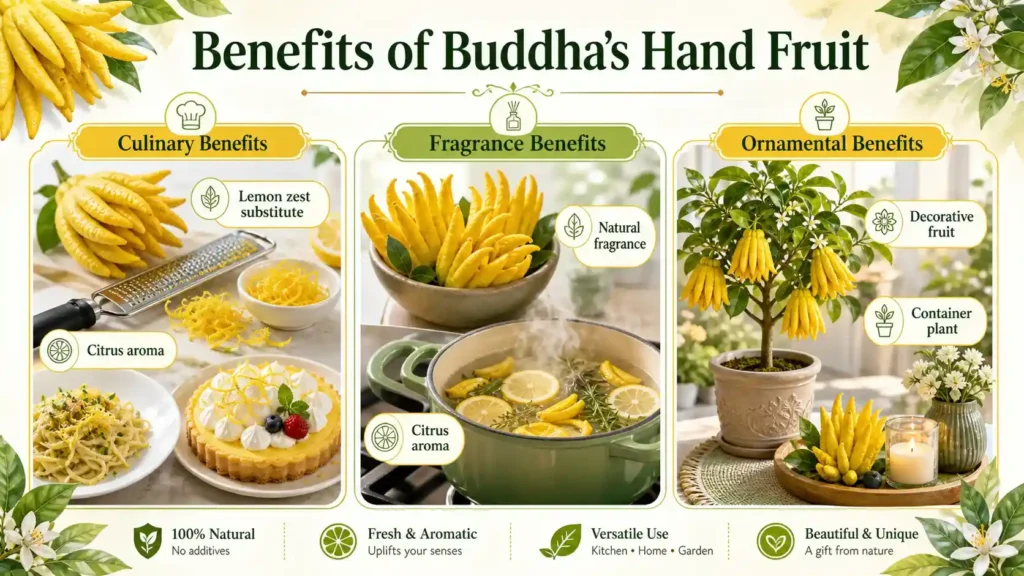
Buddha’s hand fruit has strong ornamental value because of its unusual finger-like shape and attractive yellow color. It stands out in gardens, patios, kitchens, and table displays.
Ornamental benefits include:
As a plant, Buddha’s hand citrus can be grown as a small feature tree or container shrub. Its unusual fruit, scented flowers, and glossy foliage make it both useful and decorative.
Buddha’s hand fruit is generally used in small amounts for zest, peel, tea, fragrance, and recipes. However, because the peel is the main edible part, it should be washed well and used carefully, especially by people with citrus sensitivity, allergies, or digestive concerns.
Possible concerns include:
Since Buddha’s hand fruit is often used for decoration, not every fruit may be suitable for eating. If you plan to use the peel, zest, or pith in food, choose fruit that is safe for culinary use and avoid fruit treated with non-food-safe coatings or chemicals. Wash the surface thoroughly before slicing, zesting, or candying.
Buddha’s hand fruit should not be treated as a cure for health conditions. It can add citrus aroma and flavor to food, but it is not a medical treatment.
People with citrus allergies, digestive issues, or medical concerns should use caution. Start with small amounts if eating the peel or pith for the first time, and avoid it if citrus fruits usually cause irritation or allergic reactions.
Buddha’s hand can be used in landscaping as both an edible citrus plant and an ornamental feature. Its glossy leaves, fragrant flowers, and unusual yellow fruit make it attractive in warm-climate gardens, patios, balconies, courtyards, and container displays.
In suitable climates, Buddha’s hand works well as a feature citrus tree in the garden. It can be planted where its unique fruit shape and strong visual appeal are easy to notice. Because the fruit is edible and aromatic, it also fits well into edible landscaping designs.
Garden uses include:
Buddha’s hand is best for warm, sunny, frost-free garden areas. It can be placed near patios, walkways, or outdoor seating areas where the fragrant flowers and decorative fruit can be appreciated.
Buddha’s hand is also suitable for large pots, making it useful for patios, balconies, and courtyards. Container growing is especially helpful in cooler regions because the plant can be moved indoors or into a protected area during cold weather.
Container and patio uses include:
For best results, use a pot with drainage holes, well-draining citrus mix, and a sunny location. During cold weather, move the plant indoors before frost and place it where it receives bright light.
Buddha’s hand has strong ornamental value because it looks different from ordinary citrus plants. Even before fruit appears, the plant can add beauty with its glossy leaves and fragrant citrus flowers.
Main ornamental features include:
The finger-like fruit makes Buddha’s hand a natural conversation piece in gardens and containers. Its bright yellow color, unusual shape, and citrus fragrance make it useful as both a landscape plant and a decorative fruiting shrub.
Buddha’s hand fruit is known by several common names because of its unusual shape, citrus family, and finger-like sections. These names often describe the same fruit, although spelling may vary depending on the source, region, or search query.
Other common names for Buddha’s hand fruit include:
Most of these names refer to the fruit’s hand-like or finger-like appearance. “Fingered citron fruit” and “finger citron fruit” are more descriptive botanical-style names, while “Buddha hand citrus” and “hand of Buddha citrus” are commonly used in general gardening and food content.
Because the name contains an apostrophe and multiple words, Buddha’s hand is often searched with spelling variations or missing punctuation.
Common misspellings include:
These spellings usually refer to the same fruit. The correct common form is Buddha’s hand fruit, while the botanical identification is Buddha’s hand citron or fingered citron.
Buddha’s hand fruit is a finger-shaped citron known for its bright yellow color, strong citrus fragrance, and unusual hand-like appearance. It is mostly used for zest, peel, fragrance, recipes, and decoration rather than juice.
Key points:
Buddha’s hand fruit is a rare, fragrant, and highly useful citrus known for its finger-like shape, bright yellow peel, and strong lemon-floral aroma. Unlike common citrus fruits, it is not mainly grown for juice. Its real value comes from the aromatic zest, edible peel, mild pith, and decorative appearance.
This unique citron is best used for citrus zest, candied peel, tea, syrups, desserts, natural fragrance, ornamental displays, and container gardening. The Buddha’s hand tree also adds beauty to gardens and patios with glossy leaves, fragrant flowers, and unusual fruit.
For anyone interested in unique citrus plants, Buddha’s hand fruit is worth trying in recipes or growing as a special container citrus for its fragrance, beauty, and practical kitchen uses.
Buddha’s hand fruit is mostly used for citrus zest, candied peel, tea, syrups, desserts, salad dressings, sauces, marinades, fragrance, and decoration. Since it usually has little or no juice, its peel and pith are more useful than its pulp.
Yes, Buddha’s hand fruit can be eaten raw in thin slices or as fresh zest. The yellow peel and white pith are edible, but the flavor is strong and aromatic, so it is usually used in small amounts. Always wash the fruit well before eating the peel.
Buddha’s hand fruit usually has very little or no juice. Unlike lemons or oranges, it is mostly made of peel, rind, and white pith. This is why it is mainly used for zest, candied peel, fragrance, and decorative purposes.
Buddha’s hand fruit has a mild citrus taste with a floral, lemon-like aroma. It is usually less sour than lemon because it does not contain much juice. The peel provides most of the flavor and fragrance.
You can eat Buddha’s hand fruit by grating the zest into desserts, salads, sauces, rice dishes, and baked goods. You can also slice it thinly for tea or cooked dishes, candy the peel, or infuse it into syrups, mocktails, cocktails, and flavored water.
Buddha’s hand is a type of citron. Its scientific name is Citrus medica var. sarcodactylis. Regular citron usually has a large thick rind, while Buddha’s hand has long finger-like sections and often little to no pulp or juice.
Yes, Buddha’s hand can grow in a pot if the container is large enough and has good drainage. Use citrus potting mix, provide full sun or bright indoor light, and move the plant indoors before frost in cooler climates.
Yes, Buddha’s hand fruit is good for cooking when you need citrus aroma without strong sourness. Its zest works well in cakes, cookies, muffins, salad dressings, sauces, marinades, teas, and syrups.
You do not need to peel it the same way as an orange. The peel and pith are the main edible parts. You can zest the yellow outer peel, slice the fruit thinly, or use the peel and pith for candying.
Buddha’s hand fruit can be stored at room temperature for short-term fragrance and decoration. For longer freshness, keep it in the refrigerator in a breathable bag or container. Use it before the peel becomes dry, dark, or overly soft.