Grow Better Gardens with Smarter Plant Choices
Discover helpful guides on trees, hedges, fruit plants, edible plants, and beautiful landscape greenery.

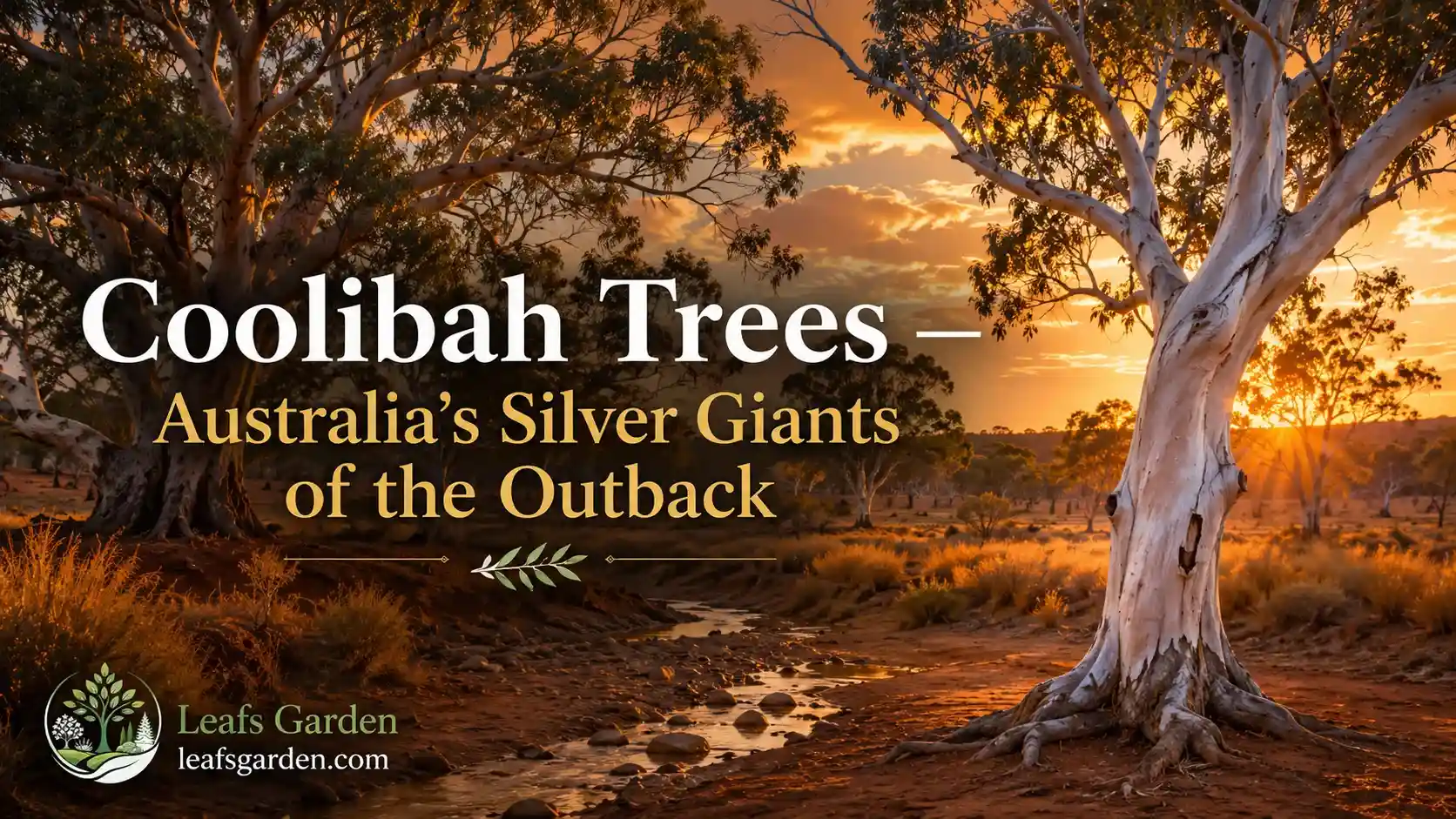
Coolibah trees are hardy Australian eucalyptus species valued for their exceptional drought tolerance, pale decorative bark, and ability to survive in harsh inland environments. The term “coolibah” commonly refers to Eucalyptus coolabah, but it is also closely connected with related species like Eucalyptus victrix and western coolibah varieties that thrive across arid and semi-arid regions of Australia.
These trees play an important role in Australian ecosystems because they provide shade, wildlife habitat, erosion control, and long-term resilience in dry landscapes. Their adaptability to floodplains, seasonal creeks, and low-rainfall regions makes them highly valuable for both natural environments and modern drought-tolerant landscaping.
Many gardeners and landscape designers also grow coolibah trees for their ornamental value. Species such as the “little ghost gum” (Eucalyptus victrix) and “snow queen eucalyptus” are especially popular for their smooth white trunks, elegant canopy structure, and strong heat tolerance. In Australian gardens, parks, and native landscape designs, coolibah trees are widely appreciated for combining low-maintenance growth with striking visual appeal.
A coolabah tree is a native Australian eucalyptus species naturally adapted to arid and semi-arid environments. These trees are best known for their drought resistance, pale bark, and ability to survive in harsh inland conditions where rainfall is limited and temperatures are extreme.
Coolabah trees commonly grow near inland floodplains, dry river systems, and seasonal waterways across Australia. The species most often associated with the name is Eucalyptus coolabah, although related eucalyptus species are also commonly grouped under the coolibah category in landscaping and horticulture discussions.
The word “coolibah” or “coolabah” originates from Indigenous Australian language groups and has been used historically to describe specific eucalyptus trees growing in inland regions of Australia. Over time, the term became widely recognized in Australian culture, literature, and rural history.
The spelling varies between “coolibah” and “coolabah” because both versions developed through regional pronunciation differences and historical English transliterations. In botanical usage, “coolabah” is commonly linked to Eucalyptus coolabah, while “coolibah” is also widely used in general Australian language and online search queries.
Today, both spellings are accepted in common usage, and people searching for coolibah trees or coolabah trees are usually referring to the same group of drought-tolerant eucalyptus species.
| Feature | Information |
| Botanical Name | Eucalyptus coolabah |
| Related Species | Eucalyptus victrix |
| Common Names | Coolabah tree, Western coolibah |
| Plant Family | Myrtaceae |
| Native Region | Inland Australia |
There is no major botanical difference between “coolibah” and “coolabah” because both terms generally refer to the same Australian eucalyptus tree group. The variation mainly comes from spelling preference, regional usage, and online search behavior.
In scientific classification, Eucalyptus coolabah is the officially recognized botanical name. However, many Australians, gardeners, and landscape websites still use “coolibah” as a common spelling variation.
Online, both keywords are heavily used because search intent differs between users. Some people search for “coolabah tree” when looking for botanical information, while others use “coolibah tree” for landscaping, identification, or general gardening searches.
Several eucalyptus species are associated with coolibah trees, and each variety has different bark textures, canopy forms, growth habits, and ornamental qualities. Some are valued mainly for drought tolerance, while others are widely planted for their decorative white trunks and landscape appeal.
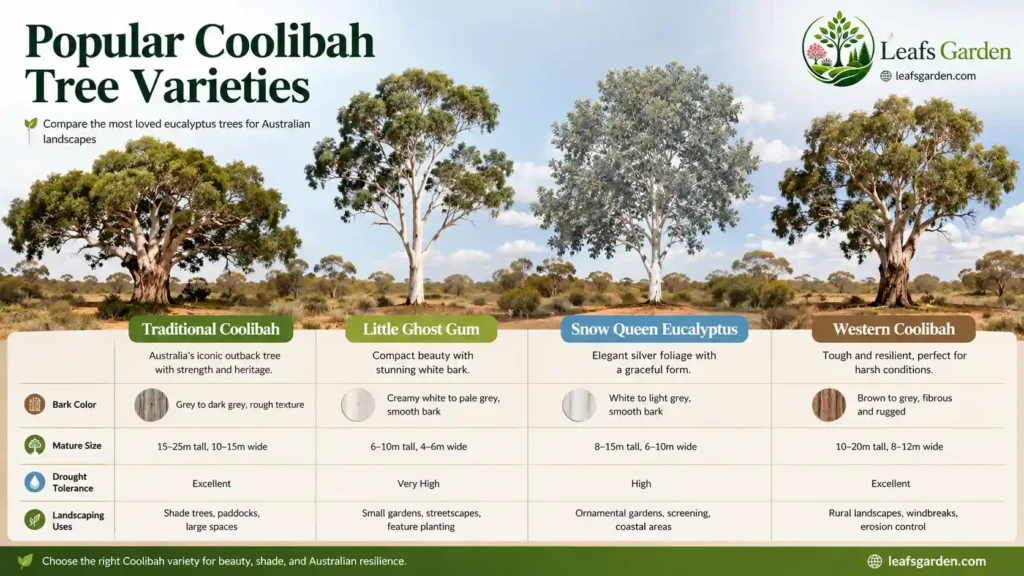
Eucalyptus coolabah is the traditional inland coolabah species found throughout dry Australian floodplains and river systems. It is one of the most recognized eucalyptus trees in arid inland Australia.
This species typically develops a broad spreading canopy with grey-green foliage and rough lower bark combined with smoother upper branches. Mature trees provide excellent shade and can survive long periods of drought once established.
In nature, Eucalyptus coolabah commonly grows near temporary creeks, floodplains, and inland waterways where occasional flooding supports deep root development. Its adaptability to extreme heat and dry soils makes it one of the most resilient native eucalyptus species in Australia.
Eucalyptus victrix is commonly known as the little ghost gum because of its striking pale trunk and smooth ornamental bark. The bright cream-white appearance gives the tree a glowing effect, especially in evening light and dry landscapes.
This species is highly valued in landscaping because of its elegant structure, relatively tidy growth habit, and strong drought tolerance. Compared to larger gum trees, little ghost gum has a cleaner canopy and more refined ornamental appearance.
Common landscaping uses include:
Its heat tolerance and low water requirements make it especially popular in modern Australian landscape design.
The western coolibah tree is naturally adapted to harsh dry climates across inland and northwestern Australia. It thrives in areas with intense heat, seasonal rainfall, and low soil fertility.
This species is commonly found in parts of Western Australia where it survives strong sunlight, dry winds, and extended drought conditions. Its deep-rooted growth habit improves resilience during long dry periods.
Key characteristics include:
Because of these qualities, western coolibah trees are often planted in large rural landscapes, roadside plantings, and drought-tolerant revegetation projects.
Snow Queen eucalyptus is a highly ornamental selection associated with Eucalyptus victrix snow queen. It is widely admired for its decorative silver-white bark and soft grey-green foliage.
The bright trunk coloration creates strong visual contrast in minimalist and contemporary landscapes. Many designers use Snow Queen eucalyptus as a focal point because the smooth bark reflects light beautifully in dry gardens and modern outdoor spaces.
Its popularity in landscaping comes from several ornamental advantages:
Snow Queen eucalyptus is commonly used in premium residential gardens, native-inspired landscapes, and commercial landscape projects.
| Feature | Snow Queen Eucalyptus | Little Ghost Gum |
| Bark Color | Bright white | Cream-white |
| Mature Size | Medium | Medium-large |
| Landscape Use | Ornamental | Shade tree |
| Water Needs | Low | Low |
Several drought-tolerant eucalyptus species are sometimes confused with coolibah trees because of their similar bark color, foliage, and dry-climate adaptation.
Eucalyptus microtheca, often called coolibah black box, is closely related to traditional coolabah trees. It commonly grows in inland floodplain environments and shares similar drought-resistant characteristics.
Eucalyptus pulchella is another pale-barked eucalyptus species occasionally mistaken for coolibah trees in ornamental landscapes. Its narrow foliage and smooth bark create a similar visual appearance.
Other eucalyptus species with comparable features include:
These species are often selected for landscapes that require drought tolerance, heat resistance, and decorative bark without high maintenance needs.
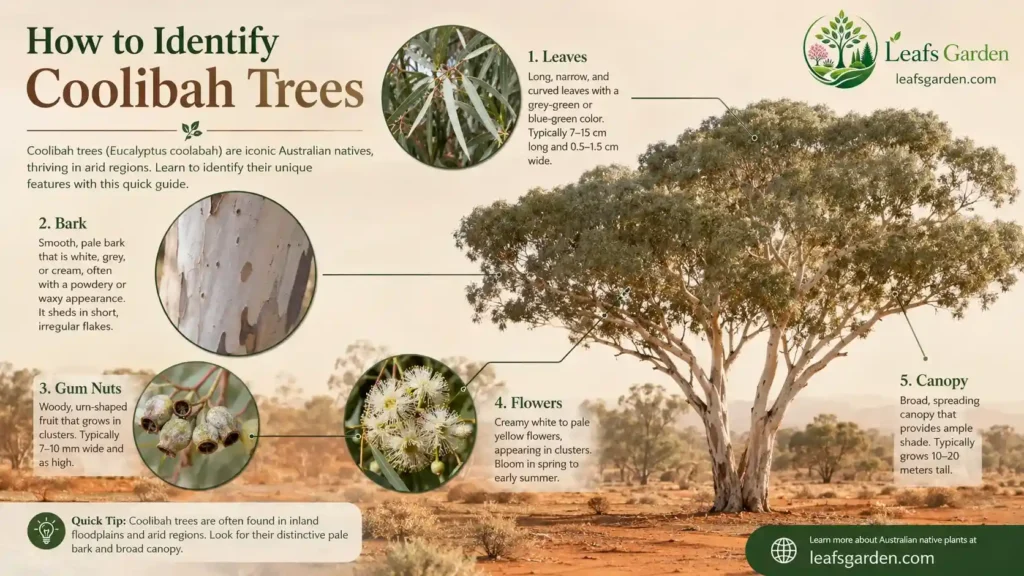
Coolibah trees are recognized by their pale bark, narrow eucalyptus leaves, spreading canopy, and exceptional drought tolerance. Most coolabah species develop a soft grey-green appearance that blends naturally into dry Australian landscapes.
Their ornamental trunks, aromatic foliage, and distinctive gum nuts also make them easier to identify compared to many other inland eucalyptus species.
Coolibah trees are best known for their smooth white or cream-colored bark that creates a bright reflective appearance in sunlight. Some mature trees may also develop rougher bark near the lower trunk while upper branches remain smooth.
The trunk often has a powdery or chalky texture that gives the bark a soft pale finish. This feature is especially noticeable on little ghost gum and Snow Queen eucalyptus varieties.
Seasonal bark shedding is another common identification feature. Thin bark layers naturally peel away during growth, revealing fresher lighter bark underneath and creating a decorative multi-toned appearance.
Key bark features include:
Coolibah trees produce narrow eucalyptus leaves with a slender elongated shape adapted for dry climates and water conservation. The foliage is usually grey-green or silver-green, helping reduce moisture loss under intense sunlight.
The leaves contain natural aromatic oils that release a characteristic eucalyptus scent, especially during hot weather or after rainfall. These oils also contribute to the tree’s drought resilience and pest resistance.
Common foliage characteristics include:
The lighter foliage color helps reflect heat and improves survival in harsh inland Australian environments.
Coolibah trees produce small eucalyptus flowers that are typically creamy white or pale yellow in color. Flowering periods vary depending on climate and species, but blooms commonly appear during warmer growing seasons.
These flowers attract pollinators such as:
After flowering, the trees develop woody seed capsules commonly known as gum nuts. These seed pods are a classic eucalyptus feature and remain on the branches after seeds mature.
The gum nuts are usually:
These seed capsules help distinguish coolibah trees from many non-eucalyptus Australian species.
Coolibah trees generally develop medium to large canopies with broad spreading branches suited for shade and drought adaptation. Growth speed varies between species and environmental conditions.
| Tree Type | Average Height | Growth Rate |
| Coolabah Tree | Medium-large | Moderate |
| Little Ghost Gum | Medium | Fast-moderate |
| Western Coolibah | Medium-large | Moderate |
Most coolibah species form open canopies that allow airflow and reduce heat stress in arid climates. Mature trees often become excellent shade trees for parks, rural landscapes, and native Australian gardens.
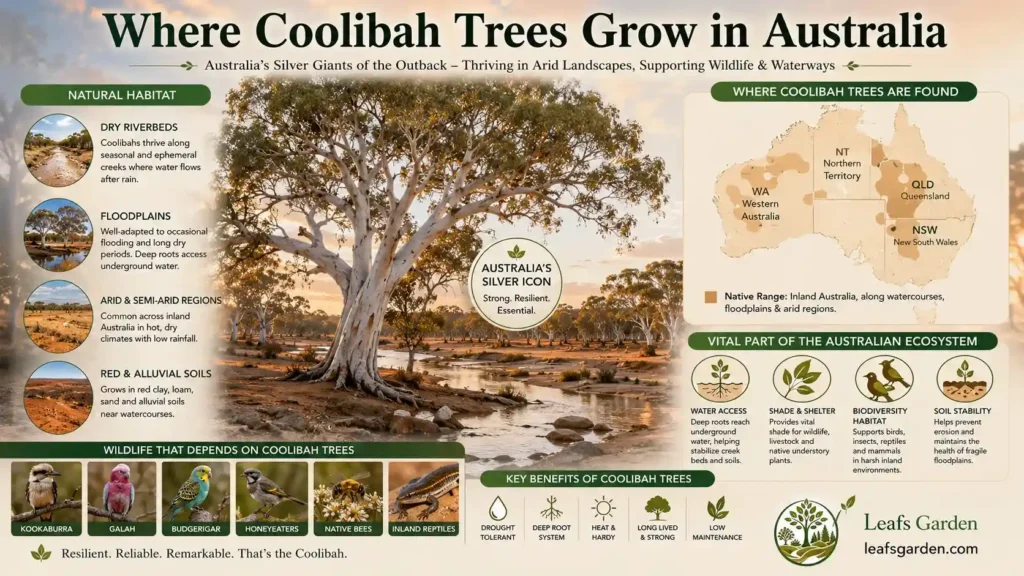
Coolibah trees naturally grow across Australia’s inland floodplains, dry river systems, and arid landscapes. These eucalyptus species are highly adapted to extreme heat, seasonal flooding, and long drought periods, allowing them to survive in some of the harshest environments in the country.
Most coolabah trees develop near temporary waterways and low-lying inland regions where occasional rainfall supports deep root growth and long-term survival.
Coolibah trees are widely distributed throughout inland Australia, particularly in dry and semi-arid regions with seasonal rainfall patterns.
Large populations of coolabah trees grow across inland Queensland, especially near floodplains and dry creek systems. These regions experience high temperatures and irregular rainfall, making coolibah species important for shade and land stabilization.
The Northern Territory contains extensive coolibah woodlands throughout inland river systems and semi-arid landscapes. These trees help support native wildlife in remote dry environments where vegetation is limited.
In Western Australia, western coolibah trees naturally occur in hot inland areas with sandy or low-fertility soils. Their strong drought resistance and wind tolerance allow them to thrive in exposed desert-edge environments.
Coolibah trees also grow across inland New South Wales, particularly near seasonal waterways and floodplain regions. They are commonly associated with dry grazing country and rural Australian landscapes.
Coolibah trees are specially adapted to survive both seasonal flooding and prolonged drought conditions. Their root systems can tolerate temporary waterlogging during wet periods while also accessing deep underground moisture during dry seasons.
This dual adaptation allows the trees to survive in highly unpredictable inland climates where water availability changes dramatically throughout the year.
Important environmental adaptations include:
Coolibah trees are especially important near temporary waterways because these locations provide occasional groundwater recharge that supports long-term tree health in arid landscapes.
Coolibah trees play a major ecological role in Australian inland ecosystems by supporting wildlife, protecting soil, and improving environmental stability in dry regions.
Their broad canopies create shade and shelter for animals living in exposed hot environments. Birds, insects, reptiles, and mammals often depend on coolibah habitats for nesting and protection.
Key ecosystem benefits include:
The trees also help reduce soil degradation in drought-prone areas where vegetation cover is limited.
Coolabah trees hold strong historical and cultural importance throughout Australia. They have long been connected to Indigenous Australian communities, inland travel routes, rural settlements, and Australian folklore.
For Indigenous Australians, coolibah trees provided shade, shelter, and environmental resources in harsh inland regions. Many traditional cultural practices and local ecological knowledge are connected to these eucalyptus landscapes.
Coolabah trees also appear in historic Australian literature and folk references associated with remote outback environments and inland river systems. Their distinctive silhouette has become an iconic symbol of the Australian interior.
Because of this cultural significance, coolibah trees remain an important part of Australia’s environmental identity and natural heritage.
Coolibah trees grow best in full sun, warm dry climates, and well-draining soil. These drought-tolerant eucalyptus species are naturally adapted to harsh inland Australian conditions, making them relatively easy to establish when planted in the right environment.
Proper sunlight, controlled watering, and good drainage are the most important factors for healthy long-term growth.
Coolibah trees perform best in warm arid and semi-arid climates with long hours of direct sunlight. Once established, they tolerate heat, drought, and dry winds extremely well.
| Growing Factor | Requirement |
| Sunlight | Full sun |
| Climate | Warm/arid |
| USDA Zones | 9–11 |
| Frost Tolerance | Moderate |
These eucalyptus species prefer open growing spaces with strong airflow and minimal shade. Young trees may require protection from severe frost during early establishment, especially in cooler inland regions.
Coolibah trees grow well in sandy soils and free-draining conditions where excess moisture does not remain around the roots for extended periods.
Ideal soil conditions include:
One of the major advantages of coolibah trees is their tolerance for poor soils. They can survive in low-fertility environments where many ornamental trees struggle to establish.
Heavy clay soils with poor drainage should be improved before planting because excessive moisture increases the risk of root stress and fungal problems.
Young coolibah trees require regular watering during their establishment phase to help develop strong deep roots. Consistent moisture during the first growing seasons improves drought resilience later.
Basic watering guidelines include:
Once mature, coolibah trees become highly drought tolerant and usually require very little supplemental irrigation in suitable climates.
Overwatering is one of the most common growing mistakes. Excess moisture around the roots can lead to root rot, poor growth, and canopy stress, especially in compacted soils.
Coolibah trees are generally low-maintenance and do not require heavy feeding. In most cases, light applications of native plant fertilizer are sufficient during active growth periods.
Recommended fertilizer practices include:
Excessive nitrogen should be avoided because it can encourage weak fast growth that becomes more vulnerable to wind damage and environmental stress.
Established trees growing in natural soils often thrive with little to no additional fertilizer.
Coolibah trees are increasingly used in urban landscapes because of their drought resistance, ornamental bark, and ability to tolerate heat and dry conditions.
Their adaptability makes them suitable for:
Little ghost gum and Snow Queen eucalyptus varieties are especially popular in modern urban landscapes because of their bright trunks and architectural appearance.
When planting in urban areas, proper spacing is important to allow canopy development and healthy root expansion.
For urban landscapes requiring fast evergreen screening alongside ornamental native trees, Leighton Green Cypress is a popular complementary species widely used in Australian temperate and suburban gardens.
Large coolibah species perform best in open landscapes where they have enough room to mature naturally.
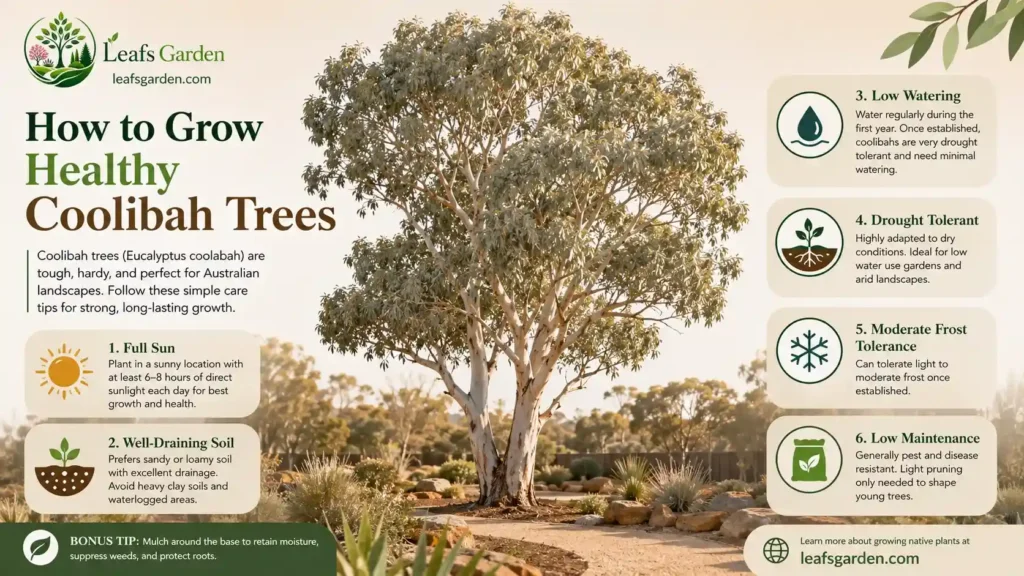
Coolibah trees are relatively low-maintenance once established, but proper pruning, mulching, and long-term monitoring help maintain healthy growth and structural stability. Regular care also improves drought performance, canopy development, and overall landscape appearance.
Most mature coolabah trees require only occasional maintenance when planted in suitable conditions.
Coolibah trees benefit from light structural pruning to remove weak growth and improve canopy balance. Early pruning during the establishment stage helps create a stronger branch structure and reduces future maintenance problems.
Important pruning practices include:
The best pruning seasons are usually late winter or early spring before active growth begins. Light maintenance pruning can also be performed after periods of storm damage if necessary.
Heavy pruning should generally be avoided because eucalyptus species may respond with weak fast regrowth that is more vulnerable to breakage.
Mulching around the base of coolibah trees helps conserve soil moisture and protect roots from extreme temperature fluctuations. This is especially important for young trees growing in hot dry climates.
Benefits of proper mulching include:
Organic mulches such as bark chips, leaf mulch, or coarse wood mulch work well around coolabah trees.
Mulch should be spread evenly around the root zone while keeping material slightly away from the trunk to prevent excess moisture buildup and bark problems.
Long-term coolibah tree maintenance mainly focuses on monitoring growth, managing mature size, and ensuring safe planting distances from nearby structures.
Helpful long-term care practices include:
As coolibah trees mature, their canopy spread can become significant. Proper spacing from buildings, driveways, pools, and underground infrastructure helps prevent future maintenance complications.
Safe planting distances are particularly important for larger species such as western coolibah and mature inland coolabah trees. Open planting areas allow the tree to develop naturally while reducing structural and root-related concerns over time.
Most coolibah tree problems are linked to poor drainage, environmental stress, overwatering, or unsuitable growing conditions. Although these eucalyptus species are highly resilient once established, improper care can still lead to foliage decline, root issues, and structural damage.
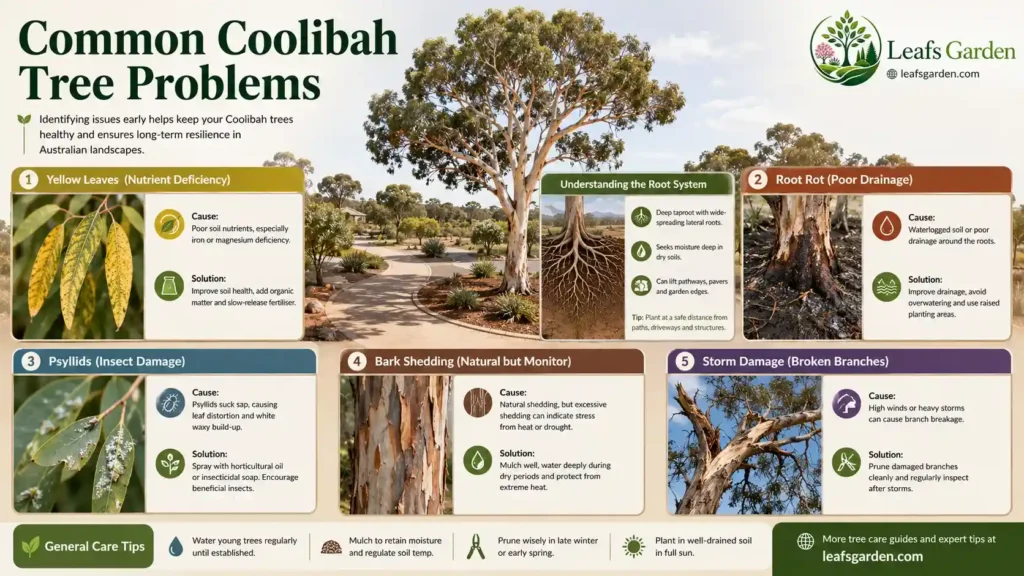
Early identification of symptoms helps prevent long-term health problems and improves tree stability.
Yellow leaves are one of the most common stress signals in coolibah trees. In many cases, foliage discoloration is caused by watering problems, nutrient imbalance, or extreme environmental conditions.
Common causes include:
Water stress often causes leaves to yellow, curl, or drop prematurely. During extreme heat, some coolabah trees may also shed foliage naturally to reduce moisture loss.
Nutrient imbalance can occasionally affect young trees growing in highly depleted soils. However, excessive fertilizer application may also create stress, particularly when high nitrogen levels encourage weak growth.
Monitoring soil moisture and maintaining balanced growing conditions usually improves foliage health over time.
Root problems are typically associated with poorly draining soils and excessive moisture around the base of the tree. Although coolibah trees tolerate harsh dry conditions well, they do not perform well in constantly waterlogged ground.
Common root-related issues include:
Heavy clay soils can trap moisture and create long-term stress for eucalyptus roots. Compacted ground also limits root expansion and reduces drainage efficiency.
To reduce root problems:
Healthy drainage is one of the most important factors for long-term coolibah tree survival.
Coolibah trees are generally hardy, but some pests and diseases may occasionally affect stressed or weakened trees.
| Problem | Symptoms | Solution |
| Psyllids | Leaf damage | Neem oil |
| Scale insects | Sticky residue | Horticultural oil |
| Root rot | Wilting | Improve drainage |
Psyllids are small sap-feeding insects that damage eucalyptus foliage and may cause distorted or discolored leaves. Mild infestations are usually manageable with neem oil treatments and improved tree health.
Scale insects often appear as small bumps on stems and leaves while producing sticky residue known as honeydew. Horticultural oil sprays can help control infestations when applied correctly.
Root rot is one of the most serious coolibah tree problems and is usually caused by poor drainage or chronic overwatering. Symptoms include wilting, canopy thinning, yellow leaves, and branch dieback.
Improving drainage and reducing soil moisture are essential for preventing root disease progression.
Coolibah trees generally have good wind resistance, especially in dry inland climates where they naturally experience harsh environmental conditions. However, mature eucalyptus species can still experience limb drop during storms, drought stress, or periods of rapid growth.
Potential risks include:
Preventive pruning helps reduce structural problems by removing weak or overcrowded branches before they become hazardous.
Proper tree spacing, healthy root development, and regular structural inspections also improve long-term storm resistance and canopy safety.
Coolibah trees are widely used in drought-tolerant landscaping because of their elegant pale bark, heat resistance, and low-maintenance growth habit. Their natural adaptability to harsh Australian climates makes them valuable for both large-scale landscape projects and residential native gardens.
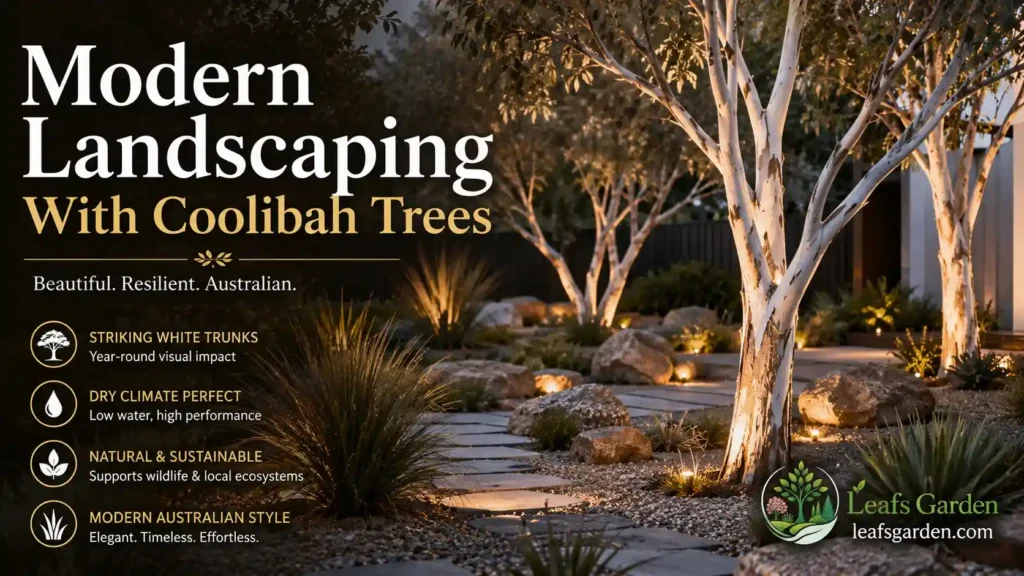
Many landscape designers choose coolabah trees for their sculptural appearance, broad canopy structure, and ability to thrive with minimal irrigation.
For a complete guide to drought-tolerant and evergreen landscape trees suited to Australian climates, see our Evergreen, Shade & Landscape Trees guide.
Coolibah trees work exceptionally well in Australian gardens where drought tolerance and native planting themes are important. Their soft grey-green foliage and decorative trunks blend naturally into dry-climate landscapes.
Popular landscaping uses include:
Little ghost gum and Snow Queen eucalyptus varieties are especially popular as statement trees because their white trunks create strong visual contrast in modern outdoor spaces.
Their resilience also makes them suitable for low-maintenance gardens that require reduced watering once established.
Coolibah trees provide valuable shade in hot dry climates where cooling outdoor spaces is important for comfort and environmental protection.
Their spreading canopy helps reduce ground temperatures while creating sheltered areas for people, wildlife, and surrounding plants.
Key shade benefits include:
Larger coolabah species can develop broad canopy coverage over time, making them useful for parks, avenue planting, and large residential landscapes.
Their shade also helps reduce soil moisture loss in surrounding planting areas.
Coolibah trees are increasingly used in modern landscape design because of their clean architectural appearance and compatibility with minimalist planting styles.
Their pale trunks and soft foliage tones pair well with contemporary Australian landscapes that emphasize texture, contrast, and drought-tolerant planting.
Common modern landscape applications include:
Coolibah trees create particularly strong visual contrast when planted alongside:
The bright bark of little ghost gum and Snow Queen eucalyptus varieties is especially effective in modern outdoor designs where trunk color becomes a major visual feature.
Coolibah trees pair well with drought-tolerant Australian native plants that thrive in similar growing conditions. Companion plants help create balanced landscapes while supporting biodiversity and reducing maintenance needs.
Suitable companion plants include:
Kangaroo grass adds soft texture and movement beneath coolibah trees while tolerating dry soils and intense sun exposure.
Lomandra is widely used around eucalyptus trees because of its hardy root system, low water requirements, and clean architectural form.
Native acacias complement coolabah landscapes with seasonal flowering color and additional habitat value for birds and pollinators.
Together, these companion plants help create resilient low-water Australian landscapes with strong ecological and ornamental value.
For coastal Australian gardens, Coast Banksia is another highly adaptable native tree that pairs well with coolibah in wildlife-focused and low-maintenance native landscapes.
Coolibah trees differ from other eucalyptus species mainly through their drought adaptation, bark coloration, canopy structure, and natural growing environment. While many eucalyptus trees share similar foliage and aromatic characteristics, coolabah species are especially valued for surviving harsh inland climates with limited water availability.
Their pale bark, spreading canopy, and floodplain adaptation help distinguish them from several other commonly planted eucalyptus varieties.
Coolibah trees and ghost gums are both popular Australian eucalyptus species with decorative pale bark, but they differ in growth habit, habitat preference, and overall appearance.
| Feature | Coolibah | Ghost Gum |
| Bark | Pale grey-white | Bright white |
| Habitat | Inland floodplains | Dry inland |
| Growth Habit | Broad canopy | Upright |
Coolibah trees typically develop wider canopies suited for shade and floodplain survival, while ghost gums often grow with a more upright and sculptural form.
Ghost gums are especially valued for their intensely bright white trunks, whereas coolabah bark usually appears softer grey-white or cream colored.
Coolibah trees and river red gums both grow in inland Australian environments, but they differ significantly in water requirements, growth behavior, and mature size.
Coolibah trees are generally more drought tolerant and better adapted to dry floodplain environments with irregular rainfall. River red gums typically require more reliable groundwater access and perform best near permanent waterways.
River red gums often grow faster under favorable conditions, especially when water availability is high. Coolibah trees usually maintain a more moderate growth rate suited to arid conditions.
River red gums can become extremely large mature trees with massive trunks and expansive canopies. Most coolibah species remain slightly smaller and more manageable in dry-climate landscapes.
Key differences include:
Coolibah trees and Snow Queen eucalyptus share similar drought-tolerant characteristics, but their landscape use and ornamental qualities differ slightly.
Snow Queen eucalyptus is primarily grown for its bright silver-white bark and refined ornamental appearance. Coolibah trees are more commonly valued for their environmental resilience, broad canopy, and natural inland landscape character.
Snow Queen eucalyptus usually creates a cleaner architectural effect in modern gardens, while traditional coolabah trees appear more rugged and naturalistic.
Snow Queen eucalyptus is often preferred for urban and contemporary residential landscapes because of its moderate size and highly decorative trunk.
Coolibah trees can also perform well in urban settings, but larger varieties may require more planting space for proper canopy development.
Both species are relatively low maintenance once established, but Snow Queen eucalyptus may require slightly more shaping and visual maintenance in ornamental landscapes.
Coolibah trees generally focus more on functional landscape benefits such as:
Snow Queen eucalyptus is typically selected more for visual impact and modern landscape aesthetics.
Coolibah trees provide major environmental benefits in dry Australian landscapes by supporting wildlife, stabilizing soil, and improving resilience against heat and drought. Their ability to survive in harsh inland climates makes them valuable for both natural ecosystems and sustainable landscape projects.
These eucalyptus species also contribute to biodiversity conservation and long-term environmental stability in arid and semi-arid regions.
Coolibah trees create important habitat areas for a wide range of Australian wildlife. Their canopy structure, flowers, and bark provide shelter, nesting areas, and food sources for many native species.
Wildlife benefits include:
The flowers attract native bees and other pollinating insects that support surrounding ecosystems and native plant reproduction.
Bird species commonly use coolibah trees for:
Older mature trees become especially valuable because their branches and bark create complex habitat structures that support greater biodiversity.
Coolibah trees are highly adapted to extreme heat and low-rainfall environments, making them important for climate-resilient landscaping and environmental restoration.
Their narrow leaves and deep root systems help reduce water loss while maintaining survival during prolonged dry periods.
Important drought-resistant features include:
In water-wise landscapes, coolibah trees help lower overall irrigation demand while still providing shade and canopy coverage.
Their resilience also makes them useful for:
Coolibah trees play an important role in stabilizing soils near floodplains, dry creek systems, and erosion-prone inland landscapes.
Their root systems help anchor loose soils while reducing environmental degradation caused by wind and seasonal water movement.
Key stabilization benefits include:
In arid environments, vegetation loss can quickly increase soil erosion and land degradation. Coolibah trees help reduce these risks by creating stable root networks and protective canopy cover.
Their wind resistance and drought tolerance also make them effective for shelterbelt planting and environmental rehabilitation projects across dry Australian regions.
Coolibah trees are generally safe around homes when planted with appropriate spacing and long-term landscape planning. Like many eucalyptus species, they develop extensive root systems and produce seasonal bark and leaf litter, so selecting the right planting location is important.
Most problems can be avoided by allowing enough room for mature canopy growth and maintaining proper distance from buildings and infrastructure.
Coolibah trees usually develop moderate spreading root systems designed to search for moisture in dry soils. Their roots are generally less aggressive than some large water-seeking eucalyptus species, but mature trees still require adequate planting space.
Important root considerations include:
Planting distance recommendations depend on the mature size of the species, but larger coolabah trees should typically be positioned well away from:
Providing sufficient root space improves tree stability and reduces the likelihood of future structural conflicts.
Coolibah trees naturally produce seasonal leaf litter, bark shedding, and gum nut drop as part of their normal growth cycle. These characteristics are common among eucalyptus species and should be considered before planting near patios, roofs, or paved areas.
Typical maintenance concerns include:
The smooth bark of little ghost gum and Snow Queen eucalyptus varieties may peel seasonally, creating decorative but noticeable bark litter beneath the canopy.
Most cleanup needs are moderate and manageable with routine garden maintenance, especially when trees are planted in larger open landscapes.
Like other eucalyptus trees, coolibah species contain aromatic oils that can increase flammability under extreme bushfire conditions. Proper landscape spacing and vegetation management are important in fire-prone regions.
Key fire safety considerations include:
To improve fire safety around homes:
When managed correctly, coolibah trees can still be safely incorporated into residential landscapes while providing shade, habitat value, and drought-tolerant beauty in Australian gardens.
Coolibah trees are resilient Australian eucalyptus species valued for their drought tolerance, pale ornamental bark, and ability to thrive in challenging inland environments. From traditional Eucalyptus coolabah to western coolibah and little ghost gum varieties, these trees combine environmental resilience with strong ornamental appeal in both natural and urban landscapes.
Their adaptability to dry climates, floodplain conditions, and low-fertility soils makes them one of the most reliable native trees for drought-tolerant Australian gardening and landscape design. Once established, coolibah trees require relatively little maintenance while still providing long-term shade, habitat value, and visual impact.
A coolabah tree is a drought-tolerant Australian eucalyptus species commonly found in inland floodplains, dry creek systems, and arid landscapes. The name is most closely associated with Eucalyptus coolabah and related eucalyptus species adapted to harsh dry climates.
Yes, coolibah trees are a type of eucalyptus tree. The term “coolibah” usually refers to specific eucalyptus species such as Eucalyptus coolabah and Eucalyptus victrix that naturally grow in inland Australia.
Coolibah trees generally have a moderate growth rate, although growth speed depends on climate, soil conditions, and water availability. Little ghost gum varieties may grow slightly faster under warm sunny conditions with good drainage.
The main difference is bark appearance and growth habit. Coolibah trees usually have pale grey-white bark with broader canopies, while ghost gums are known for their brighter white trunks and more upright ornamental form.
Yes, coolibah trees are highly drought tolerant once established. Their deep root systems, narrow foliage, and heat-resistant characteristics allow them to survive long dry periods in arid and semi-arid Australian environments.
Yes, coolibah trees can grow successfully in home gardens if they have enough space, full sun, and well-draining soil. Smaller ornamental varieties such as little ghost gum are especially popular in residential Australian landscapes.
Eucalyptus victrix, commonly called little ghost gum, is an ornamental Australian eucalyptus species known for its smooth cream-white trunk, drought tolerance, and elegant landscape appearance. It is widely planted in modern native gardens and dry-climate landscapes.
Coolibah tree roots are generally considered moderately spreading rather than aggressively invasive. However, mature trees still require proper planting distance from buildings, pools, and underground infrastructure to avoid future root-related issues.