Grow Better Gardens with Smarter Plant Choices
Discover helpful guides on trees, hedges, fruit plants, edible plants, and beautiful landscape greenery.

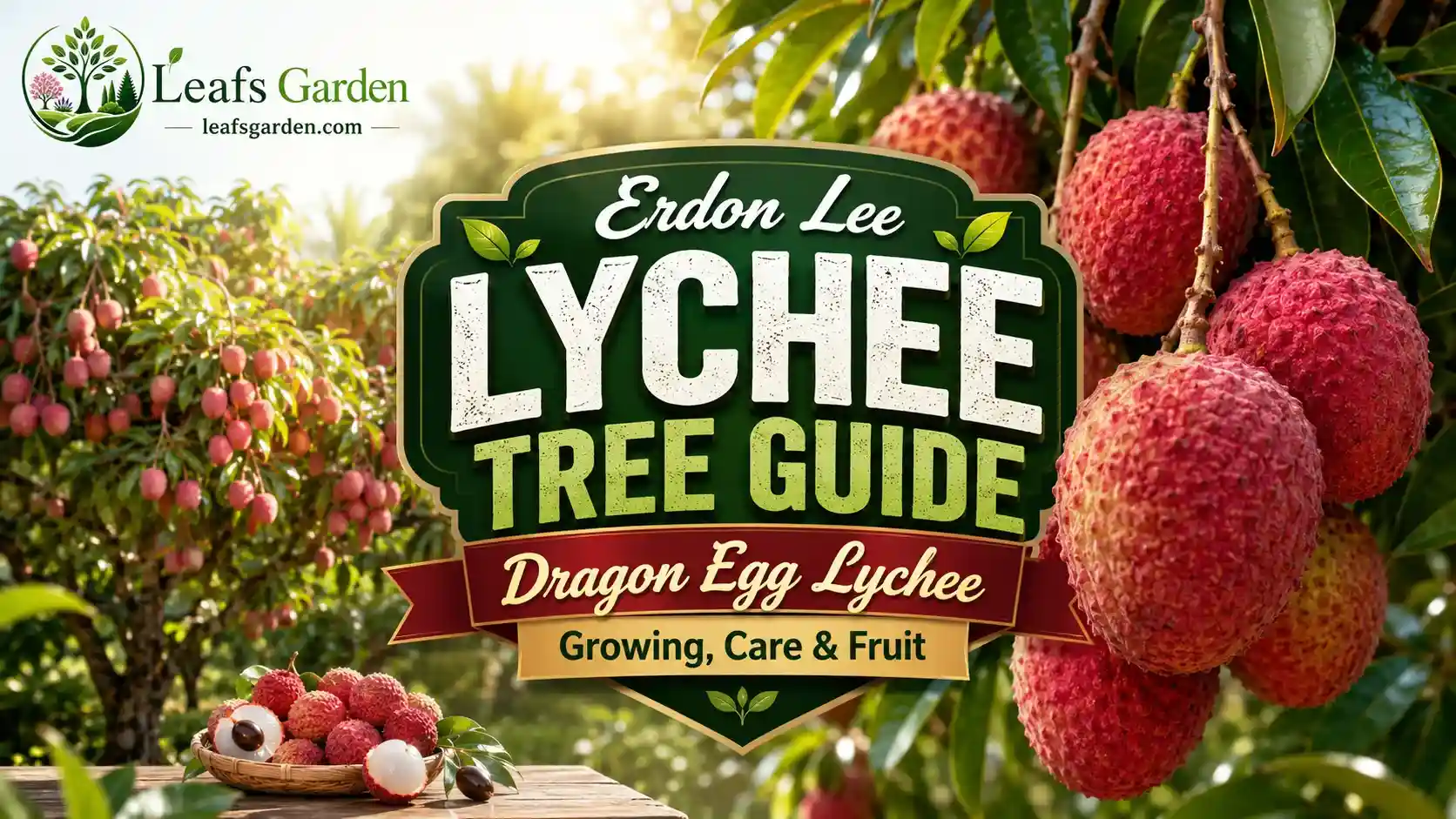
Erdon Lee lychee is a giant-fruiting lychee variety known for its unusually large fruit size, sweet tropical flavor, vigorous growth, and attractive red-pink shell. This famous tropical fruit cultivar is often called dragon egg lychee because of its oversized oval fruit shape and thick textured skin that looks very different from standard lychee varieties.
What makes Erdon Lee lychee especially unique is its massive giant lychee fruit size, high flesh content, juicy texture, and strong ornamental tree growth. Many tropical fruit growers also refer to it as dragon lychee or dragon litchi because of its exotic appearance and impressive fruit dimensions. Compared with some golden lychee selections and traditional commercial cultivars, Erdon Lee typically produces much larger fruit with a bold tropical flavor profile.
The tree itself can grow into a large evergreen tropical fruit tree with dense foliage and broad canopy development under warm conditions. Fruit quality is one of the main reasons this variety continues gaining attention among collectors and specialty growers. The translucent white flesh is sweet, fragrant, juicy, and highly desirable for fresh eating.
Erdon Lee lychee grows best in warm subtropical and tropical climates with good humidity, rich fast-draining soil, and full sunlight. Many gardeners are also interested in seed propagation, indoor seedling growth, and long-term cultivation methods for producing healthy lychee trees at home. Harvest season generally occurs from late spring through summer depending on regional climate conditions.
Because of its unusual appearance, giant fruit size, and increasing availability through specialty nurseries, dragon egg lychee is becoming increasingly popular among tropical fruit growers, backyard orchard enthusiasts, and collectors looking for rare premium lychee varieties.
Erdon Lee lychee is a premium giant lychee cultivar known for producing unusually large fruit, sweet floral flavor, vigorous tree growth, and attractive red-pink textured skin. This tropical fruit variety has become highly popular among collectors because of its oversized fruit size, ornamental appearance, and rich juicy flesh compared with many traditional lychee cultivars.
The Erdon Lee tree belongs to the species Litchi chinensis and is considered one of the most recognizable giant lychee selections grown in subtropical and tropical regions. Many tropical fruit enthusiasts value this cultivar for both fresh eating and home orchard production because the fruit is visually striking and highly flavorful.
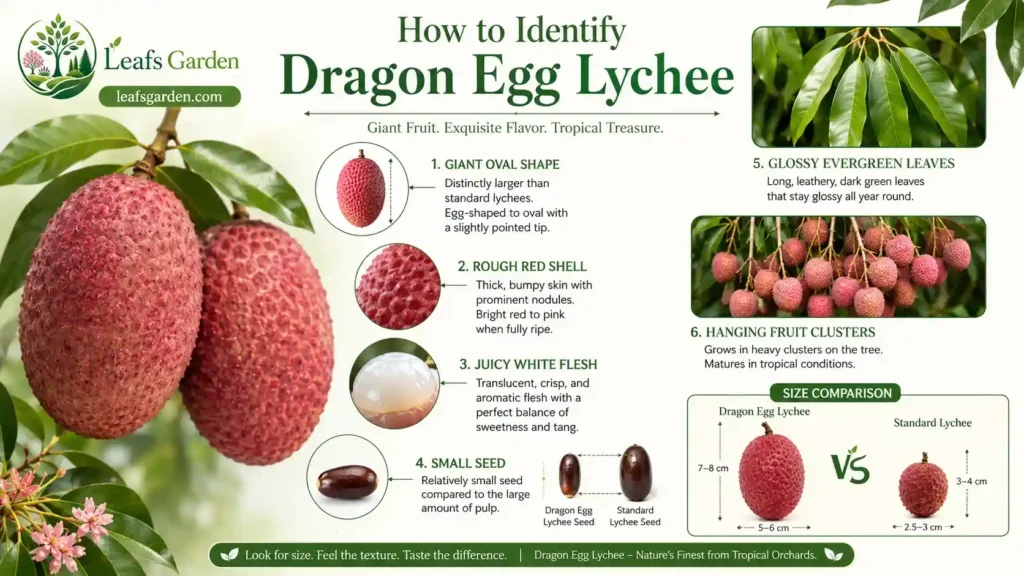
The fruit is nicknamed dragon egg lychee because the fruit is much larger and more oval than standard lychee varieties.
The term dragon egg lychee is commonly used to describe the unusually oversized fruit shape of Erdon Lee lychee. Unlike smaller round commercial lychees, this variety often develops elongated oval fruit with rough textured red-pink skin that resembles decorative dragon eggs. Some growers also call it dragon lychee or dragon litchi because of its exotic appearance and premium fruit quality.
One of the biggest differences between Erdon Lee and common lychee varieties is the shell texture and overall fruit size. The outer shell is thicker, bumpier, and visually more dramatic than standard supermarket lychees. The fruit itself can grow significantly larger than many traditional cultivars, which is why it is frequently classified as a giant lychee variety.
The flesh-to-seed ratio is another important feature. Some dragon egg lychee fruits develop relatively small seeds, allowing more edible translucent flesh inside the fruit. This creates a sweeter and more satisfying eating experience compared with common lychees that may contain larger seeds and less flesh.
Compared with ordinary lychee cultivars, dragon lychee fruit usually offers:
These unique traits are a major reason why dragon egg lychee continues gaining popularity among tropical fruit growers worldwide.
Lychee belongs to the Sapindaceae family and originated in southern China.
The lychee tree is scientifically classified as Litchi chinensis, a tropical and subtropical fruit species within the Sapindaceae family. This plant family also includes rambutan, longan, and several other tropical fruit trees known for producing sweet fleshy fruit.
The lychee origin traces back thousands of years to southern China, where the fruit has been cultivated for centuries as a prized delicacy. Many historians believe early cultivation began in Guangdong and Fujian provinces before spreading into Southeast Asia and eventually other tropical regions around the world.
When people ask where do lychees come from or where do lychees originate from, the answer points primarily to southern China. Over time, the fruit expanded into countries with warm humid climates suitable for tropical fruit production.
Scientific background of the litchi fruit tree classification includes:
| Classification | Details |
| Botanical Name | Litchi chinensis |
| Common Name | Lychee / Litchi |
| Family | Sapindaceae |
| Plant Type | Evergreen tropical fruit tree |
| Native Region | Southern China |
| Species | Lychee species (Litchi chinensis) |
Today, lychee species are commercially grown in Australia, China, Thailand, Vietnam, India, South Africa, Florida, and other warm-climate regions with suitable humidity and winter conditions.
Tropical fruit enthusiasts building a productive home orchard will find the Erdon Lee lychee a remarkable addition among the many rewarding fruit trees and edible plants suited to warm Australian climates.
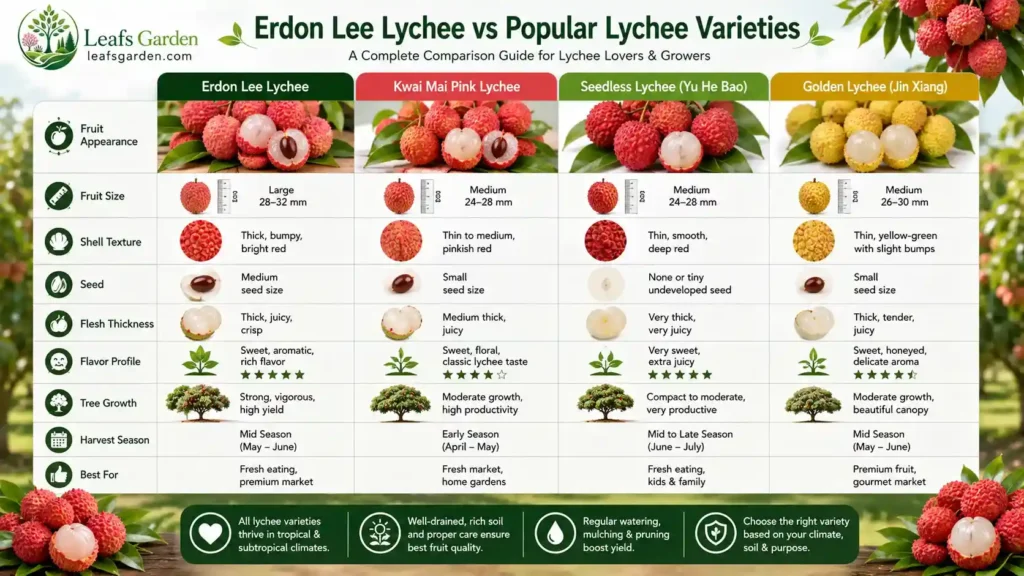
Erdon Lee is larger than most traditional lychee cultivars and is often compared with Kwai Mai Pink and seedless lychees.
Among modern lychee cultivars, Erdon Lee is best known for its giant fruit size and ornamental appearance. Many growers compare it with kwai mai pink lychee, lychee kwai mai pink selections, seedless lychees, and golden lychee cultivars to evaluate fruit quality, seed size, and tree growth habits.
| Variety | Fruit Size | Flavor | Seed Size | Tree Size |
| Erdon Lee Lychee | Very Large | Sweet, floral, juicy | Medium to small | Large vigorous tree |
| Kwai Mai Pink Lychee | Medium | Rich and aromatic | Small | Medium-sized tree |
| Seedless Lychees | Medium to large | Sweet with high flesh content | Very small | Moderate growth |
| Golden Lychee | Medium-large | Mild sweet tropical flavor | Medium | Medium-large tree |
| Common Commercial Lychees | Small to medium | Balanced sweetness | Medium-large | Moderate size |
Erdon Lee stands out mainly because of its giant lychee fruit appearance and collector appeal.
Gardeners interested in exploring more lychee varieties and general cultivation advice can find a comprehensive overview in our dedicated lychee fruit tree guide covering growing conditions, care tips, and variety selection for Australian gardens.
While seedless lychees are often valued for extra flesh content, dragon egg lychee attracts attention because of its oversized shell, dramatic shape, and strong tropical fruit presentation.
Kwai Mai Pink remains popular for its rich sweetness and relatively small seeds, but Erdon Lee is usually preferred by growers seeking visually impressive fruit and larger harvest specimens.
Erdon Lee lychee trees are large evergreen tropical fruit trees capable of developing broad dense canopies and significant height in warm climates. Their final size depends heavily on climate, soil quality, pruning practices, and whether the tree is planted in the ground or grown in containers.
Mature Erdon Lee lychee trees can grow 20–40 feet tall in tropical climates if left unpruned.
Many gardeners asking how big do lychee trees get are surprised by the mature size potential of healthy lychee trees. In ideal tropical environments, Erdon Lee trees can become large shade-producing fruit trees with thick branching structure and rounded canopy development.
Typical lychee tree size varies depending on growing conditions:
| Tree Condition | Average Height | Canopy Spread |
| Young Tree | 3–8 ft | 2–6 ft |
| Medium Mature Tree | 10–20 ft | 8–15 ft |
| Fully Mature Tree | 20–40 ft | 20–30 ft |
When discussing how tall do lychee trees grow, commercial orchard trees are often pruned shorter for easier harvesting, while unmaintained tropical specimens may reach much larger dimensions over time.
People commonly search:
The answer depends largely on pruning and climate management. Trees grown in warm humid tropical regions generally achieve their maximum growth potential much faster than trees grown in subtropical climates.
Lychee growth is moderate and depends heavily on warmth, humidity, and soil drainage.
Compared with some fast-growing tropical fruit trees, lychee growth is considered moderate but steady under proper conditions. Young Erdon Lee trees focus heavily on root establishment during the first few years before developing stronger canopy expansion and fruiting branches.
Many gardeners wondering how does lychee grow should understand that healthy growth relies on several environmental factors working together:
The canopy naturally develops into a dense rounded crown with glossy evergreen foliage. As the tree matures, branching becomes thicker and more spreading, allowing increased fruit production and shade coverage.
In commercial orchards where lychee grown systems are carefully managed, growers use pruning and spacing techniques to maintain airflow and maximize fruit development. Understanding how are lychees grown commercially also helps home growers manage canopy spread more effectively.
Typical annual growth can vary:
| Growing Condition | Growth Speed |
| Tropical Climate | Moderate to Fast |
| Subtropical Climate | Moderate |
| Cool Regions | Slow |
| Container Growing | Slower Controlled Growth |
Healthy trees may produce several flushes of new foliage each year when environmental conditions remain stable and warm.
Regular pruning and container growing can keep a lychee tree compact for patios and small gardens.
Although Erdon Lee can become a large tropical fruit tree, it is possible to maintain a smaller more manageable size through proper pruning techniques and controlled root space. This is especially useful for backyard gardeners, greenhouse growers, and patio fruit collectors.
Container planting is one of the most effective methods for limiting excessive tree growth. Large pots naturally restrict root expansion, helping slow canopy development while still supporting healthy foliage and occasional fruit production.
Important methods for keeping lychee trees compact include:
Some growers interested in compact tropical fruit trees also explore dwarf lychee tree Australia nursery selections for smaller garden spaces and container-friendly cultivation.
For successful container planting, growers should use:
With proper long-term care, even vigorous giant lychee varieties like Erdon Lee can remain suitable for patios, greenhouses, and small tropical gardens without reaching full natural height.
Erdon Lee lychee fruit is highly valued for its oversized appearance, juicy flesh, floral sweetness, and refreshing tropical flavor. The combination of giant fruit size and rich aromatic taste makes this variety especially popular among tropical fruit collectors and fresh fruit enthusiasts.
Erdon Lee lychees are known for juicy translucent flesh, floral sweetness, and exceptionally large fruit size.
The flavor of Erdon Lee is often described as intensely sweet with light floral notes and refreshing tropical acidity. The flesh is soft, juicy, and highly aromatic, creating a smooth texture that feels richer than many common supermarket lychee varieties.
One of the biggest attractions is the unusually big lychee size. Many fruits grow much larger than standard commercial lychees, which is why the variety is often categorized as a giant lychee cultivar. The shell develops a rough red-pink texture while the inside contains glossy translucent white flesh.
The eating experience is commonly compared to a blend of:
The large fruit size gives Erdon Lee strong visual appeal among fruits litchi collectors and specialty growers. Many tropical fruit enthusiasts specifically search for lychee big varieties because of their premium appearance and higher flesh content.
Different names are commonly used around the world for this fruit, including:
Despite spelling differences, all refer to the same sweet tropical fruit species prized for its juicy aromatic flesh.
Important fruit characteristics include:
| Feature | Description |
| Flesh Color | Translucent white |
| Flavor | Sweet and floral |
| Texture | Juicy and smooth |
| Fruit Size | Very large |
| Aroma | Tropical and fragrant |
| Shell Color | Red to pink-red |
Because of its oversized presentation and sweet flavor profile, Erdon Lee is considered one of the most attractive premium lychee cultivars available for fresh consumption.
Some Erdon Lee fruits may produce small seeds, giving more edible flesh.
Flesh quality is one of the main reasons dragon egg lychees attract strong interest from growers and fruit collectors. In many cases, the fruit develops relatively small seeds compared with its large outer shell size, allowing a higher percentage of edible flesh inside each fruit.
This trait is especially desirable because consumers generally prefer lychee varieties with:
Although Erdon Lee is not fully classified among true seedless lychees, some fruits may naturally develop partially aborted or smaller seeds under certain growing conditions. This improves the flesh-to-seed ratio and creates a more satisfying eating experience.
Compared with standard lychee cultivars, giant lychee selections like Erdon Lee are often favored because the larger fruit size allows more soft juicy flesh surrounding the seed.
Dragon egg lychees are especially appreciated for:
Fruit quality can vary slightly depending on climate, watering consistency, pollination, and harvest timing, but healthy mature trees generally produce highly desirable tropical fruit.
Lychee fruit contains vitamin C, antioxidants, fiber, and hydration-supporting nutrients.
Beyond flavor and appearance, lychee the fruit is also valued for its nutritional content. Fresh lychee provides several beneficial nutrients while remaining naturally juicy and refreshing.
According to Eat for Health, tropical fruits rich in Vitamin C and natural antioxidants contribute positively to immune function and overall wellness as part of a balanced Australian diet.
People asking what are lychees often discover that the fruit contains:
Lychee food is commonly eaten fresh, chilled, blended into beverages, added to fruit salads, or used in tropical desserts because of its sweet aromatic profile.
Approximate nutritional benefits of fresh lychee fruit include:
| Nutrient | Benefit |
| Vitamin C | Supports immune health |
| Antioxidants | Helps protect cells |
| Water Content | Supports hydration |
| Fiber | Aids digestion |
| Natural Sugars | Provides quick energy |
| Potassium | Supports muscle function |
Because lychee fruit is both flavorful and nutrient-rich, it remains one of the most popular tropical fruits grown in warm subtropical and tropical climates worldwide.
Erdon Lee lychee trees require warm temperatures, humidity, rich soil, and consistent long-term care to produce healthy growth and large high-quality fruit. Successful cultivation depends heavily on climate selection, watering balance, sunlight exposure, and proper nutrient management throughout the year.
Lychee trees grow best in warm subtropical and tropical climates with mild winters.
Erdon Lee lychee performs best in USDA Zones 9–11 where temperatures remain warm for most of the year and severe frost is uncommon. These trees naturally thrive in humid subtropical environments with warm summers and short mild winters that help encourage flowering and fruit production.
Ideal growing conditions include:
Regions with tropical and subtropical weather patterns generally produce the healthiest trees and highest fruit yields. In cooler climates, growth becomes slower and fruit production may become inconsistent.
Many growers interested in lychee season Australia often grow trees successfully in Queensland and northern New South Wales where conditions are warm and humid enough for commercial production.
Gardeners thriving in Queensland’s warm subtropical climate may also enjoy growing a Kensington Pride mango, another iconic large tropical fruit tree that performs exceptionally well in similar warm and humid Australian growing conditions.
Typical seasonal timing includes:
| Region | Approximate Lychee Harvest Season |
| Tropical Areas | Late Spring to Summer |
| Subtropical Areas | Early to Mid Summer |
| Lychee Season Australia | November to January |
When people ask when is lychee season in Australia, the answer depends on regional climate and cultivar type, but most Australian orchards harvest fruit during the warmer summer months.
Because climate plays such a major role in flowering and fruit set, selecting the proper planting location is one of the most important steps for successful Erdon Lee cultivation.
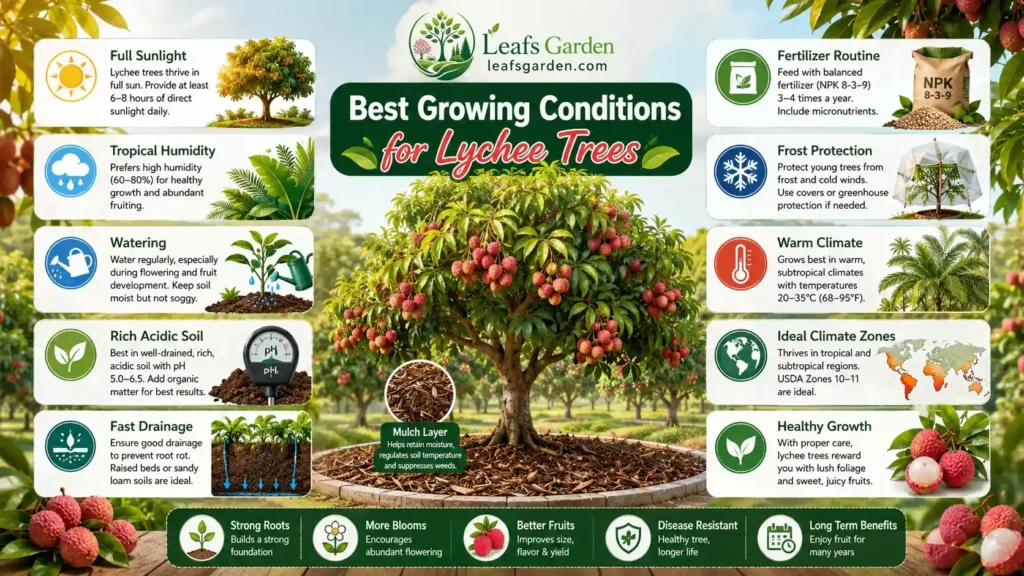
Lychee trees prefer rich, slightly acidic, fast-draining soil.
Healthy root development depends heavily on proper soil texture and drainage conditions. Erdon Lee lychee trees dislike waterlogged roots and perform best in loose nutrient-rich soil that retains moisture without remaining overly wet.
Ideal soil characteristics include:
Good soil texture allows oxygen movement around roots while preventing standing water that can lead to root rot and fungal problems. Sandy loam soils enriched with compost are often ideal for long-term tree health.
Important drainage considerations include:
Mulch recommendations are especially important for young lychee trees because mulch helps stabilize soil moisture, regulate root temperature, and reduce weed competition.
Recommended mulch materials include:
Mulch should remain several inches away from the trunk to prevent fungal issues and bark damage.
Full sunlight and consistent moisture are essential for healthy lychee fruit production.
Erdon Lee lychee trees require strong sunlight exposure for vigorous growth, flowering, and fruit development. Mature trees should ideally receive at least 6–8 hours of direct sunlight daily for best performance.
Insufficient light may cause:
Watering consistency is equally important because lychee trees are moderately drought sensitive, especially during flowering and fruit development stages.
A basic watering schedule usually includes:
Young trees generally require more regular irrigation while mature established trees tolerate short dry periods better.
Humidity needs are also important because lychee trees naturally evolved in humid tropical regions. Dry air conditions may stress foliage and reduce healthy fruit set.
Signs of water stress may include:
Maintaining balanced soil moisture without oversaturation is one of the most important aspects of successful lychee cultivation.
Balanced fertilizer with micronutrients supports flowering and fruit development.
Erdon Lee lychee trees benefit from regular feeding programs designed to support root growth, canopy development, flowering, and fruit production. Nutrient balance becomes especially important as trees mature and begin producing larger harvests.
Important nutrients for lychee trees include:
Young trees typically require lighter but more frequent fertilizer applications to encourage healthy vegetative growth. Mature fruiting trees benefit from seasonal feeding cycles timed around flowering and fruit production stages.
A general seasonal feeding schedule may include:
| Season | Fertilizer Focus |
| Early Spring | Balanced growth fertilizer |
| Pre-Flowering | Potassium and micronutrients |
| Fruit Development | Moisture and nutrient support |
| Post Harvest | Recovery feeding |
| Winter | Reduced fertilization |
Excessive nitrogen should be avoided because it may encourage excessive leaf growth instead of flowering and fruit production.
Organic compost, aged manure, seaweed extracts, and slow-release tropical fruit fertilizers are commonly used by experienced growers to maintain healthy long-term tree vigor and improve fruit quality.
Growing Erdon Lee lychee from seed is possible for home gardeners who want to experiment with tropical fruit cultivation. Fresh seeds germinate relatively easily under warm humid conditions, although seed-grown trees usually require patience before they become mature enough to produce fruit.
Yes, fresh lychee seeds can germinate easily, though seed-grown trees may take years to fruit.
Many gardeners ask can you grow lychee from seed because it is one of the easiest ways to start a tropical fruit tree at home. Fresh viable seeds taken directly from ripe fruit often sprout successfully when planted quickly after removal.
You can plant a lychee seed from freshly eaten fruit as long as the seed remains moist and healthy. Dry seeds lose viability rapidly, which is why immediate planting is strongly recommended.
Important facts about lychee from seed cultivation include:
Many hobby growers enjoy growing lychee from seed because it allows them to observe the full growth cycle from germination through seedling development. While grafted trees produce fruit faster, gardeners still commonly grow lychee from seed for educational purposes, ornamental tropical foliage, or long-term fruit production goals.
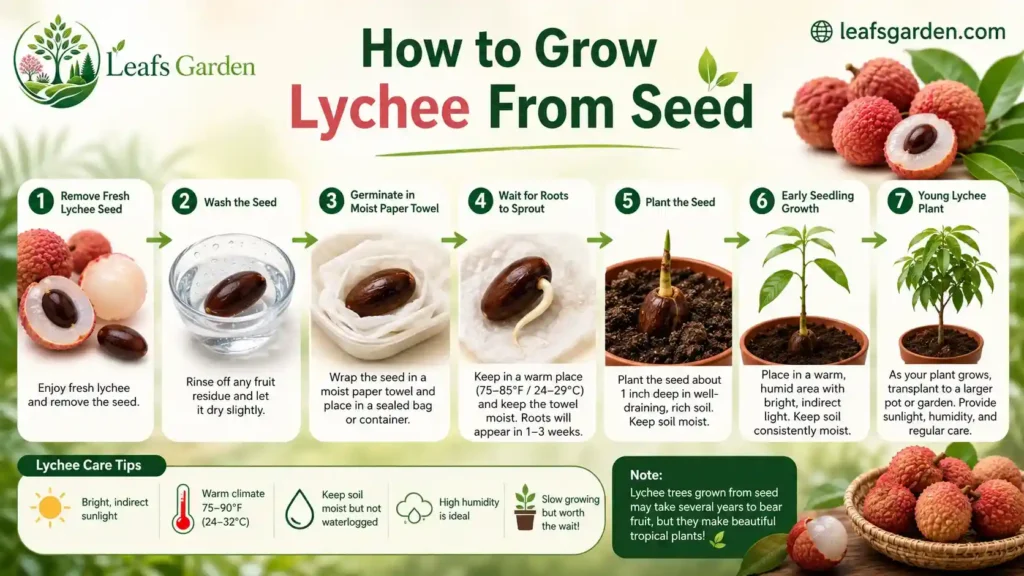
Fresh seeds germinate best when planted immediately after removing them from ripe fruit.
Successful germinating lychee seeds depends heavily on freshness, warmth, and moisture consistency. Seeds should never be allowed to dry completely before planting.
Follow these simple steps for how to germinate lychee seeds successfully:
People searching:
should understand that warmth is one of the most important factors for successful germination. Most fresh seeds begin sprouting within 1–3 weeks under proper tropical conditions.
Helpful germination conditions include:
| Requirement | Ideal Condition |
| Temperature | 70–90°F |
| Humidity | Moderate to High |
| Soil Moisture | Consistently moist |
| Sunlight | Bright indirect light |
| Drainage | Well-draining soil |
Healthy seeds usually develop a small root first, followed by a reddish young shoot emerging above the soil surface.
Lychee seeds should be planted in moist, well-draining soil with warm temperatures.
Proper lychee seeds planting techniques improve seedling health and reduce early root problems. The most important goal is maintaining balanced moisture while avoiding waterlogged soil.
For successful planting lychee seeds, use:
Gardeners learning how to plant lychee seeds should avoid compact heavy soil because excessive moisture retention can rot young roots before seedlings establish properly.
Basic planting steps include:
| Step | Description |
| Select Fresh Seed | Use only recently removed seeds |
| Prepare Pot | Use small container with drainage |
| Fill With Soil | Use moist well-draining mix |
| Plant Seed | Plant about 1 inch deep |
| Water Lightly | Keep evenly moist |
| Provide Warmth | Maintain tropical temperatures |
Whether you want to plant lychee seed indoors or outdoors, the seed should remain consistently moist but never saturated.
People commonly searching:
usually achieve the best results when using fresh seeds immediately after fruit consumption.
Young lychee seedlings can grow indoors in bright humid environments.
A young lychee seedling adapts relatively well to indoor growing during its early development stages if proper warmth, humidity, and lighting are provided. Indoor cultivation is especially useful in colder climates where outdoor tropical conditions are unavailable.
A healthy litchi seedling typically develops:
For successful indoor growth, place the lychee plant near:
Indoor growers often use humidity trays, grow lights, or occasional misting to help maintain healthy foliage development. Young lychee plants are sensitive to cold drafts and dry indoor air, especially during winter.
Important indoor care tips include:
Some gardeners keep a lyche plant indoors for decorative tropical foliage even if fruit production remains unlikely indoors long term.
Container-grown lychee plants may eventually require:
With proper care, indoor seedlings can remain healthy for many years before eventual outdoor transplantation in suitable climates.
Seed-grown lychee trees may take 8–15 years to produce fruit.
One of the biggest challenges with seed-grown trees is the long juvenile growth period before fruit production begins. Gardeners interested in how to grow lychee fruit should understand that patience is essential when starting from seed.
Several factors influence how quickly lychee fruit grow on mature trees:
Trees grown from seed generally take much longer to fruit than grafted nursery trees because they must fully mature naturally before flowering begins.
Typical fruiting timelines include:
| Tree Type | Approximate Fruiting Time |
| Grafted Tree | 3–5 years |
| Air-Layered Tree | 2–5 years |
| Seed-Grown Tree | 8–15 years |
People learning how to grow lychee fruit from seed often start the process as a long-term gardening project rather than expecting quick harvests.
Although fruit quality from seedlings may vary slightly from the parent Erdon Lee tree, many growers still enjoy the experience of watching a tropical fruit tree develop from a simple seed into a mature evergreen specimen over time.
Commercial lychee production relies on warm climates, careful pruning, irrigation management, and grafted tree cultivation to maximize fruit quality and harvest consistency. Large-scale orchards focus heavily on maintaining healthy flowering cycles and improving fruit set for reliable seasonal production.
Commercial growers use grafted trees, pruning systems, and climate management for higher fruit production.
People commonly asking how are lychees grown commercially often discover that modern orchards use highly controlled cultivation systems to improve fruit yield, tree health, and harvest quality.
Most commercial farms avoid seed-grown trees because seedlings take too long to fruit and may produce inconsistent crops. Instead, growers usually plant:
These propagation methods help maintain consistent fruit quality and earlier production.
A typical commercial lychee grown system includes:
Successful litchi growing operations depend heavily on selecting regions with:
Commercial orchards are usually designed with enough spacing between trees to improve:
Common commercial management practices include:
| Farming Practice | Purpose |
| Grafted Trees | Faster fruit production |
| Canopy Pruning | Better airflow and harvesting |
| Irrigation Systems | Consistent moisture control |
| Fertilization | Improved flowering and fruit growth |
| Pest Monitoring | Reduced crop damage |
| Mulching | Moisture retention and root protection |
Many commercial growers also use controlled pruning after harvest to maintain manageable tree height and encourage future flowering development.
Cool dry winters help trigger flowering in mature lychee trees.
The flowering cycle is one of the most important stages of successful lychee production. Mature trees typically require a cooler and drier winter period to stimulate strong flower formation before spring growth begins.
The lychee flower develops in large branching clusters called panicles that emerge near the ends of mature branches. Healthy flowering is essential for successful pollination and later fruit development.
Several environmental factors influence flowering quality:
Pollination plays a major role in fruit set because flowers must successfully develop into young fruit after blooming. Bees and other pollinating insects help improve pollination efficiency in commercial orchards.
A typical flowering and fruit development cycle includes:
| Growth Stage | Description |
| Winter Cooling | Flower induction begins |
| Spring Flowering | Flower panicles emerge |
| Pollination | Insects transfer pollen |
| Fruit Set | Small fruits begin forming |
| Fruit Expansion | Fruit size increases |
| Ripening | Shell color changes red |
Poor fruit set can occur due to:
Commercial growers carefully monitor flowering conditions because strong bloom development directly affects final harvest yield and fruit quality.
Lychees are harvested when the shell turns bright pink-red and the fruit becomes sweet.
Harvest timing is extremely important because lychees do not continue ripening significantly after being removed from the tree. Commercial growers carefully monitor shell color, sweetness, and fruit texture before beginning picking lychee operations.
Ripe fruit usually develops:
The exact lychee fruit season depends on regional climate and cultivar type. In tropical and subtropical regions, harvesting commonly occurs from late spring through summer.
People frequently ask:
The answer varies by country and climate zone, but most commercial orchards harvest during warm summer months.
General seasonal patterns include:
| Region | Typical Harvest Season |
| Australia | November–January |
| Florida | May–June |
| Southeast Asia | April–July |
| Southern China | May–July |
Commercial harvesting methods usually involve cutting entire fruit clusters rather than removing single fruits individually. This helps protect delicate skin and improves storage quality after harvest.
After picking, lychees are:
Because fresh lychee fruit has a relatively short shelf life, proper post-harvest handling is essential for maintaining sweetness, color, and overall fruit quality.
Lychee trees can develop growth problems when environmental conditions become unbalanced. Issues related to watering, drainage, nutrients, climate stress, pests, and flowering conditions are among the most common challenges faced by both home gardeners and commercial growers.
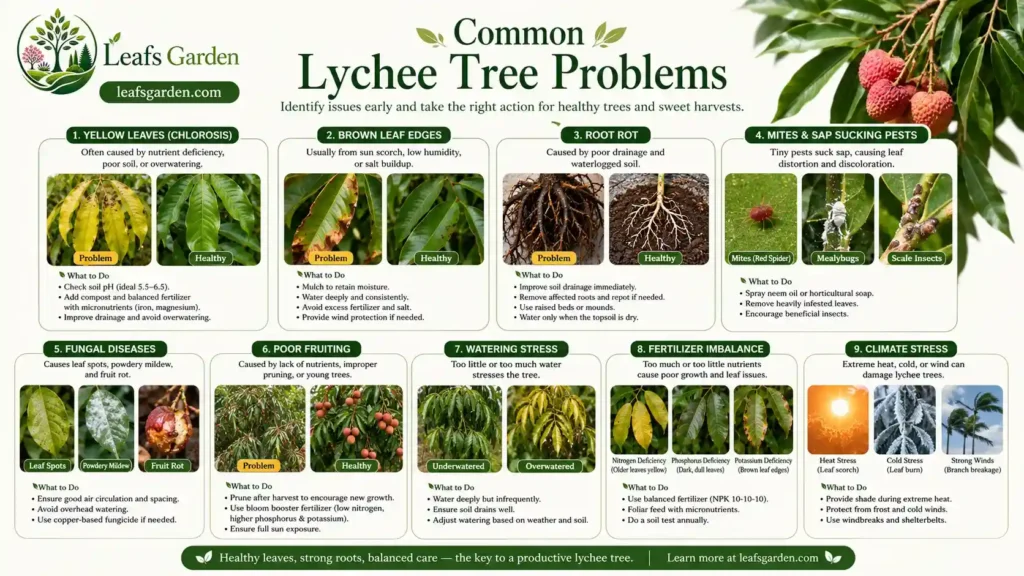
Water stress, nutrient deficiencies, and poor drainage are common causes of leaf discoloration.
Brown or yellow leaves are usually early warning signs that the tree is experiencing environmental stress or root problems. In many cases, improper watering is the primary cause.
Overwatering can damage roots by reducing oxygen availability in the soil, while underwatering may cause leaf dehydration and browning around the edges. Poor drainage often worsens both problems by creating unstable root conditions.
Common causes of yellow or brown lychee leaves include:
| Problem | Symptoms |
| Overwatering | Yellow leaves, root stress |
| Underwatering | Dry brown leaf edges |
| Poor Drainage | Wilting and root damage |
| Nitrogen Deficiency | Pale yellow foliage |
| Iron Deficiency | Yellowing between leaf veins |
| Sunburn | Brown scorched leaf patches |
| Cold Damage | Blackened or wilted foliage |
Nutrient deficiencies may also affect leaf color and overall canopy health. Young trees are especially sensitive to imbalanced fertilization and poor soil conditions.
To reduce discoloration problems:
Healthy lychee foliage should remain glossy green with strong upright growth during active growing seasons.
Lychee trees can suffer from mites, scale insects, fungal diseases, and root rot.
Like many tropical fruit trees, Erdon Lee lychee can occasionally experience pest and disease problems, especially under humid or poorly ventilated conditions.
One of the most common pests is the lychee erinose mite, which damages young leaves and may cause distorted fuzzy growth on foliage surfaces. Scale insects and aphids can also weaken the tree by feeding on plant sap.
Common lychee pests include:
Fungal diseases become more common when excessive moisture and poor airflow remain around the canopy. Wet soil conditions may also lead to dangerous root rot infections.
Common diseases include:
| Disease or Pest | Common Symptoms |
| Root Rot | Wilting, yellow leaves, weak growth |
| Fungal Leaf Spot | Brown or black leaf spots |
| Powdery Mildew | White fungal coating |
| Scale Insects | Sticky residue and weakened leaves |
| Mites | Distorted foliage |
| Anthracnose | Fruit and leaf damage |
Preventive care is usually the best defense against serious outbreaks.
Helpful prevention methods include:
Healthy vigorous trees are generally more resistant to both pests and disease pressure.
Insufficient chilling, poor pollination, and immature trees are common reasons for low fruit production.
Many gardeners become frustrated when healthy-looking lychee trees fail to produce flowers or fruit. In most cases, the problem is related to climate conditions, tree maturity, or flowering disruption.
Lychee trees usually require:
Young trees commonly fail to fruit because they are still immature. Seed-grown trees may require many years before becoming capable of flowering.
Common reasons for poor fruit production include:
| Cause | Effect |
| Warm Winters | Reduced flowering |
| Immature Tree | No fruit production |
| Poor Pollination | Weak fruit set |
| Excess Nitrogen | Excess leaves instead of flowers |
| Heavy Pruning | Flowering branch removal |
| Shade Stress | Reduced flowering energy |
Poor pollination can also reduce fruit set even when flowers are present. Bees and beneficial insects help improve successful pollination during bloom periods.
To improve fruit production:
In warm tropical regions with insufficient winter cooling, some lychee trees may produce heavy foliage growth but very limited flowering or fruit development.
Lychee trees can adapt to both indoor and outdoor environments depending on climate, container size, and growing conditions. Young trees are more flexible for indoor cultivation, while mature fruiting trees generally perform much better outdoors in warm humid regions.
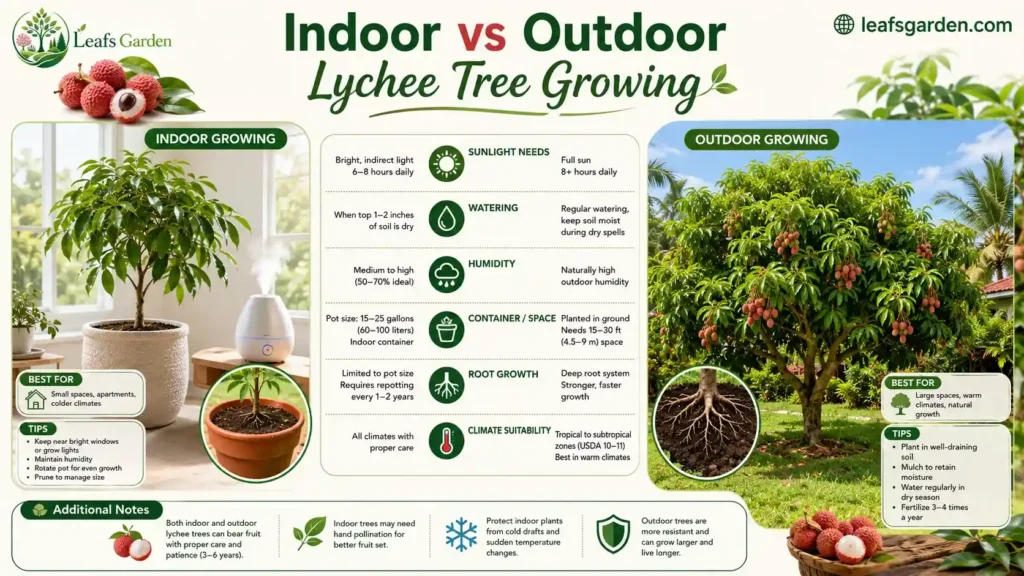
Young lychee plants can survive indoors temporarily with strong light and humidity.
Indoor growing is possible during the early stages of development, especially for seedlings and small container-grown trees. A young indoor lychee tree mainly requires warmth, humidity, bright light, and consistent moisture to remain healthy.
Indoor conditions should ideally provide:
South-facing windows, sunrooms, and greenhouse environments usually provide the best lighting conditions. In colder climates, some growers also use supplemental grow lights to support healthy foliage growth during winter.
However, mature lychee trees become difficult to maintain indoors long term because of:
Common indoor growing challenges include:
| Indoor Problem | Effect on Tree |
| Low Humidity | Browning leaves |
| Poor Light | Weak stretched growth |
| Overwatering | Root rot risk |
| Dry Indoor Air | Leaf drop |
| Small Containers | Restricted growth |
Indoor trees benefit from occasional outdoor exposure during warm weather if temperatures remain frost-free.
Large well-draining containers help prevent root rot and support steady growth.
Container growing is one of the best ways to manage lychee tree size while still maintaining healthy tropical foliage and occasional fruit production. Proper containers allow better control over drainage, soil quality, and root development.
The best pots for lychee trees should include:
Recommended container materials include:
Good drainage is critical because lychee roots are highly sensitive to standing water and compact wet soil. Poor drainage can quickly lead to fungal problems and root damage.
Ideal potting mix characteristics include:
Container size recommendations generally increase as the tree matures:
| Tree Age | Suggested Pot Size |
| Seedling | Small nursery pot |
| Young Tree | 3–7 gallon container |
| Medium Tree | 10–20 gallon container |
| Mature Potted Tree | Large heavy planter |
Repotting every few years helps refresh soil nutrients and prevents root binding. Some growers also perform light root pruning to maintain manageable plant size in long-term container cultivation.
Outdoor planting works best in frost-free climates with protection from strong wind.
Outdoor cultivation is the ideal method for growing healthy mature Erdon Lee lychee trees because natural tropical conditions provide stronger sunlight, better canopy development, and improved fruiting potential.
The best outdoor planting locations offer:
Strong wind protection is especially important because heavy wind may:
Helpful outdoor planting tips include:
| Planting Tip | Benefit |
| Choose Sunny Location | Improves flowering and fruiting |
| Avoid Frost Pockets | Prevents cold damage |
| Use Mulch | Maintains root moisture |
| Improve Drainage | Reduces root rot risk |
| Space Trees Properly | Improves airflow |
| Protect Young Trees | Prevents wind stress |
When planting outdoors:
Young outdoor trees may require temporary frost cloth protection during unusually cold weather until they become more established.
In tropical and subtropical gardens, mature lychee trees eventually develop into highly ornamental evergreen fruit trees with dense foliage, attractive branching, and large seasonal fruit clusters.
Buying a healthy Erdon Lee lychee tree is one of the fastest ways to establish a productive tropical fruit tree at home. Most growers prefer grafted nursery trees because they produce fruit faster, maintain reliable fruit quality, and develop more consistently than seed-grown plants.
Grafted Erdon Lee lychee trees are usually available from specialty tropical fruit nurseries.
People searching to buy lychee tree varieties should focus on reputable tropical fruit nurseries that specialize in grafted cultivars rather than random seed-grown plants. Grafted Erdon Lee trees are preferred because they preserve the large fruit characteristics and sweet flavor profile of the original parent tree.
Common places to find lychee tree for sale listings include:
Many gardeners wanting to buy a lychee tree specifically search for grafted stock because grafted trees usually begin fruiting much earlier than seedlings.
You may also find:
When planning a lychee tree buy, always verify:
Container-grown nursery trees are generally easier to transplant successfully because the root system remains protected during transportation and early establishment.
Popular nursery tree types include:
| Tree Type | Advantages |
| Grafted Trees | Faster fruiting and reliable quality |
| Air-Layered Trees | True-to-type fruit production |
| Seedlings | Lower cost but slower fruiting |
Because Erdon Lee is considered a premium giant-fruiting cultivar, availability may be more limited than common commercial lychee varieties.
Healthy roots, graft unions, leaf color, and disease-free foliage are important when purchasing lychee plants.
Carefully inspecting plant quality before purchase can prevent long-term growing problems. A healthy young lychee tree should show vigorous growth, clean foliage, and strong root development without signs of pests or disease.
Important features to inspect include:
| Feature | What to Look For |
| Roots | Healthy white roots without rot |
| Leaves | Glossy green healthy foliage |
| Graft Union | Strong healed graft connection |
| Trunk | No cracks or major damage |
| Soil Condition | Moist but not waterlogged |
| Pest Presence | No insects or fungal spotting |
Avoid purchasing trees with:
Healthy graft unions are especially important because weak grafting may eventually cause structural instability or poor growth performance.
When selecting a lychee plant:
Young healthy Erdon Lee trees establish more successfully after transplanting and are more likely to develop strong long-term fruit production under proper tropical growing conditions.
| Feature | Details |
| Botanical Name | Litchi chinensis |
| Common Names | Dragon Egg Lychee, Dragon Lychee |
| Fruit Size | Very Large |
| Mature Height | 20–40 ft |
| Climate | Tropical/Subtropical |
| Propagation | Seed, Air Layering, Grafting |
| Fruiting Season | Late Spring to Summer |
Erdon Lee lychee is one of the most impressive giant lychee varieties for tropical fruit enthusiasts because of its large fruit, sweet flavor, and ornamental tree growth.
Its oversized dragon egg lychee appearance, juicy translucent flesh, and attractive red-pink shell make it stand out from many traditional lychee cultivars. The variety is especially valued for its giant fruit appeal, strong tropical flavor, and eye-catching presentation that attracts both collectors and home orchard growers.
Dragon lychee trees also provide ornamental value through their dense evergreen canopy, glossy foliage, and tropical landscape appearance. In warm climates, mature trees can become highly productive while producing exceptionally large premium-quality fruit during the lychee fruit season.
Successful cultivation depends heavily on proper growing conditions, including:
Many growers also enjoy the seed propagation potential of lychee trees, although seed-grown plants require patience before fruit production begins. Fresh seeds germinate relatively easily under warm humid conditions, making lychee cultivation rewarding for long-term tropical gardening enthusiasts.
Whether grown in backyard orchards, tropical gardens, or large containers, Erdon Lee remains one of the most unique giant lychee selections available today. Choosing the right climate, maintaining healthy soil conditions, and providing long-term care are the keys to developing a healthy productive lychee tree with high-quality fruit harvests for many years.
Erdon Lee produces very large giant lychee fruit compared with standard commercial varieties. Individual fruits are often significantly larger and more oval-shaped than common lychees, which is why the variety is commonly called dragon egg lychee.
Yes, you can grow Erdon Lee lychee from seed using fresh seeds taken directly from ripe fruit. However, seed-grown trees may take many years to fruit and may not always produce fruit identical to the parent tree.
Grafted lychee trees usually begin producing fruit within 3–5 years under proper growing conditions. Seed-grown trees may take 8–15 years before becoming mature enough for reliable fruit production.
Lychee trees grow best in warm tropical and subtropical climates with mild winters, moderate humidity, and protection from severe frost. USDA Zones 9–11 are generally considered ideal for healthy growth and fruit production.
Dragon egg lychees are not completely seedless, but some fruits may develop relatively small seeds that allow more edible flesh inside the fruit. This higher flesh-to-seed ratio is one reason the variety is highly valued.
Lychee season in Australia generally occurs from November through January depending on regional climate and cultivar type. Warmer tropical areas usually begin harvesting earlier than cooler subtropical regions.
A mature Erdon Lee lychee tree can grow approximately 20–40 feet tall if left unpruned in tropical climates. Regular pruning and container growing can help maintain a smaller more manageable size.
Erdon Lee lychee has juicy translucent flesh with sweet floral flavor and refreshing tropical aroma. The fruit is known for its rich sweetness, soft texture, and exceptionally large size compared with ordinary lychee varieties.