Grow Better Gardens with Smarter Plant Choices
Discover helpful guides on trees, hedges, fruit plants, edible plants, and beautiful landscape greenery.

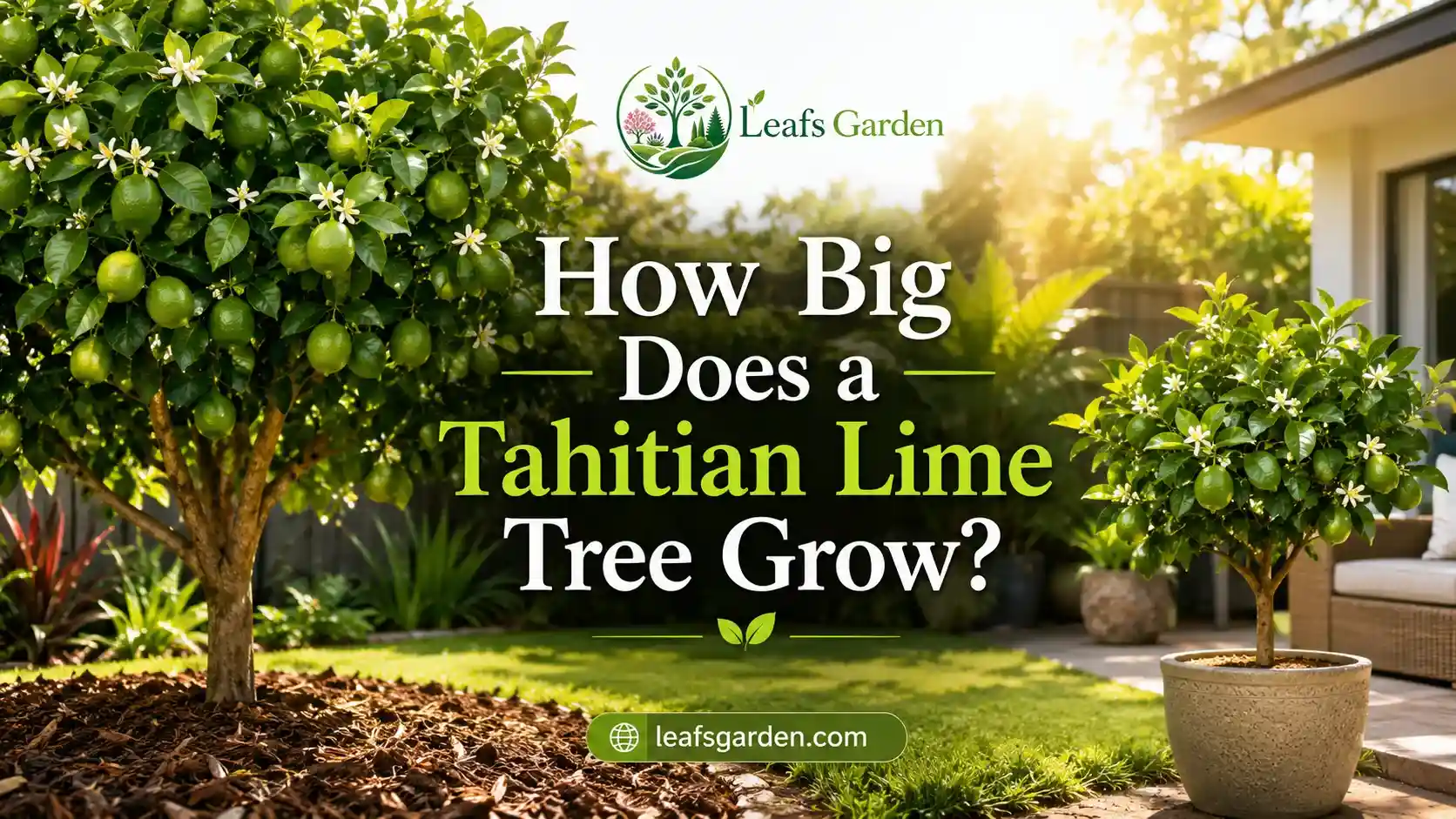
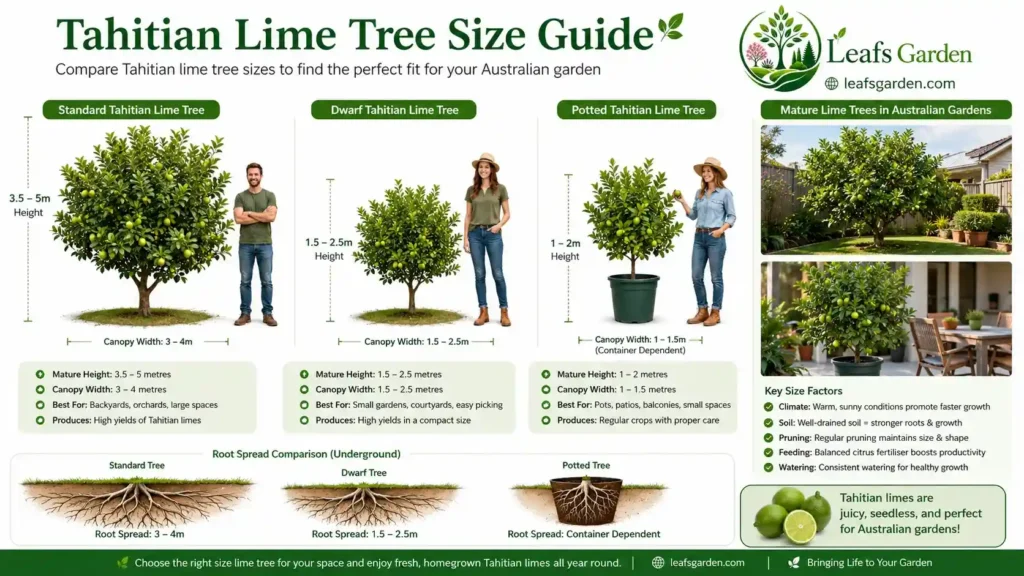
A Tahitian lime tree typically grows between 3–6 meters tall when planted in the ground, while dwarf Tahitian lime trees usually stay around 1.5–2.5 meters tall, especially when grown in pots. Final size depends on climate, pruning, root space, sunlight, and overall citrus care.
The Tahitian lime tree, also widely known as the Persian lime, is one of the most popular citrus trees for home gardens because of its productive growth, glossy evergreen foliage, and nearly seedless fruit. It performs exceptionally well in warm Australian climates including Sydney, Perth, Brisbane, and other subtropical regions where long sunny seasons support healthy citrus growth.
Ground-planted Tahitian lime trees generally grow larger and produce heavier crops, while container-grown lime trees remain more compact and easier to manage on patios, balconies, and small backyard spaces. Dwarf Tahitian lime varieties are especially popular for pot growing in Australia because they combine manageable size with reliable fruit production.
This guide explains everything you need to know about Tahitian lime tree size, including mature height, canopy width, growth rate, pot growing, pruning, maintenance, and ideal growing conditions. It also covers practical tips for Australian gardeners along with USA and worldwide citrus growing advice for different climates and growing environments.
Tahitian lime and Persian lime are commonly considered the same citrus variety known for their seedless green fruit, mild acidity, and vigorous tree growth. In Australia, the name “Tahitian lime” is more commonly used, while “Persian lime” is widely used in the USA and international citrus markets.
The Tahitian lime belongs to the Rutaceae citrus family and is botanically classified as Citrus × latifolia. It is believed to be a hybrid citrus variety developed from earlier lime species. Compared to Key limes, Tahitian limes are larger, less acidic, and usually contain very few seeds.
This citrus tree is extremely popular in Australia because it performs well in warm coastal climates such as Sydney, Perth, Brisbane, and other subtropical regions. In the USA, it is widely grown in California, Florida, Texas, and other frost-free citrus-growing areas due to its reliable fruit production and commercial value.
Tahitian lime trees are attractive evergreen citrus trees with dense foliage and productive fruiting habits. Their ornamental appearance makes them suitable for both edible gardening and landscape planting.
Key identifying features include:
The fruit is typically medium to large in size with thin green skin that may slightly yellow when fully ripe. A healthy lime on tree display often shows both flowers and fruit at the same time, especially in warm climates with long growing seasons.
Tahitian lime trees also produce highly fragrant blossoms that attract pollinators and add ornamental value to patios, courtyards, and backyard gardens.
Tahitian lime trees are one of the most practical citrus trees for home gardeners because they combine ornamental beauty with reliable fruit production.
Main benefits include:
Many Australian gardeners prefer Tahitian lime trees because they adapt well to container growing while still producing large amounts of fruit.
Gardeners building a productive backyard citrus collection will find the Tahitian lime a rewarding addition among the many versatile fruit trees and edible plants suited to warm Australian climates.
Their manageable size and attractive appearance also make them popular as patio citrus trees in both Australia and the USA.
A full grown Tahitian lime tree generally reaches 4–6 meters tall and 3–5 meters wide when planted outdoors in ideal growing conditions. Tree size varies depending on climate, pruning, soil quality, root space, and whether the tree is grown in the ground or in containers.
Many gardeners asking “how big does a lime tree get” or “how big do lime trees get” are surprised by how vigorous healthy citrus growth can become in warm subtropical climates. In Australia, mature trees grown in sunny frost-free locations often develop dense rounded canopies with strong fruit production.
The average Tahitian lime tree height is usually smaller when regularly pruned or grown in restricted root environments such as pots. Dwarf varieties remain much more compact and are easier to manage in smaller gardens.
| Tree Type | Average Height | Average Width |
| Standard Tahitian Lime | 4–6 m | 3–5 m |
| Dwarf Tahitian Lime Tree | 1.5–2.5 m | 1–2 m |
| Potted Lime Tree | 1–2 m | Compact |
If you are wondering how tall does lime tree grow before becoming difficult to manage, most home gardeners maintain trees through seasonal pruning to keep harvesting easier and improve airflow through the canopy.
Tahitian lime trees are considered moderately fast-growing citrus trees under warm conditions. Most healthy trees grow approximately 30–60 cm per year during active growing seasons.
Growth speed depends heavily on:
Australian subtropical regions such as Brisbane, Perth, and coastal Sydney often provide ideal conditions for faster citrus development. Trees grown in warm frost-free environments usually establish quicker and produce stronger canopy growth.
Fertilizer also strongly affects growth rate. Citrus-specific feeding rich in nitrogen, magnesium, and trace minerals encourages vigorous foliage and branch development. Trees planted directly in the ground usually grow faster than container-grown citrus because unrestricted roots allow better nutrient and moisture uptake.
Young grafted Tahitian lime trees commonly begin fruiting within 2–4 years, while seed-grown trees may take much longer to mature.
Dwarf Tahitian lime trees stay significantly smaller and are ideal for pots, courtyards, balconies, and compact gardens. Their manageable size makes them one of the best container citrus options for urban gardeners.
A typical dwarf Tahitian lime tree reaches around 1.5–2.5 meters tall with a narrower canopy spread compared to standard citrus trees. Regular pruning can keep many dwarf trees even smaller without reducing productivity.
Benefits of dwarf citrus growth habits include:
Many gardeners choose dwarf Tahitian lime varieties because the compact dwarf lime tree size still produces excellent fruit yields while fitting comfortably into smaller outdoor spaces.
Tahitian lime in pots usually remains much smaller than trees planted directly into garden soil. Restricted root space naturally limits canopy expansion and overall tree height.
Ground-planted citrus trees develop larger root systems, stronger branch structures, and heavier fruit production over time. A potted lime tree requires more maintenance but offers greater flexibility for patios, balconies, and frost protection.
| Growing Method | Expected Size | Fruit Yield | Maintenance |
| In Ground | Larger | Higher | Moderate |
| Lime Tree in Pot | Smaller | Moderate | Higher |
Growing lime trees in pots Australia has become increasingly popular because container citrus adapts well to small suburban gardens and apartment patios. However, a lime tree in pot setup requires more frequent watering, fertilizing, and occasional root management to maintain healthy long-term growth.
A well-maintained potted lime tree can still produce impressive harvests while remaining compact enough for decorative outdoor living spaces.
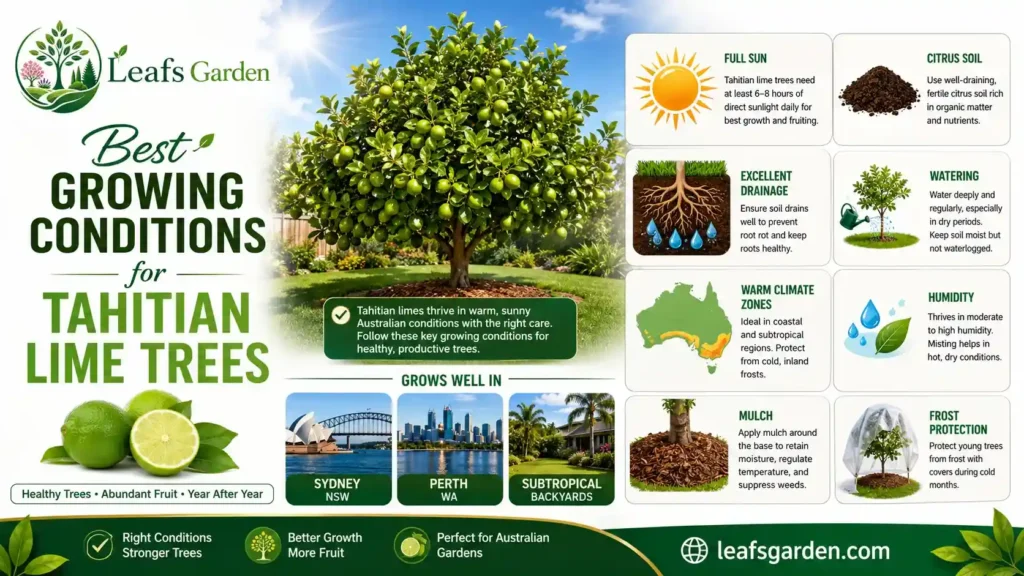
Tahitian lime trees grow best in warm frost-free climates with full sunlight and mild winters. These citrus trees thrive in subtropical, tropical, and Mediterranean environments where temperatures remain consistently warm for most of the year.
In Australia, Tahitian lime trees perform especially well in coastal and subtropical regions including Brisbane, Perth, Sydney, and warmer parts of Melbourne. Coastal climates help protect citrus trees from severe frost while providing long sunny growing seasons that improve flowering and fruit production.
Perth conditions are particularly suitable because of the city’s dry summers, strong sunlight, and Mediterranean climate. Sydney growing zones also support healthy citrus growth, especially in protected gardens with good drainage and winter sun exposure.
In the USA, Tahitian lime trees are commonly grown in warm USDA zones 9–11. Popular citrus-growing areas include:
Mediterranean climates worldwide also support successful lime growing because they combine mild winters with hot sunny summers. Areas with heavy frost or prolonged cold weather are less suitable unless trees are grown in protected containers or greenhouses.
Tahitian lime trees require full sun for strong growth, healthy foliage, and reliable fruit production. Most trees perform best with at least 6–8 hours of direct sunlight daily.
Adequate sunlight helps:
These citrus trees tolerate high heat well once established, especially in dry Australian summers and Mediterranean regions. However, newly planted trees may need temporary protection during extreme heatwaves to reduce leaf stress.
Although Tahitian lime trees enjoy warmth, strong frost can damage leaves, flowers, and young branches. In cooler climates, gardeners often protect citrus trees using frost cloths, sheltered planting positions, or container growing methods that allow temporary relocation during winter.
Lime trees prefer well-draining slightly acidic citrus soil rich in organic matter. Healthy roots depend heavily on proper soil structure because citrus trees are highly sensitive to waterlogged conditions.
Good lime soil should provide:
Premium citrus soil mixes often contain compost, aged organic matter, coarse sand, and drainage materials that improve airflow around roots. Well-prepared soil encourages stronger root development, faster growth, and better fruit production.
Drainage is one of the most important factors for long-term citrus health. Poorly drained soil can quickly lead to root rot, nutrient deficiencies, and weak canopy growth. Raised garden beds and quality potting mixes are commonly used in heavy clay regions to improve drainage performance.
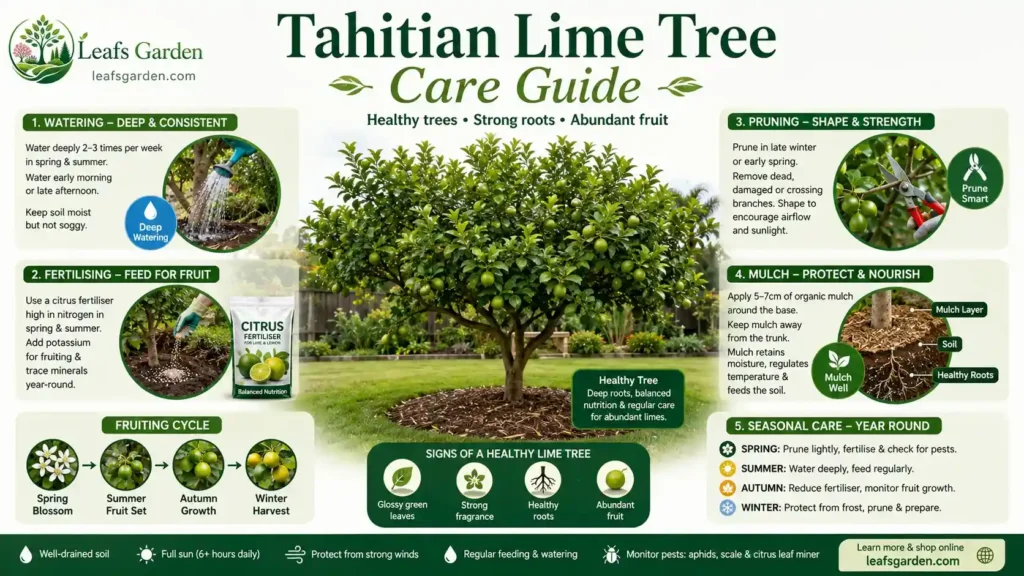
Tahitian lime trees need deep consistent watering, especially during active growing and fruiting periods. Proper watering encourages deeper root systems and healthier canopy growth.
Young trees usually require more regular watering while establishing roots. Mature citrus trees are more drought tolerant but still perform best with steady moisture during warm weather.
General watering guidelines include:
Australian summer conditions often require more frequent watering because high heat and dry winds can rapidly dry soil around citrus roots.
Overwatering should always be avoided because saturated soil increases the risk of root rot and fungal disease. Signs of excessive moisture may include yellow leaves, slow growth, leaf drop, and soft roots.
Tahitian lime trees grow best in warm humid environments but also adapt well to many subtropical and Mediterranean climates. Consistent warmth supports faster growth, flowering, and fruit production.
Tropical regions typically produce the most vigorous citrus growth because temperatures remain stable year-round. Subtropical climates also work extremely well provided trees receive adequate sun and winter frost protection.
Ideal growing temperatures generally range between:
Cold sensitivity is one of the biggest limitations for Tahitian lime trees. Frost exposure can damage foliage, reduce flowering, and stunt young citrus growth. Severe freezing temperatures may kill branches or entire trees.
Strong wind can also stress citrus trees by drying foliage, damaging flowers, and reducing fruit quality. Wind-protected planting locations, fences, hedges, and sheltered courtyards help create more stable growing conditions for healthy long-term citrus performance.
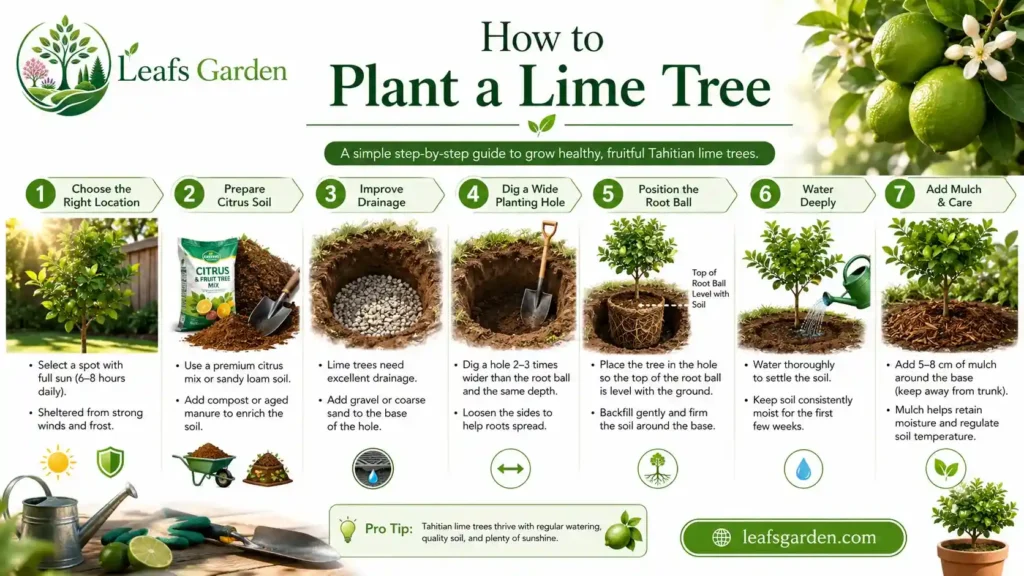
Proper lime planting helps Tahitian lime trees establish faster, develop stronger roots, and produce healthier fruit. Choosing the right location and preparing the soil correctly are the most important early steps.
Follow this step-by-step guide for how to plant a lime tree successfully:
After you plant lime trees, water deeply to settle soil around the roots and reduce transplant stress during establishment.
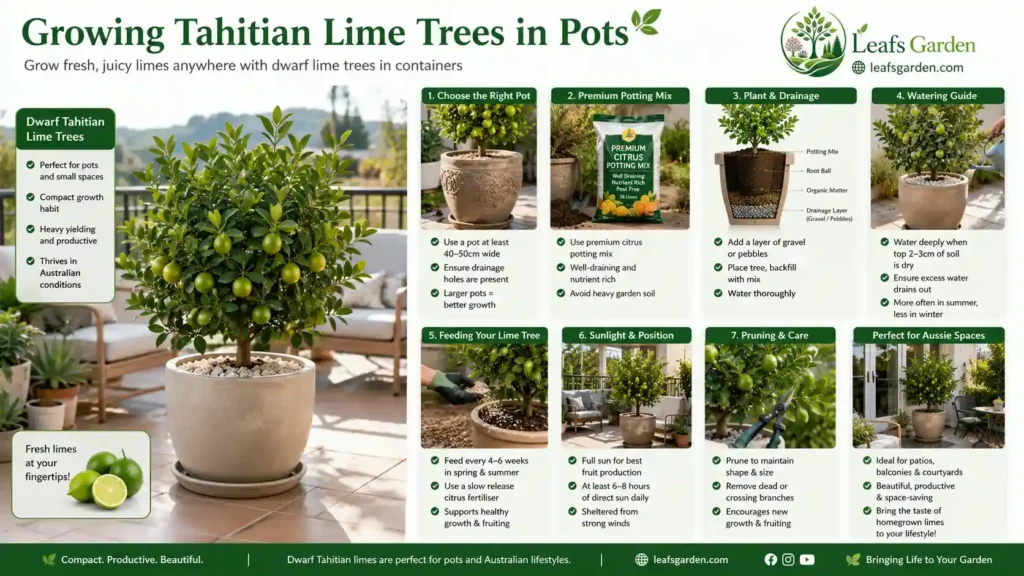
Dwarf Tahitian lime trees perform exceptionally well in pots when given premium citrus mix, drainage, and regular feeding. Container growing is especially popular in Australia where patios, balconies, and compact suburban gardens often limit planting space.
A healthy pot lime tree can still produce impressive fruit crops while remaining easier to manage than large in-ground citrus trees.
For best results:
A potted lime tree generally requires more frequent watering and fertilizing because nutrients leach faster from containers compared to garden soil.
Many gardeners prefer Tahitian lime in pots because containers allow easier frost protection during colder months. Dwarf varieties are especially suitable for patios and courtyards where compact growth habits are important.
Growing lime trees in pots Australia also helps gardeners control soil quality more easily, particularly in regions with heavy clay or poor drainage.
Growing a lime tree from seed is possible, but seed-grown citrus trees usually take much longer to fruit compared to grafted nursery trees.
To grow a lime tree from a lime:
Seed propagation can be rewarding for hobby gardeners, but there are important differences between seed-grown and grafted trees.
| Growing Method | Fruiting Time | Fruit Quality | Growth Reliability |
| Seed-Grown Lime Tree | 5–10 years | Variable | Less predictable |
| Grafted Lime Tree | 2–4 years | Consistent | More reliable |
Grafted Tahitian lime trees are preferred by most gardeners because they produce more predictable fruit quality, stronger disease resistance, and faster harvests.
Seed-grown citrus may not always produce fruit identical to the parent tree due to genetic variation. Growth speed and final tree size can also vary considerably.
Outdoor growing generally produces healthier and more productive Tahitian lime trees because natural sunlight and airflow better support citrus growth. However, some gardeners successfully grow compact citrus indoors or in protected greenhouse environments.
| Growing Method | Advantages | Limitations |
| Indoor Lime Tree | Portable, decorative, winter protection | Reduced sunlight, lower fruiting |
| Patio Growing | Strong sunlight, better airflow | Weather exposure |
| Greenhouse Growing | Warm protected environment | Requires ventilation management |
| Outdoor Garden Growing | Best fruit production and growth | Frost risk in colder regions |
Indoor citrus trees often struggle with:
Patio growing usually provides better results because outdoor conditions deliver stronger light and natural airflow. In colder climates, greenhouse growing can help maintain stable temperatures while protecting citrus trees from frost damage.
For most Australian conditions, outdoor container or garden growing remains the most effective option for long-term Tahitian lime tree health and fruit production.
Citrus fertilizer rich in nitrogen, magnesium, and trace minerals helps Tahitian lime trees grow faster and fruit better. Regular feeding supports healthy foliage, stronger flowering, improved fruit size, and long-term citrus productivity.
A balanced lime tree fertiliser should contain:
Most gardeners apply fertilizer for lime tree growth during active growing seasons, especially from spring through early autumn. Slow-release citrus products are commonly recommended because they provide steady nutrient availability over time.
Young trees generally need lighter but more frequent feeding, while mature trees benefit from seasonal deep fertilisation programs.
Signs a Tahitian lime tree may need additional nutrients include:
Whether labeled as fertiliser for lime tree care or lime tree fertilizer, citrus-specific formulas usually perform better than general garden fertilizers because they contain nutrients tailored for citrus root systems and fruiting habits.
Regular pruning helps maintain a manageable tree shape while improving airflow, sunlight penetration, and fruit production. Well-pruned Tahitian lime trees are easier to harvest and less likely to develop dense overcrowded canopies.
Main pruning goals include:
The best time for major citrus pruning is usually after fruit harvest or during mild weather before strong spring growth begins.
When pruning:
Heavy pruning should generally be avoided because excessive cutting can reduce fruit production and expose branches to sunburn stress.
Dwarf Tahitian lime trees often require only light shaping to maintain compact growth habits in pots and small gardens.
Mulching helps protect shallow citrus roots while improving soil moisture retention and overall tree health. Proper mulch application is especially valuable during hot Australian summers where soil can dry rapidly.
Benefits of mulching include:
Organic mulches commonly used around lime trees include:
Apply mulch around the root zone in a broad ring while keeping it several centimeters away from the trunk to prevent fungal disease and collar rot.
Deep mulching also helps reduce watering frequency by slowing evaporation during hot weather conditions.
Seasonal care keeps Tahitian lime trees healthy throughout the year and supports consistent flowering and fruit production.
| Season | Main Maintenance Tasks |
| Spring | Apply citrus fertilizer, encourage new growth, monitor flowering |
| Summer | Deep watering, mulch maintenance, pest monitoring |
| Autumn | Light pruning, reduce excessive growth, prepare for cooler weather |
| Winter | Frost protection, reduce watering, protect young trees from cold stress |
Spring is typically the most active growth period for citrus trees. Feeding during this season supports canopy development and flowering.
Summer maintenance focuses heavily on watering consistency because heat and dry winds can quickly stress citrus roots.
Autumn pruning helps maintain shape and improve airflow before cooler weather arrives. This is also a good time to remove weak or damaged branches.
Winter care is especially important in cooler climates where frost may damage leaves, flowers, and young fruit. Frost cloths, sheltered planting positions, and container relocation can help protect vulnerable trees during cold periods.
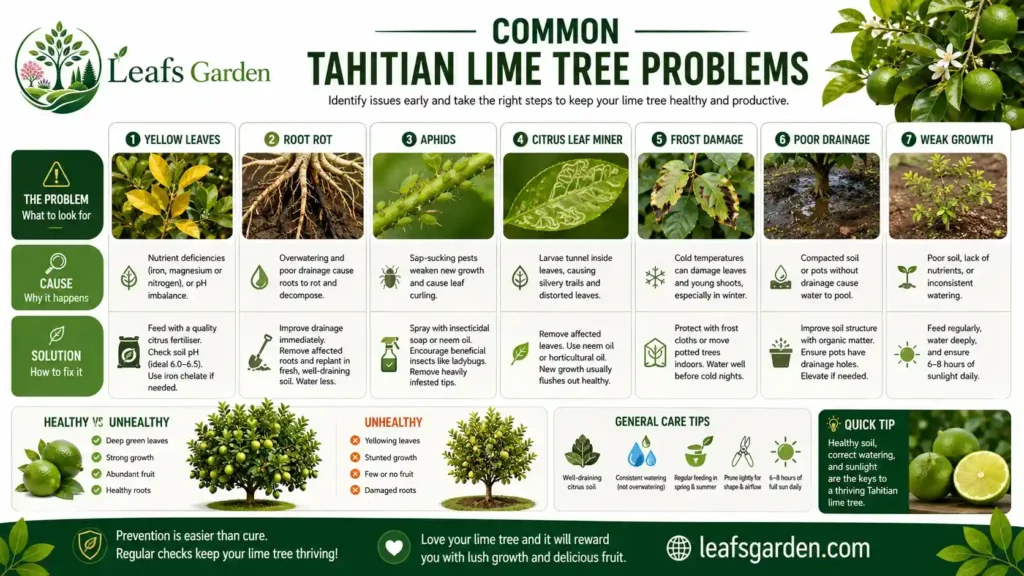
Poor drainage, lack of sunlight, nutrient deficiencies, and cold weather are common reasons lime trees stay small. Tahitian lime trees need warmth, sunlight, healthy soil, and balanced nutrition to maintain strong citrus growth.
Slow or weak growth is often linked to one or more of these common issues:
Young citrus trees may also grow slowly during establishment periods while roots expand into surrounding soil. Trees grown in pots generally develop more slowly than ground-planted citrus because restricted root space limits canopy growth.
Correcting environmental stress early usually improves tree vigor, foliage density, and future fruit production.
Yellow leaves are one of the most common citrus problems affecting Tahitian lime trees. Leaf discoloration often indicates watering imbalance or nutrient deficiency.
Common causes include:
Nitrogen deficiency usually causes pale green or yellow older leaves and weak overall canopy growth. Citrus fertilizer rich in nitrogen often corrects the problem quickly.
Iron chlorosis commonly affects lime trees growing in poorly balanced or alkaline soil. Young leaves may turn yellow while veins remain green.
This issue is often worse in:
Excess watering reduces oxygen around roots and can cause widespread yellowing, leaf drop, and weak growth. Saturated citrus soil often leads to further root problems if not corrected quickly.
Healthy watering practices combined with balanced citrus feeding usually restore normal foliage color over time.
Root rot is one of the most serious problems affecting Tahitian lime trees. Citrus roots require oxygen-rich well-draining soil to remain healthy.
Common signs of root rot include:
Poor drainage is the primary cause of citrus root disease. Heavy clay soil, overwatering, and containers without adequate drainage holes significantly increase risk.
Prevention methods include:
Soil fixes for drainage problems may involve adding coarse sand, compost, organic matter, or creating raised planting mounds to lift roots above saturated soil conditions.
Early correction is important because severe root rot can permanently weaken or kill citrus trees.
Several common citrus pests can reduce Tahitian lime tree growth, damage foliage, and affect fruit production if left untreated.
Citrus leaf miner larvae tunnel through young leaves and create curled distorted growth. Damage is most noticeable during active spring and summer growth flushes.
Aphids feed on soft new growth and may cause leaf curling, sticky residue, and weakened shoots. Heavy infestations can slow overall tree development.
Scale insects attach to stems and leaves while feeding on plant sap. They often appear as small brown or white bumps on branches.
Citrus psyllids are serious pests because they may spread citrus diseases affecting tree health and productivity.
For detailed citrus psyllid identification and disease management advice, NSW Department of Primary Industries provides reliable horticultural guidance for Australian citrus growers and home gardeners.
Basic pest management strategies include:
Healthy lime trees usually tolerate minor pest activity better than stressed or poorly maintained trees.
Tahitian lime trees are sensitive to frost and prolonged cold weather. Freezing temperatures can damage foliage, flowers, fruit, and young branches.
Common frost damage symptoms include:
Young citrus trees are especially vulnerable during sudden cold snaps.
Recovery tips include:
Protection methods for cold weather include:
In cooler Australian regions and frost-prone climates, dwarf citrus grown in containers is often easier to protect during winter conditions.
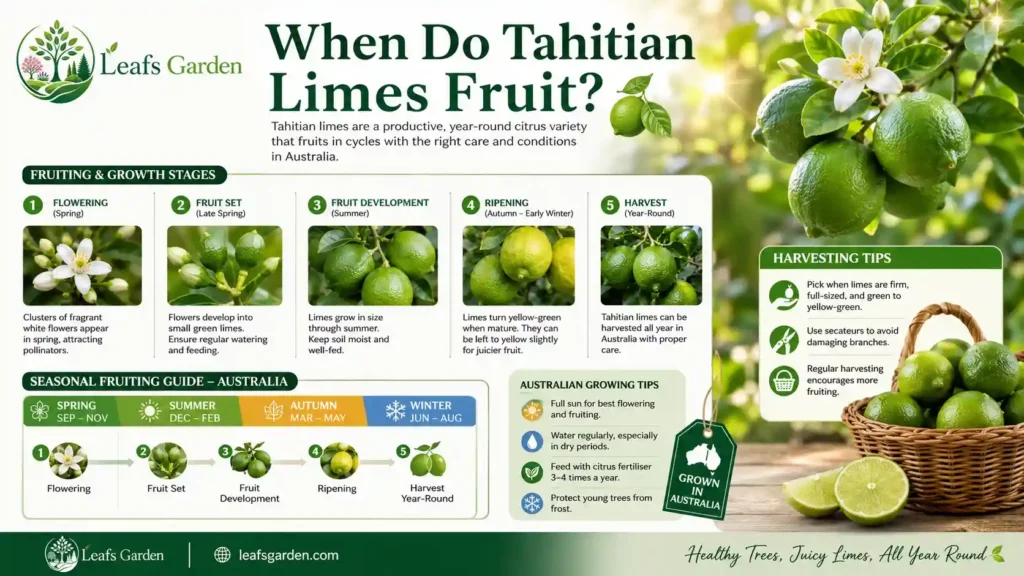
Tahitian lime trees usually begin fruiting within 2–4 years when grown from grafted nursery stock. Fruiting seasons vary depending on climate, sunlight, and local growing conditions.
In Australia, Tahitian limes commonly fruit from late autumn through winter, although warm subtropical regions may produce multiple flowering and fruiting cycles throughout the year.
Typical Australian fruiting periods include:
In the USA, harvest timing depends on regional climate:
Tahitian lime trees often flower several times annually in warm frost-free climates. Fragrant white citrus blossoms may appear while mature fruit is still hanging on the tree, creating overlapping flowering cycles and continuous fruit development.
Consistent warmth, sunlight, and feeding usually improve flowering frequency and overall citrus productivity.
Tahitian lime fruit is known for its smooth green skin, juicy flesh, and nearly seedless interior. Compared to smaller Key limes, Persian lime characteristics include larger fruit size, milder acidity, and thicker skin.
Typical fruit features include:
The fruit may gradually lighten or develop a slight yellow tint when fully ripe, especially during cooler weather conditions.
Healthy Tahitian lime trees often produce heavy clusters of fruit across the canopy. Well-maintained trees growing in full sun generally develop larger fruit with better juice quality and stronger citrus flavor.
Because of their high juice content and balanced acidity, Tahitian limes are widely used for:
Their seedless nature also makes them more convenient for kitchen use compared to many traditional lime varieties.
Strong lime production depends on healthy growing conditions, balanced nutrition, and proper citrus care throughout the year.
The most effective ways to improve fruit production include:
Although Tahitian lime trees are self-fertile, pollinators such as bees can improve flower pollination and increase fruit set during heavy blooming periods.
Full sun is essential for productive citrus growth. Trees receiving 6–8 hours of direct sunlight daily generally produce more flowers and larger fruit crops.
Regular citrus feeding supports healthy flowering, fruit sizing, and long-term tree vigor. Nitrogen, potassium, magnesium, and trace minerals are especially important during active growing seasons.
Consistent deep watering helps maintain healthy fruit development. Irregular watering may cause:
Mulching around the root zone also helps stabilize soil moisture and reduce stress during Australian summer heat.
Well-maintained Tahitian lime trees can remain highly productive for many years when given proper sunlight, drainage, feeding, and seasonal care.
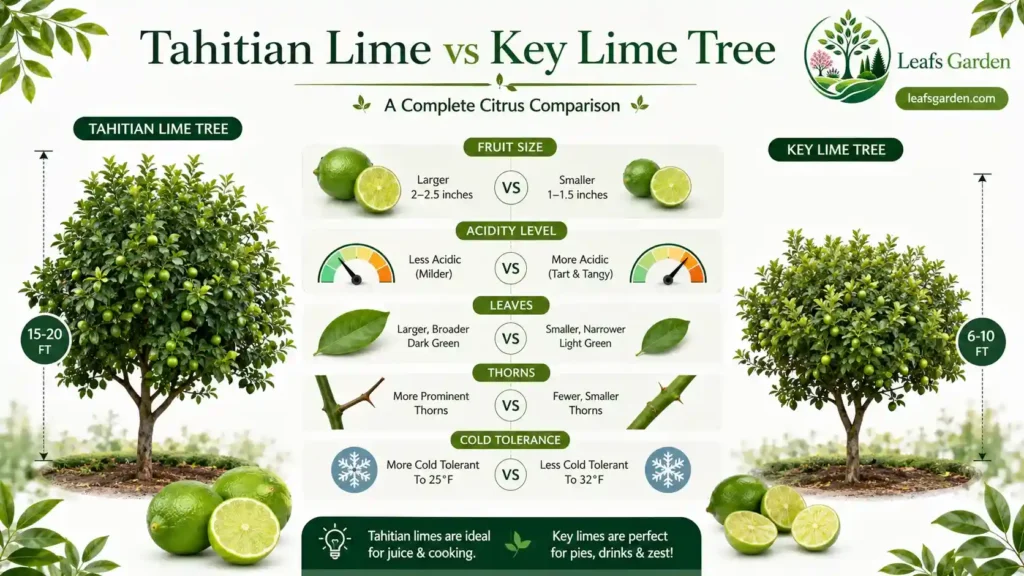
Tahitian lime trees and Key lime trees are both popular citrus varieties, but they differ in fruit size, acidity, cold tolerance, and overall growth habits. Tahitian limes are generally larger and less acidic, while citrus Key lime varieties produce smaller fruit with a sharper flavor.
Gardeners choosing between these citrus trees often compare productivity, climate suitability, and tree size before planting.
| Feature | Tahitian Lime Tree | Key Lime Tree |
| Fruit Size | Medium to large | Small |
| Acidity | Mild to moderate | Strong acidic flavor |
| Tree Size | Larger vigorous growth | Smaller compact growth |
| Cold Tolerance | Moderate | Lower cold tolerance |
A key lime citrus tree usually develops a denser thornier structure compared to many Tahitian lime varieties. Key limes are also more sensitive to cold weather and generally perform best in tropical or frost-free environments.
Key lime tree planting is common in warm coastal climates where humidity and consistent warmth support healthy citrus growth. Tahitian lime trees, however, are often preferred for home gardens because their fruit is larger, easier to use, and nearly seedless.
Tahitian lime trees and Meyer lemon trees have similar growth habits, but mature size can vary depending on rootstock, pruning, and growing conditions.
A mature Meyer lemon tree size commonly ranges between 2–4 meters tall, while standard Tahitian lime trees may reach 4–6 meters under ideal outdoor conditions.
| Citrus Tree | Average Height | Growth Habit |
| Tahitian Lime Tree | 4–6 m | Vigorous spreading canopy |
| Dwarf Tahitian Lime | 1.5–2.5 m | Compact container-friendly growth |
| Meyer Lemon Tree | 2–4 m | Rounded compact citrus shape |
Many gardeners asking “how big do lemon trees get” are surprised that lemon tree height can remain relatively manageable with regular pruning and dwarf rootstocks.
Meyer lemons are often slightly more cold tolerant than Tahitian limes, making them popular in cooler subtropical gardens and protected patio spaces. Tahitian lime trees, however, usually produce heavier evergreen canopies and faster vigorous growth in warm climates.
Dwarf citrus trees are the best option for container gardening because they remain compact while still producing reliable harvests. Many modern patio citrus varieties are specifically grafted for smaller spaces and container performance.
Popular citrus trees for pots include:
Gardeners looking for a compact and sweet-fruiting patio citrus companion may also enjoy the clementine tree, a popular easy-peel citrus variety that thrives beautifully alongside Tahitian lime trees in warm sunny Australian container gardens.
Benefits of container-grown citrus include:
Successful container gardening depends on:
Patio citrus trees are especially popular in Australia because many urban gardens have limited planting space. Dwarf citrus varieties provide both ornamental value and productive fruit harvests while remaining manageable in decorative containers.
Tahitian lime trees grow extremely well in many warm Australian regions where winters remain mild and sunlight is abundant. Coastal and subtropical climates generally provide the best long-term citrus growing conditions.
Sydney offers strong growing conditions for Tahitian lime trees, especially in protected sunny gardens with good drainage. Coastal suburbs and frost-free areas support reliable flowering and fruit production throughout the year.
Lime tree Perth growing conditions are considered highly suitable because of the city’s Mediterranean climate, hot dry summers, and mild winters. Many gardeners successfully grow lime trees Perth in backyard orchards, patios, and large containers.
Citrus trees Perth WA gardeners commonly grow include:
Perth gardeners expanding their backyard citrus collection may also enjoy growing a bush lemon, a hardy drought-tolerant citrus variety that thrives in Perth’s Mediterranean climate with similarly minimal maintenance.
The low humidity and strong sunlight in Perth help reduce some fungal disease issues commonly found in wetter climates.
Brisbane’s warm subtropical climate is ideal for Australian lime tree cultivation. Consistent warmth, humidity, and long growing seasons encourage vigorous canopy growth and extended fruiting cycles.
Tahitian lime trees can also grow successfully in warmer Melbourne locations if protected from frost and cold winds. North-facing walls, courtyards, and container growing methods improve citrus survival in cooler southern regions.
In colder parts of Victoria, many gardeners prefer dwarf citrus grown in pots because containers can be relocated during winter cold periods.
Coastal Australian climates often provide excellent conditions for Tahitian lime trees because ocean-influenced temperatures help reduce severe frost risk.
Important coastal growing factors include:
Moderate humidity supports healthy citrus growth and flowering, especially in subtropical coastal regions. However, excessive humidity combined with poor airflow may increase fungal disease risk.
Tahitian lime trees have moderate salt tolerance compared to some other fruit trees. Coastal gardens generally perform well if trees are protected from direct salt-laden winds.
Strong Australian summer heat encourages rapid citrus growth and fruit ripening. Deep watering and mulching become especially important during prolonged hot weather to prevent moisture stress.
Coastal gardens with full sun, wind protection, and well-draining soil usually produce highly productive citrus trees over long growing seasons.
Many citrus problems in Australia result from incorrect watering, poor soil preparation, or unsuitable planting positions. Avoiding common mistakes helps Tahitian lime trees establish faster and remain productive for years.
Overwatering is one of the most common citrus care mistakes. Constantly wet soil reduces oxygen around roots and may quickly lead to root rot, yellow leaves, and slow growth.
Heavy clay soil and poorly drained garden beds can severely damage citrus root systems. Tahitian lime trees perform best in loose well-draining citrus soil with strong airflow around roots.
Young citrus trees are highly sensitive to frost damage. Planting in exposed low-lying areas often increases cold stress during winter.
Protection methods include:
Using incorrect fertilizer can reduce fruit production and weaken tree health. Citrus trees require balanced nutrients including nitrogen, magnesium, potassium, and trace minerals for proper foliage and fruit development.
High-quality citrus fertilizer designed specifically for lime and lemon trees generally provides the best long-term results for Australian home gardens.
Tahitian lime trees can become medium-sized productive citrus trees, but pruning, pot growing, and dwarf varieties make them manageable for almost any Australian home garden.
A full grown Tahitian lime tree commonly reaches 4–6 meters tall in the ground, while dwarf varieties usually remain much smaller and easier to maintain in pots, patios, and compact backyard spaces. Container-grown lime trees also stay more controlled in size because restricted root space naturally limits canopy growth.
With proper sunlight, well-draining citrus soil, regular feeding, and seasonal pruning, Tahitian lime trees can remain healthy and highly productive for many years. Dwarf Tahitian lime options are especially useful for urban gardens, balconies, and smaller Australian properties where space is limited.
These citrus trees adapt well to warm regions across Australia including Sydney, Perth, Brisbane, and protected Melbourne gardens. They also grow successfully in many warm USA climates and Mediterranean regions worldwide.
Whether grown in the ground or as a potted citrus tree, Tahitian limes reward gardeners with fragrant blossoms, evergreen foliage, and reliable long-term fruit production suitable for fresh cooking, drinks, and everyday home use.
A Tahitian lime tree in Australia typically grows around 4–6 meters tall and 3–5 meters wide when planted in the ground under warm subtropical conditions. Tree size depends on pruning, climate, root space, and overall citrus care.
A dwarf Tahitian lime tree usually grows between 1.5–2.5 meters tall with a compact canopy spread of around 1–2 meters. Dwarf varieties are ideal for patios, balconies, and container growing.
Yes, Tahitian lime trees grow very well in pots, especially dwarf grafted varieties. A potted lime tree needs premium citrus mix, strong drainage, regular fertiliser, and full sunlight for healthy fruit production.
Tahitian lime trees generally grow around 30–60 cm per year in warm climates with proper watering, feeding, and sunlight. Growth is usually faster in subtropical and tropical environments.
Most grafted lime trees begin fruiting when they are relatively small, often around 1–2 meters tall. Fruiting commonly starts within 2–4 years after planting under good growing conditions.
Yes, Tahitian lime trees require full sun for strong growth and productive fruiting. Most trees perform best with at least 6–8 hours of direct sunlight daily.
The best fertiliser for lime trees is a citrus-specific formula rich in nitrogen, potassium, magnesium, and trace minerals. Slow-release citrus fertilisers are commonly recommended for steady healthy growth.
Yes, Tahitian lime trees and Persian limes are generally considered the same citrus variety. The name “Tahitian lime” is more commonly used in Australia, while “Persian lime” is widely used in the USA and international citrus markets.