Grow Better Gardens with Smarter Plant Choices
Discover helpful guides on trees, hedges, fruit plants, edible plants, and beautiful landscape greenery.
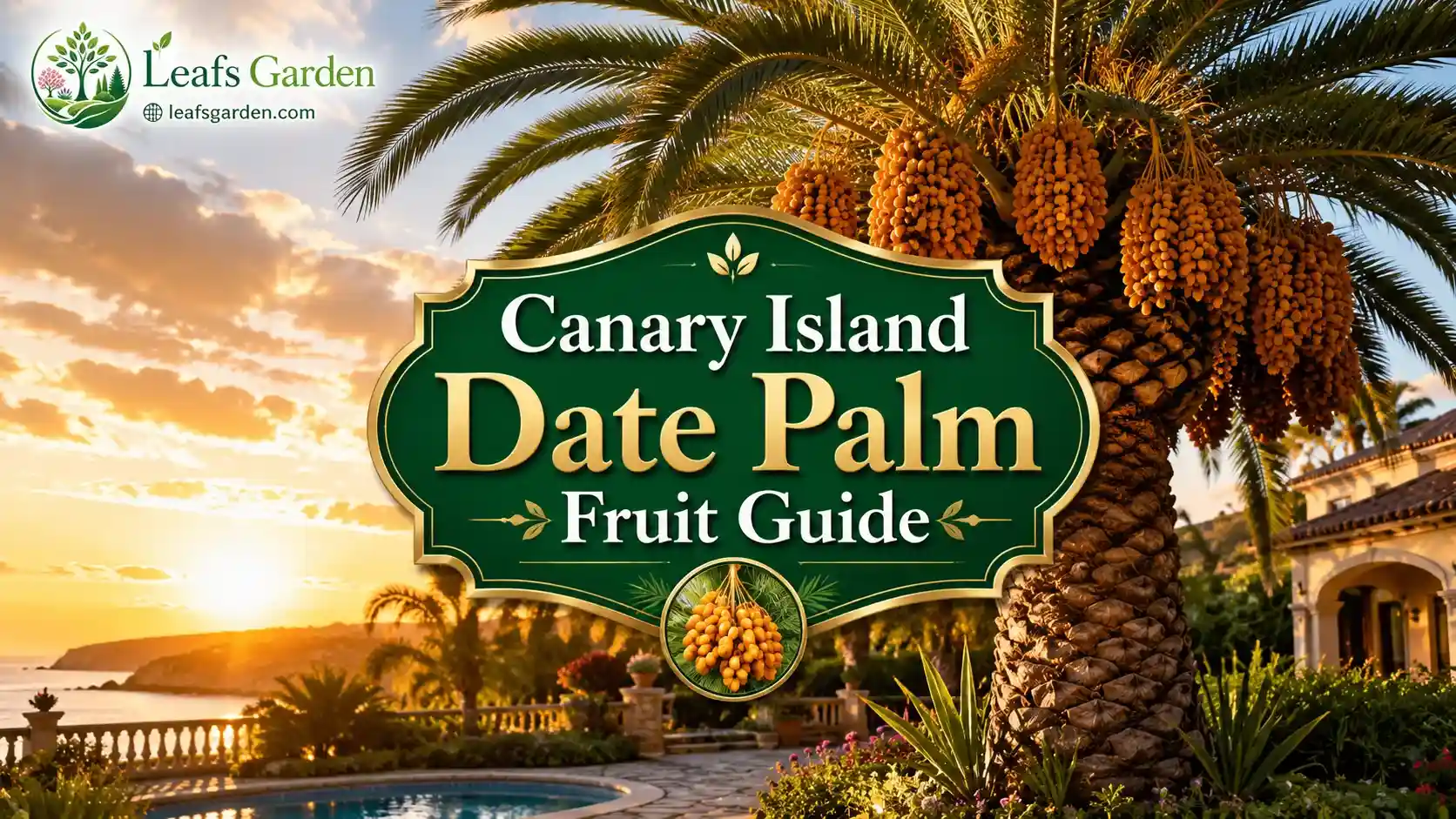
Canary Island date palm fruit grows on the Phoenix canariensis and appears as small orange-to-yellow dates that are mainly ornamental rather than widely eaten. The fruit develops in large hanging clusters beneath the crown of the palm and is commonly seen on mature landscape trees in warm coastal regions.
The Canary Island date palm is one of the most recognizable ornamental palm trees used in subtropical and Mediterranean-style landscaping. Known by names such as the canary date palm, canary palm, phoenix palm, and Canary Island palm tree, this species is valued for its massive trunk, feather-like fronds, and dramatic tropical appearance.
In Australia, the Phoenix canariensis palm tree is widely planted in coastal gardens, resorts, streetscapes, and luxury residential landscapes. Its strong heat tolerance and architectural shape make it especially popular in regions such as Perth, Queensland, and New South Wales coastal areas.
Although the tree produces dates on palm trees similar in appearance to edible varieties, the fruit is very different from commercial date palms like the Medjool Date Palm. Canary Island date palm fruit is smaller, drier, and primarily decorative instead of commercially harvested for food.
| Feature | Details |
| Scientific Name | Phoenix canariensis |
| Common Names | Canary Island Date Palm, Canary Palm |
| Fruit Type | Small ornamental dates |
| Native Region | Canary Islands |
| USDA Zones | 9–11 |
| Mature Height | 40–60 ft |
| Growth Rate | Slow to moderate |
| Best Climate | Warm subtropical & Mediterranean |
The Canary Island date palm is a large ornamental palm tree known for its thick trunk, feather-like fronds, and clusters of decorative fruit. It is one of the most iconic landscape palms used in warm climates because of its bold tropical appearance and long lifespan.
The scientific name of the Canary Island date palm is Phoenix canariensis. It belongs to the Arecaceae family, which includes many tropical and subtropical palm species grown around the world.
The tree is often confused with other phoenix palms and commercial date palm trees because they share similar feather-shaped foliage. However, there are important differences between these palm categories.
| Palm Type | Main Purpose | Key Characteristics |
| Phoenix palms | General palm group | Includes several Phoenix species |
| Date palm trees | Fruit production | Grown mainly for edible dates |
| Canary palms | Ornamental landscaping | Thick trunk and decorative crown |
The Canary palm is mainly valued for landscaping rather than commercial fruit harvesting. Its dense canopy and symmetrical shape make it popular in resorts, luxury gardens, and public landscapes.
The Canary Island date palm is native to the Canary Islands, located off the northwest coast of Africa. In its natural habitat, the tree grows in warm coastal environments with abundant sunlight and well-draining soil.
This palm is highly adapted to subtropical and Mediterranean climates. It tolerates heat, dry conditions, salty coastal air, and extended sunny periods very well.
Today, the species is widely cultivated in:
Gardeners who enjoy cultivating tropical and subtropical plants will find plenty of inspiration across the wide variety of productive fruit trees and edible plants suited to warm Australian climates.
In Australia, the palm is commonly planted in coastal cities and warm regions where tropical-style landscaping is popular.
The Canary Island date palm is often called the pineapple palm because of its distinctive trunk texture. As old fronds are removed, they leave behind diamond-shaped leaf scars that create a rough patterned surface resembling a pineapple.
This unique trunk appearance makes the pineapple palm highly recognizable in landscape design. Mature trees develop a thick, dramatic base that adds strong visual structure to gardens and streetscapes.
The term pineapple palm plant is also commonly used in nurseries and landscaping discussions because of this textured trunk feature combined with its lush tropical crown.
Canary Island date palm fruit appears in dense hanging clusters of small orange-yellow dates beneath the crown. The fruit develops after flowering and creates a decorative tropical appearance that makes the tree highly attractive in landscapes and resort gardens.
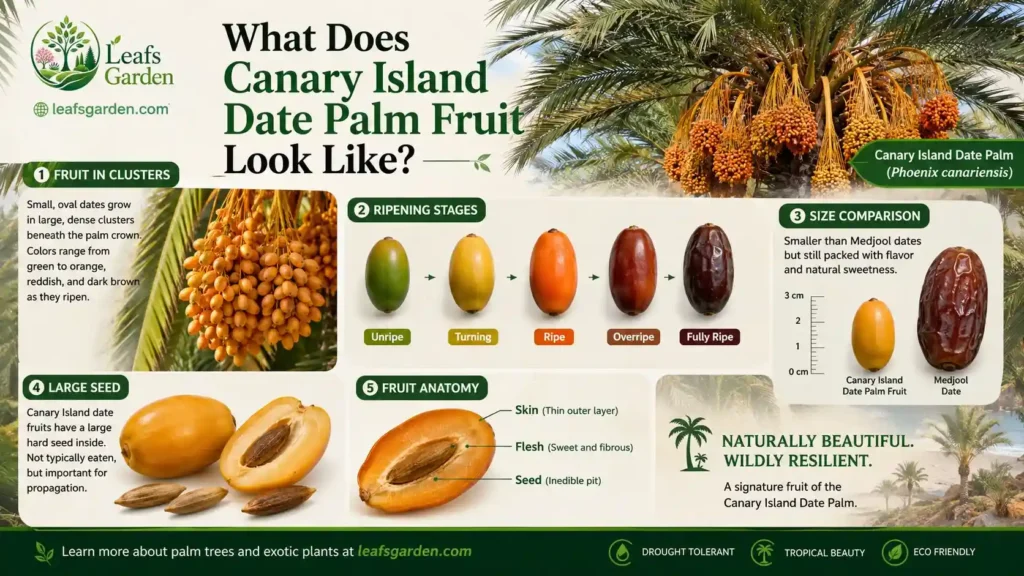
The fruit of the Canary Island date palm is small, oval-shaped, and grows in large drooping clusters attached near the upper trunk beneath the fronds.
Young fruit typically starts as:
As the dates mature, they gradually turn darker brown and develop a drier outer skin.
Compared to edible commercial dates, the fruit is much smaller and contains less flesh. The texture is also more fibrous and less sweet than popular edible date varieties.
| Feature | Canary Island Date Palm Fruit | Edible Date Fruit |
| Size | Small | Large |
| Texture | Dry and fibrous | Soft and fleshy |
| Taste | Mild and less sweet | Rich and sweet |
| Main Use | Ornamental | Food production |
Canary Island date palm fruits are technically edible, but they are not considered commercially desirable. While the fruit is not toxic, it contains a large seed and only a thin layer of dry flesh.
Most people do not eat the fruit because of its:
This makes it very different from Medjool dates and other edible date varieties grown for agriculture.
Commercial date palms such as Phoenix dactylifera are specifically cultivated for sweet edible fruit production. In contrast, Phoenix canariensis is mainly planted for ornamental landscaping value.
Canary Island date palms produce fruit through a seasonal flowering and fruiting cycle. Mature trees develop large flower clusters that later transform into hanging dates.
Fruit production generally follows this timeline:
Young palms may take many years before producing mature date clusters. Established trees in warm climates fruit more reliably and heavily.
The best fruiting conditions include:
In Australia and the southwestern USA, mature palms commonly produce ornamental fruit every year under favorable conditions.
| Feature | Canary Island Date Palm | Commercial Date Palm |
| Fruit Quality | Ornamental | Edible |
| Fruit Size | Small | Large |
| Common Use | Landscaping | Agriculture |
| Species | Phoenix canariensis | Phoenix dactylifera |
You can identify a Canary Island palm tree by its massive trunk, arching fronds, and large crown structure. Mature trees develop a bold tropical appearance that makes them one of the most recognizable ornamental palms in warm-climate landscapes.
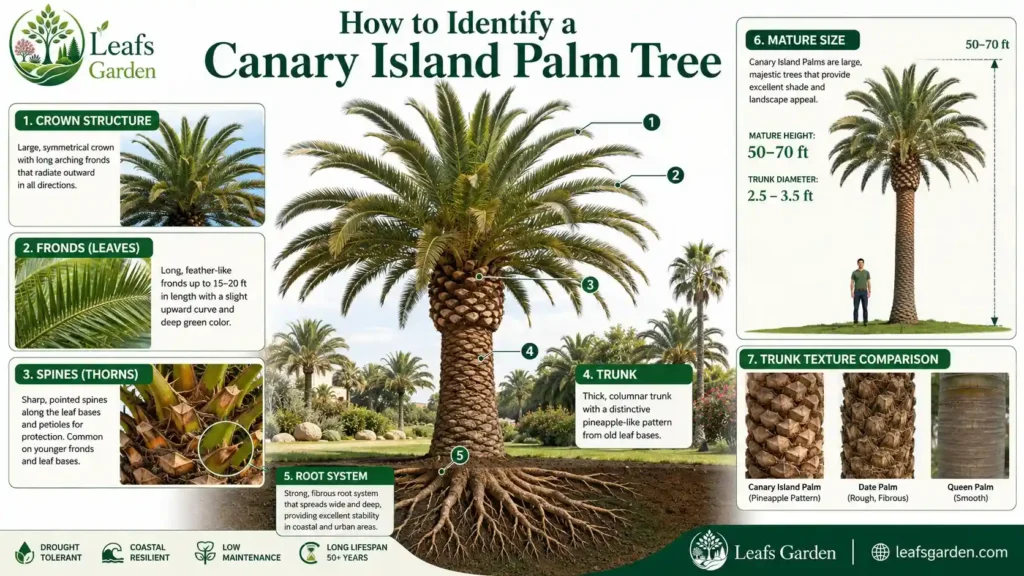
The Canary Island date palm is considered a big palm tree with a thick trunk and a wide symmetrical canopy. Mature specimens create a dramatic focal point in gardens, resorts, and streetscapes.
Most mature trees reach:
The crown is dense and full, containing hundreds of long feather-like fronds that arch outward from the center of the trunk. Older trees develop a highly structured and balanced appearance that increases their landscaping value.
Young palms grow slowly at first, but mature specimens become visually dominant feature trees over time.
One of the easiest ways to identify a Canary Island palm is by its foliage and heavily textured trunk.
Key identifying features include:
The fronds can grow several meters long and curve gracefully outward, creating a lush tropical look.
The trunk develops a patterned diamond texture from old leaf scars. This rough surface gives the tree its famous architectural appearance and helps distinguish it from many other palm species.
Sharp spines near the lower leaf stems require caution during pruning and maintenance.
The Canary Island date palm develops a deep and extensive root system that helps support its large mature size and drought tolerance.
Main growth characteristics include:
Young trees may appear slow-growing during the first several years. However, once established, they become highly durable landscape palms capable of living for decades.
Their root systems generally prefer well-draining soil and full sun exposure for healthy development.
| Palm Type | Key Difference |
| Canary Island Palm | Thick trunk, dense crown |
| Medjool Palm Tree | Grown for edible dates |
| Phoenix Palm | Broader category |
| Phoenix canary | Ornamental landscaping use |
Date palms grow best in warm sunny climates with well-draining soil and low humidity. They thrive in subtropical and Mediterranean regions where long hot summers support healthy growth and fruit production.
Date palms perform best in climates with consistent sunlight, warm temperatures, and good airflow. Most species, including the Canary Island date palm, are highly tolerant of heat and dry conditions once established.
Ideal growing conditions include:
These palms are naturally adapted to drought-prone environments and can tolerate dry periods better than many tropical plants. Mature trees become especially resilient after developing deep root systems.
Strong heat tolerance makes them suitable for:
The Canary Island date palm grows extremely well in many Australian regions with warm climates and coastal conditions.
Popular growing areas include:
In these regions, date palms Australia landscapes commonly feature mature phoenix palms along streets, resorts, parks, and luxury homes.
Gardeners in warm Queensland and coastal NSW regions who enjoy tropical feature planting may also find the Kensington Pride mango a rewarding addition, as it thrives in similarly warm subtropical conditions while adding productive tropical fruit to the landscape.
The dry summers and sunny coastal conditions of Western Australia are particularly favorable for healthy palm development. Many date trees Australia growers also prefer the species because of its drought resistance and strong ornamental value.
The phoenix palm Australia climate compatibility makes it one of the most widely planted feature palms in subtropical landscape design.
The Canary Island date palm is also widely grown across warm regions of the United States.
Best growing states include:
These regions provide the high sunlight levels and warm temperatures needed for strong frond growth and seasonal fruit development.
In desert areas like Arizona and Nevada, the palms tolerate intense summer heat very well when planted in well-draining soil. Coastal California and Florida landscapes also support healthy long-term growth.
Canary Island date palms require full sun exposure for the best growth and crown development. Shaded conditions can slow growth and reduce overall vigor.
Key growing requirements include:
| Requirement | Best Condition |
| Sunlight | Full sun |
| Soil Type | Sandy, well-draining soil |
| Watering | Deep but infrequent |
| Drainage | Excellent drainage required |
Sandy or loose soil is preferred because it prevents excess moisture around the roots. Poor drainage can increase the risk of fungal diseases and root rot.
Young palms need more regular watering during establishment. Mature palms become relatively drought tolerant and usually perform best with deep watering spaced farther apart rather than frequent shallow irrigation.
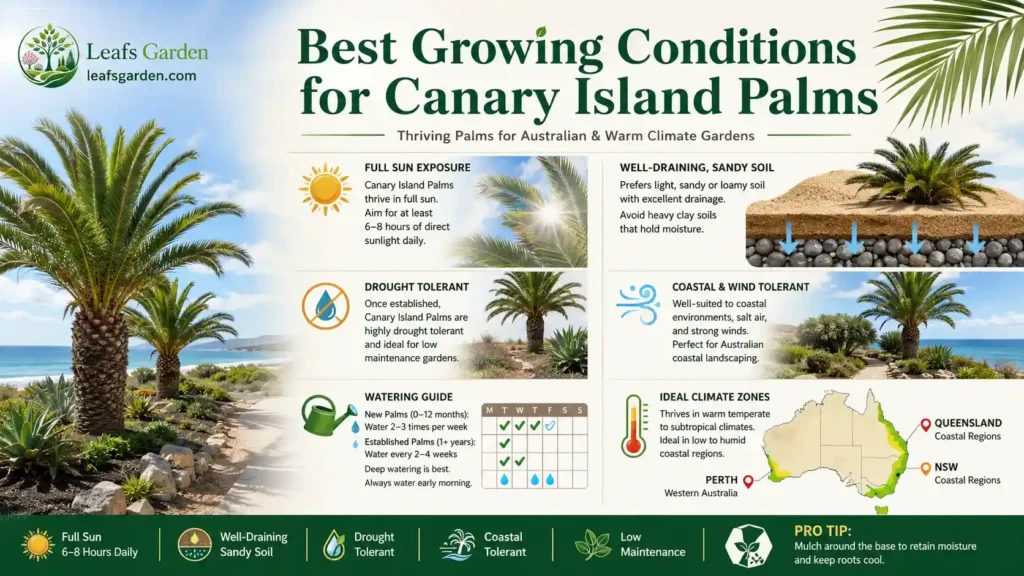
Canary Island date palms grow best from young nursery plants in warm climates with full sun exposure. Healthy growth depends on proper drainage, consistent sunlight, and enough space for the palm’s large mature size.
Proper planting helps establish a strong root system and improves long-term palm health.
Follow these planting steps:
Young palms benefit from mulch around the base, but mulch should not touch the trunk directly.
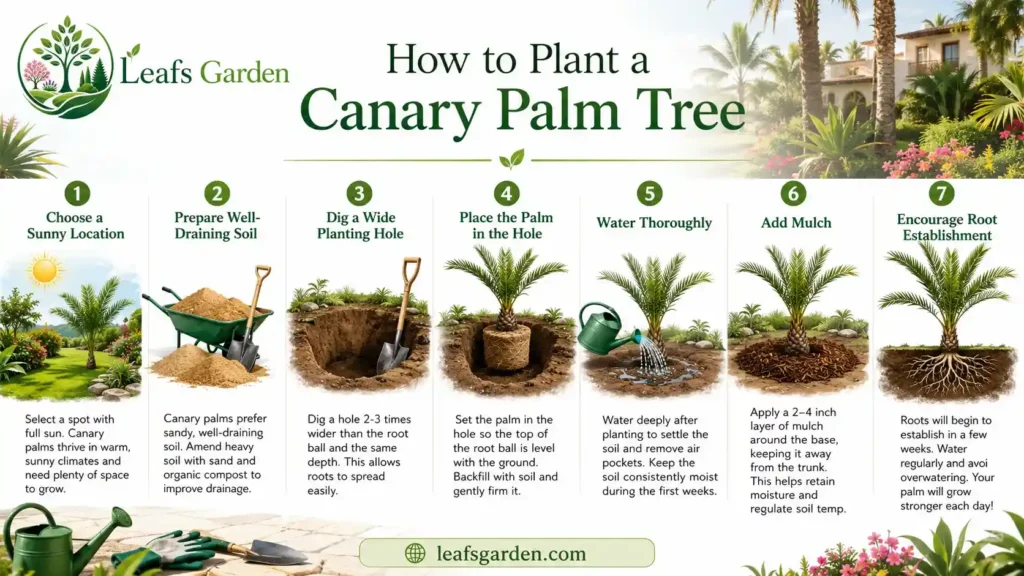
Growing date trees from seed is possible, but it requires patience and consistent warmth.
Basic seed germination process:
Seeds may take several weeks or even months to sprout depending on temperature and growing conditions.
Important factors for successful germination include:
Seed-grown palms usually develop slowly during the first years before faster trunk growth begins.
| Growing Method | Best For |
| Containers | Young palms |
| Ground Planting | Mature growth |
Container growing works best for young palms and small decorative landscapes. Pots allow easier movement and protection during colder weather.
However, mature Canary Island date palms eventually require ground planting because of their large root systems and massive canopy size.
Ground planting provides:
The Canary Island date palm has a slow-to-medium growth rate, especially during its early years.
Typical growth pattern includes:
Young palms often focus on root establishment before visible trunk growth accelerates. Mature date formation usually develops only on older established trees growing in favorable climates.
Although growth is relatively slow, the species offers exceptional long-term landscaping value. Mature palms can become dramatic feature trees that remain attractive for decades in warm-climate gardens and public landscapes.
Proper palm care includes deep watering, pruning dead fronds, fertilizing, and monitoring diseases. Consistent maintenance helps the Canary Island date palm develop a healthy crown, strong trunk structure, and long lifespan in warm climates.
Canary Island date palms require different watering levels depending on their age and stage of growth.
Young palms need more frequent watering while establishing roots. Deep watering encourages stronger root development and reduces transplant stress.
Best practices for young palms:
Established palms become much more drought tolerant and generally require less frequent irrigation.
Mature palms prefer:
Overwatering is one of the most common causes of poor palm health and can lead to root diseases and yellowing fronds.
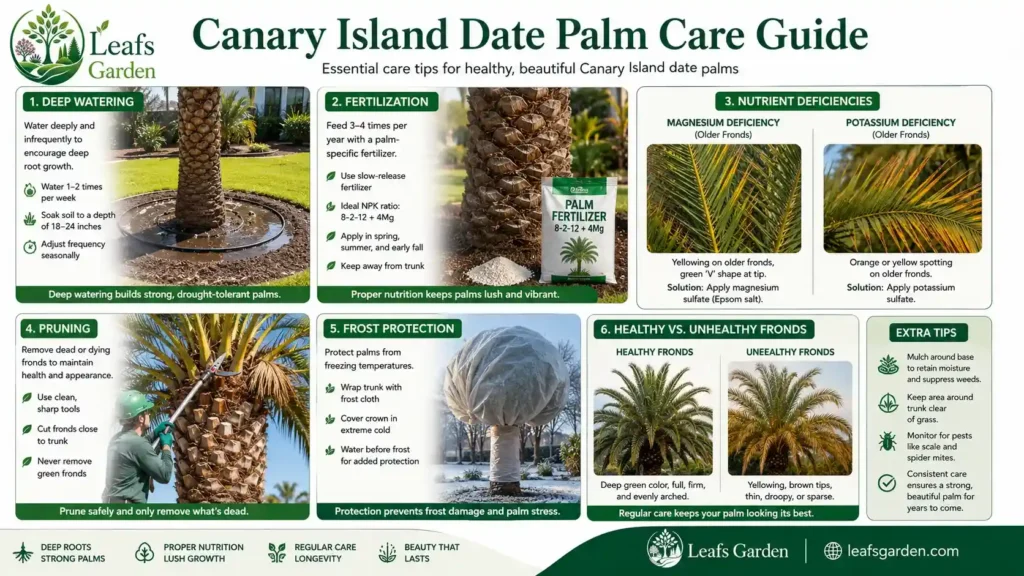
Phoenix canariensis benefits from palm-specific fertilizer designed to support strong frond growth and nutrient balance.
The most important nutrients include:
Magnesium and potassium deficiencies are especially common in palms and may cause yellowing or browning leaves.
A quality palm fertilizer should:
Regular feeding helps maintain deep green foliage and improves overall palm vigor.
Proper pruning keeps the palm healthy while maintaining its attractive appearance.
Maintenance should focus on:
Avoid over-pruning because excessive frond removal can weaken the tree and reduce nutrient storage.
Important pruning tips:
Seasonal maintenance also includes inspecting the trunk, checking drainage conditions, and clearing fallen fruit around the base.
Canary Island date palm cold hardiness is relatively strong compared to many tropical palms. Mature trees tolerate brief cold periods better than young specimens.
The palm can usually survive:
However, prolonged freezing conditions may damage fronds and slow growth.
Protection tips for colder climates include:
Young palms are more vulnerable to cold damage than mature established trees. In cooler regions, container-grown palms can sometimes be moved to protected areas during severe winter weather.
The most common problems include fungal diseases, nutrient deficiencies, pests, and trunk rot. Early identification and proper care are important for maintaining healthy fronds, strong roots, and long-term palm stability.
Several diseases affect Canary Island date palms in Australia, especially in warm humid regions or poorly drained landscapes.
Ganoderma rot is one of the most serious palm diseases. It attacks the lower trunk and root system, eventually weakening the entire tree.
Common signs include:
Unfortunately, advanced infections are usually fatal.
Fusarium wilt is a fungal disease that damages the vascular system of the palm.
Typical symptoms include:
Contaminated pruning tools can spread the disease between palms.
For detailed Fusarium wilt identification and palm disease management advice, NSW Department of Primary Industries provides reliable horticultural guidance for Australian palm growers and landscape managers.
Nutrient deficiencies are very common in Australian palm landscapes, especially in sandy soils with low mineral retention.
Deficiency symptoms may include:
Potassium and magnesium shortages are particularly common in Phoenix palms.
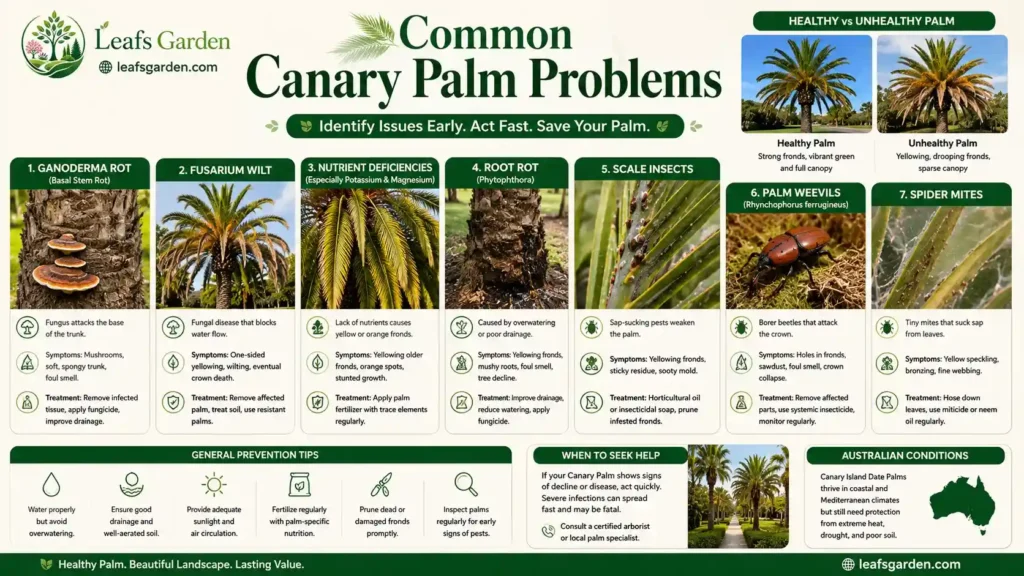
| Problem | Symptoms |
| Root Rot | Soft trunk base |
| Leaf Spot | Brown spotting |
| Nutrient Deficiency | Yellow fronds |
| Pest Infestation | Weak growth |
Early treatment improves recovery chances and helps prevent permanent damage.
Several insect pests can affect the health and appearance of Canary Island date palms.
Scale insects attach to leaves and stems while feeding on plant sap.
Signs of infestation include:
Palm weevils are among the most destructive palm pests. Their larvae tunnel into the trunk and crown area, causing severe internal damage.
Symptoms may include:
Spider mites are more common during dry conditions and may damage fronds by feeding on leaf tissue.
Common symptoms:
Routine inspections help detect pest activity before serious damage develops.
Yellow leaves and weak growth are often caused by environmental stress or improper maintenance.
The most common causes include:
Overwatered palms may develop root stress and fungal diseases, especially in compact soil. Poor drainage can also reduce oxygen around the roots and weaken the tree over time.
Nutrient shortages frequently affect older fronds first, causing yellowing, browning edges, or weak canopy growth.
To improve palm health:
Consistent maintenance is the best way to prevent long-term damage and maintain healthy growth.
Canary Island palms are popular ornamental trees for resorts, streetscapes, luxury gardens, and tropical landscapes. Their massive trunk, symmetrical crown, and dramatic tropical appearance make them one of the most widely used feature palms in warm-climate landscaping.
The Canary Island date palm performs exceptionally well in Australian outdoor landscapes because of its heat tolerance and strong architectural shape.
Popular landscape applications include:
In coastal gardens, the palm handles salty air and sunny conditions very effectively. Its tropical appearance complements Mediterranean and subtropical landscape designs commonly used across Australia.
Gardeners designing Mediterranean-style Australian landscapes may also consider pairing the Canary Island palm with the Swan Hill olive tree, a popular non-fruiting evergreen olive that shares similar drought tolerance and Mediterranean landscaping appeal.
Resort landscaping frequently uses mature palms to create luxury entrances, shaded walkways, and visually balanced outdoor spaces.
Poolside planting is also common because the palm provides strong vertical structure while maintaining a clean tropical aesthetic.
Mature date palms are often used as statement trees in high-end landscape projects. Their large crown spread and thick textured trunk naturally draw attention and create a focal point within the garden.
Feature tree benefits include:
Designers commonly position mature palms:
The balanced crown shape of the Canary Island palm works especially well in formal landscape designs where structure and visual symmetry are important.
Canary Island date palms grow best outdoors where they receive full sunlight, open airflow, and enough space for root expansion.
Outdoor growing advantages include:
Indoor growing is generally limited to young palms because mature trees become extremely large over time.
Indoor limitations may include:
For most situations, the Canary Island palm is considered an outdoor landscape tree rather than a long-term indoor plant.
Mature Canary Island date palms can be expensive due to transport, installation, and maintenance costs. Their large size, heavy trunk structure, and specialized handling requirements make them one of the more costly ornamental palms used in landscaping.
Several factors affect the total cost of a Canary Island date palm.
Palm size is usually the biggest pricing factor. Young nursery palms are far less expensive than mature landscape specimens with developed trunks.
Larger palms cost more because they require:
Transporting mature palms can be complex because of their weight and crown size.
Costs may increase due to:
Large mature palms often require professional handling to avoid trunk and root damage during transport.
Installing a mature palm usually involves heavy equipment and experienced landscapers.
Installation expenses may include:
Improper installation can reduce palm survival rates, so professional planting is strongly recommended for large specimens.
When searching for a Canary Island date palm for sale, choosing a healthy tree is extremely important for long-term success.
Buy from reputable nurseries that specialize in palms or subtropical landscape plants.
Important nursery considerations:
Locally grown palms often adapt more easily to regional climate conditions.
A healthy palm should show:
Avoid palms with severe yellowing, trunk softness, or damaged crowns.
Root health is critical when purchasing container-grown palms.
Check for:
Poor root health can slow establishment and increase transplant stress after planting.
Removing a mature date palm can be difficult because of the tree’s massive weight and thick trunk structure.
Canary Island palms develop extremely dense trunks that require specialized cutting equipment and disposal methods.
Removal challenges include:
Large trees may require cranes or sectional dismantling during removal.
Palm removal can become hazardous without proper equipment and training.
Major safety risks include:
Dead or diseased palms may become structurally unstable and require urgent professional attention.
Professional palm removal services are usually recommended for mature trees.
Professionals can safely manage:
Experienced contractors also help reduce the risk of damage to nearby structures, pools, fences, and underground utilities.
Canary Island palms are mainly ornamental, while Medjool palms are cultivated for edible fruit production. Although both belong to the Phoenix genus, they are grown for very different purposes and have distinct growth characteristics.
The Canary Island date palm is primarily used in landscaping because of its thick trunk, symmetrical crown, and tropical appearance. In contrast, the Medjool palm tree is valued for producing large sweet edible dates used in commercial agriculture.
| Feature | Canary Island Palm | Medjool Palm |
| Main Purpose | Landscaping | Fruit Production |
| Fruit Quality | Ornamental | Commercially edible |
| Trunk Thickness | Very thick | Moderate |
| Growth Style | Decorative | Agricultural |
The Canary Island palm develops a much thicker and more textured trunk, making it highly popular for luxury gardens, resorts, and streetscape planting.
Medjool palms usually focus more energy on fruit production rather than dense ornamental crown development. Their dates are soft, sweet, and widely harvested for food markets worldwide.
Additional differences include:
For homeowners and landscape designers, the choice usually depends on whether the goal is ornamental beauty or edible date production.
Canary Island date palms are generally safe but have sharp spines and heavy fruit clusters that require caution. Most safety concerns involve physical injury risks rather than toxicity problems.
The fruit of the Canary Island date palm is considered non-toxic to humans and pets. Although the small dates are not commonly eaten, they are generally regarded as safe if accidentally consumed in small amounts.
Key safety facts include:
However, the fruit is not considered highly edible because of its dry texture and large seed.
Pet owners should still monitor animals around fallen fruit and garden debris to avoid choking hazards or digestive irritation from excessive consumption.
While the tree itself is not highly toxic, several physical hazards should be considered during maintenance and landscaping.
The lower leaf stems contain extremely sharp spines that can cause painful puncture injuries.
These spines are commonly found near:
Protective gloves and long sleeves are strongly recommended during pruning or trimming.
Mature palms can produce heavy hanging fruit clusters that eventually fall from the tree.
Potential risks include:
Regular maintenance and fruit removal help reduce hazards in residential landscapes and public spaces.
Canary Island date palm fruit appears as small orange-to-brown ornamental dates that grow in large hanging clusters beneath the crown. Although technically edible, the fruit is mainly decorative and very different from commercially grown dates such as Medjool varieties.
The Phoenix canariensis thrives in warm sunny climates with well-draining soil, full sun exposure, and proper long-term maintenance. Regular watering during establishment, balanced palm fertilization, careful pruning, and disease monitoring all play important roles in maintaining healthy growth.
In Australia, the Canary Island date palm remains one of the most popular ornamental palms for coastal gardens, resorts, streetscapes, and luxury landscapes. Its thick textured trunk, massive crown, and tropical architectural form make it a highly valued feature tree in subtropical and Mediterranean-style environments.
Like many mature palms, proper care is essential for preventing common problems such as nutrient deficiencies, fungal diseases, trunk rot, and pest infestations. Routine inspections and early treatment help maintain strong fronds, healthy roots, and long-term landscape value.
With the right growing conditions and maintenance practices, the Canary Island palm can remain an impressive and durable ornamental tree for decades.
Yes, Canary Island date palm fruit is technically edible, but it is not commonly eaten. The fruit has a dry fibrous texture, a large seed, and very little flesh compared to commercial edible dates like Medjool dates.
Canary Island date palms grow slowly during their early years and may take several decades to reach full mature size. Growth speed depends on climate, sunlight, soil quality, and watering conditions.
Date palms grow best in warm sunny regions of Australia with well-draining soil. Popular growing areas include Perth, Queensland, and coastal New South Wales where subtropical and Mediterranean conditions support healthy palm growth.
The Canary Island palm is mainly grown for ornamental landscaping, while the Medjool palm is cultivated for edible fruit production. Canary palms have thicker trunks and decorative fruit, whereas Medjool palms produce large sweet edible dates.
Yellow leaves are commonly caused by nutrient deficiencies, overwatering, poor drainage, or root stress. Potassium and magnesium deficiencies are especially common in Canary Island date palms.
Yes, mature Canary Island date palms can be expensive because of transport, installation, maintenance, and specialized handling requirements. Larger palms with developed trunks usually cost significantly more than young nursery plants.
Canary Island date palms tolerate mild frost and short cold periods better than many tropical palms. However, prolonged freezing temperatures can damage fronds and slow growth, especially in young trees.
No, not all palm trees produce dates. Only certain species within the Phoenix genus develop date-like fruit, and not all of them produce edible commercial-quality dates.
Common Canary palm diseases include Ganoderma rot, Fusarium wilt, root rot, and leaf spot diseases. Nutrient deficiencies and pest infestations can also weaken overall palm health.
Yes, young Phoenix canariensis palms can grow in containers for several years. However, mature palms eventually require ground planting because of their large root systems and massive size.