Grow Better Gardens with Smarter Plant Choices
Discover helpful guides on trees, hedges, fruit plants, edible plants, and beautiful landscape greenery.

Japanese maples are deciduous ornamental trees known for colorful foliage, slow growth, graceful branching, and hundreds of unique cultivars.
The Japanese maple tree is one of the most admired ornamental trees in gardens, landscapes, and bonsai collections around the world. Known scientifically as Acer palmatum, this elegant species belongs to the Acer genus, which includes many famous maple varieties grown for decorative beauty and seasonal color.
Gardeners value Japanese acer trees because of their delicate branching structure, compact growth habit, and dramatic foliage transformation throughout the year. The deeply shaped japanese maple leaf can appear in shades of green, crimson, orange, burgundy, purple, and gold depending on the cultivar and season.
Unlike larger shade maples, many japanese trees in the Acer family remain compact, making them ideal for patios, small gardens, bonsai displays, and ornamental focal points. Their artistic canopy shape and textured maple tree leaves create visual interest in every season.
Japanese maples are especially popular among landscapers and bonsai enthusiasts because they combine slow controlled growth with refined beauty. From dwarf laceleaf forms to upright red cultivars, these trees offer remarkable diversity while maintaining the elegant appearance that defines the japanese maple species.
Japanese maples belong to the Acer genus, with Acer palmatum being the most common species.
The acer palmatum japanese maple is a deciduous ornamental tree grown mainly for its decorative foliage, elegant branching, and compact size. It belongs to the Sapindaceae family and is one of the most recognizable maple species used in landscaping and bonsai culture.
The term acer japanese maple refers to several closely related japanese maple species, but Acer palmatum remains the most widely cultivated worldwide. Other related species include Acer japonicum and Acer shirasawanum.
A japanese acer plant is valued for its artistic growth habit and colorful seasonal display. Unlike large forest maples, many acer plant varieties stay relatively compact, making them suitable for patios, containers, and small gardens.
Gardeners who want to explore how different ornamental trees compare in structure and development will find useful context in our general plant growth guides covering a wide range of garden trees and shrubs.
Japanese maples naturally originate from East Asia, especially Japan, Korea, and parts of China.
These ornamental japanese trees evolved in cool woodland environments with filtered sunlight and moist well-draining soil. Their natural habitat explains why many varieties prefer protection from harsh afternoon sun and strong dry winds.
The asian maple tree became highly respected in traditional Japanese garden design because of its graceful appearance and seasonal beauty. Over time, growers developed hundreds of cultivars with unique leaf shapes, bark colors, and growth habits.
Some varieties are also connected to the china maple tree group, since related Acer species naturally grow across several regions of Asia.
Yes, Japanese maples are deciduous trees.
If you wonder, “are japanese maples deciduous,” the answer is completely yes. These trees lose their foliage during autumn and remain dormant through winter before producing fresh leaves in spring.
Many gardeners ask, “do japanese maple trees lose their leaves?” Seasonal leaf drop is normal and healthy for all deciduous Japanese maple varieties.
If you are planning a mixed garden, understanding the key differences between deciduous vs evergreen trees can help you create a landscape with strong visual interest across all four seasons.
During autumn, the foliage changes from green, burgundy, or purple into brilliant shades of red, orange, yellow, or crimson. This dramatic seasonal transition is one of the main reasons Japanese maples are prized in ornamental landscapes.
Japanese maple leaves are famous for their elegant shape, fine texture, and dramatic seasonal color changes.
Most japanese maple leaf forms feature deeply lobed foliage with pointed segments that create a delicate appearance. Some varieties develop broad star-shaped leaves, while laceleaf cultivars produce finely dissected foliage with a soft cascading texture.
The beauty of maple leaf tree leaves changes throughout the year. Spring growth may appear bright red, pink, lime green, or bronze before shifting into deeper summer tones and vibrant autumn colors.
The leaves on a maple tree can vary greatly between cultivars. Some acer palmatum leaf types remain small and compact for bonsai use, while others develop larger ornamental foliage for landscape focal points.
This wide diversity in shape, texture, and color is one of the defining characteristics that makes Japanese maples unique among ornamental trees.
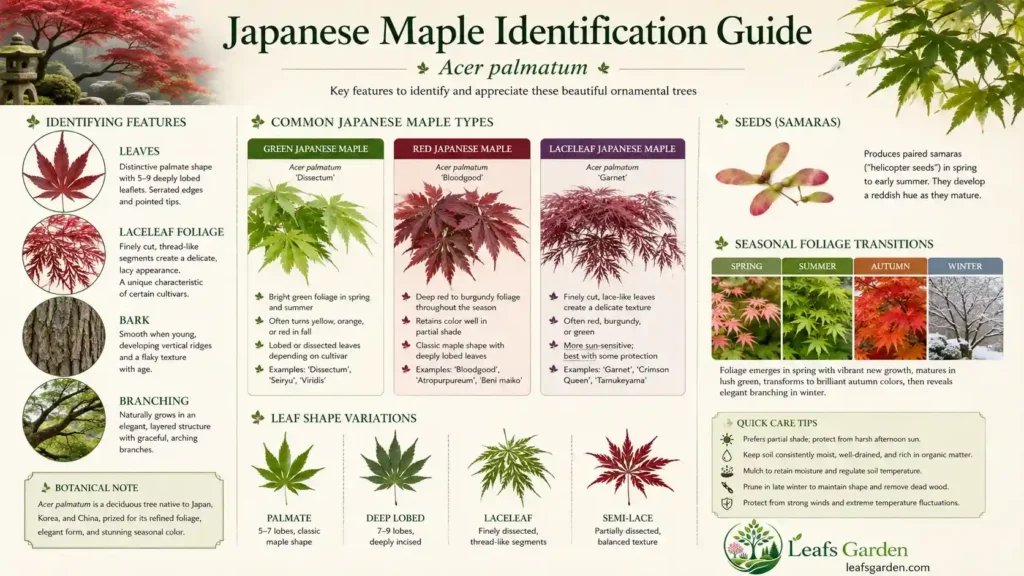
Japanese maples are long-living ornamental trees that can survive for more than a century under proper growing conditions.
The average japanese maple lifespan often ranges from 60 to 100 years, while mature healthy specimens in ideal environments may live even longer. Climate, soil quality, watering habits, and protection from disease all influence longevity.
Many gardeners ask, “how long do japanese maple trees live?” Slow growth actually helps extend the life expectancy of maple trees because the branches and root systems develop gradually and remain structurally balanced over time.
Older Japanese maples often become more valuable and visually striking as their trunks thicken and branching patterns mature naturally.
Many Japanese maple cultivars are naturally compact and remain small for decades.
A dwarf japanese maple may grow only a few feet tall even after many years, making it ideal for patios, containers, courtyards, and bonsai displays. These compact cultivars are popular in modern landscaping because they fit easily into limited garden spaces.
A miniature japanese maple tree usually develops dense branching and smaller leaves compared to larger upright varieties. Some weeping laceleaf forms stay low and spreading, while others maintain rounded compact canopies.
A small japanese maple can become an elegant focal point in rock gardens, entryways, or container arrangements. Certain tiny japanese maple cultivars are specifically bred for bonsai and miniature landscape design.
Japanese maples are available in an enormous range of shapes, colors, and growth habits.
Experts estimate there are more than 1,000 cultivated japanese maple varieties worldwide. These cultivars differ in leaf shape, bark color, canopy form, mature size, and seasonal foliage changes.
Different japanese maples may feature upright growth, cascading branches, laceleaf foliage, coral bark, dwarf habits, or dramatic red leaves. Some varieties are bred specifically for cold climates, while others perform better in warmer regions.
The wide diversity of types japanese maple trees makes them one of the most collectible ornamental tree groups in horticulture.
Japanese maples display multiple seasonal color transitions throughout the year.
In spring, fresh foliage often emerges in bright shades of pink, red, lime green, bronze, or orange. This early spring flush creates one of the most vibrant displays in ornamental gardening.
During summer, many varieties deepen into darker green, burgundy, or purple tones. A japan red maple or japanese red maple cultivar may maintain rich crimson foliage through much of the growing season.
Autumn produces the most dramatic transformation. A green japanese maple can suddenly turn fiery scarlet, orange, or golden yellow before leaf drop.
Some cultivars even provide winter interest through colorful bark, textured branching, or bright young stems after the leaves have fallen.
Certain Japanese maples are admired not only for foliage but also for brightly colored bark.
One of the most famous examples is Sango Kaku, also known as the coral bark maple. Its young branches develop vivid coral-red coloring during winter, creating strong visual contrast against snow or dormant landscapes.
The bark japanese maple feature becomes especially valuable in colder months when leaves are absent. This allows the tree’s branching structure and stem color to become the main ornamental attraction.
The cultivar acer palmatum senkaki japanese maple is particularly famous for its glowing coral bark and elegant upright shape.
Japanese maples are among the most respected deciduous bonsai species.
Their slow controlled growth, delicate branching, and naturally small leaves make them highly suitable for bonsai training. Fine twig development helps artists create mature miniature tree forms with realistic proportions.
A red japanese maple bonsai becomes especially attractive during autumn when the foliage develops vivid seasonal color. The changing leaf tones add strong visual impact to bonsai displays.
Many bonsai growers prefer the japanese miniature maple tree because it responds well to pruning, root trimming, and branch shaping techniques.
Japanese maples are not completely deer resistant.
Many gardeners ask, “do deer eat japanese maples?” Deer may browse tender young shoots, soft leaves, and low branches, especially during food shortages.
Although mature trees experience less damage, young saplings remain more vulnerable. Deer eating japanese maple foliage can slow growth and damage ornamental shape during early development.
People also commonly ask, “are japanese maple trees deer resistant?” Japanese maples are considered moderately resistant, but they are not fully protected from browsing animals.
Protective fencing, netting, and deer repellents are often useful for newly planted trees in high-deer areas.
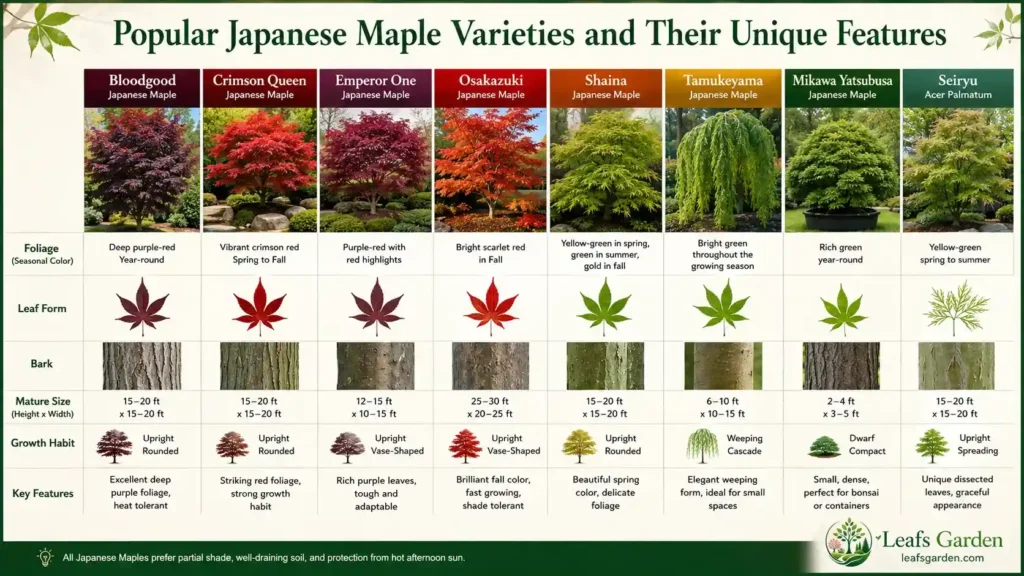
| Variety | Leaf Color | Mature Size | Growth Habit | Best Feature |
| Bloodgood | Deep red to burgundy | 15–20 feet | Upright | Rich red foliage |
| Crimson Queen | Red-purple | 8–10 feet | Weeping laceleaf | Cascading form |
| Emperor One | Bright red | 15–20 feet | Upright | Strong heat tolerance |
| Osakazuki | Green turning scarlet | 15–25 feet | Upright spreading | Brilliant fall color |
| Shaina | Deep crimson | 4–6 feet | Compact dense | Small garden suitability |
| Tamukeyama | Purple-red | 6–10 feet | Weeping | Elegant dissected foliage |
| Mikawa Yatsubusa | Green layered foliage | 4–8 feet | Dense compact | Unique layered structure |
| Seiryu | Green turning red-orange | 10–15 feet | Upright dissected | Upright laceleaf form |
The bloodgood japanese maple is one of the most popular ornamental maple cultivars in the world.
It is famous for its deep burgundy-red foliage, strong branching structure, and reliable seasonal color retention. Unlike some red cultivars that fade during summer, Bloodgood often maintains rich dark foliage throughout the growing season.
The bloodgood japanese maple growth rate is considered moderate. Most trees grow around 1 to 2 feet per year under favorable conditions.
Some common bloodgood japanese maple problems include leaf scorch, root rot from poor drainage, and stress caused by extreme afternoon heat. Proper watering and partial sun protection help reduce these issues.
The japanese maple laceleaf crimson queen is a graceful weeping variety known for finely dissected foliage and cascading branches.
Its lace-like leaves emerge deep red in spring and usually maintain rich color through summer before turning bright crimson in autumn. The spreading canopy creates a soft layered appearance often used near ponds, pathways, and ornamental garden beds.
The acer palmatum garnet japanese maple is another similar laceleaf cultivar often compared with Crimson Queen because both belong to the lace leaf maple category.
These weeping forms are highly valued for texture, movement, and compact ornamental structure.
The emperor japanese maple is admired for its vibrant red foliage and strong adaptability.
Also called emperor one japanese maple, this cultivar leafs out slightly later in spring, helping protect new growth from late frost damage. Its foliage emerges bright red and holds color well during warm weather.
The emperor japanese maple growth rate is moderate, with mature trees eventually reaching medium ornamental height while maintaining balanced branching.
This variety is especially popular in landscapes requiring strong color with improved heat tolerance.
The acer palmatum osakazuki is famous for producing some of the brightest red autumn foliage among all Japanese maples.
During spring and summer, the leaves remain green, but fall transformation becomes exceptionally dramatic with fiery scarlet tones covering the entire canopy.
The osakazuki maple tree grows into a broad upright ornamental specimen with elegant branching and reliable seasonal performance.
Because of its outstanding autumn display, it is often considered one of the best Japanese maples for fall landscape color.
The acer palmatum shaina is a compact ornamental cultivar ideal for smaller spaces.
Its dense branching and deep crimson foliage make it attractive for patios, containers, entryways, and miniature landscapes. Unlike taller upright varieties, this tree stays naturally compact with minimal pruning.
The shaina japanese maple size usually remains around 4 to 6 feet tall and wide, making it an excellent option for urban gardens and decorative focal points.
Its slow growth and dense structure also make it suitable for bonsai development.
The acer tamukeyama tree is one of the most recognized weeping laceleaf Japanese maples.
This weeping japanese maple develops finely dissected burgundy foliage and cascading branches that create a dramatic waterfall-like form. The layered canopy adds texture and softness to ornamental landscapes.
Tamukeyama is especially valued because its foliage color remains stable throughout summer better than many other laceleaf cultivars.
Its elegant structure works beautifully near rocks, water features, and Japanese-inspired garden designs.
The acer palmatum mikawa yatsubusa is highly admired for its unusual layered foliage arrangement.
Its leaves grow very closely together along short branches, creating a dense stacked appearance unlike most Japanese maple varieties. This compact structure gives the tree a sculptural ornamental look even at a young age.
The slow growth habit and naturally compact form make Mikawa Yatsubusa popular for bonsai, containers, and small specialty gardens.
Collectors often consider it one of the most distinctive dwarf Japanese maple cultivars available.
The seiryu acer palmatum is unique because it combines dissected foliage with an upright growth habit.
Most acer dissectum varieties naturally grow in weeping forms, but Seiryu develops vertical branching while still producing finely cut laceleaf foliage. This unusual characteristic makes it highly desirable in ornamental landscapes.
The leaves emerge green during spring and summer before turning vibrant red and orange in autumn.
Seiryu works well as a focal point tree because it offers both elegant texture and upright architectural structure.
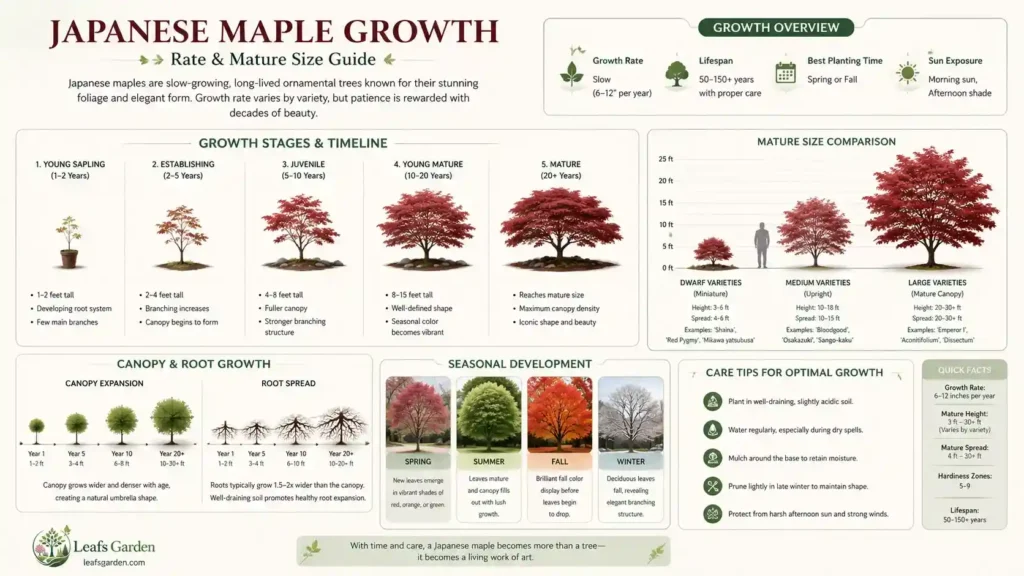
Most Japanese maples grow slowly to moderately.
If you wonder, “how fast does a japanese maple grow,” the answer depends on the cultivar, climate, soil quality, and growing conditions. Most varieties grow between 1 and 2 feet per year, while dwarf forms may grow much more slowly.
The japanese maple growth rate is generally considered controlled and manageable compared to larger shade trees.“Understanding how deciduous trees develop through seasons helps explain why this controlled growth pattern is a natural characteristic shared across the entire deciduous tree family.
This slow development helps the tree maintain elegant branching and compact ornamental structure.
The growth rate of japanese maple cultivars can vary significantly. Upright varieties usually grow faster than dwarf laceleaf forms, while container-grown trees may develop more slowly because of limited root space.
Proper watering, healthy soil, and partial sun exposure can improve overall growth without causing stress to the tree.
Japanese maple size varies greatly depending on the cultivar.
The average japanese maple mature height ranges from 6 to 25 feet tall. Smaller dwarf varieties may remain under 5 feet, while large upright cultivars can eventually become medium-sized ornamental trees.
Compact laceleaf maples are often used in containers and small gardens because they stay low and spreading. Upright forms like Bloodgood or Emperor One may grow much taller over time.
The japanese maple max height for certain mature upright cultivars may exceed 25 feet under excellent growing conditions. However, most landscape varieties remain smaller than traditional shade maples.
The tallest japanese maple tree specimens are usually older upright cultivars grown in ideal climates with decades of uninterrupted development.
Japanese maples require patience because they develop gradually over many years.
People often ask, “how long does japanese maple take to grow?” Most ornamental varieties need around 10 to 20 years to reach mature landscape size.
The answer to “how long for a japanese maple to mature” depends heavily on the cultivar. Dwarf forms mature earlier because of their naturally compact structure, while larger upright trees continue developing for decades.
Although slow growth may seem limiting, it actually helps Japanese maples maintain balanced branching, refined shape, and long-term ornamental beauty.
Many mature specimens become more visually impressive with age as trunks thicken and branch patterns become more artistic.
Japanese maples range from tiny dwarf cultivars to impressive mature ornamental trees.
The largest japanese maple tree varieties are usually upright forms capable of reaching 20 to 30 feet tall with broad canopies and thick branching structures. These larger cultivars often serve as focal points in landscapes and Japanese-style gardens.
Some growers refer to mature upright cultivars as big japanese maple trees because of their dramatic seasonal color and architectural presence.
At the opposite end, dwarf cultivars may stay extremely compact for decades. Certain miniature forms are even smaller than what many people consider the shortest maple tree types used in ornamental gardening.
These tiny Japanese maples are especially popular for bonsai, rock gardens, patios, and decorative container planting where limited space requires controlled growth.
| Requirement | Ideal Condition |
| Soil | Moist, well-draining, slightly acidic soil |
| Sunlight | Morning sun with afternoon shade in hot climates |
| Watering | Consistent moisture without waterlogging |
| Humidity | Moderate humidity with good airflow |
| Container Growing | Large pot with drainage holes |
| Fertilizer | Mild slow-release fertilizer in spring |
| Pruning | Light pruning during dormancy |
| Winter Care | Mulch protection around roots |
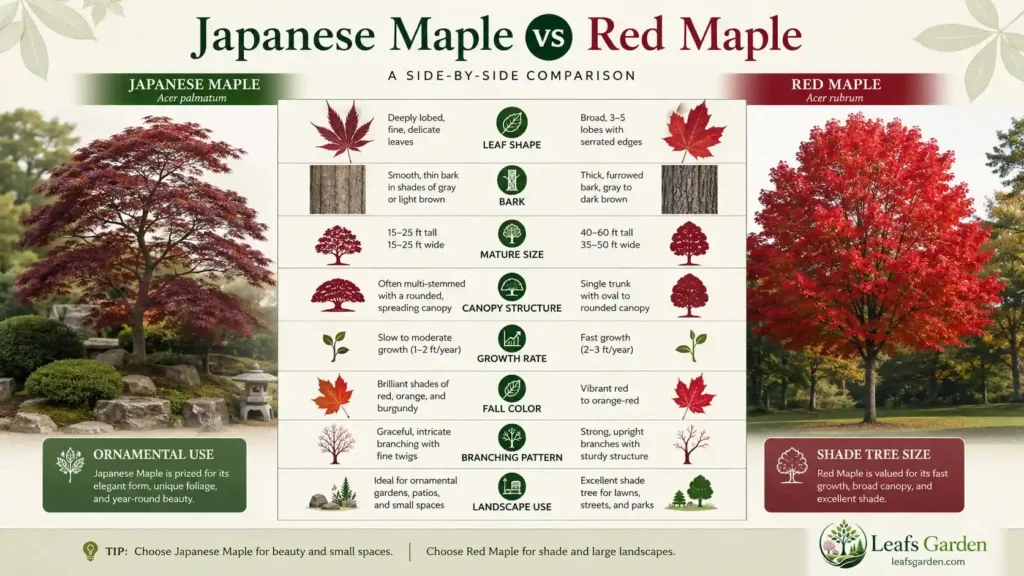
Japanese maples grow best in moist, well-draining soil rich in organic matter.
These trees have sensitive root systems that dislike compacted or waterlogged conditions. Poor drainage can quickly lead to root stress, fungal disease, and root rot.
Loamy soil with slightly acidic pH is ideal because it holds enough moisture while still allowing airflow around the roots. Heavy clay soil often requires compost, bark, or organic amendments to improve drainage.
Because Japanese maples develop shallow roots, mulching around the base helps maintain moisture stability and protects roots from temperature extremes.
Japanese maples can tolerate sun, but many varieties prefer partial shade.
People commonly ask, “do japanese maples like full sun?” In cooler climates, some cultivars handle full sun well, especially red-leaved upright varieties. However, in hot regions, excessive afternoon heat may damage delicate foliage.
Strong direct sunlight can cause leaf scorch, browning edges, and moisture stress. Laceleaf and dwarf varieties are usually more sensitive to heat exposure.
In warmer climates, morning sun combined with afternoon shade provides the best balance between healthy growth and foliage protection.
To confirm which cultivars are best suited for your region, checking the USDA Plant Hardiness Zone Map will help you match the right variety to your local climate zone.
Japanese maples need steady moisture but dislike constantly wet soil.
Proper caring for japanese maple trees includes deep watering during dry periods while avoiding overwatering. Young trees require more frequent moisture until roots become established.
Good japanese maple care focuses on maintaining evenly moist soil rather than allowing repeated drought stress. Dry soil can damage foliage, while saturated roots may trigger disease problems.
The overall care of a japanese maple also includes humidity management. Moderate humidity and good air circulation help reduce leaf scorch and fungal issues during warm weather.
Mulching helps preserve moisture while stabilizing soil temperature around the root zone.
Japanese maples grow very well in containers when given proper care.
A japanese maple in a container is ideal for patios, balconies, entryways, and compact gardens. Dwarf and slow-growing cultivars perform especially well in pots because their roots remain manageable for long periods.
A japanese maple tree pot should always include excellent drainage holes to prevent water accumulation. Containers that are too small may restrict roots and slow healthy growth.
Many gardeners successfully grow a japanese acer in a pot for decorative landscaping or bonsai culture. Ceramic and wooden containers are commonly used because they help stabilize soil temperature.
A large japanese maple planter allows better root development, moisture retention, and long-term tree health compared to shallow undersized containers.
Japanese maples can be grown from seed, although the process requires patience.
A japanese maple tree from seed usually begins with collecting mature samaras, often called helicopter seeds, during autumn. The seeds normally require cold stratification before germination.
Once planted in moist soil, the seed gradually develops into a japanese maple sprout with small delicate leaves. Young seedlings prefer indirect light and stable moisture during early growth stages.
A baby japanese maple grows slowly during its first years while establishing roots and branch structure. Seed-grown trees may also vary in color and form compared to the parent cultivar.
Many specialty cultivars are grafted instead of seed-grown because seedlings do not always produce identical characteristics.
Japanese maples benefit from light seasonal maintenance rather than aggressive care.
Slow-release fertilizer applied during early spring usually provides enough nutrients for healthy growth. Excess fertilizer can force weak growth and increase leaf burn risk.
Mulching is highly beneficial because it protects shallow roots, improves moisture retention, and stabilizes soil temperature throughout the year.
Pruning should remain light and focused on removing dead, crossing, or overcrowded branches. Heavy pruning may stress the tree and reduce its natural ornamental shape.
Winter protection becomes especially important for young trees and container-grown maples. Mulch, wind protection, and insulated containers help reduce root damage during freezing temperatures.
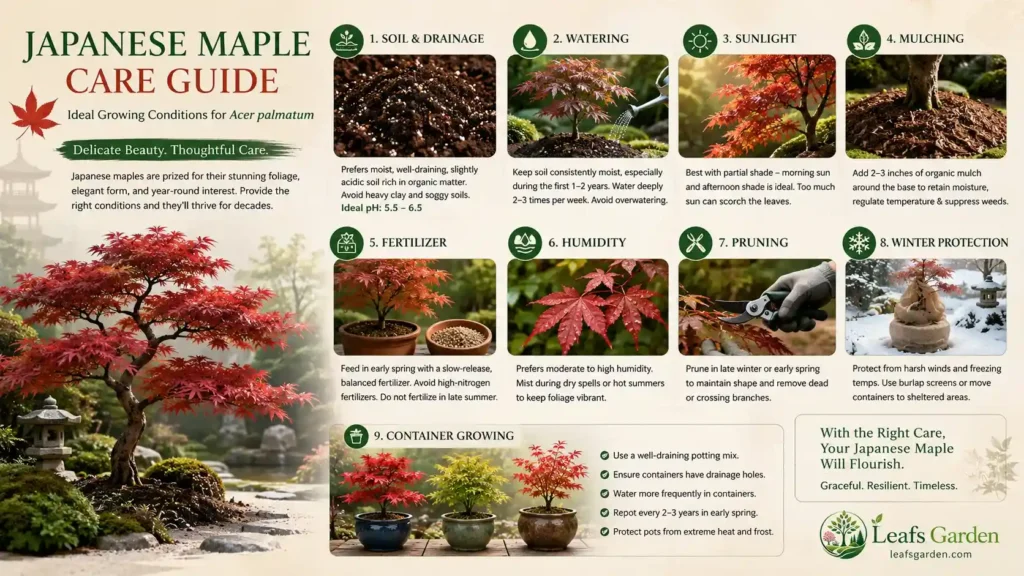
Japanese maple leaves usually turn brown because of environmental stress.
The most common cause of japanese maple leaves turning brown is sun scorch. Strong afternoon sunlight combined with heat and dry conditions can burn delicate foliage, especially on laceleaf and dwarf cultivars.
Underwatering is another major issue. Japanese maples have shallow root systems that dry out faster during hot weather. Prolonged dryness can cause crispy leaf edges and premature leaf drop.
Wind damage also contributes to browning foliage. Strong dry winds remove moisture from delicate leaves faster than roots can replace it, leading to dehydration stress.
Common solutions include:
Healthy watering habits and proper placement usually prevent most foliage browning problems.
Japanese maple holes in leaves are commonly caused by pests or fungal damage.
Chewing insects such as caterpillars, beetles, and leaf-feeding pests may create irregular holes throughout the foliage. Minor damage is often cosmetic, but severe infestations can weaken young trees.
Fungal diseases may also damage leaf tissue, causing dead spots that later fall away and leave holes behind. Poor airflow and excessive moisture increase fungal risk.
To reduce damage:
Healthy trees usually recover well once the underlying issue is corrected.
Bloodgood Japanese maples are durable, but they can still develop several common stress-related problems.
One major issue is root rot caused by overly wet or poorly drained soil. Saturated roots reduce oxygen availability and may eventually kill the tree if conditions continue.
Leaf scorch is another frequent problem, especially in hot climates with intense afternoon sun. Browning leaf edges and curling foliage often appear during summer heat stress.
Poor drainage can also weaken the overall health of the tree by stressing the shallow root system and encouraging fungal disease development.
Most bloodgood japanese maple problems improve with:
Healthy placement and balanced soil moisture are the keys to long-term Bloodgood maple health.
Japanese maples naturally grow slowly, but excessive slow growth may signal stress.
Soil stress is a common cause. Compacted soil, poor drainage, or nutrient imbalance can reduce root performance and limit healthy development.
Root restriction also slows growth, especially in older container-grown trees where roots become crowded inside small pots.
Climate conditions strongly influence growth rates as well. Extreme heat, drought, strong wind, or late spring frost may temporarily reduce development during the growing season.
To improve growth:
Slow steady development is normal for Japanese maples, but healthy conditions help maintain strong long-term growth and foliage quality.
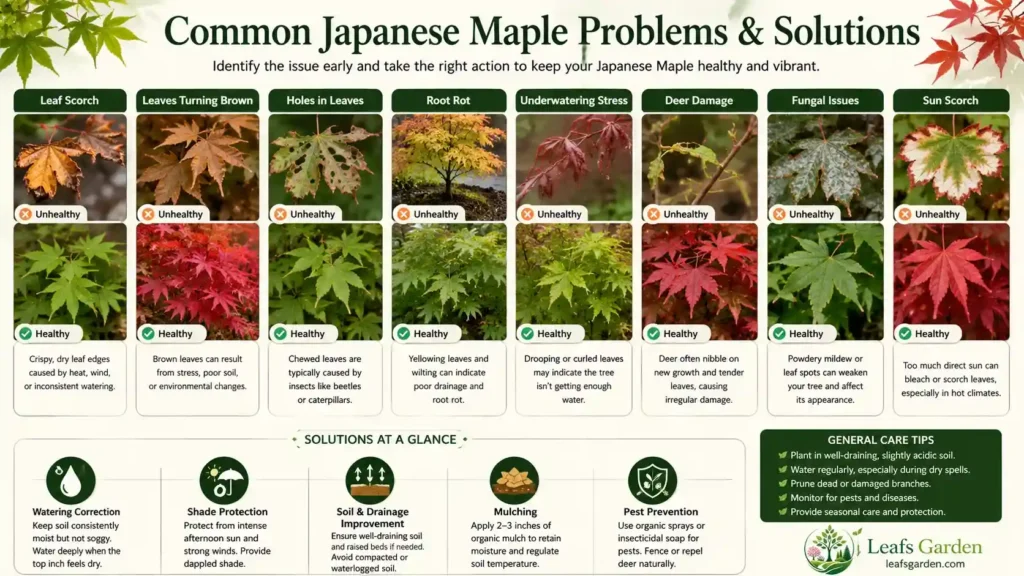
Yes, Japanese maples produce small spring flowers.
Many gardeners ask, “do japanese maples flower?” or “does japanese maple flower?” The answer is yes, although the blooms are usually small and less noticeable than the foliage.
A japanese maple flower typically appears in clusters during spring shortly after the leaves emerge. The flowers are often red, purple, or greenish depending on the cultivar.
While the flowers are not the main ornamental feature, they play an important role in seed production and seasonal development. Mature healthy trees usually flower more reliably than very young specimens.
Japanese maples usually bloom during spring.
The typical japanese maple bloom time occurs between early and late spring depending on climate, tree age, and cultivar type. Warmer regions often experience earlier blooming periods than cooler northern climates.
People commonly ask, “when do japanese maple trees bloom?” Most varieties flower shortly after new leaves begin developing during spring growth.
Japanese maple blooming periods are generally brief, but they add subtle seasonal interest before seed formation begins later in the growing season.
Healthy trees growing in stable conditions usually produce more consistent flowering each year.
Japanese maple fruit develops in the form of winged seeds called samaras.
This maple tree fruit is commonly known as “helicopter seeds” because the wings spin through the air when falling from the tree. The lightweight structure helps distribute seeds naturally by wind.
Young samaras often appear green, red, or pink before drying and maturing later in the season.
Japanese maple fruit usually develops after spring flowering and becomes fully mature by late summer or autumn depending on the cultivar and climate conditions.
Japanese maple trees symbolize balance, peace, beauty, and transformation.
The japanese maple meaning is strongly connected to seasonal change because the tree transforms dramatically throughout the year. Its changing foliage colors often represent personal growth, renewal, and the passage of time.
Many people associate maple tree meaning with calmness and natural harmony. The soft branching structure and flowing canopy create a peaceful visual effect that fits meditation spaces and quiet gardens.
Japanese maple symbolism also reflects elegance and balance in traditional Japanese culture. The tree’s refined appearance and graceful seasonal transitions make it a symbol of beauty, patience, and appreciation for nature.
In many landscapes, Japanese maples are planted to create a relaxing atmosphere with artistic natural structure.
Japanese maples are one of the most important trees used in traditional Japanese garden design.
A japanese maple garden focuses on balance, simplicity, seasonal beauty, and natural flow. Japanese maples help create this atmosphere because of their elegant branch patterns, soft movement, and changing foliage colors.
In Zen-inspired landscapes, the tree is often placed near water features, stone pathways, lanterns, or moss gardens to create peaceful visual harmony.
A japanese garden maple is valued not only for its appearance but also for the emotional atmosphere it creates. The tree encourages quiet observation and appreciation of seasonal transitions, which are central ideas in Japanese garden aesthetics.
The dramatic autumn foliage is especially admired because it highlights the temporary and changing nature of life.
Japanese maples are highly respected in bonsai culture because of their graceful structure and seasonal beauty.
Their fine branching, delicate foliage, and slow growth allow bonsai artists to shape realistic miniature trees with refined proportions. The tree responds well to pruning and careful branch training, making it ideal for advanced artistic styling.
Seasonal transformation also plays a major role in bonsai symbolism. Fresh spring growth, lush summer foliage, brilliant autumn colors, and bare winter branches each represent different stages of natural life cycles.
Japanese maple bonsai trees are often designed to express age, balance, movement, and harmony with nature. Their elegant appearance makes them one of the most admired deciduous bonsai species in traditional bonsai art.
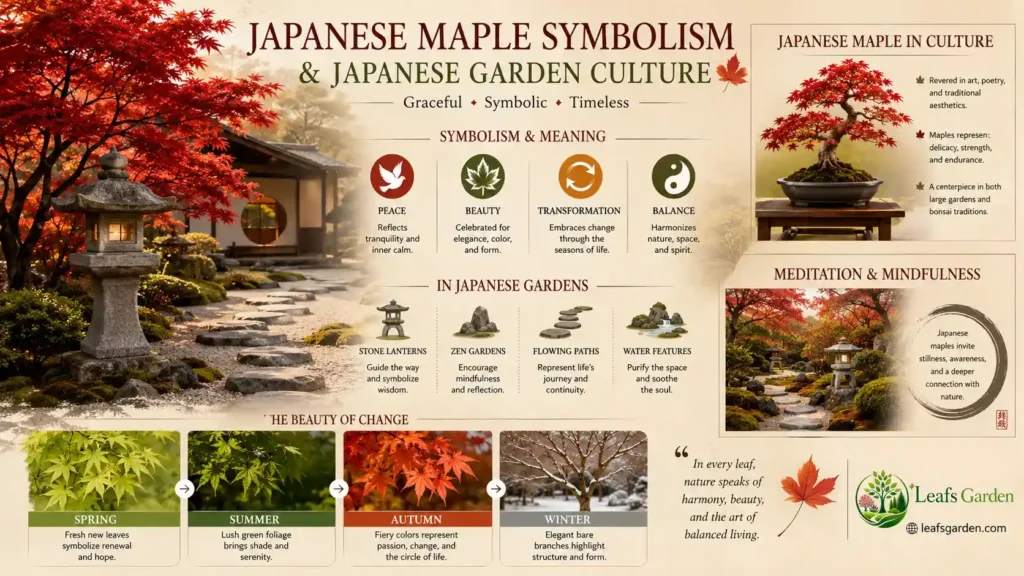
| Feature | Japanese Maple | Red Maple |
| Scientific Name | Acer palmatum | Acer rubrum |
| Mature Height | 4–25 feet | 40–70 feet |
| Growth Rate | Slow to moderate | Fast |
| Leaf Shape | Deeply lobed, delicate | Broad, traditional maple shape |
| Fall Color | Red, orange, yellow, purple | Bright red and orange |
| Texture | Fine and ornamental | Larger and coarser |
| Landscape Use | Decorative focal points, bonsai, small gardens | Shade trees, street trees, large landscapes |
| Sun Tolerance | Partial shade preferred in heat | High sun tolerance |
| Best Feature | Artistic foliage and compact form | Rapid shade growth |
The biggest difference between red maple vs japanese maple trees is overall size and growth speed.
Japanese maples are compact ornamental trees that usually grow between 4 and 25 feet tall depending on the cultivar. Many dwarf varieties remain much smaller and are suitable for patios, bonsai, and decorative gardens.
Red maples are much larger landscape trees commonly planted for shade and street use. Mature trees may exceed 50 feet tall with broad spreading canopies.
People often ask, “how fast do red maples grow?” Red maples are considered fast-growing trees and may grow 2 feet or more per year under favorable conditions.
By comparison, Japanese maples grow slowly to moderately, developing more refined branching and controlled ornamental structure over time.
Japanese maple leaves are more delicate and decorative than red maple leaves.
Japanese maple foliage usually features deeply lobed leaf structures with fine textures and artistic shapes. Laceleaf cultivars create especially soft and intricate foliage patterns.
Red maple leaves are broader, larger, and more traditional in appearance with less detailed texture.
Fall color also differs between the two species. Japanese maples may display layered shades of crimson, burgundy, orange, yellow, and purple depending on the cultivar.
Red maples are most famous for strong bright red autumn color across large canopies.
Texture differences are also important in landscaping. Japanese maples provide refined ornamental texture, while red maples create bold shade-tree structure.
Japanese maples and red maples serve very different landscape purposes.
Japanese maples are mainly used as ornamental focal points in patios, Zen gardens, entryways, bonsai displays, and compact landscapes. Their elegant shape and colorful foliage make them highly decorative.
Red maples are commonly planted as large shade trees in parks, streets, and spacious residential landscapes.
Some common maple tree pros and cons include:
Bloodgood japanese maple pros and cons often focus on its dramatic red foliage, manageable size, and ornamental value. However, it may experience leaf scorch in hot climates and generally grows slowly.
American red maple tree pros and cons include rapid growth, strong shade production, and adaptability. On the downside, large roots and canopy size may become difficult in smaller landscapes.
Choosing between these maple species depends mostly on available space, climate conditions, and landscape goals.
Japanese maples work exceptionally well as landscape focal points because of their elegant shape and dramatic seasonal color.
Many landscaping japanese maple designs place the tree near entrances, patios, water features, or garden pathways where the branching structure and foliage can stand out clearly.
Upright red cultivars often create strong visual contrast against green lawns or stone landscaping. Weeping laceleaf varieties add softness and movement to garden spaces with cascading foliage.
Japanese maples also pair beautifully with:
Because the tree naturally develops an artistic canopy, even a single specimen can transform the appearance of an entire landscape area.
Japanese maples can create elegant decorative borders in ornamental landscapes.
A japanese maple hedge usually works best with compact or upright cultivars planted at consistent spacing. These hedges are more decorative than functional and are mainly used for texture, color layering, and seasonal beauty.
Dwarf varieties can form low borders around patios, walkways, or garden beds. Upright cultivars may create colorful screening effects without becoming overly dense or heavy.
Layering Japanese maples with evergreen shrubs, ornamental grasses, and stone edging often creates a balanced landscape design with year-round visual interest.
Compact Japanese maple varieties are excellent choices for limited spaces.
A dwarf japanese maple provides colorful foliage and elegant branching without overwhelming a small landscape. These compact trees grow slowly and remain manageable for many years.
Some of the best options for small gardens include:
A small japanese maple tree works well in:
Their controlled growth habit allows homeowners to enjoy ornamental beauty even in urban or compact landscapes.
Some Japanese maples can grow successfully in containers on patios and protected outdoor spaces.
A japanese maple indoor plant is more difficult to maintain long term because these trees naturally require seasonal dormancy and outdoor environmental cycles. However, temporary indoor display during cooler periods is sometimes possible with proper lighting and airflow.
Most gardeners achieve better results growing a japanese maple tree potted on patios, balconies, or outdoor seating areas. Container planting allows better control over soil, drainage, and placement.
For healthy patio growth:
Potted Japanese maples create elegant ornamental displays while remaining suitable for smaller living spaces.
| Pros | Cons |
| Stunning seasonal foliage | Sensitive leaves can scorch easily |
| Compact ornamental growth | Slow growth rate |
| Suitable for small gardens | Requires protection in extreme heat |
| Excellent bonsai potential | Deer may damage young trees |
| Beautiful branching structure | Shallow roots can dry quickly |
| Works well in containers | Some varieties need winter protection |
Japanese maples are highly valued for their ornamental beauty and elegant structure.
One of their biggest advantages is the stunning foliage display. Leaves may appear red, purple, orange, green, yellow, or bronze depending on the cultivar and season. Autumn color transformation is especially dramatic.
Compact growth is another major benefit. Many cultivars remain small enough for patios, courtyards, containers, and urban landscapes without becoming oversized shade trees.
Japanese maples also offer good shade tolerance compared to many ornamental species. Most varieties grow well with filtered sunlight or partial shade, especially in warmer climates.
Their refined branching and slow controlled development make them ideal for bonsai cultivation. Dwarf and laceleaf forms are especially popular among bonsai growers because they respond well to shaping and pruning.
Additional advantages include:
Japanese maples also have several limitations that gardeners should consider before planting.
One common issue is sensitive foliage. Delicate leaves can become damaged by intense sunlight, hot dry wind, drought stress, or sudden weather changes.
Slow growth is another disadvantage for gardeners expecting rapid landscape development. Many varieties require years to reach mature ornamental size.
Sun scorch risk increases in hot climates, especially for laceleaf cultivars and shallow-rooted container trees. Brown leaf edges and summer foliage damage are common in harsh afternoon heat.
Deer damage can also become a problem. Young trees are more vulnerable because tender shoots and leaves attract browsing animals.
Other potential disadvantages include:
Despite these challenges, Japanese maples remain one of the most admired ornamental trees because of their unique beauty, seasonal color, and elegant landscape presence.
Japanese maples are admired worldwide because they combine ornamental beauty, graceful structure, and remarkable seasonal color in one elegant tree. Their delicate foliage, artistic branching, and compact growth make them popular in gardens, patios, bonsai collections, and landscape designs of every size.
From towering upright cultivars to miniature dwarf forms, the wide range of unique varieties allows gardeners to choose trees that fit both small decorative spaces and larger ornamental landscapes. Their long lifespan and slow refined growth also make them valuable long-term garden investments.
Beyond appearance, Japanese maples carry deep symbolic meaning connected to peace, balance, beauty, and seasonal transformation. This cultural significance has helped them remain central elements in Japanese gardens and bonsai art for generations.
Whether you prefer a dramatic red upright maple, a cascading laceleaf variety, or a compact dwarf cultivar, choosing the right Japanese maple for your climate and garden style can create a timeless focal point with beauty in every season.
Japanese maple trees are special because of their elegant foliage, graceful branching, compact growth, and dramatic seasonal color changes. They are highly valued in ornamental landscaping, bonsai culture, and Japanese garden design because they provide beauty throughout every season.
Japanese maple trees can live for several decades and sometimes more than 100 years with proper care. Their lifespan depends on soil quality, climate, watering habits, and protection from disease or environmental stress.
Japanese maples generally grow slowly to moderately. Most cultivars grow around 1 to 2 feet per year, while dwarf varieties may grow even more slowly. Their controlled growth helps maintain their ornamental shape and refined branching structure.
Yes, Japanese maple trees grow very well in containers. Dwarf and compact cultivars are especially suitable for pots, patios, balconies, and bonsai displays. Proper drainage, regular watering, and root protection are important for healthy container growth.
Most Japanese maples prefer partial sun or filtered light, especially in hot climates. Some upright red cultivars tolerate full sun better, but many varieties benefit from afternoon shade to prevent leaf scorch and moisture stress.
Bloodgood Japanese maple is considered one of the most popular varieties because of its deep red foliage, upright growth habit, strong adaptability, and reliable seasonal color.
Yes, Japanese maple trees are excellent for small gardens because many cultivars remain compact and manageable. Dwarf and laceleaf varieties work especially well in patios, courtyards, container gardens, and decorative landscape designs.
Yes, Japanese maples produce small flowers during spring. The flowers are usually subtle and less noticeable than the foliage, but they later develop into winged seeds called samaras.
A Japanese maple commonly symbolizes peace, balance, beauty, transformation, and harmony with nature. In Japanese culture and garden design, the tree also represents seasonal change and quiet reflection.
The main difference is size, growth rate, and ornamental use. Japanese maples are smaller ornamental trees with delicate foliage and slow growth, while red maples are larger fast-growing shade trees commonly used in spacious landscapes and streetscapes.