Grow Better Gardens with Smarter Plant Choices
Discover helpful guides on trees, hedges, fruit plants, edible plants, and beautiful landscape greenery.

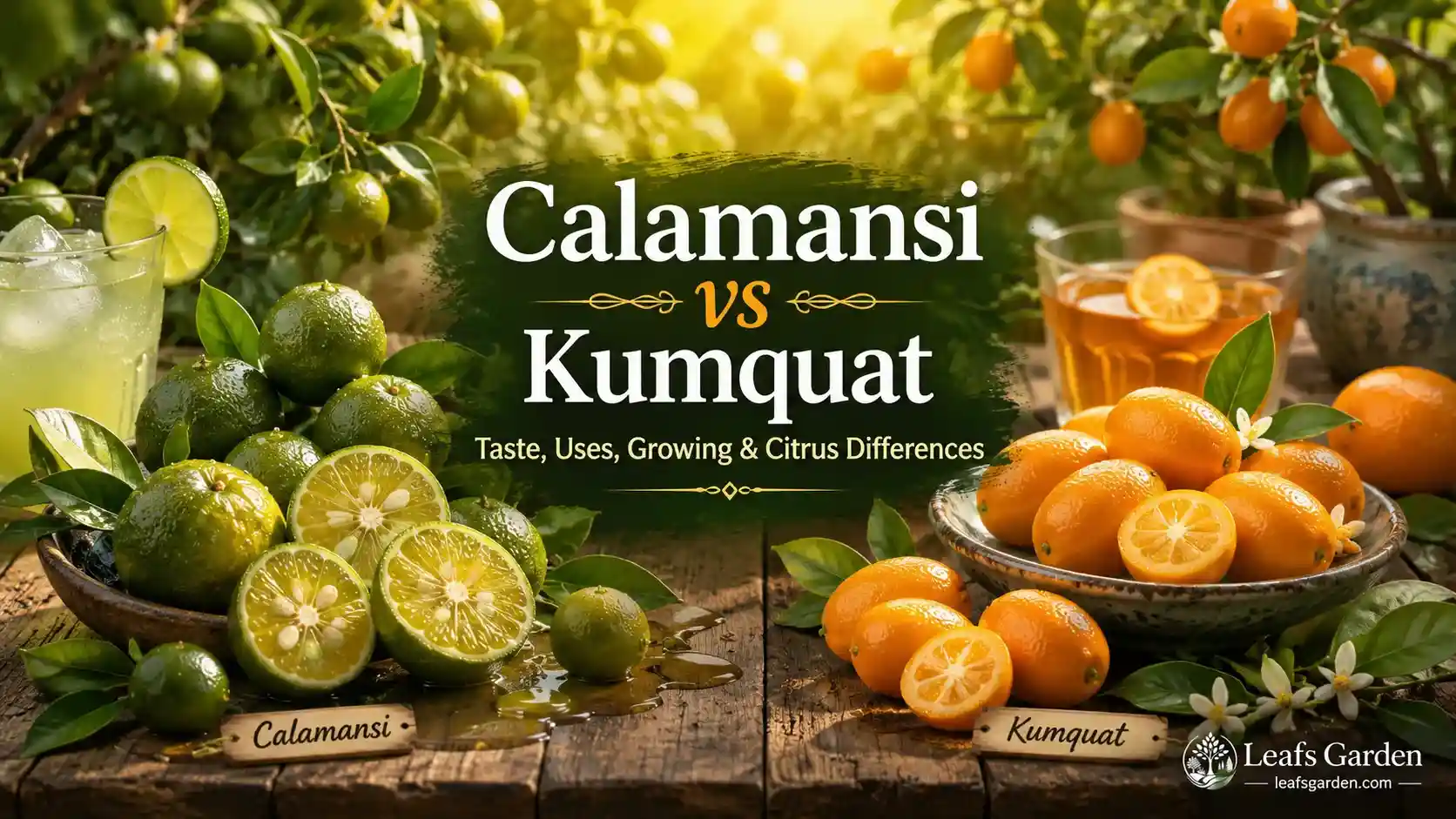
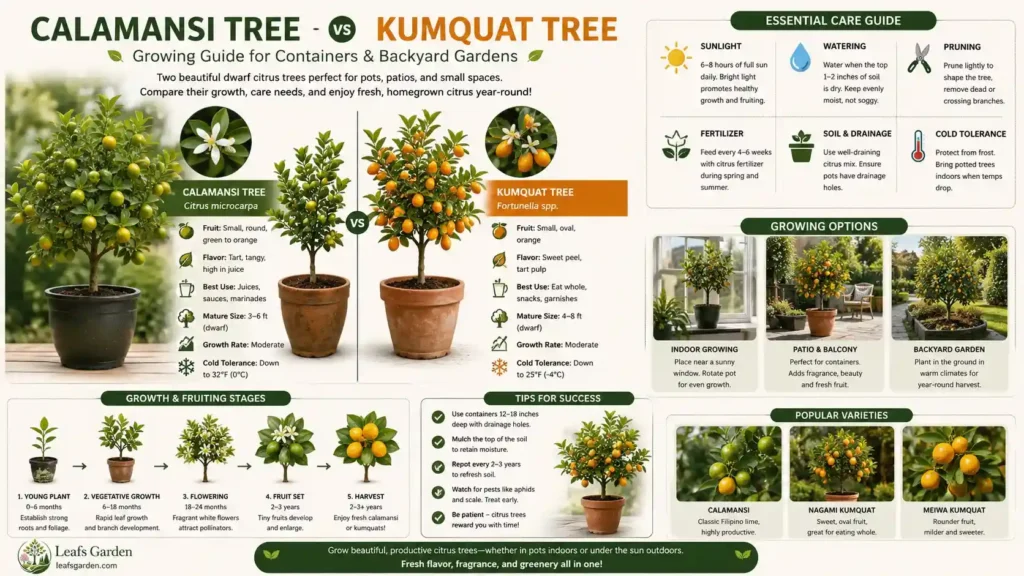
Calamansi and kumquat are both small citrus fruits, but they differ in taste, appearance, origin, culinary uses, and growing habits. Calamansi is more tart and lime-like, while kumquat is sweeter with edible skin.
Many people compare calamansi vs kumquat because both fruits are small, orange-colored citrus types commonly grown in Asian regions and home gardens. Their similar size and ornamental appearance often make them look related, especially to people exploring uncommon citrus fruits for cooking or container gardening.
The confusion increases because calamansi is also widely known as calamondin or calamansi calamondin in different countries. Some gardeners also mistakenly connect calamondin kumquat varieties because both belong to the broader group of citrus hybrids and compact ornamental citrus trees.
The kumquat fruit is usually eaten whole because its peel is naturally sweet. In contrast, the calamansi fruit is mainly valued for its highly acidic juice used in marinades, sauces, drinks, and Southeast Asian recipes.
People also commonly confuse calamansi, calamondin, kumquat, and even loquat because the names sound similar and the fruits can appear visually alike at first glance. However, these fruits belong to different citrus or fruit classifications and have distinct flavors, textures, and culinary purposes.
Calamansi is a small hybrid citrus fruit commonly grown in the Philippines and Southeast Asia, known for its sour juice and aromatic peel.
The scientific name of calamansi is Citrus × microcarpa. It belongs to the Rutaceae citrus family, which also includes oranges, lemons, mandarins, and limes. Many citrus experts classify it as a natural citrus hybrid developed from mandarin-type citrus and kumquat relatives.
People often ask, “what is a calamansi?” because the fruit is known by several regional names. In many countries, calamansi is also called calamondin or calamondin calamansi. These names usually refer to the same small citrus fruit commonly used in Filipino and Southeast Asian cooking.
The fruit became highly popular because of its intense sour flavor, compact tree size, and heavy fruit production. Today, calamansi is widely grown in tropical gardens, patio containers, and ornamental citrus collections.
Its hybrid origins also explain why some gardeners connect calamansi with kumquat-type citrus hybrids. The small orange fruits and compact growth habit create visual similarities between these citrus varieties.
Calamansi tastes like a blend of lime, orange, and mandarin with strong acidity and slight sweetness.
The flavor is sharply tart at first, similar to lime juice, but it also carries light orange and mandarin notes. This balance gives calamansi a more fragrant citrus profile than standard lemons or limes.
Its juice acidity is one of the strongest characteristics of the fruit. Even a small amount of calamansi juice delivers intense citrus brightness in recipes and beverages.
The peel also contains aromatic citrus oils that produce a fresh floral scent when squeezed or sliced. This strong aroma makes calamansi popular in both savory and sweet dishes.
Common culinary uses include:
Because of its concentrated flavor, calamansi juice is often used as a direct substitute for lime juice in Asian cuisine.
A calamansi tree is a compact citrus tree with glossy leaves, fragrant flowers, and small orange fruits.
The calamansi tree usually grows as a dense evergreen shrub or small ornamental tree. Mature plants commonly produce white citrus blossoms with a strong sweet fragrance followed by clusters of round orange fruits.
Its compact size makes it ideal for container gardening and small backyard spaces.
Gardeners who want to explore how calamansi compares to other compact fruit trees will find detailed context in our citrus plant comparisons and growth guides covering a wide range of ornamental and fruiting species.
Many gardeners grow calamansi in pots on patios, balconies, and sunny indoor locations.
Interest in calamansi australia gardening has increased because dwarf citrus trees adapt well to warm coastal climates. Gardeners searching for a calamansi plant australia option often grow it in containers to protect the tree during cooler conditions.
Demand for calamansi in australia continues to grow among home citrus collectors and Asian food gardeners because fresh fruits can be difficult to find in regular supermarkets.
| Feature | Calamansi |
| Fruit Size | Small |
| Taste | Sour-Tangy |
| Skin | Thin |
| Edibility | Juice-focused |
| USDA Zones | Warm climates |
Kumquat is a small citrus fruit famous for its sweet edible peel and tart flesh.
Unlike most citrus fruits, kumquats are commonly eaten whole with the skin attached. The peel is naturally sweet, while the inside pulp delivers a tangy citrus flavor. This creates a balanced sweet-and-sour taste that makes the kumquat fruit unique among citrus varieties.
Kumquats belong to the citrus family and are commonly classified under the genus Citrus or the closely related Fortunella group depending on botanical classification systems. Their small size and ornamental appearance often make them stand out from larger citrus fruits like oranges, lemons, and mandarins.
One major difference between kumquat and other citrus fruits is the edible rind. Most citrus peels taste bitter, but kumquat peel is thin, fragrant, and pleasantly sweet.
Today, many kumquat variety types are grown for home gardens, decorative patios, and specialty fruit production. Some gardening references even use repeated naming forms such as kumquat kumquat in plant databases and nursery labeling systems.
Kumquat has a unique sweet-and-sour flavor because the peel is sweet while the inside pulp is tart.
The texture is firm yet juicy, with thin edible skin covering soft citrus flesh. When eaten whole, the sweetness of the peel balances the sharp acidity inside the fruit.
Most people eat kumquats fresh without peeling them. Rolling the fruit gently between the fingers before eating can help release citrus oils and soften the flavor slightly.
Kumquats are also popular for:
Their concentrated citrus aroma and edible peel make them highly versatile in both sweet and savory dishes.
Kumquat trees are ornamental citrus plants valued for compact growth and heavy fruit production.
A mature kumquat tree usually develops into a dense evergreen plant with glossy green leaves, fragrant white flowers, and bright orange fruits. Because of their decorative appearance, kumquat trees are widely used as ornamental citrus plants in gardens and patio containers.
Most kumquat plant varieties remain relatively small compared to standard citrus trees. This compact size makes them suitable for container growing, greenhouse cultivation, and indoor citrus gardening.
Many gardeners grow kumquat plants because they produce attractive fruit clusters while requiring less space than larger citrus species. A healthy kumquat fruit tree can produce large harvests even when grown in pots.
Interest in kumquat australia cultivation has increased due to the plant’s adaptability to subtropical climates and home citrus collections.
Nagami kumquat is one of the most popular kumquat varieties due to its oval fruit and strong citrus flavor.
The kumquat tree nagami is widely grown because it produces abundant oval-shaped fruits with tart flesh and sweet edible skin. It is one of the most recognizable ornamental citrus types used in home gardens and decorative containers.
Some kumquat varieties produce sweeter fruits, while others are more acidic and aromatic. Round kumquats are especially popular for fresh eating because they often contain milder tartness.
| Variety | Shape | Taste | Common Use |
| Nagami Kumquat | Oval | Tart | Fresh eating |
| Meiwa Kumquat | Round | Sweeter | Snacking |
Calamansi is more acidic and juice-heavy, while kumquat is sweeter because its peel is edible.
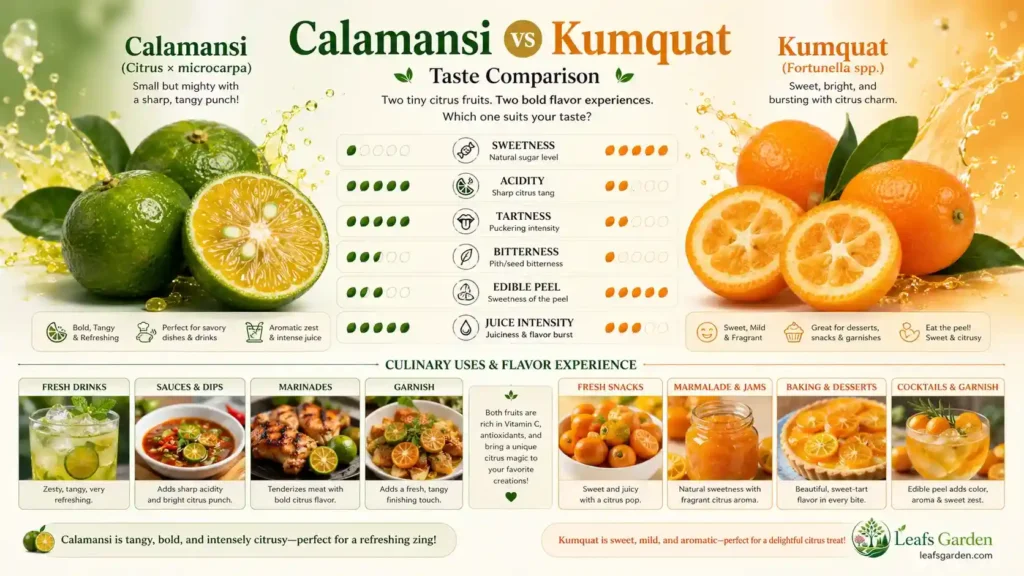
The biggest flavor difference between these citrus fruits is the balance between sweetness and acidity. Calamansi delivers a sharper citrus punch similar to lime, while kumquat provides a milder sweet-and-sour experience.
Calamansi juice contains strong acidity with light mandarin-like sweetness. It is usually too sour for most people to eat raw in large amounts.
Kumquat, in contrast, is commonly eaten whole because the peel is naturally sweet. The inner flesh remains tart, but the edible rind balances the flavor.
These flavor differences strongly affect how each fruit is used in cooking, drinks, and desserts.
Kumquats are usually oval with thicker edible skin, while calamansi fruits are rounder with thinner peels.
At first glance, both fruits appear small and orange, which is one reason people often confuse them. However, their rind texture, fruit shape, and internal structure are noticeably different.
Calamansi fruits are commonly round with smooth thin skin. Kumquats are often oval-shaped with a slightly firmer and thicker rind designed for whole-fruit eating.
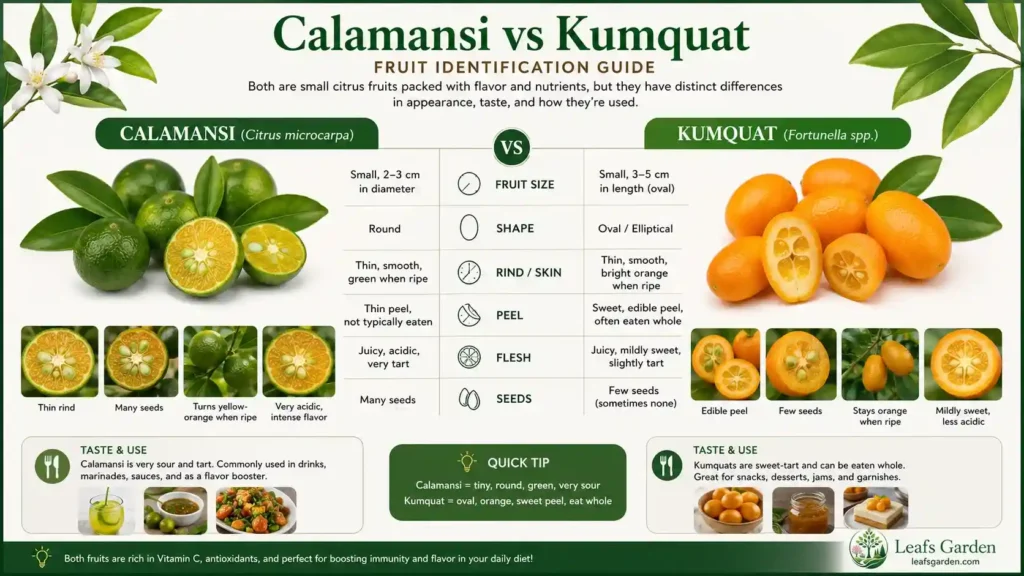
Calamansi fruits also tend to release more juice when cut, while kumquats hold firmer flesh due to their thicker peel structure.
Kumquat trees are often grown ornamentally, while calamansi trees are commonly grown for cooking and juice production.
Both plants are compact citrus trees suitable for small gardens and containers, but their growing purposes often differ.
Since both calamansi and kumquat are evergreen citrus trees, understanding the broader differences between evergreen vs deciduous fruit trees can help gardeners make better long-term planting decisions.
Kumquat trees are widely valued as ornamental citrus plants because of their attractive fruits, glossy foliage, and decorative appearance throughout the year. Many gardeners grow them mainly for visual appeal and edible fruit.
Calamansi trees are more commonly cultivated for practical culinary use. Their fruits are harvested heavily for juice, marinades, sauces, and beverages.
Because of their stronger cold tolerance, kumquat trees are usually easier for subtropical and mild temperate gardening.
Calamansi is mainly used for juice and savory dishes, while kumquats are commonly eaten whole or used in desserts.
Calamansi plays a major role in Southeast Asian cuisine because its juice adds strong acidity to recipes. Kumquats are more versatile for direct snacking and sweet preserves because of their edible skin.
| Use | Calamansi | Kumquat |
| Juice | Excellent | Moderate |
| Fresh Eating | Rare | Common |
| Marmalade | Less Common | Popular |
| Marinades | Excellent | Moderate |
| Cocktails | Popular | Popular |
Calamansi and calamondin are generally considered the same fruit, although naming varies by region.
In the Philippines and much of Southeast Asia, the fruit is commonly called calamansi. In the United States, Europe, and many plant nurseries, the same fruit is often labeled as calamondin or calamondin calamansi.
Because of these regional naming differences, searches for calamansi vs calamondin or calamondin vs calamansi usually refer to the same citrus fruit rather than two separate species.
The fruit itself is a small hybrid citrus known for:
Botanically, calamondin is believed to have hybrid citrus origins connected to mandarin-type citrus and kumquat relatives. This connection explains why terms such as calamondin kumquat, cumquat calamondin, and calamondin cumquat sometimes appear in nursery catalogs and citrus databases.
Even though naming can vary internationally, most growers and citrus experts treat calamansi and calamondin as interchangeable names for the same fruit.
People confuse calamondin with kumquat because both are small orange citrus fruits with ornamental trees.
The confusion usually starts with appearance. Both fruits grow on compact evergreen citrus trees and produce small orange-colored fruits that look decorative in containers and home gardens.
Their hybrid citrus backgrounds also contribute to the misunderstanding. Since calamondin has kumquat-related ancestry, many people assume the fruits are identical or closely interchangeable.
However, one major difference separates the two fruits clearly.
Kumquats are commonly eaten whole because the peel is sweet and edible. Calamondin fruits, including calamansi types, are usually valued for their sour juice rather than raw peel consumption.
This edible peel difference is one of the easiest ways to identify whether a fruit is a true kumquat or a calamondin-type citrus.
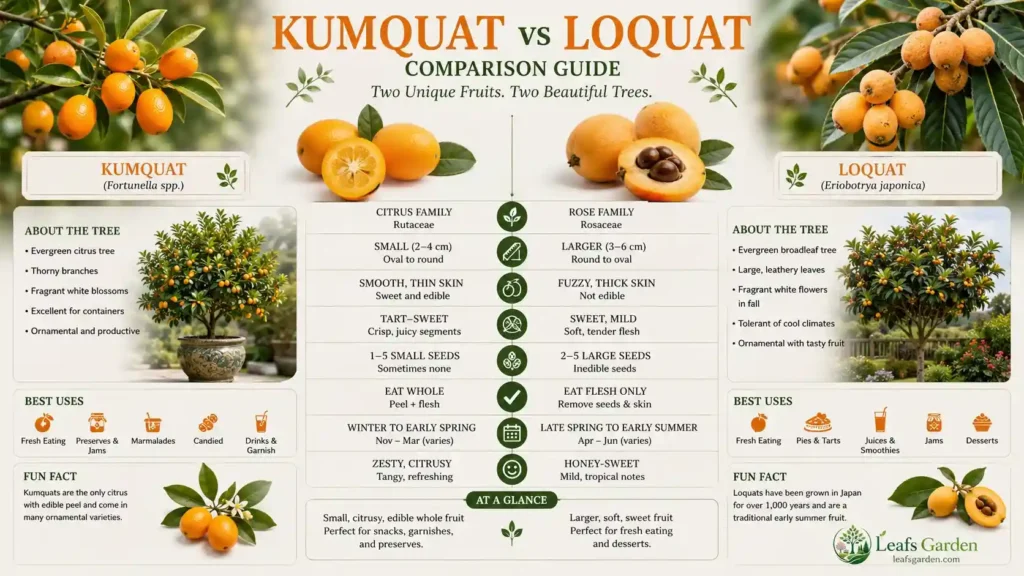
Kumquat is a citrus fruit, while loquat is a subtropical pome fruit related to apples and pears.
Many people search for kumquat vs loquat because the names sound similar and both fruits can appear in Asian markets and ornamental gardens. However, they belong to completely different plant families.
Kumquats are true citrus fruits within the Rutaceae family. Loquats belong to the Rosaceae family, which includes apples, pears, peaches, and other pome fruits.
The confusion between loquat vs kumquat often happens because both fruits produce orange-colored skin and grow on attractive ornamental fruit trees. Despite this visual similarity, their flavor, texture, and botanical classification are very different.
Kumquat and loquat fruits also differ in how they are eaten. Kumquats are usually consumed whole with the peel, while loquats are peeled or sliced because of their soft flesh and large seeds.
The term kumquat loquat fruit is commonly searched online by people trying to identify unfamiliar orange fruits found in gardens or Asian grocery stores.
Kumquats are small citrus fruits with edible skin, while loquats are larger fuzzy-skinned fruits with soft sweet flesh.
The easiest way to identify these fruits is by size, skin texture, and internal flesh structure.
Kumquats are small, smooth-skinned citrus fruits with tart flesh and sweet edible peel. Loquats are larger fruits with softer sweet pulp and several large brown seeds inside.
| Feature | Kumquat | Loquat |
| Plant Family | Citrus | Rosaceae |
| Skin | Smooth | Fuzzy |
| Taste | Sweet-Tart | Sweet |
| Seeds | Few | Large seeds |
The loquat meaning also differs botanically because loquats are not citrus fruits at all. They are subtropical flowering plants more closely related to apples and pears.
Japanese fruit confusion further increases because both kumquats and loquats are popular in Asian gardening and ornamental fruit tree collections. Their orange fruits and decorative evergreen foliage can appear similar from a distance, especially to beginner gardeners.
Kumquats are generally easier to grow in cooler climates, while calamansi thrives in tropical and subtropical conditions.
Kumquat trees tolerate lower temperatures better than most small citrus varieties. This makes them suitable for subtropical gardens, mild temperate regions, and protected container growing.
Calamansi grows best in consistently warm and humid conditions. The plant performs especially well in tropical climates where frost is rare.
For beginner gardeners, kumquats are often considered easier because they adapt well to containers, patios, and cooler weather conditions. Calamansi usually requires more warmth and sunlight for strong fruit production.
Both plants remain compact enough for small-space gardening and home citrus collections.
Both plants need well-draining soil, full sun, and moderate watering for healthy fruit production.
Healthy citrus growth depends heavily on proper drainage and balanced moisture. Waterlogged soil can quickly damage roots and reduce fruit production in both calamansi and kumquat plants.
Both trees produce better fruit when grown in at least 6–8 hours of direct sunlight daily.
Consistent watering is important during flowering and fruit development, but overly wet soil should always be avoided.
Both calamansi and kumquat can grow successfully in containers when provided enough sunlight and proper drainage.
These plants are commonly grown as dwarf citrus trees because compact growth makes them ideal for patios, balconies, and indoor spaces.
Gardeners interested in other elegant small-space options may also enjoy exploring compact ornamental trees for small gardens that pair beautifully alongside container citrus displays.
Container citrus care usually focuses on three main factors:
Indoor citrus trees should be placed near sunny south-facing windows or protected outdoor spaces with strong natural light. Containers must allow excess water to drain easily to avoid root problems.
Kumquats generally adapt better to indoor growing because of their stronger cold tolerance. Calamansi plants usually prefer warmer indoor temperatures and higher humidity levels.
With proper care, both citrus varieties can become productive ornamental fruit plants in containers for many years.
Calamansi trees and fruits are available through specialty nurseries, Asian markets, and selected garden centers in Australia.
Interest in calamansi has increased among home citrus growers, especially people looking for compact tropical fruit trees for patios and container gardens.
Gardeners searching for where to buy calamansi in australia often find young plants through:
People looking for where to buy calamansi tree in australia usually search for grafted citrus plants because they produce fruit faster and remain compact in containers.
Many sellers also advertise:
Fresh calamansi fruits can sometimes be difficult to find in regular supermarkets. However, bottled calamansi juice australia products are increasingly available through Filipino grocery stores and Asian food retailers.
Because calamansi prefers warmer growing conditions, Australian gardeners in cooler regions often grow the plant in containers that can be protected during winter.
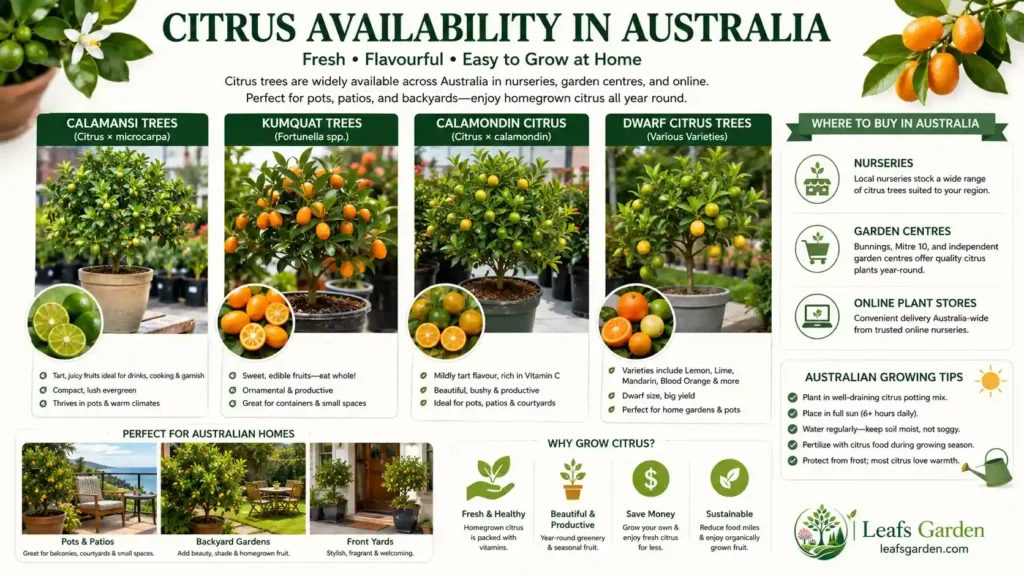
Kumquat trees are commonly available in Australian nurseries and citrus garden centers.
Kumquats are among the easiest ornamental citrus plants to find in Australia because of their cold tolerance, decorative appearance, and compact growth habit.
Many home gardeners search for:
Large garden retailers often stock dwarf citrus varieties suitable for patios and home gardens. Alongside kumquats, shoppers may also find:
Some citrus collectors also search for calamansi tree bunnings or calamondin bunnings availability, although stock may vary depending on region and seasonal nursery supply.
Kumquat trees remain especially popular in Australia because they grow well in containers, adapt to small-space gardening, and produce attractive edible fruit with relatively low maintenance.
Both calamansi and kumquat are rich in vitamin C, antioxidants, and dietary fiber.
These small citrus fruits provide several important nutrients while remaining relatively low in calories. Their natural citrus compounds also contribute to their strong aroma and potential health-supporting properties.
Calamansi is especially valued for its concentrated vitamin C content and acidic juice. Kumquats provide additional dietary fiber because the edible peel is commonly consumed along with the flesh.
Kumquat peel contains beneficial flavonoids and fiber, while calamansi juice is commonly used in refreshing drinks and citrus-based wellness recipes.
These citrus fruits may support immunity, digestion, hydration, and skin health.
Their combination of vitamin C, natural citrus acids, antioxidants, and water content makes them popular in fresh juices, herbal drinks, and light citrus-based diets.
Research published by the Harvard T.H. Chan School of Public Health confirms that vitamin C plays an important role in immune function and antioxidant protection.
Calamansi and kumquat are often included in balanced eating plans because they add flavor without excessive calories or added sugars.
| Potential Benefit | How Citrus Fruits May Help |
| Immune Support | Vitamin C supports normal immune function |
| Citrus Antioxidants | Plant compounds help fight oxidative stress |
| Fiber Benefits | Kumquat peel provides dietary fiber |
| Hydration Support | Citrus juice contributes to fluid intake |
Because these fruits contain strong citrus oils and acids, moderate consumption is usually recommended for people sensitive to acidic foods.
Calamansi and kumquat are both valuable citrus fruits, but they serve different culinary and gardening purposes.
Calamansi stands out for its highly acidic juice, strong citrus aroma, and importance in Southeast Asian cooking. It is commonly used in marinades, sauces, drinks, and savory recipes where sharp citrus flavor is needed.
Kumquat is different because of its sweet edible peel and balanced sweet-tart flavor. It is more commonly eaten fresh, candied, or turned into marmalade and desserts.
The growing conditions also differ slightly. Calamansi performs best in tropical and subtropical climates, while kumquats handle cooler temperatures more successfully and adapt well to ornamental container gardening.
Choosing between the two usually depends on personal preference and climate conditions:
Both fruits also highlight the fascinating diversity of citrus hybrids and ornamental citrus trees. Their unique flavors, compact growth habits, and cultural importance continue to make them popular among gardeners, citrus collectors, and home cooks worldwide.
No, calamansi and kumquat are different citrus fruits. Calamansi is more sour and mainly used for juice, while kumquat is sweeter and usually eaten whole with its edible peel.
Calamansi peel is technically edible, but it is not commonly eaten raw like kumquat peel. Kumquat skin is naturally sweet, while calamansi peel is thinner and more bitter.
Kumquat tastes sweeter overall because its peel contains natural sweetness. Calamansi has a much sharper sour flavor similar to lime.
Calamondin is widely believed to have hybrid citrus origins involving mandarin-type citrus and kumquat relatives. This is why calamondin and calamansi are sometimes connected to kumquat ancestry.
Yes, calamansi can grow in Australia, especially in warm subtropical and tropical regions. Many gardeners also grow calamansi in containers for easier temperature protection.
Kumquat is a citrus fruit with edible skin, while loquat is a non-citrus subtropical fruit related to apples and pears. They belong to completely different plant families.
Kumquat trees are generally easier to grow indoors because they tolerate cooler conditions better than calamansi trees. Both can grow successfully indoors with strong sunlight and proper drainage.
Yes, kumquat trees are considered one of the more cold-hardy citrus varieties. They tolerate cooler temperatures better than many lemons, limes, and tropical citrus plants.