Introduction
Understanding plant growth, care, and comparisons is essential for anyone looking to create thriving gardens, lush indoor spaces, or well-planned landscaping. Plants are living organisms with unique needs and characteristics, and knowing how they grow, what conditions they thrive in, and how they differ from one another ensures a healthier and more visually appealing environment.
Proper plant selection directly impacts the success of your garden or indoor space. Choosing the right species for the available light, soil, and space not only enhances aesthetics but also reduces maintenance, prevents plant stress, and promotes long-term growth. By selecting plants suited to your environment, you can create harmonious landscapes, vibrant indoor displays, and sustainable green areas that flourish year-round.
In this guide, readers will explore various plant types, detailed comparisons, and essential growth tips. You will learn about deciduous and evergreen species, trees, shrubs, climbers, and ground covers, alongside practical care strategies including watering, soil management, pruning, and pest control. By the end, you’ll have the knowledge to confidently choose, cultivate, and maintain plants that suit your space and lifestyle.
Plant Classifications & Types
Deciduous vs Evergreen
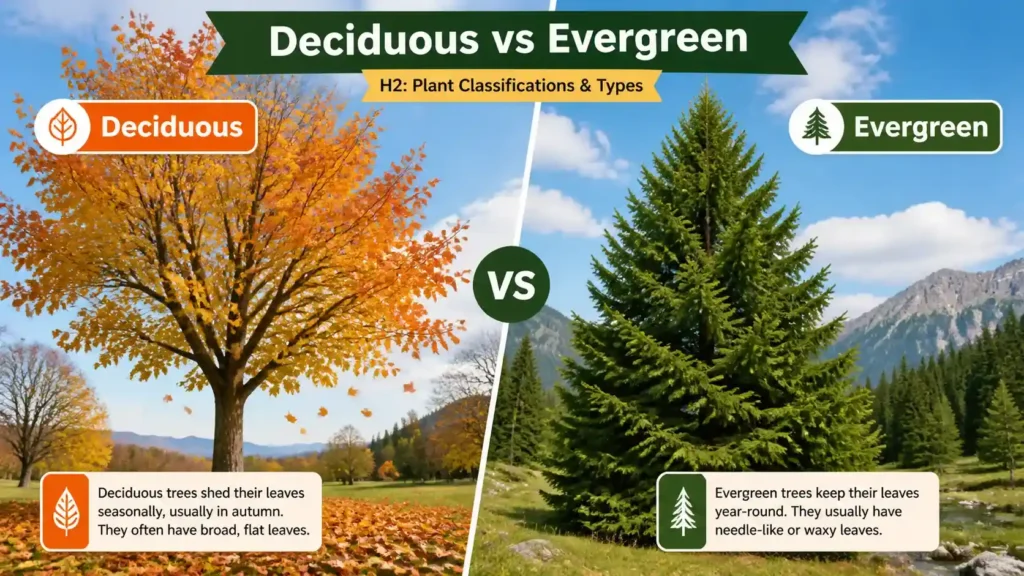
Plants can generally be classified into deciduous and evergreen types, each with distinct characteristics and benefits.
- Deciduous Plants shed their leaves annually, usually in autumn or dry seasons, allowing them to conserve energy and survive unfavorable conditions. These plants often display vibrant seasonal colors, adding dynamic visual interest to gardens. Common examples include the Japanese Maple, Oak, and Maple trees. Benefits of deciduous plants include seasonal variety, improved sunlight access for underplantings during leafless periods, and natural nutrient recycling through leaf drop.
- Evergreen Plants retain their foliage throughout the year, providing consistent greenery and structure to landscapes. They are ideal for creating year-round privacy screens, hedges, or indoor plants that maintain visual appeal in all seasons. Examples include Holly, Pine, and Australian natives like Grevillea. Benefits of evergreens include steady shade, reduced soil erosion, and low seasonal maintenance.
Tree Types
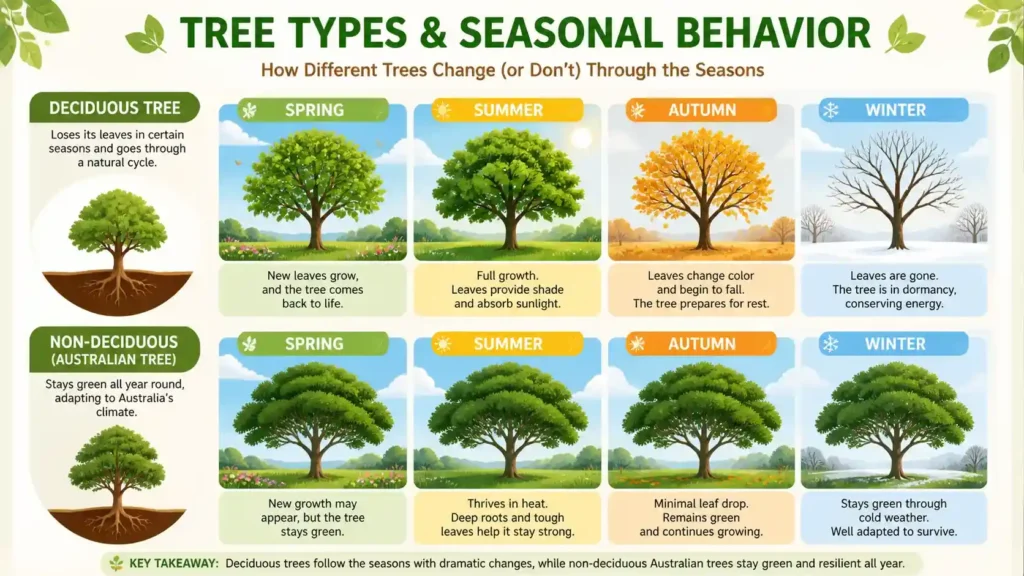
Trees are a major category within plant classifications, with both deciduous and non-deciduous types offering unique advantages.
- Deciduous Trees undergo seasonal changes, shedding leaves to conserve resources. This behavior allows them to adapt to cold winters or dry periods. In addition to their aesthetic value with colorful foliage, they support local ecosystems by providing seasonal habitats for wildlife.
- Non-Deciduous Trees in Australia maintain their leaves throughout the year, including many native species such as Eucalyptus and Banksia. These trees are well-adapted to Australia’s diverse climates and offer constant shade, wind protection, and habitat for native fauna.
Shrubs, Climbers & Ground Covers
Beyond trees, other plant forms add layers and textures to landscapes.
- Native Climbing Plants in Australia such as Hardenbergia violacea and Pandorea jasminoides are ideal for vertical gardening, trellises, and fences, providing blooms and greenery while saving ground space.
- Small Native Plants Suitable for Shade include species like Dichondra repens and Myoporum parvifolium, which thrive under tree canopies or in shaded garden areas, bringing lush foliage without competing aggressively for sunlight.
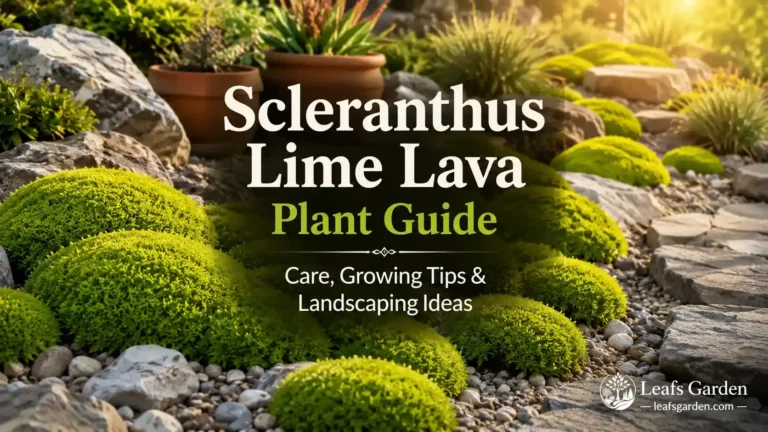
- Ground Covers like Scleranthus ‘Lime Lava’ create dense, low-maintenance mats that reduce soil erosion, suppress weeds, and add texture to gardens. They are excellent for pathways, garden beds, and areas where turf may not be practical.
These classifications provide a foundation for understanding how different plants can be integrated into gardens and landscapes based on their growth patterns, seasonal behavior, and ecological benefits.
Comparing Plants
Comparing plants is essential for selecting species that thrive in your environment, match your aesthetic goals, and fit your maintenance capabilities. By evaluating similarities and differences, gardeners can make informed decisions that optimize growth, reduce care challenges, and create visually appealing landscapes. Understanding how one plant performs relative to another helps ensure that each choice contributes effectively to the overall garden design.
Popular Comparisons
- Dwarf Japanese Maple vs Other Ornamental Trees
Dwarf Japanese Maples are prized for their compact size, delicate leaves, and striking seasonal colors. When compared to other ornamental trees, they offer manageable growth, suitability for smaller spaces or containers, and dramatic visual impact without dominating the landscape.
- Calamansi vs Kumquat (Fruit Trees)
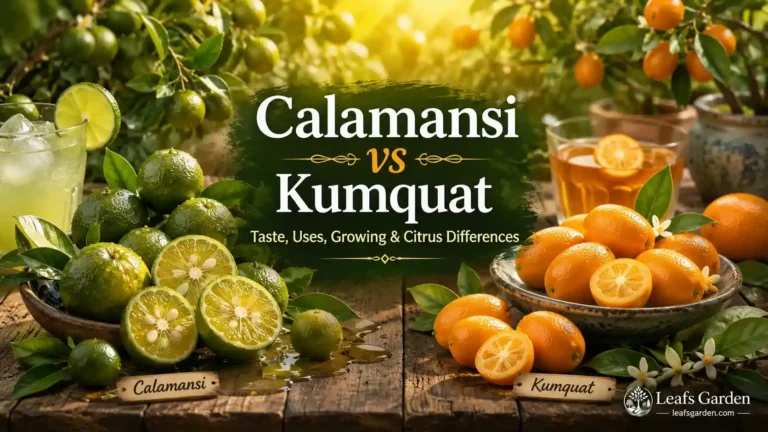
Both Calamansi and Kumquat are small citrus trees, but they differ in fruit size, flavor, and growth habits. Calamansi produces small, sour fruits often used in cooking, while Kumquats yield sweeter, edible-skinned fruits. Their differences in sunlight preference, pruning needs, and seasonal fruiting make comparisons valuable for gardeners selecting citrus for home gardens.
- Pennstripe Pennisetum vs Other Grasses or Lawn Plants
Pennstripe Pennisetum is a decorative grass valued for its striped foliage and upright habit. Compared to typical lawn grasses or other ornamental grasses, it requires specific sunlight and watering conditions, grows at a moderate pace, and adds vertical texture, making it an excellent choice for feature planting rather than uniform turf.
Comparison Criteria
When comparing plants, several key factors should guide your decisions:
- Growth Speed and Mature Height – Determines how quickly a plant reaches its intended size and whether it fits your space constraints.
- Light, Water, and Soil Requirements – Ensures the plant can thrive in available conditions and minimizes care challenges.
- Seasonal Behavior and Leaf Changes – Provides insight into aesthetics throughout the year, including flowering, leaf color, and dormancy.
- Maintenance and Pruning Requirements – Helps anticipate ongoing care, including trimming, shaping, and removal of dead or diseased growth.
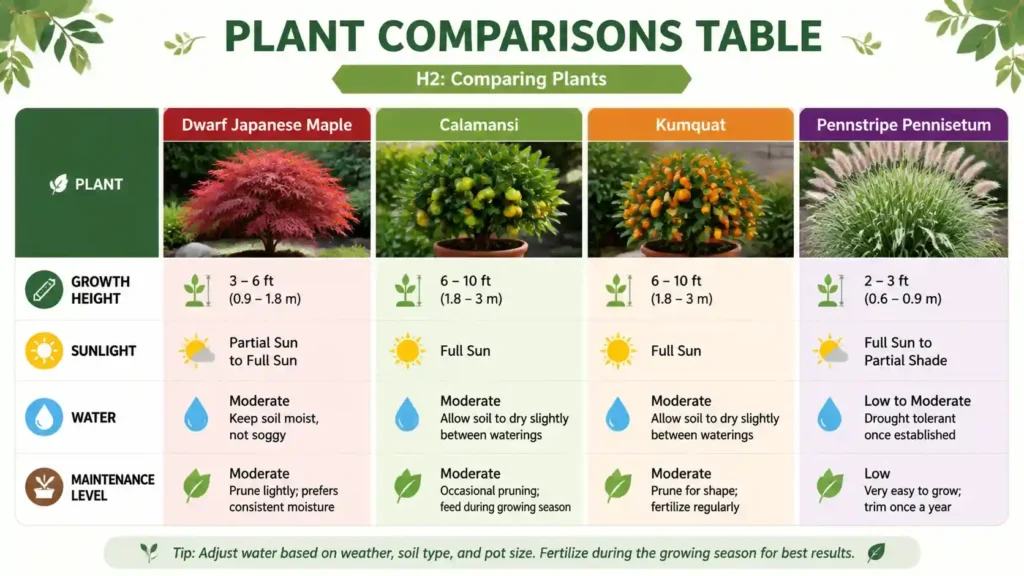
Evaluating plants using these criteria allows gardeners to choose species that complement each other, fit their environment, and enhance both the beauty and functionality of their green spaces.
Growth & Care Guidelines
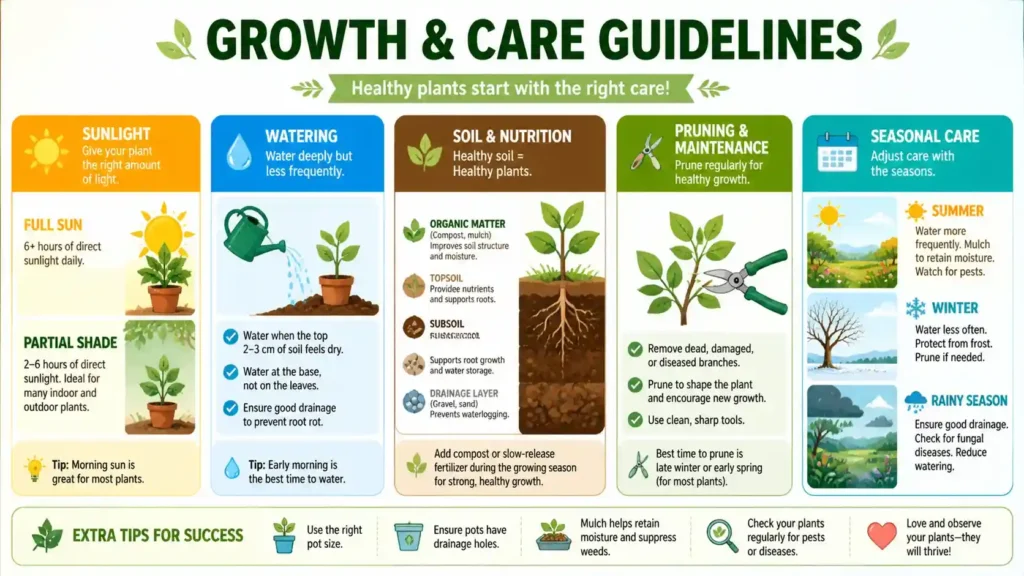
Proper growth and care are essential for ensuring that plants remain healthy, vibrant, and productive. Understanding their specific needs for light, water, soil, and maintenance allows gardeners to provide the right environment and interventions throughout the year.
Light Requirements
Plants vary in their light preferences, which directly affect growth and flowering:
- Full Sun: Requires at least 6–8 hours of direct sunlight daily. Ideal for sun-loving plants like citrus trees and Pennstripe Pennisetum.
- Partial Shade: Thrives with 3–6 hours of sunlight or filtered light. Many native Australian shrubs and climbing plants prefer this condition.
- Indoor Lighting: For indoor plants, bright indirect light is optimal. Supplemental grow lights can help maintain growth for low-light tolerant species.
Watering Guidelines
Proper watering ensures healthy root systems and prevents stress:
- Frequency: Varies by plant type, season, and soil. Generally, young plants need more frequent watering, while established plants can tolerate longer intervals.
- Signs of Underwatering: Wilting, dry soil, brown leaf edges, or stunted growth.
- Signs of Overwatering: Yellowing leaves, root rot, or fungal growth. Using well-draining soil and appropriate containers can prevent waterlogging.
Soil & Fertilizer
Healthy soil supports nutrient uptake and root development:
- Best Soil Types: Loamy soils with good drainage are ideal for most plants. Sandy soils are suited for drought-tolerant species, while clay-rich soils retain moisture for moisture-loving plants.
- pH Levels: Most plants prefer slightly acidic to neutral pH (6.0–7.0), though some natives thrive in more acidic conditions.
- Nutrients: Regular feeding with balanced fertilizers, rich in nitrogen, phosphorus, and potassium, supports growth, flowering, and fruiting. Organic compost or slow-release fertilizers can also improve soil health.
Repotting & Pruning Tips
Maintaining plant shape and encouraging growth requires timely interventions:
- Repotting: Best done during active growth periods, usually spring or early summer. Choose pots slightly larger than the current root system with proper drainage.
- Pruning: Remove dead, diseased, or crossing branches to improve air circulation and shape. For flowering or fruiting plants, prune after bloom or harvest to avoid cutting buds.
Pest & Disease Management
Monitoring and early action prevent severe infestations or damage:
- Common Pests: Aphids, mites, scale insects, and caterpillars. Use organic sprays, neem oil, or insecticidal soap for control.
- Diseases: Fungal infections, root rot, and leaf spots are frequent issues. Ensuring proper spacing, good drainage, and hygiene reduces risks.
Seasonal Adjustments
Plants respond differently to seasonal changes:
- Summer: Increase watering, provide shade for sensitive species, and monitor for pests.
- Winter: Reduce watering, protect sensitive plants from frost, and avoid heavy pruning.
- Rainy Season: Ensure good drainage to prevent waterlogging and monitor for fungal infections.
By following these growth and care guidelines, gardeners can create an environment where plants thrive, reduce stress and disease, and enjoy consistent seasonal beauty.
Specialized Plant Sections
Climbers & Vertical Gardening
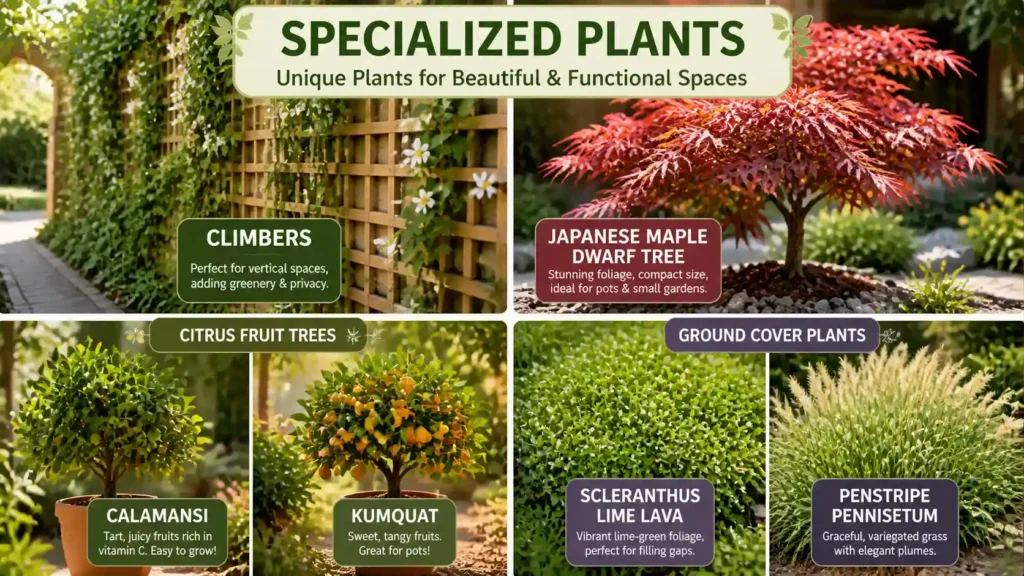
Climbers are ideal for maximizing vertical space, adding greenery to walls, trellises, fences, and pergolas. In Australia, native climbing plants like Hardenbergia violacea and Pandorea jasminoides provide vibrant flowers, attract pollinators, and create natural privacy screens. When planning vertical gardens, ensure strong support structures, adequate sunlight, and regular pruning to maintain shape and encourage flowering.
Ornamental Trees & Shrubs
Ornamental trees and shrubs are selected for their aesthetic appeal, seasonal color, and compact growth habits. Japanese Maples, including dwarf varieties, are popular for their striking foliage, graceful branching, and adaptability to small spaces. These trees require well-draining soil, partial to full sun depending on the variety, and careful pruning to maintain structure. Shrubs can complement trees by providing texture, color contrast, and year-round greenery in garden beds.
Fruit Trees
Fruit trees offer both beauty and productivity, with options suited to different climates and spaces. Small citrus trees, such as Calamansi and Kumquat, are ideal for home gardens or containers.
- Calamansi: Produces small, tart fruits primarily used for cooking and beverages. Prefers full sun, moderate watering, and regular pruning to maintain shape.
- Kumquat: Yields sweet, edible-skinned fruits, often eaten raw. Requires similar care but may need slightly more protection from extreme heat or frost.
Understanding the differences in growth habit, fruiting season, and care requirements helps gardeners choose the best citrus tree for their space and needs.
Ground Covers & Lawns
Ground covers and ornamental grasses provide texture, suppress weeds, and enhance garden design.
- Pennstripe Pennisetum: A decorative grass with upright, striped foliage. It is drought-tolerant, requires moderate sunlight, and adds vertical interest to garden beds or borders.
- Scleranthus ‘Lime Lava’: A low-growing, hardy ground cover perfect for pathways, rockeries, or areas where traditional turf may struggle. It spreads densely, tolerates light foot traffic, and thrives in sunny to partially shaded areas.
These specialized plant sections allow gardeners to strategically use climbers, ornamental trees, fruiting species, and ground covers to create layered, functional, and visually engaging landscapes.
Common Mistakes & Troubleshooting
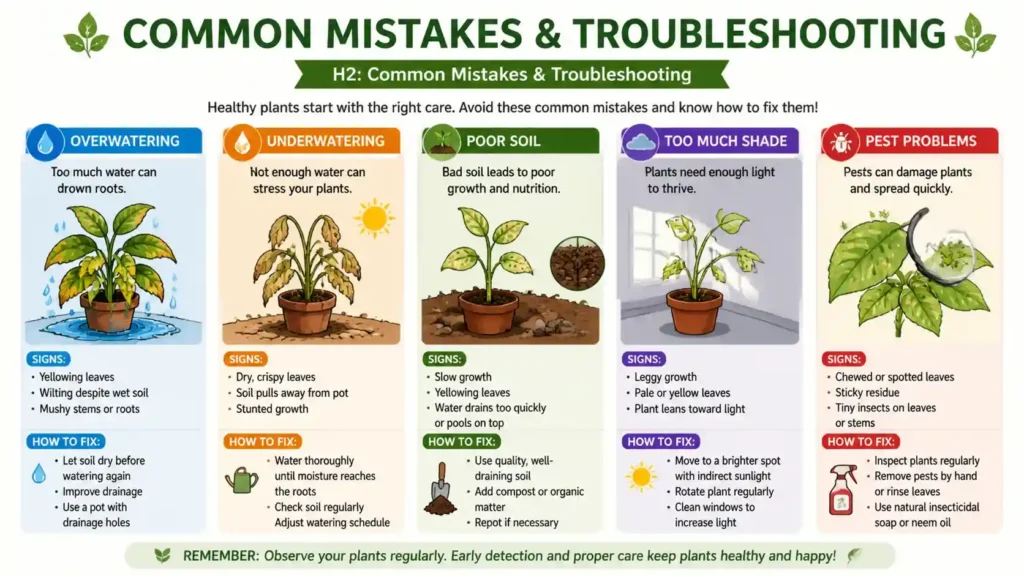
Even experienced gardeners can encounter challenges when caring for plants. Recognizing common mistakes and knowing how to address them is key to maintaining healthy, thriving greenery.
Overwatering or Underwatering
- Overwatering: Leads to root rot, yellowing leaves, and fungal growth. Ensure pots have proper drainage and allow soil to dry slightly between waterings.
- Underwatering: Causes wilting, brown leaf edges, and stunted growth. Monitor soil moisture regularly and adjust watering frequency based on plant type and season.
Choosing Wrong Soil or Location
- Using soil that retains too much water or drains poorly can stress plants. Match soil type to plant requirements, such as sandy soil for drought-tolerant species or loamy soil for most garden plants.
- Placing a sun-loving plant in deep shade or a shade-preferring plant in full sun can stunt growth or burn foliage. Consider light exposure, wind, and temperature before planting.
Insufficient Light or Excessive Shade
- Plants not receiving adequate light may grow leggy, produce fewer flowers, or fail to fruit. Supplement with artificial lighting for indoor plants if natural light is limited.
- Excessive shade can prevent photosynthesis, causing slow growth and weak stems. Adjust plant placement or prune nearby trees to increase light exposure.
Pest Infestations and Solutions
- Common pests include aphids, mites, scale insects, and caterpillars. Regularly inspect plants for early signs of infestation.
- Solutions include removing affected leaves, introducing natural predators, or using organic treatments like neem oil or insecticidal soap. Maintaining good hygiene, proper spacing, and healthy soil also reduces pest problems.
By understanding these common mistakes and applying corrective measures, gardeners can prevent damage, improve plant health, and enjoy more successful growth and aesthetics.
How to Choose the Right Plant
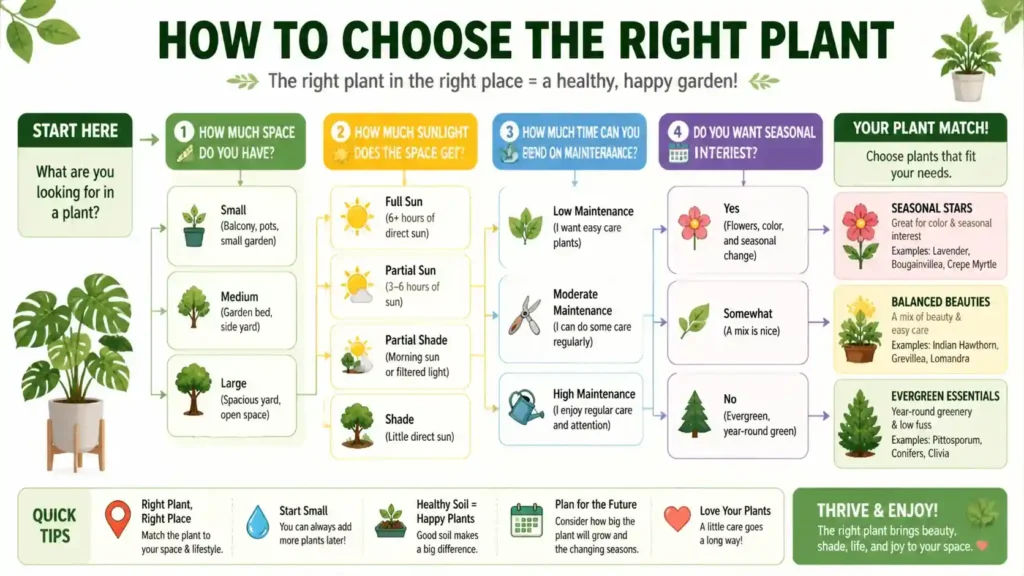
Selecting the right plant for your garden, indoor space, or landscape involves evaluating key factors to ensure healthy growth, low maintenance, and year-round appeal. A structured decision approach helps simplify the process and prevents costly mistakes.
Decision Guide
- Space Availability: Consider the mature size of the plant, including height and spread. Compact plants or dwarf varieties like Japanese Maples are ideal for small gardens or containers, while larger trees such as Eucalyptus or ornamental oaks suit expansive outdoor spaces.
- Sunlight Exposure: Assess the light conditions of your site. Full-sun plants require 6–8 hours of direct sunlight, while partial-shade plants thrive with 3–6 hours or filtered light. Shade-tolerant species work well under tree canopies or in indoor areas near bright windows.
- Maintenance Level: Determine the amount of time and effort you can dedicate to plant care. Low-maintenance options, such as ground covers like Scleranthus ‘Lime Lava’ or hardy grasses like Pennstripe Pennisetum, reduce pruning, watering, and pest management demands. High-maintenance plants, like fruit trees, require regular pruning, feeding, and monitoring.
- Seasonal Interest: Choose plants that provide year-round visual appeal, whether through seasonal flowers, colorful foliage, or evergreen structure. Deciduous trees offer dynamic seasonal changes, while evergreens ensure consistent greenery throughout the year.
Quick Comparison Table
|
Plant Type
|
Space Requirement |
Sunlight |
Maintenance Level |
Seasonal Interest
|
| Dwarf Japanese Maple |
Small |
Partial to Full Sun |
Medium |
Autumn foliage
|
|
Calamansi
|
Medium |
Full Sun |
Medium |
Fruit production |
| Kumquat |
Medium |
Full Sun |
Medium |
Fruit production
|
|
Pennstripe Pennisetum
|
Medium |
Full Sun |
Low |
Foliage texture |
| Scleranthus ‘Lime Lava’ |
Small |
Sun to Partial Shade |
Low |
Ground cover green
|
By considering these factors and using quick-reference tools like comparison tables, gardeners can confidently select plants that fit their space, lighting, and care capabilities, while maximizing aesthetic and functional benefits.
Conclusion & Call-to-Action
Selecting the right plants, understanding their growth patterns, and providing proper care are essential steps for creating thriving gardens, vibrant indoor spaces, and visually appealing landscapes. Throughout this guide, we explored plant classifications, comparisons, specialized care strategies, and troubleshooting techniques, offering practical insights to help gardeners make informed decisions. By considering factors such as space, sunlight, maintenance needs, and seasonal interest, you can choose plants that flourish and enhance your environment year-round.
To dive deeper, explore our detailed guides and cluster articles on specific plant types, care routines, and landscaping strategies. These resources provide step-by-step instructions, expert tips, and in-depth comparisons to help you cultivate healthy, beautiful plants with confidence and ease. Start your journey today and transform your green spaces into thriving, dynamic environments.
FAQs
How do I choose between deciduous and evergreen trees?
Choose deciduous trees if you want seasonal interest, colorful foliage, or winter light access. Opt for evergreen trees for year-round greenery, privacy screens, or wind protection. Consider climate, space, and the level of seasonal maintenance you can manage.
What are the easiest native Australian plants to grow?
Easy-to-grow native Australian plants include Grevillea, Hardenbergia violacea, Banksia, and Dichondra repens. These species are drought-tolerant, low-maintenance, and well-adapted to local soils and climates.
How often should I water a dwarf Japanese maple?
Water young Japanese Maples regularly to keep the soil consistently moist but not waterlogged. Established trees typically require deep watering once or twice a week, adjusting for rainfall, temperature, and soil type.
Which ground cover plants thrive in shade?
Shade-tolerant ground covers include Dichondra repens, Myoporum parvifolium, and Scleranthus ‘Lime Lava’ (in partially shaded areas). They provide low-maintenance greenery under trees and shaded garden spots.
How do I care for Pennstripe Pennisetum and other grasses?
Provide full sun, moderate watering, and well-draining soil. Prune or cut back annually to encourage fresh growth and maintain shape. Fertilize lightly in spring to support vibrant foliage.
Can I grow citrus trees in containers?
Yes, small citrus trees like Calamansi and Kumquat thrive in pots with well-draining soil, regular watering, and sufficient sunlight. Containers allow easier management of soil, water, and pruning.
When is the best time to prune ornamental trees and shrubs?
Prune most ornamental trees and shrubs after flowering or during early growth seasons (spring or early summer) to maintain shape, remove dead wood, and encourage healthy growth. Avoid heavy pruning in winter unless necessary.
What are common signs of plant stress I should watch for?
Wilting, yellowing leaves, brown edges, stunted growth, or pest presence often indicate stress due to overwatering, underwatering, poor soil, or insufficient light. Early detection allows prompt correction.
How do I improve soil health for better plant growth?
Use organic compost, mulch, and slow-release fertilizers. Ensure proper drainage, aerate compacted soils, and test pH levels to match plant requirements. Healthy soil supports roots, nutrients, and overall plant resilience.
Are there low-maintenance alternatives to traditional lawns?
Yes, low-growing ground covers like Scleranthus ‘Lime Lava’ or ornamental grasses like Pennstripe Pennisetum provide greenery, reduce mowing, and thrive in challenging conditions, making them excellent lawn alternatives.