Grow Better Gardens with Smarter Plant Choices
Discover helpful guides on trees, hedges, fruit plants, edible plants, and beautiful landscape greenery.
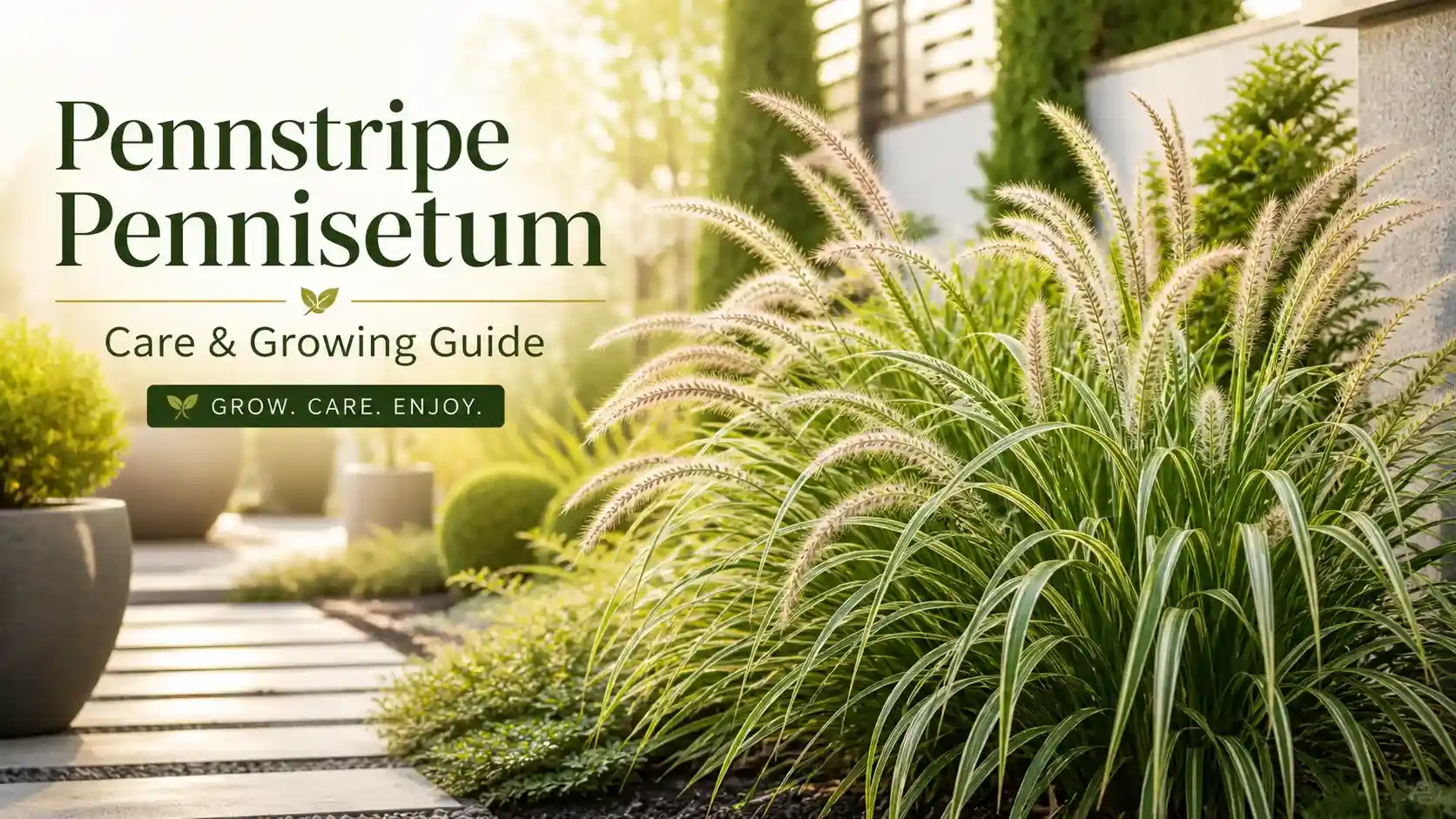
Pennstripe pennisetum is a refined ornamental grass valued for its compact form, soft texture, and elegant movement in the landscape. As a cultivated selection of pennisetum alopecuroides (commonly known as Chinese fountain grass), it combines the classic fountain-like growth habit with a more controlled, dwarf structure. This makes it especially suitable for modern garden designs where balance, texture, and low-maintenance planting are essential.
Botanically, pennisetum pennstripe belongs to the Poaceae family and shares its lineage with widely used ornamental varieties of pennisetum grass. It exhibits the same graceful arching foliage and seasonal flowering spikes that define fountain grass pennisetum alopecuroides, but in a more compact and versatile form.
Its growing popularity in landscaping comes from its adaptability and visual appeal. Gardeners and designers prefer it for:
Whether used as a standalone feature or combined with other plants, pennisetum pennstripe delivers structure, softness, and year-round interest.
Pennstripe pennisetum is a cultivated ornamental variety classified under the species pennisetum alopecuroides pennstripe. It belongs to the Poaceae family, which includes a wide range of grasses used for both functional and decorative purposes in landscapes.
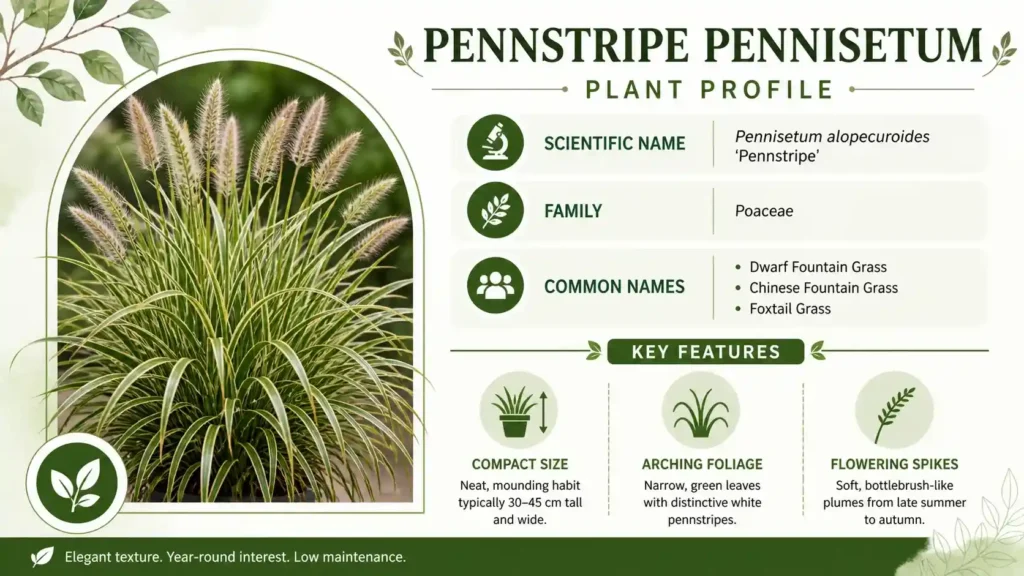
It is commonly known by several names, including:
These names reflect its growth habit, appearance, and botanical relationship with traditional fountain grasses.
Pennstripe pennisetum is recognized for its refined structure and decorative value in ornamental grasses landscaping. Its key characteristics include:
This combination of structure and softness makes it a preferred choice for both residential and professional garden settings.
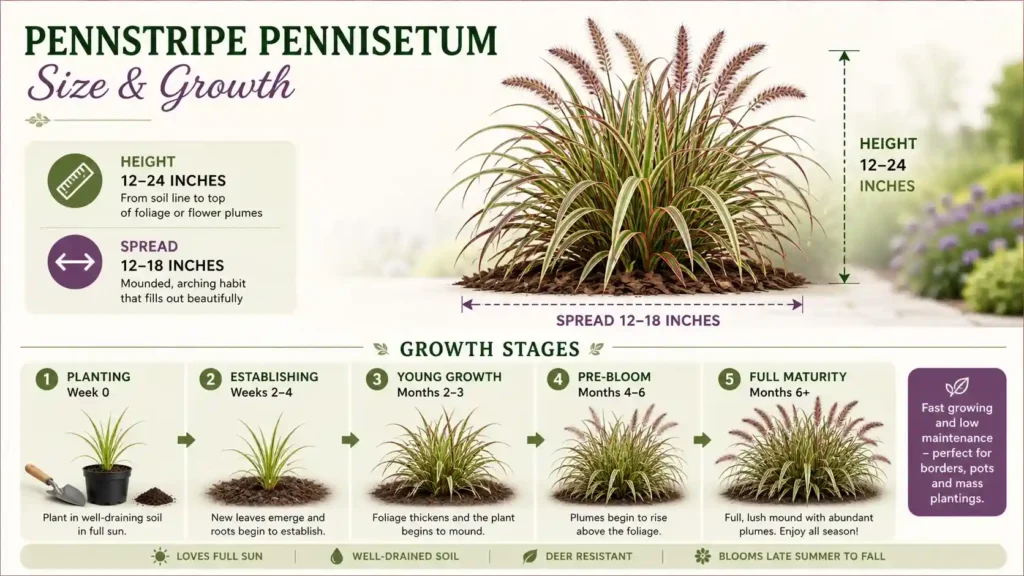
Pennstripe pennisetum is classified as a compact or dwarf fountain grass, making it highly suitable for controlled garden spaces. Its size remains manageable while still providing strong visual impact.
The growth rate is moderate. After planting, it establishes within one growing season and typically reaches full maturity in its second year. Once mature, it maintains a consistent and tidy form without aggressive spreading.
The foliage of pennstripe pennisetum is one of its defining ornamental features. It produces narrow, linear leaves with a soft texture that creates a flowing, graceful appearance.
The flowering spikes are highly decorative and emerge above the foliage, resembling:
These soft, brush-like plumes appear in late summer and continue into early fall, enhancing the plant’s ornamental value.
Seasonal color transitions add further interest. While primarily green, the foliage and flower spikes may develop subtle purple pennisetum tones under certain conditions, especially in cooler temperatures or late-season growth, giving hints of purple hues that enrich the overall display.
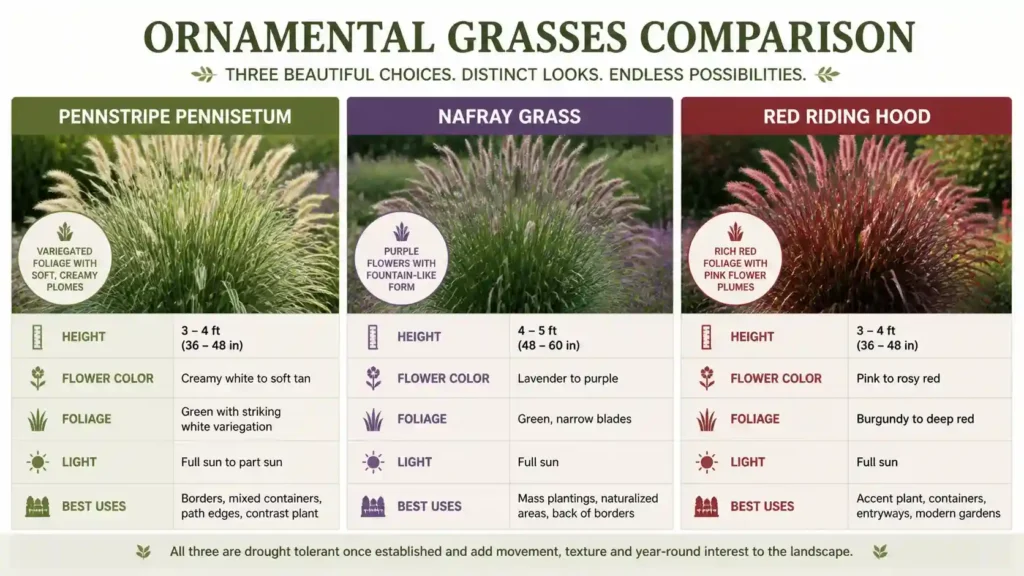
Pennstripe pennisetum is part of a broader group of ornamental grasses within the pennisetum alopecuroides family. While it is known for its compact growth and clean structure, several other varieties offer different sizes, colors, and landscaping uses.
Each variety serves a specific purpose depending on design goals, available space, and visual preference.
| Feature | Pennstripe Pennisetum | Nafray Grass | Red Riding Hood |
| Height | Compact | Medium |
Medium |
|
Flower Color |
Soft plumes | Light | Reddish |
| Use | Borders & pots | Landscaping |
Decorative |
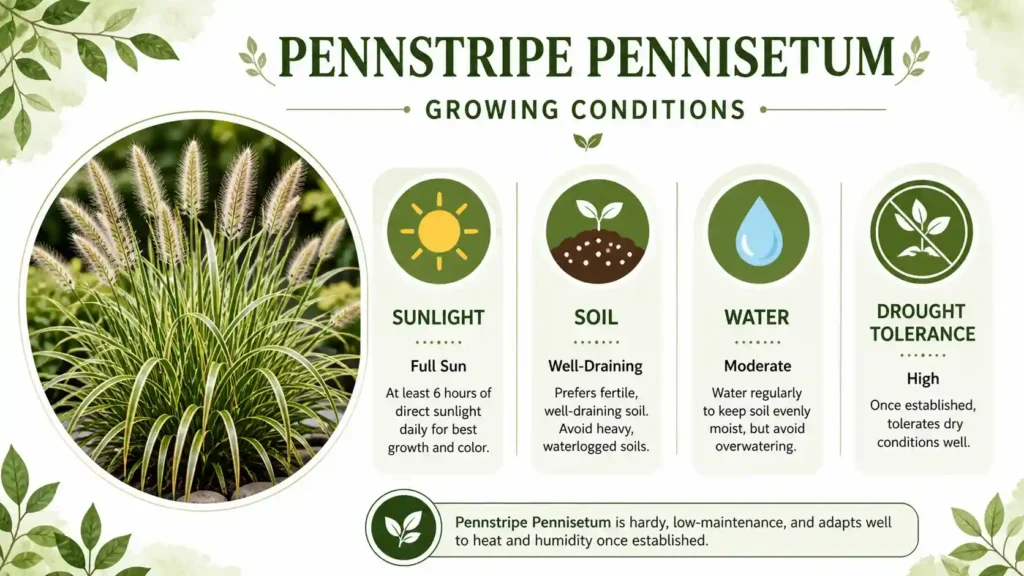
Pennstripe pennisetum performs best when grown in full sun to partial shade. Adequate sunlight is essential for maintaining its compact form, healthy foliage, and consistent flowering.
For optimal results, aim for at least 5–6 hours of direct sunlight daily.
This ornamental grass thrives in well-draining soil, which helps prevent root-related issues and supports steady growth.
Improving soil with organic matter can enhance structure and drainage where needed.
Pennstripe pennisetum requires moderate watering, especially during its establishment phase.
This balance makes it a practical choice for low-maintenance and water-efficient landscapes.
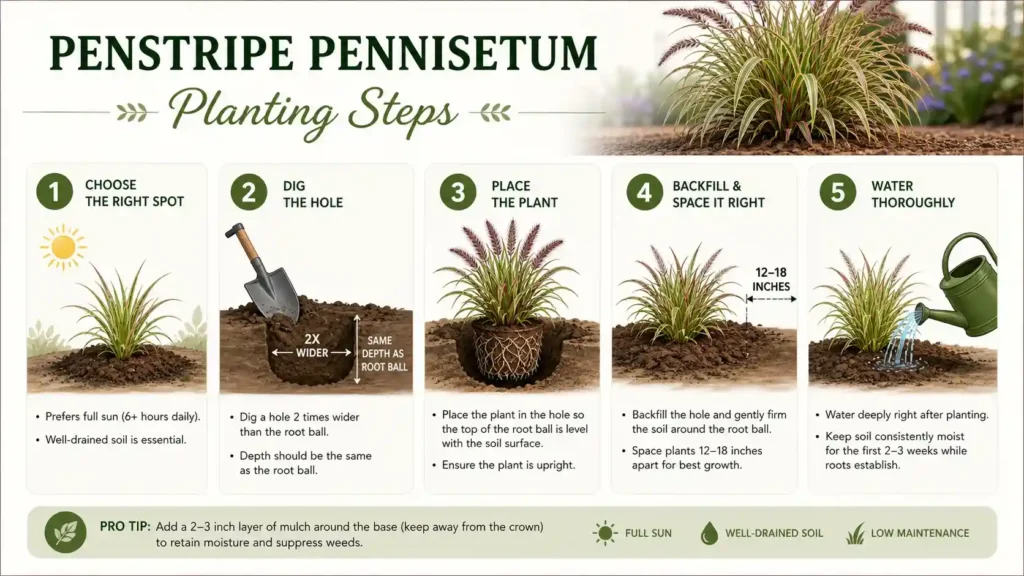
Proper planting ensures healthy establishment and long-term performance of pennstripe pennisetum. Follow these key guidelines:
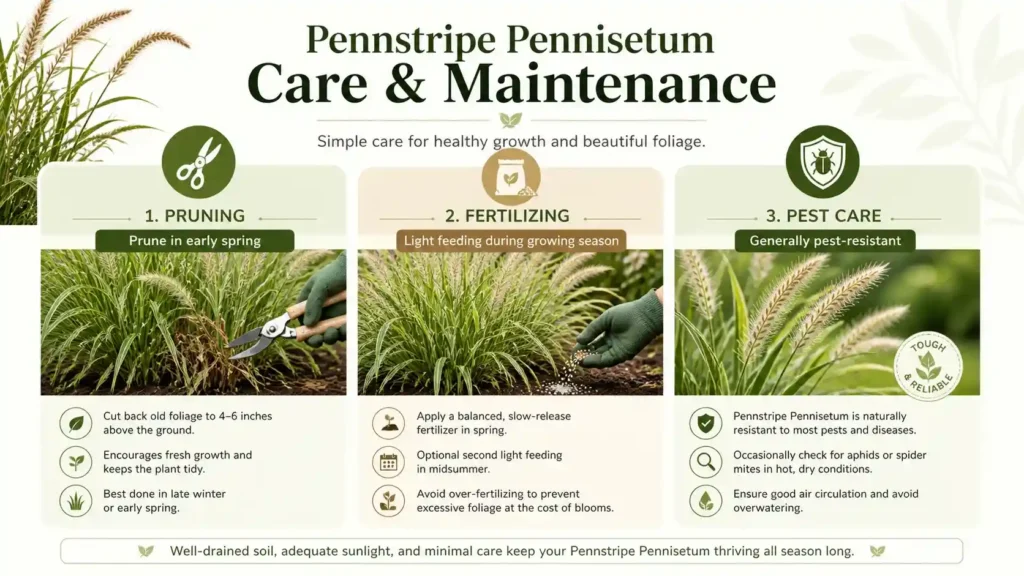
Pennstripe pennisetum can be propagated effectively using simple methods, mainly division.
Division remains the most reliable and efficient method for maintaining consistent plant characteristics.
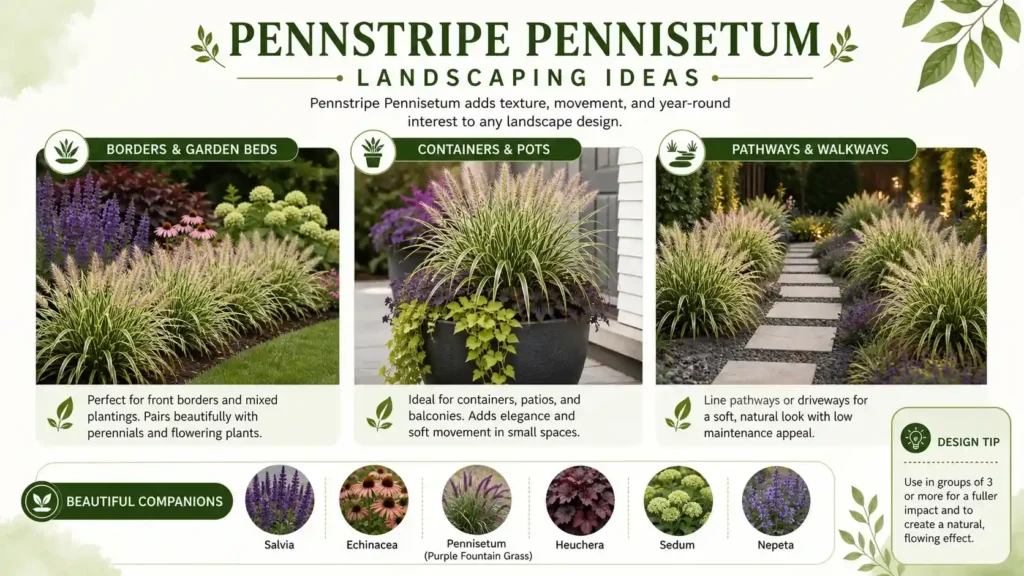
In mixed landscape designs, it is often paired with structural planting like Deciduous Trees: Definition, Types & Characteristics to create contrast between soft grasses and permanent garden elements.
It is also commonly combined with compact ornamental trees such as Dwarf Japanese Maple: Guide to Small Maple Trees to create layered container displays.
Mixed Beds: Pair with flowering perennials like coneflowers, salvia, or ornamental grasses for layered height and seasonal interest.
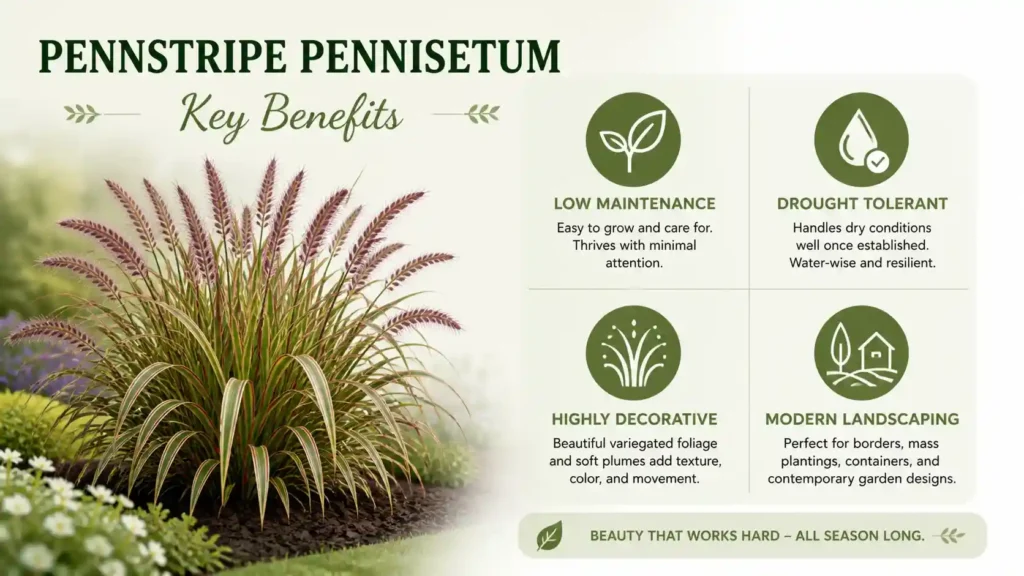
Pennstripe pennisetum stands out as a reliable and visually appealing ornamental grass, offering multiple advantages for both home gardeners and landscape professionals.
For a deeper understanding of how plant selection, care conditions, and comparisons influence long-term garden success, you can explore this detailed guide on The Ultimate Guide to Plant Growth, Care & Comparisons for Gardens and Indoor Spaces.
While pennstripe pennisetum is a low-maintenance ornamental grass, there are a few considerations to keep in mind for optimal performance.
Pennstripe pennisetum is a highly valuable ornamental grass that plays an important role in modern landscaping. Its compact size, graceful foliage, and seasonal plumes make it a versatile choice for borders, containers, and structured garden designs. As a refined form of fountain grass, it delivers both visual appeal and functional simplicity.
It stands out as a best choice for low-maintenance gardens, requiring minimal care while still providing consistent texture and movement throughout the growing season. Its adaptability to different conditions further enhances its reliability in various landscape settings.
Whether used by beginners or experienced landscapers, pennstripe pennisetum offers a balanced combination of beauty, ease, and performance, making it a dependable addition to any garden space.
Pennstripe pennisetum is mainly used for ornamental purposes in landscaping. It is ideal for: Garden borders Container planting Pathway edging Adding texture and movement to modern garden designs Its compact size makes it especially suitable for small and structured spaces.
Yes, pennstripe pennisetum is a cultivated variety of fountain grass, specifically from pennisetum alopecuroides. It shares the same fountain-like growth habit but differs by being more compact and controlled in size.
Pennstripe pennisetum typically grows: Height: 12 to 24 inches (30–60 cm) Spread: 12 to 18 inches (30–45 cm) It maintains a dwarf and compact form, making it easy to manage.
Yes, pennisetum alopecuroides performs best in full sun. However, it can tolerate partial shade. For optimal growth and flowering, at least 5–6 hours of direct sunlight is recommended.
The main differences include: Size: Pennstripe is compact; nafray is medium-sized Use: Pennstripe suits borders and pots; nafray is better for open landscaping Growth habit: Pennstripe is tighter and more controlled Both belong to the same species but serve different design purposes.
Yes, once established, pennstripe pennisetum is drought tolerant. It requires moderate watering initially but can handle dry conditions later, making it suitable for low-water landscapes.
Yes, it is highly suitable for containers and pots due to its compact growth habit. Ensure the pot has good drainage and place it in a sunny location for best results.
It typically blooms in late summer to early fall. During this time, it produces soft, foxtail-like flower spikes that enhance its ornamental appeal.
Yes, it is a perennial ornamental grass in suitable climates. It may go dormant in winter but regrows in spring with proper care.
Yes, it is an excellent choice for beginners due to its low maintenance, adaptability, and minimal care requirements.