Grow Better Gardens with Smarter Plant Choices
Discover helpful guides on trees, hedges, fruit plants, edible plants, and beautiful landscape greenery.
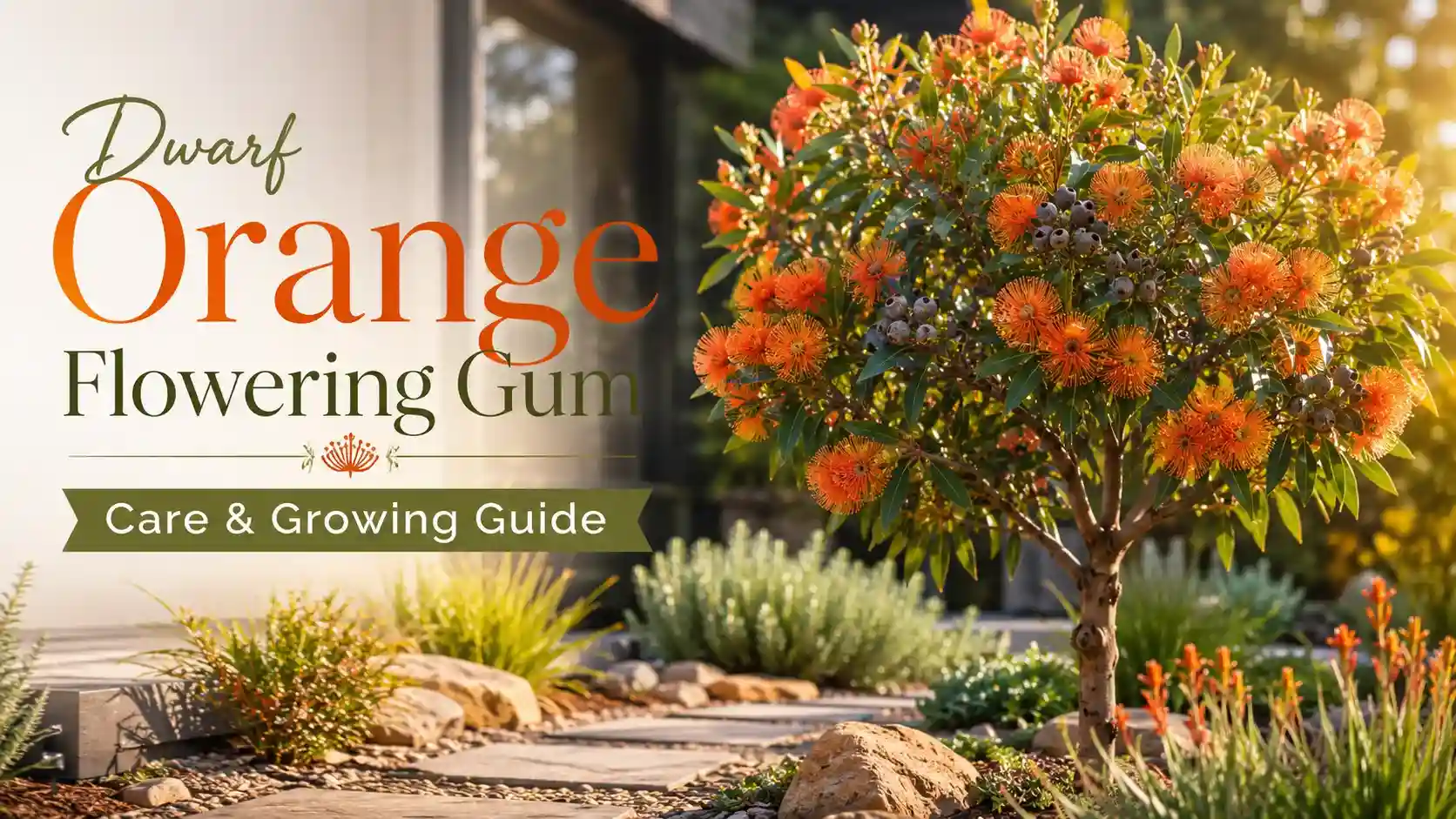
The dwarf orange flowering gum belongs to the species Corymbia ficifolia, an iconic Australian native tree widely admired for its colorful blooms and ornamental value. This species was previously classified as eucalyptus ficifolia, and many gardeners still recognize it by that former botanical name. Because of this reclassification, related terms such as eucalyptus corymbia ficifolia, ficifolia eucalyptus, and eucalyptus ficifolia tree are commonly used in gardening references and plant catalogs.
Corymbia ficifolia is part of the Myrtaceae family, which includes many eucalyptus and gum tree species native to Australia. Dwarf cultivars are specially selected varieties bred for compact growth, improved flowering performance, and suitability for residential landscapes. These smaller forms retain the vibrant floral display of standard flowering gums while fitting comfortably into modern garden spaces.
Dwarf corymbia varieties are known for their compact structure, dense foliage, and striking orange flower clusters that appear during the blooming season. Unlike large eucalyptus trees that can dominate a landscape, a dwarf gum maintains a smaller and more controlled growth habit, making it easier to manage in home gardens.
Key characteristics of miniature flowering gum trees include:
The naturally rounded canopy and vibrant blooms make these trees highly popular as feature plants in Australian native gardens and water-wise landscapes.
Most dwarf orange flowering gum varieties grow significantly smaller than standard flowering gums. Average mature height typically ranges from 3 to 8 meters, depending on the specific cultivar and growing conditions. The spread is usually proportional, creating a balanced and compact canopy suitable for residential use.
Because of their reduced size, dwarf flowering gums are ideal for:
Their manageable root systems and moderate growth habit also make them more practical near homes, pathways, and outdoor entertaining areas compared to full-sized gum trees.
The dwarf orange flowering gum is a compact ornamental form of Corymbia ficifolia, a flowering Australian native tree famous for its colorful blooms and evergreen foliage. Before being reclassified into the Corymbia genus, the species was widely known as eucalyptus ficifolia. Many plant growers and nurseries still use older botanical references, which is why terms like eucalyptus corymbia ficifolia, ficifolia eucalyptus, and eucalyptus ficifolia tree continue to appear in gardening guides and plant catalogs.
Corymbia ficifolia belongs to the Myrtaceae family, which includes eucalyptus, bottlebrush, and tea tree species. Dwarf cultivars are specially selected forms developed for compact growth, improved flowering, and better suitability for modern residential landscapes.
Dwarf corymbia trees are valued for their manageable size and vibrant ornamental appearance. These smaller gum trees maintain the colorful flowering habit of larger varieties while fitting comfortably into compact outdoor spaces.
Common features of a dwarf gum include:
Many miniature flowering gum trees also perform well in warm and dry climates, making them suitable for low-maintenance gardens and water-wise landscaping designs. Their intense orange blooms create strong visual contrast against the green foliage, making them highly desirable as ornamental focal points.
Most dwarf orange flowering gum varieties grow much smaller than standard flowering gum trees. Depending on the cultivar, mature height generally ranges between 3 and 8 meters, with a balanced canopy spread that suits compact landscapes.
Their reduced size makes them highly suitable for:
Because these trees stay relatively compact, they are easier to maintain and prune than larger gum trees. Many gardeners choose dwarf flowering gums when they want the beauty of a flowering eucalyptus without the excessive height or wide root spread associated with full-sized varieties.
Corymbia ficifolia ‘Baby Orange’ is one of the most popular compact flowering gum cultivars for residential gardens. Commonly called corymbia baby orange or baby orange flowering gum, this dwarf variety is admired for its vibrant orange flower clusters and naturally compact growth habit.
This cultivar typically produces masses of bright orange blossoms during late spring and summer, creating a striking ornamental display that attracts birds, bees, and butterflies. The evergreen foliage remains attractive year-round, while the dense canopy makes the tree suitable for smaller landscapes.
Key features of Corymbia ficifolia ‘Baby Orange’ include:
Best landscape uses include:
Its manageable size and strong flowering habit make it one of the most practical dwarf flowering gum trees for modern homes.
Corymbia dwarf orange, sometimes sold as corymbia mini orange, is another compact flowering gum selected for smaller residential spaces. This variety develops a rounded canopy with dense foliage and produces abundant orange flowers during the flowering season.
The growth pattern is typically upright yet compact, allowing the tree to fit comfortably into narrow landscapes, borders, and smaller backyards. Many gardeners choose this variety because it combines ornamental value with excellent climate adaptability.
Notable characteristics include:
Corymbia mini orange performs especially well in warm climates with full sun exposure. Its moderate growth rate and smaller root system make it easier to maintain than standard flowering gums.
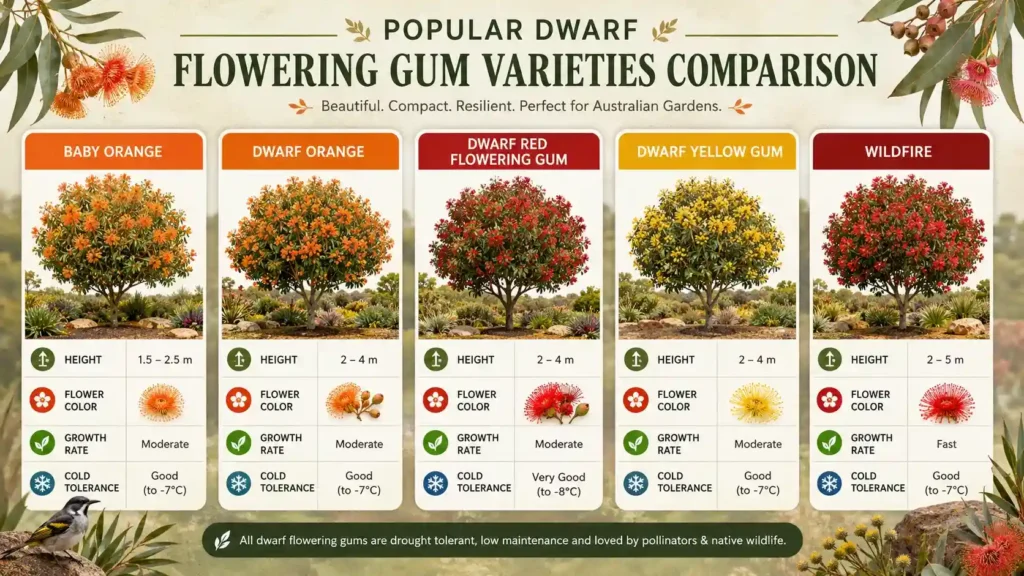
Although orange flowering varieties are highly popular, several other dwarf flowering gum cultivars are also widely grown for their colorful blooms and ornamental appeal. These varieties differ in flower color, mature size, and climate tolerance.
Popular alternatives include:
The following comparison table highlights key differences among common flowering gum varieties:
|
Variety |
Average Height | Flower Color | Growth Rate | Cold Tolerance |
| Corymbia ficifolia ‘Baby Orange’ | 3–5 m | Bright orange | Moderate |
Moderate |
|
Corymbia dwarf orange |
4–6 m | Orange | Moderate to fast | Moderate |
| Dwarf red flowering gum | 4–7 m | Red | Moderate |
Moderate |
|
Dwarf yellow gum |
3–5 m | Yellow | Moderate | Slightly higher |
| Eucalyptus ficifolia wildfire | 5–8 m | Scarlet red | Fast |
Moderate |
Choosing the right flowering gum variety depends on available space, climate conditions, and preferred flower color. Compact cultivars are especially valuable in modern landscapes where smaller ornamental trees are preferred.
Some ornamental flowering gums are especially appreciated for their softer pink blooms and extended seasonal flowering displays in residential landscapes.
A dwarf orange flowering gum grows best in warm temperate to subtropical climates where it receives plenty of sunlight and airflow. Most Corymbia ficifolia dwarf varieties thrive in regions with warm summers, mild winters, and low humidity. These trees are especially popular in Australian native gardens because they adapt well to dry conditions once established.
For healthy growth and heavy flowering, provide:
Although some cultivars show moderate frost tolerance, young trees can suffer damage from severe or repeated frost exposure. In cooler climates, planting near walls or sheltered garden areas can help protect foliage and developing flower buds.
Well-draining soil is one of the most important requirements for growing a healthy dwarf flowering gum. Poor drainage can lead to root stress, fungal problems, and reduced flowering performance.
Ideal soil conditions include:
Heavy clay soils that retain water for long periods should be improved before planting. Adding coarse sand, compost, or organic matter can improve drainage and soil texture.
Avoid:
Healthy root conditions are essential for maintaining strong flowering and evergreen foliage throughout the year.
Correct planting helps establish a strong root system and encourages long-term growth.
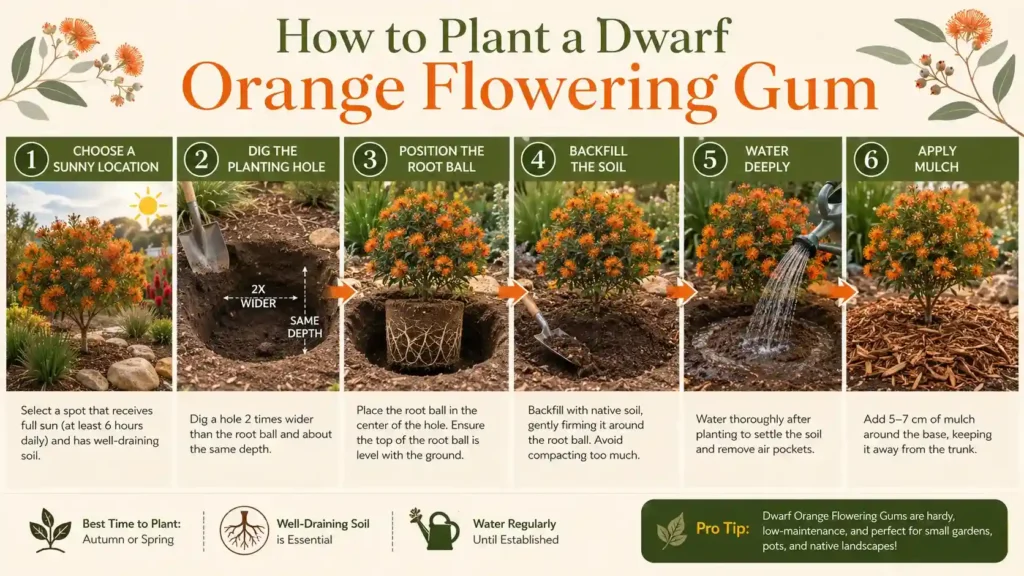
Proper spacing improves airflow and allows the canopy to develop naturally.
Mulch helps maintain soil moisture and regulate root temperature.
Recommended mulch practices:
Many gardeners grow dwarf gums successfully in containers because of their compact size and manageable root systems. A miniature orange flowering gum or compact dwarf eucalyptus variety can become an excellent patio or courtyard feature plant.
Benefits of container growing include:
Choose a large and sturdy container that allows adequate root growth.
General guidelines:
Proper drainage is essential when growing flowering gums in containers.
Important drainage practices:
Container-grown dwarf flowering gums may require more regular watering than garden-planted specimens, especially during hot weather.
Proper watering is important for establishing a healthy dwarf flowering gum, especially during the first few growing seasons. Young trees need more consistent moisture while developing strong roots, whereas mature trees become more drought tolerant over time.
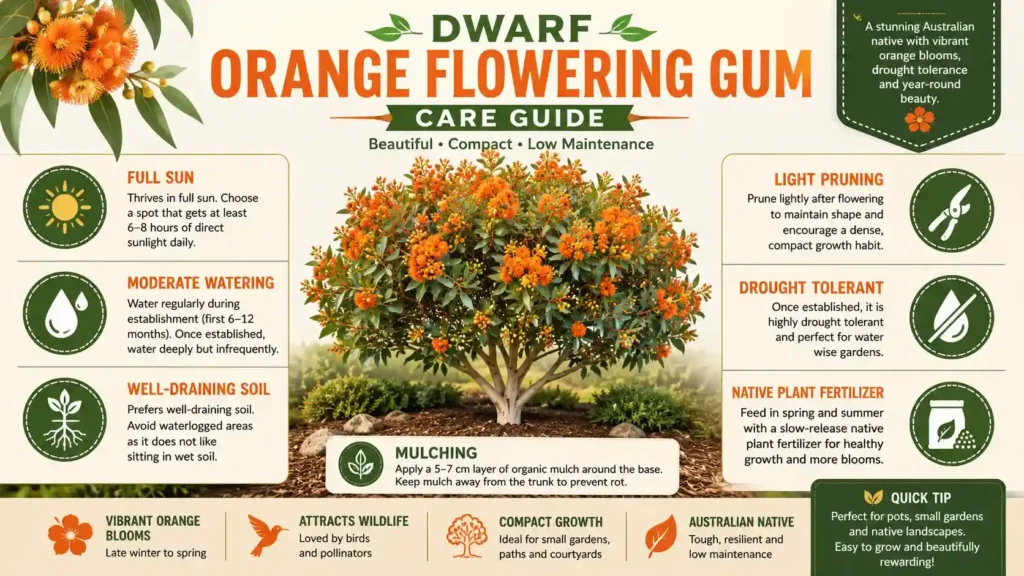
Newly planted flowering gums should be watered deeply and regularly to help roots establish.
Recommended practices include:
Deep watering encourages roots to grow downward, improving drought resistance later.
Once established, mature dwarf flowering gums require much less supplemental watering.
Mature trees generally:
Overwatering is one of the most common problems with flowering gums and can lead to root stress or fungal disease.
Dwarf flowering gums usually require only moderate feeding to maintain healthy foliage and strong flowering performance. Excess fertilizer, especially high-nitrogen products, can reduce blooming and encourage excessive leafy growth.
Use balanced or low-phosphorus fertilizers designed for Australian native plants whenever possible.
Suitable options include:
Avoid heavy feeding with high-nitrogen fertilizers because they may reduce flower production.
A simple feeding routine is usually sufficient.
|
Season |
Fertilizing Recommendation |
| Early spring |
Apply slow-release native fertilizer |
|
Late spring |
Light feeding if growth is weak |
| Summer |
Minimal feeding during active flowering |
|
Autumn |
Optional light compost application |
| Winter |
Usually no fertilizer needed |
Always water thoroughly after applying fertilizer to protect roots and improve nutrient absorption.
Regular maintenance helps preserve the compact shape and healthy structure of a dwarf flowering gum. Compared to full-sized flowering gums, dwarf varieties are generally easier to prune and manage.
Light shaping can encourage a fuller canopy and improve the overall appearance of the tree.
Helpful pruning practices include:
Heavy pruning into old wood is generally not recommended because recovery may be slower.
Dead, damaged, or diseased branches should be removed promptly to improve airflow and overall tree health.
Prune to:
Always use clean and sharp pruning tools to minimize plant stress.
Healthy flowering depends on proper sunlight, balanced nutrition, and careful pruning.
To improve blooming:
Consistent care usually results in heavier seasonal flowering displays.
Mulching plays an important role in protecting roots and maintaining stable soil conditions around dwarf flowering gums.
A protective mulch layer helps:
Organic mulches such as bark chips, leaf mulch, or composted wood products work well around flowering gums.
Some dwarf flowering gums develop relatively shallow feeder roots near the soil surface. Because of this, root disturbance should be minimized.
Avoid:
Maintaining balanced soil moisture is essential for long-term tree health.
Best practices include:
Healthy root systems support stronger flowering, better drought tolerance, and improved overall growth.
The dwarf orange flowering gum is prized for its spectacular blooming display, which typically appears from late spring through summer. In warmer climates, some varieties may begin flowering earlier and continue producing blooms for an extended period.
Typical flowering periods include:
Bloom timing can vary depending on climate, sunlight exposure, rainfall, and cultivar type. Trees grown in full sun with proper drainage generally produce heavier and more reliable flowering displays.
Climate conditions strongly influence bloom performance:
|
Climate Condition |
Effect on Flowering |
| Full sun exposure |
Encourages abundant blooms |
|
Warm temperatures |
Improves flower production |
| Mild winters |
Supports healthy bud development |
|
Heavy frost |
May damage flower buds |
| Excess rainfall |
Can reduce flowering intensity |
Healthy mature trees often produce dense clusters of flowers that cover much of the canopy during peak blooming season.
One of the most attractive features of the orange flowering gum is its brilliant orange flower clusters filled with nectar-rich stamens. The fluffy blossoms create strong visual impact while also supporting local pollinators and wildlife.
The flowers are highly attractive to:
Bees are commonly drawn to the nectar and pollen produced during flowering season, while birds such as lorikeets and honeyeaters often visit the tree for feeding. Butterflies are also attracted to the colorful blooms, making the tree beneficial for pollinator-friendly gardens.
Key bloom characteristics include:
The bright blossoms create excellent contrast against the evergreen foliage, making the tree a standout feature in residential landscapes and native gardens.
After flowering finishes, the tree develops decorative seed capsules commonly known as flowering gum nuts. These woody capsules are a signature feature of many gum tree species and contribute additional ornamental interest long after the blooming season ends.
The formation process typically includes:
These gumnut flowers and seed capsules provide visual texture and seasonal character throughout the year. Many gardeners appreciate the ornamental appearance of the gumnuts even after the colorful flowers fade.
Decorative benefits include:
Combined with evergreen foliage and vibrant orange blooms, the decorative bark and gumnuts help maintain the ornamental value of the tree across multiple seasons.
The compact size and vibrant flowering habit of a dwarf orange flowering gum make it highly suitable for smaller residential landscapes. Unlike full-sized gum trees, dwarf varieties fit comfortably into modern outdoor spaces while still delivering strong visual impact.
Compact native trees with seasonal blooms are often used in ornamental landscape designs that combine year-round foliage with colorful flowering displays.
Common uses in small gardens include:
A dwarf flowering gum works exceptionally well as a focal point in front yards, courtyards, and compact landscapes. The brilliant orange flowers create seasonal color while the evergreen canopy provides year-round structure.
Best feature planting locations include:
Many compact varieties grow successfully in large containers, making them ideal patio plants. A potted flowering gum adds height, color, and native character to balconies, terraces, and paved outdoor areas.
Container-grown trees are especially useful for:
Dwarf flowering gums can also be incorporated into mixed planting borders where they provide vertical structure and seasonal flowering interest.
Benefits in borders include:
Dwarf flowering gums are widely used in Australian native landscape designs because they blend naturally with other indigenous plants and tolerate dry conditions well.
These trees are highly effective in:
Their adaptability to warm climates and relatively low water requirements make them valuable for sustainable landscaping projects. The orange blooms also provide a striking contrast against silver, grey, and deep green native foliage plants commonly used in Australian garden design.
Additional advantages in native gardens include:
Choosing suitable companion plants helps enhance the ornamental appeal of a dwarf orange flowering gum while maintaining balanced garden design.
Popular companion plant choices include:
Soft-textured native grasses create attractive contrast beneath flowering gums.
Suitable options include:
Compact shrubs help fill surrounding planting areas and add layered texture.
Good companion shrubs include:
Orange-flowering companion plants can create a bold warm-toned landscape palette.
Examples include:
Combining flowering gums with drought-tolerant companion plants also supports lower-maintenance garden design.
Some dwarf orange flowering gum varieties can function as informal screening trees, especially in smaller residential spaces where compact privacy planting is preferred.
Potential privacy applications include:
Because dwarf varieties remain smaller than standard flowering gums, they are better suited for moderate screening rather than tall privacy hedges.
Proper spacing is important when using flowering gums for screening.
General recommendations include:
|
Planting Purpose |
Recommended Spacing |
|
Informal screening |
2–4 meters apart |
| Feature planting |
3–5 meters apart |
|
Mixed borders |
Allow canopy spread room |
| Container displays |
Individual placement |
Adequate spacing improves airflow, reduces competition between roots, and allows each tree to develop a healthy flowering canopy.
Although dwarf orange flowering gums are generally hardy trees, they can occasionally develop pest or disease problems, especially when grown in poor conditions or under stress.
Psyllids are small sap-sucking insects that commonly affect flowering gums and eucalyptus species. They can cause leaf distortion, discoloration, and reduced plant vigor.
Common symptoms include:
Control methods:
Healthy trees usually recover well from mild psyllid activity.
Scale insects attach themselves to stems and foliage while feeding on plant sap. Heavy infestations may weaken the tree and encourage sooty mold growth.
Signs of scale infestation include:
Treatment options:
Root rot is one of the most serious problems affecting flowering gums and is usually caused by poorly drained or constantly wet soil.
Symptoms may include:
Prevention is the best solution.
To reduce root rot risk:
Healthy drainage conditions are essential for long-term root health.
A dwarf flowering gum may fail to bloom properly if growing conditions are unsuitable. Flower production depends heavily on sunlight, balanced nutrition, and correct pruning practices.
Flowering gums require full sun for strong blooming performance. Trees planted in shaded locations often develop fewer flowers and weaker growth.
For best flowering:
Too much fertilizer, especially high-nitrogen products, can encourage leafy growth at the expense of flowers.
Problems caused by overfertilizing include:
Use controlled-release native plant fertilizers and avoid excessive feeding.
Incorrect pruning can remove developing flower buds and reduce seasonal blooming.
To encourage flowering:
Balanced pruning helps maintain both canopy shape and flower production.
Leaf drop in dwarf flowering gums is often linked to environmental stress or root problems. Identifying the cause early helps prevent long-term damage.
Extreme heat and prolonged dry weather can stress the tree, especially young plants.
Heat stress symptoms include:
Solutions:
Overwatering is a common issue in poorly drained soils and container-grown trees.
Signs include:
Allow soil to dry slightly between watering sessions and improve drainage where necessary.
Young flowering gums and tender new growth can be damaged by heavy frost.
Frost damage symptoms include:
Protection methods include:
Most established dwarf flowering gums recover well once temperatures warm and growing conditions improve.
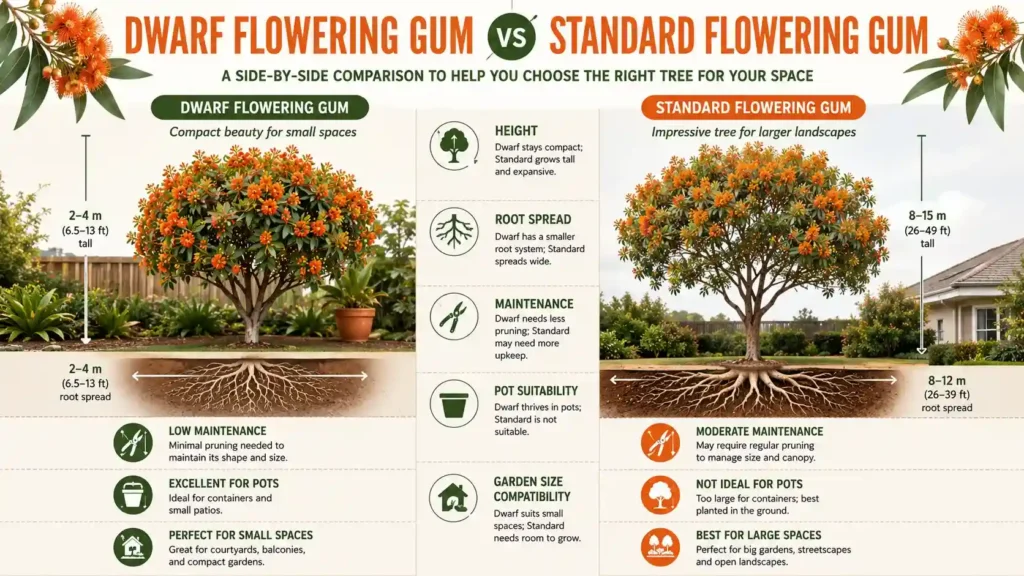
The main difference between a dwarf orange flowering gum and a standard flowering gum is overall size. Standard flowering gums can become very large landscape trees, while dwarf cultivars are specifically bred to remain compact and manageable.
Dwarf varieties generally grow between 3 and 8 meters tall, depending on the cultivar, while full-size flowering gums may exceed 10–15 meters under suitable conditions. The canopy spread and root system of standard trees are also significantly larger.
Because of their reduced size, dwarf flowering gums are better suited for:
Full-sized flowering gums are more appropriate for:
Compact dwarf cultivars provide the ornamental beauty of flowering gums without overwhelming smaller outdoor areas.
Many smaller flowering gum selections are specifically cultivated for residential landscapes where compact growth and manageable maintenance are important.
Dwarf flowering gums are generally easier to maintain than standard flowering gum trees. Their compact structure simplifies pruning, watering, and long-term garden management.
Smaller trees are much easier to shape and control. Light pruning is usually enough to maintain an attractive canopy and encourage healthy flowering.
Maintenance advantages include:
Standard flowering gums often require more extensive pruning because of their larger size and faster growth.
Once established, dwarf flowering gums usually require less water overall due to their smaller canopy and root system. This makes them highly suitable for water-wise landscapes and drought-tolerant gardens.
Benefits include:
Their moderate water use is especially valuable in modern residential landscaping where low-maintenance plants are preferred.
For most modern homes, dwarf flowering gums are often the more practical option. They deliver vibrant seasonal blooms, evergreen foliage, and native landscape appeal while remaining manageable in smaller outdoor spaces.
Reasons dwarf varieties suit residential gardens include:
Dwarf cultivars also provide strong ornamental value without the infrastructure concerns sometimes associated with large eucalyptus trees.
|
Feature |
Dwarf Flowering Gum |
Standard Flowering Gum |
|
Height |
3–8 meters | 10–15+ meters |
| Root Spread | Moderate and compact |
Wide and extensive |
|
Maintenance |
Lower maintenance | Higher maintenance |
| Pot Friendly | Suitable for containers |
Generally unsuitable for pots |
A small flowering gum can become an eye-catching feature in front yard landscapes thanks to its compact size, evergreen foliage, and vibrant orange blooms. Dwarf varieties work especially well in modern residential gardens where space is limited but strong visual impact is still desired.
Ideal front yard planting locations include:
When positioning dwarf flowering gum trees in front yards, allow enough space for canopy spread and airflow around the tree. Full sun exposure is important for maintaining healthy growth and strong flowering performance.
Benefits of front yard planting include:
Dwarf gums are highly effective as backyard feature trees because they create shade, structure, and seasonal color without dominating the landscape.
Popular backyard uses include:
The naturally rounded canopy and bright flowers help create visual balance in outdoor living spaces. Many homeowners use flowering gums to add vertical interest while maintaining an open and manageable garden layout.
For best results:
Smaller cultivars are particularly useful in compact suburban backyards where larger eucalyptus species would be unsuitable.
Many dwarf flowering gum trees grow successfully in large containers, making them ideal for patios, balconies, terraces, and paved courtyards.
Container displays are popular because they allow gardeners to enjoy the ornamental beauty of flowering gums in limited spaces.
Advantages of container growing include:
For attractive patio displays:
Container-grown dwarf gums can serve as striking statement plants in contemporary landscape designs.
Some compact flowering gum varieties can also function as street trees in residential areas where smaller ornamental trees are preferred.
Suitable characteristics include:
However, proper placement remains important. Street planting locations should provide:
Because dwarf flowering gum trees remain smaller than standard flowering gums, they are often easier to manage in urban streetscapes and narrow residential settings. Their colorful blooms also add seasonal visual interest to public and private landscapes.
Most dwarf orange flowering gum varieties grow between 3 and 8 meters tall, depending on the cultivar and growing conditions. Compact selections such as Corymbia ficifolia ‘Baby Orange’ usually remain much smaller than standard flowering gums, making them suitable for residential gardens, patios, and courtyards.
Yes, Corymbia ficifolia dwarf varieties can grow successfully in large pots and containers. Their compact root systems and manageable size make them ideal for patios, balconies, and urban gardens. Use a large container with excellent drainage and a premium free-draining potting mix for best results.
Dwarf flowering gums generally have a moderate growth rate. Under favorable conditions with full sun, proper drainage, and regular watering during establishment, many varieties can grow steadily and develop into mature flowering trees within several years.
Yes, the nectar-rich flowers strongly attract birds, bees, butterflies, and other pollinators. Flowering gums are highly valued in wildlife-friendly gardens because their bright blooms provide an excellent food source during the flowering season.
The best soil for dwarf flowering gums is well-draining sandy or loamy soil with a slightly acidic to neutral pH. Good drainage is essential because waterlogged conditions can increase the risk of root rot and poor growth.
Many dwarf flowering gum varieties tolerate light to moderate frost once established, but young trees are more sensitive to freezing temperatures. In colder climates, planting in sheltered sunny areas can help protect foliage and flower buds from frost damage.
Corymbia Baby Orange typically flowers from late spring through summer. Bloom timing may vary depending on local climate, sunlight exposure, and seasonal weather conditions. Warm climates with full sun usually produce heavier flowering displays.
Yes, established dwarf flowering gums are generally drought tolerant and perform well in low-water landscapes. However, newly planted trees still require regular watering during their establishment period to develop healthy roots.
Dwarf flowering gums are evergreen trees, meaning they retain foliage throughout the year. Some seasonal leaf drop is normal, especially during environmental stress, drought, or temperature changes.
Yes, light pruning can help maintain a compact shape and encourage denser growth. The best time to prune is after flowering. Avoid excessive hard pruning, as heavy cutting may reduce flowering performance.
Most dwarf flowering gum varieties are more suitable near homes than large standard gum trees because they have a smaller canopy and reduced root spread. Proper spacing is still important to allow healthy growth and airflow.
Dwarf flowering gums pair well with Australian native grasses, grevilleas, bottlebrush shrubs, kangaroo paw, and other drought-tolerant plants. These combinations create attractive low-maintenance native garden designs.
Yellow leaves may result from overwatering, poor drainage, nutrient imbalance, or root stress. Improving soil drainage and adjusting watering practices usually helps restore healthy growth.
Many dwarf flowering gum varieties perform well in coastal gardens because they tolerate heat, wind, and dry conditions. Some cultivars also handle mild salt exposure better than many ornamental trees.