Grow Better Gardens with Smarter Plant Choices
Discover helpful guides on trees, hedges, fruit plants, edible plants, and beautiful landscape greenery.

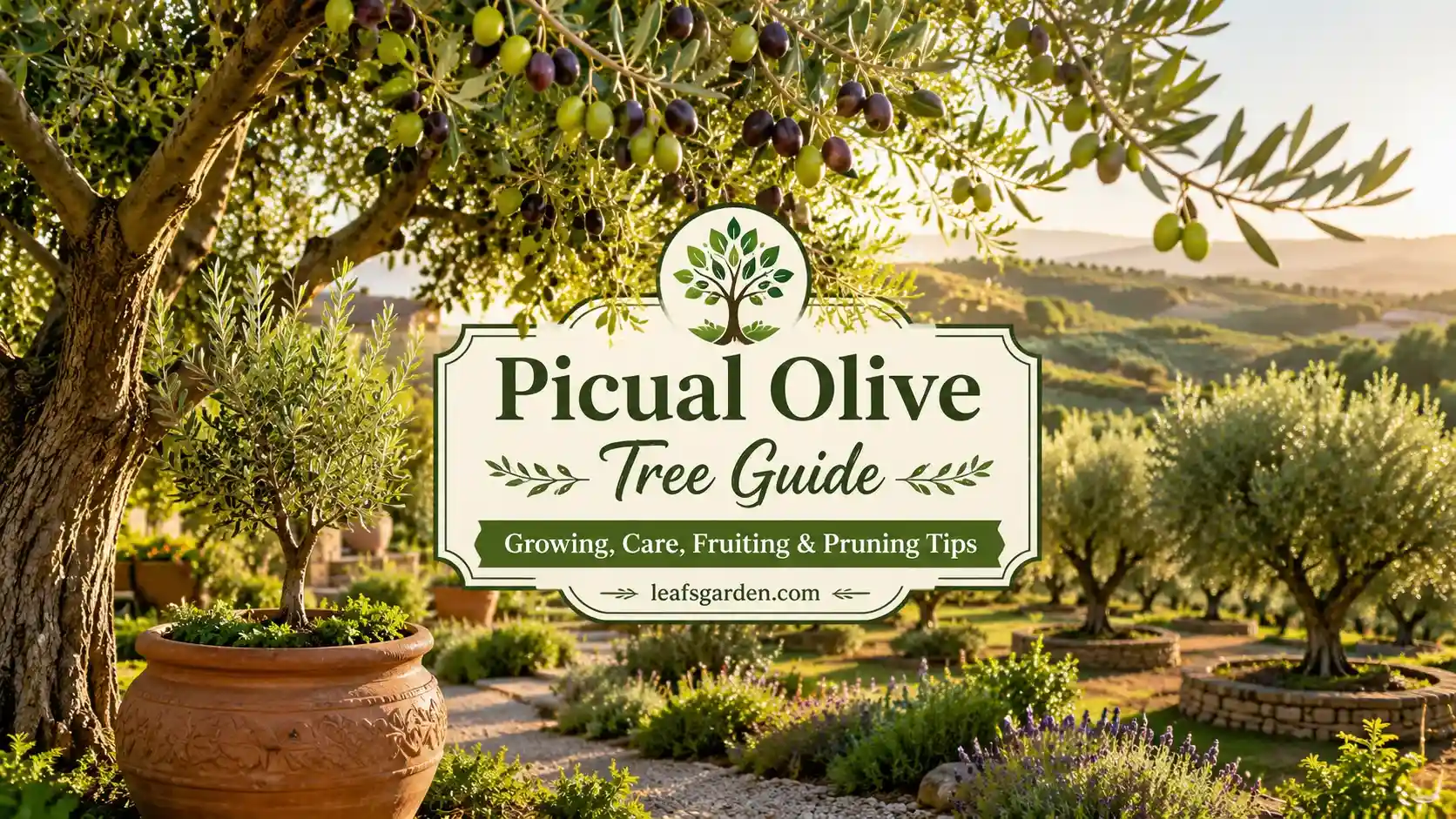
The Picual olive tree is a productive Spanish olive variety known for high oil content, drought tolerance, fast growth, and adaptability in warm climates like Australia, the USA, and Mediterranean regions.
The Picual olive tree belongs to the species Olea europaea, the botanical classification used for cultivated olive trees grown for fruit and olive oil production. This evergreen olive tree is one of the most widely planted Spanish olive varieties because it produces consistent harvests, adapts well to dry climates, and develops olives with exceptionally high oil yield.
Picual olives are especially valued for premium extra virgin olive oil. The fruit contains strong antioxidant levels, rich flavor compounds, and stable oil quality that performs well in both commercial orchards and home gardens. Because of this, the Picual olive oil tree has become popular across Mediterranean climate regions and expanding olive-growing areas worldwide.
In Australia, Picual olive trees perform well in warm and sunny regions with well-draining soil and low humidity. They are commonly grown in areas similar to Mediterranean climate conditions, including parts of South Australia, Victoria, Western Australia, and inland New South Wales. In the USA, they also grow successfully in California, Arizona, Texas, and other dry warm regions.
This olive oil tree is suitable for both backyard planting and container growing. Many gardeners grow Picual olive trees in pots for patios, courtyards, and small gardens because the tree responds well to pruning and controlled root space. The variety is also known for reliable fruiting, strong branching structure, and moderate-to-fast growth when planted in full sun.
Picual olive trees can be propagated from cuttings or seed, although cuttings are usually preferred for faster fruit production and consistent genetics. With proper pruning, watering, and sunlight, this Olea europaea variety can remain productive for decades while also serving as an ornamental evergreen tree in modern Mediterranean-style landscapes.
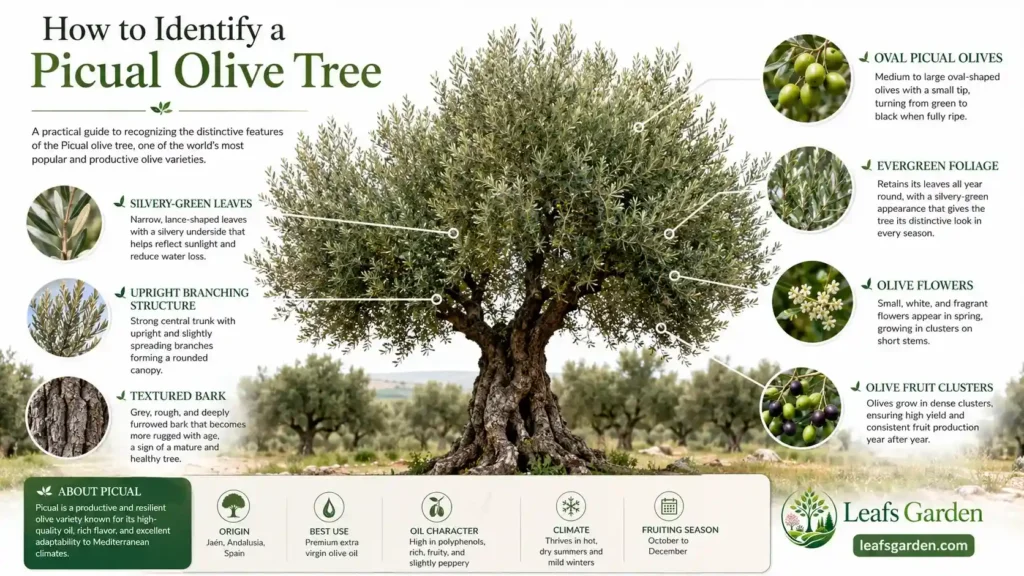
Picual olive trees have silvery-green leaves, dense branching, oval olives, and strong upright growth.
The Picual olive tree is an evergreen olive tree known for its vigorous structure and productive fruiting habit. The tree develops a naturally upright canopy with strong branches that support heavy olive production during the fruiting season. Mature trees often form a rounded crown with dense evergreen foliage that remains attractive throughout the year.
The leaves of the Picual olive tree are narrow and elongated with a silvery-green appearance. Like many Olea europaea varieties, the upper leaf surface appears gray-green while the underside has a lighter silver tone that reflects sunlight and reduces moisture loss in hot climates.
Picual olives are medium to large in size with an oval-to-pointed fruit shape. The olive fruit usually develops from green to deep purple-black as it ripens. Because of their high oil concentration, Picual olives are primarily grown for olive oil production rather than table olive use.
During spring, olive flowers appear in clusters of small creamy-white blooms. These flowers develop on mature wood and later form olives after successful pollination. A healthy olive tree with olives typically shows heavy fruit clusters hanging throughout the canopy in late summer and autumn.
Picual olive tree size depends on climate, pruning, and growing conditions. In open ground, the tree can commonly reach:
In pots or containers, the olive tree dimensions remain smaller and easier to manage through regular pruning. This makes Picual one of the more practical olive tree varieties Australia gardeners use for patios and compact gardens.
The scientific name of the olive tree is Olea europaea. The Picual cultivar belongs to the Olea europaea plant species, which includes hundreds of cultivated olive varieties grown across Mediterranean and warm-climate regions.
The Olea europaea olive tree is part of the Oleaceae family, commonly known as the olive family. This family also includes ornamental and flowering plants such as jasmine, lilac, and ash trees.
Basic plant classification of the olive european tree:
| Classification | Details |
| Botanical Name | Olea europaea |
| Common Name | Olive tree |
| Cultivar | Picual |
| Plant Type | Evergreen fruit tree |
| Family | Oleaceae |
| Native Region | Mediterranean Basin |
The Picual cultivar is widely recognized for high oil yield, drought resistance, and commercial orchard productivity. It is one of the most important olive cultivars used in global olive farming and olive oil industries.
Gardeners looking to build a productive edible landscape will find the Picual olive a standout addition among the many rewarding fruit trees and edible plants suited to warm Australian and Mediterranean-style climates.
Picual olives originated in Spain and became one of the world’s leading olive oil cultivars.
The Picual variety was traditionally cultivated in the Andalusia region of southern Spain, where olive farming has existed for centuries. Over time, Picual became one of the dominant Spanish olive cultivation varieties because of its excellent oil stability, strong harvest production, and adaptability to dry Mediterranean climates.
The name “Picual” comes from the pointed tip of the olive fruit. This unique shape helps distinguish it from many other Spanish olive varieties grown for either oil or table use.
Today, Picual olives play a major role in extra virgin Spanish olive oil production. The oil produced from Picual olives is known for:
As global demand for olive oil increased, Picual olive farming expanded beyond Spain into Australia, the USA, South America, and other Mediterranean-like regions. Modern growers value the variety for both commercial orchards and home cultivation because the tree tolerates heat, drought, and low-water conditions better than many fruit trees.
Picual olives are larger and more oil-rich, while Arbequina and Manzanillo olives are often preferred for table olives and compact growth.
Different olive tree varieties Australia growers choose depend on climate, harvest goals, and available space. Some types olive trees are better for oil production, while others are selected for fresh eating, ornamental use, or container gardening.
The Arbequina olive tree is popular for smaller gardens and high-density planting because of its compact growth habit. The Manzanillo olive tree is widely grown for table olives due to its mild flavor and attractive fruit. The Coratina olive tree is known for strong-flavored oil and excellent drought tolerance.
| Variety | Oil Production | Tree Size | Best Climate | Fruiting |
| Picual | Very high | Medium to large | Hot, dry Mediterranean climates | Heavy and reliable |
| Arbequina | Moderate to high | Small to medium | Mild warm climates | Early fruiting |
| Manzanillo | Moderate | Medium | Warm coastal climates | Good table olive production |
| Coratina | High | Large | Dry and hot climates | Strong seasonal production |
Among the many types of olive trees Australia gardeners grow, Picual remains one of the best choices for olive oil production, drought resistance, and long-term productivity.
Gardeners interested in a more compact olive variety may also explore the Arbequina olive tree, a popular smaller-growing Spanish cultivar that suits container gardens and high-density backyard planting beautifully.
Picual olive trees grow best in warm, dry climates with full sun and good airflow.
The ideal olive growing conditions include long sunny days, low humidity, mild winters, and well-draining soil. Like most Olea europaea varieties, Picual olive trees naturally thrive in Mediterranean climate regions where summers are hot and dry and winters remain relatively mild.
These growing conditions for olive trees help reduce fungal problems, improve fruit production, and support healthy root development. Consistent sunlight and airflow are especially important because dense moisture around the canopy can increase disease pressure and reduce olive quality.
In Australia, Picual olive trees perform well in many warm regions including:
Many gardeners successfully grow olive trees Australia-wide in sunny backyard gardens and orchards. Olive trees Brisbane growers should focus on improving airflow and drainage because subtropical humidity can sometimes increase fungal risks.
In the USA, Picual olive trees grow best in:
The best olive tree conditions growing environments usually include:
| Growing Factor | Ideal Condition |
| Sunlight | Full sun |
| Climate | Warm and dry |
| Rainfall | Moderate to low |
| Humidity | Low to moderate |
| Airflow | Open circulation |
| Winter Temperature | Mild frost tolerance |
Because of their drought tolerance and adaptability, Picual olive trees are considered one of the most reliable olive tree Australia and USA growers can cultivate in warm-climate landscapes.
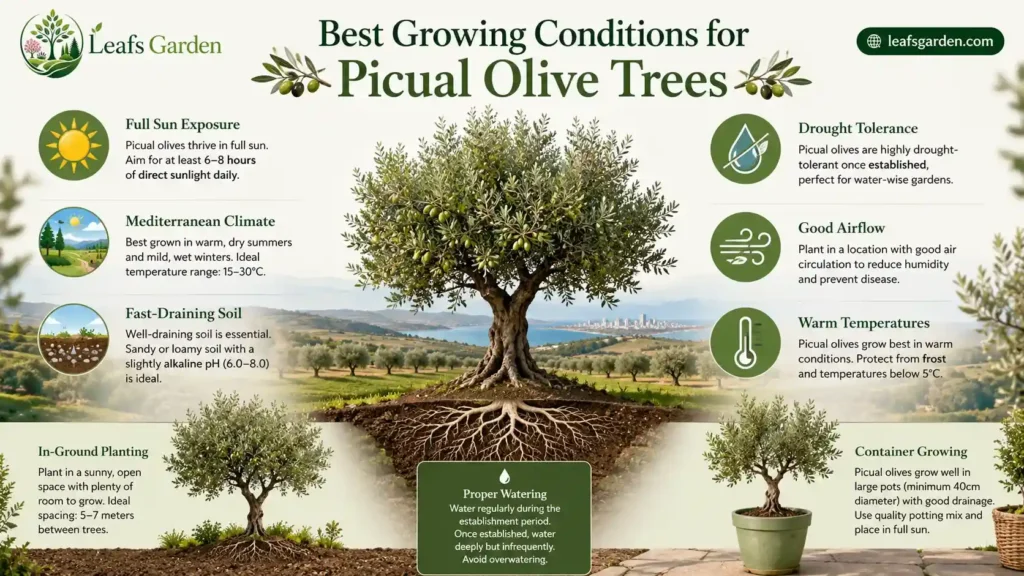
Olive trees need at least 6–8 hours of direct sunlight daily for healthy growth and fruiting.
If gardeners ask, “Does olive tree need full sun?” the answer is yes. Full sunlight is essential for strong canopy development, flower production, olive formation, and disease prevention.
Picual olive trees naturally evolved in hot Mediterranean regions where intense sunlight is common throughout most of the year. Without enough sunlight, olive trees may experience:
This evergreen olive tree has excellent heat tolerance once established. Mature trees can handle high summer temperatures if roots are planted in well-draining soil and watering remains balanced.
However, young olive trees are more sensitive during establishment. In extremely hot climates, newly planted trees may benefit from temporary afternoon protection during severe heatwaves.
Picual olive trees can tolerate light frost for short periods, but extended freezing conditions may damage branches, flowers, and fruiting wood. Frost sensitivity becomes more noticeable in:
For best results, plant olive trees in the sunniest area of the garden with open airflow and protection from severe winter frost pockets.
Picual olive trees prefer fast-draining sandy or loamy soil with moderate fertility.
The best soil for olive trees allows water to drain quickly while still holding enough moisture for root development. Olive tree soil should never remain constantly wet because excessive moisture can damage roots and increase disease problems.
Ideal soil types include:
Heavy clay soil can be problematic unless improved with drainage materials and organic matter. Poor drainage is one of the most common causes of unhealthy olive trees.
Recommended olive tree soil conditions:
| Soil Factor | Ideal Condition |
| Drainage | Fast-draining |
| Soil Texture | Sandy or loamy |
| pH Range | Slightly alkaline to neutral |
| Fertility | Moderate |
| Moisture | Even but not soggy |
For container growing, potting soil for olive trees should remain light and airy. A quality olive tree potting soil mix often contains:
Using proper olive tree potting soil helps prevent root rot and improves oxygen flow around the roots. Containers should always include drainage holes because standing water quickly damages olive roots.
Soil drainage importance becomes even greater during winter or rainy seasons. Constantly wet soil conditions may lead to:
Healthy drainage is one of the most important long-term factors for successful olive cultivation.
Olive trees develop wide but generally non-invasive root systems when planted properly.
The olive tree root system spreads outward more than downward in most soil conditions. Mature roots search widely for moisture and nutrients, especially in dry climates where water availability changes seasonally.
The roots of an olive tree are considered relatively manageable compared to highly aggressive landscape trees. Many gardeners ask, “Do olive trees have invasive roots?” In most cases, olive tree roots are not aggressively invasive when planted with adequate spacing and proper soil drainage.
However, mature trees still require planting distance from:
Typical root behavior includes:
| Root Characteristic | Description |
| Growth Pattern | Wide spreading |
| Root Depth | Moderate |
| Invasiveness | Generally low |
| Water Seeking | Moderate to high |
| Container Adaptability | Good |
For healthy growth, Picual olive trees usually need:
Container-grown olive trees develop smaller and more controlled root systems. Regular repotting and root pruning help maintain healthy growth when olive trees are grown permanently in pots.
Spring and early autumn are the best times to plant olive trees in Australia.
These seasons provide mild temperatures, balanced soil moisture, and lower environmental stress, helping young olive trees establish roots more successfully. Warm soil combined with moderate weather encourages faster root development before extreme summer heat or winter cold arrives.
For most regions, the best time to plant olive trees is:
The best time to plant olive trees in Australia may vary slightly depending on climate zone. In cooler southern regions, spring planting is usually preferred because young roots establish faster in warming soil. In warmer regions with mild winters, early autumn planting can also work very well.
Avoid planting during:
Newly planted Picual olive trees establish faster when temperatures remain stable and sunlight is consistent.
Proper olive tree planting improves long-term growth, root health, and fruit production.
When planting olive trees in the ground, choose a sunny location with excellent drainage and enough airflow around the canopy. Avoid low areas where water collects after rain because excessive moisture can damage olive roots.
Select a planting area that receives:
Picual olive trees grow best away from heavily shaded structures or crowded garden beds.
Before you plant olive trees, loosen compacted soil and improve drainage if necessary.
For heavy soil, mix in:
Healthy drainage is essential for strong root development.
The planting hole should be:
Avoid planting too deeply because buried trunks may develop rot problems.
Carefully remove the tree from its nursery pot and gently loosen circling roots before placing it into the hole.
The top of the root ball should remain level with surrounding soil.
Fill the hole with soil while lightly firming around the roots to remove large air pockets.
After planting olives, water deeply to help settle the soil around the root system.
Apply mulch around the tree base to help regulate moisture and suppress weeds.
Keep mulch several inches away from the trunk to prevent fungal problems and bark rot.
| Planting Factor | Recommendation |
| Sunlight | Full sun |
| Soil | Fast-draining |
| Watering | Deep but moderate |
| Spacing | 15–25 feet apart |
| Mulch Distance | Away from trunk |
| Airflow | Open circulation |
Following proper methods for how to plant olive tree varieties helps improve survival rates and long-term productivity.
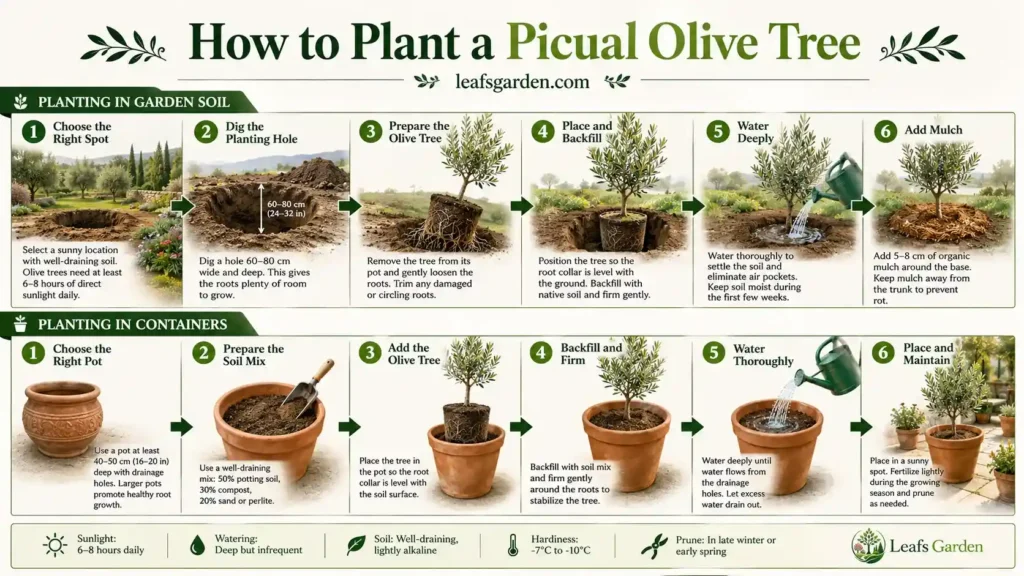
Picual olive trees grow well in large containers with excellent drainage and full sunlight.
Many gardeners successfully grow olive trees in pots because olive trees adapt well to controlled root environments. This makes Picual one of the best olive tree for pots options for patios, balconies, courtyards, and small gardens.
An olive tree in pot culture remains smaller and easier to manage through pruning and root control. Container growing also allows gardeners in colder regions to move young trees into protected areas during severe winter weather.
For successful growing olives in pots, choose containers that provide enough root space and drainage.
Recommended container features:
Large olive trees in pots may eventually require repotting as roots expand and soil structure breaks down over time.
| Requirement | Recommendation |
| Sunlight | Full sun daily |
| Pot Size | Large and deep |
| Drainage | Excellent |
| Watering | Deep but infrequent |
| Airflow | Open outdoor exposure |
Growing olive trees in containers works best when the trees are placed outdoors rather than indoors for most of the year. Olive trees need strong sunlight and airflow to maintain healthy foliage and fruiting potential.
When planting olive trees in containers:
Olive tree pots should also be large enough to prevent roots from becoming severely compacted too quickly.
The best potting mix for olive trees is light, fast-draining, and moderately fertile.
Olive roots require oxygen-rich soil conditions, especially inside containers where drainage problems develop more easily. Heavy or water-retaining soil may increase the risk of root rot and fungal disease.
A quality potting mix for olive trees typically contains:
This combination improves drainage while still holding enough moisture for healthy root development.
Recommended olive tree potting mix structure:
| Ingredient | Purpose |
| Potting Mix | Basic moisture retention |
| Perlite/Pumice | Aeration and drainage |
| Sand | Faster water movement |
| Gravel | Root stability |
| Organic Matter | Moderate nutrients |
The best potting mix for olive trees should dry slightly between waterings rather than remaining constantly wet. This soil balance helps support healthy roots, strong foliage growth, and long-term container performance.
Olive trees prefer deep but infrequent watering once established.
Picual olive trees are naturally drought tolerant and perform better with occasional deep watering than constant shallow moisture. Once mature, the tree develops a resilient root system capable of handling dry periods common in Mediterranean and warm-climate regions.
Young olive trees need more regular watering during their first one to two growing seasons because roots are still establishing. After establishment, watering frequency can gradually decrease.
General watering guidelines:
| Tree Age | Watering Frequency |
| Newly planted | 1–2 times weekly |
| Young trees | Every 5–7 days |
| Mature trees | Deep watering every 10–14 days depending on climate |
| Container trees | More frequent monitoring required |
Deep watering encourages roots to grow downward and outward rather than remaining shallow near the soil surface.
Although olive trees tolerate dry conditions well, prolonged water stress may cause:
Overwatering problems are far more common than underwatering in olive cultivation. Constantly wet soil can lead to:
The soil should partially dry between waterings. Proper drainage remains one of the most important long-term care factors for healthy Picual olive trees.
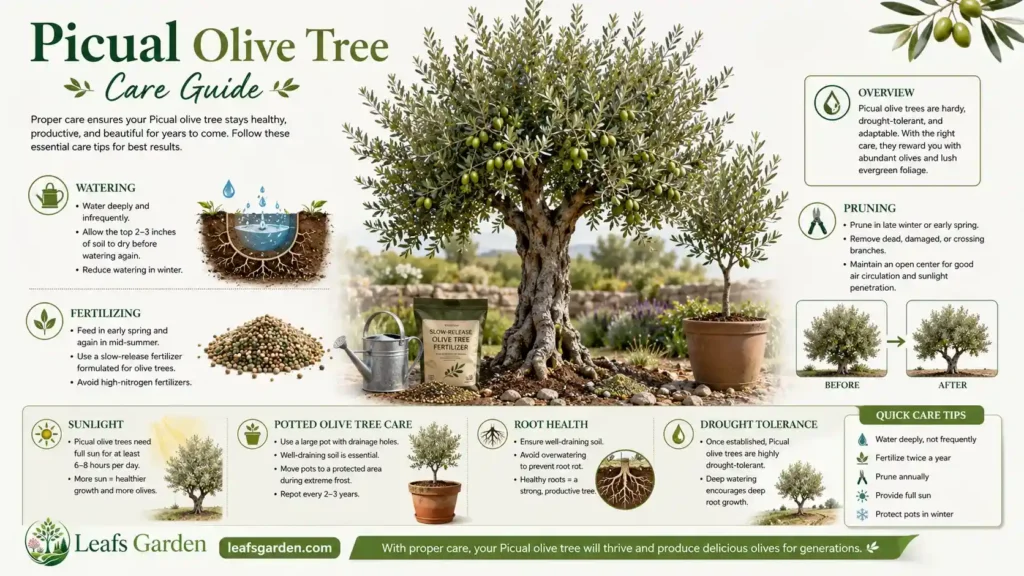
Olive trees benefit from slow-release fertilizer during spring and early summer.
Picual olive trees are not extremely heavy feeders, but regular nutrition improves foliage density, flowering, fruit production, and overall vigor. Applying olive tree fertilizer at the correct time supports active growth without encouraging excessive weak branching.
The best periods for fertilising olive trees are:
Avoid heavy fertilizing during late autumn or winter because cool-season growth is slower and excess nutrients may stress the tree.
The best olive tree fertilizer usually contains balanced nutrients with moderate nitrogen and important trace minerals such as:
Slow release fertilizer for olive trees is often preferred because nutrients become available gradually over time. This helps maintain stable growth and reduces the risk of fertilizer burn.
| Fertilizer Type | Purpose |
| Slow-release granular fertilizer | Long-term feeding |
| Citrus/fruit tree fertilizer | Balanced nutrient support |
| Organic compost | Soil improvement |
| Liquid seaweed | Trace mineral boost |
Olive fertiliser should always be applied to moist soil and spread around the root zone rather than directly against the trunk.
Signs the tree may need feeding include:
Balanced nutrition combined with proper sunlight and drainage helps maintain strong olive production and healthy evergreen foliage.
Potted olive tree care focuses on sunlight, drainage, controlled watering, and regular pruning.
A healthy olive plant in pot culture can thrive for many years if root conditions remain stable and the container receives enough direct sunlight. Container-grown olive trees are especially popular for patios, courtyards, balconies, and Mediterranean-style landscape design.
Important olive tree plant care practices for containers include:
Because containers dry faster than garden soil, potted olive trees usually need closer moisture monitoring during hot weather. However, overwatering still remains one of the most common problems.
Good potted olive tree care also includes rotating the pot occasionally so all sides of the canopy receive even sunlight.
| Care Factor | Recommendation |
| Sunlight | 6–8+ hours daily |
| Pot Size | Large container |
| Drainage | Excellent |
| Soil | Fast-draining mix |
| Watering | Deep but moderate |
| Pruning | Light annual shaping |
Olive plant care becomes easier when trees are grown outdoors in bright, open conditions. Indoor placement should only be temporary unless extremely bright sunlight is available.
Repotting may eventually become necessary when:
Healthy container maintenance helps support long-term growth, flowering, and olive production.
Picual olive trees are moderate-to-fast growers in warm climates.
Under proper growing conditions, Picual olive tree growth is steady and vigorous, especially during warm seasons with full sunlight and balanced watering. Growth speed depends heavily on climate, soil quality, irrigation, pruning, and root space.
Many gardeners ask, “How fast do olive trees grow?” In favorable conditions, young Picual olive trees may grow:
The olive growth rate is usually strongest during spring and summer when temperatures remain consistently warm.
Typical olive tree growth timeline:
| Growth Stage | Approximate Time |
| Early establishment | 1–2 years |
| Initial shaping | 2–3 years |
| Early fruiting | 3–5 years |
| Mature production | 7–10 years |
Many people also ask, “How long does olive tree take to grow?” While the tree develops fairly quickly during early years, a full grown olive tree may take several decades to reach maximum canopy size and long-term productivity.
How big do olive trees grow depends on pruning and planting conditions. In open ground, mature Picual olive trees can commonly reach:
Container-grown trees remain smaller and more manageable through pruning and root restriction. Proper maintenance helps maintain attractive structure, strong fruiting wood, and healthy evergreen growth over many years.
Olive trees are usually pruned in late winter or early spring after frost risk passes.
This timing allows the tree to recover quickly during active spring growth while reducing the risk of frost damage to freshly cut branches. In most Australian regions, pruning olives Australia-wide is commonly done between late August and early October depending on local climate conditions.
Gardeners often ask when to prune olives in Australia because pruning at the wrong time can reduce fruit production or expose the tree to disease and weather stress.
The best pruning period depends on:
For cooler southern regions, wait until severe frost danger has passed before major pruning begins. In warmer regions with mild winters, light shaping may start earlier.
General timing guide:
| Region Type | Recommended Pruning Time |
| Cool southern regions | Early spring |
| Mild winter regions | Late winter |
| Warm dry climates | Late winter to early spring |
When to prune olive trees Australia gardeners should avoid:
Many growers searching when to prune olive tree in au conditions should focus on maintaining healthy airflow and balanced canopy growth rather than aggressive cutting.
Regular pruning helps improve:
Proper pruning improves airflow, controls canopy size, supports fruiting wood, and maintains healthy olive production.
Picual olive trees naturally develop dense branching, so regular pruning helps prevent overcrowding inside the canopy. Good pruning also improves sunlight penetration, which is important for flowering and fruit development.
The primary goals of pruning include:
Start by cutting away:
This improves overall tree health and reduces disease pressure.
Dense olive canopies often block sunlight and reduce airflow. Remove crowded interior shoots to open the center of the tree.
Better air circulation helps reduce:
An open canopy also improves olive ripening consistency.
Olive trees produce fruit mainly on previous season’s growth. While pruning, avoid removing all productive branches.
Healthy fruiting wood should remain:
Excessive cutting may reduce olive production for the following season.
Canopy management helps maintain a balanced structure that is easier to harvest and maintain.
For home gardens, many growers keep Picual olive trees:
Large unpruned trees may eventually become difficult to manage and less productive internally.
Trim vigorous shoots growing from:
These shoots consume energy without contributing significantly to fruit production.
| Pruning Goal | Benefit |
| Air circulation | Reduced fungal issues |
| Canopy management | Better sunlight penetration |
| Fruiting wood balance | Improved olive production |
| Height control | Easier harvesting |
| Structural shaping | Stronger long-term growth |
Picual olive trees also respond well to olive hedging and screening applications.
Because of their evergreen foliage and dense branching, many gardeners use olive trees for:
When planting olive trees for screening, spacing usually depends on desired density and mature tree size. Light annual pruning helps maintain compact shape while preserving healthy foliage coverage.
For hedging purposes, regular trimming encourages:
Well-maintained olive hedging combines ornamental value with practical landscape function in warm-climate gardens.
Propagating olives from semi-hardwood cuttings is the fastest and most reliable method.
Most commercial growers prefer olive tree propagation from cuttings because it produces trees identical to the parent plant. This method also allows new Picual olive trees to fruit earlier compared to seed-grown plants.
Cuttings from olive trees are usually taken from healthy semi-hardwood branches during late spring or summer when stems are firm but still flexible.
Healthy parent trees should have:
Choose semi-hardwood stems that are:
Avoid weak or damaged shoots.
Remove lower leaves while keeping a few leaves at the top. Trim the base just below a leaf node because roots commonly develop from these growth points.
Dip the cut end into rooting hormone to improve root formation and increase propagation success rates.
Place the cutting into moist propagation soil such as:
Fast drainage helps prevent stem rot during root development.
Successful olive propagation usually requires:
Avoid waterlogged soil because excessive moisture may cause fungal problems.
Roots commonly develop within several weeks to a few months depending on temperature and growing conditions.
New leaf growth often signals successful root formation.
| Benefit | Description |
| Faster fruiting | Earlier olive production |
| Reliable genetics | Matches parent tree |
| Better uniformity | Consistent growth habit |
| Commercial preference | Common orchard method |
For gardeners wanting to propagate olive tree varieties accurately, cuttings remain the preferred method.
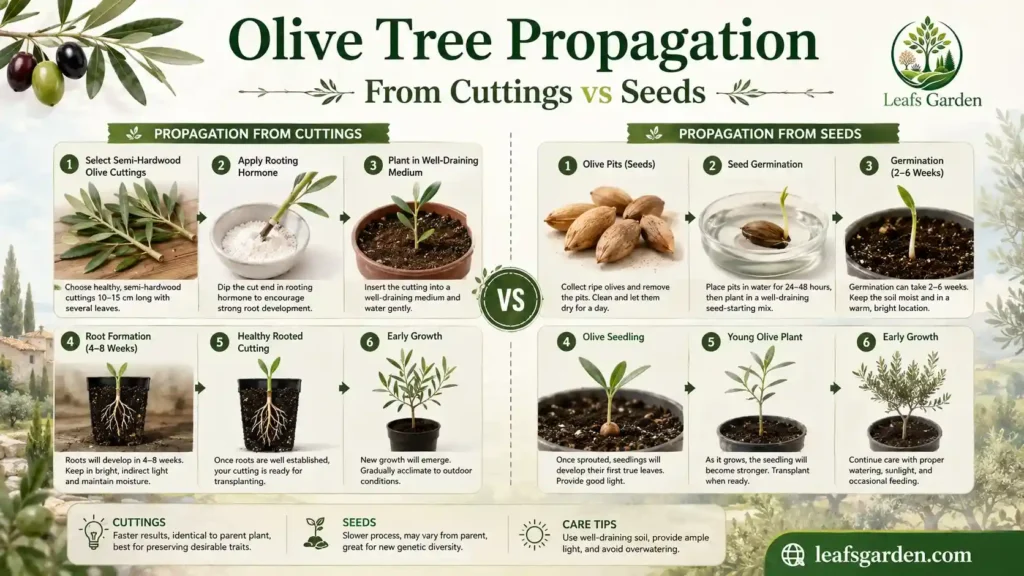
Olive seeds can grow successfully, but seed-grown trees take longer to fruit.
Growing olive from seed is slower and less predictable than propagation from cuttings, but many gardeners still enjoy the process for experimentation and long-term cultivation.
One important factor is that olive plant seeds may not grow identical to the parent tree because seedlings can develop genetic variation.
Use fresh ripe olives rather than dried commercial olives.
Remove all fruit flesh completely because leftover pulp may encourage fungal growth during germination.
Wash the olive pits thoroughly and allow them to dry briefly before planting.
Healthy olive tree seeds how to grow successfully often depends on using fresh viable seed rather than old dried pits.
Lightly crack or sand the hard outer shell to help moisture penetrate the seed.
This step improves germination speed.
Soak olive seeds in water for 24–48 hours before planting.
This softens the seed covering and encourages sprouting.
Use a light seed-starting mix containing:
Plant seeds about 1 inch deep in small containers.
For how to germinate olive seeds successfully, maintain:
Cold or overly wet conditions may slow germination.
How to sprout olive seeds often requires patience because germination may take:
Once growth begins, young olive seedling plants should gradually receive more sunlight.
| Factor | Details |
| Germination Speed | Slow |
| Fruit Production | Delayed |
| Genetic Consistency | Variable |
| Difficulty Level | Moderate |
Gardeners searching how to grow olive seeds or how to plant olive pits should understand that seed-grown trees often take much longer to mature compared to cutting-grown plants.
Both methods can successfully produce olive trees, but propagation speed and reliability differ significantly.
| Method | Speed | Fruiting Time | Reliability |
| Cuttings | Fast | 3–5 years | Very reliable |
| Seed | Slow | 7–12+ years | Variable |
For most home growers and orchard planting, olive tree propagation from cuttings is generally the preferred option because it produces faster, more predictable results with consistent fruit quality.
Picual olive trees usually begin fruiting within 3–5 years under good growing conditions.
Fruit production depends on climate, sunlight, watering, pruning, and overall tree health. Trees grown from cuttings typically fruit earlier than seed-grown olive trees because they mature faster and maintain the genetics of productive parent plants.
Many gardeners ask, “When do olive trees fruit?” or “When does olive tree fruit?” In most cases, young Picual olive trees first produce light crops before reaching heavier and more stable production as they mature.
Typical fruiting timeline:
| Tree Age | Fruiting Stage |
| 1–2 years | Root and canopy establishment |
| 3–5 years | Early fruiting begins |
| 5–7 years | Increasing olive production |
| 7–10+ years | Mature productive tree |
Healthy olive tree fruit production requires:
Fruiting olives usually develop after spring flowering and continue maturing through warmer months before harvest season arrives.
A mature olive tree with olives often develops clusters of fruit throughout the outer canopy where sunlight exposure is strongest. Olives growing on trees gradually change color from green to purple-black as they ripen.
Some olive trees may produce lighter harvests every second year because olives naturally experience alternating heavy and light fruiting cycles.
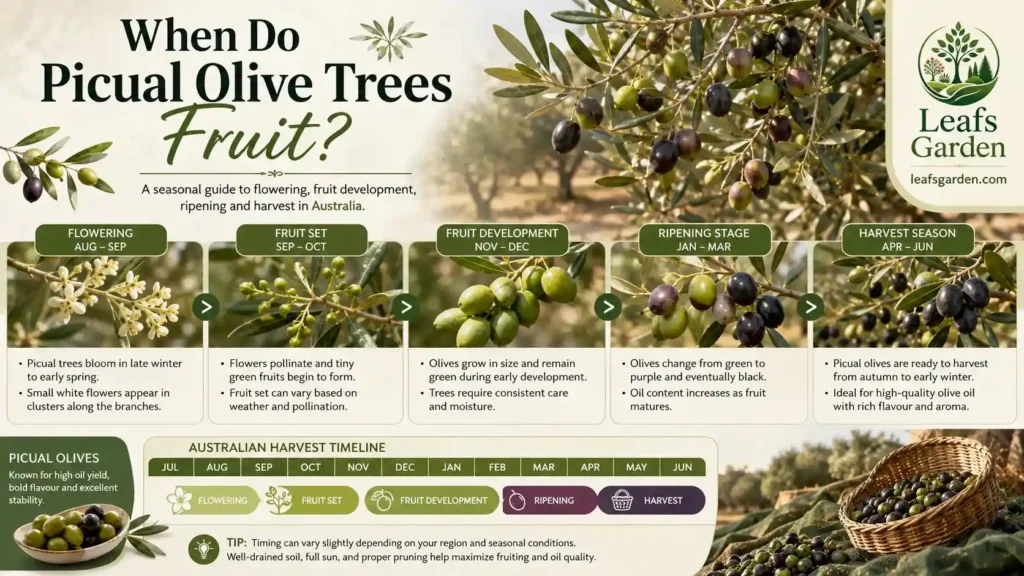
Olive flowers appear during spring and play a critical role in fruit production.
Picual olive trees produce clusters of small creamy-white olive tree flowers along mature branches. These flowers usually emerge after temperatures warm consistently during spring.
Healthy olive trees in flower often create dense flowering displays across sun-exposed branches. Flower quantity can vary depending on:
The olive plant flower structure contains both male and female reproductive parts, allowing many olive varieties to self-pollinate to some extent. However, cross-pollination from nearby olive trees may improve fruit set and increase harvest production.
Important pollination factors include:
| Factor | Importance |
| Warm spring weather | Encourages flowering |
| Air circulation | Supports pollen movement |
| Pollinator activity | Improves fruit set |
| Tree health | Increases flower production |
Strong winds, heavy rain, or late frost during flowering season may reduce pollination success and decrease olive production for that year.
Flowering usually occurs before visible olive fruit formation begins. After successful pollination, tiny olives gradually develop and enlarge throughout the growing season.
Olives in Australia are commonly harvested between autumn and early winter depending on region and variety.
Harvest timing varies based on climate, olive variety, and intended use. Picual olives grown for olive oil are often harvested when the fruit begins changing from green to purple-black because oil content and flavor become more concentrated during this stage.
Gardeners often ask:
In most Australian growing regions, olive harvest season occurs between:
Regional climate strongly affects ripening speed. Warmer inland regions may begin harvesting earlier, while cooler southern regions often harvest later.
General harvest timing guide:
| Region | Common Harvest Period |
| South Australia | April–June |
| Victoria | May–June |
| Western Australia | April–May |
| Queensland warm regions | Earlier autumn harvests |
For gardeners asking when to pick olives in Melbourne, harvest commonly occurs during late autumn into early winter because cooler temperatures slow ripening slightly compared to hotter inland regions.
Signs olives are ready for harvest include:
Olives intended for table use are sometimes harvested earlier while still green, whereas olives for oil production are often left longer on the tree for richer oil development.
Container-grown olive trees can develop problems more quickly than ground-planted trees because roots are restricted and soil conditions change faster.
Most problems with olive trees in pots are linked to drainage, watering imbalance, and limited root space. Healthy container care requires proper airflow, fast-draining soil, and careful moisture control.
Root rot is one of the most serious problems affecting olive trees in containers.
This condition usually develops when roots remain constantly wet due to:
Common root rot symptoms include:
Preventing root rot requires fast-draining olive tree potting mix and controlled watering practices.
Poor drainage stresses olive roots by reducing oxygen around the root system.
Waterlogged soil conditions may eventually cause:
Olive trees grow best when excess water drains freely from the container after watering.
Nutrient deficiencies often appear in older container soil where nutrients become depleted over time.
Common signs include:
Balanced fertilization and occasional repotting help restore healthy nutrient levels.
Compact roots develop when olive trees remain too long in undersized containers.
Root-bound trees may show:
Repotting into larger containers and light root pruning help maintain healthier root development.
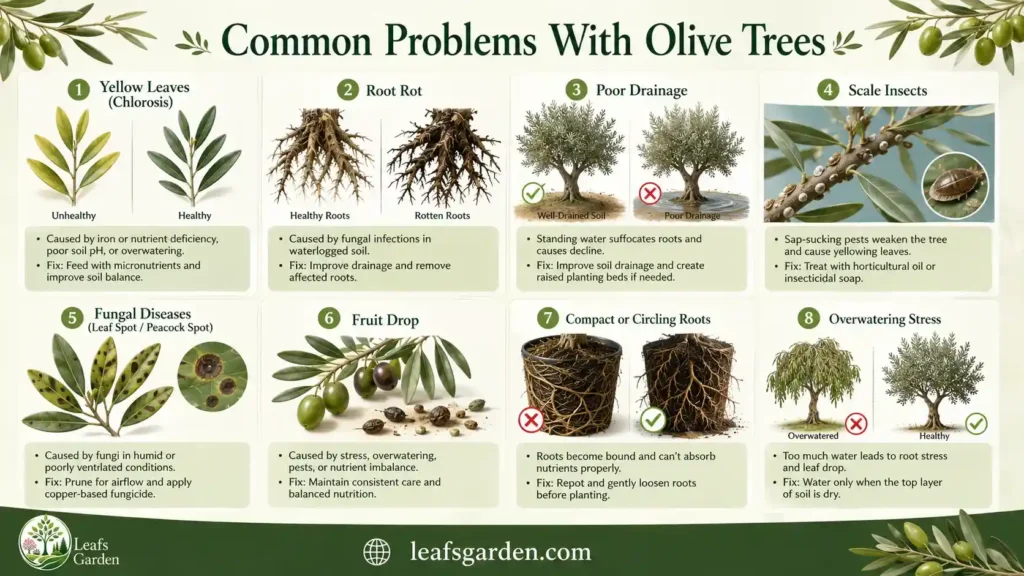
Yellow leaves, poor growth, and fruit drop usually indicate environmental stress, watering imbalance, or nutrient problems.
These symptoms often appear gradually and should be corrected early before long-term damage develops.
| Problem | Cause | Solution |
| Yellow leaves | Overwatering or nutrient deficiency | Improve drainage and apply balanced fertilizer |
| Slow growth | Poor sunlight or compact roots | Increase sunlight and repot if needed |
| Fruit drop | Water stress or heat stress | Maintain deep consistent watering |
| Leaf curling | Drought stress | Water deeply during dry periods |
| Sparse foliage | Low nutrients or shade | Improve feeding and increase sunlight |
| Blackened roots | Root rot | Remove damaged roots and improve drainage |
| Weak flowering | Excess pruning or poor nutrition | Reduce heavy pruning and fertilize properly |
Water stress is one of the most common reasons for unstable olive production. Both underwatering and overwatering can interfere with healthy fruit development.
Environmental conditions such as extreme heat, sudden cold, poor airflow, or excessive humidity may also trigger stress symptoms in Picual olive trees.
Picual olive trees are relatively hardy, but pests and diseases can still develop under poor growing conditions.
Healthy olive trees with proper airflow, balanced watering, and good sunlight usually experience fewer serious problems.
Scale insects are common olive tree pests that attach themselves to stems and leaves while feeding on plant sap.
Symptoms may include:
Light infestations can often be controlled through:
For detailed pest identification and integrated management advice for olive trees, NSW Department of Primary Industries provides reliable horticultural guidance for Australian olive growers.
Fungal diseases usually develop in humid or poorly ventilated environments.
Common contributing factors include:
Fungal problems may cause:
Pruning for better air circulation helps reduce fungal risk significantly.
Overwatering stress weakens olive tree roots and increases vulnerability to disease.
Common symptoms include:
Allowing soil to partially dry between waterings helps maintain healthier root oxygen levels.
Environmental stress can affect olive trees during extreme weather or unstable growing conditions.
Common stress factors include:
Healthy established Picual olive trees are generally resilient, but consistent care and proper growing conditions help minimize long-term stress problems.
Olive trees can survive indoors near bright sunlight, but they perform best outdoors.
A Picual olive tree can function as an olive indoor plant when placed in a location with strong direct sunlight and good airflow. However, olive trees naturally prefer outdoor growing conditions because they require intense sunlight, seasonal temperature variation, and open air circulation for healthy long-term growth.
An olive tree in a pot is often easier to manage indoors temporarily because container growing allows better control over root space and movement. Many gardeners move potted olive trees indoors during severe winter weather and return them outside once temperatures improve.
For indoor success, olive plant tree conditions should include:
Indoor olive trees commonly struggle with:
Signs the tree may not receive enough sunlight include:
Although olive indoor plant cultivation is possible, outdoor placement remains the healthiest option for strong growth, flowering, and fruit production.
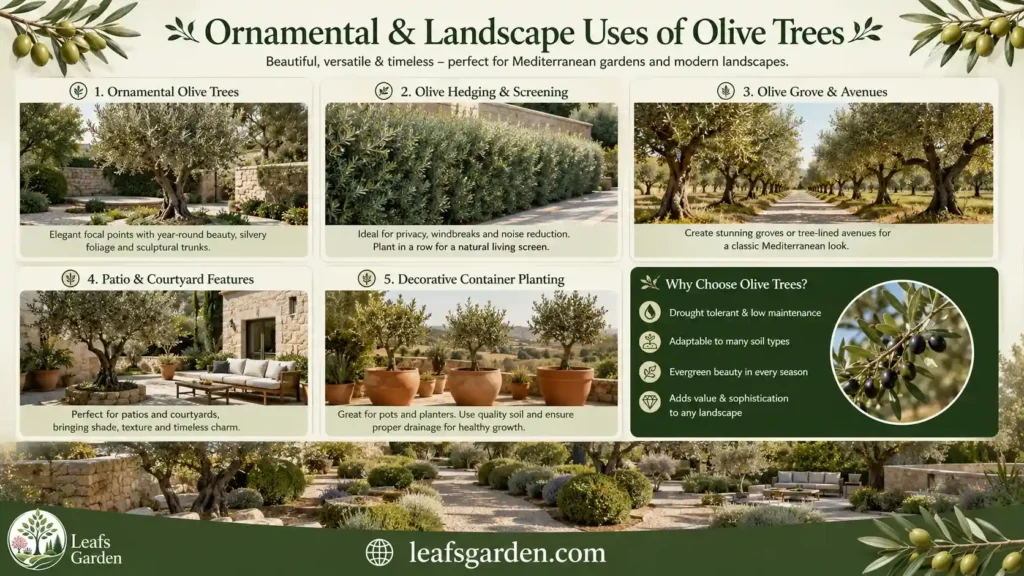
Ornamental olive trees are highly valued for their evergreen foliage, Mediterranean appearance, and sculptural branching structure.
Many gardeners grow olive trees primarily for visual appeal rather than fruit production. A mature ornamental olive tree creates an elegant landscape feature with silvery-green leaves, textured bark, and naturally graceful canopy form.
Popular ornamental landscape uses include:
A standard olive tree is commonly pruned into a single-trunk form with a rounded canopy, creating a formal and decorative appearance. These trees are especially popular in contemporary outdoor spaces and architectural gardens.
Olive grove trees planted in rows can also create a classic Mediterranean landscape effect while providing shade and visual structure across larger properties.
Landscape advantages of olive trees include:
| Feature | Benefit |
| Evergreen foliage | Year-round color |
| Drought tolerance | Low water landscaping |
| Silvery leaves | Soft Mediterranean texture |
| Structured branching | Decorative appearance |
| Longevity | Long-term landscape value |
An olive small tree can also work well in compact gardens where full-sized canopy trees would become too large. Through pruning and container growing, olive trees remain manageable while still maintaining attractive ornamental form.
The soft foliage tones and natural structure of a green olive tree pair well with:
Olive trees are excellent choices for olive hedging, privacy screening, and structured Mediterranean garden design.
Because olive trees develop dense evergreen foliage and tolerate regular pruning well, they can be shaped into attractive formal or informal screens. Their drought tolerance also makes them suitable for warm-climate boundary planting.
Common screening applications include:
Olive hedging works best when trees are planted with moderate spacing and pruned regularly to encourage side branching and dense canopy growth.
Benefits of olive screening include:
| Feature | Advantage |
| Evergreen growth | Year-round screening |
| Dense foliage | Strong privacy coverage |
| Drought tolerance | Low maintenance |
| Pruning tolerance | Easy shaping |
| Mediterranean appearance | Elegant landscape style |
For privacy screening, many gardeners maintain olive trees at controlled heights through annual pruning and canopy shaping. This helps create dense foliage walls without excessive vertical growth.
In Mediterranean garden design, olive trees combine well with:
Their evergreen foliage and soft silver-green coloring help create the relaxed warm-climate appearance associated with traditional Mediterranean landscapes.
Those designing a warm-climate edible landscape may also consider adding a bush lemon, a hardy evergreen citrus tree that complements olive trees beautifully in sunny Mediterranean-style garden designs.
Picual olive trees are one of the best olive varieties for warm-climate home gardeners because they are productive, drought-tolerant, and adaptable to containers or orchards.
This Spanish Olea europaea variety is highly valued for strong olive oil production, evergreen beauty, reliable fruiting, and long-term durability. Whether planted in backyard gardens, orchards, or large containers, Picual olive trees adapt well to Mediterranean-style growing conditions with full sunlight and well-draining soil.
For Australian growers, Picual olive trees perform especially well in warm dry regions where sunlight, airflow, and drainage remain consistent throughout the year. Gardeners in the USA and other Mediterranean climate regions also benefit from the tree’s heat tolerance, low water requirements, and strong adaptability.
Proper olive tree care remains important for long-term success. Regular pruning improves canopy structure, airflow, and fruiting wood development, while balanced watering and quality soil help maintain healthy root systems and stable olive production.
Picual olive trees are also highly ornamental. Their silvery-green evergreen foliage, textured trunks, and structured branching make them attractive landscape trees for Mediterranean garden design, privacy screening, and decorative container planting.
With the right conditions, these olive trees can remain productive for decades while providing both visual appeal and regular olive harvests.
Start growing Picual olive trees by choosing a sunny location with excellent drainage and enough airflow. Learn proper propagation, watering, and pruning techniques to encourage healthier growth, stronger fruit production, and better long-term harvests.
A mature Picual olive tree commonly grows between 15–30 feet tall and 12–25 feet wide depending on climate, soil quality, pruning, and growing conditions. Trees grown in containers usually remain smaller and easier to manage through regular pruning.
Olive trees are evergreen trees. Picual olive trees keep their silvery-green foliage throughout the year rather than losing all leaves seasonally like deciduous trees.
Olive trees are extremely long-lived and can survive for several decades or even centuries under proper care. Healthy Picual olive trees may remain productive for many years when grown in suitable warm-climate conditions.
Yes, olive trees can grow in pots permanently if they receive proper care. Large containers, excellent drainage, regular pruning, and occasional repotting help maintain healthy long-term growth for container-grown olive trees.
Yes, olive trees need full sun for strong growth and fruit production. Picual olive trees perform best with at least 6–8 hours of direct sunlight daily.
Picual olive trees are moderate-to-fast growers in warm climates. Under ideal conditions, young trees may grow around 1–3 feet per year during active growing seasons.
The best fertilizer for olive trees is usually a balanced slow-release fertilizer formulated for fruit trees or Mediterranean plants. Olive trees also benefit from nutrients such as nitrogen, potassium, magnesium, and trace minerals during spring and early summer.
Yes, olive trees can grow from seed, but seed-grown trees take much longer to fruit compared to trees propagated from cuttings. Germination may also be slower and less predictable.
Olive trees in Australia are usually pruned during late winter or early spring after major frost risk passes. This timing supports healthy regrowth, improved airflow, and better fruiting potential.
Yes, Picual olives are considered one of the best olive varieties for olive oil production. They are highly valued for their high oil content, rich flavor, strong antioxidant levels, and excellent oil stability used in premium extra virgin olive oil.