Grow Better Gardens with Smarter Plant Choices
Discover helpful guides on trees, hedges, fruit plants, edible plants, and beautiful landscape greenery.

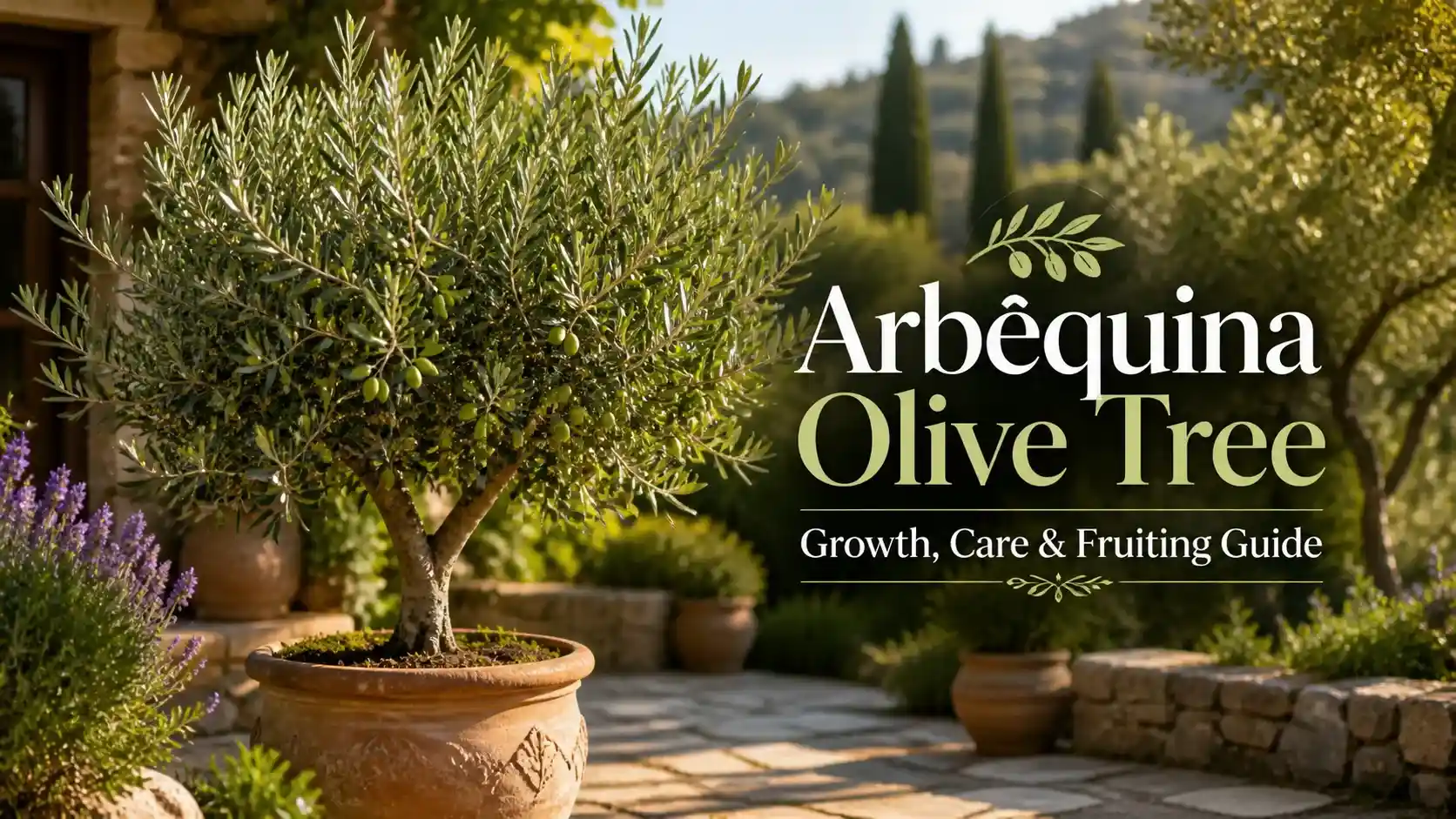
The arbequina olive tree is one of the most popular and beginner-friendly varieties of the classic olive tree. Known for its compact size and adaptability, the arbequina olive plant is widely grown in home gardens, patios, and even small urban spaces. Unlike many traditional olive tree varieties that require large areas, this cultivar offers a manageable growth habit while still producing high-quality fruit.
Gardeners prefer the arbequina olive because it fruits early—often within just a few years—making it ideal for those who want quicker results. In addition, it is valued for producing versatile olives that are suitable for both oil extraction and direct consumption. Arbequina olives are especially known for their mild, buttery flavor and high oil content, which makes them a favorite in culinary applications.
At its core, the arbequina olive plant represents the broader characteristics of an olive tree: evergreen foliage, drought tolerance, and long-term productivity. It combines traditional olive tree benefits with modern gardening convenience, making it a practical choice for both new and experienced growers.
The arbequina is a well-known cultivar of the species Olea europaea, scientifically named Olea europaea ‘Arbequina’. It originated in the Catalonia region of Spain, particularly around the town of Arbeca, from which it gets its name. Over time, this variety has become one of the most widely cultivated olives globally due to its adaptability and consistent production.
The olive tree arbequina is characterized by a naturally compact and bushy growth habit, making it suitable for both traditional orchards and small-scale gardening. Unlike larger olive varieties, the olive arbequina tree tends to stay manageable in size while still maintaining productive yields.
In terms of growth nature, arbequina trees are evergreen, meaning they retain their leaves year-round. They show moderate growth and adapt well to different climates, especially warm and temperate regions. This resilience, combined with early fruiting capability, makes the arbequina cultivar a reliable and practical option for growers seeking both ornamental value and fruit production.
Growers interested in expanding their edible garden will find the arbequina olive a standout choice among the many rewarding fruit trees and edible plants suited to warm temperate climates.
The Arbequina olive tree is valued for its balanced combination of functionality and visual appeal. Its natural structure and foliage make it suitable for both fruit production and decorative use.
The arbequina olive tree is known for its manageable size, making it ideal for both small gardens and container growing. On average, the olive tree height of an arbequina ranges between 8 to 15 feet (2.5 to 4.5 meters) when fully mature. With regular pruning, it can be maintained at an even smaller size, which is especially useful for home gardeners.
Compared to a typical olive tree plant, which can grow up to 25–30 feet in traditional orchard conditions, the arbequina remains significantly more compact. This smaller stature does not compromise productivity, as it still produces abundant fruit despite its reduced size.
The balanced growth of the arbequina olive tree allows it to function efficiently as both a fruit-bearing tree and a decorative plant, making it a practical option where space and maintenance are key considerations.
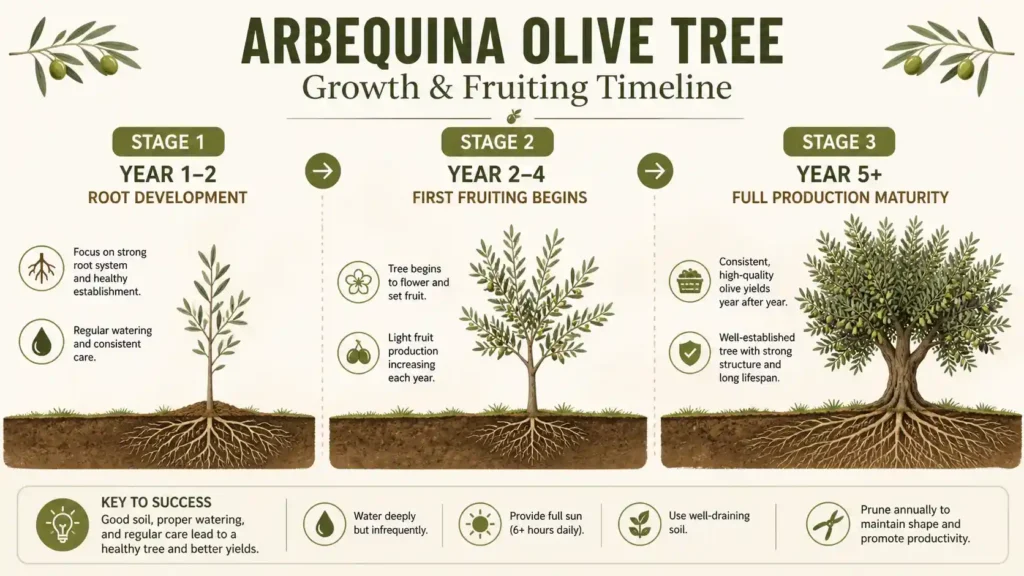
The arbequina olive tree follows a slow to moderate growth rate, making it easy to manage for long-term cultivation. In ideal conditions, it develops steadily without becoming overly large or difficult to control.
Tree Development Stages:
This predictable growth pattern makes it suitable for both beginners and experienced growers who prefer controlled development.
The arbequina olive tree is a long-living plant, with a lifespan that can extend for several decades when properly maintained. Like most olive varieties, it becomes more productive and structurally stable as it ages.
In terms of aging behavior:
With proper care, including pruning and nutrient management, an arbequina olive tree can remain healthy and productive for many years, making it a long-term investment for any garden or landscape.
A common question among growers is how long do olive trees take to fruit, and the arbequina variety stands out for its early production. Unlike many traditional olive trees that may take longer to mature, arbequina olive trees typically begin fruiting within 2 to 4 years after planting under proper growing conditions.
This early fruiting capability makes the arbequina an ideal choice for home gardeners who want quicker results. The tree focuses on establishing a healthy root system in the first year, followed by gradual canopy development, which supports fruit production in the following seasons.
Consistent care—such as adequate sunlight, proper watering, and balanced nutrition—plays a key role in ensuring timely fruiting. When these conditions are met, arbequina olive trees not only produce earlier but also maintain steady yields as they mature.
Understanding when does olive tree fruit helps in managing expectations and planning proper care. Arbequina olive trees follow a seasonal fruiting cycle that is influenced by climate, temperature, and growing conditions.
Typical Fruiting Cycle:
The exact timing may vary depending on the region, but most olive trees, including arbequina, produce harvestable fruit between September and November. Warmer climates may experience slightly earlier fruiting, while cooler areas may see delayed maturity.
Consistent seasonal patterns allow growers to anticipate flowering and harvesting periods, ensuring better care and improved fruit quality.
Successful production of fruiting olives depends on maintaining the right balance of environmental and care factors. The arbequina variety is known for reliable yields, but optimal conditions significantly improve both quantity and quality.
Key Fruiting Conditions:
Yield Expectations:
Under ideal conditions, arbequina trees produce a steady supply of high-quality olives, making them one of the most productive and dependable choices for both home and small-scale growers.
The arbequina olive tree thrives best in a Mediterranean climate, where conditions are warm, dry summers and mild winters. This environment closely matches its natural origin in Spain, allowing it to grow vigorously and produce consistent yields.
One of the key strengths of the green olives plant is its excellent heat and drought tolerance. Once established, the olive tree plant can survive long periods with minimal water, making it highly suitable for regions with hot summers and limited rainfall.
For best growth, the olive tree plant should be placed in a location that receives full sun exposure and has good air circulation. It performs well in outdoor gardens, slopes, and open landscapes where it can benefit from natural sunlight throughout the day.
The green olives plant grows best in soil that is well-draining and prevents water from collecting around the roots. Poor drainage can quickly lead to root stress, so sandy or loamy soil types are ideal for healthy development of the olive tree plant.
In terms of soil pH, olive trees prefer slightly acidic to neutral conditions, typically in the range of pH 6.0 to 7.5. This balance allows the plant to absorb nutrients efficiently and maintain steady growth over time.
Before planting, it is important to prepare the soil properly by loosening it to improve aeration and mixing in organic matter if needed. This creates a strong foundation for long-term root establishment and healthier tree development.
Planting an olive tree in the ground requires careful preparation to ensure strong growth and future fruit production.
Garden Planting Steps:
Spacing & Positioning:
Proper spacing and correct planting technique ensure the green olives plant develops a strong structure and remains productive for many years.
Growing an olive in pot is an excellent option for gardeners who have limited space but still want to enjoy the beauty and productivity of olive trees. The arbequina variety is especially well-suited for container growing because of its naturally compact structure and controlled growth habit.
One of the main advantages of olive trees in containers is flexibility. They can be placed on patios, balconies, rooftops, or small gardens, making them ideal for urban environments. This setup also allows growers to move the tree to optimize sunlight exposure throughout the year.
Container growing is also practical for maintenance and care. It makes pruning, watering, and pest control more manageable compared to in-ground planting. For those who want fresh olives or a decorative evergreen feature without needing large outdoor space, growing olives in pots offers a highly efficient and rewarding solution.
Gardeners who enjoy compact container fruit trees may also appreciate the Kumquat Nagami, another ornamental edible tree that thrives beautifully in pots with similar low-maintenance care.
Choosing the right setup for an olive in pot is essential for healthy growth and long-term productivity. Since olive trees in containers have limited root space, the container must support proper root development and drainage.
Container Size & Drainage:
Good drainage is critical because olive roots do not tolerate standing water, which can lead to root rot and poor growth.
Caring for growing olive trees in containers requires more attention than ground planting due to limited soil volume and faster drying conditions.
Soil Requirements:
Watering Needs:
General Care Tips:
With proper care, container-grown olive trees remain healthy, productive, and visually attractive throughout the year.
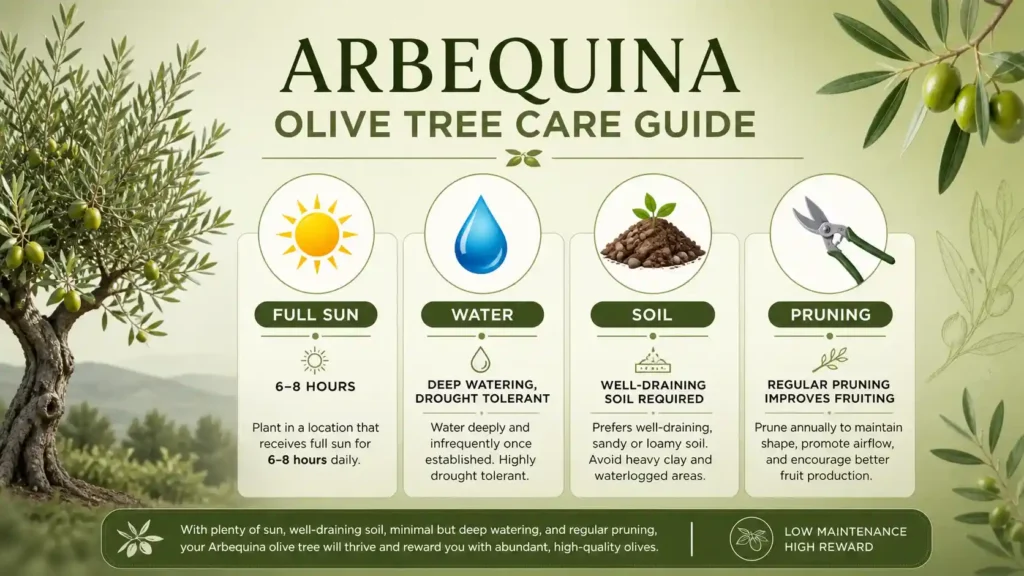
The arbequina olive tree is naturally drought tolerant, but it still requires proper watering to maintain healthy growth and consistent fruiting. Instead of frequent light watering, it responds best to deep watering sessions that encourage strong root development.
During the growing season, water the tree thoroughly and allow the soil to dry slightly before the next watering. Overwatering should be avoided, as it can lead to root stress and reduced productivity.
For optimal growth, the olive tree requires full sun exposure (6–8 hours daily). Adequate sunlight is essential for flowering, fruit development, and overall tree strength. Without sufficient light, growth may slow, and fruit production can decrease significantly.
The arbequina olive tree has moderate nutrient needs. Regular feeding supports healthy foliage and better fruit yield.
Proper nutrient management ensures steady development and improved fruiting olives quality over time.
Pruning plays a key role in maintaining the shape and productivity of the tree. Regular maintenance helps control size and improves sunlight penetration throughout the canopy.
Consistent pruning not only improves appearance but also enhances long-term yield and overall tree health.
The arbequina olive tree is highly valued for producing high-quality arbequina olive oil, which is known for its smooth texture and premium taste profile. This variety is one of the most widely used olives in modern oil production due to its consistent yield and reliable fruit quality.
The oil extracted from arbequina olives has a mild, fruity flavor with subtle nutty undertones. It is less bitter compared to many other olive oils, making it ideal for both raw and cooked applications. Its light profile also makes it a preferred choice in gourmet kitchens and health-conscious diets.
Beyond oil production, arbequina olives are also widely used in everyday cooking. They are considered versatile due to their balanced taste and soft texture.
Their adaptability in cuisine makes arbequina olives a practical ingredient for both home cooks and professional chefs.
The arbequina olive tree is not only productive but also visually appealing, making it a popular choice in landscape design. As a green olive tree, it provides year-round foliage that enhances garden aesthetics with its soft silver-green leaves.
It is often used as an ornamental olive tree in modern gardens, patios, and outdoor spaces. Its compact structure and elegant appearance make it suitable for both indoor container setups and outdoor decorative planting, adding a natural Mediterranean touch to any environment.
Those building a productive edible landscape may also consider the bush lemon, a hardy compact citrus tree that pairs well with olive trees in warm sunny garden designs.
Like most olive varieties, the arbequina olive tree can occasionally face pest and disease issues. The most common problem is the olive fruit fly, which damages developing fruit and reduces overall quality. Fungal infections can also occur, especially in humid conditions or poorly drained soil.
For detailed pest identification and management guidance, NSW Department of Primary Industries provides reliable horticultural advice for olive growers across Australian temperate regions.
To manage these issues:
Early detection is key to protecting healthy fruiting olives and maintaining strong tree performance.
Sometimes growers may notice common growth-related issues in their olive tree plant.
Addressing these problems requires reviewing basic care conditions such as light exposure, watering habits, and soil quality.
Preventing problems is easier than correcting them later. A consistent care routine helps keep the tree healthy and productive.
With balanced care, the olive tree plant remains resilient, productive, and long-lasting with minimal complications.
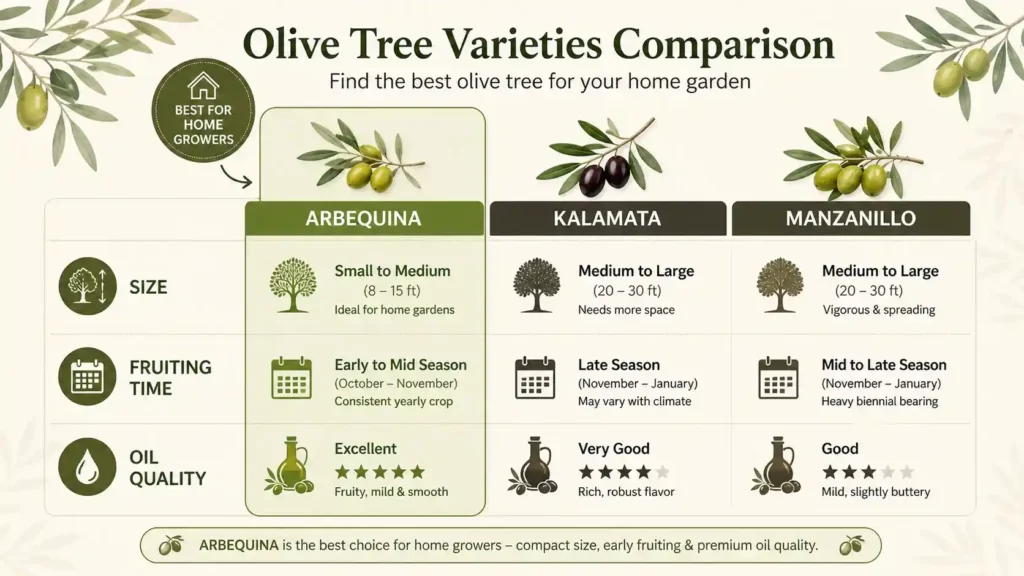
When comparing olive varieties, the kalamata olive tree (also known as olive kalamata tree) stands in clear contrast to the arbequina olive tree, especially in terms of fruit use and oil production.
The arbequina olive is primarily grown for olive oil production, offering a high yield of mild, fruity oil. In contrast, the kalamata olive tree is best known as a table olive variety, producing large, dark fruits that are commonly cured and eaten whole.
Key Differences:
Overall, both varieties serve different purposes, making them valuable in their own unique ways depending on whether the goal is oil production or direct consumption.
When comparing olive varieties, the manzanillo olive tree (also known as olive tree manzanillo) is another widely grown type that differs significantly from the arbequina olive tree in both size and fruit characteristics.
The arbequina is compact and highly productive for oil, while the manzanillo variety is larger and mainly valued for its dual-purpose fruit, often used as both table olives and for oil in some regions.
Key Differences:
| Feature | Arbequina | Kalamata | Manzanillo |
| Size | Small | Medium | Large |
| Fruiting | Early | Medium | Late |
| Oil Quality | High | Medium | Medium |
The arbequina olive tree is a highly popular variety known for its compact size and easy adaptability to different growing conditions. It is especially favored by home gardeners because it fits well in small spaces and performs reliably in containers.
Overall, it is an ideal choice for growers looking for a productive yet easy-to-manage olive tree with both ornamental and edible value.
The arbequina olive tree stands out as one of the most practical and rewarding choices for modern gardeners. Its compact size, early fruiting ability, and adaptability make it especially well-suited for home cultivation where space and maintenance are important considerations.
For home growers, it offers a rare combination of beauty and productivity. It performs well in both ground planting and containers, making it flexible for different gardening setups. Its ability to produce high-quality olives with minimal care further enhances its appeal.
As a result, the arbequina olive tree is widely regarded as one of the best choices for beginners and small gardens. It delivers reliable growth, attractive evergreen foliage, and consistent yields, making it an excellent long-term addition to any home landscape.
The arbequina olive tree typically reaches a mature height of 8 to 15 feet. However, it can be kept smaller through regular pruning, making it suitable for compact gardens and controlled landscapes.
Yes, arbequina olive trees grow very well in containers. Their naturally compact growth habit makes them ideal for patios, balconies, and small spaces when provided with proper drainage and care.
Most arbequina olive trees begin producing fruit within 2 to 4 years, making them one of the faster fruiting olive varieties available for home growers.
Yes, they require full sun exposure for at least 6–8 hours daily. Adequate sunlight is essential for healthy growth, flowering, and reliable fruit production.
Yes, arbequina olives are highly valued for producing high-quality olive oil. The oil is known for its mild, smooth, and slightly fruity flavor profile.
The best soil is a well-draining sandy or loamy mix. Good drainage is essential to prevent water retention and root-related problems.
Water deeply but only when needed. Allow the top layer of soil to dry slightly between watering. Overwatering should be avoided to maintain healthy root systems.
Yes, light annual pruning is important. It helps maintain shape, improve airflow, and encourage better fruit production over time.
They tolerate mild cold but prefer warm climates. In areas with freezing temperatures, protection or indoor relocation (for container-grown trees) is recommended.