Grow Better Gardens with Smarter Plant Choices
Discover helpful guides on trees, hedges, fruit plants, edible plants, and beautiful landscape greenery.

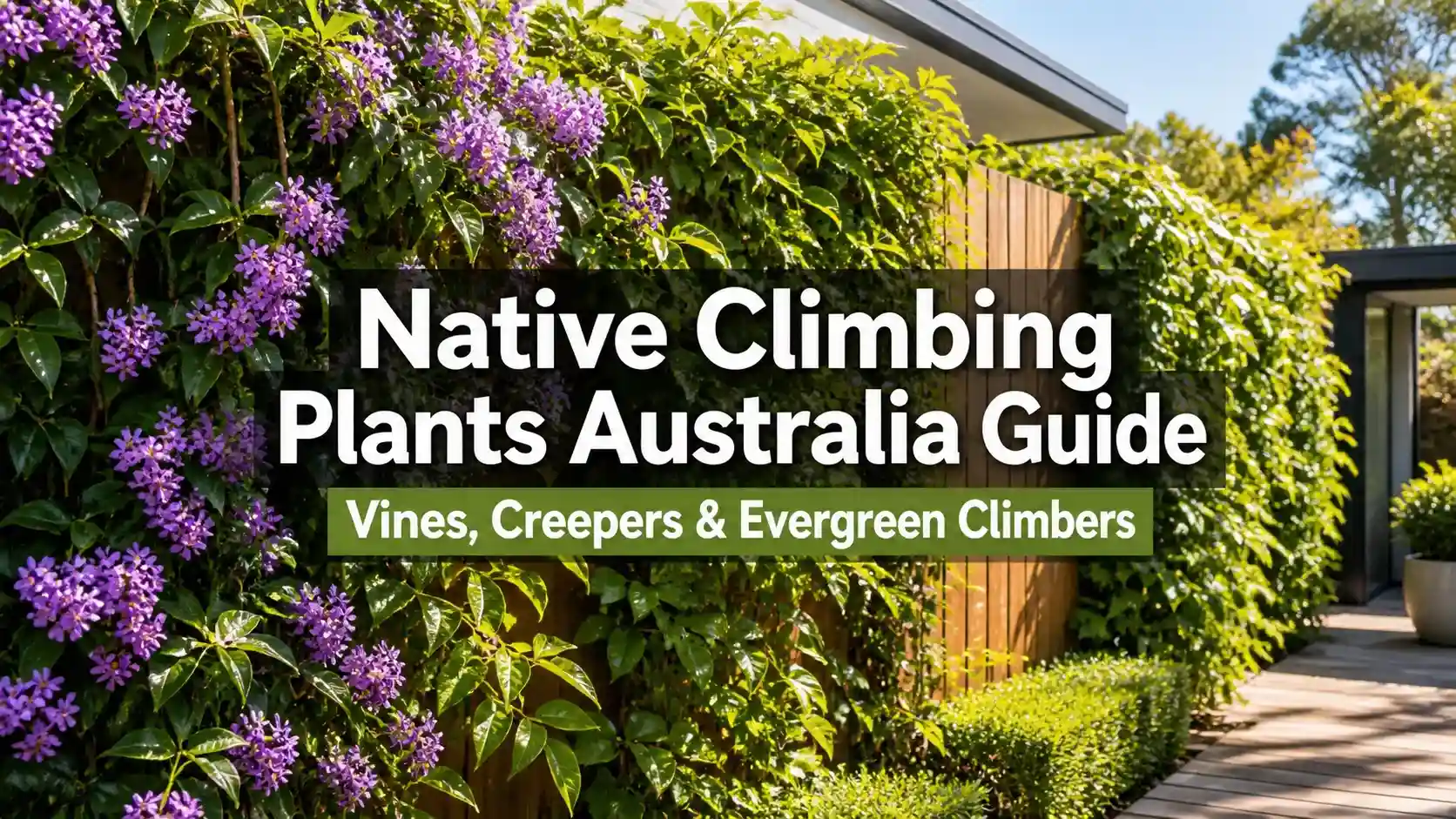
Native climbing plants Australia refer to plant species that naturally grow within Australian ecosystems and use structures like trees, fences, or walls to climb or spread. These include australian native vines and native creepers that are specifically adapted to local climates, soils, and environmental conditions, making them highly efficient for sustainable gardening.
Choosing australian native climbers over exotic species offers clear advantages. Native plants require less water, fewer chemical inputs, and minimal maintenance because they are already suited to the environment. In contrast, non-native climbers often struggle with local conditions and may even become invasive, disrupting natural ecosystems.
Native australian vines and creepers also play a critical ecological role. They support biodiversity by providing shelter and food for birds, bees, and beneficial insects. Their integration into gardens helps restore natural balance, improves soil health, and enhances overall landscape resilience.
Australian native climbing plants are broadly categorized into australian native vines, native creepers, and evergreen vines Australia. Each type offers unique growth patterns, functional uses, and landscaping benefits. Understanding these categories helps in selecting the right australian vines for specific garden conditions and design goals.
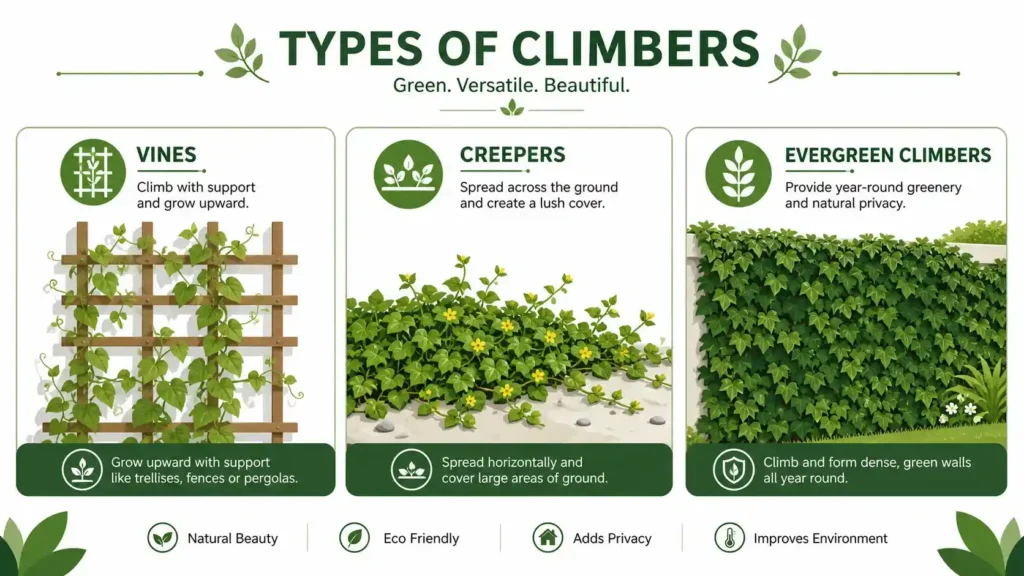
Native australian vines are climbing plants that grow vertically by twining, scrambling, or attaching to support structures. They are widely used for fences, pergolas, and vertical garden coverage.
Characteristics of native australian vines:
Common species overview:
Growth habits & support needs:
Native creepers, also known as australian native creepers, are low-growing plants that spread horizontally rather than climbing vertically. They are effective for covering large surface areas.
What are native creepers:
Difference between creeper plants Australia vs climbing vines:
|
Feature |
Creeper Plants Australia |
Climbing Vines |
|
Growth Direction |
Horizontal spreading | Vertical climbing |
| Support Requirement | Minimal or none |
Requires support |
| Primary Use | Ground cover |
Walls, fences, structures |
Use cases:
Evergreen climbing plants Australia maintain foliage throughout the year, making them ideal for consistent greenery and privacy.
Features of evergreen vines Australia:
This year-round foliage behavior is closely related to broader plant classifications such as deciduous and evergreen systems, which help gardeners understand seasonal plant behavior in landscaping.
Benefits for year-round greenery:
Low maintenance evergreen climbers:
Selecting the right native climbing plants Australia depends on sunlight exposure, growth speed, and environmental conditions. Whether you need climbing plants shade loving, creeper plants full sun, or climbers for shade Australia, matching plant type to location ensures healthy growth and long-term performance.
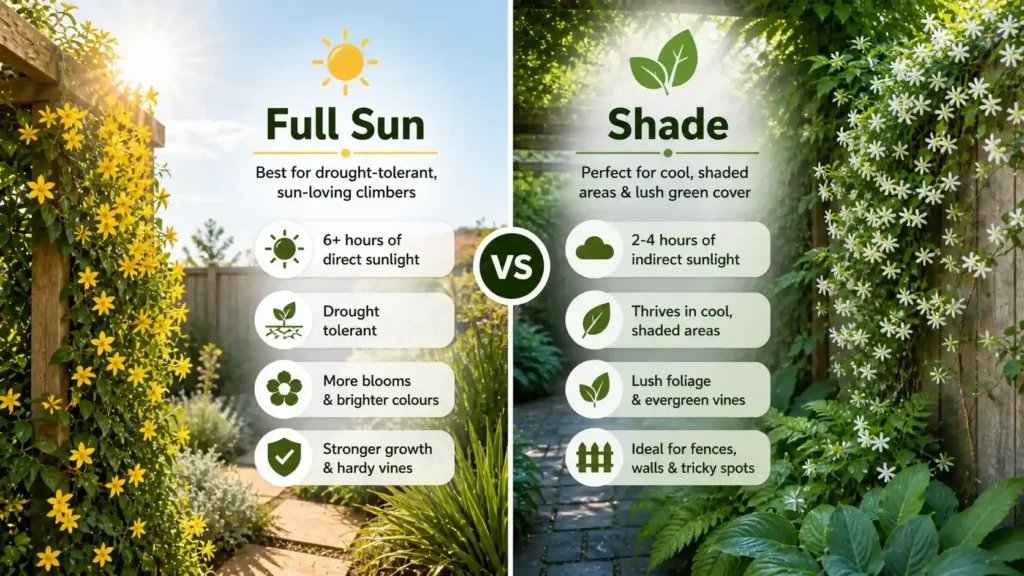
Creeper plants full sun and sun-loving climbers thrive in open areas with direct sunlight for most of the day. These plants are typically hardy and capable of handling heat and dry conditions.
Suitable creeper plants full sun:
Drought-tolerant native climbers:
Key advantages:
Climbing plants shade loving are designed to grow in areas with limited sunlight, such as under trees, along shaded walls, or in dense gardens. These climbers for shade Australia are essential for balanced landscaping.
Best climbing plants for shade / climbers for shade Australia:
Adaptation to low-light environments:
Use cases:
Fast growing vines Australia are preferred for quick coverage and functional landscaping. These fast growing evergreen climbing plants Australia provide both speed and year-round foliage.
Key features:
Use cases:
Benefits:
Native climbing plants Australia can be broadly divided into flowering and non flowering climbing vines. Each type serves a different purpose in landscaping, from enhancing biodiversity to creating consistent visual structure through foliage.
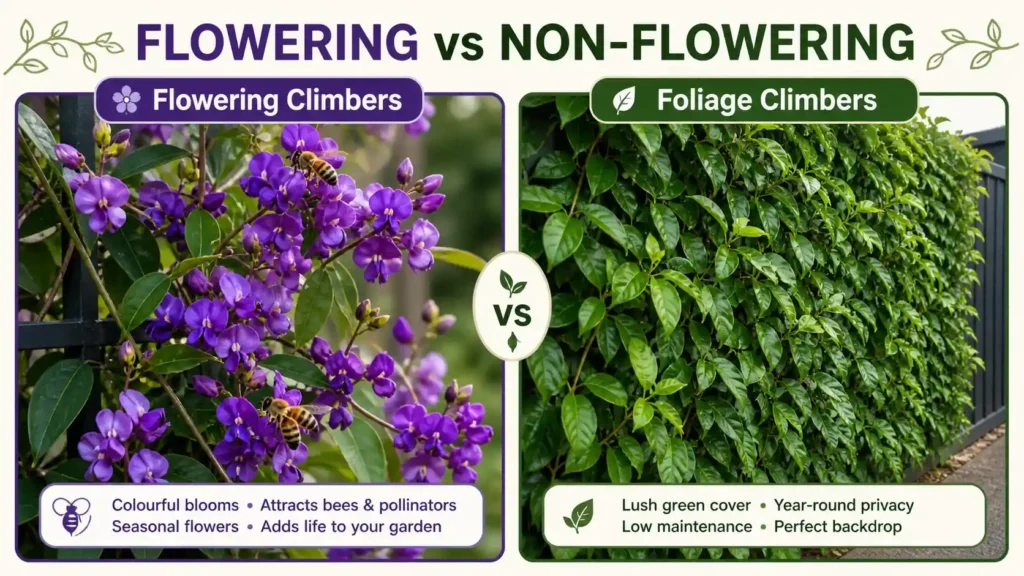
Flowering climbers are valued for their vibrant blooms and ecological benefits. Climbing plants with flowers Australia, including purple flowering climbers, add seasonal color while supporting pollinators.
Key features:
Benefits for pollinators:
Example: Hardenbergia (hardenbergia climbing / hardenbergia climber):
Non flowering climbing vines focus on foliage rather than blooms, making them ideal for consistent greenery and structural design.
Key features of non flowering climbing vines:
Focus on foliage aesthetics:
Best use cases:
Native climbing plants Australia offer versatile applications in modern landscaping. From wall climbers plant solutions to climbing plants for fences Australia and creeping plants for walls, these plants enhance both functionality and visual appeal while supporting sustainable garden design.
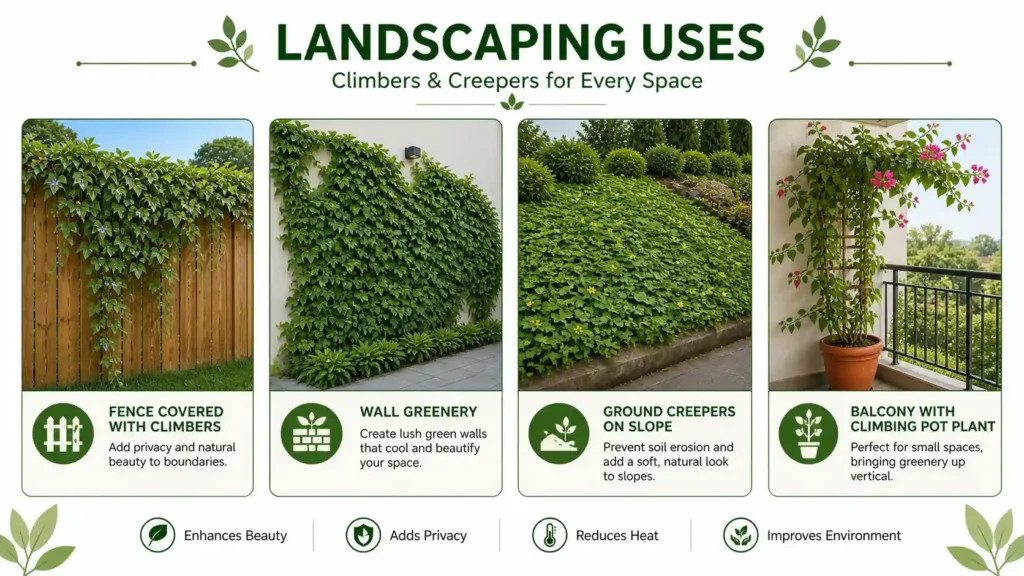
Climbing plants are widely used for vertical coverage, making them ideal for fences, walls, and structural boundaries.
Best climbing plants for fences Australia:
Wall climbers plant / creeping plants for walls:
These vertical planting strategies are often combined with structured tree planting systems like non-deciduous trees in Australia to create layered, climate-adapted landscapes.
Key benefits:
Crawling plants and creeping vines are effective for covering ground surfaces and adding texture to landscapes.
Crawling plants / creeping vine / creeping vines:
Soil erosion control:
Decorative advantages:
Native climbers can also be grown in containers, making them suitable for smaller spaces and urban environments.
Climbing pot plant / climbing plants for planters / climber plants outdoor:
Balcony & patio gardening:
Practical benefits:
Growing native climbing plants Australia successfully depends on providing the right soil conditions, sunlight exposure, watering routine, and proper support structures. These factors ensure healthy growth, strong coverage, and long-term sustainability.
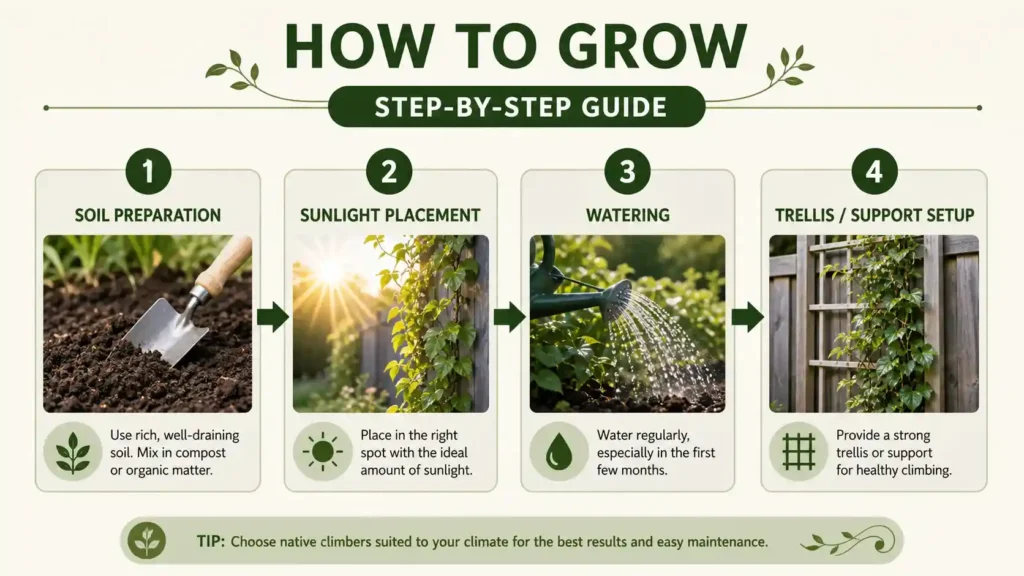
Soil requirements:
Sunlight needs:
Watering schedule:
Support structures (trellis, fences, walls):
Native climbing plants Australia are generally considered low maintenance climbing plants Australia, but proper care ensures healthy growth, controlled spread, and long-term performance. Regular maintenance also keeps evergreen climber varieties dense and visually appealing throughout the year.
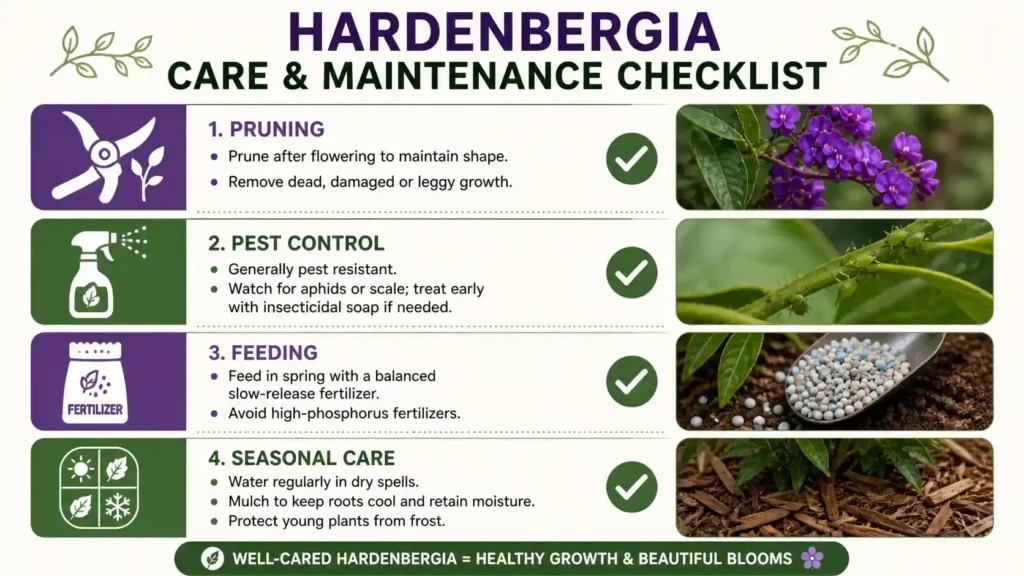
Pruning techniques:
Pest & disease management:
Fertilization:
Seasonal care:
Quick maintenance tips:
|
Plant Name |
Growth Type | Sun/Shade | Flowering | Growth Speed |
| Hardenbergia | Vine | Sun/Partial | Yes |
Fast |
|
Kennedia lateritia |
Vine | Sun | Yes | Moderate |
| Native Creepers | Creeper | Varies | Some |
Slow–Moderate |
Native climbing plants Australia offer multiple long-term advantages for sustainable and efficient landscaping. Their natural adaptation to local environments makes them a practical and eco-friendly choice for both residential and outdoor spaces.
Environmental sustainability:
Supports native wildlife:
Low maintenance gardening:
Climate resilience:
For a deeper understanding of how plant selection, care conditions, and comparisons influence long-term garden success, you can explore this detailed guide on The Ultimate Guide to Plant Growth, Care & Comparisons for Gardens and Indoor Spaces.
Avoiding common errors when growing native climbing plants Australia ensures healthy growth, proper coverage, and long-term success. These mistakes often lead to poor performance, unnecessary maintenance, or plant damage.
Choosing wrong plant for sunlight:
Lack of support structure:
Overwatering:
Ignoring growth spread:
Quick prevention tips:
Native climbing plants Australia provide a practical and sustainable solution for modern landscaping. From environmental sustainability and climate resilience to low maintenance gardening and wildlife support, these plants deliver long-term value with minimal effort. Their ability to adapt to local conditions makes them more efficient than non-native alternatives.
Choosing native climbers Australia helps create eco-friendly gardens that support biodiversity while reducing water usage and maintenance needs. Whether used for fences, walls, or ground cover, they enhance both functionality and visual appeal.
For best results, start with easy, low-maintenance species such as fast-growing vines or evergreen climbers. These options establish quickly, require minimal care, and provide consistent coverage, making them ideal for both beginners and experienced gardeners.
Some of the best native climbing plants Australia include fast-growing and adaptable species like Hardenbergia violacea and Kennedia lateritia. These australian native vines are popular for their ability to thrive in local climates, provide attractive foliage or flowers, and require minimal maintenance. Native creepers are also excellent for ground coverage and erosion control.
Several climbing plants shade loving perform well in low-light conditions. Climbers for shade Australia are typically adapted to filtered sunlight and can grow under trees or along shaded walls. These plants develop broader leaves to capture available light and maintain steady growth even with limited sun exposure.
Yes, there are many fast growing vines Australia that provide quick coverage. Fast growing evergreen climbing plants Australia are especially useful for privacy screens, fences, and vertical landscaping. These climbers establish quickly and offer dense foliage for effective coverage within a short time.
The main difference lies in growth pattern: Climbers: Grow vertically and require support like trellises or fences Creepers: Spread horizontally along the ground without needing support Creeper plants Australia are ideal for ground cover, while climbing vines are better suited for walls and vertical structures.
No, most native climbing plants Australia are considered low maintenance climbing plants Australia. They are naturally adapted to local conditions, which reduces the need for frequent watering, fertilizing, or pest control. Regular pruning and basic care are usually sufficient.
Yes, many climber plants outdoor can be successfully grown in containers. A climbing pot plant requires proper support such as a small trellis and well-draining soil. Climbing plants for planters are ideal for balconies, patios, and small spaces where ground planting is not possible.
Growth time depends on the species and conditions. Fast-growing australian vines can establish and spread within one growing season, while slower native creepers may take longer to fully cover an area. Proper sunlight, watering, and support can significantly improve growth speed.
Yes, many evergreen vines Australia maintain foliage year-round. These evergreen climbing plants Australia are ideal for continuous greenery, privacy screens, and consistent landscape coverage without seasonal leaf loss.
Yes, native climbers play an important role in supporting biodiversity. Flowering climbing plants with flowers Australia attract pollinators such as bees and butterflies, while dense foliage provides shelter for birds and beneficial insects.