Grow Better Gardens with Smarter Plant Choices
Discover helpful guides on trees, hedges, fruit plants, edible plants, and beautiful landscape greenery.

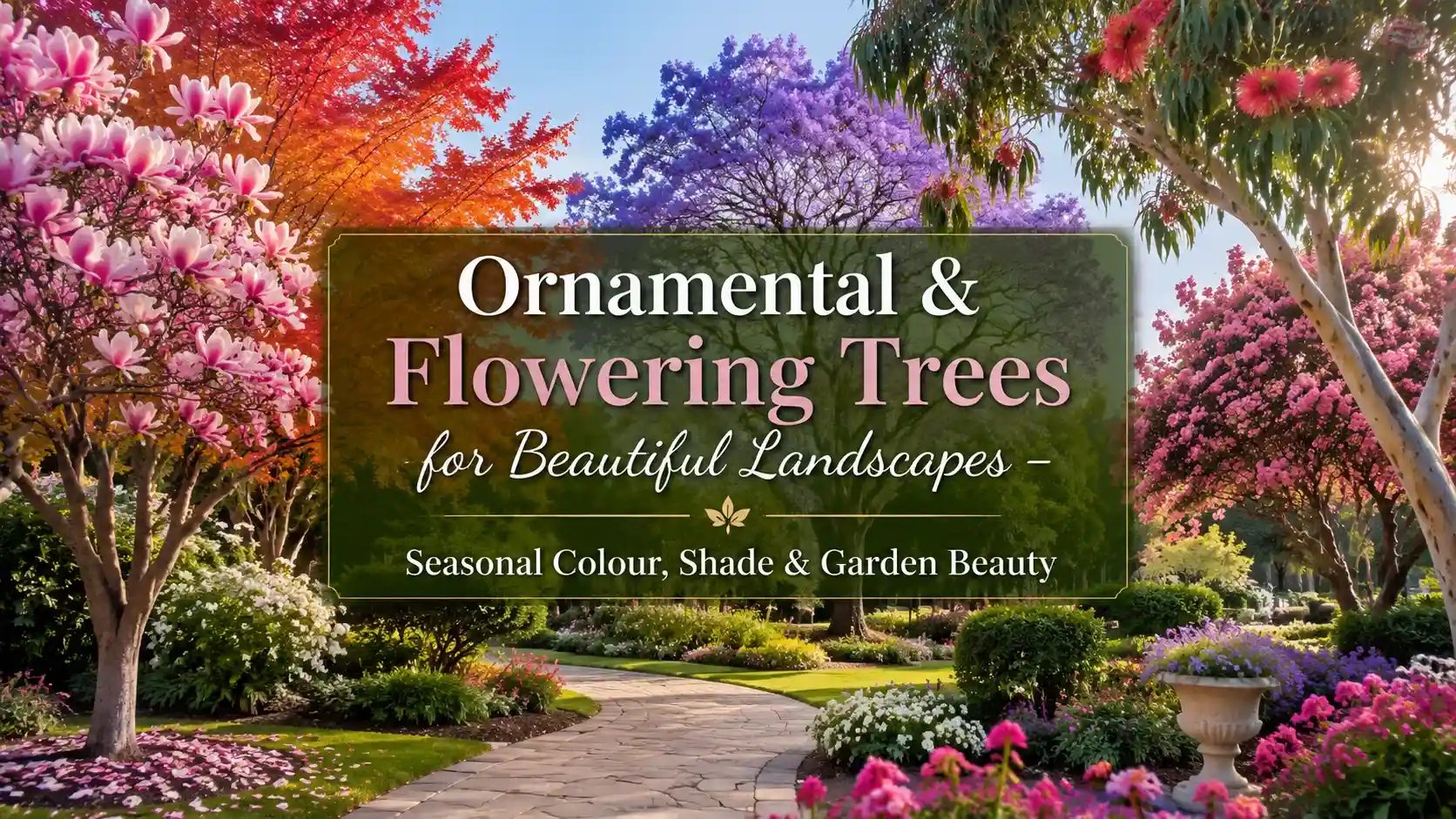
Ornamental & flowering trees play a major role in creating visually appealing, functional, and environmentally balanced landscapes. These trees are grown for their decorative flowers, colourful foliage, attractive bark, elegant structure, and seasonal beauty. In both residential and commercial landscaping, ornamental trees help improve curb appeal, provide shade, enhance privacy, and support local biodiversity by attracting birds, bees, and pollinators. From evergreen feature trees to deciduous varieties with dramatic autumn colour, ornamental trees suit a wide range of garden styles and climate conditions. Popular choices include native and exotic species such as the small eucalyptus tree, silver birch trees, jacaranda tree adelaide varieties, and star magnolia australia selections, all valued for their versatility and strong visual impact in modern landscape design.
Selecting the right ornamental tree starts with understanding the available planting space. Tree size affects not only the visual balance of a landscape but also long-term maintenance, root development, shade coverage, and structural safety. Choosing a tree that matches your garden size helps prevent overcrowding and reduces future pruning or removal issues.
Small ornamental trees are ideal for urban gardens, patios, courtyards, and narrow planting areas. These trees provide seasonal colour and decorative value without overwhelming limited spaces. Compact varieties also work well near fences, pathways, and outdoor entertaining zones.
Popular small ornamental options include:
These trees typically feature controlled growth habits, manageable root systems, and strong ornamental appeal for smaller landscapes.
Courtyard gardens benefit from trees with upright growth, compact canopies, and non-invasive roots. In enclosed spaces, ornamental trees can create privacy, soften hard landscaping, and provide filtered shade without blocking natural light completely.
Key features to look for:
Pairing ornamental trees with soft border plants such as dwarf lavender can also improve texture contrast and create layered landscape designs.
Medium ornamental trees are commonly used as focal points in residential gardens. These trees provide balanced canopy coverage while still fitting comfortably in standard suburban landscapes. They work well as lawn centrepieces, driveway accents, or feature trees near outdoor living areas.
Benefits of medium-sized feature trees include:
Large ornamental and flowering trees are best suited to spacious gardens, parks, commercial landscapes, and acreage properties. These trees create dramatic visual scale, extensive shade, and strong environmental benefits. However, they require careful placement because of their mature height and root spread.
Large landscape trees are commonly used for:
Before planting large trees, it is important to consider nearby buildings, underground utilities, swimming pools, and driveways.
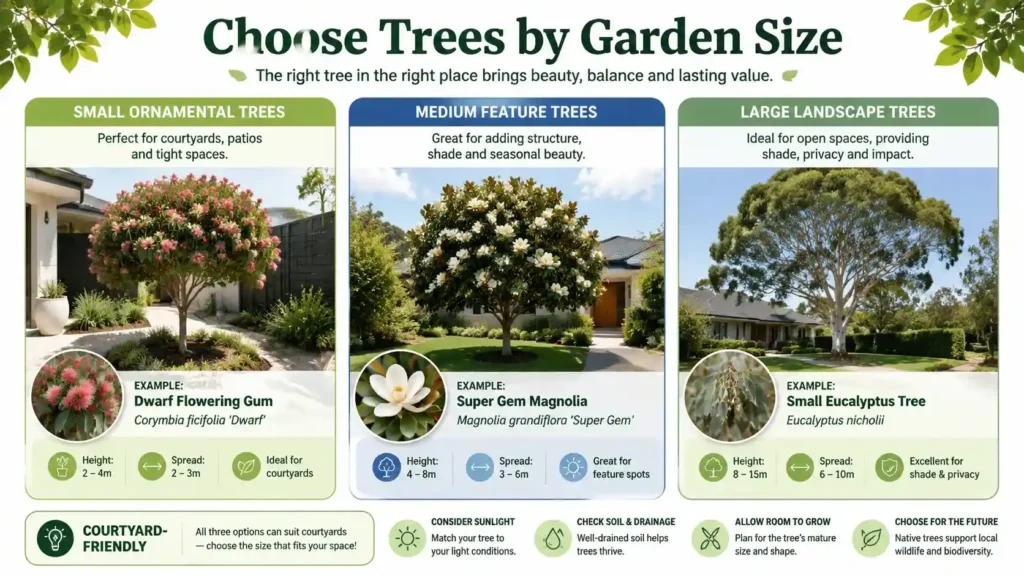
Tree roots often spread wider than the canopy, making planting distance an important factor in landscape planning. Insufficient space can lead to root competition, paving damage, drainage issues, and restricted growth.
Important planting considerations include:
Proper spacing allows ornamental trees to develop healthy root systems, stable growth habits, and balanced canopy structures while protecting surrounding landscape features.
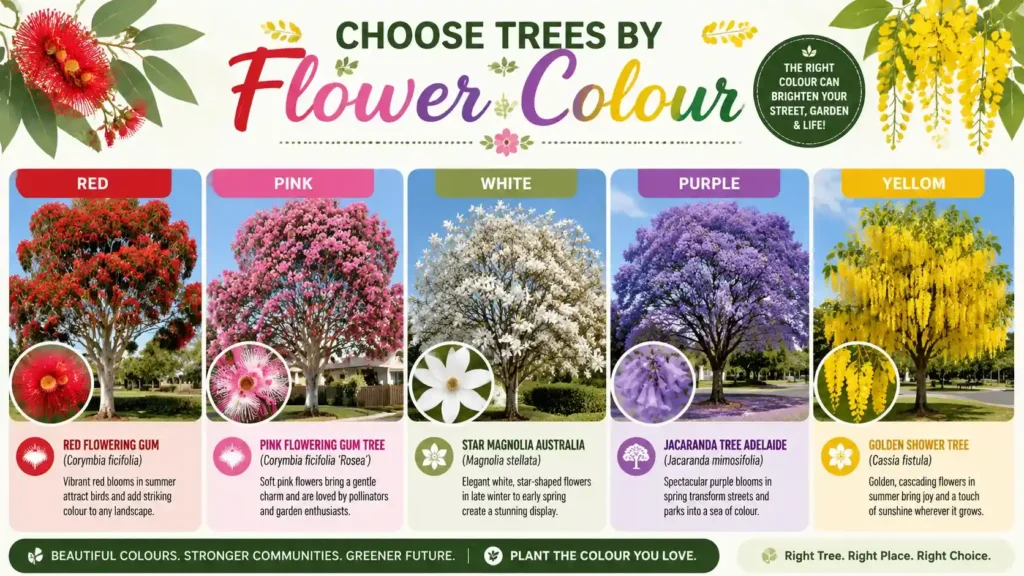
Flower colour is one of the most important factors when selecting ornamental and flowering trees. Different bloom colours can influence the mood, style, and seasonal appearance of a landscape. Choosing complementary flowering tones also helps create visual harmony throughout the garden.
Red flowering trees create bold focal points and strong seasonal contrast in landscapes. These trees are often used to add energy and visual impact to gardens, especially during spring and summer flowering periods.
Popular red flowering ornamental trees include:
Red blooms work particularly well in modern landscapes, tropical-style gardens, and feature planting designs.
Pink flowering trees provide a softer, elegant appearance that suits both traditional and contemporary gardens. Their blooms create a calming visual effect while attracting bees and pollinators.
Popular choices include:
Pink blooms pair well with neutral foliage plants and evergreen screening trees.
White flowering trees bring brightness and balance to outdoor spaces. Their clean floral appearance complements minimalist gardens, formal landscapes, and courtyard settings.
Popular white flowering varieties include:
White blooms are particularly effective in shaded gardens because they reflect light and create a fresh visual contrast.
Purple flowering ornamental trees are highly valued for their dramatic colour display and ornamental appeal. These trees often become seasonal feature specimens during peak flowering periods.
Well-known purple flowering trees include:
Purple flowers combine beautifully with silver foliage, native grasses, and warm-toned landscaping materials.
Yellow and golden flowering trees add warmth, brightness, and tropical character to landscapes. These trees are commonly used to create vibrant seasonal displays in larger gardens and streetscapes.
Popular yellow flowering trees include:
Golden blooms work especially well in sunny landscapes and drought-tolerant garden designs.
Understanding the difference between evergreen and deciduous ornamental trees helps homeowners choose trees that match their climate, maintenance preferences, and landscape goals. Both categories offer unique seasonal and functional benefits.
Evergreen ornamental trees retain their foliage throughout the year, making them ideal for privacy screening, year-round structure, and consistent greenery. These trees are popular in modern residential landscapes where visual coverage and low seasonal change are preferred.
Benefits of evergreen ornamental trees:
Evergreen trees are commonly used around boundaries, driveways, and outdoor entertaining spaces.
Deciduous ornamental trees lose their leaves during cooler months, creating seasonal variation and allowing increased winter sunlight. These trees are highly valued for spring blossoms and autumn foliage colour.
Popular deciduous ornamental varieties include:
Deciduous trees are ideal for landscapes that benefit from seasonal change and dynamic colour variation.
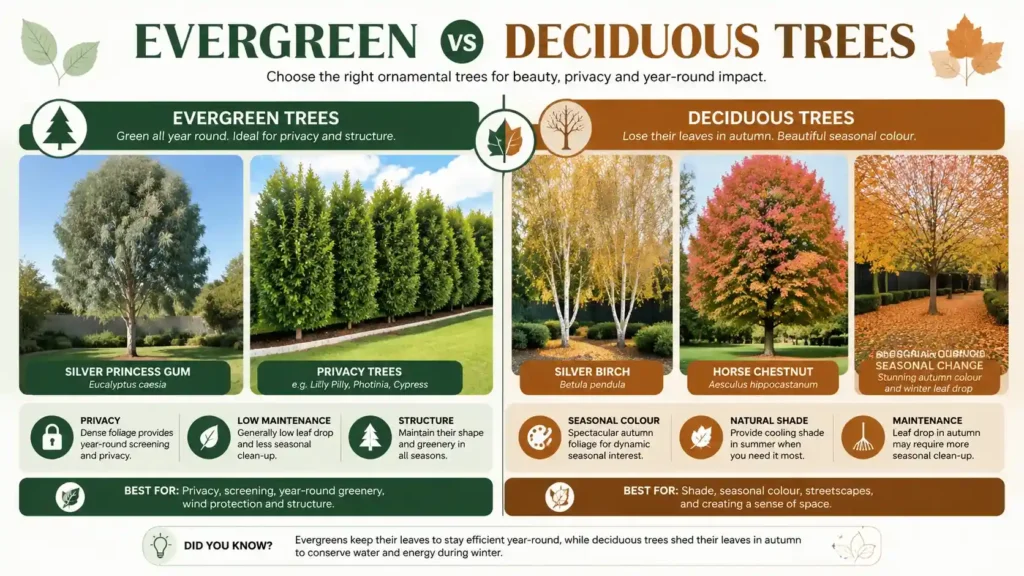
Many deciduous ornamental trees produce striking autumn displays in shades of red, gold, bronze, and orange. Autumn foliage adds strong seasonal character to gardens and increases visual interest during cooler months.
Benefits of autumn-colour trees:
Even after leaf drop, deciduous ornamental trees continue to provide visual interest through their branch architecture, bark texture, and tree form. Structured branching patterns can become an important design element in winter gardens.
Silver birch trees, for example, are valued for their decorative bark and elegant winter silhouette.
Evergreen and deciduous trees also differ in maintenance needs.
Evergreen trees generally require:
Deciduous trees may require:
The right choice depends on climate conditions, garden style, and long-term maintenance preferences.
Both native and exotic ornamental trees offer unique landscaping advantages. The best choice often depends on local climate conditions, biodiversity goals, maintenance expectations, and desired visual style.
Native ornamental trees are naturally adapted to local growing conditions, making them highly resilient and easier to maintain in Australian landscapes. These trees typically require less water, tolerate heat more effectively, and support native wildlife.
Popular native flowering trees include:
The silver princess gum is widely admired for its silvery foliage, weeping branches, and vibrant pink-red flowers that create strong visual impact in Australian landscapes.
Native trees are especially valuable in sustainable and water-wise landscape designs.
Exotic ornamental trees are introduced species grown for their decorative flowers, foliage, structure, or seasonal colour. These trees can add distinctive textures and unique flowering displays not commonly found in native landscapes.
Popular exotic ornamental trees include:
Exotic species are often used in formal gardens, European-inspired landscapes, and feature planting schemes.
Climate compatibility is essential when selecting ornamental trees. Native trees generally adapt better to local drought, heat, soil conditions, and seasonal extremes. Some exotic varieties may require additional watering, frost protection, or soil improvement depending on the region.
Important factors to assess include:
Native ornamental trees typically provide stronger ecological value by supporting local birds, bees, butterflies, and pollinators. Flowering gums and native flowering species are especially beneficial for biodiversity-focused gardens.
Wildlife-friendly benefits include:
Maintenance requirements can vary significantly between native and exotic ornamental trees.
Native trees often provide:
Exotic trees may require:
Selecting climate-appropriate trees helps reduce maintenance while improving long-term landscape performance.
Flowering gum trees are among the most popular ornamental trees in Australian landscapes because of their vibrant blooms, drought tolerance, and adaptability to different garden styles. These trees produce striking flowers in shades of red, pink, orange, white, and coral while also providing evergreen foliage and habitat value for birds and pollinators. Many flowering gums thrive in harsh climate conditions, making them ideal for water-wise and low-maintenance gardens. Their long flowering seasons and strong visual appeal make them suitable for residential gardens, streetscapes, courtyards, and commercial landscape projects. From compact dwarf varieties to larger feature trees, flowering gums offer exceptional versatility in modern landscape design.
Dwarf flowering gums are highly valued for their compact growth habits and suitability for smaller outdoor spaces. These ornamental trees provide colourful flowering displays without requiring the large planting areas needed by full-sized eucalyptus species.
Dwarf flowering gum varieties are bred to maintain controlled growth while still producing abundant flowers and attractive foliage. Their smaller mature size makes them easier to manage in residential gardens and urban landscapes.
Benefits of compact flowering gums include:
Popular compact varieties include:
Compact ornamental gums work exceptionally well in:
Their manageable canopy size allows homeowners to enjoy flowering eucalyptus trees without overwhelming limited garden areas.
Many dwarf flowering gums can also be grown successfully in large containers. This makes them ideal for balconies, paved entertaining areas, and compact outdoor living spaces where in-ground planting may not be possible.
Container-grown ornamental gums require:
Dwarf flowering gums are considered low-maintenance ornamental trees because of their:
These qualities make them a practical option for homeowners seeking long-term landscape colour with reduced maintenance demands.
Flowering gum trees are available in a wide range of colours, growth habits, and mature sizes, allowing them to suit many different landscape applications. Their striking flowers and evergreen foliage make them standout feature trees throughout the year.
One of the biggest attractions of flowering gums is their diverse flower colour range. Different varieties can produce vibrant blooms in:
Popular ornamental selections include:
Among these, the white gum tree is especially valued for its smooth pale bark, fast growth, and elegant evergreen structure in Australian landscapes.
These colourful flowering displays help create strong seasonal visual impact in gardens and streetscapes.
Flowering gum trees range from compact dwarf forms to medium-sized ornamental shade trees. Selecting the correct mature size is important for maintaining proper spacing and long-term landscape balance.
Typical uses based on size include:
Many flowering gums perform exceptionally well in Australian conditions because of their:
Certain varieties also tolerate coastal conditions and light frost, depending on the species and growing region.
Flowering gum trees are widely used in landscape design because they combine ornamental value with practical environmental benefits.
Common landscape applications include:
Their evergreen foliage also provides year-round structure and visual interest.
Small eucalyptus trees have become increasingly popular in contemporary landscaping because of their fast growth, architectural foliage, and drought tolerance. These trees provide a modern Australian aesthetic while remaining practical for low-maintenance outdoor spaces.
Many compact eucalyptus varieties establish quickly and provide rapid visual impact in newly planted gardens. Their fast growth makes them useful for:
Popular compact species include the small eucalyptus tree, which is widely used in modern residential landscapes for screening, wildlife gardens, and low-maintenance native planting
Small eucalyptus trees are commonly planted as informal privacy screens because of their dense evergreen foliage and upright growth habits.
Benefits of eucalyptus screening trees:
When combined with structured planting layouts, these trees create soft natural boundaries in outdoor living areas.
Eucalyptus species are well suited to drought-tolerant and water-wise garden designs. Their adaptability to dry conditions makes them ideal for sustainable landscaping in warm and low-rainfall regions.
Water-wise benefits include:
These qualities make eucalyptus trees practical choices for environmentally conscious landscaping.
Modern landscapes often require trees with manageable growth and controlled canopies. Compact eucalyptus varieties provide ornamental foliage and native character without excessive size.
Popular complementary drought-tolerant landscape trees include:
These trees work particularly well in minimalist gardens, native landscapes, and contemporary architectural designs.
Magnolia trees are among the most elegant ornamental trees used in residential and commercial landscaping. Known for their glossy foliage, fragrant flowers, and impressive floral displays, magnolias add structure and sophistication to a wide range of garden styles. Evergreen magnolia varieties provide year-round greenery and privacy, while deciduous magnolias create dramatic seasonal flowering displays in spring. Their ornamental foliage, attractive tree form, and large blooms make magnolias ideal feature trees for entryways, courtyards, patios, and formal landscapes. From compact evergreen selections to bold statement trees, magnolias remain one of the most popular choices in modern landscape design.
Compact magnolia trees are perfect for smaller gardens, urban landscapes, and courtyard planting. These varieties combine the classic beauty of magnolias with manageable growth habits, making them suitable for limited outdoor spaces.
Compact magnolias are ideal for:
Their controlled canopy size allows homeowners to enjoy ornamental flowering trees without overwhelming smaller landscapes.
Popular compact varieties include:
These trees provide ornamental impact while maintaining practical growth dimensions.
Many compact magnolias feature evergreen foliage, offering year-round greenery and structure in the landscape. Their dense foliage creates visual softness while also helping improve privacy and wind protection.
Benefits of evergreen magnolias include:
Evergreen growth also makes compact magnolias highly valuable in modern minimalist garden designs.
One of the standout features of magnolia trees is their highly fragrant flowers. Many compact varieties produce sweetly scented blooms during spring and summer, enhancing outdoor living spaces and entertaining areas.
Fragrant magnolia flowers help create:
Compact magnolia trees are considered relatively low maintenance when planted in suitable conditions. Once established, they typically require only light pruning and moderate watering.
Low-maintenance advantages include:
Their combination of elegance and practicality makes compact magnolias a reliable feature tree choice for residential landscapes.
Statement magnolia trees are grown for their dramatic flowers, architectural branching, and strong seasonal presence. These ornamental trees create bold focal points and are often used as centrepiece plantings in larger landscapes.
Large-flowering magnolias are highly prized for their oversized blooms, which can become the dominant visual feature of a garden during flowering season. Their flowers appear in shades of white, pink, purple, burgundy, and soft blush tones.
Popular statement varieties include:
These trees are commonly used to create premium ornamental displays in feature landscapes.
Many deciduous magnolia trees flower heavily during late winter and spring before new foliage emerges. This creates a striking floral display that adds strong seasonal interest to the landscape.
Seasonal flowering benefits include:
The flowering period often transforms magnolias into standout focal points within the garden.
Even outside flowering season, magnolia trees maintain strong ornamental value because of their branching structure and canopy shape. Their balanced form makes them highly effective as architectural landscape elements.
Architectural features include:
These characteristics help magnolias complement both formal and contemporary garden styles.
Statement magnolia trees work exceptionally well in:
Their elegant appearance and seasonal flowering displays make them one of the most desirable ornamental trees for sophisticated landscape design.
Crepe myrtle trees are among the best ornamental trees for adding vibrant summer colour to residential and commercial landscapes. These flowering trees are known for their exceptionally long blooming season, often producing flowers from late spring through to autumn in warm climates. In addition to their colourful blooms, crepe myrtles are valued for their attractive bark texture, compact ornamental growth, and strong heat tolerance. Many varieties also develop impressive autumn foliage colour, making them useful for multi-season landscape interest. Their versatility, drought tolerance, and manageable size make crepe myrtles popular choices for courtyards, feature planting, streetscapes, and modern gardens.
Crepe myrtle trees are available in a wide range of flower colours, mature sizes, and growth habits. Selecting the right variety depends on available space, climate conditions, and the desired landscape effect.
One of the biggest advantages of crepe myrtles is their diverse colour range. Different varieties produce flowers in shades of:
Popular ornamental varieties include:
This broad colour selection allows homeowners and landscape designers to coordinate flowering trees with surrounding plants and architectural styles.
Crepe myrtles range from compact dwarf forms to medium-sized ornamental trees. Choosing the appropriate mature size helps maintain proper spacing and reduces long-term pruning requirements.
Typical growth categories include:
Smaller varieties are ideal for urban gardens and patios, while larger selections work well as avenue trees or lawn centrepieces.
Modern crepe myrtle varieties are often selected for improved disease resistance, especially against powdery mildew and fungal leaf issues. Disease-resistant trees maintain healthier foliage and stronger flowering performance throughout the growing season.
Benefits of disease-resistant crepe myrtles include:
Choosing climate-appropriate varieties also improves long-term tree health and ornamental performance.
Crepe myrtles are highly versatile ornamental trees suitable for many landscape applications.
Common uses include:
Their compact ornamental growth and long flowering season make crepe myrtles especially effective in modern landscape designs that prioritise colour, structure, and low-maintenance performance.
Deciduous ornamental trees are highly valued for their changing seasonal appearance and strong visual impact throughout the year. These trees provide fresh spring blossoms, cooling summer shade, vibrant autumn foliage, and attractive winter branch structure after leaf drop. Their seasonal transformation adds movement, texture, and colour variation to residential and commercial landscapes. Many deciduous trees are also effective shade providers, helping reduce heat around outdoor living areas and garden spaces. From flowering blossom trees to dramatic autumn-colour specimens, deciduous ornamental trees remain popular choices for landscapes that prioritise seasonal beauty and year-round visual interest.
Ornamental trees with autumn foliage are prized for their ability to transform landscapes with rich seasonal colour. During autumn, deciduous trees produce vibrant shades of red, orange, yellow, and gold before shedding their leaves for winter dormancy.
Trees with red autumn foliage create dramatic seasonal displays and strong visual contrast in the landscape. These trees are often used as feature specimens because of their intense colour transformation during cooler months.
Popular red autumn foliage trees include:
Red autumn foliage pairs particularly well with evergreen shrubs and native grasses.
Golden and yellow autumn foliage adds warmth and brightness to outdoor spaces. These trees help soften landscapes during seasonal transitions and create visually striking garden displays.
Popular golden autumn trees include:
The silver birch trees are especially admired for their golden autumn foliage, elegant white bark, and graceful seasonal structure in cool-climate landscapes.
Golden foliage works exceptionally well in avenue planting and larger landscape designs where seasonal colour becomes a major feature.
Many deciduous ornamental trees also function as practical shade trees during warmer months. Their broad canopies help cool outdoor spaces while allowing increased sunlight penetration during winter after leaf drop.
Shade tree benefits include:
This seasonal adaptability makes deciduous trees highly functional in residential gardens and commercial landscapes.
Trees with autumn colour provide long-term seasonal interest and help landscapes feel dynamic throughout the year. Their changing appearance creates natural visual movement between seasons and increases overall garden appeal.
Seasonal landscaping advantages include:
Well-positioned autumn-colour trees often become focal points in landscape design.
Flowering blossom trees are among the most decorative deciduous ornamental trees available. These trees produce colourful spring flowers that create vibrant seasonal displays while also attracting pollinators and enhancing biodiversity.
Spring flowering trees signal the transition from winter to the active growing season. Their blossoms provide early-season colour and become major focal points in gardens during flowering periods.
Popular flowering blossom trees include:
These ornamental trees are commonly planted near patios, entryways, and feature garden spaces where their flowers can be fully appreciated.
Many flowering blossom trees attract:
Their nectar-rich flowers help support local biodiversity while improving ecological value within the landscape.
Pollinator-friendly landscapes also contribute to healthier surrounding garden ecosystems.
In addition to seasonal blossoms, many flowering trees also provide decorative foliage throughout the growing season. Some varieties feature:
This combination of flowers and foliage extends their ornamental value beyond spring flowering periods.
Some deciduous flowering trees also produce ornamental fruit after flowering finishes. Decorative fruit can add seasonal texture and visual interest while attracting birds to the garden.
Benefits of ornamental fruit include:
Flowering blossom trees offer a balanced combination of seasonal flowers, ornamental foliage, and ecological value, making them highly versatile additions to ornamental landscapes.
Native flowering trees are highly valued in Australian landscaping because they combine ornamental beauty with strong environmental benefits. These trees are naturally adapted to local climate conditions, making them more drought tolerant, heat resistant, and reliable in long-term landscape performance. Native ornamental trees also play an important role in supporting biodiversity by attracting birds, bees, butterflies, and other pollinators. Their resilience and lower maintenance requirements make them ideal for sustainable gardens, water-wise landscapes, and wildlife-friendly outdoor spaces. From colourful flowering gums to bold feature trees, native species provide year-round visual appeal while contributing to healthier local ecosystems.
Australian native flowering trees are available in a wide range of sizes, colours, and growth habits, allowing them to suit both residential and commercial landscape designs.
Different native flowering trees bloom at various times throughout the year, helping create continuous seasonal colour across the landscape.
Popular flowering periods include:
Well-known native ornamental trees include:
Combining multiple native species with staggered flowering periods helps maintain visual interest across changing seasons.
Native flowering trees vary from compact ornamental forms to larger shade and feature trees. Their growth habits influence how they are used within landscape designs.
Common growth forms include:
Selecting trees with appropriate mature sizes helps maintain balanced planting layouts and reduces future maintenance requirements.
One of the major advantages of native flowering trees is their ability to support local wildlife. Nectar-rich flowers attract pollinators and native birds while dense foliage provides shelter and nesting opportunities.
Wildlife-friendly benefits include:
Species such as flowering gums and bottlebrush relatives are especially valuable in bird-friendly landscape designs.
Native trees are naturally adapted to Australian growing conditions, allowing them to tolerate:
This climate adaptability makes native flowering trees highly reliable for low-maintenance landscapes and environmentally sustainable garden designs.
Many native species also require less irrigation and fertiliser once established, helping reduce long-term garden maintenance while improving resilience in challenging climate conditions.
Small gardens can still achieve strong visual impact with the right ornamental trees. Compact ornamental varieties provide flowers, foliage colour, fragrance, and seasonal interest without overwhelming limited outdoor spaces. Trees selected for smaller landscapes should have manageable root systems, controlled canopy growth, and low-maintenance characteristics. Courtyard-friendly ornamental trees are especially useful in urban gardens, patios, narrow side yards, and modern residential landscapes where planting space is restricted.
Trees with compact root systems are better suited to small gardens because they reduce the risk of damage to paving, retaining walls, foundations, and underground services. Many homeowners choose dwarf flowering gum varieties because they combine vibrant flowering displays with compact growth habits ideal for smaller residential landscapes. Controlled root growth also allows planting closer to structures and outdoor living spaces.
Benefits of compact-root ornamental trees include:
Popular compact ornamental choices include:
These trees provide decorative value while remaining practical for confined planting areas.
Narrow and upright ornamental trees help maximise vertical space without spreading too widely across the garden. These growth habits are ideal for:
Trees with narrow canopies maintain openness within the landscape while still adding height, texture, and seasonal colour.
Courtyard gardens benefit from ornamental trees that provide shade, privacy, and structure without creating excessive leaf litter or heavy root competition. Compact flowering trees can soften hard landscaping materials and create more comfortable outdoor environments.
Key features of courtyard-friendly ornamental trees:
Combining ornamental trees with soft companion plants such as dwarf lavender can further enhance texture and colour layering in smaller landscapes.
Low-maintenance ornamental trees are especially important in compact gardens where ease of care and space efficiency are priorities. The best small-garden trees generally require:
Plants such as daphne odora plant varieties also pair well with compact ornamental trees by adding fragrance and evergreen structure beneath taller canopy layers.
Choosing low-maintenance ornamental trees helps create visually attractive small gardens that remain functional, balanced, and easy to manage throughout the year.
Selecting ornamental trees by flower colour allows gardeners and landscapers to create visually striking landscapes that complement existing plants, architecture, and outdoor living spaces. Flowering trees in different hues can serve as focal points, accents, or layered colour features within gardens. Using a mix of red, pink, white, purple, and yellow flowering trees helps maintain seasonal interest, attract pollinators, and enhance curb appeal in both small and large landscapes.
Red flowering ornamental trees provide bold, eye-catching displays that add vibrancy to any garden. Their striking blooms are ideal for creating focal points or accentuating pathways, courtyards, and feature planting areas.
Popular red flowering trees include:
The red flowering gum is especially valued for its vibrant summer blooms, evergreen foliage, and strong performance in drought-tolerant Australian landscapes.
These varieties combine strong floral colour with manageable growth and evergreen or semi-evergreen foliage, making them suitable for modern and traditional landscapes.
Pink flowering trees add a softer, elegant touch to gardens. Their blooms are visually appealing and create a calming, romantic atmosphere while attracting bees and pollinators.
Recommended pink flowering trees include:
The pink flowering gum tree is especially popular in Australian landscapes for its vibrant blossoms, drought tolerance, and strong attraction to birds and pollinators.
These trees are well suited to courtyard planting, small gardens, or as feature specimens in larger landscapes.
White flowering trees bring brightness, contrast, and sophistication to garden spaces. Their clean floral appearance enhances the visual appeal of formal, minimalist, or contemporary landscapes.
Popular white flowering varieties include:
The camellia sasanqua white is especially popular for evergreen hedging, elegant white blooms, and year-round ornamental structure in formal garden landscapes.
White blooms work particularly well when paired with darker foliage, evergreen screening, or other coloured flowering trees.
Purple flowering ornamental trees offer dramatic visual impact and seasonal interest. Their blooms are ideal for creating standout garden features and complementing surrounding green and neutral-toned plants.
Notable purple flowering trees include:
These trees are especially effective in streetscapes, large courtyards, and garden areas designed for bold floral contrasts.
Yellow and golden flowering trees provide warmth, vibrancy, and tropical character to garden landscapes. Their bright blooms create visual energy and highlight sunny garden areas.
Popular yellow and golden flowering trees include:
Compact varieties such as the dwarf orange flowering gum are also popular for adding warm-toned seasonal colour to smaller Australian landscapes.
These trees are ideal for focal plantings, avenue planting, and enhancing outdoor spaces where high-impact seasonal colour is desired.
Low-maintenance ornamental trees are an essential choice for homeowners and landscapers seeking long-term beauty without extensive upkeep. These trees are particularly suited for modern gardens, urban landscapes, and water-wise plantings where time, resources, and space are limited. By selecting drought-tolerant, disease-resistant, and evergreen varieties with minimal pruning needs, gardeners can enjoy year-round visual appeal while reducing labour and maintenance costs.
Drought-tolerant ornamental trees thrive in low-water conditions, making them ideal for dry and arid climates or water-wise landscapes. Their resilience ensures sustained growth and flowering even during periods of limited rainfall, reducing the need for frequent irrigation.
Popular drought-tolerant options include:
The cypress pine tree Australia is especially valued in dry landscapes because of its exceptional drought tolerance, evergreen foliage, and ability to thrive in poor soils.
These species provide evergreen structure, seasonal flowers, and adaptability to a variety of soil types, making them reliable long-term landscape investments.
Disease-resistant trees maintain healthy foliage and flowers with minimal intervention. Selecting resistant species reduces the risk of fungal infections, pest infestations, and leaf drop, helping gardens stay visually appealing throughout the year.
Key benefits of disease-resistant ornamental trees:
Trees with naturally well-formed growth habits require less pruning and shaping, saving time and labour. Minimal-maintenance trees retain their ornamental value without frequent corrective pruning and are ideal for both small and large garden spaces.
Examples of low-pruning ornamental trees include:
These trees complement taller ornamental trees and add texture, colour, and fragrance to low-maintenance gardens.
Evergreen ornamental trees offer year-round structure, privacy, and visual interest. Their consistent foliage helps maintain garden aesthetics throughout all seasons and provides natural screening or shade where needed.
Benefits of evergreen ornamental trees include:
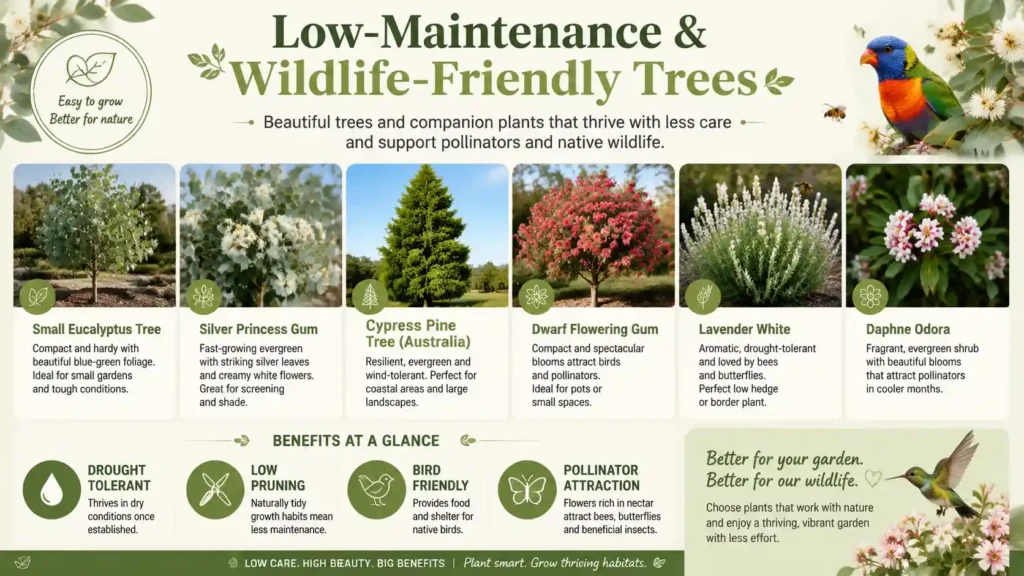
By combining drought tolerance, disease resistance, minimal pruning, and evergreen traits, low-maintenance ornamental trees create sustainable, beautiful, and easy-to-care-for landscapes.
Selecting ornamental trees based on climate ensures long-term growth success, reduces maintenance, and enhances landscape performance. Trees that are adapted to specific environmental conditions provide better flowering, healthier foliage, and stronger resistance to pests, diseases, and weather extremes. Understanding which species thrive in cool, warm, or dry climates allows gardeners to create sustainable, visually appealing landscapes year-round.
Cool climate gardens benefit from ornamental trees that tolerate frost, shorter growing seasons, and lower temperatures. These trees often provide seasonal interest through vibrant autumn foliage, spring blossoms, or architectural branch structure during winter.
Recommended trees for cool climates include:
These species combine aesthetic value with resilience to cooler conditions, making them ideal for temperate suburban or high-altitude landscapes.
Gardens in warm and tropical regions require ornamental trees that tolerate heat, humidity, and extended sunlight exposure. These trees often produce long-lasting flowers and vibrant summer colour, thriving in areas with high temperatures and consistent sunshine.
Suitable species for warm and tropical climates include:
Planting climate-appropriate species ensures robust growth, prolonged flowering, and minimal stress from heat or intense sunlight.
Dry and drought-prone landscapes demand ornamental trees that are highly water-efficient and resilient to long dry periods. Trees adapted to arid conditions can survive on minimal irrigation while still providing ornamental value and shade.
Ideal trees for dry regions include:
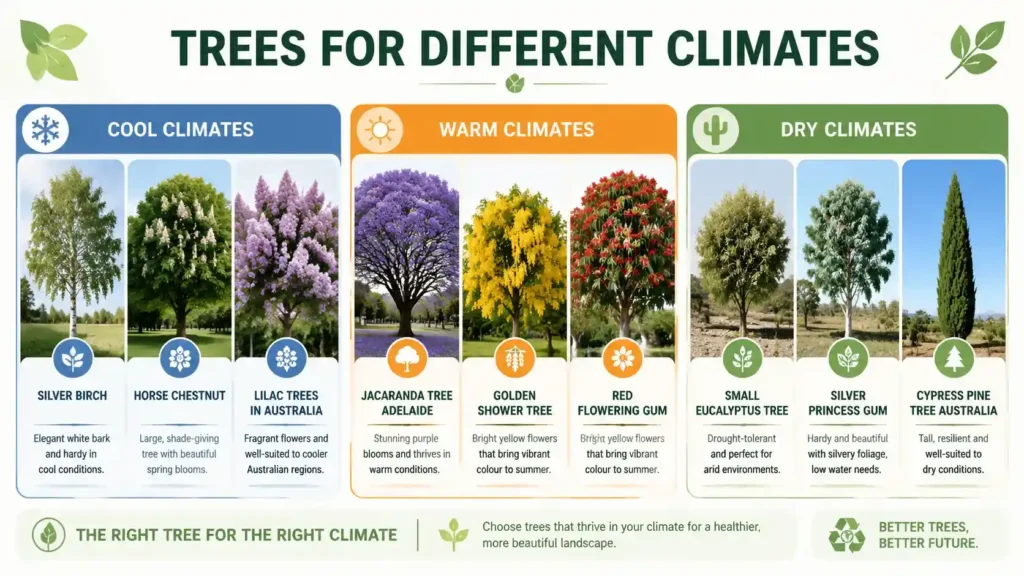
These species provide strong structural and aesthetic benefits while minimizing water usage, making them excellent choices for sustainable landscaping in drought-prone environments.
Choosing the right companion plants enhances the beauty, functionality, and ecological value of ornamental tree landscapes. Companion planting can create layered landscaping, attract pollinators, introduce contrasting textures, and provide seasonal colour throughout the garden. Properly selected companions complement the tree’s growth habit, flowering season, and foliage, resulting in a balanced and visually engaging landscape.
Layering plants around ornamental trees helps create depth and dimension in gardens. Combining groundcovers, shrubs, and small flowering plants with taller tree canopies enhances visual interest and creates a naturalistic, multi-tiered effect.
Benefits of layered planting include:
Suitable companion plants for layered landscaping include:
These species provide low-growing foliage and flowers that complement ornamental trees while filling space beneath their canopies.
Many companion plants attract bees, butterflies, and other pollinators, improving both garden biodiversity and tree flowering success. Planting nectar-rich species near flowering trees supports local ecosystems and enhances seasonal activity in the garden.
Pollinator-friendly companions include:
Integrating these plants creates a vibrant, wildlife-supporting landscape around ornamental trees.
Mixing different foliage shapes, sizes, and textures adds visual richness to tree-based landscapes. Contrasting coarse, fine, and variegated leaves helps highlight the tree’s structure while providing a layered and dynamic garden composition.
Examples of texture-enhancing companion plants:
These combinations allow ornamental trees to stand out while maintaining harmonious garden design.
Selecting companion plants with varying flowering periods or leaf colours extends seasonal visual interest and complements the tree’s blooms. This strategy ensures year-round colour and creates eye-catching contrasts throughout the landscape.
Recommended seasonal colour companions:
By carefully planning companion plants, gardeners can create ornamental tree landscapes that are aesthetically balanced, ecologically friendly, and visually dynamic across all seasons.
Planting ornamental trees can greatly enhance a landscape, but common errors can reduce their growth potential, aesthetics, and long-term health. Awareness of these pitfalls helps ensure trees thrive and maintain their ornamental value.
Planting trees too close to buildings, fences, or paved areas can lead to root damage, structural interference, and canopy overcrowding. It can also limit tree growth and increase maintenance needs. Always allow sufficient space for both the root system and mature canopy size to prevent future problems.
Selecting a tree without considering its eventual height and canopy spread often results in overcrowding, reduced sunlight, or interference with power lines. Planning for the tree’s mature size ensures proper spacing, healthy growth, and safe long-term placement.
Inadequate soil preparation can stunt tree growth, reduce flowering, and increase vulnerability to disease. Amending soil with organic matter, ensuring proper drainage, and assessing pH levels before planting helps establish healthy root systems and supports robust tree development.
Overwatering or underwatering newly planted trees can lead to root rot, drought stress, or poor establishment. Proper watering schedules, particularly during the first few years, are critical for tree survival and flowering performance. Deep, infrequent watering encourages strong root development.
Selecting species that are not adapted to the local climate often results in poor growth, increased pest or disease issues, and low ornamental value. Consider temperature ranges, rainfall patterns, frost sensitivity, and drought tolerance when choosing ornamental trees for your garden.
Compact varieties such as dwarf flowering gum, super gem magnolia, and fairy magnolia blush are ideal for small gardens due to their manageable size, ornamental blooms, and low-maintenance characteristics.
Fast-growing ornamental trees include small eucalyptus tree varieties, red flowering gums, and certain crepe myrtle selections. These species quickly establish canopy cover and provide rapid visual impact.
Evergreen flowering trees such as silver princess gum, small eucalyptus tree, and star magnolia australia provide year-round foliage, seasonal blooms, and consistent privacy or screening benefits.
Native flowering trees like flowering gums, illawarra flame trees, and golden penda growth rate varieties attract pollinators and birds. Crepe myrtles and certain magnolia varieties also support pollinator activity in urban and residential gardens.
Low-maintenance options include small eucalyptus tree, silver princess gum, cypress pine tree australia, and evergreen companion plants like daphne odora plant and lavender white plant. These species require minimal pruning, drought tolerance, and disease resistance.
Deciduous trees such as acer rubrum fairview flame, chanticleer pear trees, horse chestnut tree, and silver birch trees provide vibrant autumn foliage that enhances seasonal landscape interest.
Yes, dwarf and compact flowering gum varieties, such as dwarf flowering gum and dwarf red flowering gum, are suitable for container planting. Proper pot size, well-draining soil, and consistent watering are essential for healthy growth.
Combining evergreen trees like silver princess gum and small eucalyptus tree with deciduous and flowering varieties such as magnolias and crepe myrtles ensures year-round colour, seasonal blooms, foliage texture, and architectural structure in the landscape.
Choosing the right ornamental trees involves considering multiple factors, including garden size, flower colour, seasonal interest, climate adaptability, and maintenance requirements. Understanding mature tree size, root spread, and growth habits helps ensure trees thrive in their intended spaces while providing long-term aesthetic and functional value. Selecting trees suited to your local climate improves survival, flowering success, and drought resilience, while also supporting healthier, more sustainable landscapes.
Ornamental trees contribute significantly to biodiversity by attracting birds, bees, and other pollinators, enhancing both ecological value and visual appeal. They also provide shade, privacy, and seasonal colour, making them essential elements in thoughtfully designed residential and commercial landscapes. By combining native and exotic species, evergreen and deciduous trees, as well as flowering varieties across multiple colours, homeowners can create layered, vibrant, and engaging gardens year-round.
For further inspiration and detailed guidance, explore related tree guides on:
These resources offer additional insights into tree selection, care, and landscape applications to help you achieve beautiful and functional gardens.
Compact varieties such as dwarf flowering gum, super gem magnolia, and fairy magnolia blush are ideal for small gardens due to their manageable size, ornamental blooms, and low-maintenance needs.
Fast-growing ornamental trees include small eucalyptus trees, red flowering gums, and certain crepe myrtle varieties, providing quick canopy cover and rapid visual impact.
Evergreen flowering trees like silver princess gum, small eucalyptus tree, and star magnolia australia offer year-round foliage, seasonal blooms, and consistent privacy or screening.
Native flowering trees such as flowering gums, illawarra flame trees, and golden penda growth rate varieties attract pollinators and birds, while crepe myrtles and certain magnolias also support wildlife.
Low-maintenance options include small eucalyptus tree, silver princess gum, cypress pine tree australia, and companion plants like daphne odora plant and lavender white plant. These require minimal pruning, are drought-tolerant, and resistant to disease.
Deciduous trees such as acer rubrum fairview flame, chanticleer pear trees, horse chestnut tree, and silver birch trees provide vibrant red, orange, and gold foliage in autumn.
Yes, dwarf and compact flowering gum varieties, such as dwarf flowering gum and dwarf red flowering gum, thrive in containers with well-draining soil, adequate sunlight, and regular watering.
Combining evergreen species like silver princess gum and small eucalyptus with deciduous flowering trees such as magnolias and crepe myrtles ensures seasonal colour, foliage texture, blooms, and structural interest throughout the year.
Select species adapted to your region’s temperature, rainfall, and soil conditions. Cool-climate gardens benefit from silver birch and horse chestnut trees, while drought-prone areas suit small eucalyptus and cypress pine trees. Warm regions can feature jacaranda, golden shower tree, and red flowering gum.
Trees with compact root systems and narrow growth habits, such as super gem magnolia, dwarf flowering gum, and fairy magnolia blush, are ideal for courtyards, patios, and small garden spaces.
Yes, many ornamental trees, especially native species like flowering gums and illawarra flame trees, attract birds, bees, and butterflies, supporting pollinators and enhancing ecological health in urban settings.
Use a combination of red, pink, white, purple, and yellow flowering trees to create seasonal contrast and layered colour in your garden. For example, pairing jacaranda tree adelaide with golden shower tree and white gum tree adds depth and visual appeal.