Grow Better Gardens with Smarter Plant Choices
Discover helpful guides on trees, hedges, fruit plants, edible plants, and beautiful landscape greenery.

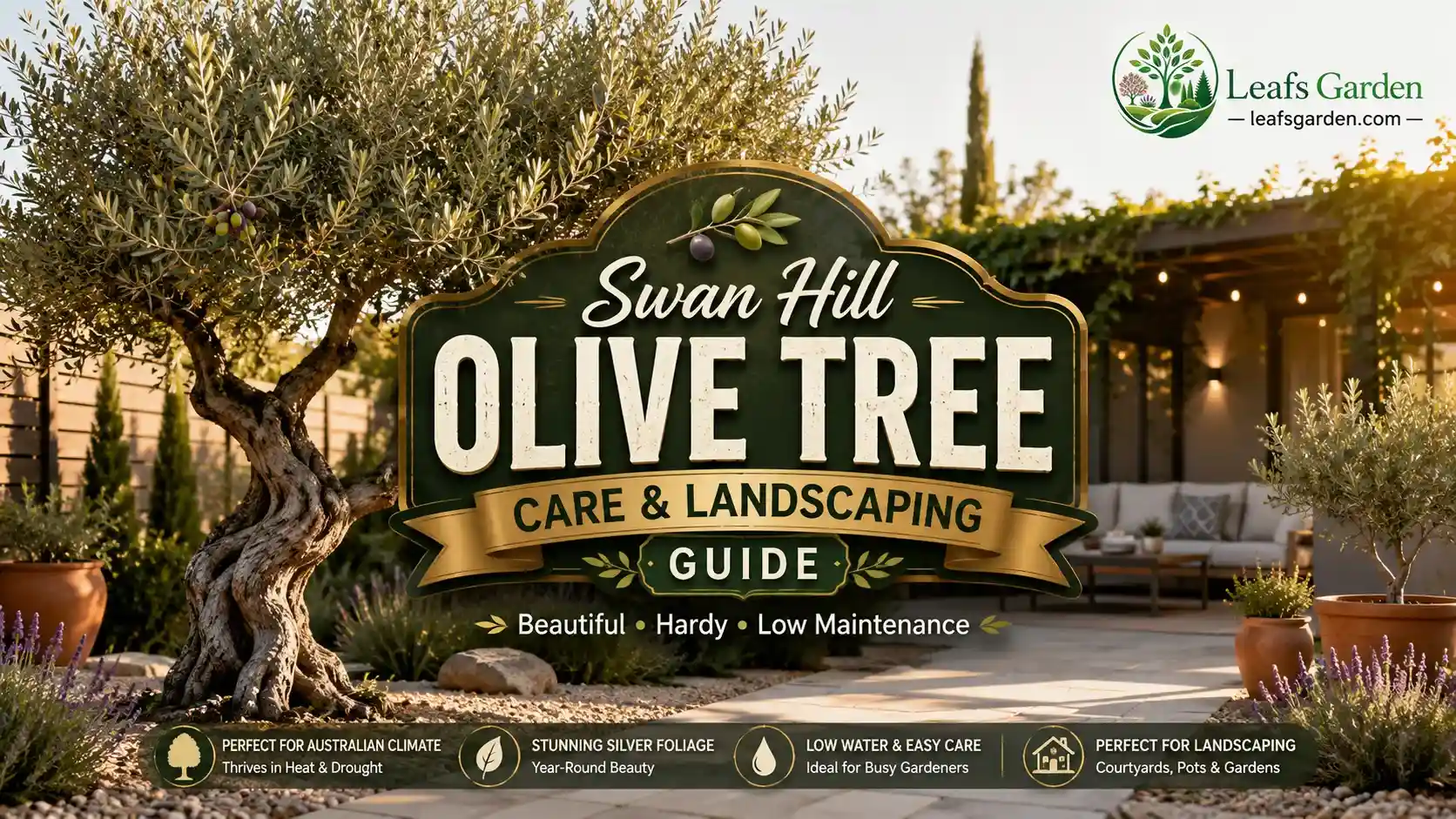
The Swan Hill olive tree is a popular fruitless ornamental olive variety valued for its elegant silver-green foliage, drought tolerance, and low-maintenance landscaping appeal in Australia and warm climates.
The Swan Hill olive tree, scientifically known as Olea europaea ‘Swan Hill’, is a non fruiting olive tree primarily grown for decorative landscaping rather than olive production. It belongs to the European olive family and is widely used in residential gardens, commercial landscapes, modern courtyards, and low-water outdoor designs.
Unlike traditional fruit olive varieties, Swan Hill olive trees produce little to no olives. This makes them a preferred choice for homeowners who want the beauty of an ornamental olive tree without the mess caused by falling fruit. Their evergreen foliage, soft silver-gray leaves, and attractive branching structure make them highly popular in olive tree Australia landscaping projects.
One of the biggest ornamental olive tree benefits is low maintenance. Swan Hill olives are drought tolerant, adaptable to warm climates, and suitable for urban environments where clean paving, patios, and swimming pool areas are important. Many gardeners also prefer non fruiting olive trees because they attract fewer pests and require less seasonal cleanup compared to standard olive trees.
The Swan Hill olive tree is especially popular in Mediterranean-style gardens and modern Australian landscapes because of its elegant appearance and water-wise performance. It can be planted as a feature tree, privacy screen, driveway border, or compact courtyard specimen.
Many homeowners also search for practical questions before planting this variety, including:
These questions are important because growth rate, fruit production, and indoor suitability can vary depending on climate, sunlight, and overall care conditions.
Swan Hill olive is a non-fruiting ornamental cultivar of the European olive tree grown mainly for shade, privacy, and decorative landscaping.
This popular ornamental olive variety is widely planted in Australian gardens and warm-climate landscapes because it offers the classic olive tree appearance without heavy fruit production. Its evergreen silver-green foliage, drought tolerance, and low-maintenance growth habit make it a preferred non fruiting olive for residential and commercial landscaping projects.
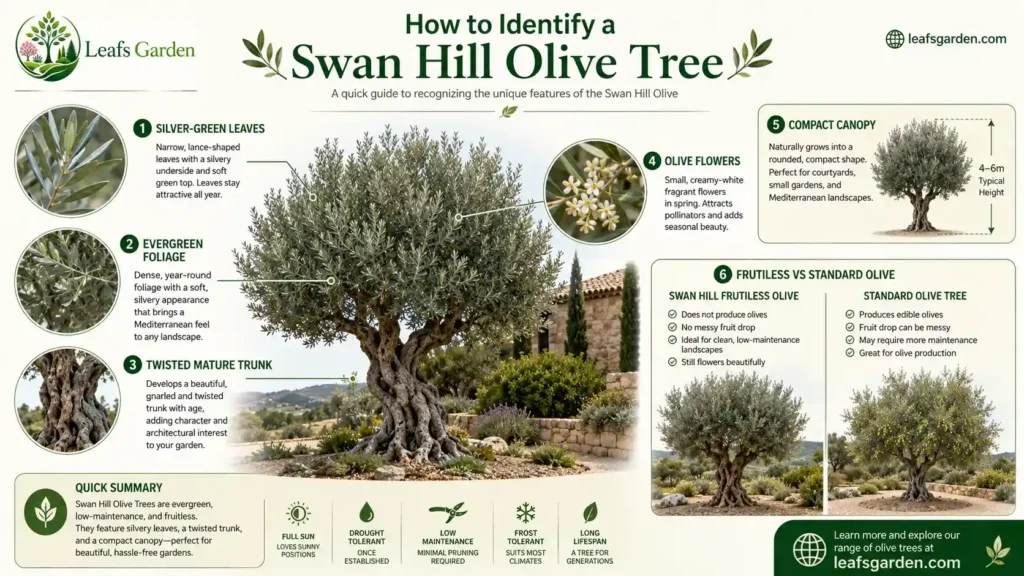
The scientific name of the Swan Hill olive tree is Olea europaea ‘Swan Hill’.
It belongs to the olive family and is a cultivated variety of the European olive tree species. Like other olive trees, it has evergreen foliage and a Mediterranean growth habit, but it was specifically selected for ornamental landscaping purposes rather than olive harvesting.
There is a major difference between fruiting and non fruit bearing olive tree varieties:
Standard olive varieties often require additional maintenance due to falling olives, staining, and seasonal cleanup. In comparison, Swan Hill trees are commonly used where tidy landscaping is important.
Swan Hill olive trees are popular because they combine the elegant appearance of a traditional olive tree with the convenience of a low-maintenance landscape tree.
Key reasons homeowners and landscapers choose this non fruiting olive include:
Their soft silver-gray foliage also pairs well with Mediterranean gardens, minimalist landscapes, and drought-tolerant planting designs.
Gardeners looking to build a productive and attractive outdoor space will find the Swan Hill olive a stylish addition alongside the many rewarding fruit trees and edible plants suited to warm Australian climates.
Many property owners use them near patios, pools, pathways, and driveways because they create less debris than a typical fruit olive tree.
| Feature | Swan Hill Olive | Standard Olive |
| Fruit Production | Minimal/Fruitless | Produces olives |
| Maintenance | Low | Moderate |
| Landscaping Use | Ornamental | Fruit + ornamental |
| Messiness | Very low | Higher |
A standard olive tree is usually planted for both decorative and edible purposes, while Swan Hill is mainly valued as an ornamental olive for clean, practical landscaping.
Gardeners wanting a high-yielding fruiting alternative may find the Picual olive tree an excellent choice, as it is one of the most productive Spanish olive varieties widely grown across warm Australian and Mediterranean-style climates.
This difference makes Swan Hill especially attractive for homeowners wanting the Mediterranean olive look without the maintenance associated with fruit olive varieties.
Swan Hill olive trees have silvery-green foliage, twisted trunks with age, compact canopies, and small fragrant olive flowers.
Their elegant Mediterranean appearance makes them one of the most recognizable ornamental olive trees used in Australian landscaping. As the tree matures, the trunk develops a textured and sculptural form that adds strong visual character to gardens, courtyards, and modern outdoor spaces.
Swan Hill olive trees develop into medium-sized evergreen landscape trees with a balanced canopy and upright branching habit.
Typical olive tree size depends on climate, soil quality, pruning, and growing conditions. Under ideal conditions, a full grown olive tree can reach:
Young trees usually appear compact and narrow during early growth stages. Over time, they develop broader canopies and thicker trunks, creating a mature landscape specimen suitable for shade and feature planting.
A small olive tree is commonly used in courtyards, patios, and compact gardens, while mature specimens are often planted along driveways, large garden borders, and Mediterranean-style landscapes.
The growth habit is naturally neat compared to many spreading ornamental trees, which helps maintain a clean architectural appearance in residential landscapes.
Olive trees are not deciduous. Swan Hill olive trees are evergreen and retain their foliage throughout the year.
The leaves are narrow, leathery, and silver-green in color with a soft gray underside. This foliage texture reflects sunlight beautifully and gives the tree its signature Mediterranean appearance.
Key foliage characteristics include:
The evergreen nature of Swan Hill olives makes them highly valuable for privacy screening and year-round visual coverage. Even during dry summers, established trees usually maintain healthy foliage with minimal watering.
Yes, olive trees have flowers.
Swan Hill olive trees produce small creamy-white olive flowers during spring and early summer. These flowers grow in clusters along the stems and often have a mild fragrance.
Olive tree flower characteristics include:
Although flowering occurs, Swan Hill is considered a non fruiting olive because it produces very little fruit compared to standard olive varieties. This happens because the cultivar was selected mainly for ornamental performance rather than fruit production.
In some climates, small amounts of olives may occasionally develop due to environmental stress, cross-pollination, or seasonal weather conditions. However, fruit production remains minimal in most landscape settings.
Swan Hill olive trees develop broad but generally non-invasive root systems when planted in well-draining soil.
The roots spread outward gradually to support the canopy, but they are usually less aggressive than many large shade trees. This makes them suitable for urban gardens and residential landscaping.
For healthy growth and structural safety, recommended planting distances include:
Because of their manageable root spread and low fruit drop, Swan Hill olives are commonly planted near courtyards, pathways, swimming pools, and outdoor entertainment areas. Their clean growth habit makes them especially useful for modern low-maintenance landscapes.
Swan Hill olive trees have a moderate growth rate and typically grow 30–60 cm per year under ideal conditions.
Their growth speed depends heavily on sunlight, drainage, watering habits, and climate conditions. In warm Mediterranean-style regions, these ornamental olive trees establish steadily and develop dense evergreen canopies over time.
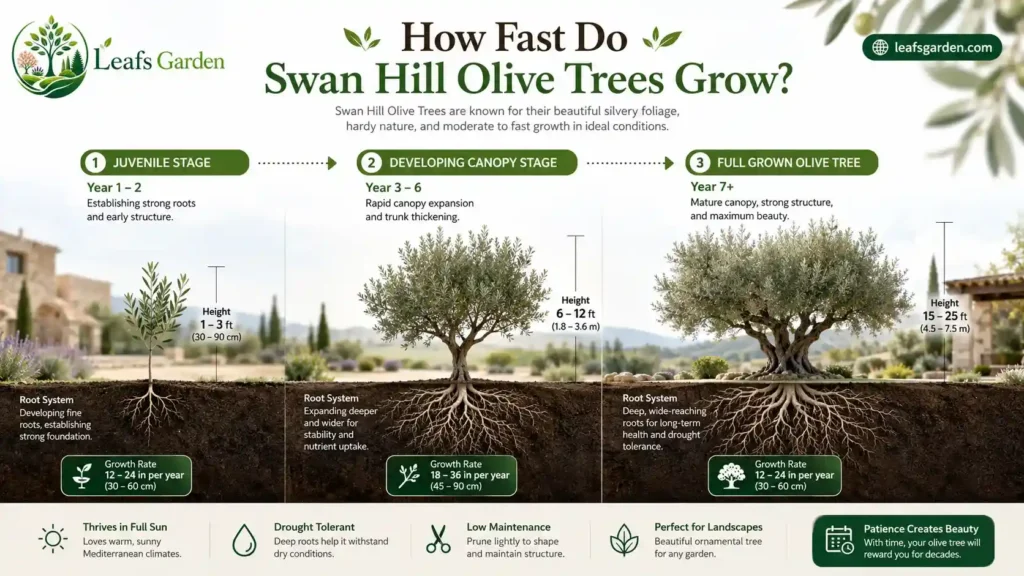
The olive growth rate of Swan Hill trees is considered moderate compared to many fast-growing landscape trees.
Young trees usually focus first on root establishment before producing rapid canopy growth. Once established, a healthy fruitless olive tree growth rate becomes more consistent, especially in full sun and well-drained soil.
Typical yearly growth may vary depending on conditions:
Environmental conditions have a major impact on growth speed. Trees planted in fertile, free-draining soil with regular deep watering during establishment generally grow faster and maintain denser foliage.
In cooler climates, growth may slow during winter and resume during spring and summer.
A Swan Hill olive tree usually takes several years to develop into a mature landscape specimen.
The timeline varies depending on planting size, climate, and maintenance quality, but most trees follow a gradual growth pattern.
A small nursery olive tree may look compact initially, but over time it develops into a substantial evergreen feature tree suitable for larger gardens and privacy planting.
Several environmental and care factors directly influence how quickly Swan Hill olive trees grow.
Full sun is essential for healthy growth. Trees planted in shaded areas often develop sparse foliage and slower branch growth.
Well-draining soil is critical. Waterlogged soil can damage roots and reduce overall growth performance.
Young trees need consistent deep watering during establishment. Mature trees become drought tolerant but still benefit from occasional deep watering during extended dry periods.
Warm dry climates similar to Mediterranean regions encourage stronger and faster growth. Cold or humid environments may slow development.
Balanced fertilizer applied during spring can improve foliage density and encourage healthier seasonal growth without excessive weak branching.
Some growers prefer dwarf fruitless olive tree forms for smaller landscapes and container gardening.
Dwarf and compact olive trees are commonly used for:
A full-size Swan Hill olive tree is better suited for:
Container suitability depends on pot size, drainage quality, and regular pruning. Smaller olive small tree specimens can grow successfully in large containers if they receive full sunlight and proper watering management.
Dwarf forms generally stay more compact and require less pruning, while full-size trees develop broader canopies and stronger landscape impact over time.
Swan Hill olive trees grow best in full sun, well-draining soil, and warm dry climates similar to Mediterranean environments.
These ornamental olive trees are highly adaptable once established, but proper growing conditions are essential for healthy foliage, steady growth, and long-term landscape performance. Warm temperatures, good airflow, and dry conditions help maintain dense evergreen canopies and reduce disease problems.
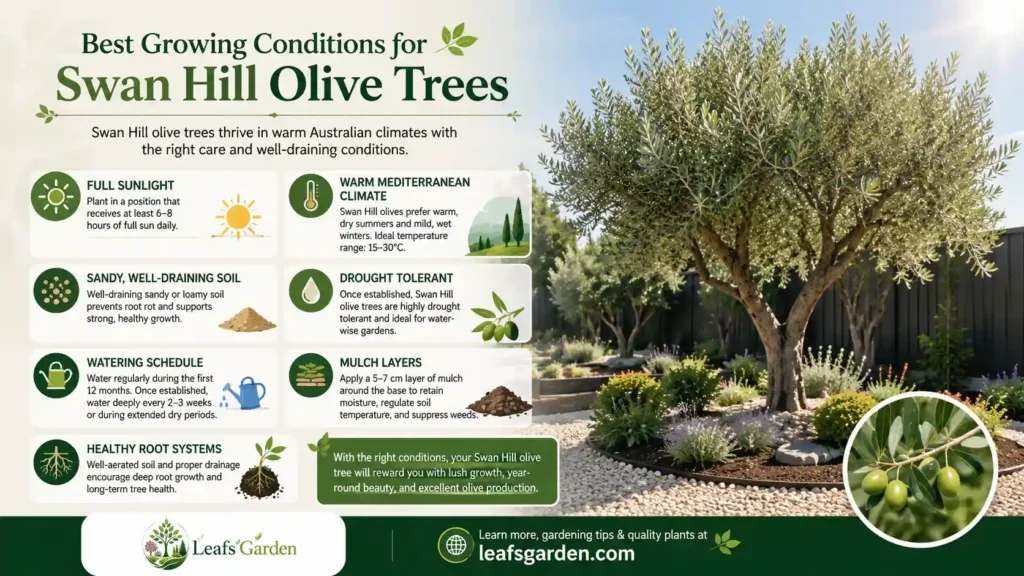
Swan Hill olive trees perform best in warm temperate and Mediterranean-style climates with hot summers and mild winters.
In Australia, they grow especially well in regions with dry summer conditions and plenty of sunlight. Common olive tree Australia growing regions include:
The olive tree Perth climate is particularly suitable because of its long dry summers and well-drained soils. These conditions closely resemble the Mediterranean environments where olive trees naturally thrive.
Swan Hill olives also show excellent:
Although mature trees tolerate short cold periods, extended frost and waterlogged winter conditions can slow growth and damage foliage.
Swan Hill olive trees require full sun for healthy growth and dense foliage production.
For best results, trees should receive:
Insufficient sunlight may cause:
While these trees can tolerate light partial shade, full sun conditions are strongly recommended for maintaining their silver-green ornamental appearance and compact growth habit.
Well-draining soil is one of the most important requirements for healthy olive tree growth.
Swan Hill olives dislike constantly wet soil because excessive moisture can lead to root problems and fungal diseases. Fast drainage allows roots to remain healthy and oxygenated.
Adding coarse sand, compost, or organic matter can help improve drainage in heavier soils.
Most olive trees prefer slightly alkaline to neutral soil conditions, with a pH range around:
Healthy soil structure supports stronger root development and improves drought tolerance over time.
Young Swan Hill olive trees need regular watering during establishment, but mature trees become highly drought tolerant.
During the first few years after planting:
Deep watering encourages roots to grow downward rather than remaining near the surface.
Established trees need far less irrigation and can survive extended dry conditions once fully rooted.
Mature trees generally benefit from:
Overwatering is one of the most common causes of yellow leaves and poor growth in ornamental olive trees.
Swan Hill olive trees respond well to balanced feeding and proper mulching practices.
A light fertilizer application during spring usually supports healthy foliage growth and stronger canopy development.
Recommended feeding practices include:
Too much fertilizer can encourage weak rapid growth instead of compact ornamental structure.
Mulching also provides several important benefits:
Organic mulch should be spread around the root zone while keeping it slightly away from the trunk to prevent moisture buildup and fungal issues.
Proper planting involves selecting a sunny location, improving drainage, and allowing enough spacing for mature canopy growth.
Correct planting helps Swan Hill olive trees establish faster, develop healthier roots, and maintain dense evergreen foliage. Good positioning and soil preparation are especially important for long-term ornamental performance in Australian and Mediterranean-style landscapes.
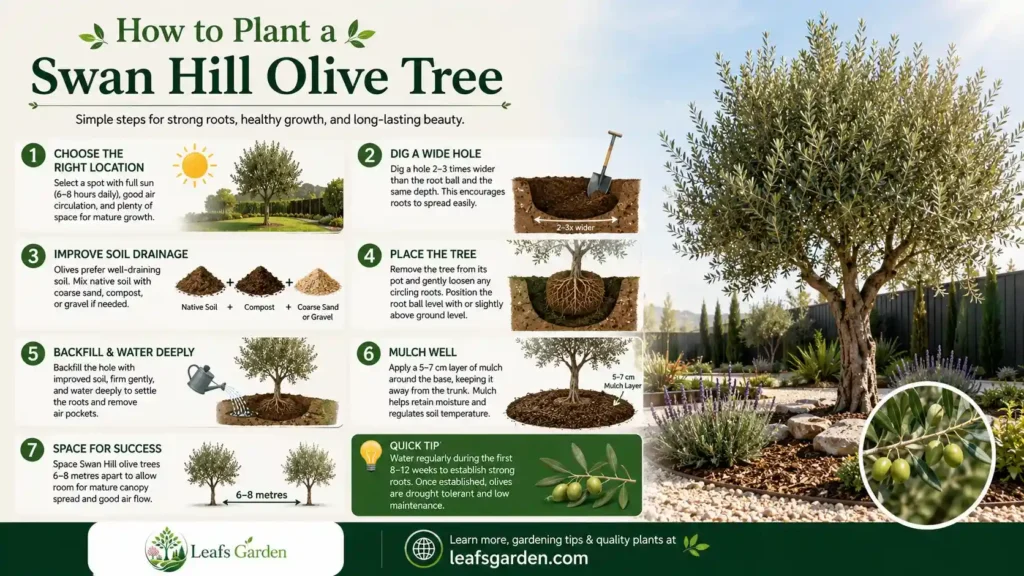
Swan Hill olive trees perform best in open sunny areas with excellent airflow and free-draining soil.
The ideal planting location should provide:
These ornamental olive trees are commonly used for:
Their clean non fruiting habit also makes them suitable for street planting and urban landscaping where low maintenance is important. Because they produce minimal olives, they create less mess around pathways, patios, and paved areas compared to standard fruit olive trees.
Planting a Swan Hill olive tree correctly improves root establishment and reduces transplant stress.
Dig a hole approximately twice the width of the root ball but no deeper than the container depth. Wide holes encourage roots to spread outward more easily.
If soil is heavy or clay-based, improve drainage by mixing in coarse sand, compost, or well-draining organic matter.
Place the tree so the top of the root ball sits slightly above surrounding soil level. Avoid planting too deeply because buried trunks may develop rot problems.
Refill the hole carefully while gently firming the soil around the roots. Water deeply after planting to remove air pockets and settle the soil.
Spread organic mulch around the base of the tree to help retain moisture and regulate soil temperature. Keep mulch slightly away from direct trunk contact to prevent fungal problems.
Swan Hill olive trees can grow in large containers, although indoor growing requires careful management.
Indoor olive trees need bright conditions and good airflow. Poor lighting is one of the biggest reasons indoor olive plants struggle.
For healthy indoor growth, trees generally require:
Without enough light, foliage may become thin and weak.
Container-grown olive trees need:
Smaller ornamental olive specimens are often used on patios, balconies, and compact outdoor entertaining areas where full-size landscape planting is not possible.
Proper spacing is important for healthy airflow, canopy development, and long-term landscape appearance.
When used as feature trees, Swan Hill olives should have enough room to develop their natural canopy shape without overcrowding nearby plants.
For privacy screening or hedge planting:
For standalone ornamental planting:
Adequate spacing reduces competition for sunlight and improves airflow, helping maintain healthier foliage and lower disease risk over time.
Swan Hill olive trees require occasional watering, annual pruning, and minimal maintenance once established.
These ornamental olive trees are valued for their drought tolerance, evergreen foliage, and relatively easy care requirements. With proper sunlight, drainage, and seasonal maintenance, they can remain healthy and attractive for decades in both residential and urban landscapes.
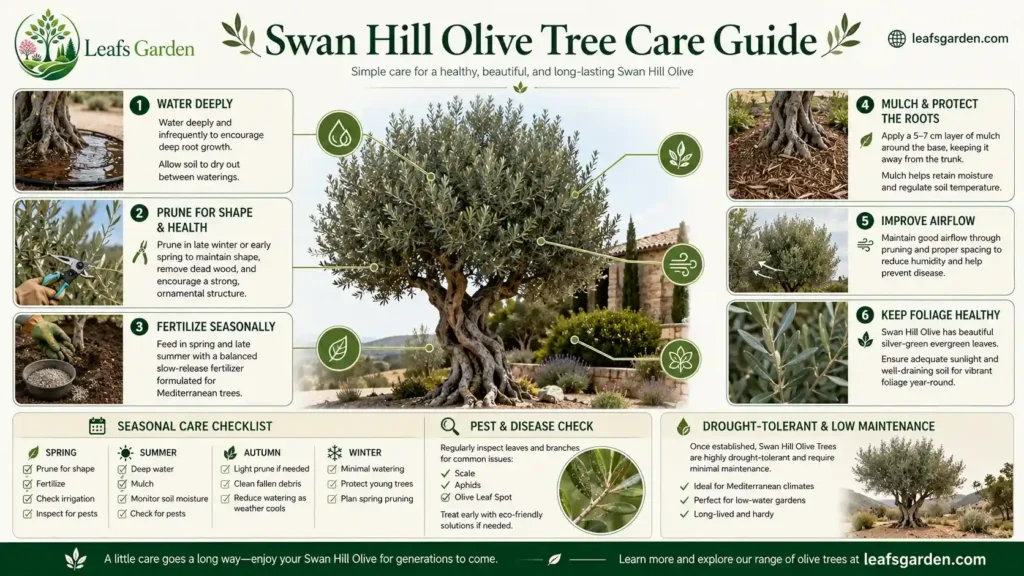
A simple seasonal care routine helps maintain strong growth, healthy foliage, and an attractive ornamental shape throughout the year.
Spring is the main active growing season for Swan Hill olive trees.
Recommended spring care includes:
Moderate feeding encourages healthy foliage without excessive weak growth.
During hot weather, young trees require more regular watering while mature trees remain relatively drought tolerant.
Summer watering guidelines include:
Established trees generally tolerate dry periods well once roots are fully developed.
Winter maintenance mainly focuses on protecting root health and monitoring drainage.
Useful winter care practices include:
In colder regions, young trees may benefit from temporary frost protection during severe winter conditions.
Regular pruning helps Swan Hill olive trees maintain their ornamental appearance and healthy canopy structure.
Most pruning is performed during late winter or early spring before active seasonal growth begins.
Light shaping helps preserve the tree’s natural balanced canopy and decorative structure.
Common pruning goals include:
Dead, damaged, or crossing branches should be removed to improve tree health and reduce disease risk.
Removing weak growth also helps the tree direct energy toward healthier branches and foliage production.
Good airflow inside the canopy reduces excess moisture buildup and lowers the risk of fungal problems.
Selective thinning can help:
Avoid overly aggressive pruning because excessive cutting may stress the tree and reduce ornamental quality.
Swan Hill olive trees are generally hardy, but occasional pests and diseases can still occur under poor growing conditions.
Scale insects are among the most common olive tree pests.
Signs may include:
Early treatment with horticultural oils or proper pruning often helps control infestations.
For detailed scale insect identification and integrated pest management advice for ornamental trees, NSW Department of Primary Industries provides reliable horticultural guidance for Australian gardeners and landscapers.
Root rot usually develops in poorly drained or constantly wet soil.
Common symptoms include:
Improving drainage is the most important preventive measure.
Humid conditions and overcrowded canopies may encourage fungal diseases.
Preventive care includes:
Healthy growing conditions significantly reduce long-term disease risk.
| Problem | Cause | Solution |
| Yellow leaves | Overwatering | Improve drainage |
| Slow growth | Lack of sun | Increase sunlight |
| Sparse foliage | Nutrient deficiency | Fertilize properly |
Most Swan Hill olive tree problems are linked to watering imbalance, poor sunlight exposure, or unsuitable soil conditions. Correcting environmental stress early usually restores healthy growth and ornamental appearance.
Swan Hill olive trees are widely used in modern landscaping because of their elegant form, drought tolerance, and clean non-fruiting habit.
Their silver-green foliage, evergreen canopy, and low-maintenance growth make them highly suitable for Australian gardens and Mediterranean-style outdoor designs. Unlike standard fruit olive varieties, Swan Hill trees create far less mess, making them practical for both residential and commercial landscapes.
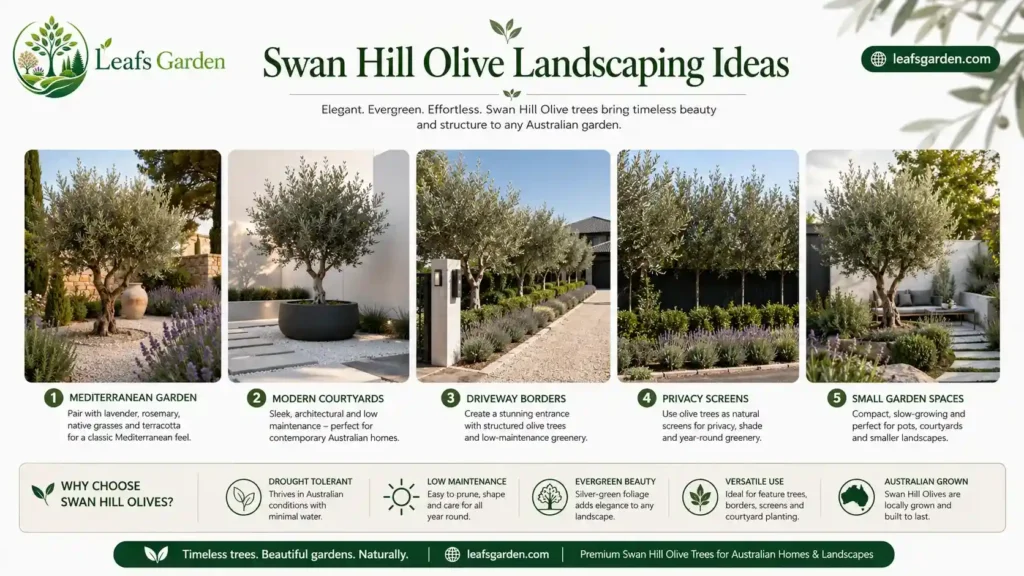
Swan Hill olive trees fit naturally into many landscape styles because of their sculptural shape and soft foliage texture.
These ornamental olive trees are a classic feature in Mediterranean gardens.
They pair well with:
Their silver-gray foliage complements drought-tolerant planting palettes and creates a relaxed coastal appearance.
Modern landscapes often use Swan Hill olives as architectural feature trees because of their clean trunk structure and compact evergreen canopy.
They work especially well with:
The non fruiting olive habit also helps maintain cleaner modern outdoor spaces.
A mature Swan Hill olive tree creates an attractive focal point in courtyards and outdoor entertaining areas.
Feature planting benefits include:
Container-grown specimens are also commonly used in decorative patio settings.
Swan Hill olives are frequently planted along driveways and entrance paths because of their upright form and manageable canopy spread.
Their low mess growth habit reduces staining and debris around paved surfaces compared to standard fruit olive trees.
Swan Hill olive trees are widely used for privacy screening because of their dense evergreen foliage and moderate growth habit.
When planted in rows, these trees create attractive living screens that provide:
Their silver-green foliage also adds texture and movement to larger garden spaces.
Regular pruning allows Swan Hill olives to form structured ornamental hedges.
Benefits of olive hedge planting include:
Spacing affects hedge density and long-term screening performance.
Mature trees can also help reduce wind exposure in open gardens and outdoor seating areas. Their dense branching structure provides moderate wind buffering while still allowing airflow through the landscape.
Swan Hill olive trees can work well in smaller gardens when carefully positioned and properly maintained.
Compact ornamental olive forms are often selected for:
Some gardeners also choose smallest olive tree alternatives or dwarf fruitless olive tree varieties for tighter spaces where full-size trees may become too large over time.
In compact landscapes, olive trees are commonly styled as:
Their slow-to-moderate growth and evergreen foliage make them easier to manage than many larger ornamental trees.
Swan Hill olive trees combine beautifully with other drought-tolerant plants commonly used in Mediterranean and Australian landscapes.
Popular companion plants include:
These plant combinations create cohesive low-water landscapes that require less irrigation while maintaining strong ornamental appeal throughout the year.
The soft silver foliage of Swan Hill olives also contrasts well with flowering plants, textured native species, and gravel-based landscape designs.
Swan Hill olive differs from other olive varieties because it is mainly ornamental and produces little to no fruit.
Unlike traditional fruit olive trees, Swan Hill was developed primarily for landscaping purposes. Its low-fruiting habit, evergreen silver foliage, and tidy growth structure make it highly suitable for modern gardens, privacy planting, and low-maintenance outdoor spaces.
Both Swan Hill and Wilsonii are ornamental olive tree varieties, but they differ in growth habit, fruit production, and landscaping use.
The Wilsonii olive tree is another low-fruiting ornamental olive commonly planted in Australian landscapes. However, it may produce slightly more olives than Swan Hill under certain growing conditions.
Key differences often include:
| Feature | Swan Hill Olive | Wilsonii Olive |
| Main Use | Ornamental landscaping | Ornamental landscaping |
| Fruit Production | Very minimal | Low |
| Canopy Style | Compact and neat | Slightly broader |
| Maintenance | Very low | Low |
| Landscaping Suitability | Patios, courtyards, screening | Larger open landscapes |
Swan Hill is often selected where extremely low mess is important, especially near pools, pathways, and entertainment areas.
Wild olive plants differ significantly from cultivated ornamental olive trees like Swan Hill.
Wild olives typically grow more irregularly and may become denser or more invasive depending on environmental conditions. Their growth habit is usually less controlled compared to ornamental cultivars selected for landscaping.
Wild olive plants commonly show:
In comparison, Swan Hill olives are specifically cultivated for controlled ornamental growth and cleaner landscape performance.
Wild olive plants generally require more maintenance because of:
Swan Hill olive trees usually need:
This difference makes Swan Hill more practical for residential landscaping and modern low-water garden designs.
Different olive varieties are grown for different purposes, including ornamental landscaping, edible olive production, and privacy screening.
| Olive Variety | Main Use | Fruit Production |
| Swan Hill | Ornamental | Minimal |
| Arbequina | Edible olives | High |
| Kalamata | Table olives | High |
| Wilsonii | Ornamental | Low |
Arbequina is widely grown for olive oil production because of its heavy fruit yield and compact growth habit.
Gardeners interested in adding a productive fruiting olive alongside their Swan Hill can explore our detailed guide to the Arbequina olive tree, one of Australia’s most popular compact olive varieties for both oil production and home gardens.
Kalamata is popular for large edible table olives and Mediterranean fruit production.
Swan Hill remains one of the most popular non fruiting olive choices for ornamental landscaping because it combines Mediterranean aesthetics with low-maintenance performance and reduced fruit mess.
Swan Hill olive trees are considered fruitless, but small amounts of olives may occasionally appear under certain environmental conditions.
These trees are classified as non fruiting ornamental olives because they produce significantly fewer olives than standard fruit olive varieties. In most landscapes, fruit production is either extremely limited or completely absent, which is why Swan Hill olives are widely used in low-maintenance gardens and paved outdoor spaces.
However, occasional olive formation can still happen under certain environmental and pollination conditions.
Even fruitless olive trees can sometimes develop small amounts of fruit due to environmental influences and seasonal variations.
Environmental stress may trigger irregular flowering and unexpected fruit production.
Common stress factors include:
Stress responses can occasionally alter the tree’s normal flowering behavior.
Nearby fruiting olive trees may increase the chance of limited olive production through cross-pollination.
Wind plays a major role in olive flower pollination, so pollen from nearby standard olive trees can sometimes affect ornamental non fruiting olive varieties.
This is more likely in areas where:
Even then, Swan Hill olives usually produce only small scattered fruit compared to edible fruit olive cultivars.
Climate conditions strongly influence flowering and fruit set.
Warm Mediterranean-style climates with long dry summers may occasionally encourage more flowering activity. Seasonal weather patterns, temperature shifts, and humidity levels can also affect fruit development.
Regions with ideal olive-growing conditions may see slightly higher chances of occasional olive formation, although Swan Hill still remains largely fruitless overall.
If small amounts of olives appear, several management techniques can help reduce fruit production and maintain cleaner ornamental performance.
Regular pruning helps manage flowering growth and maintain the tree’s ornamental shape.
Pruning benefits include:
Light annual pruning is usually enough for most ornamental Swan Hill olive trees.
Reducing flower formation may help minimize occasional fruit production.
This can involve:
Because olives develop from flowers, fewer flowers generally mean fewer olives.
In some commercial or large-scale landscape settings, growth regulators may occasionally be used to suppress flowering and fruit production.
These treatments are generally handled by professional arborists or landscape specialists and are not commonly required for home gardens. Most residential Swan Hill olive trees remain sufficiently low-fruiting with proper pruning and maintenance alone.
Healthy Swan Hill olive trees should have dense foliage, strong trunks, and healthy root systems when purchased from reputable nurseries.
Choosing a high-quality ornamental olive tree improves establishment success, long-term growth, and overall landscape appearance. Tree size, root health, and local climate suitability all play important roles when selecting the right specimen for your garden.
The best olive tree size depends on your landscape goals, budget, and desired visual impact.
Smaller young trees are usually more affordable and establish faster after planting, while mature specimens provide an immediate landscape effect but may require higher maintenance during transplanting.
Young trees are commonly chosen for:
These trees may take several years to develop a full ornamental canopy but often adapt more successfully to new garden conditions.
Mature ornamental olive trees provide:
However, larger trees generally require:
For most residential landscapes, medium-sized nursery trees offer a good balance between affordability and quicker ornamental growth.
A healthy Swan Hill olive tree should show strong structure, vibrant foliage, and a well-developed root system.
Careful inspection before purchase can help avoid future growth problems and transplant stress.
Healthy roots are one of the most important signs of a quality olive tree.
Look for:
Avoid trees with severely root-bound containers or waterlogged soil conditions.
Healthy ornamental olive foliage should appear:
Sparse or discolored foliage may indicate stress, poor nutrition, or root problems.
A quality Swan Hill olive tree should have:
Well-structured young trees are easier to shape and maintain as mature landscape specimens.
Swan Hill olive trees are widely available across Australia, especially in regions with warm dry climates suitable for olive cultivation.
Common availability areas include:
An olive tree nursery or specialist ornamental tree supplier may offer multiple tree sizes ranging from compact container plants to mature landscape specimens.
When choosing a nursery:
Locally grown trees often adapt better to regional climate conditions and seasonal weather patterns.
Climate compatibility is important for long-term success.
Trees grown in conditions similar to your local environment generally establish more successfully and show:
Choosing climate-adapted nursery stock helps ensure healthier ornamental performance in Australian gardens and low-water landscapes.
Swan Hill olive trees are among the best ornamental olive trees for low-maintenance landscapes thanks to their elegant foliage, drought tolerance, and mostly fruitless growth habit.
Their silver-green evergreen canopy, clean growth habit, and strong adaptability make them highly valuable for both residential and commercial landscaping. Unlike traditional fruit olive varieties, Swan Hill olives provide the classic Mediterranean olive tree appearance without the heavy fruit drop and seasonal mess commonly associated with standard olive trees.
These ornamental olive trees are especially popular because they offer:
Swan Hill olive trees also work well in a wide range of landscaping applications, including:
Their climate adaptability makes them particularly suitable for Australian gardens and warm dry regions with Mediterranean-style conditions. With proper sunlight, well-draining soil, and occasional seasonal care, these trees can remain healthy and visually attractive for many years.
For best long-term results, homeowners should focus on:
Following these practical care principles helps improve tree health, foliage density, and long-term ornamental performance.
Whether used in Australian landscapes, Mediterranean-inspired gardens, or modern drought-tolerant outdoor designs, Swan Hill olive trees remain one of the most reliable non fruiting olive choices for elegant and low-maintenance landscaping.
No, Swan Hill olive trees are not deciduous. They are evergreen ornamental olive trees that retain their silver-green foliage throughout the year. This evergreen growth habit makes them popular for privacy screening and year-round landscape structure.
A Swan Hill olive tree has a moderate growth rate and typically grows around 30–60 cm per year under ideal conditions. Growth speed depends on sunlight, soil drainage, watering, climate, and overall care quality.
Swan Hill olive trees are considered mostly fruitless and produce little to no olives compared to standard fruit olive varieties. However, small amounts of olives may occasionally appear due to climate conditions, pollination, or environmental stress.
Yes, Swan Hill olive trees can grow indoors when provided with strong sunlight and proper airflow. Indoor olive trees require bright direct light, well-draining soil, and containers with good drainage to remain healthy long term.
A mature Swan Hill olive tree can typically reach around 6–9 meters in height with a canopy spread of approximately 4–6 meters. Size may vary depending on pruning, climate, soil conditions, and available growing space.
Yes, Swan Hill olive trees are highly valued for landscaping because of their elegant appearance, evergreen foliage, drought tolerance, and low-maintenance growth habit. They are widely used in Mediterranean gardens, modern minimalist landscapes, privacy screens, and low-water outdoor designs.
Young fruitless olive trees usually need deep watering once or twice weekly during establishment. Mature trees require far less watering and are highly drought tolerant once established. Overwatering should be avoided because constantly wet soil can lead to root problems and yellowing foliage.