Grow Better Gardens with Smarter Plant Choices
Discover helpful guides on trees, hedges, fruit plants, edible plants, and beautiful landscape greenery.
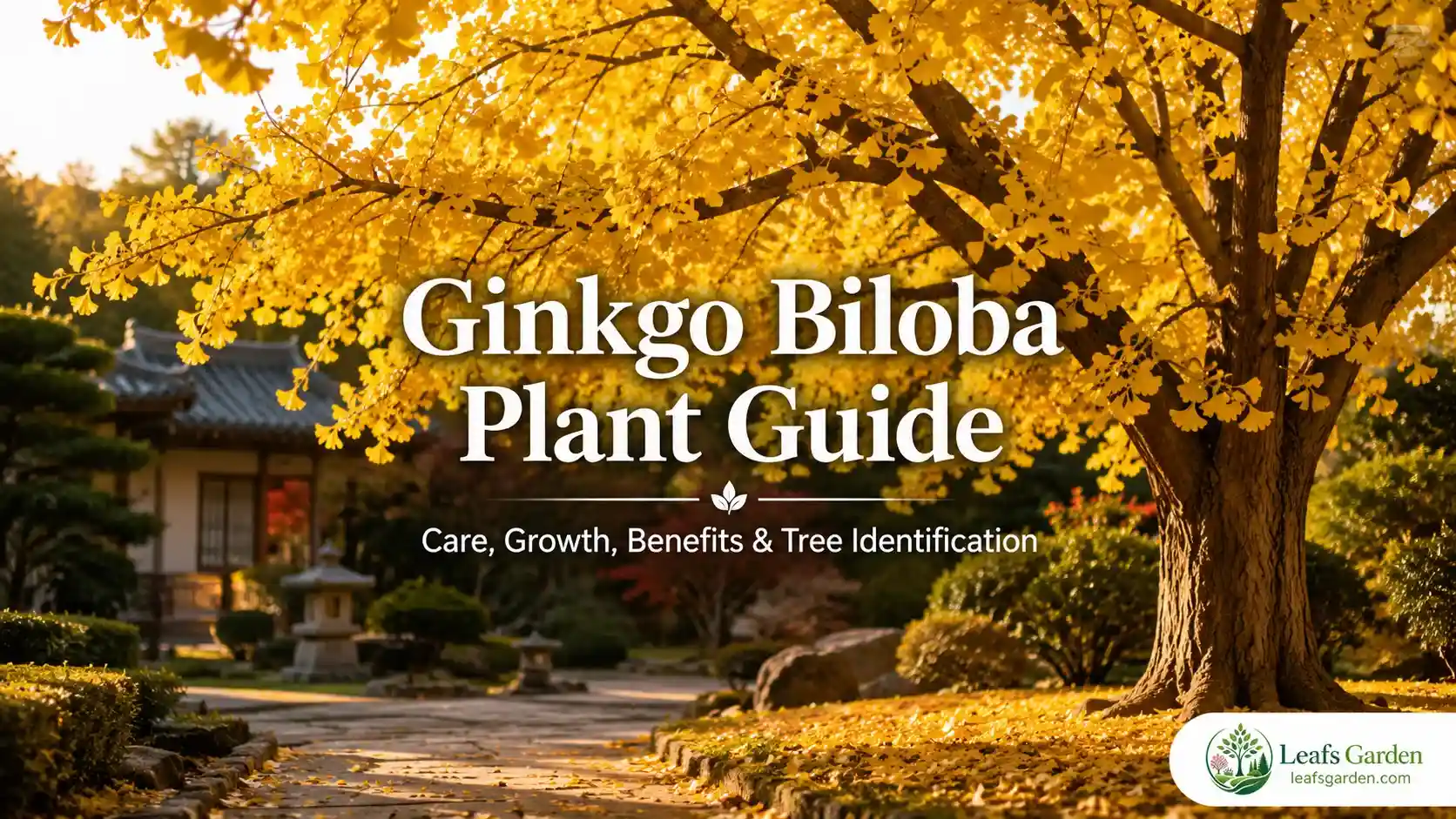
The ginkgo biloba plant is one of the world’s oldest living tree species, valued for its fan-shaped leaves, golden autumn color, urban toughness, and medicinal history.
The ginkgo biloba tree, also known as the maidenhair tree or maidenhair ginkgo tree, is a unique deciduous tree admired for both ornamental landscaping and historical significance. Originally native to China, this ancient species has become popular across Australia, the USA, Europe, and many modern urban landscapes because of its exceptional durability, drought tolerance, and striking golden foliage in autumn.
Ginkgo trees are widely planted along city streets, in parks, Japanese-inspired gardens, courtyards, and large residential landscapes. In addition to their ornamental beauty, ginkgo biloba leaves have a long association with traditional herbal and medicinal uses. The tree is also highly valued for pollution resistance, adaptability to difficult urban conditions, and impressive lifespan that can extend for hundreds or even thousands of years.
This guide covers everything about the ginkgo biloba plant, including tree identification, ginkgo leaf features, growth habits, care requirements, fruit, Australian growing conditions, common problems, bonsai uses, and landscaping value.
| Feature | Details |
| Scientific Name | Ginkgo biloba L. |
| Common Names | Ginkgo, Maidenhair Tree, Ginkgo Biloba Tree |
| Plant Type | Deciduous Tree |
| Native Region | China |
| USDA Zones | 3–9 |
| Australian Climate Suitability | Temperate & cool subtropical regions |
| Mature Height | 15–35 metres |
| Growth Rate | Slow to moderate |
| Leaf Shape | Fan-shaped ginkgo leaf |
| Lifespan | Hundreds to thousands of years |
The ginkgo biloba plant is an ancient deciduous tree species known for unique fan-shaped leaves and exceptional longevity.
The ginkgo biloba tree is one of the oldest surviving tree species on Earth and is widely recognised for its unusual foliage, strong urban adaptability, and remarkable lifespan. Unlike many modern trees, the ginkgo biloba species has existed for millions of years with very few evolutionary changes, making it botanically unique among landscape trees.
Today, ginkgo trees are planted throughout Australia, the USA, Europe, China, and Japan as ornamental shade trees, street trees, and bonsai specimens. Their distinctive appearance, drought tolerance, and golden autumn foliage make them highly desirable for both public and private landscapes.
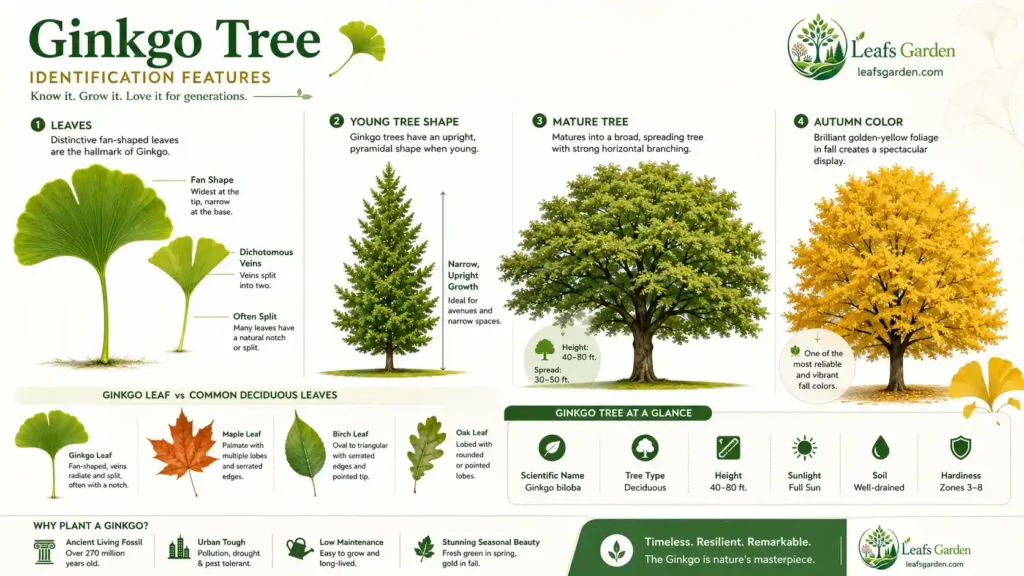
Ginkgo is called a living fossil because the species has survived almost unchanged since prehistoric times.
Scientists consider the ginkgo biloba species a “living fossil” because fossil records show that ancient relatives of modern ginkgo trees existed more than 200 million years ago. The tree survived massive climate shifts, natural disasters, and ice ages that caused many prehistoric plant groups to disappear.
For centuries, ginkgo trees were preserved and cultivated around Buddhist temples and traditional gardens in China and Japan. These ancient plantings helped protect the species from extinction and contributed to its cultural and historical importance throughout Asia.
Today, many historic ginkgo specimens still grow in temple grounds, botanical gardens, and heritage landscapes, reinforcing the tree’s reputation as one of the world’s oldest surviving ornamental trees.
A ginkgo biloba tree has fan-shaped leaves, an upright branching structure, and brilliant golden-yellow foliage in autumn.
People searching for what does a ginkgo biloba tree look like usually notice its highly distinctive leaf shape first. Young ginkgo trees typically develop a narrow upright pyramidal form with evenly spaced branches and a clean architectural appearance.
As the tree matures, the canopy gradually becomes broader and more spreading, creating a large ornamental shade tree suitable for streetscapes and gardens. Mature trees can develop thick trunks, textured bark, and a strong branching framework.
One of the most striking features is the unique ginkgo leaf. The leaves are bright green during spring and summer before turning vivid golden yellow in autumn, often creating a dramatic seasonal display.
Ginkgo leaves are easy to identify because of their fan shape, split structure, and bright yellow autumn color.
The classic ginkgo leaf has a broad fan-like appearance with visible radiating veins spreading outward from the leaf stem. Many leaves contain a central notch or split, giving them a two-lobed appearance that is rarely seen in other deciduous trees.
Key ginkgo leaf identification features include:
Unlike maples, elms, or poplars, ginkgo leaves do not have serrated edges or deeply divided leaf lobes. Their simple symmetrical structure makes them one of the easiest ornamental tree leaves to recognise in landscapes and gardens.
The names ginkgo biloba tree and maidenhair tree refer to the same plant species.
The term maidenhair tree comes from the resemblance between ginkgo leaves and the delicate leaflets of maidenhair ferns. Because of this similarity, the tree is commonly called the maidenhair ginkgo, ginkgo maidenhair tree, or maidenhair ginkgo biloba tree in gardening and landscaping references.
These names are interchangeable and all describe Ginkgo biloba, the only surviving species in the Ginkgoaceae plant family.
Common interchangeable names include:
Despite the fern-like nickname, ginkgo is a true deciduous tree rather than a fern or shrub.
For a detailed identification and growing guide covering the full history and landscape uses of this species, see our complete Ginkgo Maidenhair Tree article.
Ginkgo trees originated in China and later became sacred ornamental trees in Japan, Korea, Europe, Australia, and the USA.
The ginkgo biloba tree has a history that stretches back thousands of years, making it one of the most culturally important ornamental trees in the world. Ancient Chinese cultivation helped preserve the species through centuries of environmental change, while later introductions to Japan, Europe, and North America transformed ginkgo into a globally recognised landscape tree.
Today, ginkgo trees are admired for their symbolism, resilience, longevity, and ornamental beauty in both traditional and modern landscapes.
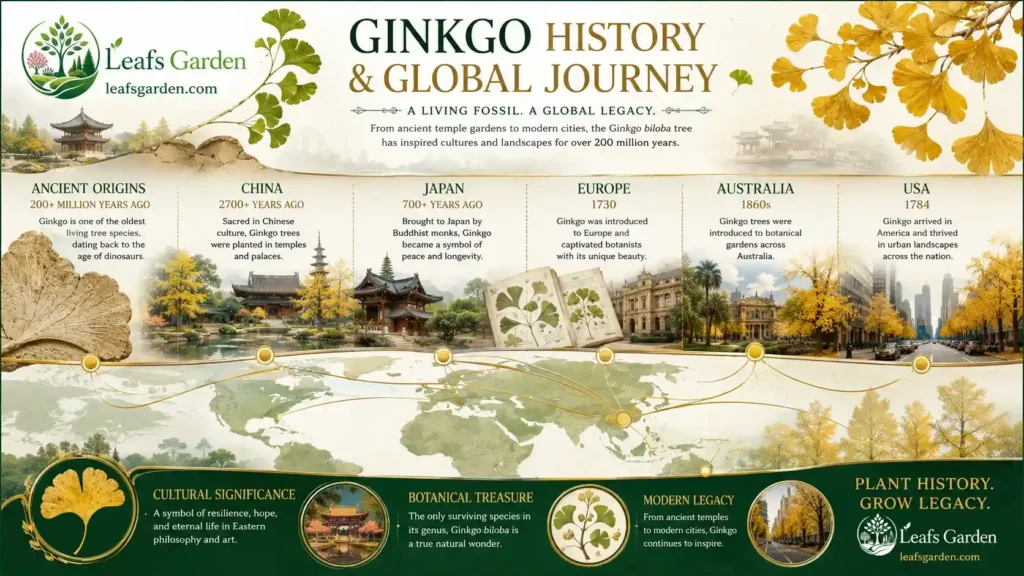
China and Japan played a major role in preserving and spreading ginkgo trees through temple gardens, traditional medicine, and ornamental planting.
The earliest cultivated ginkgo trees are strongly connected to ancient China, where monks and temple caretakers planted them near Buddhist monasteries and sacred sites. Many of these historic trees survived for centuries and became symbols of endurance, peace, and longevity.
In traditional Chinese medicine, ginkgo leaves and seeds were used in herbal preparations for generations. This medicinal association contributed to the tree’s cultural importance throughout East Asia.
The popularity of ginkgo biloba Japan plantings later expanded as the species became deeply integrated into Japanese temple gardens, urban landscapes, and seasonal autumn displays. Today, the ginkgo biloba tree Japan tradition remains highly visible in famous golden tree-lined streets and historic religious sites.
The ginkgo tree Japanese landscape style is especially admired for its clean architectural form, golden autumn foliage, and compatibility with minimalist garden design.
Ginkgo trees gradually spread from Asia into Europe, North America, Australia, and other temperate regions because of their beauty and urban durability.
European botanists and plant collectors introduced ginkgo trees to Western gardens during the 18th century. Their unusual leaf shape and ancient botanical history quickly attracted attention in botanical collections and estate landscapes.
As cities expanded in North America, ginkgo became increasingly popular as a street tree because of its ability to tolerate:
The tree later became widely planted across Australia, especially in cooler southern regions where autumn foliage performs well. Councils, landscape designers, and homeowners continue to use ginkgo trees in parks, boulevards, courtyards, and modern gardens because of their low-maintenance nature and strong seasonal appeal.
Ginkgo trees are popular in Australia because they tolerate heat, drought, pollution, and urban growing conditions while providing brilliant autumn color.
Australian gardeners value ginkgo trees for their adaptability and reliability in temperate climates. Once established, the trees can handle dry periods and difficult urban environments with relatively little maintenance.
Important reasons for Australian popularity include:
Ginkgo trees perform especially well in regions with cooler winters and defined seasonal changes. Their bright yellow autumn display creates strong visual contrast in parks, streetscapes, and residential gardens.
Best Australian regions for growing ginkgo trees:
These regions typically provide the cooler seasonal conditions needed for stronger autumn foliage color and healthier long-term growth.
Ginkgo trees come in upright, dwarf, columnar, variegated, and ornamental landscape varieties.
Modern ginkgo cultivars are available in many shapes and sizes, making the species suitable for large parks, compact courtyards, bonsai collections, and modern architectural gardens. Some varieties are selected for narrow upright growth, while others are valued for unusual foliage color, compact size, or ornamental structure.
Choosing the right ginkgo variety depends on available space, landscape style, maintenance preferences, and intended garden use.
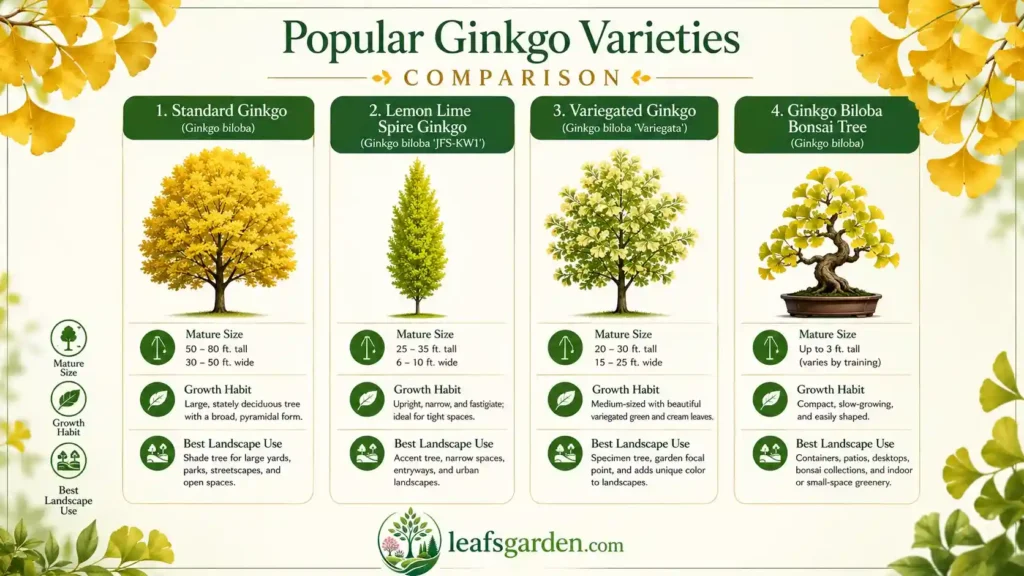
Standard ginkgo trees are large long-lived landscape specimens commonly used for shade and ornamental planting.
Traditional ginkgo biloba trees develop into broad deciduous shade trees with strong branching structures and excellent seasonal color. These classic forms are commonly planted in:
Young trees usually grow in a narrow upright pyramidal shape before gradually forming a wider canopy with age. Mature specimens can live for hundreds of years and become major landscape features over time.
Because of their durability and pollution tolerance, standard ginkgo trees remain one of the most dependable urban ornamental trees worldwide.
The Lemon Lime Spire ginkgo is a narrow upright cultivar ideal for compact gardens and tight landscape spaces.
The ginkgo biloba lemonlime spire, also called ginkgo lemonlime spire or ginkgo biloba lemon lime spire, is a columnar selection developed for modern landscapes where horizontal space is limited.
Key features include:
This cultivar works especially well in:
Its clean architectural appearance makes it popular in contemporary landscape design and minimalist gardens.
Variegated ginkgo varieties are prized for unusual foliage patterns and ornamental collector appeal.
Some rare ginkgo cultivars produce leaves with cream, yellow, or irregular light-green variegation. These ornamental selections are mainly grown as feature plants rather than large shade trees.
Variegated ginkgo trees are valued for:
Because these varieties are less common, they are often more expensive and harder to source through standard nurseries. Their unusual appearance makes them attractive focal points in high-end landscape designs and specialty plant collections.
A ginkgo biloba bonsai tree is valued for slow growth, longevity, and distinctive fan-shaped foliage.
The ginkgo biloba bonsai tree is popular among bonsai growers because of its elegant leaf structure and ancient appearance. Although ginkgo grows relatively slowly, this slower development allows better shaping and long-term refinement.
Basic bonsai care includes:
Ginkgo bonsai trees are especially admired during autumn when miniature golden leaves create dramatic seasonal color. Their strong structure and long lifespan make them suitable for long-term bonsai cultivation.
| Variety | Size | Shape | Best Use |
| Standard Ginkgo | Large | Broad | Shade tree |
| Lemonlime Spire | Medium | Columnar | Small gardens |
| Variegated Ginkgo | Medium | Ornamental | Feature planting |
| Bonsai Ginkgo | Small | Artistic | Containers |
Ginkgo trees grow best in full sun, well-drained soil, and moderate watering with minimal long-term maintenance.
The ginkgo biloba plant is considered one of the easiest long-lived ornamental trees to establish in suitable climates. Once mature, ginkgo trees are highly adaptable and can tolerate drought, pollution, compacted soils, and difficult urban conditions better than many deciduous species.
Proper site selection during the early growing years is the key to healthy long-term development, especially for root establishment, canopy structure, and autumn foliage quality.
Ginkgo trees perform best in temperate climates with seasonal temperature changes and moderate rainfall.
Ginkgo biloba adapts well across many parts of Australia, the USA, and Europe because of its excellent cold tolerance and ability to handle urban heat.
In Australia, ginkgo trees grow most successfully in:
These regions provide cooler winters that help encourage stronger autumn foliage color.
In the USA, ginkgo trees thrive throughout USDA Zones 3–9 and are commonly planted in northern and temperate states. Across Europe, they are widely used in cities, parks, and formal landscapes because they tolerate winter cold and urban pollution effectively.
Climate strengths of ginkgo trees include:
Extremely humid tropical climates are generally less ideal for long-term growth performance.
Ginkgo trees grow best in full sun and develop stronger structure and brighter foliage color with adequate light exposure.
For healthiest growth, ginkgo biloba trees should receive at least 6–8 hours of direct sunlight daily. Full sun exposure improves canopy density, branch development, and overall vigor.
Benefits of full sun include:
Trees planted in excessive shade may become thinner, slower growing, and less vibrant during autumn. Limited sunlight can also reduce the intensity of the tree’s famous golden-yellow foliage display.
Ginkgo trees prefer well-drained soil but can tolerate a wide range of urban soil conditions.
One reason ginkgo trees are widely used in streetscapes is their adaptability to difficult growing environments. They can handle compacted soils better than many ornamental trees, although proper drainage remains important.
Ideal soil conditions include:
Ginkgo trees generally tolerate:
Poorly drained waterlogged soil can increase root stress and reduce long-term tree health.
Young ginkgo trees need regular watering during establishment, while mature trees become relatively drought tolerant.
Newly planted ginkgo biloba trees should receive consistent moisture during the first few growing seasons to help develop strong roots. Deep watering is usually more effective than shallow frequent irrigation.
General watering guidelines include:
Mature ginkgo trees are known for good drought tolerance and can survive dry urban conditions better than many deciduous shade trees.
However, excessive watering may cause:
Maintaining balanced soil moisture is important for healthy long-term growth.
Ginkgo trees usually require only light feeding and minimal fertilizer input.
Established ginkgo trees are not heavy feeders, especially when planted in reasonably healthy soil. Excess fertilizer can sometimes encourage weak growth rather than balanced structural development.
Recommended feeding methods include:
Young trees may benefit from occasional feeding during early establishment, while mature trees often thrive with little supplemental fertilization.
Dwarf and compact ginkgo varieties can grow successfully in containers with proper drainage and sunlight.
Container-grown ginkgo trees are popular for patios, courtyards, balconies, and bonsai culture. Smaller cultivars adapt best to long-term pot growing because they maintain manageable root systems and slower growth rates.
Important container-growing tips include:
Suitable container forms include:
Container-grown trees may require more regular watering than landscape-planted ginkgo trees, especially during hot weather.
Ginkgo trees are considered low-maintenance once established and rarely suffer serious pest or disease problems.
The ginkgo biloba tree is widely valued for its durability and reliability in both residential and urban landscapes. Unlike many deciduous trees, ginkgo trees generally experience very few serious insect, fungal, or disease issues, making them suitable for low-maintenance gardens and public planting projects.
Basic long-term care mainly involves occasional watering during drought, light structural pruning, and monitoring root health during establishment years.
Ginkgo trees grow slowly to moderately and are best viewed as long-term landscape investments.
Young ginkgo biloba trees usually establish gradually during their early years while developing strong root systems and structural branching. Growth rates often increase slightly after establishment, especially in favorable climates with full sun and good soil drainage.
Typical growth characteristics include:
Most landscape ginkgo trees grow steadily rather than rapidly, which helps produce durable branch structure and balanced canopy form over time.
Because of their longevity, ginkgo trees are commonly planted for:
Ginkgo trees require minimal pruning, but young trees benefit from early structural shaping.
The best time to prune ginkgo trees is usually during winter dormancy before new spring growth begins. Dormant-season pruning reduces stress and allows better visibility of branch structure.
Important pruning guidelines include:
Structural pruning during the early years helps develop a stable upright framework, especially for street trees and formal landscape planting.
Mature ginkgo trees generally require very little ongoing shaping because of their naturally symmetrical growth habit.
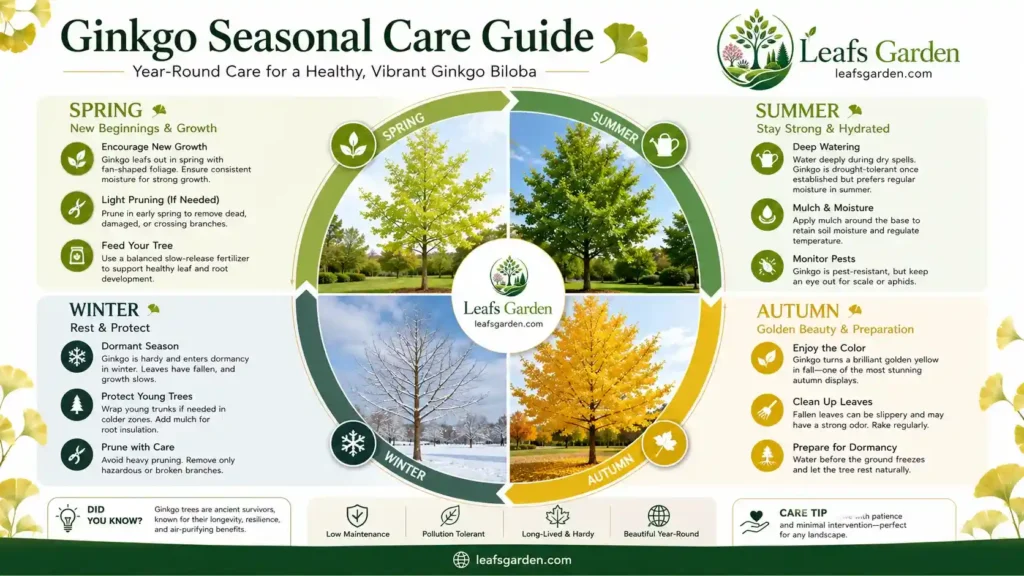
Seasonal maintenance helps keep ginkgo trees healthy, attractive, and structurally strong throughout the year.
Spring is the active growth season when new ginkgo leaves emerge in bright fresh green tones.
Spring care tasks include:
Summer care focuses mainly on water management, especially for younger trees during hot or dry weather.
Summer maintenance includes:
Mature ginkgo trees generally tolerate summer heat well once fully established.
Autumn is the most visually dramatic season for ginkgo biloba trees because the foliage transforms into bright golden yellow.
Autumn care typically includes:
In cooler climates, the autumn color display can become especially intense and ornamental.
Winter is the dormant season when ginkgo trees temporarily stop active growth.
Winter maintenance may involve:
Dormancy helps prepare the tree for healthy spring regrowth.
Most ginkgo tree problems are related to watering stress, poor drainage, or establishment conditions rather than serious disease.
Although ginkgo biloba trees are highly resilient, some environmental issues can still affect growth and foliage quality.
| Problem | Possible Cause | Solution |
| Yellow leaves | Overwatering or nutrient stress | Improve drainage and adjust watering |
| Early leaf drop | Drought stress or transplant shock | Deep water during dry periods |
| Poor growth | Low sunlight or compacted roots | Increase sun exposure and improve soil |
| Root stress | Waterlogged soil | Improve drainage and avoid excessive irrigation |
Most issues improve once the tree becomes fully established in suitable growing conditions.
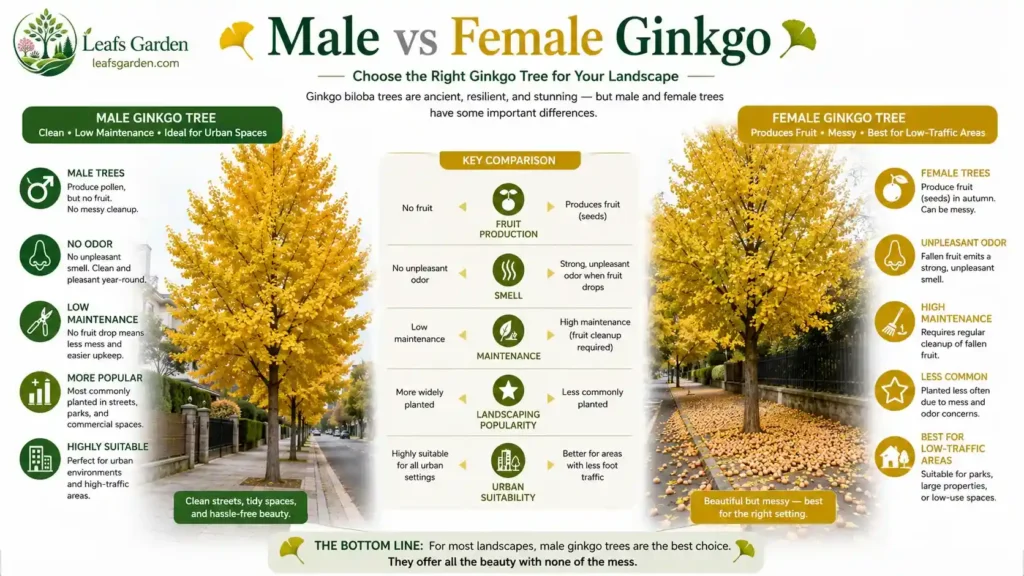
Male ginkgo trees are preferred in landscaping because female trees produce strong-smelling fruit.
Ginkgo biloba trees are dioecious, meaning male and female reproductive structures grow on separate trees. This difference becomes especially important in urban landscaping because female trees produce fleshy fruit-like seeds that develop a strong odor when they fall and decay.
For this reason, most councils, nurseries, and homeowners choose male ginkgo cultivars for streetscapes, parks, and residential gardens.
Ginkgo fruit refers to the seed-bearing structures produced by female ginkgo trees.
The terms ginkgo fruit, ginkgo biloba fruit, ginkgo tree fruit, and fruit ginkgo biloba are commonly used to describe the soft outer covering surrounding the tree’s seeds.
Technically, the structure is not a true botanical fruit, but it appears fruit-like in shape and texture.
Key features include:
As the outer layer matures and falls to the ground, it begins breaking down and producing a strong smell that many people find unpleasant.
Inside the outer flesh is a hard seed sometimes used in traditional Asian cuisine after careful preparation.
Female ginkgo trees produce a strong odor because fallen fruit contains butyric acid compounds.
When ripe ginkgo fruit drops to the ground and begins decomposing, the outer flesh releases butyric acid, a compound commonly associated with rancid smells.
The odor is often compared to:
This smell can become especially noticeable on sidewalks, driveways, and paved urban areas during autumn fruit drop.
Common problems associated with female ginkgo trees include:
Because of these maintenance concerns, female trees are much less common in modern public landscaping projects.
Male ginkgo trees are widely preferred because they provide ornamental value without messy fruit production.
Male cultivars maintain all the desirable landscape qualities of ginkgo biloba while avoiding the odor and cleanup issues caused by female fruit.
Major benefits of male ginkgo trees include:
Councils, landscape architects, and homeowners often specifically request grafted male ginkgo varieties for:
| Feature | Male Tree | Female Tree |
| Fruit | No | Yes |
| Smell | None | Strong odor |
| Landscaping Popularity | High | Lower |
Ginkgo trees are widely used as ornamental shade trees in streetscapes, parks, courtyards, and modern landscapes.
The ginkgo biloba tree is highly valued in landscape design because of its architectural structure, seasonal foliage color, durability, and long lifespan. Its clean branching habit and strong adaptability allow it to perform well in both traditional and contemporary outdoor spaces.
From urban boulevards to Japanese-inspired gardens, ginkgo trees provide year-round visual structure with minimal maintenance requirements.
For a complete overview of evergreen, deciduous, and ornamental landscape trees suited to Australian and temperate climates, see our Evergreen, Shade & Landscape Trees guide.
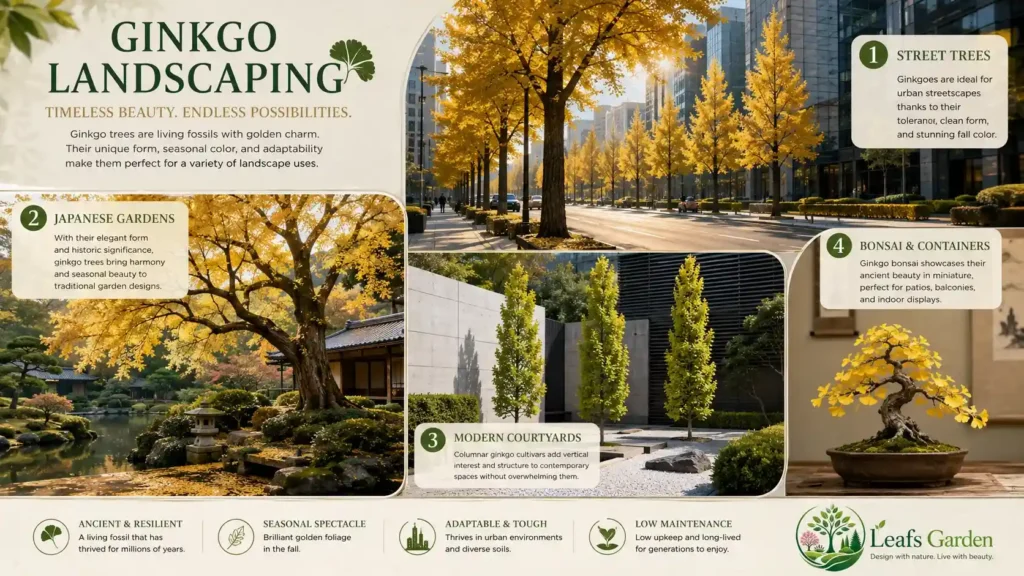
Ginkgo trees are considered excellent street trees because they tolerate pollution, compacted soil, and difficult urban conditions.
Cities around the world use ginkgo biloba trees extensively in public landscaping because they handle environmental stress better than many deciduous species.
Important street-tree advantages include:
Another major benefit is the tree’s relatively controlled root behavior compared to some aggressive urban tree species. Ginkgo roots are generally less likely to damage pavements, curbs, and underground infrastructure when properly planted.
Male ginkgo cultivars are especially popular for streetscapes because they avoid messy fruit production.
Ginkgo trees complement Japanese, minimalist, and modern architectural garden styles exceptionally well.
The simple fan-shaped foliage and elegant branching structure of ginkgo biloba naturally suit clean, balanced landscape designs.
Popular landscape styles include:
Ginkgo trees blend beautifully with traditional Japanese-inspired gardens because of their cultural significance and seasonal color display.
They pair well with:
The clean form and uncluttered canopy of ginkgo trees work especially well in minimalist outdoor spaces where structure and simplicity are priorities.
Their upright growth habit creates strong visual lines without overwhelming compact landscapes.
Modern homes frequently use ginkgo trees as feature specimens because the foliage and branching pattern complement geometric architecture and contemporary hardscaping.
The bright golden autumn foliage also provides strong seasonal contrast against neutral building materials.
Compact and upright ginkgo cultivars are ideal for small gardens, courtyards, and narrow planting spaces.
Not all ginkgo trees develop extremely broad canopies. Columnar and upright selections allow homeowners to enjoy the species even in limited spaces.
Best uses include:
Cultivars such as narrow columnar forms maintain vertical structure while reducing horizontal spread, making them easier to manage in compact residential landscapes.
Container-grown dwarf ginkgo trees can also work well on balconies and paved outdoor areas with sufficient sunlight.
Ginkgo trees combine well with ornamental plants that complement their structure, texture, and autumn color.
Because ginkgo biloba has a clean canopy and elegant foliage shape, it pairs effectively with both soft-textured and sculptural companion plants.
Popular companion plants include:
Japanese maples provide contrasting leaf forms and seasonal color, while ornamental grasses soften the strong architectural appearance of mature ginkgo trees.
For warm Australian climates where Japanese maples struggle, the Chinese Tallow Tree is another deciduous ornamental tree that delivers vibrant multi-colour autumn foliage as an effective seasonal companion to ginkgo.
Japanese black pine creates a classic Asian-inspired landscape combination, and camellias add evergreen structure with seasonal flowers beneath the deciduous canopy.
Ginkgo trees are generally safe ornamental plants, but fruit and seeds should be handled carefully.
The ginkgo biloba tree is widely considered a safe landscape tree for gardens, parks, and urban planting. However, the fruit produced by female trees can create odor, ingestion, and skin-sensitivity concerns in some situations.
Most safety issues are related to fallen fruit and seeds rather than the tree itself. Proper plant selection and thoughtful garden placement usually minimize potential problems.
Ginkgo seeds are used in some traditional Asian cuisines, but excessive consumption may be harmful.
In parts of Asia, carefully prepared ginkgo seeds from ginkgo fruit are traditionally used in soups, desserts, and specialty dishes. The edible portion is the inner seed after the outer fleshy coating has been removed.
However, there are important safety considerations:
Because of these risks, ginkgo seeds should only be consumed in moderation and with proper culinary preparation.
The soft outer fruit layer itself is generally unpleasant due to its strong smell and is not commonly eaten.
Pets and children should be prevented from ingesting fallen ginkgo fruit or seeds.
Although mature ginkgo trees are not considered highly dangerous ornamental plants, fallen fruit from female trees can create potential ingestion concerns for pets and young children.
Important precautions include:
Male ginkgo trees are often preferred in residential landscapes because they do not produce fruit, reducing maintenance and safety concerns.
Garden placement can also help minimize issues. Planting ginkgo trees away from walkways, patios, and heavily used recreation spaces may reduce contact with fallen fruit during autumn.
Some people may experience irritation from ginkgo fruit or sensitivity to its strong odor.
The fleshy outer coating of female ginkgo fruit contains compounds that may irritate sensitive skin during handling. Direct contact with decomposing fruit can occasionally cause mild skin reactions in some individuals.
Potential concerns include:
The smell produced by fallen fruit is often the biggest complaint in urban landscapes. For this reason, councils and homeowners usually select male cultivars for public and residential planting.
Outside of fruit-related concerns, ginkgo trees are generally considered durable, low-risk ornamental landscape trees.
Ginkgo biloba leaves have long been used in herbal medicine and supplements, especially for memory and circulation support.
The ginkgo biloba tree has a long history in traditional herbal practices, particularly in China and other parts of Asia. Today, ginkgo leaf extracts are widely used in herbal supplements, teas, and wellness products around the world.
Modern interest in ginkgo biloba mainly focuses on the leaves rather than the tree’s ornamental value. However, herbal use should always be approached carefully and informationally rather than as medical treatment advice.
Ginkgo supplements are typically produced through leaf harvesting, drying, and extraction processes.
Most commercial ginkgo biloba products use specially processed leaves collected from cultivated trees. After harvesting, the leaves are dried and prepared for herbal extraction.
General production steps include:
Commercial herbal manufacturers often process large quantities of leaves to create concentrated supplement formulations.
Ginkgo leaves have been used for centuries in tea, herbal preparations, and traditional Chinese medicine practices.
Historically, ginkgo biloba became associated with wellness traditions throughout East Asia, especially in China. The leaves and seeds were incorporated into various herbal applications and ceremonial practices over many generations.
Traditional uses included:
In many historic temple gardens, ginkgo trees were valued not only for symbolism and beauty but also for their association with long-standing herbal traditions.
Ginkgo leaves are commonly sold in teas, dried herbal blends, and supplement products.
Modern herbal markets frequently include products such as:
Ginkgo teas are usually prepared using dried leaves and are marketed as part of broader herbal wellness traditions.
Many herbal products focus on the tree’s historical association with memory, circulation, and traditional botanical use, although product quality and formulations may vary significantly between manufacturers.
Ginkgo supplements should be used carefully because they may interact with medications or individual health conditions.
Although ginkgo biloba products are widely available, herbal supplements are not suitable for everyone.
Important precautions include:
People considering herbal supplements should seek guidance from qualified healthcare professionals, especially if they:
Using properly sourced products and following professional advice helps reduce unnecessary risks associated with herbal supplementation.
Ginkgo plants are commonly sold through nurseries, bonsai specialists, and online garden retailers.
Ginkgo biloba trees are widely available in many regions because of their popularity as ornamental landscape trees. Buyers can choose from young tube-stock plants, advanced grafted trees, dwarf cultivars, and bonsai specimens depending on available space and landscaping goals.
Selecting a healthy plant and the correct cultivar is especially important because ginkgo trees are long-lived investments that may remain in the landscape for decades or even centuries.
Ginkgo trees in Australia are commonly available through local nurseries, specialty growers, and online plant retailers.
Gardeners can often find standard ginkgo biloba trees at larger retail nurseries, especially in cooler temperate regions where the species performs best.
Common purchasing sources include:
Specialty growers may offer a wider range of cultivars, including:
Buying from reputable growers usually improves the chances of receiving healthy, correctly identified plants.
Buyers should check tree sex, root condition, and graft quality before purchasing a ginkgo tree.
Choosing the right plant early can prevent long-term maintenance problems and improve landscape performance.
Important factors to inspect include:
Male ginkgo trees are usually preferred because they do not produce foul-smelling fruit. Many nurseries specifically sell grafted male cultivars for residential and urban planting.
Healthy roots are critical for successful establishment.
Look for:
Avoid plants showing major stress, rot, or weak structure.
Many specialty ginkgo cultivars are grafted to maintain reliable growth habits and desired characteristics.
Grafted trees may offer:
Checking plant labels and nursery information helps confirm cultivar identity before purchase.
Home gardeners can choose between tube stock, advanced trees, and mature specimens depending on budget and landscape goals.
Different plant sizes offer different advantages.
| Tree Size | Benefits | Best For |
| Tube Stock | Lower cost, easier transplanting | Long-term garden establishment |
| Advanced Trees | Faster landscape impact | Residential gardens |
| Mature Specimens | Instant feature tree effect | Premium landscapes |
Tube-stock ginkgo trees are small young plants that establish gradually over time. They are affordable and often adapt well after planting because roots experience less transplant stress.
Advanced nursery-grown trees provide a more immediate landscape presence while remaining manageable for residential planting.
These are commonly chosen for:
Large mature ginkgo trees create instant visual impact but usually involve higher purchase and installation costs. These specimens are often used in commercial landscapes, public gardens, and high-end residential projects.
Ginkgo trees are unique but are sometimes confused with maidenhair fern foliage, yellow autumn trees, or Japanese ornamental species.
The ginkgo biloba tree has one of the most distinctive leaf shapes in the plant world, yet many people still compare it with other ornamental plants because of its autumn color, upright growth habit, or fan-like foliage appearance.
Understanding the differences helps with proper tree identification and landscape selection.
| Tree | Similarity | Key Difference |
| Japanese Maple | Autumn color | Leaf shape differs |
| Maidenhair Fern | Fan-like leaf | Completely different plant |
| Poplar | Upright shape | Faster growth |
| Elm | Shade tree use | Different foliage |
Japanese maples and ginkgo trees are both prized for autumn color, but their foliage structure is very different.
Japanese maple trees produce deeply divided delicate leaves with multiple pointed lobes, while ginkgo leaves are broad, fan-shaped, and much simpler in structure.
Key differences include:
Both species work well in ornamental and Japanese-inspired landscapes, especially for seasonal foliage display.
Maidenhair ferns and ginkgo trees share a similar fan-like appearance, but they are completely unrelated plants.
The nickname maidenhair tree comes from the resemblance between ginkgo leaves and the small leaflets of maidenhair ferns.
However, the two plants differ significantly:
Despite the visual similarity, they belong to entirely different plant groups.
Poplars and ginkgo trees can both develop upright forms, but poplars grow much faster and have very different foliage.
Some younger ginkgo cultivars resemble upright poplar trees because of their narrow vertical branching habit. However, poplars typically grow much faster and often have more aggressive root systems.
Major differences include:
Ginkgo trees are generally considered more durable long-term ornamental specimens.
Elms and ginkgo trees are both used as shade trees, but their leaves and branching habits differ considerably.
Elm trees usually produce wider spreading canopies with serrated leaves, while ginkgo trees maintain cleaner architectural branching and simpler foliage.
Important distinctions include:
Both species are useful in urban landscaping, although ginkgo trees are especially valued for pollution tolerance and low-maintenance performance.
The ginkgo biloba plant is one of the most resilient and historically significant ornamental trees for Australian, American, and worldwide landscapes.
With its extraordinary longevity, low-maintenance nature, and brilliant golden autumn foliage, the ginkgo biloba tree continues to remain one of the most valuable ornamental trees for both urban and residential environments. Its ability to tolerate pollution, drought, compacted soil, and changing climate conditions makes it especially reliable for modern landscaping projects.
Beyond its ornamental appeal, the tree also carries deep cultural and medicinal heritage connected to centuries of cultivation in China and Japan. Its unique fan-shaped leaves, architectural growth habit, and ancient botanical history give ginkgo a distinctive presence that few landscape trees can match.
Ginkgo trees are highly suitable for:
Whether planted as a long-term shade tree, a compact upright cultivar, or a carefully shaped bonsai specimen, ginkgo biloba offers lasting ornamental value with relatively little maintenance.
For the best landscape experience, selecting the right cultivar is important. Many gardeners and councils prefer male ginkgo trees to avoid messy fruit production while still enjoying the tree’s famous golden autumn display.
With proper placement and care, a ginkgo biloba tree can become a beautiful long-term feature that adds structure, history, and seasonal color to the landscape for generations.
Ginkgo trees are mainly used for ornamental landscaping, shade, urban planting, bonsai cultivation, and traditional herbal applications. Their strong pollution tolerance and attractive golden autumn foliage also make them popular street and park trees.
A ginkgo biloba tree has distinctive fan-shaped leaves, an upright branching structure, and bright golden-yellow foliage during autumn. Young trees often have a pyramidal shape, while mature trees develop broader canopies.
Yes. Ginkgo trees grow well in cooler Australian climates including Melbourne, Canberra, Adelaide, Tasmania, and cooler areas of New South Wales. They perform best in temperate regions with seasonal temperature changes.
Ginkgo seeds are used in some traditional Asian cuisines after careful preparation. However, excessive consumption may be harmful, and the outer fruit layer has a strong unpleasant smell.
Ginkgo trees grow slowly to moderately, especially during their early establishment years. Once mature, they develop into durable long-lived ornamental trees with steady structural growth.
Male ginkgo trees are usually very clean and low maintenance. Female trees, however, can drop foul-smelling fruit during autumn, which may create cleanup issues on pathways and streets.
Yes. Ginkgo biloba is considered an excellent street tree because it tolerates pollution, compacted soil, drought, heat, and challenging urban conditions extremely well.