Grow Better Gardens with Smarter Plant Choices
Discover helpful guides on trees, hedges, fruit plants, edible plants, and beautiful landscape greenery.

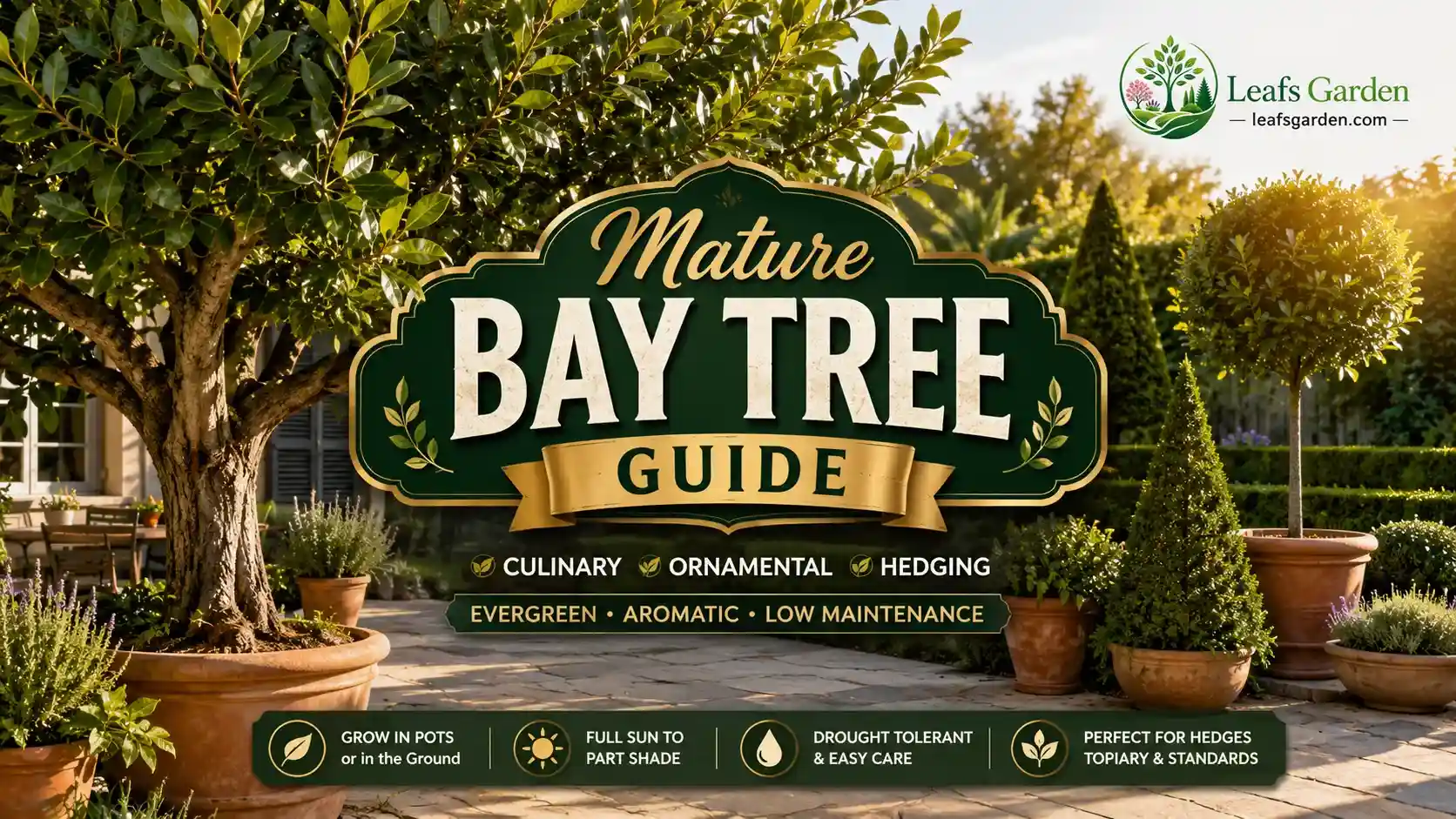
A mature bay tree (Laurus nobilis) is an evergreen aromatic herb tree grown for culinary bay leaves, ornamental hedging, container gardening, and formal landscaping. In Australia, especially Perth and warmer Mediterranean-style regions, bay laurel grows exceptionally well due to the mild climate and dry summers. It also adapts successfully across many USA climates and temperate regions worldwide.
A fully grown mature bay tree develops dense glossy green foliage, woody stems, and a naturally upright structure. The leaves are dark green, leathery, and highly aromatic when crushed, making the plant popular in herb gardens and home cooking. Mature specimens can be pruned into formal hedges, cone topiary shapes, patio standards, or left to grow naturally as evergreen landscape trees.
The botanical name of the true culinary bay tree is Laurus nobilis. It is commonly called bay tree, bay laurel, sweet bay, or laurel tree. These names are often used interchangeably, although some ornamental laurel species are unrelated and not edible. True bay laurel belongs to the Lauraceae family and is valued for both ornamental beauty and practical kitchen use.
In Australian gardens, mature bay trees are commonly used for Mediterranean landscaping, privacy hedges, courtyard containers, and decorative entranceways. In the USA and other temperate climates, bay laurels are widely grown in outdoor gardens, pots, and protected patios because of their adaptability and evergreen growth habit.
A mature bay leaf tree typically reaches between 2 and 12 meters tall depending on pruning, climate, and growing conditions. Growth is generally slow to moderate, making bay trees ideal for controlled shaping and long-term landscape design. Many gardeners prefer growing bay trees in containers because they respond well to pruning and root restriction.
Bay laurels are also highly valued for culinary harvesting. The aromatic leaves are used fresh or dried in soups, stews, sauces, rice dishes, and slow-cooked meals. Beyond cooking, mature bay trees provide year-round structure, dense screening, and formal garden elegance.
| Feature | Details |
| Scientific Name | Laurus nobilis |
| Common Names | Bay Tree, Bay Laurel, Sweet Bay |
| Plant Type | Evergreen aromatic tree |
| Mature Height | 2–12 meters depending on pruning |
| Best Climate | Mediterranean & temperate |
| Main Uses | Culinary, hedging, ornamental |
A mature bay tree is a fully established Laurus nobilis plant with developed woody stems, dense evergreen foliage, and aromatic bay leaves used in cooking and landscaping. Mature bay laurels are valued for their ornamental appearance, long lifespan, drought tolerance, and ability to grow as hedges, topiary, patio trees, or evergreen screening plants.
Unlike young nursery plants, a mature bay tree develops a thicker trunk, stronger branch structure, and fuller canopy. The plant becomes more resilient with age and produces a larger harvest of fragrant culinary leaves.
The scientific name of the true bay tree is Laurus nobilis. It is also commonly called sweet bay, bay laurel, sweet bay laurus nobilis, or laurel nobilis. This evergreen species belongs to the Lauraceae family, which contains many aromatic plants and trees.
Laurus nobilis is native to the Mediterranean region but is now widely cultivated in Australia, the USA, and temperate gardens worldwide. The plant is especially popular in Perth and southern Australian climates because it thrives in warm, dry summers and mild winters.
Botanically, bay laurel is classified as:
| Classification | Details |
| Botanical Name | Laurus nobilis |
| Common Names | Bay Tree, Bay Laurel, Sweet Bay |
| Plant Family | Lauraceae |
| Plant Type | Evergreen aromatic tree |
| Native Region | Mediterranean region |
The Lauraceae family also includes cinnamon, camphor trees, and avocado species.
Gardeners drawn to aromatic and productive plants from this remarkable family will find plenty of inspiration across our collection of rewarding fruit trees and edible plants suited to warm Australian climates.
However, Laurus nobilis is the primary species grown for edible bay leaves.
Bay tree, bay laurel, and laurel tree are terms commonly used interchangeably for Laurus nobilis. In most gardening and culinary contexts, all three names refer to the same edible evergreen herb tree.
Bay laurel specifically refers to the culinary species grown for aromatic leaves used in soups, sauces, and slow-cooked dishes. The term “laurel tree” can sometimes create confusion because many unrelated ornamental shrubs also use the word “laurel” in their common names.
Important distinctions include:
Understanding the terminology helps gardeners avoid confusing edible bay trees with ornamental landscape laurels.
A fully grown mature bay tree develops a dense upright structure with glossy evergreen leaves and woody branching. The natural shape is pyramidal or rounded, although pruning can create formal topiary forms, hedges, or cone-shaped bay standards.
The leaves of Laurus nobilis are:
Mature bay laurels produce strong woody trunks with gray-brown bark that becomes rougher with age. Older specimens often develop attractive sculptural branching patterns, especially when grown as ornamental feature trees.
During spring, mature bay trees may produce small pale yellow blooms. These flowers are subtle rather than highly decorative, but they contribute to the plant’s seasonal growth cycle. Female plants can later develop dark berry-like fruits after pollination.
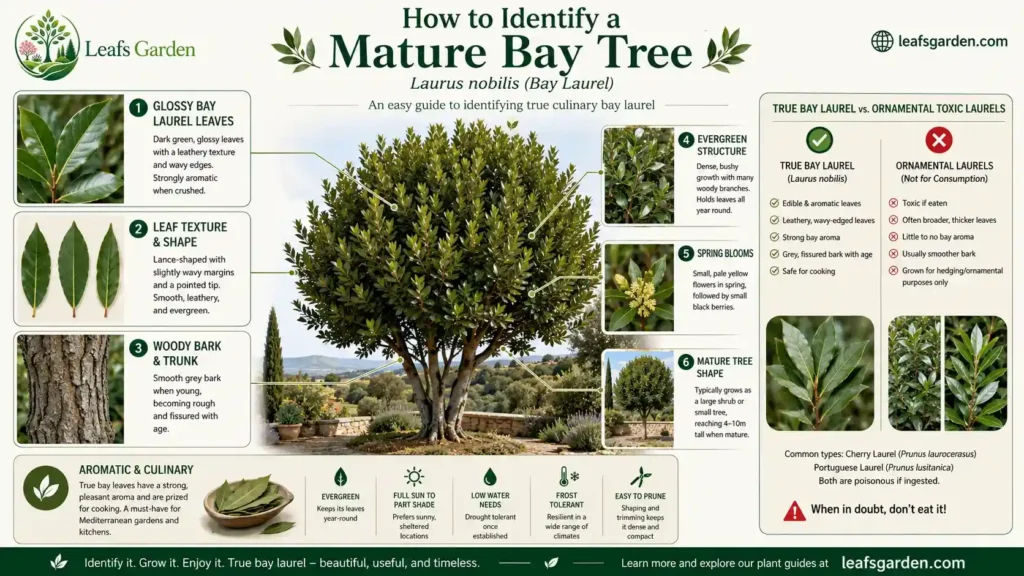
Bay tree identification mainly focuses on leaf texture, evergreen foliage, and overall growth habit. Mature bay laurel leaves are easy to recognize because of their glossy appearance and strong herbal fragrance.
Key visual identification features include:
Bay laurel leaves are typically longer and firmer than many ornamental laurels. The underside of the leaf is slightly lighter green, while the upper surface remains glossy and rich in color.
Young bay trees appear shrubbier, while mature specimens develop clearer trunk structure and fuller crown formation. Formal pruning can also dramatically change the appearance of the plant in landscapes and containers.
Mature bay trees can reach 2–12 meters tall depending on pruning, climate, soil conditions, and whether they are grown in pots or open ground. In most home gardens, bay laurel trees are usually maintained between 2–5 meters for easier harvesting, shaping, and hedge control.
When left unpruned in ideal Mediterranean climates, a fully grown bay leaf tree can eventually develop into a large evergreen ornamental tree with a broad dense canopy. Container-grown bay trees usually remain much smaller because root space naturally limits growth.
Bay tree height varies significantly based on growing conditions and maintenance style. A mature Laurus nobilis grown in open ground develops faster and larger than a bay tree kept in containers or clipped into formal shapes.
Typical mature bay tree dimensions include:
| Growth Type | Average Height | Average Spread |
| Potted Bay Tree | 1–3 meters | 1–2 meters |
| Pruned Hedge | 2–4 meters | Controlled width |
| Standard Bay Tree | 2–5 meters | 1–3 meters |
| Unpruned Mature Tree | 8–12 meters | 4–8 meters |
Young bay trees begin with shrubby compact growth. As maturity develops, the trunk thickens and branching becomes denser. Older trees eventually form rounded or pyramidal evergreen crowns with strong woody stems.
Growth stages commonly include:
How big a bay tree grows ultimately depends on pruning intensity, root space, sunlight exposure, and regional climate conditions.
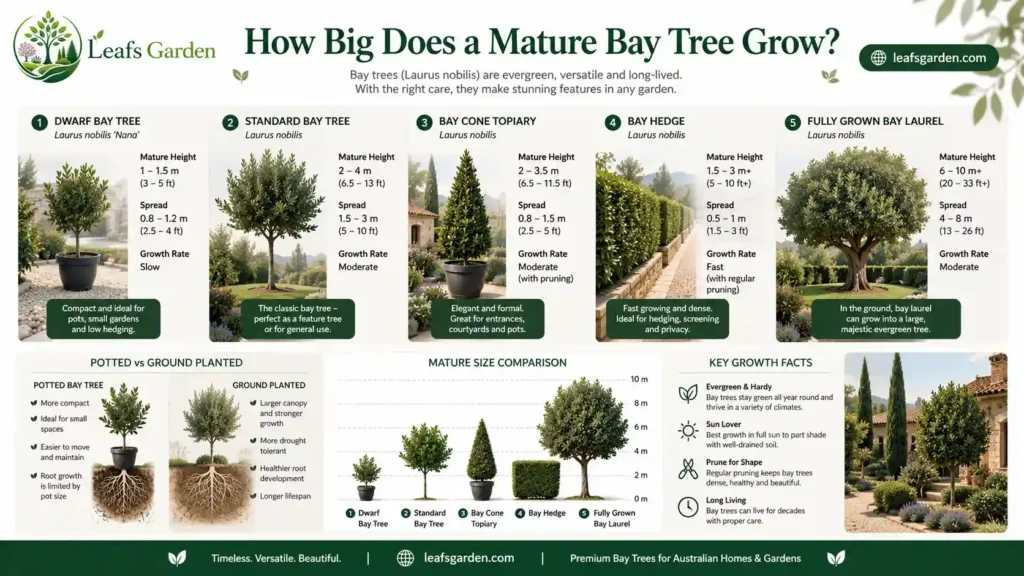
Bay trees have a slow to moderate growth habit. Most mature bay laurels grow steadily rather than rapidly, which makes them highly suitable for formal landscaping and topiary shaping.
In Australian climates, especially Perth and southern coastal regions, bay trees often grow more consistently because of the warm dry summers and mild winters. Mediterranean conditions encourage healthy evergreen development and dense foliage production.
In many USA regions, growth speed varies more depending on winter temperatures and humidity levels. Coastal California and southern states generally provide better growing conditions than colder inland climates.
Several factors affect maturity speed:
Bay laurels grown in pots typically mature more slowly than ground-planted specimens. However, slower growth also makes maintenance easier for decorative patio trees and formal hedges.
Dwarf bay trees are compact forms of Laurus nobilis bred or maintained for smaller spaces, containers, and decorative patios. Standard bay trees are taller ornamental forms with a clear trunk and rounded foliage crown.
Dwarf bay tree characteristics include:
Standard bay tree forms are commonly used in formal landscaping because they create elegant architectural shapes. These trees are often pruned into symmetrical balls, cones, or lollipop-style standards for entryways and courtyards.
Key differences include:
| Feature | Dwarf Bay Tree | Standard Bay Tree |
| Mature Size | Smaller | Larger |
| Growth Habit | Compact | Upright trunk form |
| Best Use | Pots & patios | Formal landscaping |
| Maintenance | Lower | Moderate pruning |
| Visual Style | Dense shrub-like | Structured ornamental |
Both forms maintain the same aromatic evergreen foliage and culinary leaf quality.
Bay trees are highly popular for topiary because their dense foliage responds exceptionally well to shaping and pruning. Mature bay laurels are frequently clipped into formal cones, spirals, spheres, and decorative hedge forms.
Bay cone pruning style is especially common in Mediterranean garden design and formal entrance landscaping. Cone-shaped bay trees create strong vertical structure while remaining compact and manageable.
Popular ornamental forms include:
Baytree hedge shaping works well because the evergreen foliage remains dense throughout the year. Regular trimming encourages tighter branching and improved privacy screening.
In Australian and USA landscapes, mature bay topiary plants are widely used around patios, pools, walkways, courtyards, and formal garden entrances because of their elegant evergreen appearance and long lifespan.
Mature bay trees thrive in full sun, well-draining soil, moderate watering, and mild Mediterranean-style climates like many parts of Australia and coastal USA regions. Laurus nobilis performs best in environments with warm summers, good airflow, and protection from prolonged frost or waterlogged soil.
Once established, mature bay laurels become relatively drought tolerant and low maintenance. However, healthy long-term growth still depends on proper sunlight, drainage, soil quality, and balanced watering.
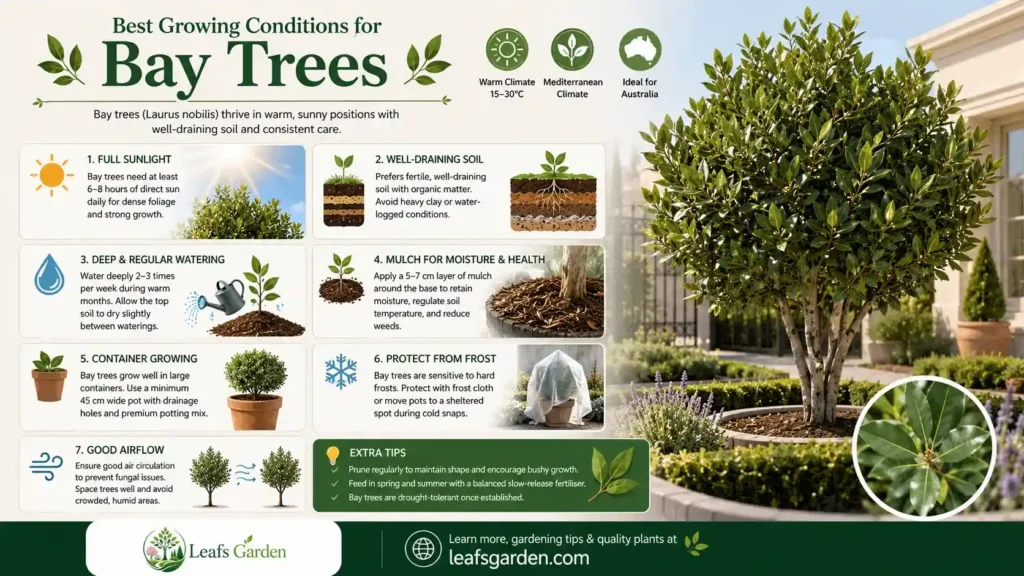
Bay trees naturally prefer Mediterranean and temperate climates with mild winters and warm dry summers. These conditions closely match many Australian growing regions, especially Perth, Adelaide, Melbourne, and coastal New South Wales.
Bay tree Australia growing conditions are ideal because the plant tolerates heat, dry air, and seasonal drought once mature.
Gardeners enjoying warm Australian climates may also find success growing a Hass avocado tree, another productive member of the Lauraceae family that thrives in similar subtropical and Mediterranean-style growing conditions.
In Perth particularly, bay laurels perform exceptionally well due to the Mediterranean climate pattern.
In the USA, mature bay trees grow successfully in USDA Zones 8–11. Coastal California, southern states, and protected urban gardens provide the most reliable conditions for evergreen growth.
Worldwide climate adaptability depends on:
Bay laurels struggle most in extremely cold climates with frozen soil or prolonged heavy moisture.
Ideal climate conditions include:
| Climate Factor | Preferred Conditions |
| Climate Type | Mediterranean & temperate |
| USDA Zones | 8–11 |
| Summer Conditions | Warm & dry |
| Winter Conditions | Mild |
| Frost Tolerance | Light frost only |
Well-draining soil is one of the most important requirements for mature bay trees. Laurus nobilis dislikes constantly wet roots and performs poorly in compacted or waterlogged ground.
The best soil for bay trees contains:
Heavy clay soils should be improved with compost, coarse sand, or organic matter before planting. Raised garden beds can also improve drainage in wetter regions.
Recommended soil pH ranges between 6.0 and 7.5. Bay laurels tolerate slight alkalinity but generally perform best in balanced fertile soil.
For container growing, quality potting mix is essential. A suitable bay tree potting mix usually includes:
Good airflow around roots helps reduce fungal issues and root rot.
Mature bay trees grow best in full sun but can also tolerate partial shade. Plants grown with more sunlight usually develop denser foliage, stronger branching, and improved aromatic leaf production.
Full sun conditions are ideal for:
Partial shade is tolerated in hotter inland climates, especially during extreme summer heat.
Bay laurels are highly heat tolerant once established. Mature plants can handle hot Australian summers if roots remain healthy and watering stays balanced.
However, bay trees are moderately frost sensitive. Prolonged freezing temperatures may damage leaves, stems, or roots, especially in young or container-grown plants.
Cold protection methods include:
Extended hard frost is one of the few conditions that can severely damage mature bay laurels.
Mature bay trees prefer deep but infrequent watering rather than constant shallow irrigation. Once established, they become fairly drought tolerant and can handle short dry periods better than soggy soil.
A proper deep watering schedule encourages stronger root systems and healthier evergreen growth.
General watering guidelines include:
| Growing Situation | Watering Frequency |
| Established Ground Trees | Deep watering every 1–2 weeks |
| Potted Bay Trees | More frequent watering |
| Hot Summer Periods | Increase slightly |
| Winter Dormancy | Reduce watering |
Container-grown bay trees dry out faster because restricted soil volume loses moisture more quickly. Potted plants may require watering several times weekly during hot weather.
Overwatering is a major cause of bay tree decline. Constantly wet roots can lead to:
Root rot prevention depends heavily on drainage quality and watering balance. Always allow excess moisture to drain freely from pots and avoid planting in poorly drained soil.
| Growing Factor | Ideal Conditions |
| Best Sunlight Exposure | Full sun to light partial shade |
| Ideal Soil Type | Well-draining fertile soil |
| Watering Frequency | Deep but infrequent |
| Preferred Temperature | Mild Mediterranean climate |
| Frost Tolerance | Light frost only |
| Best Drainage | Fast-draining soil or containers |
Bay trees grow exceptionally well in containers, making them ideal for patios, balconies, courtyards, and compact gardens. Mature Laurus nobilis adapts very well to pot growing because its naturally slow to moderate growth rate allows easy size control and long-term maintenance.
Container-grown bay laurels are especially popular in Australian courtyards, Mediterranean-style patios, and urban gardens where space is limited. Potted bay trees also provide flexibility because they can be moved for frost protection, decorative landscaping, or seasonal sunlight adjustments.
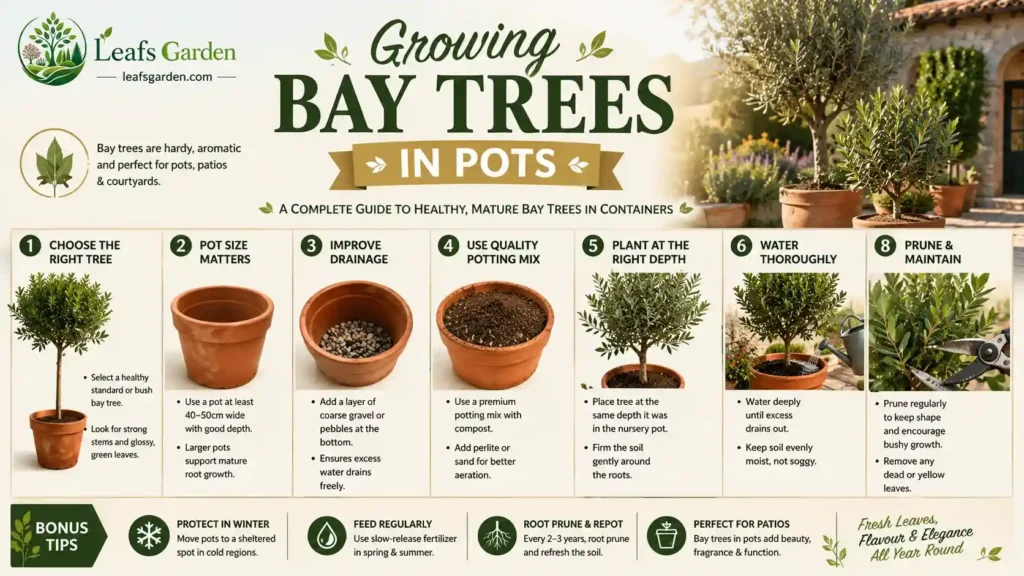
Choosing the correct pot size is essential for healthy mature bay tree growth. A container that is too small restricts roots, dries out quickly, and slows development.
For mature bay trees, larger containers provide:
General bay tree container recommendations include:
| Bay Tree Size | Recommended Pot Size |
| Young Bay Tree | 30–40 cm pot |
| Medium Bay Tree | 45–60 cm pot |
| Mature Bay Tree | 60+ cm large container |
Bay trees grown in containers need enough root space to support dense evergreen foliage and woody trunk development. Deep pots are often better than shallow containers because they improve root expansion and drainage.
Terracotta pots are commonly used because they allow airflow around roots, although large plastic or stone containers also work well if drainage is adequate.
Bay laurels can grow successfully both in containers and directly in the ground, but growth habits and maintenance needs differ significantly.
| Feature | Potted Bay Tree | Ground-Planted Bay Tree |
| Growth Speed | Slower | Faster |
| Size Control | Easier | Harder |
| Water Needs | Higher | Moderate |
| Mobility | Portable | Permanent |
Potted bay trees are easier to shape, prune, and maintain at manageable sizes. This makes them highly suitable for decorative patios, balconies, and formal entryways.
Ground-planted bay trees typically grow larger and faster because roots have unrestricted access to moisture and nutrients. However, open-ground trees require more long-term pruning if size control is important.
Container growing also allows gardeners in colder USA climates to move bay trees into protected areas during winter.
Mature bay trees benefit from occasional repotting to maintain healthy root systems and fresh soil structure. Over time, roots become crowded and nutrients become depleted inside containers.
Repotting usually involves:
Root pruning helps prevent root-bound growth and encourages healthier feeder roots. During repotting, older compacted roots can be lightly trimmed before placing the plant into refreshed potting mix.
Container drainage is extremely important because mature bay laurels dislike saturated roots. Pots should always contain:
Long-term maintenance often includes repotting every 3–5 years depending on growth speed and container size.
Signs a mature bay tree may need repotting include:
Most potted bay tree problems are caused by watering imbalance, restricted roots, or drainage issues. Fortunately, mature bay laurels recover well when problems are corrected early.
Common container issues include:
Bay trees kept too long in small pots can become root-bound. Restricted roots reduce water absorption and slow growth.
Symptoms include:
Yellow bay tree leaves often indicate overwatering, nutrient deficiency, or drainage problems.
Possible causes include:
Container-grown bay trees dry out faster than ground-planted specimens, especially during hot Australian summers.
Dry soil can cause:
Deep watering helps restore healthy moisture balance.
Poor drainage is one of the most serious container issues for mature bay laurels. Constantly wet roots increase the risk of fungal disease and root rot.
Prevention strategies include:
Healthy drainage is the foundation of successful long-term bay tree container growing.
Mature bay trees are widely used as evergreen hedges, privacy screens, formal topiary plants, and ornamental landscape trees. Their dense foliage, slow-to-moderate growth habit, and strong response to pruning make Laurus nobilis one of the most versatile evergreen plants for structured garden design.
Bay laurels are especially popular in Australian Mediterranean-style gardens, courtyards, and formal entryways because they provide year-round greenery, elegant structure, and aromatic foliage.

Bay leaf hedges provide evergreen privacy, decorative structure, and low-maintenance screening for residential landscapes. Mature bay trees naturally form dense foliage, making them highly effective as formal hedge plants.
Key bay hedge benefits include:
Bay tree hedging is commonly used around:
Unlike many fast-growing hedges, bay laurels maintain a cleaner and more controlled appearance with less aggressive growth management.
A healthy bay laurel hedge starts with proper spacing, regular pruning, and consistent shaping during early growth stages. Dense foliage development improves over time as plants mature and branching thickens.
Spacing recommendations vary depending on desired hedge density:
| Hedge Style | Recommended Spacing |
| Dense Formal Hedge | 60–90 cm apart |
| Medium Privacy Hedge | 1–1.5 meters apart |
| Informal Landscape Screen | 1.5–2 meters apart |
Young bay hedge plants should be lightly pruned early to encourage branching near the base. Regular trimming helps create fuller evergreen coverage and stronger hedge structure.
A typical pruning schedule includes:
Bay laurels respond exceptionally well to hedge shaping because the foliage remains dense after trimming. Over time, repeated pruning creates compact privacy screens with clean formal lines.
Good sunlight exposure and airflow also help improve hedge density and reduce fungal issues.
Laurus nobilis hedge plants are widely used in formal gardens because they combine evergreen structure with elegant Mediterranean styling. Bay laurels suit both traditional and modern landscape designs.
In formal gardens, bay tree hedge plants are often used for:
Bay laurels work particularly well alongside:
The naturally glossy evergreen foliage provides year-round color and strong visual contrast against lighter Mediterranean planting schemes.
In Australian and coastal USA landscapes, mature bay hedges are commonly integrated into drought-tolerant garden designs because of their moderate water needs and heat tolerance.
Standard bay trees are highly decorative ornamental forms featuring a clear trunk with a rounded or shaped foliage crown. These elegant trees are commonly grown in containers for patios, entrances, balconies, and formal courtyards.
Standard bay tree containers are especially popular for:
Common ornamental shapes include:
Mature standard bay trees create strong architectural structure while remaining compact enough for long-term container growing. Their evergreen foliage provides year-round ornamental value without excessive maintenance.
Formal Mediterranean garden styles frequently use paired standard bay trees near entrances or pathways to create balanced symmetrical landscaping designs.
Mature bay trees require occasional pruning, balanced watering, feeding, and pest monitoring to maintain healthy evergreen growth. Once established, Laurus nobilis is relatively low maintenance, but regular care helps preserve dense foliage, strong structure, and long-term plant health.
Proper maintenance is especially important for potted bay trees, formal hedges, and decorative topiary forms because controlled growth depends on consistent pruning and nutrient management.
Mature bay trees benefit from moderate feeding during active growth periods. Balanced nutrients support healthy foliage production, stronger roots, and improved leaf color.
Bay tree nutrient requirements mainly include:
Organic fertilizers are commonly preferred because they release nutrients slowly and improve soil structure naturally.
Suitable fertilizer options include:
A seasonal feeding schedule generally works best:
| Season | Feeding Recommendation |
| Early Spring | Main feeding period |
| Late Spring | Light supplemental feeding |
| Summer | Moderate feeding if actively growing |
| Winter | Minimal or no feeding |
Overfertilizing should be avoided because excessive nutrients can cause weak soft growth and reduced leaf aroma.
Container-grown bay trees usually require slightly more frequent feeding because nutrients wash out of pots faster than garden soil.
Pruning helps maintain healthy structure, controlled size, and dense evergreen foliage. Mature bay laurels tolerate trimming exceptionally well, making them ideal for hedges and topiary.
Height control is one of the main reasons gardeners prune bay trees. Regular trimming prevents excessive vertical growth while encouraging fuller branching.
Common pruning goals include:
Bay cone pruning is especially popular in formal Mediterranean landscaping. Cone-shaped bay trees create elegant structure for patios, entrances, and courtyards.
Topiary maintenance usually requires light trimming several times during the growing season to preserve clean shapes.
Improved airflow is another important pruning benefit. Thinning crowded interior branches helps reduce humidity buildup and lowers the risk of fungal problems and pest infestations.
The best heavy pruning period is usually late winter or early spring before strong seasonal growth begins.
Seasonal maintenance helps mature bay trees remain healthy throughout changing weather conditions. Although bay laurels are hardy evergreen plants, environmental stress can still affect foliage quality and growth.
During hot weather, mature bay trees benefit from:
Australian summers can dry container soil rapidly, especially in patios and courtyards exposed to reflected heat.
Bay laurels tolerate mild winters well but may suffer in prolonged frost conditions.
Winter protection methods include:
Container-grown bay trees are more vulnerable to cold because roots freeze faster in pots than in garden soil.
Strong winds can dry foliage, damage branches, and stress mature bay trees. Sheltered planting positions improve overall plant health and leaf quality.
Wind protection strategies include:
Mulching helps regulate soil moisture, suppress weeds, and stabilize root temperatures.
Recommended mulch materials include:
Mulch should remain slightly away from the trunk to reduce moisture buildup around the base.
Bay trees can grow both indoors and outdoors, although outdoor conditions generally produce stronger and denser growth. Indoor bay trees are most commonly grown in containers near bright windows or protected patios.
Bay trees potted indoors require:
Indoor plants often grow more slowly because light intensity is lower than outdoor sunlight exposure.
Outdoor Mediterranean gardens provide the ideal environment for mature bay laurels because plants receive:
Light requirements indoors are especially important. Mature bay trees should ideally receive several hours of bright indirect or direct sunlight daily to maintain healthy evergreen foliage.
Poor indoor lighting may lead to:
For best results, many gardeners move potted bay trees outdoors during warmer seasons and provide winter shelter only when necessary.
Most mature bay tree problems are caused by overwatering, pests, poor airflow, frost damage, or nutrient deficiencies. Although Laurus nobilis is generally hardy and low maintenance, unhealthy growing conditions can quickly affect leaf quality, growth rate, and overall plant appearance.
Early identification of symptoms helps prevent long-term damage and keeps mature bay trees healthy, dense, and evergreen.
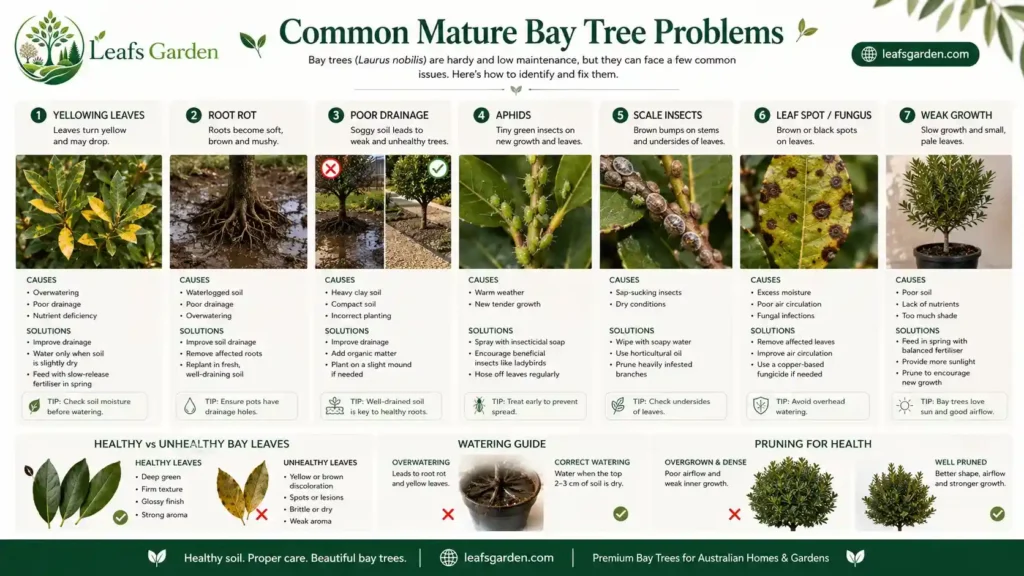
Yellow leaves and leaf drop are among the most common mature bay tree problems. In most cases, the issue is linked to watering imbalance, environmental stress, or nutrient deficiencies.
Water stress can occur from both overwatering and underwatering.
Overwatered bay trees often develop:
Underwatered bay laurels may show:
Nutrient imbalance can also affect foliage color. Nitrogen deficiency commonly causes pale or yellowing leaves, especially in container-grown bay trees where nutrients become depleted faster.
Environmental stress factors include:
Mild seasonal leaf drop is sometimes normal in older mature bay trees, especially after pruning or climate changes.
Root rot is one of the most serious problems affecting mature bay laurels. Poor drainage and constantly wet soil create ideal conditions for fungal root disease.
Common causes include:
Early root rot symptoms often include:
Container waterlogging is especially dangerous because trapped moisture deprives roots of oxygen. Mature bay trees prefer moist but well-drained conditions rather than saturated soil.
Prevention strategies include:
Healthy drainage is one of the most important long-term requirements for Laurus nobilis.
Mature bay trees are relatively resistant to serious pest problems, but some insects and fungal issues can still appear under stressful growing conditions.
Scale insects are common on bay laurels, especially in warm sheltered areas and indoor environments.
Signs include:
Heavy infestations may weaken overall growth.
Aphids feed on soft new growth and can multiply rapidly during warm weather.
Common symptoms include:
Sooty mold often develops on sticky honeydew left behind by aphids or scale insects.
It appears as:
Although usually not directly fatal, sooty mold reduces plant appearance and photosynthesis efficiency.
Poor airflow and excessive moisture may encourage fungal leaf problems.
Contributing factors include:
Pruning for better airflow often helps reduce fungal disease risk.
Mature bay trees may slow or stop growing when environmental conditions become unfavorable. Growth problems are usually linked to roots, sunlight, nutrients, or pruning practices.
Root-bound container plants often struggle to absorb water and nutrients efficiently.
Symptoms include:
Repotting and root pruning usually improve recovery.
Bay laurels grow best with strong sunlight exposure. Insufficient light often leads to sparse growth and weak stems.
Low-light symptoms include:
Indoor bay trees are especially vulnerable to poor lighting conditions.
Nutrient-deficient soil may reduce healthy foliage growth and slow maturity development.
Bay trees lacking nutrients commonly show:
Balanced seasonal feeding helps maintain steady evergreen growth.
Improper pruning can temporarily slow growth or create sparse foliage structure.
Common pruning mistakes include:
Light regular shaping is generally healthier than aggressive pruning.
Bay laurel leaves are widely used in cooking, herbal gardening, and ornamental landscaping worldwide. Mature Laurus nobilis trees are especially valued because their aromatic evergreen leaves provide both culinary flavor and decorative garden appeal.
Beyond kitchen use, bay laurels are also popular in Mediterranean landscapes, container herb gardens, and formal ornamental planting designs.
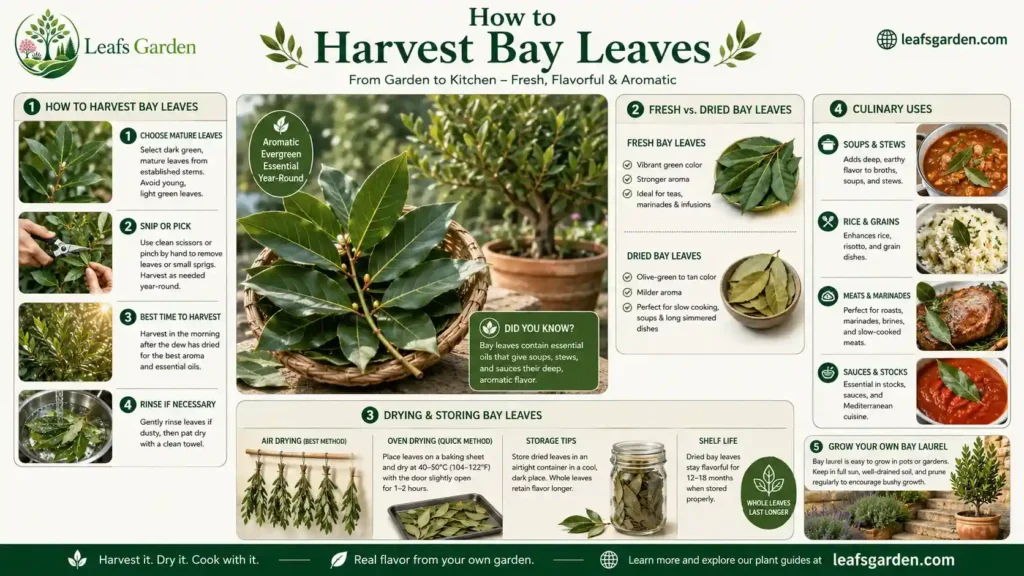
Culinary bay leaves are one of the most recognized uses of mature bay trees. The leaves contain aromatic oils that release flavor slowly during cooking, making them popular in long-simmered dishes.
Bay leaves are commonly added to:
The flavor profile of bay laurel is mildly herbal, earthy, slightly floral, and subtly peppery. The leaves are usually removed before serving because their texture remains firm even after cooking.
Fresh vs dried bay leaves differ slightly in flavor intensity:
| Bay Leaf Type | Flavor Characteristics |
| Fresh Bay Leaves | Milder and slightly floral |
| Dried Bay Leaves | Stronger and more concentrated |
Dried culinary bay leaves are more commonly used because drying intensifies the aromatic compounds and improves long-term storage.
True edible bay leaves come specifically from Laurus nobilis. Ornamental laurel species should never be substituted in cooking because some are toxic.
Mature bay trees provide a steady supply of aromatic leaves throughout the year. Established plants usually produce stronger fragrance and better leaf quality than younger specimens.
The best harvesting time is generally during active healthy growth when leaves are mature, glossy, and deep green.
For highest flavor quality:
Bay leaves can be used fresh immediately after harvesting, but many gardeners prefer drying them for stronger flavor and easier storage.
Common drying methods include:
Properly dried leaves should remain:
Storage techniques are important for preserving flavor. Dried bay leaves should be stored in:
Well-stored dried bay leaves can remain flavorful for many months.
Bay laurels are widely valued beyond culinary use because of their evergreen foliage, aromatic leaves, and ornamental versatility.
In decorative herb gardens, mature bay trees provide:
Bay laurels pair especially well with:
Gardeners building an aromatic edible landscape may also enjoy growing a cinnamon tree, another evergreen Lauraceae family member that shares similar warm climate preferences and provides fragrant culinary value in Australian gardens.
The fragrant foliage also makes bay trees popular near patios, walkways, and outdoor seating areas where crushed leaves release herbal scent naturally.
Traditional uses of bay leaves historically included:
Today, mature bay laurels remain one of the most practical evergreen herb trees for both ornamental landscaping and home culinary gardens.
Several bay tree cultivars exist, including dwarf forms and compact ornamental varieties suited for hedging and containers. While Laurus nobilis remains the primary edible bay laurel species, different cultivated forms offer variations in size, growth habit, and landscape suitability.
Some varieties are preferred for formal topiary and hedging, while others are better suited to patios, balconies, and smaller urban gardens.
Laurus nobilis ‘Miles Choice’ is a compact ornamental bay tree cultivar known for its dense growth habit and improved suitability for decorative landscaping.
Bay tree ‘Miles Choice’ is especially valued for:
Compared to larger standard bay trees, ‘Miles Choice’ typically maintains a neater and more compact appearance, making it highly suitable for patios, courtyards, and smaller gardens.
This cultivar performs particularly well in:
Like other Laurus nobilis varieties, the foliage remains aromatic and suitable for culinary use.
Dwarf bay leaf tree varieties are ideal for gardeners who want the beauty and practicality of bay laurels without excessive size. These smaller-growing forms adapt exceptionally well to containers and compact outdoor spaces.
Dwarf bay trees are commonly used in:
Benefits of dwarf bay varieties include:
Container suitability is one of the biggest advantages of dwarf bay laurels. Their manageable size allows long-term pot growing without the rapid overcrowding seen in larger standard trees.
Patio-friendly bay tree options are especially popular in Australian urban gardens and Mediterranean-style outdoor living spaces where structured evergreen plants provide year-round ornamental value.
Standard and multi-stem bay trees differ mainly in structure, visual style, and landscape application.
A standard bay tree features:
Multi-stem bay trees develop:
Visual differences between the two styles significantly affect garden design.
| Feature | Standard Bay Tree | Multi-Stem Bay Tree |
| Structure | Single trunk | Multiple trunks |
| Appearance | Formal & symmetrical | Natural & layered |
| Best Use | Patios & entrances | Informal landscapes |
| Pruning Needs | More shaping required | Less formal pruning |
| Space Style | Structured gardens | Natural Mediterranean gardens |
Standard bay trees are commonly used for:
Multi-stem bay laurels are often preferred for:
Both forms maintain the same aromatic evergreen foliage and culinary bay leaf quality, but their visual impact differs greatly depending on landscape style and pruning approach.
True bay laurel (Laurus nobilis) is generally safe for culinary use, but some ornamental laurel species can be toxic. Understanding the difference between edible bay trees and non-edible laurels is extremely important for safe gardening and cooking.
Many plants use the word “laurel” in their common names, but not all belong to the same botanical group as true bay laurel.
True edible bay leaves come specifically from Laurus nobilis. This is the traditional culinary bay tree used worldwide in soups, sauces, stews, and herb gardens.
Safe edible bay laurel identification features include:
Toxic confusion risks occur because several ornamental plants are also called laurels even though they are unrelated species.
Common non-edible or toxic laurels include:
| Plant Name | Edible or Toxic |
| Laurus nobilis (True Bay Laurel) | Edible |
| Cherry Laurel | Toxic |
| Mountain Laurel | Toxic |
| Portuguese Laurel | Not culinary |
| Oleander | Highly toxic |
Some toxic laurels contain harmful compounds that should never be consumed by humans or pets.
For detailed plant safety and toxicity information relevant to Australian gardens, CSIRO provides reliable scientific guidance on plant compounds and safe garden species identification.
Identification tips for avoiding confusion include:
Pet safety considerations are also important. While true bay laurel is generally less dangerous than toxic ornamental laurels, large amounts of leaves may still cause digestive irritation if heavily consumed by pets.
Bay trees are commonly grown in family gardens, patios, and herb containers, but basic precautions are still recommended around children and animals.
Safe handling practices include:
Bay leaves are firm and leathery, which makes them difficult to chew and digest whole. Even culinary bay leaves are usually removed from cooked food before serving because the texture remains stiff after cooking.
Garden placement can improve safety and accessibility.
Recommended placement areas include:
Keeping bay trees in elevated pots or managed herb garden spaces helps reduce accidental chewing by pets or toddlers.
Leaf ingestion precautions are especially important for dogs and cats. While true Laurus nobilis is not considered highly poisonous like some ornamental laurels, consuming large quantities may still lead to:
Correct plant identification remains the most important safety factor when growing any laurel-type plant in home landscapes.
A mature bay tree is one of the most versatile evergreen herb trees for Australian, USA, and worldwide gardens thanks to its culinary value, ornamental beauty, container adaptability, and easy maintenance. Whether grown as a formal hedge, decorative patio tree, or productive herb garden plant, Laurus nobilis provides year-round structure and long-lasting evergreen appeal.
Successful mature bay tree care mainly depends on a few core requirements:
Proper drainage remains especially important because waterlogged roots are one of the most common causes of decline in mature bay laurels. Consistent pruning also helps maintain dense foliage, controlled size, and healthy evergreen structure for hedges, topiary, and container plants.
One of the biggest advantages of bay laurels is their exceptional longevity. Mature bay trees can remain productive and ornamental for many decades when grown under suitable Mediterranean or temperate conditions. Their aromatic foliage, glossy evergreen leaves, and elegant form make them valuable in both formal and practical garden design.
Bay trees are highly adaptable for:
Container-grown bay trees are especially useful for compact gardens, balconies, and urban outdoor spaces because they respond very well to controlled pruning and root restriction.
For gardeners wanting a low-maintenance evergreen plant with both ornamental and culinary benefits, mature bay laurels remain one of the best long-term choices.
Grow a bay tree in containers for patios and courtyards, create elegant evergreen bay hedges for privacy and structure, or harvest fresh aromatic bay leaves directly from your own home garden year-round.
A mature bay tree can grow between 2 and 12 meters tall depending on pruning, climate, soil conditions, and whether it is grown in a container or open ground. Potted bay trees usually stay much smaller, while unpruned garden specimens can develop into large evergreen trees over time.
Yes, bay trees grow exceptionally well in many Australian climates, especially Mediterranean-style regions like Perth, Adelaide, and coastal southern areas. Warm summers, mild winters, and well-draining soil create ideal growing conditions for mature Laurus nobilis trees.
Yes, true bay laurel leaves from Laurus nobilis are edible and widely used in cooking worldwide. The aromatic leaves are commonly added to soups, stews, sauces, and slow-cooked dishes. However, some ornamental laurel species are toxic and should not be consumed.
Yes, mature bay trees can remain permanently in pots if they receive proper care. Regular repotting, root pruning, balanced watering, and fresh potting mix help maintain healthy long-term container growth. Bay laurels are one of the best evergreen trees for decorative container gardening.
Mature bay trees prefer deep but infrequent watering. Ground-planted trees generally need watering every 1–2 weeks during warm weather, while potted bay trees require more frequent watering because containers dry out faster. Soil should remain lightly moist but never waterlogged.
The term “bay tree” usually refers specifically to Laurus nobilis, the edible culinary bay laurel. “Laurel tree” is a broader term that may also describe unrelated ornamental plants. Some ornamental laurels are toxic, so proper plant identification is important before using leaves for cooking.
Yes, bay trees make excellent evergreen hedges because they produce dense foliage and respond very well to pruning. Mature bay hedges provide privacy, formal structure, and year-round greenery for gardens, courtyards, and landscape borders.
Yellow bay tree leaves are commonly caused by overwatering, poor drainage, nutrient deficiencies, root stress, or environmental changes. Waterlogged soil is one of the most frequent problems affecting mature bay laurels. Improving drainage and adjusting watering usually helps restore healthy foliage growth.